
The Department of Justice has launched an investigation into the NFL to determine if the league has “engaged in anticompetitive tactics” regarding its game broadcasts, per Jessica Toonkel and Dana Mattioli of the Wall Street Journal. While the report acknowledges the nature and scope of the investigation is presently unknown, it references the Sports Broadcast Act of 1961 and the fact that viewers must pay subscription fees to watch certain games.
The Act gives the NFL an antitrust exemption with respect to its negotiation of television rights, and courts have ruled the Act applies only to broadcast television. Cable, satellite, and streaming services are not covered.
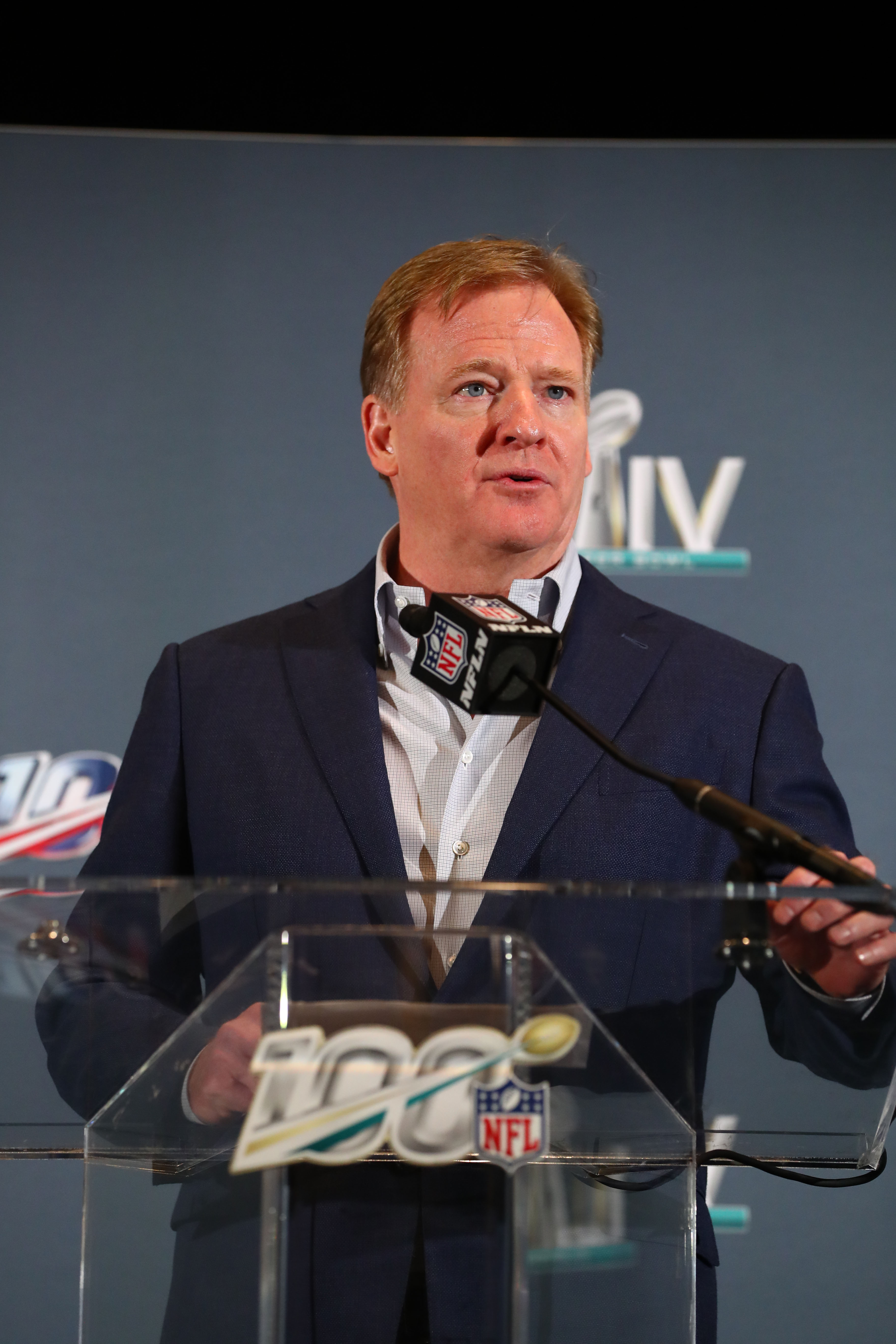 Nonetheless, in early March, Sen. Mike Lee (R-Utah) wrote a letter to the DOJ and the Federal Trade Commission in which he urged those agencies to review whether the NFL’s practices comply with the Act (via ESPN News Services). In his letter, Lee alleged football fans spend nearly $1,000 per year on cable and streaming services, and Forbes estimated that it would have cost $765 for a fan to watch every NFL game last season.
It is true that subscriptions are required to watch Monday Night Football games on ESPN that are not simulcast on ABC, Thursday Night Football games and the Black Friday contest on Prime Video, and Christmas games on Netflix. Some international games air on the NFL Network, which is now owned by ESPN, and the league has given certain games to Peacock and ESPN+ in the past. Select playoff games have also required subscriptions.
Still, all games air for free in the broadcast markets of the two participating clubs, and the NFL has issued a statement emphasizing that point. The statement reads:
The NFL’s media distribution model is the most fan and broadcaster-friendly in the entire sports and entertainment industry. With over 87% of our games on free, broadcast television, including 100% of games in the markets of the competing teams, the NFL has for decades put our fans front and center in how we distribute our content. The 2025 season was our most viewed since 1989 and reflects the strength of the NFL distribution model and its wide availability to all fans.
Since non-broadcast platforms are exempt from the Act, one would think the NFL would be in the clear here. However, as the ESPN article observes, a jury in a 2024 federal class-action case in Los Angeles awarded $4.7 billion in damages after finding the league violated antitrust laws in distributing out-of-market Sunday afternoon games on the “Sunday Ticket” subscription service. Federal antitrust laws allow for treble damages, so the NFL’s liability could have exceeded $14 billion if the judge had not overturned the jury’s verdict on the grounds that two of the plaintiffs’ witnesses used “flawed methodologies.”
The league’s deals with most of its broadcast partners run through 2033 (2034 for ESPN), but the league has an opt-out after the 2029 season (2030 for ESPN). The ESPN report says the NFL is likely to exercise its opt-out to capitalize on its immense popularity and land even more favorable terms. After all, Nielsen’s data shows that 83 of the top 100 broadcasts in 2025 were NFL games.
Mike Florio of Pro Football Talk posits that the entire effort could be a “political power play.” Shortly before the news of the DOJ’s investigation broke, the Wall Street Journal published an editorial questioning whether the NFL still deserves an antitrust exemption. The WSJ is owned by Rupert Murdoch, who also owns Fox.
In discussing the NFL’s presumptive exercise of its opt-out and subsequent renegotiations, Florio reports CBS is expected to agree to pay considerably more than its current $2.1 billion-per-year rate to avoid the opt-out and lock in a price for the 2030-33 seasons. Once that agreement is in the books, the NFL could then turn its attention to Fox. At some point, though, it is fair to wonder whether networks will refuse to go any higher and risk losing their NFL deals.
In any event, it would behoove all parties to maintain the status quo. Without the antitrust exemption, television rights would be sold by each of the league’s 32 teams. In such a scenario, the large-market teams would thrive, the small-market teams would not, and the NFL’s salary cap system – which is perhaps one of the foremost reasons for the league’s success – may disintegrate.
Hope they don’t waste an experienced investigators time when there’s so much more in the country that ought be ‘looked at’, important and meaningful nefarious activities.
Every NFL fan knows the League is a determined greedy bully and has been pushing the limits of restraint and decency since the current ‘leadership’ took charge. So don’t waste more than a couple hundred dollars looking at their actions.
This a straw man argument. There’s nothing stopping prosecutors from doing their job just because you determine these corrupt leagues as now worth it to tax payers. The amount of money they take in tax payer funds far outweighs any spent on investigations and no one should be above the law. Antitrust exemptions for billion dollar sports leagues needs to be done away with
‘The amount of money they take in tax payer funds’ are you referencing ‘stadium construction’ funding?
Thought that was on the shoulder of the ‘Team’ not the League office. Might be I’m not as versed in the particulars as others.
Warner Brothers and its whole cable network just got bought by the same cronies who were allowed to buy Tik Tok and Paramount along with its whole empire (including CBS), but sure, this DOJ is deeply concerned about anticompetitive developments in broadcasting.
They should break up those monopolies too. No one should be able to break the law just because other people or organizations do it.
Well sure, but it’s this same administration that just let all that have the green light.
The Artemis mission ended so the govt had to find something new to distract everybody from the real issues that they should be addressing. The subscription model absolutely sucks but this all feels like politicking though. One of these networks with the short end of the stick for distributing NFL games probably wants a bigger slice but doesn’t want to pony up the money their competitors are willing to pay.
On a related side note, if the NFL is actually found “guilty” here then it would open a can of worms for MLB, NBA, and NHL too since they all have games that require some sort of subscription if you wanted to watch every game like it seems to be the basis for this investigation.
The other pro leagues have teams in Canada. Wouldn’t Canada’s DOJ have to agree w/ the US DOJ.
Are we suppose to be outraged that some fans are being deprived of the opportunity to watch some of the worst game officiating you could encounter in sports?
I think it’s been attempted 2 or 3 times before so good luck. You could always send some money to the BOB and it will go away for sure.
The only thing i still hate is that we don’t get an option for the Sunday ticket to pay per game, week, or team. It’s all or nothing.
Sports leagues other than MLB were given anti-trust exemption to negotiate national tv contracts based on the theory that you the fan will see more games as a result. The thinking was that no network would sign a deal with any single team, so without this exemption, you would only see your local team on a local station.
When the NFL and other leagues collectively negotiate contracts to show games on pay tv, it raises the question about whether this benefits the fans, since potentially you might have to pay to watch a game that would be shown on free local tv if the league did not have this exemption.
This issue is not relevant to MLB because it is exempt from anti-trust laws for reasons that don’t make sense but would require another very long post to explain. It is relevant to other sports.
Long as stadiums are tax funded by the people’s tax dollars the people should get free tv viewership of all games home and away
I get charging for “out of state” games viewership but in state shouldn’t be charged a penny if their taxes helped build the stadium
All sports leagues should not be exempt from antitrust laws. They’re multi billion dollar industries that take tax payer money to fund stadiums. I don’t care if others are breaking the law and the DOJ should focus on those cases because there’s enough workers and resources to go after all of these corrupt institutions.
Yeah, it blows my mind that people would complain about this. This is literally part of the DoJ’s job. They have people who just are there to enforce antitrust laws. The whys of why it’s being done or who is doing it really should not matter as much, honestly. We’ll see how it turns out (I expect the NFL to give some minor to medium concession to compromise), but really, this should be good news…at least for right now.