
Rams Offered First-Round Pick For A.J. Brown; Latest On WR’s Issues With Jalen Hurts
The Patriots’ trade for A.J. Brown was more than a year in the making.
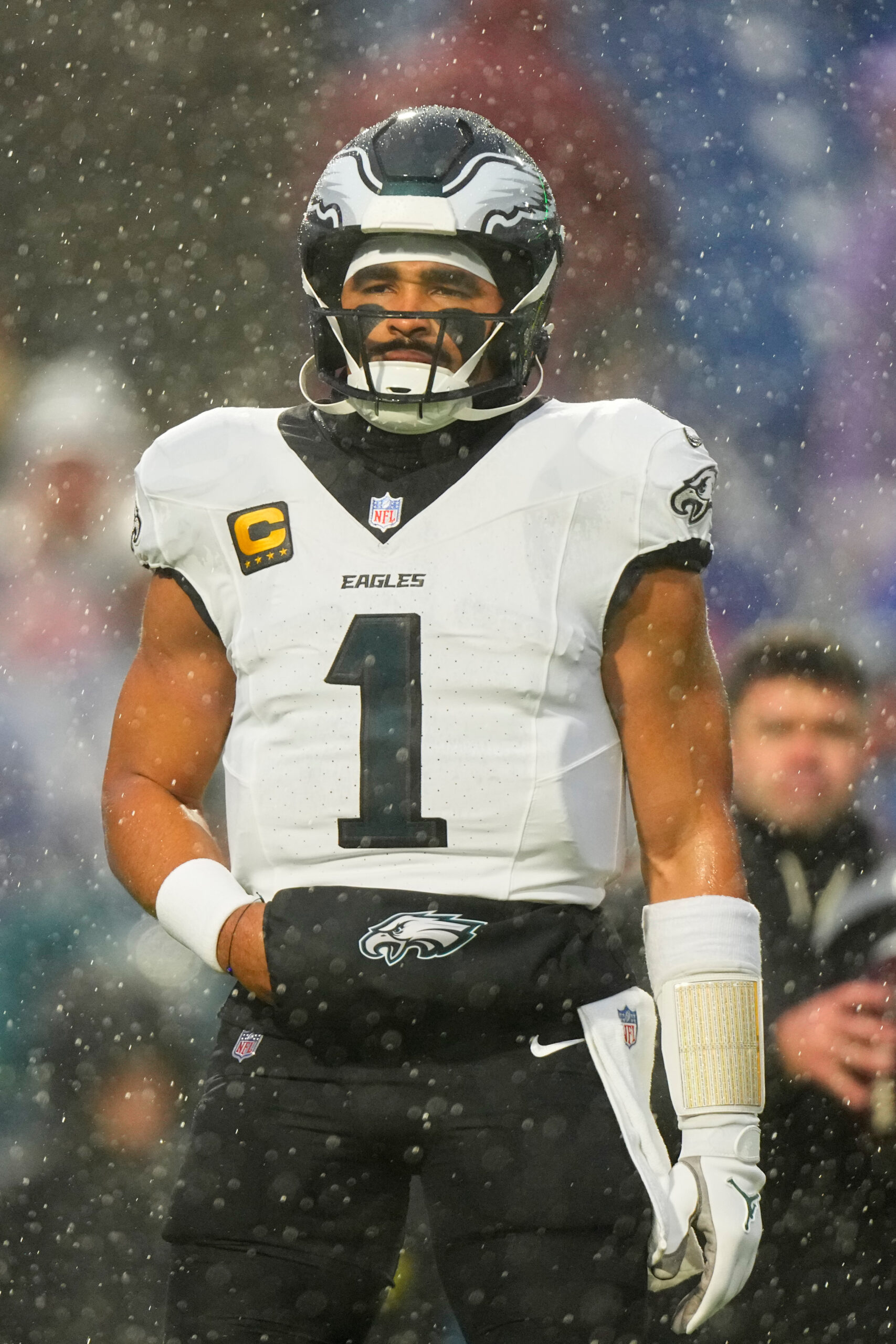 New England checked in on the star wide receiver multiple times in 2025, per Sports Illustrated’s Albert Breer, including during the offseason and around the trade deadline. The Eagles initially lacked interest in a deal, but by the end of the season, Brown wanted out of Philadelphia.
His frustrations with the offense had mounted over the past two years. In that span, the unit averaged just 206.3 passing yards per game, the third-fewest in the NFL. Of particular concern was Jalen Hurts‘ “perceived reluctance to target Brown on tight-window throws against zone coverage,” according to ESPN.
Former Steelers head coach Mike Tomlin once said that he wants “volunteers, not hostages,” in response to a question about All-Pro running Le’Veon Bell‘s holdout. The phrase tends to hold true around the NFL, especially for players like Brown who are unafraid to cryptically or explicitly express their feelings about their situations. After he decided he no longer wanted to be an Eagle, the team was more open to a trade when the Patriots re-engaged at the Combine.
Philadelphia still demanded a hefty asking price – “a first-rounder plus another high-end pick,” per Breer – though the team did not seek a second first-round selection in the deal. A soft trade market drove down the price. Brown listed New England among his four preferred landing spots in the AFC. Neither the Chiefs nor the Chargers made headway towards a deal, and the Bills filled their wide receiver need by acquiring D.J. Moore from the Bears.
The Eagles considered sending Brown to an NFC team – and not just any NFC team, but one already seen as an early Super Bowl favorite. The Rams offered a 2028 first-rounder, but the deal failed to materialize due to medical concerns about Brown’s degenerative knee condition. Los Angeles also intended to move Davante Adams to open up more targets in their offense, but that trade was scuttled, too.
 Philadelphia’s willingness to take a 2028 first opened a door with the Patriots, who wanted to hang onto their first-round pick in what is expected to be a strong 2027 draft. Both sides were confident enough in a deal by the 2026 draft in April that they acted as though the trade was already done. The Eagles added a trio of veteran receivers (Elijah Moore, Marquise Brown, and Dontayvion Wicks) and traded up for USC’s Makai Lemon in the first round. The Patriots declined to select a wideout at all.
Completing the trade after June 1 had long been a financial requirement for the Eagles. Once that date came, the two sides got together to hammer out the final terms of the deal, which included a 2027 fifth-rounder heading from New England to Philly.
The Patriots will be hoping that Brown can quickly build (and maintain) a rapport with quarterback Drake Maye to avoid similar issues to those he had with Hurts. The Eagles, meanwhile, seem to intend to replace Brown in the aggregate, at least right away. No single one of the receivers they added this offseason can replace his production and impact right away – though they likely expect Lemon to get there eventually – but combined, they offer significantly more depth than Philadelphia previously had at the position.
Rams Rework Myles Garrett’s Contract
JUNE 11: As a result of the restructure, Garrett’s cap charge for 2026 will be $8.84MM (h/t NFL Network’s Tom Pelissero). That figure will experience a notable jump every year afterwards, topping $48MM in 2030. A dead money charge of $39.91MM will hit Los Angeles’ books after the contract voids in 2031.
JUNE 4: Myles Garrett became the rare edge rusher to change teams in a trade involving a first-round pick and not receive an immediate extension. As our most recent Trade Rumors Front Office piece detailed, Garrett is set to be first EDGE to be traded for a future first — excluding pick-for-pick trades — this century and not receive an extension.
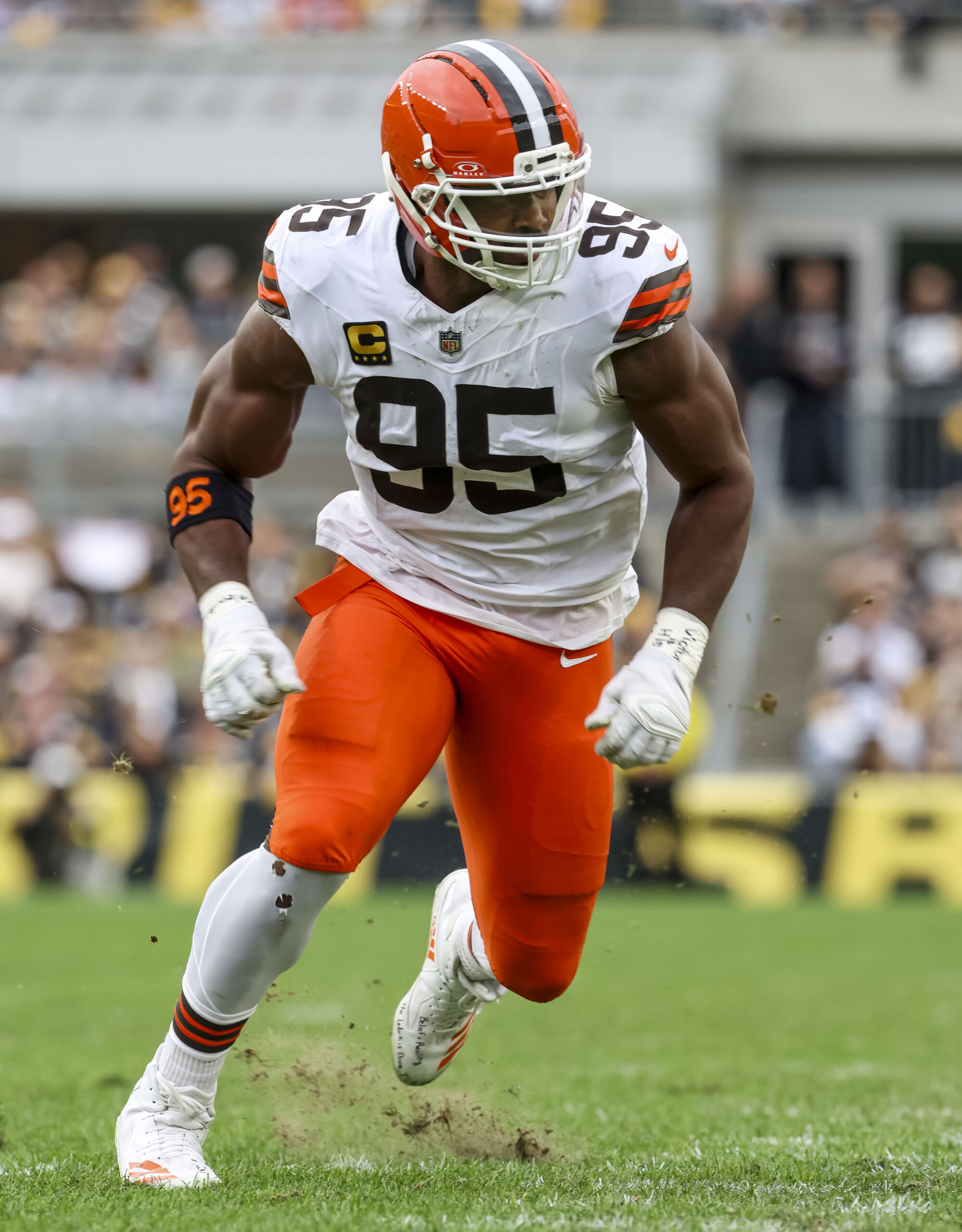 We learned following the trade the Rams were not planning an immediate pay bump for the future Hall of Famer, but the sides have agreed to rework the contract the Browns designed last March. The Rams and Garrett agreed on an adjusted deal Thursday, Pro Football Talk’s Mike Florio reports. While this can be framed as a five-year, $204MM agreement, NFL.com’s Ian Rapoport notes it does not provide a raise or add any years to his Cleveland agreement.
[RELATED: Aaron Donald Mulling Unretirement]
Garrett signed a four-year, $160MM Browns extension nearly 15 months ago. Because two seasons were left on his first Browns extension — a five-year, $125MM pact agreed to in summer 2020 — his current deal runs through 2030.
Garrett set a single-season sack record in 2025, proving he remains probably the game’s premier edge rusher and one of the NFL’s best overall players, and his Browns re-up triggered a sea change on the EDGE market. T.J. Watt, Micah Parsons, Aidan Hutchinson and Will Anderson Jr. have leapfrogged Garrett’s $40MM-per-year deal in terms of AAV. Anderson moved the bar to $50MM per year in April.
But the Garrett trade was more about a team resetting and cashing in on its top asset to accelerate a rebuild, as opposed to most high-profile trades at this position. Of the seven other 21st-century instances of edge rushers being dealt for packages involving a first-rounder — for Parsons, Bradley Chubb, Frank Clark, Khalil Mack, Jared Allen, John Abraham, Kevin Carter — all involved immediate raises. So did three recent deals involving a second-rounder being swapped for an edge defender (Brian Burns, Montez Sweat, Dee Ford). The Rams having an opportunity to acquire Garrett without needing to authorize a top-market extension created even more value for the Browns in this trade, which sent Jared Verse and three draft choices (including a 2027 first-rounder) to Cleveland.
The rework will increase Garrett’s 2026 pay from $31.5MM to $37MM, ESPN’s Jeremy Fowler adds. Like they did with Matthew Stafford in 2024, the Rams are moving money from future years into the current campaign. The Thursday adjustment also moves option bonuses to signing bonuses in some cases, per Fowler.
Garrett’s Browns deal already contained $41.7MM in 2027 guarantees. Today’s agreement, which includes $37MM guaranteed at signing, will reduce Garrett’s 2027 guarantees by $10.7MM but increase the 2028 guarantees by $7.2MM, Florio notes.
 By 2027, Garrett will see a total of $62MM in injury guarantees vest, Florio adds. That makes this an appealing package for both team and player, as a two-time Defensive Player of the Year is still attached to the league’s fifth-most-lucrative EDGE AAV and said player will see a mammoth guarantee come his way next year.
This amounts to a three-year deal with two team options, with the Rams keeping Browns terms for the nonguaranteed 2029 and 2030 years; Garrett will be due an $8MM roster bonus in March 2029 and March 2030. The cap numbers will be important to observe on this rework, as the Rams have surely adjusted the contract to help in that regard.
The Rams entered Thursday with $18.29MM in cap space. Although Los Angeles moved off Verse, it has a host of extension-eligible young players. The 2023 draft brought Puka Nacua, Steve Avila, Kobie Turner, Byron Young and Warren McClendon to L.A. Nacua is believed to be the top priority, but the Rams have not executed any extensions for that draft class yet. The team did give Stafford a one-year, $55MM extension. More deals should be expected.
It will be interesting to see if Garrett pushes for a true raise soon. The Rams have shown in the past — via their bumps for Donald and Cooper Kupp in 2022 — they are willing to reward cornerstone players with multiple seasons remaining on contracts. Garrett’s camp forcing the issue in the future would not surprise, but the trove of guaranteed money vesting next year should satisfy the superstar defender for the foreseeable future.
Latest On Rams, DT Aaron Donald
The Rams reached a blockbuster agreement to acquire Myles Garrett last week. Aaron Donald then dropped breadcrumbs about a potential unretirement. Understandably, the Rams are intrigued by this prospect.
Were Donald to unretire, he would again be the most accomplished player on the Rams’ roster. Garrett would be the only one close to the former all-world defensive lineman, who would be delaying his Hall of Fame induction by returning. While it is possible this situation drags on past training camp, teams may well need to prepare for a Rams D-line housing Garrett and Donald.
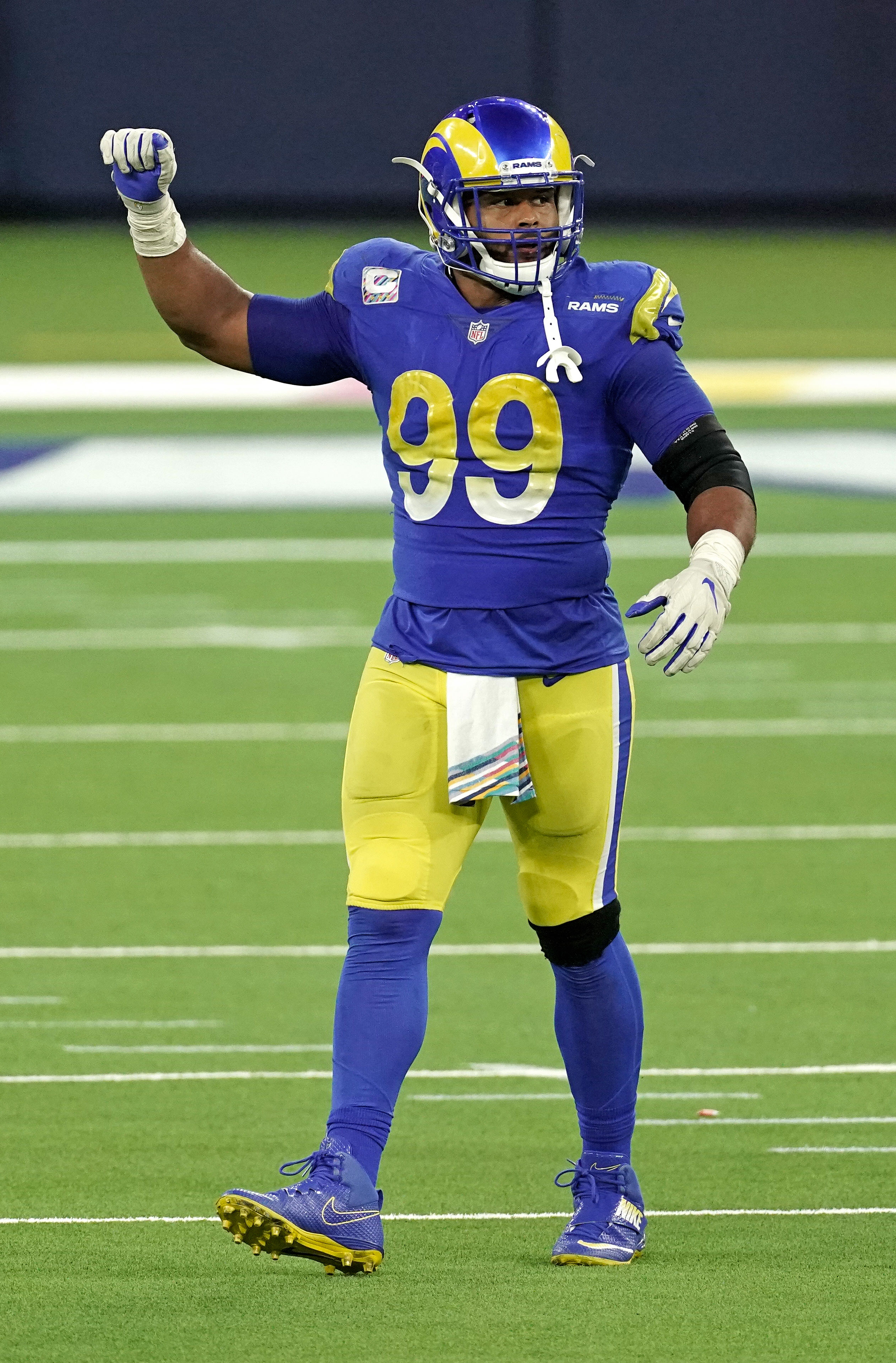 Rams DC Chris Shula said (via The Athletic’s Nate Atkins) he would welcome Donald back “with open arms”; the three-time Defensive Player of the Year retired months before Shula’s first season as Los Angeles’ defensive play-caller. Adding fuel to the fire here, ESPN’s Adam Schefter predicts Donald will return to the Rams after two years away.
While Schefter cautions no reporting is present on a Donald comeback being set just yet, but the veteran insider views it as “more likely than not” the 35-year-old D-line dynamo will be back. In surveying some other teams on the prospect of Donald returning to the Rams, Schefter indicates outside expectations are the NFC West power will find a way to bring Donald back.
Donald said last fall he did not have an itch to return to football, noting he had merely missed the camaraderie rather than the game itself. Several months later, he has openly teased a return. It would stand to reason the Rams would be prepared to use the legendary DT less than they previously did, as the 10-year Pro Bowler carried at least an 81% snap share on defense from 2017-23. In that span, Donald won three Defensive Player of the Year awards and helped the Rams to two Super Bowls and one title.
Since Donald’s retirement, the Rams have seen Kobie Turner and Braden Fiske become mainstays. Turner played 67% of the Rams’ defensive snaps last season, while Fiske logged a 48% number. Also rostering Poona Ford at nose tackle, the Rams would need to reduce two rising D-line talents’ playing time to accommodate a Donald return.
This would qualify as a champagne problem for a franchise that would have the makings of a D-line that potentially surpasses the 1960s-’70s Fearsome Foursome in terms of talent. The Rams teamed all-time greats Merlin Olsen and Deacon Jones together, to go with an evolving set of quality supporting-casters, more than 50 years ago to form a historic inside-outside D-line pair. Fiske, Ford and Turner’s presences accompanying a Donald-Garrett duo would stand to present tremendous blocking difficulties for opponents as the Rams attempt to “host” a Super Bowl for the second time.
Donald was attached to a three-year, $95MM deal — a raise provided after he threatened retirement post-Super Bowl LVI — and one season remains on that contract. The Rams have found money to bring in Garrett and Trent McDuffie this offseason. McDuffie signed a cornerback-record extension, while Garrett remains on his $40MM-AAV Browns contract — one the Rams restructured post-trade. L.A. also has Turner, Byron Young, Puka Nacua, Steve Avila, Warren McClendon. The team included Jared Verse in the Garrett trade but has decisions to make on several other young players. But if Donald truly wants to come back, the Rams will surely accommodate him.
Rams LT Alaric Jackson Arrested On Domestic Battery Charge
Rams left tackle Alaric Jackson was arrested Monday night on a felony domestic battery charge, as first reported by Dennis Broad of NBC4 Los Angeles.
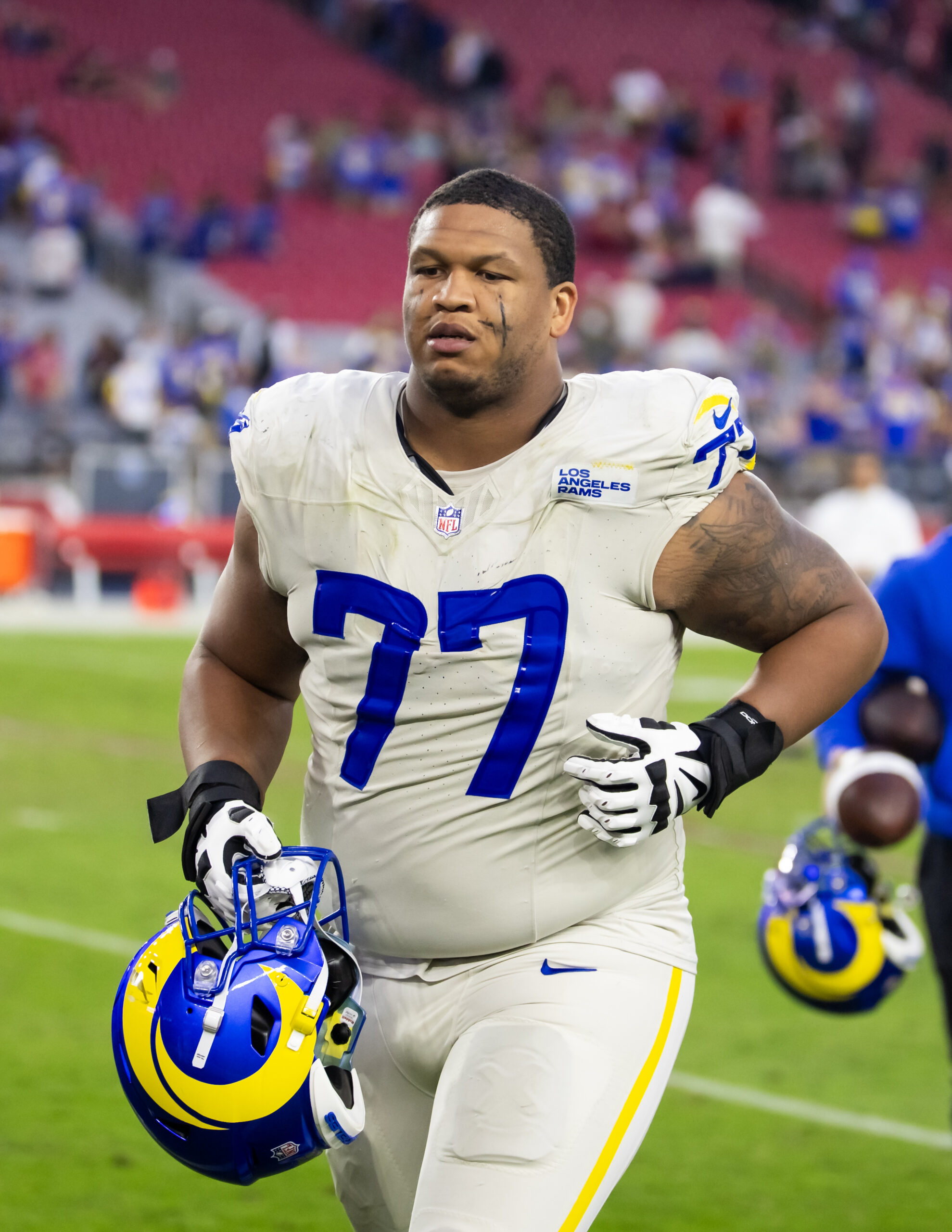 The Los Angeles Police Department has since confirmed news of the arrest to ESPN’s Sarah Barshop. Jail records show Jackson was booked at 4:24am local time and released at 7:20am. A $50K bond was paid in this case. No dates have been set for a hearing or court date at this point, and neither Jackson nor the Rams have issued a statement.
Police were called to Jackson’s home late on Monday night. Upon arrival, they learned of an argument between Jackson and a woman; the report indicates Jackson believed the woman was filming him on her phone and attempted to take it out of her hand. The alleged victim had scratch marks on her arms, according to investigators.
In 2024, Jackson began the season by serving a two-game suspension for violating the NFL’s personal conduct policy. Few details on the incident resulting in the ban were known at the time, but it has since been learned Jackson allegedly recorded a woman during sex without her consent, then refused to delete the video. A civil suit was filed this past November.
After going undrafted in 2021, Jackson signed with the Rams. He has remained in the organization ever since, racking up 51 starts and 57 appearances on the blindside. The 27-year-old is in position to remain Los Angeles’ left tackle starter in 2026 in what would be his fourth straight season atop the depth chart. Jackson is owed just under $20MM for the coming campaign, and his contract runs through 2027.
Minor NFL Transactions: 6/9/26
Today’s minor moves:
Indianapolis Colts
- Placed on reserve/retired list: S Reuben Lowery
Kansas City Chiefs
- Waived: S Marlen Sewell
Los Angeles Rams
- Signed: LB Tomon Fox
New York Jets
- Reverted to IR: WR Quentin Skinner
Pittsburgh Steelers
- Claimed off waivers (from Buccaneers): P Aidan Laros
- Waived: WR Brandon Johnson
NFL Front Office Updates: Raiders, Bills, Bears, Rams
As the offseason continues, the Raiders are one of several teams making updates to their front office. Per an announcement released by Las Vegas earlier this week, Ben Chester was promoted from assistant director to director, pro scouting, Kunal Singh was promoted from senior manager to director, football strategy, Patrick Parrilli was elevated from player personnel assistant to pro/college scout, and Jonah Lubin was promoted from football data science assistant to football data scientist.
Chester has been with the Raiders for 12 years, joining the team in 2014 as a pro scout after working in operations at UW-Oshkosh and coaching at UW-Stevens Point. He spent 10 seasons as a pro scout before being named to his most recent role. Singh found his way to the NFL after first working with the Milwaukee Brewers. He started in the league working two seasons as a football data scientist with the Broncos and was hired to his senior manager of football strategy role last year.
Parrilli joined the team two years ago in a move that took him from the coaching world to personnel. After starting off with an undergraduate role at Ave Maria University, Parrilli spent four years at Eastern Kentucky working different roles like running backs coach and quarterbacks coach before landing at Wake Forest. He found his way to Vegas after four years as an offensive analyst for the Demon Deacons. Lubin joined the team last year after a business internship with the Texans. He was a semi-finalist in last year’s Big Data Bowl.
Here are a few other front office updates from around the NFL:
- The Bills joined in on the promotions, elevating football research assistant Cole Jacobson to football analyst, according to ESPN’s Seth Walder. Jacobson arrived in Buffalo last offseason after years of freelance, seasonal, and part-time work with NFL Media, MLB Media, FOX Sports, Stats Perform, and Championship Analytics. He and his team were finalist in last year’s Big Data Bowl.
- Formerly a football analyst for the Bears, Fabian Martinez has been promoted to football data scientist, per Neil Stratton of SucceedinFootball.com. Martinez joined the team last year directly after earning his degree in Information and Data Science at Illinois Urbana-Champaign.
- Finally, in Los Angeles, the Rams no longer employ scouting analyst Grant Hizer, according to Walder. Hizer arrived in LA last year after a season working as a research analyst at NFL Next Gen Stats.
Record-Setting Extension Still Expected For WR Puka Nacua
As a rookie fifth-rounder out of BYU, Puka Nacua exploded onto the scene in what seemed to be the debut of one the NFL’s next great receivers. Injuries in his sophomore season and a few off-the-field concerns have put a speed bump in Nacua’s path toward a second contract, but according to SportsBoom’s Jason La Canfora, a record-setting extension for the Rams wide receiver is seen as a foregone conclusion.
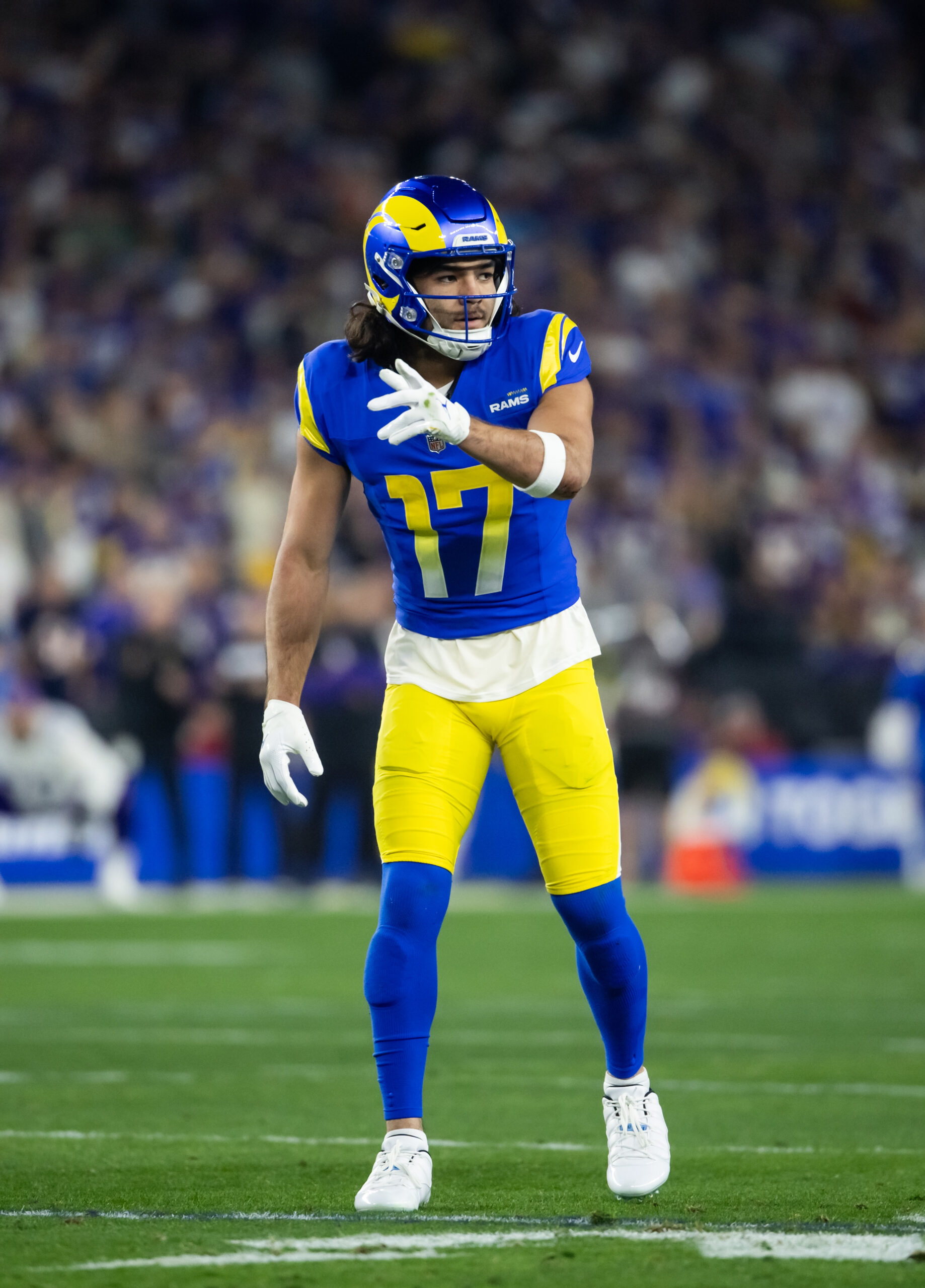 The argument for such an agreement is a simple one. Despite being the 20th wide receiver taken in the 2023 NFL Draft as the last pick of the fifth round, Nacua was the only one to eclipse 1,000 receiving yards as a rookie, blowing past that mark with 1,486, the fourth-highest total in the league that year. Though Houston’s C.J. Stroud walked away with Offensive Rookie of the Year honors, Nacua was named a second-team All-Pro and Pro Bowler in his first year of NFL play.
Though a five-game absence early into Year 2 limited him to only 11 games, Nacua’s per game averages had him on track for career highs in receptions and receiving yards. Even with one missed game last year, Nacua delivered on that momentum, setting new career highs with 129 receptions (most in the NFL), 1,715 receiving yards, and 10 touchdowns. With a league-leading average of 107.2 yards per game, the only thing that prevented him from leading in catches and yards was that one missed game.
Now a first-team All-Pro, Nacua’s outrageous, consistent production should guarantee that he will follow in the steps of the only receiver to out-gain him last year after Seattle’s Jaxon Smith-Njigba signed a four-year, $168.6MM extension that made him the highest-paid wide receiver in the league in March. Sometimes, an inability to stay on the field can hurt a player’s chances to land a big contract, but Nacua’s return to excellence after coming back from injury and his continued improvement after the fact have dispelled any notion that injury would factor largely into any contract discussions.
What has been seemingly harming Nacua’s progress towards a new deal is a series of questionable off-field decisions. During the season, Nacua violated team policy by live-streaming in the team’s locker room following a win, prompting some teammates to confront him. A few weeks later, Nacua appeared on a livestream and drew scrutiny for seemingly performing an antisemitic gesture — though he claimed to have no knowledge of its offensive nature — and criticizing league officials, an action that caused the NFL to fine him $25K.
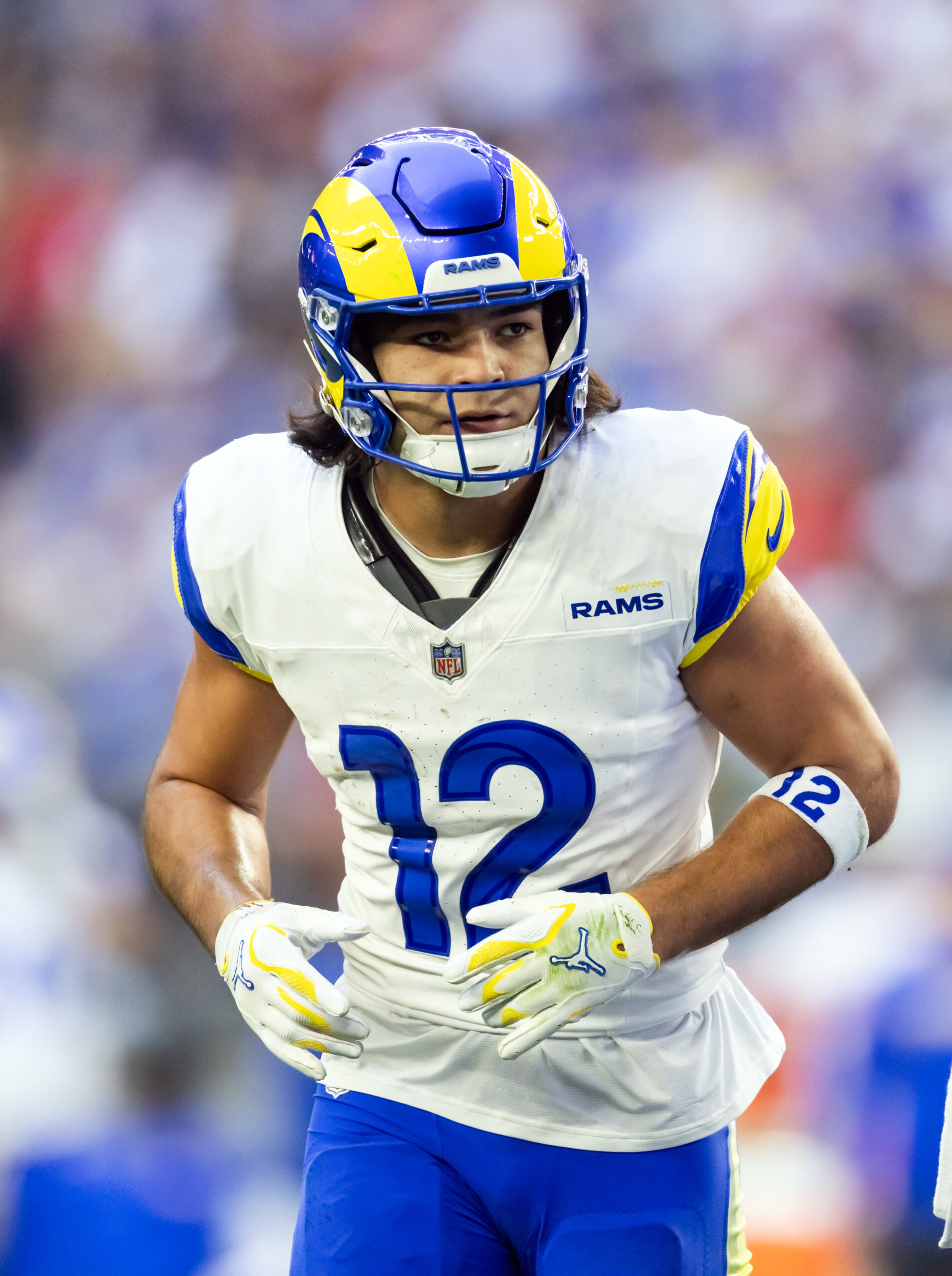 Then, early into the offseason, Nacua was the subject of a civil lawsuit stemming from a claim that he made numerous unprovoked antisemitic statements to a woman before allegedly biting her repeatedly on the shoulder. Nacua denied the allegations but checked himself into a luxury rehabilitation center in Malibu shortly after. Nacua has since returned to normal team activities as a “full participant,” but his off-field decision-making could factor into the terms of his potential future extension.
As Nacua was putting a bow on his 2025 campaign, reports indicated that extending the fourth-year receiver would be a priority for Los Angeles. In the aftermath of the news of his civil lawsuit, though, the team’s focus seemed to shift from extensions to additions.
The Rams may decide there’s something they need to see from Nacua before they can feel comfortable signing him long-term, but however long that takes, La Canfora seems certain it will get done, even if it might require the team to use some contract language that will protect the franchise in the event of any further off-field issues.
The Rams appear to have a generational talent in the building with an opportunity to keep him in LA for a long time. It’s become apparent that that future may come with a certain level of risk outside of the building, but it doesn’t appear that risk will be enough to deter a record-setting deal from occurring.
Myles Garrett Trade Fallout: Rams, Eagles, Carter, Browns, Verse, McCoy
The trade that sent longtime Browns defensive end Myles Garrett to the Super Bowl-hopeful Rams was a long time in the making — two months and four days, to be exact. According to Albert Breer of Sports Illustrated, that’s how long it took for negotiations between Rams general manager Les Snead and his Browns counterpart, Andrew Berry, to conclude.
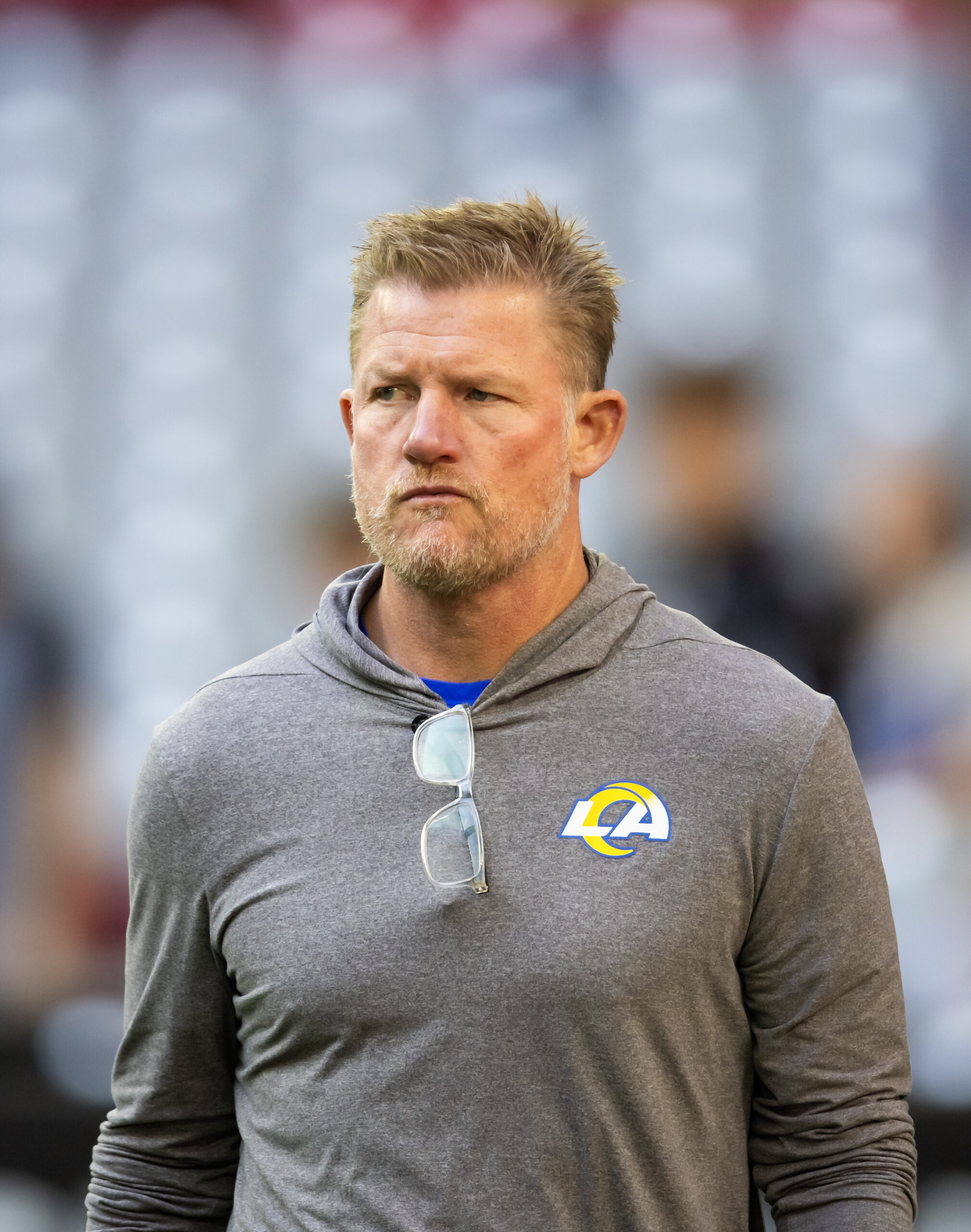 This wasn’t the first time the Rams had sent an offer to Cleveland; it wasn’t even the second. Los Angeles went shopping for pass rushers around the trade deadline in 2022 and, among offers to several other teams, offered two first-round picks and a fourth-rounder for Garrett, though Berry has no interest in trading him at the time. Then, following this past season, Snead called the Browns in late March and upped the offer.
The offer purely comprising of draft capital was not going to be enough, as Cleveland made clear following the draft that Rams defensive end Jared Verse would have to be a part of any trade, but it demonstrated how serious Los Angeles was about getting a deal done.
Over the long course of these negotiations, Berry made sure to keep Garrett in the loop. Per Breer, Garrett wasn’t the only one hearing from Berry. The seventh-year GM reportedly reached out to three well-known personnel executives in other sports. St. Louis Cardinals president of baseball operations Chaim Bloom, Oklahoma City Thunder GM Sam Presti, and Pittsburgh Penguins GM Kyle Dubas were trusted for advice and expertise, especially given Bloom and Presti’s trade experience in their respective sports. The trio’s input led to the team’s insistence on getting a player — not just draft picks — in the return-side of the trade.
Before ultimately agreeing to the final terms, Jimmy Haslam and his family hosted Berry and Garrett for one last meeting to reminisce and make sure Garrett was good with how things were concluding. Garrett’s contract included a no-trade clause, so his go-ahead was a crucial part of the deal, and according to ESPN’s Sarah Barshop, it was a decision Garrett needed to “sleep on” before finally waiving the no-trade clause.
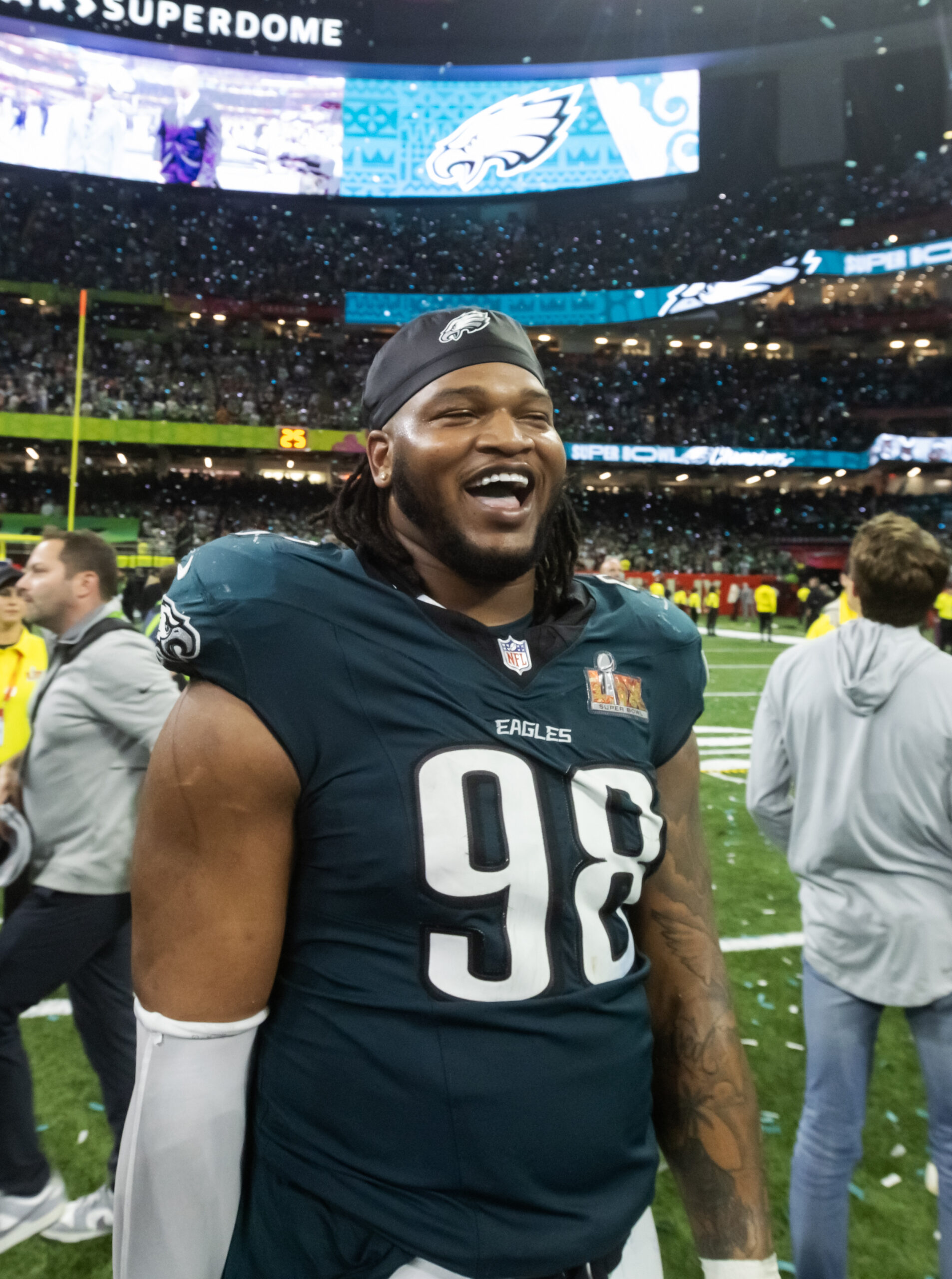 In the immediate fallout of the trade, some rumors emerged that the Eagles had been a team that expressed interest in trading for Garrett and that defensive tackle Jalen Carter was a potential trade target for Cleveland. Negating that notion, Mary Kay Cabot of Cleveland.com reported this week that Philadelphia “never made a play” for Garrett and that “there’s zero chance they would’ve wanted (Carter) in return.”
The player the Browns did want, Verse, also had some negative feelings about being traded, not towards his new team but in regard to leaving his home of the past two seasons. After the Rams drafted Verse at No. 19 overall in 2024, Verse rewarded them with two Pro Bowl campaigns to go along with his own Defensive Rookie of the Year honors.
In his introductory news conference in Cleveland (via Andy Backstrom of Yahoo Sports), Verse told the media, “I loved LA. I loved the coaches, the organization, my teammates, everybody a part of it, the fans — I loved the whole vibe of LA, the Los Angeles Rams, and it was upsetting. I was upset for a good little bit of time.”
The last tidbit of information relayed by Breer pertains to a different trade the team performed in the offseason. Los Angeles traded its second first-round pick in this past year’s draft, the 29th overall pick, to Kansas City in a package of picks that landed them Chiefs cornerback Trent McDuffie in return. Per Breer, the Rams had interest in Tennessee cornerback Jermod McCoy at the end of the first round, but when his draft stock plummeted for medical reasons, the team pivoted and made the move for McDuffie. McDuffie and Garrett now stand as two gigantic additions to a team looking to make the most of veteran quarterback Matthew Stafford‘s last few good years.
Rams Would Welcome Aaron Donald Unretirement
JUNE 5: The Rams plan to keep the door open for a Donald return well into the season, SportsBoom.com’s Jason La Canfora notes. This could mean an early-season return or a Suh- or Joseph-like midseason reemergence. Although Donald has been away much longer than those two DTs when they joined the Eagles midway through the 2022 season, plenty of smoke has emerged here since the Garrett trade.
JUNE 4: Aaron Donald ended one of the greatest careers in NFL history at age 33, stopping after 10 Rams seasons. The three-time Defensive Player of the Year made a case as the greatest defensive tackle ever during that period, but the Rams have been able to get by defensively without the all-time great.
The Rams have been able to stay afloat defensively due in large part to successful front-seven draft investments. The team hit on Kobie Turner and Byron Young in the 2023 third round and then landed Jared Verse and Braden Fiske in the 2024 draft’s first two rounds. Los Angeles used Verse as the headline asset in the Myles Garrett package, and Donald took notice of another future Hall of Famer joining the Rams’ defense.
Going a whole two seasons without a surefire Hall of Famer on defense, the Rams acquired Garrett and will pair him with the Young-Turner-Fiske trio. Donald, however, created considerable buzz in the wake of the trade by indicating he is considering a return to football. The Rams’ three-year, $95MM Donald — agreed to months after Super Bowl LVI — contract carries one more season, in the event Donald would want to follow Philip Rivers in delaying his Canton clock.
Unlike Rivers, Donald is a no-doubt first-ballot Hall of Famer. He also plays a far more rigorous position. Unsurprisingly, Sean McVay said (via ESPN.com’s Sarah Barshop) the Rams would welcome a Donald return. But the former superstar, who regularly posts workout videos to social media, is far from certain to complete a comeback even with Garrett headlining Chris Shula‘s third defense.
“Aaron’s a guy that I stay really close in touch with and I know the respect that he has for Myles,” McVay said. “Talked to [Donald] about the opportunity to be able to bring [Garrett] on board. If Aaron decides he wants to dust them off at the age of 35, I bet you he could still do it at a pretty high clip.”
Perhaps the only D-lineman whose peak rivals Donald’s this century, J.J. Watt also teased an unretirement earlier this decade. Retiring after the 2022 season, when a heart scare occurred, Watt said he would consider a comeback to join the Texans or Steelers. But the CBS analyst said that window would close after the 2024 season. Donald is further removed from his career than his former peer was when he mentioned the prospect of a comeback, offering another complication.
Rather than rejoining the Rams this summer and going through another training camp, Donald could delay an unretirement for a bit and consider an in-season return. This seems like the more realistic path, Sports Illustrated’s Albert Breer offers. Mentioning Eric Weddle‘s unretirement in time for the 2021 playoffs — after the Rams had lost multiple safeties — as a potentially notable example (Weddle initially retired after the 2019 season).
The Eagles also signed Ndamukong Suh and Linval Joseph in mid-November 2022, adding the vets to their D-line after neither had gone through training camp or played in the first half of that season. Both played rotational roles for the NFC champions that year.
Donald playing a rotational role would be rather strange given his abilities pre-retirement. After missing a chunk of the 2022 season due to injury, Donald roared back with a seventh first-team All-Pro season in 2023. He finished that ’23 season with eight sacks and 16 tackles for loss, helping a Rams team that had themed 2023 around cost-cutting moves back to the playoffs.
Los Angeles has Fiske and Turner as locked-in regulars on its D-line. Donald returning would stand to cut into the younger 3-4 ends’ playing time. But a defense rostering Garrett and Donald to go with some rising young talents would obviously be formidable. Beyond a 2022 high ankle sprain, Donald does not have much of an injury history. Prior to 2022, the only two games he missed were due to a 2017 holdout. This may be a storyline to monitor well into the season — or until Donald shuts it down — as the Rams are viewed as early Vegas favorites to win a Super Bowl set to take place at SoFi Stadium.