
Three-Man Starting Battle In Bears’ Pass Rush
The Bears finished 2025 with the seventh-fewest sacks in the league. Star pass rusher Montez Sweat led the team with 10.0 sacks, 13 tackles for loss, and 18 quarterback hits, but no other defensive end on the team reached even half his sack total. Chicago will be looking for someone to step up in 2026, and according to Courtney Cronin of ESPN, a three-man competition will play out over training camp to determine who will start across from Sweat.
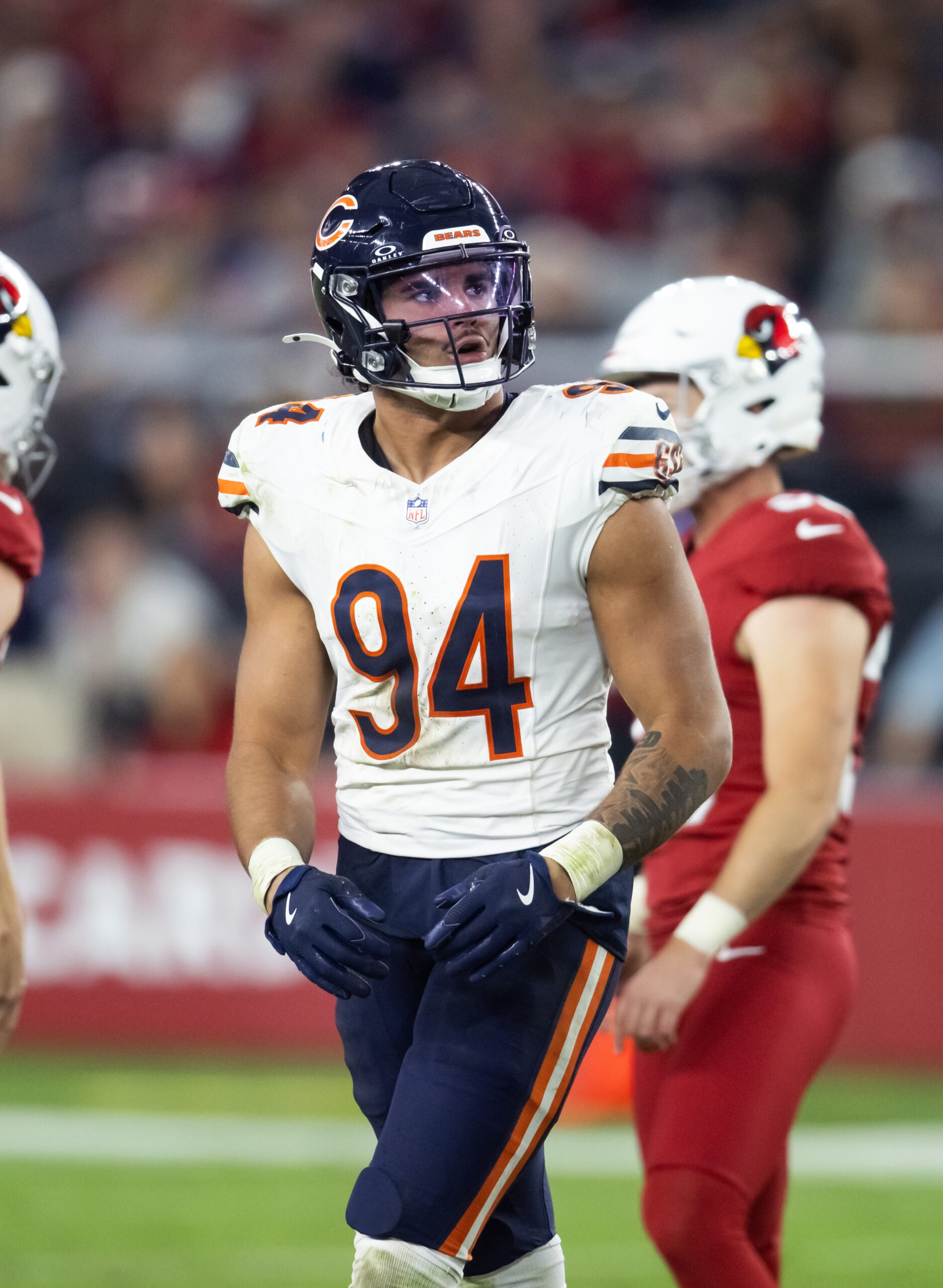 Last year, the Bears employed free agent addition Dayo Odeyingbo as a starter after signing him to a three-year, $48MM contract. The team was counting on Odeyingbo to take a step forward after only amassing 16.5 sacks in four years with the Colts.
To be fair, Odeyingbo didn’t start until his final year in Indianapolis. He showed strong progress leading up to that, improving from 0.5 sacks as a rookie to five in Year 2 then tallying eight in 2023. Starting 14 games in a contract year, Odeyingbo only totaled three sacks, though he created a decent amount of pressure, as evidenced by 17 quarterback hits.
In his first year in Chicago, Odeyingbo started eight games before suffering a torn Achilles tendon. He notched a sack, a tackle for loss, and two quarterback hits in his first game with the team, but over the next seven weeks, Odeyingbo only made one more tackle for loss and two more quarterback hits. Odeyingbo is expected to return to the field in training camp, but whenever he does, he’ll have to fend off two challengers for his starting position.
Before the 2025 season began, second-year end Austin Booker had been tabbed as a breakout candidate, but a knee injury in the preseason put him on injured reserve for the first eight weeks of the season. Booker’s first game back was the day Odeyingbo got hurt, allowing for a smooth transition for Booker into the starting lineup for the second half of the season. In 10 games, Booker delivered to some degree on the breakout promise, notching 4.5 sacks, five tackles for loss, and 12 quarterback hits.
The third man in this competition is second-year defender Shemar Turner. The Texas A&M-product debuted in the third week of the season as the Bears worked to shift him out from the more traditional interior role he played in College Station to the edge. The rookie second-rounder ended up splitting his time between the two positions in a rotational role off the bench but wasn’t able to produce much before tearing his ACL the week before Odeyingbo’s injury. Upon his return from injury, though, Chicago reportedly intends to continue working him in an edge role.
So, the Bears have two players coming back from serious injuries and Booker, who impressed to some degree in his return from injury last year. The team didn’t make any moves in the draft or free agency to supplement the group, so it seems clear they feel confident moving forward with the group they have. On that note, though, Cronin believes that, if Odeyingbo’s return in camp doesn’t inspire confidence that he’ll be able to effectively contribute this year, Chicago may become a potential destination for one of several veteran free agent pass rushers on the market today.
Former K Jose Borregales Turns To Scouting
It was a bit of a disappointment not to see former Buccaneers kicker Jose Borregales find his place in the NFL. The former Lou Groza-winner quickly fizzled out of Tampa Bay and saw similarly unsuccessful stays in the XFL and CFL. According to Matt Zenitz of CBS Sports, though, Borregales will be pursuing a new route to the NFL when he works as a Nunn Wooten scouting fellow for the Dolphins in training camp.
Borregales started his initial road to the NFL as a kicker at FIU, staying local for college after growing up in Miami. As a redshirt sophomore working his second season as the Panthers’ primary placekicker, Borregales was a finalist for the Lou Groza Award (given to college football’s best kicker), finishing behind current Browns kicker Andre Szmyt. Staying local a second time, Borregales transferred to Miami (FL) for his redshirt senior year. After converting 20 of 22 field goals attempts and all 37 extra point attempts, Borregales won the Lou Groza Award and was named first-team All-ACC and a consensus first-team All-American.
Despite his success with the Hurricanes, Borregales went undrafted in a 2021 draft that only saw one kicker — Evan McPherson of the Bengals — selected. He signed with the Buccaneers, who had just signed Ryan Succop to a three-year extension. Still, Borregales initially made the team’s 53-man roster, but the team waived him three days before the start of the regular season and stashed him on their practice squad. Borregales signed a reserve/futures deal to stick with the team another offseason, but when he was waived in final roster cuts in 2022, it appeared to be the end of his opportunity in the NFL.
Borregales’ latest move is once again keeping him local. A fellowship with the Dolphins will give the 28-year-old an opportunity at a new path to the NFL. If he eventually finds a permanent role in the Dolphins’ personnel department, he’ll be scouting to build a roster that can beat the reigning AFC East champion Patriots, a team that rosters his little brother, Andy Borregales.
Jets’ QB2 Battle Between Bailey Zappe, Cade Klubnik
The Jets quarterback position is built for the future, but at the moment, it’s built for a short-term future. Starter Geno Smith is now two seasons removed from his last Pro Bowl campaign, and coming off a 2-13 year in Las Vegas, the 35-year-old’s homecoming back to the team that drafted him is not a move intending for him to lead the team long term. Instead, he should be expected to serve as a bridge passer until the team can find a promising successor.
 Currently, it’s anticipated that the arm of the future will come from the 2027 NFL Draft class, which is expected to be rich in quarterback talent. Because of this, unless New York looks like a playoff contender early, the team won’t want to win so many games that it takes them out of position to land a top passer in next year’s draft. If the team falls out of contention early, though, the Jets may opt to bench the veteran, lessening their chances at achieving wins without significance and giving them a chance to get eyes on other arms currently in the system.
To that end, the QB2 battle in New York holds a decent amount of intrigue. Assuming the Jets don’t become world beaters in 2026, it’s reasonable to assume that, at some point in the season, the team will sit Smith, at which point the primary backup quarterback will get their opportunity to shine. Back in May, it was reported that Bailey Zappe, Brady Cook, and Cade Klubnik were all considered contenders for the No. 2 job with Zappe an early leader in the race. According to Rich Cimini of ESPN, the latest reports seem to indicate that Cook has fallen out of reach of a competition that now appears to be Zappe vs. Klubnik.
Cook was an undrafted rookie for the Jets last year out of Missouri. He spent most of the season on the practice squad, moving to the active roster late into the season, when initial starter Justin Fields was made inactive for Week 14. He made his NFL debut when New York benched starter for the week Tyrod Taylor as they reached a 21-0 deficit in the first quarter. Cook finished the game and would make the final four starts of the season for Gang Green after. In those five games, he finished the season having completed 57.5 percent of his passes for only 739 yards, two touchdowns, and seven interceptions.
Between Zappe and Klubnik, it’s a difference between experience and potential. Zappe showed potential early in his career. Over a four-game stretch covering for an injured Mac Jones in his rookie season, Zappe completed 70.7 percent of his passes for 781 yards and five touchdowns to three interceptions. In six starts the next season, Zappe failed to recreate his early success, completing 59.9 percent of his passes for 1,272 yards and six touchdowns to nine interceptions. He appeared in one game over the past two seasons, losing a solitary start for the Browns in 2024 before sitting on Cleveland’s practice squad behind Joe Flacco, Dillon Gabriel, and Shedeur Sanders last year.
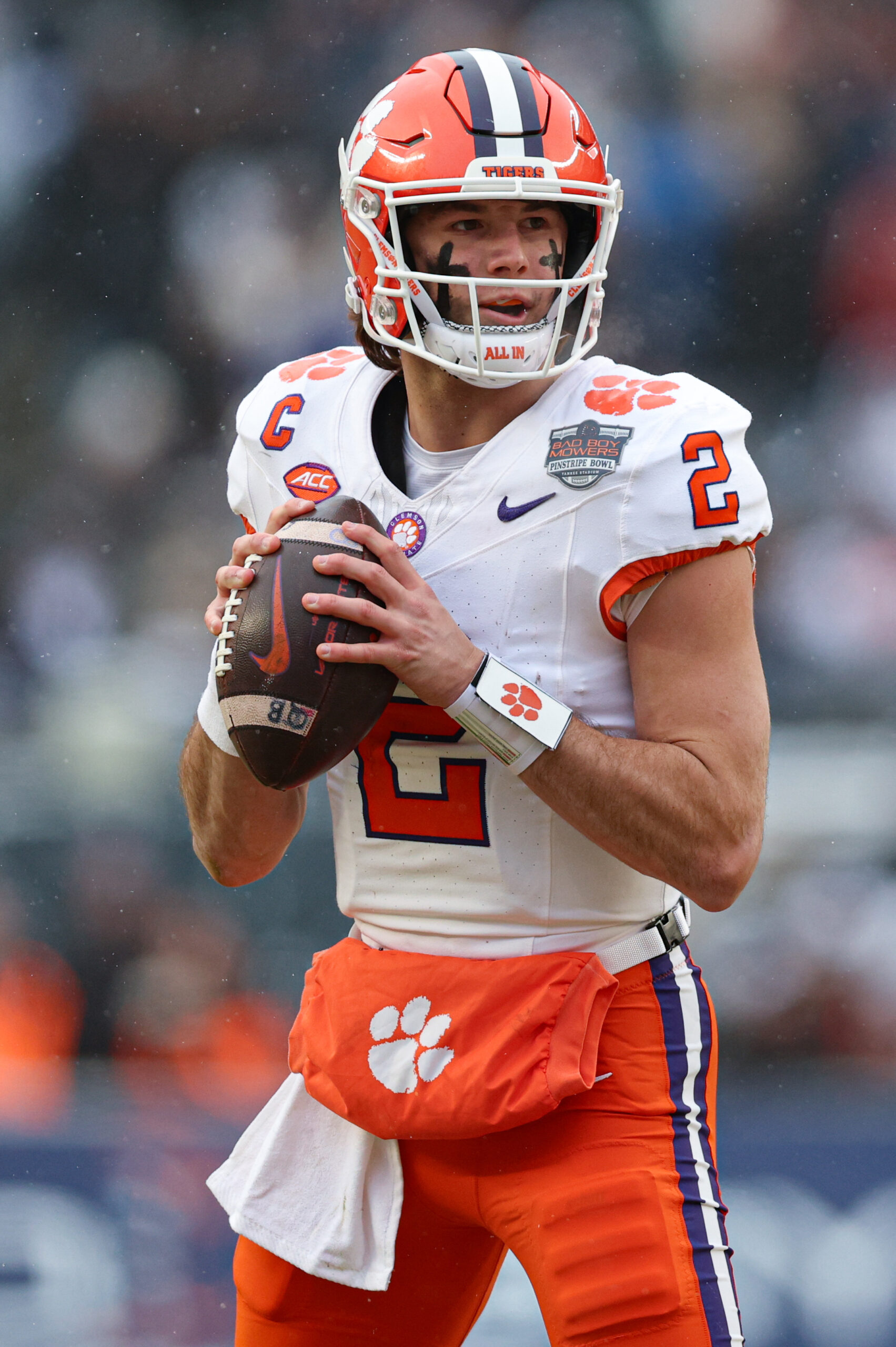
Klubnik is an intriguing rookie option for New York. After a strong junior season at Clemson, many predicted he could wind up going in the first round, following in the footsteps of Trevor Lawrence and Deshaun Watson before him. A disappointing senior campaign put a damper on those hopes as Klubnik fell to the fourth round of this year’s draft. Klubnik even helped his draft stock a bit as he impressed the Jets throughout the pre-draft process, and he continued to impress in the spring. Per Cimini, his coaches don’t believe there’s much work to be done with his mechanics. They believe all he needs to develop is experience.
Practically, if Smith goes down, Zappe reasonably gives the Jets a better chance to win now than Klubnik. Considering the path that this team is on right now, though, if Smith isn’t starting and the coaches feel comfortable putting the ball in Klubnik’s hands, it would do New York a lot of good to be able to see what they have in Klubnik before turning back to the draft for the next highly drafted QB.
No Indications Of Tanner McKee Trade Amid Eagles’ QB2 Battle
A few weeks after the Eagles fell disappointingly short in their efforts to retain their status as Super Bowl Champions, Zach Berman of The Athletic laid out the blueprint of an offseason plan for how the team might work their way back to the pinnacle of the sport. This plan included a bit of shuffling in the roster depth at the quarterback position. Predictions of trading away QB2 Tanner McKee have not come to fruition, but McKee is seeing some competition to retain his responsibilities as the primary backup to Jalen Hurts.
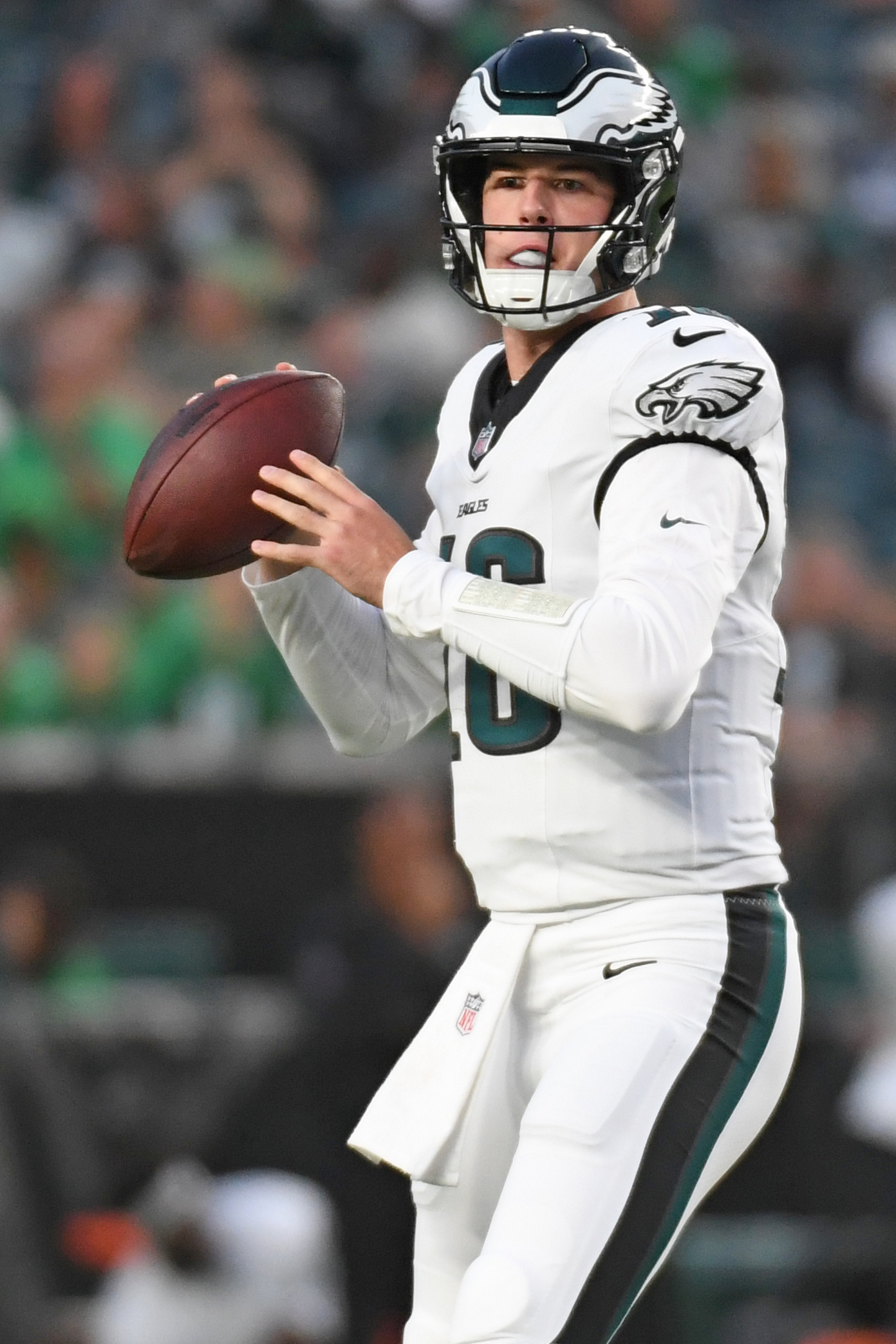 Based on the success shown in McKee’s two appearances at the end of his sophomore season, Berman suggested that it may be worthwhile to cash in on that sample by trading McKee to a QB-needy team. Instead of allowing McKee to become the next Malik Willis in free agency, it may be prudent to trade McKee, before his contract year, to a team that may overpay in return for Philadelphia’s former sixth-round pick. Of course, the Eagles need a backup quarterback, and after the team allowed reserve passer Sam Howell to depart for Dallas in free agency, trading away McKee would necessitate the addition of at least one new arm (and likely a couple more to get through camp).
To that end, Berman suggested the signing of a free agent in their mid-20s with starting experience — perhaps a reunion with Kenny Pickett — and the drafting of a mid- to late-round rookie. A trade to ship out McKee never took shape, and per Berman, there has been “no indication” that one will. With McKee in place behind Hurts, it seemed only a draft addition might be needed, and the Eagles delivered on that by selecting North Dakota State passer Cole Payton in the fifth round.
While Philadelphia now had the three bodies in the QB room that Berman desired, the team still chose to pursue a veteran arm with starting experience. After Berman’s preferred target signed with the Panthers, the Eagles opted to relieve Pickett of competition for the QB2 role in Carolina by trading to acquire Panthers backup Andy Dalton. Now, Dalton is a veteran with starting experience, like Berman was looking for, but at 38 years old, Dalton is a tick past his mid-20s. At first, it was thought that he was brought in to add a veteran voice to the room, but Berman is under the impression that Dalton is legitimately pushing McKee for the QB2 role.
Dalton’s addition doesn’t just alter McKee’s situation but Payton’s, as well. Before the trade, it seemed that Payton had been drafted to fill the QB3 role left vacant in Howell’s departure. With Dalton in the mix, now, it seems apparent that the third string role could be given to the loser of the QB2 battle. It doesn’t quite make sense to let Payton walk, though. The team grew to like him while meeting during the pre-draft process as Payton was rising up draft boards.
Because of this, Berman doesn’t rule out the possibility that McKee still might be traded away. If the Eagles believe they are secure with Dalton and Payton behind Hurts, they may opt to deal McKee and shift focus to developing Payton. If they don’t think Dalton is capable of effectively backing up Hurts, though, they may find it necessary to hold on to McKee and utilize the final year of his rookie deal.
If McKee does get dealt, Berman offered that a team like the Jets could have been interested. It was recently reported that New York might keep an eye on Titans backup Will Levis for a late trade or waiver wire pickup, and while Levis has a bit more experience that McKee, the two wouldn’t be that far apart as potential trade targets. Philly reports to training camp about a week and half from now, and all eyes aren’t necessarily on this competition, but it could have major ramifications for the front office’s decision-making.
Commanders Lacked CB Depth Before Rasul Douglas Addition
The Commanders made a veteran addition to their secondary when they signed cornerback Rasul Douglas 12 days ago, alleviating the concerns of several who had been calling for reinforcements at the position. Rumors had run rampant that Washington had forgotten to address a major position of need, but according to ESPN’s John Keim, Douglas’ deal had been in the works for some time.
 Before Douglas joined the fold, the Commanders only had three cornerbacks — 2025 first-rounder Trey Amos, 2024 second-rounder Mike Sainristil, and veteran free agent addition Amik Robertson — under contract past this year, not counting undrafted rookie Fred Davis II. Keim went on to add that Amos, Sainristil, and Robertson were the only roster locks at the position until Douglas joined.
In addition to depth, Douglas also elevates the talent of the top group a bit. According to Pro Football Focus (subscription required), the two incumbent starters and Robertson all performed below average in 2025. Out of 112 cornerbacks with enough snaps to qualify for the site’s rankings, Amos finished last year ranked 80th, Sainristil ranked 95th, and Robertson ranked 106th with the Lions. Free agent departures Noah Igbinoghene (81st), Marshon Lattimore (93rd), and Jonathan Jones (100th) didn’t fare much better. As a starter for the Dolphins last year, Douglas ranked as the 24th-best cornerback in the league.
Washington featured a heavy rotation last year between Sainristil, Lattimore, Amos, and Jones at outside cornerback. Sainristil worked as a starter on the outside in base packages but would shift inside to the slot when an additional corner was brought on. Robertson served as the Lions’ top nickelback in 2025, so his addition should relieve Sainristil of his duty to lead at both positions. The hope is that Amos will be healthy enough to start full-time across from Sainristil on the outside, while the veteran, Douglas, provides another rotation corner on the outside with starting experience.
Behind those four, the Commanders roster Ahkello Witherspoon, Antonio Hamilton, Tre Hawkins, Darius Rush, and Davis. Witherspoon brings a ton of experience with a couple seasons as a full-time starter in his nine-year career. He’s coming off a campaign in which he was limited to only six games due to injury, which has been a common theme throughout his career. Witherspoon has only appeared in every game of a season once and has played in 10 games or fewer in four seasons. As long as he’s healthy, though, Witherspoon should occupy a fifth roster spot.
Hamilton will also put up a fight for a spot. The 10-year veteran has never served as a full-time starter, but he offers enough special teams usage to warrant 10 seasons of NFL play. Hawkins has appeared in only four games over the past two years after starting three of 17 appearances for the Giants as a rookie. Rush has seen extremely limited time on defense in his three years in the NFL, appearing in only six games over that span. Hawkins and Rush each only appeared in one game for the Commanders last year. Davis showed a lot of promise as recruit before committing to Clemson but went undrafted after transferring to UCF, Jacksonville State, and Northwestern over six years in school.
It’s clear Amos, Sainristil, Robertson, and Douglas will man four roster spots, and Witherspoon and Hamilton should be favorites for two more. The talent and experience disappear beyond those two, marking just how crucial Douglas’ addition to the roster was.
Titans Hope For Competitive Depth In Improved WR Corps
Last year, the Titans were unable to trot out a receiving corps featuring talent and experience for rookie No. 1 overall pick Cam Ward. As a result, much of the appeal Ward brings to the game was limited. With a leaky offensive line, receivers that couldn’t always get open, and Ward’s care not to throw interceptions (only seven in Year 1), this led to held balls, resulting in league-worst numbers for sacks (55) and fumbles (11), and hasty decisions, leading to the third-worst completion percentage (59.8) for starters last year.
 Tennessee continued work to address both the offensive line and receiving corps in the offseason and are hoping to see a Year 2 leap for their potential franchise QB, as a result. The team’s largest splurge in free agency secured former Giants wide receiver Wan’Dale Robinson, who caught at least 90 balls in each of the past two seasons and led New York with 1,014 receiving yards last year. The Titans’ big free agent acquisition from 2024, Calvin Ridley, appeared to be in danger of becoming a release candidate after a rough 2025 outing, but the veteran wideout agreed to a pay cut to keep him in Nashville.
Another big addition to the room came in the first round of this year’s draft, when Tennessee created shockwaves by selecting Ohio State’s Carnell Tate at No. 4 overall. Ward was able to get some decent production out of rookie pass catchers Chimere Dike, Elic Ayomanor, and (tight end) Gunnar Helm last year, and much more will be expected out of Tate in 2026. A receiver drafted in the top five picks should be expected to develop into a WR1, but lucky for Tate, the presence of top earners Robinson and Ridley should take some of that burden of expectation off his shoulders.
According to Titans senior writer/editor Jim Wyatt, no one generated more buzz than Tate in the offseason. While he delivered on some of the initial hype with some highlight plays, Tate was a bit quieter as Organized Team Activities came to a close, which is not uncommon as team’s often use those offseason periods to evaluate the depth and unproven assets of the roster. Robinson struggled to find chemistry with Ward early into spring ball, but Wyatt asserted that no receiver came out of Tennessee’s early offseason program with more momentum as he and Ward became better acquainted. Ridley was limited for much of the spring, as he is still working his way back to 100 percent.
 For the second-year receivers, Dike and Ayomanor continued to show the effort and productivity that earned them big roles in the offense as rookies, but Wyatt reports that no receiver caught more passes in 7-on-7 work and team drills than Xavier Restrepo. Ayomanor led last year’s receiving corps in yards (515) and the first-team All-Pro returner, Dike, led in receptions (48). While both tied for the team lead with four touchdown receptions, Dike’s two punt returns for touchdowns gave him the team lead overall. Restrepo, an undrafted signee and Ward’s favorite target at Miami (FL), didn’t make his NFL debut until Week 11 as a practice squad elevation. Ward and Restrepo connected twice in that outing, and Restrepo was called up again the next week for a game in which he suffered a season-ending injury.
With Robinson, Tate, and Ridley presumed to be likely starters and last year’s starters, Ayomanor and Dike, sure to get plenty of run in rotation, Wyatt predicts only one more spot available on the Titans’ initial 53-man roster, with a few more available on the practice squad. Competing for that last spot with Restrepo has been veteran and fellow Hurricane K.J. Osborn, Bryce Oliver, Mason Kinsey, and undrafted rookies Hank Beatty and Tyren Montgomery. The team also rosters Courtney Jackson and Lance McCutcheon. Osborn offers the most experience, as demonstrated by a three-year stretch with the Vikings in which he totaled 158 catches for 1,845 yards and 15 touchdowns. Oliver and Kinsey offer special teams upside, while Beatty and Montgomery could continue developing on the taxi squad.
The fact that the top five spots are fairly secure and that the Titans are expecting a spirited competition for the WR6 spot is a major improvement from where the group stood a year ago. Assuming the result is better targets for Ward, the pressure will be on the sophomore passer to deliver and on Tennessee’s offensive line to keep him upright.
Examining Ravens’ OL Roster Outlook
With today’s signing of center Ethan Pocic, the Ravens’ offensive line is starting to fall into place. With Pocic favored to secure the team’s starting center job, the rest of the starting five and backup spots can be projected as training camp nears.
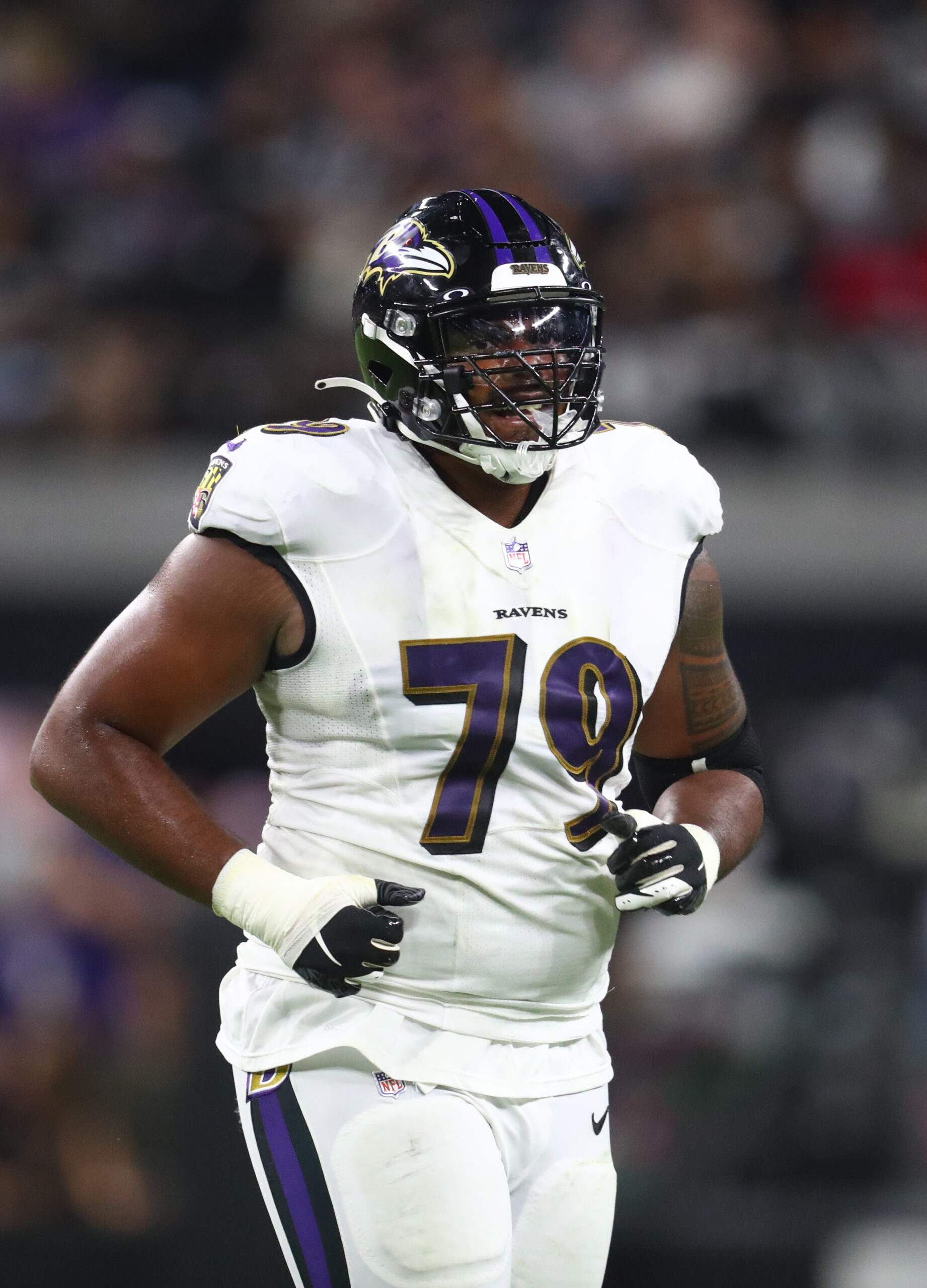 Assuming Pocic can beat out Danny Pinter, Corey Bullock, and Jovaughn Gwyn to start in the middle, he’ll join returning starting tackles Ronnie Stanley and Roger Rosengarten on the first-team offense. The guard spots are expected to go to free agent addition John Simpson, who returns to Baltimore after two seasons in New York, and rookie first-round pick Olaivavega Ioane. According to Jeff Zrebiec of The Athletic, the team’s third- and fifth-round picks from 2025, Emery Jones Jr. and Carson Vinson, are Baltimore’s top backup tackle options.
Assuming they’re locked into roster spots alongside the starting group, Zrebiec predicts that only two or three spots would be left on the eventual 53-man roster. Pinter, Bullock, Gwyn, and undrafted rookie Nick Dawkins represent depth options for a necessary backup center spot; last year’s starter at left guard Andrew Vorhees, 2025 UDFA Jared Penning, and seventh-round rookie Evan Beerntsen will compete as options at guard; and undrafted rookie Diego Pounds adds another tackle option.
Vorhees and Pinter seem like obvious keeps for the interior line, given their starting experience. Vorhees graded out last year as the 59th-best guard in the league (out of 79 players graded at the position), per Pro Football Focus (subscription required), and Pinter only has 10 starts in six years, but both likely would have been in line for starting jobs had Simpson and Pocic not arrived in free agency. The staff in Baltimore has shown a lot of faith in Bullock’s potential since signing the undrafted lineman last year, so if they plan on holding 10, he could be the last guy.
That would leave Pounds, Penning, Beerntsen, Gwyn, and Dawkins on the outside looking in. It wouldn’t be too surprising for Pounds and Dawkins to fall short as undrafted rookies, and Penning spent his rookie year on the practice squad and could find his way back in Year 2. Gwyn was a low-cost swing at interior OL depth, so his loss wouldn’t be too hard to swallow. If the team waives Beerntsen, it would be the second year in a row that Baltimore drafted a seventh-round lineman who failed to make the initial 53.
Training camp is a week away, and there’s still plenty of time for some of those last few players to make something happen. But after today’s key signing, the picture of the Ravens’ offensive line is starting to come into focus.
Packers’ Rookie G Jager Burton Impressing Early
After trading for Micah Parsons last year, the Packers didn’t have a first-round pick in April. The team is still expecting some strong contributions from its rookie class, though, and it may have found a surprise contributor in fifth-rounder Jager Burton, per ESPN’s Rob Demovsky.
A four-year starter at Kentucky, Burton was announced as a center at the draft, but his experience in college was that of a Swiss Army knife on the interior offensive line. After serving as a starting left guard for the Wildcats as a redshirt freshman, Burton opened the season as at center the following year before shifting to right guard after three games. He moved back to left guard in 2024 before finishing as the team’s starting center last year.
The Packers had to be flexible in 2025 when center Elgton Jenkins went down with injury. The team plugged in former starting guard Sean Rhyan who seems likely to open the season as the starting center again this year. Starting guards Aaron Banks and Jordan Morgan return for 2026, but neither occupied their starting spot during minicamp earlier in the offseason. Banks was working with the rehab group in the spring, and Morgan kicked out to right tackle to cover for Zach Tom, who was also with the rehab group.
In the meantime, Burton has been getting ample run at both guard positions and has been impressing so far. “I see a really young guy that’s extremely coachable, athletic, and is maximizing the most of his opportunities,” head coach Matt LaFleur told reporters. “So, I think every practice he gets a little bit more comfortable, a little bit better, and I can see him, he’s definitely going to be in the mix to compete for playing time this year.”
The Packers seem to have found a valuable swing piece along the interior offensive line. They’ll hope they won’t need to rely on him too much as a rookie, as the offensive line gets healthier and allows Banks and Morgan to return to their usual spots. Still, Burton may have secured himself as the top interior offensive lineman off the bench in Green Bay.
Ravens DT Nnamdi Madubuike ‘Pointed In The Right Direction’
Two games into the 2025 season, the Ravens lost defensive tackle Nnamdi Madubuike to what would end up being a season-ending neck injury. Initial silence from the team in the immediate aftermath painted a bleak picture of what the 28-year-old was dealing with, but after a long wait, Ravens general manager Eric DeCosta delivered an optimistic update on the situation yesterday, while promising more information in two weeks.
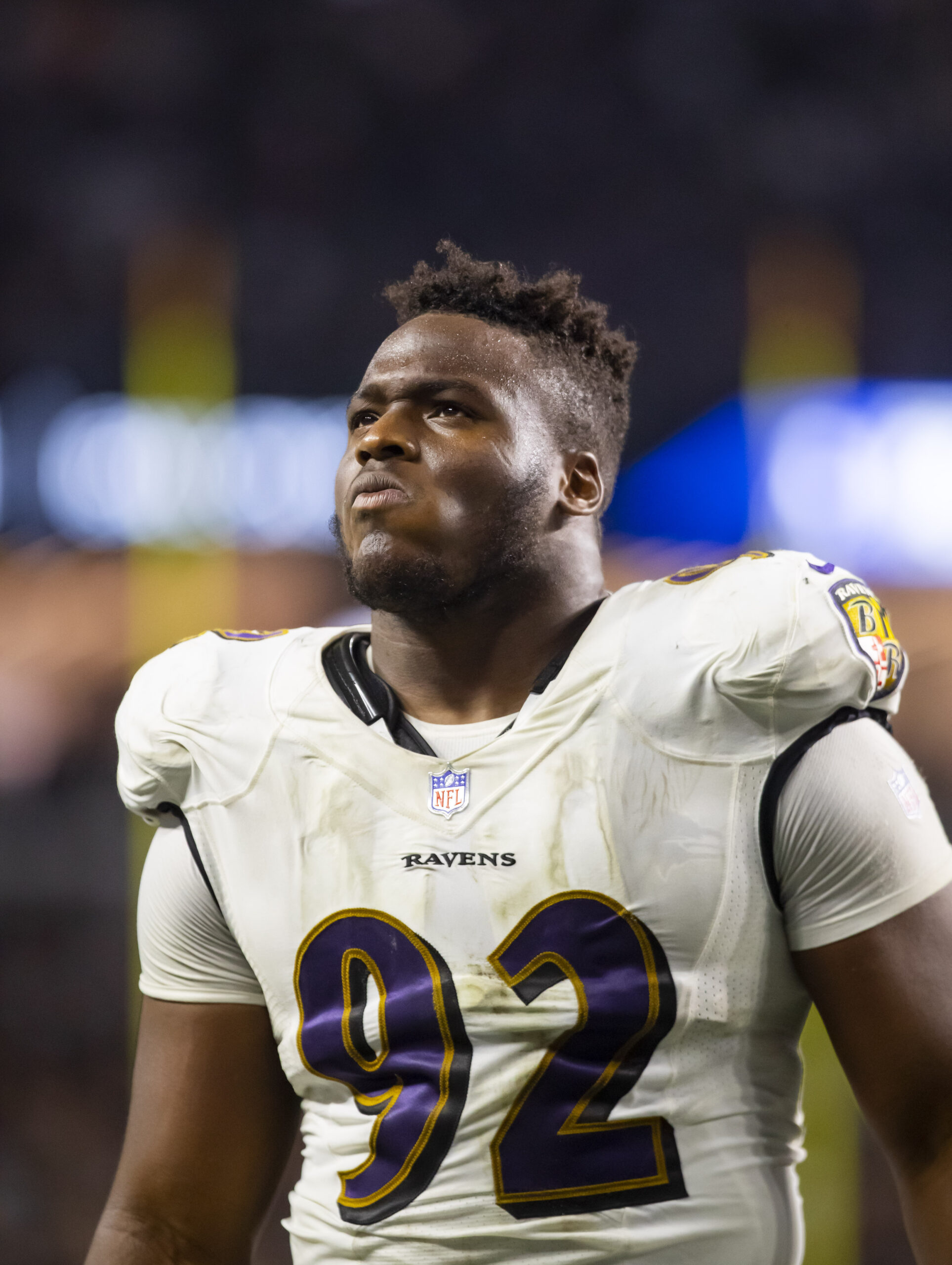 Madubuike entered 2025 coming off his second straight Pro Bowl season. His 2023 campaign, in which he logged career highs in sacks (13.0), tackles for loss (15), and quarterback hits (33), established him as one of the top pass rushing big men in the league. Madubuike’s absence crippled Baltimore’s pass rush, which finished with the third-lowest sack total in the league last year.
After Madubuike went down, reports on the situation were few and far between. After the season came to a close, the team expressed some optimism that the Texas A&M-product would eventually be able to come back from the injury. A few weeks later, Madubuike underwent neck surgery. The reports announcing the procedure were accompanied by expectations from his doctors that he would be able to return in 2026, but details and a specific timeline remained elusive.
Yesterday, DeCosta called in for an interview on 105.7 The Fan, a Baltimore sports radio show. When asked about the status Madubuike’s recovery, DeCosta stayed consistent with the lack of specifics. After providing a positive update for linebacker Teddye Buchanan, who surprised as a rookie starter for the defense last year, the GM classified Madubuike’s situation as “a little bit more unclear.”
“Everything looks to be pointed in the right direction,” DeCosta said, “but, you know, you’re talking about a different type of injury, a different type of circumstance. I’m excited about where Nnamdi is, and I think we’ll have more information in the coming weeks. Like, in the next two weeks, I think we’ll have a lot more information that we’ll be able to share with people.”
Getting Madubuike back would be a huge boost for a defense that’s looking to put 2025 behind them. Veteran John Jenkins proved to be a solid depth piece filling in last year, but if the Ravens are able to slot Madubuike in amongst last year’s breakout interior defender Travis Jones and returning veteran Calais Campbell, the difference in Baltimore could be night and day. Ravens fans are justified in keeping their optimism cautious, but if DeCosta can deliver on his promise of information to come, it could mean big things for the team’s defense.
Minor NFL Transactions: 7/17/26
Friday’s minor transactions from around the NFL:
New England Patriots
- Waived: DT Travis Shaw
San Francisco 49ers
- Waived: OL Zachary Thomas
Thomas didn’t play in 2025, only spending two weeks on the Colts’ practice squad. In 2024, the former Rams sixth-round pick played eight games for the Patriots, including two with significant snaps on offense. After getting waived, he appeared in six games for the Texans to finish out the season. He opted to sign a reserve/futures deal with the 49ers in January, instead of playing in the UFL. Shaw was a late undrafted free agent signing for the Patriots out of Texas.