
We are now in Year 34 of the franchise tag, a retention tool that came about during the same offseason in which full-fledged free agency spawned. The NFL salary cap is rising at a rate allowing teams to hammer out more extensions than in previous periods. That has helped dilute free agency talent pools. This led to a 2025 landscape in which only two players — Tee Higgins and Trey Smith — received the franchise tag. The cap, which stood at $279.2MM in 2025, is expected to rise beyond $301MM this year.
This year’s free agent class looks to feature only one tag lock, but a handful of players make sense as candidates to be kept off the market. An antiquated NFL system regarding positional classifications also affects this year’s free agency crop, as a couple of high-end UFAs-to-be (Tyler Linderbaum, Devin Lloyd) would likely be kept off the market if the league modernized how it sorted positions with regards to tag prices.
Teams who use the franchise or transition tag have until July 15 to complete an extension; otherwise, negotiations cannot restart until after the 2026 season. The transition tag does not bring any compensation back for an unmatched offer sheet, but the two-first-rounder component associated with a franchise tag has not been especially relevant in ages. Although offer sheets have come out in previous eras (Sean Gilbert and Dan Wilkinson signed unmatched offers in the 1990s), clubs avoid these in fear of an unmatched proposal requiring two first-round picks to be sent to the tagging team.
The tag window opens at 3pm CT today. With clubs having until 3pm CT on March 3 to apply tags, here is who may be cuffed:
Likely tag recipients
George Pickens, WR (Cowboys)
Projected tag cost: $28.82MM
The Cowboys have regularly turned to the tag over the past decade. They cuffed DeMarcus Lawrence in 2018 and ’19 before locking down Dak Prescott in 2020 and ’21. The latter Prescott tag was procedural, as the quarterback used the threat of a lofty second tag number hitting Dallas’ cap sheet as leverage toward a player-friendly extension — one that laid the groundwork for his 2024 player-friendly extension. The Cowboys then kept Dalton Schultz (2022) and Tony Pollard (’23) off the market. After two years without unholstering their tag, the Cowboys appear all set to prevent Pickens from reaching free agency.
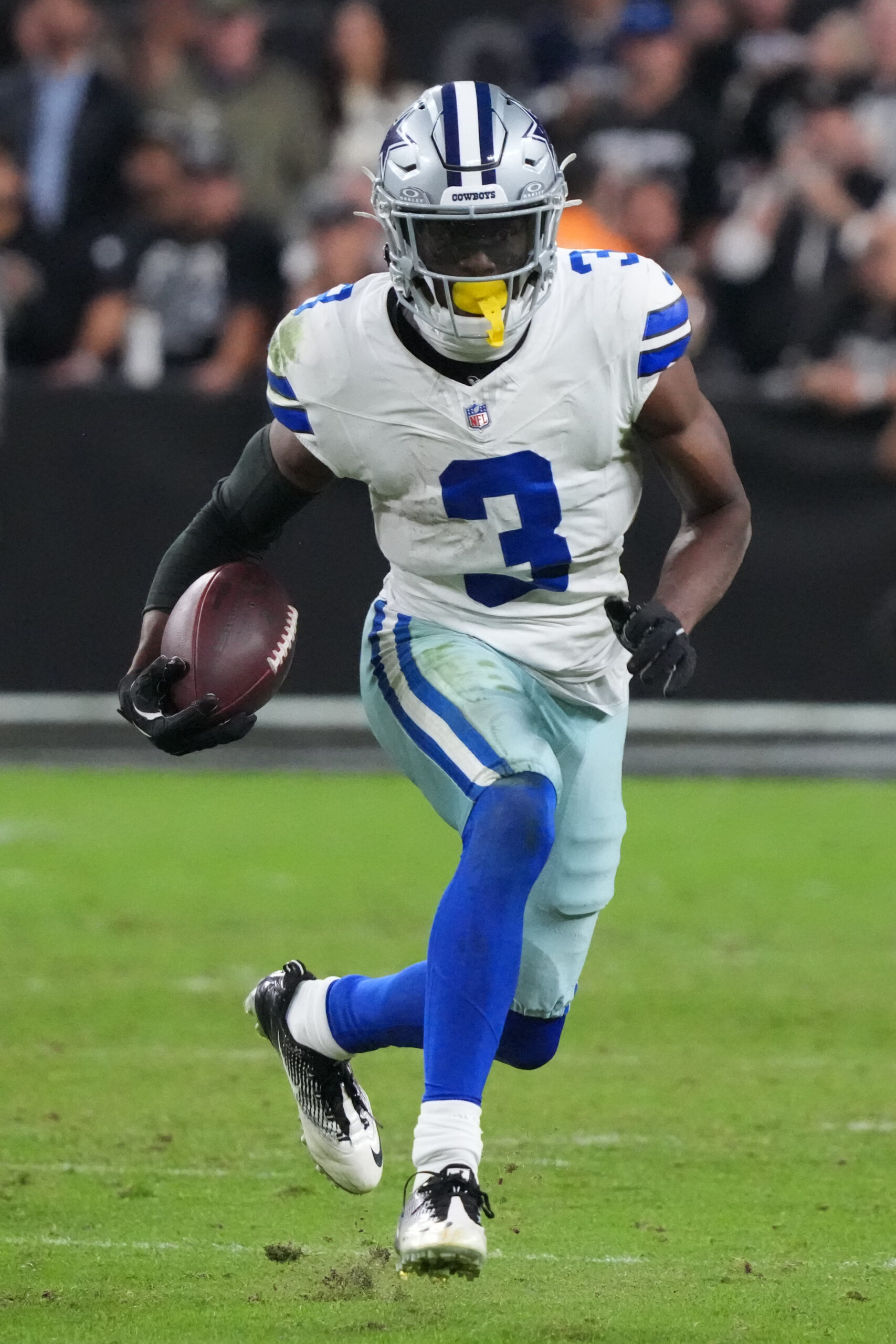 Acquiring Pickens in a May 2025 trade with the Steelers — which featured a 2026 third-round pick as the top asset going back to Pittsburgh –Dallas reaped immediate benefits from that swap. Pickens, 24, smashed his career-high receiving mark with 1,429 yards and nine touchdowns. That booked the former second-round pick his first Pro Bowl honor; more impressively, Pickens was named a second-team All-Pro. The mercurial ex-Steeler WR1 was more than 300 receiving yards clear of CeeDee Lamb for the Cowboys’ receiving lead; even though Lamb missed three games, Pickens’ per-game average (84.1) better Lamb’s (76.9).
A tag surfaced on the radar here in mid-November, and momentum has steadily built for Pickens to follow in Dez Bryant‘s footsteps as a Cowboy wideout being kept off the market. It will take a near-Saints-level odyssey for the Cowboys to create sufficient cap space for a Pickens tag and reasonable spending room; they are projected to be more than $30MM (per OverTheCap) north of the 2026 salary ceiling, but enough smoke has emerged here — after Pickens fit the tag profile upon arrival — to make it safe to expect this outcome.
The Steelers shipped out Pickens in part because of reliability concerns, but the 6-foot-3 playmaker outperformed — with a considerable QB upgrade in Prescott — his previous work. With Lamb tied to a $34MM-per-year deal and Prescott on an NFL-record $60MM-AAV extension, the Cowboys are far from certain to extend Pickens. A tag-and-trade play has surfaced as a possibility, but with negotiations not having begun as of early February, expect the Cowboys to use the tag to at least buy themselves more time on their ultra-talented WR2.
On tag radar:
Breece Hall, RB (Jets)
Projected tag cost: $14.54MM
The Chiefs offered a fourth-round pick for Hall at the deadline, but the Jets held onto their starting running back after having asked for at least a third-rounder. Hall denied a report he was seeking a New York exit — after the blockbuster deals involving Sauce Gardner and Quinnen Williams — but he could have a chance to explore his value on the open market soon. The Jets, however, have spoken highly of the 1,000-yard rusher. The tag has surfaced as a possibility.
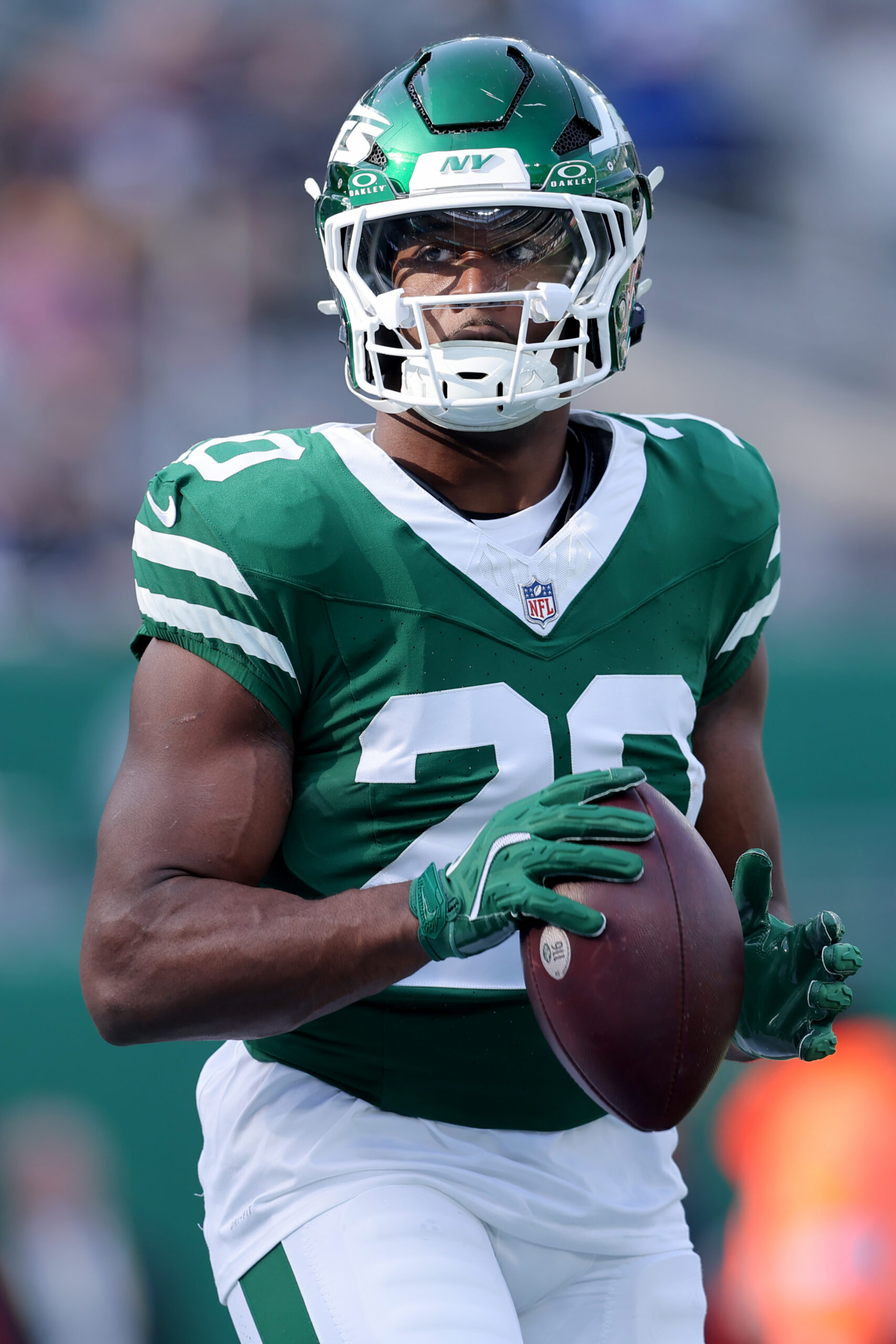 Hall, 24, is more than two years younger than Etienne. He will thus command more in free agency. The former second-round pick is also more than three years removed from the ACL tear that sidetracked his rookie season. The Jets waited on a Hall extension, keeping him on his rookie contract while giving Gardner and Garrett Wilson big-ticket deals, but Aaron Glenn has spoken highly of the Iowa State alum.
Gang Green wants to retain Hall. The easiest way for that to happen would be to extend his negotiating window via the tag. A $12MM-per-year offer could await the fifth-year player, making a tag logical. If the Jets were to place the transition tag on Hall, it would cost them a projected $11.73MM. They would receive no compensation in the event of an unmatched offer sheet, thus allowing another team to dictate the contract structure a la the Packers’ Kyle Fuller offer sheet in 2018.
The Jets saw Hall sidekick Braelon Allen miss much of the season, but the former Joe Douglas-era fourth-round pick remains signed through 2027. Allen gives the Jets some protection against a Hall exit, with a mid-round 2027 compensatory pick possible as well. But Hall is a dynamic RB that will be an attractive FA commodity if unattached come March 9. The Jets have a big decision to make over the next two weeks.
Trey Hendrickson, DE (Bengals)
Projected tag cost: $34.8MM
The defensive end tag is projected to come in at $27.32MM, but because Hendrickson was attached to a $29MM salary (following a late-summer raise), he is the rare tag candidate to whom the 120% rule would apply. As PFR’s glossary indicates, “the amount of the one-year offer is determined by a formula that includes the salary cap figures and the non-exclusive franchise salaries at the player’s position for the previous five years. Alternately, the amount of the one-year offer can be 120% of the player’s previous salary, if that amount is greater.” In Hendrickson’s case, it would be.
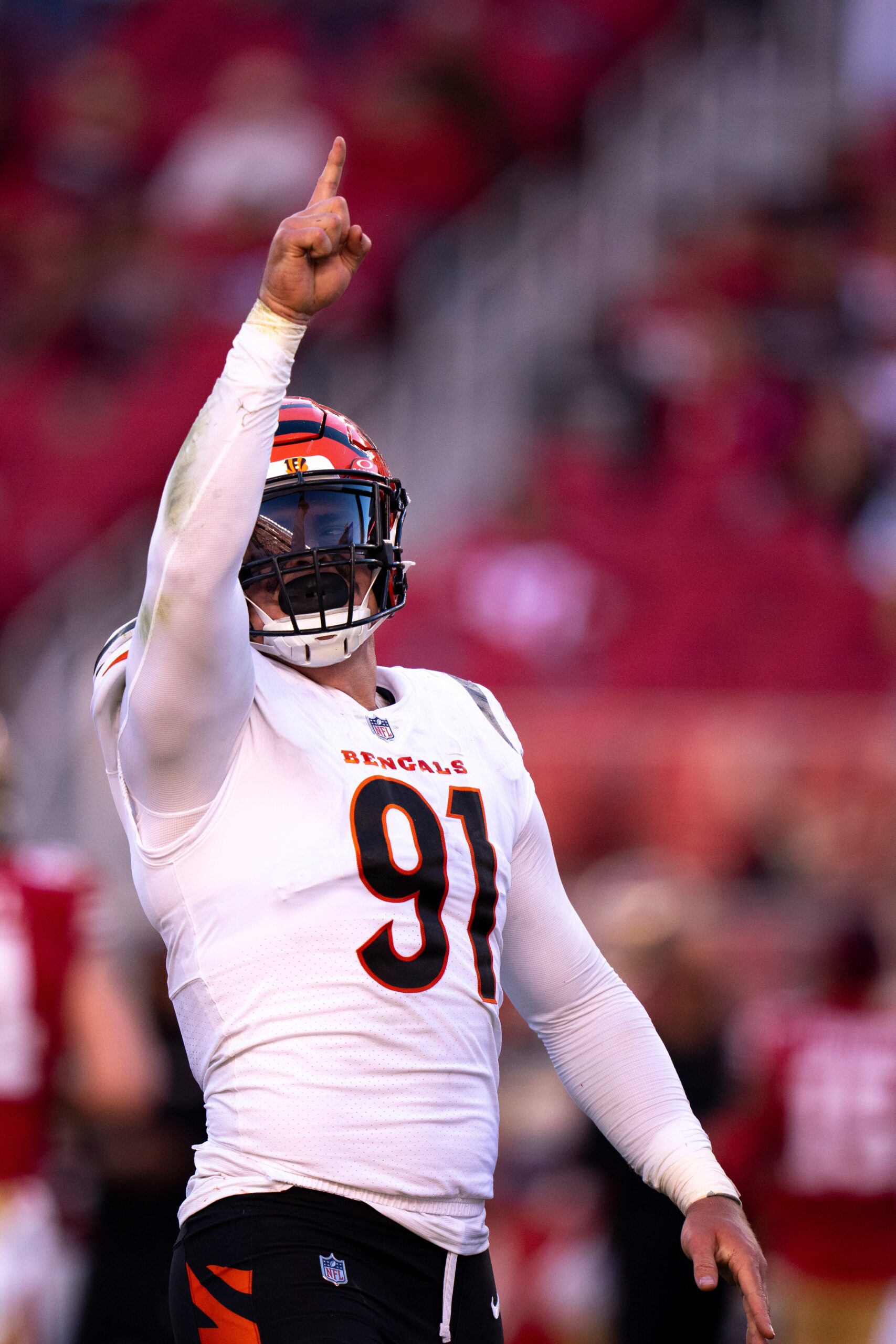 Cincinnati has been here with a veteran contract not too long ago. The team tagged A.J. Green in 2020, doing so after he had played out a five-year extension. That decision, which paired the former Pro Bowl mainstay with Joe Burrow‘s rookie contact, backfired after Green could not reprise his prime form after missing 2019 due to injury.
Hendrickson, 31, is more likely to resemble prime form than Green was at 32 six years ago. But the All-Pro edge rusher is coming off an injury-shortened season, playing in only seven games. Hendrickson also underwent core muscle surgery in December.
Also adding Hendrickson to pair with Burrow’s rookie deal (in 2021), the Bengals saw their four-year, $60MM pact with the Saints draftee become a bargain. Hendrickson anchored Cincy’s Super Bowl LVI defense and went on to register 17.5 sacks in back-to-back seasons (2023, ’24). The Bengals gave Hendrickson a one-year, $21MM extension in 2023 — a deal the D-end signed in fear the team would tag him in 2025. But the Higgins process dragged out to a point that would have been moot.
Hendrickson then angled for an extension during the 2025 offseason but saw the Bengals — who almost always draw a hard line on post-Year 1 salary guarantees — dig in and only offer him a backloaded deal without future guaranteed salary. The one-year, $29MM offer (which did not contain a no-tag clause) turned out to be a nice reward for the productive pass rusher, but it drained a year from his prime. The Bengals are planning to use the Combine to gauge Hendrickson’s value, which would give serious thought to a tag-and-trade scenario.
This might not go over well with Hendrickson’s camp, but if the Bengals — who have two first-round DEs (Myles Murphy, Shemar Stewart) contracted — believe they can land something of consequence, they will use the tag. If Hendrickson does not sign the tender, Cincy can rescind the tag down the road.
Kyle Pitts, TE (Falcons)
Projected tag cost: $16.32MM
Pitts gives off buyer-beware vibes due to inconsistency, but the tag has regularly served as an avenue for this genre of player to be retained for further evaluation. As PFR’s Connor Byrne noted in his Falcons Offseason Outlook, the team is in an extraordinarily rare position of seeing a former quarterback (Matt Ryan) make a franchise tag call on one of his former weapons. Atlanta’s new personnel chief peppered Pitts with targets as a rookie, making him the NFL’s second tight end (after Mike Ditka) to eclipse 1,000 receiving yards as a rookie.
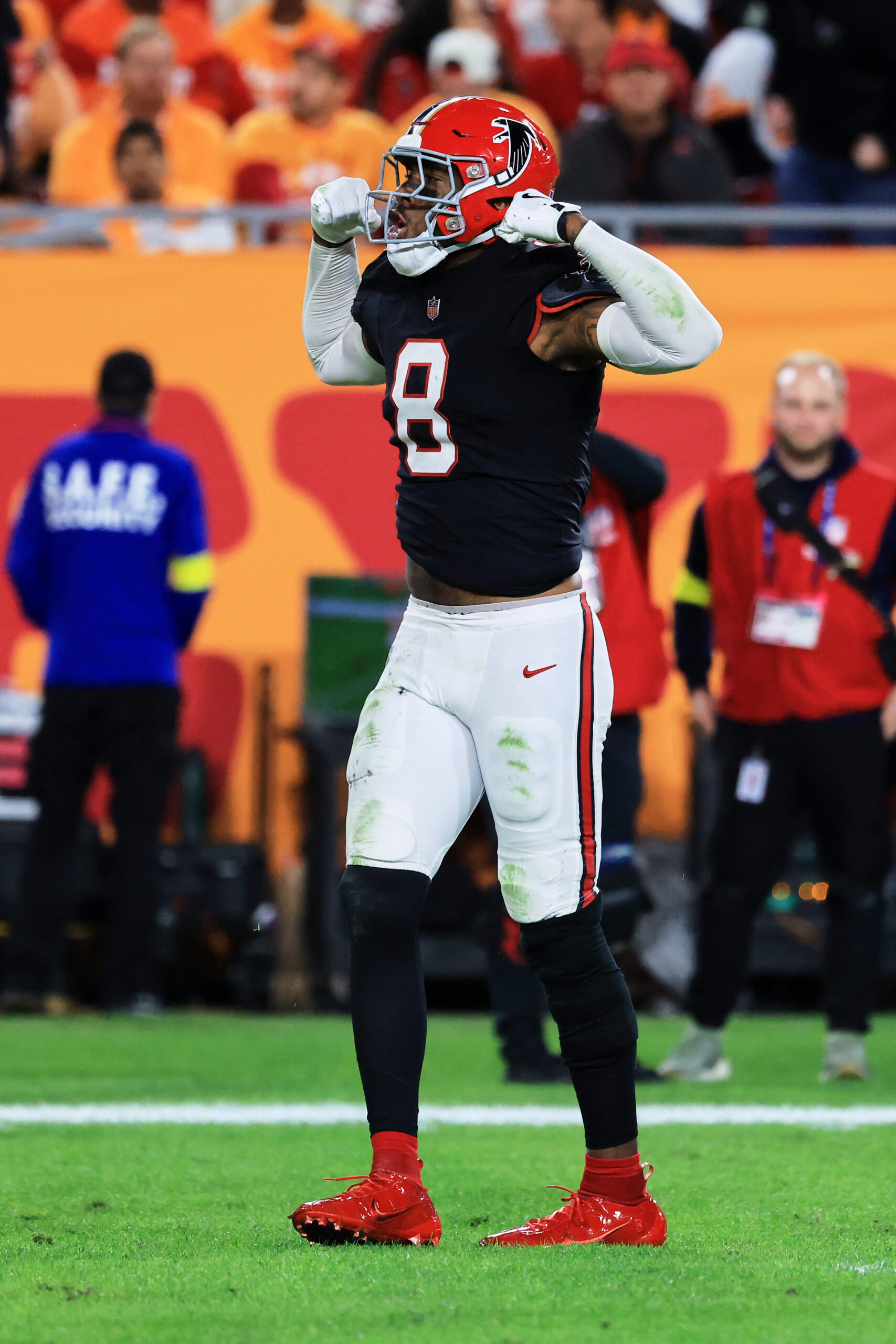 The former No. 4 overall pick, however, regressed and did not eclipse 675 yards in a season from 2022-24. The Falcons’ issues replacing Ryan, with neither Marcus Mariota nor Desmond Ridder impressing, hindered Pitts and Drake London.
A declining Kirk Cousins did not save the day, but he sure helped Pitts in a contract year. The Cousins-Pitts connection humming in Tampa (11 catches, 166 yards, three touchdowns) put him on the tag radar and launched him to second-team All-Pro honors (with injuries to George Kittle and Brock Bowers helping clear a path). More buzz has since circulated about Pitts being tagged; the 6-foot-6 pass catcher has spoken highly of Kevin Stefanski, who helped David Njoku and Harold Fannin to productive seasons.
Though, Pitts only finished with five touchdowns last season; he has not been a prolific end zone threat (15 TDs in five years) and one 100-yard game. His 928-yard season impressed, and receiving tight ends are not so easy to replace. This is a situation to monitor. The Falcons’ previous regime showed little interest in extending the 25-year-old pass catcher, but this one might be more amenable to keeping the TE beyond his rookie deal.
Strong markets await otherwise:
Travis Etienne, RB (Jaguars)
Projected tag cost: $14.54MM
Jacksonville’s previous front offices turned to the tag regularly this decade. Edge rusher Yannick Ngakoue became a tag-and-trade player in 2020, while left tackle Cam Robinson was cuffed in 2021 and ’22. The team tagged Evan Engram over Jawaan Taylor in 2023. Second-year GM James Gladstone reshaped the team’s skill-position corps last year, moving on from the likes of Engram, Christian Kirk, Gabe Davis, Devin Duvernay and Tank Bigsby. Although the Jags drafted two running backs (Bhayshul Tuten, LeQuint Allen), Etienne returned to his RB1 role and produced 1,107 rushing yards and a career-high 13 total touchdowns.
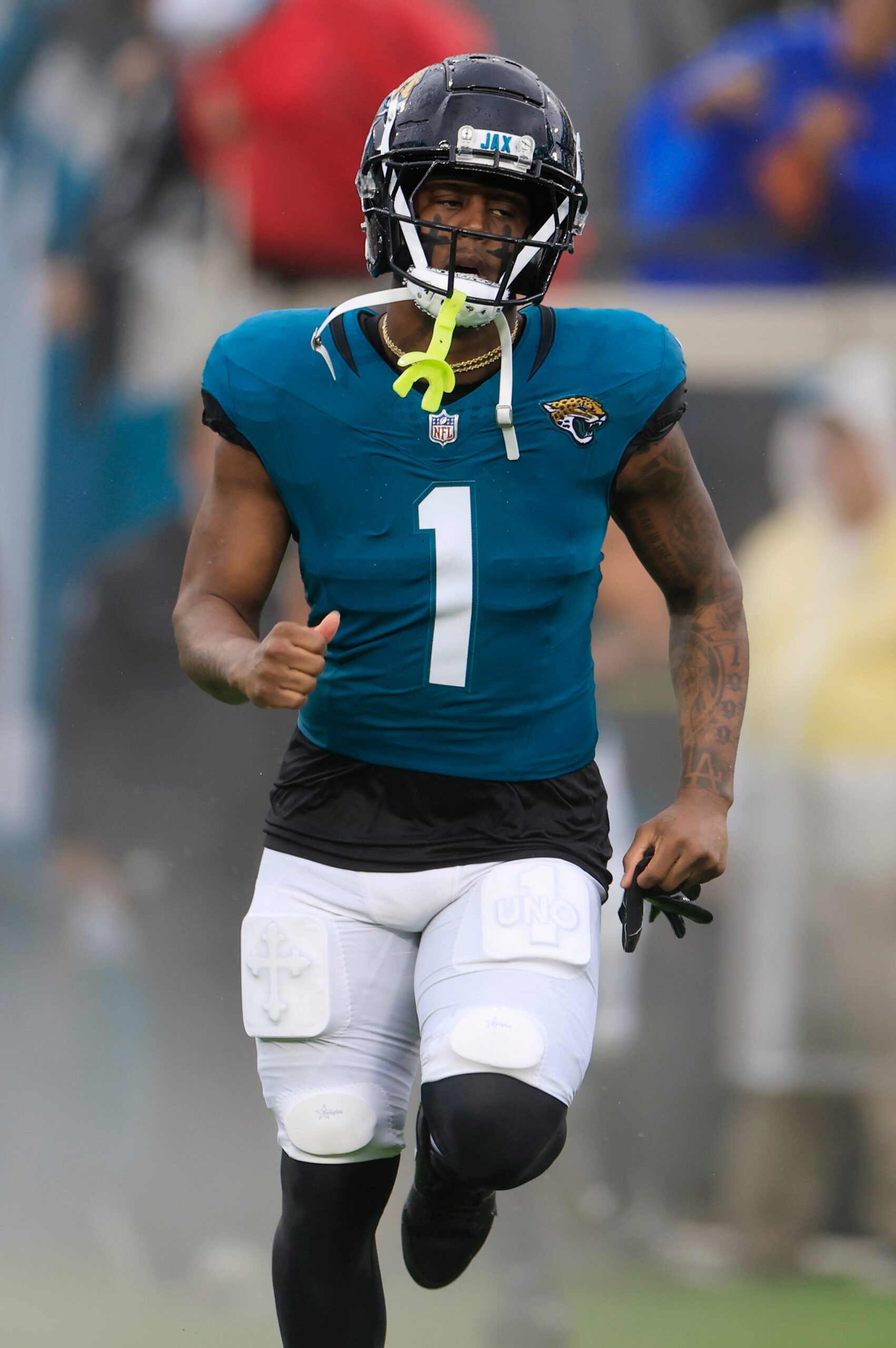 Chosen in Urban Meyer‘s lone draft at the helm, Etienne lost work to Bigsby in 2024 but regained his grip on the Jags’ RB job after the team traded Bigsby to the Eagles before Week 2. The college Trevor Lawrence teammate turned 27 last month, making this a prime window for him to cash in before concerns about his mileage (897 career carries) add up.
Fortunately for Etienne, this Jaguars front office is not expected to use the tag here. The team is projected to be more than $13MM over the cap as of Tuesday, and even though the cap is expected to rise by at least $22MM in 2026, the Jags will look to use $14.5MM toward another area of the roster. This would allow Etienne to shop around for a multiyear guarantee, no sure thing on the RB market. Absent a tag, the Jags will have until 3pm CT on March 9 to keep him out of free agency.
Odafe Oweh, OLB (Chargers)
Projected tag cost: $28.2MM
This is more of a cap space-based idea. The Bolts are projected to hold more than $82MM in cap room, with some cost-cutting options at play as well. They also have both Oweh and Khalil Mack unsigned for 2026. Although top edge rusher Tuli Tuipulotu has one season left on his rookie deal, the Chargers will need to make moves at the position due to the statuses of Mack and Oweh. With Mack going into an age-35 season, he is not a tag candidate. At 27, Oweh makes a bit more sense.
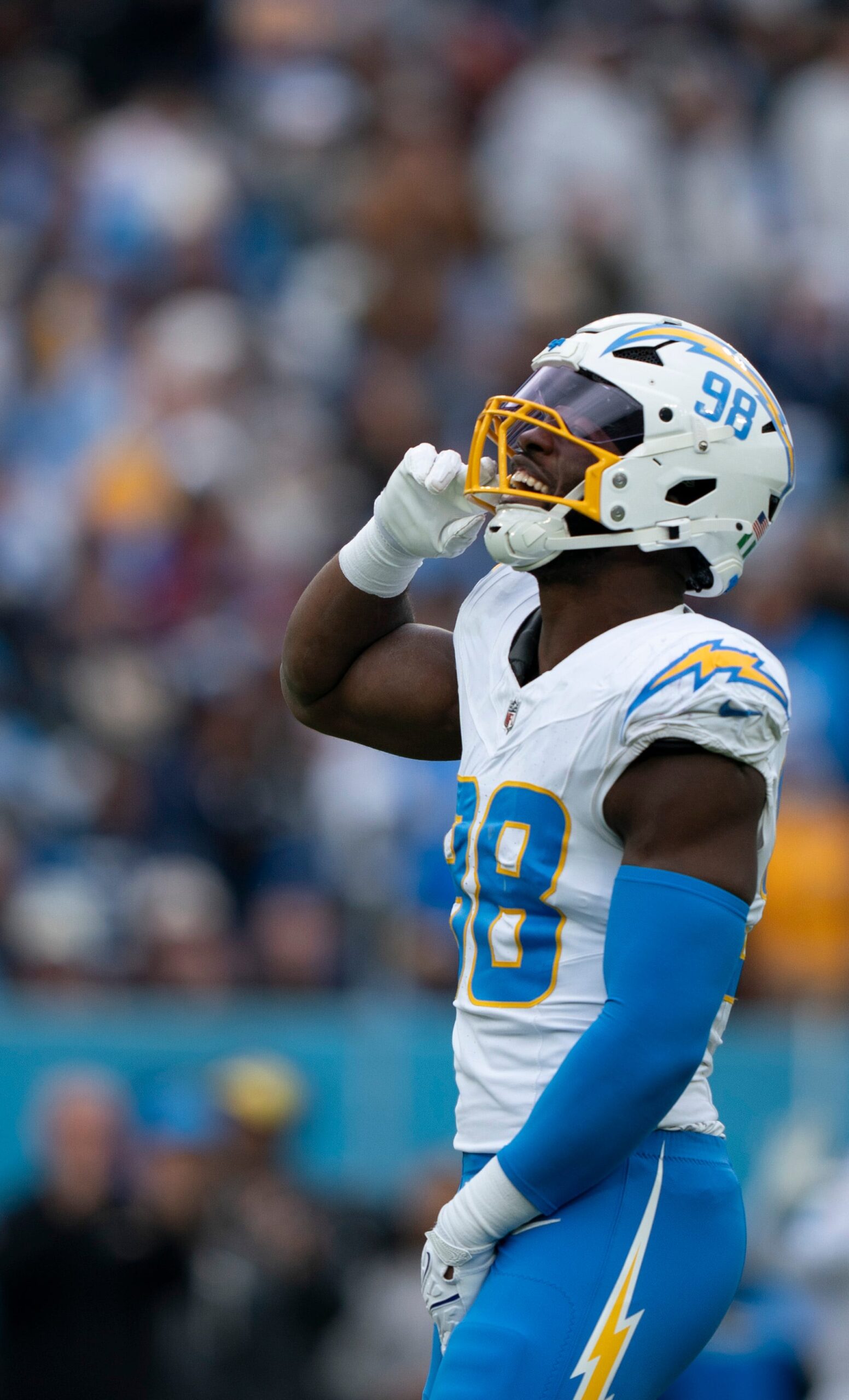 Oweh’s sack production does not rival Hendrickson’s, but he played well after a deadline trade with the Ravens. All 7.5 of Oweh’s sacks last season came as a Charger, and he racked up 10 in 2024 after Baltimore picked up his fifth-year option. The former first-rounder, who joined Kwity Paye and Jaelan Phillips as 2021 first-round edges to play out option years, will be one of the top free agents available if the Chargers let him reach the legal tampering period unattached.
The Bolts are not viewed as likely to tag Oweh; they could work out a separate deal with him before March 9. By not using the tag, Los Angeles would risk losing a prime talent. Oweh did not eclipse five sacks until his fourth season, so a $28MM tag number — the linebacker rate, as Oweh is a career 3-4 OLB — does not quite align with his production.
Tagging him at that number would make for an interesting negotiation, as the Bolts have a Tuipulotu extension to hammer out this year. But Oweh also could be used as a rental as the Chargers prepare to battle the Broncos and Chiefs for AFC West supremacy in 2026.
Jaelan Phillips, OLB (Eagles)
Projected tag cost: $28.2MM
Philadelphia let Josh Sweat walk in free agency last year, and GM Howie Roseman has not used his franchise tag since keeping DeSean Jackson off the market in 2012. That was Andy Reid‘s last Philly year. With Roseman as the clear lead decision-maker, the Eagles have taken their chances with in-house free agents.
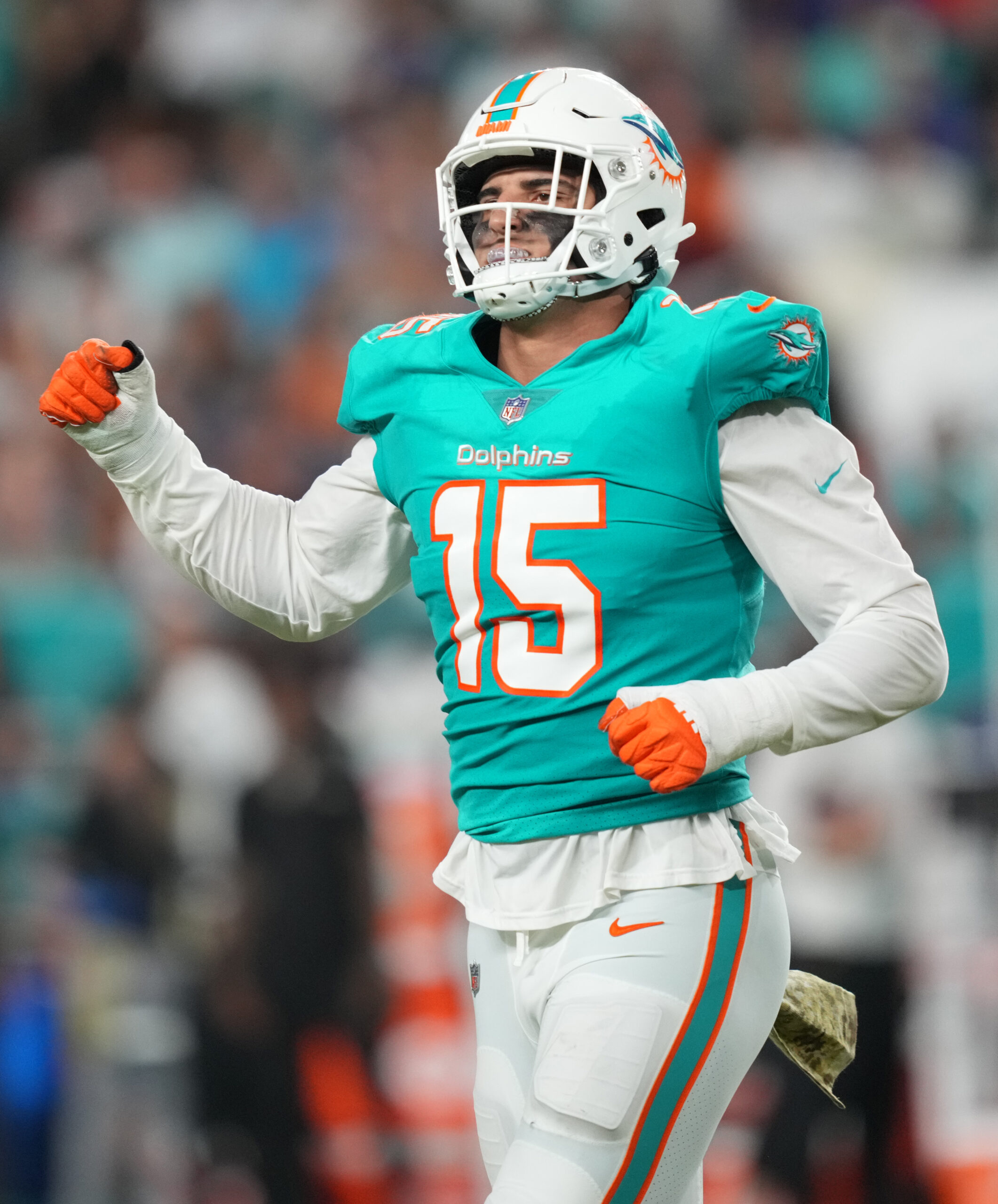 Phillips, 26, played well for the team despite low sack numbers. And he is a former Vic Fangio Dolphins piece. Phillips’ 35 pressures last season ranked 12th in the NFL. The Eagles struggled to replace Sweat before their Phillips deadline deal, seeing Za’Darius Smith retire and Nolan Smith go through an IR stint. Brandon Graham unretired, but he would be going into an age-38 season if he came back again. Expected to be Philly’s lead edge rusher, Smith only tallied three sacks last season.
A $28MM tag would not quite align with Phillips’ value, however. Unlike the Chargers, the Eagles are projected to hold barely $18MM in cap space. That makes Phillips — who has ACL and Achilles tears on his NFL medical sheet — less likely to see the tag. But the Eagles would then be five days away from competing with other teams to sign him.
Kenneth Walker, RB (Seahawks)
Projected tag cost: $14.54MM
Zach Charbonnet‘s divisional-round ACL tear unleashed Walker. Held in a full-on timeshare with Charbonnet last season, Walker broke through for 116 yards and three touchdowns on 19 carries against the 49ers. He then gashed the Patriots for 161 scrimmage yards in a Super Bowl LX MVP performance. Walker, 25, has encountered some trouble staying healthy. But he made it through his contract year — a second 1,000-yard season — unscathed for a team that may have Charbonnet bound for the reserve/PUP list come September.
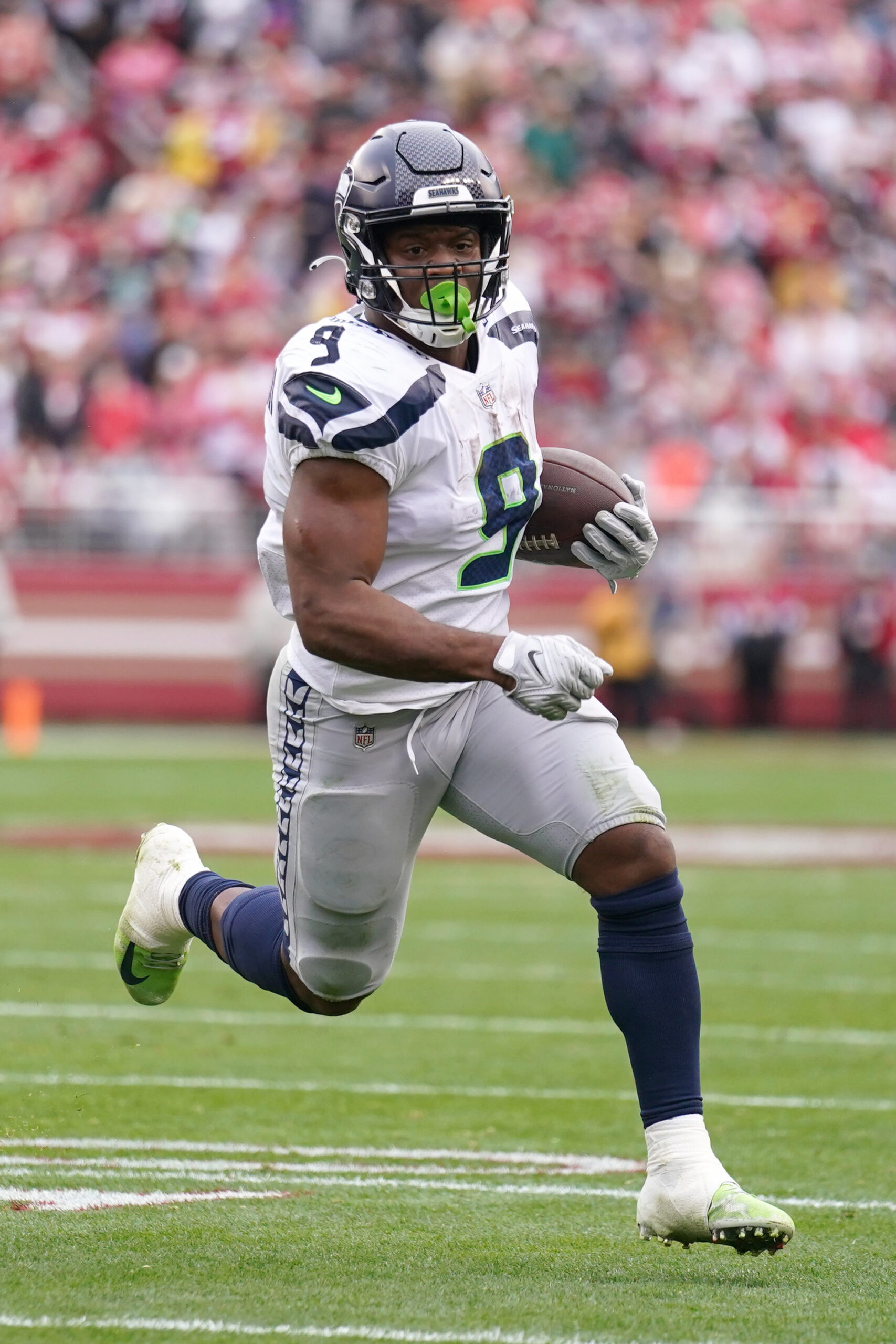 The Seahawks want to retain Walker, and he wants to stay. The team has a history of paying running backs without using the tag, re-signing the likes of Marshawn Lynch, Chris Carson and Rashaad Penny under GM John Schneider. The latter two RBs were not tag-level players, and both ran into injury trouble on second contracts. A Tuesday report also noted the Seahawks are leaning against tagging Walker.
A transition tag is projected to be nearly $3MM cheaper; that could also be an option for Walker, who upped his free agency price with the Super Bowl performance. Running back value has been difficult to peg in recent years, but as mid-20-somethings coming off 1,000-yard seasons, Walker and Breece Hall figure to do quite well. The Seahawks will run the risk of losing him, as hometown discounts are not wise at a position without many bites at the apple, if they do not apply the tag.
The Colts’ call
Daniel Jones, QB/Alec Pierce, WR
Projected tag costs: $47.32MM, $28.82MM
Both have come up as tag candidates, with one being much easier to cuff. Quarterback tags are relatively rare, but six passers have been cuffed since 2011. The Colts tagged Peyton Manning before the lockout (and before the effects of a career-threatening neck injury were known), while the Eagles kept Michael Vick off that 2011 market. The Saints tagged Drew Brees in 2012, while both Kirk Cousins and Dak Prescott were tagged twice. Lamar Jackson requested a trade while on the 2023 tag. Vick’s career did not live up to expectations, but it is safe to say Jones would be the worst quarterback tagged during the rookie-scale era.
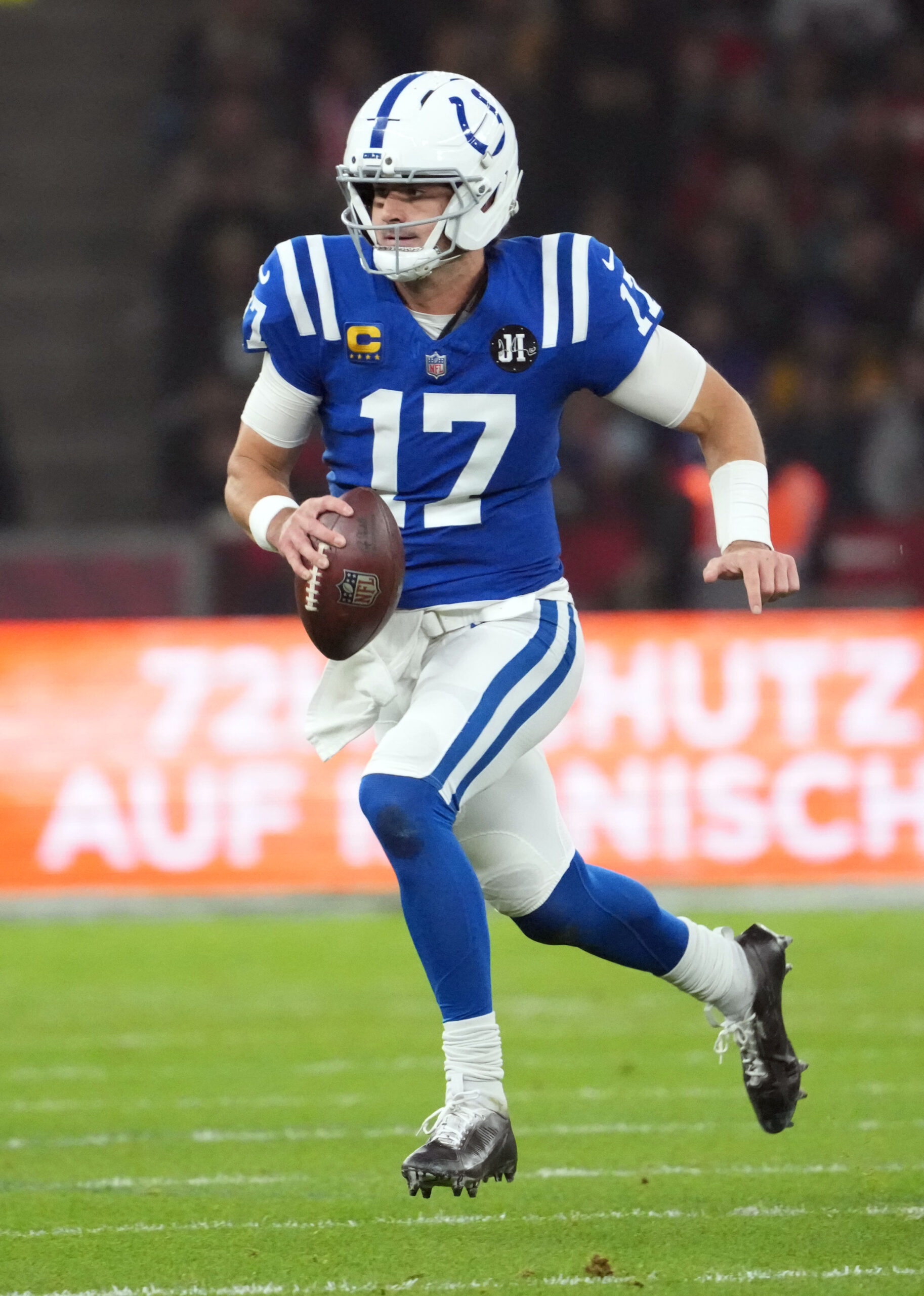 This situation looks quite familiar; Giants fans can recall a similar setup playing out in 2023. New York had both Jones and Saquon Barkley unsigned that year. While Barkley was widely acknowledged as the far superior player, positional value led the Giants to prioritize Jones by extending him just before the March ’23 tag deadline and using the tag to retain Barkley. That backfired, with Jones underwhelming before a November 2023 ACL tear. Barkley joined the Eagles a year later and ripped off one of the great running back seasons in NFL history.
Somehow, Jones has managed to gain leverage again despite a bad 2024 season and an injury-plagued 2025. Jones suffered an Achilles tear after playing through a fibula fracture. He also has two bouts of neck trouble in his New York past. But the Colts have made no secret of their intent to keep going with Jones, who was playing well before his Achilles setback.
Jones, 28, averaged more than seven yards per attempt for the first time (8.1) and had the Colts at 8-2. His injury led to the Philip Rivers comeback, but with that in the rearview mirror, Indianapolis’ decision-makers have Jones as a key component in job preservation.
Carlie Irsay-Gordon retained both Chris Ballard and Shane Steichen, but the duo has yet to find quarterback stability. Ballard bears more responsibility for this due to his status as a 10th-year GM, with a string of passers coming through post-Andrew Luck. Jones’ one-year, $14MM deal panned out for a while, but even after he underwhelmed on his $40MM-AAV Giants payday and ran into more injury trouble, the Colts’ QB issues and having traded their 2026 and ’27 first-round picks for Gardner equips the QB with negotiating ammo. He played his hand well in 2023, and the Colts may need to overpay soon.
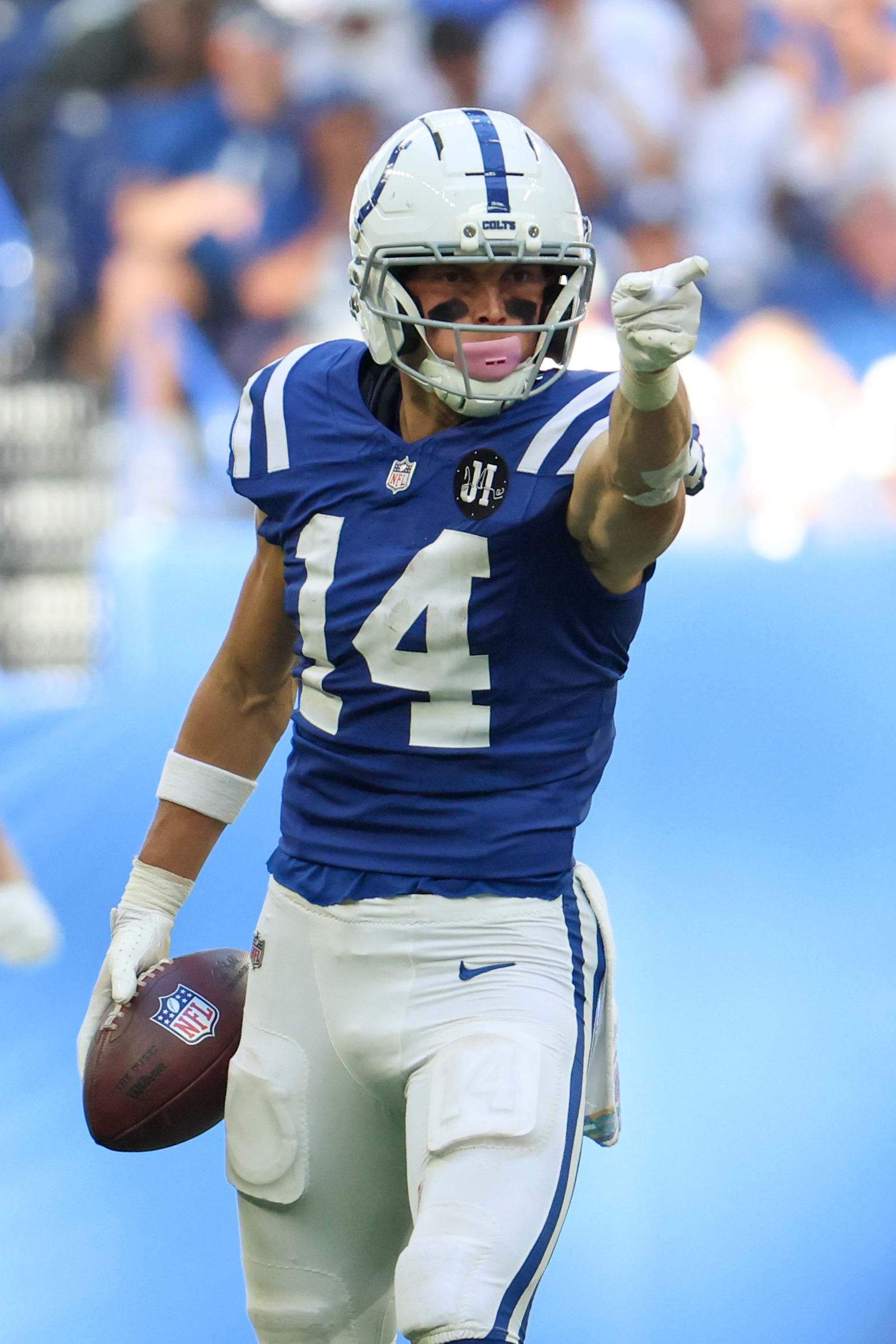 That QB tag number would hinder the Colts in free agency, forcing cost-cutting maneuvers for a team projected to hold less than $36MM in cap space. A Pierce tag — also floated as a possibility — would be more reasonable. The Colts went between 2013 and 2024 without using the tag, but Ballard’s first such move took a wide receiver (Michael Pittman Jr.) off the market.
Pittman has not quite justified his three-year, $72MM deal, and Pierce passed him as Indy’s top target last season (1,003 yards). A scenario in which the Colts pay Pierce and Jones while bidding farewell to Pittman in the final year of his contract should be considered in play.
A situation in which the Colts extend Jones and leave the tag open for Pierce (25) is a route to monitor, though it would limit Ballard’s ability to do much else in free agency. But QB dependability has eluded the franchise since Luck’s 2019 retirement, and Pierce has led the NFL in yards per catch in back-to-back seasons. Seeing the former second-round pick walk would hurt the Colts’ ability to build a quality passing attack around Jones.
There is no way the Bengals tag and trade Hendrickson for anything of value. No one is paying him $30M guaranteed and giving up a pick.
For real
I was once tagged in Walmart by my wife. She slapped a Rollback sticker on my butt and it took me a while to figure out why everyone who passed me in the store was laughing.
Pickens and Pierce going to get tagged.
No way Howie tags Phillips.
He may try to sign him though.
I agree. I’d like to see a Tee Higgins for AJ Brown trade.
Jalen and Nick have one more year together. If not, Mike Tomlin will be the next Eagles HC.
Nick is now officially on the hot seat due to his non play calling style when it is needed for him to step up as the HC and fix the offense when it’s stalled and call plays/own his team and not just be there for rah rah, inspirational sayings and CEO coach stuff. Nick is only as good as his o and d coordinators.
The Eagles will stick with Jalen and give him more consistent coaching.
Nick hasn’t been that consistent force. He’s been more of a buddy and supporter.
Daniel Jones is not going to consistently stay healthy to get through an NFL season. He’s fine as a placeholder, but you can’t build your franchise around the guy.
Jones is useful to have but not on the tag. For those with short memories, Indy were dominating the AFC South until his Achilles gave way in Jax.
ChuckyNJ:
And those with their memories intact remember that the Colts were playing the easiest schedule in the world. And as the competition got a little bit tougher Jones did not look as good in his last couple games before he got hurt.