AFC Notes: Jets, Bengals, Hopkins, Pats
More details have come in on Jets running back Breece Hall‘s three-year, $43.5MM contract, courtesy of Mike Florio of Pro Football Talk. Hall received a $5MM signing bonus, a fully guaranteed $5.16MM salary and a fully guaranteed $5MM roster bonus for 2026. Hall’s $13.16MM base salary for 2027 is also fully guaranteed. Additionally, he can earn up to $340K in per-game roster bonuses in each of the next three seasons. Hall’s 2028 salary checks in at $14.16MM, but it is non-guaranteed. The annual base value of the pact is $14.5MM, not the previously reported $15.25MM, per Florio. It will only climb to $15.25MM per season if Hall maxes out the incentives. Hall’s $14.5MM AAV ranks fifth at his position.
Here is more on New York and a couple of other AFC teams:
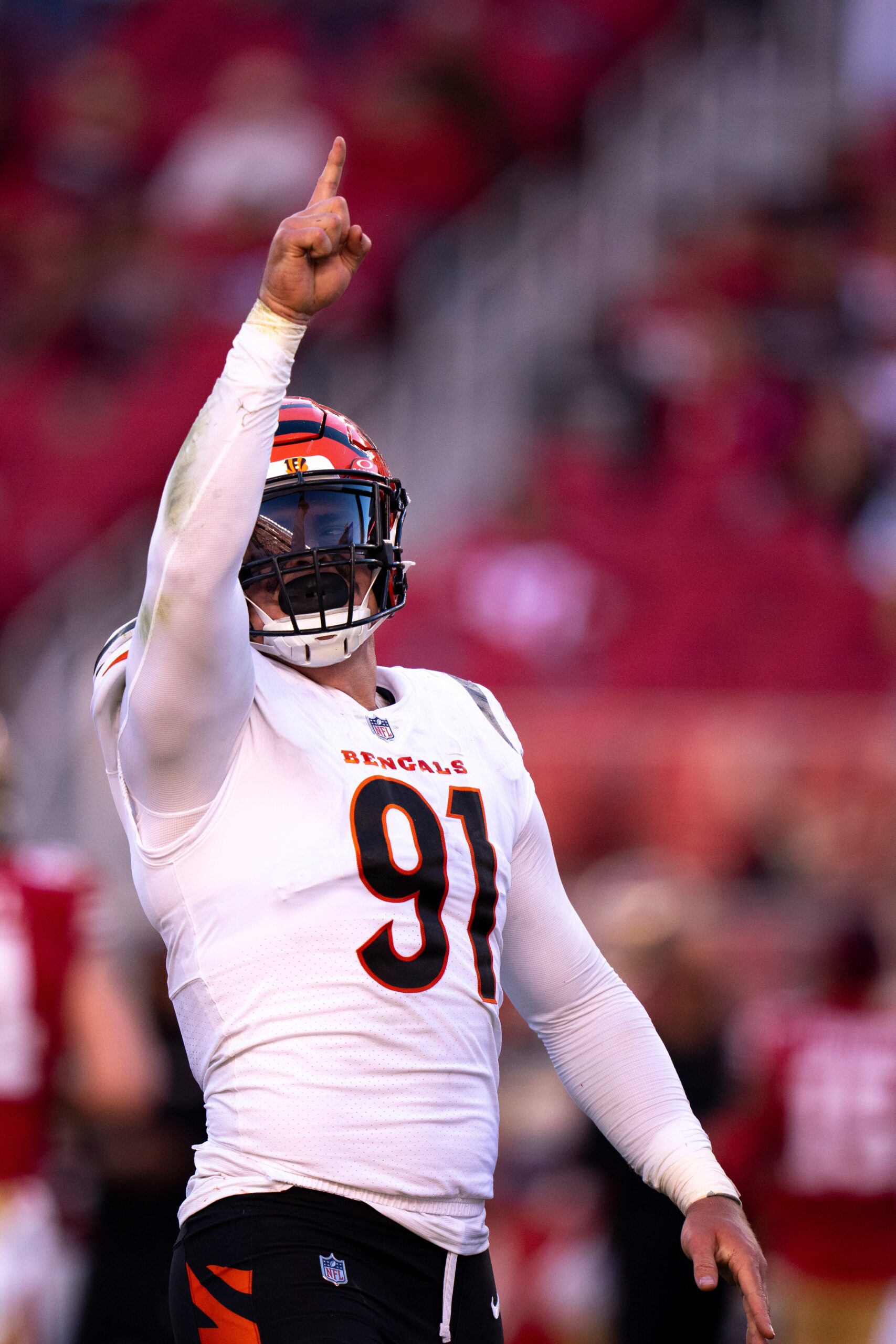
- Beginning with the mid-December firing of defensive coordinator Steve Wilks, head coach Aaron Glenn axed 12 members of his first Jets staff last winter. Perhaps unsurprisingly, it turns out owner Woody Johnson “had a heavy hand” in the shakeup, which ended with a late-January mutual parting of ways with offensive coordinator Tanner Engstrand, according to Albert Breer of SI.com. It appeared the Jets would retain Engstrand, who endured a rough first year as a coordinator atop a talent-deprived offense, before replacing him with the more seasoned Frank Reich. It also looked as if the Jets were going to hire Don Martindale as their next defensive coordinator, but Breer suggests Johnson was unwilling to pony up for him. With Johnson stuck paying Wilks $3MM this year, the Jets hired a cheaper candidate in first-timer Brian Duker. Glenn, not Duker, will call the defensive plays.
- Speaking with Sports Illustrated earlier this month, free agent wide receiver DeAndre Hopkins expressed interest in signing with the Bengals (via Jordan Schultz). Asked which quarterback he would like to play with for the first time, the soon-to-be 34-year-old said: “I’ve gotta go with Joe Burrow. I think Joe is one of the best. I love his game, his toughness. I mean, he took his team to a Super Bowl earlier in his career, and I feel like he can get back there with a little bit of help.” It is unknown whether there is mutual interest in this case. The Bengals have Ja’Marr Chase and Tee Higgins entrenched as their top two receivers. Third option Andrei Iosivas had a more productive 2025 than Hopkins, who posted career lows in catches (22), targets (39) and yards (330) in 17 games with the AFC North rival Ravens. Despite his down year in Baltimore, the five-time Pro Bowler ranks 17th all-time in catches (1,006), 18th in yards (13,295) and tied for 19th in TDs (85). Hopkins will have a chance to continue climbing up the leaderboard if he plays a 14th season in 2026.
- A full-time starter for almost all of his six-year career, Patriots right guard Michael Onwenu will remain atop the depth chart entering his seventh season. However, with Onwenu unsigned past 2026, this will likely be his last season in New England, Doug Kyed of the Boston Herald contends. The 28-year-old does not possess the speed-agility combo that Patriots executive vice president Eliot Wolf values, Kyed notes. That could lead Onwenu out of town for a raise in free agency next March. The Patriots already have one expensive guard contract on their books, having added Alijah Vera-Tucker on a three-year, $42MM deal earlier this offseason.
Jets, RB Breece Hall Agree To Extension
MAY 13: The deal will include $29MM guaranteed over its first two years, Sports Illustrated’s Albert Breer tweets. While it is not known if this figure is fully guaranteed, that is likely the case due to what Hall would have made on two franchise tags. If the $29MM is locked in at signing, it will rank fourth among RBs (and second among non-rookie-contract deals at the position). Two void years are included in the contract, per Breer. Hall will carry cap hits of $11.48MM (2026), $14.48MM (2027) and $15.48MM (2028).
There are $1.5MM in incentives present as well. Hall reaching seven rushing touchdowns, surpassing 1,426 scrimmage yards or being named to the Pro Bowl would carry a $250K bump in each season, Breer adds. Hall if the first of this year’s three franchise-tagged players to sign an extension.
MAY 11: The Jets have officially announced the extension. We’ve also learned that the base value of the contract actually comes in at $43.5MM, per ESPN’s Rich Cimini.
MAY 8: Breece Hall‘s Jets tenure will continue beyond 2026. The franchise-tagged running back has worked out an extension agreement with New York.
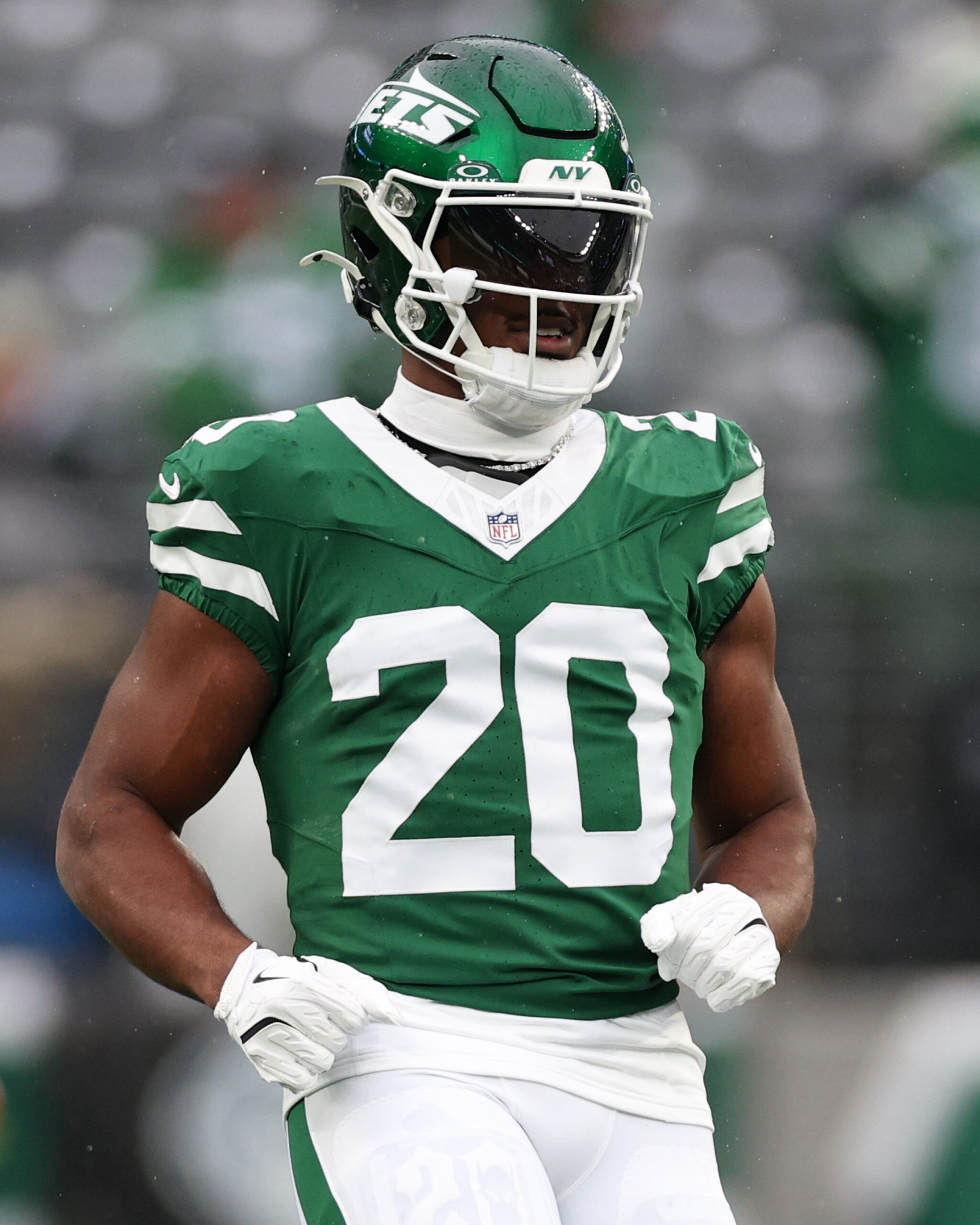 Team and player have struck a three-year deal, NFL insider Jordan Schultz reports. He adds this extension is worth up to $45.75MM. Instead of only being in place for one more season due to the tag, Hall will now be on the books through 2028.
Ian Rapoport of NFL Network notes $45.75MM represents the base value of this deal. As such, Hall’s average annual value checks in at $15.25MM. That figure ranks third in the NFL among running backs, behind only Saquon Barkley and Christian McCaffrey. The position’s landscape could change soon with Jahmyr Gibbs and Bijan Robinson each eligible for extensions of their own this offseason. In any case, Hall’s outlook has now become much clearer.
The transition tag loomed as an option for New York to keep Hall in the fold for 2026. However, interest in offer sheets would have emerged had the Jets used the less-expensive one-year tender. Indeed, the Broncos were among the teams which would have pursed Hall in that scenario. As such, New York wound up applying the non-exclusive franchise tag. That set Hall up for $14.29MM in guaranteed 2026 earnings, but a long-term arrangement has now taken the place of the tag. The upfront payments in this new deal will be interesting to see.
On that note, ESPN’s Rich Cimini reports Hall will receive $29MM guaranteed. That figure essentially matches what he would have collected by playing on two straight franchise tags. Connor Hughes of SNY adds that locked-in money will be paid out over the next two years, with no guarantees present for 2028. This agreement is therefore a $14.5MM-per-year pact for now with incentives present in Year 3 which could increase Hall’s overall earnings.
Hall, who will turn 25 later this month, expressed a desire to remain in place with the Jets and a general confidence that he would eventually land a deal near the top of the running back market. Both goals have now been achieved. After the tag was applied, a period following the draft emerged as a target for a multiyear extension to be finalized. GM Darren Mougey expressed optimism a deal would be reached, and that has proven to be the case in time for spring practices.
 As a rookie, Hall flashed plenty of potential before suffering an ACL tear. Since returning to action, the former second-rounder has handled a heavy workload and been a regular presence in the passing game along the way. Hall topped 1,000 rushing yards for the first time in 2025, but he recorded more than 1,300 scrimmage yards for the third year in a row while doing so. The Iowa State product will once again be joined by Braelon Allen in the backfield next season, although another large offensive role for Hall can be expected.
The Jets will have Garrett Wilson in place once again for 2026, and he too is under contract for the future. Mougey has been busy adding at the skill positions, selecting tight end Mason Taylor in last year’s draft and trading for receiver Adonai Mitchell as part of the Sauce Gardner blockbuster. Last month, New York used two of three first-round selections on another tight end (Kenyon Sadiq) and an additional wideout (Omar Cooper Jr.). Those players, led in large part by Hall, will serve as an offensive nucleus moving forward.
Jets ‘Hopeful’ About Breece Hall Extension
The Jets placed the franchise tag on Breece Hall, ensuring he will remain in New York in 2026. They envision, however, a much longer-term partnership with their star running back via a multi-year extension.
“Things are in a good place and I’m hopeful with Breece,” general manager Darren Mougey said at league meetings this week (via Brian Costello of the New York Post). “Obviously, we’ll get through this draft process. And after the draft kind of shift my focus back there and hopefully get something done with Breece.”
Hall’s tag is worth $14.293MM, the fifth-highest AAV at his position, per OverTheCap. Directly ahead of him is Kenneth Walker at $14.35MM per year, a figure that is no accident. The two were taken five picks apart in the 2022 draft and have comparable career numbers, highlighted by their very similar 2025 campaigns. With Hall tagged, Walker was able to secure a slightly bigger annual salary with the third-most guaranteed money for a veteran running back in league history.
That, in turn, will likely set Hall’s expectations for a long-term deal with the Jets, particularly on the guarantee front. But will New York want to pay up for a running back who, in terms of both volume and efficiency, has never ranked among the league’s top 10 at his position?
Investing so much in a running back has long been dicey proposition, but there has been a resurgence in recent years. The Jets are looking to add a young franchise quarterback in the near future, and a strong running game is an easy way to help out rookie passers. Hall has also been durable with only two absences in the last three years.
Jets To Pursue Post-Draft Extension For RB Breece Hall
After four years of up-and-down play, the Jets came into the final year of running back Breece Hall‘s rookie contract unsure of whether or not they wanted to extend him to a long-term contract. When, after the season, they tried and failed to reach an extension agreement in time for free agency, New York opted for the franchise tag. According to Connor Hughes of SportsNet New York, the team is expected to restart its extension efforts after the draft.
As a second-round rookie out of Iowa State, Hall looked electric in his limited first year. He started the season coming off the bench for secondary carries behind Michael Carter but took over a dominant share of the workload by Week 4 and was named a starter by Week 6. Unfortunately, Hall tore his ACL and meniscus early into his second career start, ending his rookie campaign.
Recovering in time to return to a starting role in Year 2, Hall had a strong bounce back season. While he had a tendency to disappear in some contests, he had a few stellar games en route to 994 yards and five touchdowns rushing and 591 yards and four touchdowns receiving. His third season with the team saw fewer disappearances for the young back but also featured fewer big performances with Hall logging just one 100-yard game all season. He also struggled with fumbles more than in prior years, losing the rock six times.
In the following offseason the Jets had no plans of extending him before his final year, but they also weren’t eager to try and trade their leading rusher, either, despite the interest he seemed to draw around the midseason trade deadline. Both Hall and his coaches made clear their desires to avoid a trade, and the front office seemed to follow suit by setting a high asking price for the fourth-year back, indicating that a long-term deal may have entered their plans. Once the team traded away two defensive cornerstones, Hall’s tune reportedly changed a bit, but he never requested a trade.
Realizing that Hall would garner a strong free agent market, based on the trade interest he received and his first 1,000-yard rushing season, the Jets set their sights on retaining the 24-year-old rusher. As the offseason came and progressed, though, the team and player found themselves far apart on contract terms, so the franchise tag came into play. The tag allowed New York to put Hall’s extension on the backburner, while free agency became the priority, and now the draft will be a main focus of the front office for weeks to come.
Per Hughes, though, there was a period just before the Jets moved to place the franchise tag during which they were “pretty confident” that a deal was going to get done. With the possibility of an agreement within their reach, New York intends to shift its focus back to Hall once the draft is in the rearview. Hughes adds that the front office has taken not of the three-year, $43.05MM deal Kenneth Walker just signed in Kansas City, and believing that Hall is a better back, they intend to extend him a bigger offer.
It’s unclear where their offer started and where Hall’s asking price was, but perhaps a bump to Walker’s numbers will get the two sides closer together. We won’t know that, though, likely until after the draft, when time allows for negotiations to continue.
Broncos Planned To Pursue Breece Hall
The Jets kept running back Breece Hall under wraps with the franchise tag before the Tuesday afternoon deadline. The transition tag was also a possibility, but the Broncos posed enough of a threat that the Jets went for the franchise option, Jonathan Jones of CBS Sports reports.
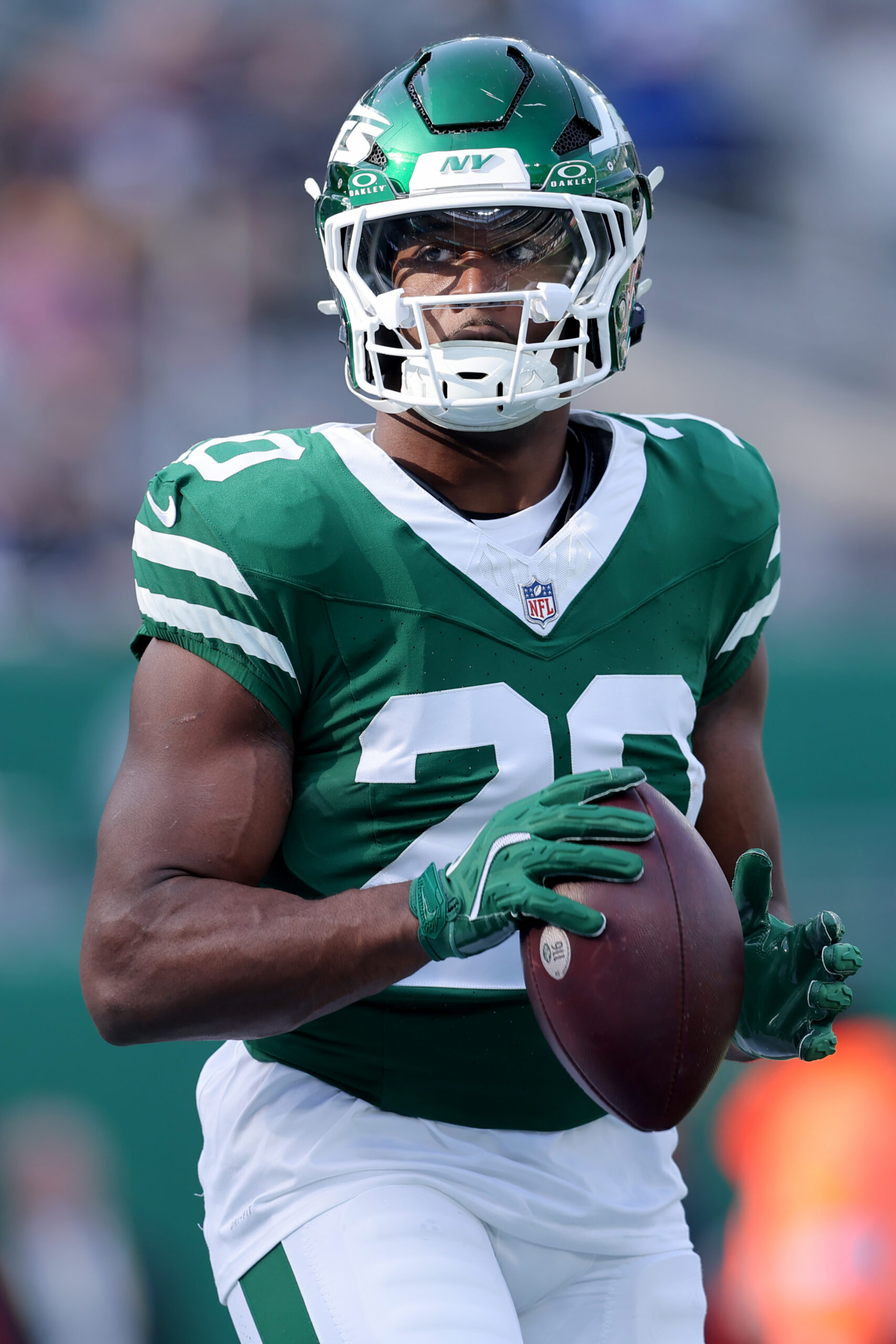
Franchising Hall all but guaranteed he will remain in a Jets uniform for a fifth season in 2026. No team is going to sign Hall to an offer sheet and give up two first-round picks for him. The transition tag would have given the Jets the right to match any offer, but they would not have received compensation had they let him go.
The Broncos were ready to strike in the event the Jets chose the transition tag. They remain “poised to make a splash” at the position in free agency, Jones writes.
Broncos general manager George Paton could have stolen Hall from former assistant GM Darren Mougey, who is now the Jets’ GM. Denver also has a key connection to Hall in running backs coach Louis Ayeni, Jones notes. As Iowa State’s RBs coach from 2014-17, Ayeni recruited Hall to play for the Cyclones.
With Hall out of the picture, the Broncos could turn their attention to Seahawks Super Bowl LX MVP winner Kenneth Walker III or the Jaguars’ Travis Etienne. Those two rank as the league’s best pending free agent running backs. The Panthers’ Rico Dowdle, the Falcons’ Tyler Allgeier, the Buccaneers’ Rachaad White and the Broncos’ own J.K. Dobbins are among other notable RBs seeking contracts.
Dobbins, a former Raven and Charger, joined the Broncos on a one-year, $5.25MM contract last offseason. He performed well as the Broncos’ primary ball carrier when healthy. Once again, though, staying healthy was a challenge for the oft-injured Dobbins. The 27-year-old rushed for 772 yards and four touchdowns on 153 attempts (5.0 YPC) in 10 games before a Lisfranc injury ended his season in November. Since entering the league in 2020, injuries have held Dobbins out of 57 games. That makes Dobbins hard to rely on as a go-to back, even though he has averaged 5.2 yards per rush on 582 carries.
Despite losing Dobbins just days after the Nov. 4 trade deadline, the Broncos won six of their last seven regular-season games to roll to an AFC West title and clinch the No. 1 seed in the conference. But their running game was less effective without Dobbins. Rookie second-rounder RJ Harvey combined for 12 touchdowns (seven rushing, five receiving) and caught 47 passes, but he only averaged 3.7 yards on 146 carries. He accounted for a subpar 57 rushing yards on 19 tries over the Broncos’ two playoff games. Harvey mustered just 37 yards on 13 attempts in a 10-7 loss to the Patriots in the AFC title game. That proved costly for a Denver team stuck with backup quarterback Jarrett Stidham, who could not get anything going through the air while filling in for an injured Bo Nix.
Harvey will return as an integral part of the offense in 2026, but it sounds as if he will pair with another established veteran in his second year. That may have been Hall if the Broncos had their way. They will have to look elsewhere instead.
Jets Place Franchise Tag On Breece Hall
Hours before the tag deadline, the Jets have made their call with respect to Breece Hall. The franchise tag will be applied, as first reported by NFL insider Jordan Schultz. The Jets have since announced the news, with the non-exclusive tag being used.
Conversations on a long-term deal were ongoing, and today’s move will buy time for further negotiations to take place. The transition tag had been floated as a potential route for the Jets to take in this case, but SNY’s Connor Hughes reports multiple teams made it clear at last week’s Combine they would be prepared to move forward with an offer sheet in that event. To prevent such a scenario, the franchise tag will be used instead.
As a result, Hall is now on course to collect $14.29MM in 2026. That figure will be fully guaranteed, and it will match the 24-year-old’s cap charge for next season. Hughes reports the Jets expect Hall to play on the tag, but there are now several months of runway for team and player to work out an extension.
A report from earlier today indicated an agreement on that front was not close, pointing toward the tag being used. GM Darren Mougey had already made it clear New York would be tagging Hall in one fashion or another, and choosing the more common option ensures he will remain in place. Attention will now turn to the progress of extension talks through the spring. July 15 is the deadline for all tagged players to work out a long-term agreement with their respective teams.
This is the first time the Jets have used the franchise tag since 2021 when they did so with safety Marcus Maye. No multiyear accord wound up being agreed to in that case, and Maye departed the following year. Mougey and head coach Aaron Glenn have shown a willingness to trade away players they inherited upon arrival in 2024, and more moves in that regard could be coming. Hall did not find himself in position to land an extension last spring, but today’s news confirms he is still at least in New York’s short-term plans.
The Iowa State product set a new career high in rushing yards this past season, topping 1,000 for the first time. Hall has remained a focal point on offense since recovering from an ACL tear in his rookie campaign, handling between 266 and 299 touches each of the past three seasons. Even if the Jets manage to make needed improvements on offense this spring, Hall figures to once again be a major presence for the unit. Another strong showing would boost his market value for 2027 (if applicable).
The Jets entered Tuesday with nearly $88MM in cap space, so absorbing the cap hit of this tag will not be difficult even if no long-term agreement winds up being finalized. Aside from Hall negotiations, New York’s attention will turn to the matter of finding a new starting quarterback. Despite owning the second overall pick in April’s draft (along with another first-rounder), bringing in a rookie capable of handling QB1 duties right away may not be feasible. As such, at least one veteran addition when free agency opens next week will be something to watch for.
Only three running back contracts currently carry an average annual value higher than the price of Hall’s tag. It will be interesting to see if he manages to land security beyond 2026 as negotiations continue or if he will enter next season as a pending free agent.
Jets, Breece Hall Not Close To Long-Term Agreement; Franchise Tag Looming?
Contract talks between Breece Hall and the Jets are ongoing. The sides still have work to do to strike an agreement prior to today’s tag deadline, however. 
Connor Hughes of SNY reports dialogue is ongoing in this case. He cautions that there does not appear to be much in the way of optimism regarding a deal being struck. If that remains the case by 3:00pm central today, the Jets will tag Hall and in doing so prevent a free agent departure.
The franchise tag is the most common route taken by teams in these situations, but Hall has been mentioned as a candidate for the less expensive transition tag. A franchise tag would cost $14.29MM, while the transition tag route would check in at a price of $11.32MM. According to Hughes, the likely outcome in the absence of a Hall extension agreement would be the franchise tag.
The Jets currently have nearly $88MM in cap space, so affording either tag would not be an issue. The cost of each one-year tender is fully guaranteed and carries a matching cap charge for 2026. New York would receive two first-round picks for an unmatched Hall offer sheet in the event the franchise tag were applied; the team would not receive any compensation in that scenario with respect to the transition tag. Offer sheets are rare in the NFL anyway, but teams often take the safer route by using the more expensive tag.
Once the Vikings proceed with their Aaron Jones release, only eight running backs in the NFL will be attached to a deal averaging $11MM or more per season. That list will grow once Bijan Robinson and Jahmyr Gibbs sign extensions, and De’Von Achane is another candidate for a lucrative second contract. Hall is likewise in line for a raise, but it could easily wind up coming in the form of a tag. The 24-year-old’s earning power for 2027 and beyond in that case would depend in large part on his level of play next season.
Hall topped 1,000 rushing yards for the first time in his career in 2025. The former second-rounder has remained a workhorse back since returning from the ACL tear he suffered as a rookie, and a heavy workload should be expected moving forward on a Jets offense which could undergo a number of changes this spring. Hall is in line to play at least a fifth campaign in New York, but whether that comes about via the tag or a long-term agreement remains to be seen.
Jets Prepared To Tag RB Breece Hall
MARCH 1: The Jets are continuing to negotiate with Hall’s camp, per Hughes. The team prefers a new contract to a tag.
FEBRUARY 24: Breece Hall does not have a new Jets deal in hand at this point. Nevertheless, a departure should not be expected in his case.
When speaking to reporters at the Combine on Tuesday, general manager Darren Mougey reiterated his desire for a Hall agreement to be reached in time for free agency. Failing that, Mougey said (via Fox Sports’ Ralph Vacchiano) a tag will be used to ensure no departure will take place.
The franchise tag for running backs is projected to cost $14.54MM in 2026, while the transition tag is set to carry a value of $11.73MM. The latter option has been mentioned as a strong possibility in Hall’s case, so Mougey’s comments come as little surprise. Coming off a career-high 1,065 rushing yards, Hall would have been one of the top RB options on the open market had the Jets opted to go in a different direction.
Instead, the 24-year-old will remain in the fold for at least one season. Hall was not the subject of extension talks when Mougey and head coach Aaron Glenn arrived last year, and uncertainty has loomed over his future ever since. During his latest public comments on the matter, Hall indicated an ambivalence toward remaining in New York or landing a notable pact elsewhere.
“You know, I don’t know,” the former second-rounder said during an interview with the New York Post. “I’ve addressed this for the last six, seven months now. But now I’m just kind of like whatever happens, happens.”
Hall added a level confidence that he will ultimately “get everything that’s coming” to him from a compensation standpoint. That could take the form of a long-term deal, but there have been no indications an agreement is imminent on this front. The running back market includes nine deals averaging at least $10MM per year, but that figure outpaces what Javonte Williams landed on his new Cowboys contract.
Connor Hughes of SNY notes Hall would likely not be willing to accept a three-year, $24MM offer like the one Williams took. The Jets could nonetheless remain close to those terms during negotiations knowing the one-year tag is still a fallback option. With nearly $80MM in cap space, the team will easily be able to afford either tag figure if applying one becomes necessary.
Jets Undecided On RB Breece Hall; Transition Tag Could Be In Play?
Breece Hall looms as one of the top franchise tag candidates for 2026. That option has not been taken off the table by the Jets so far, but others are being weighed as well.
New York remains undecided on the Hall front at this time, ESPN’s Jeremy Fowler reports. As expected, an extension was not worked out during the regular season, although the team is still interested in retaining its lead running back. A new Hall deal keeping Hall in the fold is one possibility in this case, Fowler confirms.
He adds, however, that the transition tag is seen by some around the league as an expected move on the Jets’ part. Applying the franchise tag to running backs this offseason is projected to cost roughly $14.5MM. The transition tag will check in at a rate of approximately $11.73MM, by contrast. Players who receive the transition tag are free to speak with outside teams and sign an offer sheet; unmatched offer sheets do not result in draft compensation.
As a result, the transition tag is rarely used in the NFL. Whether or not the Jets give serious thought to applying it in Hall’s case will be interesting to monitor. The 24-year-old has managed to remain durable and consistent since suffering an ACL tear during his rookie season. Hall topped 1,300 scrimmage yards for the third consecutive season in 2025, and he surpassed 1,000 on the ground for the first time despite playing on one of the league’s worst offenses.
A payday (relatively speaking, considering the nature of the running back market) should be coming shortly. Hall could wind up being the top back in free agency if the decision-making tandem of general manager Darren Mougey and Aaron Glenn – which was not in place when he was drafted – opts to move in a different direction. A long-term agreement could result in pact averaging $12MM or so per year, but it would give the Jets flexibility with respect to Hall’s cap charges while keeping him at a rate similar to that of the transition tag.
New York is currently fourth in the NFL in projected cap space, so absorbing the one-year cost of a franchise or transition tag would be more feasible for that team than most others. Finding a replacement in the backfield could become a priority for the Jets through either free agency or the draft, but that may not prove necessary depending on how they operate leading up to the tag deadline.
2026 NFL Franchise Tag Candidates
We are now in Year 34 of the franchise tag, a retention tool that came about during the same offseason in which full-fledged free agency spawned. The NFL salary cap is rising at a rate allowing teams to hammer out more extensions than in previous periods. That has helped dilute free agency talent pools. This led to a 2025 landscape in which only two players — Tee Higgins and Trey Smith — received the franchise tag. The cap, which stood at $279.2MM in 2025, is expected to rise beyond $301MM this year.
This year’s free agent class looks to feature only one tag lock, but a handful of players make sense as candidates to be kept off the market. An antiquated NFL system regarding positional classifications also affects this year’s free agency crop, as a couple of high-end UFAs-to-be (Tyler Linderbaum, Devin Lloyd) would likely be kept off the market if the league modernized how it sorted positions with regards to tag prices.
Teams who use the franchise or transition tag have until July 15 to complete an extension; otherwise, negotiations cannot restart until after the 2026 season. The transition tag does not bring any compensation back for an unmatched offer sheet, but the two-first-rounder component associated with a franchise tag has not been especially relevant in ages. Although offer sheets have come out in previous eras (Sean Gilbert and Dan Wilkinson signed unmatched offers in the 1990s), clubs avoid these in fear of an unmatched proposal requiring two first-round picks to be sent to the tagging team.
The tag window opens at 3pm CT today. With clubs having until 3pm CT on March 3 to apply tags, here is who may be cuffed:
Likely tag recipients
George Pickens, WR (Cowboys)
Projected tag cost: $28.82MM
The Cowboys have regularly turned to the tag over the past decade. They cuffed DeMarcus Lawrence in 2018 and ’19 before locking down Dak Prescott in 2020 and ’21. The latter Prescott tag was procedural, as the quarterback used the threat of a lofty second tag number hitting Dallas’ cap sheet as leverage toward a player-friendly extension — one that laid the groundwork for his 2024 player-friendly extension. The Cowboys then kept Dalton Schultz (2022) and Tony Pollard (’23) off the market. After two years without unholstering their tag, the Cowboys appear all set to prevent Pickens from reaching free agency.
 Acquiring Pickens in a May 2025 trade with the Steelers — which featured a 2026 third-round pick as the top asset going back to Pittsburgh –Dallas reaped immediate benefits from that swap. Pickens, 24, smashed his career-high receiving mark with 1,429 yards and nine touchdowns. That booked the former second-round pick his first Pro Bowl honor; more impressively, Pickens was named a second-team All-Pro. The mercurial ex-Steeler WR1 was more than 300 receiving yards clear of CeeDee Lamb for the Cowboys’ receiving lead; even though Lamb missed three games, Pickens’ per-game average (84.1) better Lamb’s (76.9).
A tag surfaced on the radar here in mid-November, and momentum has steadily built for Pickens to follow in Dez Bryant‘s footsteps as a Cowboy wideout being kept off the market. It will take a near-Saints-level odyssey for the Cowboys to create sufficient cap space for a Pickens tag and reasonable spending room; they are projected to be more than $30MM (per OverTheCap) north of the 2026 salary ceiling, but enough smoke has emerged here — after Pickens fit the tag profile upon arrival — to make it safe to expect this outcome.
The Steelers shipped out Pickens in part because of reliability concerns, but the 6-foot-3 playmaker outperformed — with a considerable QB upgrade in Prescott — his previous work. With Lamb tied to a $34MM-per-year deal and Prescott on an NFL-record $60MM-AAV extension, the Cowboys are far from certain to extend Pickens. A tag-and-trade play has surfaced as a possibility, but with negotiations not having begun as of early February, expect the Cowboys to use the tag to at least buy themselves more time on their ultra-talented WR2.
On tag radar:
Breece Hall, RB (Jets)
Projected tag cost: $14.54MM
The Chiefs offered a fourth-round pick for Hall at the deadline, but the Jets held onto their starting running back after having asked for at least a third-rounder. Hall denied a report he was seeking a New York exit — after the blockbuster deals involving Sauce Gardner and Quinnen Williams — but he could have a chance to explore his value on the open market soon. The Jets, however, have spoken highly of the 1,000-yard rusher. The tag has surfaced as a possibility.
Hall, 24, is more than two years younger than Etienne. He will thus command more in free agency. The former second-round pick is also more than three years removed from the ACL tear that sidetracked his rookie season. The Jets waited on a Hall extension, keeping him on his rookie contract while giving Gardner and Garrett Wilson big-ticket deals, but Aaron Glenn has spoken highly of the Iowa State alum.
Gang Green wants to retain Hall. The easiest way for that to happen would be to extend his negotiating window via the tag. A $12MM-per-year offer could await the fifth-year player, making a tag logical. If the Jets were to place the transition tag on Hall, it would cost them a projected $11.73MM. They would receive no compensation in the event of an unmatched offer sheet, thus allowing another team to dictate the contract structure a la the Packers’ Kyle Fuller offer sheet in 2018.
The Jets saw Hall sidekick Braelon Allen miss much of the season, but the former Joe Douglas-era fourth-round pick remains signed through 2027. Allen gives the Jets some protection against a Hall exit, with a mid-round 2027 compensatory pick possible as well. But Hall is a dynamic RB that will be an attractive FA commodity if unattached come March 9. The Jets have a big decision to make over the next two weeks.
Trey Hendrickson, DE (Bengals)
Projected tag cost: $34.8MM
The defensive end tag is projected to come in at $27.32MM, but because Hendrickson was attached to a $29MM salary (following a late-summer raise), he is the rare tag candidate to whom the 120% rule would apply. As PFR’s glossary indicates, “the amount of the one-year offer is determined by a formula that includes the salary cap figures and the non-exclusive franchise salaries at the player’s position for the previous five years. Alternately, the amount of the one-year offer can be 120% of the player’s previous salary, if that amount is greater.” In Hendrickson’s case, it would be.