
After several weeks of rumors, the Vikings and Eagles pulled off a trade involving edge defender Jonathan Greenard on Day 2 of the draft. The Eagles sent two third-rounders to the Vikings for Greenard and a seventh.
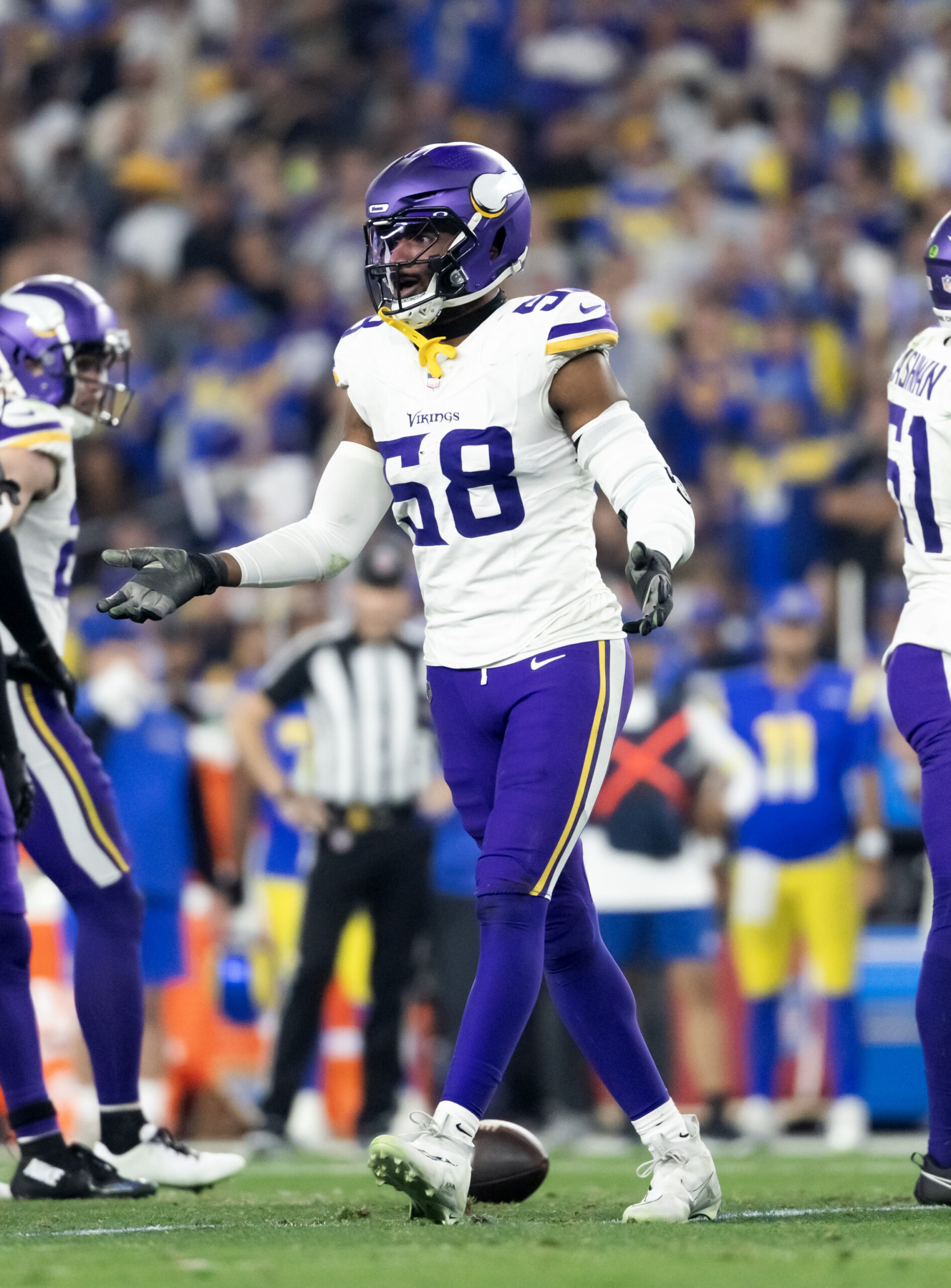
Minnesota and Philadelphia “heavily discussed” a Greenard trade in mid-March, but talks stalled over the Vikings’ asking price, Adam Schefter of ESPN said during an appearance on The Pat McAfee Show. The Eagles initially offered a third-rounder, but the Vikings held out for a second-rounder. They reached a compromise over a month later.
Greenard spent the first couple months of the offseason hoping for a raise, but the Vikings “weren’t going to pay him,” Schefter says. That had nothing to do with frugality on the part of Vikings ownership, according to interim general manager Rob Brzezinski (via Kevin Seifert of ESPN).
“We want to make it perfectly clear that this has nothing to do with us or [owners Zygi and Mark Wilf] not wanting to spend money or cutting back in any way, pulling back the reins on our spending,” Brzezinski stated. “We have just spent so much money the last several years that it’s not sustainable for us to move forward. Our salary cap situation has been very, very challenging.”
Brzezinski isn’t wrong. As Seifert notes, the Vikings spent $100MM-plus over the cap from 2024-25 under former GM Kwesi Adofo-Mensah, whom they fired in January. They were around $50MM in the red entering this offseason, but the Vikes now have approximately $10.74MM in effective cap space after the Greenard trade and the rest of their moves. While they have gotten themselves into better financial shape, Brzezinski admitted trading Greenard is “something that we understand is not making the Minnesota Vikings a better team today.”
The Vikings were not in position to hand Greenard a raise, but the Eagles quickly gave the 28-year-old pass rusher his coveted extension. It is technically a four-year, $100MM deal with $50MM in guaranteed money, but it may end up as a two-year pact. The Eagles will be able to escape the contract after the 2027 season, per OverTheCap. In releasing Greenard before June 1, 2028, the Eagles would save around $1.69MM while taking on $14.11MM in dead money. Designating Greenard a post-June 1 release would be more beneficial, as it would yield $11.09MM in savings and $4.70MM in dead cap.
Finding ways to keep Aaron Jones and TJ Hockenson when they are clearly done while letting Greenard go with little edge depth behind Turner and Van Ginkel is going to be a problem. Greenard’s Cap Hit for 2026 is $6.2M.
Greenard’s Eagles contract pays most of his compensation in per game roster bonuses, so he’s going to have to be healthy to get the majority of the money. Less risk for the team, and Greenard’s been a stud when healthy the last two years. His missed sacks last year were in large part to his messed up shoulder, he missed so many tackles with that shoulder trying to bring down the QB.
Seems odd for Rob B. to suggest they didn’t sign him for future cap reasons as Connor points out it’s basically a two year deal with $15M in dead money after that, which can be spread out over two seasons if needed.
It’s less about the actual dollar amount than it is about Turner outplaying him and deserving more snaps. There’s no reason to pay that much for an oft injured backup
turner is younger and better….and Greenard has played a full season once. didn’t deserve a bag from the Vikings. good move.
The move makes perfect sense for both sides.
Eagles got Greenard for very little draft capital and a contract they can get out of in a few years, and the Vikings got draft capital and cap relief for a guy who was blocking their young up and coming edge.
It’s not that Turner is better than Greenard right now, but that he probably has more upside moving forward, while there is no one like that in the Eagles’ Edge room, so the deal does make sense for both sides.
The Vikings could have found the D snaps to keep Greenard, Andrew Van Ginkel and Turner all happy, in my opinion, even while paying Greenard more money, but where the team basically ran a two-man interior defensive line in 2024, they ran a three-man IDL in 2025, and the drafting of Banks and Orange signifies that they want to continue with the 2025 approach. And while Banks and Orange can’t replace all of the snaps that Jonathan Allen and Javon Hargrave played last year, they seem confident in upping the snap counts for younger rotational D linemen like Levi Drake Rodriguez, Tyrion Ingram-Dawkins and Elijah Williams.
I do expect the team to look long and hard at signing a veteran edge rusher to back up Turner. Von Miller might be ideal, as he seems to have made his peace with being a back-up and rotational cog.