By Sam Robinson |
at August 1, 2016 11:20 am
This wasn’t the first time in recent years the Raiders entered an offseason with plenty of money to spend. However, the franchise’s effort in convincing marquee free agents to accept its offers unfolded in exponentially better fashion, creating the Raiders’ best roster since their 2002 AFC champion effort. This one also features more key players in their prime. The Raiders haven’t possessed this kind of team – one with a core featuring players in their prime or on the way to their prime – in decades.
Expectations exist in Oakland for the first time in ages. But the team has not even produced a winning season since 2002 and only two of its seven victories in 2015 came against teams that didn’t end up possessing top-six draft picks. With Mark Davis openly pursuing Las Vegas, 2016 promises to be a complex year for the Raiders. Their rejuvenation effort is impossible to deny, though, especially when compared to so many forgettable offseasons in the recent past.
Notable signings:
- Kelechi Osemele, G: Five years, $58.5MM. $25.4MM guaranteed. $1.5MM available via incentives.
- Sean Smith, CB: Four years, $38MM. $15MM guaranteed.
- Bruce Irvin, LB: Four years, $37MM. $14.5MM guaranteed. $2MM available via incentives.
- Donald Penn, T: Two years, $11.9MM. $5.5MM guaranteed. $1.5MM available via incentives.
- Marquette King, P: Five years, $16.5MM. $5.125MM guaranteed.
- Reggie Nelson, S: Two years, $8.5MM. $4MM guaranteed. $1.75MM available via incentives.
- Nate Allen, S: One year, $3MM. $1.85MM guaranteed. $2MM available via incentives. Was released prior to re-signing.
- Andre Holmes, WR: One year, $2MM. $750K guaranteed.
- Brynden Trawick, S: One year, $825K. $150K guaranteed.
- Aldon Smith, DE/LB: Two years, $11.5MM. $3.5MM available annually via incentives. $1.5MM available via 2017 escalator.
- Matt McGloin, QB: One year, $2.553MM. Signed second-round RFA tender.
- Neiko Thorpe, S: One year, $2.553MM. Signed second-round RFA tender.
- Matt McCants, T: One year, $1.671MM. Signed original-round RFA tender.
- Daren Bates, LB: One year, $850K.
- Damontre Moore, DE: One year, $675K.
Oakland saw Derek Carr throw 32 touchdown passes and Amari Cooper become the first Raider since Randy Moss in 2005 to surpass the 1,000-yard receiving barrier. Latavius Murray also became the franchise’s first 1,000-yard rusher since 2010. That talent remains in place, but the Raiders did not supplement it with much defensively last season. A defense lacking much depth to supplement Khalil Mack or Charles Woodson ranked 22nd in yards allowed and 26th against the pass. Their free agency effort focused on this problem.
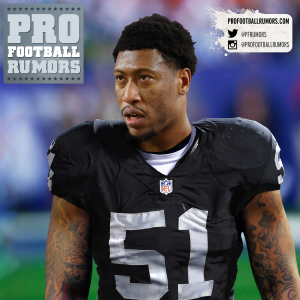
Mack’s All-Pro breakout season included 15 sacks, but the team featured no other edge player who recorded more than four. The hybrid linebacker/defensive end will now have Irvin complementing him as a pass-rusher. The Seahawks ended up keeping several players from their landmark 2012 class — Russell Wilson and Bobby Wagner chief among them — and didn’t have room to retain their own hybrid linebacker.
Seattle’s 2012 first-round pick has experience lining up as a defensive end and linebacker for full-season stays, which should benefit him in a Ken Norton Jr.-coordinated Raiders attack that will use both 4-3 and 3-4 concepts as it did a year ago. Norton coached Irvin in Seattle, and that will benefit the fifth-year player as well.
The Raiders have now equipped Mack with several ancillary pass-rushers to take pressure off of him, a group that includes the still-suspended Aldon Smith. But Irvin will be the primary player tasked with doing so. He has 22 sacks in four seasons, with his most (eight) coming as a rookie when the Seahawks opted to line him up primarily as a defensive end. On passing downs, Irvin figures to drop down and rush quarterbacks opposite Mack. His seasoning at both end and non-rush ‘backer makes him an ideal signing since the Raiders were also thin on their second level.
Going into last season, Oakland’s cornerback corps carried several homegrown talents that have not yet shown they’re capable NFL defenders. That D.J. Hayden-fronted contingent will now vie for nickel responsibilities after Oakland solidified this position by signing not only Sean Smith but extending 2015 waiver claim David Amerson.
The former
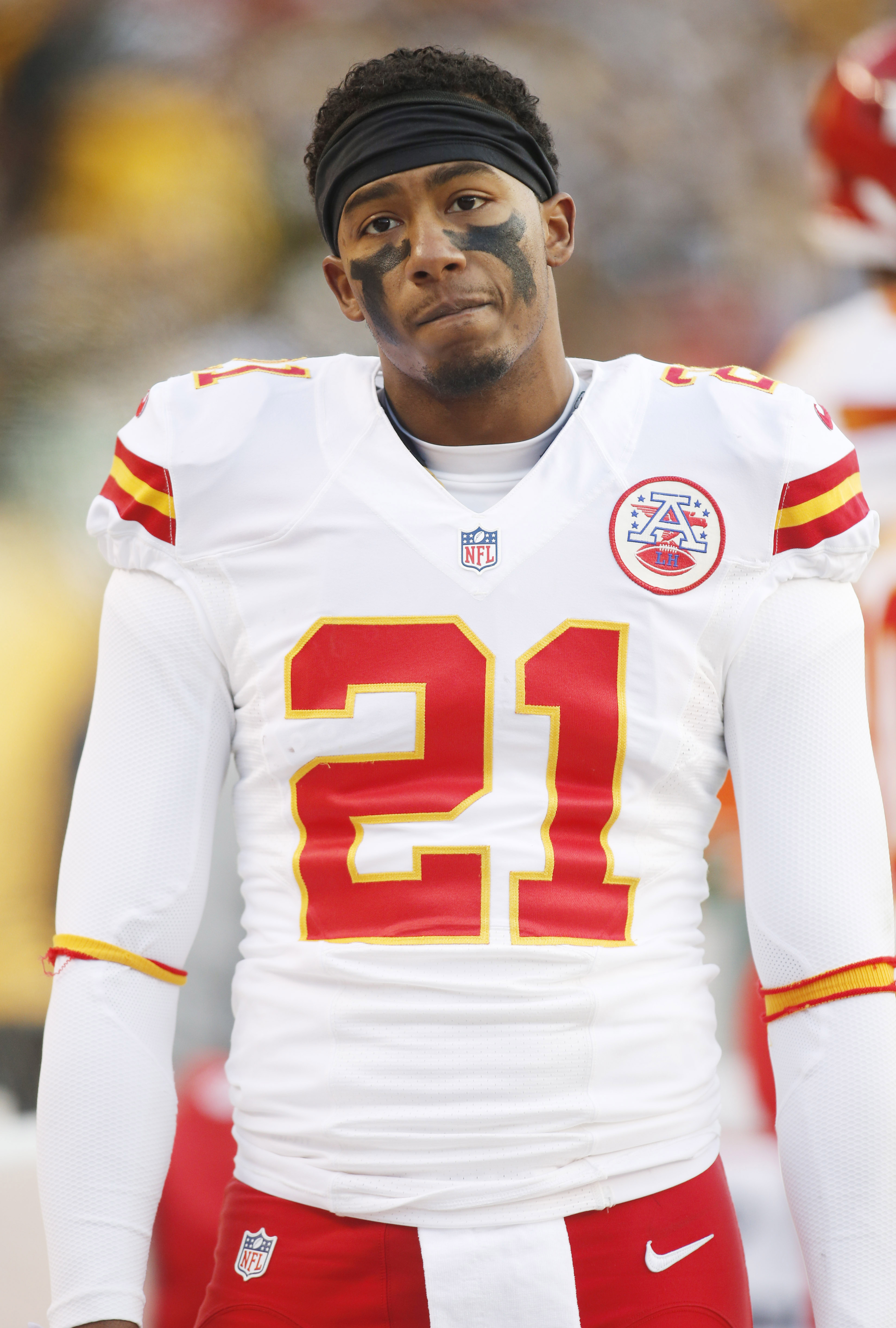
profiles as a rangy man corner, which Norton prefers. Smith served as the Chiefs’ most consistent corner from 2013-15 and played a key part in Kansas City trotting out three straight strong pass defenses. Defensive rookie of the year Marcus Peters led the NFL in passes thrown his way in 2015, with Smith being the player opposing offenses wanted to test least when facing the Chiefs. The 6-foot-3 outside stopper became the rare high-end starter to sign a third contract before turning 30, and he and 2015 surprise Amerson give the secondary a vital talent infusion. Hayden, T.J. Carrie and Neiko Thorpe functioning in the Nos. 3-5 roles at corner instead of as the team’s top trio should fit the holdovers’ skill sets better.
Woodson did not see his production tail off to the degree most 39-year-old talents’ have, and the Raiders are going to miss the future Hall of Famer. Nelson was one of the few players involved in more turnovers than Woodson last season. En route to Pro Bowl acclaim, the 32-year-old Nelson tied Peters by intercepting an NFL-high eight passes, and the former Jaguars first-rounder recovered two fumbles.
No one will confuse Nelson of matching his free safety predecessor’s instincts, especially after Woodson snared five INTs and recovered four fumbles at 39. But the Raiders needed a veteran presence on their back line since Nate Allen‘s standing within the organization plummeted after an injury-marred 2015 and a subsequent release/re-signing. Nelson’s two-year deal seems reasonable for a talented player who will be 34 at its conclusion.
It’s debatable Aldon Smith will play for the Raiders in 2016, but the team clearly felt confident he’d return to some semblance of his All-Pro form. The former first-round pick and first-team All-Pro could conceivably be a difference-making presence down the stretch for a Raiders team that’s enhanced its pass rush. Mack, Irvin, and Smith could form a NASCAR package-style look of their own in select sequences, providing Smith’s reinstatement — set for Nov. 17 at the earliest (Week 10) — unfolds smoothly. That’s no lock, as Josh Gordon and several others can attest.
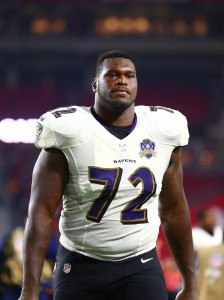
The Raiders allocated most of their prime resources to defensive upgrades but made their biggest financial commitment to Osemele. With Gabe Jackson already in the fold, Oakland’s need at guard didn’t match the ones that existed on defense. But the Raiders had more than $70MM in cap space to start the offseason. This signing should make their offensive line one of the game’s best. Oakland saw four of its five linemen receive quality grades from Pro Football Focus, with J’Marcus Webb at right guard being the only outlier.
The franchise immediately signed Osemele to fix a weak spot and made the fifth-year player by far the highest-paid guard in the league. The former second-round pick is basically on his own tier as far as guards go, with his $11.7MM-per-year deal nearly $4MM clear of the second-highest-paid guard, the Eagles’ Brandon Brooks ($8MM), in terms of AAV. The Raiders’ cap situation allowed them to frontload Osemele’s contract, and his $13.2MM 2016 cap number sits north of every other offensive linemen by at least $1MM.
Osemele, 27, will return to what has been his best NFL position, left guard, relocating Jackson to the right side for the first time as a pro. The Ravens used Osemele at left tackle down the stretch last season and likely inflated his value. One of the best run-blockers in the league will help Murray attempt to replicate his quality 2015 season, but for a bit in March it wasn’t yet known which position Osemele would play.
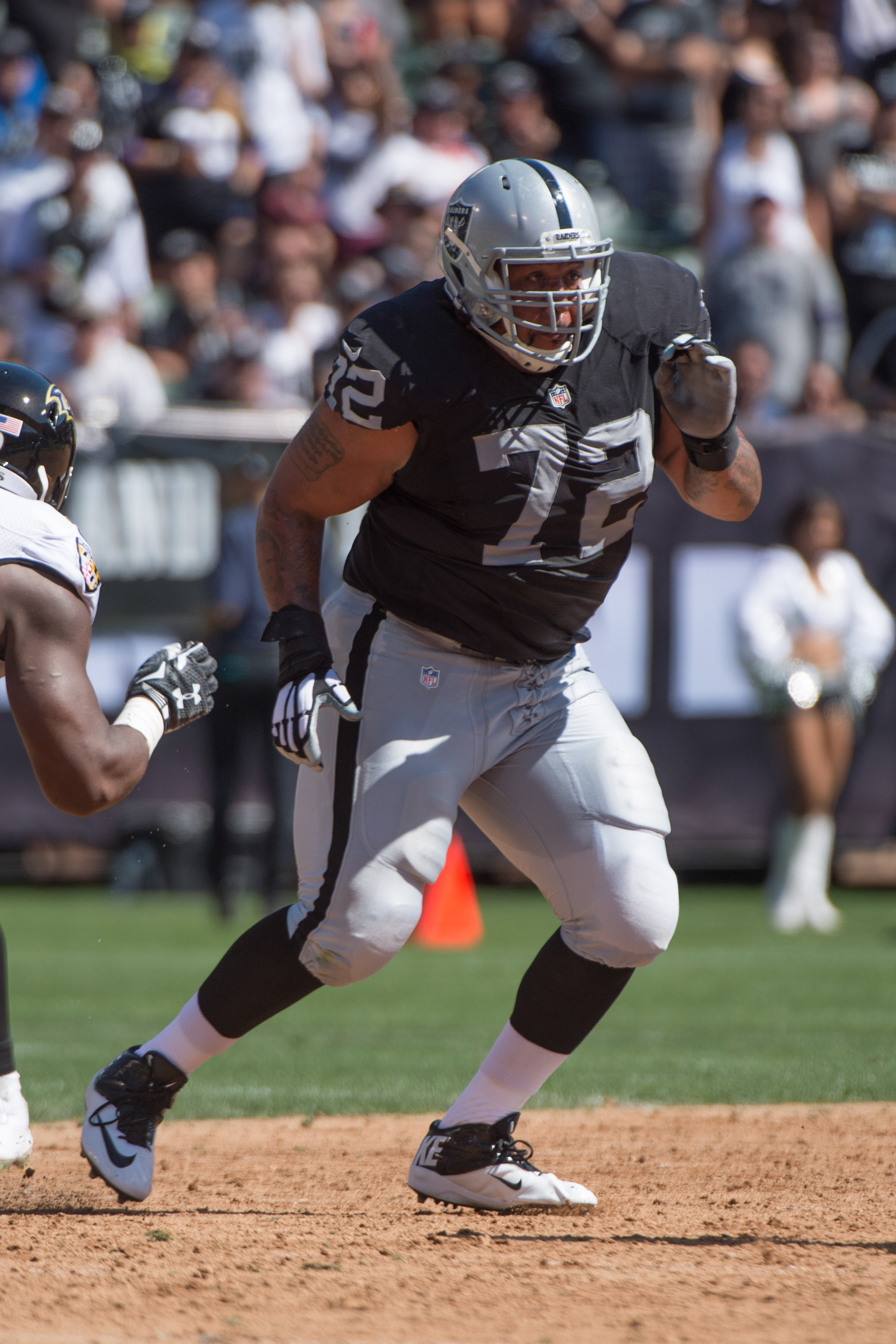
Donald Penn‘s decision to re-sign in Oakland, where he’d played well on a below-market contract the past two years to earn a rare raise at age 33, made sure Osemele would begin his Raiders tenure as a guard. Penn increased his value after two solid years with the Raiders but didn’t end up signing for that much more than he did when he inked a two-year, $9.6MM accord in 2014. So, the Raiders will be paying for the final years of the left tackle’s career in all likelihood but had the money to retain their only notable expiring contract.
The Raiders’ O-line now consists of four veteran contracts (Penn, Osemele, Rodney Hudson, and Austin Howard), with three of those representing top-10 money at their respective positions. Oakland’s payroll now houses an incredible imbalance between homegrown draftees and outside hires. The top nine figures on the Raiders’ 2016 cap sheet are allotted payments to hired guns acquired in the past three years, with Cooper and Mack’s coming in at 10th and 11th, respectively. This became possible due to poor drafting for several years in the late 2000s and early 2010s and several UFAs leaving in that span, Jared Veldheer and Lamarr Houston among them.
This spring’s spending spree gave the Raiders a nucleus that will be tethered to their plans for the next few years, and while the commitment proved extensive, their starting lineup can now measure up with the Broncos’ and Chiefs’ first units as the franchise hopes to compete with its top rivals.
Click here to read more about the Raiders’ offseason..
Read more
Notable losses:
- Lorenzo Alexander, LB
- Larry Asante, S
- Khalif Barnes, OL
- Tony Bergstrom, C
- Thomas Gafford, LS
- Shelby Harris, DE: Waived
- Curtis Lofton, LB: Released
- Benson Mayowa, DE: Declined to match Cowboys’ RFA offer sheet
- Taylor Mays, S
- Jeremy Ross, WR
- Rod Streater, WR
- Justin Tuck, DE: Retired
- J’Marcus Webb, OL
- Charles Woodson, S: Retired
While the offseason quickly became about what the Raiders acquired compared to what departed, the franchise did lose one of its best players ever in Woodson. The 39-year-old maintained a high level of play for longer than about anyone in league annals and stands as one of the best defensive backs in the NFL’s 97-season history. Pro Football Focus rated Woodson as its No. 28 safety last season, but he booked his ninth Pro Bowl berth 17 years after his first. The former Heisman Trophy winner and first-round Raiders draft choice in 1998 held an overmatched Oakland secondary together as the unit cycled through safeties and attempted to get by with just one dependable corner.
Tuck was set to be an unrestricted free agent after being one of the few Raider free agent success stories in many years. Although his most memorable Raiders moment may have come when he called a timeout and admonished Sio Moore and Khalil Mack for being well offsides while celebrating a late-game sack in 2014, Tuck delivered on the field when he was healthy for his second NFL employer. He registered five sacks in 2014 and played well through five games before suffering a season-ending chest injury.
Neither Lofton nor Webb turned out to produce much for the Raiders, the former being benched despite signing a three-year contract last year and the latter being the team’s worst starting lineman. One year after coming to the Raiders for $18MM, Lofton remains unsigned. The former Saint’s deal did not feature any guaranteed money coming after the first season, so the Raiders escaped relatively unscathed. Webb looks to now start for the Seahawks, who despite their success appear to have a far worse offensive line than the Raiders.
While the Raiders added Kelechi Osemele as a high-profile guard replacement, they’ll likely turn to second-year player Ben Heeney as their first choice to succeed Lofton at middle linebacker. The 2015 fifth-rounder started in three games down the stretch for the Silver and Black, who did not address the position until the sixth round of the draft. The Raiders are in need of a linebacker to join Malcolm Smith on passing downs, a role that’s become more relevant than starting middle linebacker.
Trades:
- Acquired a 2016 fourth-round pick (No. 100) from the Browns in exchange for a 2016 fourth-round pick (No. 114) and a 2016 fifth-round pick (No. 154).
Draft picks:
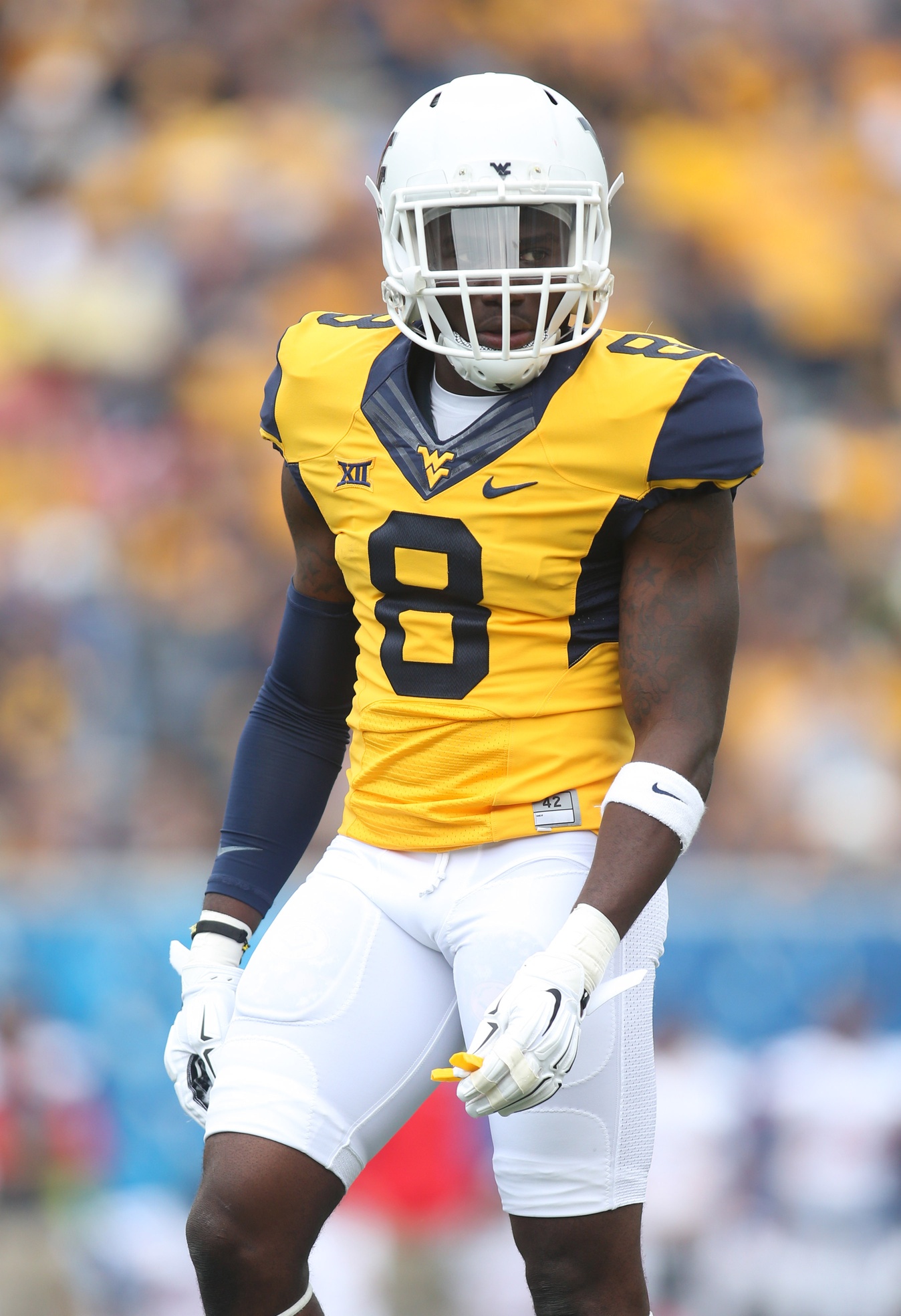
A hard-hitting safety, Joseph fills a key void for the Raiders, with the franchise not having much to build around long-term on its back line. Reggie Nelson will be 33 in September, and the 28-year-old Nate Allen no longer has long-term security after the events of this offseason. The 22-year-old Joseph did not suit up for the Mountaineers after their fourth game last season. His torn meniscus could well keep Allen in the Raiders’ starting lineup early, with the team likely not being in a rush to install Joseph as a full-time player until he’s ready.
Known more for his tackling ability, Joseph was having a career year in terms of forcing turnovers. The eventual No. 14 overall pick intercepted five passes in less than four full games for West Virginia in 2015, eclipsing his total from the previous three years combined. It’s been several years since the Raiders possessed a young safety they could build around; Tyvon Branch represented the last notable qualifier here. But the current Cardinals defender’s injury troubles sidetracked his Raiders tenure.
Joseph should be a starter alongside Nelson before long, with a healthy Allen potentially being a key charge as a third safety for a team that has questions at its nickel and dime spots. Using the formerly durable Eagles safety as a dime defender could help the Raiders the same way Branch did for the similarly cornerback-strapped Chiefs last season.
Ward and Calhoun will arrive at Raiders camp with disparate Big Ten resumes. An Illinois product whom many considered a reach in Round 2, Ward played two seasons with the Fighting Illini after transferring from a junior college. He made 104 total tackles (13 for loss) in 2014-15 despite coming into last year with knee problems. Ward could be of use for the Raiders as a run defender and, after some development from a prospect labeled as fairly raw, serve as an interior pass-rusher in 4-3 sets or reside as a five-technique end when Oakland shifts into 3-4 looks.
Calhoun, conversely, looks closer to a finished product after his Spartans career ended with 27 sacks and 44 TFLs. Calhoun won’t be asked to start, but his edge-rushing acumen — one that induced Pro Football Focus to bestow its second-best pass-rushing grade among edge defenders upon him in 2015 — could make him a weapon off the bench behind Khalil Mack and Bruce Irvin. Oakland will likely ask its third-rounder to serve in a similar capacity Denver deployed 2015 first-rounder Shane Ray — as a fresh rusher to spell its starters.
Oakland bypassed apparent needs at running back and inside linebacker in order to take Calhoun’s teammate, one who became the rare college talent known for his lack of captain status. Cook fell to the fourth round and now does not look to have an avenue to a starting job barring a trade. Once thought to be a potential second-round pick and a target for quarterback-needy franchises, the former Michigan State passer now could loom as trade bait similar the way Kirk Cousins was once viewed after going three rounds after Robert Griffin III in 2012. However, the Raiders appear to have upgraded their backup spot. Cook should usurp “Moxy” Matt McGloin this season once he becomes somewhat comfortable and give Oakland more insurance behind Derek Carr.
The Raiders waiting until the fifth round to take a running back showed belief in Latavius Murray, an impending free agent. They will almost certainly install Murray behind an improved offensive line in hopes the blocking enhancements will boost the run game. After catching 124 passes for 1,091 yards with the aerial-based Red Raiders, Washington could grow into a passing-down back should he prove adept at pass-blocking — an area in which many rookies struggle. But Murray, who is looking to become the first Raider to rush for 1,000 yards in back-to-back seasons since Marcus Allen in 1984-85, appears to have avoided immediate competition as pushes the Raiders (or another team) for a lucrative deal.
Extensions and restructures:
Merely ten months after arriving in Oakland as a waiver claim, Amerson proved to be the team’s most consistent corner. The Raiders’ drafted talents here have not panned out, and the franchise’s decision-makers recognized that this offseason and have invested in two long-term options. Amerson’s deal also appears to be a pay-as-you-go proposition, protecting the team in case the 6-1 corner reverts to the ways that induced Washington to waive him last September.
This extension gave the former second-round Redskins pick a $1MM base salary for 2016, but more importantly a $3MM roster bonus. That essentially quadruples Amerson’s ’16 income during what would have been a contract year. But, with the deal including just $5.5MM in full guarantees, Amerson still enters this season with a chance of being cut next offseason should he regress. His 2017 salary of $6.5MM becomes guaranteed on the third day of the next league year, with a $5.5MM ’18 base structured identically a year later.
Amerson did not bet on himself in the traditional sense, eschewing a contract and joining what now looks like a talented cornerback free agent class before extensions are signed. But he’s banking on 2015 being a turning point and not an aberration. Still, the 24-year-old corner took the money early, and if he proves to be a good fit for the Raiders’ man-based scheme again this season, the Raiders will be happy to pick up those figurative option years and trigger those additional guarantees. Because they’d be getting a quality No. 2 corner in that event for less than $7MM AAV. As the cap continues to rise, that’s a favorable scenario for the team.
Other:
Aside from the Raiders’ talent boost this offseason, the biggest Raiders story in 2016 thus far has been where their long-term headquarters will be.
Near the offseason’s outset, the Raiders hoped their joint effort with the Chargers for a Carson, Calif.-stationed stadium would win out, but the owners approved the Rams’ Inglewood venue instead and gave the Chargers first dibs on joining them in Los Angeles. The Raiders stand to get another crack at L.A. chance if the Bolts pass on that offer by January of 2017 and Mark Davis‘ franchise became loosely connected to San Antonio and San Diego at different times. But, another possible destination has emerged.
Could Las Vegas really be an NF
L city? Sin City quickly transformed from an afterthought to a serious threat to steal the Raiders, progressing much further in its pursuit of finalizing a stadium plan than the team’s current city has. Davis has pledged to move his team to Vegas if the city approves a stadium, putting Raiders fans in a strange spot.
Oakland mayor Libby Schaaf has held firm on not using public funds to finance a long-term Bay Area home for the Raiders, who returned to Oakland in 1995, yet still play in the same stadium they used for much of their previous stay in northern California. Open since 1966, O.co Coliseum will house the Raiders again in 2016 after the team signed another one-year lease to stay there. While Oakland doesn’t have much established in terms of financial parameters of securing a Raiders venue, the Southern Nevada Tourism and Infrastructure Committee is determining how money will be distributed for a stadium that could surpass $2 billion in total costs. The SNTIC has until Sept. 30 to send a plan to Nevada governor Brian Sandoval, with the only hangup being how much public money (largely be collected via hotel tax) will be used to finance this project.
While most owners have not come out publicly on a Vegas NFL team, influential leaders like Jerry Jones and Robert Kraft have voiced support for Davis and shown flexibility on a team’s relocation into the nation’s gambling mecca. It looks closer than ever a team will move there, with Davis now having distanced himself from Los Angeles. Those talks could pick up again should either the SNTIC not complete a plan or if 24 owners don’t approve a move. But the Chargers are also mired in potentially futile stadium talks after a California Supreme Court decision stands to severely limit a November measure for a downtown stadium’s chances of passing.
Dean Spanos already agreed in principle to join Stan Kroenke and the Rams in Inglewood, so there’s still a chance the musical chairs game ends with the Raiders in Oakland beyond 2016. But Vegas has gained sufficient steam and could well put the owners to a vote. The Bay Area already having the 49ers could be seen as a boon for LV’s prospects since this would represent a foray into a new market, albeit one that isn’t among the top 40 in the country. But the Raiders could be a rare and awkward position this season of having playoff aspirations as a relocation looms. No team since the 1970 merger has moved on the heels of a playoff campaign.
Other offseason decisions did not involve as much drama. The Raiders passed on Hayden’s fifth-year option after the former No. 12 overall pick underwhelmed considerably in his first three Oakland slates. Hayden’s 2017 salary would have been top-20 cornerback money as of now, and the supplanted starter has not lived up to that status yet. He’ll play out a contract year in 2016 as a result. Hayden looks to enter training camp as the Raiders’ top nickel option, but the more versatile T.J. Carrie could usurp him there as well. A Houston product who suffered a frightening injury during Cougars practice in 2012, Hayden looks set for his final Oakland season.
The team, though, extended the GM who drafted Hayden. As the Raiders sit on the precipice of potential contention for the first time in ages, they agreed to an extension with their architect. Al Davis‘ decision-making successor remade the Raiders over the past five years, with his most noticeable upgrades coming over the past three. Drafting Khalil Mack, Derek Carr and Gabe Jackson in 2014 and adding Amari Cooper a year later, McKenzie has stockpiled better young cornerstones than the Raiders have possessed in decades. Signing the likes of Rodney Hudson, Dan Williams and Michael Crabtree paid off last year, and McKenzie’s much-publicized 2016 haul made bigger headlines.
The Raiders are now operating like a stable organization after years of mismanagement. McKenzie’s second head-coaching hire, Jack Del Rio, comes with a pedigree of lifting teams to the playoffs as a head coach and elevating defenses as a DC over the past 10+ years. A 53-year-old GM who spent 18 years with the Packers, McKenzie will now have a chance to see his operation through, no matter where the Raiders decide to play. They don’t have the wins to show for it yet, but the Raiders are in far better shape than they were prior to McKenzie’s arrival.
Smith’s unspecified trip to rehab only seems to further diminish his chances at making a notable contribution to the Raiders this season. There is no guaranteed money on his two-year deal, protecting the team in the event the talented 26-year-old pass-rusher cannot overcome these off-the-field issues. McKenzie indicated the Raiders will not bail on Smith but also noted the former University of Missouri standout has an “uphill battle” ahead of him. Smith’s only started more than eight games in a season once, in 2012, and produced 19.5 sacks that year. That’s tied for the 12th-most in any season since sacks became a stat, but his top form hasn’t surfaced in years. Smith’s teetering on what-if terrain.
Top 10 cap hits for 2016:
- Kelechi Osemele, G: $13,200,000
- Bruce Irvin, LB: $12,500,000
- Michael Crabtree, WR: $11,000,000
- Sean Smith, CB: $11,000,000
- Rodney Hudson, C: $7,700,000
- Dan Williams, DT: $7,500,000
- Donald Penn, T: $6,100,000
- Reggie Nelson, S: $6,000,000
- Austin Howard, T: $5,900,000
- Amari Cooper, WR: $5,150,709
The Raiders look to have amassed enough talent to make a legitimate challenge for the playoffs in a division that, after years of mostly Broncos dominance, could be highly competitive this season. They’ll be attempting this ascent under the backdrop of what could well be an acrimonious season amid relocation drama, but the Raiders appear to be situation well on the field for a change. They have a core group of performers on the books for at least two more years. Given the statuses of their cornerstone players, the Silver and Black should be primed to contend in the near future.
However, Oakland has not proven much with this group yet on the field. Denver still should deploy one of the league’s best defenses, and Kansas City probably has the most balanced team in the division after advancing to the playoffs in two of the past three years and not losing what the Broncos did offensively. The Raiders are in position to make some noise at long last, and this season will go a ways toward determining how prescient the front office’s investments were over the past three years.
Information from Over the Cap, Spotrac, and Roster Resource was used in the creation of this post. Photos courtesy of USA Today Sports Images.
By Dallas Robinson |
at July 28, 2016 9:00 am
The Lions had high hopes for their 2015 campaign after reaching the postseason a year before, but an 0-5 start dashed any playoff chances the club might have had (Detroit’s only win in the first half of the year was an overtime squeaker against the Bears). The second half of the season was much more successful, as the Lions posted a 6-2 record that likely saved head coach Jim Caldwell‘s job. A new front office structure means roster changes, and although much of the coaching staff returns, Detroit looks like a different club heading into the upcoming season after a team legend surprisingly announced his retirement.
Notable signings:
- Marvin Jones, WR: Five years, $40MM. $13MM guaranteed.
- Haloti Ngata, DT: Two years, $12MM. $6MM guaranteed.
- Tahir Whitehead, LB: Two years, $8MM. $4.75MM guaranteed.
- Johnson Bademosi, S: Two years, $4.5MM. $2.9MM guaranteed.
- Stefan Charles, DT: One year, $1.75MM. $750K guaranteed.
- Tavon Wilson, S: Two years, $2.2MM. $500K guaranteed.
- Wallace Gilberry, DE: One year, $1.25MM. $340K guaranteed.
- Rafael Bush, S: One year, $1.5MM. $250K guaranteed.
- Stevan Ridley, RB: One year, minimum salary benefit. $250K guaranteed.
- Geoff Schwartz, OL: One year, minimum salary benefit. $200K guaranteed.
- Dan Orlovsky, QB: One year, minimum salary benefit. $160K guaranteed.
- Tyrunn Walker, DL: One year, $1.6MM. $150K guaranteed. $650K available via incentives.
- Don Muhlbach, LS: One year, minimum salary benefit. $80K guaranteed.
- Darrin Walls, CB: One year, minimum salary benefit. $80K guaranteed.
- Jeremy Kerley, WR: One year, $850K. $50K guaranteed. $300K available via incentives.
- Orson Charles, TE: Two years, $1.29MM.
- Tim Wright, TE: One year, $815K.
- Crezdon Butler, CB: One year, minimum salary benefit.
- Andre Caldwell, WR: One year, minimum salary benefit.
- Matthew Mulligan, TE: One year, minimum salary benefit.
- Andre Roberts, WR: One year, minimum salary benefit.
- Zaviar Gooden, LB: One year, $600K.
- Anquan Boldin, WR: One year, contract terms unknown.
Given that franchise icon Calvin Johnson formally announced his retirement one day prior to the beginning of the free agent period, the Lions waded into the open market with wide receiver atop their list of needs. And instead of settling for a mid-tier option like Rishard Matthews or Rueben Randle, Detroit struck early and added the
top pass-catcher available, inking former Bengals receiver Marvin Jones to a five-year deal worth $40MM. In most offseasons, Jones wouldn’t have been considered the No. 1 WR on the market, but with the Bears’ Alshon Jeffery restricted by the franchise tag, Jones was the best obtainable choice.
The 26-year-old Jones never got an opportunity to be Cincinnati’s primary offensive weapon given the presence of A.J. Green, so it’s difficult to know for certain if he’ll be able to take on that role in Detroit. In his two seasons as a full-time player, Jones has averaged 58 receptions for 764 yards and seven touchdowns, and because Golden Tate is still expected to garner a ton of targets in 2016, it wouldn’t be a surprise if Jones only sees a slight uptick in those numbers. Clearly, other clubs around the league think highly of Jones, as the Lions had to outduel the Browns, the Patriots, and, naturally, the Bengals for his services.
Just yesterday, the Lions signed another pass-catcher, agreeing to terms with veteran receiver Anquan Boldin after meeting with him in June. Even as he ages, Boldin has continued to post solid production — he’s managed at
least 65 receptions in each of the past four years, averaging nearly 1,000 yards and five touchdowns during that time. Besides Detroit, the Redskins and the Saints were the only clubs to express known interest in Boldin over the past several months, but he’ll act as a malleable weapon who can play outside and slot receiver in the Lions’ offense.
Detroit also made several smaller additions to its receiver corps, agreeing to deals with Jeremy Kerley, Andre Caldwell, and Andre Roberts. The trifecta are all very similar players, from their work in the slot to their returning ability, but given that Boldin spent most last year on the inside, it’s conceivable that none of the group makes the final roster, even though the Lions’ depth chart is pretty wide open behind the top three. Kerley, for what it’s worth, was the only member of the trio to receive any guaranteed money, but even he only garnered $50K.
None of the three tight ends added on minimum contracts — Matthew Mulligan, Tim Wright, and Orson Charles — figure to make an impact, or even the roster, this season, meaning the only other Lions addition at a skill position was running back Stevan Ridley, whom new general manager Bob Quinn is familiar with given the pair’s time with the Patriots. Ridley, 27, looks to be in a position to make Detroit’s roster after a knee injury limited him in each of the past two seasons. However, the Lions were set to work out free agent Arian Foster before he signed with the Dolphins last week, which indicates that the team isn’t sold on its running backs, so Ridley (and second-year pro Zach Zenner) may have to fight for their jobs during camp.
Like Ridley, offensive lineman Geoff Schwartz signed a one-year, minimum salary benefit contract with the Lions, and also like Ridley, Schwartz was guaranteed a hefty portion of his base salary. As a reminder, the MSB allows a club to pay a veteran player the minimum for a player with his service time,
while only taking on the cap charge of a player with two years experience. So while Schwartz, for example, will earn $840K if he makes Detroit’s roster, he’ll only count for $680K ($600K base salary plus an $80K signing bonus) on the Lions’ salary cap.
That $80K bonus figure is the maximum allowable on a minimum salary benefit deal, but the contractual bargaining agreement doesn’t place restrictions on how much base salary a team can guarantee a player. Ridley and Schwartz, then, will each be guaranteed in excess of $200K even though their cap charges will remain relatively small. Of course, when compared against a $155MM salary cap, a savings of $80K or so looks like pennies, but every dollar counts. And it’s a smart strategy by Quinn & Co., because it enables the Lions to woo veteran free agents with financial guarantees without worrying about exorbitant cap hits.
Schwartz, for his part, isn’t in line for a starting position now that Detroit has drafted Taylor Decker, but he’s an extremely valuable asset who can play every spot up front except for center. His only problem over the past few seasons has been his health, as he started only 18 games in two years after signing a free agent contract with the Giants. But in a league where Joe Barksdale (for example) can score $22MM over four years, landing Schwartz for a relative pittance is a steal.
The Lions secured another bargain on the defensive side of the ball, re-signing outside linebacker Tahir Whitehead to a two-year, $8MM deal that includes less than $5MM in guarantees. Non-rush ‘backers aren’t a highly-coveted commodity,
but PFR ranked Whitehead as the best free agent among his position group this offseason, and the 26-year-old graded as the No. 14 linebacker in the league in 2016, according to Pro Football Focus. Whitehead, 26, could be playing a new role in 2016, as middle linebacker is now open following the release of Stephen Tulloch.
Detroit’s other additions along the front seven all came up front, as the club re-invested in its defensive line after losing Ndamukong Suh, Nick Fairley, and others following the 2014 campaign. A year after sending a fourth-round pick to Baltimore to acquire Haloti Ngata, the Lions re-signed the veteran defensive tackle, inking him to a two-year deal. Ngata, 32, wasn’t quite as effective in 2015 as he’d been in recent seasons, and given that he missed two games with a calf injury, it’s fair to wonder if Ngata is finally slowing down. Detroit handed him a $4MM signing bonus, however, so he has a decent amount of dead money protection that could keep him from being released in the next two years.
Perhaps in an effort to guard against any fall-off on the part of Ngata, the Lions also re-upped fellow interior defensive lineman Tyrunn Walker, and added free agent Stefan Charles from the Bills. The 26-year-old Walker turned down a three-year offer from the Patriots last offseason in favor of a one-year deal from Detroit, but then spent most of the season on injured reserve after suffering a broken fibula. Walker will be healthy for 2016, and along with Charles, he’ll provide depth on the interior as part of a group that includes holdovers Caraun Reid, Khyri Thornton, Gabe Wright, as well as second-round rookie A’Shawn Robinson. Ngata, therefore, should see a decrease in snaps after seeing action on roughly 57% of Detroit’s plays last year.
Along the edge, the Lions signed defensive end Wallace Gilberry, who had spent the past four years with the Bengals. Gilberry was exceptional during in 2013, posting 7.5 sacks while serving as Cincinnati’s third defensive end, but his play dropped off in later seasons when he was asked to take on a larger role. Luckily, Detroit will place him back into a rotation, but Gilberry is now 31 years old, so he can’t be counted on to produce at a high level. As such, I identified the Lions as a possible landing spot for veteran pass rusher Dwight Freeney, and, if the club can stomach him, controversial defensive end Greg Hardy.
Detroit figures to stage a three-man competition to replace Isa Abdul-Quddus at strong safety, with two free agent signings — Rafael Bush and Tavon Wilson — facing off against fourth-round rookie Miles Killebrew for the starting job. Though Wilson was a Quinn draft pick in New England, Bush probably has the edge in this battle, as he was very effective during his time with the Saints — when he could stay healthy. Bush has ended each of the last two seasons on injured reserve (he played in only one game in 2015), so if he can’t stay on the field, Wilson and/or Killebrew should see plenty of opportunities.
Defensive back Johnson Bademosi doesn’t figure to factor into the starting safety competition, but after inking one of the largest contracts for a special-teamer in league history ($2.9MM guaranteed), he will certainly play an important role. The Lions ranked 13th in special teams DVOA last season, and given that Quinn comes from New England, which consistently ranked in the top-five of ST DVOA, teams is likely an area where the new general manager figures he can improve on the cheap.
Continue reading about the Lions’ offseason…
Read more
Notable losses:
- Isa Abdul-Quddus, S
- Joique Bell, RB: Released
- Jermelle Cudjo, DT
- James Ihedigbo, S
- Calvin Johnson, WR: Retired
- Jason Jones, DE
- Travis Lewis, LB
- Rashean Mathis, CB: Retired
- Lance Moore, WR
- Bear Pascoe, TE
- Manny Ramirez, OL
- Darryl Tapp, DE
- Stephen Tulloch, LB: Released
- C.J. Wilson, DT: Released
- Josh Wilson, CB
The Lions lost several talented players this offseason, but the retirement of Calvin Johnson clearly stands above the rest. The 30-year-old’s decision to hang up his cleats seemingly came out of nowhere, and Johnson’s choice heavily affected Detroit’s free agent strategy, forcing the club to ink Marvin Jones to a hefty contract while also adding depth options like Anquan Boldin, Andre Roberts, and Jeremy Kerley.
Johnson will retire as the Lions’ all-time leader in receptions (731) receiving yards (11,619) and receiving touchdowns (83). Since leading the NFL with 122 receptions and 1,964 yards in 2012, he had seen his production decline a little. Still, Megatron continued to be one of the league’s more productive pass catchers in 2015, with 88 catches, 1,214 yards, and nine touchdowns, making his retirement announcement all the more unexpected.
Joique Bell, meanwhile, didn’t have the storied Lions history that did Johnson, but he was still an inspiring story, battling for a roster spot as an undrafted free agent and ultimately scoring 22 touchdowns over four seasons in the Motor City. But his age-29 season was his worst year to date, as he battled injuries and only managed 3.5 yards per carry on 90 attempts. Detroit moved on, adding Stevan Ridley to fill the power back role, but Bell has claimed he has several free agent offers on the table.
Veterans Lance Moore and Manny Ramirez played relatively meaningful snaps for the Lions last season, as Moore saw 43 targets as a slot receiver, while Ramirez saw action at both guard positions in addition center. Neither will be back with the Lions in 2016, and Ramirez won’t be playing for anyone, as he announced his retirement after initially signing with the Bears this offseason. Moore, who hasn’t been productive since 2012, could soon follow Ramirez into retirement, as he hasn’t garnered any known interest since free agency began.
Aside from Johnson, few of the Detroit’s losses on the offensive side of the ball were notable, but that’s not the case on defense. Isa Abdul-Quddus‘ defection to Miami will probably hurt the most, as the 26-year-old graded out as the No. 21 safety in the league last year (per Pro Football Focus) after taking a starting job from James Ihedigbo midseason. However, given that the Dolphins handed Quddus a three-year deal that will pay him more than $4MM per year, it’s not a surprise that the Lions declined to match the offer. Detroit is already paying fellow defensive back Glover Quin $4.7MM annually, and Abdul-Quddus could prove to be a risky investment given that he’s really only posted a half-season’s worth of production.
As noted, Ihedigbo lost his starting role last midway through last year, and there’s been no indication that he’ll reunite with the Lions at any point before the season begins (though he is confident he will find a landing spot soon). The 32-year-old Ihedigbo was excellent during the 2014 campaign, but quickly pushed for a new contract following that season, which could have rubbed Detroit management the wrong way.
Two other defensive backs — Rashean Mathis and Josh Wilson — also won’t return to Detroit next year after dealing with injuries last season. Mathis and Wilson only played in a combined 15 games last season, as the former battled concussions while the latter suffered a knee issue. Mathis, who turns 36 next month, announced his retirement earlier this year, ending a 13-year career that saw him earn 165 starts. Third-year pro Nevin Lawson, who took over at corner after Mathis went down, figures to act as the starter opposite Darius Slay in 2016.
While Mathis was able to end his career ceremoniously, the same adverb can’t be used to describe how the Lions handled veteran linebacker Stephen Tulloch over the past several months. Reports as far back as February indicated that Tulloch would be released when the new league year began in March, but Detroit took no action until early July, waiting until the 31-year-old could pass a physical so that it wouldn’t have to pay him a $1.1MM in injury protection. All told, the Lions cleared out $6MM in cap space by cutting Tulloch, who’d been with the club since 2011.
Up front, Detroit is losing three veteran defenders — Darryl Tapp, Jason Jones, and C.J. Wilson — who played more than 1,000 combined snaps in 2015. Of the trifecta, Jones’ loss is the most consequential, given that he saw the most action and was the most effective, but Tapp was also a quality run-defender last year. All three have since found new homes, as Tapp and Wilson signed with the Saints while Jones joined the Dolphins.
Trades:
- Acquired LB Jon Bostic from the Patriots in exchange for a conditional 2017 seventh-round pick.
Jon Bostic was traded for the second time in eight months, and this time around he’ll head back to the NFC North, the division where he began his career as a second-round pick of the Bears. The easy connection here is the Patriots,
as Bostic is one of several former New England players — along with Stevan Ridley, Tavon Wilson, and Matthew Mulligan — brought in by former Pats pro scouting director Bob Quinn, who is now Detroit’s general manager.
Now that longtime Lion Stephen Tulloch has been released, Detroit’s linebacking unit with have a slightly different look going forward. Former All Pro DeAndre Levy is healthy again and will man the weak side, while Tahir Whitehead is expected to move to the middle to replace Tulloch. Former second-round pick Kyle Van Noy is the favorite to take over on the strong side, leaving Josh Bynes and Bostic to compete for time as reserves.
Both Bynes and Bostic figure to make Detroit’s 53-man roster, not only because they’re cheap, but because they both offer special teams value. Bynes played over 50% of the Lions’ ST snaps last year, while Bostic has averaged about a third of special teams snaps over his career. Detroit essentially acquired Bostic for nothing, and on the outside chance that he’s forced to contribute in 2016, the Lions could reap a compensatory pick when Bostic hits the free agent market next spring.
Draft picks:
- 1-16: Taylor Decker, T (Ohio State)
- 2-46: A’Shawn Robinson, DT (Alabama)
- 3-95: Graham Glasgow, C (Michigan)
- 4-111: Miles Killebrew, S (Southern Utah)
- 5-151: Joe Dahl, T (Washington State)
- 5-169: Antwione Williams, LB (Georgia Southern)
- 6-191: Jake Rudock, QB (Michigan)
- 6-202: Anthony Zettel, DT (Penn State)
- 6-210: Jimmy Landes, LS (Baylor)
- 7-236: Dwayne Washington, RB (Washington)
Detroit was a popular landing spot for Taylor Decker in mock drafts, and the Lions got their man when draft day came. Decker appears to be the favorite to start at left tackle, which would mean incumbent blindside protector Riley Reiff is ticketed for the right side.
Quietly, Detroit’s offensive line is adding talent, and will now field first-rounders at both tackle spots and left guard (Laken Tomlinson), while Larry Warford — who’s been excellent during his first three years in the league — holds down right guard.
Center, meanwhile, looked to be a question mark after the Lions selected the local Graham Glasgow in the third round, but recent reports have indicated that third-year pro Travis Swanson is still taking first-team reps this offseason. That could certainly change down the road, especially if Swanson plays as poorly as he did last year, when he ranked among the bottom-10 centers in the league, according to PFF.
Aside from Decker, the Detroit rookies with the best chances at playing time in 2016 are A’Shawn Robinson and Miles Killebrew, each of whom will vie for snaps on the defensive side of the ball. Robinson is the favorite to start on the interior next to Haloti Ngata, but will likely split time with Caraun Reid, Tyrunn Walker, and Stefan Charles, while Killebrew is a candidate to start at safety if he can beat out Rafael Bush and/or Tavon Wilson.
Other:
New general manager Bob Quinn comes to the Lions from the Patriots, with whom he had spent his entire 16-year NFL career, working his way up from scout to to become New England’s director of pro scouting, a title he’d held since 2012.
It’s easy to assume that every Patriots personnel executive that lands a GM job is going to be the next Bill Belichick in terms of cap and roster management, but former New England front office members have just as spotty a track record as do ex-Pats assistant coaches.
Scott Pioli, for example, only helped lead the Chiefs to one postseason appearance during his four-year run during Kansas City, and has now joined fellow ex-Patriot Thomas Dimitroff in Atlanta. Dimitroff, for his part, has posted the most success of any former New England employee, as the Falcons won nine or more games during his first five seasons with the club, but the last three years have been a struggle. Jason Licht has the Buccaneers moving in the right direction, while former Pats college scouting director Jon Robinson is entering his first season with the Titans.
All of which is to say that Quinn isn’t a lock to experience success simply because he has Patriots lineage. But one of his first (and most important) decisions will be how to handle negotiations with pass rusher Ezekiel Ansah, who is under team control
through 2017 courtesy of the fifth-year option.
Viewed as a high-risk prospect coming out of BYU, “Ziggy” has reached his potential and more, posting 30 sacks during his first three years in the league, 12th-most among defensive linemen in the first three years of their careers since the merger. He’ll look to break the bank when he reaches free agency, and the only hindrance in talks might be his age. Ansah entered the league at age-24, so he’ll already be 29 when he becomes a free agent for the first time, and 30 if the Lions use the franchise tag in 2018.
Detroit’s decision to pick up its 2017 option on kicker Matt Prater didn’t change much for the veteran. He’ll receive $750K as a bonus instead of base salary this season, and his contract for next year isn’t guaranteed. As such, the Lions could easily cut bait next offseason, but they’ll have no reason to if Prater performs as well as he did in 2015. After beginning the season with a few shaky contests, Pratter settled down and ended up making 21-of-26 field goal attempts.
Top 10 cap hits for 2016:
- Matthew Stafford, QB: $22,500,000
- Calvin Johnson, WR: $12,916,000 (dead money)
- Riley Reiff, T: $8,070,000
- DeAndre Levy, LB: $7,650,000
- Glover Quin, S: $7,577,500
- Stephen Tulloch, LB: $7,300,000
- Golden Tate, WR: $7,101,250
- Marvin Jones, WR: $6,600,000
- Ezekiel Ansah, DE: $5,916,433
- Brandon Pettigrew, TE: $4,650,000
With no Calvin Johnson on the roster for the first time since 2006, Detroit’s offense will change, and quarterback Matthew Stafford will likely spread the ball out a bit more as the team looks to find its footing. The Lions’ defense could prove to be the more important unit, however, as the club needs to maintain its success on that side of the ball if it has any hope of competing with the Packers and Vikings in the NFC North.
Information from Over the Cap, Spotrac, and Roster Resource was used in the creation of this post. Photos courtesy of USA Today Sports Images.
By Dallas Robinson |
at July 25, 2016 8:56 pm
After two years of uncertainty under the management of former GM Phil Emery and head coach Marc Trestman, the Bears seem to be on the upswing under John Fox, Ryan Pace, and the rest of the club’s new leadership. The key area of focus for Chicago this offseason was defense, and the club made a significant investment to add talent for coordinator Vic Fangio, but a new voice on the offensive side of the ball could go a long way towards building on last year’s 6-10 record.
Notable signings:
- Alshon Jeffery, WR: One year, $14.599MM. Fully guaranteed. Accepted franchise tag.
- Danny Trevathan, LB: Four years, $24.5MM. $12MM guaranteed.
- Bobby Massie, T: Three years, $18MM. $6.5MM guaranteed.
- Jerrell Freeman, LB: Three years, $12MM. $6MM guaranteed.
- Akiem Hicks, DE: Two years, $10MM. $5MM guaranteed.
- Tracy Porter, CB: Three years, $12MM. $4.25MM guaranteed.
- Zach Miller, TE: Two years, $5.5MM. $3MM guaranteed.
- Sherrick McManis, CB: One year, $2.85MM. $750K guaranteed.
- Brian Hoyer, QB: One year, $2MM. $750K guaranteed.
- Mitch Unrein, DL: Two years, $2.26MM. $500K guaranteed.
- Ted Larsen, G: One year, $1.65MM. $350K guaranteed. $750K available via incentives.
- Sam Acho, LB: One year, minimum salary benefit. $130K guaranteed.
- Jacquizz Rodgers, RB: One year, minimum salary benefit. $80K guaranteed.
- Marc Mariani, WR: One year, minimum salary benefit. $80K guaranteed.
- Chris Prosinski, S: One year, minimum salary benefit. $80K guaranteed.
- Deonte Thompson, WR: One year, minimum salary benefit. $80K guaranteed.
- Nick Becton, T: One year, $675K.
- Aaron Brewer, LS: One year, minimum salary benefit.
- Rob Housler, TE: One year, minimum salary benefit.
- Tony Moeaki, TE: One year, minimum salary benefit.
- Amini Silatolu, G: One year, contract terms unknown.
The Bears’ defense actually got a little better in 2015 under new coordinator Vic Fangio, improving from 15.6% below average to 11.6% below the league norm (according to Football Outsiders’ DVOA metric), but the unit still needed a lot of work. Heading into last offseason, Andy Benoit of TheMMQB.com wrote that Chicago needed to replace 10 of its 11 starters on the defensive side of the ball, with cornerback Kyle Fuller representing the only option who could stay in his current role. Nearly 18 months later, general manager Ryan Pace and the rest of the front office have reached that goal, replacing every starter besides Fuller while also accruing depth.
After inking do-it-all front-seven player Pernell McPhee last offseason, the Bears this year signed a pair of linebackers who will play more conventional roles, and former Bronco Danny Trevathan may have been the least surprising addition of the spring. Trevathan, 26, played under Chicago head coach John Fox when the pair was in Denver, and Trevathan had long stated that he expected the Bears to show interest in him.
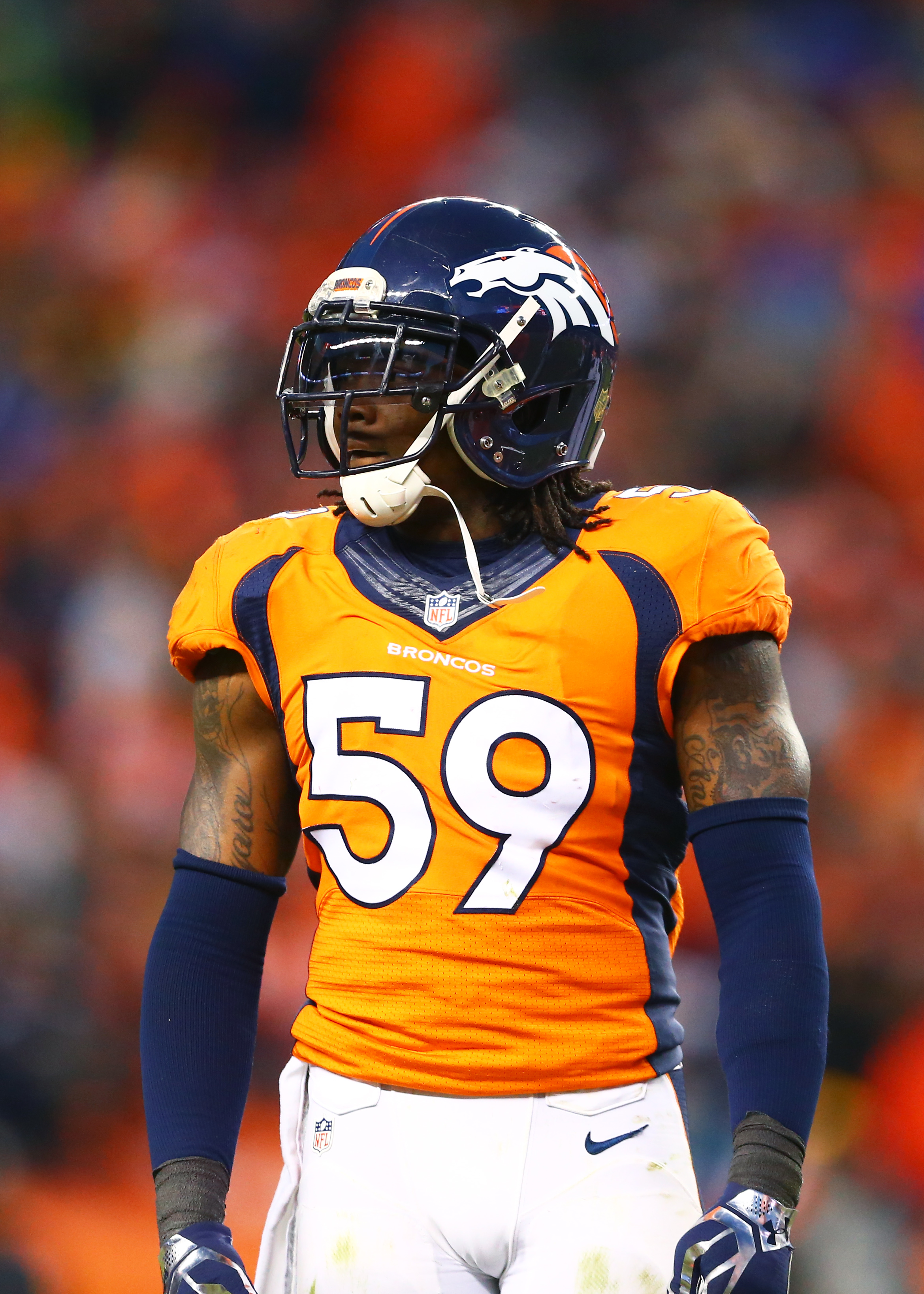
Chicago faced stiff competition for Trevathan, as both the Falcons and Titans also were intrigued by the idea of adding the former sixth-round pick to their linebacking corps. Still, Trevathan wasn’t all that expensive, as his $6.125MM annual average ranks just 12th among inside ‘backers. His market may have been somewhat stunted by his recent injury history, as a broken kneecap ended his 2014 campaign. But Trevathan stayed healthy for 15 games and 73 tackles last season, and he’ll act as a stabilizing presence in Chicago.
Joining Trevathan in the middle of the field will be fellow linebacker Jerrell Freeman, who was lured away from the Colts by a three-year, $12MM pact. Though he just hit free agency for the first time, Freeman is actually 30 years old, having spent the first three years of his professional career in the Canadian Football League. But he’s been remarkably productive during his NFL stint, and last year he graded out as the fourth-best linebacker in the league, according to Pro Football Focus, which also ranked him as the No. 1 LB against the run.
Like Trevathan, Freeman has a recent injury record, missing seven games over the past two seasons while dealing with nagging hamstring and concussion issues. But the Bears structured Freeman’s contract in such a way that they can get out of it after 2015 if Freeman’s production suffers, as Chicago would only carry $1.5MM in dead money if it made Freeman a post-June 1 cut next year. But that’s a worst-case scenario, obviously, as the club hopes that Freeman will follow in the footsteps of Ray Lewis, Brian Urlacher, Derrick Johnson, and London Fletcher, fellow linebackers who performed well after crossing age-30.
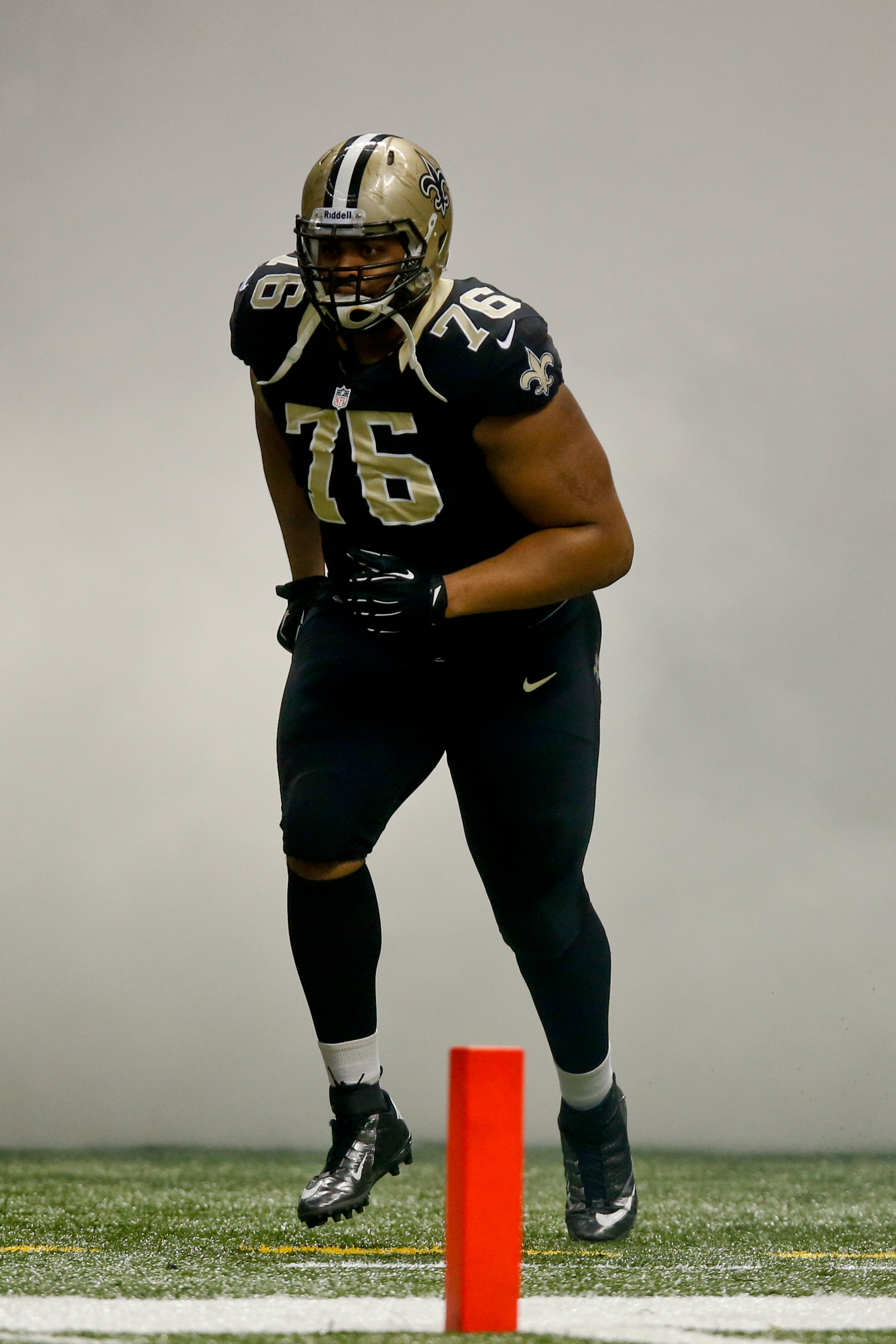
The Bears didn’t stop adding to their front seven after signing Trevathan and Freeman, as the team also inked defensive lineman Akiem Hicks, who figures to immediately slot in at end. Hicks spent most of last year with the Patriots, but prior to that was a member of the Saints, so Pace — who started his career in the New Orleans front office — has a familiarity with the fifth-year pro. Mitch Unrein, a capable run-plugger, will rotate with rookie Jonathan Bullard at the other end spot in Chicago’s 3-4 scheme after re-upping on a two-year deal.
Cornerback Tracy Porter was also re-signed after a solid 2015 campaign that saw him earn 13 starts. Porter will turn 30 next month, and didn’t grade all that well according to PFF (No. 78 CB among 111 qualifiers), but Bears coaches were insistent that Porter was not only a steady force in the secondary, but added a veteran presence in a young defensive locker room. Still, for another $1MM per year or so, Chicago could have signed someone like Patrick Robinson or Casey Hayward, who would probably offer more upside. Elsewhere in the defensive backfield, Sherrick McManis will be back to act primarily as a special teams ace after playing the third-most ST snaps among all Bears last season.
On offense, the key storyline of the offseason was clearly the status of wide receiver Alshon Jeffery, who was set to enter free agency for the first time. Jeffery, 26, dealt with injuries all season long, and ultimately missed seven games. But when he was on the field, Jeffery was tremendous, acting as a target monster and topping 80 yards receiving six times. On a yards per game basis, 2015 was the best season of Jeffery’s career.
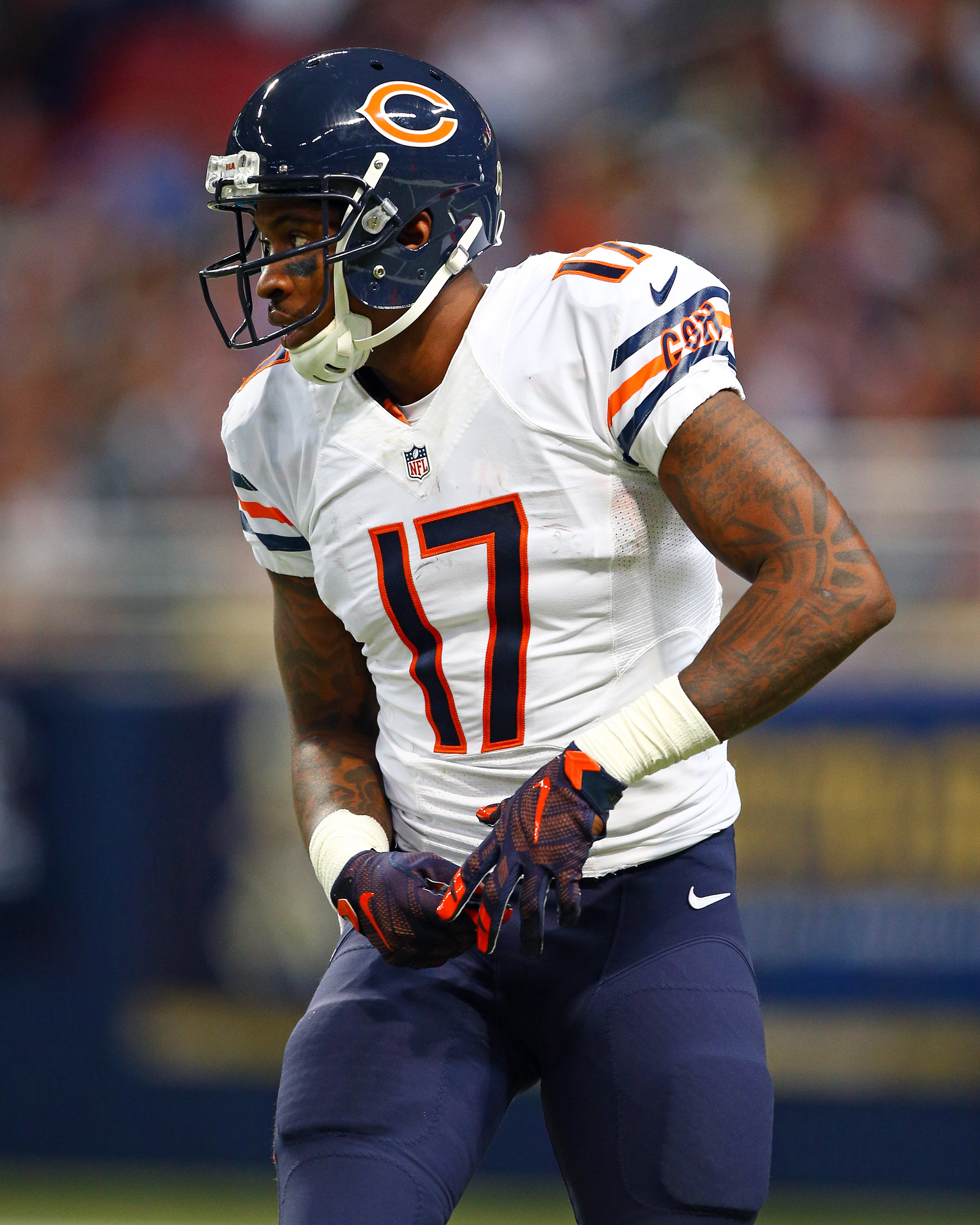
But given his lengthy history of physical ailments, Jeffery was going to have trouble finding common ground on a long-term contract with the Bears. Jeffery likely wanted $14-15MM per year, the same average earned by A.J. Green, Dez Bryant, Julio Jones, and Demaryius Thomas, but Chicago was never going to commit that much to a pass-catcher who struggles to stay on the field. The franchise tag was the only other option, and it’s probably a good deal for both sides, as the Bears can limit their long-term risk, while Jeffery can earn nearly $15MM for one year while aiming to cash out next offseason.
The Bears also acted quickly to re-sign another one of Jay Cutler‘s weapons, agreeing to terms with veteran Zach Miller a few days after free agency opened. Miller had reportedly been looking for $5MM per season on the open market, but as a 31-year-old with one productive season under his belt (until 2015, Miller hadn’t played a down since 2011!), he wasn’t going to come close to that figure. Instead, Miller inked a deal that will pay him $5.5MM over the next two years, and should step into a more consistent role on offense now that Martellus Bennett has been traded.
Miller will line up frequently next to new right tackle Bobby Massie, whom the Bears signed after a productive platform year in Arizona. Chicago’s offensive line was pretty decent last year, ranking seventh in adjusted line yards and 12th in adjusted sack rate, but the front five will have a very different look during the upcoming season. In addition to Massie, whose signing will allow Kyle Long to move back to guard, the Bears inked fellow former Cardinal Ted Larsen and former Panther Amini Silatolu to compete at left guard. Larsen has been one of the worst offensive lineman in the league during his career, and Silatolu has seen his time in the NFL derailed by injuries, meaning neither should be a serious threat to overtake rookie Cody Whitehair.
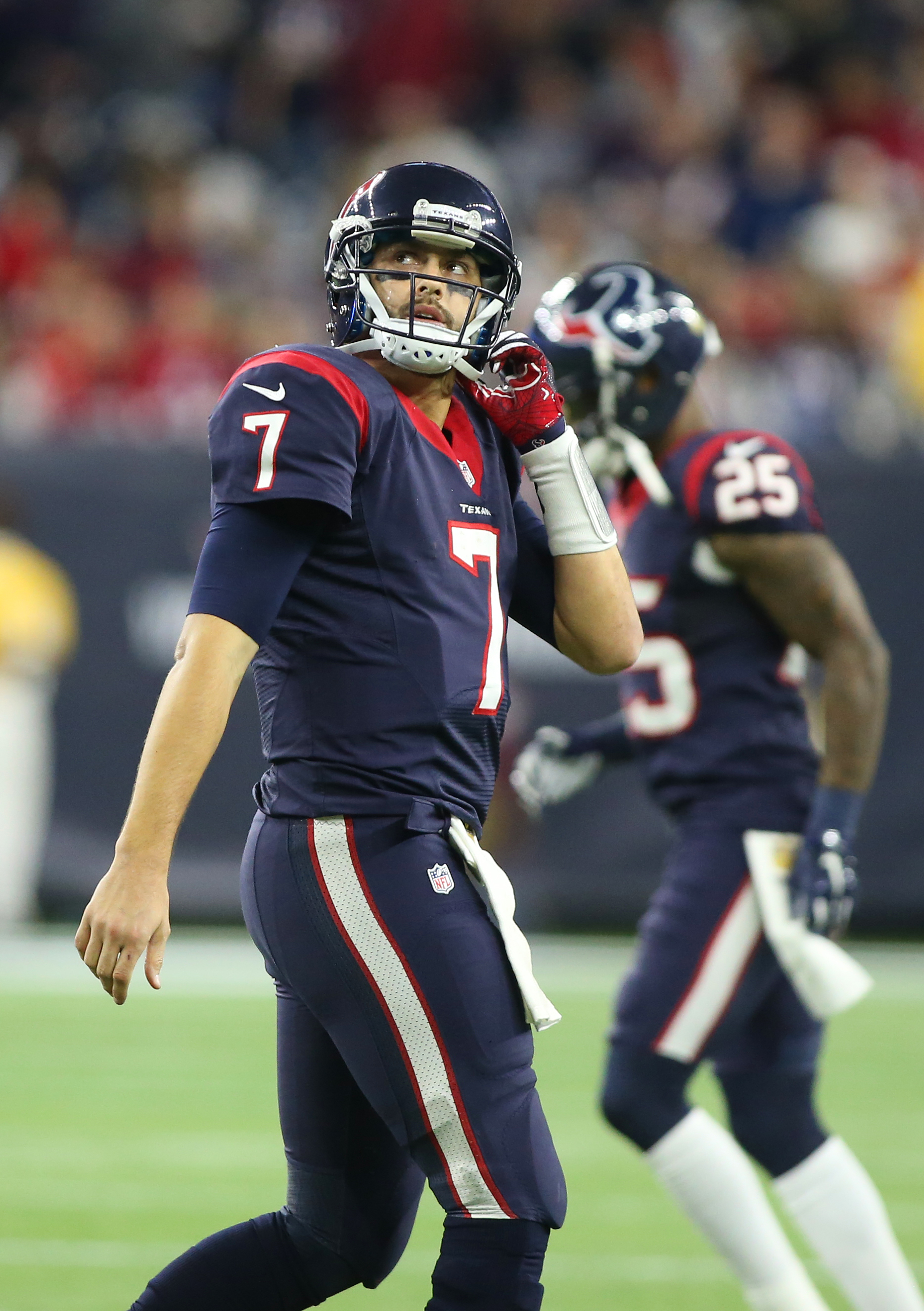
While the offensive line will be blocking for Cutler, new signee Brian Hoyer would step in if Chicago’s starter went down, giving the Bears their most respectable backup quarterback since Josh McCown. Hoyer posted the best season of his career in 2015, leading the Texans to the playoffs before suffering an embarrassing defeat to the Chiefs in the Wild Card round. Still, he was the most sought-after No. 2 QB on the open market, and the Bears had to fend off the Steelers and Cowboys by offering Hoyer $750K guaranteed.
One final note: For the second year in a row, Pace and his staff made use of the minimum salary benefit, bringing in veterans at a low cost and letting them compete for jobs. I praised the strategy last season, and the Bears unearthed several contributors, including Porter, Miller, and linebacker Sam Acho, without having to shell out big bucks. The club has taken the same approach this season, re-signing Acho while adding or keeping players such as Tony Moeaki, Rob Housler, and Chris Prosinski on the cheap. Not every one of these veterans is going to hit, but they don’t have to — employing the minimum salary benefit enables a team to throw things against the wall and see what sticks, and Chicago has mastered this concept over the past two offseasons.
Continue reading about the Bears’ offseason…
Read more
Notable losses:
- Alan Ball, CB
- Jermon Bushrod, OL: Released
- Vlad Ducasse, G
- Matt Forte, RB
- Bruce Gaston, DL: Waived
- Jarvis Jenkins, DL
- Sherrod Martin, S
- Shea McClellin, LB
- Will Montgomery, C
- Ryan Mundy, S
- Patrick Omameh, G
- LaRoy Reynolds, LB
- Antrel Rolle, S: Released
- Matt Slauson, OL: Released
- D’Anthony Smith, DT: Waived
The Bears have a lengthy history of legendary running backs, as Walter Payton and Gale Sayers are among the most notable backs in the history of the NFL. But Matt Forte will be added to that list, as he ranks second in Chicago history in both rushing yards and receptions after finishing eight years with the club. Since his rookie season in 2008, Forte leads the league in yards from scrimmage, racking up 12,718 yards during that time. The former second-round pick was the perfect back for the modern NFL, as Forte also ranks first in receptions (487) since ’08. In 2014, his age-29 season, Forte finished fourth in receptions…not among running backs, but in the entire league, trailing only Antonio Brown, Demaryius Thomas, Julio Jones.
But for a club that’s in the middle of a semi-rebuild like the Bears, it simply doesn’t make financial sense to retain a running back who’s already over 30 years old. Chicago told Forte prior to the free agent period that it wouldn’t be re-signing him, and clubs like the Packers and Dolphins expressed early interest. Forte ultimately landed with the Jets, agreeing to a three-year deal worth $12MM — not an exorbitant total, but not a figure that the Bears should have matched.
Chicago’s other offensive losses were all up front, including interior option Matt Slauson, who, while he doesn’t have the name recognition of Forte, was quite critical to the Bears’ offense in both 2013 and 2015 (Slauson missed all but five contests in 2014 due to injury). Only 30 years old, Slauson was due $3.4MM during the upcoming season, and Chicago surprisingly didn’t even give him a chance to accept a pay cut. Versatile enough to handle every position on the interior offensive line, Slauson graded as the league’s fifth-best center in 2015 (per PFF), and that’s the spot he’ll handle in San Diego. The wiser move, from my vantage point, would have been to retain Slauson and let him start at center over Hroniss Grasu, who struggled in his rookie campaign.
Tackle Jermon Bushrod had lined up next to Slauson for the past several seasons, but after suffering a concussion and ceding his starting job to Charles Leno, Bushrod’s time in Chicago was clearly nearing its end. The Bears took on $4.4MM in dead money by releasing Bushrod, but it was the right move, as the veteran was never a top-level performer for the club. Journeyman center/guard options Vlad Ducasse (who actually started 11 games last season) and Will Montgomery also won’t return.
Moving to the defensive side of the ball, the Bears didn’t make a serious effort to re-sign former first-round pick Shea McClellin, who had bounced all around the front seven but failed to make an impact at any position. Chicago had already declined his fifth-year option, so he hit the open market and landed a nice deal with the Patriots. If McClellin is able to carve out a role in New England, it could be a bad look for Chicago’s coaching staff.
In the secondary, Alan Ball was signed to add a veteran presence to a young defensive backfield, but he only ended up playing about a quarter of Chicago’s snaps as his starting role was usurped by Tracy Porter. Now 31 years old, Ball’s time in the league could be coming to an end. Likewise, safety Ryan Mundy might not have much left, as although he started all 16 games in 2014, he missed all of last season with a hip injury, a devastating ailment for an athlete, and especially a back-end defender.
Along with McClellin, end Jarvis Jenkins was the only other Bears defensive loss who actually played a meaningful role last season, and like McClellin, Jenkins was similarly ineffective, ranking among the bottom-20 interior defenders in the NFL, according to PFF. Jenkins is probably more suited to a situational pass-rushing role, which is the part he’ll play with the Jets. On a macro level, it speaks to the level of Chicago’s revamp that none of their defensive defections will hurt.
Trades:
- Acquired a 2016 fourth-round pick (No. 127) from the Patriots in exchange for TE Martellus Bennett and a 2016 sixth-round pick (No. 204).
- Acquired a 2016 first-round pick (No. 9) from the Buccaneers in exchange for a 2016 first-round pick (No. 11) and a 2016 fourth-round pick (No. 106).
- Acquired a 2016 second-round pick (No. 49), a 2016 fourth-round pick (No. 117), and a 2017 fourth-round pick from the Bills in exchange for a 2016 second-round pick (No. 41).
- Acquired a 2016 second-round pick (No. 56) and a 2016 fourth-round pick (No. 124) from the Seahawks in exchange for a 2016 second-round pick (No. 49).
- Acquired a 2016 fourth-round pick (No. 113) from the Rams in exchange for a 2016 fourth-round pick (No. 117) and a 2016 sixth-round pick (No. 206).
The 2014 campaign was, without question, the best season of Martellus Bennett‘s career, as the veteran tight end hauled in 90 passes for 916 yards while scoring six touchdowns, earning a spot on the Pro Bowl
roster for the first time. But trade rumors began floating around Bennett as early as April 2015, as the Bears were reportedly not willing to entertain Bennett’s request for a new deal.
Bennett continued to express displeasure with both his contract status and his role in Chicago’s offense throughout the 2015 season, and his disdain for his standing with the club became so public that Bennett’s agent was forced to publicly deny that any rift existed. However, after a season which saw Bennett land on injured reserve, it appeared that his time in the Windy City would soon come to an end, and it did, as he was shipped to the Patriots after the division rival Packers reportedly showed interest in signing Bennett were he to be released.
The Bears moved up roughly 80 spots in the draft by trading Bennett to New England, and they also acquired a good deal of draft capital through various deals made during the event itself. General manager Ryan Pace did very well for himself by pick-pocketing both the Bills and the Seahawks, picking up 167 cents on the dollar from Buffalo and 132 cents on the dollar from Seattle, according to Chase Stuart of Football Perspective. Meanwhile, Chicago gave up a much smaller haul (117 cents on the dollar, per Stuart) to swap first-rounders with the Buccaneers, leaping the Giants who were also though to be targeting edge rusher Leonard Floyd.
Draft picks:
By most accounts, the Bears wrangled one of the best draft classes of any club this year, as both Pro Football Focus and Mel Kiper of ESPN.com handed Chicago an “A-” grade for its efforts. First-rounder Leonard Floyd is the riskiest pick of the bunch,
as the 6’6″ edge rusher needs to add weight and could be limited to sub packages during his rookie year. But he’s an excellent athlete, having graded as the second off-ball linebacker in SPARQ score, and the fact that he won’t be asked to do too much during his rookie season might actually Floyd, as he’ll play behind McPhee, Willie Young, and Lamarr Houston for the time being.
Cody Whitehair, on the other hand, figures to start immediately, as his only competition at left guard is Ted Larsen and Amini Silatolu, a pair that has — more often than not — been either been ineffective or hurt. Offensive line expert Lance Zierlein of NFL.com praised Whitehair’s work ethic during the pre-draft process, and noted he is “almost always in complete control of his body thanks to outstanding core strength and balance.” While noting that he could be susceptible to the bull rush, Zierlein named Whitehair a potential All Pro, and comped him to Cowboys guard Zack Martin.
In the third round, Chicago found a steal, selecting Florida end Jonathan Bullard, whom many analysts had projected to go in the first round. At 6’3″, 285 pounds, Bullard has the size to play end in Vic Fangio‘s 3-4 scheme, and he can help out on early downs given that he posted the best collegiate grade against the run last season, per PFF. Bullard will rotate with Mitch Unrein, Will Sutton, and others as he gets his footing, but it wouldn’t be a surprise if he earns more playing time as the season goes along.
While Deiondre’ Hall and DeAndre Houston-Carson will likely be relegated to special teams role during their rookie campaigns, defensive back Deon Bush is a strong candidate to start in 2016. The Bears released veteran Antrel Rolle earlier this year, opening up a spot at strong safety next to Adrian Amos. Bush’s main competition is Chris Prosinski, a career special teamer who is only guaranteed $80K this year.
A few later round picks, running back Jordan Howard and receiver Daniel Braverman, could see time on offense during the upcoming season. The Bears are expected to use a committee to replace Matt Forte, with Howard joining Jeremy Langford, Jacquizz Rodgers, and Ka’Deem Carey in an effort to rush the ball. Braverman, meanwhile, was a favorite of several draftiks, but he won’t get on the field unless Eddie Royal gets hurt, as both are strictly slot receivers. Royal missed seven games last season, however, so the opportunity could be there for Braverman.
Other:
Adam Gase followed John Fox from Denver to Chicago after missing out on several head coaching opportunities, and helped rehabilitate the career of quarterback Jay Cutler. Now that Gase has moved onto Miami, Cutler has hand-picked the successor at offensive coordinator, as former QBs coach Dowell Loggains was promoted. Loggains does have previous play-calling
experience with the Titans in 2012-13, and helped a Tennessee offense rank 16th in offensive DVOA with Ryan Fitzpatrick and Jake Locker under center (no small accomplishment). The Bears’ defense figures to improve in 2016, but the club’s offense needs to maintain its top-10 DVOA rating if it wants to seriously compete.
A key part of that offense will be offensive lineman Kyle Long, who figures to stay at right guard now that Chicago has signed tackle Bobby Massie. Long has made the Pro Bowl in each of his three NFL seasons, and although the rest of the Bears’ interior line could see some reshuffling this season, Long will stabilize the front five at right guard. Using Pro Football Reference’s approximate value metric, Long has been the second-most valuable member of the entire 2013 draft class, so Chicago’s decision to pick up his 2017 fifth-year option was an easy call. Extensions talks should begin soon, and Long could easily reset the market at right guard, which is currently topped by Brandon Brooks‘ $8MM per year.
The Bears added or re-signed quite a few tight ends this offseason after trading away Martellus Bennett, signing Zach Miller, Tony Moeaki, and Rob Housler, but the team also tried to bring in Saints restricted free agent Josh Hill. New Orleans had already inked free agent tight end Coby Fleener to a large contract, and given the Saints’ constant cap trouble, it seemed inconceivable that the club would be able to match any offer sheet. But they did, and because the specific structure of Chicago’s offer isn’t known, it’s fair to wonder if the Bears could have manipulated the deal in such a way to make it impossible for the Saints to counter.
Top 10 cap hits for 2016:
- Jay Cutler, QB: $17,000,000
- Alshon Jeffery, WR: $15,599,000
- Pernell McPhee, LB: $7,675,000
- Lamarr Houston, LB: $6,990,000
- Danny Trevathan, LB: $6,350,000
- Bobby Massie, T: $5,818,750
- Eddie Royal, WR: $4,500,000
- Akiem Hicks, DE: $4,500,000
- Jermon Bushrod, OL: $4,400,000 (dead money)
- Robbie Gould, K: $4,100,000
Aaron Schatz of ESPN.com recently posted Football Outsiders’ initial forecasts for the 2016 season, and the Bears are projected to finish last in the NFC North with seven wins. Chicago is certainly in a tough division, as both the Vikings and Packers should be considered favorites to return to the postseason once again. But I’d take the over on seven wins for the Bears, as the club’s defense has improved so much that that it shouldn’t struggle to reach a .500 record.
Information from Over the Cap, Spotrac, and Roster Resource was used in the creation of this post. Photos courtesy of USA Today Sports Images.
By Dallas Robinson |
at July 21, 2016 11:00 am
The Chargers bottomed out in 2015, posting their worst record since 2003 and securing their first top-five draft pick since the club selected Philip Rivers. But with that top draft choice, and a lot of money coming off the books, San Diego had a chance to remake its roster this offseason while also attempting to deal with relocation concerns.
Notable signings:
- Travis Benjamin, WR: Four years, $24MM. $13MM guaranteed.
- Joe Barksdale, T: Four years, $22.2MM. $10.5MM guaranteed.
- Casey Hayward, CB: Three years, $15.3MM. $6.8MM guaranteed.
- Antonio Gates, TE: Two years, $11MM. $6MM guaranteed.
- Brandon Mebane, DT: Three years, $13.5MM. $5.5MM guaranteed.
- Dwight Lowery, S: Three years, $7.2MM. $1.5MM guaranteed.
- Matt Slauson, OL: One year, $3MM. $600K guaranteed.
- Chris Hairston, OL: Two years, $2.9MM. $550K guaranteed.
- Kellen Clemens, QB: One year, minimum salary benefit. $80K guaranteed.
- Jeff Cumberland, TE: One year, minimum salary benefit. $80K guaranteed.
- Jahleel Addae, S: One year, $2.553MM. Signed second-round RFA tender.
- Damion Square, DL: One year, $725K.
The Chargers’ offensive line in 2015 was, in a word, messy. Injuries sapped any potential the unit might have exhibited prior to the season, leaving tackle Joe Barksdale as the only starter who appeared in all 16 games. King Dunlap, Orlando Franklin, Chris Watt, and D.J. Fluker — a group that earned more than $21MM in cash in 2015 — missed a combined 30 games, leaving subpar options such Trevor Robinson, Kenny Wiggins, and Chris Hairston to fill in. In fact, nine San Diego offensive linemen played more than 100 snaps, and the club fielded 24 different line combinations, fourth-most in the NFL (latter stat courtesy of Eric D. Williams of ESPN.com).
And while the Chargers’ front office is banking on improved health to ameliorate an offensive line that ranked 31st in adjusted line yards, the club didn’t simply rest of its laurels. San Diego’s first move was to re-sign Barksdale, locking up its right tackle
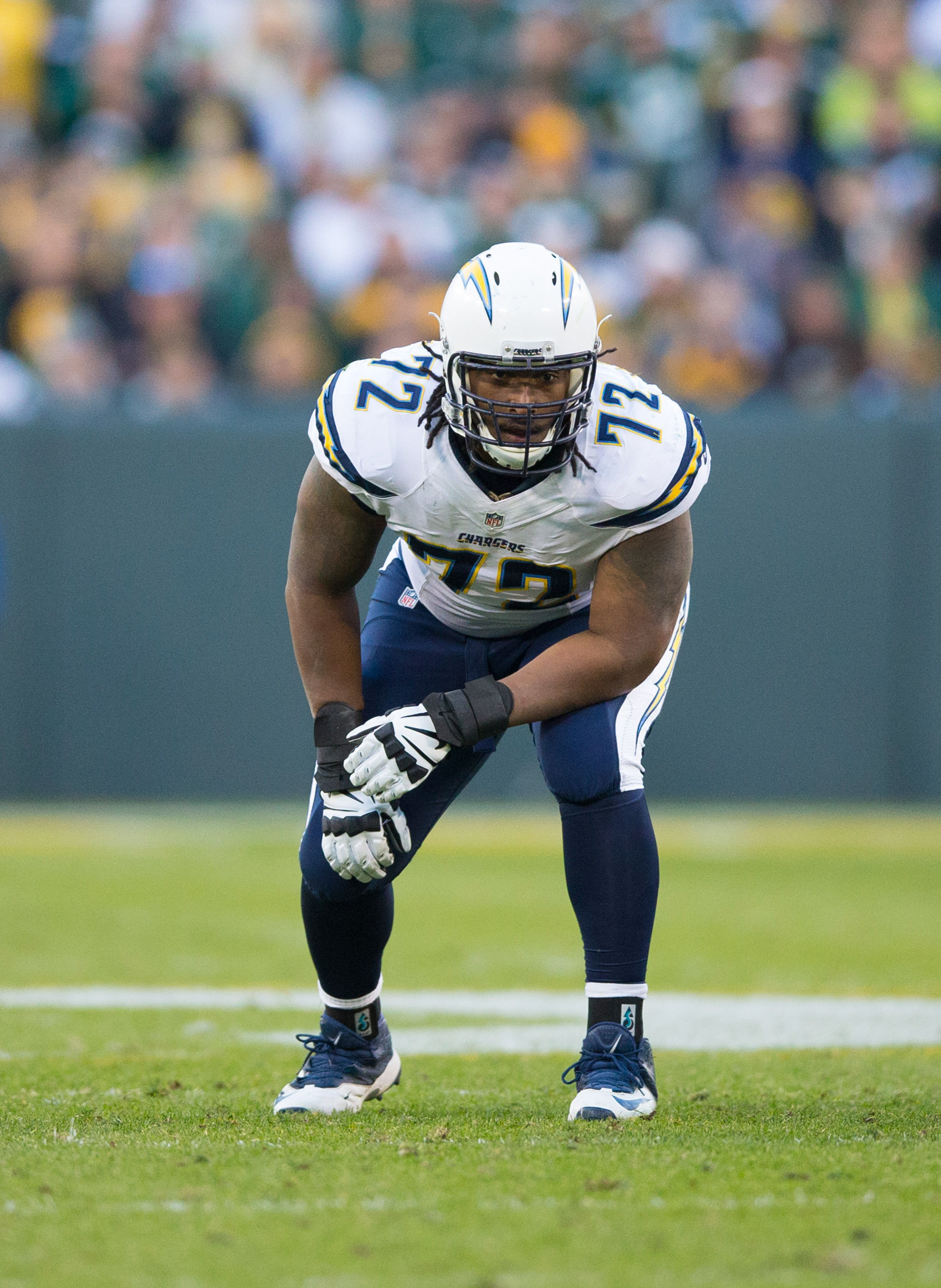
through the 2019 season. Barksdale, 28, is a fine player — he ranked as the No. 21 tackle in the league last year, according to Pro Football Focus, and graded among the top-50 at his position in 2014.
But Barksdale sat on the 2015 open market until the end of May before agreeing to a one-year, minimum salary pact with the Chargers. His new contract, on the other hand, makes Barksdale the eighth-highest paid right tackle in terms of annual value, and his $10.5MM in guarantees is fourth-largest among non-rookie contracts at his position. Perhaps San Diego feels some sort of debt towards Barksdale after he was the only part of its offensive line that didn’t end up in tatters last season. But the Chargers re-signed Barksdale before he reached free agency this spring, meaning the club didn’t let him test his market. Handing a right tackle who struggled to find a job a year prior a contract of this magnitude seems like a misstep and an overpay.
San Diego also re-signed swing tackle Hairston to a two-year deal (and are surely hoping he isn’t required to play as much as he did last year), and then inked veteran Matt Slauson after he was released by the Bears. The 30-year-old Slauson spent his entire career at guard until injuries in Chicago forced him to move to the pivot in 2015. He was effective at both spots, and his release came as a surprise, but the Chargers now have a solid veteran in the middle of their offensive line at an affordable price. San Diego drafted center Max Tuerk in third round of this year’s draft, but Slauson is fully expected to start in the middle.
Aside from the offensive line, the other area targeted by the Chargers during the free agent period was the secondary, which makes sense given that the club ranked 19th in opposing passer rating, 18th in passing yards allowed, and 21st in passing defense DVOA. While Jason Verrett remains one of the best corners in the NFL, veteran Brandon Flowers struggled with conditioning and admittedly grew complacent after landing a large deal last spring. Flowers was moved inside last season, but he’ll move back out after San Diego agreed to terms with slot cornerback Casey Hayward.
Hayward is proof that either NFL teams are especially wary of injury history, or that clubs still aren’t paying for slot corners despite the propagation of three wide receiver sets. While secondary options such as Josh Norman, Janoris Jenkins, and Sean Smith all signed for at least $9.5MM annually, Hayward will average only $5.1MM per season with the Chargers despite
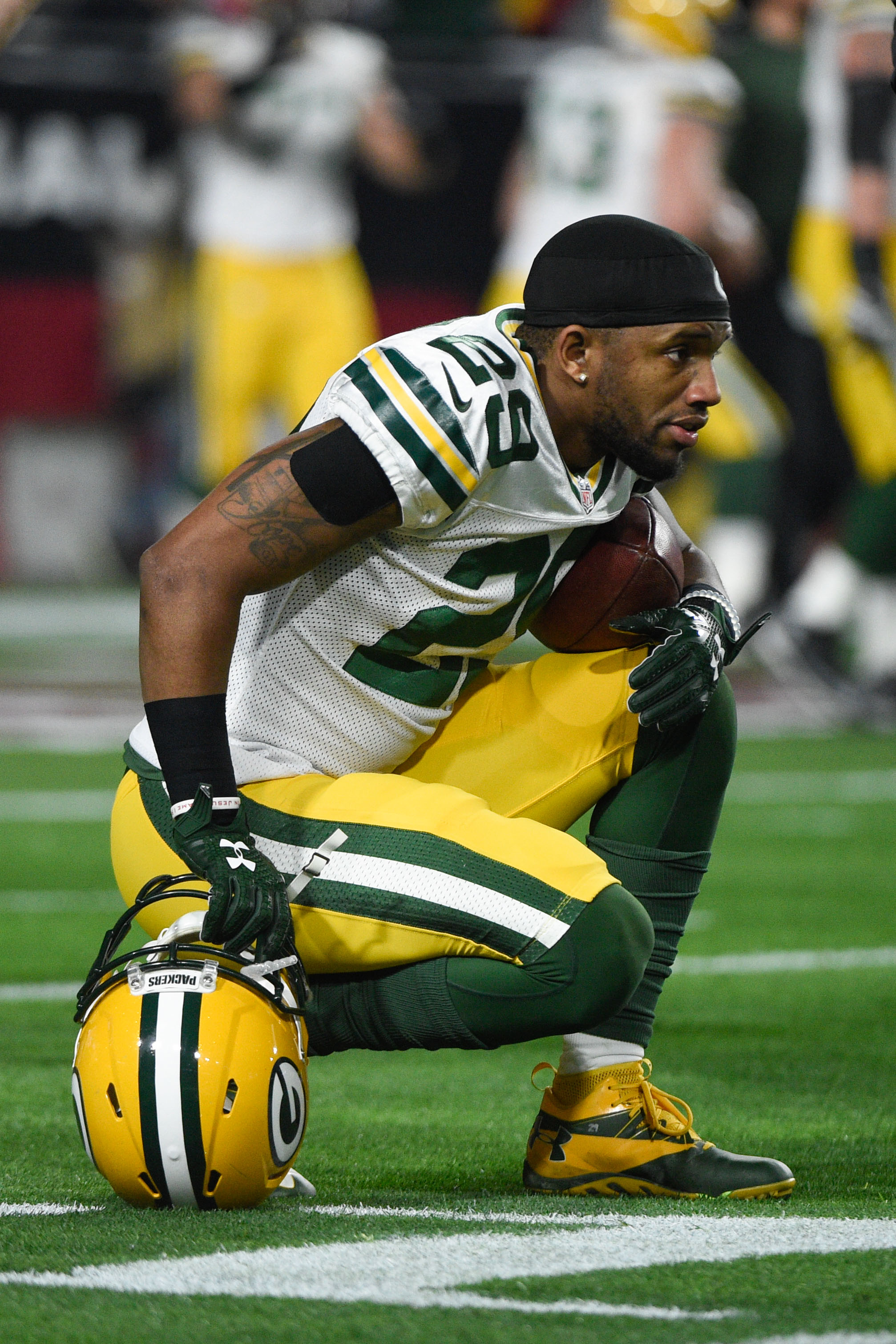
grading out as the 16th-best corner in the league per PFF.
Admittedly, Hayward’s health concerns may have lowered his price tag, as a hamstring injury wiped out most of his 2013 campaign. But he’s been on the field for every game during the past two seasons, and even began to play on the outside in 2015. It’s conceivable that Hayward will start opposite Verrett in San Diego’s base package before moving inside in the nickel, but either way, the Chargers scored a free agent steal with the 26-year-old.
Elsewhere in the defensive backfield, San Diego brought in veteran safety Dwight Lowery, inking the 30-year-old to a three-year pact. Lowery has bounced around the league since joining the Jets as a fourth-round pick in 2008, spending time with the Jaguars, Falcons, and most recently, the Colts. He’s been up-and-down throughout his career, and is probably a replacement-level safety at this point, but Lowery will help solidify a secondary that is now without franchise mainstay Eric Weddle.
Speaking of organizational icons, the Chargers agreed to a two-year deal to retain tight end Antonio Gates, who is entering his 14th season with the team. Gates, who turned 36 years old last month, is a surefire future Hall of Famer, as only Tony Gonzalez posted more approximate value among tight ends. And while Gates has no speed left which to speak of, he can still play, as evidenced by his 56 receptions and five touchdowns in only 11 games last season.
But San Diego re-signed Gates at the expense of fellow tight Ladarius Green, who is not only a full decade younger than Gates, but proved he could post similar results during the first four games of the year when Gates was suspended. Additionally, Green actually signed for cheaper than Gates in terms of annual value and guarantees. Yes, Green’s total contract is worth more, but he’ll earn less over the next two seasons than Gates, and will likely produce more, as well.
Jeff Cumberland, meanwhile, is likely wishing he would’ve waited until after the draft before signing with a new club, as his role as the Chargers’ second tight end role has been usurped by second-round draft pick Hunter Henry. Bolts tight end coach John McNulty said last month that Cumberland is “still carving out” his role, which figures to entail a lot of special teams work, given that Henry is an excellent blocker and doesn’t figure to come off the field much, especially since San Diego uses a lot of two tight end sets.
Aside from the two tight ends, the Chargers’ only other notable skill position signing was that of former Browns wide receiver Travis Benjamin, who also drew interest from the Texans and Chiefs before agreeing to a
four-year deal. Benjamin, 26, ranks 15th in yards per reception among receivers with at least 100 catches since 2012 (the year Benjamin was drafted), so he’ll be an eerily similar replacement for Malcom Floyd, who regularly averaged more than 17 yards per reception.
Still, it’s fair to wonder how productive Benajmin will be in San Diego given that offensive coordinator Ken Whisenhunt has returned to town, bringing his quick-passing offense with him. During Whisenhunt’s previous stint as OC (2013), Floyd missed almost the entire season with injury, so it’s difficult to visualize how a deep threat will be used in Whisenhunt’s scheme. In a system that relies on getting the ball out swiftly in order to alleviate any offensive line concerns, and focuses more on receptions from running backs, tight ends, and possession receivers like Keenan Allen, Benjamin might struggle to live up to his contract.
Finally, the Chargers added a stout presence to the interior of a defensive line that struggled against the run last season (31st in rushing defense DVOA, 27th in rushing yards allowed), luring defensive tackle Brandon Mebane away from the Seahawks with a three-year contract. Like Barksdale on the offensive side of the ball, Mebane is a fine defender, but this deal strikes as an overpay.
Mebane, 31, won’t be doing much more than acting as a run-stuffer in San Diego, and younger players with better skillsets got paid less on the open market this spring. Jaye Howard scored a very similar contract with the Chiefs, but he’s four years younger than Mebane and a superior defender. Ian Williams is only 26, and while injury concerns killed his market, the Chargers could’ve taken a risk on someone like the 49ers defensive tackle. Former Lions/Titans defender Sammie Lee Hill offers similar production to Mebane, and he’s still sitting on the free agent market, meaning he’ll likely have to settle for a minimum salary deal. San Diego had other ways to spend this money — and address their defensive line — making the Mebane contract ill-advised.
Continue reading about the Chargers’ offseason…
Read more
Notable losses:
- Donald Brown, RB: Released
- Donald Butler, LB: Released
- Kavell Conner, LB: Released
- Malcom Floyd, WR: Retired
- Ladarius Green, TE
- David Johnson, FB
- Cordarro Law, DL
- Jeff Linkenbach, OL
- Joe Mays, LB
- Ricardo Mathews, DL
- John Phillips, TE
- Kendall Reyes, DL
- Patrick Robinson, CB
- Brandian Ross, CB
- Mike Scifres, P: Released
- Johnnie Troutman, G
- J.D. Walton, C
- Eric Weddle, S
While he’s at the bottom of the list alphabetically, Eric Weddle is atop the Chargers’ notable losses in terms of organizational impact. Since being selected in the first round of the 2007 draft, Weddle started 122 games for San Diego, earning first-team All Pro honors twice. And while he’s still an above-average safety, Weddle was looking for a hefty contract in free agency, and got
one, landing a four-year, $26MM deal with the Ravens. Guaranteeing a 31-year-old defensive back $13MM probably isn’t the best idea for a club that it’s the midst of a semi-rebuild, and given all the acrimony that occurred between Weddle and the Chargers last season, there was no chance he’d return to the Bolts.
The San Diego front office told Weddle that his contract would not be extended prior to the season, but things grew more tense later in the year, when the Chargers fined Weddle $10K for remaining on the field during halftime of a game to watch his daughter perform in a dance ceremony. Weddle and agent David Canter initially declined to go public about the fine, but the agent opened up after the Chargers placed the safety on IR in Week 17, a move that was made against his wishes. Per Canter, the team also informed Weddle that there would be no room for him to travel on the team plane to the regular season finale in Denver.
No such rancor existed between Malcom Floyd and the franchise, as the veteran receiver left the Chargers of his own accord after 11 seasons with the club. Floyd, 34, announced prior to the 2015 campaign that he would retire following the season, and a torn labrum and a concussion likely didn’t make him lean toward staying. Certainly a success story, Floyd entered the league as an undrafted free agent, and bounced off and on San Diego’s roster for several seasons before sticking, earning a role as a big-play threat and producing solid numbers as recently as 2014, when he recorded 52 receptions for 856 yards and a career-high six touchdowns.
Another offensive playmaker, tight end Ladarius Green, also left the squad, inking a four-year deal to join the Steelers as a free agent. We touched on this above when discussing Antonio Gates, but it’s worth reiterating: even though Gates is a franchise legend,
the smart move would have been to retain Green instead. Green is younger and cheaper, and when paired with rookie Hunter Henry could have formed a lethal combination for years to come. Sentimentality leans in the direction of Gates, but pragmatism says Green was the right choice.
Donald Brown has never lived up to his first-round draft status (unless one counts internet memes on a résumé), but he still has a role in the league as a special teams player and an occasional third-down back. That skill-set isn’t worth $3.5MM, however, and that’s the total the Chargers were able to clear off their cap by releasing Brown earlier this year. With Melvin Gordon, Danny Woodhead, and Branden Oliver on the roster, there simply wasn’t a spot on the club for Brown or his salary.
The remainder of San Diego’s offensive losses were bit players, but tight end John Phillips did play on 550 snaps last season. More than half that number came on special teams, however, and his role as an inline blocking tight end has been stolen by Henry and/or Jeff Cumberland. The same goes for hybrid tight end/fullback David Johnson, who will join Green in Pittsburgh. Offensive guard Johnnie Troutman, meanwhile, started 24 games from 2013-14, but spent all last year on injured reserve after breaking his arm, and wasn’t tendered as a restricted free agent after the season.
While Weddle and Floyd generated the most headlines by their absence, it was punter Mike Scifres who actually had the longest tenure with the Chargers, having been with the club since 2003. The writing was on the wall when San Diego selected Drew Kaser in the sixth round, as a punter doesn’t get drafted unless he’s going to start. The Bolts saved roughly $3.5MM by releasing Scifres, which made it a no-brainer move, and the veteran specialist found a new job about a month later, signing with the NFC Champion Panthers.
On defense, cornerback Patrick Robinson is gone after delivering an excellent return on a one-year, ~$3MM deal after having somewhat flamed out as a former first-round pick of the Saints. Robinson experienced a breakout during his age-28 season, grading out among
the top-30 cornerbacks in the league, according to PFF. Still, the Chargers were right to let him leave for the Colts, with whom he signed a three-year, $14MM pact, because San Diego replaced him with an even better defensive back in Casey Hayward.
Back in 2014, Donald Butler signed a seven-year contract extension with the Chargers, but that deal could essentially be split into two halves. If San Diego had retained the veteran linebacker for the 2016 season, the club would have been on the hook for a $12MM option bonus due to be paid in 2017. So, after selecting Denzel Perryman in 2015 and Joshua Perry in this year’s draft, San Diego cut ties with Butler, who was coming off the worst season of his career. Kevin Acee of the San Diego Union-Tribune has accused Butler of “losing interest” after receiving his massive payday, and other clubs might share that assessment given that Butler is still on the open market.
Along the front, San Diego chose not to re-sign defensive lineman Kendall Reyes and Ricardo Mathews, both of whom appeared in all 16 games for the club last season (Reyes started 15 games). With Joey Bosa now in tow, there wasn’t going to be a role for either veteran, and the pair didn’t exactly solidify their presence on the roster with their play last season, as both Reyes and Mathews ranked among the four-worst interior defenders in the NFL in 2015, according to PFF.
Draft picks:
No one saw the Chargers selection of Ohio State edge rusher Joey Bosa coming, as most observers believed San Diego would target defensive back Jalen Ramsey, defensive lineman DeForest Buckner, or one of the top available offensive lineman. Much of that blindness may have been due to the fact that Bosa doesn’t look like a classic 3-4 defensive end, but at 6’5″, 270 pounds, he fits the mold of today’s edge rusher.
Defensive coordinator John Pagano is likely to use Bosa in a number of ways, and Eric D. Williams of ESPN.com argued for as much earlier this year, writing that the Chargers should attempt to rush Bosa from a stand-up position. But it looks like Bosa is going to play a standard five-technique role, but instead of monitoring two gaps, he’ll instead be asked to serve as a one-gap penetrator. Jonathan Stephanson of ElevenWarriors.com posted an excellent analysis of Bosa’s fit in the Bolts’ 3-4 scheme earlier this year.
Of course, Bosa won’t be providing any production for San Diego until he gets on the field, which isn’t going to happen until he signs his rookie contract. Bosa is one of only three 2016 picks (all first-rounders) who have yet to sign on the dotted line, and it’s unclear where things stand between Bosa and Chargers management. San Diego wants Bosa to agree to include offset language in his pact, while Bosa and his camp wants to improve his overall cash flow.
We touched on Hunter Henry‘s role a bit earlier, and every indication is that he’ll take over the Ladarius Green role in 2016. Depending on the speed of his development, there’s no reason he can’t become a nearly every-down player during his rookie season before taking over for Antonio Gates in the long term. Max Tuerk, however, is looking at a bench role during the upcoming season, but he could be asked to play on the inside — possibly at guard in addition to center — if injuries strike.
Joshua Perry was a favorite of the Pro Football Focus crowd, which noted that he the OSU product only missed nine tackles over the past two years — he and fellow linebacker Jatavis Brown will compete for backup roles, but will see most of their time on special teams. The selection of Drew Kaser meant veteran Mike Scifres was released, while Derek Watt will be asked to help rejuvenate the career of his old college teammate, running back Melvin Gordon.
Extensions and Restructures:
Given that Keenan Allen, Doug Baldwin, and Allen Hurns all signed recent extensions with their respective clubs, it’s fair to compare the trio and examine which player received the most favorable contact, especially given that they’ve all posted similar statistics over the past few seasons.
Of the three, Baldwin received the largest annual value ($11.5MM to Allen’s $11.25MM), but Allen garnered the most guaranteed money, securing $20.656MM. Hurns lags behind in both categories, but that’s to be expected given that he was under contract for both 2016 and 2017 (via restricted free agency).
So, yes, Allen probably came out on top among this group, but that’s not to say the Chargers didn’t win this negotiation, as Allen also offers the highest-upside of the three. In 2015, Allen posted 67 receptions for 725 yards and four touchdowns….in only eight games. Allen had an outside shot of topping the single-season record for catches (143 by Marvin Harrison in 2002) before he lacerated his kidney in November. Given the serious nature of that injury, it’s not surprising that Allen chose to take financial security now rather than testing free agency, and Allen’s agent, appearing on a recent episode of Andrew Brandt’s Business of Sports podcast, said that he preferred to get Allen locked up before any other receiver contracts lowered his potential salary floor.
But Allen will be able to hit free agency again with an excellent chance of cashing out a second time, because he’s incredibly young. Born in April 1992, Allen was the sixth-youngest player in the entire 2013 draft. He’s younger than Hurns, who entered the league a year later. And he’s only four months older than Josh Doctson, who was drafted this year. Allen will be entering his age-28 season the next time he reaches the open market, and could easily score another large deal.
Other:
The Chargers won’t immediately follow the Rams to Los Angeles in 2016, but they do have they the chance to do in the next six months or so, as they have until next January to make a decision. If the club does decide to stay in San Diego, it will receive $100MM that will go towards
building a new stadium. A stadium effort will listed on a November ballot, but it’s not expected to be approved, and Los Angeles still looks like the most likely landing spot for the Bolts, although Las Vegas is thought to be another option.
On the field, the Chargers prevented head coach Mike McCoy from entering a lame-duck season by inking him to a one-year extension (after deciding to not fire him), and also brought back Ken Whisenhunt as offensive coordinator, placing him back in the post he held for the 2013 season. San Diego ranked second in offensive DVOA the season, as quarterback Philip Rivers experienced an excellent season under Whisenhunt’s coaching. Whisenhunt wasn’t the only import from Tennessee, however, as San Diego also claimed former Titans quarterback Zach Mettenberger off waivers, perhaps in the hope that he can become a high-quality backup with Whisenhunt’s help.
The Chargers picked up D.J. Fluker‘s fifth-year option for 2017, and in doing so, handed him a higher salary than any right guard currently on the books. Of course, Fluker’s base salary for next season isn’t fully guaranteed, and he can be released if he doesn’t suffer a major injury between now and next spring. But the club may have backed itself into a corner, as Fluker’s agent is going to start any extension negotiations with an $8MM+ asking price.
Top 10 cap hits for 2016:
- Philip Rivers, QB: $21,000,000
- Corey Liuget, DL: $10,000,000
- Brandon Flowers, CB: $9,750,000
- Melvin Ingram, LB: $7,751,000
- Orlando Franklin, G: $7,200,000
- Donald Butler, LB: $6,690,000 (dead money)
- Antonio Gates, TE: $5,500,000
- King Dunlap, T: $5,143,750
- Casey Hayward, CB: $5,133,333
- Joe Barksdale, T: $4,550,000
The AFC West looks to be one of the more interesting divisions in the NFL. The Super Bowl champion Broncos lost pieces from perhaps the league’s best defense and are dealing with a new quarterback situation, while the Wild Card Chiefs are looking to take over division crown. The Raiders, however, are also ascending, and look to seriously compete in the West for the first time in years. So where does that leave the Chargers? Likely near the bottom of the standings, but that doesn’t mean they’ll approach 12 losses again. A slight jump in the win department is possible (probable, even), and while an outside shot at a Wild Card berth is on the table, 8-8 looks to be a more realistic goal.
Information from Over the Cap, Spotrac, and Roster Resource was used in the creation of this post. Photos courtesy of USA Today Sports Images.
By Connor J. Byrne |
at July 15, 2016 6:01 pm
The Cowboys entered the 2015 season with championship aspirations, but ruinous injuries to franchise cornerstones Tony Romo and Dez Bryant helped torpedo their hopes and send them to a 4-12 finish. With Romo and Bryant back, the Cowboys expect to rebound from last year’s fourth-worst showing – one in which they went 2-6 in one-score games – and it looks as though they’ll have to rely heavily on their star quarterback and receiver (and rookie running back) in order to climb back atop what should be a wide-open NFC East.
Notable signings:
- Cedric Thornton, DT: Four years, $17MM. $6MM guaranteed.
- Benson Mayowa, DE: Three years, $8.25MM. $3.3MM guaranteed. Raiders declined to match RFA offer sheet.
- James Hanna, TE: Three years, $8.25MM. $2.25MM guaranteed.
- Jeff Heath, S: Four years, $7.671MM. $1.8MM guaranteed. $1MM available via incentives.
- Alfred Morris, RB: Two years, $3.5MM. $1.8MM guaranteed. $1MM escalator available.
- Kyle Wilber, LB: Two years, $3.25MM. $1MM guaranteed.
- Morris Claiborne, CB: One year, $3MM. $500K guaranteed.
- Rolando McClain, LB: One year, $4MM. $500K guaranteed. $1MM available via incentives.
- Jack Crawford, DL: One year, $1.1MM. $240K guaranteed.
- Lance Dunbar, RB: One year, $1.25MM. $100K guaranteed.
- Joe Looney, OL: Two years, $1.675MM. $100K guaranteed. $750K available via incentives.
- Charles Brown, T: One year, minimum salary benefit. $55K guaranteed.
- Ronald Leary, G: One year, $2.553MM. Signed second-round RFA tender.
- Josh Thomas, CB: One year, minimum salary benefit.
Although it’s obviously a big-market franchise, Dallas took a rather modest approach to free agency. Financially speaking,
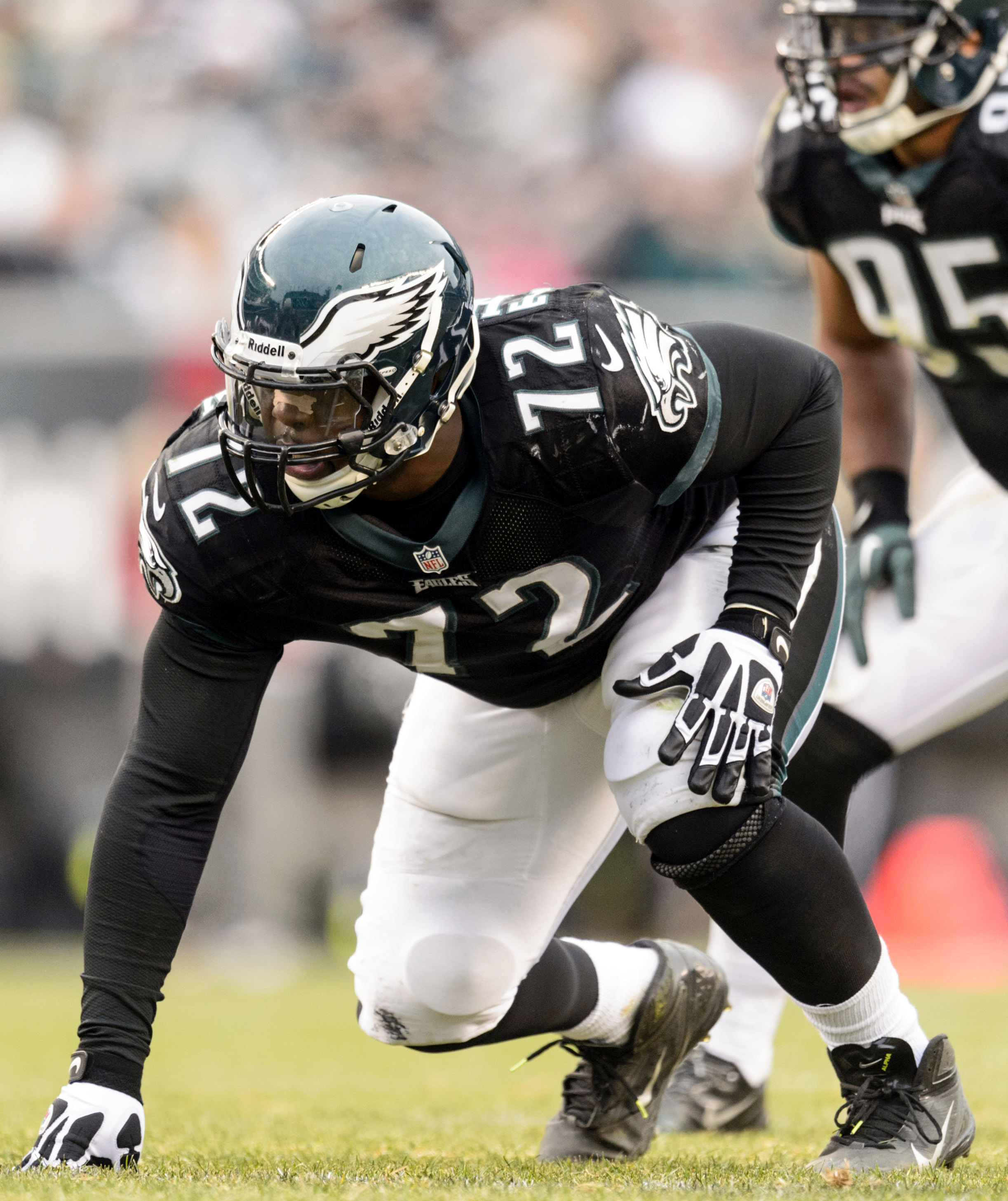
its most significant transaction was to pilfer defensive lineman Cedric Thornton from division-rival Philadelphia for $17MM over four years, including $6MM in guarantees. Thornton, 28, started in every one of his appearances with the Eagles from 2013-15 (45 in total) and mostly served as an end in their 3-4 alignment. He’ll switch to tackle in the Cowboys’ 4-3, which he played in sparingly as a rookie with the Eagles in 2012. The 309-pound Thornton has a mere four sacks on his resume, though he does have a reputation as a quality run defender. Pro Football Focus ranked Thornton just outside the top 30 of interior defenders against the run last season (and a far better eighth among 3-4 DEs in 2014), so he’s primed to aid a Cowboys defense that allowed the 19th-highest yards-per-carry average in the league and had the fourth-worst DVOA versus rushing attacks in 2015. Now that he’s out of the shadow of Fletcher Cox and Bennie Logan, Thornton should experience an uptick in playing time over the 40.6 percent of snaps he appeared in last year. He figures to start alongside Tyrone Crawford on the Cowboys’ interior.
After Thornton, the largest monetary commitment the Cowboys made during the winter was to defensive end Benson Mayowa, a restricted free agent they pried out of Oakland with a three-year, $8.25MM offer sheet and $3.3MM in guarantees. The Raiders deemed the 24-year-old inessential to their cause when they declined to match the Cowboys’ offer to Mayowa, who has only made three starts in his NFL career. Mayowa amassed a combined 30 appearances for the Seahawks and Raiders from 2013-15 and recorded 16 tackles, a sack and two fumble recoveries last season. Despite his lack of experience and relative anonymity, the Cowboys are betting on a noteworthy edge-rushing future from Mayowa, as chief operating officer Stephen Jones said upon signing him. Considering the Cowboys ranked 25th in the league in sacks last year (31) and have since opted against re-signing pass-rushing threat Greg Hardy and fellow end Jeremy Mincey, and have lost Demarcus Lawrence and Randy Gregory to quarter-season suspensions, they’ll need a Mayowa breakout sooner than later.
Joining Gregory and Lawrence on the suspended list is middle linebacker Rolando McClain, whom the team brought back for a third year at a palatable cost ($4MM total, $500K guaranteed). Four months later, the league banned McClain for 10 games thanks to another violation of its substance abuse policy. McClain, 26, will sit for 10 games this year after an earlier suspension kept him out of four contests last season.
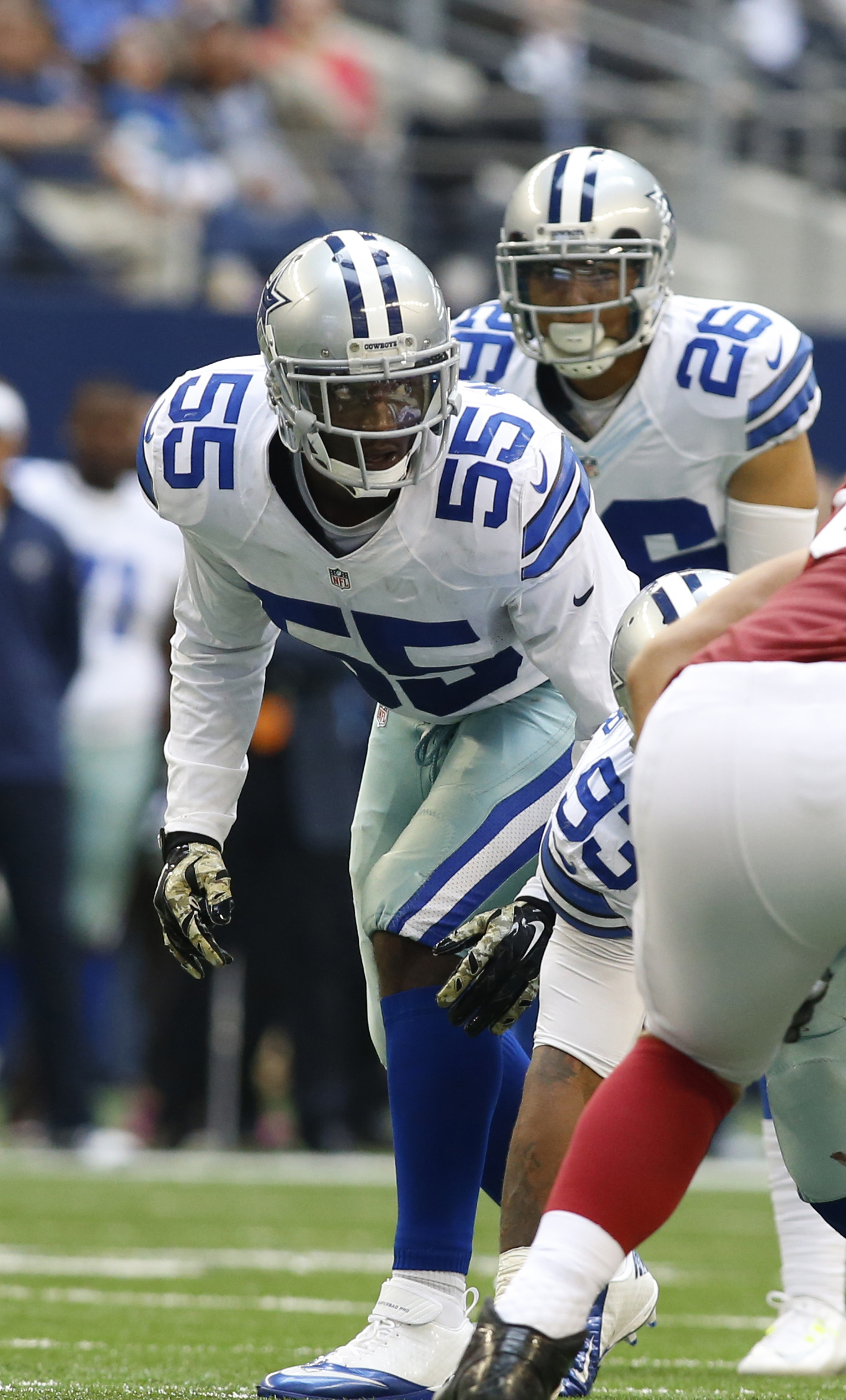
McClain clearly brings plenty of baggage, but his loss should be a damaging one for Dallas on the field after he played in 60.4 percent of its defensive snaps last season, piled up 80 tackles, two sacks and an interception, and graded as PFF’s 28th-best linebacker among 97 qualifiers. McClain’s suspension this late in the game no doubt puts the Cowboys behind the 8-ball, as free agency isn’t exactly teeming with high-end replacements. PFR’s Dallas Robinson ran down several available options in the wake of McClain’s suspension, with ex-Cowboy Justin Durant among them. The Cowboys have since contacted Durant about a reunion, though no deal has materialized yet and a source informed Robinson that they’re content with their McClain-less linebacker corps.
If Dallas doesn’t sign anyone, the in-house favorite to replace McClain is Anthony Hitchens, who finished third among Cowboys linebackers in snap percentage last year (50.9) while playing on the inside and outside. Hitchens didn’t draw praise from PFF, though, which rated him as the league’s 69th overall LB. It was only his second season, however, so there’s still room for growth from the 2014 fourth-round pick. Regardless, as Robinson noted, Hitchens was already on track to start prior to McClain’s suspension, so the latter’s absence could force Kyle Wilber into a top role on the strong side. Wilber took part in a paltry 21.2 percent of defensive snaps for the club last season and accumulated 24 tackles, and the Cowboys were encouraged enough to retain him on a two-year, $3.25MM deal.
Continue reading about the Cowboy’s offseason…
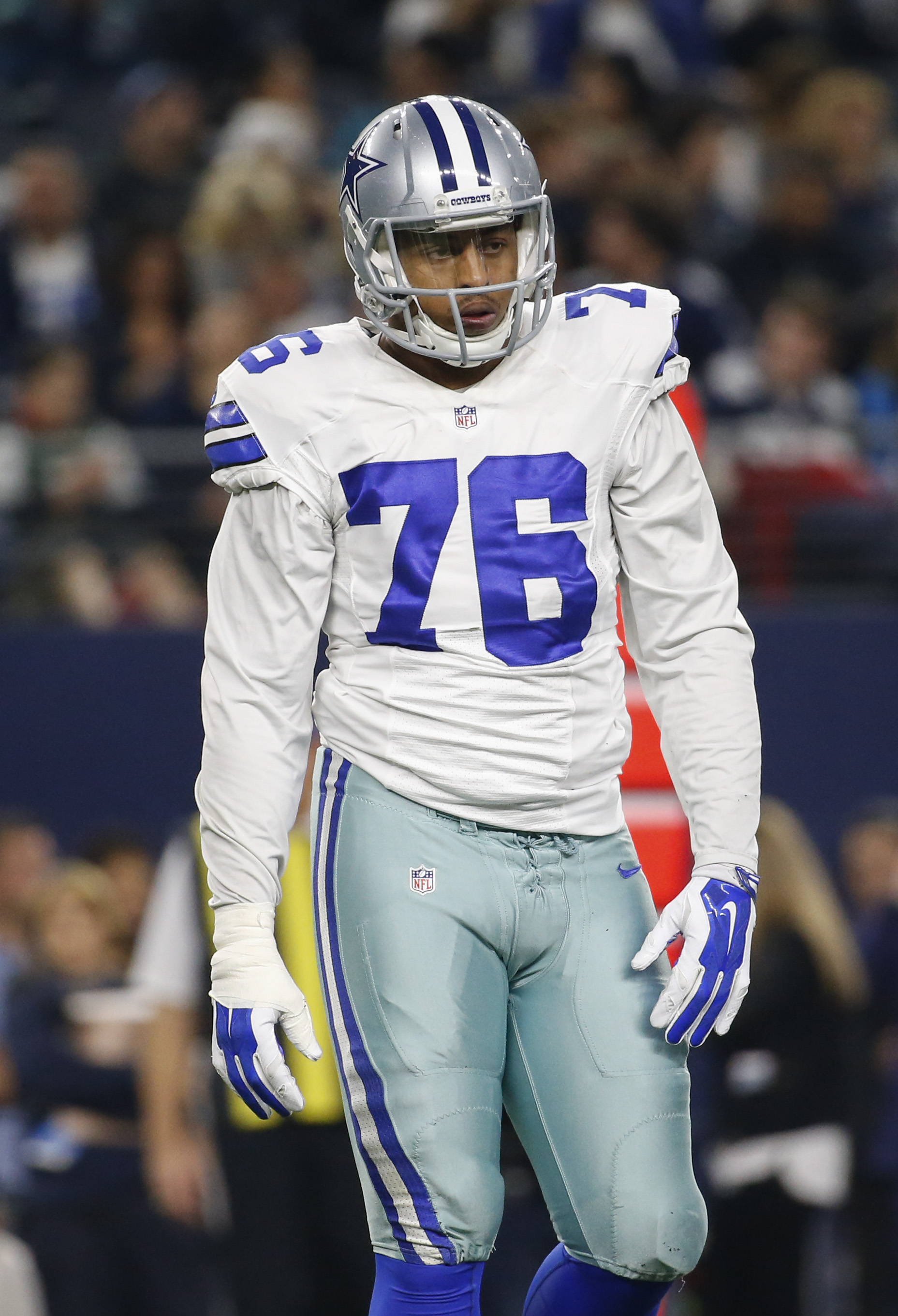
Read more
The Cowboys’ other prominent defensive move in free agency was to re-sign cornerback Morris Claiborne to a one-year, $3MM pact after he appeared in 62.7 percent of their snaps in 2015. The sixth overall pick in 2012, Claiborne hasn’t lived up to his draft billing since a promising rookie season. He tallied only 21 starts over the past four seasons because of injuries and subpar play, though he did start in all 11 of his appearances last year. The LSU product failed to grab an interception for the first time in his career, however, and ranked 104th among 111 qualifying corners at PFF.
Aside from re-up Claiborne and hope Orlando Scandrick bounces back from a torn ACL and MCL that sidelined him for 2015, the Cowboys did little to address their pass defense, which ended last season 31st in INTs (eight), 23rd in opposing yards per attempt (7.6), 20th in passer rating allowed (94.2) and 17th in DVOA.
In terms of offensive name recognition, the Cowboys’ only somewhat high-profile pickup was ex-Redskins running back Alfred Morris, who accepted a short-term offer in free agency from his former rivals. Morris was a workhorse in Washington, where he accrued 1,078 carries in his first four seasons (and 200-plus each year), but his yards per carry dropped precipitously each campaign and he found the end zone only once in 2015. Morris looked like a decent bet to pick up a solid chunk of touches in Dallas before it spent the fourth overall pick in the draft on Ezekiel Elliott, who will be the bell cow. With Darren McFadden and Lance Dunbar also in the mix behind Elliott, touches figure to be scarce for Morris.
The Cowboys made a more substantial multiyear commitment to tight end James Hanna than any other offensive free agent during the offseason, awarding him a three-year, $8.25MM contract and $2.25MM in guarantees. The 26-year-old has acquitted himself nicely as depth behind starter Jason Witten, catching the occasional pass and acting primarily as a blocker. Hanna, who has 33 career receptions, drew interest from outside of Dallas in free agency, but he elected to stay in the fold behind Witten and alongside Gavin Escobar.
Finally, there’s the matter of offensive guard Ronald Leary, to whom the Cowboys assigned a second-round tender (worth $2.553MM) as a restricted free agent. Leary requested a trade in the spring after losing his job to La’el Collins last season, but the club is fine with retaining him as depth. Leary, whom the Cowboys signed as an undrafted free agent in 2012, has started in all 35 of his pro appearances – including four in 2015 – but with Collins and two-time Pro Bowler Zack Martin entrenched at the guard spots, he’s now a reserve.
Notable losses:
From solely a production standpoint, Hardy’s exit will leave a void in Dallas. Hardy wasn’t the dominant entity with
the Cowboys that he was in prior years with the Panthers, but he was still one of the few bright spots for a mostly underwhelming defense. Hardy, PFF’s 28th overall edge rusher in 2015, finished second on the Cowboys in sacks (six) and third among their D-linemen in snap percentage (56.3) during his 12-game stint in their uniform. However, Hardy’s highly problematic off-field behavior made him a PR nightmare and overshadowed his gridiron output. With that in mind, head coach Jason Garrett and his staff are probably glad Hardy’s gone. But whether they’ll effectively replace him between the lines is another matter, especially with Lawrence and Gregory set to miss four games apiece.
Along with Hardy, the Cowboys have seemingly waved goodbye to Mincey, who was on the field for 35.9 percent of their defensive plays last year. Mincey remains a free agent after failing to collect a sack in 2015, which was particularly unexpected after he notched six the previous season. Given the Cowboys’ dearth of pass rushers, it doesn’t speak well for what the 33-year-old Mincey has left in the proverbial tank that they haven’t re-signed him on a cheap deal. No Mincey, Hardy, Lawrence or Gregory (temporarily in the latter two cases, of course) leaves Dallas with Mayowa, Ryan Russell, David Irving and fourth-rounder Charles Tapper as its top four ends going into training camp. There’s little track record to speak of with anyone in that quartet.
The third relied-on member of the Cowboys’ 2015 D-line who’s now without work is tackle Nick Hayden, who participated in 55 percent of their defensive snaps, appeared in 16 games and made 15 starts. Hayden, 30, started in 47 of a possible 48 regular-season games during his three years with the Cowboys, and he has a fan in defensive coordinator Rod Marinelli, but the club hasn’t shown interest in re-signing him after upgrading with Thornton and using a third-round choice on Maliek Collins. Hayden’s durability was on display yet again last season, as mentioned, but he ranked just 115th out of 123 qualifying interior defenders at PFF for his performance.
Given what he displayed last year in relief of Romo, Cowboys fans are surely pleased the team didn’t re-sign Matt Cassel. Collarbone issues kept Romo out of action for all but four games last season, leading Cassel – whom the Cowboys acquired from Buffalo in late September – to receive the lion’s share of time under center. The Cassel era was an unmitigated disaster for Dallas, which went 1-6 in his starts as he completed 58 percent of passes, averaged 6.2 yards per attempt and threw five touchdowns against seven interceptions in parts of nine games. Kellen Moore, who grabbed the reins from Cassel in the final weeks of the season, is now the full-time No. 2. But it’s debatable whether Moore is the best choice for a squad whose backup QB situation factored heavily into its demise in 2015.
Draft picks:
With so many defensive questions entering the draft, ex-Florida State cornerback Jalen Ramsey looked like a strong bet to end up with the Cowboys in the first round. They ultimately left Ramsey on the board at No. 4 overall, though, and swung for the fences on offense by selecting Elliott, a soon-to-be 21-year-old wunderkind who’s fresh off back-to-back 1,800-yard seasons at Ohio State. The newly popular school of thought, however, is that running backs shouldn’t go that high in the draft; that’s especially true for the Cowboys, who don’t need an all-world talent behind their dominant line. After losing 2014 Offensive Player of the Year DeMarco Murray to a payday in Philadelphia, the Cowboys put together a spartan group that finished ninth in the league in rushing and fifth in per-carry average last season. That was without any threat of a passing attack, by the way, making the work of their linemen and McFadden all the more worthy of praise. Nevertheless, the Cowboys should now have their long-term backfield solution in Elliott, who, if he pans out, will make life easier on Romo as he advances into his late 30s.
Having secured Elliott, the Cowboys added another household name, Jaylon Smith, with their second-round pick. Dallas is prepared to go without Smith this season as a result of the torn ACL and MCL he suffered in a New Year’s Day Fiesta Bowl tilt against Elliott’s Buckeyes. Prior to both that and the diagnosis of a nerve issue in Smith’s ankle, the expectation was that he’d come off the board somewhere in the top 10 of the draft. Considering his upside, the Cowboys couldn’t pass on Smith as a long-term investment at No. 34, though multiple teams gave him a failing grade during his physical at the combine and then removed him from their draft boards. Cowboys team doctor Dan Cooper performed Smith’s surgery, however, so the club likely had unique insight into his injury entering the draft. That doesn’t make going a year without any contributions from your second-rounder easy to swallow, though, particularly for a team with clear weaknesses on defense.
The injury bug has also bit the aforementioned Collins, a third-rounder, in recent months. The broken foot Collins suffered during the spring isn’t anywhere near as serious as Smith’s situation, fortunately, and Garrett expects the ex-Nebraska Cornhusker back by camp. Once healthy, the 67th overall pick should team with Terrell McClain to provide interior depth behind Thornton and Crawford.
The Cowboys’ flashiest selection in the latter half of the draft was dual-threat quarterback Dak Prescott, who totaled 114 touchdowns (70 passing, 41 rushing, three receiving) during his four-year career at Mississippi State. While Moore is currently Dallas’ top option behind Romo, the raw Prescott could eventually push for the role. “I don’t want to write a check with my mouth that he has to cover here, but (Prescott) has it,” owner Jerry Jones said of the 6-foot-2, 230-pounder after the draft.
Extensions and Restructures:
In order to clear cap space, Dallas made changes to three key veterans’ contracts. In the case of Tyron Smith, who has earned three straight Pro Bowl nods at left tackle, the Cowboys converted $9MM of his $10MM base salary for 2016 into a signing bonus. Rather than counting solely against this year’s cap, that $9MM bonus will now be prorated over five seasons, counting for $1.8MM annually from 2016-2020. By doing that, the Cowboys freed up $7.2MM in space for this year and added $1.8MM to the cap each season from 2017-20.
Crawford, meanwhile, was set to pocket a fully guaranteed $6.75MM base salary in 2016 after inking a contract extension last September. Dallas instead reduced his salary to $1.25MM and converted $5.5MM into a signing bonus. The team gave Crawford that bonus immediately, but it will be spread out on its cap for the next five seasons at $1.1MM per annum. While the restructuring cut Crawford’s 2016 cap number from $8.75MM to $4.35MM, it increased his cap charges from 2017-20. Crawford will count for at least $9MM annually against the Cowboys’ cap, including $10.35MM in 2017.
Brandon Carr‘s future with the Cowboys hung in the balance after last season, his fourth with the franchise, but the starting corner stuck around once he agreed to a pay reduction. Carr, who has now gone back-to-back seasons without an interception, will earn $6MM this year instead of his originally scheduled $9.1MM. His cap number dropped, too, from $13.8MM to a still-high $10.22MM. Carr’s contract also includes a voidable 2017, so this could be his last year in Dallas.
Other:
Travis Frederick has emerged as a premier center since the Cowboys drafted him 31st overall in 2013, making it no surprise that they exercised his $8.821MM fifth-year option for 2017. Frederick, who has started 48 straight regular-season games in Dallas and has made back-to-back Pro Bowl trips, seems likely to land a long-term extension sometime soon.
Top 10 cap hits for 2016:
- Tony Romo, QB: $20.835,000
- Dez Bryant, WR: $13,000,000
- Brandon Carr, CB: $10,217,000
- Jason Witten, TE: $8,612,000
- Orlando Scandrick, CB: $7,796,385
- Tyron Smith, T: $6,800,000
- Sean Lee, LB: $5,950,000
- Doug Free, T: $5,500,000
- Barry Church, S: $4,750,000
- Ezekiel Elliott, RB: $4,537,516
Led by Romo, Bryant, Elliott and a stellar offensive line, the Cowboys are unlikely to have much difficulty scoring points this year. The problem is that their defense looks primed to give up plenty, too, as the front office failed to make enough immediate improvements on that side of the ball. The suspensions to McClain, Lawrence and Gregory should only exasperate the already unenviable situation in which Marinelli found himself.
Contract information from Over the Cap, Spotrac, and Roster Resource was used in the creation of this post. Photos courtesy of USA Today Sports Images.
By Rory Parks |
at July 13, 2016 10:55 pm
The Ravens’ 2015 campaign was ruined by injury and under-performance as marquee players like Terrell Suggs, Joe Flacco, and Steve Smith saw their seasons cut short by injury while others like Jimmy Smith and C.J. Mosley failed to live up to expectations. Indeed, if Baltimore is competitive in 2016, it will be as much as a result of its ability to stay healthy as anything else.
But the team did make efforts to address its beleaguered secondary and add some much-needed youth and athleticism to its pass rush, and Flacco, who has never been had an elite group of offensive weapons, could be working with his best collection of talent to date. The AFC North again looks as if it will again be one of the toughest divisions in the league in 2016, so Baltimore will need to make the most out of that talent to keep pace with the Steelers and Bengals.
Notable signings:
- Eric Weddle, S: Four years, $26MM. $9MM guaranteed. $3MM available via incentives.
- Shareece Wright, CB: Three years, $13MM. $4.76MM guaranteed.
- Justin Tucker, K: One year, $4.572MM. Fully guaranteed. Accepted franchise tag.
- Mike Wallace, WR: Two years, $11.5MM. $4.5MM guaranteed. Club can exercise $1MM option bonus to lock in 2018 season.
- Ben Watson, TE: Two years, $7MM. $3MM guaranteed.
- Jerraud Powers, CB: One year, $1.75MM. $750K guaranteed.
- Morgan Cox, LS: Five years, $5.6MM. $700K guaranteed.
- Albert McClellan, LB: Two years, $2.2MM. $600K guaranteed.
- Vlad Ducasse, G: One year, minimum salary benefit. $65K guaranteed.
- Kamar Aiken, WR: One year, $2.553MM. Signed second-round RFA tender.
- Chris Carter, LB: One year, $1MM.
- Trent Richardson, RB: One year, $675K.
- Josh Johnson, QB: One year, minimum salary benefit.

The Ravens made a rare foray into the deep end of the free agent waters this year, and they came away with one of the biggest catches in safety Eric Weddle. Weddle instantly provides credibility and stability to a secondary that sorely needs it, and his presence alone should give the unit a major boost. The team will also move Lardarius Webb from cornerback to safety on a permanent basis, a transition that should suit the veteran’s skill-set fairly well. As long as both players can stay healthy, a Weddle/Webb safety tandem certainly looks as if it will be a significant upgrade over last year’s primary duo of Kendrick Lewis and Will Hill.
But even if the Ravens’ safety performance is markedly improved, their cornerback prognosis is still questionable. Jimmy Smith, whose 2014 season was cut short by a Lisfranc injury, still appeared to be ailing in 2015, as he was beaten deep on numerous occasions and was rated by Pro Football Focus’ advanced metrics (subscription required) as the 77th-best corner out of 111 eligible players. While Shareece Wright was a pleasant surprise and was rewarded for his strong 2015 campaign with a new three-year contract in March, it is not as if he has an especially illustrious track record, and it is difficult to predict whether his 2015 success will carry over to 2016.
The team also brought in Jerraud Powers, who is a solid but unspectacular player and who lasted for a surprisingly long time on the market before inking a one-year deal with Baltimore two months after free agency opened. Powers is much better in the slot than he is outside the hash marks, but the Ravens already have several other players who fit the same description in rookie Tavon Young and last-year’s free agent acquisition Kyle Arrington. It can never hurt to have too much depth, as the Ravens know all too well, and Arrington is widely considered to be a candidate for release in the coming months, so it would clear up the nickel corner picture a bit if he were to receive his walking papers. In any event, Baltimore will be relying on uncertain talent at the top two spots on its cornerback depth chart, with Jimmy Smith holding down one of those spots and Powers or Wright presumably manning the other. The addition of Weddle will make the rest of the secondary better, but it does not answer all of the questions the Ravens have in the defensive backfield.
Another of the team’s major free agent acquisitions was Mike Wallace, who is coming off a disappointing one-year stint in Minnesota. On paper, Wallace’s speed and big-play ability–which may have diminished some since his heyday in Pittsburgh but which could still be unlocked in in the right circumstances–look to be a perfect fit with Flacco’s cannon arm and penchant for the deep ball. Last season, the Ravens were counting on 2015 first-rounder Breshad Perriman to replace the speed element that the team’s offense lost when Torrey Smith took his talents to San Francisco, but Perriman was never able to recover after a knee injury suffered in training camp, and Flacco was left with Steve Smith and a plethora of underwhelming targets. Perriman’s health is once again up in the air, but with Wallace and rookie Chris Moore in the picture, Baltimore should be better-equipped to handle Perriman’s absence.
The third major free agent acquisition was Ben Watson, who will join a largely uncertain but potentially dynamic crop of tight ends. Watson, who will turn 36 in December, had a terrific year with the Saints in 2015, posting career bests in receptions (74) and receiving yards (825) while matching his career best in touchdowns (six). Dennis Pitta, who missed almost all of the 2013 and 2014 seasons, and who sat out the entire 2015 season, is attempting to come back from his second major hip injury, but given the nature of the injury and the amount of time he has spent on the shelf, it is difficult to say whether he will even crack the team’s roster, let alone return to his pre-2013 level of performance. Third-year player Crockett Gillmore and second-year Maxx Williams have shown flashes in their young careers, and both have a fair amount of upside (particularly Williams, the consensus top tight end in the 2015 draft), but they are still unproven as pass catchers. If nothing else, Watson is a reliable starter, and if Pitta can stay healthy and Gillmore and Williams continue to make strides, the Ravens will be forced to keep four tight ends on the roster for the first time in recent history. And that could be a good thing considering the fact that offensive coordinator Marc Trestman loves getting the ball to his tight ends and the age/question marks at wide receiver. 
Justin Tucker, meanwhile, signed his franchise tender and could still sign a long-term deal prior to the July 15 deadline, a deal that would most likely make him the highest-paid kicker in the league. He suffered something of a regression in 2015, posting a career-worst field goal percentage of 82.5%, but of his seven misses, six were from 50 yards and beyond, so it’s not as if he has suddenly lost his touch. Even if the two sides do not reach an agreement on a multi-year contract prior to July 15, Tucker will almost certainly remain in Baltimore for the foreseeable future.
Continue reading about the Ravens’ offseason…
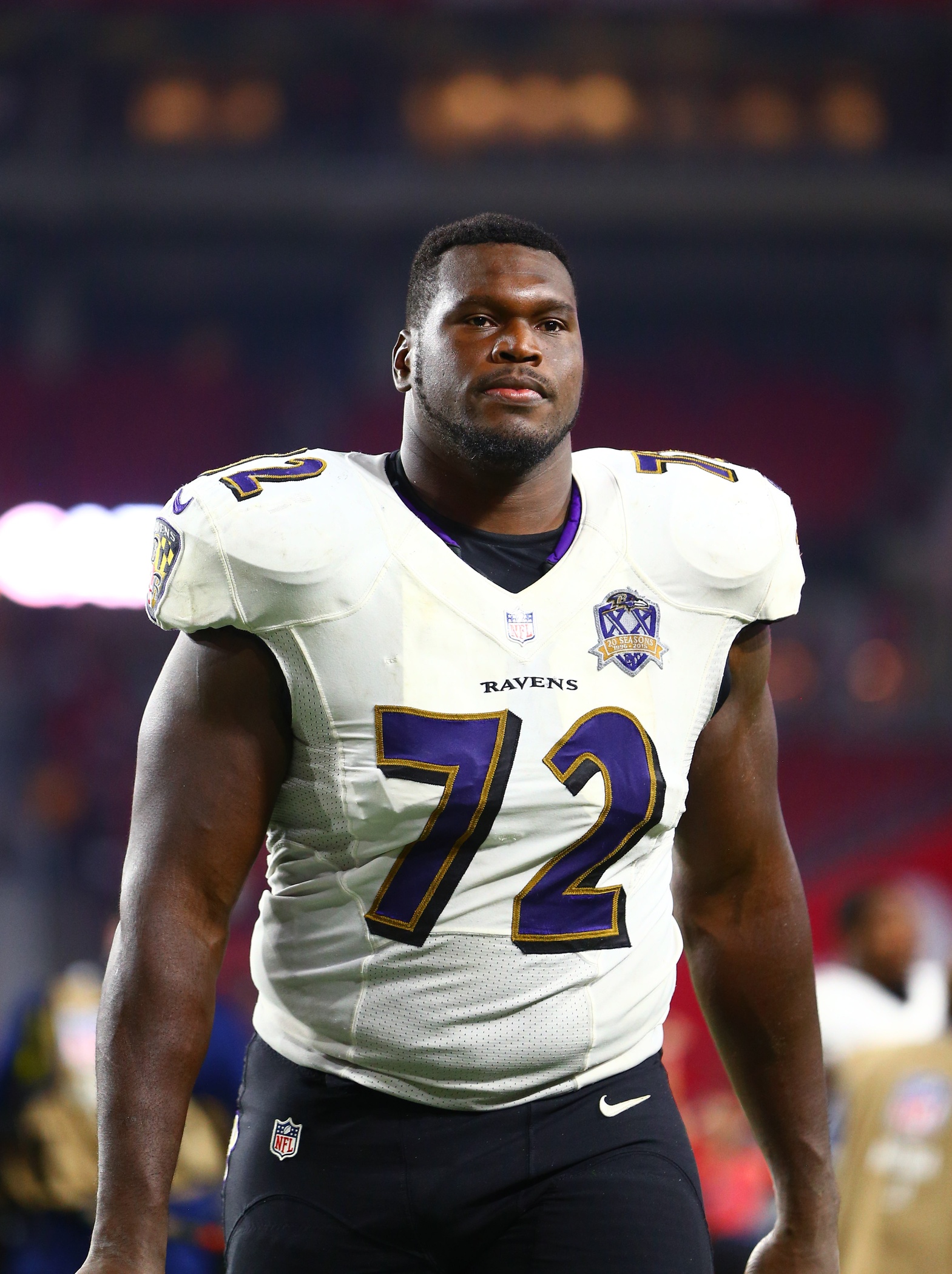
Read more
Notable losses:
- Chris Canty, DL: Club declined 2016 option
- Jimmy Clausen, QB
- Chris Givens, WR
- Will Hill, S: Released after being suspended 10 games (substance abuse policy)
- Eugene Monroe, T: Released
- Kelechi Osemele, G
- Matt Schaub, QB
- Daryl Smith, LB: Released
- Brynden Trawick, S
- Courtney Upshaw, LB
Oakland handed Kelechi Osemele a five-year contract worth up to $60MM during the early days of free agency, heady territory for a player who has manned left guard for the majority of his career and who will likely remain at left guard with the Raiders with Donald Penn at left tackle. But Osemele has established himself as one of the better guards in the league and played well enough at left tackle at the end of 2015 to suggest that he could shift to the outside if necessary, so his loss is certainly a major blow. Now that both he and Eugene Monroe are out of the picture, Baltimore will be relying upon a rookie at left tackle (Ronnie Stanley), and a rookie (Alex Lewis) or similarly-inexperienced player (John Urschel or Ryan Jensen) at left guard (unless newly-acquired Vlad Ducasse wins the starting job, in which case something has gone terribly wrong).
Monroe’s release was one of the most-discussed transactions in recent weeks, which speaks more to the lack of newsworthy items to report at this time of the year than the impact that his absence will make. After all, since signing a five-year $37.5MM deal with the Ravens in 2014, Monroe has appeared in just 17 games, which forced the Ravens to turn to former UDFA James Hurst as their primary left tackle in his stead. While Monroe still has considerable talent, and is young enough to realize that talent, questions about his toughness emerged from within the Baltimore locker room, and he has been mediocre at best even when he has seen the field in the past two seasons.
Still, given that the Ravens did not really need the salary cap space they created by releasing Monroe at this point in the year, and given the inexperience of the projected starters on the left side of the line, it is a bit curious that the Ravens would not keep him around to compete with Stanley and to serve as a viable and experienced backup if nothing else. As such, many have speculated that the release was at least partially motivated by Monroe’s highly public campaign to have marijuana removed from the NFL’s list of banned substances so that players could use it as a potentially safer alternative to the addictive opioids that league physicians generally prescribe. However, team owner Steve Bisciotti publicly lauded Monroe for his articulate and well-researched advocacy, and when considering the above-referenced locker rooms concerns, the disappointing on-field performance, and the fact that Monroe publicly attacked the team on Twitter while he was still a member of the organization, it becomes easier to believe head coach John Harbaugh‘s assertion that Monroe was let go for purely football reasons. Nonetheless, should Stanley and/or whoever wins the starting left guard job struggle, the decision will be an easy one to second guess.
Daryl Smith started each of the Ravens’ 50 regular season and playoff contests since joining the club prior to the 2013 campaign, and he immediately proved himself a savvy field general capable of carrying Ray Lewis‘ mantle after Lewis retired at the end of the 2012 season. Smith, though, was more than a veteran leader in his first two years in purple-and-black; he was a good-to-excellent defender against both the pass and the run, and he showed surprising range for a player on the wrong side of 30 who was on the field for almost all of his team’s defensive snaps from the time he entered the league in 2004.
But Smith dropped off a bit in 2015, looking noticeably slower and ranking 71st out of 97 qualified linebackers per Pro Football Focus. The Ravens therefore released him and created $2.625MM of cap room in the process. However, Baltimore did not seek an obvious replacement, either in free agency or the draft. Although the team has expressed some interest in lining up second-round draft choice Kamalei Correa at inside linebacker from time to time, at this point it looks as though Correa will be most valuable as a pass rusher from an outside linebacker position. Zach Orr, who was a UDFA in 2014, saw increased playing time at inside linebacker down the stretch in 2015, and he looked fairly capable, but it remains to be seen whether he can make the jump from standout special-teamer to full-time starter. Albert McClellan, whom the team re-signed earlier this offseason, has proven to be a better special teams player than linebacker, and Arthur Brown, whose pedigree as a former second-round pick (with arguable first-round talent) would appear to make him the favorite over Orr and McClellan, has been one of the Ravens’ great mysteries of the past three seasons. Brown certainly looked like a rookie when he saw the field as a middle linebacker in 2013, but he also did nothing to make one think that he would never make it in the league. And yet, he has apparently never done enough on the practice field to earn Harbaugh’s trust, and he enters the final year of his rookie deal having never started a single game. 2016 represents his best chance to finally prove himself, but it remains to be seen whether he will even get a look with the first-team defense in training camp.
Courtney Upshaw‘s departure is a little less significant than Smith’s. Although he had been a strong edge setter, Upshaw never developed into much of a pass rusher, and the Ravens justifiably believe that last year’s fourth-round selection, Za’Darius Smith, can replicate Upshaw’s performance against the run while offering a higher ceiling as a pass rusher.
Trades:
- Acquired a 2016 second-round pick (No. 38) and a 2016 fifth-round pick (No. 146) from the Jaguars in exchange for a 2016 second-round pick (No. 36).
- Acquired a 2016 second-round pick (No. 42) and a 2016 fourth-round pick (No. 107) from the Dolphins in exchange for a 2016 second-round pick (No. 38).
The Ravens had the chance to perhaps address their need at inside linebacker and nab the free-falling Myles Jack with the 36th pick in this year’s draft, but instead they traded down not once but twice in the second round and netted two mid-round picks in the process, which we discuss in more detail below.
Draft picks:
- 1-6: Ronnie Stanley, T (Notre Dame)
- 2-42: Kamalei Correa, DE/OLB (Boise State)
- 3-70: Bronson Kaufusi, DE/OLB (Brigham Young)
- 4-104: Tavon Young, CB (Temple)
- 4-107: Chris Moore, WR (Cincinnati)
- 4-130: Alex Lewis, T (Nebraska)
- 4-132: Willie Henry, DT (Michigan)
- 4-134: Kenneth Dixon, RB (Louisiana Tech)
- 5-146: Matt Judon, DE (Grand Valley State)
- 6-182: Keenan Reynolds, QB/WR (Navy)
- 6-209: Maurice Canady, CB (Virginia)
The Ravens will be relying on many of their rookies to make an immediate impact. Stanley, as stated above, is the team’s projected starter at left tackle with Monroe out of the picture, and the Ravens are hoping that their decision to pass on Laremy Tunsil in favor of Stanley will not come back to haunt them. Stanley has the maturity that many believe Tunsil lacks, and he is a highly-polished pass protector who significantly improved his run-blocking skills during his final year at Notre Dame. The only real knock on Stanley’s game is his core strength, which is a concern that can be easily remedied. The fact that the Ravens felt good enough about Stanley that they were perfectly comfortable in releasing Monroe is a testament to Stanley’s talent and work ethic. 
Correa and Bronson Kaufusi should both get considerable burn in the front seven rotation. Both are athletic, high-motor types that the Ravens hope can take some pressure off of Suggs and Elvis Dumervil. Matt Judon, a small-school wonder, certainly has all the raw physical tools of an elite pass rusher, and Baltimore hopes that he, too, can be groomed into a force off the edge. The diminutive Young should see a fair amount of early playing time at nickel, while Moore’s abilities as a downfield threat should mesh well with Flacco’s big arm. If Perriman cannot stay healthy, Moore could actually play himself into a significant role in Baltimore’s offense.
Kenneth Dixon and Keenan Reynolds are two of the more interesting prospects in the Ravens’ draft class. Reynolds, the former Navy triple-option quarterback who is attempting to transition to wide receiver, is the all-time NCAA leader in total career touchdowns (91), while Dixon is right behind him in second place with 88 career scores. The Ravens, without a true return specialist on the roster, is also giving Reynolds ample opportunity to prove himself in that regard. Although his performance as a slot receiver in training camp and the preseason will likely dictate whether he makes the club, his progress as a returner and his abilities as a ball-carrier will also impact that decision.
Dixon, widely considered one of the steals of the draft, will likely make the team as the No. 3 tailback behind Justin Forsett and Buck Allen, but Dixon could easily move up the depth chart in a hurry. He shouldered a heavy workload in college, so he may not age particularly well, but he is explosive, and even though his Louisiana Tech offense was designed to get him the ball in space more than he can reasonably anticipate at the professional level, his uncanny ability to evade tacklers will serve him well regardless of what system he plays in. He should see immediate action as a change-of-pace back and as a receiver out of the backfield.
Willie Henry may develop into a nice rotational piece on the defensive line, Alex Lewis has shown promise either as a guard or right tackle, and Maurice Canady, while very raw, turned in a strong performance during offseason practices and has a better chance than most sixth-rounders to land on the roster because of the Ravens’ question marks at cornerback.
Extensions and Restructures:
- Joe Flacco, QB: Extended through 2021. Three years, $66.4MM. $44MM guaranteed.
- Jimmy Smith, CB: Restructured contract to create $4.5MM in cap space, converting $6MM in 2016 base salary into signing bonus.
- Marshal Yanda, G: Restructured contract to create $3.975MM in cap space, converting $5.3MM in 2016 base salary into a signing bonus.
- Kyle Arrington, CB: Accepted pay cut, creating $1.2MM in cap space by reducing 2016 base salary from $2.1MM to $900K.
- Dennis Pitta, TE: Accepted pay cut, creating $4MM in cap space by reducing 2016 base salary from $5MM to $1MM.
When Flacco signed his six-year, $120.6MM deal about a month after his 2012 playoff heroics culminated in a Super Bowl championship, everyone knew that the contract would be revisited after three seasons. After all, his 2016 cap hit was projected to be a staggering $28.55MM, and that number was set to increase to $31MM+ in 2017. By signing Flacco to a three-year extension this year, the Ravens were able to reduce his cap hits for the duration of his deal to numbers that are more palatable relative to the ever-increasing salary cap.
The subject of whether or not Flacco is “elite” has morphed into a running joke over the past few seasons, and he certainly does not put up counting stats that would make one think his contract should be as lucrative as it is. However, while it is generally true that quarterback wins, much like pitcher wins in baseball, are a largely meaningless statistic, it is impossible to overstate how much Flacco has meant to the Ravens. Despite the above-referenced lack of top-tier talent that the Ravens usually boast on the offensive side of the ball, and despite Harbaugh’s preference for a “grind-it-out” style of play, Flacco continues to find ways to win, putting the team on his back one week and doing just enough to scratch out a victory the next. He is prone to the occasional poor game, and he can make some head-scratching decisions from time to time, but he has done nothing but deliver for his club since 2008 while slowly evolving into the undisputed face of the franchise, and he has been appropriately rewarded for that.
The Ravens were flirting with the cap ceiling earlier this year, and to help create enough space to conduct their offseason business, they restructured the Jimmy Smith and Marshal Yanda contracts that both players had just signed in 2015. Along with the Flacco extension and Arrington pay cut, Baltimore was able to create a much-needed $15MM in breathing room. Of course, the club may need to address the Smith contract as soon as next season, because by restructuring his deal, the Ravens increased his future cap charges to $12.6MM (2017), $13.1MM (2018), and $13.6MM (2019). While that might be acceptable for a top-flight corner, it is much too rich if Smith cannot improve on his 2015 season and reestablish his prior level of performance.
Yanda’s contract, which he signed in October, was an ideal candidate for restructuring, since his 2016 salary was already fully-guaranteed and converting a chunk of it to a signing bonus allowed the veteran guard to get that money up front while spreading it over the next four years for cap purposes, all without adding any additional guaranteed money to the Ravens’ tab (though Yanda’s cap hit did increase by about $1.3MM over the next four seasons).
Arrington, who is on the roster bubble anyway, had no choice but to accept a pay cut, and the same goes for Pitta, although Pitta’s new deal could look like a bargain if he can remain healthy. Again, that is a very big “if,” but the Ravens’ $1MM gamble is a worthwhile low-risk, high-reward proposition.
Other:
The addition of Leslie Frazier is an intriguing one. As noted previously, the Ravens’ secondary is a major concern even with the addition of Weddle, and there is reason to believe that Frazier’s background and experience could help get the most out of that unit. Matt Elam, who was selected in the same draft as Arthur Brown–which at least partially explains why the Ravens have missed the playoffs in two of the past three seasons–suffered a torn bicep in training camp last year and missed the entire 2015 season as a result. As someone who has looked like anything but a first-rounder when on the field, Elam may not even crack the 53-man roster this season, so it was an easy decision for the Ravens to decline his fifth-year option.
The suspensions of Nick Boyle and Darren Waller are doubtlessly frustrating for the coaching staff, but as they currently projects as the Nos. 5 and 6 tight ends on the depth chart, their absence should not be especially damaging. Waller, the former Georgia Tech wide receiver who also served as a wideout during his first year as a pro, has been attempting to make the transition to tight end this year. It is a worthwhile experiment, as he has ideal size and athleticism for the job, but because of Baltimore’s current tight end depth, the odds were stacked against him even before the suspension (despite his prowess as a special teams contributor). Boyle, meanwhile, has already been popped for PEDs twice since entering the league last year, and unless the team’s tight ends are victimized by a plague of some sort–which is a distinct possibility–it is difficult to envision a spot for Boyle upon his return.
The passing of cornerback Tray Walker was one of the saddest stories of the offseason. Walker, a fourth-round pick last season out of Texas Southern, was a raw prospect who tantalized the Ravens with his size and athletic ability and who basically redshirted the 2015 season. However, given the state of the team’s cornerback situation, he would have had a real chance to earn some playing time with a solid training camp. But Walker was involved in an accident in March, when his dirt bike collided with a Ford Escape, and he sustained serious head injuries as a result. He ultimately succumbed to those injuries one day later at age 23.
Top 10 cap hits for 2016:
- Joe Flacco, QB: $22,500,000
- Lardarius Webb, DB: $9,500,000
- Terrell Suggs, LB: $7,450,000
- Elvis Dumervil, LB: $7,375,000
- Jimmy Smith, CB: $5,100,000
- Jeremy Zuttah, C: $4,607,206
- Justin Tucker, K: $4,572,000
- Steve Smith, WR: $4,166,668
- Marshal Yanda, G: $4,010,882
- Eric Weddle, S: $3,750,000
The Ravens ended the 2015 season with a whopping 20 players on injured reserve, including eight Week 1 starters. That would be enough to derail any team, regardless of that team’s depth, but the fact is that Baltimore simply did not have a great deal of depth to rely upon anyway. The secondary was a nightmare, the receiving corps behind Steve Smith was not much better, and Dumervil was much less effective without running mate Suggs, who went down in Week 1 and whose absence triggered a sickening domino effect on the rest of the team’s pass rushers. Baltimore, to its credit, strayed a bit from its usual organizational philosophy in making a few major free agent signings–though none of those signings will handicap the team financially if they don’t work out–while also prioritizing speed and athleticism in the draft over the old-school maulers. Whether it’s enough for the Ravens to return to the playoffs remains to be seen, but with 19 players landing on IR in 2014 and another 20 in 2015, the team is due for a little good luck. Even with all of those injuries, nine of the Ravens’ 11 losses were one-possession affairs, and the two blowouts they suffered came with the inestimable Jimmy Clausen under center. With an improved roster and a few more breaks, it is not difficult to see Baltimore as a playoff team in 2016.
Information from Over the Cap, Spotrac, and Roster Resource was used in the creation of this post. Photos courtesy of USA Today Sports Images.
By Dallas Robinson |
at July 12, 2016 6:45 pm
2015 was a good year for the Jaguars on the offensive side of the ball, as quarterback Blake Bortles, running back T.J. Yeldon, and wide receivers Allen Robinson and Allen Hurns showed they can be part of a core that could lift the club out of the AFC South basement. Unfortunately, Jacksonville’s defense didn’t make a similar leap, and the end result was a 5-11 record and another top-five draft pick. But with that draft choice and a bundle of cap space, the Jaguars had an opportunity to make headway this offseason.
Notable signings:
- Malik Jackson, DL: Six years, $85.5MM. $31.5MM guaranteed.
- Tashaun Gipson, S: Five years, $36MM. $12MM guaranteed.
- Chris Ivory, RB: Five years, $32MM. $10MM guaranteed.
- Marcedes Lewis, TE: Three years, $12MM. $5MM guaranteed.
- Chad Henne, QB: Two years, $8MM. $4.5MM guaranteed.
- Prince Amukamara, CB: One year, $5.5MM. $3MM guaranteed. $500K available via incentives.
- Brad Nortman, P: Four years, $8.8MM. $1.65MM guaranteed.
- Kelvin Beachum, T: One year $4.5MM. $1.5MM guaranteed. Club can exercise $5MM option bonus after 2016 that will lock in remaining four years, $41.5MM, and $13MM guaranteed. $11MM available via incentives and escalators.
- Mackenzy Bernadeau, G: Two years, $3MM. $750K guaranteed.
- Ryan Davis, DE: One year, $2.553MM. Signed second-round RFA tender.
- Abry Jones, DT: One year, $2.553MM. Signed second-round RFA tender.
- Bjoern Werner, DE: One year, $755K.
- Patrick Omameh, G: One year, $675K.
- Jeff Linkenbach, OL: One year, minimum salary benefit.
For the third consecutive year, the Jaguars and general manager Dave Caldwell were among the league leaders in available cap space, and for the third consecutive year, the club entered the free agent market with an aggressive plan. And for the third consecutive year, Jacksonville used its ample funds to target help along the defensive line.
After acquiring Red Bryant and Chris Clemons in 2014 and Jared Odrick in 2015, the Jaguars lured in former Broncos defensive lineman Malik Jackson, handing him the largest deal — in terms of total value — of the 2016 offseason. On its face, the
contract looks like it certainly has a higher chance of success than either the Bryant or Clemons pacts. Bryant was nearing 30, and Clemons had already turned 32, when each signed with Jacksonville. Jackson, meanwhile, just turned 26 years old in January, so his deal should take him through the prime of his career.
Detractors would likely note that Jackson has only one season as a full-time starter under his belt, perhaps comparing him to offensive tackle Jermey Parnell, whom the Jags inked to a relatively large contract last offseason despite him only having seven career starts. But Jackson had been a heavily-used rotational lineman for Denver even before last season, playing on half the Broncos’ snaps in both 2013 and 2014 before seeing that percentage jump to about 75% in 2015.
And Jackson has also been quite good. He posted 5.5 sacks last year, a solid figure for a 3-4 defensive end, and earned the seventh-highest pass rush grade among interior rushers, according to Pro Football Focus, which also assigned him positive marks against the run. Jackson will move inside to defensive tackle in Jacksonville’s 4-3 scheme, lining up at the three-technique next to Roy Miller, Odrick, and 2015 first-round pick Dante Fowler Jr., who has yet to play an NFL down after tearing his ACL last summer. Head coach Gus Bradley, a former Seahawks defensive coordinator, is likely hoping Jackson can become the Jaguars’ version of Michael Bennett.
Jacksonville didn’t stop trying to improve its defense after inking Jackson, and it shouldn’t have, as the unit hasn’t ranked better than 20th in defensive DVOA during Bradley’s three-year tenure (and actually regressed to 26th last season). The club was especially poor against the pass — 28th in yards allowed through the air, 31st in passing defense DVOA — so after signing cornerback Davon House last offseason, Jacksonville brought in former Browns safety Tashaun Gipson, giving him a five-year deal to roam center field.
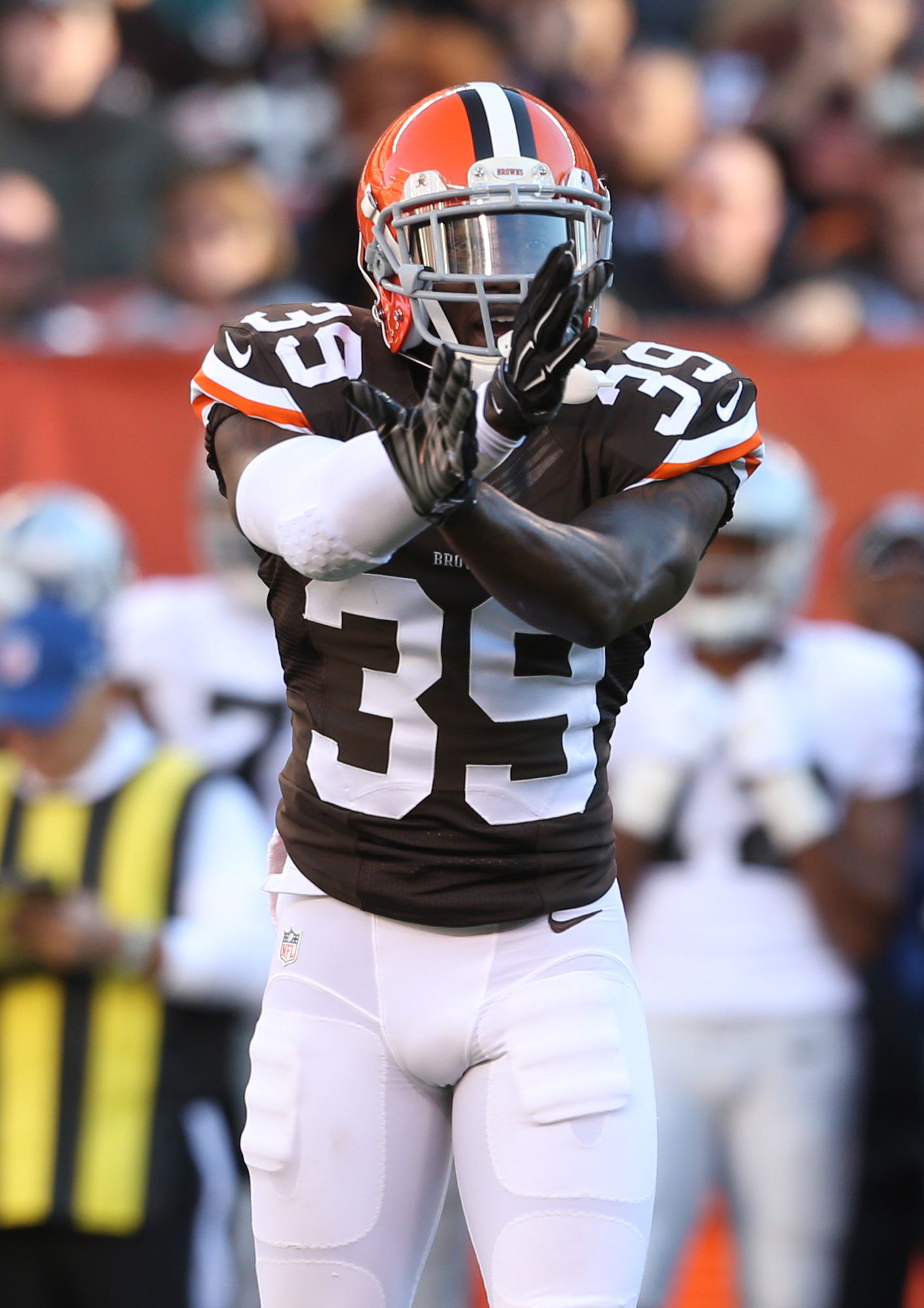
The Jaguars’ 2015 safety crop was possibly the worst in the entire NFL last season, as Jonathan Cyprien, Josh Evans, and Sergio Brown were all incredibly unproductive. Brown has since been released, and while Cyprien will compete with James Sample for a starting job, Gipson will bring an air of respectability to the Jacksonville secondary. One of the more effective defensive playmakers in the league, the 25-year-old Gipson ranks third in interceptions among safeties since 2013, the year he became a full-time starter.
Elsewhere in the defensive backfield, the Jaguars added former Giants corner Prince Amukamara, inking him to a one-year deal that contains less than $2MM guaranteed. Although it may seem as though as he’s been in the league forever, Amukamara is still only 27 years old, and he’s expected to man the slot while Aaron Colvin serves a four-game suspension. It wouldn’t be a surprise if Amukamara ends up holding down the job for the entire season, or eventually takes over for House on the outside.
Ryan Davis and Abry Jones will return to northern Florida after being assigned second-round restricted free agent tenders, and the pair will add to what is quickly becoming an above-average defensive line rotation. Davis, 27, is the better player, having posted 10 sacks during the past two seasons despite limited playing time. Jones, meanwhile, isn’t a lock to make the Jags’ 53-man roster given all the team’s options on the interior, and his $2.553MM salary is not guaranteed. Jacksonville also added former first-round defensive end Bjoern Werner on a risk-free deal, hoping to capitalize on the upside that led the Colts to take the Florida State alum with the 24th overall pick in 2013.
On offense, the Jaguars signed former Steelers left tackle Kelvin Beachum to one of the more creative free agent deals signed this offseason. The club will pay Beachum only $1.5MM in guarantees in 2016, before being forced to decide on a $5MM option bonus
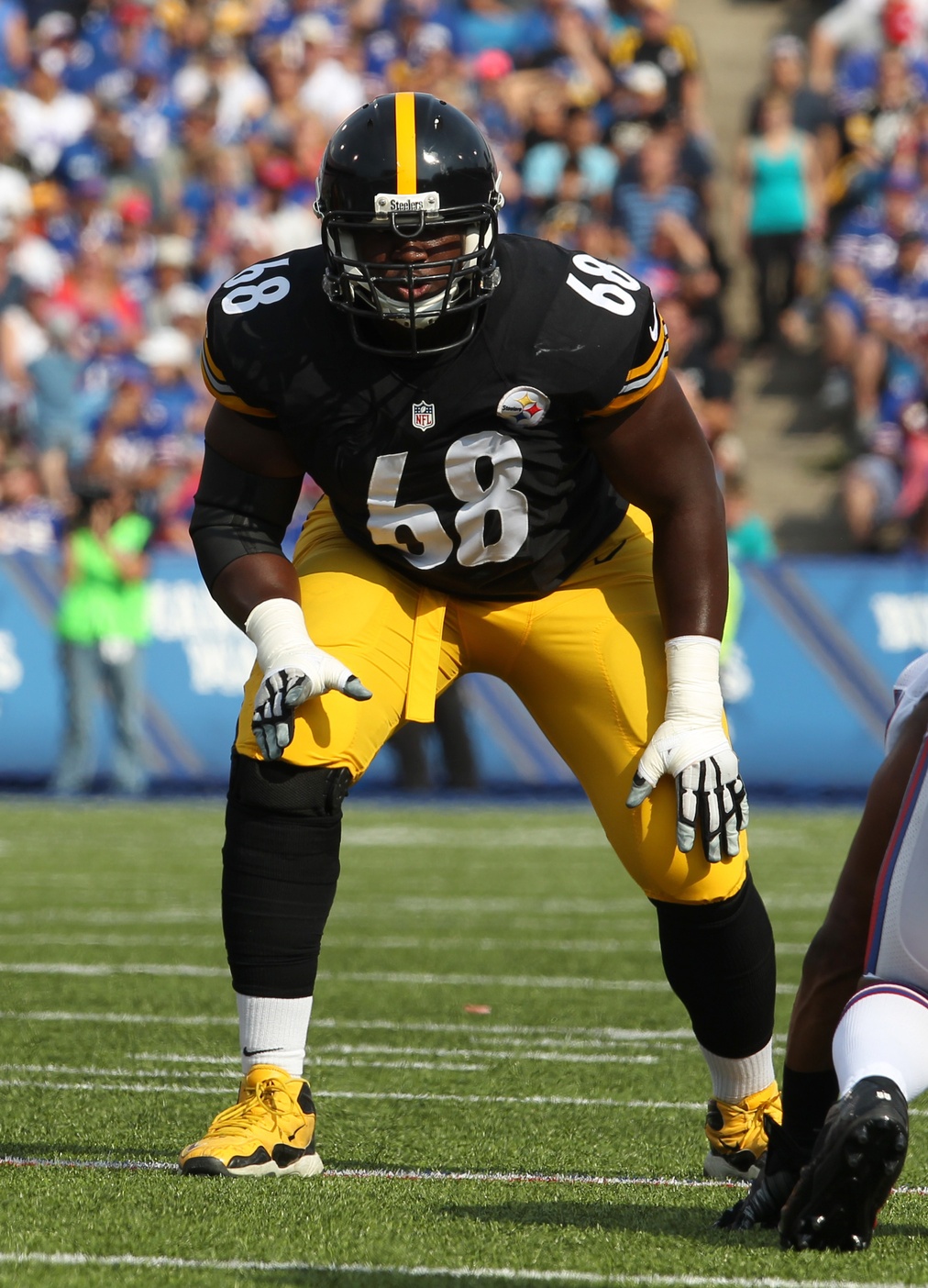
that would lock in the rest of the contract (and $13MM in guaranteed money). If Beachum stays healthy and plays well during the upcoming season, Jacksonville would presumably be more than willing to pick up the rest of the deal, which would only average $9MM annually.
Of course, Beachum’s health is no sure thing, as the reason he was forced to agree to such a unique deal was an ACL injury wiped out most of his 2016 season. Recent reports have been positive, as Caldwell recently told reporters there’s a “very high percentage” chance that Beachum will be ready for the start of training camp. If and when he does get back on the field, Beachum isn’t expected to be placed in a competition for the left tackle job with former No. 2 overall pick Luke Joeckel — Beachum, rather, will simply be handed the job, with Joeckel possibly moving to guard.
If Joeckel does lock down the left guard position, then free agent addition Mackenzy Bernadeau will act as the Jacksonville’s top reserve along the interior offensive line. With 49 career starts under his belt, Bernadeau, 30, is more experienced than any member of the Jaguars’ projected starting front five. He’s also extremely versatile, as he boasts starts at three positions — 40 at left guard, seven at right guard, and two at center.
Among the skill positions, the only major new face who will be present at Jaguars’ training camp in a few weeks is running back Chris Ivory, lured away from the Jets
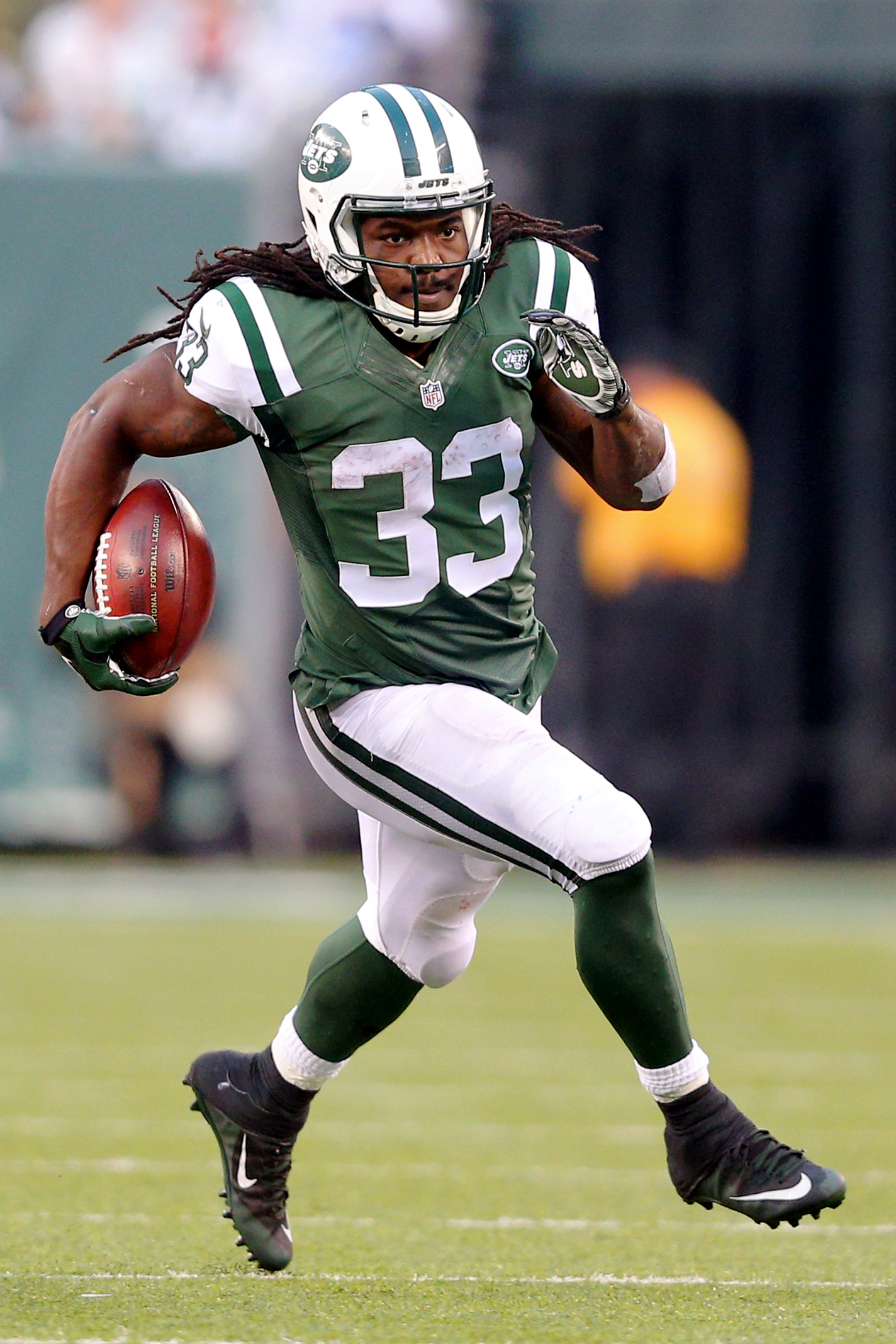
with a five-year, $32MM deal. A bruising runner, Ivory finally managed to stay healthy for most of last season and posted the best campaign of his career, rushing for than 1,000 yards and seven touchdowns while also managing a career-high 30 receptions. He’ll team with last year’s second-round pick T.J. Yeldon, but after inking a contract that contains $10MM in guarantees, it’s hard to imagine that Ivory won’t see the majority of carries. At the very least, he should get into the end zone often as the team’s go-to back near the goal line.
Veteran tight end Marcedes Lewis and quarterback Chad Henne both re-signed with Jacksonville, but neither should have a large role next year if all goes to according to plan. Lewis actually outpaced Julius Thomas snap-wise in 2015 as the latter dealt with injury concerns, but Henne didn’t see a single snap in relief of Blake Bortles. Lewis could act as the in-line, blocking tight end while Thomas acts as the move option next season, but obviously something will have gone terribly wrong if either he or Henne are forced to step in for serious amounts of time.
Continue reading about the Jaguars’ offseason…
Read more
Notable losses:
- Bryan Anger, P
- Zane Beadles, G: Released
- Andre Branch, DE
- Sergio Brown, S: Released
- Chris Clemons, DE: Released
- Toby Gerhart, RB: Released
- Clay Harbor, TE
- Bernard Pierce, RB
- Stefen Wisniewski, C
- Sam Young, T
The Jaguars didn’t lose a ton of free agents that played key roles in 2015, but they will see a bit of turnover along their offensive line. Stefen Wisniewski proved valuable on
a one-year investment, grading as the No. 19 center in the NFL according to PFF, but he won’t be back in Jacksonville next season, having agreed to a new contact with the Eagles. As such, the Jags will move former guard Brandon Linder to center, and the switch has apparently being going well, at least in the early stages.
Like Wisniewski, guard Zane Beadles played every offensive snap for the Jaguars last year, but unlike Wisniewski, Beadles’ production simply wasn’t there. After signing a five-year, $30MM deal prior to the 2014 season, Beadles started every game during the next two seasons. But Jacksonville cut bait this offseason, clearing out his entire $5.5MM cap charge, and will instead roll with former No. 2 overall pick Luke Joeckel at left guard.
Running back Toby Gerhart was another free agent bust to come out of that 2014 free agent class as the former Viking delivered less than 400 yards on the ground after inking a three-year, $10.5MM contract. Injuries sapped his ability, but Gerhart simply never looked as talented in a full-time role as he did as Adrian Peterson‘s backup. After losing time to Denard Robinson and T.J. Yeldon over the past two seasons, Gerhart was released earlier this year, and has yet to find a landing spot.
Unfortunately for general manager Dave Caldwell, defensive end Chris Clemons was yet another player signed during that 2014 offseason who ultimately didn’t work
out. Clemons followed former Seattle defensive coordinator Gus Bradley to Jacksonville, and the club hoped that he’d have success in the same LEO role that he played with the Seahawks. Last season, Clemons lost his starting job halfway through the season, and ended up grading as the single-worst edge defender in the league, according to PFF. After being cut, Clemons decided to head back to the Pacific Northwest, signing a one-year deal with the Seahawks.
Sergio Brown joined the Jaguars in 2015 after spending several seasons with the Patriots and Colts, and ended up splitting time at safety, starting four games and playing about half the club’s defensive snaps. The 28-year-old posted 29 tackles and 1.5 sacks, and was also a contributor on special teams. There’s a spot in the NFL for Brown, who can get by playing near the line of scrimmage, but there wasn’t a place for him in Jacksonville after the Jags added Tashaun Gipson.
After being selected with the 38th overall pick in 2012, defensive end Andre Branch never lived up to his draft status. He didn’t become a full-time starter until this past season, and only registered 14 sacks in his four seasons with the Jaguars. Like Brown, Branch is a player who can play a specific role, and he’ll add value as a rotational rusher with his new club, the Dolphins. But Jacksonville continued its augmentation of its defensive line over the past few months, rendering Branch obsolete.
The Jaguars didn’t make an effort to re-sign tight end Clay Harbor, allowing him to join the Patriots while re-upping Marcedes Lewis instead. Perhaps the club wanted to reward Lewis for being something of a franchise icon over the past decade, but Harbor probably offers a lot of what Lewis can bring to the table, and for a much cheaper price. While Lewis will earn $4MM a year (and was handed $5MM guaranteed), Harbor signed for only $3MM over two years with New England.
Trades:
- Acquired a 2016 second-round pick (No. 36) from the Ravens in exchange for a 2016 second-round pick (No. 38) and a 2016 fifth-round pick (No. 146).
The Jaguars traded up on Day 2 of the draft in order to nab UCLA linebacker Myles Jack, whom many (including myself) thought was a candidate to head to Jacksonville in the first round. Although trading up is typically a poor strategy, the Jaguars didn’t give up all that much, sacrificing just 102 cents on the dollar per Jimmy Johnson’s draft value chart and 121 cents on the dollar according to Chase Stuart of Football Perspective. In this specific case, the upside and potential offered by Jack — provided he can stay healthy — was probably worth the risk of moving up.
Draft picks:
The football gods were smiling upon the Jaguars during this year’s draft, as the event simply couldn’t have gone much better for Jacksonville. The Cowboys opted to select Ohio State running back Ezekiel Elliott, and reportedly turned down a trade offer
from the Ravens, who were looking to move up to No. 4 to choose Jalen Ramsey. Instead, the Jags stayed put at No. 5, and picked up a player whom many considered to be the top talent available in the entire draft.
Ramsey has the ability to play inside corner or safety, but it sounds like he’ll begin his career on the outside in Gus Bradley‘s defense. The model, of course, is Richard Sherman, a player whom Bradley coached in Seattle, and the Jaguars hope that Ramsey will evolve into a lockdown corner who shuts down one half of the field. It’ll be interesting to see if Jacksonville uses Ramsey in the slot at at all during his rookie campaign, or perhaps lines up him against particularly imposing tight ends.
Jacksonville’s run of good luck continued in the second round, as UCLA linebacker Myles Jack was still sitting on the board after pre-draft injury concerns popped up. The Jags traded up with the Ravens to select Jack, whose coverage skills are a perfect fit for today’s NFL. Jack, who also played safety and some running back for the Bruins, saw time at middle linebacker during minicamp, but is expected to play outside during the regular season, likely usurping Dan Skuta.
After adding Malik Jackson in free agency, the Jaguars continued to add to its pass rush via the draft, selecting Yannick Ngakoue, Sheldon Day, Tyrone Holmes, and Jonathan Woodard on Day 3. Day, especially, can be considered something of a steal, as many observers projected him to be picked in the second round. Pro Football Focus, notably, was high on the Notre Dame alum, and graded him as the most productive defensive tackle in the FBS last season.
Extensions and Restructures:
There are a number of ways to analyze any contract, and no deal exemplifies that notion better than the extension signed by wide receiver Allen Hurns. On its face, the agreement is for four years and $40.05MM, and ranks 12th among receiver contracts in
terms of annual average value. However, another way to look at the pact is to consider that the Jaguars would have likely placed a first-round restricted free agent tender on Hurns in 2017. As a former undrafted free agent, Hurns would have had no other choice but to accept the tender, provided no other club signed him to an offer sheet.
Let’s assume, for simplicity, that the first-round tender next season is worth $4MM (it was $3.635MM this year). So in alternate scenario where Hurns doesn’t sign this extension, he’s controlled through 2017 at a cost of $4.6MM — his scheduled 2016 base salary plus the 2017 first-round tender. It’s possible to argue, then, that this new deal is “effectively” worth $35.45MM over three years, which works out to an average of roughly $11.82MM per year. That AAV would place Hurns seventh among wide receivers instead of 12th. If I were Hurns’ agent, that’s how I’d frame the agreement.
The extension will have wide-reaching implications, not just for receivers around the league, but for the pass-catcher who lines up opposite Hurns. Allen Robinson posted better numbers than Hurns last season, has a higher draft pedigree (Robinson was a second-round pick), and can’t be controlled through the RFA system. Of course, Robinson can’t even negotiate an extension until after the 2016 season, so this discussion is a bit premature, but with the cap continuing to rise, Robinson should easily usurp Hurns’ deal, and could push for more than $15MM annually.
Other:
The Jaguars haven’t seen a huge turnaround under head coach Gus Bradley, as the club has posted four, three, and five wins in each of three seasons during his tenure.
Surprisingly (given Bradley’s background), the club’s defense also hasn’t seen much improvement, but Jacksonville’s offense, buoyed by additions like Blake Bortles, Allen Robinson, and Allen Hurns, has made the jump to No. 21 in offensive DVOA, its best ranking under Bradley and his staff.
Despite not advancing much in the standings, the Jags extended Bradley through the 2017 season, a move that is likely procedural due to the fact that teams don’t like the head coaches to enter lame-duck seasons. Some observers have deemed 2016 a “make-or-break” season for Bradley, opining that his seat is especially hot given that front office’s level of free agent spending over the past few offseasons. But general manager Dave Caldwell downplayed that sentiment earlier this year, saying that that club had embarked on a four-to-five-year plan when the new staff took over prior to 2013.
Caldwell’s first draft pick, offensive lineman Luke Joeckel, has been an unmitigated disaster in his first three years in the league, struggling so much that the club signed Kelvin Beachum this offseason with the intention of moving Joeckel to guard. As such, there was no chance Jacksonville would exercise its 2017 fifth-year option for Joeckel, which would have paid him nearly $12MM. He’ll play out the last year of his rookie deal, hoping the move inside can salvage his career.
Another of Caldwell’s first-round picks, edge rusher Dante Fowler Jr., missed his entire rookie season after tearing his ACL, and Jags fans held their breath after reports that this year’s first-rounder, defensive back Jalen Ramsey, had suffered an injury during rookie minicamp. Luckily, will be ready to return by training camp after undergoing an operation on his meniscus, and he’s reportedly experiencing no physical limitations. Jacksonville’s run of bad rookie luck did continue with seventh-rounder Jonathan Woodard, who will miss the entire season after tearing his Achilles.
Top 10 cap hits for 2016:
- Malik Jackson, DL: $10,000,000
- Allen Hurns, WR: $9,001,668
- Jared Odrick, DL: $8,000,000
- Julius Thomas, TE: $7,300,000
- Luke Joeckel, OL: $6,745,963
- Jermey Parnell, T: $6,500,000
- Davon House, CB: $6,000,000
- Blake Bortles, QB: $5,633,128
- Prince Amukamara, CB: $5,593,750
- Kelvin Beachum, T: $5,375,000
The AFC South is one of the more interesting divisions in the NFL, and it seems like any of the four teams could make a run at the crown. The Colts will hope for a healthy season from quarterback Andrew Luck, the Texans will lean on their vaunted defense and a few new offensive additions, and the Titans will rely on growth from signal-caller Marcus Mariota and an improved running game. The Jaguars showed last season their offense can be explosive, and any jump in the win department will likely require development on the defensive side of the ball. Whether the club makes that leap could determine whether head coach Gus Bradley, and possibly general manager Dave Caldwell, returns in 2017.
Information from Over the Cap, Spotrac , and Roster Resource was used in the creation of this post. Photos courtesy of USA Today Sports Images.
By Sam Robinson |
at July 12, 2016 9:34 am
In an offseason with some landmark signings and departures in the AFC West, the Chiefs wound up being the group’s steadiest franchise, opting instead to mostly to keep their core together. After ascending past the first round of the AFC playoff bracket for the first time since the 1993 season, Kansas City stands to return most of its starting lineup this year.
Exactly how good are the Chiefs? That’s a little tough to figure out since the team suffered many of its losses to quality opposition and saw most of its wins come against substandard opposition or quality teams that happened to be depleted at quarterback. The organization has done well to return to the position of an annual postseason contender, but how much further can this group carry this franchise as presently constructed in a division that features the defending Super Bowl champions and a potentially resurgent Raiders team?
Notable signings:
- Mitchell Schwartz, T: Five years, $33MM. $12.66MM guaranteed.
- Tamba Hali, LB: Three years, $21MM. $11.5MM guaranteed.
- Eric Berry, S: One year, $10.806MM. Fully guaranteed. Assigned franchise tag.
- Derrick Johnson, LB: Three years, $21MM. $8.75MM guaranteed.
- Jaye Howard, DL: Two years, $10MM. $5.76MM guaranteed.
- Frank Zombo, LB: Three years, $3.6MM. $500K guaranteed.
- Jamell Fleming, CB: One year, minimum salary benefit. $40K guaranteed.
- Rod Streater, WR: One year, $810K. $10K guaranteed.
- Andy Mulumba, LB: One year, $620K. $10K guaranteed.
- Stevie Brown, S: One year, minimum salary benefit.
- Drew Nowak, C: One year, $525K.
- Mike Williams, WR: Contract terms unknown.
The Chiefs entered the offseason with half of their starting defense bound for the UFA market, but they’ll now head into the season with ten starters back from last season’s No. 7-ranked defense. In a continued effort to keep a core together that’s been responsible for the franchise securing two playoff berths in a three-season span for the first time since the 1990s, Kansas City brought back Derrick Johnson, Tamba Hali, Jaye Howard, and Eric Berry. 
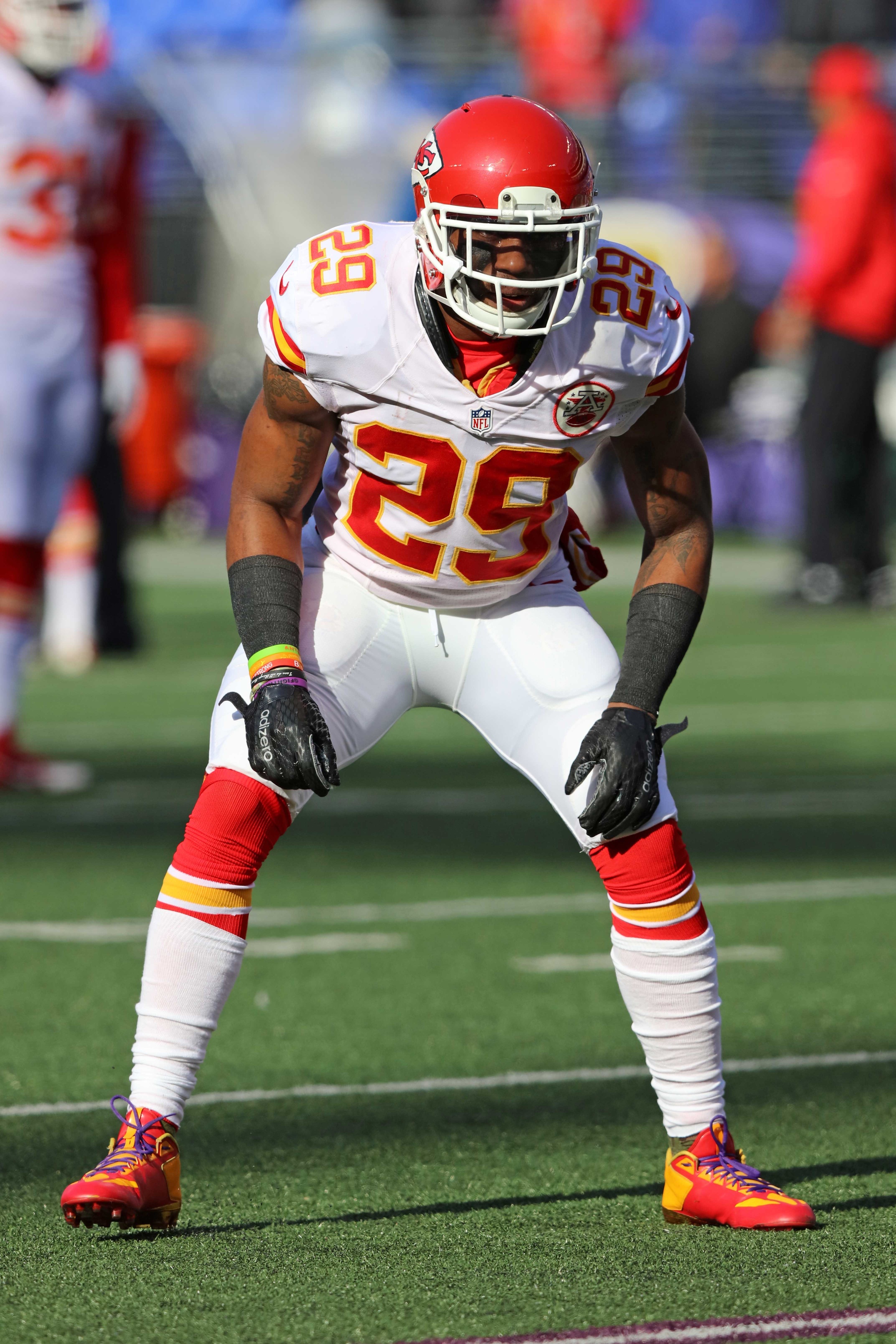
After his heroic recovery from cancer, Berry delivered one of his finest seasons to date. The former No. 5 overall pick’s return to full-time status coincided with the Chiefs becoming only the second 1-5 team since the merger to make the playoffs, and Berry blazed to his second All-Pro honor while securing comeback player of the year acclaim.
Berry is viewed as the face of the Chiefs, an organization that has strived for stability since John Dorsey and Andy Reid took over. Because of that, many have expected Berry’s contract to be completed by the July 15 deadline. Kansas City reached a deal on July 15 of last year to make Justin Houston the highest-paid linebacker ever, so despite an offseason where little has emerged from these talks, the 27-year-old Berry is a good bet to be signed. Using Harrison Smith‘s five-year, $51.25MM Vikings extension — one that contains $15.28MM fully guaranteed and averages $10.25MM per year — as a primer should make this pact simpler than Houston’s to negotiate.
The other re-signings should give the Chiefs a good chance at again being a top-10 defense, but the team is now heavily committed financially to two linebackers who will be firmly in their mid-30s by the time their three-year contracts end. The Chiefs picked Dee Ford two years ago in the first round despite Hali and Houston residing in their primes, doing so with the presumed intent to plug in the ex-Auburn edge defender into Hali’s spot once his contract expired. However, Ford has not proven to be up to the task to this point, and Houston’s ACL surgery further clouded the Chiefs’ pass-rushing situation. These factors led to bringing Hali back.
While the 32-year-old lifetime Chief had another Pro Bowl season, Hali’s sack numbers continued to dwindle. He notched 6.5 last season after a six-sack 2014. The 2006 first-round pick finished with at least nine during the previous four slates, and he spent his 10th NFL season battling knee injuries. Committing three years — two are essentially guaranteed — and $21MM to Hali prevented the Chiefs from either attempting to retain Sean Smith or adding a veteran cornerback to help compensate for his defection.
Hali still resides as a quality player, but both he and Ford being employed in K.C. this season shows somewhat of a planning failure. The Chiefs’ clogged 2017 payroll, once cap numbers for the extended veterans balloon, illustrates this.
Set to turn 34 this season, Johnson remains one of the NFL’s top inside linebackers. He’s obviously nearing the finish line, but the identical three-year, $21MM deal fell in line with similar accords given to aging non-rush ‘backers in recent years. Karlos Dansby‘s Browns deal and David Harris‘ Jets pact laid the groundwork for a third Chiefs-Johnson agreement. Johnson’s outplayed both and returned from a 2014-erasing Achilles injury to enhance Kansas City’s run defense. The Chiefs going from 28th to eighth in that span included Johnson as the key variable, and he has a good chance of remaining productive for at least the largely guaranteed portion of his deal — 2016-17.
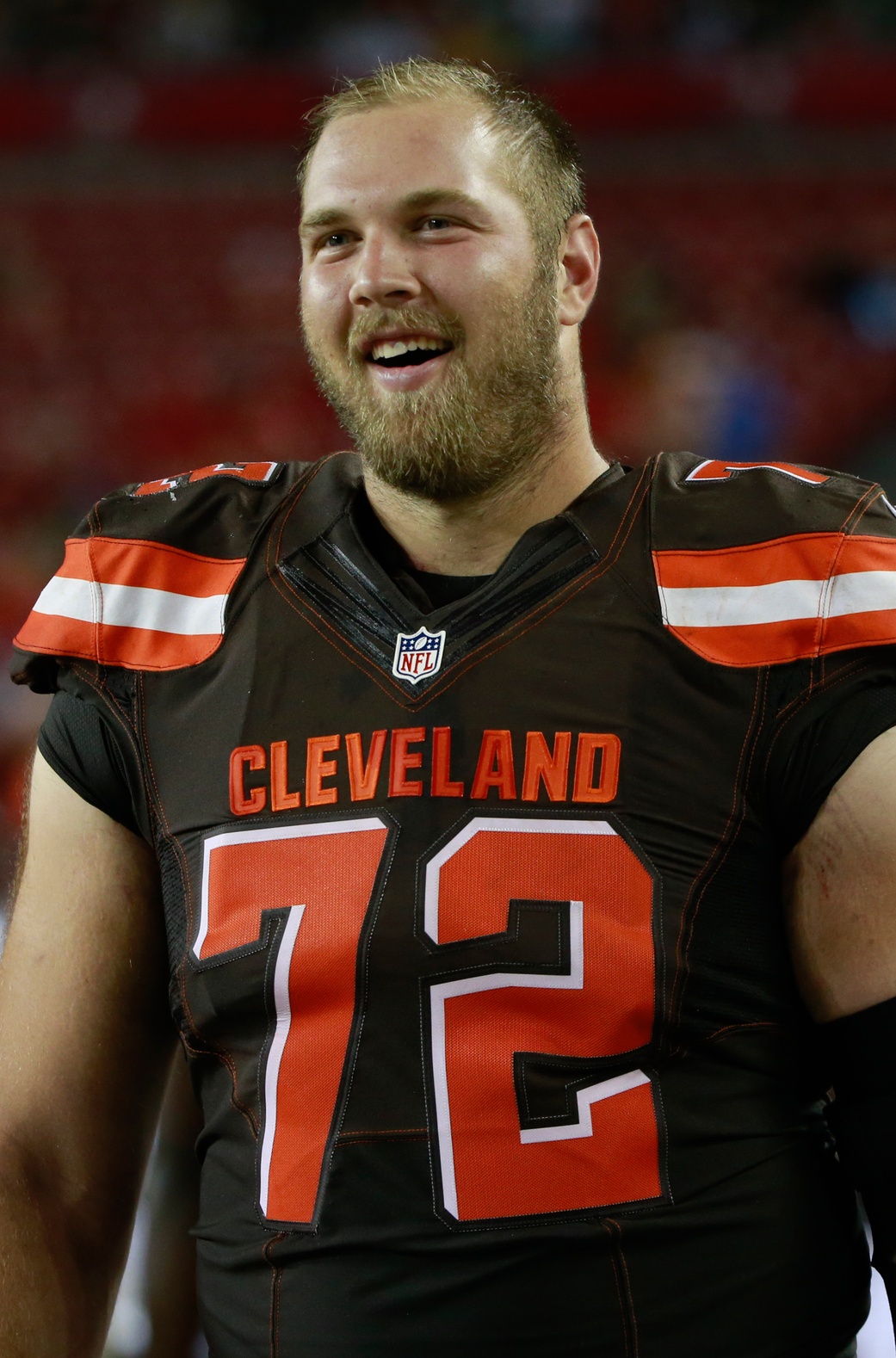
Kansas City also faced the prospect of losing Howard, but the emerging defensive end’s market didn’t price him out of Missouri. As a result, the Chiefs brought the 27-year-old starter back on a deal hat looks like a team-friendly accord after Howard enjoyed a breakout season. His contract is similar to fellow starting end Allen Bailey‘s 2015 re-up (four years, $25MM). This is the best trio of defensive linemen the Chiefs have housed since they moved to a 3-4 in 2009, and the Howard pact keeps it intact for another year.
Retention represented the theme of the Chiefs’ offseason, but their biggest upgrade came at one of their more troublesome modern-day spots. Mitchell Schwartz will fill a gaping hole at right tackle after becoming one of the best right-edge blockers in football during his latter Browns seasons. The Chiefs haven’t deployed a consistent option at right tackle since the early 2000s, with those famed lines featuring John Tait prior to his 2004 exit.
Schwartz, whose older brother Geoff Schwartz spent time at right tackle for the 2013 Chiefs, rated as Pro Football Focus’ No. 7 tackle last season and No. 2 right tackle. He’ll help fortify an edge that contributed to Alex Smith being sacked a career-high 45 times in each of the past two years. Kansas City will now boast above-average options at both tackle spots and center, with Mitch Morse impressing as a rookie and Eric Fisher improving, after not trotting out many players who could have qualified for that distinction over the past two seasons.
Continue reading about the Chiefs’ offseason…
Read more
Notable losses:
- Husain Abdullah, S: Retired
- Jeff Allen, OL
- Jason Avant, WR
- Tyvon Branch, S
- Chase Daniel, QB
- Mike DeVito, DE: Retired
- Paul Fanaika, G: Released
- Ben Grubbs, G: Released, then retired
- Sean Smith, CB
- Donald Stephenson, T
However, Schwartz’s arrival comes as the Chiefs lost their best-performing incumbent lineman for the third straight season. After Branden Albert and Rodney Hudson signed top-market deals following their strong contract years, Allen continued that string of well-timed proficiency by joining the Texans for four years and $28MM. The Chiefs experimented with Allen at right tackle for parts of two years before he returned to guard and fared much better than his previous stay inside. Allen helped the ground game compensate for Jamaal Charles‘ season-ending injury,
helping lead the team to 11 straight victories behind Charcandrick West and Spencer Ware.
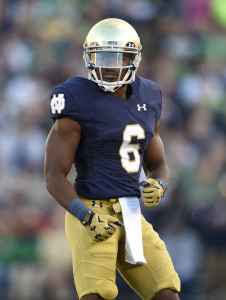
The Chiefs will plug in low-investment guards after the former second-round pick’s exit. Allen and Grubbs did not get a chance to play together much last season. A trade acquisition from the Saints, Grubbs’ neck injury came after he played well at left guard during his seven-game Chiefs sample, which doubled as the 31-year-old former Pro Bowler’s last NFL action. But Allen didn’t enter the starting lineup until that seventh game. A lack of guard depth didn’t seem to matter as the Chiefs continued to reel off victories in their friendlier second-half schedule sector, but it might this year now that both are gone.
Kansas City will turn to Laurent Duvernay-Tardif to reassume his right guard post in all likelihood, with fellow 2014 sixth-rounder Zach Fulton set for another crack at a starting job. Neither received good reviews from PFF in their respective years as starters — Fulton in ’14, Duvernay-Tardif last season — but in an era where offensive linemen are taking longer to develop due to practice-time constraints, the Chiefs are banking on enough reps in the system covering for their bargain-buy approach here. Kansas City’s other primary guard competitors are swing tackle Jah Reid, a waiver claim (Jordan Devey) and a fourth-round rookie (Parker Ehinger).
Defensively, the Chiefs will deploy almost the same unit as what Bob Sutton sent out in 2015, except without their No. 1 cornerback from the past three years. The Raiders’ four-year, $38MM offer for Smith went unmatched by the Chiefs, who did not make a serious effort to retain the 6-foot-3 corner. The rangy 29-year-old talent outplayed his three-year, $16.5MM Chiefs deal, and the team’s steady pass defense over the past three years can be partially attributed to their reliance on the right cornerback’s man-coverage prowess.
Without Smith, the Chiefs’ entire cornerback corps will consist of rookie-contract players. They drafted three rookies but will count on either Phillip Gaines or Steven Nelson — third-rounders in 2014 and ’15, respectively — seizing at least one of the three primary corner jobs. Gaines looks like the better bet at this point, having opened last season as the team’s primary slot option. His Week 3 ACL tear induced the Chiefs to unveil a rare two-corner, four-safety dime package, one that left Nelson out of action throughout the season.
Kansas City will need to rely on its corners a bit more because it lost both of the ancillary parts of that four-safety sub package.
Branch parlayed his season as the de facto dime back into a two-year, $8MM deal with the Cardinals, doing so after signing a one-year, $2.1MM Chiefs accord. The former Raiders standout rehabilitated his value while helping the cornerback-limited Chiefs. A UFA before retiring, Abdullah probably could have continued his career as well after being a quality starter in 2014 and a key backup last season. The Chiefs shifted Abdullah to his old safety spot alongside Eric Berry and often shuttled Ron Parker into the slot often, with the since-retired defender further diversifying one of the league’s best back-line contingents.
Despite starting in just two games in his three-season Chiefs tenure, Daniel set a new standard for backup quarterbacks by inking a $7MM-per-year deal to follow Doug Pederson to Philadelphia. The 29-year-old Daniel’s defection opens the door for homegrown talents Tyler Bray and Aaron Murray to attempt to capture the backup job. Neither has thrown an NFL pass, so the Chiefs would be much more vulnerable if Alex Smith went down. Bray currently holds the job out of offseason workouts, but the former 2013 UDFA missed the past two regular seasons due to injuries. A 2014 fifth-rounder, Murray worked as a third-stringer the past two seasons. Both could be competing for one roster spot after the Chiefs drafted Kevin Hogan in this year’s fifth round.
Trades:
- Acquired a 2016 second-round pick (No. 37), a 2016 fourth-round pick (No. 105), and a 2016 sixth-round pick (No. 178) from the 49ers in exchange for a 2016 first-round pick (No. 28) and a 2016 seventh-round pick (No. 249).
- Acquired a 2016 third-round pick (No. 74) and a 2016 fourth-round pick (No. 106) from the Buccaneers in exchange for a 2016 second-round pick (No. 59).
Draft picks:
After trading back, the Chiefs drafted for talent given their current strength on their defensive line. However, Jones proved to be a disruptive presence in the SEC and could take over as a key depth piece as a rookie after Mike DeVito retired due to concussion concerns. The early-entree draftee should see playing time quickly and may prove to be a higher-ceiling talent than either Jaye Howard or Allen Bailey. Jones is the highest-drafted defensive lineman the Chiefs have selected since Dontari Poe in 2012 and could soon end up replacing the longtime nose tackle up front, given Poe’s contract situation and Howard’s ability to pl
ay nose.
The other big takeaway from Kansas City’s draft was its persistent effort to add cornerback depth. The Chiefs entered the draft in dire need of a corner to potentially pair with Marcus Peters, but they did not go about it like a team that knew it had to have a starter.
Instead of filling the need with its first- or second-round pick, Kansas City approached it from a volume standpoint. The strategy will flood the Chiefs’ already-young stable at this position, with Kansas City hoping to unearth at least one immediate contributor from its newest crop. Because as presently constructed, the Chiefs could need it, especially given the state of their pass rush.
Russell excelled at press coverage at Notre Dame despite being just 5-foot-11, and the Chiefs aren’t averse to pressing. Murray graded well in coverage last season, according to Pro Football Focus, with White profiling as another lottery ticket-type grab for a group comprised of two second-year players (Peters and Steven Nelson), one third-year cog who is coming off injury (Phillip Gaines), a trending-down ex-waiver claim (Marcus Cooper) and now three rookies.
It’s a formula that could be tested early. The Chiefs did not hold up well in coverage against quality passing attacks in 2015, but it’s difficult to gauge their readiness. They seemed to improve as the year progressed, only most of said development came against substandard offenses.
Tabbed by most analysts as a depth-level guard, Ehinger will see a cozier path to a starting role than most in his position thanks to the Chiefs’ guard circumstances. The Cincinnati product has experience at tackle as well and graded, per PFF, as a plus pass-blocker in all but one game last season. Of course, he was facing American Athletic Conference opposition.
Hogan will vie with Brady and Murray for the Chiefs’ No. 2 quarterback job, which hasn’t been this inexperienced since Tyler Palko was forced into action in 2011 — when he went 1-3 as a starter to help keep the Chiefs out of the playoffs — before Kyle Orton arrived as a waiver claim.
Extensions and Restructures:
The Chiefs have emerged as one of the most build-from-within franchises in the league over the past three years. Their extension for Kelce served as one of many extensions or re-signings under this management’s watch, and the Andy Reid/John Dorsey duo has now extended players drafted under three regimes.
At 26 and entering his fourth season, Kelce has emerged as the No. 2 option in Alex Smith‘s pass-catching pecking order and a top-10 tight end. The Chiefs’ longtime issue finding a steady No. 2 wideout helped place Kelce in this role, and he’s delivered near-identical seasons over the past two years, recording between 860 and 875 receiving yards and scoring five touchdowns in each year. He’s now the league’s second-highest-paid tight end on a per-year basis at $9.37MM and one of the many core players the Chiefs have locked up long-term.
Ware and West aren’t exactly core performers, but they kept Kansas City’s running game afloat better than Jamaal Charles‘ replacements did after he tore his ACL in 2011. The tandem combined for more than 1,250 yards from scrimmage after Charles went down in mid-October and profile as a low-cost power/speed pairing should Charles be unable to return to form.
Neither was set to be eligible for unrestricted free agency until 2018 on their rookie contracts, and these re-ups could be significant for Charles. Now 29 and rehabbing from another knee surgery, the longest-tenured starting back in franchise history is under contract through the ’17 season — but on non-guaranteed $5.3MM and $7MM cap numbers, respectively. Charles not showing his best stuff this season could make him a cap casualty or trade candidate come 2017, when money will be tight for the Chiefs.
Other:
Houston’s surprise surgery could be the biggest road block standing between the Chiefs and their first AFC West title in six years.
The star left outside linebacker’s recovery timeline remains murky going into training camp, but expecting an immediate return to form even if the one-time All-Pro proves able to start in Week 1 seems optimistic.
Houston’s ACL issue stands to be a key factor for the Chiefs’ pass defense. A lot will be asked of the supplementary edge defenders and a young corner corps to keep the unit functioning without the operation’s linchpin at his best.
Despite Fisher’s fifth-year option being exercised, putting the middling left tackle in line to be the sixth-highest-paid offensive lineman in 2017, it shapes up as a defining year for the former No. 1 overall pick. Those options being guaranteed against injury only, the Chiefs can still move on from Fisher and his near-$12MM ’17 salary before it becomes fully guaranteed. Although they’re devoid of a surefire left-side option beyond Fisher, the Chiefs could well be over 2017’s projected salary ceiling once a likely Eric Berry extension is processed. However, the Chiefs have enjoyed quality campaigns from most of their contract-year blockers in recent seasons.
Another mid-level campaign could make cutting Fisher, whose best season came in 2015 when Pro Football Focus tabbed him as its No. 36 tackle, a legitimate conversation. It would create cap room for a Dontari Poe extension or franchise tag, neither option seeming feasible right now.
The move from Doug Pederson to a Brad Childress/Matt Nagy co-coordinator arrangement shouldn’t change much. Andy Reid‘s offenses have been among the more consistent in football over the past 16 years. Following his flameout as Vikings head coach, the now-60-year-old Childress spent one season as the Browns’ OC before becoming the spread-game overseer in Kansas City. Just 38, Nagy could prove a rising star after serving under Reid as a coaching intern in Philadelphia as recently as 2009. The former Arena League quarterback spent the past three years coaching K.C.’s signal-callers.
Top 10 cap hits for 2016:
- Justin Houston, LB: $19,100,000
- Alex Smith, QB: $17,800,000
- Jeremy Maclin, WR: $12,400,000
- Eric Berry, S: $10,806,000
- Eric Fisher, T: $7,060,613
- Dontari Poe, DT: $6,146,000
- Jamaal Charles, RB: $5,313,500
- Allen Bailey, DE: $5,212,500
- Ben Grubbs, G: $5,200,000 (dead money)
- Rod Streater, WR: $4,810,000
The Chiefs’ quick ascent has been fairly remarkable given how ugly things were at the end of a 2-14 2012 slate. But, if they’re going to take the next step, they’ve positioned that window for the next two years. The Chiefs are committed financially to this nucleus through 2017 and are banking on stability to lift them past the more volatile, and more successful, Broncos and hold off the remade Raiders.
The ’16 season will go a long way toward determining how legitimate the franchise’s prospects at advancing further in the playoffs are. Kansas City has booked only one AFC title game berth since 1970 despite making 14 playoff appearances in that span. But the Chiefs haven’t employed this kind of core since their steady run in the ’90s and that streak could be snapped soon.
Proving they can defeat quality opposition consistently will be paramount as they attempt to climb onto the conference’s top tier. While it’s debatable as to whether that can occur with a limited offense, the Chiefs are likely to be in contention for a playoff spot for the fourth straight year. Of course, to justify the commitment to the current cast, they’ll have to get back there and be a threat to advance.
Information from Over the Cap, Spotrac, and Roster Resource was used in the creation of this post. Photos courtesy of USA Today Sports Images.
By Dallas Robinson |
at July 11, 2016 9:10 pm
After eking out a victory in one of the most memorable postseason contests in some time, the Cardinals advanced to the NFC Championship Game — and proceeded to get stomped. But most of the core of a team that finished last season with a 13-3 record, and Arizona also made a few additions through free agent signings, draft picks, and one notable trade.
Notable signings:
- Tyvon Branch, S: Two years, $8MM. $5MM guaranteed. $1.5MM available via incentives.
- Drew Stanton, QB: Two years, $6.5MM. $4.5MM guaranteed. $8.7MM available via incentives.
- Evan Mathis, G: One year, $4,000,069. $3,000,069 guaranteed. $2MM available via incentives.
- Jermaine Gresham, TE: One year, $3.5MM. $3MM guaranteed. $500K available via incentives.
- Chris Johnson, RB: One year, $1.5MM. $1MM guaranteed. $1.5MM available via incentives.
- Drew Butler, P: Two years, $2.4MM. $100K guaranteed.
- Jaron Brown, WR: One year, $1.671MM. Signed original-round RFA tender.
- Tony Jefferson, S: One year, $1.671MM. Signed original-round RFA tender.
- D.J. Swearinger, S: One year, $1.671MM. Signed original-round RFA tender.
- Chris Clemons, S: One year, minimum salary benefit.
- Red Bryant, DL: One year, minimum salary benefit.
The Cardinals already possessed an excellent offensive line, having ranked third in adjusted line yards and fifth in adjusted sack rate — both Football Outsiders metrics — in 2015. That front five has the potential to be even better this season, as the club inked former Eagles and Broncos guard Evan Mathis to a one-year deal. Any contract that
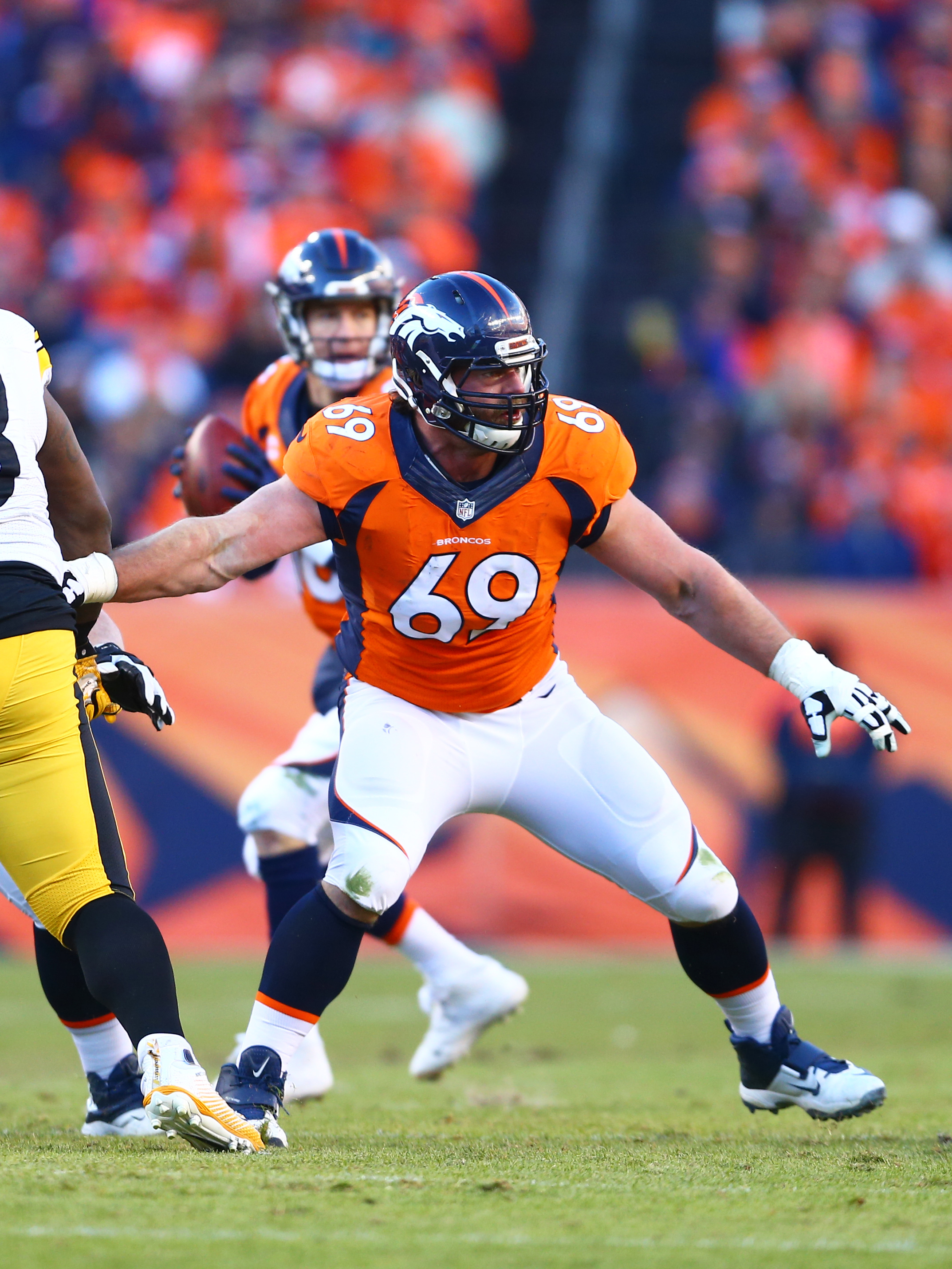
only spans a single season is typically considered a relatively risk-free endeavor, but Mathis’ pact is especially favorable for Arizona.
Despite the fact that Mathis ranked as the third-best guard in the league last season (and posted the NFL’s best grade in the run game) according to Pro Football Focus, he’ll earn just over $4MM in 2016. For reference, that salary is in line with the scheduled earnings of the likes of Shawn Lauvao and Zane Beadles, both of whom are inferior to Mathis. Though he’s entering his age-35 season, Mathis is still one of the most effective guards in football, and this deal can be deemed a win.
Mathis will be blocking for a Cardinals running back group that includes not only David Johnson and Andre Ellington, but veteran Chris Johnson, who agreed to a one-year contract worth $1.5MM. Johnson garnered interest from both the Dolphins and Patriots before re-signing with Arizona, and reportedly turned down more money elsewhere to return to the desert.
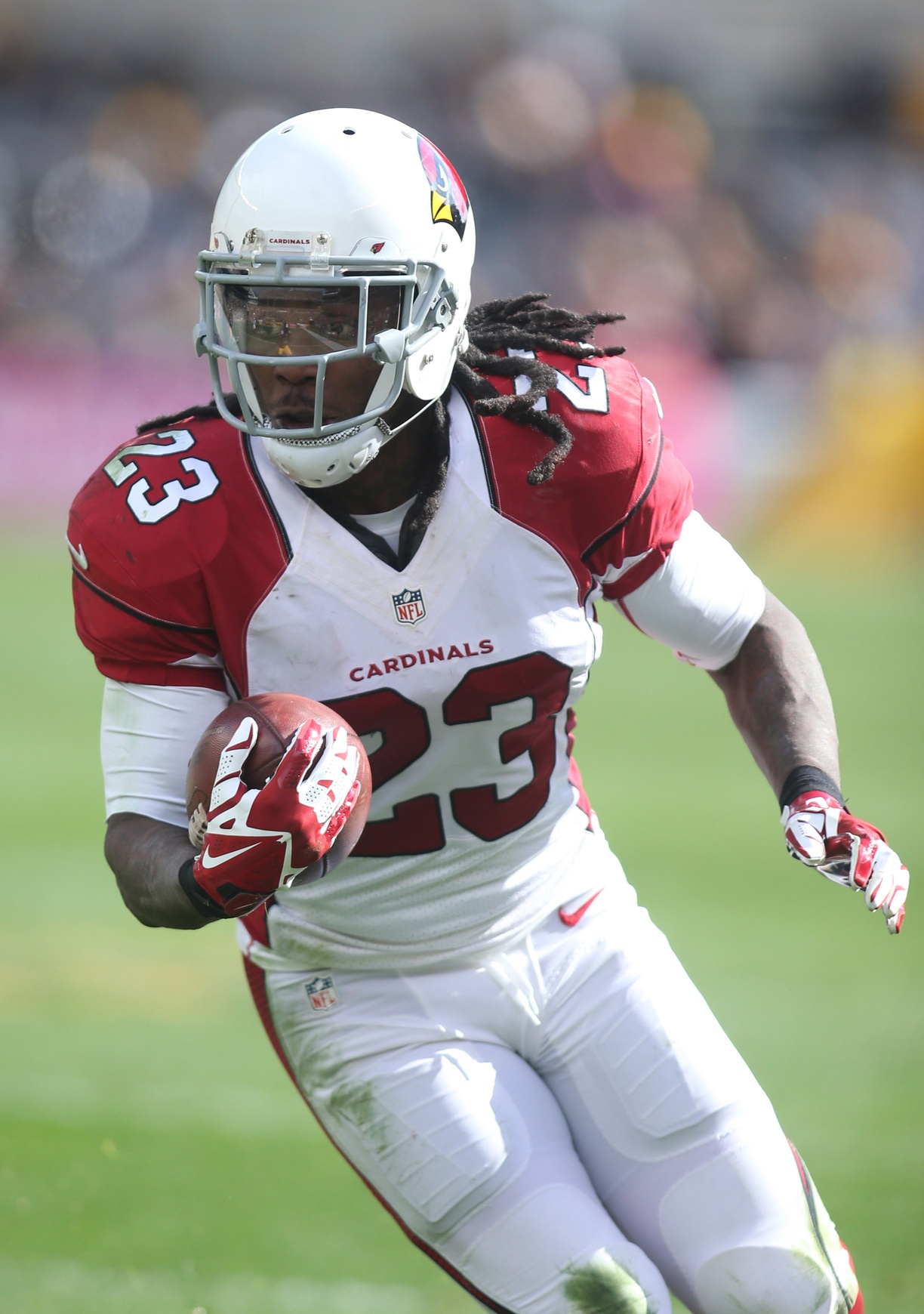
Given that he did have offers from other clubs, it’s a tad surprising that Johnson ended up returning to the Cardinals, if only because he could have presumably gotten more playing time elsewhere (especially in Miami). Though some reports have hinted otherwise, Johnson figures to be the clear-cut No. 2 option on the Arizona depth chart, and it will take an injury for him to approach his 196-carry total from last season. Still, Johnson claimed that his “heart was in Arizona,” so the Cardinals’ culture and locker room evidently sold him more than straight cash.
Along the same lines, tight end Jermaine Gresham also asserted he took less money to reunite with the Cardinals. Gresham said he had offers from both the Bears and Jets, including one four-year, $23MM deal that included $12MM in guarantees. Of course, we’re taking Gresham’s word that he had those offers in hand, and we can’t know the exact structure of the rejected contracts. But it seems apparent that players are willing to join (or stay with) Arizona for less money, either in the hopes of winning a championship or because of the club’s strong clubhouse (or both).
Gresham, 28, has never quite lived up to his first-round draft status, and given the weapons available to quarterback Carson Palmer, Gresham probably won’t ever again come close to his career-high in receiving yards (737). But he’s an able and willing blocker, especially in the run game, and for the cost of $3.5MM, he’s a bargain as Arizona’s second tight end behind Darren Fells.
Quarterback Drew Stanton will also return to the Cardinals, agreeing to a two-year deal worth $6.5MM to once again serve as Palmer’s backup. The accord provides a healthy amount of upside for Stanton — who apparently drew interest from the Colts, Titans, Dolphins, and Cowboys — as it contains $8.7MM in available incentives. If Palmer were to suffer another major injury (he’s already undergone two ACL surgeries during his career), Stanton would be well-compensated as the next man up. Arizona, additionally, is reportedly viewing Stanton as a possible successor to Palmer
when he eventually hangs up his cleats.
On the defensive side of the ball, Arizona’s only major free agent addition was safety Tyvon Branch, who resurrected his career with the Chiefs last season following an injury-marred end to his tenure with the Raiders. The Cardinals value versatility in their secondary, and Branch, who can play both safety positions and nickel corner, will help the defensive backfield make up for the loss of Tyrann Mathieu if he’s forced to miss any time after tearing his ACL last season.
Like Branch, safety Tony Jefferson will see expanded playing time if Mathieu is absent early in the season, and he could emerge as a full-time player after signing his restricted free agent tender over the offseason. The Cardinals placed the lowest tender on Jefferson, meaning he could have signed an offer sheet with another club and left without Arizona receiving compensation. The Raiders and Texans did express interest in signing Jefferson, and the 24-year-old admitted that he came close to inking a deal with a new team.
The Cardinals also brought back two veterans who recently spent time with the organization, re-signing defensive back Chris Clemons and defensive lineman Red Bryant to minimum salary benefit contracts. The “defensive back” title is a little misleading in the case of Clemons, as he’ll reportedly back up Deone Bucannon at dime linebacker. Bryant, as anyone who’s watched Amazon’s All or Nothing series knows, was simply overjoyed to return to an NFL field last season, and will provide depth on the defensive line once again.
Continue reading about the Cardinals’ offseason…
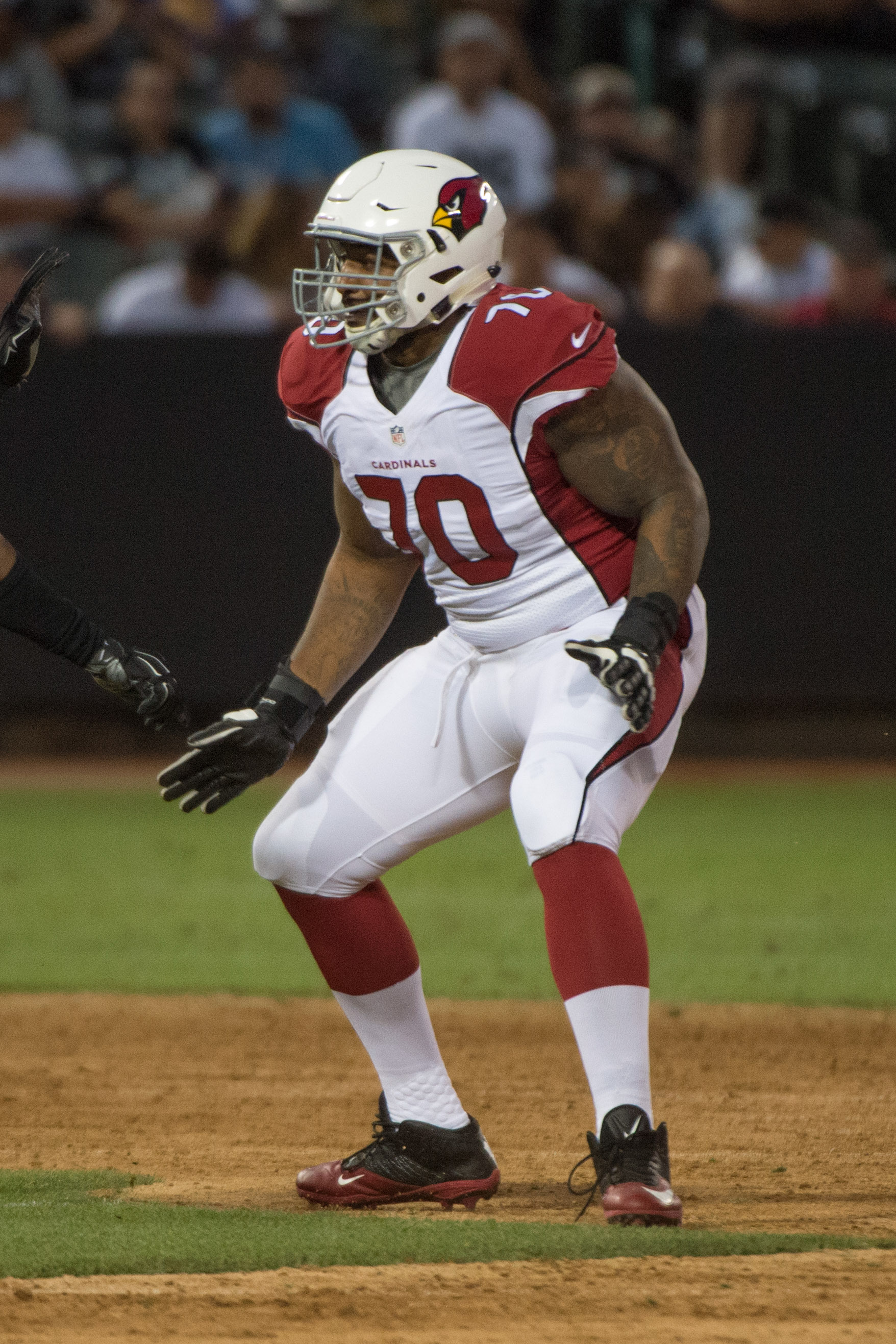
Read more
Notable losses:
- Kenny Demens, LB
- Dwight Freeney, LB
- Rashad Johnson, S
- Ted Larsen, G
- Mike Leach, LS: Retired
- Bobby Massie, T
- Jerraud Powers, CB
- Cory Redding, DL: Released then retired
- Lyle Sendlein, C
- Bradley Sowell, T
- Sean Weatherspoon, LB
- Corey White, CB
- LaMarr Woodley, LB
Arizona saw upheaval at a couple of position groups this offseason, but no unit will look as different as the Cards’ offensive line, which could see as many as three new starters. Center Lyle Sendlein, at this point, has not been re-signed, and head coach Bruce Arians said earlier this year that he expects Sendlein to retire. Sendlein has had a successful career by almost any definition, as he entered the league as undrafted free agent back in 2007 and wound up starting 124 games for the Cardinals. He’ll be replaced at the pivot by one of A.Q. Shipley or third-round rookie Evan Boehm.
The loss of guard Ted Larsen is a little less momentous. He started 26 games for Arizona over the past two seasons, but consistently ranked near the bottom of PFF’s guard ratings — last season, PFF graded him as one of the ten-worst at his position. Larsen signed a one-year deal with the Bears during the offseason, but the Cardinals have replaced him with Evan Mathis, a better player in all facets of the game.
The most significant defection along the offensive line wasn’t Sendlein or Larsen, but rather right tackle Bobby Massie, who will join Larsen in Chicago after agreeing to a three-year pact. Massie, 26, was never anything more than an average tackle, but he was a known quantity. The Cardinals didn’t seriously entertain re-signing him, largely because they had invested a 2015 first-round pick on tackle D.J. Humphries, who is now expected to man the right side after not seeing a single snap during his rookie season. As such, I listed Arizona as one club that could have interest in free agent tackle Eugene Monroe.
The other area of the Cardinals’ roster that will look a bit different in 2016 is the secondary, and given that the unit ranked fourth in DVOA against the pass last year, it’s not clear that change will be a good thing. Cornerback Jerraud Powers is gone after playing 75% of the team’s defensive snaps last season, inking a deal with the Ravens after also generating interest from the Giants. Arizona expressed some desire to re-sign Powers, but apparently couldn’t come to an agreement on his value (he’ll earn $1.75MM with Baltimore). Powers’ absence leaves a major hole at corner opposite Patrick Peterson, where career special-teamer Justin Bethel currently looks the like the favorite to start.
Fellow defensive back Rashad Johnson also had talks with the Cardinals about a possible return, but the veteran safety said the club never made him an official offer before he signed a one-year deal with the Titans. Johnson saw even more playing time last year than did Powers (about 80% of Arizona’s snaps), but his loss might be a little easier to overcome, as the Cards boast Tyrann Mathieu, Tony Jefferson, Tyvon Branch, and D.J. Swearinger at safety.
Pass-rush specialist Dwight Freeney hasn’t re-upped with the Cardinals to this point, but he’s made it known that he’d prefer to return the desert. Arizona, for their part, is said to be comfortable with their current crop of edge rushers, and would like to get a look at its younger options in camp before turning to Freeney, who posted eight sacks in 11 games last season. Fellow linebacker LaMarr Woodley also looks to be done with the Cardinals, although he won’t be difficult to replace after grading out poorly against the run and pass in only 279 snaps.
Sean Weatherspoon inked a one-year deal with the Cards last season that paid him nearly $4MM, and although he appeared in 13 contests, he didn’t make much of an impact, seeing just 126 snaps. His limitations may have been injury-related, as Weatherspoon was coming off a Achilles tear that cost him nine games in 2014. Nevertheless, inside ‘backer will be manned by Kevin Minter and safety-turned-linebacker Deone Bucannon for the foreseeable future.
Lastly, defensive lineman Cory Redding was released in April, and then decided to call it a career about a month later. The Cardinals have a history of bringing in seemingly over-the-hill veterans and milking their last bit of production, but Redding can be considered a miss for general manager Steve Keim. Redding, 35, was paid $3MM for less than 200 snaps, and wasn’t particularly effective when he was on the field.
Trades:
The most important move of Arizona’s offseason wasn’t a signing, or a loss, or a draft pick. It was a trade that shocked the NFL world in mid-March, as the Cardinals acquired pass-rusher Chandler Jones from the Patriots. From my vantage point, the deal was a clear win for Arizona, as Jonathan Cooper, a former first-round pick, had essentially no value after starting only 11 games during his first three seasons in the league. Handing over the No. 61 pick, then, for Jones — whose 36 sacks since 2012 ranks 10th among edge rushers — was a steal.
Jones’ impending free agent status, and likely contract demands, surely played a role in New England’s justification of the trade. The 26-year-old Jones will play 2016 under his fifth-year option at a price of $7.799MM, and is scheduled to hit free agency next spring. There’s almost no chance Jones actually reaches the open market, as Arizona would likely use the franchise tag on him if the two sides can’t work out a long-term deal. Head coach Bruce Arians, however, was confident that the Cardinals would be able to retain their new sack-master. “When he hits free agency, we’ll have the dollars to make sure he stays,” Arians said in March.
At the time of the trade, reports indicated that Jones would shift from his longtime role as a defensive end in New England to a 3-4 standup linebacker in Arizona’s scheme. That change will have to be worked out during training camp and the preseason, and it’s possible that Jones will play a variety of roles under defensive coordinator James Bettcher. Jones’ 2017 payday could be affected by his specific position, though, as defensive ends cost about $1.5MM more than linebackers under the terms of this year’s franchise tag.
Draft picks:
- 1-29: Robert Nkemdiche, DL (Ole Miss)
- 3-92: Brandon Williams, CB (Texas A&M)
- 4-128: Evan Boehm, C (Missouri)
- 5-167: Marqui Christian, S (Midwestern State)
- 5-170: Cole Toner, T (Harvard)
- 6-205: Harlan Miller, CB (Southeastern Louisiana)
Defensive lineman Robert Nkemdiche fell to the 29th pick due to character concerns, but most observers are convinced that the former Ole Miss Rebel will have an immediate impact in the NFL. As Jeff Dooley of Pro Football Focus noted, Nkemdiche wasn’t the most polished or productive collegiate player. He is, however, a measurables freak who oozes potential.
As far as athletic outliers go, Nkemdiche is near the top of the list. He ranked fourth among all draftable defensive lineman in SPARQ score, a metric that compiles combine data and transitions it into a single score. Nkemdiche also grades as a Force Player, a classification developed by Justis Mosqueda that also uses combine numbers to project edge rushers. Clearly, neither metric ensures that Nkemdiche is guaranteed to be an NFL success, but he’ll have every opportunity to prosper in Arizona. He’ll begin his rookie year as rotational rusher, vying for snaps behind Chandler Jones, Calais Campbell, Rodney Gunter, Corey Peters, and others.
Beyond Nkemdiche, the rest of the Cardinals’ draft class earned a middling grade (Mel Kiper of ESPN.com assigned Arizona’s picks a “B-“). Brandon Williams is a former collegiate running back who has only one season of experience at cornerback, and he likely won’t earn much playing time on defense in year one. Evan Boehm, on the other hand, could easily become the Cards’ starter at center, as his only competition is veteran A.Q. Shipley, who’s has trouble holding down starting snaps during his career. At the very least, Boehm figures to be Arizona’s top reserve on the interior, as he can play both center and guard.
Other:
- Signed 16 undrafted rookie free agents following the draft.
Top 10 cap hits for 2016:
- Carson Palmer, QB: $17,875,000
- Larry Fitzgerald, WR: $15,850,000
- Calais Campbell, DE: $15,240,000
- Patrick Peterson, CB: $13,072,377
- Jared Veldheer, T: $9,000,000
- Chandler Jones, DE/LB: $7,799,000
- Michael Floyd, WR: $7,320,000
- Mike Iupati, G: $5,700,000
- Evan Mathis, G: $4,000,069
- Tyvon Branch, S: $3,500,000
The Cardinals are now one of the best-run franchises in the NFL, a statement that would have seemed unthinkable a decade ago. General manager Steve Keim has shown a willingness to use free agency to augment his roster, and isn’t afraid to sacrifice draft pick compensation to acquire a game-changer like Chandler Jones. Head coach Bruce Arians offers not only a colorful personality (and colorful language), but a mastery of offensive concepts that is unparalleled in the league. The NFC West clearly won’t be a cakewalk — the division-rival Seahawks were, along with the Cardinals, were the only other club to rank among the top-five in both offensive and defensive DVOA — but Arizona is well-positioned to make another run at the Super Bowl in 2016.
Information from Over the Cap, Spotrac, and Roster Resource was used in the creation of this post. Photos courtesy of USA Today Sports Images.
By Sam Robinson |
at July 11, 2016 10:00 am
Arguably the least talented of the Broncos’ four Peyton Manning-era teams, the 2015 iteration allowed the franchise to collect its third Super Bowl title, and the 2016 version will prepare to defend it in interesting fashion. Denver not only lost its starting quarterback of the past four years but allowed his backup to exit as well, creating a strange scenario for a defending Super Bowl champion.
The Broncos’ quarterback quagmire notwithstanding, they still will probably return nine starters from their No. 1 defense and remain one of the AFC’s favorites. Whereas many once thought Manning’s retirement would double as the end of Denver’s championship window, the team’s dominant defense looks to keep it pried open. But has Denver gambled too much at the game’s most important position to make a realistic title defense?
Notable signings:
- Von Miller, LB: One year, $14.26MM. Fully guaranteed. Assigned exclusive franchise tag.
- C.J. Anderson, RB: Four years, $18MM. $7.6M guaranteed. Broncos matched Dolphins’ RFA offer sheet.
- Donald Stephenson, T: Three years, $14MM. $6MM guaranteed.
- Jared Crick, DE: Two years, $4MM. $1MM guaranteed.
- Ronnie Hillman, RB: One year, $2MM. $500K guaranteed.
- Garrett Graham, TE: One year, minimum salary benefit. $80K guaranteed.
- Jordan Norwood, WR: One year, $880K. $50K guaranteed.
- Russell Okung, T: One year, $5MM. $3MM available via incentives. Club can exercise $1MM option bonus after 2016 that will lock in remaining four years, $48MM, and $19.5MM guaranteed.
- Brandian Ross, CB: One year, $675K.
- Shiloh Keo, S: One year, minimum salary benefit.
- Dekoda Watson, LB: One year, minimum salary benefit.
The latest in the Broncos’ steady line of franchise tag impasses has predictably been the team’s most complex battle, with Miller having turned down a six-year, $114.5MM deal that would make him the league’s highest-paid defender. His negotiation takes on a much more seminal essence than John Elway‘s previous midsummer value debates. Miller’s team does not feel the full guarantees included in Denver’s initial proposal were sufficient given what Ndamukong Suh and now Fletcher Cox received. Cox’s Eagles deal doesn’t contain more guaranteed cash at signing but includes nearly $60MM in full guarantees within nine months, essentially tethering the defensive tackle to Philadelphia’s payroll for the next three seasons
.
However, the Broncos have increased their efforts to retain Miller by Friday’s deadline, pushing more guaranteed money toward the former No. 2 overall pick within the first nine months of the prospective deal. Miller’s camp has not accepted or rejected these new terms, and either way, a resolution is coming this week.
Miller’s options remain the same, realistically speaking: sign a long-term deal by July 15, or play 2016 on the exclusive franchise tag. The 27-year-old pass-rusher has threatened to hold out, refusing to play the season on the tag, but would miss out on $14MM+ if he sat out the season. However, he may need to keep up this threat since the Broncos aren’t negotiating against any other team like the Dolphins were with Suh or Giants with Olivier Vernon.
The Broncos have received an incredible bargain from Miller. In his initial five seasons with the Broncos, Miller earned barely half of what Suh raked in ($60MM) in his five Lions years after being drafted No. 2 overall under the old CBA.
Read more
While a Miller-less 2016 could deal a knockout blow to a potential Broncos repeat that rests on its defense’s shoulders, Denver has signed all three of its franchise players under Elway — Matt Prater (2012), Ryan Clady (’13) and Demaryius Thomas (’15) — to long-term deals. And Thomas’ standoff with the Broncos lasted until minutes before the deadline, much like Miller’s could.
The Dolphins’ Suh pact is playing a key role in the Miller talks, and the Fins signing Anderson to an offer sheet also heavily impacted the Broncos’ offseason. The running back will now more than triple what his salary would have been had he signed the low-end RFA tender ($1.67MM) after Denver pulled an about-face of sorts and matched Miami’s offer. Anderson received interest from several teams, with the Bears offering the most money, and it appeared the Broncos miscalculated their starting ball-carrier’s market.
That said, Anderson’s deal may end up benefiting the Broncos if he can continue to be an effective runner. After the Dolphins frontloaded the offer sheet to give the 25-year-old back a $6MM cap number in 2016, the figures drop to $3MM in ’17 and $4.5MM in ’18; the latter three sums are almost completely non-guaranteed. As the salary cap continues to rise, the Broncos may have backed into a favorable agreement with someone who could be their first long-term solution at running back since Terrell Davis.
Their Super Bowl conquest notwithstanding, the Broncos did not receive much from their tackles last season. After Ryan Clady and Ty Sambrailo were lost for the season, Ryan Harris and Michael Schofield underwhelmed. The defending champions’ line will likely feature Okung and Stephenson as its bookends. Each comes with risk.
Stephenson actually slotted below both Harris and Schofield in Pro Football Focus’ 2015 tackle rankings after an injury-plagued season with the Chiefs. Given many chances to start during the past four years, Stephenson couldn’t keep Kansas City’s right tackle job. A third-round pick in 2012, the 6-foot-6 Stephenson has always looked the part but lost his job due to a PED suspension in 2014 and couldn’t hold off replacement-level talent Jah Reid as last season progressed. Gary Kubiak is high on the Broncos’ first free agent signing of 2016, and Stephenson hasn’t been tried as a zone-blocker yet. But the results haven’t come to this point for a player given starter-level money.
Okung also did not
receive starter-level cash, at least not guaranteed. The self-represented player took the same two-pronged deal Kelvin Beachum did with the Jaguars as a bet on himself in advance of what will be an audition season for him in Denver. But the soon-to-be 29-year-old Okung didn’t receive any guaranteed money and can be cut easily. The Broncos don’t have another option to plug in here, but if the former Seahawks tackle’s injury-prone ways persist, he may be back in free agency at age 30 and have to accept another short-term deal. Of course, Okung received quite a bit of cash from Seattle as an old-CBA top-10 pick, but he took considerable risk signing this deal.
Had the Broncos known Devontae Booker was going to fall to them in the fourth round, they probably would have moved on from Hillman. Last season’s primary starter, but a player whose production faded badly down the stretch, Hillman did not find much of a market for his services and now looks to be a temporary stopgap behind Anderson while Booker develops. However, this does create an interesting scenario for the Broncos.
After Davis’ knee issues forced a retirement after 2001, the Broncos plugged in numerous backs. They traded four starters — headlined by 2004’s Clinton Portis-for-Champ Bailey swap — in the 2000s and moved on from Willis McGahee and Knowshon Moreno after they led the team in rushing. Odd circumstances now have the same runners set to reside atop the backfield depth chart for the third straight year.
Graham and Crick represent the latest Kubiak disciples to venture to Denver from Houston. Both are short-term options in all likelihood, having signed later in free agency. Crick struggled across from J.J. Watt last season but is known for his above-average play against the run. Graham may be an insurance policy in case Jeff Heuerman is not ready to take on the starting tight end position for which the Broncos seem to be preparing him.
Notable losses:
- Omar Bolden, S
- Aaron Brewer, LS: Released
- David Bruton, S
- Josh Bush, S
- Andre Caldwell, WR
- Owen Daniels, TE: Released
- Vernon Davis, TE
- Ryan Harris, T
- Malik Jackson, DL
- Peyton Manning, QB: Retired
- Evan Mathis, G
- Lerentee McCray, LB
- Brock Osweiler, QB
- Tyler Polumbus, OL: Retired
- Antonio Smith, DE
- Danny Trevathan, LB
- Louis Vasquez, G: Released
After one of the greatest stretches of quarterback play in NFL history, Manning declined immensely around October 2014. But, the Broncos rolled to two Super Bowls with their prescient 2012 free agent signing and re-established themselves as one of the league’s powers after years of middling play. Manning quarterbacked the Broncos to four AFC West titles, four first-round byes – Denver was just the fourth team in NFL history to accomplish that feat – and returned from a career-threatening foot injury to lead Denver to three playoff wins to leave the game as a Super Bowl cham
pion.
What happened next for Denver doesn’t have a historical parallel, at least not the way the Broncos did it. By watching Osweiler venture to Houston for four years and $72MM (John Elway didn’t go higher than $16MM AAV for the four-year backup’s late-20s seasons), the Broncos will now be the second Super Bowl champion in the free agency era to watch their top two QBs depart. The 2001 Ravens also signed Elvis Grbac, whose reputation and resume at the time surpassed 2016 Broncos trade acquisition Mark Sanchez.
The 25-year-old Osweiler’s market may have formed when the Eagles signed Sam Bradford to a deal worth $18MM per season, and the Broncos then became linked to just about every available quarterback this offseason — including Bradford — before selecting Paxton Lynch in the first round.
Denver pursued Colin Kaepernick, brought Brian Hoyer in for a visit and was also connected to Ryan Fitzpatrick and Josh McCown briefly. It will mark the first time since the those Ravens that a defending Super Bowl champion will enter the following season without either of its top two QBs from the championship campaign.
The quintet assigned to block for Manning’s eventual replacement will look much different as well, with the Broncos parting ways with two All-Pro guards. Cutting Vasquez and letting Mathis walk deprives the Broncos of two of the best guards in team history. Vasquez struggled with knee problems last season and did not perform as well as he had during his 2013 All-Pro slate or a 2014 season that saw a relocation to right tackle. The 29-year-old lineman remains unsigned, an indication of his perceived health going into what would be an eighth NFL season.
Mathis battled maladies as well but still finished as Pro Football Focus’ best run-blocking guard in 2015. The emergency signing last summer delivered on his one-year contract, leading a three-guard rotation that also included current left guard Max Garcia. Denver still did not make a concerted effort to retain Mathis, and the All-Pros’ departures leave Garcia and Ty Sambrailo as the projected first-string guards.
The Jaguars and Bears plucked two defensive starters from the Broncos’ roster. Denver went to nearly $11MM per year in an effort to keep Jackson but didn’t make a concerted attempt to re-sign Trevathan.
An analytic
s darling in 2013-14 as a part-time player in Jack Del Rio‘s 4-3 defense, Jackson broke out as a starter in his contract year despite playing his third position in three seasons. The former fifth-round pick lined up as a 3-4 five-technique end after spending the ’13 season as a 4-3 three-technique tackle — where he’ll start in Jacksonville — and ’14 slate as a 4-3 end. Jackson became the eighth-highest-paid defensive lineman at $14.25MM per year this offseason, and the Broncos will likely turn to a committee to replace him at right defensive end.
The team’s leading tackler in both of its recent AFC championship seasons, Trevathan functioned as a three-down linebacker as both a 4-3 outside presence under John Fox and on the inside under Wade Phillips. The ex-sixth-round pick’s last full season under Fox produced 152 tackles — the Broncos’ most in a season since Michael Brooks in 1992. Denver did not opt to address the position in the draft or via free agency and will give incumbents Todd Davis and Corey Nelson, former Day 3 draft picks themselves, the chance to slot in alongside Brandon Marshall.
The team does not have a surefire replacement at tight end. Daniels came to Denver a step slower than his Houston days and struggled oftentimes to separate from coverage during the season. But he did produce 517 receiving yards, just 10 more than his 2014 Ravens output and nearly 100 more than Julius Thomas‘ injury-limited 2014 work in Denver, and scored twice in the AFC championship game. After being cut a day before free agency opened, Daniels remains unsigned.
Trades:
- Acquired QB Mark Sanchez from the Eagles in exchange for a conditional 2017 seventh-round pick.
- Acquired a 2016 fifth-round pick (No. 157) from the Jets in exchange for T Ryan Clady and a 2016 seventh-round pick (No. 235).
- Acquired a 2016 first-round pick (No. 26) from the Seahawks in exchange for a 2016 first-round pick (No. 31) and a 2016 third-round pick (No. 94).
- Acquired a 2016 sixth-round pick (No. 176) and a 2017 sixth-round pick from the Titans in exchange for a 2015 fifth-round pick (No. 157) and a 2016 seventh-round pick (No. 253).
Going from Clady and Peyton Manning to Russell Okung and Mark Sanchez on a resume page, Denver exchanged nine first-team All-Pro appearances combined for zero. But Manning’s retirement came as a result of a rapid decline, and Clady missed 36 total Broncos games due to foot and knee maladies in 2013 and 2015. Although Clady could still be better than the Broncos’ current tackles, his best days are probably behind him.
The 29-year-old left tackle volunteered to renegotiate his contract, but the sides couldn’t agree on terms, inducing the Broncos to trade their longest-tenured player. A two-time All-Pro prior to the Lisfranc setback in 2013, Clady appeared a step slower in his last starts in Denver in 2014, inducing hesitancy from the team about bringing him back on an $11.6MM cap figure this season.
It was somewhat surprising the Broncos’ veteran quarterback option became Sanchez given his disappointing career to date. The 29-year-old quarterback is a career 56% passer and has just one 20-touchdown pass season to his credit (2011), but like in New York, a lot doesn’t figure to be asked of Sanchez. He’ll have a strong defense and probably the two best wide receivers he’s played with during his career to target. But unlike the Jets in 2009-10 — when Sanchez quarterbacked Gang Green to back-to-back AFC title games — the Broncos’ run game is not an unquestioned offensive centerpiece, however, given the fact four of their offensive line spots will be housed by new full-time starters at those positions.
The Broncos didn’t give up anything of relevance for Sanchez and have him under contract for just one more season. But the former No. 5 overall pick may be the team’s best option under center if it wants to claim a sixth straight AFC West crown.
Draft picks:
The final pages of the Broncos’ layered offseason quarterback screenplay led to Lynch becoming the heir apparent Brock Osweiler was supposed to be. Also a 6-foot-7 early-entry prospect considered a developmental player, Lynch is believed to possess a higher ceiling than Osweiler did coming out of college four years ago. Enough so that Jerry Jones publicly lamented not offering enough to the Seahawks to trade up to No. 26. The Memphis alum’s skills aren’t disputed, but Lynch’s timetable is.
Denver going only
with Sanchez as a veteran gatekeeper option will force Lynch to the field far quicker than Osweiler got there. The mobile Lynch threw 28 TDs compared to four INTs in the mid-major American Athletic Conference last season but is viewed by most experts as a project. Reports of the Broncos deeming him ahead of schedule notwithstanding, he remains behind Sanchez and Trevor Siemian going into training camp and could need a year to observe. Sanchez might not offer him that luxury, making the Broncos’ quarterback plan a short-term risk at a time when the franchise boasts an otherwise-strong nucleus capable of succeeding in January.
Gotsis and Simmons both figure to be rotational presences as rookies. Viewed as a reach by some, the Georgia Tech product is coming off a torn meniscus and looks to be behind Vance Walker and Jared Crick in the defensive end rotation. Simmons intercepted five passes at Boston College as a senior but won’t start over T.J. Ward or Darian Stewart this season. The latter’s contract expiring after 2016 could create a long-term competition between Simmons and Parks at free safety.
McGovern could end up a starter at right guard soon, should the Broncos deem his strength more important than Ty Sambrailo‘s agility. Both played guard in college before moving to tackle later in their respective careers at Missouri and Colorado State. They figure to be matched up in a head-to-head competition.
Dixon’s arrival may end the Britton Colquitt era despite the incumbent being a key player in the postseason, punting 23 times in the playoffs. He averaged 46.61 yards per boot, exactly a three-yard increase from his regular-season production, and forced the Steelers, Patriots and Panthers to make long drives against the Broncos’ No. 1 defense. That said, the 31-year-old Colquitt has a $4MM cap number, which is the third-highest among punters. The$1.4MM pay cut Colquitt accepted last August did not affect his 2016 salary.
Extensions and Restructures:
The Broncos’ penchant for reaching extensions at or near deadlines continued this June when they retained Marshall a day before teams could rescind tenders assigned to RFAs. Although the June 15 date doesn’t bring the high stakes July 15’s franchise tag deadline does, Marshall’s future in Denver would have become less certain if he played this season on the $2.55MM second-round tender and hit free agency. Marshall becomes the Broncos’ most notable non-rush linebacker extended since they re-upped D.J. Williams in 2008.
As I anticipated in May, Marshall landed on the second tier of 3-4 inside linebacker contacts. His $8MM-AAV deal, which was nearly $2MM more per year than the Bears gave Trevathan, placed the 26-year-old former practice squad player seventh at his respective position — between Brian Cushing and Mychal Kendricks.
Marshall led Broncos ‘backers in snaps the past two seasons and has a longer track record of being a plus coverage player than Trevathan. Denver’s decision not to draft or sign another inside ‘backer pointed to the team prioritizing a Marshall deal, with the former Jaguars fifth-rounder profiling as the only non-rush linebacker on the roster with much experience.
Other:
Williams’ 2017 option would have made him the second-highest-paid 3-4 nose tackle in the league, behind only Marcell Dareus, in 2017. And the Bills dynamo earned his contract on the strength of his work in a 4-3 scheme, which is much friendlier to tackles’ stat pages. Williams, who did not flash much as a 4-3 tackle in 2013-14, will also turn 29 in what would have been his fifth-year option season after entering the league a bit later due to a delayed college start. A middling talent who did not factor into the Broncos’ historically elite nickel package last year, Williams has not yet justified that price, so the former North Carolina standout will join DeMarcus Ware and Darian Stewart as expiring defensive starters.
Talib’s situation looms as less certain. The Broncos signed him two years ago to a frontloaded six-year deal that really profiled as a three-year pact with an escape hatch after Year 3. He’s delivered on the six-year, $57MM accord to date but still stood as unlikely to see all six of those years when he signed the deal. Now 30, Talib could be a darkhorse release or trade candidate in 2017 due to this latest off-the-field incident — one that could induce a suspension soon — and the fact that the dead money on his deal shrinks from $11.5MM in 2016 to $2MM in ’17.
However, the Broncos have the cap space to keep Talib on their books next season. So, the top-tier trio of Talib, Chris Harris and Bradley Roby could remain intact going forward if the troika’s highest-paid member continues to produce in 2016. The former first-round pick sees more work against No. 1 receivers, with Harris sticking to the slot on passing downs in most instances, so it’s clear the Broncos value Talib. How much they’ll continue to tolerate from probably their most polarizing player, especially with both Harris and Roby booked long-term at cheaper rates, poses as a key question.
Top 10 cap hits for 2016:
- Demaryius Thomas, WR: $15,200,000
- Von Miller, LB: $14,129,000
- Aqib Talib, CB: $9,968,750
- Chris Harris, CB: $9,000,000
- DeMarcus Ware, LB: $8,010,418
- Derek Wolfe, DE: $6,800,000
- Emmanuel Sanders, WR: $6,600,000
- C.J. Anderson, RB: $6,000,000
- T.J. Ward, S: $5,750,000
- Russell Okung, T: $5,200,000
Well-positioned on defense even if it will be tough to repeat 2015’s level of performance, the Broncos stand in good position to vie for another AFC West championship. Assuming Miller signs an extension, the questions for Denver loom inside the hash marks on offense. Like it will be difficult for the defending champions’ defense to replicate that showing, it stands also to be hard to advance deep in the playoffs again with substandard quarterback play. The Broncos’ bold strategy here will play the biggest part in determining how close they can come to defending their title.
Contract information from Over the Cap, Spotrac, and Roster Resource was used in the creation of this post. Photos courtesy of USA Today Sports Images.