
Bengals C Connor Lew Expected To Be Ready For Training Camp
Drafting players coming off major injuries is always a tricky proposition.
 First is the most basic and obvious issue: a return timeline. Teams do not know exactly when such prospects will be ready to hit the field. They are also unable to participate in pre-draft athletic testing, which is the most reliable way to directly compare physical traits. There is also significant uncertainty about the injury’s lasting effects, making it more difficult to assess players’ short- and long-term trajectory in the pros.
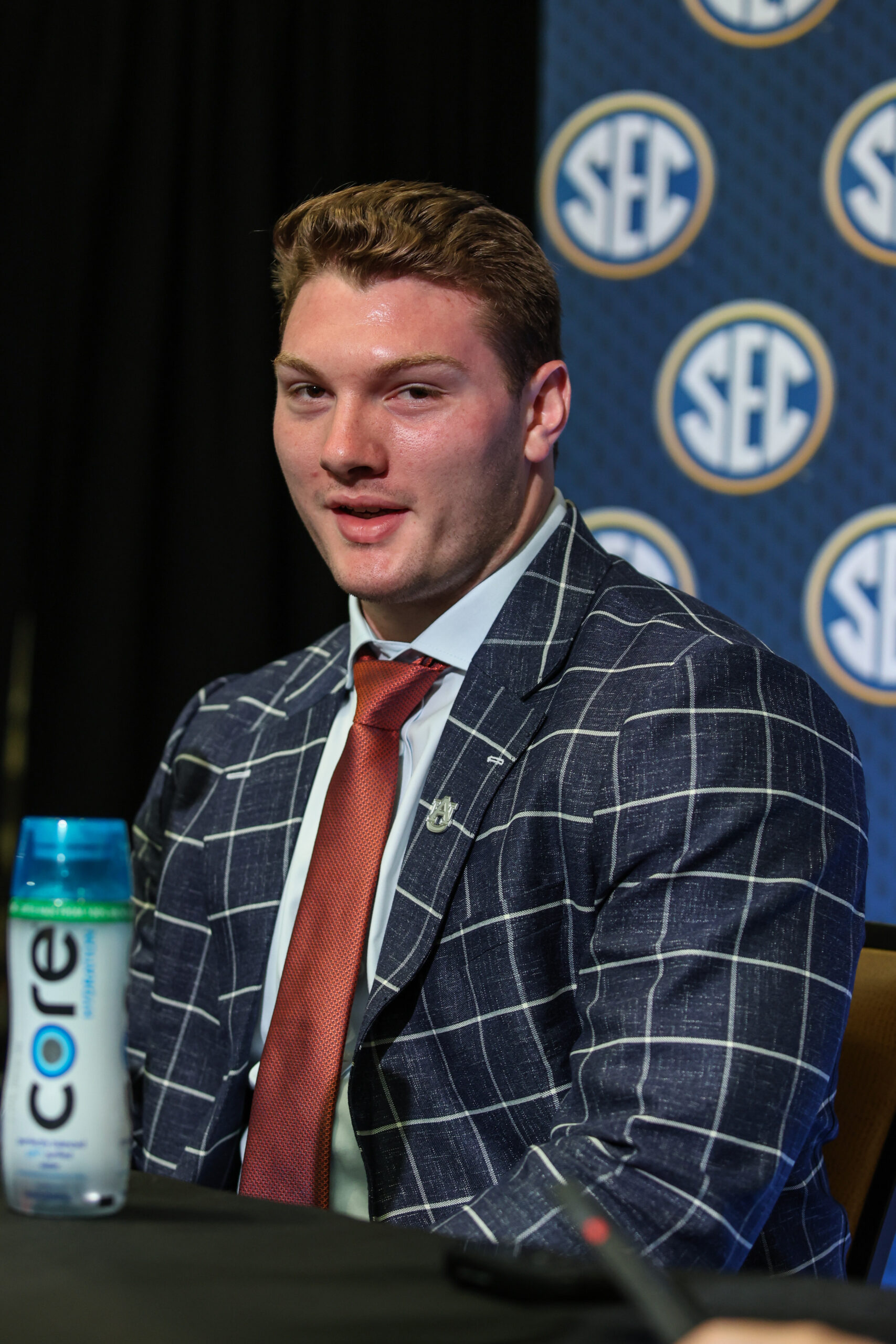
The Bengals, though, were comfortable drafting Auburn center Connor Lew in the fourth round (No. 128) of the 2026 NFL Draft despite a torn ACL suffered last October. There were a number of factors in that decision, starting with Lew himself.
The 6-foot-3, 310 pound center earned the Tigers’ starting job in 2023 as an 18-year-old true freshman and finished the season with Freshman All-American and SEC All-Freshman honors. He then put forth a solid effort in 2024, and in 2025, he was named a team captain of a prestigious SEC program at just 19 years old. He will not turn 21 until the end of training camp, giving him a very appealing developmental trajectory that will build off his already impressive base of blocking skills.
Lew’s recovery is also ahead of schedule, per Sports Illustrated’s Albert Breer, with the expectation of being fully ready to play when training camp begins in late July. At that point, Lew will be about nine months removed from his torn ACL, which is rapidly becoming the standard return timeline for such injuries.
Cincinnati is also in the perfect position to add Lew. They already have a starting center in Ted Karras, who is entering his age-33 season and the last year of his contract. He has been arguably the most consistent part of the Bengals’ offensive line for the last four years, so there is no pressure on Lew to rush back to the field and start right away. That would be difficult – though not impossible – for a rookie center who misses spring practices that are crucial to learning the offense and building chemistry with the quarterback at the line of scrimmage.
Instead, Lew can focus on his rehab and getting integrated into the Bengals’ offense and organization. Even if he misses his current return target, Cincinnati is not counting on him to start (or even contribute) as a rookie. He seems to be the heir apparent to Karras and the likely starter in 2027 and beyond.
That does not mean Lew has to sit during his first year. He only has experience at center, but Karras has spent time at both guard spots in his career. If the rookie is deemed worth of a starting job at any point this season, he could step into the lineup with Karras shifting to guard.
Drafting Lew therefore appears to be a sound process for the Bengals, who are hoping they have found a long-term, high-level center who can be an effective pre-snap partner and post-snap protector for Joe Burrow. Using a late fourth-round pick on a player with so much upside seems to be well worth the risk, and that draft slot also lowers immediate expectations for Lew.
In contrast, the Bears and Chargers also drafted college centers (who lack guard experience) with veteran starters already on their roster, but they used second-round picks to do so. Typically, teams want second-rounders to contribute, if not start, as rookies, but spots for Logan Jones in Chicago and Jake Slaughter in Los Angeles are unclear. Jones lacks the height and length to move to guard, and the Bears are set at the position anyway. Unless Garrett Bradbury is moved or injured, Jones seems likely to sit out his rookie year. With Tyler Biadasz installed as the Chargers’ center for one, if not two years, Slaughter will compete for the Chargers’ left guard job, but transitioning to the NFL while switching positions is easier said than done.