
Eight years ago, the Ravens hit the reset button, naming Eric DeCosta as only the second general manager during the team’s tenure in Baltimore and drafting a quarterback who would eventually take over for 10-year starter Joe Flacco. This offseason, the franchise named Jesse Minter as only the fourth head coach in Ravens history, and it seems a similar changing of the guard behind center was explored, as well, according to Jason La Canfora of Sports Illustrated.
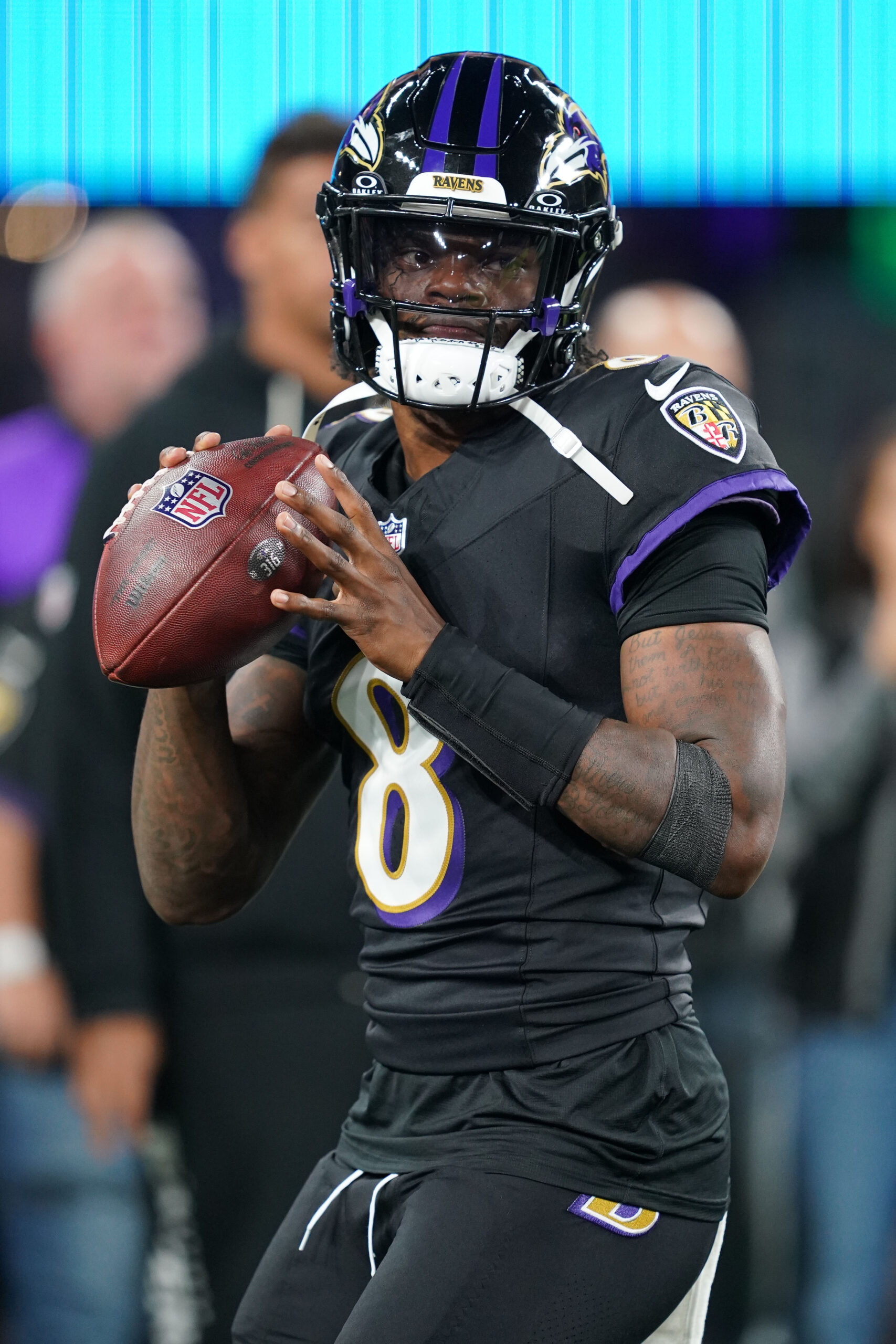 Per La Canfora, an NFL general manager informed him that Baltimore was one of “two teams that quietly did the most work on quarterbacks who already have franchise quarterbacks.” While it’s natural to see that, after releasing backup Cooper Rush shortly into free agency, having only two quarterbacks on the roster makes adding, at the very least, some camp arms a priority. The Ravens did just that after the 2026 NFL Draft concluded, but La Canfora’s report refers more to the possibility that Baltimore could’ve used valuable draft capital in search of some possible contingencies should they not be able to reach an extension agreement with star passer Lamar Jackson.
Jackson has been the team’s starter since taking over halfway through his rookie year in 2018. Over that time, the former Heisman Trophy-winner has won two MVP awards, delivered three first-team All-Pro campaigns, and taken his team to the postseason in six of eight tries, reaching the AFC Championship just once. He currently ranks second in many of the franchise’s passing records (behind Flacco) while also ranking second in many of the franchise’s rushing records (behind Jamal Lewis).
Jackson is set to enter the 2026 NFL season on the second-to-last year of a five-year, $260MM extension the team signed him to in 2023. The process that landed him on the historic contract was a rocky one to say the least. A year after exercising the fifth-year option on Jackson’s rookie contract, the Ravens attempted to ink Jackson to an extended contract, but having just missed the last four games of the season and having notched a career-high 13 interceptions, the dual-threat passer turned them down, choosing to bet on himself under the belief that he could add value to any potential extension over another season of play.
Instead, Jackson’s 2022 campaign saw him miss the final five games of the year, complicating contract negotiations a bit. Unable to reach a consensus early into the offseason and with Jackson’s rookie deal coming to an end, the Ravens opted to place a non-exclusive franchise tag on their star quarterback, allowing outside teams to provide Jackson with contract offers knowing that the Ravens would have the ability to either match the offer or be compensated with draft capital if they allowed Jackson to walk. That stalemate ended — after some suspected league-wide collusion — when Jackson signed the five-year deal that is now threatening to end his time in Baltimore.
While the negotiations to keep him in purple and black this time around have not been so visibly contentious, it’s clear the two sides have been unable to come to a consensus. There’s been wide belief in recent weeks that, should the Ravens fail to ink Jackson to another long-term deal in the offseason, it may spell the end of the pair’s longtime union. La Canfora’s report seems to support that notion as it paints a picture of a Baltimore front office doubting its ability to secure Jackson for the future.
 The Ravens’ moves post-draft have been those of a team employing camp arms for an offseason program that has, historically, not seen much of Jackson. At the moment, there are five arms in Charm City, consisting of Jackson, primary backup Tyler Huntley, veteran free agent addition Skylar Thompson, and undrafted rookies Diego Pavia and Joe Fagnano. None of the four currently in the room with Jackson pose much threat of giving the Ravens enough confidence to move on from Jackson, but had they succeeded in what La Canfora claims they were attempting to do in the draft, the story might have looked a bit different.
The other team the NFL GM mentioned above that did work on quarterbacks was the Eagles, who did end up drafting a solid passing prospect in North Dakota State’s Cole Payton in the fifth round. The assertion concerning Baltimore isn’t that they were looking to take a late-round flyer; instead, the GM source asserts the Ravens were doing their homework on the likes of Miami’s Carson Beck, Penn State’s Drew Allar, and Arkansas’s Taylen Green. These were late-Day 2, early-Day 3 considerations that ended up landing with teams in insecure quarterback situations where they have more than a slight chance to make an impact.
La Canfora’s GM and a second personnel executive source believe the Ravens were high on Green, whose rushing abilities most-resemble those of Jackson. The imposingly athletic passer ended up landing in Cleveland, where Jackson’s most recent offensive coordinator has just started his first tenure as an NFL head coach. Having failed to acquire any quarterbacks with much promise, the Ravens can simply brush these notions under the rug as they continue their efforts to convince Jackson to stay. If things had lined up differently, though, it seems there was a chance that DeCosta, Minter, and Co. could’ve used a draft pick on a quarterback contingency plan instead of furthering efforts to win now with the current roster makeup.
On the other hand, they didn’t actually do anything.
And if Taylen Green actually has an NFL career like any quarterback, I’m guessing it’s in the Taysom Hill register.
I think you’re right at least in the short term. If Monken can coax more consistency and ball-protection out of Green, Green could have a legitimate career as at least a backup QB.
It’s possible, but man it’s hard to get the developmental reps for a raw project at the NFL level.
Article based on
LaCanfora is a waste of time. He has no inside info.
Lamar is the James Harden of the NFL. Can’t win with Harden.