
Lions Had Interest In Kadyn Proctor, Landed On Blake Miller Late
The Lions have overhauled their offensive line in the last two years, with only one of their 2024 starters – tackle Penei Sewell – still on the team.
 In 2025, center Frank Ragnow retired and right guard Kevin Zeitler left in free agency. Detroit moved Graham Glasgow to center and installed recent draft picks Christian Mahogany and Tate Ratledge as their starting guards.
This offseason, the Lions released Glasgow and left tackle Taylor Decker, creating more holes to fill along their offensive line. They signed Cade Mays to start at center and acquired Juice Scruggs via a trade with the Texans to provide depth at all three interior spots.
Head coach Dan Campbell said that Sewell would move to the blind side, where he lined up in college, leaving a hole at right tackle. Detroit added Larry Borom on a one-year, $5MM deal, but that price point indicates that he is not a preferred starter.
The Lions were frequently projected to use their first-round pick (No. 17 overall) on an offensive tackle to upgrade over Borom. They were initially linked to Alabama’s Kadyn Proctor – one of the few first-round tackles who played on the blind side – and were even seen as his floor in the first round. Detroit explored moving up for a tackle in the first-round, per ESPN’s Jeremy Fowler, but the Dolphins took Proctor at No. 12, just outside of their range for such a trade.
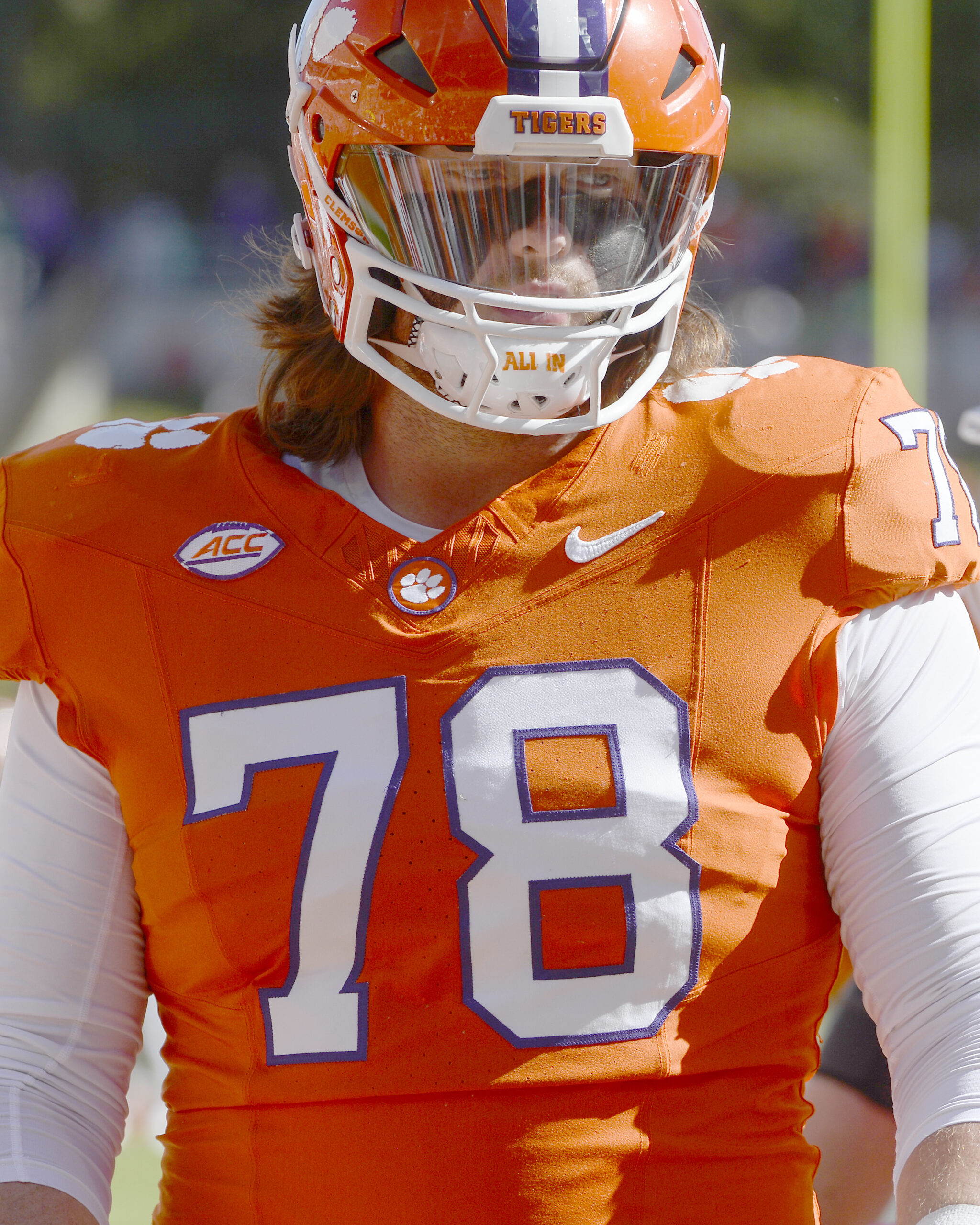
That worked out just fine for the Lions, who stood pat and landed Clemson right tackle Blake Miller. His name was “magma-hot late in the process,” Fowler notes, adding that an NFC executive ranked him as the top offensive tackle in the 2026 class.
Drafting Miller, who made all but two of his college starts at right tackle, will cement Sewell’s switch back to left tackle. Detroit will be hoping not only that the two can become the league’s top bookends, but also that the entire five-man unit can mesh quickly. The remade offensive line now features no starters over 27 years old, the result of a clear effort by the front office to phase out older veterans and install their next generation of blockers.
Vikings’ Kyler Murray, J.J. McCarthy Will Have ‘True Competition’ For Starting Job
The Vikings entered the 2025 season hoping to smoothly transition to J.J. McCarthy as their long-term starting quarterback.
 That never came to pass. The former No. 10 pick completed just 57.6% of his passes with more interceptions (12) than touchdowns (11). He also missed time due to three different injuries and, overall, did not show signs of being a franchise QB.
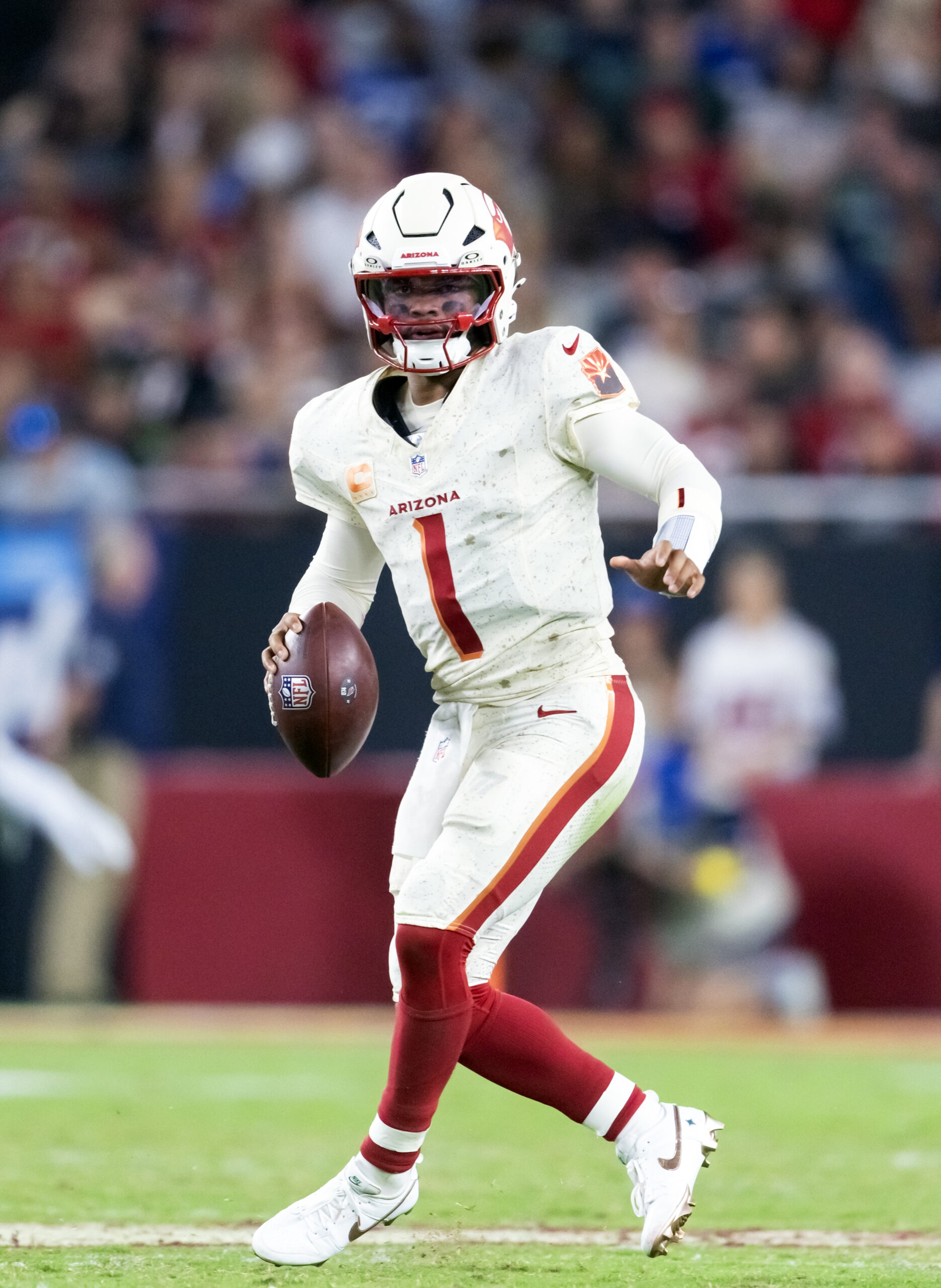
Minnesota then brought in Kyler Murray after he was released by the Cardinals, adding another, more proven passer to their quarterback room. Since Arizona is still paying him $36.8MM this year, the former No. 1 pick was available for a veteran minimum salary, making him a hot commodity on the free agent market. He quickly agreed to a deal with the Vikings, indicating that he would have a chance at their starting quarterback job. But the question remained: would Murray have to take the job from McCarthy, or would the two begin offseason practices on equal footing?
An initial answer has come via NFL Network’s Tom Pelissero, who said on the Rich Eisen Show that the Vikings “envision it being a true competition: Kyler Murray vs. J.J. McCarthy.”
On paper, Murray should have a substantial advantage. He has 87 career starts to McCarthy’s 10 with a significantly better completion percentage and passer rating in 2025. But Murray will be learning a new offense in Minnesota, while McCarthy will be entering his third year in Kevin O’Connell‘s system.
It is worth noting that Pelissero specifically mentioned those two quarterbacks as part of the competition and not Carson Wentz or Max Brosmer, who are also in the team’s quarterback room. Brosmer was abysmal in his two starts last year, but Wentz statistically outperformed McCarthy nearly across the board. In theory, that would make him a worthy competitor for the starting job, but Minnesota moved in Murray’s direction and seems more inclined to keep Wentz as a third-stringer.
‘Soft’ Market For Seahawks Sale
The Seahawks appear to be one of the best-positioned teams in the NFL.
 They have a young, proven head coach in Mike Macdonald, an apparent franchise quarterback in Sam Darnold, one of the league’s best wide receivers in Jaxon Smith-Njigba, and a deep, diverse well of talent on defense.
Despite that, the pending sale of the club has a weaker-than-expected market, per ESPN’s Seth Wickersham, with one NFL owner describing it as “soft.” Wickersham adds that there is less interest in the Seahawks than there was in the Broncos and the Commanders, the last two franchises to change hands.
The Walton-Penner family paid $4.65 billion for the Broncos in 2022, and a Josh Harris-led group purchased the Commanders for $6.05 billion in 2023. A commensurate increase three years later would price the Seahawks at $10.25 billion.
The team’s price tag was initially expected to match or exceed that number, but projections have since dropped closer to $9 billion. That would still be the highest sale price of an NFL team, though it falls substantially below the Dolphins’ recent $12.5 billion valuation.
There are a limited number of potential buyers with known interest in the team with tech billionaires Jeff Bezos, Mark Zuckerberg, and Tim Cook already ruled out. Wyc Grousbeck and Vinod Khosla are leading ownership groups preparing for bids, and Canadian billionaire Steve Apostolopoulos has also been mentioned, per Sports Illustrated’s Albert Breer. Apostolopoulos was interested in purchasing the Commanders in 2023, though he told Wickersham that he is “not pursuing the Seahawks.” If there are only two ownership groups vying for the Seahawks, that will limit the potential for a bidding war that could push the sale price into eight digits.
The lack of interest is multifaceted. The number of individuals with enough wealth to lead an ownership group is already small, and league rules mandate a 30% down payment – ranging from $2.7 to upwards of $3 billion – from the new majority owner.
The circumstances of the sale give potential buyers “significant leverage,” Wickersham adds. Longtime Seahawks owner Paul Allen passed away in 2018, leaving behind instructions for the team to be sold with the proceeds donated to charity. His sister, Jody Allen, has initiated that process after eight years. Selling to fulfill a mandate rather than by choice will push down the price. Allen’s estate had the same directive for the NBA’s Portland Trail Blazers, who were sold for $4.2 billion in 2025, significantly lower than the sales of the Boston Celtics and the Los Angeles Lakers in the same year. (The Celtics and the Lakers are substantially more successful franchises with storied histories, but that is still a depreciated price for an asset that is always increasing in value.)
Other local concerns include the potential for an NBA franchise to return to Seattle almost 20 years after the Supersonics departed for Oklahoma City. The city’s MLS team, the Sounders, who share Lumen Field with the Seahawks, are also exploring a new, soccer-specific stadium, according to ESPN’s Jeff Carlisle. Potential Seahawks buyers could be more interested in bringing basketball back to Seattle, and hammering out stadium situations for all three teams could get complicated both politically and financially.
Packers To Keep Sean Rhyan At Center
The Packers are planning to keep fifth-year offensive lineman Sean Rhyan at center moving forward, offensive coordinator Adam Stenavich said this week.
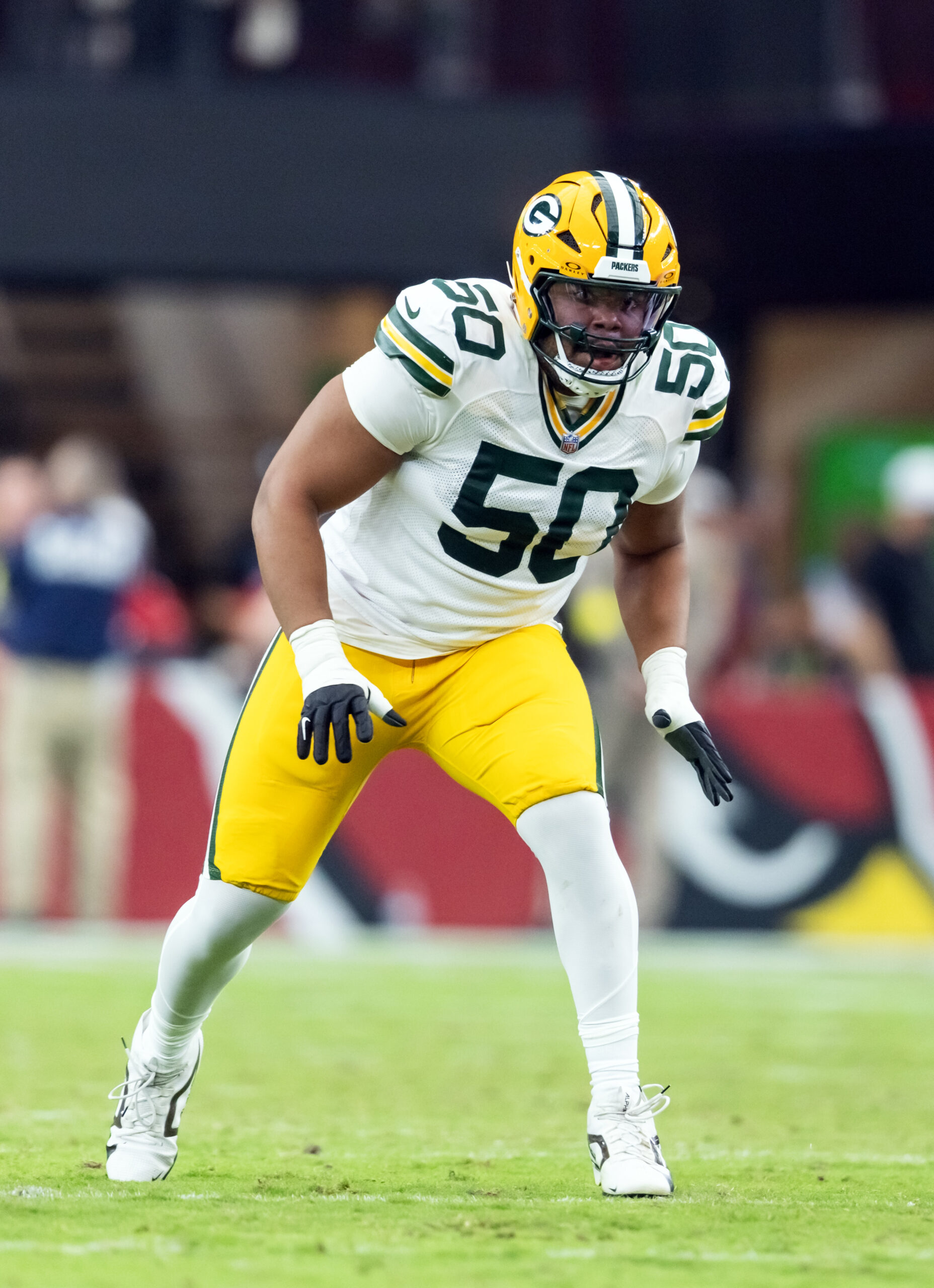 Rhyan, 25, finished the 2025 season as Green Bay’s starting center following a season-ending injury to Elgton Jenkins. The team parted ways with Jenkins in the offseason and signed Rhyan to a three-year, $33MM extension, effectively guaranteeing him a starting job in 2026.
The 2022 third-round pick lined up exclusively at left tackle at UCLA and converted to right guard in the NFL. Rhyan held the starting job for the entire 2024 season and retained it heading into 2025. However, he was benched in Week 5 after allowing 10 pressures and committing three penalties across the previous three games, per Pro Football Focus (subscription required). The Packers’ offensive line injuries kept him in the mix at both guard spots until Week 10, when he took over at center. He surrendered 17 pressures and zero sacks to close out the year, though he still earned low pass blocking grades from PFF.
“When we lost Elgton [Jenkins], he stepped up and just kind of took control of it,” Stenavich said. “There were mistakes, for sure, but as we progressed through the season, he just kept getting better and better and better.” The fifth-year coordinator noted that Rhyan is likely best at center and praised his ability to handle the pre-snap duties of the position.
“It was good to watch him out there take command of the offense, making the calls and getting us set up front,” Stenavich added.
In other Packers offensive line news, general manager Brian Gutekunst confirmed (via ESPN’s Rob Demovsky) that right tackle Zach Tom underwent knee surgery in the offseason. The 27-year-old dealt with an oblique injury early in the year and later suffered a partially torn patellar tendon that ended his season. Gutekunst did not provide a timeline for Tom’s surgery or return, but previous reporting indicated that he would undergo the procedure shortly after the season ended with a six-month recovery period.
NFL Draft Pick Signings: 5/5/26
Only one NFL team finalized a 2026 draft pick signing on Wednesday:
Denver Broncos
- TE Dallen Bentley (seventh round, Utah)
Bentley was the second-to-last pick in the draft, leaving him one spot away from the Mr. Irrelevant title that went to new teammate Red Murdock instead. His four-year rookie contract is worth just over $4.5MM, per OverTheCap, though the only guaranteed portion is a roughly $123k signing bonus.
Travis Hunter To See More Time At CB, Will Be ‘Full-Go’ By Training Camp
The Jaguars traded up during last year’s draft to select Travis Hunter, believing that his ability to contribute on both sides of the ball was worth giving up a future first-round pick. But a torn LCL cut his rookie year short and raised questions about his future as a two-way player.
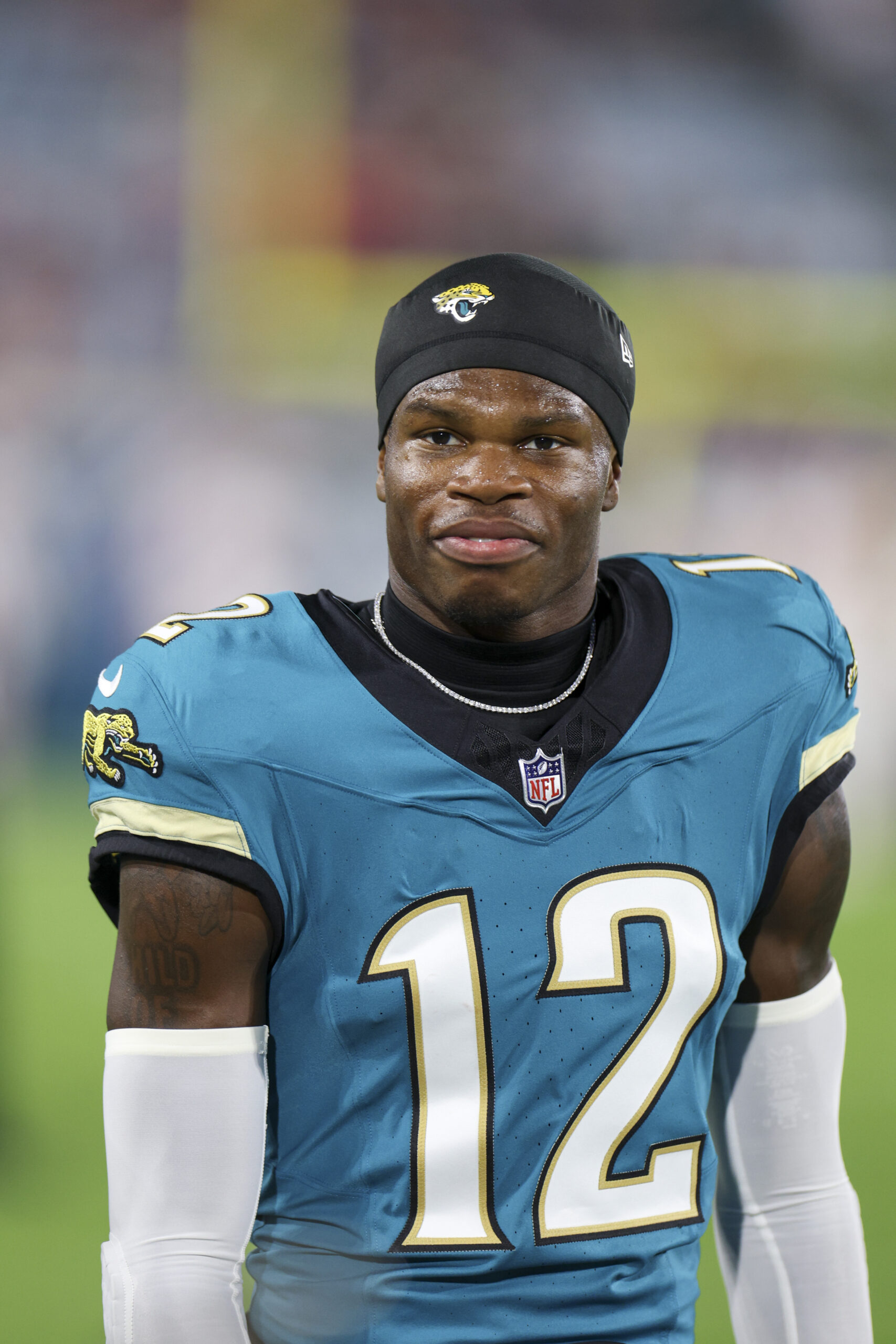 Jacksonville, though, is undeterred. Hunter is “set to play both sides of the ball” in 2026, general manager James Gladstone said on the Rich Eisen Show, adding that he expects “an uptick in corner usage.”
“That’s not to say anything impacts his availability and usage on offense,” Gladstone continued. “It just means that cornerback usage will increase.”
Across his seven appearances in 2025, Hunter played 324 snaps on offense, good for 46.3 per game and a 67% snap share. He lined up for 162 snaps on offense, or 23.1 per game and a 36% snap share. Among Jacksonville’s currently-rostered players, he ranked third in outside cornerback snaps last year despite his abbreviated season, per Pro Football Focus (subscription required).
The Jaguars let Greg Newsome depart in free agency and did not make any major additions at cornerback in the offseason, so there should be more snaps available for Hunter in 2026. The current positional room has one clear boundary starter in Montaric Brown with Jourdan Lewis expected to remain the team’s primary slot corner. Jarrian Jones spent time in both spots last year amid injuries to Hunter and Lewis, but may stay in a versatile backup/dime role this season with Hunter eating into his time on the outside.
“He wants to play both ways,” Gladstone said when asked about Hunter’s desires. “That’s his dream, and we’ll look to support that in the best way we can.” He added that the team is focused on “winning football games” and believes that Hunter’s two-way abilities are the best way to accomplish that.
Hunter’s return timeline from last year’s injury remains unchanged. He will be a limited participant in the Jaguars’ offseason program with the expectation of being “full-go” by training camp, Gladstone said.
Saints To Work Out QBs Kyle Trask, Easton Stick
The Saints are exploring their options for veteran quarterback depth. Easton Stick and Kyle Trask are both set to try out for the team at their rookie minicamp, per Nick Underhill of NewOrleans.Football.
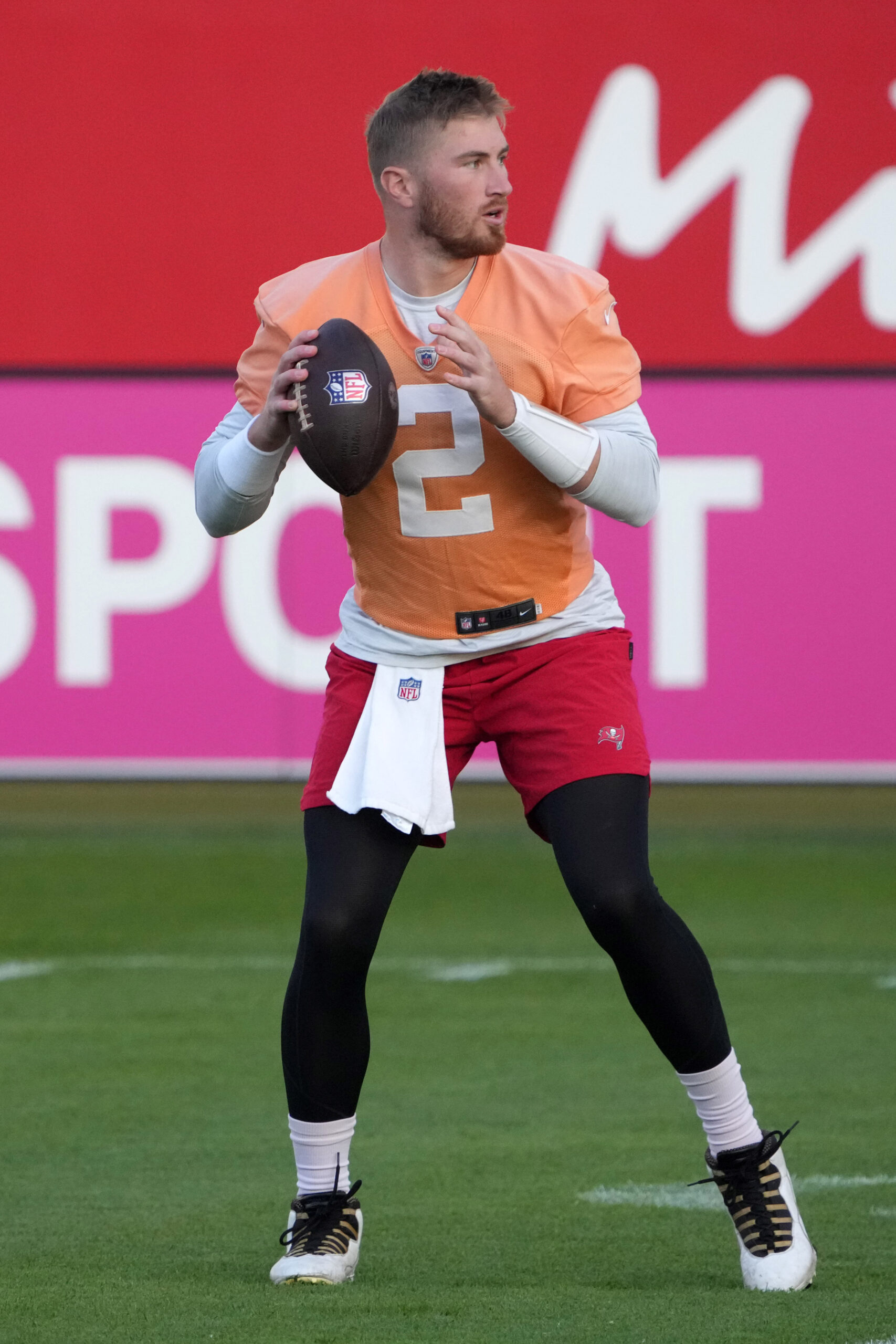 2025 second-round pick Tyler Shough took over as the Saints’ starting quarterback midway through his rookie season, with 2024 fifth-rounder Spencer Rattler demoted to backup. The pair of young passers are set to return in those roles this year, but with just three combined seasons in the NFL, New Orleans may prefer a more experienced player for the third-string job.
The team already signed former Jets first-rounder Zach Wilson to a veteran minimum deal this offseason. His 33 career starts are more than Shough and Rattler combined, though none have come since 2023. Stick and Trask have less playing experience, but they have spent just as much time in the league.
Stick, 30, was a fifth-round pick by the Chargers in 2019. He only appeared in one game (and attempted one pass) across the first four years of his career, but started four games in 2023 with Justin Herbert sidelined by season-ending surgery. Stick played surprisingly well, but Los Angeles went winless in his starts. He has not seen the field since and spent last year with the Falcons.
The Buccaneers saw some starting potential in Trask, who they selected with a second-round pick in 2021. He spent two years behind Tom Brady with virtually no playing time, and he did not inspire enough confidence to earn a shot at the starting quarterback job after Brady’s retirement in 2023. Instead, Tampa Bay transitioned to Baker Mayfield, who played all but a handful of snaps across the next two years. The Bucs released Trask during final roster cuts last season; the 28-year-old took Stick’s spot on the Falcons’ practice squad in November when he was promoted to the active roster.
The Saints will also be hosting former Falcons kicker Younghoe Koo at rookie minicamp, according to Mike Triplett of NewOrleans.Football. He boasted a 89.9% field goal conversion rate from 2019 to 2023, but lost the job in 2024 after going 24 for 35 (73.5%) to start the season. Koo appeared in one game for the Falcons and five for the Giants, making six of his nine field goals and just two of five from beyond 40 yards.
He could still offer some competition to Charlie Smyth, who took over as the team’s kicker midway through last season. He converted 12 of his 16 field goal attempts and all 13 of his extra points, a solid performance for the Northern Ireland native in his first regular-season action.
Bengals C Connor Lew Expected To Be Ready For Training Camp
Drafting players coming off major injuries is always a tricky proposition.
First is the most basic and obvious issue: a return timeline. Teams do not know exactly when such prospects will be ready to hit the field. They are also unable to participate in pre-draft athletic testing, which is the most reliable way to directly compare physical traits. There is also significant uncertainty about the injury’s lasting effects, making it more difficult to assess players’ short- and long-term trajectory in the pros.
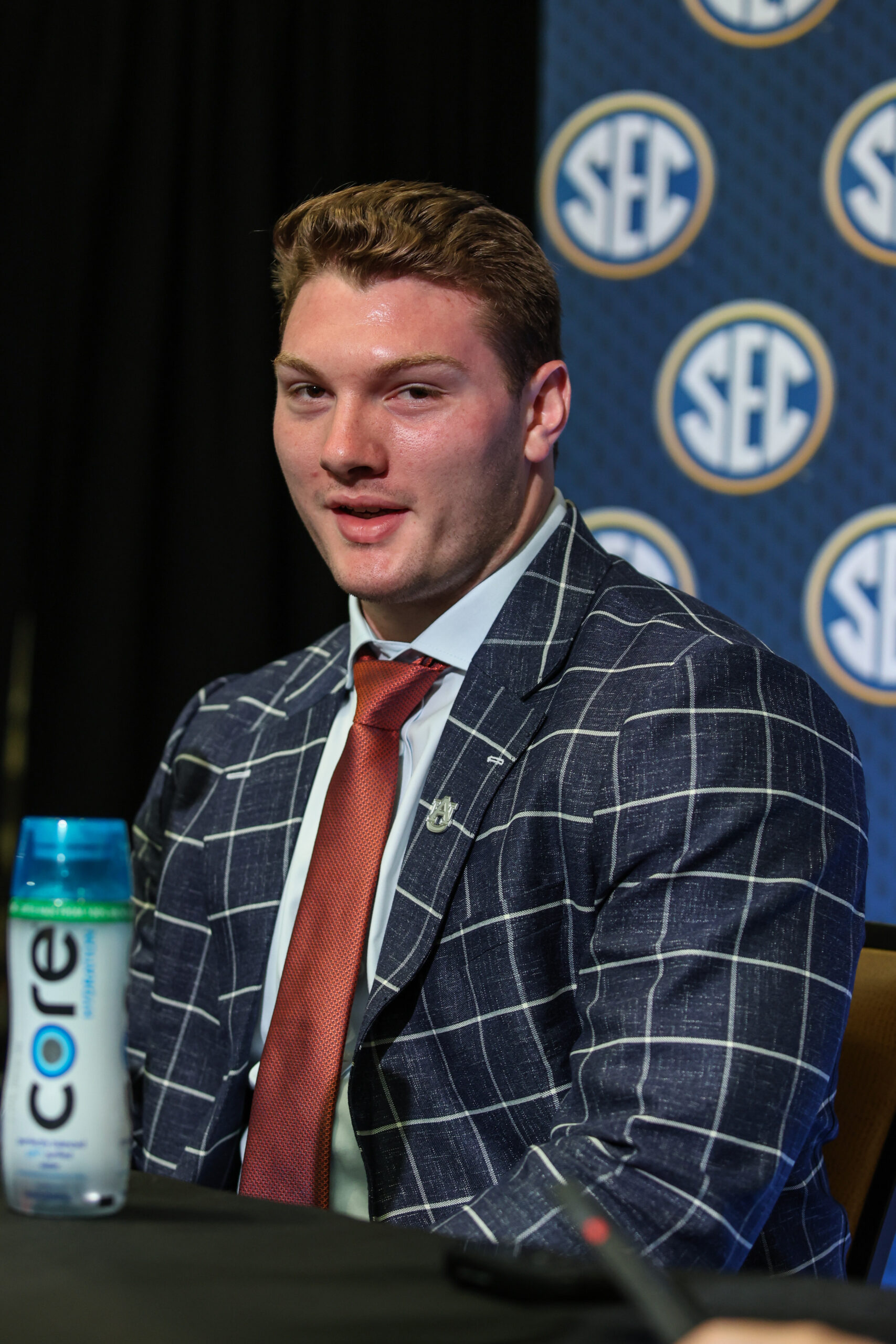 The Bengals, though, were comfortable drafting Auburn center Connor Lew in the fourth round (No. 128) of the 2026 NFL Draft despite a torn ACL suffered last October. There were a number of factors in that decision, starting with Lew himself.
The 6-foot-3, 310-pound center earned the Tigers’ starting job in 2023 as an 18-year-old true freshman and finished the season with Freshman All-American and SEC All-Freshman honors. He then put forth a solid effort in 2024, and in 2025, he was named a team captain of a prestigious SEC program at just 20 years old. He will not turn 21 until the end of training camp, giving him a very appealing developmental trajectory that will build off his already impressive base of blocking skills.
Lew’s recovery is also ahead of schedule, per Sports Illustrated’s Albert Breer, with the expectation of being fully ready to play when training camp begins in late July. At that point, Lew will be about nine months removed from his torn ACL, which is rapidly becoming the standard return timeline for such injuries.
Cincinnati is also in the perfect position to add Lew. They already have a starting center in Ted Karras, who is entering his age-33 season and the last year of his contract. He has been arguably the most consistent part of the Bengals’ offensive line for the last four years, so there is no pressure on Lew to rush back to the field and start right away. That would be difficult – though not impossible – for a rookie center who misses spring practices that are crucial to learning the offense and building chemistry with the quarterback at the line of scrimmage.
Instead, Lew can focus on his rehab and getting integrated into the Bengals’ offense and organization. Even if he misses his current return target, Cincinnati is not counting on him to start (or even contribute) as a rookie. He seems to be the heir apparent to Karras and the likely starter in 2027 and beyond.
That does not mean Lew has to sit during his first year. He only has experience at center, but Karras has spent time at both guard spots in his career. If the rookie is deemed worth of a starting job at any point this season, he could step into the lineup with Karras shifting to guard.
Drafting Lew therefore appears to be a sound process for the Bengals, who are hoping they have found a long-term, high-level center who can be an effective pre-snap partner and post-snap protector for Joe Burrow. Using a late fourth-round pick on a player with so much upside seems to be well worth the risk, and that draft slot also lowers immediate expectations for Lew.
In contrast, the Bears and Chargers also drafted college centers (who lack guard experience) with veteran starters already on their roster, but they used second-round picks to do so. Typically, teams want second-rounders to contribute, if not start, as rookies, but spots for Logan Jones in Chicago and Jake Slaughter in Los Angeles are unclear. Jones lacks the height and length to move to guard, and the Bears are set at the position anyway. Unless Garrett Bradbury is moved or injured, Jones seems likely to sit out his rookie year. With Tyler Biadasz installed as the Chargers’ center for one, if not two years, Slaughter will compete for the Chargers’ left guard job, but transitioning to the NFL while switching positions is easier said than done.
Contract Details: Anderson, Al-Shaair, Greenard, Williams, Reed
Will Anderson Jr.‘s eye-popping three-year, $150MM extension turned heads around the NFL last month. The details of the mammoth Texans contract have since come out (via OverTheCap) and, as usual, they put the terms in a very different light.
Crucially, Anderson already had two years and $27MM remaining on his rookie deal, making his new contract a five-year deal worth around $177MM, or $35.4MM per year. That actually comes in below Micah Parsons‘ overall AAV on his contract with the Packers, just under $42MM, but still beats Aidan Hutchinson at $34.2MM. Parsons had substantially more leverage in Green Bay given their trade with the Cowboys, while Anderson and Hutchinson both signed with the teams that drafted them.
For Anderson, the benefit is clear. He will receive just over $55MM over the next two years, almost double what he would have earned on his rookie contract, per Sports Illustrated’s Albert Breer. He will then get paid $122MM from 2028 to 2030.
Another element is the guaranteed money, originally reported at $134MM. Anderson’s 2026 salary and 2027 fifth-year option were already guaranteed, so his extension actually includes $107MM in new guarantees. That is made up of a $32MM signing bonus and fully guaranteed salaries from 2026 to 2028, worth a total of $73MM that is guaranteed at signing. Another $34MM of his 2029 salary will become fully guaranteed if he is on the roster on the fifth day of the 2028 league year. The deal also includes $500K in per game roster bonuses in the last three years.
Interestingly, the Texans declined to use option bonuses or void years in Anderson’s deal. Both are widely used across the NFL to maintain financial flexibility by deferring cap hits into the future. Instead, after $13.2MM and $28.3MM cap hits in 2026 and 2027, Anderson’s cap charge jumps to $46.4MM in 2028 and 2029 and $48.4MM in 2030. Of course, Houston can restructure his deal, though adding void years often requires player consent, which could give Anderson leverage to negotiate another top-of-the-market extension.
Here are the details of some other deals that were signed this offseason:
- The Texans’ other recent extension was for linebacker Azeez Al-Shaair. His $38.75MM in at-signing guarantees is comprised of a $14MM signing bonus and $24.75MM in salary across the next three years, per OverTheCap. Another $7MM of his 2028 salary will become fully guaranteed on the fifth day of the 2028 league year. The deal also $500K in per-game roster bonuses in 2026 and $750K in 2027, 2028, and 2029, according to KPRC2’s Aaron Wilson, as well as one void year.
- Jonathan Greenard‘s four-year, $100MM deal with the Eagles includes $50MM fully guaranteed, per Pro Football Talk’s Mike Florio. That is comprised of a $23.5MM signing bonus, a total of $2.56MM in salary in 2026 and 2027, and a $22.9MM option bonus in 2027. As with all of Philadelphia’s extensions, Greenard is set to receive option bonuses in each year of his deal, due at the beginning of the regular season, and he can earn an additional $1.5MM with first-team All-Pro selections in 2026, 2027, and 2028. Florio additionally notes that the deal is effectively a $12MM raise across the next two years over his previous deal with the Vikings, which seems like something Minnesota could have accommodated. Instead, the NFC North team sent Greenard to Philly, where he gets his desired payday.
- The 49ers replaced Trent Williams‘ existing deal with a two-year, $50MM contract with four void years and $48.5MM in guaranteed money, of which $37MM is fully guaranteed at signing, per OverTheCap. He received a $22.2MM signing bonus and a total of $14.8MM in salary and bonuses in 2026 and 2027. After his cap figure rose by $7.5MM when the team declined his 2026 option bonus, Williams’ cap hit has dropped from $46.34MM to $20MM as a result of the new deal, per NBC Sports’ Matt Maiocco. The deal has some unique aspects, including an $11.5MM roster bonus due in 2028 that is fully guaranteed unless Williams holds out or otherwise misses time in the offseason. The 49ers can also convert the 2027 roster bonus into a prorated option bonus. The contract is designed to be terminated in 2028 – when Williams turns 40 –with a post-June 1 designation. If that is not done by the 10th day of the ’28 league year, he will be owed a guaranteed $50.18MM roster bonus in 2029. The expectation in San Francisco seems to be that the three-time All-Pro will retire after the 2027 season.
- Jayden Reed‘s new deal with the Packers includes $20MM in guaranteed money, comprised of a $16.5MM signing bonus and a $3.5MM roster bonus. That is a below-market figure but in line with Green Bay’s contract precedent – the team rarely metes out guarantees beyond the first year of the deal. Reed will receive $1.3MM, $9.05MM, and $10.05MM in salary from 2027 to 2029, per ESPN’s Rob Demovsky, with $500K in workout bonuses in each year. He is also due roster bonuses worth $2MM in 2027 and $1MM in 2028. Of particular note is the inclusion of $5.85MM in per-game roster bonuses from 2027 to 2029, the highest of any Packer, which mitigates some injury risk for the team.
Aaron Rodgers’ Steelers Return Not Held Up By Money
For a second offseason in a row, Aaron Rodgers is playing a game of cat-and-mouse with the Steelers. Despite every indication that the 42-year-old will be Pittsburgh’s starter in 2026 – including a lack of other options – he has yet to finalize that decision.
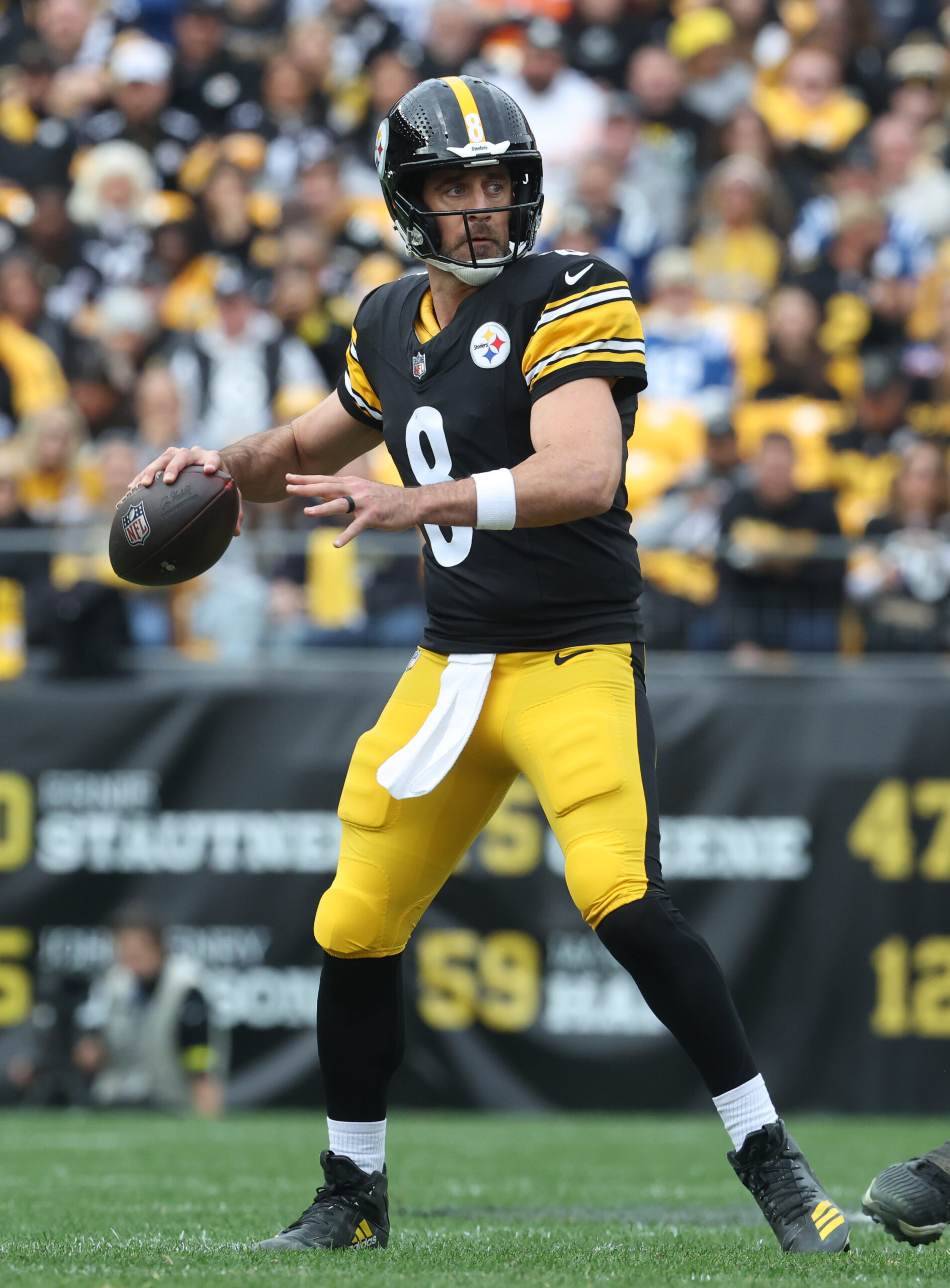 The delay is unrelated to financial compensation, per Gerry Dulac of the Pittsburgh Post-Gazette. The Steelers placed a UFA tender on Rodgers, which will pay him 110% of last year’s salary, or just over $15MM. He can still sign with another team, but that deal would factor into the compensatory pick formula.
This sets up a situation in which Rodgers is virtually guaranteed to play in Pittsburgh this year or sit out the season entirely, which would likely mean the end of his 21-year career. Even if another club wanted Rodgers, that team may not want to risk losing a high-value compensatory pick by signing him.
As such, any offer would likely be well below what he stands to make with the Steelers. Though the current holdup may not be based on money, that does not necessarily mean that Rodgers would be willing to accept a lesser deal from another team.
Other than a return to Pittsburgh, Rodgers does not have a clear path forward. Retirement rumors have followed the four-time MVP for years, and his play in the last two seasons represented a precipitous drop from his time in Green Bay. The Steelers still went 10-7 and made the playoffs last year, so Rodgers may feel that he has some winning football left in him. His relationships with head coach Mike McCarthy and several members of his new staff would appear to be another reason for him to don the black and yellow for another year.
But with multiple Steelers-set deadlines in the rearview, there is no way of knowing when Rodgers will make a decision and what that decision will be. Pittsburgh did not pursue any veteran quarterbacks this offseason and only added Penn State’s Drew Allar in the third round of the draft. He joins Mason Rudolph and 2025 sixth-rounder Will Howard in the Steelers’ quarterback room, essentially making them reliant on a Rodgers return to put forth a competitive team in 2026.