
Tackle, Guard Markets Could See Substantial Increases
Wide receivers and edge rushers (and to a lesser extent, cornerbacks and defensive tackles) have seen significant jumps in their pay over the last two years, and center Tyler Linderbaum blew his positional market out of the water in March.
 The next positions up for raises are offensive tackles and guards, according to ESPN’s Jeremy Fowler. Both have seen steady bumps in recent years; Commanders left tackle Laremy Tunsil recently cracked the $30MM-per-year mark, and Cowboys left guard Tyler Smith signed a $24MM-AAV extension at the beginning of last season. The league’s top receivers and edge rushers, though, are paid more than $40MM per year, and, along with cornerbacks, saw players reset the market by at least $5MM per year.
The rise in edge rusher pay should lead to a corresponding jump for the offensive tackles who block them, a pattern that has persisted since Lawrence Taylor first made the blind side the most important area in the game. (The increase in wide receiver pay had a similar effect on the cornerback market.) However, all of the league’s top veteran tackles are under contract for at least two years, limiting the ability of players like Tristan Wirfs and Penei Sewell to negotiate substantial raises, though Sewell’s impending switch to left tackle in Detroit could give him some grounds.
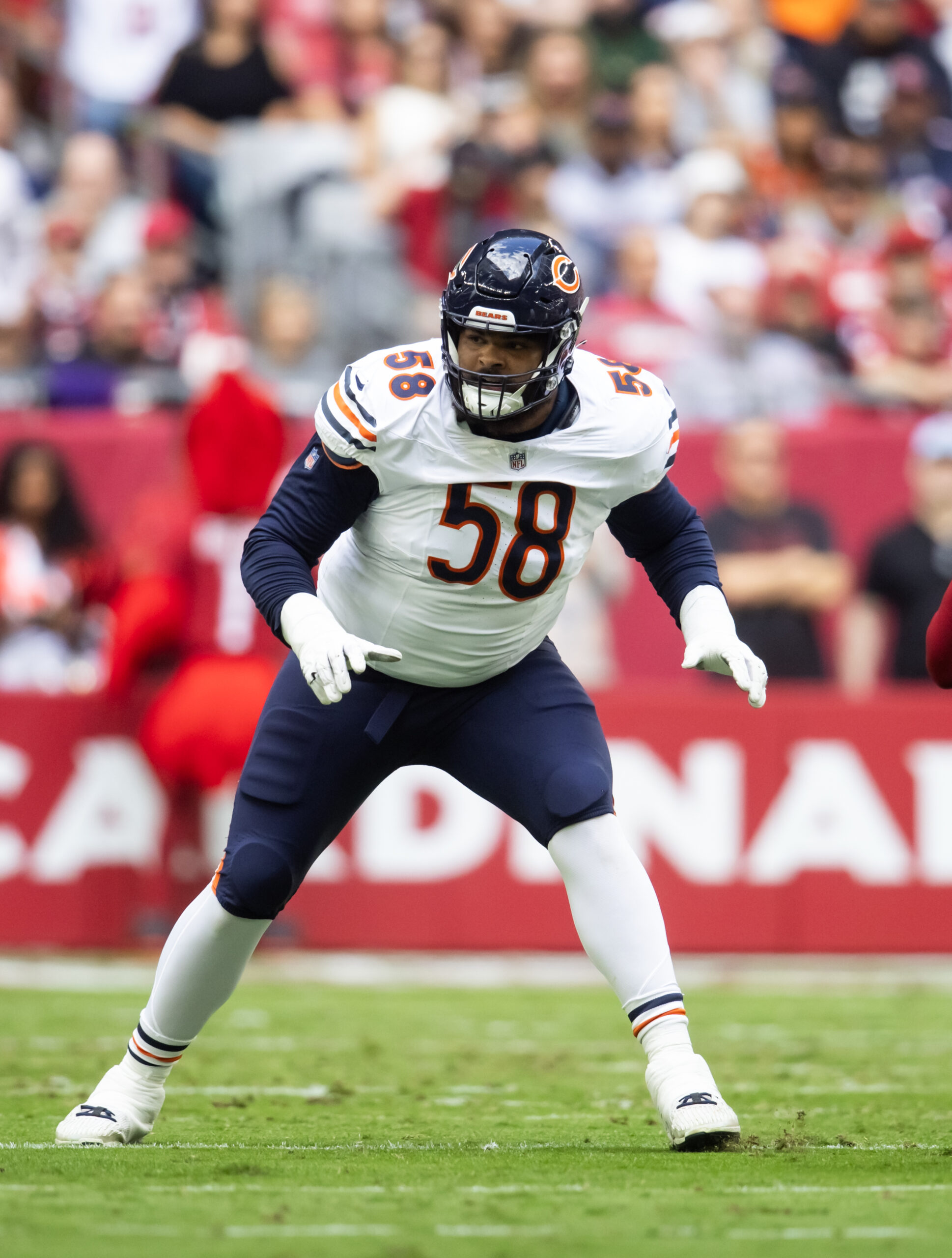
As for younger players, Bears right tackle Darnell Wright is the top 2023 draftee who is eligible for an extension off his rookie deal. His second-team All-Pro nod last season significantly strengthens his case for a top-of-the-market extension, but he is unlikely to secure a $5MM-plus raise over Tunsil’s deal.
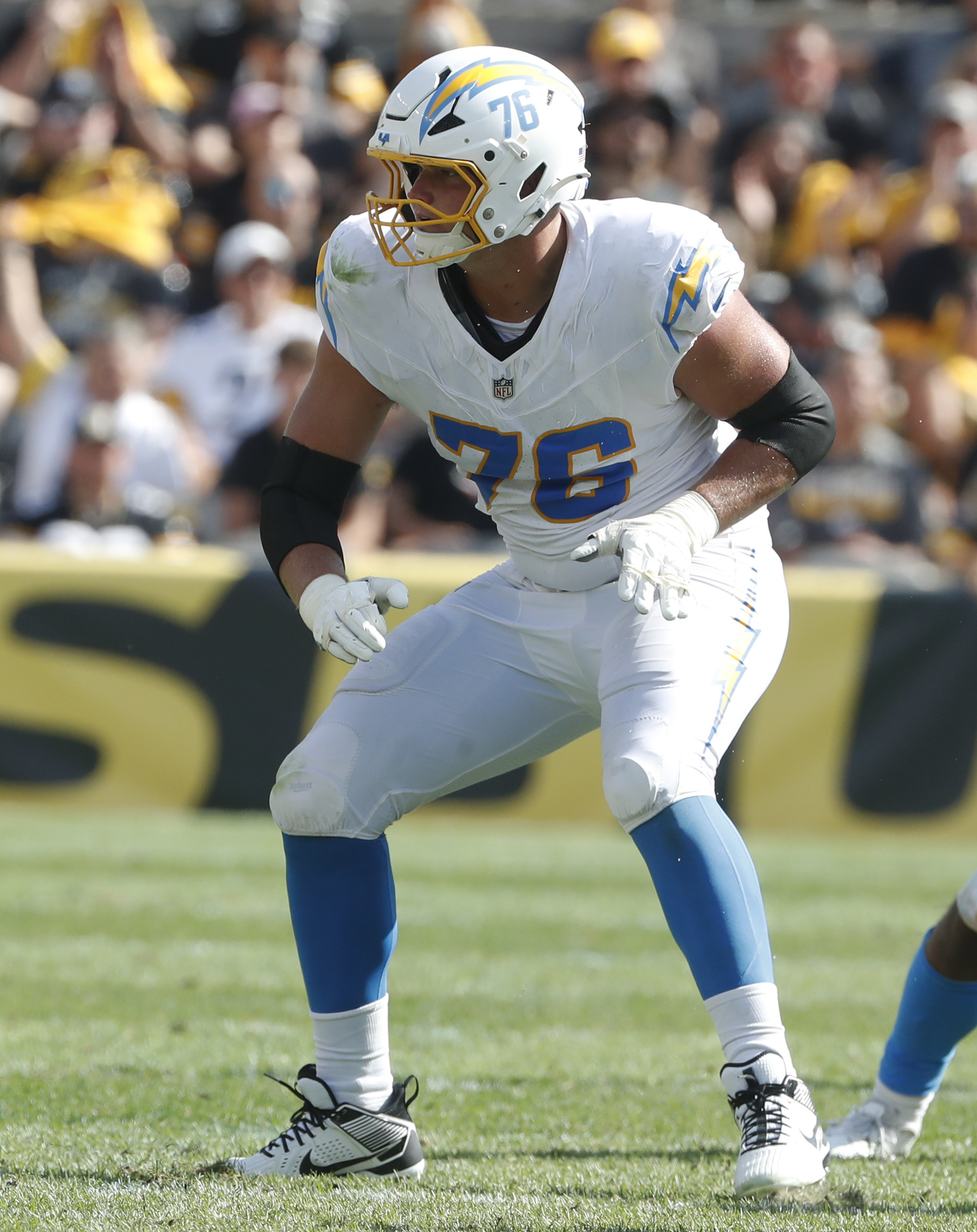
Such a jump may need to wait until 2024’s strong draft class reach extension eligibility next season. Chargers right tackle Joe Alt is currently the best candidate to push for $35MM per year or more, but Jets left tackle Olu Fashanu and Titans left tackle JC Latham could play themselves into a similar range.
As with offensive tackles and edge rushers, guards should benefit from the increase in defensive tackle pay with four players signing for at least $25MM per year in the last year. However, none have eclipsed Chris Jones‘ 2024 $31.25MM AAV deal, which may limit the jump for guards.
 2023 first-rounder Peter Skoronski is the top extension-eligible guard from his draft class, but his pedigree does not support a market-setting deal. But Colts left guard Quenton Nelson is entering a contract year, and with Pro Bowl and All-Pro recognition in every year of his career, he is well-positioned to demand a big raise.
Guards have long been paid more than centers, so Linderbaum’s jump to $27MM per year should give Nelson plenty of leverage to reach a similar sum. It will be interesting to see, though, if his deal reflects a new trend of teams paying all interior linemen in a similar range.
There are two other patterns that could emerge from Linderbaum’s contract. The first is guarantee structure. His three-year deal includes the first two seasons fully guaranteed at signing with the third season’s guarantees vesting at the beginning of the second. In other words, his deal is effectively fully guaranteed, as the Raiders are not going to release him before the remainder of his guarantees kick in. Other offensive linemen may now pursue deals that are three years in length with similar guarantees rather than the four years that have been more popular, especially for players’ second contracts.
The last potential trend from Linderbaum’s deal with the Raiders is an increased willingness for teams with young quarterbacks to aggressively invest in their offensive lines. Las Vegas wanted to add one of the league’s best centers to both to block for Fernando Mendoza and to serve as a trust partner at the line of scrimmage as he transitions to the pros. The Jets are expected to draft a rookie quarterback next year, and the Titans already have Cam Ward, which could give Fashanu, Latham, and Skoronski more leverage.
Seahawks First-Rounder Jadarian Price To Take Kenneth Walker’s Role
The Seahawks surprised many observers by taking Notre Dame running back Jadarian Price with the No. 32 pick in April’s draft. The move, though, filled a major hole with Kenneth Walker now in Kansas City and Zach Charbonnet recovering from a torn ACL.
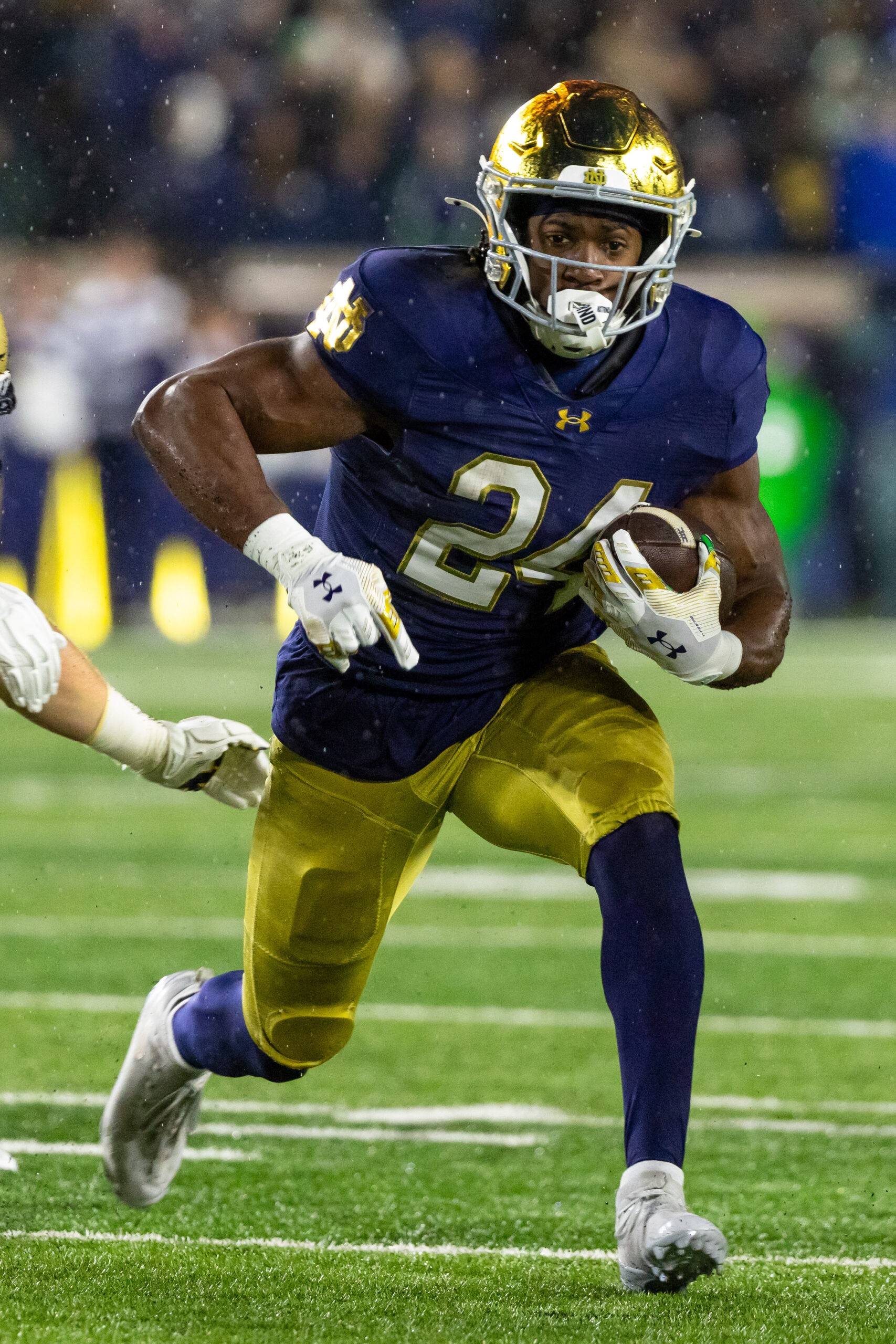 Charbonnet is expected to be sidelined well into the regular season, but Price will not have to take over Seattle’s backfield on his own. Instead, according to ESPN’s Brady Henderson, he will replace Walker, who was Seattle’s leading rusher over the last four years but saw a near-even snap split with Charbonnet in 2025. The pair also saw similar workloads; Walker averaged 13 carries and 14.8 touches per game, while Charbonnet averaged 11.5 and 12.8, respectively.
Price is seen as an excellent fit for new offensive coordinator Brian Fleury’s outside zone game, which was a staple at Notre Dame. Seahawks general manager John Schneider has praised his new draft pick’s athleticism and vision, two key traits for such a system.
Price is not yet a do-it-all back, though, so the Seahawks plan to spread Charbonnet’s responsibilities across the backfield. They signed former Packer Emanuel Wilson in free agency, likely to install the 226-pounder in Charbonnet’s power back role. 2024 UDFA George Holani saw increased pass protection responsibilities after Charbonnet went down in the playoffs and could earn a third down role for the 2026 season.
A timeshare is nothing new for Price, who played behind Cardinals No. 3 pick Jeremiyah Love for his entire time in South Bend. He still managed an efficient 6.1 yards per carry over the last two years, though he did not consistently contribute in the passing game. That is one way he can expand his skillset – and therefore his role – in Seattle in the long-term. In the immediate future, he could add some explosiveness to the Seahawks’ return game, though the team is already well-covered in that regard with Rashid Shaheed and Tory Horton already on the roster.
Colts Could Keep Anthony Richardson?
MAY 17: Dodds noted (via Chappell) a meeting to “essentially clear the air” took place between Richardson and the team once it became obvious a trade would not be forthcoming. Richardson’s attention will now turn to his showings in spring practices over the near future while remaining on course for free agency next spring.
MAY 12: Anthony Richardson and the Colts have seemed destined for a split for almost a year. The first writing appeared on the wall when the team signed Daniel Jones to compete for the starting quarterback job; by midseason, it was covered.
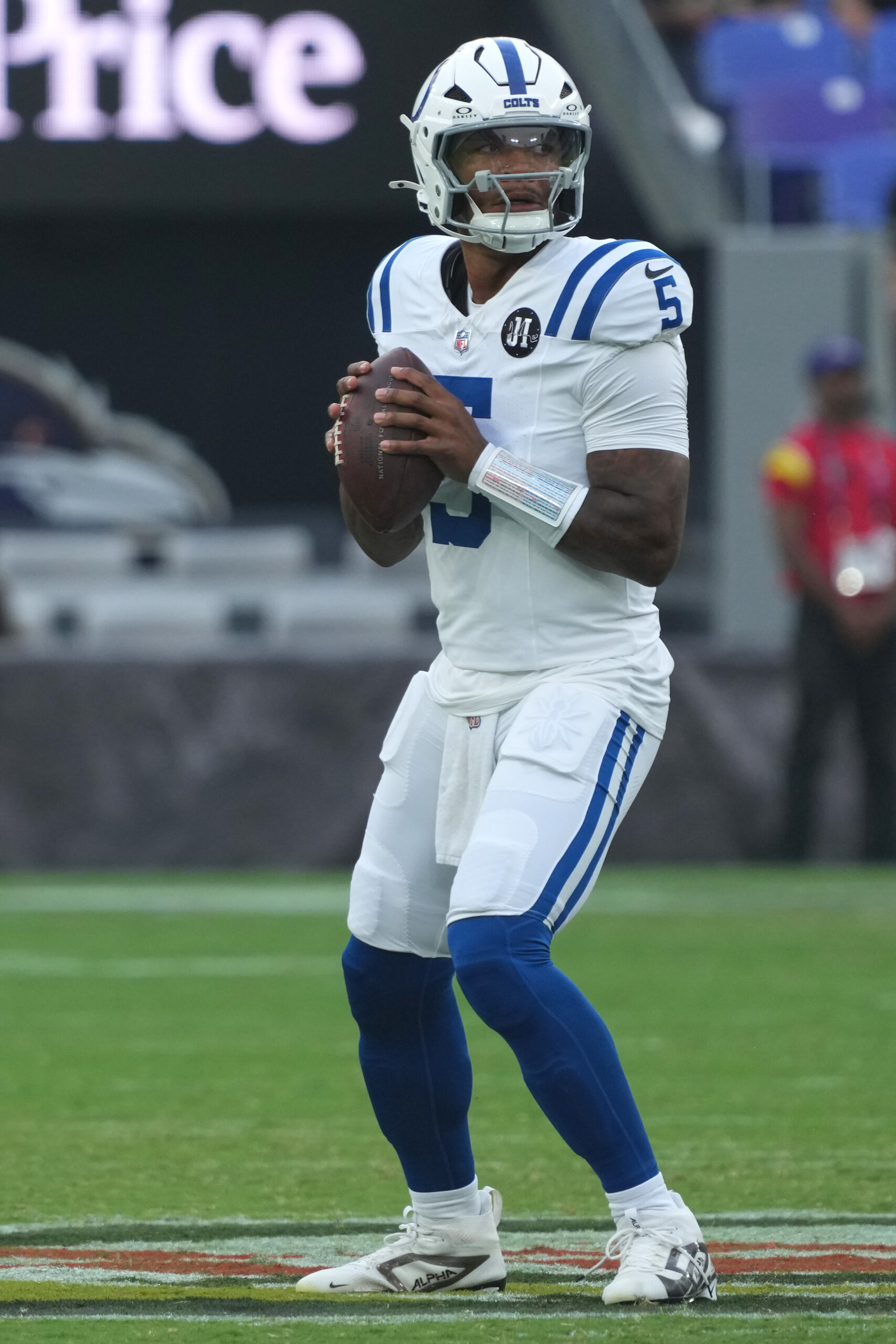 Jones won the training camp competition and led Indianapolis to a 7-1 start, seemingly establishing himself as the Colts’ next franchise quarterback. Richardson, meanwhile, had been sidelined by a freak orbital fracture and was even the subject of some trade deadline chatter that another team could see him as a reclamation project. He requested a trade this offseason, and the club worked to oblige him, but “nothing materialized,” assistant general manager Ed Dodds said this week (via Mike Chappell of FOX59).
Richardson still has just 28 starts and 743 passing attempts in his college and pro careers, presenting the concerns about both inexperience and durability. Dodds reiterated that 24-year-old is “good to go,” but uncertainty about his eye injury was a factor in his lack of trade interest, per ESPN’s Stephen Holder. He is also owed $5.4MM in guaranteed compensation this year, and another team may not want to pick up that tab for a developmental project.
The Colts are not considering a release, Holder adds. They would still owe Richardson that money, and especially with Jones recovering from last year’s Achilles tear, it makes little sense for them to move on from their former No. 3 pick without any financial relief or trade compensation.
“He’s back in the fold right now,” head coach Shane Steichen said at Phase 2 of the team’s offseason program (via Chappell).
Wthout significant interest from other teams, Richardson may now be best served by staying in Indianapolis, where he can compete with Riley Leonard for the backup quarterback gig. Until Jones is back on the field, that job comes with first-team reps, though Steichen declined to elucidate any sense of a pecking order.
There are indications that the team is not completely out on Richardson’s talent and ability to contribute to the team. He had his best training camp in 2025, according to Holder, and though his eye injury kept him from returning to in-game action, he impressed as the scout team QB late in the season. In fact, Holder adds, Richardson would have taken over as the Colts’ starter had he been healthy when Jones went down.
Jones has a lengthy injury history of his own, too. Any setback in his current recovery could thrust Richardson back into a starting role this year. Theoretically, the Colts could get out of their contract with Jones next offseason, though that would require a remarkable turnaround from Richardson. More likely, he will be looking to contribute in any way possible this year to boost his stock before hitting free agency in 2027.
Caleb Lomu Expected To Be Patriots’ Swing Tackle
Patriots first-round pick Caleb Lomu is expected to be the team’s primary swing tackle in 2026, per ESPN’s Mike Reiss.
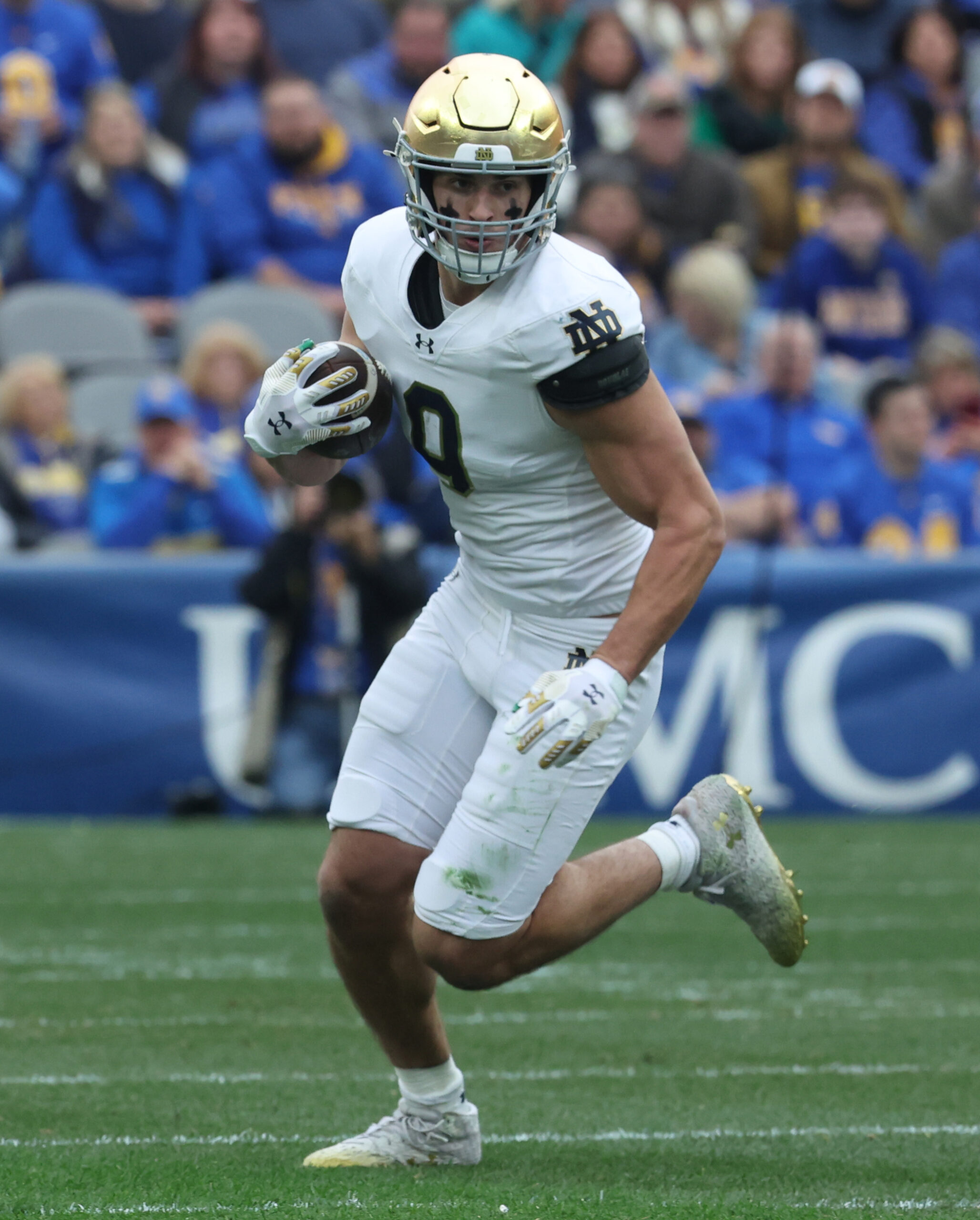 The 21-year-old made all 24 of his college starts at left tackle, but New England is committed to keeping 2025 No. 4 pick Will Campbell on the blind side despite an up-and-down rookie year and a rough showing in the Super Bowl. At right tackle, the Patriots have Morgan Moses, who just put up back-to-back season with a top-10 pass blocking efficiency among starting tackles.
Moses, though, is entering his age-35 season with no guaranteed money after this year, which likely positions Lomu as his long-term successor. While the No. 28 pick lined up at left tackle at rookie minicamp, he is expected to take reps on both sides in training camp with first-team reps on his veteran teammate’s rest days, according to Doug Kyed of the Boston Herald.
Lomu said at minicamp that he sees himself “as a tackle in general – left or right side.”
“I just happened to play left in college and that’s what I got comfortable to, playing those three years at left tackle at Utah,” he continued. “My first year there I was kind of a swing tackle.” The former Ute added that he has spent time working on the right side during the pre-draft process.
The Patriots also see a lot of upside in third-round pick Eli Raridon. They rode out a run of seven tight ends on Day 2 before landing him with the 95th overall selection. With Oregon’s Kenyon Sadiq going in the first round, that made Raridon the ninth player selected at his position, but New England “had him ranked considerably higher,” Reiss reports.
With 32-year-old Hunter Henry entering a contract year, Raridon could be the team’s tight end of the future. The 22-year-old only started for one year at Notre Dame, but Patriots de facto general manager Eliot Wolf said the team sees “untapped potential” in the “tremendous athlete.” He will likely spend his rookie year as the team’s TE3 behind Henry and free agent signing Julian Hill, but quickly developing a rapport with quarterback Drake Maye could expand his role.
Steelers Explored Trade With Bucs To Take Makai Lemon At No. 15
While the Steelers did not call the Cowboys about trading up for Makai Lemon during last month’s draft, they did explore a move to the Buccaneers’ No. 15 pick to land the USC wide receiver, per Gerry Dulac of the Pittsburgh Post-Gazette (via the Rich Eisen Show).
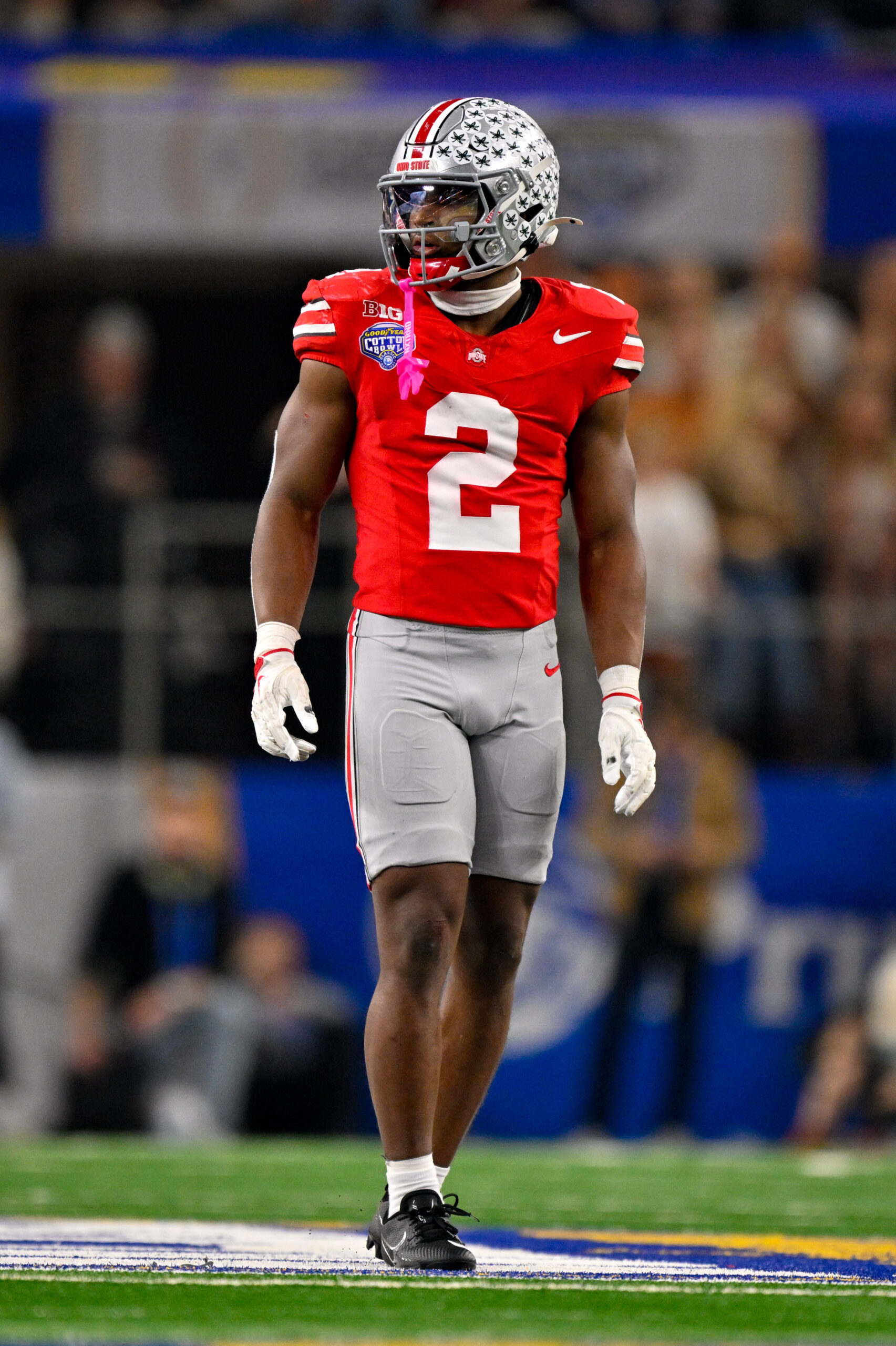 Tampa Bay, though, did not expect Miami edge rusher Rueben Bain Jr. to be available midway through the first round, and they quickly pounced on one of their top-ranked defenders. Pittsburgh looked at the five teams ahead of them at No. 21 – the Jets, Lions, Vikings, Panthers, and Cowboys – and assessed that none would take a wide receiver. They were correct; however, they did not anticipate getting jumped by Philadelphia, who traded up for Dallas’ pick and selected Lemon.
In what may be remembered as an infamous draft night moment, the Steelers were on the phone with Lemon informing him that he would be the 21st pick – while the Cowboys were still on the clock – when the Eagles made their move. General manager Howie Roseman called Lemon, who awkwardly hung up with the Steelers and got the news that he would be headed to Philly instead.
The Steelers pivoted to Arizona State offensive tackle Max Iheanachor, a 6-foot-6, 330-pound physical specimen who will fill a key need in Pittsburgh right away. If he proves to be a high-level starter, then missing out on Lemon may have been a blessing in disguise, as reliable offensive tackles are much harder to find than productive wide receivers. Trading up with the Buccaneers likely would have cost the Steelers their third-round pick, too, which they ended up using on Penn State quarterback Drew Allar.
Pittsburgh was also willing to trade up for safety Caleb Downs and wide receiver Carnell Tate, Dulac added, though both were selected long before they were in the Steelers’ range. Tate went surprisingly early to the Titans at No. 4, while the Cowboys moved up one pick to snag Downs at No. 11. An aggressive move up for Downs would have required Pittsburgh’s second-round pick, which they used to grab one of their other preferred wideouts, Alabama’s Germie Bernard.
Florida AG Subpoenas NFL Over Rooney Rule
In March, Florida attorney general James Uthmeier threatened legal action against the NFL unless it suspended the Rooney Rule, the league’s longtime initiative to promote diversity on coaching and front office staffs.
 The NFL has since responded, telling Uthmeier in a May 1 letter (via Nicki Jhabvala of The Athletic), “Simply put, the NFL does not permit the consideration of race, sex, or any other legally protected characteristic in any hiring decisions or employment actions.”
The letter goes on to detail that the Rooney Rule seeks to expand opportunities for minorities to interview for top coaching and front office jobs, but teams remain free to hire (and fire) whomever they wish. Focusing on the interview process keeps the Rooney Rule in compliance of Florida and federal civil rights law, which prohibit discrimination in actual decision-making, not merely the consideration of certain candidates.
“In short, the Rooney Rule does not impose any hiring quota or mandates, nor does it even limit who may be interview,” the letter continues. “Most importantly, it does not license clubs to consider race or sex in making hiring decisions, consistent with NFL policy and applicable law.”
The letter addresses some of Uthmeier’s other concerns regarding developmental programs for coaches, executives, and referees, which are open to all applicants regardless of their demographics. It further clarifies that compensatory picks are awarded to teams who develop and lose minority talent to other clubs, making them a retroactive reward for investing in minority coaches and executives rather than incentivizing a team to hire them. In a footnote, the league mentions that no Florida team has ever received a compensatory pick via this system.
The NFL also acknowledged that a program promoting the hiring of minority offensive assistants had already been “sunset.” The initiative was originally launched in 2022, shortly after Brian Flores filed his employment discrimination lawsuit against the league, according to Rhim and his ESPN colleagues, Kalyn Kahler and Jason Reid. It mandated each team to have a minority offensive assistant on their coaching staff and provided funding for half of those coaches’ salaries.
The NFL’s response did not satisfy Uthmeier, and their alterations may have instead emboldened him. He issued an investigative subpoena to the league on Wednesday, per ESPN’s Kris Rhim, and in a letter to the league, took credit for the end of the minority offensive assistant program. Crucially, though, the mandate and funding for that initiative was phased out this past winter, long before Uthemeier’s first letter in March, making it impossible to ascribe its termination to him.
Uthmeier also referenced new language on the league’s webpage about the Rooney Rule, changes that “appear to soften or remove explicit references to increasing minority hiring, a central criticism raised by Uthmeier in his challenge to the policy,” Rhim adds. Uthmeier then asserted that the NFL’s recent adjustments raised more questions that will have to be answered via his subpoena.
Next steps remain unclear. Commissioner Roger Goodell defended the Rooney Rule in April, and league messaging has continued to promote their commitment to diversity and inclusion, indicating that the NFL intends to stand firm against Uthmeier’s efforts to interfere with their hiring practices.
Lions DBs Terrion Arnold, Brian Branch, Kerby Joseph Recovering Well
The Lions are hoping their secondary can come back strong in 2026 after being decimated by injuries last year.
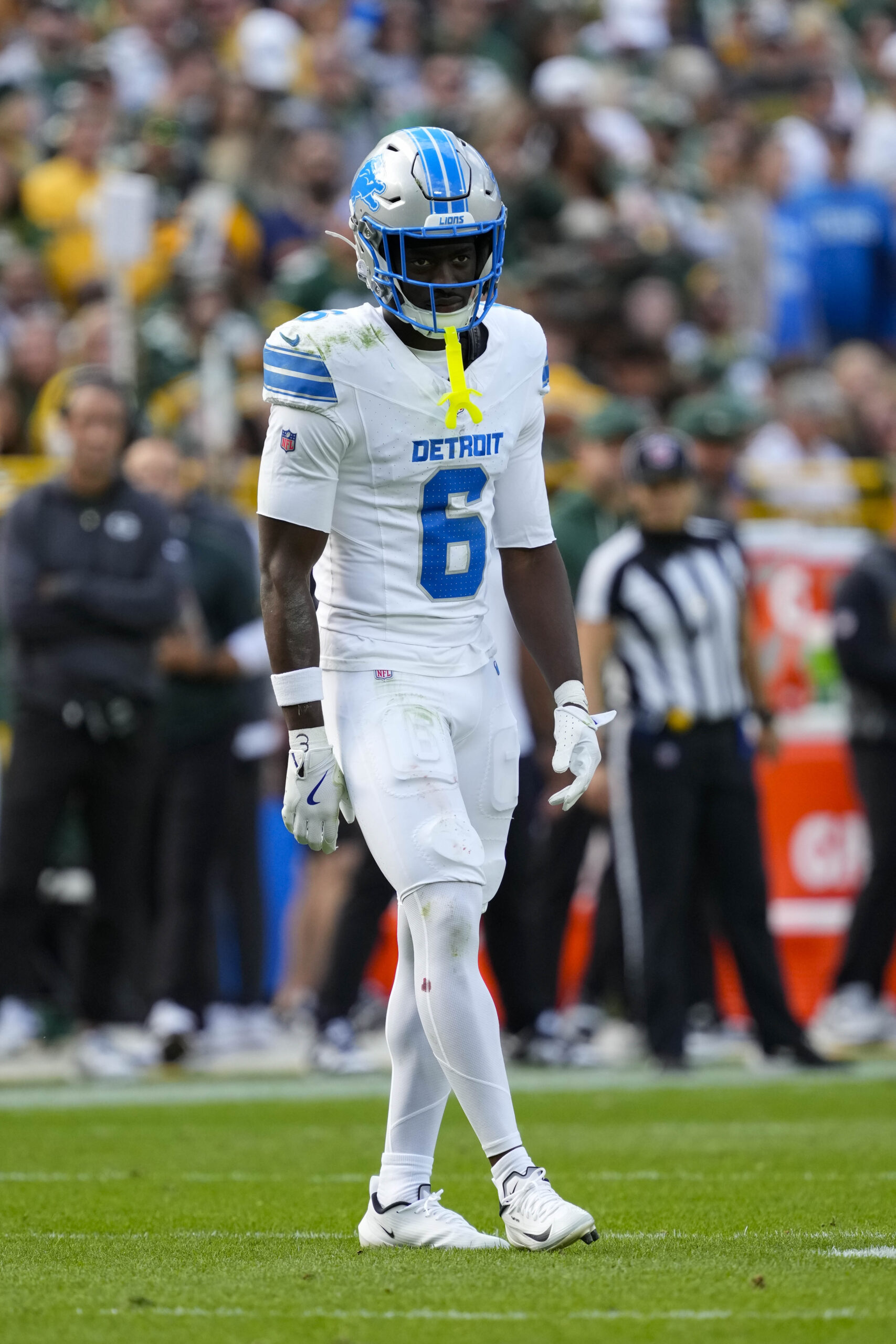 Detroit’s starting four – D.J. Reed, Terrion Arnold, Brian Branch, and Kerby Joseph – all missed several games with the latter three ending the season on injured reserve. Daniel Thomas and Ennis Rakestraw also landed on IR, and Avonte Maddox and Thomas Harper missed multiple games as well.
Arnold underwent season-ending surgery on his shoulder after injuring it multiple times during the season. He was also sidelined by a concussion for two games. At present, he is unsure about his availability for OTAs or mandatory minicamp.
“That’s kind of up to [the team] and just where I’m at with my recovery and my treatment and stuff,” Arnold said (via Dave Birkett of the Detroit Free Press). “But as far as training camp and stuff, I know I’m expected to be there.”
The Lions signed Roger McCreary and drafted Keith Abney this offseasonto give themselves some depth in their cornerback room, but it appears that Arnold, Reed, and last year’s No. 3 boundary starter, Rock-Ya Sin, will be ready for the start of the regular season.
There is more uncertainty in Detroit’s safety room. General manager Brad Holmes said (via Pro Football Talk’s Michael David Smith) that both Branch and Joseph are “heading in the right direction.” Detroit did sign veteran safeties Chuck Clark and Christian Izien in free agency as insurance, but they declined to target the position in the draft.
However, Holmes added that the Lions’ decision not to draft a safety was not a reflection of their confidence in their current stars’ recoveries.
“We didn’t ignore [the safety position],” Holmes continued. “There were some good ones that were out there that just got picked before we were able to, but it just didn’t quite line up. I didn’t really think that class was as deep either, so it had to line up and you had to strike right.”
Colts Do Not Plan To Pursue No. 3 WR
The Colts were on pace to have one of the league’s best passing offenses in 2025 before Daniel Jones‘ season-ending injury. Alec Pierce was only eclipsed 1,000 receiving yards, but Michael Pittman Jr. and Josh Downs both saw statistical regression from the year prior.
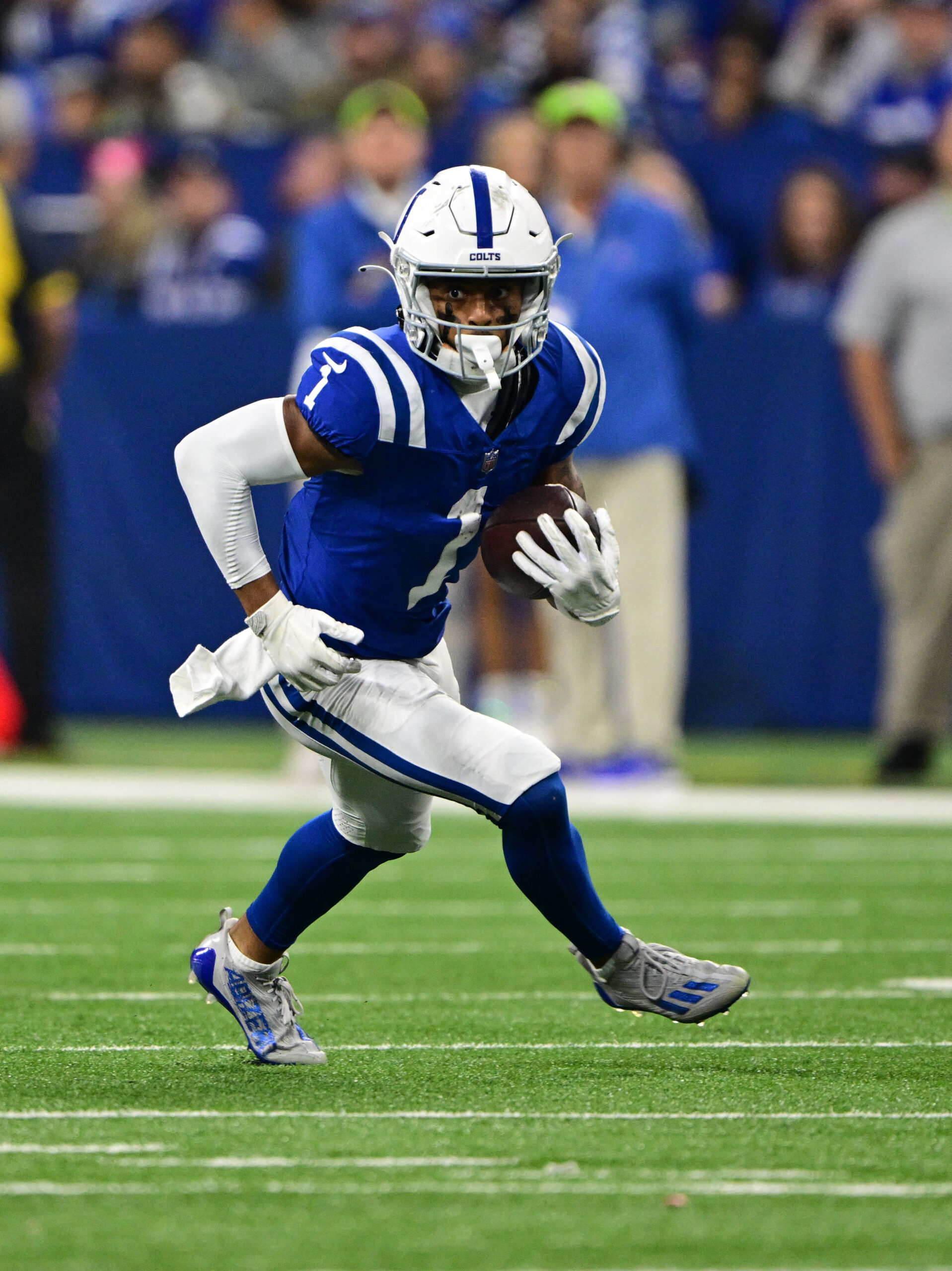 This offseason, Indianapolis opted to retain Pierce on a $28.5MM per year deal and sent Pittman to the Steelers in a late-Day 3 pick swap. That leaves somewhat of a hole in the wide receiver room behind Pierce and Downs, a 2023 third-rounder who only posted 566 receiving yards in 2025 after 1,574 in his first two seasons.
However, the Colts are not planning to pursue a No. 3 receiver, according to The Athletic’s James Boyd. Instead, they are counting on a number of factors to fill the void in their passing game. The first is Pierce, who is expected to see WR1-level targets commensurate with his new status as the team’s highest-paid wideout (and non-quarterback).
Pierce has yet to reach 85 targets in a season but consistently made big gains downfield to make up for that lack of volume. In back-to-back years, the 26-year-old has led the league in yards per reception to go along with a stellar 11.9 yards per target. Maintaining that efficiency with over 100 targets would go a long way in replacing Pittman’s production.
Indianapolis is also expecting Downs to bounce back after seeing the fewest targets of his career last year, though his efficiency metrics took a sharp dip down, too. He primarily lines up in the slot, so a combination of free agent signing Nick Westbrook-Ikhine and longtime core special teams contributor Ashton Dulin will likely step up on the boundary. Seventh-round pick Deion Burks has a similar athletic profile to Downs and will likely provide depth in the slot.
Finally, the Colts are hoping to get even more out of 2025 first-rounder Tyler Warren after his Pro Bowl rookie year. The 23-year-old tight end ranked second on the team with 817 receiving yards, but almost 60% came after the catch. Getting him more involved in the downfield passing game could turn him into one of the league’s most productive tight ends.
The team has plenty of time to evaluate their current wide receiver situation. The ranks of available free agents will thin in the coming months, but there should still be some veterans available when training camp rolls around if the coaching staff is not satisfied with what they see at OTAs and mandatory minicamp.
Seahawks Agree To Terms With Round 2 S Bud Clark
Last year saw dramatic increases in guarantees for Day 2 draft picks, with eight second-rounders receiving fully guaranteed contracts for the first time. The trend is continuing in 2026.
Seahawks second-round pick (No. 64 overall) Bud Clark has agreed to his rookie contract, per KPRC2’s Aaron Wilson, which will pay him $7.88MM over the next four years.
The rookie pay scale is set by the league, but draftees are empowered to negotiate payment schedules and guarantees. Clark will receive $5.47MM in guarantees, comprised of a $2.2MM signing bonus, his 2026 and 2027 salaries, and $1.15MM of his 2028 salary.
Clark’s guarantees represent 69.4% of his total deal, a substantial increase from last year’s No. 64 pick, Andrew Mukuba. $4.2MM of his $7.16MM deal (58.6%) with the Eagles came guaranteed (via OverTheCap), which included $343K in his third year, a first for his draft slot. For additional context, the No. 64 pick in 2024, Renardo Green, signed a rookie contract with 52.4% guaranteed with none in Year 3.
This signing continues a trend of eight-pick jumps in guarantee increases. Tyler Shough, the No. 40 pick in 2025, received a fully guaranteed contract, putting him on par with the No. 32 pick in 2024. The second-rounders behind him then sought similar bumps commensurate to the players selected eight picks earlier the year prior, as reported by ESPN’s Jeremy Fowler. Accordingly, Clark’s percentage of guaranteed money lands between that of the 56th and 57th overall picks in 2025.
First-rounder Jadarian Price is now the only Seahawks draft pick who has yet to sign his rookie deal. He will receive a fully guaranteed contract, so he will be looking for improvements elsewhere in the deal. He will become the first player at his draft slot to receive over 50% of his rookie deal as a signing bonus, and he may also seek a more advantageous pay schedule via roster bonuses. The exact amount of Price’s increases will depend on the 11 unsigned picks ahead of him.
Raiders Sign DT Benito Jones
The Raiders officially signed veteran defensive tackle Benito Jones, per a team announcement, reuniting the 28-year-old with defensive coordinator Rob Leonard.
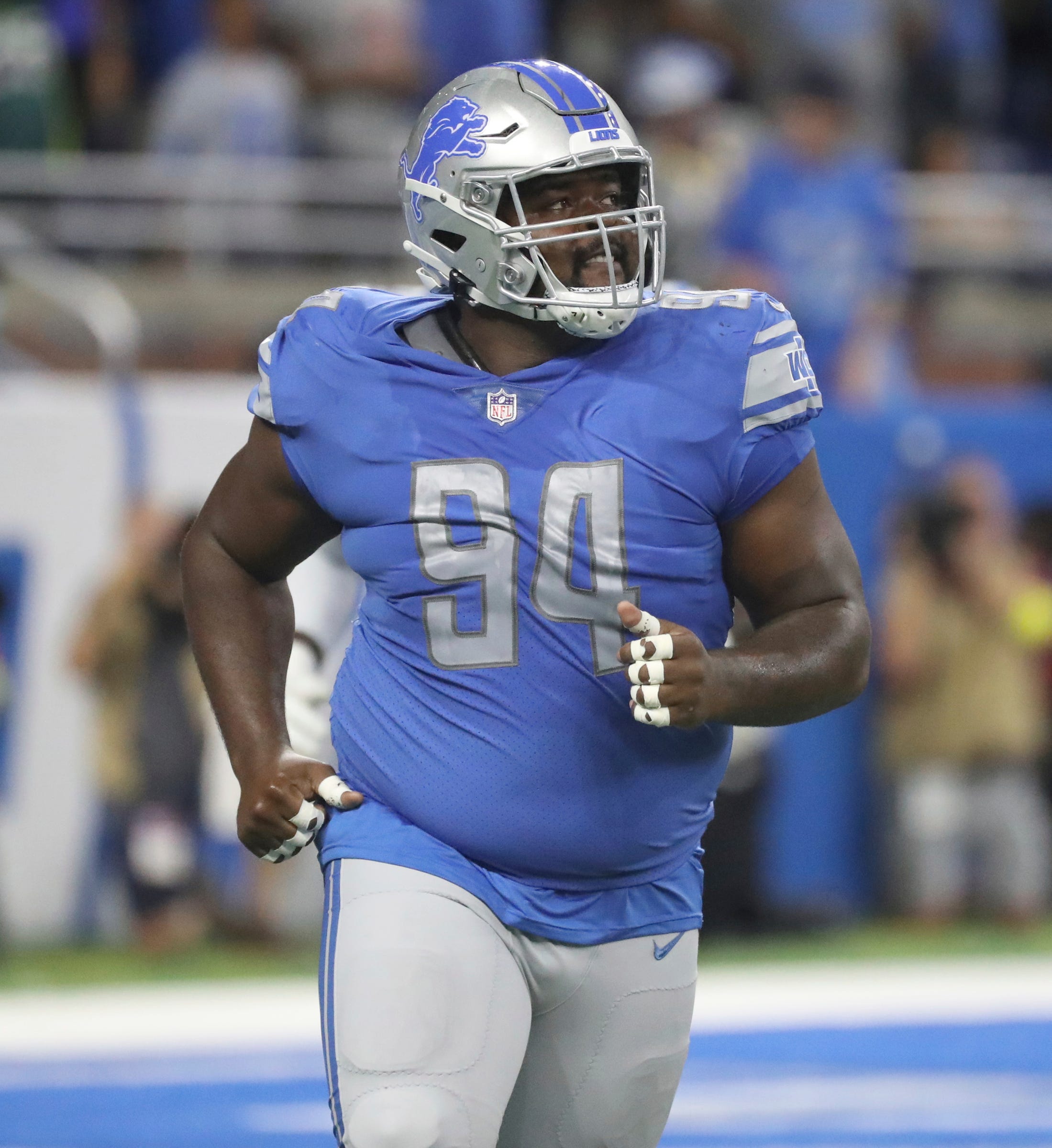 Leonard was the Dolphins’ assistant defensive line coach when Jones arrived in Miami as an undrafted free agent in 2020. Jones appeared in six games as a rookie while being coached directly by Leonard. In 2021, though, Leonard was moved to outside linebackers and Jones did not see the field.
The Dolphins waived Jones during roster cuts in 2022. He was claimed by the Lions and immediately stepped into a rotational role along their defensive line, appearing in all 17 games with a 27% snap share. He emerged as Detroit’s primary nose tackle in 2023 and started 15 games while playing 52% of the team’s defensive snaps.
Jones returned to Miami in 2024 and made another 15 starts. He saw less playing time last year with just a 30% snap share before he landed on injured reserve in December. Like many massive nose tackles, he has not stuffed the stat sheet in his career with just 83 tackle, 3.5 sacks, and 10 tackles for loss across 71 games. In Las Vegas, Jones will replace Brodric Martin, who was waived with an injury designation in a corresponding move.
The Lions traded up to select Martin in the third round of the 2023 draft. He only appeared in five games across his first two seasons, which included an IR stint in 2024 due to a knee injury. He was waived during roster cuts last year and made his way to the Chiefs’ practice squad. The Steelers plucked him out of Kansas City and used him for one game before waiving him in December.
The Raiders claimed Martin (and his contract), keeping him on the roster heading into 2026. However, his waived/injured designation indicates that he could not pass a physical during the team’s offseason program. With just five games and 65 total snaps to his name, the 26-year-old seems unlikely to attract interest on waivers and may need to wait until he’s healthy for an offer from another team.