
Nathan Peterman Books Broncos Tryout
Nathan Peterman is best known for some rough performances as a Bills starter, but the veteran quarterback has managed a long career as a reserve option. The experienced quarterback has secured another opportunity.
 Although Peterman was out of the NFL last season, 9News’ Mike Klis notes he secured a tryout at the Broncos’ rookie minicamp this weekend. The Broncos return their top three QBs from 2025, having re-signed third-stringer Sam Ehlinger, but recent Bo Nix news points to Denver needing a third healthy option for its offseason program.
Nix underwent a follow-up ankle procedure recently and likely will not be full go until training camp. Limited OTAs participation appears on tap for Denver’s starter, putting Jarrett Stidham in position to take first-team reps in spring workouts. Peterman, 32, was last with the Falcons, who carried him on their practice squad throughout the 2024 season.
The 2017 fifth-round pick has been with five teams in his career. The Raiders, Bears and Saints also rostered him at points. Sean Payton was not in New Orleans during Peterman’s cameo with the team (during the 2024 offseason). The Broncos have not officially announced their UDFA class, but no QBs are believed to be part of that group. Thus, Peterman will have a chance to work at the team’s rookie camp soon.
Peterman has five career starts; just one has come since his Buffalo tenure ended in 2018. He spent three-plus seasons with the Raiders; that covered most of Jon Gruden‘s second HC stay with the team and the Rich Bisaccia interim stint. The Bears added Peterman in 2022 and used him at a rather key point on their timeline. Chicago sat Justin Fields for Week 18 of the 2022 season, and the Peterman start resulted in a loss that clinched Chicago the No. 1 overall pick — which the team dealt to Carolina in the Bryce Young swap. Peterman returned to the Bears in 2023 but caught on with the Falcons the following year.
The Broncos have carried two QBs on their active roster, for the most part, during Payton’s tenure. But Nix’s ankle issue and Ehlinger’s $1MM guarantee creates a natural assumption they will go with three active-roster passers in 2026. A fourth QB as a practice squad stash may be overkill, but that would appear Peterman’s ceiling if he is to stick with the team for offseason work. This also may merely be for the rookie camp, with the Denver Gazette’s Chris Tomasson noting the team had been targeting a veteran QB to throw passes to rookies at that multiday gathering. It nonetheless represents an opportunity for a player who has crafted a longer-than-expected career than his career 4:13 TD-INT ratio would suggest.
Jon Runyan Jr. On Track To Keep Giants’ Left Guard Job?
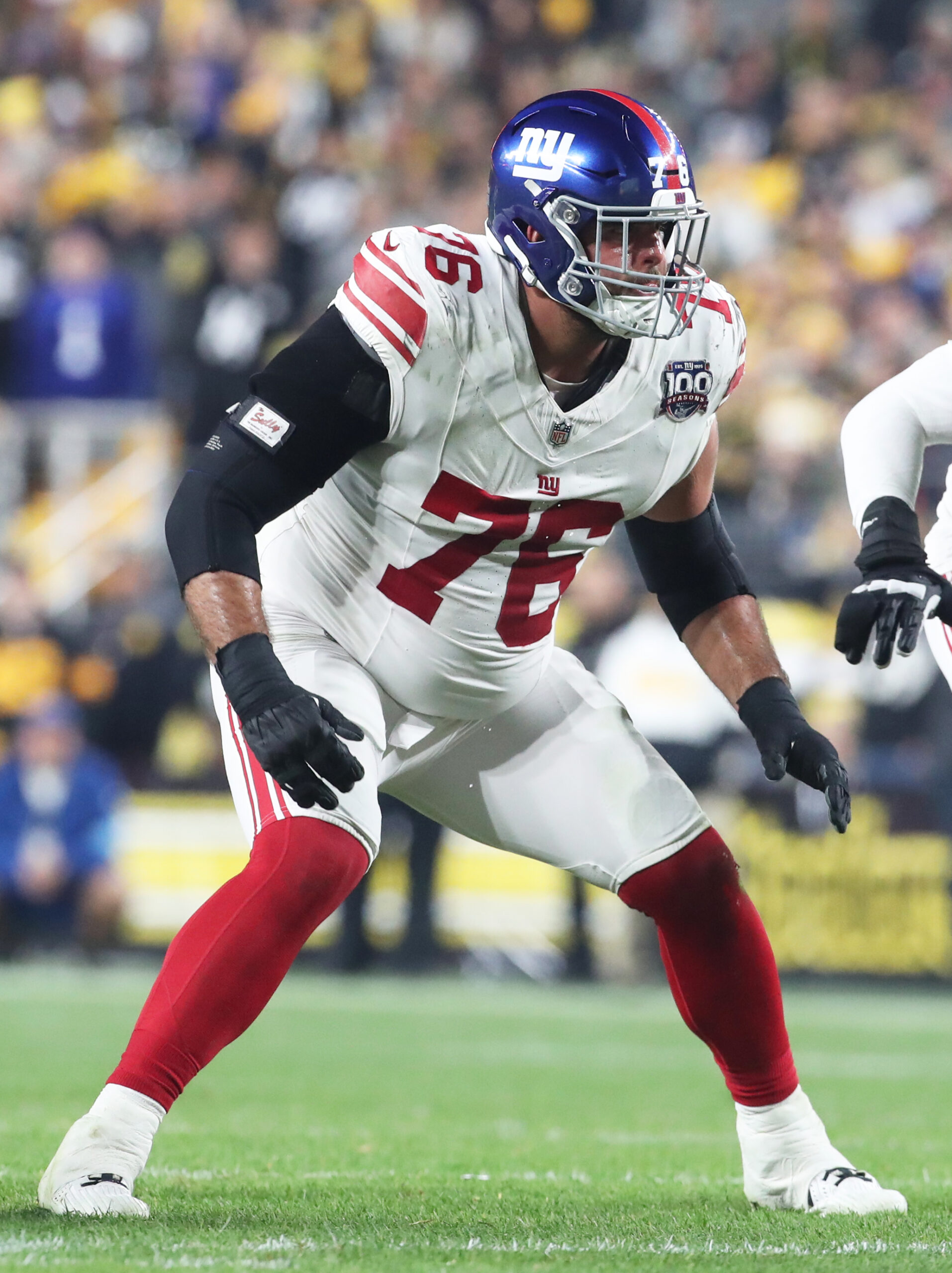
Jon Runyan Jr. came up as a cap-casualty candidate, and while the Giants made other such moves to free up cap space this offseason, their two-year left guard starter remains on the roster.
It should not be considered a lock Runyan stays for a third season, but The Athletic Dan Duggan views the veteran as the frontrunner for the LG job. With the Giants set to plug No. 10 overall pick Francis Mauigoa in at RG, a competition is on tap for Runyan’s post. But Runyan has more experience than his competitors.
 [RELATED: Examining Giants’ Positional Experiments With Top-10 Draftees]
New York made a mid-offseason move to add another ex-John Harbaugh Baltimore charge, signing Daniel Faalele to a one-year deal. Faalele will be tied to just $1.4MM, per Duggan, who adds the deal includes $688K guaranteed. The Giants, though, also added veteran interior lineman Lucas Patrick. The recent Bengal signed for one year and $1.49MM, Duggan adds; only $262K is guaranteed.
These moves came after the Giants bowed out of the Alijah Vera-Tucker sweepstakes, allowing the Patriots to sign the ex-Jets starter (for three years and $42MM). The team did not view the Zion Johnson, David Edwards, Isaac Seumalo and John Simpson prices as aligning with their talent levels. Although Mauigoa was a college right tackle — and sits as the likely Giants Jermaine Eluemunor RT successor — the Miami product became New York’s big 2026 guard investment.
While Runyan’s contract (three years, $30MM) signifies a much bigger commitment, no guarantees remain on the deal — one authorized during Brian Daboll‘s HC tenure. Harbaugh is running the show now, with GM Joe Schoen — who authorized the Runyan contract — seeing his power greatly reduced. Although Runyan (79 career starts, including 29 as a Giant) is the most proven option the Giants have at guard, the team could save $9MM in cap space by cutting or trading him.
A team taking on Runyan’s full $9MM base salary may be difficult to envision, but prime guard starters are valuable. An injury elsewhere could certainly make Runyan an attractive trade chip, as Faalele — due to his two-year Ravens starter run — would profile as the top challenger. Patrick, 32, has made 65 career starts but may be a more logical swing backup — as he has seen extensive time at both guard and center — at this stage of his career. The Giants could also carry Runyan’s contract even if he loses the position battle or ask him to take an ill-timed pay cut, thus creating depth at a position the team has struggled to staff for many years.
The team also re-signed Evan Neal and Joshua Ezeudu. Neal received no guarantees after an unremarkable rookie-contract showing, while Ezeudu is guaranteed $410K. Ezeudu will also have a chance at guard, per Schoen (via SNY’s Connor Hughes). Mauigoa’s status as the near-certain RG starter will leave a crowded competition for the other starting spot. Runyan may need to fend off four challengers. This full group may not all make Harbaugh’s first 53-man Giants roster, though practice squad spots will be available. That said, Neal and Ezeudu’s tackle experience could make them swing options there as well.
Pro Football Focus ranked Runyan 65th among guards last season and 58th in 2024, though the advanced-metrics site has never viewed the former Packers sixth-rounder as a top-35 option at the position. That did not stop Runyan, even in a crowded 2024 guard market, from fetching a $10MM-per-year deal. Like fellow potential cut Devin Singletary, Runyan has survived (Singletary accepted a pay cut to stay). Unlike Singletary, though, Runyan saw the Giants make a major addition at his position in the draft. New York’s LG competition will be one to monitor once OTAs begin.
Bucs GM: Team Seeking Long-Term Future With Baker Mayfield
MAY 6: While Licht has not confirmed talks are underway or a timeline on an extension goal — be it before Week 1 or before the 2027 free agency period — ESPN’s Adam Schefter voiced an expectation during an NFL Live appearance (h/t JoeBucsFan.com) an extension will come to pass between the Buccaneers and their fourth-year quarterback.
The team intends to extend Mayfield, per Schefter, pointing to a deal being completed by September. The Bucs have deviated from their strategy of letting players play out contracts, having extended core performers Tristan Wirfs and Antoine Winfield Jr. in 2024. Mayfield did not receive that priority in 2023, though the QB was reestablishing his value that year, but may well secure the top spot in Tampa Bay’s contract queue this offseason.
MAY 4: The Buccaneers do not have a history with long-term quarterback partnerships. No one has started more than six years with the franchise at the game’s premier position.
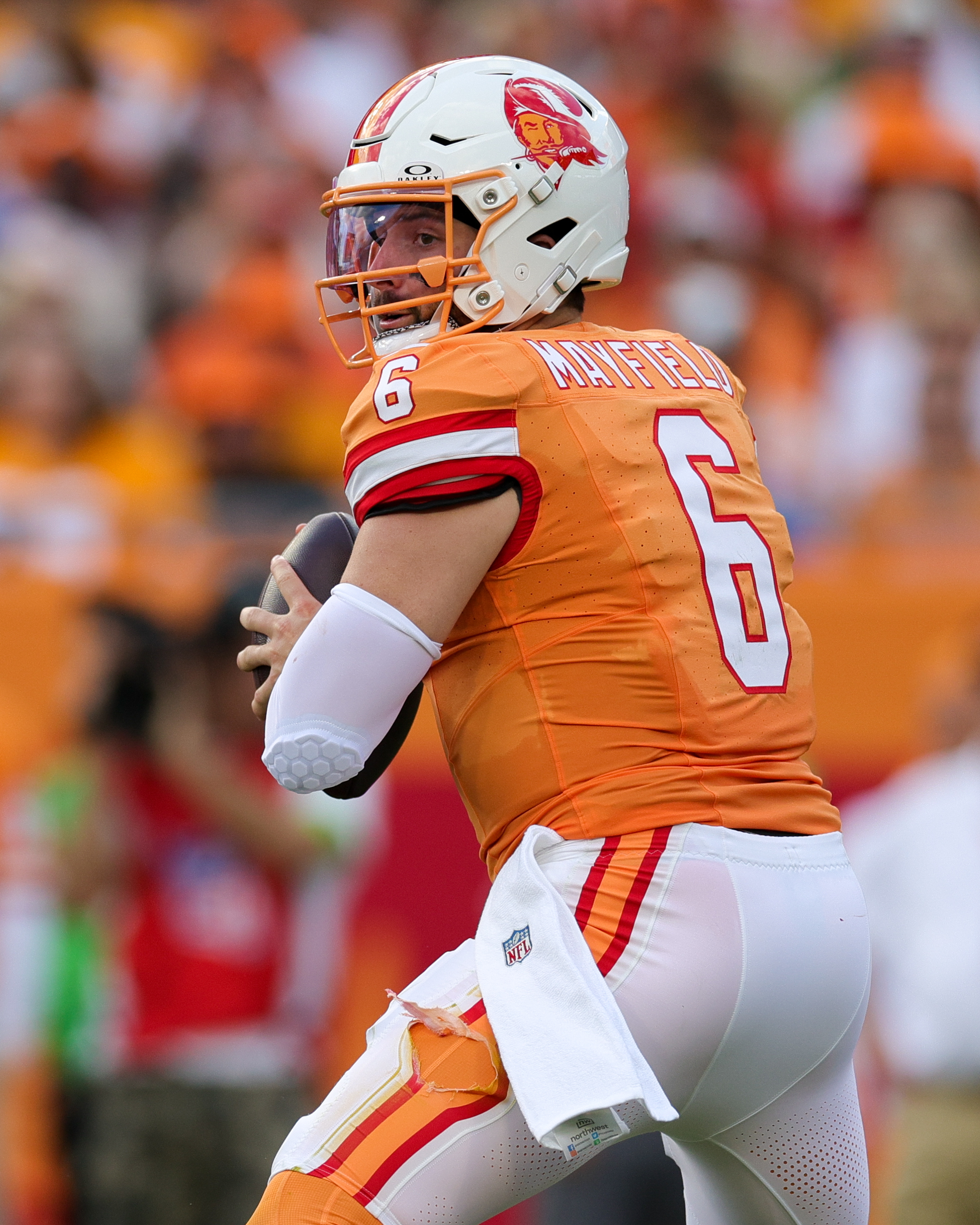 The team’s longest-tenured starting QB is Vinny Testaverde, a former No. 1 overall pick who left in free agency in 1993. Trent Dilfer was also a six-year Buc, leaving in 2000 as a free agent after an injury-shortened 1999 season. Doug Williams lasted five years, but a messy dispute with ownership led to the future Super Bowl MVP’s 1983 exit. Super Bowl XXXVII starter Brad Johnson played four seasons with the team.
Although Ryan Griffin never started a game in Tampa, he is technically the longest-tenured QB in franchise history — at seven years (2015-21). Baker Mayfield is contracted for one more season — which will be his fourth in Tampa — but the club has designs on moving the former No. 1 pick into position to become its longest-tenured quarterback.
Rumblings about a Mayfield extension emerged at multiple points this offseason, and while negotiations do not look to have begun, GM Jason Licht said during a WDAE appearance (h/t Fox Sports’ Greg Auman) the quarterback’s situation is “at the forefront of our minds.” Licht added “nobody here wants Baker playing for any other team.”
Mayfield’s three-year, $100MM deal includes a $39.98MM cap number for 2026. The Bucs made the decision to guarantee $30MM of Mayfield’s 2026 compensation last summer, providing security for a player who has rejuvenated his career during his time in Florida. Two void years are on the contract; if the Bucs do not extend Mayfield by the start of the 2027 league year, they would owe $30.15MM in dead money in 2027.
That number approaches the penalty the Bucs received on their 2023 cap after Tom Brady‘s second retirement. Mayfield arrived in the wake of the three-year Bucs QB1’s decision, with the team staying away from a big-ticket investment due largely to the Brady dead money. Mayfield joined the Bucs on an incentive-laden contract that provided only $4MM in base value. After a bounce-back 2023 season, Mayfield signed his three-year deal on the eve of the ’24 free agency period.
Mayfield then posted better numbers under Liam Coen in 2024, throwing 41 touchdown passes and completing 71% of his throws. The QB regressed last season, seeing his yards per attempt fall from 7.9 in 2024 to 6.8 in ’25; Mayfield also completed just 63% of his passes. The Bucs, though, trudged through an injury-plagued season that featured extensive missed time from skill-position players — including Mike Evans, Chris Godwin and Bucky Irving — and O-linemen. The Bucs, who replaced OC Josh Grizzard with Zac Robinson this offseason (with input from their quarterback on the hire), are ready to give Mayfield another chance.
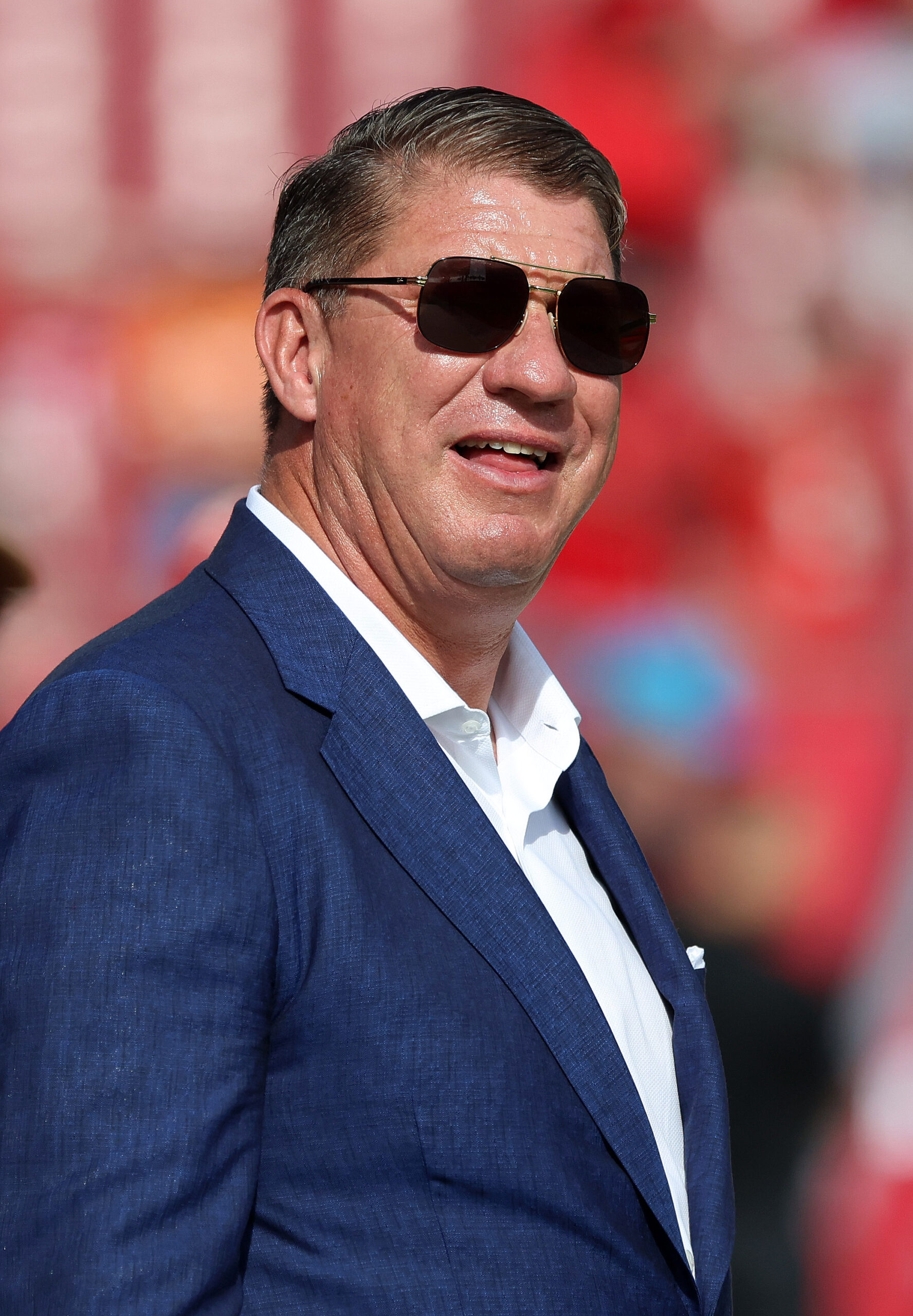 While the Licht-era Bucs have regularly had key starters play out contract years and re-signing them either before or during the following free agency period, it would be a bit surprising to see Mayfield not extended before Week 1. The 31-year-old passer would be an attractive UFA in 2027 were the Bucs to pass on an extension.
Tampa Bay currently has Mayfield on a wildly team-friendly accord, with his AAV checking in 16th among QBs. The Colts giving Daniel Jones a two-year, $88MM deal probably will factor into Mayfield’s Bucs negotiations. While only two teams — the Packers (Aaron Rodgers) and Cowboys (Dak Prescott) — have authorized $50MM-per-year extensions for QBs past their 30th birthdays, Mayfield will be a candidate to at least come in above Jones on his next contract.
Sam Darnold‘s camp will be taking notice of how the Bucs and Mayfield proceed. Although the Bucs would have a franchise tag at their disposal if they are unable to extend Mayfield, that pricey number along with the $30MM-plus dead cap figure — in the event the former Heisman winner does ultimately relocate next year — arms the fourth-year Tampa Bay starter with some leverage ahead of his talks. It will be interesting to see what numbers emerge once serious discussions begin.
49ers Fielded Calls For No. 33; WR De’Zhaun Stribling Made Late Rise On Team’s Board
After trading down twice in Round 1, the 49ers made a surprising pick to start the draft’s second night. San Francisco chose Ole Miss wide receiver De’Zhaun Stribling at No. 33. Stribling had not been viewed as a prospect worthy of that draft slot by most, but he made quite the impression on the top two 49ers decisionmakers late in the pre-draft process.
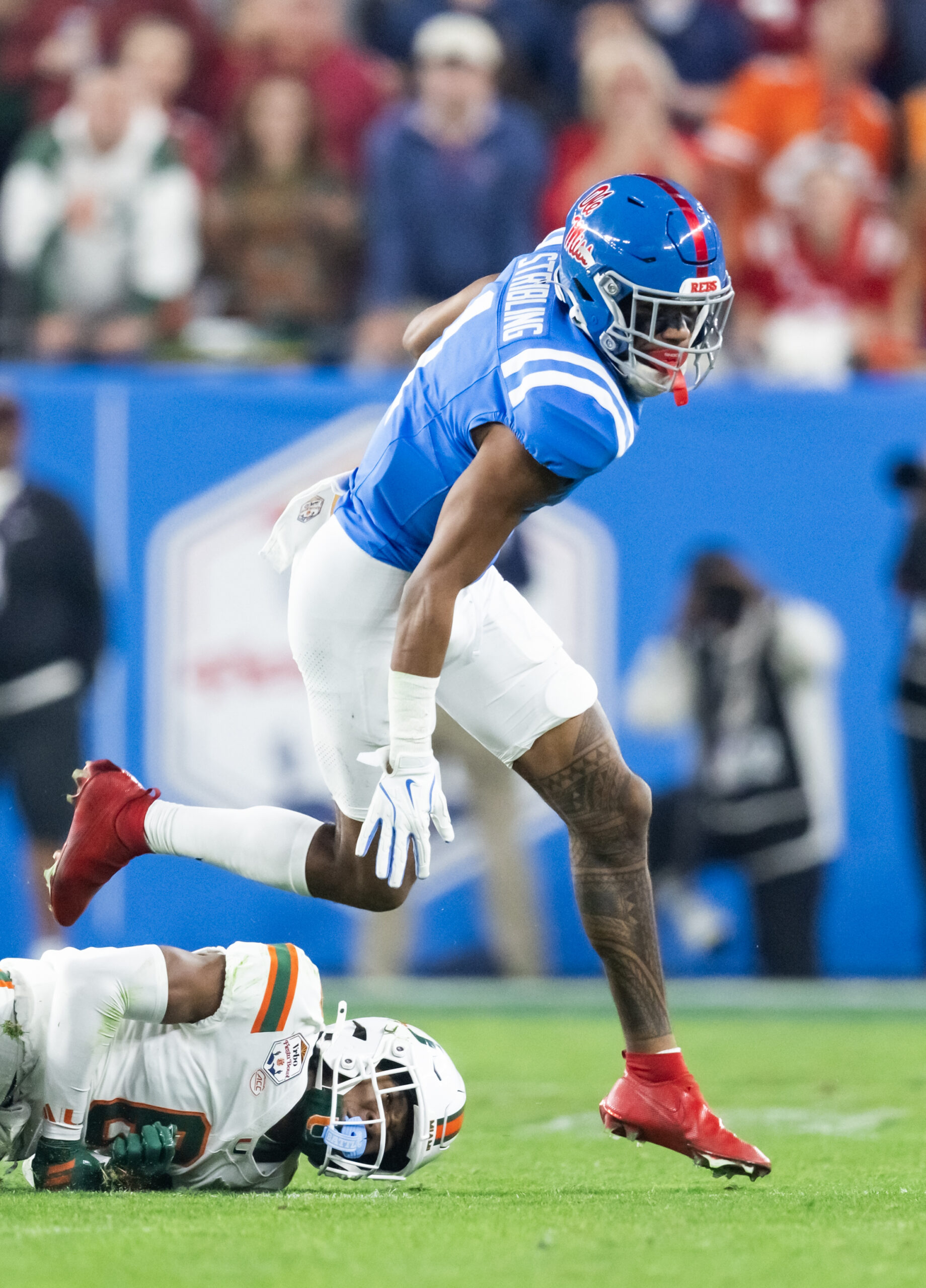 Even by early April, the 49ers viewed Stribling as a player who would be more of a late second-round pick or an early third-rounder, according to Sports Illustrated’s Albert Breer, who notes Kyle Shanahan and John Lynch going through evaluations together last month led to a Stribling rise. He became the sixth wide receiver chosen in this year’s draft, rising past higher-profile options like Denzel Boston and Germie Bernard.
Daniel Jeremiah’s NFL.com big board ranked Stribling 62nd, while ESPN’s Scouts Inc. was even less bullish, slotting him 76th. The 49ers have run into issues identifying receivers in the middle rounds; Day 2 draftees Dante Pettis, Jalen Hurd and Danny Gray did not pan out. But the team also received a quality run from second-rounder Deebo Samuel and identified Jauan Jennings in Round 7. First-rounder Brandon Aiyuk was also a hit for San Francisco, before a strange 2025 divided the parties ahead of an expected 2026 separation.
The 49ers are still waiting on 2024 first-rounder Ricky Pearsall to establish himself as a reliable presence, and his injury issues — along with Aiyuk and Jennings statuses — influenced an aggressive offseason at receiver. The team added Mike Evans and Christian Kirk in free agency. Stribling will join Pearsall as rookie-deal cogs vying for time alongside the vets. Demarcus Robinson also remains rostered. The 49ers are not expected to re-sign Jennings, whose asking price has not aligned with teams’ valuations.
San Francisco was not set on adding Stribling at No. 27, with Breer noting the team viewed him as a player who would not go in the first round. The 49ers had a group of players they would feel comfortable taking at 27, but in the event all were off the board, Breer adds the team had trade parameters worked out with the Dolphins days before the draft. The sides turned those talks into a swap, with Miami moving up for San Diego State cornerback Chris Johnson. The 49ers moved down once again, allowing the Jets to draft Omar Cooper Jr. at No. 30.
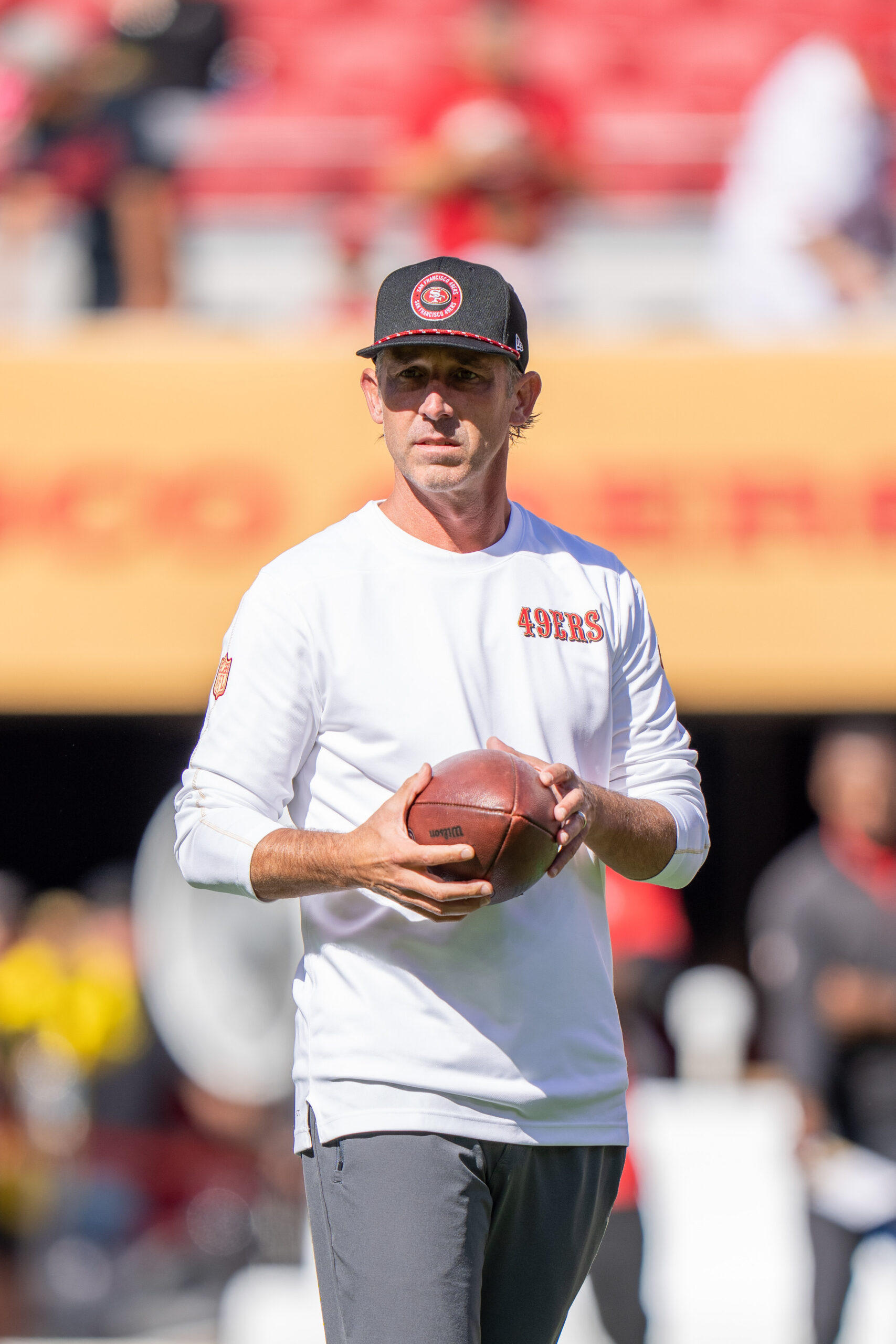 Cooper and Stribling figure to be compared to each other moving forward, at least in the Bay Area, given how much higher the draft community had the Indiana product compared to Stribling (Jeremiah ranked Cooper 17th; Scouts Inc. had him 24th). Stribling impressed at the Combine, running a 4.36-second 40-yard dash at 207 pounds. This came after he produced at multiple schools during a college career that finished with back-to-back 800-plus-yard receiving seasons (at Oklahoma State and Ole Miss). In 2022, Stribling was a key Cam Ward target at Washington State.
The 49ers did not make the pick without fielding more calls, as Day 2 reports about interest coming in for No. 33 turned out to be accurate. Trade offers did not appeal to the 49ers, and Breer adds the team worried other clubs viewed Stribling as a sleeper like they did; that led to Shanahan and Co. standing down and selecting the well-traveled WR at 33. The 49ers will attempt to prove draft experts wrong, and if Stribling proves a quick learner, the team will have a deep receiver cadre in 2026.
Chiefs Viewed Rueben Bain Jr. As First-Round Fallback Option
Fearing the Saints would select Mansoor Delane eighth overall, the Chiefs traded up from nine to six to land the highest-rated cornerback in this year’s draft. If the Chiefs stayed at No. 9, and had someone else taken Delane before then, they would have considered former Miami defensive end Rueben Bain Jr. as a Plan B option, Jeremy Fowler of ESPN reports.
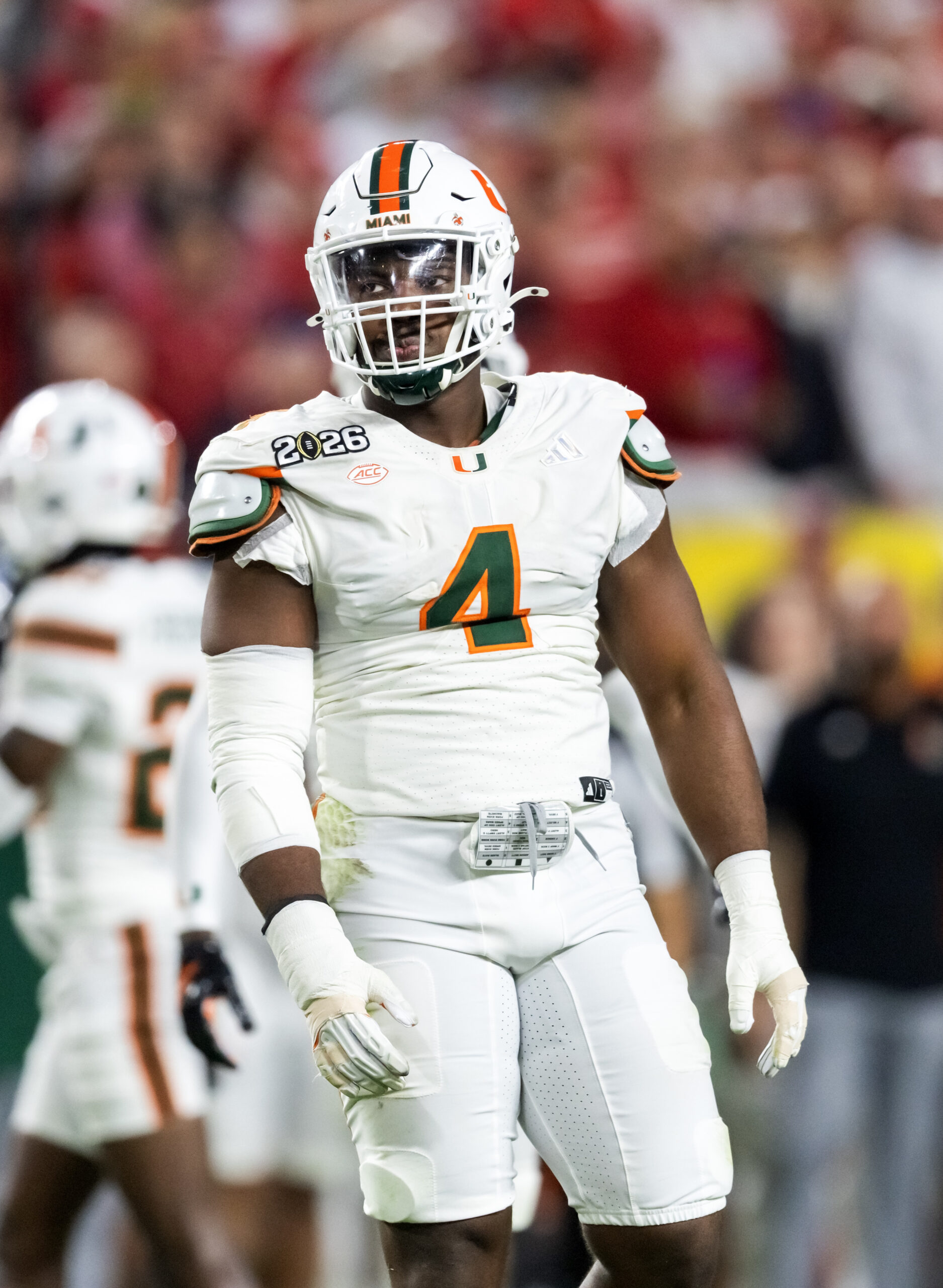
It was known that the Chiefs were among the teams with an affinity for Bain entering the draft. Expectations were Bain would come off the board in the top 10 on the heels of a particularly brilliant season in 2025. Bain earned consensus All-America honors after tallying 83 pressures, 54 tackles, 15.5 TFL and 9.5 sacks over 16 games in his final year with the Hurricanes. He nevertheless dropped to pick 15, where Tampa Bay scooped him up. It came as a surprise to the Buccaneers that Bain was still available when they were on the clock.
The Chiefs had a second first-rounder (No. 29), but Bain was long gone by then. They used that choice on ex-Clemson defensive tackle Peter Woods before addressing their need along the edge in the second round. With the 40th overall pick, the Chiefs took former Oklahoma defensive end R Mason Thomas. Although Thomas was not as productive as Bain in college, he still held his own at that level. Thomas combined for 63 pressures, 22 tackles for loss and 15.5 sacks over the past two seasons, and he picked up a first-team All-SEC nod in 2025.
Upgrading the pass rush was a clear need for the Chiefs entering the draft, making their interest in Bain and their selection of Thomas unsurprising. After tying for 26th in sacks last year, the Chiefs will bank on Thomas to help improve that ranking next season. But had someone else drafted Delane, it could have been Bain – not Thomas – complementing George Karlaftis and Chris Jones in 2026.
Bengals’ Dax Hill Wants To Stay At Outside CB; Jalen Davis Favorite For Slot Role
Bengals cornerback Dax Hill split time between the slot and the outside in 2025, the second 17-start season of his four-year career. As Hill prepares to enter a contract year in 2026, he wants a full-time spot on the outside, per Kelsey Conway of the Cincinnati Enquirer.
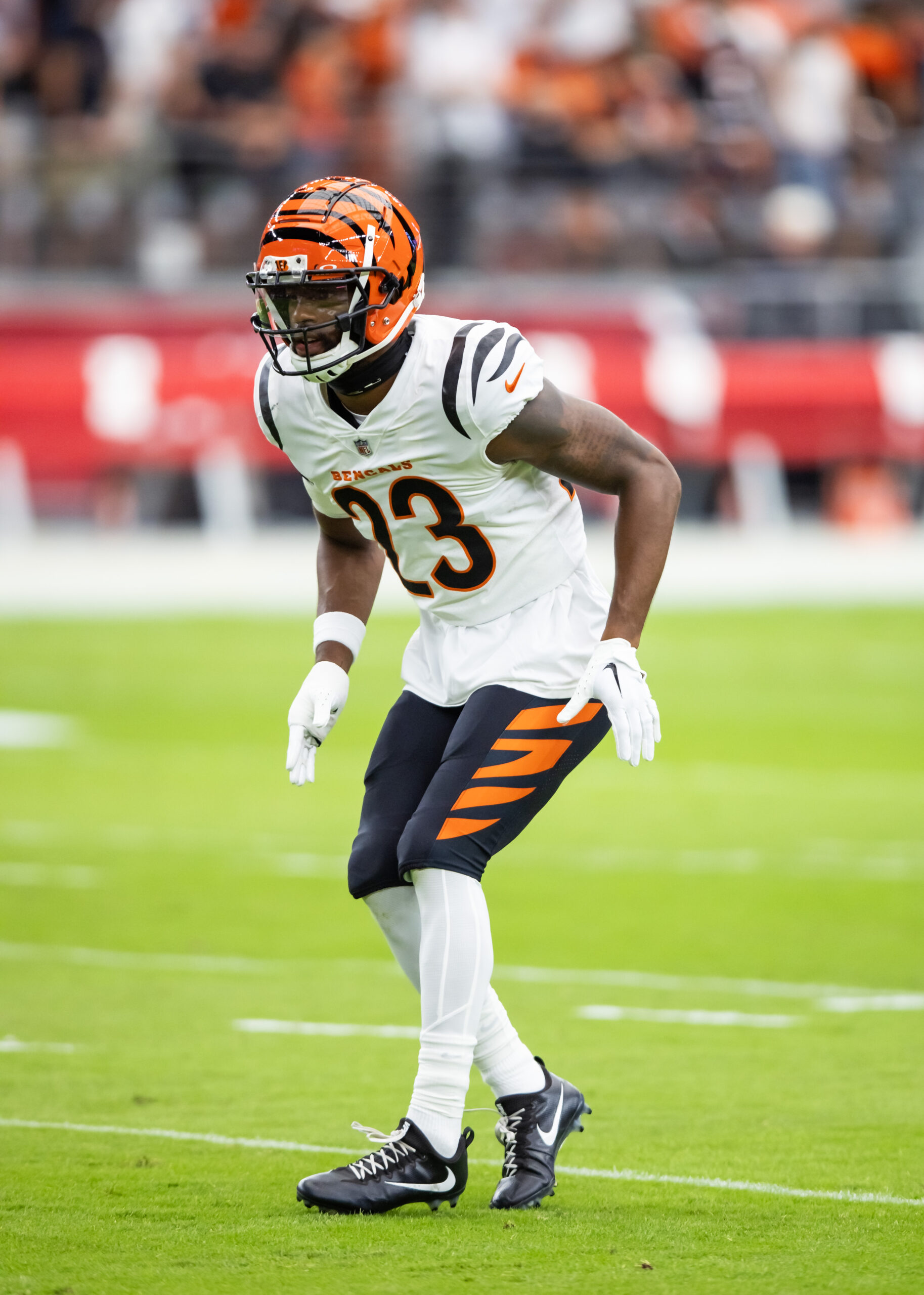
“Staying at one spot, I feel like that’s ideal for development and my mental health,” said Hill, whom the Bengals drafted as a safety in 2022. The former 31st overall pick from Michigan transitioned to corner in 2024, though an ACL tear limited him to five games that year.
In his return to full strength last season, Hill led Bengals corners in defensive snap share (92.93%) and recorded 88 tackles, 11 passes defensed and an interception. Pro Football Focus ranked Hill a respectable 46th among 108 qualifying corners, but he fared even better after moving outside for good late in the season. The 6-foot, 195-pounder earned PFF’s third-highest grade among corners over the last six weeks of the year.
Staying on the outside and performing similarly well in 2026 would bode nicely for Hill as he angles for a new contract. Outside corners make more money than slot CBs, which is likely on Hill’s mind. The Bengals have identified Hill and fellow soon-to-be free agent corner DJ Turner as extension candidates, but keeping both could be a challenge. The team may have drafted a potential replacement for one of them in third-rounder Tacario Davis, the 72nd overall pick.
At 6-foot-4, Davis is better suited for outside corner. The Washington product will likely begin his pro career as a reserve, though it could depend on how the Bengals handle the slot position. Jalen Davis is the frontrunner for the job, according to Conway, but he has worked almost exclusively as a backup during his eight-year, 64-game career. Davis has totaled just three starts, all of which came last season.
After re-signing on a one-year deal in February, Davis is on track to play his seventh season in Cincinnati. As someone who has primarily lined up on special teams, Davis will have to prove he is cut out for a regular defensive role. If he isn’t up to the task, Hill may have to go back to the slot.
Jadeveon Clowney Drawing Interest
Twelve years since he went No. 1 overall in the 2014 NFL Draft, edge defender Jadeveon Clowney has played for seven teams. While he has only lasted more than one season with two of those clubs, the nomadic Clowney has been an effective pass rusher throughout his career.
With 66.5 sacks on his resume, the 33-year-old Clowney is one of the top defenders still available in free agency. He is now drawing interest from “some of his former teams,” Mike Garafolo of NFL Network says.
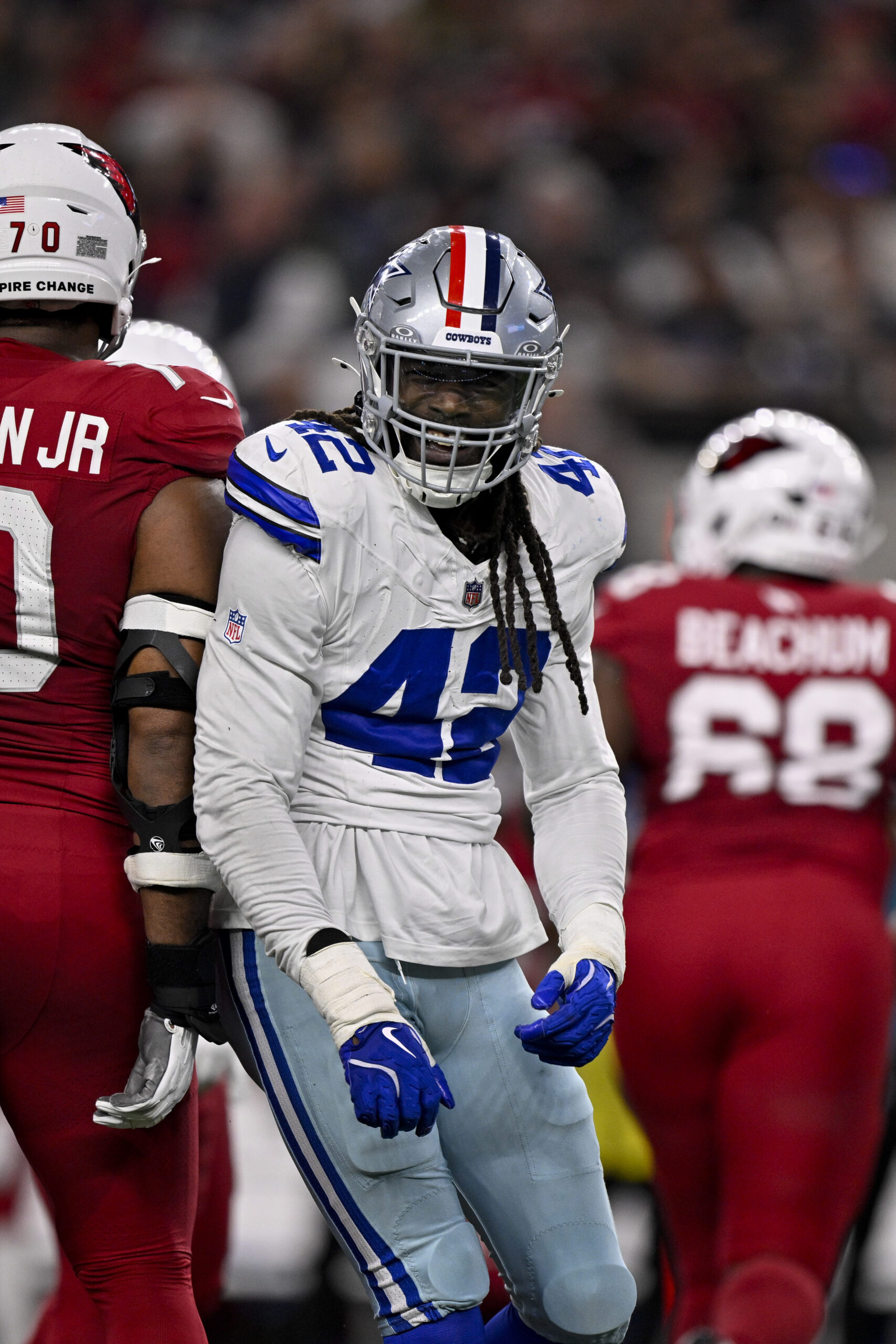
We are nearing the one-year anniversary of the Panthers releasing Clowney on May 8, 2025. After the Panthers cut ties with him, it took Clowney until mid-September to land in Dallas on a one-year, $3.5MM contract. Although the Cowboys’ defense ended up as one of the worst in the NFL, Clowney was a legitimate bright spot. Over 13 games (six starts) and 373 defensive snaps, Clowney recorded 41 tackles, 12 TFL, a team-high 8.5 sacks and four passes defensed. Along with Clowney’s solid traditional stats, he ranked as Pro Football Focus’ 16th-best edge defender out of 119 qualifiers.
As of late December, it looked as if the Cowboys were going to re-sign Clowney. However, plans changed after the team fired defensive coordinator Matt Eberflus and replaced him with Christian Parker. It appears the Cowboys no longer regard Clowney as a fit in their defense. They have addressed their pass rush this offseason with the additions of Rashan Gary, whom they acquired from the Packers, and 23rd overall pick Malachi Lawrence.
Although the Panthers cut Clowney a year ago, a reunion with the South Carolina native might make sense heading into next season. Carolina made a major free agent splash when it signed former Dolphin and Eagle Jaelan Phillips to a four-year, $120MM pact, but it could arguably use even more pass-rushing help to join him, Nic Scourton and Princely Umanmielen. The Panthers finished last season with the league’s second-lowest pressure rate (16.5%) and third-fewest sacks (30).
Before his season in Carolina, Clowney had a one-year stop in Baltimore in 2023. He put up a career-high 9.5 sacks as a Raven, and Clowney expressed interest in a reunion earlier this spring. It is unknown whether the Ravens feel similarly, having signed Trey Hendrickson to a four-year, $112MM deal and spent a second-rounder on Zion Young.
Clowney divided 2019-22 among Seattle, Tennessee and Cleveland. If a Seahawks reunion was ever under consideration, it may be off the table after Tuesday’s signing of veteran edge defender Dante Fowler. Meanwhile, with new head coach Robert Saleh at the helm, the Titans have made a couple of notable investments along the edge. They acquired Jermaine Johnson from the Jets and traded back into the first round to draft Keldric Faulk 31st overall. The Browns, on the other hand, have done little to bolster their pass rush this offseason. They had a deal in place with former Bill A.J. Epenesa, but it fell apart over a failed physical. The Browns could still use a capable complement to Myles Garrett, but it is unknown if Clowney is on their radar.
Clowney opened his career in Houston, where he played five seasons and earned all three of his Pro Bowl nods. Seven years since they traded Clowney to the Seahawks, the Texans are not in dire need of a pass rusher. They boast the all-world Will Anderson–Danielle Hunter tandem, though picking up Clowney as a reserve would boost an already ferocious defense. The Texans finished first in yards, second in points and seventh in sacks in 2025.
While Clowney is one of the league’s best unsigned players, he is not the only familiar pass rusher without a contract. Cameron Jordan, Von Miller and Joey Bosa are also among those looking for deals. They will be among the most intriguing players to watch in the post-draft wave of free agency.
QB Jacoby Brissett Likely Trade Candidate With Carson Beck In Arizona?
After going 1-11 in 12 starts for the Cardinals in 2025, quarterback Jacoby Brissett has been staying away from team activities as he attempts to land a starter-level extension. According to NFL insider Jason La Canfora, though, Brissett will more likely end up being a trade candidate.
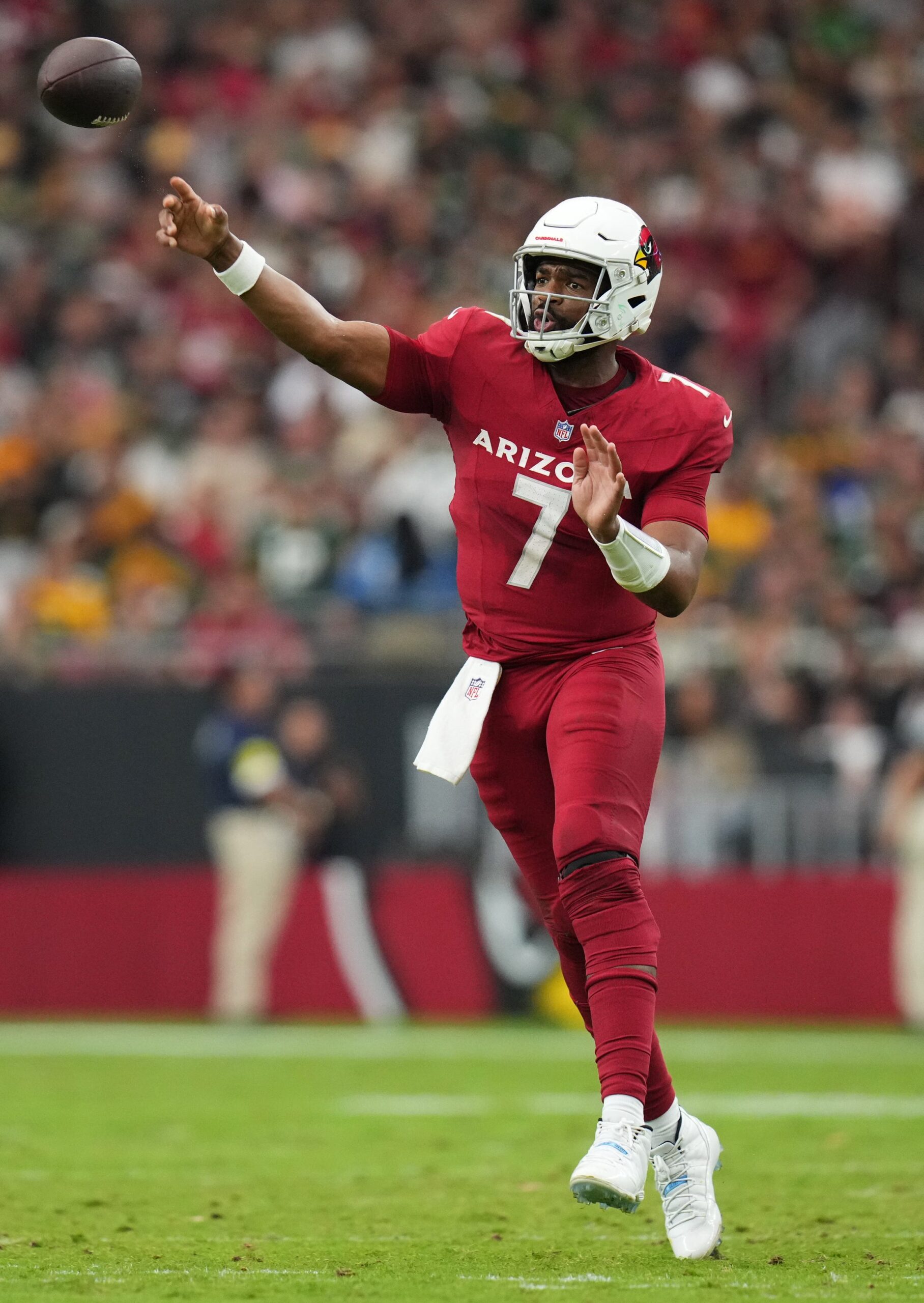 With Brissett in line for his second Cardinals season and a backup passer with starting experience in Gardner Minshew, many thought Arizona would spend the first year of new head coach Mike LaFleur tanking its way to as high a draft pick as possible in 2027 in an attempt to land the best of a better crop of quarterbacks than what was available this year. It was presumed that the Cardinals would utilize this year’s draft to bring in a number of strong supporting pieces to prop up their future rookie starter.
Instead, the team took an interestingly different route. When the Cards reportedly were unable to find an offer they deemed worthy of trading out of the No. 3 overall pick for, they opted to select RB1 Jeremiyah Love. They did get around to landing a plug-and-play starting guard at the top of the second round in Chase Bisontis, but with the first pick of the third round, the Cardinals shocked a number of analysts by drafting Miami quarterback Carson Beck, the third passer to come off the board in the 2026 draft class.
Though he heard his name called two rounds after first overall pick Fernando Mendoza, who beat him head-to-head in the College Football Playoff national championship game four months ago, Beck’s six years in college had some evaluators believing he was the most pro-ready passer in the class. Once Beck was wearing a red hat, an NFL general manager reportedly told La Canfora that Arizona would “move Brissett by the (trade) deadline.”
Even if Brissett isn’t traded away immediately, the theory seems clear. If this GM is correct, at some point, Beck would take over as the starter. As a third-round, pro-ready prospect with the top rookie running back and an improved offensive line, there’s a chance Beck could find success and show potential as the team’s future at the position. If such a hypothetical ends up being too far out of reach to become reality and Beck’s starting run leads them to a poor record and a high draft pick, then the Cardinals would be perfectly in line to draft a first-round quarterback in 2027.
Fueling that idea a bit further, recent whispers that veteran free agent quarterback Aaron Rodgers may be considering Arizona as a future home appear to be nothing more than rumors. ESPN’s Josh Weinfuss reached out to a source recently to gauge the reality of this possibility, and his source claimed it was “not at all” real. If Rodgers stays away and Brissett gets shipped out, Beck may end up starting as a rookie as the Cardinals make moves to find their QB for the future.
Bengals C Connor Lew Expected To Be Ready For Training Camp
Drafting players coming off major injuries is always a tricky proposition.
First is the most basic and obvious issue: a return timeline. Teams do not know exactly when such prospects will be ready to hit the field. They are also unable to participate in pre-draft athletic testing, which is the most reliable way to directly compare physical traits. There is also significant uncertainty about the injury’s lasting effects, making it more difficult to assess players’ short- and long-term trajectory in the pros.
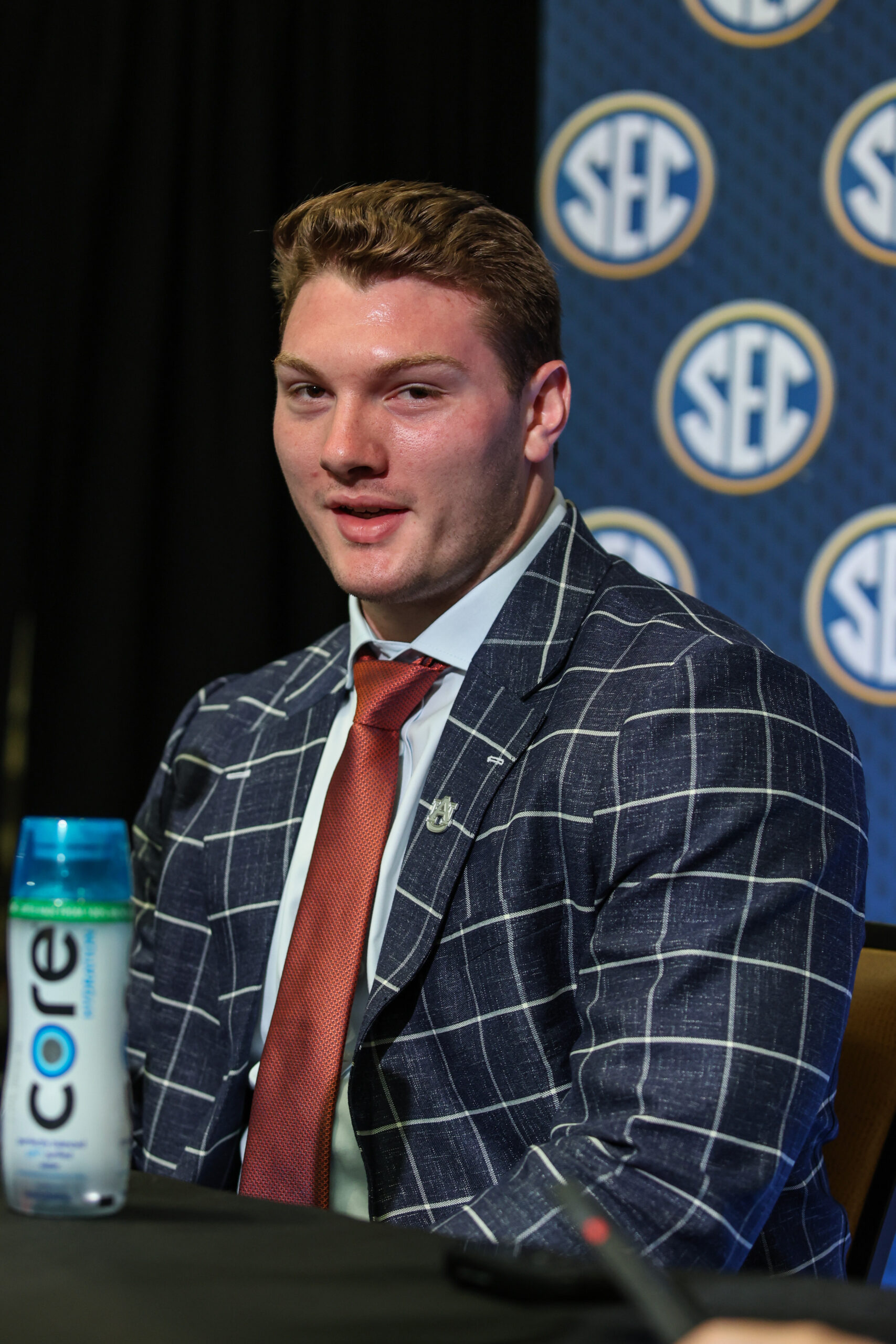 The Bengals, though, were comfortable drafting Auburn center Connor Lew in the fourth round (No. 128) of the 2026 NFL Draft despite a torn ACL suffered last October. There were a number of factors in that decision, starting with Lew himself.
The 6-foot-3, 310-pound center earned the Tigers’ starting job in 2023 as an 18-year-old true freshman and finished the season with Freshman All-American and SEC All-Freshman honors. He then put forth a solid effort in 2024, and in 2025, he was named a team captain of a prestigious SEC program at just 20 years old. He will not turn 21 until the end of training camp, giving him a very appealing developmental trajectory that will build off his already impressive base of blocking skills.
Lew’s recovery is also ahead of schedule, per Sports Illustrated’s Albert Breer, with the expectation of being fully ready to play when training camp begins in late July. At that point, Lew will be about nine months removed from his torn ACL, which is rapidly becoming the standard return timeline for such injuries.
Cincinnati is also in the perfect position to add Lew. They already have a starting center in Ted Karras, who is entering his age-33 season and the last year of his contract. He has been arguably the most consistent part of the Bengals’ offensive line for the last four years, so there is no pressure on Lew to rush back to the field and start right away. That would be difficult – though not impossible – for a rookie center who misses spring practices that are crucial to learning the offense and building chemistry with the quarterback at the line of scrimmage.
Instead, Lew can focus on his rehab and getting integrated into the Bengals’ offense and organization. Even if he misses his current return target, Cincinnati is not counting on him to start (or even contribute) as a rookie. He seems to be the heir apparent to Karras and the likely starter in 2027 and beyond.
That does not mean Lew has to sit during his first year. He only has experience at center, but Karras has spent time at both guard spots in his career. If the rookie is deemed worth of a starting job at any point this season, he could step into the lineup with Karras shifting to guard.
Drafting Lew therefore appears to be a sound process for the Bengals, who are hoping they have found a long-term, high-level center who can be an effective pre-snap partner and post-snap protector for Joe Burrow. Using a late fourth-round pick on a player with so much upside seems to be well worth the risk, and that draft slot also lowers immediate expectations for Lew.
In contrast, the Bears and Chargers also drafted college centers (who lack guard experience) with veteran starters already on their roster, but they used second-round picks to do so. Typically, teams want second-rounders to contribute, if not start, as rookies, but spots for Logan Jones in Chicago and Jake Slaughter in Los Angeles are unclear. Jones lacks the height and length to move to guard, and the Bears are set at the position anyway. Unless Garrett Bradbury is moved or injured, Jones seems likely to sit out his rookie year. With Tyler Biadasz installed as the Chargers’ center for one, if not two years, Slaughter will compete for the Chargers’ left guard job, but transitioning to the NFL while switching positions is easier said than done.
Contract Details: Anderson, Al-Shaair, Greenard, Williams, Reed
Will Anderson Jr.‘s eye-popping three-year, $150MM extension turned heads around the NFL last month. The details of the mammoth Texans contract have since come out (via OverTheCap) and, as usual, they put the terms in a very different light.
Crucially, Anderson already had two years and $27MM remaining on his rookie deal, making his new contract a five-year deal worth around $177MM, or $35.4MM per year. That actually comes in below Micah Parsons‘ overall AAV on his contract with the Packers, just under $42MM, but still beats Aidan Hutchinson at $34.2MM. Parsons had substantially more leverage in Green Bay given their trade with the Cowboys, while Anderson and Hutchinson both signed with the teams that drafted them.
For Anderson, the benefit is clear. He will receive just over $55MM over the next two years, almost double what he would have earned on his rookie contract, per Sports Illustrated’s Albert Breer. He will then get paid $122MM from 2028 to 2030.
Another element is the guaranteed money, originally reported at $134MM. Anderson’s 2026 salary and 2027 fifth-year option were already guaranteed, so his extension actually includes $107MM in new guarantees. That is made up of a $32MM signing bonus and fully guaranteed salaries from 2026 to 2028, worth a total of $73MM that is guaranteed at signing. Another $34MM of his 2029 salary will become fully guaranteed if he is on the roster on the fifth day of the 2028 league year. The deal also includes $500K in per game roster bonuses in the last three years.
Interestingly, the Texans declined to use option bonuses or void years in Anderson’s deal. Both are widely used across the NFL to maintain financial flexibility by deferring cap hits into the future. Instead, after $13.2MM and $28.3MM cap hits in 2026 and 2027, Anderson’s cap charge jumps to $46.4MM in 2028 and 2029 and $48.4MM in 2030. Of course, Houston can restructure his deal, though adding void years often requires player consent, which could give Anderson leverage to negotiate another top-of-the-market extension.
Here are the details of some other deals that were signed this offseason:
- The Texans’ other recent extension was for linebacker Azeez Al-Shaair. His $38.75MM in at-signing guarantees is comprised of a $14MM signing bonus and $24.75MM in salary across the next three years, per OverTheCap. Another $7MM of his 2028 salary will become fully guaranteed on the fifth day of the 2028 league year. The deal also $500K in per-game roster bonuses in 2026 and $750K in 2027, 2028, and 2029, according to KPRC2’s Aaron Wilson, as well as one void year.
- Jonathan Greenard‘s four-year, $100MM deal with the Eagles includes $50MM fully guaranteed, per Pro Football Talk’s Mike Florio. That is comprised of a $23.5MM signing bonus, a total of $2.56MM in salary in 2026 and 2027, and a $22.9MM option bonus in 2027. As with all of Philadelphia’s extensions, Greenard is set to receive option bonuses in each year of his deal, due at the beginning of the regular season, and he can earn an additional $1.5MM with first-team All-Pro selections in 2026, 2027, and 2028. Florio additionally notes that the deal is effectively a $12MM raise across the next two years over his previous deal with the Vikings, which seems like something Minnesota could have accommodated. Instead, the NFC North team sent Greenard to Philly, where he gets his desired payday.
- The 49ers replaced Trent Williams‘ existing deal with a two-year, $50MM contract with four void years and $48.5MM in guaranteed money, of which $37MM is fully guaranteed at signing, per OverTheCap. He received a $22.2MM signing bonus and a total of $14.8MM in salary and bonuses in 2026 and 2027. After his cap figure rose by $7.5MM when the team declined his 2026 option bonus, Williams’ cap hit has dropped from $46.34MM to $20MM as a result of the new deal, per NBC Sports’ Matt Maiocco. The deal has some unique aspects, including an $11.5MM roster bonus due in 2028 that is fully guaranteed unless Williams holds out or otherwise misses time in the offseason. The 49ers can also convert the 2027 roster bonus into a prorated option bonus. The contract is designed to be terminated in 2028 – when Williams turns 40 –with a post-June 1 designation. If that is not done by the 10th day of the ’28 league year, he will be owed a guaranteed $50.18MM roster bonus in 2029. The expectation in San Francisco seems to be that the three-time All-Pro will retire after the 2027 season.
- Jayden Reed‘s new deal with the Packers includes $20MM in guaranteed money, comprised of a $16.5MM signing bonus and a $3.5MM roster bonus. That is a below-market figure but in line with Green Bay’s contract precedent – the team rarely metes out guarantees beyond the first year of the deal. Reed will receive $1.3MM, $9.05MM, and $10.05MM in salary from 2027 to 2029, per ESPN’s Rob Demovsky, with $500K in workout bonuses in each year. He is also due roster bonuses worth $2MM in 2027 and $1MM in 2028. Of particular note is the inclusion of $5.85MM in per-game roster bonuses from 2027 to 2029, the highest of any Packer, which mitigates some injury risk for the team.