
Zack Martin To Consider Retirement After 2024 Season
While Micah Parsons might be the Cowboys’ most talented player, Zack Martin is easily the most accomplished performer on Dallas’ roster. A surefire future Hall of Famer, Martin has been one of the NFL’s top guards since being a 2014 first-round pick.
Year 10 brought an interesting chapter for Martin. The decorated blocker held out and saw his tactic produce a solid reward, with the Cowboys greenlighting a raise and a substantial guarantee bump. Martin rewarded the club with a seventh first-team All-Pro season. One year remains on Martin’s deal, and the Canton-bound guard is unsure he will follow Tyron Smith in pursuing another contract. Martin said he will consider retirement following the 2024 campaign.
[RELATED: Cowboys Expected To Make Dak Prescott Strong Offer]
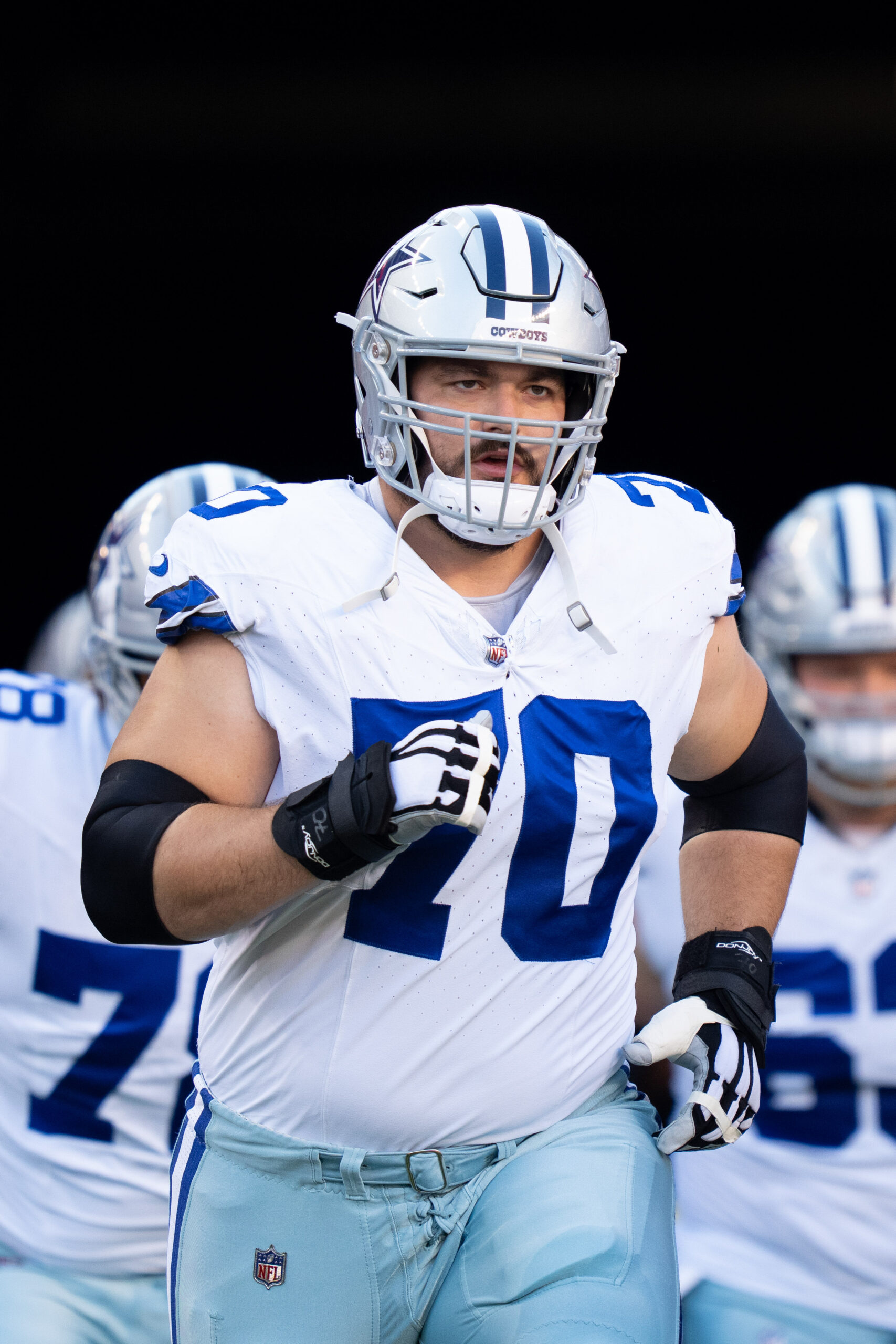 “I’m not saying 100%, but I think it’s definitely in the realm of possibilities,” Martin said, via the Dallas Morning News’ Michael Gehlken, of the possibility 2024 is his last season. “And that’s one thing I don’t want to do. For myself, I don’t want to be thinking, ‘Oh, this is it. This is it.’ I want to stay in the moment, and I want to play the best that I can play at this point and be the best right guard this team needs on a weekly basis. And then after the season, we’ll figure out what’s going on.”
Despite coming into the NFL two years after Smith, the acclaimed right guard is a month older than his longtime teammate. Drafted at 23, Martin will turn 34 in November. Martin signed a six-year, $84MM extension before the 2018 season. The extension ties the cornerstone lineman to the Cowboys for seven years. While the team revised Martin’s deal to end his holdout last year, the parameters of the 2018 agreement still shape his path to free agency.
Martin remaining at or close to his All-Pro form would, even at 34, make him an attractive free agent — particularly for contending teams — in 2025. Guards rarely receive the franchise tag, due to all O-linemen being under one umbrella on the tag, and the Cowboys’ contract situation has produced complications to the point a 2025 tag for anyone might not be in the cards. The team has Dak Prescott and CeeDee Lamb deals to complete, with a monster Parsons payday likely coming next year.
Restructures also stand to make matters difficult for the Cowboys regarding Martin, as a $26.5MM dead money hit would come to pass if he is not re-signed before the start of the 2025 league year. As the Tom Brady Buccaneers contract showed, a retirement would also stick the Cowboys with that void years-driven bill.
ESPN’s run block win rate metric slotted Martin fifth last season, though his 18th-place Pro Football Focus finish marked a career-low ranking. The 2014 first-round pick said his holdout, along with nagging injuries, hindered him — to a degree, as an All-Pro nod still commenced — in 2023. That said, Martin is in rare territory among guards. Even counting pre-merger players, Martin’s seventh first-team All-Pro selection tied him for first all-time at the position — with Hall of Famers John Hannah and Randall McDaniel.
The Cowboys did not re-sign Tyron Smith and, after the Tyler Guyton first-round choice, are expected to keep All-Pro Tyler Smith at left guard. As the team breaks in a new center post-Tyler Biadasz, Martin remains the team’s anchor piece up front. The Cowboys will count on the Notre Dame product again in 2024, but with his contract expiring and retirement under consideration, the All-Decade-teamer’s future is uncertain beyond the upcoming season.
Chargers Release C Corey Linsley
Transactions with retired players for cap purposes have transpired this week. The Eagles moved Jason Kelce and Fletcher Cox to their reserve/retired list, while the Buccaneers did the same with Ryan Jensen, who retired earlier this offseason. The Chargers are making a different move with Corey Linsley.
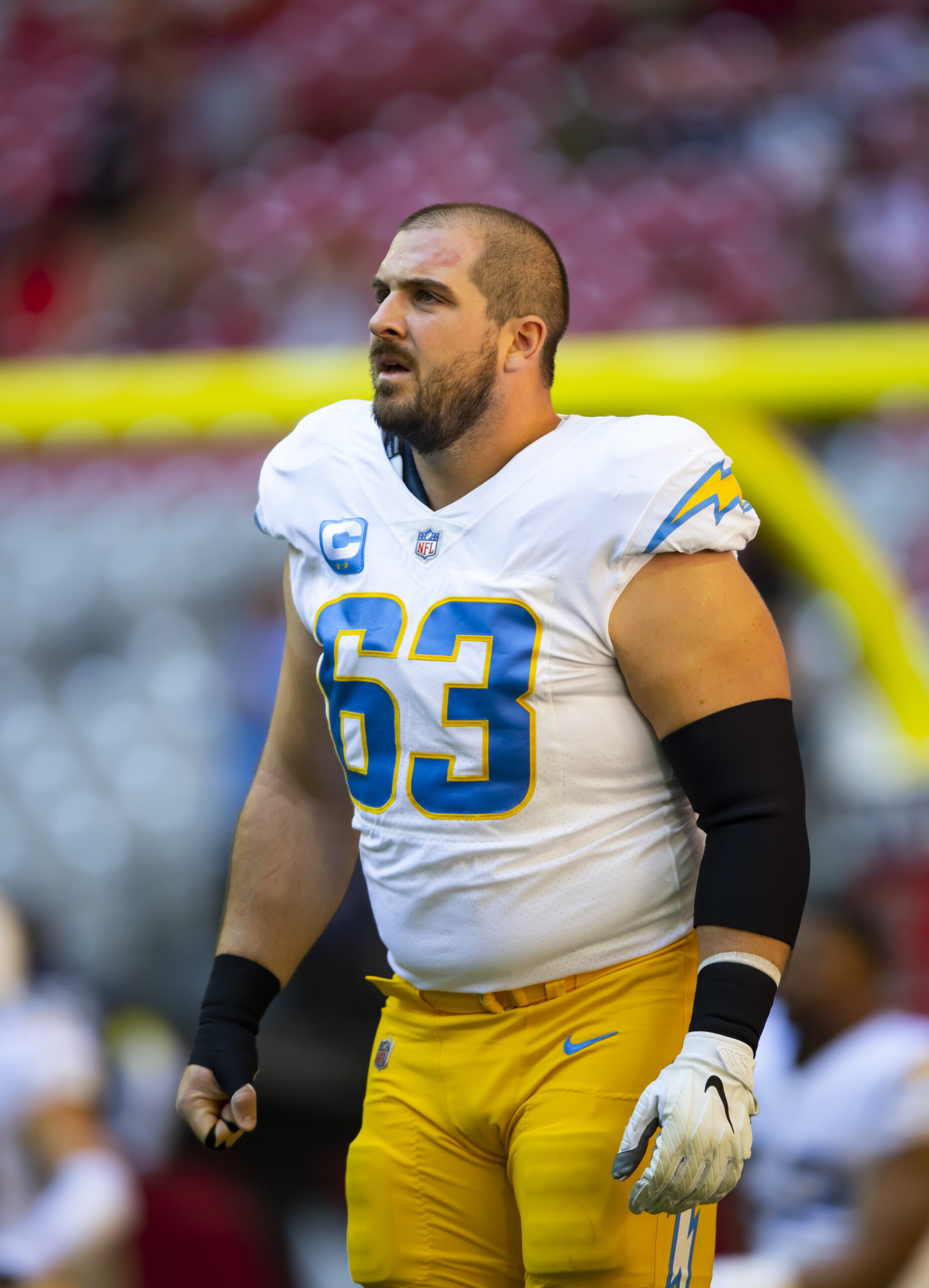 While Linsley is expected to retire, the Bolts are moving on via release. Chargers president John Spanos said Linsley “has taken his last snap in the NFL,” and this release will conclude the veteran center’s run with the Bolts. The Chargers will create a bit of cap space by making this move.
Linsley, the Chargers’ center from 2021-23, being cut after June 1 will create $1.2MM in cap savings for the team. Had the Bolts made this cut prior to June 1, they would have been hit with more than $5MM in dead money. Doing so now keeps the dead cap figure at $2.6MM, with the remainder of the money being pushed to 2025.
The Bolts and Linsley agreed on a restructure in February; that transaction dropped the veteran blocker’s 2024 base salary to the veteran minimum. That laid the groundwork for Wednesday’s release.
Linsley, 32, played in just three games last season. The Chargers placed the former Pro Bowler on IR after Week 3 due to a “non-emergent heart-related medical issue.” This abruptly halted a standout career for Linsley, who emerged from fifth-round pick to a player who once commanded a record-setting center deal. He was still playing at a high level when the medical issue transpired, having — per Pro Football Focus — not allowed a sack over his final 1,572 pass-blocking snaps. That covered his entire Chargers career.
The team, which changed coaches and GMs since Linsley last played, began its transition away from the talented center last season. The Bolts have since signed Bradley Bozeman, who is expected to transition from Carolina’s first-string snapper to the same role in Los Angeles.
After playing out his second Packers contract, Linsley signed a then-position-record five-year, $62.5MM deal to help the Bolts during Justin Herbert‘s rookie contract. Linsley joined Rashawn Slater and Matt Feiler as starter additions on the Chargers’ O-line that offseason. Slater remains in place as the Bolts’ left tackle to start the Jim Harbaugh era, while Linsley will transition away from the NFL after 10 seasons.
A Chargers team that needed to release Mike Williams to move under the 2024 salary ceiling will bump its cap-space figure beyond $27MM via the Linsley release. The team still needs to sign its first- and second-round picks (Joe Alt, Ladd McConkey), however.
49ers Extend RB Christian McCaffrey
The 49ers’ acquisition of Christian McCaffrey brought in a high-priced running back with three-plus years remaining on his contract. McCaffrey has proven tremendously valuable for his second NFL team, and he entered the 2024 offseason with two seasons left on his Panthers-constructed deal.
McCaffrey and the 49ers have reached an agreement on a new contract that will tie the reigning rushing champion to the team beyond 2025. The 49ers are giving McCaffrey a two-year, $38MM extension, Pro Football Talk’s Mike Florio reports. This will now tether the dual-threat dynamo to San Francisco through 2027.
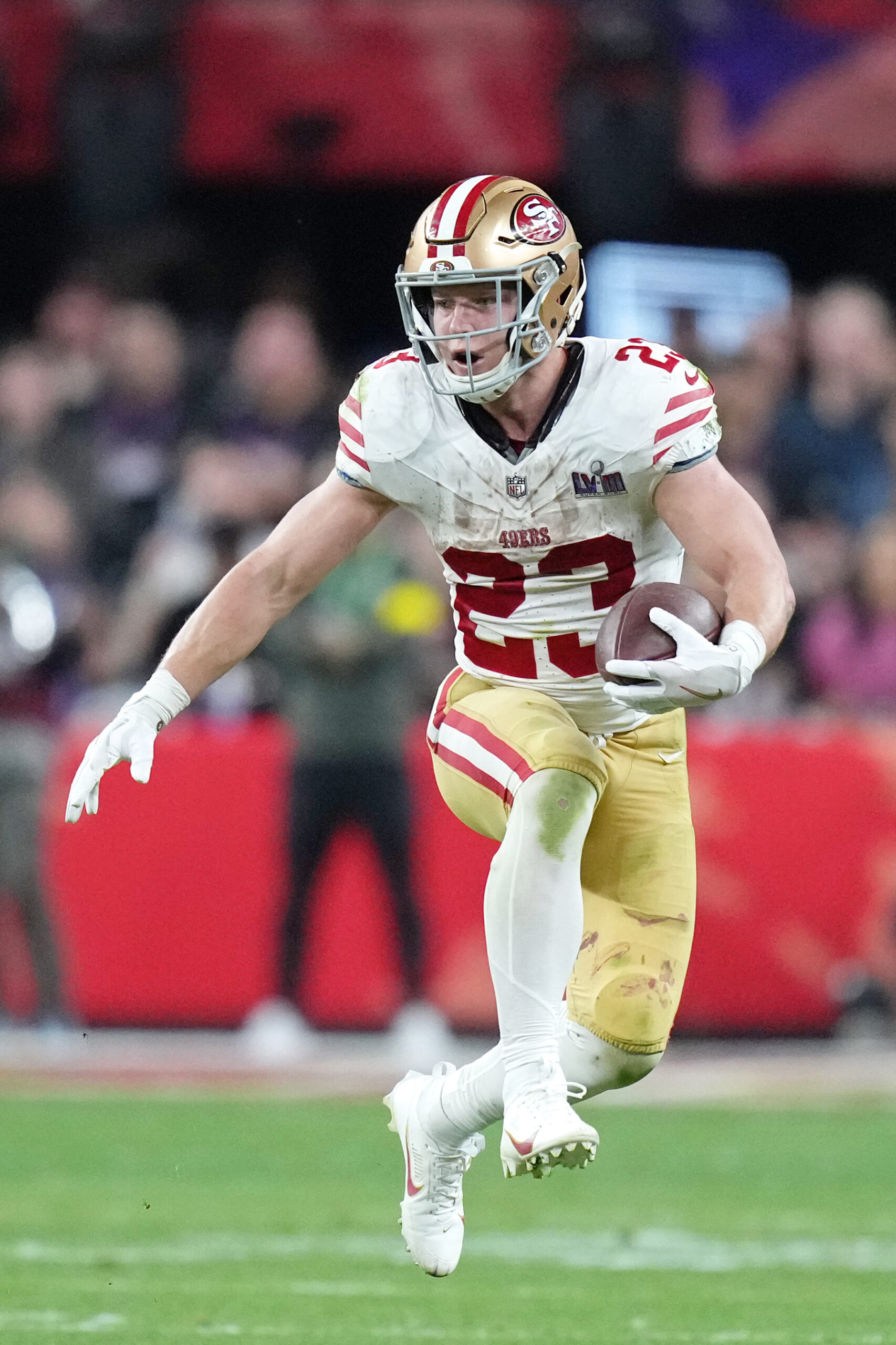 This represents a bump for the running back market, which McCaffrey had paced since his Carolina extension came to pass in April 2020. In addition to the eighth-year veteran moving beyond his $16MM-per-year number, ESPN.com’s Adam Schefter adds he will see $24MM guaranteed on this 49ers agreement. McCaffrey will earn an additional $8MM over the deal’s first two years as well. No guarantees remained on McCaffrey’s previous contract.
McCaffrey, who will turn 28 later this week, had made it known internally he wanted a new deal, according to The Athletic’s Dianna Russini. The former top-10 pick had stayed away from San Francisco OTAs. While that was not exactly cause for alarm regarding this relationship ahead of this week’s minicamp, the 49ers will act early on a player who has rewarded them the October 2022 pickup that required second-, third-, fourth- and fifth-round draft choices to complete.
Tuesday’s agreement also stands to drop CMC’s 2024 cap number, which stood at $14.1MM. Via a restructure, the 49ers had already included two void years in McCaffrey’s previous contract. This extension will help out on that front as well. Given the instability on the running back market over the past two offseasons, it is somewhat surprising to see a back reach $19MM-AAV territory. No other RB is tied to a deal worth more than $15MM per season.
The 2023 offseason removed a few high-priced RB contracts from the equation. The Cowboys and Vikings respectively cut Ezekiel Elliott and Dalvin Cook, and the Bengals and Packers respectively gave Joe Mixon and Aaron Jones pay cuts. The 2023 franchise tag deadline featured the three tagged RBs (Saquon Barkley, Josh Jacobs, Tony Pollard) not receiving extensions. McCaffrey was among those who voiced concerns about teams’ valuations of the position, and a Jonathan Taylor-Colts impasse took place. Since Taylor’s battle with his team, the market has shifted a bit. McCaffrey’s new deal follows Taylor’s $14MM-per-year extension and Barkley’s three-year, $37.5MM Eagles agreement.
San Francisco will use a $14.29MM signing bonus to spread out McCaffrey’s cap hits, and Florio adds a 2025 option bonus is in place. The team will guarantee $8.5MM of McCaffrey’s $14.25MM option bonus at signing. Beyond this $24MM guaranteed, the 49ers should still have some flexibility beyond 2025. McCaffrey’s deal includes a nonguaranteed 2026 option bonus ($10.55MM), per Florio, with a nonguaranteed $1.3MM 2026 base salary. CMC’s 2027 base ($16.85MM) is also nonguaranteed.
 McCaffrey’s deal reminds of the Cardinals’ 2020 DeAndre Hopkins accord, as it raises a positional AAV ceiling for a player already signed for at least two more seasons. Hopkins received a $27.25MM-per-year extension, which tied him to the Cardinals for five total seasons. The former Arizona wideout collected the guaranteed money on that deal but was not with the Cardinals for the extension years, as the team cut him in 2023. Although signing bonus prorations will create some dead money if the 49ers opt to move on, this contract provides McCaffrey security for 2025 at the very least.
Following the 49ers’ whiff on the Jerick McKinnon signing in 2018, the team used low-cost RBs — Tevin Coleman, Raheem Mostert, Jeff Wilson among them — until presented with the opportunity to acquire McCaffrey at the 2022 deadline. Outbidding the Rams for CMC, the 49ers took a risk on a player who had missed much of the 2020 and ’21 seasons due to injury. McCaffrey has rewarded the 49ers’ faith, making two Pro Bowls and — after a season with 2,023 scrimmage yards and 21 touchdowns — winning the 2023 Offensive Player of the Year award.
Missing 23 games due to quad, hamstring, shoulder and ankle maladies from 2020-21, McCaffrey has managed to play all but one game since being traded; he missed only an inconsequential Week 18 contest last season. He has been a vital part of the 49ers’ success over the past two seasons, providing Brock Purdy unmatched versatility from the RB position. The 49ers will have a Purdy payment to consider, but a 2025 Purdy extension would still stand to align with this latest CMC payday. McCaffrey may be out of the picture by the time the QB’s lofty cap numbers (assuming a Purdy extension indeed comes to pass) surface. For now, the 49ers have rewarded their top offensive player during the final stages of Purdy’s rookie deal.
This agreement leaves the 49ers with one fewer offensive pillar with a contract year in 2025. Purdy, George Kittle and Deebo Samuel are scheduled for walk years in ’25, with Brandon Aiyuk unsigned beyond his fifth-year option season. The Aiyuk situation lingers, but the 49ers checked off one box Tuesday, rewarding the top player at a marginalized position.
Cowboys Prepared To Make Strong Dak Prescott Offer
Plenty of extension candidates and recipients have come through Cowboys headquarters in recent years, as the team has strung together three straight 12-win seasons. But this profiles as a unique offseason for the oft-discussed franchise, as three cornerstone players — Dak Prescott, CeeDee Lamb and Micah Parsons — are each extension-eligible.
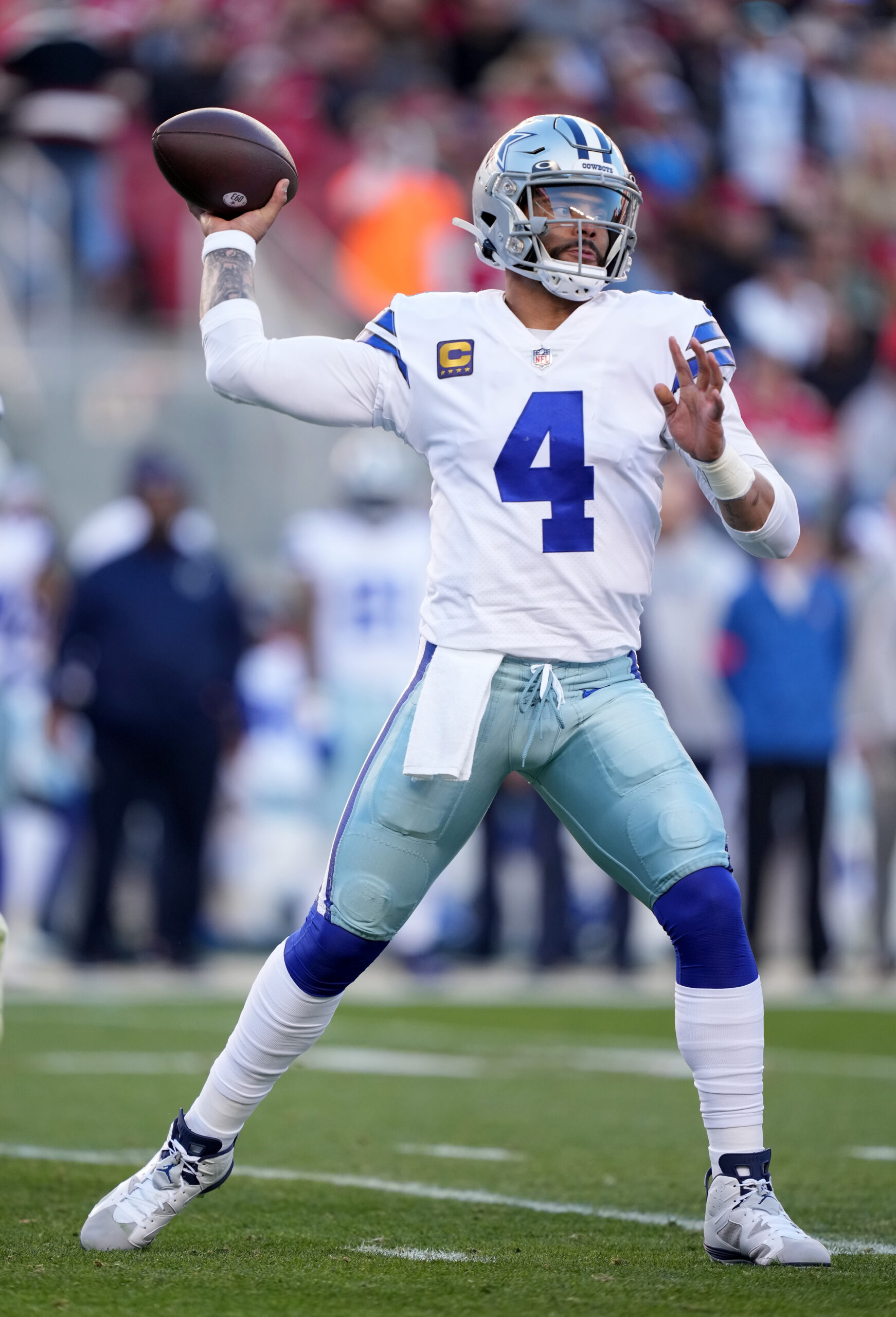 Both Prescott and Lamb are in contract years; the latter has not shown for minicamp this week. Two seasons remain on Parsons’ deal, via the fifth-year option. Prescott resides in the most interesting situation — due to the terms of his current contract.
Dallas’ QB cannot be franchise-tagged, and a no-trade clause gives the MVP runner-up security on that front as well. As of now, Prescott’s cap number ($55.13MM) trails Deshaun Watson‘s ($63.77MM). Both numbers would shatter an NFL record for a cap figure in-season.
Absent another restructure, the Browns could be ready to take some medicine on their Watson contract. The Cowboys, however, have a clear motivation to complete an extension. Although a report in the spring suggested Dallas was open to having Prescott reach free agency, pushback emerged soon after pointing to the team — as should be expected — having no desire to move to the free agency cliff with their QB. The team is “all in” on a Prescott extension, ESPN.com’s Jeremy Fowler noted during a recent Get Up appearance.
The “all in” phrase has become a bit tiresome when connected to this Cowboys offseason, but the team has made clear it wants to do a third deal with Prescott. Thus far, however, Fowler notes the team has taken a passive approach here. The Cowboys waiting with Lamb has likely cost some money, especially considering the monster guarantees the Vikings gave Justin Jefferson. As more quarterback deals are completed, that will certainly affect Dallas-Dak talks. The sides have been in discussions since March, though it is clear these talks have not reached the serious stage.
As the offseason winds down, the Cowboys will need to operate in a more urgent fashion with their ninth-year QB. They are planning to make a strong offer at some point this summer, Fowler adds. Considering the way Prescott operated during his first negotiation, the numbers associated with these discussions remain a central 2024 NFL storyline. Prescott bounced back from a down 2022, throwing an NFL-most 36 TD passes (compared to just nine INTs) and ranking second in QBR, to boost his market. Though, it would have been strong regardless.
While the 30-year-old passer downplayed his desire for a market-setting contract, the shrewd negotiations that led to his four-year, $160MM extension in March 2021 point have the Cowboys battling uphill. The team’s inability to tag Prescott and a recent restructure inflating the void years-driven penalty to $40.1MM in 2025 dead money leave the former fourth-round pick in the driver’s seat.
How the Cowboys handle this Prescott-Lamb-Parsons situation will be one of the more interesting contract chapters in recent league history. A quarterback on a deal at or near $60MM per year and a wideout on track for a near-Jefferson-level payment would be difficult enough, but Parsons having a clear case — thanks to his accomplishments and the cap increase — to top Nick Bosa‘s defender-record contract by a notable margin creates quite the crunch for the Cowboys, whose depth will be tested should the team indeed go through with extensions for all three.
WR Brandon Aiyuk Not Present At 49ers’ Minicamp
While the 49ers’ Christian McCaffrey extension ensures they have one fewer key player who would be in a contract year come 2025, Brandon Aiyuk remains unsigned beyond this season. Attached to a fifth-year option, the standout wide receiver continues to stay away from his team.
Aiyuk joined CeeDee Lamb by failing to report for his team’s minicamp Tuesday. Aiyuk did not show for the start of 49ers three-day camp, per NBC Sports Bay Area’s Matt Maiocco. Should the two-time 1,000-yard receiver skip all three days of the mandatory offseason session — as it certainly looks like he will — a $104K fine would be levied. Aiyuk has missed all of San Francisco’s offseason program thus far.
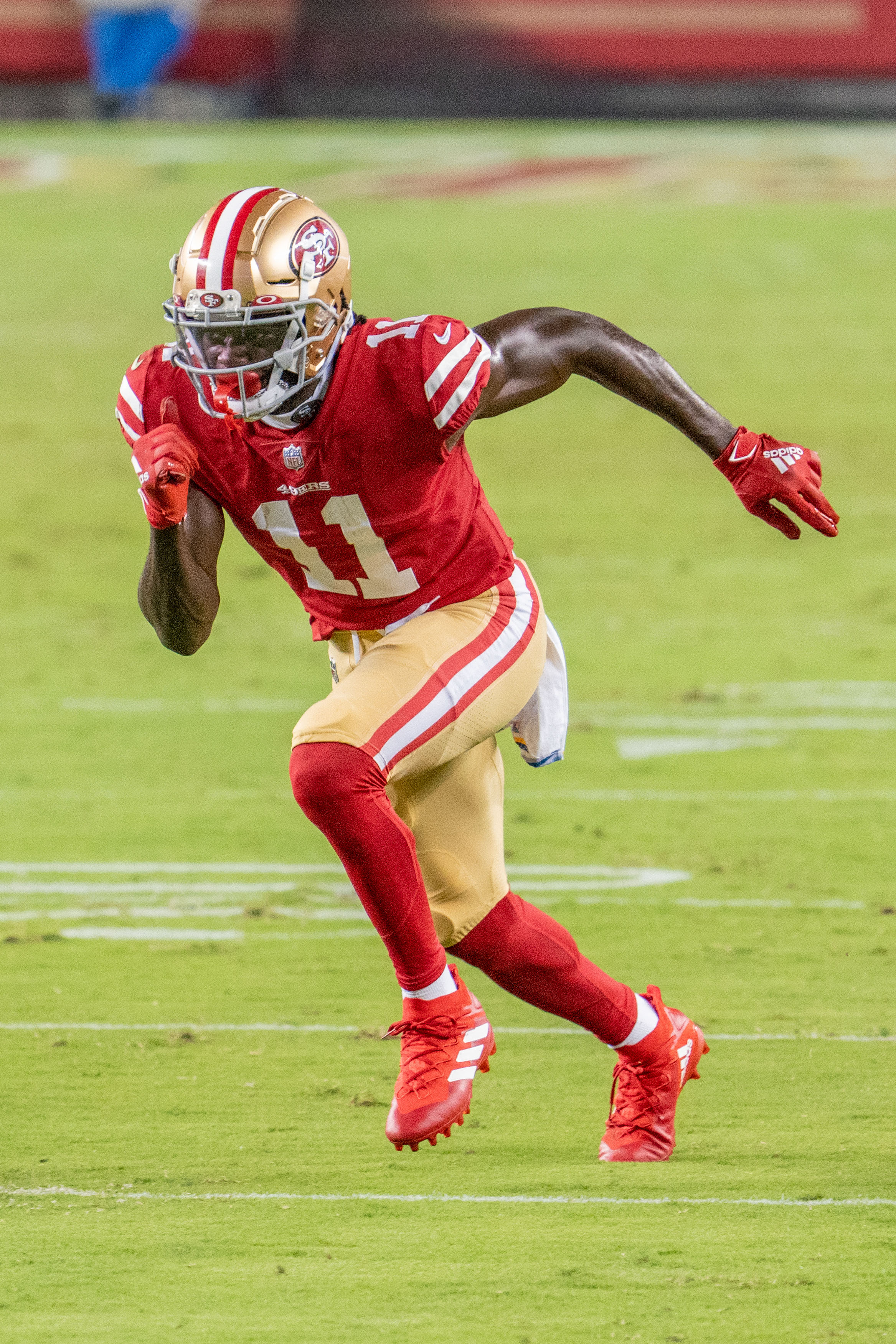 Players who miss OTAs usually show for minicamp, but it is not especially rare to see someone engaged in big-ticket extension talks to steer clear of the June session. Nick Bosa and Deebo Samuel each attended San Francisco’s minicamp (though, neither participated) while in contract negotiations, respectively, over the past two years. The 49ers reached extensions with both players before Week 1. As of now, Aiyuk is tied to a guaranteed $14.12MM option salary.
The wide receiver market has shifted this offseason, with the top average salary changing hands three times since April. Amon-Ra St. Brown, A.J. Brown and now Justin Jefferson have topped Tyreek Hill‘s $30MM-per-year number, and the Vikings ventured into unprecedented guarantee territory to lock down their All-Pro talent. Jefferson raised the full guarantee bar at WR from $52MM (Hill) to $88.7MM. The could conceivably produce sticker shock from other teams negotiating with receivers. Aiyuk would not be a candidate to top Jefferson’s salary, but he is believed to be eyeing a deal in the $30MM-per-year neighborhood.
A May report indicated Aiyuk was targeting an extension worth slightly more than the $30.05MM-AAV deal the Lions gave St. Brown. Prior to the Jefferson contract, Aiyuk-49ers talks were not progressing. The 49ers passed on trading Aiyuk during the draft, though teams inquired; it was believed San Francisco targeted a mid-first-round pick for the 2020 draftee. John Lynch effectively put a stop to Aiyuk and Samuel trade talks, though neither player should be considered a lock to be a 49er this season.
The team’s first-round selection of Ricky Pearsall does appear based on a future in which one of the Samuel-Aiyuk pair is elsewhere, but for now, the team understandably seems keen on reloading and attempting another Super Bowl run with its core skill-position pieces in place alongside Brock Purdy‘s rookie contract. With Purdy extension-eligible in 2025, it appears likely Samuel or Aiyuk will be elsewhere. The 49ers still have some time on this front, holding exclusive negotiating rights with Aiyuk until March 2025 and the franchise tag at its disposal.
With no deal at minicamp, this saga does appear headed toward training camp, the window the 49ers have used to reach several key extensions during the Lynch-Kyle Shanahan era.
Vikings Sought Longer-Term Justin Jefferson Extension
The booming wide receiver market has a new kingpin for the third time this offseason, but the position’s new financial pace-setter secured guarantee figures well north of the previous benchmarks. The Vikings are committed to Justin Jefferson, as their four-year, $140MM extension illustrates.
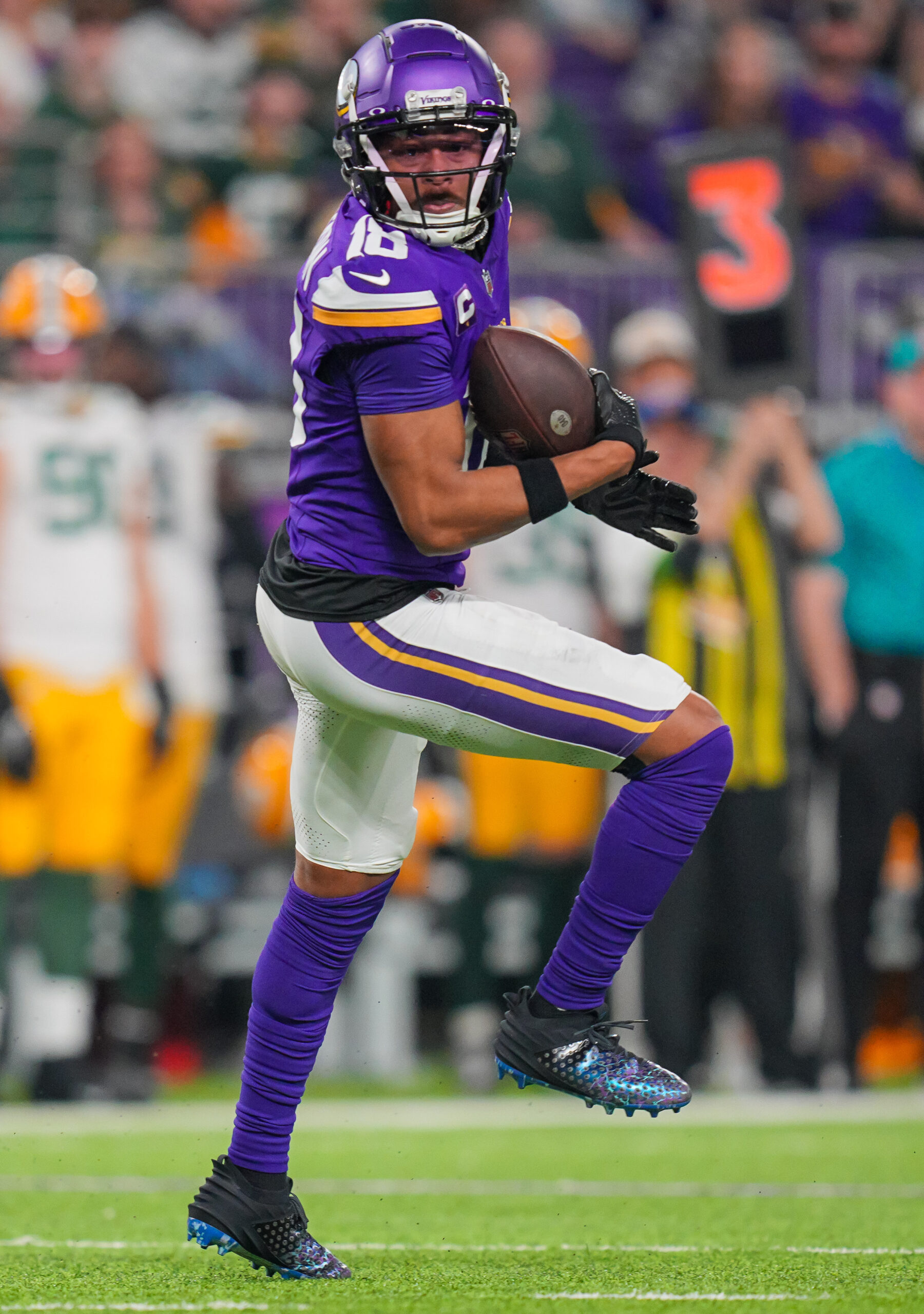 In guaranteeing the superstar wideout $110MM ($26MM north of the previous high) and fully guaranteeing him $88.7MM ($36MM higher than second place), the Vikings authorized player-friendly terms for a pass catcher on a stratospheric pace. Jefferson shattered Randy Moss‘ receiving yardage record through three seasons and managed a 1,074-yard showing despite missing seven games due to a hamstring injury.
The receiver market’s spike over the past three offseasons has brought a host of three- and four-year deals. Of the top 10 receiver contracts presently, only one (Davante Adams‘ Raiders pact) covered more than four years in length. (Though, Cooper Kupp‘s 2022 extension covered five seasons in total.) The Eagles’ recent A.J. Brown extension (three years, $96MM) brought a pivot point for the Vikings, per the Minneapolis Star Tribune’s Ben Goessling, as the receiver’s camp pushed for a deal that would allow him a chance at another payday before age 30.
“Obviously, on their side of it, they always want deal to be shorter: as much money as possible and shorter, and ours, longer,” Vikings GM Kwesi Adofo-Mensah said. “That [wide receiver] position has gotten shorter in terms, which is a unique dynamic in the market.”
Brown’s three-year deal, agreed to shortly before the draft, had set the AAV and guarantee standards at the position ($32MM, $84MM). The Vikings have been in talks with Jefferson since the 2023 offseason, proposing a deal just south of $30MM per year shortly before Week 1, but the Brown contract brought a short pause. This aligns with a Monday report that suggested the contract talks ramped up after the draft.
That same report pointed to multiple teams being prepared to offer multiple first-rounders for Jefferson and that the Vikes considered trading up (via the Chargers) to No. 5 for LSU’s Malik Nabers. The Bolts did not receive big offers, however, so it is unclear if a genuine consideration at rebooting around another rookie-deal wideout transpired on the Vikings’ part. No receiver has been traded for two first-round picks since 2000 (Joey Galloway, Keyshawn Johnson), but Adams fetching first- and second-round picks in 2022 would have made such a price logical for Jefferson, who turns 25 this month.
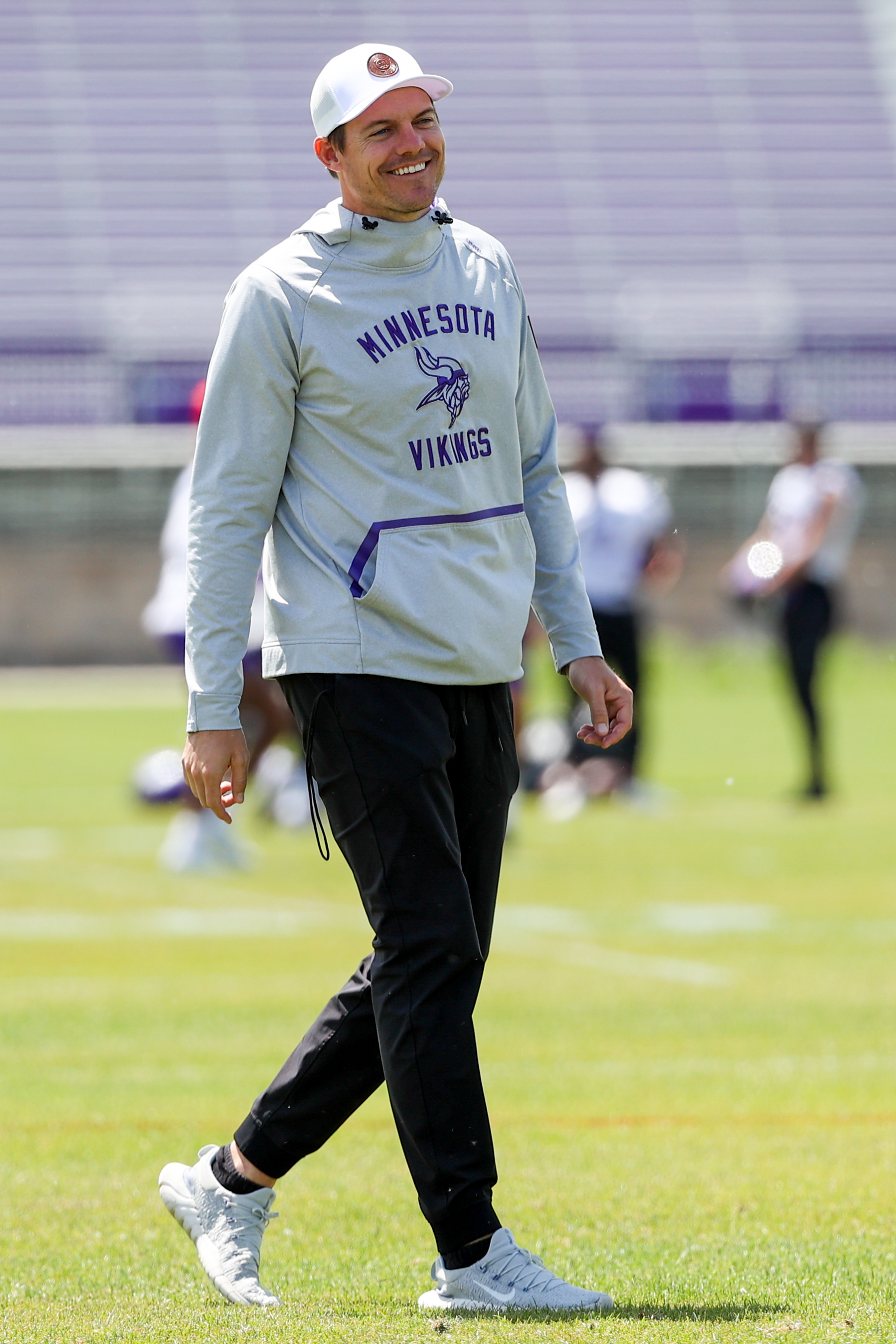 Adofo-Mensah pushed back on any notion of a trade, indicating the team had long committed to having the 2020 first-round pick tied to a second contract in Minnesota.
“This day was going to come,” Adofo-Mensah said. “There was never a second in my mind that we weren’t going to be here. We obviously have to navigate challenges and things like that, but this was always our purpose. … At the end of the day, you want to pay premier players who can produce while making other people’s jobs easier. That can come a lot of different ways, at a lot of different positions.”
In addition to Jefferson preferring a shorter-term accord, SI.com’s Albert Breer notes his camp sought to avoid the backloaded structures present in the Adams and Tyreek Hill deals. The Raiders have nonguaranteed $35.6MM and $36.6MM 2025 and ’26 salaries in Adams’ contract, producing a $28MM AAV, while the Dolphins included a nonguaranteed $43.9MM 2026 salary for Hill to create the $30MM AAV figure.
Despite having three years left on his contract, the latter is already angling for an adjustment. Jefferson’s camp wanting no phony numbers in the contract makes sense, and his guarantees will certainly impact other teams’ negotiations with top wideouts.
While Jefferson stumped for another Kirk Cousins contract, the Vikings passed and are set to roll with a low-cost arrangement at the position. J.J. McCarthy‘s rookie deal will be key for the Vikings during this Jefferson pact, and the team has already begun Christian Darrisaw extension talks. As for the Vikes’ post-Cousins QB outlook, Breer notes their top receiver believes in Kevin O’Connell‘s ability to coax quality QB play. Jefferson’s belief in the third-year HC effectively mitigated concerns about how the team’s passing game would look after Cousins’ Falcons defection.
Though Jefferson will be set for a transition post-Cousins, he has secured his payday and is now working with the Vikings’ new QBs at minicamp this week.
Colts Sign Round 2 WR Adonai Mitchell, Wrap Draft Class Deals
Four Day 2 picks are now part of the Colts’ wide receiver depth chart — to the point the most recent of those selections might not start early. But Adonai Mitchell will almost definitely see a key role for Indianapolis before season’s end.
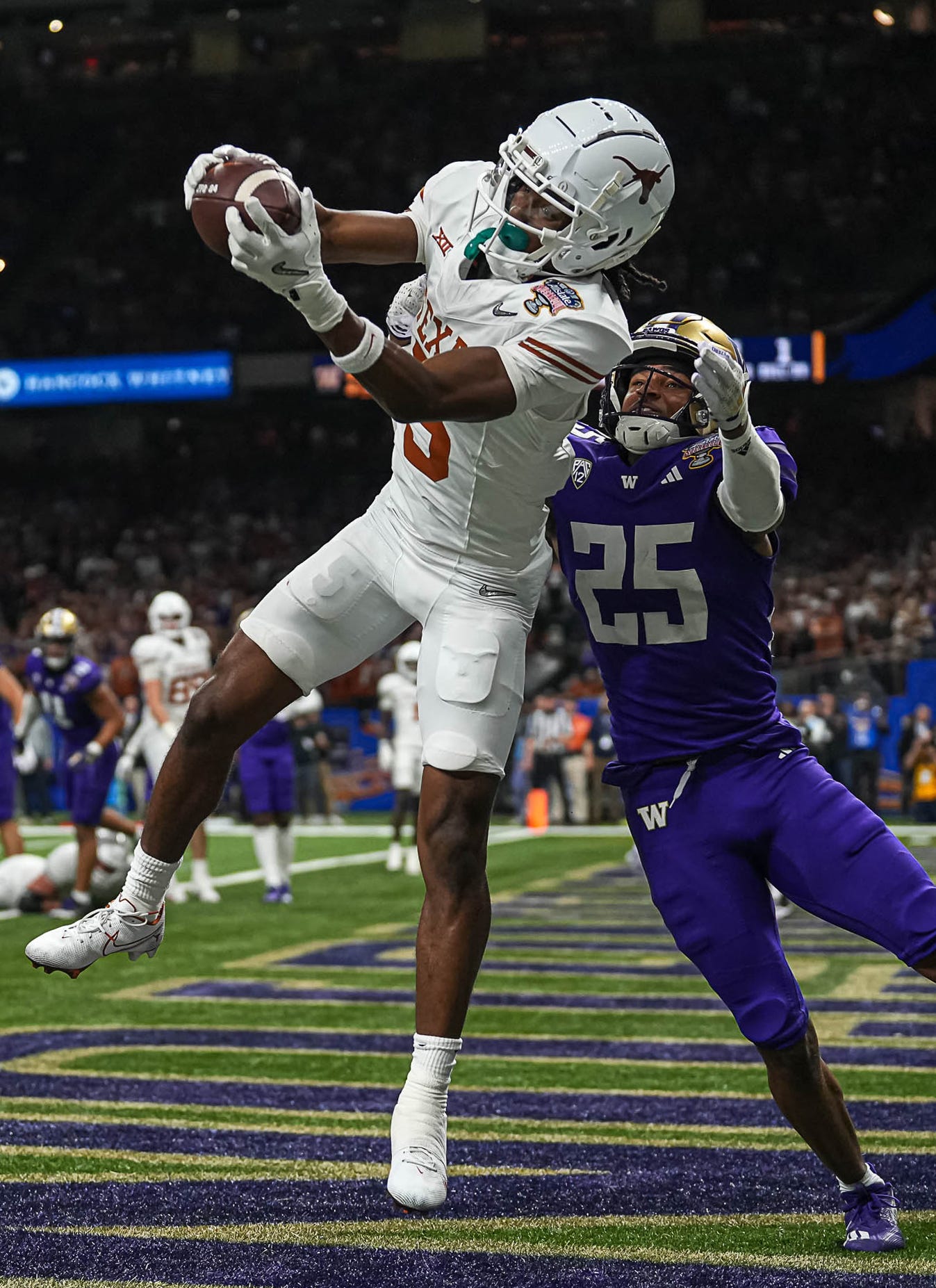 The Colts used the No. 52 overall pick on Mitchell, and the team now has the former Texas pass catcher signed to his four-year rookie contract. Mitchell’s contract continues the second-round contingent’s gains this year. The Colts are guaranteeing 65% of Mitchell’s rookie deal, per KPRC2’s Aaron Wilson, who notes $700K of the wideout’s 2026 base salary is locked in.
Last year’s No. 52 overall pick, Seahawks running back Zach Charbonnet, did not receive any Year 3 guarantees. Neither did No. 50 overall choice Jayden Reed. After the Texans guaranteed 4% of Blake Fisher‘s Year 3 base salary, Mitchell’s contract will further move the needle for players chosen just beyond No. 50 overall. These terms will certainly benefit the rest of the players in this draft sector. Mitchell can now focus on earning an early role with a Colts team that has been active on Day 2 with wideouts in the 2020s.
Although Indy’s Parris Campbell investment did not pan out, the team has shown a Steelers-like commitment to adding wideouts this way. After a few seasons as the team’s No. 1 target, Michael Pittman Jr. signed a three-year, $70MM extension. Alec Pierce (Round 2, 2022), Josh Downs (Round 3, 2023) and Mitchell flank the 2020 second-rounder. Mitchell comes to Indiana after a belated college breakout.
The 6-foot-2, 205-pound wideout caught 55 passes for 845 yards and Big 12-most 11 touchdowns last season. A 2023 transfer to Texas undoubtedly boosted Mitchell’s draft stock, as he was not especially productive as a Georgia underclassman from 2021-22. The relocation helped Texas as well, lifting the program to the CFP semifinals. Although Mitchell did not top 450 receiving yards during either of his Bulldogs seasons, the Colts will bet on the 2023 Longhorn’s size-speed combination. Mitchell blazed to a 4.34-second 40-yard dash at the Combine.
Indianapolis has been a Pittman-dependent aerial operation for years, though Downs (771 yards) showed immediate promise from the slot during Gardner Minshew‘s season at the controls. The Colts have seen Pierce eclipse 500 yards in each of his two seasons, though the team drafted the Cincinnati alum during Frank Reich‘s tenure. Downs and Mitchell came in under Shane Steichen. Regardless of coach affiliation, the Colts have all four of their Day 2 wideouts signed beyond 2024. That creates an interesting setup for a team that will hope to keep Anthony Richardson healthy as the high-end talent aims to improve as a passer.
This signing wraps the Colts’ 2024 draft class. Ahead of Indianapolis’ minicamp, here is how Chris Ballard‘s latest haul breaks down:
- Round 1, No. 15: Laiatu Latu (EDGE, UCLA) (signed)
- Round 2, No. 52 (from Panthers): Adonai Mitchell (WR, Texas) (signed)
- Round 3, No. 79 (from Jaguars through Falcons): Matt Goncalves (T, Pittsburgh) (signed)
- Round 4, No. 117: Tanor Bortolini (C, Wisconsin) (signed)
- Round 5, No. 142 (from Titans through Panthers): Anthony Gould (WR, Oregon State) (signed)
- Round 5, No. 151: Jaylon Carlies (S, Missouri) (signed)
- Round 5, No. 164 (from Lions through Eagles): Jaylin Simpson (S, Auburn) (signed)
- Round 6, No. 210: Micah Abraham (CB, Marshall) (signed)
- Round 7, No. 234: Jonah Laulu (DT, Oklahoma) (signed)
Vikings To Re-Sign G Dalton Risner
JUNE 4: The Vikings may end up having Risner back at less than his 2023 salary. The base value of Risner’s second Minnesota contract checks in at $1.91MM, Mike Florio of Pro Football Talk notes. Risner will see a $1.41MM base salary; $600K of that amount is guaranteed. That six-figure sum, along with a $500K signing bonus, bumps the veteran guard’s guarantees here to $1.1MM.
Risner can earn up to $3.2MM on this deal, with Florio adding incentives and roster bonuses are in place. He can collect up to $340K in per-game roster bonuses; additionally, a $200K bonus for being on the Vikings’ Week 1 roster is included. To reach any of the playing time-based incentives, Risner must play at least 75% of Minnesota’s offensive snaps. The three-tiered $750K incentive package ranges from 75-85% snap rates.
MAY 29: Dalton Risner has logged two extensive stays in free agency since his rookie contract expired. For a second straight year, it will be the Vikings who end that period.
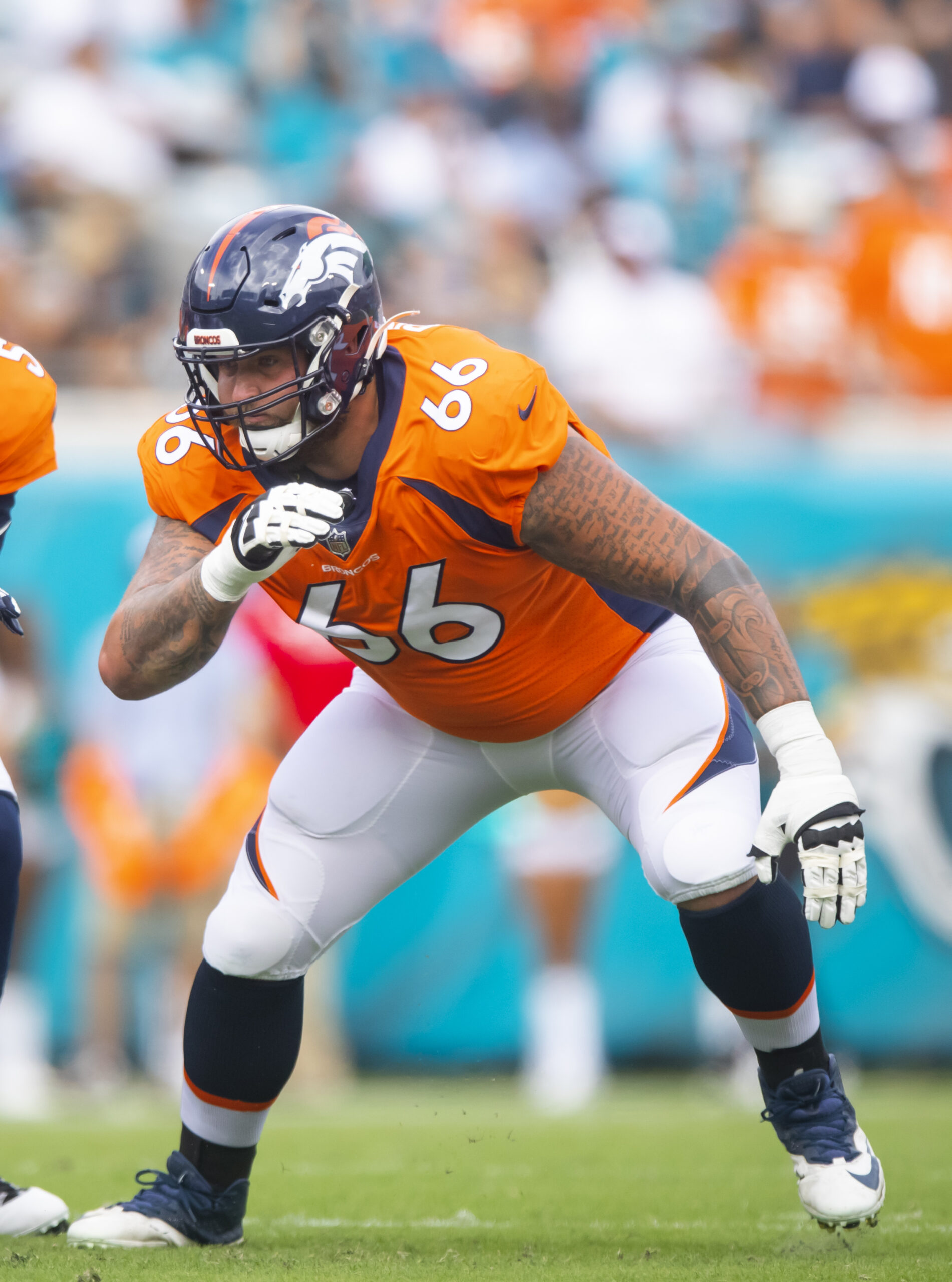 The veteran starter has an agreement in place to stay in Minnesota, according to ESPN.com’s Adam Schefter. Risner will rejoin the Vikings on a one-year deal. The team’s eventual Ezra Cleveland replacement, following a midseason trade, made 11 starts last season.
The past two offseasons have added some unexpected chapters to Risner’s NFL career. A Broncos starter in every game he played with his original franchise, the proven guard did not generate interest in free agency last year — to the point he entered the season unsigned. Although Risner made his way into Minnesota’s lineup early in his tenure, he once again failed to command a lucrative deal in free agency. Another Vikings parachute has emerged, however, and the five-year veteran will be a clear option to start once again.
After a handful of guards with similar experience to Risner scored quality deals as free agents in 2023, this year’s record-setting cap spike brought monster deals for a few. Robert Hunt is now a $20MM-per-year player, while four other guards (Jonah Jackson, Kevin Dotson, Damien Lewis, Jon Runyan Jr.) landed pacts worth at least $10MM per annum. Cleveland scored a three-year, $24MM pact to re-sign with the Jaguars. Risner did not join those blockers on PFR’s top 50 free agents list, as last year’s free agency odyssey lowered expectations. But he returned to deliver as a dependable starter for the Vikings, who likely have another low-cost agreement in place with the Kansas State alum.
Pro Football Focus assigned Risner a mid-pack grade at guard (46th) last season, but ESPN’s pass block win rate metric slotted him ninth. Risner, who played for just more than $2.5MM last season, ran his start count to 73 in 2023. It will be interesting to see the numbers here, and NFL.com’s Ian Rapoport indicates a 53-man roster bonus and per-game roster bonuses are present in this contract. The Vikes had re-signed Blake Brandel to a one-year, $3.25MM deal. While ESPN.com’s Kevin Seifert notes Brandel worked with Minnesota’s first-stringers at OTAs, Risner’s return figures to affect the veteran backup’s standing.
Beginning his Twin Cities tenure as a backup behind Cleveland and Ed Ingram, Risner became a full-time player once the Vikes traded Cleveland to the Jaguars at the deadline. He initially replaced an injured Cleveland before becoming the team’s replacement. Two years remain on Ingram’s rookie contract, and the Vikes still have Christian Darrisaw tied to a rookie deal. Risner, 28, will now be on track to protect J.J. McCarthy — potentially after a span blocking for Sam Darnold — in 2024.
The Broncos used Risner as a four-season starter, pairing him with veteran guards Ronald Leary and Graham Glasgow before Quinn Meinerz‘s emergence. Sean Payton‘s first offseason in charge led to Ben Powers signing a four-year, $52MM deal. Risner will continue to pursue a significant veteran deal, but he has a path back to a starting role in the meantime.
Vikings Ramped Up Justin Jefferson Talks After Draft; Teams Prepared Two-First-Rounder Trade Offers?
While the 2022 offseason featured a boom in the wide receiver market, it did not feature as many changeovers regarding the position’s highest salary as 2024 has brought. The top wideout salary benchmark has now moved three times since late April.
The Vikings are responsible for the biggest AAV vault at the position since the Cardinals’ DeAndre Hopkins payday in 2020, giving Justin Jefferson a four-year, $140MM extension that comes with a whopping $110MM guaranteed at $88.7M locked in at signing. In addition to the $35MM AAV being $3MM north of the closest WR’s number, Jefferson’s guarantees are on their own tier as well. The fifth-year Viking’s full guarantee number is $26MM higher than any other receiver’s; his $88.7MM full guarantee is a staggering $36MM higher than Tyreek Hill‘s previous market-topping figure. Like Amon-Ra St. Brown and Jaylen Waddle‘s recent deals, Jefferson will be protected on the guarantee front via year-out vesting.
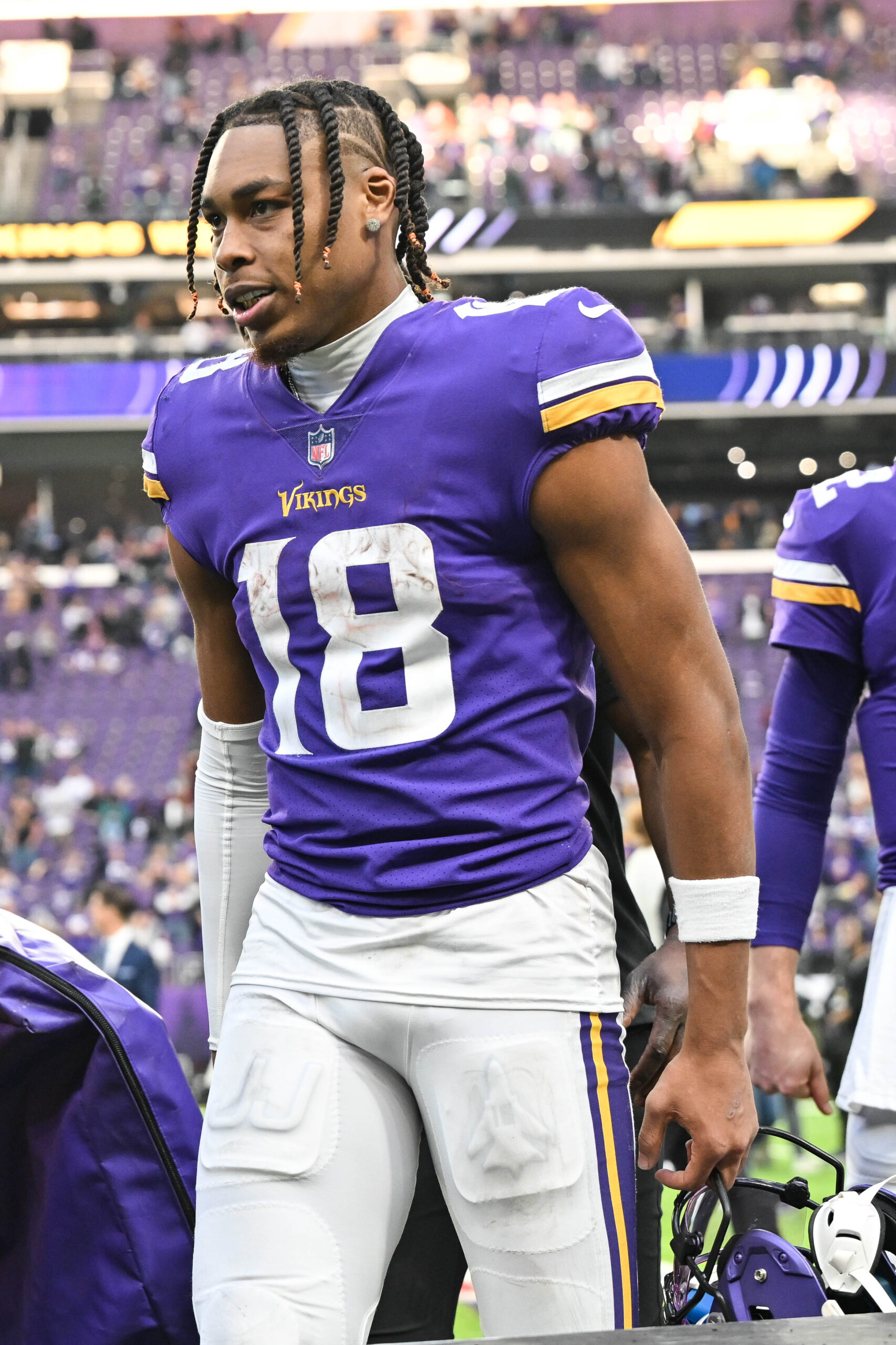 The Vikes guaranteed $17.99MM of Jefferson’s 2026 base salary ($24.99MM) at signing; already guaranteed for injury, the other $7MM will become fully guaranteed in March 2025, Pro Football Talk’s Mike Florio notes. Jefferson will be due a $29.25MM base salary in 2027. A $14.26MM injury guarantee already covers the superstar wideout; that will shift to a full guarantee in March 2026. Jefferson’s 2028 base salary ($33.24MM) is nonguaranteed.
Despite the ’28 base being nonguaranteed, Jefferson’s camp did extraordinarily well on this contract — as the substantial leads on the guarantee front confirm. The two-time All-Pro did not need to agree to a lofty final-year figure to prop up the AAV, which was required for Hill and Davante Adams to eclipse Hopkins’ then-record salary in 2022. Hill is angling for an update to his through-2026 contract, one that includes a phony $43.9MM 2026 base salary that almost definitely will not be paid out.
The Vikings used a dual bonus structure (signing and option) in Jefferson’s contract, per OverTheCap, and included a void year (2029). Void years became a thorny issue for this Vikings regime, with both Dalvin Tomlinson and Kirk Cousins tagging the club with notable dead money hits (Cousins’ went to $28.5MM) due to void years. This void structure, however, would only bring a $6MM dead cap hit if Jefferson departed as a free agent in 2029. The Vikings will keep Jefferson cap hits below $16MM in 2024 and ’25, but his 2026 number shoots to $38.98MM.
 Negotiations between the Vikings and Jefferson did not intensify until after the draft, Florio adds. Rumblings about Minnesota being interested in trading up to No. 5 for Malik Nabers emerged, though concrete details about that potential effort remain elusive. GM Kwesi Adofo-Mensah has been resolute on a Jefferson extension since early in the 2023 offseason; a trade/Nabers-centered reboot would have been borderline shocking.
The Vikings were connected to moving up for a quarterback, which they eventually did by trading from No. 11 to No. 10 (via the Jets). However, Minnesota had acquired an additional first-round pick from Houston (No. 23). This was viewed as a weapon in QB bidding, but with none of the passers beyond Drake Maye drawing extensive trade interest, the Vikings did not need to give up much to climb to No. 10 for J.J. McCarthy.
Minnesota attempted to acquire the No. 3 overall pick from New England, eyeing Maye. The Vikes’ proposal included their 2025 first-round pick, along with mid-round Pats picks going back to Minnesota in the swap. The Maye effort failing could have conceivably prompted the Vikings to try to acquire both Nabers and McCarthy, though that would have been a complex blueprint to complete. They soon focused on just the quarterback, eventually using the No. 23 pick to trade up for Dallas Turner at No. 17.
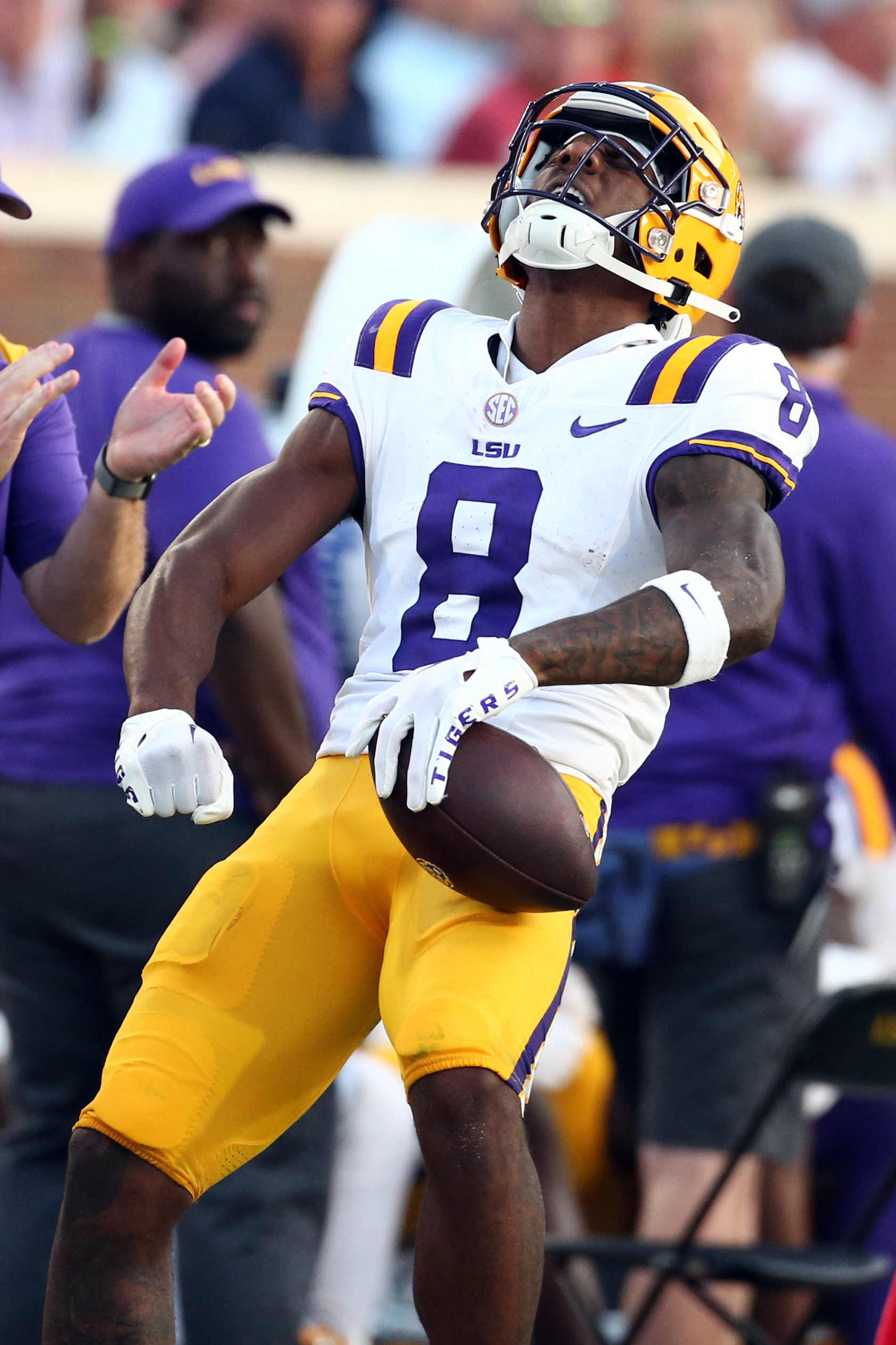
It would have been surprising but understandable had the Vikings entertained trade offers for Jefferson before and during the draft, given the price point here. The team traded Stefon Diggs in 2020 (and succeeded in replacing him with Jefferson) and unloaded both Percy Harvin (2013) and Randy Moss (2005). Jefferson far outproduced Diggs on his rookie contract, shattering Moss’ NFL record for receiving yardage through three seasons (4,825). The former LSU standout also surpassed 1,000 yards (1,074) last season despite missing seven games due to a hamstring injury.
 Had the Vikings been serious about Jefferson trades, Florio adds multiple teams were prepared to offer multiple first-rounders. With Diggs, Hill, Adams and A.J. Brown drawing first-rounders and then other picks in deals earlier this decade, the Vikings certainly carried an interesting chip.
That said, a two-first-rounder offer actually emerging would have been fascinating. Hill, Diggs and Brown did not draw any Day 2 compensation in addition to the first-rounders in those deals. Adams fetched first- and second-rounders. Another team sending the Vikings two first-rounders and then giving Jefferson a record-smashing extension would have depleted resources on multiple fronts, though a star wideout going into his age-25 season is obviously valuable as well.
The Cowboys and Buccaneers traded two first-round picks for wideouts (Joey Galloway, Keyshawn Johnson), but both those blockbusters occurred back in 2000. No team has forked over two first-rounders for a wide receiver since. It would obviously be interesting to learn which current teams were considering a two-first-rounder offer for Jefferson.
Rather than move Jefferson to avoid new financial territory at wide receiver, Minnesota will pair this lucrative contract with McCarthy’s rookie deal, which he must remain tied to through at least 2026. Players like CeeDee Lamb and Ja’Marr Chase will certainly attempt to use Jefferson’s deal as a springboard, and it will be worth monitoring to see how teams navigate big-ticket WR extensions following this monster Minnesota agreement. Even if Lamb and Chase do not eclipse the Jefferson numbers, the Vikings’ deal will impact those respective talks.
Steelers Sign Round 1 T Troy Fautanu
Using a first-round pick on a tackle for the second straight year, the Steelers have revamped their situation at this position. The more recent of the two investments, No. 20 overall pick Troy Fautanu, is now signed.
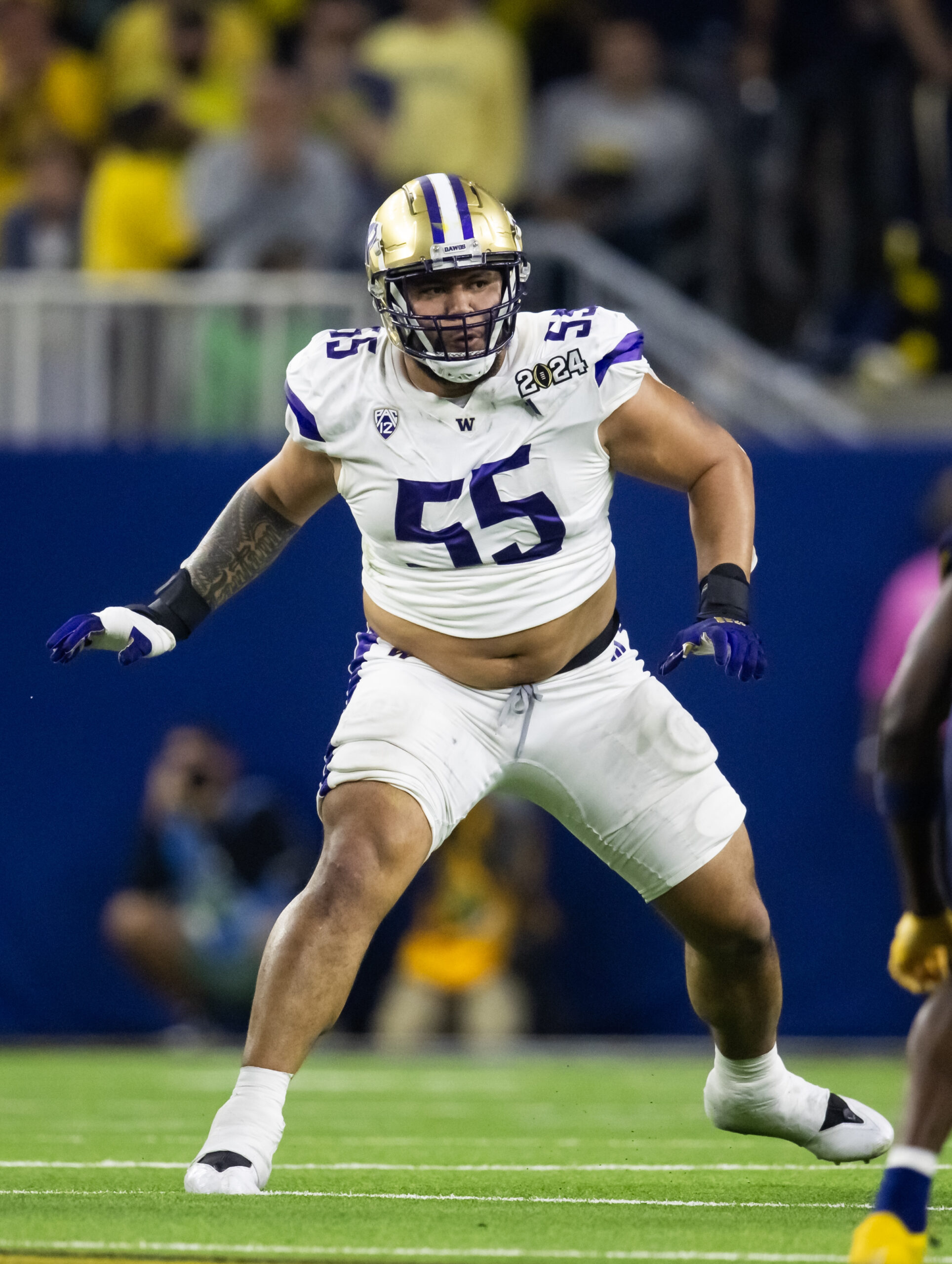 The Steelers agreed to terms with Fautanu on Monday, locking him down through the 2027 season. This contract, as all first-rounders’ do, includes a fifth-year option that will need to be exercised or declined by May 2027. Fautanu joins Broderick Jones as Pittsburgh’s hopeful long-term tackle answers.
Rumors about Pittsburgh using Fautanu at right tackle, and sliding Jones to the left side have emerged, but the team could also opt to bring the Washington product along slowly — as it did Jones in 2023. The team still rosters three-year LT starter Dan Moore, though he has struggled at points over the course of his rookie deal. One season remains on Moore’s rookie contract, pointing to a near-future reality in which the Steelers roll out a Jones-Fautanu tandem.
The Steelers viewed Fautanu as a superior prospect to Jones and looked into trade-up avenues, but the recent left tackle starter for the national championship game-bound Huskies dropped to No. 20 in a tackle-rich draft. Playing left tackle opposite eventual second-round Ravens draftee Roger Rosengarten, Fautanu became a high-end tackle prospect during his Washington stay. The 6-foot-4, 317-pound blocker earned first-team All-Pac-12 acclaim while blocking for Michael Penix Jr.
It will be interesting to see how Pittsburgh arranges its blockers come Week 1. The team kept Jones on the bench behind Moore and then-RT Chukwuma Okorafor to start last season, but the Georgia prospect took over on the right side midway through. The Steelers cut Okorafor earlier this offseason; he is now competing for the Patriots’ LT post. One of the team’s first-round tackle investments will be a right tackle in the not-too-distant future, however, as Moore’s time in Pittsburgh appears to be winding down.
Should Fautanu supplant Moore as a starter, this season will mark a shift for a Steelers team that has used midlevel investments at tackle for many years. Jones represented the first Round 1 tackle to see extended time with the Steelers since Wayne Gandy in 2002. The team has used an array of blockers chosen outside the first round, most recently slotting the likes of Moore (fourth round), Okorafor (third round) and UDFA Alejandro Villanueva into its lineup. The Steelers will aim for a higher ceiling with Jones and Fautanu.