
PFR Originals: Smith, Rison, Simms
In case you missed it, here’s a look back at some of our recent originals:
- Years before Eli Manning‘s retirement, Giants fans bid farewell to longtime quarterback Phil Simms. Our own Sam Robinson took a look back at the end, which was actually a release. Simms says he could have continued his career with another team, but ultimately chose to call it quits.
- In 1997, the Chiefs were in the championship mix and needed a big splash to try and get over the hump. So, in July of that year, they added Andre Rison to their WR group. As Sam notes, Rison’s playmaking ability was sorely needed in KC. In ’97, he was the only Chiefs pass catcher topped 500 yards in 1997 as he reached 1,092 on 72 catches.
- Our Ben Levine looked back on the Panthers’ first contract with Steve Smith. At the time, it was just another third-round pick completing his paperwork. But, of course, Smith went on to set franchise records in receiving yards (12,197), receptions (836), and total touchdowns (67).
- The trade market tends to be quiet in June. But, ~seven years ago, the Texans and Falcons completed a noteworthy move by swapping quarterback T.J. Yates and linebacker Akeem Dent. And, in an interesting twist, both players became Texans coaches on the very same day in 2019.
This Date In Transactions History: Texans Trade QB T.J. Yates To Falcons
Seven years ago today, we had a rare June NFL trade. In a notable move (at the time), the Texans sent quarterback T.J. Yates to the Falcons for linebacker Akeem Dent. 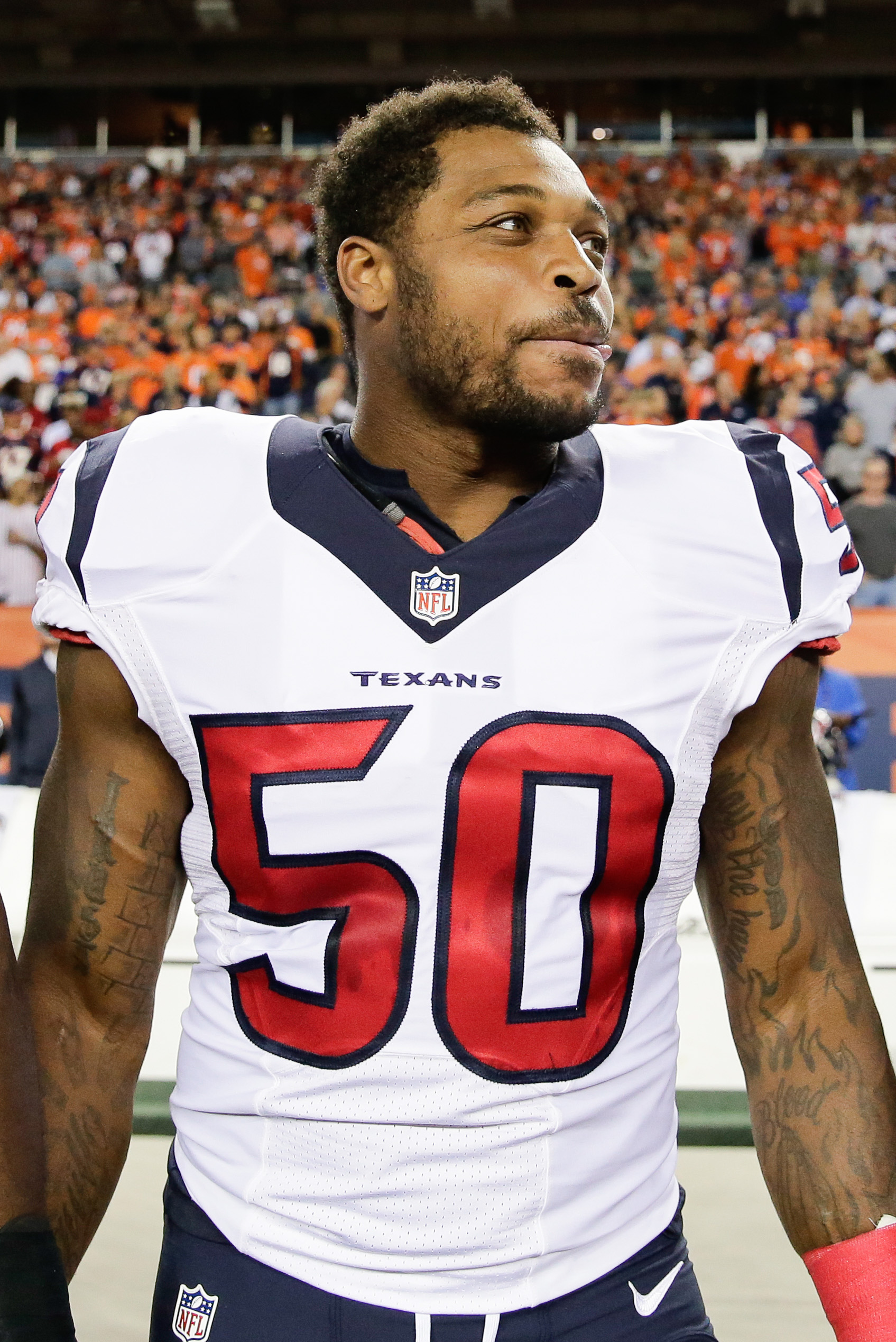
Houston had actually planned on releasing Yates, their 2011 fifth-round pick. The North Carolina product had failed to show much during his first three years in the NFL, throwing three touchdowns and six interceptions in 13 games. With coach Bill O’Brien deciding to roll with the trio of Ryan Fitzpatrick, Case Keenum, and Tom Savage, Yates was set to be released and hit free agency. However, once word of Yates’ impending release got around the NFL, teams started calling in on the young signal-caller.
Houston ended up landing on a deal with the Falcons, receiving the intriguing Dent in return. The 2011 third-round pick had looked solid during his stint in Atlanta, starting 10 games and compiling 136 tackles in three years. While the Georgia product failed to progress during his time in Houston, the trade still appears to be a win for the Texans. Dent collected 38 tackles and one sacks in 15 games (seven starts) during his first season in Houston, earning himself a two-year extension. However, over the next two seasons, Dent only managed to compile a combined 29 tackles and zero sacks and hasn’t appeared in the NFL since 2016.
Yates’ tenure with the Falcons was short-lived. The quarterback appeared in only a single game for the franchise, completing three of four passes for 64 yards and one interception. He was released by Atlanta prior to the 2015 season, and he ended up catching on again with… the Texans. Yates looked a bit better during his second (and third) stint in Houston, and he earned a chance to play in 2017 due to injuries. He finished the campaign having completed 48.5-percent of his passes for 523 yards, four touchdowns, and three interceptions.
In an interesting twist, the two ex-players signed on to join the Texans’ coaching staff on the same day in February of 2019. Neither player stayed on for the David Culley administration, but Yates now serves as a passing game specialist for the Falcons.
This Date In Transactions History: Panthers Sign Steve Smith To Rookie Deal
If Pro Football Rumors existed in 2001, we probably would have tucked the signing of a third-round receiver into one of our roundup posts. Fast forward 20 years, and that third-rounder is now considered one of the best wide receivers of the 2000s. On June 19th, 2001, the Panthers signed rookie wideout Steve Smith to his rookie contract.
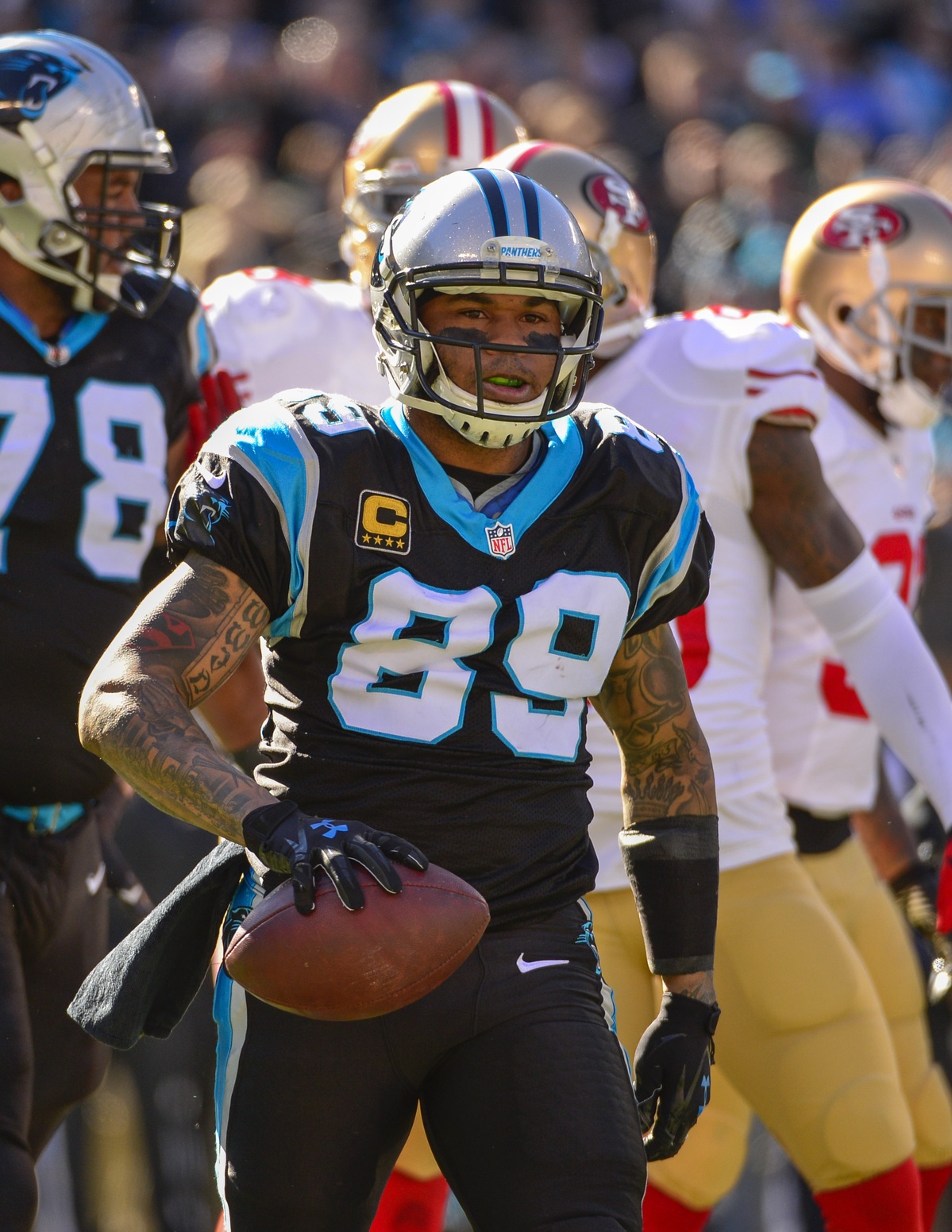 Smith’s draft stock wasn’t necessarily due to a lack of talent. Rather, teams and scouts had limited (proverbial) tape on the receiver. Smith spent his first two years of college at Santa Monica College, a community college in California. He eventually got an offer to play for the University of Utah, and he proceeded to earn a pair of conference all-star nods during his two seasons in the Mountain West Conference.
However, with only a pair of Division I seasons under his belt (and with a nagging injury toward the end of his senior year), Smith ended up being the 11th wide receiver off the board during the 2001 draft. After going defense with their first two selections, the Panthers chose Smith with the No. 74 pick.
Smith didn’t see much time on offense during his rookie season, although he earned a first-team All Pro nod and Pro Bowl honors after finishing with 1,795 return yards (punt and kick) and three touchdowns. His net yardage of 1,994 led all rookies that season. During his sophomore year, Smith saw a much larger role in the offense, and he emerged as one of quarterback Rodney Peete‘s preferred targets, leading the team in receiving yards. The wideout established himself as one of the league’s top receivers in 2003; along with quarterback Jake Delhomme and running back Stephen Davis, the offensive trio helped guide the Panthers to an NFC Championship.
Unfortunately, that was the closest Smith would ever get to a Super Bowl ring, but the receiver still managed to establish himself as one of the best players in franchise history during his 13 seasons with the Panthers. Smith owns franchise records in receiving yards (12,197), receptions (836), and total touchdowns (67). His best season came in 2005, when he led the NFL in all three of those aforementioned categories (103 catches for 1,563 yards and 12 receiving touchdowns). Smith also earned a long list of accolades during his time with the Panthers, earning three All-Pro recognitions and five Pro Bowl appearances.
Smith’s tenure with the organization didn’t end on the best of terms; after being released by the team in 2014, the receiver promised “blood and guts” if he ever faced off against his former team. The veteran ended up inking a three-year deal with the Ravens, and when he faced off against the Panthers in Week 4 of the 2014 season, Smith went off for a season-high 139 receiving yards and two scores. Smith announced that he was going to retire following the 2015 season, but after that campaign was cut short due to an Achilles injury, he returned for one last season in 2016. He officially retired following that campaign.
The receiver will be eligible for the Hall of Fame next year. Smith ranks eighth all-time in receiving yards (14,731) and 12th all-time in receptions (1,031). Those are some spectacular numbers for a former third-rounder who probably wouldn’t have warranted his own post back in 2001.
This Date In Transactions History: Chiefs Sign Andre Rison
If the current Chiefs run doubles as the most successful point in franchise history, the AFL stretch in the 1960s ranks second. But Kansas City carved out another championship window in the 1990s. The Chiefs booked seven playoff berths in the decade, and they made a big move to strengthen their Super Bowl hopes on this day 24 years ago.
On June 18, 1997, the Chiefs struck a deal with Andre Rison, a former perennial Pro Bowler who had bounced around the league in the mid-’90s. The accomplished wide receiver signed a two-year, $1.8MM contract, at a time when the salary cap was just $41.5MM. For one season, the Chiefs’ partnership with Rison proved crucial.
Once part of a trade that sent the No. 1 overall pick — Jeff George — to the Colts in 1990, Rison established himself as an elite wideout in Atlanta. In five Falcons seasons, the 1989 first-rounder made four Pro Bowls and totaled 56 touchdown catches. Amassed from 1990-94, those 56 TD grabs eclipsed all non-Jerry Rice NFLers by at least four in that span. However, free agency did not lead to a long-term stay elsewhere initially.
The Browns, Jaguars and Packers all cut Rison from 1996-97. Green Bay added the veteran as a midseason replacement for the injured Robert Brooks in 1996, and Rison caught two playoff TD passes from Brett Favre — the second of which a 54-yarder in Green Bay’s Super Bowl XXXI win. The Packers released Rison in March 1997, leading him to Missouri.
The Chiefs remade their passing attack that year, signing Elvis Grbac. While Brett Perriman, late-bloomer Joe Horn and then-rookie Tony Gonzalez were among Grbac’s aerial options that season, the Chiefs relied on a 30-year-old Rison in ’97. Only one Chiefs pass catcher topped 500 yards in 1997; Rison reached 1,092 on 72 receptions. Seven of those grabs went for touchdowns during a season that featured Grbac and future MVP Rich Gannon throwing Rison passes.
While the Chiefs lost in the divisional round, after going 13-3 and earning the AFC’s top seed, their Rison bet made a difference in the team’s second 13-3 season in three years. Despite the defense-powered Chiefs losing 14-10 to the eventual champion Broncos in their playoff opener, Rison’s 110 receiving yards led all players that day. The Michigan State alum made his fifth and final Pro Bowl in his first Chiefs season.
Rison scored a six-year, $15.5MM Chiefs extension in June 1998 but played only two years on that deal. A hamstring injury hampered him in 1998, and he was not productive in 15 games the following year. The Chiefs released Rison during the 2000 preseason. Rison concluded his career as a Raiders role player that year, hauling in six TD passes from Gannon on an Oakland team that advanced to the AFC championship game. Rison finished in the top seven in receptions, yards and touchdowns among pass catchers in the 1990s.
This Date In Transactions History: Giants Cut Phil Simms
The Giants saw Eli Manning retire last year, ending a 16-year run. The other Giants passer to be named Super Bowl MVP did not receive the same sendoff. Phil Simms‘ 15-season stay in New York ended 27 years ago today when the Giants released him.
Although Simms had reclaimed his starting job and led the Giants to the 1993 playoffs — en route to his second Pro Bowl — the team cut him due to salary cap concerns on June 16, 1994. The ’94 offseason was the first time NFL teams had to navigate a salary cap, which debuted at $34.6MM. Simms — 38 and fresh off of offseason shoulder surgery — was set to earn $2.32MM in the coming season.
Simms and Jeff Hostetler had split time in 1991 and ’92, with Hostetler winning New York’s QB1 job in 1991 after replacing an injured Simms late in the Giants’ 1990 Super Bowl-winning season. Simms started four games in ’92 but suffered a season-ending injury. However, the Giants let Hostetler sign with the Raiders in 1993 and reinstalled Simms as their starter. He started all 16 games, and the Giants came within an iconic Week 18 Emmitt Smith performance of earning home-field advantage in the NFC playoffs. The Giants ended up beating the Vikings in the wild-card round before losing to the 49ers — in what would turn out to be the final NFL game for Simms and Lawrence Taylor — a week later.
“When the decision was made I said, ‘Oh my God.’ Afterward when I was driving home I was still kind of shocked and it was like I didn’t know what had happened,” Simms said. “I can honestly say I was not prepared for it.”
Current Giants co-owner John Mara said his father, Hall of Famer Wellington Mara, was against Hall of Fame GM George Young‘s decision to cut Simms. But the team made the move and handed the reins to 1992 first-round supplemental draft pick Dave Brown. He started the next three seasons for the Giants — who missed the playoffs in each of those slates — with Kent Graham and Danny Kanell then bridging the gap to 1999 free agency addition Kerry Collins.
Simms later said three teams submitted offers for him to continue his career. While he ultimately retired, Simms visited the Browns — then coached by former Giants defensive coordinator Bill Belichick — in 1995. He stayed retired and continued in the broadcast booth instead. The Super Bowl XXI MVP, Simms ranks behind only Manning in passing yards (33,462) and touchdown passes (199) in Giants history.
This Date In Transactions History: Texans Extend Benardrick McKinney
Today marks the three-year anniversary of Benardrick McKinney‘s five-year, $50MM extension with the Texans. If you forgot to get the inside linebacker a gift, that’s alright. He probably doesn’t need much in the way of gadgets and home furnishings for his new Miami-area pad. 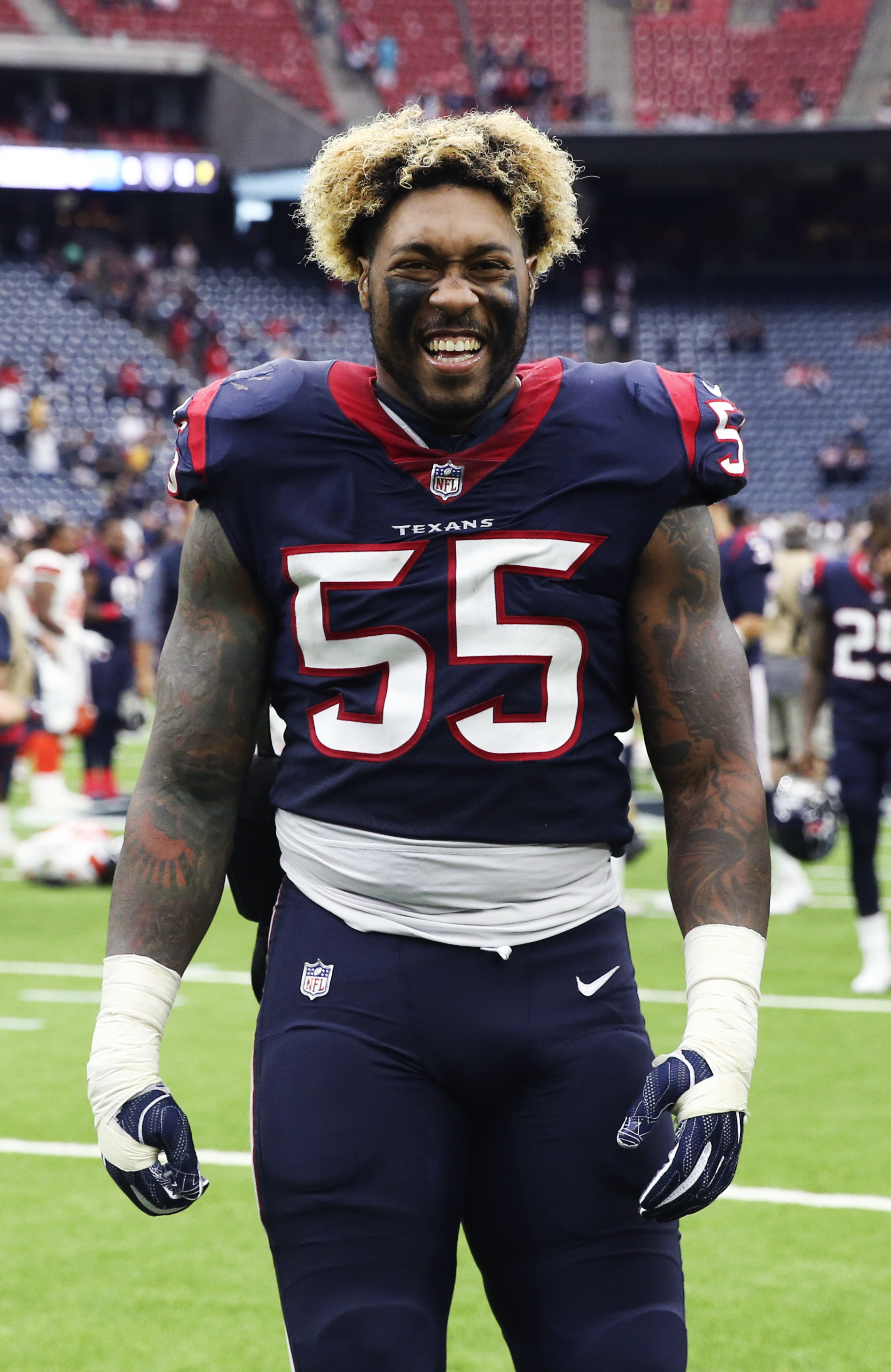
McKinney, a 2015 second-round pick out of Mississippi State, emerged as one of the Texans’ top defenders in his sophomore NFL season. He was solid as a rookie, but as a second-team All-Pro nod in 2016, he finished out with 129 tackles, five sacks, and a forced fumble, ensuring that he would see a sizable pay bump in the offseason. His 2017 stat sheet wasn’t quite as gaudy – 95 tackles and three sacks – but he was still impressive and placed as Pro Football Focus’ No. 24 ranked linebacker in the NFL.
Because he was a second-round pick, the Texans didn’t have the fifth-year option as a safety net. By 2018, McKinney was set to enter his walk year, when he could potentially send his sticker price through the roof. McKinney, meanwhile, was 25 and wanted the security of a multi-year deal. It was the right time for both parties to come to the table and the Texans were happy to oblige. The deal also gave them a clearer picture of their budget as they considered an extension for Jadeveon Clowney (though they ultimately couldn’t make it work).
McKinney went on to earn a Pro Bowl nod in 2018 and racked up 100+ tackles again in 2019. Last year, however, a shoulder injury limited him to just four games. Then, the Texans were in a bit of a pickle as they had to replace franchise icon J.J. Watt. Earlier this year, they shipped McKinney to the Dolphins for edge rusher Shaq Lawson. In cap terms, the deal was pretty much a wash. But, on the field, the Texans effectively swapped Watt and McKinney for Lawson and newcomer Christian Kirksey.
Now, McKinney is set to start alongside Jerome Baker, who just landed a sizable extension of his own. When McKinney was at his best, he formed one of the league’s best run-stuffing tandems with Zach Cunningham. This Dolphins duo has the potential to be even better, if McKinney can match Baker’s strides in pass coverage.
This Date In Transactions History: Eagles Extend Fletcher Cox
Five years ago today, the Eagles locked up Fletcher Cox to a six-year, $103MM deal. The pact, which included $63MM in total guarantees, tied the defensive tackle to Philly through the 2022 season. 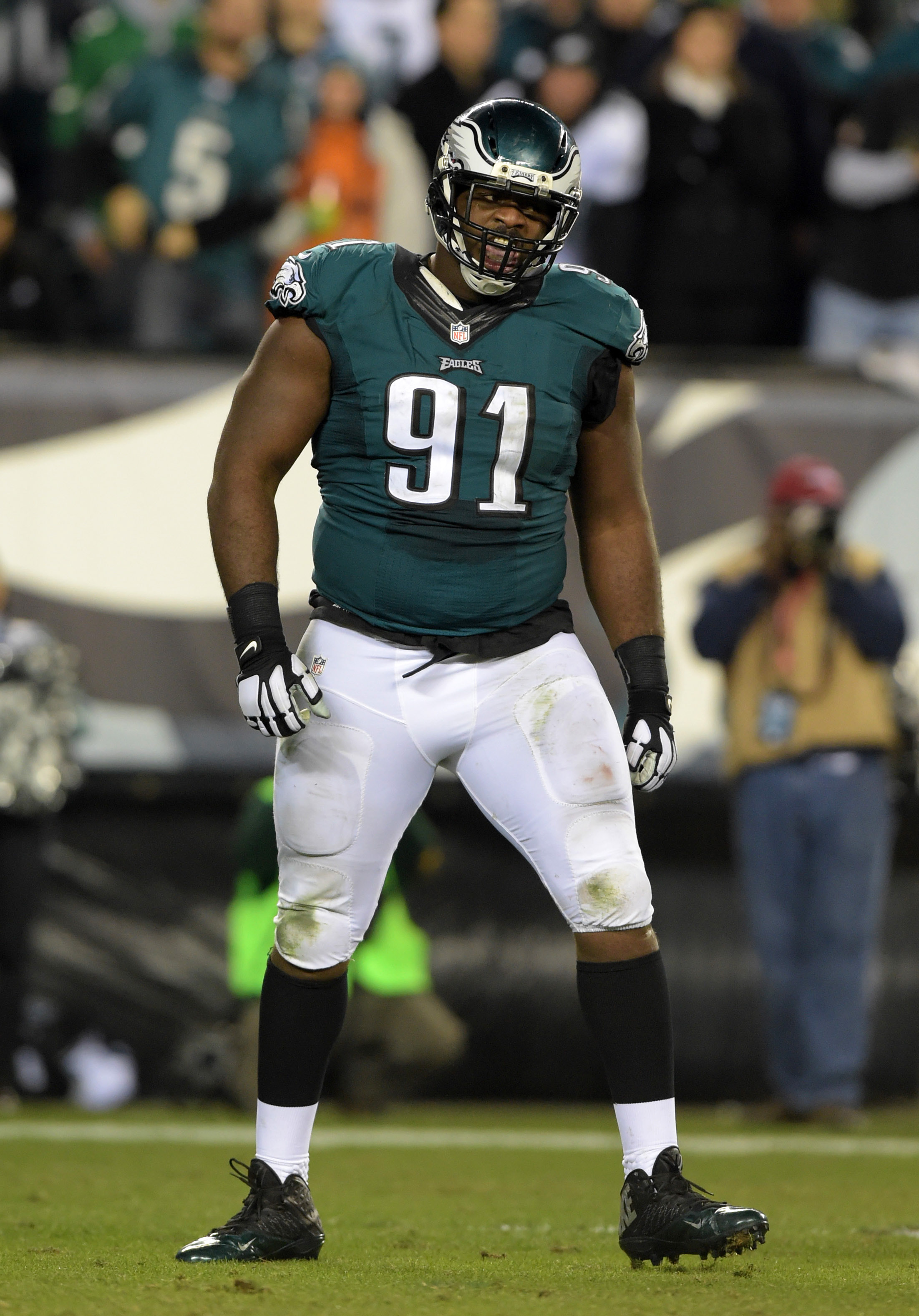
Our retrospectives often deal with contracts that didn’t make it all the way to the end. After all, that’s the nature of the NFL, where injuries are common and true long-term security is hard to come by. However, Cox has mostly held up his end of the bargain. At the time of signing, Cox was coming off of his first ever Pro Bowl appearance. Now, he’s up to six straight, including a 2018 All-Pro nod.
The Eagles started talks in the spring, but things stalled into the summer. Cox skipped the Eagles’ voluntary workouts, leaving some to wonder whether a deal would ever come together. Still, Howie Roseman called Cox a “huge part” of the Eagles’ future and he backed that up by making him the second-highest paid defender in NFL history (at the time), just behind Ndamukong Suh and just ahead of Olivier Vernon. The $63MM in guaranteed cash was notable, and $55.5MM of that was effectively guaranteed at signing — $1.5MM more than Aaron Rodgers got on his re-up.
Cox remains a key cog on the Eagles’ defensive line, having notched 6.5 sacks from the interior last year. However, Jeff McLane of The Inquirer hears that the team has some concern about his conditioning. The feeling in Philly is that Cox hasn’t been as dedicated as Rams star Aaron Donald, and there’s concern that it will catch up with him sooner rather than later. If Cox loses a step, the Eagles won’t be inclined to carry his $23.8MM cap hit into 2022. Instead, the Birds could drop him between now and next spring, saving $10.6MM against $13.15MM in dead money.
This Date In Transactions History: Jets Cut Eric Decker
Five years ago today, the Jets released wide receiver Eric Decker. The Jets had previously told Decker that he would be released or traded — they couldn’t find a suitable deal, so they released him outright instead. 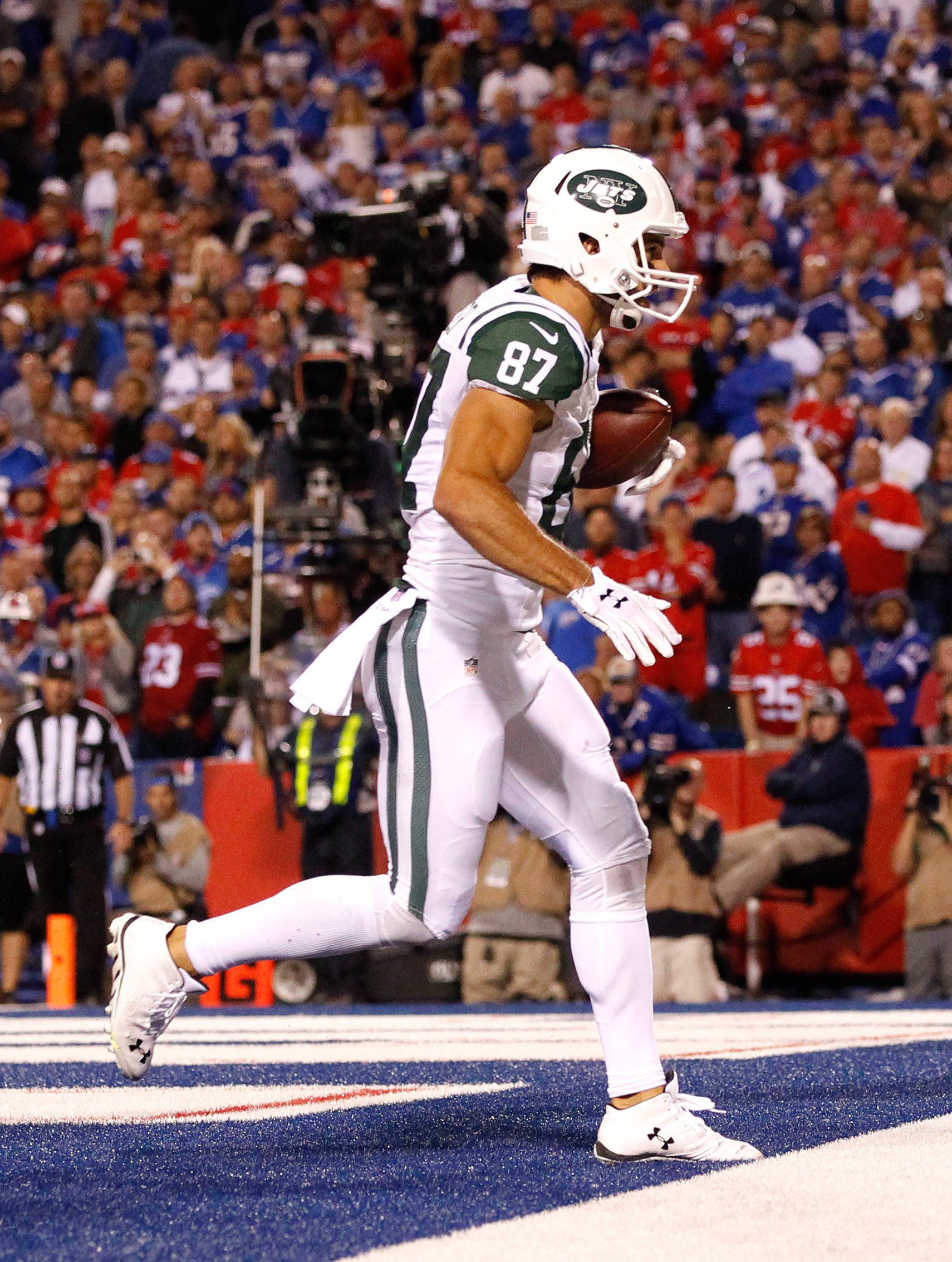 Eric Decker (vertical)” width=”226″ height=”300″ />
Decker, a 2010 third-round pick, broke out with the Broncos in 2012 and 2013. He carried his strong production to New Jersey in his first two years with the Jets, tallying a combined 154 catches for 1,989 yards and 17 touchdowns. Then, he was derailed by hip and shoulder injuries. Decker saw just three games in 2016, but still managed to take 9 grabs for a highly efficient 194 yards with two TDs.
Still, Decker’s contract had two years and over $36MM to go. Instead of banking on a bounce-back year, the Jets opted to save $7.5MM in cap room. Initially, the Jets figured they could parlay Decker into some draft capital, once fellow vet Jeremy Maclin landed elsewhere. The Ravens had some interest in Decker, but they got Maclin on an affordable two-year, $11MM contract. After that, the trade market dried up.
The Ravens thought about adding Decker once he was available, but they ultimately held off. Instead, Decker joined the Titans for his age-30 season. It was a logical fit — the Titans needed an experienced wide receiver to prevent defenses from targeting DeMarco Murray and Derrick Henry. Plus, Decker and his family already lived near Nashville.
Decker went on to appear in every game, but finished with just 54 catches, 563 yards, and one TD in 2017. In 2018, Decker signed with the Patriots, giving him a chance at revenge against the Jets. However, he didn’t get the chance — amidst long odds of making the final cut, Decker chose to retire instead. Decker’s still only 34, but it looks like he’s enjoying life without football.
This Date In Transactions History: Dolphins Sign Chad Johnson
In the summer of 2012, the Dolphins were less-than-enamored with their options at wide receiver. The Dolphins had just recently traded Brandon Marshall – fresh off of his fifth consecutive 1,000-yard season – to the Bears for a pair of third-round picks. Then, in the draft, they did not select a wide receiver until the sixth round. 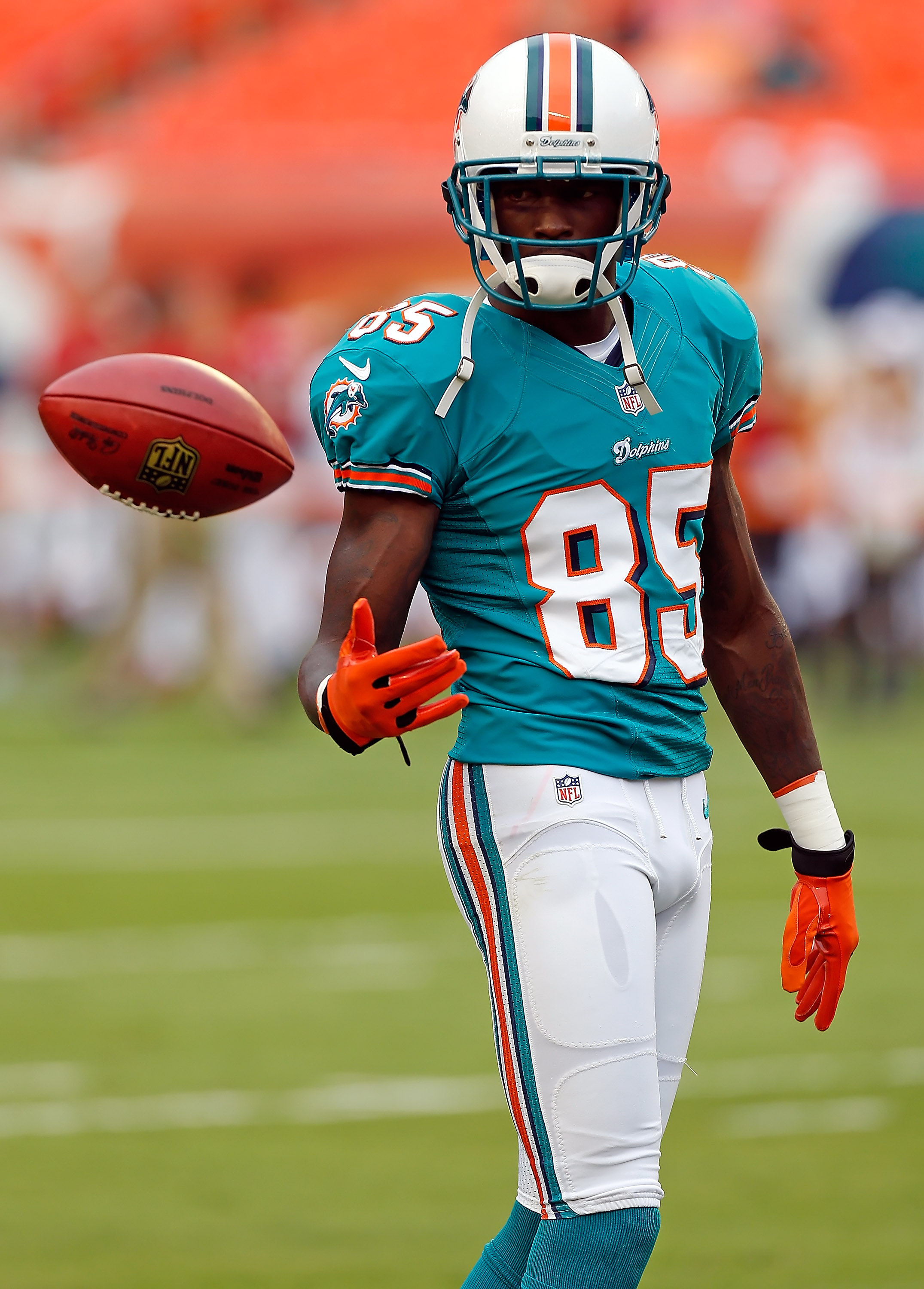
‘‘You would like to have some players make it easy and distinguish themselves, maybe make the picture a little bit clearer,’’ head coach Joe Philbin said (via The Boston Globe). ‘‘We have to catch the ball more consistently at every position on offense, because it is not quite where it needs to be.’’
After missing out on the first and second wave of free agent wide receivers, the Dolphins placed a call to Drew Rosenhaus to inquire on Chad Ochocinco (née Chad Johnson). On June 11, 2012, the Dolphins inked the eccentric veteran to a one-year deal.
Ochocinco’s career credentials were as impressive as his touchdown celebrations were inventive. To that point, he had 766 catches for 11,059 yards and 67 touchdowns, six Pro Bowl nods, and two First-Team All-Pro selections.
However, the receiver’s best days were spent with the Bengals and he looked like a shell of his former self with the Patriots in the 2011 season. In his lone campaign with New England, Johnson had just 15 catches for 276 yards and one touchdown and was targeted just 32 times in total. Johnson clearly didn’t mesh with the Patriots’ offense and he didn’t impress in his two intra-divisional games against the Dolphins either. Against Miami, he had just one catch in each of those two games.
Ochocinco – who changed his name back to Johnson shortly after signing with Miami – didn’t mesh with Philbin and the rest of the staff. The melding of personalities turned out to be the least of his issues. In August, Johnson was arrested on domestic battery charges. Johnson proclaimed his innocence, but the Dolphins released him the very next day. Thanks to “Hard Knocks,” we have video of Philbin’s final conversation with Johnson.
Johnson’s deal with the Dolphins up being his final NFL contract. Johnson went on to play for the CFL’s Montreal Alouettes in 2014 and was suspended for the 2015 season when he skipped mandatory practices. He re-emerged in 2017 to play in a single game for the Monterrey Fundidores of the Liga de Fútbol Americano Profesional de México, where he scored on a 41-yard touchdown reception in the Fundidores’ winning effort.
This Date In Transactions History: 49ers Release Jerry Rice
The 2001 free agency period featured some key players change teams. Simeon Rice and Priest Holmes relocated and soon became All-Pros, and the Buccaneers landed eventual Super Bowl starter Brad Johnson. But the biggest name available that year was not up for debate.
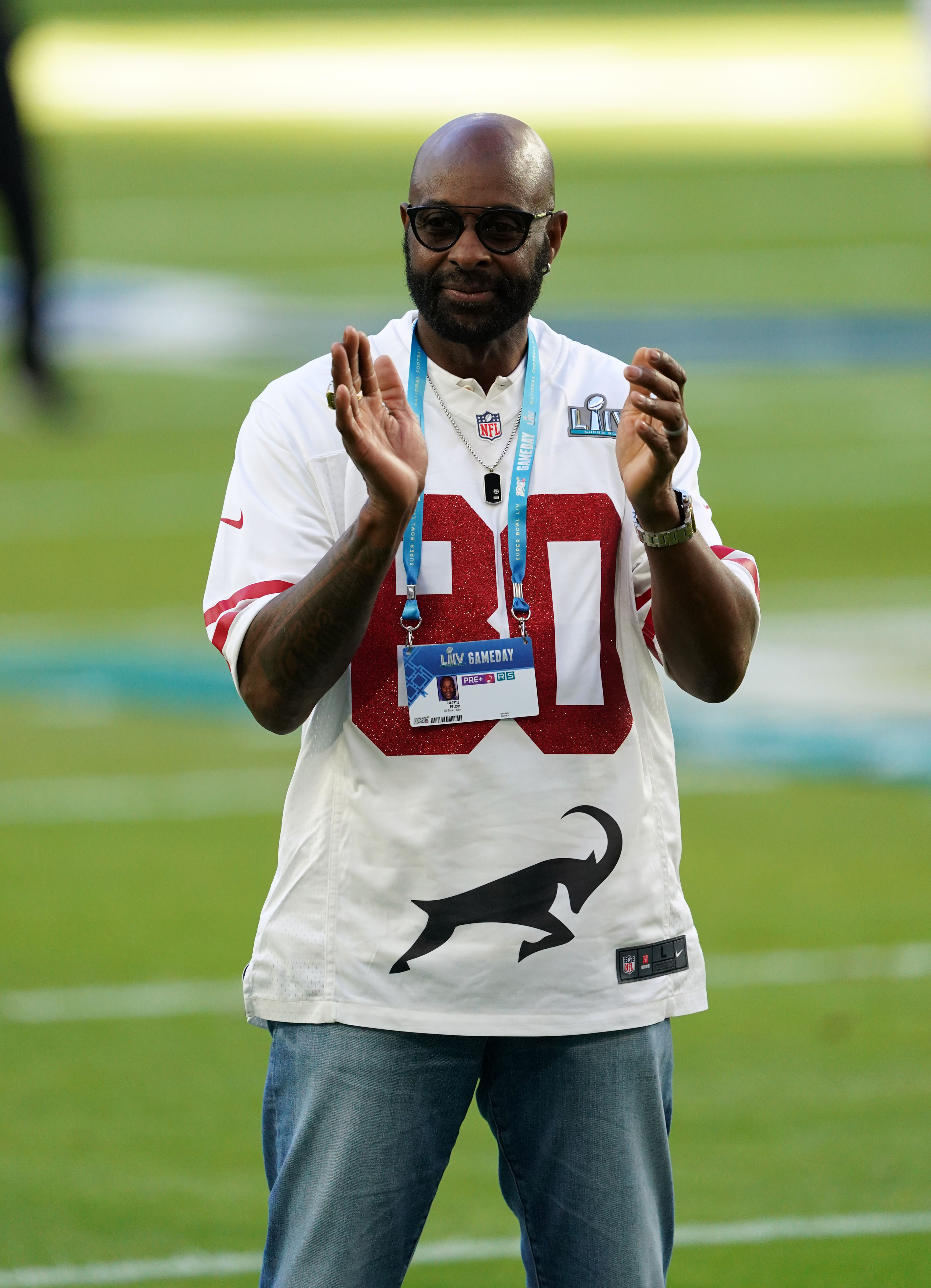 Jerry Rice became a free agent 20 years ago today, and although he did not last long unattached, the legendary wide receiver hitting the market was certainly notable. The 49ers made Rice a cap casualty on June 4, 2001, taking advantage of the post-June 1 cut designation that allowed for cap relief. Because post-June 1 cuts at this point required the team to make such moves after that date, another free agency wave took place annually.
This ended Rice’s storied 49ers tenure, which lasted 16 years and saw the eventual 20-year veteran set every major career receiving record there is. Rice signed a seven-year, $32MM contract in the summer of 1996; that deal was set to take him through the 2003 season. The 49ers and their all-time great agreed to multiple restructures, including a redo in 2000. Rice said at the time of the last restructure he wanted to finish his career in San Francisco, but that did not end up coming to pass.
The 49ers prepared for this transaction months ahead of it transpiring. Their Week 16 game against the Bears in 2000 doubled as “Jerry Rice Day,” with the then-38-year-old receiver playing his final game as a 49er at Candlestick Park. Terrell Owens, closing out his fifth season with the 49ers, did some reasonable upstaging by catching 20 passes to break the NFL’s then-50-year-old single-game reception record. A 1996 third-round pick who would end up following Rice to Canton, Owens earned the first of his five first-team All-Pro honors that season and had entrenched himself as San Francisco’s No. 1 wideout entering the 2000s. The last of Rice’s NFL-record 10 first-team All-Pro nods came in 1996.
Rice’s exit marked the end of a 49ers era, one that rapidly wound down after Steve Young sustained a career-ending injury in September 1999. Rice was to earn a $4.1MM salary in 2001, and although his first Raiders contract — a four-year, $5.4MM pact — called for him to make just $1.4MM that season, the veteran landed on his feet in Oakland. After playing on a 6-10 Niners team in 2000, Rice ended up helping the Raiders make the playoffs over the next two years.
He agreed to terms with the Raiders a day after his 49ers release, joining the Silver and Black ahead of what would be Jon Gruden‘s final season (of his first Raiders stay, that is). After back-to-back years in which he was held under 900 receiving yards, Rice rebounded with consecutive 1,100-plus-yard seasons in Oakland. The second of those, during the Raiders’ 2002 AFC championship campaign, produced his 14th and final Pro Bowl invite at age 40. The Raiders gave Rice a six-year, $30MM extension in 2003.