
Colts Shifting Matt Goncalves To Guard
It does not appear the Colts are preparing position battles to replace Ryan Kelly and Will Fries. They have an obvious center successor lined up, in Tanor Bortolini, and their Fries successor is expected to also come from the 2024 draft class.
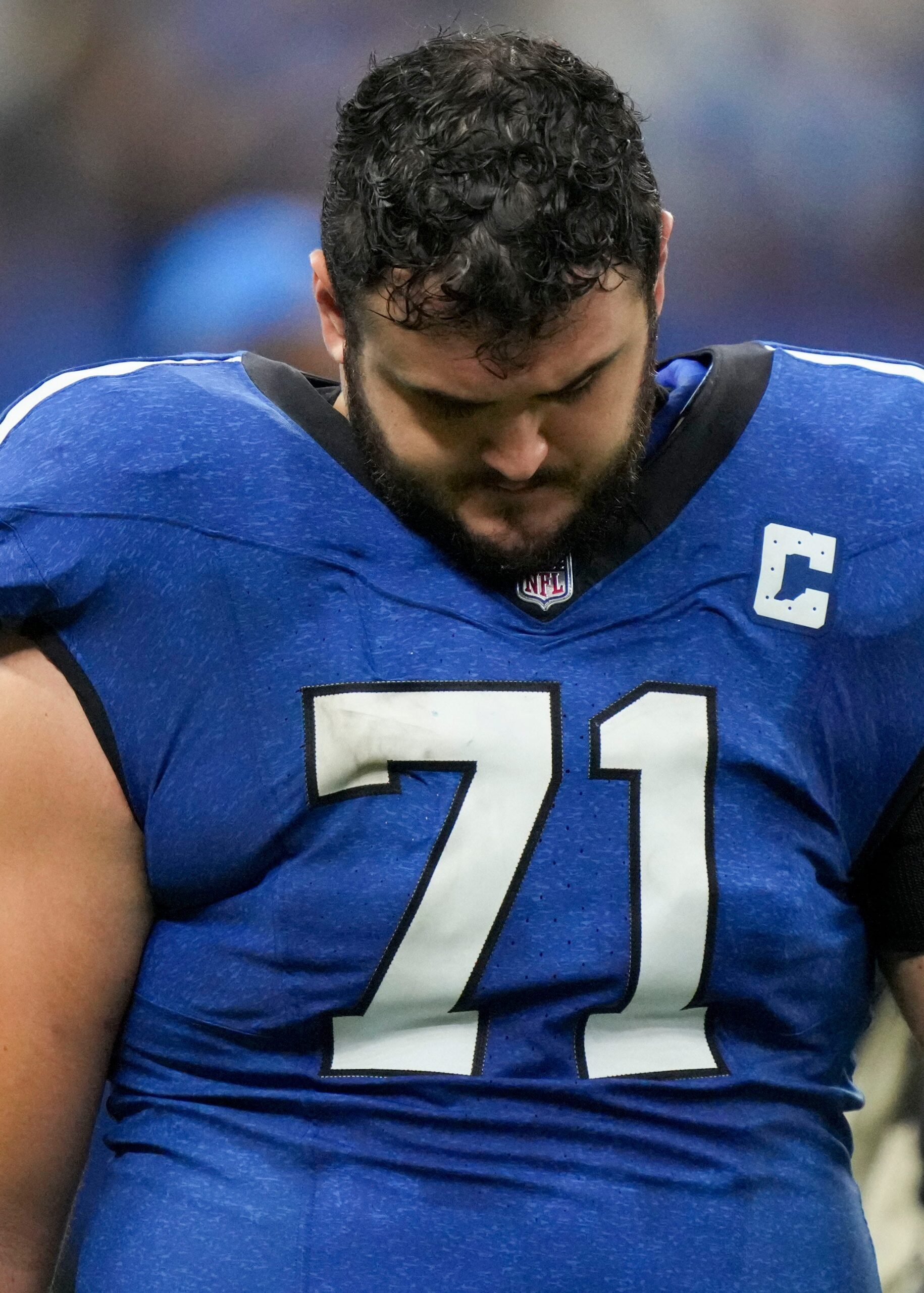
Indianapolis is sliding Matt Goncalves, Braden Smith‘s primary right tackle fill-in last season, to guard. He will be expected to take over as the Colts’ starting right guard, per the Indianapolis Star’s Nate Atkins. Colts O-line coach Tony Sparano Jr. confirmed the team’s plan is shifting Goncalves to the right guard spot.
 [RELATED: OCD Diagnosis Led To Braden Smith 2024 Absence]
While Goncalves’ extensive tackle past would seemingly leave a door open to the Colts needing a contingency plan in case the 2024 third-rounder cannot make the transition, Fox59’s Mike Chappell notes the team will give him “every opportunity” to replace Fries. Goncalves took one guard snap as a rookie, and he played exclusively at tackle in college. Although he logged left or right tackle starts in all four of his seasons at Pitt, no guard games transpired.
The 6-foot-6 blocker will attempt to close a revolving door opposite LG staple Quenton Nelson, who is on a $20MM-per-year deal and entering his eighth season as the starter there in Indianapolis. Building a Hall of Fame-caliber resume, Nelson has seen turnover at RG during his time in Indiana.
The Colts used Mark Glowinski as their primary RG during Nelson’s rookie contract, but their plan to hand Danny Pinter the RG job after Glowinski’s Giants defection did not pan out. Fries ultimately replaced Pinter, and after he held down that gig throughout 2023, a broken leg sidelined the converted tackle. Fries signed a big-ticket Vikings deal in free agency, joining Kelly in leaving for the Twin Cities.
Goncalves played 333 snaps in place of Smith at right tackle last season while also seeing 230 snaps at LT in place of Bernhard Raimann. Pro Football Focus rated him a mid-pack starter, slotting him 47th among tackle regulars. Smith accepted a pay cut to stay; he is now on a one-year, $8MM deal that does not include any guaranteed money. The Colts now have both their starting tackles in contract years, and they used a fourth-round pick on 6-8 tackle Jalen Travis. This move came in lieu of a Fries replacement, leaving Goncalves a clear path to the first-string RG role (as Travis is potentially groomed to be a 2026 tackle starter).
The Colts brought back Glowinski to help replace Fries last year, also using UDFA Dalton Tucker as a seven-game starter there. With Travis the only notable O-line addition this offseason — as the Colts made rare high-priced outside additions in free agency on defense (Camryn Bynum, Charvarius Ward) — Tucker appears the insurance option in case Goncalves cannot complete the position switch effectively. (PFF rated Tucker 68th among guard regulars in 2024.) While Chappell does allude to Tucker being given a chance to start at RG as well, Goncalves certainly appears to have the inside track.
Perception Exists Giants’ Front Office Preferred Shedeur Sanders Over Jaxson Dart
After three seasons attempting to make an inherited quarterback work, the Joe Schoen–Brian Daboll regime will attempt to move their way off hot seats via the passer they drafted. Jaxson Dart is now in place after Daniel Jones did not come close to living up to his $40MM-per-year contract.
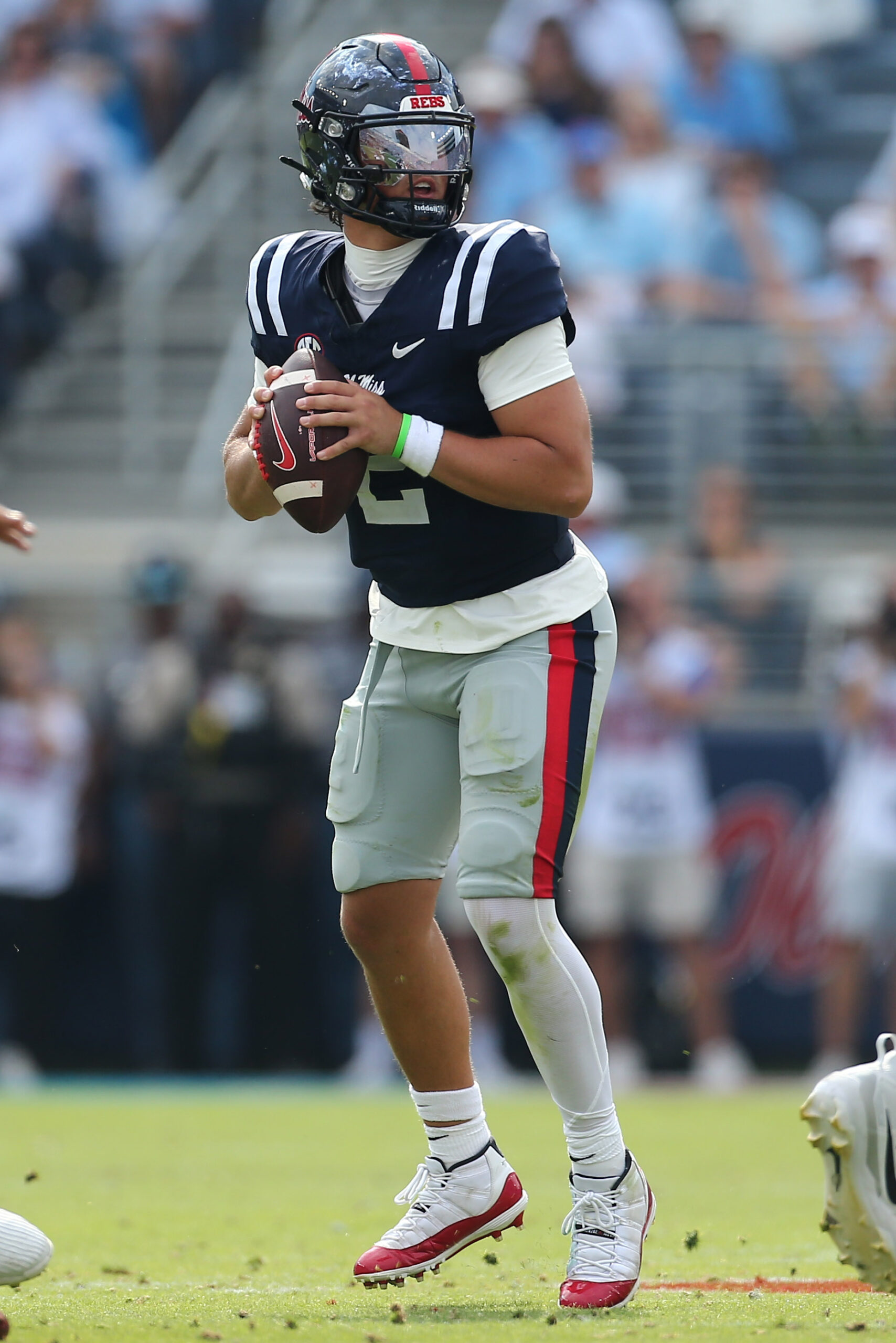 Dart-Giants connections began to emerge shortly before the draft, as Shedeur Sanders‘ freefall commenced. Coaches become involved in the process as the winter progresses, and Daboll was believed to be convicted in his belief Dart would be Big Blue’s best available option (after the Titans repeatedly rebuffed the Giants’ efforts to trade up to No. 1). Schoen has attempted to push back on the notion he gave in to his coaches’ preference.
“It was an organizational decision,” Schoen said during an appearance on Up & Adams (h/t the New York Post’s Ryan Dunleavy). “Any player that we take, it’s a collaborative process and it’s very detailed, and we believe in it. … Three coaches on staff (Daboll, OC Mike Kafka and QBs coach Shea Tierney) that have been part of the development of two pretty good quarterbacks in the league right now (Patrick Mahomes and Josh Allen), and when they are convicted on a player and the scouting staff is convicted on a player, typically you have the best chance for success in those situations.”
Schoen told Kay Adams that Dart was on the Giants’ radar “throughout the fall,” though a post-draft report indicated the Giants did more in-person work on Sanders compared to the Ole Miss starter. Schoen is believed to have scouted just one Dart game in-person, while a previous report indicated the GM had “lived in Boulder” as Sanders hype increased. A pre-draft report also indicated the Giants were split on Sanders, potentially placing the divide between the front office and coaching staff. Enough information has come out pointing to Daboll playing the lead role in ensuring the Giants did not draft the Colorado QB.
A perception exists within personnel departments the Giants’ front office preferred Sanders, Dunleavy notes, before Daboll and his staff came to hold Dart in higher regard. The Giants spent more time with Sanders than any team spent with any prospect, Dunleavy adds. That would paint the picture of a mid-process pivot, as Dart certainly appeared to gain steam late. A pre-draft report tabbed Sanders as being the No. 2 QB on the Giants’ big board (behind Cam Ward), but that could certainly have been a smokescreen effort considering the Dart trade-up, which helped key Sanders’ freefall.
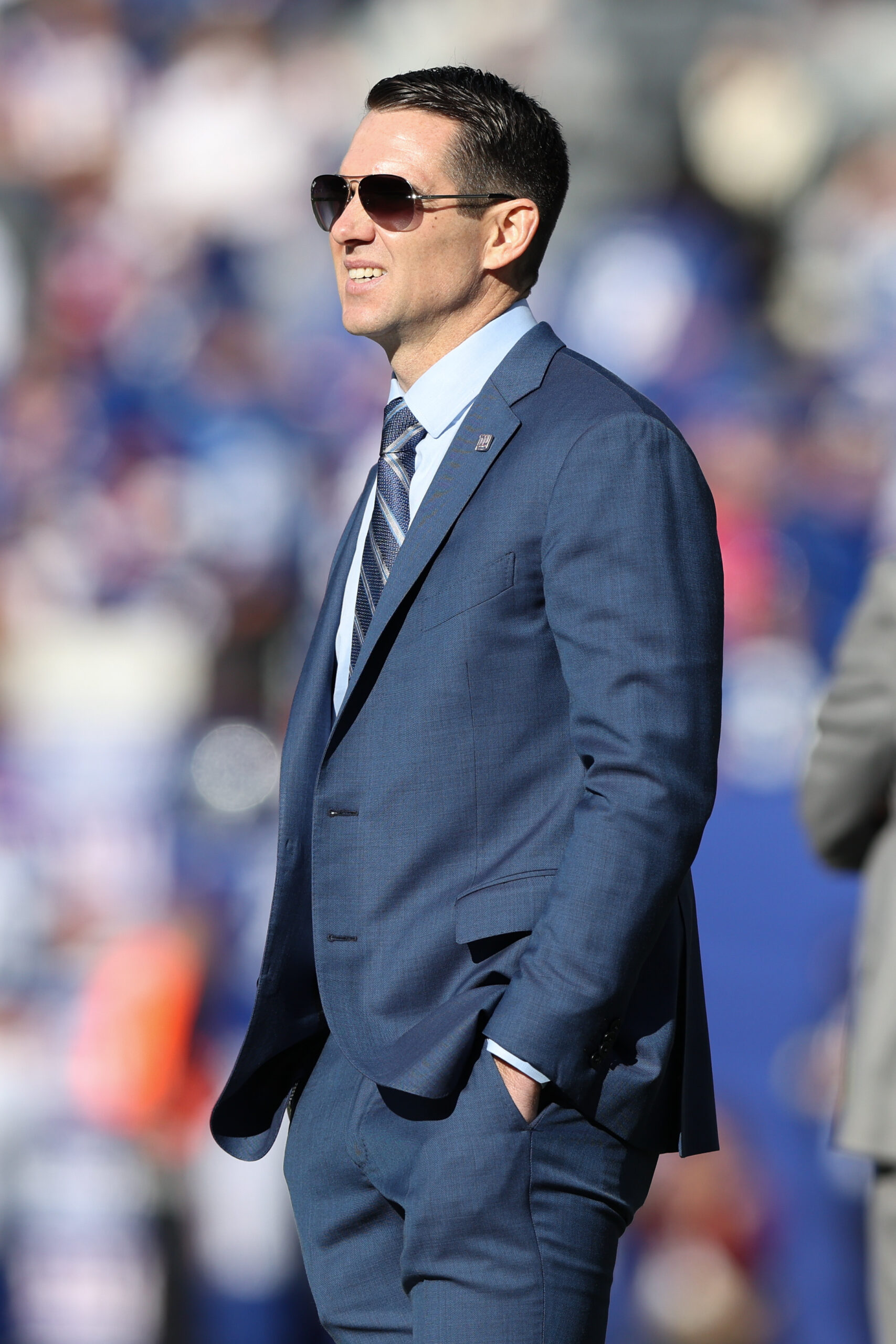 Some Daboll-Sanders friction is believed to have taken place during an install session. While Dart impressed Giants decision-makers during his install, Sanders not being as prepared became a point of contention. The Giants are, of course, not the only team to come away unimpressed with Sanders’ approach during the pre-draft process, as multiple teams took the QB off their boards.
Sanders having taken the strange step — for a player with his prospect profile, at least — of approaching team meetings like a recruit, rather than as a job interview, certainly rubbed teams the wrong way. His slide from potential top-10 pick to No. 144 represents perhaps the most notable tumble in draft history. Sanders’ actions may well have determined the Giants’ QB future; that said, pre-draft offerings also had some teams ranking Dart ahead of the two-year Colorado standout.
Daboll and Schoen have worked together since 2018, when the former arrived as the Bills’ OC. A report of tension between the two emerged earlier this offseason, and it appears Daboll’s QB pick will hold the current regime’s future in his hands.
Owners Greenlight Player Flag Football Participation In 2028 Olympics
The NFL will go forward with permitting players to participate in the 2028 Summer Olympics’ flag football event. Owners have approved a previously reported measure involving the new Olympic sport, Fox Sports’ Jordan Schultz reports.
 In a development that will certainly make other countries’ efforts to claim gold in flag football more difficult, the NFL voted unanimously to approve the measure (via NFL.com’s Ian Rapoport). Although this will not greenlight unlimited participation among players, a formidable collection will be in line to take part in July 2028.
As referenced recently, the proposal will allow only one player per NFL team to participate for his country. A separate player in the league’s international pathway program could participate for his home nation, however. Seeing as the majority of NFL players are Americans, Tuesday’s approval vote primarily impacts the host country’s approach to the new noncontact event at the Los Angeles Games.
This will not exactly rival the NBA’s famed Dream Team from the 1992 Games. Football is not a global game (the NFL’s increased international forays notwithstanding) and no restrictions on who could participate existed involving the NBA in 1992. The Bulls (Michael Jordan, Scottie Pippen) and Jazz (Karl Malone, John Stockton) each sent multiple players as part of Team USA.
Though, the flag format will present a five-on-five event. Six men’s and women’s teams will be part of the new discipline. Rosters will include 10 players in total, limiting the spots available to a flood of qualified performers. Games will take place on a 70-yard field, 9News’ Mike Klis notes.
The L.A. Games are set to run from July 14-30, which is on the earlier side for a Summer Olympics. That will help NFL players return on time — or soon after — to training camps. Marquise Goodwin was on rosters while he made bids to make Olympic teams, but his efforts never conflicted with training camp. A 2012 Olympian in the long jump while he was still at Texas, Goodwin did not qualify for the 2016 or 2021 Games. Sprinter Jeff Demps joined Goodwin as a London Olympian, being part of the 4×100-meter team. But the 2012 UDFA did not sign with a team — the Patriots — until after the Games concluded.
Teams will see some players arrive late to camp come 2028. Though, padded 11-on-11 work will not be slated to commence — for teams not involved in the Hall of Fame Game, that is — while the flag football event is being contested. That said, players will need to be present for tryouts; it will be interesting to when those will take place ahead of the ’28 Games.
 A salary cap credit will be put into place for any injured player, according to ESPN; this would presumably cover teams in the event of missed games only. A leaguewide insurance policy providing injury protection for players is also expected to be included in this agreement, a buildup our Adam La Rose has covered for over a year here.
Generations of NFL players, barring select track and field standouts (and brief bobsledder Herschel Walker), have been unable to do compete in the Olympics. Jockeying for spots at tryouts will be interesting when that time comes.
Justin Jefferson will be one of the players, in all likelihood, in play to represent Team USA. The Vikings wideout has not decided if he will do so (via ESPN.com’s Brooke Pryor), though he has called it “a dream” to represent his nation in the Olympics. Patrick Mahomes, Mike Evans and Tyreek Hill have also expressed interest, though the two wideouts may have an uphill battle due to their respective ages. How this approval impacts NFL secondaries will also be something to watch. Considering Travis Hunter‘s skillset, he would stand to be an obvious choice — assuming the Jaguars draftee stays on his present course.
How other countries’ rosters look will be an interesting storyline to monitor, though with NFL players likely to comprise all of Team USA’s 10-man squad, the host nation will undoubtedly enter as the gold-medal favorite. Flag football, on the men’s and women’s side, has made notable inroads into the world’s sports lexicon in recent years; the revamped Pro Bowl Games provide perhaps the most notable example. Although this team is three years away from being assembled, the flag football event will be a regular talking point within the league until those Summer Games commence.
Patriots Rejected Two Trade Offers For Second-Round Pick
The Patriots have been linked to showing interest in the player the Dolphins chose in Round 2, guard Jonah Savaiinaea, but after the Arizona product went off the board, multiple teams eyed the Patriots’ No. 38 choice.
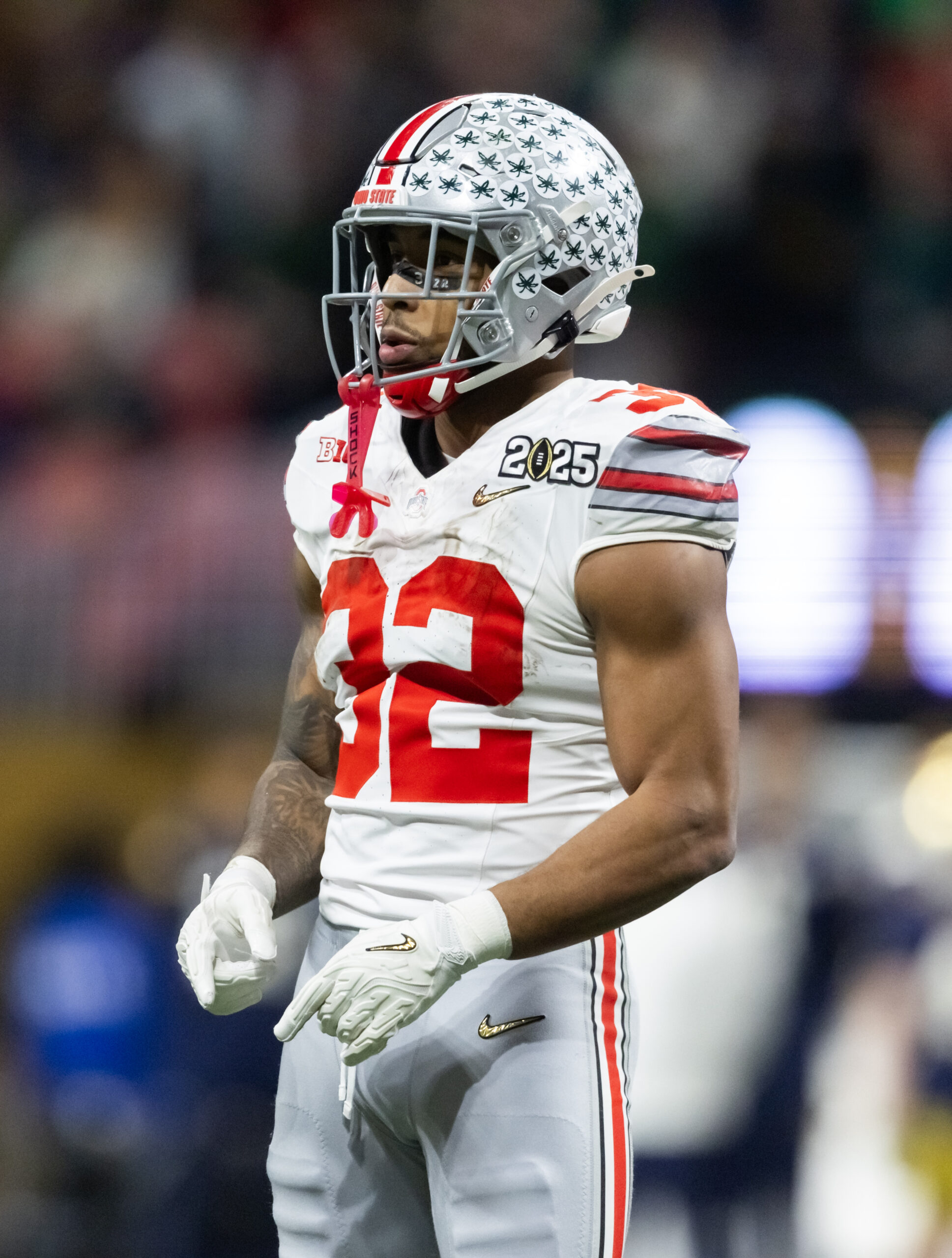 An episode of Forged in Foxborough details a Bears offer for No. 38; the NFC North team proposed No. 39 and a seventh-round pick to move up a spot. It is believed (via ESPN.com’s Mike Reiss) Chicago wanted TreVeyon Henderson, whom New England ended up taking. A previous report indeed indicated Chicago was eyeing Henderson.
This appears a lower-stakes example of last year, when the Pats rejected two quality trade offers (from the Giants and Vikings) aimed at Drake Maye. The Pats ended up staying at No. 3 and taking Maye for themselves.
The Bears were not the only team to propose a deal for No. 38, however, as the Forged in Foxborough episode also revealed a more notable trade offer. The Patriots received a proposal for No. 38 that included Nos. 58, 79 and a 2026 third-round pick. This would have netted the Pats three Day 2 picks in exchange for one, though it is not known if New England would have needed to throw in another pick as part of a swap.
It is fairly safe to assume the Texans made this offer, as they held No. 58 at the time the Pats made their Henderson choice. Houston had already moved out of Round 1, and Nick Caserio — a Bill Belichick lieutenant during Mike Vrabel‘s New England linebacker years — was active in trades throughout draft weekend. This later included a move up in Round 2, as the Texans climbed to No. 48 (via the Raiders) and chose Minnesota tackle Aireontae Ersery. The Texans gave up Nos. 58 and 99 for the Raiders’ No. 48 slot.
Houston may have been targeting Ersery that high, as the team has launched a near-full-scale O-line overhaul this offseason. The Texans were connected to also moving up in Round 1 for ex-C.J. Stroud Ohio State weapon Emeka Egbuka, but the Buccaneers made a surprise play for the all-time Buckeyes receiving leader at No. 19. The Texans then slid out of Round 1, collecting three Day 2 choices from the Giants to do so. Houston had already chosen Iowa State receiver Jayden Higgins at No. 34, pointing to its New England offer being a non-WR play.
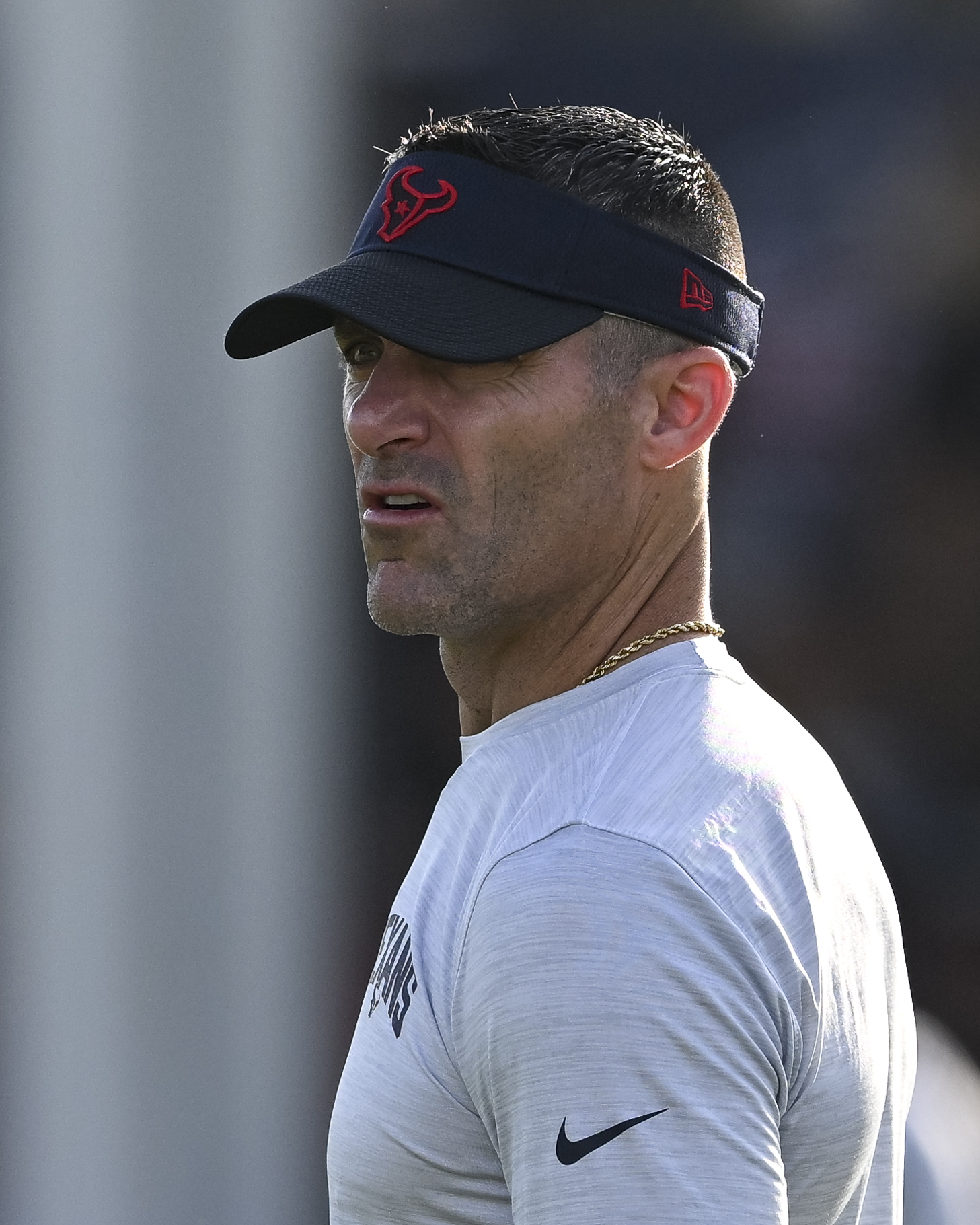 The Texans could have been in play for Henderson as well, as only one running back on a current roster (Derrick Henry) has Joe Mixon beat for career carries (1,816). The Texans circled back to their RB need in Round 4, trading up for USC’s Woody Marks; the future third they offered to the Patriots ended up going to the Dolphins in that exchange.
Henderson was fairly popular during the draft, as the Broncos are also believed to have targeted the Ohio State standout in a trade-down move. Denver discussed terms with the Giants, which would have allowed New York to move ahead of Pittsburgh and draft Jaxson Dart. But Big Blue believing the Steelers would pass on Dart at 21 prompted the team to stand down, eventually dealing with the Texans (for No. 25). The Broncos then bolstered their secondary with cornerback Jahdae Barron.
Another interesting nugget from the Patriots’ Henderson selection process came when Vrabel mentioned a potential wide receiver move with the team’s No. 69 overall pick. Moving out of the No. 38 slot for either offer would have cost the Patriots Henderson; a wideout would have likely been considered in Round 2, in that case. The Pats deciding to stay at 38 and choose Henderson preceded the team using No. 69 on Washington State wideout Kyle Williams. Both skill-position cogs will be expected to boost Maye’s development this season.
Dolphins Interested In CB Asante Samuel Jr.; Rasul Douglas, James Bradberry On Radar
Jalen Ramsey is still a member of the Dolphins, but a trade remains the expectation in that case. Moving on from the All-Pro will create a notable cornerback vacancy, and to no surprise a few free agent options are on the team’s radar.
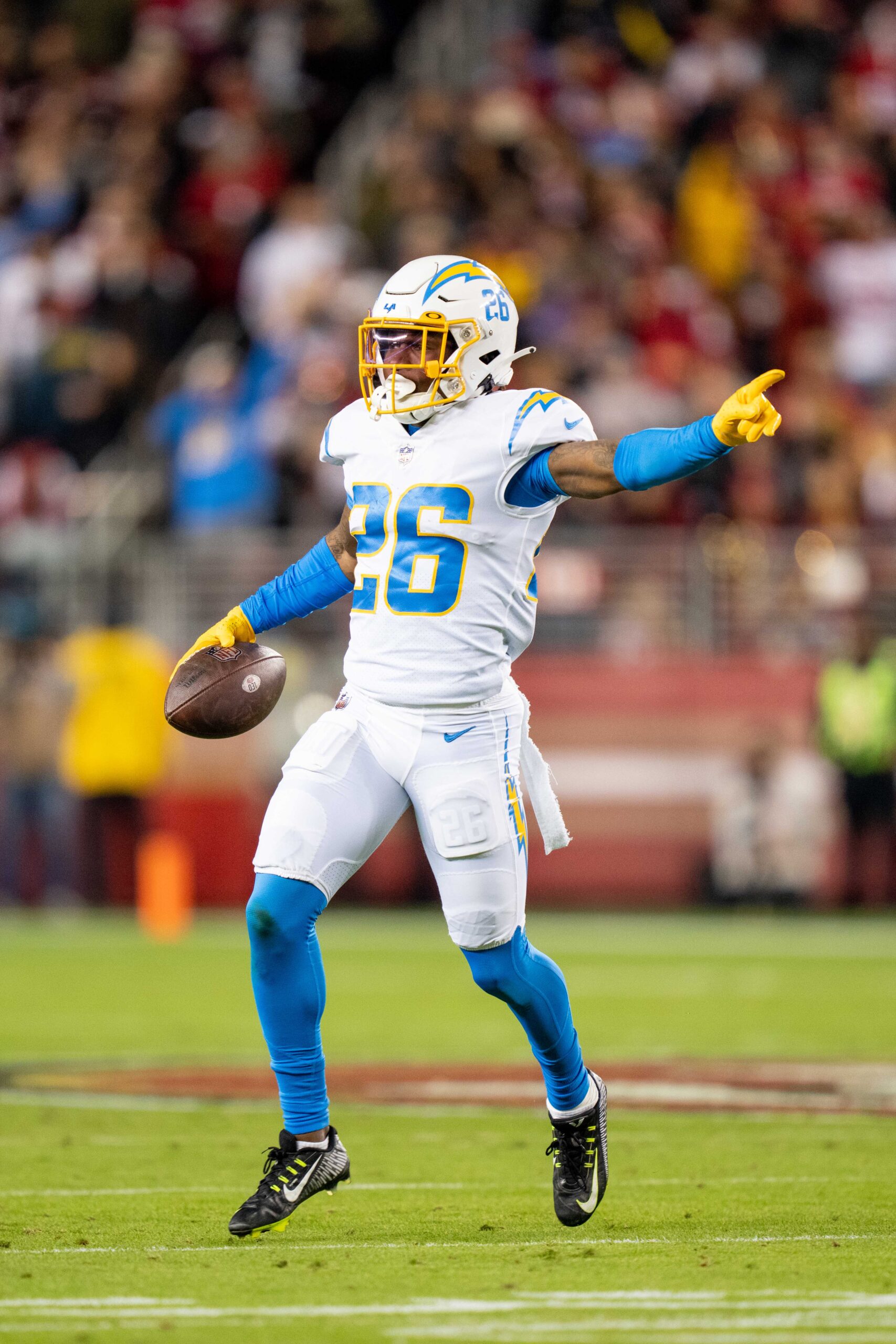 The Dolphins have made contact with Asante Samuel Jr., Barry Jackson of the Miami Herald reports. He adds no formal visit is on the books at this point with no offer being made yet. Samuel is recovering from neck surgery, but the Dolphins are among the teams which will watch his situation closely over the coming weeks.
As Jackson confirms, Samuel is scheduled for a checkup in early July. Provided that goes well, the 25-year-old will likely not need to wait long to land a deal. He visited the Saints last week, and a Cardinals meeting also took place prior to the surgery. If a bidding war is to ensue, Miami will likely be involved (especially if Ramsey is on another team by that point).
Samuel is one of two corners to land among PFR’s top 50 free agents who remain unsigned. Rasul Douglas joins him, and the Dolphins had placed themselves in that market as well. Miami met with Douglas as well, extending an offer. No deal emerged, and Douglas then visited the Seahawks. The Dolphins, however, remain in touch with Douglas, Jackson adds.
James Bradberry also came up as a potential solution earlier this offseason, with Jackson indicating the Dolphins engaged in dialogue with the free agent. Bradberry will be unlikely to convince a team to spend much, as he is north of 30 (32 in August) and coming off a missed season. Prior to Bradberry’s summer Achilles tear, he had attempted to convert to safety. Eyeing a return to corner, Bradberry will attempt to recapture the form he displayed with the 2022 Eagles, as it catapulted him to a three-year, $38MM Philly deal in March 2023. The Bills also spoke with Bradberry, whom the Eagles designated a post-June 1 cut, this offseason.
These connections point both to a Ramsey separation coming to fruition — presumably after June 1 due to the extension the nine-year veteran signed last September — and the Dolphins being ready to supplement his unproven supporting cast. Miami has not seen much to indicate its second-round Cam Smith selection will pan out (153 career snaps), and the team did not draft a corner until Round 5 (Jason Marshall) this year. Former UDFAs Kader Kohou and Storm Duck remain in the mix. The Dolphins also signed former first-rounder Artie Burns as a depth piece, but if Ramsey is out of the picture, this looks like one of the more vulnerable position groups in the NFL.
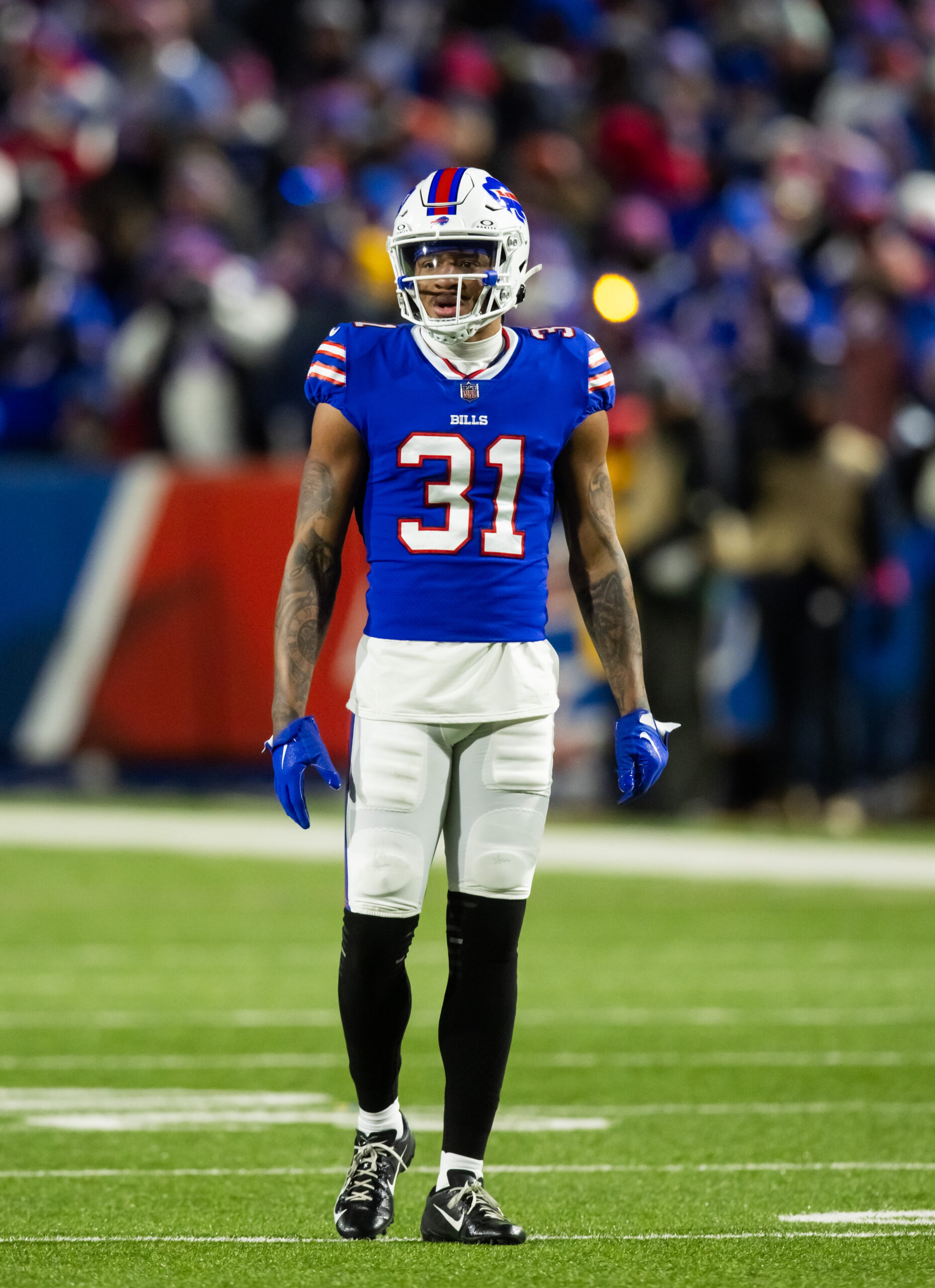 Bradberry has made 124 starts during a nine-year career. Samuel has made 47, and while his injury-plagued 2024 has impacted his market, the second-generation NFL corner joins Douglas among the top free agents left. Douglas, 29, has made 80 career starts. Twenty-three of those came with the Bills since a 2023 deadline trade sent him to Buffalo, where the ex-Philadelphia draftee complemented Christian Benford for a Bills team that has continued to see its top corner unavailable in its biggest games. The Bills extended Benford, however, and used a first-round pick on Kentucky’s Maxwell Hairston to signal Douglas will need to find a new home.
The Dolphins released Kendall Fuller, but the CB market also houses Shaquill Griffin, Jack Jones, Cameron Sutton and Michael Davis as potential boundary options. Stephon Gilmore remains available as well, but the former Defensive Player of the Year is entering what would be his age-35 season. It is fairly clear Miami will make a move here, and it appears likely to happen before training camp.
Adam La Rose contributed to this post.
Browns’ Deshaun Watson Resumes Throwing
Jimmy Haslam‘s admission on the 2022 Deshaun Watson trade could certainly be interpreted as the Browns closing the book on an expensive failure, and the team is now holding what appears to be a four-man derby for the starting job.
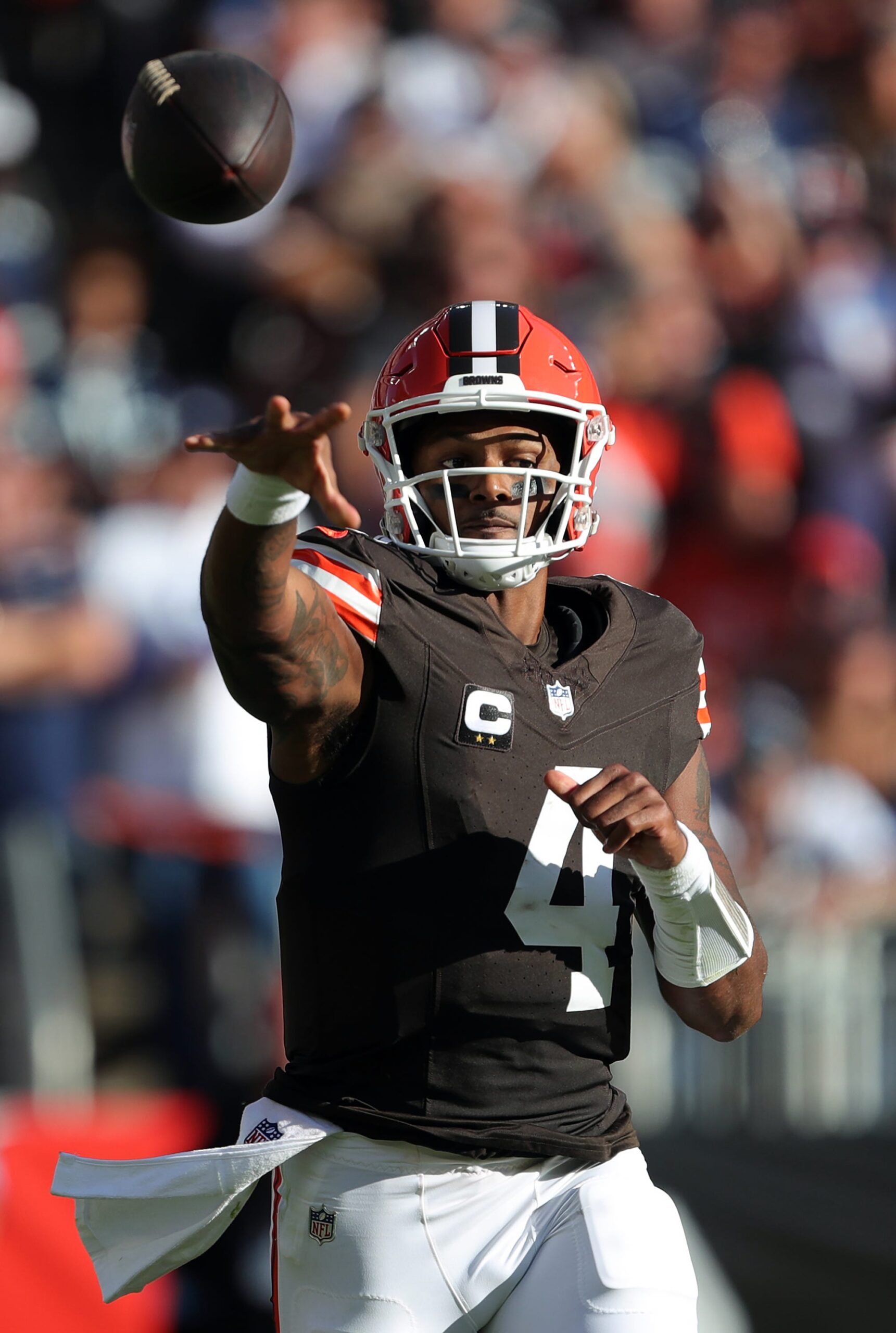 This effort, which consists entirely of low-cost contracts, came about because of both Watson’s failure to impress when available and his run of injury trouble. Watson has sustained two Achilles tears since October, seemingly moving him out of the picture in Cleveland. As Shedeur Sanders and third-round pick Dillon Gabriel receive considerable attention as prospective starters — joining Joe Flacco and Kenny Pickett in this mix — Watson appears to be working his way back into the equation.
[RELATED: Browns Not Planning Quarterback Trade]
The embattled quarterback has shed his walking boot and has resumed throwing, the Cleveland Plain Dealer’s Mary Kay Cabot reports. Watson has been throwing to Jerry Jeudy and David Bell at the team’s facility, with Cabot indicating he shed the boot weeks ago. This certainly does not mean Watson will resume command here, as it is not even known if he will throw another pass with Cleveland, but it is an interesting development considering the team’s QB efforts this offseason.
Word of Watson’s second Achilles tear surfaced in mid-January, and Haslam labeled the trade a mistake in April. Watson, 29, submitted a woeful run of performances before his first tear occurred last season. Kevin Stefanski repeatedly insisted he would not bench the high-priced QB, but the former Texans Pro Bowler had not been close to what the Browns hoped when they (via an outlier $230MM guarantee) beat out the Falcons, Saints and Panthers for him. Cleveland went three years without a first-round pick thanks to the trade, and it passed on Travis Hunter to acquire a 2026 first-round pick — and it should be expected the team will be closely linked to the ’26 QB class as a result.
Watson’s albatross contract, repeatedly restructured (most recently in March), still runs through 2026. The Browns would be on the hook for an unfathomable dead money amount if they cut him next year; they would surely spread the $131.16MM across two years via a post-June 1 designation. Cleveland is also setting up for a potential battle via an insurance measure taken out on the contract. Watson being unable to play this season puts a $44.27MM sum in play for the Browns to recover. Although the team could collect on other components of the policy to help soften the blow of an inevitable divorce, Watson being healthy enough to play in 2025 would affect a sizable chunk of the return.
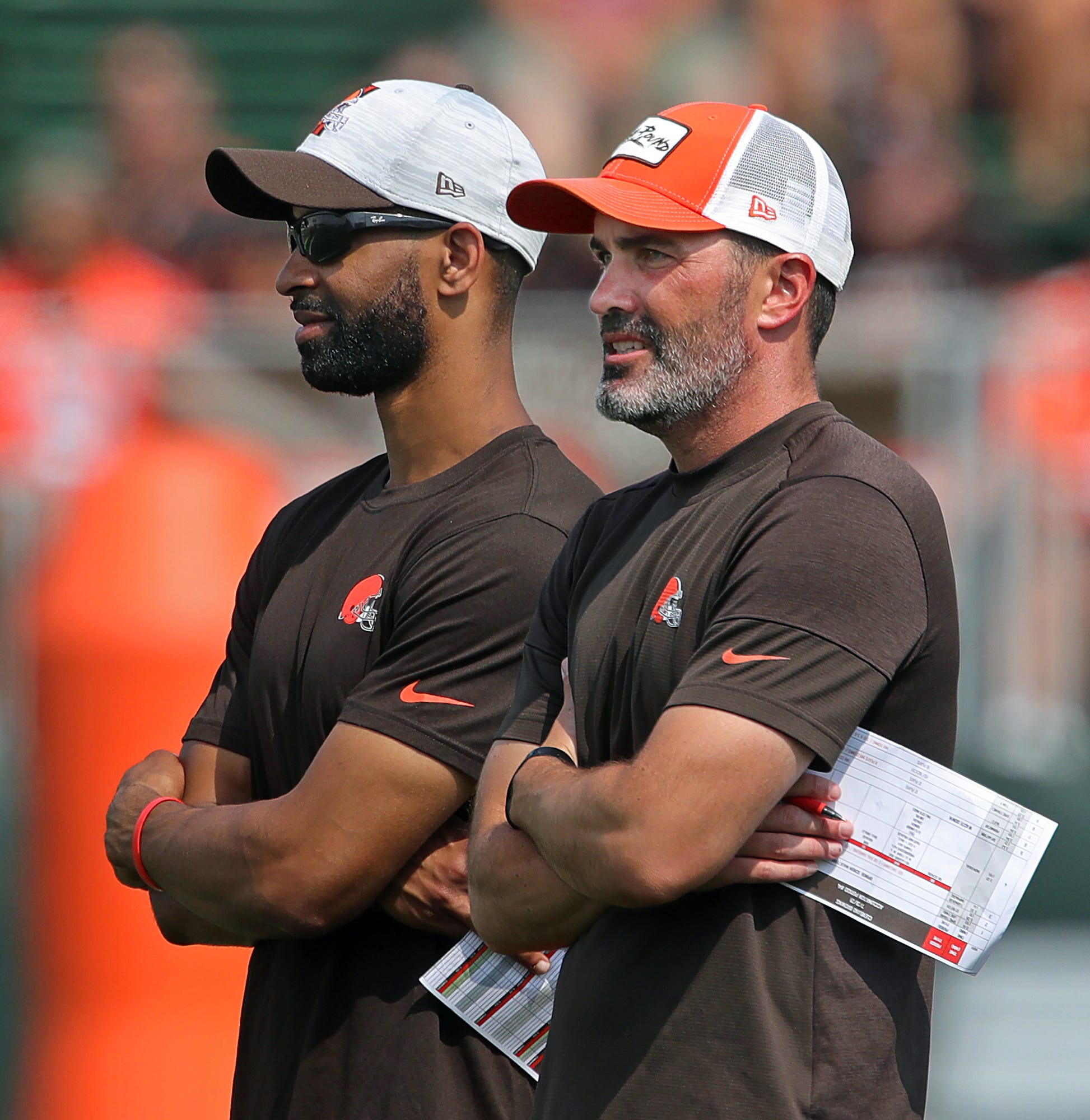 News of the second tear was believed set to sideline Watson for most or all of the 2025 season, and the Browns responded by trading for a passer, signing another and then drafting two more. PFR’s poll about which one would log the most starts this season did include Watson, but few expect him to play a notable role for the team this season. Watson’s recovery, however, will be a storyline to follow, as the Browns look to be prepared to move on.
It will be interesting to learn about a potential clearance expectation later this year. Watson is likely to begin the season on the Browns’ reserve/PUP list, but if he receives clearance during the season, seeing how the team handles it will become a front-burner matter. The Texans made Watson a healthy scratch throughout the 2021 season, as the QB’s list of sexual assault and/or sexual misconduct accusers piled up after he had requested a trade. A similar plan could conceivably form in Cleveland, should Watson be ready to go at some point later this year.
Packers Sign Round 1 WR Matthew Golden
The Packers have not complete a rookie deal for a first-round wide receiver in 23 years, but as outgoing president Mark Murphy reminded ahead of the team’s Round 1 move in April, one was coming. That draft choice is now under contract.
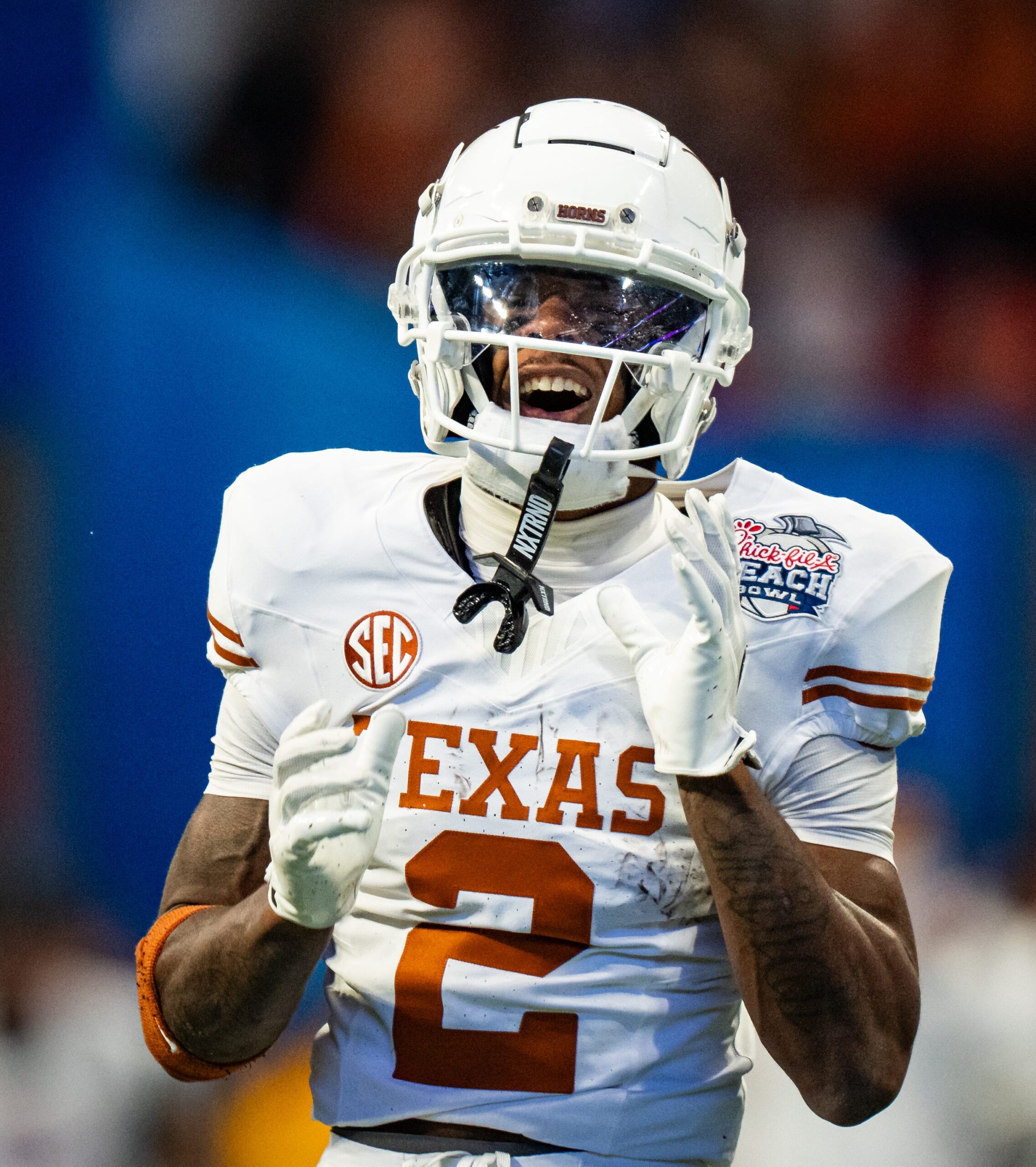
Matthew Golden agreed to terms on his rookie pact Monday, ESPN’s Adam Schefter tweets. As a first-round pick, Golden — chosen 23rd overall — will see his $17.58MM rookie-scale contract arrive fully guaranteed. The Packers can extend the deal through 2029 via the fifth-year option, a decision that will be due in May 2028. This deal leaves second-round pick Anthony Belton as the only unsigned Packers draftee.
 [RELATED: Packers Exercise Devonte Wyatt’s Fifth-Year Option, Decline Quay Walker’s]
This will be Golden’s third team in three years, as the Houston recruit transferred to Texas — which had lost Xavier Worthy and Adonai Mitchell to the draft — in 2024. Golden placed himself on the early-round radar during his Longhorns season, accumulating 987 receiving yards and nine touchdowns to help the team return to the CFP semis. However, the former AAC, Big 12 and SEC contributor cemented his status as a first-round-level prospect by blazing to a 4.29-second 40-yard dash at the Combine.
Golden, 21, made a “30” visit to Green Bay while also meeting with the Broncos, Buccaneers, Cowboys, Chargers, Lions and Texans. The Bucs went with Emeka Egbuka at No. 19, and the Broncos (No. 20) tabled their apparent need for a Courtland Sutton sidekick to Round 3 (Pat Bryant). The Bolts chose Omarion Hampton at No. 22, leaving Golden for the Packers, who made the rare decision to invest in this position in Round 1.
Green Bay’s streak of first rounds without a receiver investment dates to its No. 20 overall choice (Javon Walker) in 2002. The Packers did not extend Walker, trading him to the Broncos during the 2006 draft. Since that point, they have been out of the first-round receiver business. Second-round standouts multiplied in the years that followed, as the likes of Jordy Nelson, Randall Cobb, Davante Adams and Jayden Reed proved themselves to be quality starters. Reed and fellow second-rounder Christian Watson will now take a backseat contractually to Golden, as the Packers have stockpiled rookie-deal wideouts.
Golden’s arrival will introduce questions about Watson and fellow contract-year performer Romeo Doubs‘ futures, as Watson is not expected back until around midseason due to sustaining a Week 18 ACL tear. Two years remain on Reed’s contract, but the Packers have fortified the position, thanks to also adding Savion Williams in Round 3. It will be Golden, however, expected to make an immediate impact due to snapping this organization’s lengthy streak regarding WR investments.
Brock Purdy’s Camp Pushed For No-Trade Clause, Favorable Guarantee Structure
Deviating from their usual extension timelines, the 49ers now have George Kittle, Brock Purdy and Fred Warner signed with nearly two May weeks remaining. This certainly differs from how the Kyle Shanahan–John Lynch regime has handled high-profile negotiations in the past.
 The most notable of these extensions certainly went to Purdy, who is locked in before San Francisco’s OTA sessions. The seventh-round success story agreed to a five-year, $265MM deal that comes with $181MM guaranteed and $100MM guaranteed at signing. The contract also includes a favorable short-term cash structure and a no-trade clause, affirming the 49ers’ commitment to one of the modern NFL’s signature draft finds.
[RELATED: Warner Reclaims Spot As NFL’s Highest-Paid ILB]
After seeing talks with Trent Williams, Brandon Aiyuk and Nick Bosa approach Week 1 and previous negotiations with Kittle and Deebo Samuel run into training camp, the 49ers operated proactively with Purdy. The team made the first move, according to Sports Illustrated’s Albert Breer, bringing the QB’s camp to Santa Clara for a February meeting. At that point, 49ers brass informed their starting quarterback his contract would not break records. That would have been difficult to imagine, as Dak Prescott wielded extraordinary leverage to land his $60MM-per-year Cowboys extension (a number that currently tops the market by $5MM), but it is notable the team made that point to start negotiations.
We heard in late February negotiations had begun, but the sides were already on a second meeting (in Indianapolis) by that point, Breer adds Purdy’s camp countered by pushing for a deal with a strong guarantee structure and early-years cashflow. The player’s side also successfully changed San Francisco’s stance on a no-trade clause, with Breer indicating the 49ers had initially taken such an inclusion off the table during the winter start to these re-up talks.
The final outcome did not place Purdy in the top five for AAV at his position, with the deal settling at $53MM. That number trails Prescott, Josh Allen, Joe Burrow, Trevor Lawrence, Jordan Love and Tua Tagovailoa. It matched the Lions’ Jared Goff accord from May 2024, however, and the negotiating parties viewed that deal as a good comp. Purdy’s $165.05MM number through four years betters Goff’s figure, and Breer adds that count climbs to $220.3MM over five years. Though, it is worth noting Goff’s deal made him the NFL’s second-highest-paid passer at the time.
 The rolling guarantee structure’s vesting dates have yet to be revealed, but Purdy will likely see base salaries — or sizable portions of his paragraph 5 money — lock in a year out. That will provide security for a player who received just $77K guaranteed at signing on his rookie contract. Purdy will have a nonguaranteed $50MM due in 2030.
Purdy, 25, effectively saved the 49ers after their historic Trey Lance misstep. Rather than potentially see Purdy’s price rise closer to the 2026 franchise tag deadline, the 49ers likely saved money and ensured QB stability by doing a deal now. This accord already led to some veterans — from Aaron Banks to Dre Greenlaw to Charvarius Ward to Talanoa Hufanga — leaving in free agency, and it will naturally raise the stakes for the 49ers’ drafts. But the team is back in the franchise-QB contract business.
Purdy signing a five-year extension also separates him from how Goff, Love and Tagovailoa proceeded last year; each signed four-year deals. Should Purdy keep building on his surprising rookie-contract success, the 49ers will be in position to have cost certainty — on a market that should be in for a host of extensions in 2026 and ’27 — for the decade’s remainder.
Ravens, Derrick Henry Agree On Extension
MAY 19: Henry’s deal is now official, and Pro Football Talk’s Mike Florio notes it includes a signing bonus of $11.75MM. The pact also contains $1MM roster bonuses for the next two years, with 2025’s guaranteed. Henry’s base salaries for this year ($1.26MM) and next ($1.3MM) are fully locked in, as is a $9.7MM option bonus for the 2026 campaign.
A decision will need to be made by the Ravens ahead of the 2027 season, one in which Henry’s $11MM salary is not guaranteed. When speaking publicly on Monday after signing the deal, he declined to say whether or not he intends to continue playing by that point (h/t ESPN’s Jamison Hensley), but for at least two more years Henry’s future is assured.
MAY 14: The Ravens’ rumored Derrick Henry extension will come to pass. After a dominant Baltimore debut, extension discussions began. Weeks later, the All-Pro back is now signed beyond 2025.
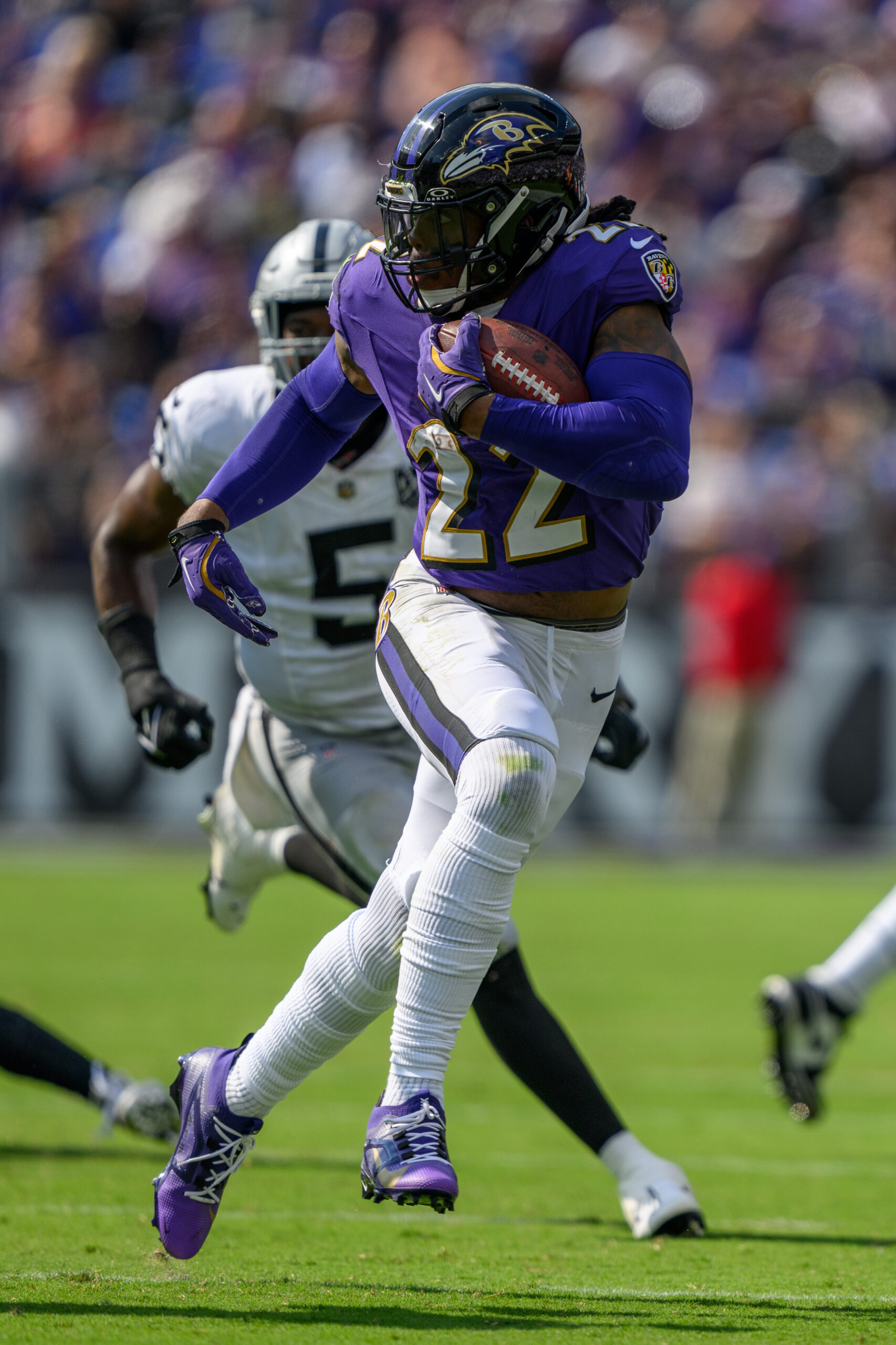 Baltimore will extend Henry on a two-year, $30MM deal, ESPN’s Adam Schefter reports. Henry will see $25MM fully guaranteed. Delivering a monster age-30 season, Henry is now signed through 2027. This deal certainly puts the former Titans star on track to finish his career as a Raven.
Previously attached to a two-year, $16MM deal, Henry entered the 2024 free agency period with mileage concerns. Those helped keep his previously full guarantee ($9MM) low. As Saquon Barkley ($26MM) and D’Andre Swift ($14MM) received far more lucrative at-signing numbers last year, Henry did not receive comparable interest. The Ravens had targeted the likely Hall of Fame-bound back before the 2023 trade deadline, however, and they kept that interest in pairing him with Lamar Jackson a year later. Henry rewarded the AFC North team, helping it claim another division title.
Henry became only the second running back this century to gain at least 1,900 yards and fail to land a first-team All-Pro nod, joining ex-Packer Ahman Green (2003). It took a historic Barkley stampede to deny Henry that. Henry, however, led the NFL with 16 rushing touchdowns during his 1,921-yard rampage.
After the Eagles rewarded last year’s first-team All-Pro RB with a deal that included $36MM fully guaranteed, the Ravens will give their bulldozing starter a guarantee near the top tier at the position. Henry’s $25MM ranks behind only Barkley’s number and Ashton Jeanty‘s rookie contract among locked-in money at the position. It provides the 10th-year veteran considerable security for 2026, providing a clear sign the former Heisman winner will play beyond this season.
This Ravens decision represents a tremendous commitment to a player who is 31 and has logged 2,355 career carries — most among any back on a current roster. Henry has a 639-carry edge on Joe Mixon, who sits in second among active RBs. Henry has now secured two big-ticket extensions during his career. This one, despite Henry’s age, nearly eclipses his 2020 Titans accord in guarantees. That deal, agreed to at the 2020 franchise tag deadline, brought $25.5MM locked in.
Though, Henry needed to sign for four years to secure that number. The Ravens are authorizing this lofty guarantee over two based on his status as one of the most reliable RBs in NFL history. Henry has six 1,000-yard seasons on his resume; last year’s showing checked in nearly 400 yards clear of every non-2020 slate for the former rushing champ. Since he gave way to DeMarco Murray early in his career, all six have come since 2018.
 Joining Barkley in making a significant difference for his team as a 2024 free agent signing, Henry will have a chance to move the Ravens back to a Super Bowl over the next two seasons. Baltimore is still taking a risk by making such a lucrative 2026 commitment for a player at Henry’s age, but the team is betting on the durable — save for a 2021 foot injury — back continuing to pound away. This durability has allowed Henry to accumulate more than $74MM during his career; Wednesday’s agreement will push that number to the $100MM doorstep.
Precise details of Henry’s new contract are still being reported, but it should reduce his 2025 cap hit, which was originally just under $13MM. That will give the Ravens some more breathing room with the salary cap as they finish signing their 2025 draft class and make their annual summer veteran additions, which could include a safety after Ar’Darius Washington‘s torn Achilles.
As for cashflow, Henry will received $14MM in 2025 and $11MM in 2026, according to Sports Illustrated’s Albert Breer, representing all of his fully guaranteed money He’ll be due another $12MM in cash in 2027, which is essentially a team option year since none of his salary is guaranteed.
By then, Henry will be 33 years old, far past the retirement age for most NFL running backs. If he and the Ravens have captured their elusive Super Bowl win by then, he could hang up the cleats and start preparing his Hall of Fame acceptance speech. If not, he may run it back in Baltimore for one last shot at a Lombardi before he retires.
Nikhil Mehta contributed to this post.
Draft Lottery Not On NFL’s Radar
This week’s NBA lottery produced a Mavericks win despite the much-scrutinized franchise entering the annual event with less than a 2% chance to secure the No. 1 pick. Long-shot lottery wins have become a regular NBA occurrence, as teams with the worst records have seen their odds to land the top choice decrease thanks to a recent change in the lottery system.
In an attempt to curb tanking, the NBA reduced the odds of the team holding the worst record to 14%. The franchises who finish with a bottom-three record each carry a 14% chance at the No. 1 pick entering the lottery; prior to 2019, the team that finished with the league’s worst record carried a 25% chance at the pick. Although NBA lotteries stretching back decades — from the Patrick Ewing- and LeBron James-centered events — have generated intrigue, the 2019 change has increased drama.
 Major League Baseball also now uses a lottery system, waiting until 2022 to implement one, and the NHL also uses this setup to determine its draft order. The Mavs’ recent triumph, however, brought some chatter about the NFL following suit. While this topic has come up within the media, it has never exactly been a front-burner matter in league circles.
The NFL has done plenty to increase viewership in recent years, adding extra playoff teams (and moving a wild-card game to Monday night) while making Christmas Day games an annual event and raising its count of international games. A future in which the league plays 16 international games per season has come up, as an 18-game season appears a near-future inevitability. The league also expanded its draft from two days to three back in 2010, and that change — which offered two primetime windows — has benefited the league. A lottery would certainly garner more interest ahead of that event, but as of now, there does not seem much appetite for big-picture change.
No vote about a lottery has taken place in the league previously, and ESPN’s Dan Graziano said during a recent Get Up appearance (h/t Bleacher Report’s Mike Chiari) it is not believed the competition committee has engaged in substantive discussions about such a change. The league, per Graziano, does not believe it has a tanking problem that would warrant a lottery.
Teams maneuvering to land a higher draft slot, of course, has taken place. And recent drafts have shown the value that can come from securing a top pick. The Bears sat Justin Fields in Week 18 of the 2022 season, giving them the No. 1 draft slot — which it traded to the Panthers in a swap that eventually brought Caleb Williams to Chicago — while the Commanders benefited from losing their final eight games in 2023. Washington reduced its chances of winning by trading both Montez Sweat and Chase Young at the 2023 deadline; ownership overruled the Ron Rivera regime on Sweat. This led to Jayden Daniels draft access, which has triggered a sea change in Washington. The Bengals saw the same trajectory shift when they obtained the Joe Burrow draft slot in 2020, outflanking a Dolphins team that became the subject of a tanking investigation.
The Eagles also were not exactly focused on winning when they played a memorable season finale in Washington in 2020, yanking future Super Bowl MVP Jalen Hurts for Nate Sudfeld from a winnable game — one that would have given the Giants the NFC East title in that event. This only netted Philly the No. 6 overall draft slot, but the team acquired a future first-round pick — via the Dolphins’ climb for Jaylen Waddle in 2021 — months after its seminal loss in Washington.
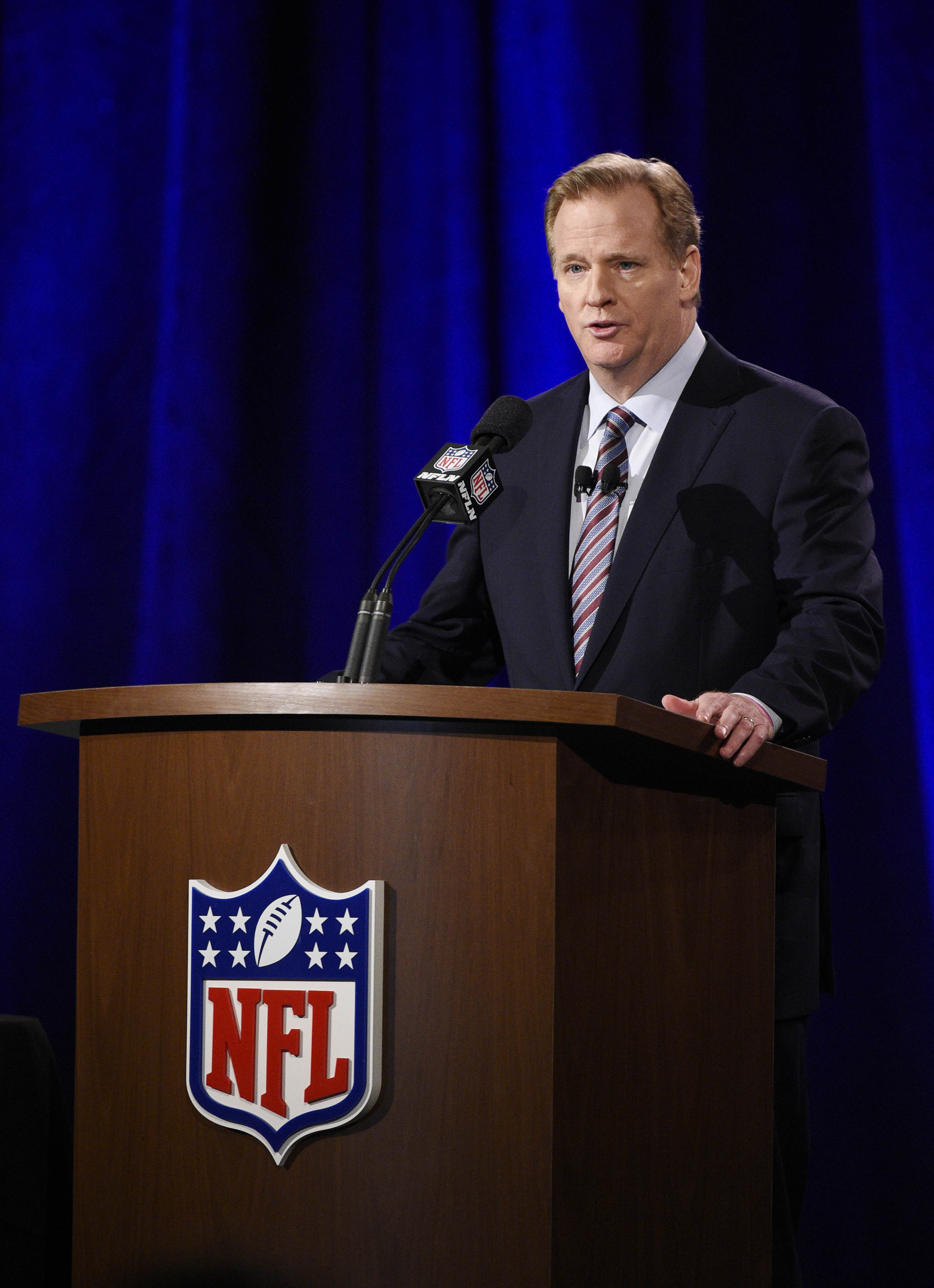 A lottery would protect against teams having clear motivation to lose late-season games, as earning access to certain QB prospects in the draft continues to matter significantly. But with the NFL’s game count at 17 (compared to the 82- and 162-game slates the other sports use), tanking efforts are not nearly as substantial. Coaching staffs not receiving long runways also play into this. So does the trade deadline’s placement. It took until 2024 for the league to even move the deadline until the Tuesday following Week 9. It had stood a week earlier for 12 years, and the NFL had it stationed two weeks earlier in the years prior.
The league’s resistance to change on that front also was aimed at competitive integrity, as it sought to prevent a slew of sellers emerging in a reality in which the deadline landed in the season’s second half — as it does in the NBA, NHL and MLB — rather than midseason. This aim likely is leading to lottery hesitation as well, as Sports Illustrated’s Albert Breer indicates a potential concern would be mediocre teams not putting forth best efforts in a push to better their respective lottery positions. The league would surely prefer to avoid more sequences reminding of the Hurts-for-Sudfeld sequence.
This talk of ensuring the status quo comes as the NFL is set to discuss rearranging its playoff field, a move that would be aimed at keeping teams from resting starters to close out seasons. A lottery would at least minimize scenarios in which clubs have the chance to secure the No. 1 pick by losing late-season games. A league that has not been shy about methods of increasing viewership likely will visit this change down the road, but for now, it appears the long-held draft structure will remain for the foreseeable future.