
Steelers To Hire Brian Angelichio As OC
Mike McCarthy is close to a deal with an offensive coordinator. The Steelers are nearing an agreement with Brian Angelichio, the Pittsburgh Post-Gazette’s Gerry Dulac reports.
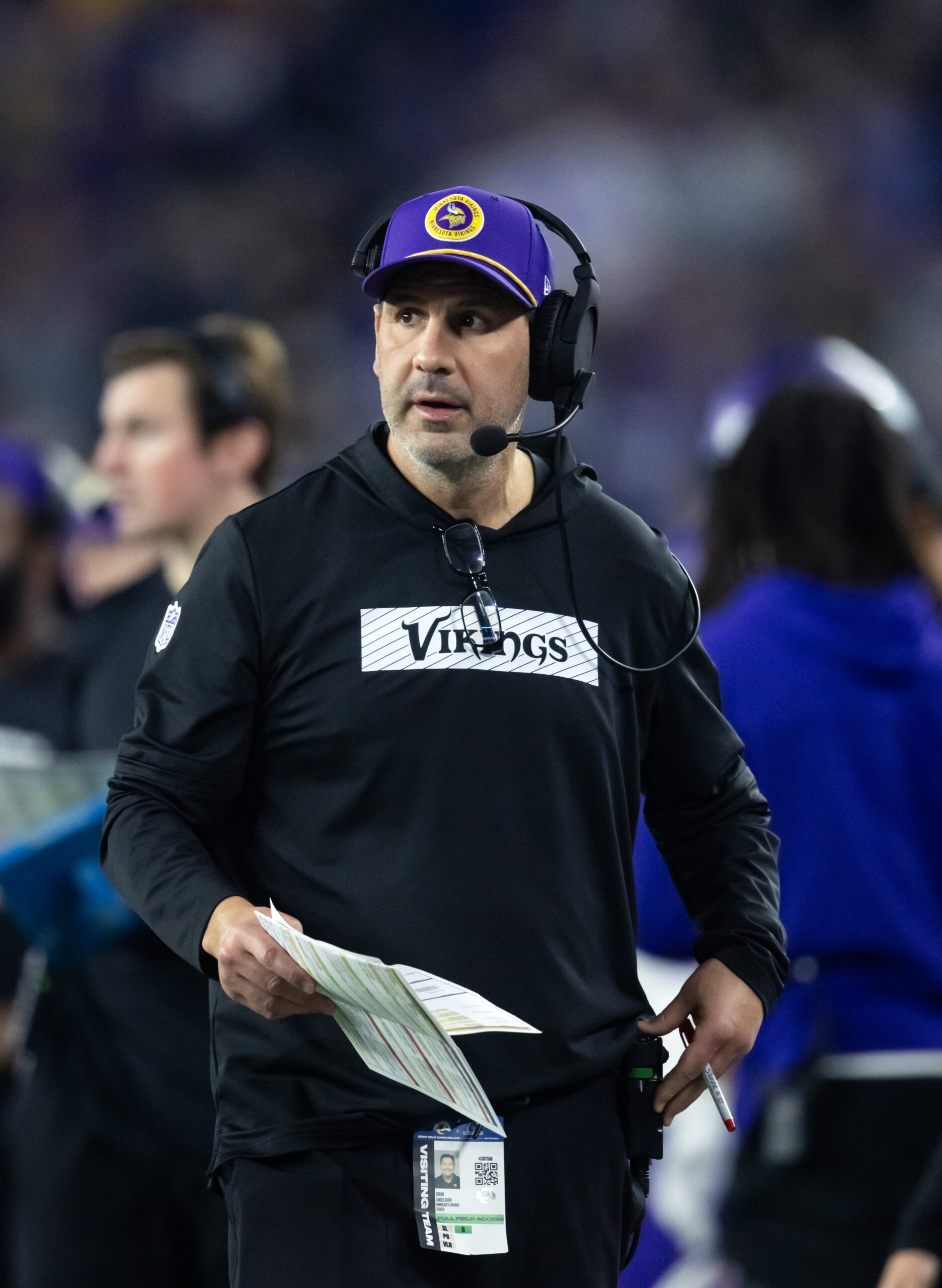 Only connected to the Pittsburgh OC position during this year’s cycle, Angelichio has been Minnesota’s tight ends coach for the past four seasons. He also served as pass-game coordinator during that span. Angelichio has a past with McCarthy, coaching Packers tight ends from 2016-18. While ESPN’s Jeremy Fowler notes the Vikings made an effort to retain Angelichio, the allure of an OC role will be too enticing to turn down.
A Tuesday report pointed to Angelichio being the favorite for this role. This came after Scott Tolzien — a former Packers QB and Cowboys assistant under McCarthy — removed his name from consideration. Tolzien is returning to the Saints, clearing a path for Angelichio to land his first OC opportunity at 53.
An NFL assistant since 2012, Angelichio does have a Pittsburgh past. He served as Pitt’s tight ends coach from 2006-10. After a year at Rutgers, Angelichio followed Greg Schiano to the NFL as Buccaneers tight ends coach. He then served in that capacity for the Browns, Packers, Washington and Panthers from 2014-21. The Vikings hired him for the same role but added a pass-game coordinator title as well. But Angelichio will move up after a 14-season span coaching tight ends.
Previous Steelers OC Arthur Smith had been among the TEs coaches to display upward mobility from that role, but Angelichio had not been interviewed for an OC post since 2023. The Cowboys and Ravens interviewed him during that offseason, but no OC meetings came in 2024 or ’25 for the long-running assistant. Kevin O’Connell has fared well in Minnesota, however, and this marks a coaching tree branch for the 2024 Coach of the Year.
Angelichio’s most notable work as a tight ends coach came when Gary Barnidge produced a 1,043-yard season to lead the Browns in receiving in 2015. Barnidge had not eclipsed 200 yards before that unexpected age-30 breakout. He oversaw T.J. Hockenson‘s transition to Minnesota in recent years, with the trade acquisition reaching 960 yards in an injury-shortened 2023 season. Angelichio’s past with McCarthy is probably a bigger factor in this hire than intermittent success with tight ends, however.
McCarthy is set to call plays in Pittsburgh, establishing Angelichio as his top game-planning lieutenant. This marks a major change for the Steelers, whose OCs have called plays for ages — as Chuck Noll, Bill Cowher and Mike Tomlin were all defensive-minded HCs. The Steelers have not sported a top-10 offense since Antonio Brown‘s 2019 departure, but they did rank 16th and 15th in scoring during Smith’s two seasons calling the shots. Smith is heading to the college ranks, set to become Ryan Day’s next OC at Ohio State.
Sean McVay Addresses Rob Havenstein’s Future; Rams Eyeing Warren McClendon Extension?
The only Ram left from the franchise’s St. Louis stay, Rob Havenstein has spent 11 seasons with the team. The longtime Rams right tackle, however, is coming off a second straight injury-plagued season and is unsigned for 2026.
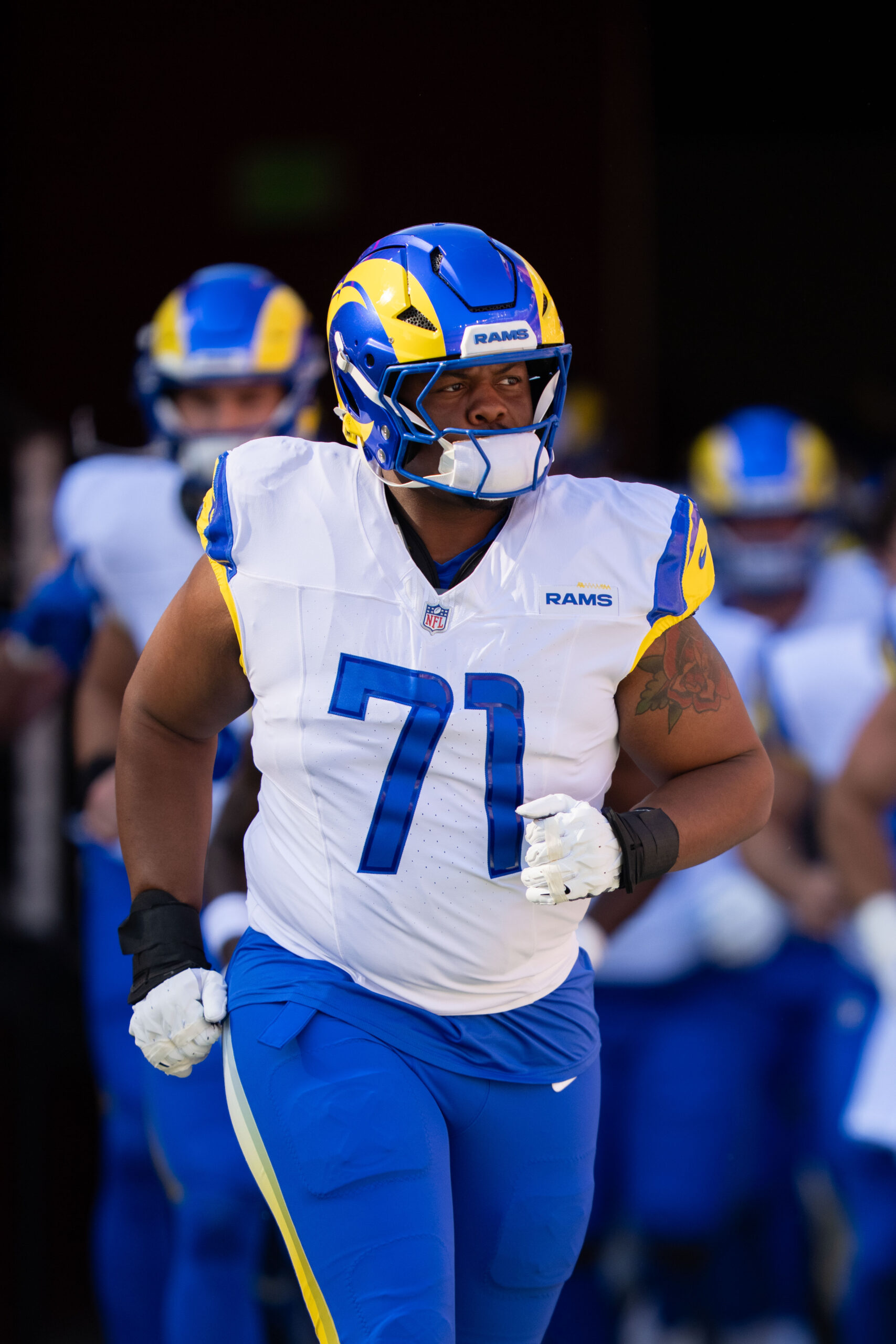 Havenstein signed two Rams extensions, playing out the second deal — three years, $34.5MM — in 2025. But the formerly dependable blocker missed 10 regular-season games and all three Rams playoff contests. He missed six games in 2024. It is not yet certain Havenstein, 33, wants to return for a 12th season.
[RELATED: Rams Extend Sean McVay, Les Snead]
“I think it’s very similar to Matthew [Stafford] … give them a little bit of time, let them digest, unpack the emotions of where they’re at,” Sean McVay said. “Whether they continue to play, or whether they don’t want to play anymore, they’ve been legacy players, they’ve been legacy human beings, more importantly.”
The Rams look to have more than a contingency plan in Warren McClendon; they may have a true Havenstein successor. McClendon filled in for the RT mainstay and fared well, to the point Essentiallysports.com’s Tony Pauline notes the Rams are eyeing an extension with the young blocker. McClendon made 10 regular-season starts before lining up opposite Alaric Jackson in all three Rams playoff games, giving the former fifth-round pick an onramp to a full-time RT role in 2026.
Now extension-eligible, McClendon is coming off a strong season in relief. He graded second in run block win rate among all tackles per ESPN, which also ranked the Georgia product 12th in pass block win rate at the position. McClendon only played in five games as a rookie, but he started five in 2024. A future in which he lines up opposite Jackson long term may be in play.
The Rams already gave Jackson a three-year deal worth $57MM, keeping their UDFA LT find off the free agent market last year. The team has All-Pro guard Kevin Dotson going into the final season of a three-year, $48MM pact. Left guard Steve Avila is entering the final season of his rookie contract. Pro Football Focus ranked Avila 10th among guards in 2025. The former second-round pick would seemingly be an extension candidate as well, but the Rams have some matters to sort out on offense.
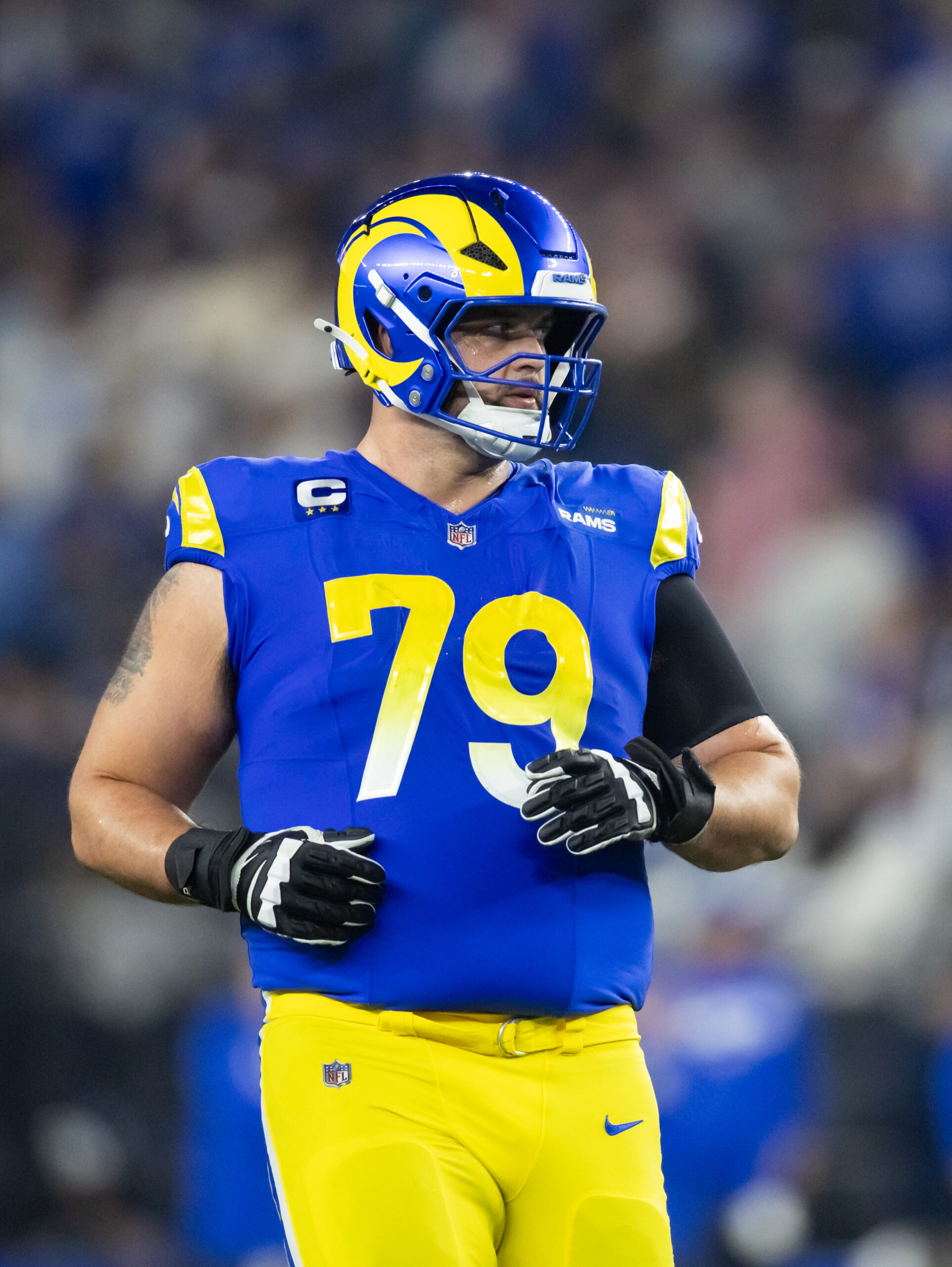 Another round of Matthew Stafford contract talks will likely be on tap, though the MVP favorite is undecided on returning for an 18th season. The Rams’ 2023 draft also has produced a champagne problem. In addition to Avila and McClendon, the Rams have Puka Nacua, Byron Young and Kobie Turner now extension-eligible.
This creates a logjam for a team that made 14 picks during the 2023 draft. Nacua will be the obvious priority, but the team has four other starters to consider paying soon. None will be eligible for a fifth-year option, as all were drafted between Rounds 2 and 5, placing some urgency on the Rams.
As for Havenstein, he has started 148 games since being drafted in the 2015 second round. That ranks seventh among all O-linemen in Rams history. Among tackles, only Hall of Famers Jackie Slater and Orlando Pace have made more starts in franchise annals. But Havenstein running into ankle and knee trouble in November places his future in question. He would hit free agency for the first time if unsigned by March 9.
Cardinals Request DC Interviews With Charlie Bullen, Aubrey Pleasant
The Cardinals made a rather surprising offensive coordinator hire Wednesday, changing Nathaniel Hackett‘s plans after he had previously committed to becoming the Dolphins’ quarterbacks coach. Arizona is now on the hunt for a DC.
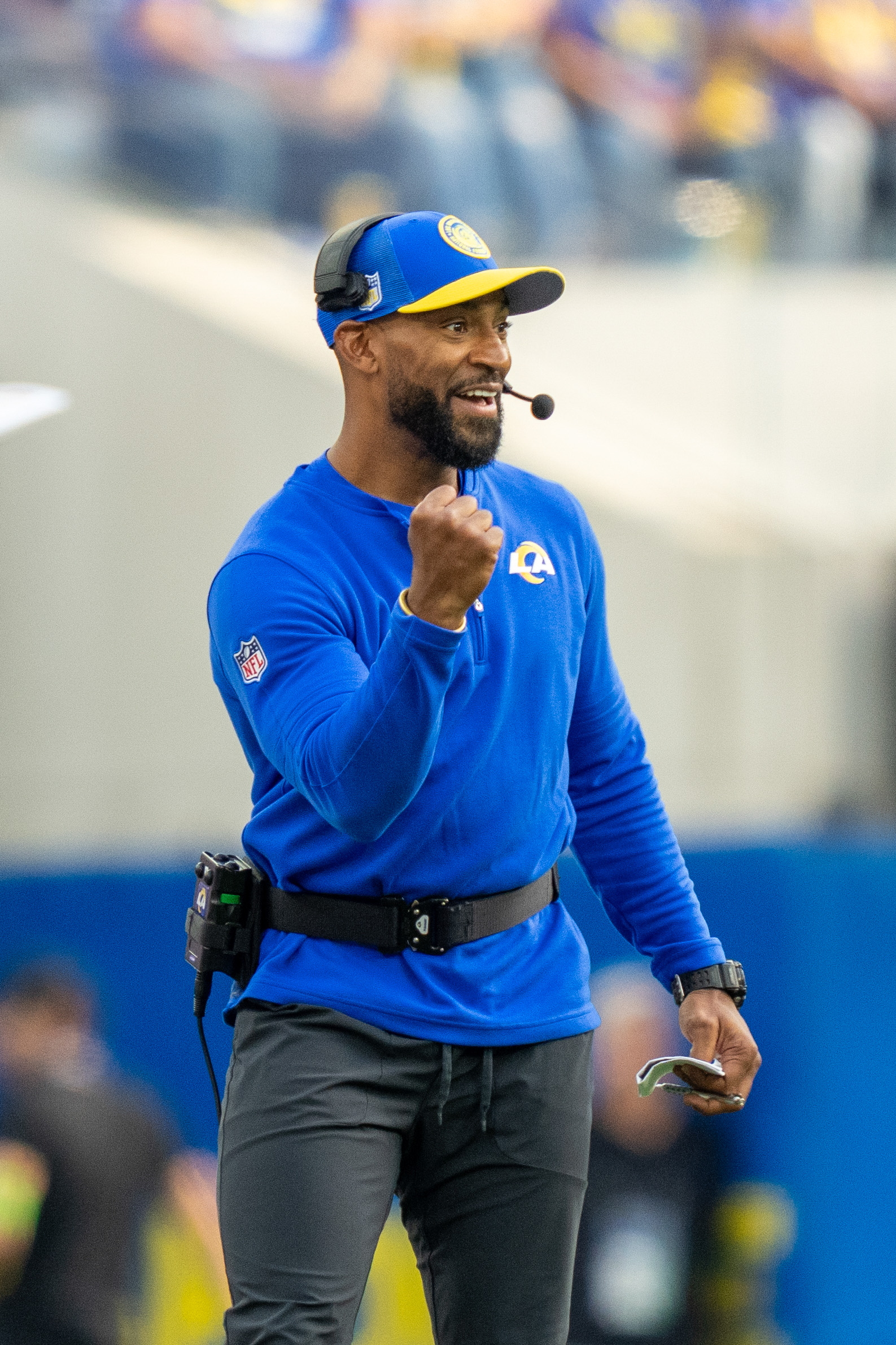 Interview slips are going out, with NFL.com’s Mike Garafolo and Ian Rapoport reporting Charlie Bullen and Aubrey Pleasant are under consideration for this job. Bullen finished last season as the Giants’ interim DC, while Pleasant is the Rams’ defensive pass-game coordinator. Bullen is a former Cardinals assistant, working in Arizona during Kliff Kingsbury‘s time as head coach.
[RELATED: NFL Offensive/Defensive Coordinator Search Tracker]
Pleasant has been a regular on the DC interview circuit, and he worked with Mike LaFleur for the past three seasons. It is certainly not uncommon for new HCs to bring staffers with them from their previous teams, and Pleasant has extensive experience interviewing for DC posts.
Pleasant is a two-stint Rams assistant, serving as cornerbacks coach from 2017-20, DBs coach in 2023 and assistant HC/pass-game coordinator over the past two seasons. Sean McVay assistants regularly land promotions, as the LaFleur Cardinals hire showed most recently.
The Bears and Jaguars sent Pleasant interview slips last year. The Rams met with him about replacing Raheem Morris in 2024. The Saints and Vikings discussed their positions with him in 2022. Back in 2019, the Bengals began his time on the DC carousel with an interview. The Chargers discussed their DC position with Pleasant this year. None of these meetings has produced a hire, but with LaFleur working with the Sean McVay assistant previously, this could present the best path for upward mobility yet for the 13-season NFL staffer.
John Harbaugh is prepared to retain Bullen as outside linebackers coach, but the Giants cannot block a DC interview since it represents a promotion to the coordinator tier. The Cowboys interviewed Bullen for their defensive coordinator gig earlier this offseason.
Bullen, 41, was on all four Kingsbury Cardinals staffs. After a season as Arizona’s assistant linebackers coach in 2019, he climbed to ILBs coach during Vance Joseph‘s time as DC. Bullen was on the past two Giants staffs, mentoring Brian Burns, Kayvon Thibodeaux and Abdul Carter in that span. Burns posted a career-best 16.5 sacks in 2025, earning him his first All-Pro honor. Bullen also spent seven seasons in Miami, working under Joe Philbin, Dan Campbell and Adam Gase.
Offseason Outlook: Los Angeles Chargers
For nearly a decade, the Chargers stood as the top Chiefs challenger in an AFC West that rarely featured great competition for Andy Reid's bunch. But the Broncos overtook the Bolts this season, zooming to the AFC's No. 1 seed. With the Chiefs unlikely to be down for long, competition in this division figures to be fierce in 2026. The Chargers will be in the mix again, after two straight playoff berths under Jim Harbaugh. But two consecutive uninspired wild-card showings have brought questions about where this operation can go.
Some vintage Chargers injury luck resurfaced in 2025, with Rashawn Slater going down in training camp and Joe Alt suffering a season-ending injury around midseason. The team also lost a central figure in its early-Harbaugh success when Jesse Minter became the Ravens' head coach. But the Bolts probably upgraded when they hired Mike McDaniel to run things on the other side of the ball.
Coaching/front office:
- Fired OC Greg Roman; Mike McDaniel named replacement
- DC Jesse Minter hired as Ravens' HC; Chris O'Leary named replacement
All six of Harbaugh's NFL seasons came with Roman calling offensive plays. Roman unleashed Colin Kaepernick, helping the 49ers to three straight NFC championship games and Super Bowl XLVII before calling the shots in Lamar Jackson's first MVP season. But the run-oriented OC's style has a habit of growing stale. The Chargers retrained Justin Herbert compared to his years under Anthony Lynn and Brandon Staley, with his pass attempts number freefalling under Roman. Offensive line issues limited the Chargers in 2025, but they ranked 20th in scoring offense and 25th in EPA per play.

AFC East Notes: Hall, Hill, Patriots, Bills
It is fairly well known the Jets have wanted to retain Breece Hall. After all, they rejected a Chiefs offer believed to include a fourth-round pick at the deadline. The Jets eyed at least a third, and they retained the four-year starter as he finished his first 1,000-yard rushing season. As the likely top running back set to be available in free agency, Hall could command a salary around $12MM per year. With Aaron Glenn continually speaking highly of the former second-round pick, ESPN.com’s Rich Cimini mentions the franchise tag as a possibility to ensure he stays in New York. The running back tag is expected to cost more than $14MM, per OverTheCap, though precise tag figures are not yet known. The transition tag could also be a possibility, per Cimini. That is expected to come in just south of $12MM, though the Jets would not be entitled to any compensation if Hall signed an offer sheet and departed.
The Jets are projected to hold the fourth-most cap space, so a tag would be a way to ensure Hall does not bolt for a contending team. Rumors ahead of the deadline pointed to the RB wanting to be moved, though he denied he requested a trade. Here is the latest from the AFC East:
- Tyrod Taylor played out a two-year, $12MM Jets contract. After backing up Aaron Rodgers in 2024, Taylor began this season as Justin Fields‘ understudy. The team then turned to Taylor after Fields struggled, but by season’s end, overmatched rookie Brady Cook was taking snaps. A November report indicated the Jets were likely done with Taylor, but Essentiallysports.com’s Tony Pauline indicates the team has interest in re-signing him. If the Jets re-sign Taylor, he would be placed into a third offensive system in three years as the team hires a new OC. That, of course, would not be new for Taylor — a veteran of six teams during a 15-year career. The Jets retaining Taylor would give them some continuity as they search for a new starter.
- The NFL is investigating allegations from Tyreek Hill‘s wife, who has accused the All-Pro wide receiver of domestic abuse over an extended period. The league is reviewing parts of Hill’s deposition in his divorce case with Keeta Vaccaro, the Miami Herald’s Grethel Aguila notes. Vaccaro filed for divorce and alleged eight incidents of domestic violence. Hill is no stranger to such accusations. He was arrested in 2014, pleading guilty to assaulting his girlfriend in college, and was later the subject of an NFL investigation into abuse claims by the same woman — the mother of his oldest children — in 2019. Hill and Vaccaro’s divorce trial is expected to begin in June. Hill, 31, is expected to be a Dolphins cap casualty soon.
- Patriots defensive tackle Christian Barmore was arrested on a domestic assault charge late last year, and the Boston Globe’s Travis Anderson indicates the sixth-year defender’s arraignment has been pushed back to March. The arraignment was initially scheduled for Tuesday, but Barmore’s lawyer pushed for a delay. This will prevent Barmore from making a court appearance during Super Bowl week. Any suspension for the high-priced D-lineman would likely come before or during the 2026 season.
- Jordan Phillips has enjoyed three stints with the Bills, returning after being released by the Cardinals and Cowboys. Phillips’ third Bills stay came after the Cowboys moved on midway through the 2024 season; he re-signed with Buffalo in August. The veteran defensive tackle spent the past two years in Buffalo and does not want to relocate again if he continues his career. Phillips, 33, is amenable to continuing his career but only wants to do so in Buffalo, ESPN.com’s Alaina Getzenberg tweets.
Bills To Rehire Bobby April III, John Egorugwu; Team Adds Drew Terrell To Staff
Two former Bills defensive coaches are returning under new DC Jim Leonhard. The team is rehiring Bobby April III and John Egorugwu, according to NFL.com’s Ian Rapoport and ESPN.com’s Adam Schefter. They will coach the Bills’ outside and inside linebackers, respectively.
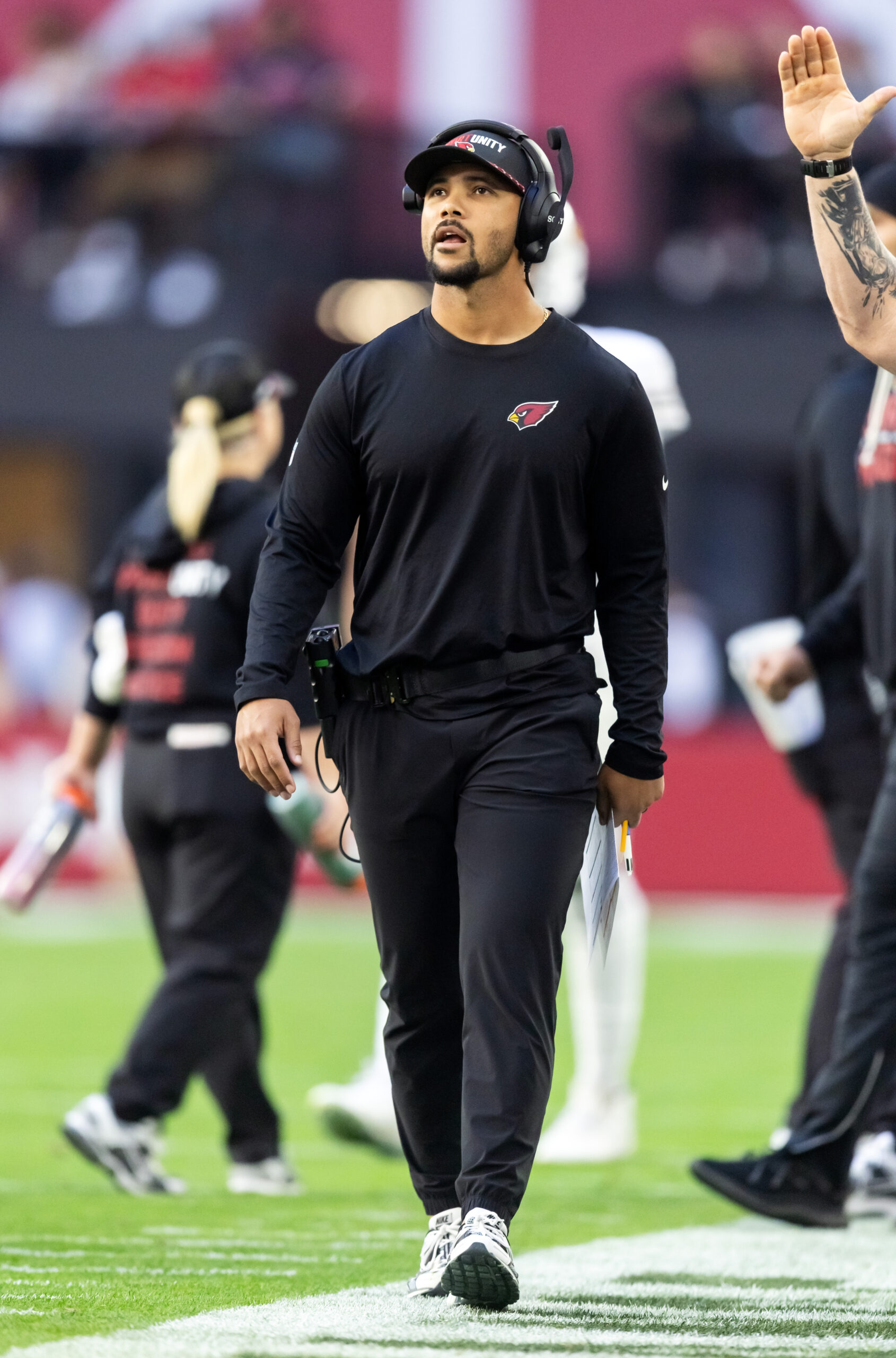 Buffalo is also making two new hires, with Schefter adding the team is bringing in Drew Terrell as its wide receivers coach and adding former Oklahoma defensive coordinator Jay Valai as its cornerbacks coach. Terrell interviewed for the Chargers, Commanders and Falcons’ OC jobs last month.
April is coming to Buffalo after three years as Stanford’s defensive coordinator. More notably with regards to this Bills hire, April worked with Leonhard at Wisconsin from 2018-22. April served as the Badgers’ OLBs coach during that span, which featured Leonhard as the Big Ten program’s DC and interim HC. Before heading to Madison, however, April was linebackers coach under Rex Ryan in Buffalo from 2015-16. April is the son of former NFL ST coordinator Bobby April Jr.
While April’s Bills stint occurred before Brandon Beane‘s arrival, the current GM was on staff when Egorugwu was in place previously. The Bills hired Egorugwu from the Ravens in 2017. Egorugwu, who completed a notable jump in being a 2015 Ravens hire weeks after he had pledged to work at then-Division I-FCS Missouri State, was on Sean McDermott‘s staff from 2017-20. The final three years featured him as assistant LBs coach. Egorugwu spent the past four seasons as the Giants’ linebackers coach under Brian Daboll, having reunited with ex-Bills coworkers Daboll and Joe Schoen after a season at Vanderbilt.
Terrell spent the past three seasons as the Cardinals’ pass-game coordinator under Drew Petzing. Terrell had spent the previous three seasons as wideouts coach in Washington under Ron Rivera. Valai spent the past four seasons as Oklahoma’s co-DC, having previously coached at Texas and Alabama. He worked under Bob Sutton as a quality control assistant with the Chiefs in 2018. While Valai was a former Wisconsin DB, his tenure did not overlap with Leonhard’s time as a player or a coach with the program.
Broncos Want To Extend GM George Paton; Vikings On Radar?
George Paton has completed one of the more interesting GM recovery efforts in recent memory. After a disastrous 2022 offseason that brought the Nathaniel Hackett hire and the Russell Wilson trade/extension sequence, the veteran GM has presided over a Broncos turnaround.
Denver overcame two years of historic Wilson dead money to make the playoffs in both seasons, including a 2025 No. 1 seed and AFC championship game berth. When Paton took over for John Elway in 2021, he signed a six-year contract. That makes 2026 a platform year. Although Paton is technically a lame duck as it stands, the Broncos want to keep his partnership with Sean Payton going long term.
[RELATED: Bo Nix Addresses Sean Payton Injury Comments]
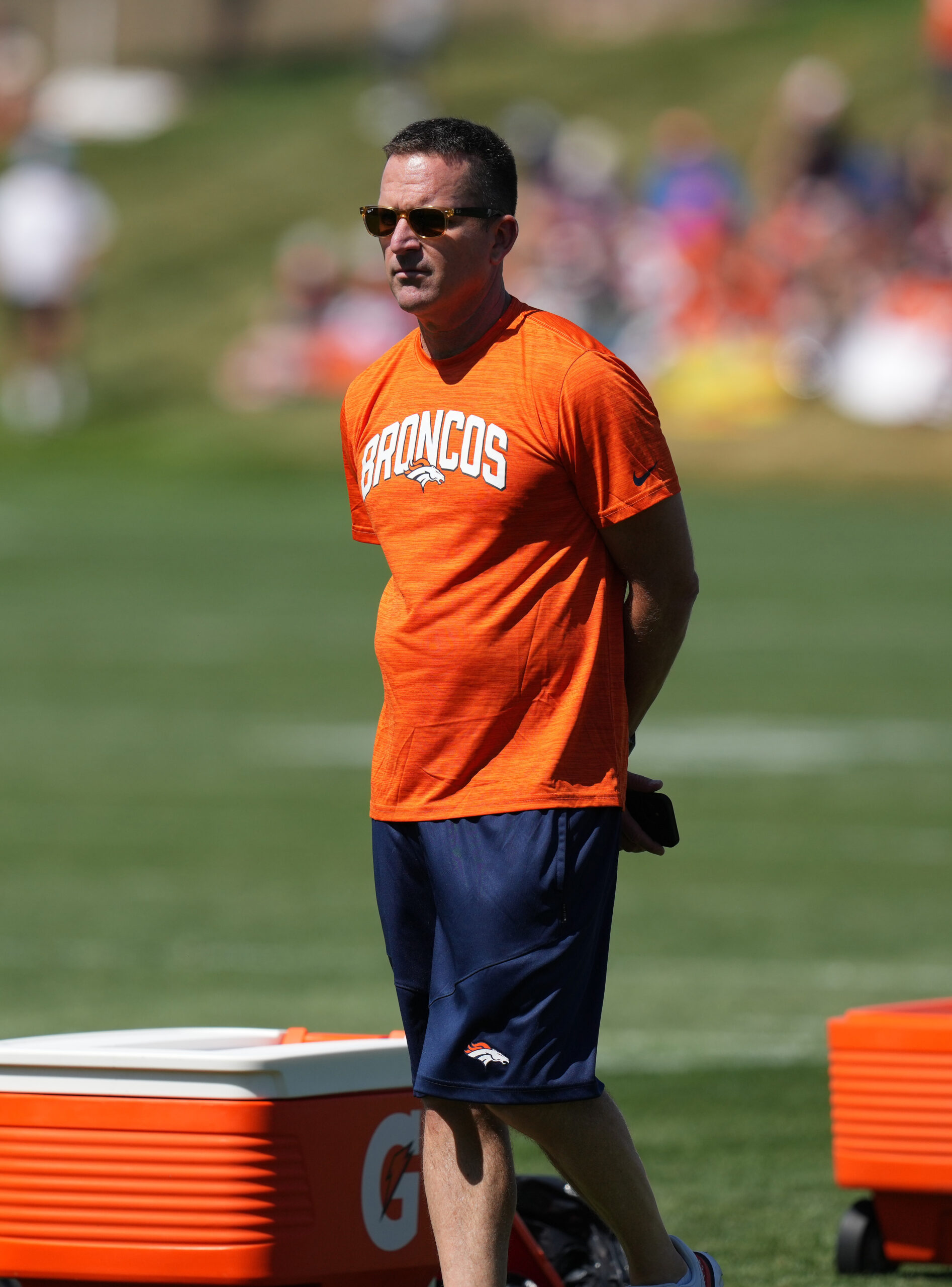 “We’d love to have both of them here long term,’’ Broncos CEO Greg Penner said, via 9News’ Mike Klis. “I think the partnership they’ve created and how they work together, it’s very complementary. In terms of their contracts, those are things that we’ll always deal with on a personal basis in private and take that as it comes.”
A recent report indicated the Broncos were eyeing a second Paton contract, and one will need to be worked out soon if the team indeed will keep the Payton-Paton pair together beyond 2026. The longtime NFL exec lost some power when he orchestrated the January 2023 trade for Payton, but the team has done well to rebound. While the Payton-Bo Nix union has led the way, the GM’s round of extensions have been no small part of that.
From 2024-25, the Broncos extended six All-Pro or Pro Bowl players — Patrick Surtain, Quinn Meinerz, Garett Bolles, Courtland Sutton, Zach Allen and Nik Bonitto. All six were honored as All-Pros or Pro Bowlers in 2025, with five of the six receiving one or both those distinctions in 2024 a well. Paton’s 2021 draft class produced Surtain, Meinerz and outside linebacker Jonathon Cooper; the latter is also tied to an extension.
The Broncos hired Paton after his lengthy run with the Vikings, who employed him from 2012-20. Paton served as Vikings assistant GM from 2015-20, becoming a regular GM candidate in that span. A year after removing his name from Browns consideration, Paton took the Broncos’ job. The Vikings now have a GM vacancy, having fired Kwesi Adofo-Mensah on Friday. With his Broncos contract not yet extended, Paton’s name has floated in connection with a potential Minnesota return, The Athletic’s Dianna Russini and Alec Lewis note. Paton still has strong relationships with Minnesota, per The Athletic.
Paton, 55, was Rick Spielman‘s top lieutenant with the Vikings. He was there long enough to cover the Brett Favre seasons all the way to Kirk Cousins‘ second Vikes contract. The franchise made the playoffs with five different starting quarterbacks from 2009-19. The Vikings hired Paton from the Dolphins in 2006.
Considering the success the Broncos have begun to achieve with this regime, it would surprise if the team let its GM out of the building. Despite Payton having no relationship with Paton upon arrival in 2023, the veteran HC has spoken well of his partnership with the GM since. The Broncos would have to grant the Vikings permission to interview Paton, since the hire would be a lateral move. But Minnesota interest could give the sixth-year GM some leverage as he prepares for extension talks in Denver.
Offseason Outlook: Carolina Panthers
An optimistic viewpoint can tab the Panthers' 2025 season as clear progress. The team ended a seven-season playoff drought and pushed the high-powered Rams once there. Pessimism would conversely point to a 27th-ranked offense and a minus-69 point differential -- as the NFC South has been unable to get its act together in recent years -- to indicate considerable work needs to be done.
No firing rumors followed Dave Canales or Ejiro Evero, and the Panthers at long last have achieved a semblance of stability under David Tepper. The team still needs a better answer on Bryce Young, and more help is almost definitely coming on that side of the ball this offseason.
Coaching/front office:
- Reached extension with DC Ejiro Evero; DC interviewed for Falcons, Raiders, Steelers' HC jobs
Although Evero checks a key box in generating interview slips -- being a five-year Sean McVay assistant -- the Carolina DC has been a fixture in receiving them despite continually being tied to teams with losing records. This marks the fourth straight year Evero has coordinated the defense of a losing team only to be contacted for a head coaching interview. Las Vegas met with Evero twice this year. He remains connected to that search, as the Vegas job is vacant, but Klint Kubiak is the favorite for a Raiders team that has been tied to an offense aim during its latest HC search. The Panthers will otherwise have Evero back for a fourth season.
Klint Kubiak Emerges As Raiders’ HC Favorite
JANUARY 31: Kubiak’s second Raiders interview is now complete. NFL insider Jordan Schultz reports it “went well,” although no agreement was worked out right away. Kubiak’s attention will now turn to his Cardinals follow-up.
JANUARY 29: One of two HC openings remaining on a frenzied 2026 carousel, the Raiders have a pivotal meeting with Klint Kubiak slated for Saturday. The Raiders can meet a second time with the Seahawks’ offensive coordinator this week, but they cannot officially hire him until after Super Bowl LX.
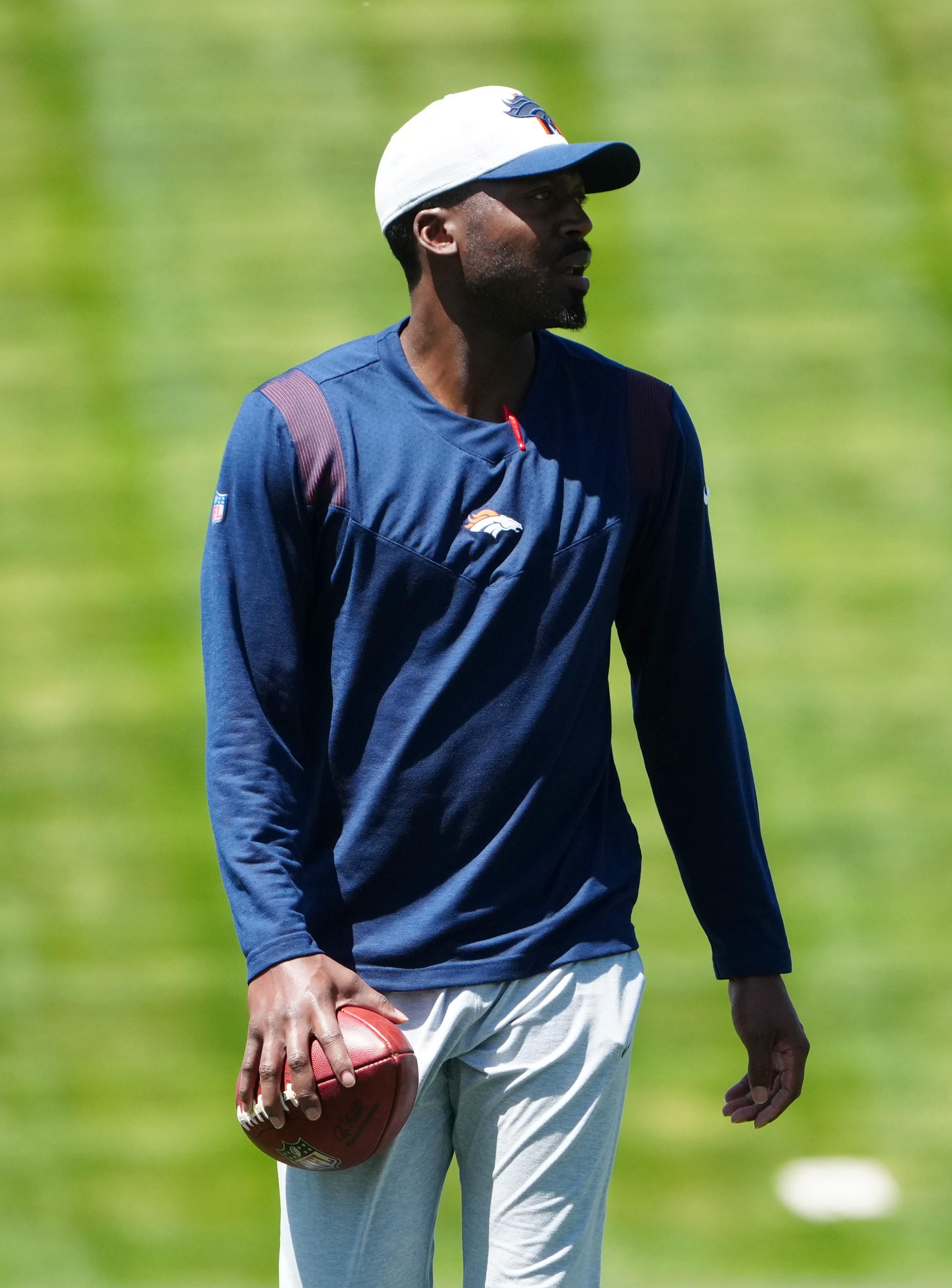 This scenario has played out with some candidates in the recent past. The Saints waited until after Super Bowl LIX to hire Kellen Moore, though the sides had an agreement in place before the game, while the Colts and Cardinals did the same after Super Bowl LVII in hiring Shane Steichen and Jonathan Gannon. The 49ers proceeded this way with Kyle Shanahan, while the Colts had planned to before Josh McDaniels backed out of an agreement. The Raiders have company for Kubiak, though.
The Cardinals’ post-Gannon HC search also includes a Saturday second interview with Kubiak. It is possible the Seattle play-caller opts to stay with Sam Darnold — on a team favored to win Super Bowl LX — for a second season rather than accept one of the jobs other candidates have passed on. Klay Kubiak, Klint’s younger brother, was one of those who withdrew from the Las Vegas search. That could matter, as Klint Kubiak may be the favorite for the job.
The Raiders are believed to have Klint Kubiak as their HC favorite, according to the California Post’s Vincent Bonsignore. Davis Webb was viewed as the other frontrunner, but he has since backed out of the race. That sets the stage for Kubiak, who may have a Raiders-or-Cardinals decision to make.
Kubiak, 38, has yet to stay in an OC role longer than one season. His 2021 and ’24 gigs (in Minnesota and New Orleans, respectively) ended after those teams fired their HCs. The Saints’ Moore hire led Kubiak to Seattle, and he reunited with Darnold — the 49ers’ backup during Kubiak’s 2023 San Francisco stop. Darnold played well in the NFC championship game, guiding the Seahawks to a shootout win despite recently suffering an oblique injury. The Seahawks are now favored to win their second Super Bowl, giving Kubiak considerable momentum.
While Webb was viewed as the top Kubiak challenger, ESPN’s Jeremy Fowler notes Panthers DC Ejiro Evero is not out of the running just yet. It would appear Evero is an underdog, but he did receive two interviews. This sets up an interesting duel between coworkers on the 2022 Broncos’ staff. Kubiak was Webb’s predecessor as Denver’s QBs coach, with Evero as Broncos DC that year. The Nathaniel Hackett–Russell Wilson partnership combusted quickly in a 5-12 season, but both Kubiak and Evero landed on their feet.
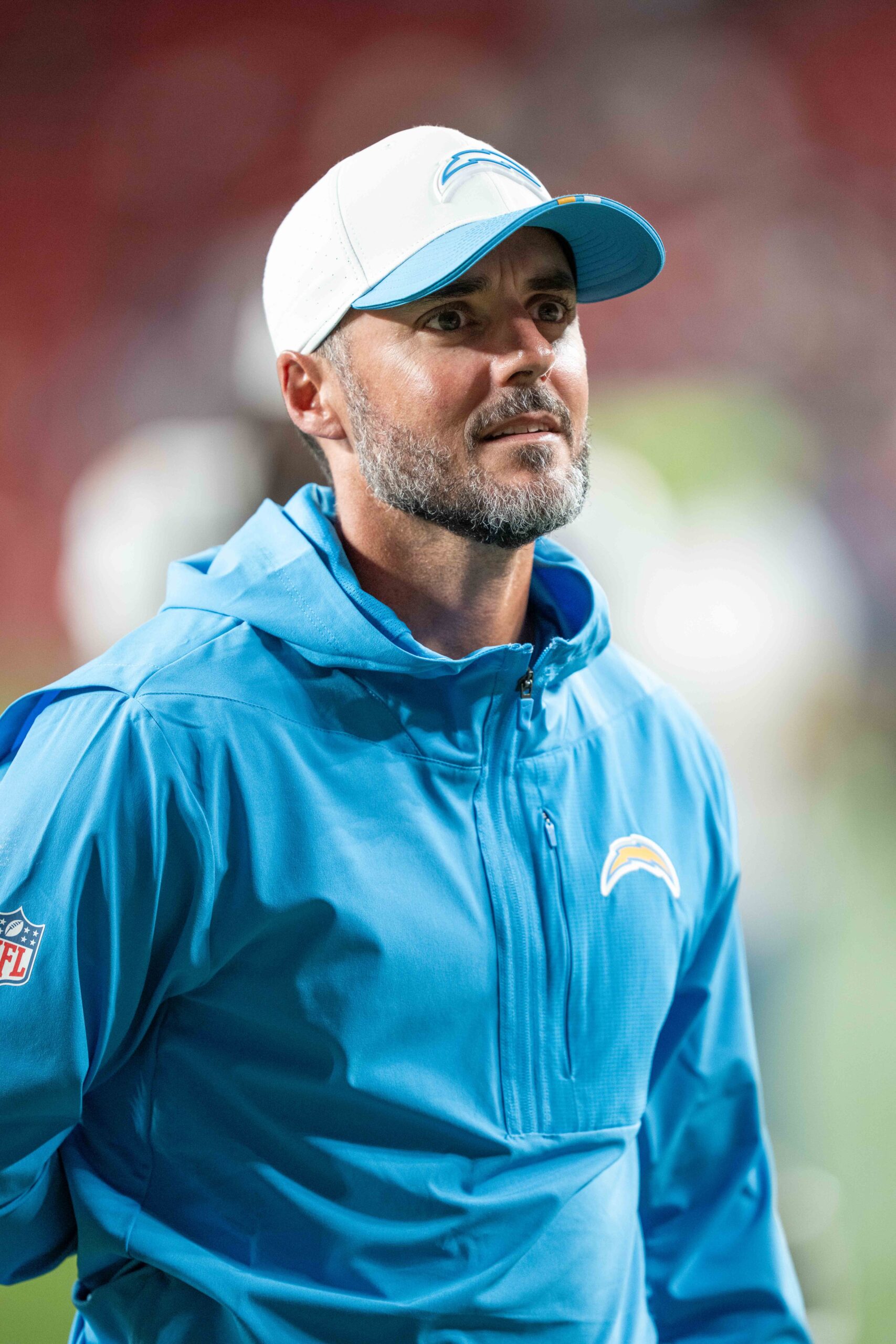 Evero has been the Panthers’ DC for the past three seasons. He signed an extension before the 2025 campaign began. The Falcons and Steelers sent Evero interview slips this year, but the Raiders are the only team to interview him twice. Evero presented a detailed offensive plan during his second Vegas meeting, per Fowler.
The Raiders will naturally be interested in pairing Kubiak with likely No. 1 overall pick Fernando Mendoza; this reality came up recently, with Kubiak and Webb emerging as frontrunners after defense-minded leaders Antonio Pierce and Pete Carroll busted. But the Raiders showed strong interest in Jesse Minter during his second interview, SI.com’s Albert Breer notes. The Raiders did not extend Minter an offer yet, but Breer notes the team was warming to him as HC. But Minter met with the Ravens again soon after and agreed to return to Baltimore.
The loser of this apparent Kubiak derby would likely be forced further down their respective lists. Both teams had Joe Brady in the building before the Bills promoted him, and Anthony Campanile bowed out of the Cardinals’ search. Arizona is believed to have Rams OC Mike LaFleur as a finalist as well. He could be hired at any point, with the Seahawks eliminating the Rams last week.
Via PFR’s Head Coaching Search Tracker, here is how the Raiders’ expansive search — which has featured a few names exit early — looks as of Thursday night:
- Joe Brady, offensive coordinator (Bills): Conducted second interview 1/25
- Brian Daboll, former head coach (Giants): Conducted second interview 1/27
- Ejiro Evero, defensive coordinator (Panthers): Conducted second interview 1/20
- Brian Flores, defensive coordinator (Vikings): Mentioned as candidate
- Jeff Hafley, defensive coordinator (Packers): To conduct second interview 1/21
- John Harbaugh, former head coach (Ravens): Contacted
- Vance Joseph, defensive coordinator (Broncos): Interviewed 1/8
- Klay Kubiak, offensive coordinator (49ers): Interviewed 1/18; withdrew from search
- Klint Kubiak, offensive coordinator (Seahawks): To conduct second interview 1/31; frontrunner
- Mike LaFleur, offensive coordinator (Rams): Interviewed 1/16
- Mike McDaniel, former head coach (Dolphins): Interviewed 1/19
- Jesse Minter, defensive coordinator (Chargers): Conducted second interview 1/20
- Matt Nagy, offensive coordinator (Chiefs): Interviewed 1/8
- Nate Scheelhaase, pass-game coordinator (Rams): Interviewed 1/16
- Chris Shula, defensive coordinator (Rams): Interviewed 1/16
- Kevin Stefanski, former head coach (Browns): Interviewed 1/8; withdrew from search
- Davis Webb, quarterbacks coach (Broncos): Conducted second interview 1/26; withdrew from search
Pro Football Rumors Front Office Subscriber Chat: 1/30/26
Pro Football Rumors' Sam Robinson will be holding a live chat at 3pm Central today, exclusively for Trade Rumors Front Office subscribers!