
Bills Notes: LBs, Preston Brown, Contracts
A good chunk of Bills news in recent weeks and months has related to the sale of the franchise, following the passing of longtime owner Ralph Wilson earlier this year. While the focus shifted back to the players this week, Buffalo likely would have preferred that wasn’t the case, since the news wasn’t good — second-year linebacker Kiko Alonso tore his ACL working out, an injury that will sideline him for the 2014 season. As the Bills consider their options for how to cope with the loss of their leading tackler, let’s round up the latest items out of Buffalo….
- Even with Alonso out for the year, the Bills are confident in their depth at the linebacker position, and don’t feel as if they need to acquire a starter, tweets Ian Rapoport of NFL.com. As our list of free agents shows, there are a number of veterans who could potentially provide one-year help for Buffalo, but even if the club were to add one, it would probably be for insurance purposes rather than with the expectation that a new player would fill Alonso’s role.
- That role, tweets Senior Bowl executive director Phil Savage, is a crucial one because Alonso was capable of playing in the team’s base, nickel, and dime defenses. In his absence, the team may have to lean on multiple players to provide that level of versatility.
- Keith Rivers and Nigel Bradham may look like the odds-on favorites to help fill in for Alonso, but Tim Graham of the Buffalo News hears the team is consider a significant role for rookie Preston Brown, drafted 73rd overall out of Louisville. The Bills’ front office was “thrilled” with how Brown looked in spring workouts, while the coaching staff “raved behind the scenes” about how well he practiced, says Graham.
- In non-Alonso news, Jason Fitzgerald of Over The Cap took a look at the Bills for the latest installment in his series on teams’ best and worst contracts. In Fitzgerald’s view, the most team-friendly veteran deal on Buffalo’s books belongs to Kyle Williams, while fellow defensive lineman Mario Williams arguably has “one of the worst contracts in the entire NFL.”
Latest On Four Remaining Unsigned Draftees
As we’ve discussed before when covering draft pick signings – as well as those draftees who remain unsigned – the NFL’s current Collective Bargaining Agreement has taken most of the drama out of the contracts for rookies. With set amounts on signing bonuses and total values for most rookie deals, players will haggle over things like offset language, types of payment, and guaranteed money, but for the most part, there isn’t much wiggle room.
That means that we shouldn’t expect to see many – if any – holdouts when training camps get underway later this month. Still, four of 2014’s 256 draft picks have still yet to ink their contracts, so it’s worth checking in on them to see if we can discern any particular reason why that’s the case. Here are the four draftees who remain unsigned, along with the latest updates on each of them:
- Justin Gilbert, CB, Cleveland Browns (1.8): As of last Tuesday, Gilbert didn’t sound like he was too involved in his own negotiations, deferring to his agent when asked about contract talks by Mary Kay Cabot of Cleveland.com. He echoed that stance later in the week, suggesting that he wasn’t sure whether he’d be in attendance when the Browns’ training camp begins. Still, even with potential disputes over offsets and roster bonuses in play at the No. 8 spot, I’d be pretty surprised if the rookie cornerback wasn’t present for the first day of camp.
- Taylor Lewan, OT, Tennessee Titans (1.11): Mike Florio of Pro Football Talk wrote this week that he thinks the delay on Lewan may be a result of the offensive tackle looking to replace his fully-guaranteed base salaries with roster bonuses paid out during training camp. Last year’s 11th overall pick (D.J. Fluker) didn’t receive these bonuses in his deal, but Lewan’s teammate, No. 10 pick Chance Warmack, did get them. Considering Lewan is viewed as the Titans’ left tackle of the future, making him a more essential piece on the offensive line than Warmack, he has a reasonable case for those roster bonuses. In Florio’s view, a brief training camp holdout is a possibility for Lewan.
- Marqise Lee, WR, Jacksonville Jaguars (2.39): Lee was long viewed as a likely first-round pick, so the delay on his signing may be related to his trying to recoup some guaranteed money after slipping to No. 39. In his latest mailbag, John Oesher of Jaguars.com couldn’t offer any specific details on the holdup for Lee, but stated confidently that something should get done before training camp.
- Billy Turner, OT, Miami Dolphins (3.67): There haven’t been many rumblings about the contract talks, who is the last third-rounder to sign. Most recently, Barry Jackson of the Miami Herald wrote last Monday that the unresolved issues for Turner “are not insurmountable.”
AFC Links: Pitta, Bills, Ward, Titans
Tight end Dennis Pitta reached a five-year contract agreement with the Ravens back in March, but had been considering filing a grievance if the team franchised him, says Aaron Wilson of the Baltimore Sun. Like Jimmy Graham, Pitta spent most of his snaps last season playing in the slot or split out wide, rather than on the offensive line. Based on today’s ruling, which went against Graham, Pitta was likely fortunate to avoid such a dispute, since he lined up in the slot for the majority of his snaps, and arbitrator Stephen Burbank determined that Graham was playing tight end in instances when he lined up within four yards of offensive linemen.
Here’s more from around the AFC:
- Terry and Kim Pegula have hired Steve Greenberg, managing director of elite investment bank Allen & Company, to represent them as they pursue a potential purchase of the Bills, reports Tim Graham of the Buffalo News. The current Buffalo Sabres owners are among a number of likely bidders with interest in buying the franchise.
- Having moved to Cleveland to Denver in the offseason, new Broncos safety T.J. Ward has noticed a difference between the two teams, as he tells David DeChant of DenverBroncos.com. “Nothing against Cleveland but this is a winning culture,” Ward said. Of his goals this season, the ex-Brown added: “We’re just expecting to win. That’s it. That’s the only expectation.”
- After spending the first six years of his NFL career in Denver, linebacker Wesley Woodyard joined the Titans on a four-year contract this offseason, and he likes what he sees in Tennessee so far, writes Jim Wyatt of the Tennesseean.
- Longtime Steelers linebacker Joey Porter will work this season in Pittsburgh as a defensive assistant, and former teammate Larry Foote tells ESPN.com’s Scott Brown that he fully expects Porter to become an NFL head coach eventually.
2014 NFL Trades
The NFL isn’t a league known for its blockbuster trades, but as NBA and NHL free agency got underway on July 1, a couple NFL clubs pulled off a deal of their own, with the Ravens sending linebacker Rolando McClain to Dallas. By our count, it was the 36th trade in the league this year, and the 11th involving at least one veteran player. While the other 25 deals were simple draft pick swaps, many of those trades could also end up significantly shaping franchises — Sammy Watkins, Johnny Manziel, and Teddy Bridgewater were among the rookies selected with traded draft picks.
We’re only about halfway through 2014, and as the fall trade deadline approaches, we’ll likely see several more deals consummated around the league. We’ll keep tabs on all those moves right here, with our 2014 NFL trade tracker. You can find this page, which will be updated every time a new trade is finalized, on our right-hand sidebar under the “PFR Features” menu at any time.
Here, in reverse chronological order, are 2014’s NFL trades:
- Rams acquire S Mark Barron.
- Buccaneers acquire 2015 fourth-round pick and 2015 sixth-round pick.
- Patriots acquire LB Jonathan Casillas and 2015 sixth-round pick.
- Buccaneers acquire 2015 fifth-round pick.
- Patriots acquire LB Akeem Ayers and 2015 seventh-round pick.
- Titans acquire 2015 sixth-round pick.
- Jets acquire WR Percy Harvin.
- Seahawks acquire conditional 2015 fourth-round pick (if Harvin is on Jets’ roster in 2015; otherwise, pick is a 2015 sixth-rounder)
- Texans acquire QB Ryan Mallett.
- Patriots acquire conditional 2016 sixth-round pick (if Mallett plays 40% of Texans’ snaps in 2014; otherwise, pick is a 2016 seventh-rounder).
- Cowboys acquire DE Lavar Edwards.
- Titans acquire conditional 2015 seventh-round pick.
- Seahawks acquire DB Marcus Burley.
- Colts acquire 2015 sixth-round pick.
- Broncos acquire K Brandon McManus.
- Giants acquire conditional 2015 seventh-round pick.
- Buccaneers acquire G Logan Mankins.
- Patriots acquire TE Tim Wright and 2015 fourth-round pick.
- Chiefs acquire S Kelcie McCray.
- Buccaneers acquire G Rishaw Johnson.
- Colts acquire RB David Fluellen.
- Eagles acquire K Cody Parkey.
- Eagles acquire RB Kenjon Barner.
- Panthers acquire conditional 2015 seventh-round pick (if Barner spends at least four games on the Eagles’ 46-man active roster in 2014).
- Patriots acquire DT Jerel Worthy.
- Packers acquire conditional 2015 seventh-round pick (if Worthy makes Patriots’ 53-man roster in 2014).
- Cowboys acquire CB Justin Green.
- Patriots acquire DT Ben Bass.
- Cowboys acquire LB Rolando McClain and conditional 2015 seventh-round pick.
- Ravens acquire conditional 2015 sixth-round pick.
- Falcons acquire QB T.J. Yates.
- Texans acquire LB Akeem Dent.
- Ravens acquire 2014 seventh-round pick (No. 218; WR Michael Campanaro).
- Browns acquire 2015 sixth-round pick.
- Titans acquire 2014 sixth-round pick (No. 178; QB Zach Mettenberger).
- Redskins acquire 2014 sixth-round pick (No. 186; RB Lache Seastrunk) and seventh-round pick (No. 228; K Zach Hocker).
- Falcons acquire 2014 fifth-round pick (No. 168; LB Marquis Spruill).
- Vikings acquire 2014 sixth-round pick (No. 182; DB Antone Exum) and seventh-round pick (No. 220; DT Shamar Stephen).
- Buccaneers acquire 2014 fifth-round pick (No. 149; OT Kevin Pamphile).
- Bills acquire 2014 seventh-round pick (No. 221; OLB Randell Johnson) and 2015 fifth-round pick.
- Panthers acquire 2014 fifth-round pick (No. 148; CB Bene’ Benwikere).
- Vikings acquire 2014 fifth-round pick (No. 168; later traded to Falcons) and 2014 seventh-round pick (No. 225; CB Jabari Price).
- Cowboys acquire 2014 fifth-round pick (No. 146; WR Devin Street).
- Lions acquire 2014 fifth-round pick (No. 158; DT Caraun Reid) and 2014 seventh-round pick (No. 229; K Nate Freese).
- Bears acquire 2014 fourth-round pick (No. 131; S Brock Vereen) and 2014 seventh-round pick (No. 246; OT Charles Leno Jr.).
- Broncos acquire 2014 fifth-round pick (No. 156; LB Lamin Barrow) and 2015 fifth-round pick.
- Bengals acquire 2014 fourth-round pick (No. 111; C Russell Bodine).
- Seahawks acquire 2014 fourth-round pick (No. 123; WR Kevin Norwood) and sixth-round pick (No. 199; OT Garrett Scott).
- Bills acquire RB Bryce Brown and 2014 seventh-round pick (No. 237; OT Seantrel Henderson).
- Eagles acquire 2014 seventh-round pick (No. 224; DT Beau Allen) and additional draft pick that will be either a 2015 fourth-rounder, a 2016 third-rounder, or a 2016 fourth-rounder, depending on conditions met by Brown and WR Stevie Johnson.
- Browns acquire 2014 third-round pick (No. 94; RB Terrance West).
- 49ers acquire 2014 fourth-round pick (No. 106; WR Bruce Ellington) and sixth-round pick (No. 180; CB Kenneth Acker).
- Jaguars acquire 2014 third-round pick (No. 93; G Brandon Linder).
- Patriots acquire 2014 fourth-round pick (No. 105; C Bryan Stork) and sixth-round pick (No. 179; G Jon Halapio).
- Texans acquire 2014 third-round pick (No. 83; DT Louis Nix).
- Eagles acquire 2014 fourth-round pick (No. 101; CB Jaylen Watkins) and fifth-round pick (No. 141; DE Taylor Hart).
- Dolphins acquire 2014 third-round pick (No. 67; OT Billy Turner).
- Raiders acquire 2014 third-round pick (No. 81; G Gabe Jackson) and fourth-round pick (No. 116; CB Keith McGill).
- Jaguars acquire 2014 second-round pick (No. 61; WR Allen Robinson).
- 49ers acquire 2014 third-round pick (No. 70; C Marcus Martin) and fifth-round pick (No. 150; DE/OLB Aaron Lynch).
- 49ers acquire 2014 second-round pick (No. 57; RB Carlos Hyde).
- Dolphins acquire 2014 second-round pick (No. 63; WR Jarvis Landry) and fifth-round pick (No. 171; OLB Jordan Tripp).
- Broncos acquire 2014 second-round pick (No. 56; WR Cody Latimer) and seventh-round pick (No. 242; LB Corey Nelson).
- 49ers acquire 2014 second-round pick (No. 63; later traded to Dolphins), fifth-round pick (No. 171; later traded to Dolphins), and 2015 fourth-round pick.
- Chargers acquire 2014 second-round pick (No. 50; OLB Jeremiah Attaochu).
- Dolphins acquire 2014 second-round pick (No. 57; later traded to 49ers) and fourth-round pick (No. 125; CB Walt Aikens).
- Eagles acquire 2014 second-round pick (No. 42; WR Jordan Matthews).
- Titans acquire 2014 second-round pick (No. 54; RB Bishop Sankey) and fourth-round pick (No. 122; CB Marqueston Huff).
- Rams acquire 2014 second-round pick (No. 41; CB Lamarcus Joyner).
- Bills acquire 2014 second-round pick (No. 44; OT Cyrus Kouandjio) and fifth-round pick (No. 153; G Cyril Richardson).
- Lions acquire 2014 second-round pick (No. 40; LB Kyle Van Noy) and fifth-round pick (No. 146; later traded to Cowboys).
- Seahawks acquire 2014 second-round pick (No. 45; WR Paul Richardson), fourth-round pick (No. 111; later traded to Bengals), and seventh-round pick (No. 227; FB Kiero Small).
- Cowboys acquire 2014 second-round pick (No. 34; DE/OLB Demarcus Lawrence).
- Redskins acquire 2014 second-round pick (No. 47; LB Trent Murphy) and third-round pick (No. 78; G Spencer Long).
- 49ers acquire WR Stevie Johnson.
- Bills acquire a 2015 fourth-round pick which could become a third-rounder depending on Johnson’s performance.
- Vikings acquire 2014 first-round pick (No. 32; QB Teddy Bridgewater).
- Seahawks acquire 2014 second-round pick (No. 40; later traded to Lions) and 2014 fourth-round pick (No. 108; DE Cassius Marsh).
- Browns acquire 2014 first-round pick (No. 22; QB Johnny Manziel).
- Eagles acquire 2014 first-round pick (No. 26; DE/OLB Marcus Smith) and third-round pick (No. 83; later traded to Texans).
- Saints acquire 2014 first-round pick (No. 20; WR Brandin Cooks).
- Cardinals acquire 2014 first-round pick (No. 27; S Deone Bucannon) and third-round pick (No. 91; WR John Brown).
- Browns acquire 2014 first-round pick (No. 8; CB Justin Gilbert).
- Vikings acquire 2014 first-round pick (No. 9; LB Anthony Barr) and fifth-round pick (No. 145; G David Yankey).
- Bills acquire 2014 first-round pick (No. 4; WR Sammy Watkins).
- Browns acquire 2014 first-round pick (No. 9; later traded to Vikings), 2015 first-round pick, and 2015 fourth-round pick.
- Seahawks acquire QB Terrelle Pryor.
- Raiders acquire 2014 seventh-round pick (No. 247; S Jonathan Dowling).
- Bills acquire WR Mike Williams.
- Buccaneers acquire 2014 sixth-round pick (No. 185; WR Robert Herron).
- Ravens acquire C/G Jeremy Zuttah.
- Buccaneers acquire 2015 fifth-round pick.
- Raiders acquire QB Matt Schaub.
- Texans acquire 2014 sixth-round pick (No. 181; RB Alfred Blue).
- 49ers acquire QB Blaine Gabbert.
- Jaguars acquire 2014 sixth-round pick (No. 205; C Luke Bowanko) and conditional 2015 pick (if Gabbert starts eight or more games in 2014).
- Eagles acquire RB Darren Sproles.
- Saints acquire 2014 fifth-round pick (No. 169; OLB Ronald Powell).
- 49ers acquire OL Jonathan Martin.
- Dolphins acquire conditional 2015 seventh-round pick (if Martin makes 49ers’ opening day roster in 2014).
Arbitrator Rules Jimmy Graham Is Tight End
11:45am: Graham, who has yet to decide whether or not to appeal the decision, will have 10 days to make that decision, tweets Breer. Meanwhile, Mike Freeman of Bleacher Report tweets that there are “a good half-dozen teams” ready to make a run at Graham should talks between the tight end and the Saints reach an impasse.
11:18am: The Saints have won the Jimmy Graham franchise tag positional designation hearing, according to Ian Rapoport of NFL.com, who tweets that arbitrator Stephen Burbank has ruled Graham a tight end, rather than a wide receiver. The decision means that the franchise tag value for Graham is the tight end amount of $7.035MM, rather than the wide receiver total of $12.312MM.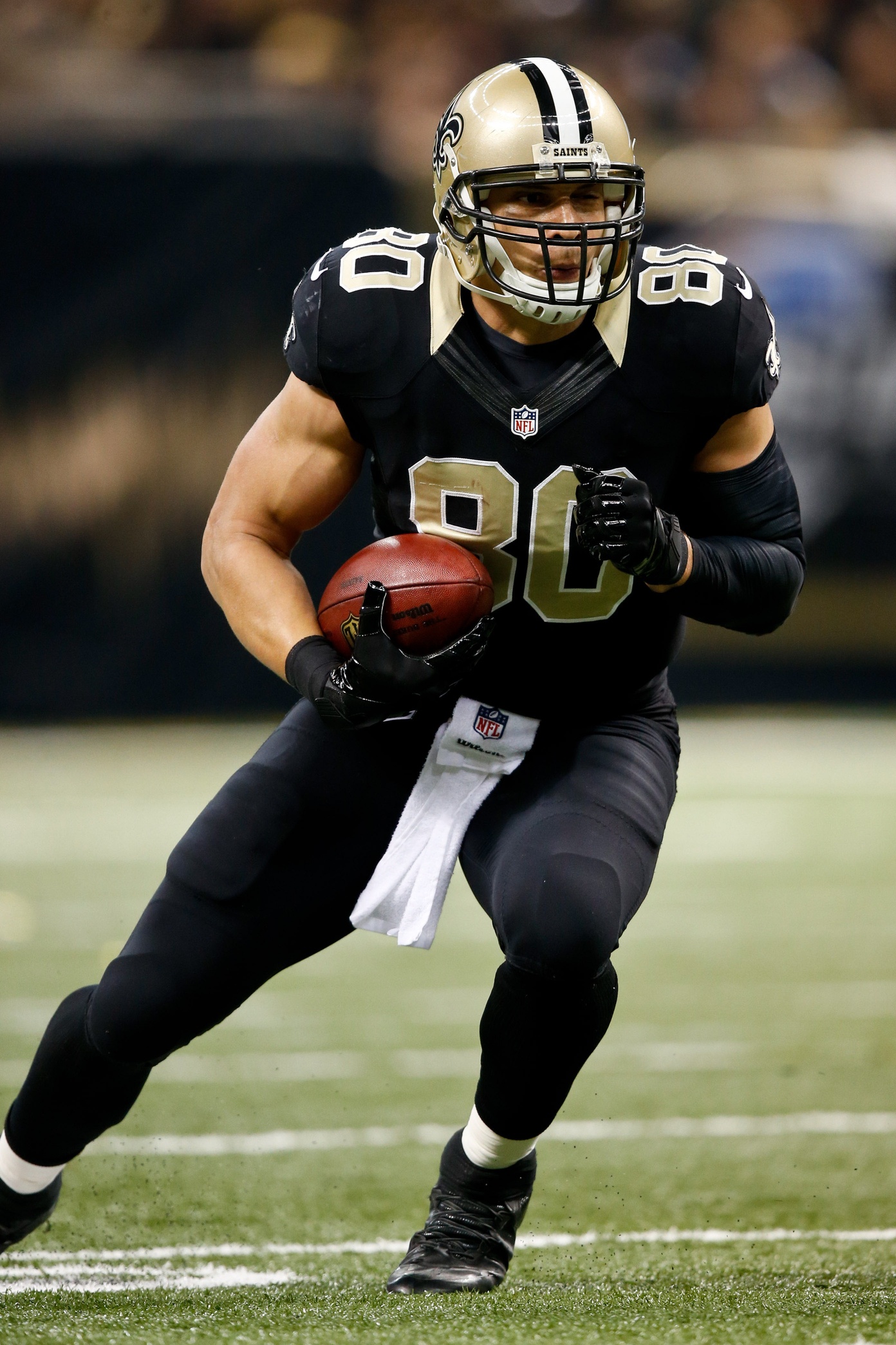
Ultimately, the one-year value on Graham’s franchise tag isn’t hugely significant, since he and the Saints still seem likely to work out a long-term agreement rather than having him play on a one-year contract. Still, it gives the team additional leverage, and sets an important precedent for tight ends who often line up in the slot or split out wide.
Despite the fact that Graham only lined up in a traditional tight end position on the line in about one-third of his offensive snaps, Burbank still decided the Saints star ought to be considered a tight end rather than a wideout. Had the decision instead gone in Graham’s favor, it would’ve given teams pause going forward about where to line up their tight ends, since that positioning could have had financial ramifications down the road.
Although the NFL’s CBA dictates that a franchise player’s position is the one “at which the franchise player participated in the most plays during the prior league year,” Burbank’s ruling seems to indicate that the tight end position isn’t determined solely by where the player lines up. According to Rapoport (via Twitter), Burbank’s decision hinged on the fact that Graham participates in tight end meetings, was drafted as a tight end, and lists himself as a tight end on his Twitter page, among other reasons. Albert Breer of NFL Network adds (via Twitter) that Burbank considered Graham to be playing tight end when he was detached from but still close to the offensive line — specifically, Breer tweets, that verdict applied to the snaps when Graham was lined up within four yards of the o-line, which happened a majority of the time.
Graham’s camp can appeal Burbank’s decision to a three-person board, but that process would take a little time, and July 15 is fast approaching — that’s the deadline by which the Saints and the former Miami Hurricane must reach a multiyear contract agreement. If they don’t have a deal in place by that point, the 27-year-old will have little choice but to play the 2014 season on a one-year pact. As former agent Joel Corry tweets, in that scenario, Graham would likely push to include a clause in his one-year deal that would keep New Orleans from using the franchise tag on him again in 2015.
Back in February, we heard that the Saints were reportedly willing to make Graham the highest-paid tight end in football, exceeding Rob Gronkowski‘s $9MM annual figure. Graham, however, was seeking a deal in the range of $12MM per year. Based on this decision, that $12MM average probably isn’t attainable, but it wouldn’t be a surprise to see the two sides reach an agreement on something in the neighborhood of $10MM annually.
Graham, a former third-round pick, has been the league’s most consistent and productive tight end over the last three years, averaging 90 receptions, 1,169 yards, and 12 touchdowns per season during that span.
Photo courtesy of USA Today Sports Images.
East Notes: Pats, Cowboys, Bills, Giants
The hearing for Jimmy Graham‘s franchise tag positional designation took place in June and a decision is expected from arbitrator Stephen Burbank this week, but another key arbitration hearing – for Aaron Hernandez and the Patriots – has no set date yet, according to Albert Breer of NFL Network (Twitter link).
As Breer details in a pair of tweets, the two sides are at odds over the tight end’s $12.5MM signing bonus. The Pats have already made $9.25MM in bonus payments, but didn’t pay the remaining $3.25MM this March. Hernandez’s camp figures to try to recover that last $3.25MM, which could end up going to the victims’ families, while the Pats may look to recoup a portion of the bonus that they already paid.
Here’s more from around the NFL’s two East divisions:
- After signing free agent guard Uche Nwaneri and acquiring linebacker Rolando McClain, the Cowboys may also look to add a veteran at tight end, according to Todd Archer of ESPN.com, who suggests the team could use a blocker behind Jason Witten.
- Since Kiko Alonso‘s ACL injury will technically be considered a non-football injury, the Bills could elect not to pay him for the 2014 season. However, as Mike Florio of Pro Football Talk writes, because Alonso’s injury was sustained while he was working out, not paying him his ’14 salary could send a bad message, suggesting players are better off not working out when camp isn’t in session. As ESPN.com’s Mike Rodak notes (via Twitter), Alonso wouldn’t earn an accrued season if the Bills placed him on the non-football-injury list, meaning he’d become a restricted free agent after 2016 rather than an unrestricted free agent.
- After signing John Jerry as a free agent this offseason, the Giants would look to see the veteran guard make a run at a starting spot, writes Conor Orr of the Star-Ledger.
- Sheil Kapadia of PhillyMag.com takes a look at the Eagles‘ depth chart on the defensive side of the ball.
Browns Interested In Extending Brian Hoyer
3:45pm: Linta tells Mike Florio of ProFootballTalk.com that November 1 would be the earliest that the two sides could assess Hoyer’s value. It seems like this story is likely to play out into the season, so stay tuned.
1:18pm: Nate Ulrich of the Akron Beacon Journal also talked to Linta, and the agent implied that Hoyer may just hold out for free agency. Via Twitter…
“Had a couple of conversations with [the Browns]. Very difficult to move forward until we see how the season plays out.”
If Hoyer inked a contract prior reaching free agency, he’d certainly be looking to protect himself. Former agent (and current CBSSports.com writer) Joel Corry details a potential contract on his Twitter, stating it “must contain” escalators or incentives and “possibly a way to void.”
10:57am: Linta confirmed to Ian Rapoport of NFL.com that discussions have taken place with the Browns about an extension for his client, but said it’ll be a “difficult deal” to negotiate. As I pointed out earlier this month, it’s hard to assess Hoyer’s true value when his role for the coming season and beyond isn’t yet clear — the Browns could push for a modest backup-type contract based on the presence of Manziel, while Hoyer’s camp could pursue a larger extension based on the fact that the veteran is currently atop the depth chart.
“We’re always open to talking with the Browns, but we’re content to wait and see what happens down the road,” Linta said.
If the two sides attempt to reach an agreement this summer, a bridge deal like Henne’s two-year, $8MM pact with the Jaguars could be a point of comparison. As an executive from another team tells Rapoport though, Hoyer’s value could shift by as much as about $7MM per year depending on whether he establishes himself as a starter or backup.
9:26am: The Browns may have used a first-round pick on their potential quarterback of the future in Johnny Manziel last month, but that doesn’t mean the quarterback of the present is necessarily going anywhere. According to ESPN.com’s Adam Schefter, Cleveland is trying to extend the contract of QB Brian Hoyer, who is entering the final season of a two-year deal with the club.
Hoyer, who started three games for the Browns last year before suffering an ACL injury, is penciled in as the team’s No. 1 quarterback heading into training camp, though Manziel is expected to challenge for that job. Whether or not Hoyer hangs on to the starting role in 2014 or beyond, it makes sense that the Browns are interested in pairing a veteran they like with the inexperienced Manziel.
On his current two-year contract, Hoyer is only making a total of about $2MM, so even if he receives a sizable raise, the Browns wouldn’t necessarily need to commit to paying him more than backup money. Many top-end backups or borderline starters around the league, such as Chad Henne, Matt Moore, Matt Hasselbeck, and Kyle Orton, are making between $3.5-4MM per year.
A deal in that range for Hoyer wouldn’t break the bank for the Browns, and would represent a nice payday for the signal-caller, whose salaries in his first few NFL seasons have been modest. Cleveland could also push for a smaller base value on a contract that includes incentives for playing time and production, which would allow Hoyer to earn bonuses if he sees the field more than expected.
Earlier in June, Hoyer’s agent, Joe Linta, told Tony Grossi of ESPNCleveland.com that, if all other factors are equal, his client would prefer to remain in Cleveland with the Browns.
“I think if it’s backup to backup, I think he would (want to stay),” Linta said. “If you’re comparing apples to apples, it’s always Cleveland. If it’s backup in Cleveland vs. starter somewhere else, I’m sure he’d like to start.”
Poll: Who Will Win The AFC West?
Despite the fact that the Broncos were the AFC’s top seed in 2013, finishing with a 13-3 record, the AFC West race was actually the tightest of the four in the conference. The Chiefs and Chargers both joined Denver as playoff teams out of the West, in what was arguably the NFL’s second-best division behind the NFC West.
The Broncos head into the 2014 season as the favorites to repeat as division champs, and could be even stronger on the defensive side of the ball than they were a year ago. Aqib Talib replaces departed cornerback Dominique Rodgers-Cromartie in a secondary that also added playmaking safety T.J. Ward. Meanwhile, DeMarcus Ware will join Von Miller to lead one of the league’s more dangerous pass rushes. Denver lost some key contributors, including wideout Eric Decker and guard Zane Beadles, but the Broncos are still deep and talented enough to go as far as Peyton Manning can lead them. Coming off a record-setting MVP season, Manning should be in line for another big year assuming he stays healthy, which is no given at age 38.
While Denver may be the frontrunner in the AFC West, the Chiefs and Chargers shouldn’t be overlooked. Neither club made the sort of big splashes that the Broncos did in the offseason, and Kansas City’s offensive line exodus is a cause for concern, with Branden Albert, Geoff Schwartz, and Jon Asamoah all moving on in free agency. However, these are still talented clubs that will be looking to return to the postseason in 2014. San Diego, in particular, could be a dark horse to make some noise in the regular season and the playoffs, having added cornerbacks Brandon Flowers and Jason Verrett to a secondary that struggled a year ago.
As for the Raiders, they were an afterthought at 4-12 in 2013, and will be a long shot in the West again in 2014 — betting site Bovada.lv gives Oakland 18:1 odds at winning the division. But Matt Schaub could provide some stability at the quarterback position if he benefits from a change of scenery in Oakland. First-round linebacker Khalil Mack should have an immediate impact. And the Raiders brought in a number of interesting veterans in free agency, including Justin Tuck, LaMarr Woodley, James Jones, Austin Howard, and Maurice Jones-Drew. A lot would have to break right for the Raiders to have a chance at the division title, but it’s not a totally inconceivable scenario.
What do you think? Which team will win the AFC West in 2014?
Which team will win the AFC West?
-
Denver Broncos 55% (262)
-
San Diego Chargers 24% (115)
-
Kansas City Chiefs 12% (58)
-
Oakland Raiders 9% (44)
Total votes: 479
Previously:
Who will win the AFC North?
NFC Notes: Falcons, Orakpo, Bears, Panthers
We’re still waiting for resolution on one of the biggest NFC stories this month, with a decision from arbitrator Stephen Burbank on Jimmy Graham‘s franchise position designation expected this week. While we await Burbank’s call on whether the Saints star is a tight end or wide receiver, let’s check out a few more items from around the conference….
- Wide receiver Roddy White appears poised to play out his entire current contract with the Falcons, a rarity in an era where players are often cut or forced to renegotiate with time still remaining on their deals. As Jason Fitzgerald of Over the Cap observes, that makes White’s contract one of the best on Atlanta’s books. Sam Baker‘s is the worst contract currently being carried by the club, in Fitzgerald’s view.
- Playing on a one-year franchise tag, linebacker Brian Orakpo has a big year ahead of him, says ESPN.com’s John Keim. While the Redskins selected Trent Murphy with their first pick in last month’s draft, neither the team nor Orakpo himself views Murphy as Orakpo’s future replacement, meaning a productive season from the veteran linebacker could result in a longer-term deal with Washington.
- It’s not clear how many tight ends the Bears will keep on their regular season roster, but Michael C. Wright of ESPN.com thinks Martellus Bennett, Matthew Mulligan, and Dante Rosario will make the cut.
- In a mailbag at ESPN.com, David Newton fields questions on Greg Hardy, Edmund Kugbila, and other Panthers-related topics.
- Rainer Sabin of the Dallas Morning News previews the Cowboys‘ special teams unit for the 2014 season.
Dead Money
In our most recent PFR Glossary entry, we explored the different kinds of guaranteed money found in NFL contracts, concluding that the only figures in a contract can be considered fully guaranteed are signing bonuses and salary that is guaranteed for injury, skill, and cap purposes. This fully guaranteed portion of a contract is also known as dead money, from a club’s perspective — it will hit the player’s team’s cap sooner or later, whether he plays out his full contract or whether he gets released early in the deal.
Because signing bonuses are prorated, teams signing bigger contracts that include bonuses typically can spread out that guaranteed money over several years. However, if a team releases a player while it still owes him some or all of this guaranteed money, it “accelerates” onto either the current league year (if the player is released prior to June 1) or the following year (if the player is released after June 1), and applies to the team’s cap even when the player is no longer on the roster. This is what makes it “dead” money.
Let’s take a look at a free agent who signed a new contract this offseason for a practical example. As our Zach Links covered in his Offseason in Review piece on the Browns earlier this week, linebacker Karlos Dansby inked a four-year, $24MM pact with the team — the agreement included a $6MM signing bonus and $6MM in guaranteed base salary ($4MM in 2014 and $2MM of his $4MM salary in 2015). Therefore, the contract currently contains $12MM in dead money – $5.5MM in ’14, $3.5MM in ’15, and $1.5MM each in ’16 and ’17.
When the dead money left on a player’s contract is greater than his current year cap hit, he’s in little danger of being released. Dansby has a $5.5MM cap number in 2014, compared to $12MM in total dead money, meaning even if the Browns had reason to want to cut him (which is unlikely, considering it’s only been a few months since they made that offer), it would make little sense to do so. Under the post-June 1 rule, if Dansby were released now, his $12MM in dead money would hit the cap for a total of $5.5MM this year and $6.5MM in 2015, with the remaining dead money accelerating on that season’s cap. That means Cleveland would be taking larger overall cap hits to get him off the roster than to keep him on it.
In some instances, even a huge amount of dead money isn’t enough reason for a team to keep a player on its roster. For instance, LaMarr Woodley headed into 2014 with a cap number of $13.59MM and $14.71MM in dead money remaining on his contract. By designating him as a post-June 1 cut, the Steelers were able to reduce Woodley’s ’14 cap hit to just $5.59MM, while his ’15 cap hit decreased from $14.09MM to $8.58MM.
Of course, in that scenario, a 2015 cap number of $8.58MM is still exorbitant for a player who won’t be on the team’s roster, which is why clubs who manage the cap the best generally try to keep dead money for non-roster players to a minimum. There are ways of constructing deals to avoid piling up dead money charges, including avoiding large signing bonuses. Darrelle Revis‘ six-year, $96MM pact with the Buccaneers looked massive on paper, but it featured yearly $16MM salaries, with no bonus, meaning the deal didn’t include any guaranteed money. So when Tampa Bay cut the star cornerback earlier this year, the team wasn’t on the hook for any salary, and Revis doesn’t count against the club’s cap at all in 2014.
NFL players often don’t have a ton of job security, but if a player has a sizable amount of dead money left on his contract, it gives him more leverage than he’d otherwise have. If you’re wondering if a veteran player on your favorite team might be a candidate to be cut, it’s worth checking a salary database like Over the Cap or Spotrac to see how much dead money is remaining on his deal. The higher that number is, the less likely the player is to go anywhere in the near future.
Note: This is a PFR Glossary entry. Our glossary posts will explain specific rules relating to free agency, trades, or other aspects of the NFL’s Collective Bargaining Agreement. Information from Over the Cap was used in the creation of this post.