
5 Key Stories: 6/7/26 – 6/14/26
The first week of June brought about a wave of developments in the NFL. Things remained busy around the league over the next few days with the end of offseason programs drawing near. In case you missed any of this week’s top stories, here is a quick recap:
- Mahomes Lands New Chiefs Megadeal: Patrick Mahomes and the Chiefs worked out a 10-year extension in 2020. That pact remained an outlier in terms of length, but several quarterbacks surpassed him in terms of average annual value. Another massive contract has now been finalized, with the three-time Super Bowl MVP in line to collect over $500MM between now and 2033. Mahomes is entering his age-31 season and is recovering from the major knee injury (including an ACL tear) which ended his 2025 campaign. The Chiefs are certainly confident a full recovery can take place; the team has made a record-breaking upfront commitment in terms of guarantees (over $230MM) and in overall AAV ($63.1MM). A new QB benchmark has been set.
- Broncos Extend Payton: Earlier this offseason, the Broncos expectedly agreed to an extension with general manager George Paton. Head coach Sean Payton now has a deal of his own in place. He and Paton are each under contract through 2030 as a result. Denver finished atop the AFC standings in 2025, Payton’s third season at the helm. That marked a second straight playoff appearance, and expectations will remain high for years to come after the team hosted the AFC title game. Payton, 62, will not call plays on offense in 2026, although his role in continuing the development of quarterback Bo Nix will be key. The Broncos endured an eight-year playoff drought after their latest Super Bowl victory, but the team will hope to maintain a foundation for sustained success with the Payton-Paton partnership in place for the foreseeable future.
- Sorsby In Line To Retain NCAA Eligibility: Many expected quarterback Brendan Sorsby to fall short in his efforts to apply for NCAA reinstatement following an admission to gambling earlier in his college career. However, an injunction has been granted in this case, paving the way for Sorsby to play for Texas Tech in 2026. The NCAA has issued an appeal, so finality regarding Sorsby’s future remains to be seen. As things currently stand, though, he will not be required to enter the NFL this summer via the supplemental draft. Sorsby is seen by numerous evaluators as a first-round prospect in terms of on-field ability, but the willingness of NFL teams to bring him into the fold figures to remain a talking point leading up to the time when he attempts to turn pro (whenever that comes).
- Dolphins, Brewer Agree To Extension: The Dolphins have been busy in terms of moving on from several veterans this spring, but Aaron Brewer was known to be the target for a new deal. An extension has, to little surprise, been worked out between team and player. Brewer earned second-team All-Pro acclaim in 2025, cementing his status as an anchor up front for Miami and one of the league’s top centers. That success has now resulted in a three-year extension including $37MM in guarantees. In terms of average annual value ($17.5MM), Brewer sits third in the pecking order among centers. If he can maintain his level of play from last season over the next few years, the Dolphins’ interior along the O-line could become a strong point as the team rebuilds.
- Panthers Extend Coker: Since entering the NFL as an undrafted free agent, Jalen Coker has proven to be an impactful figure for the Panthers. He was on course to enter the 2027 offseason as an exclusive rights free agent, but a long-term Carolina deal has been finalized instead. Coker has agreed to a three-year deal with a base value of $35MM. The pact could top out at $41MM, an indication of how the 24-year-old figures to remain an important contributor in the passing game in 2026 and beyond. Coker has totaled 872 yards and five touchdowns during two Carolina seasons to date, and both figures can be expected to increase by a wide margin over the course of this new deal.
HC John Harbaugh Addresses GM Joe Schoen’s Giants Extension
Last month, questions about Joe Schoen‘s future were put to rest. The Giants finalized a multiyear extension agreement with their much-maligned general manager.
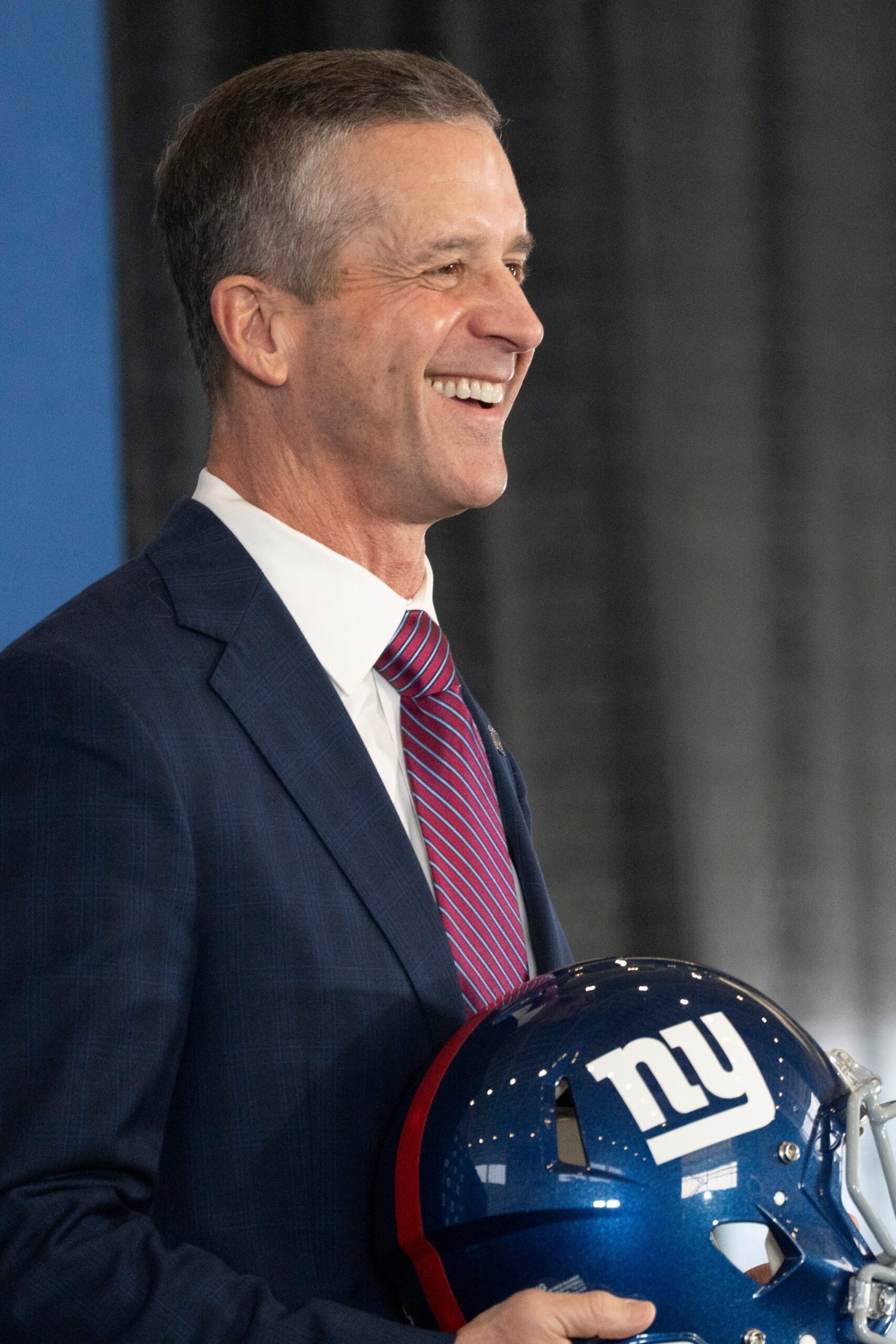 Schoen remained in place through former head coach Brian Daboll‘s dismissal and played a key role in the search for his replacement. That process resulted in an aggressive – and successful – push to land John Harbaugh. The relationship between Schoen and the Super Bowl-winning head coach has been a talking point, given the formal arrangement which sees Harbaugh report directly to ownership. When speaking about the Schoen news, Harbaugh struck a positive tone.
“I respect ownership. That’s their call,” Harbaugh said during a recent press conference (video link via SNY). “I was happy – he’s a good guy, I enjoy working with him. It’s a good decision, I agree with it.”
Schoen has been in place since 2022. The Giants made a surprise run to the divisional round of the playoffs during his and Daboll’s first year at the helm, but success has not been attainable since then. Across the past three seasons, New York has totaled a record of 13-38. Ownership saw that primarily as a coaching issue, though, leading to the continued confidence in Schoen. He will lead a revamped front office through 2026 and beyond.
Harbaugh’s voice will no doubt carry significant weight for the Giants considering the efforts made to hire him and the level of authority he was granted relative to other coaching candidates. New hire Dawn Aponte is also believed to be a key figure on the decision-making front, something which could limit Schoen’s power moving forward. As the Giants look to take needed steps forward over the coming season, the workings of their new organizational setup will make for an interesting storyline.
The level of success with with respect to Harbaugh and Schoen collaborating will of course also be something to watch closely. Barring a dismissal shortly after a new deal being signed in either case, the two will have a long period working together.
Bengals TE Erick All Fully Healed
An ACL tear brought an abrupt end to Erick All‘s college career. A repeat of that injury suffered to the same knee resulted in an abbreviated rookie season and an absence spanning the entire 2025 campaign.
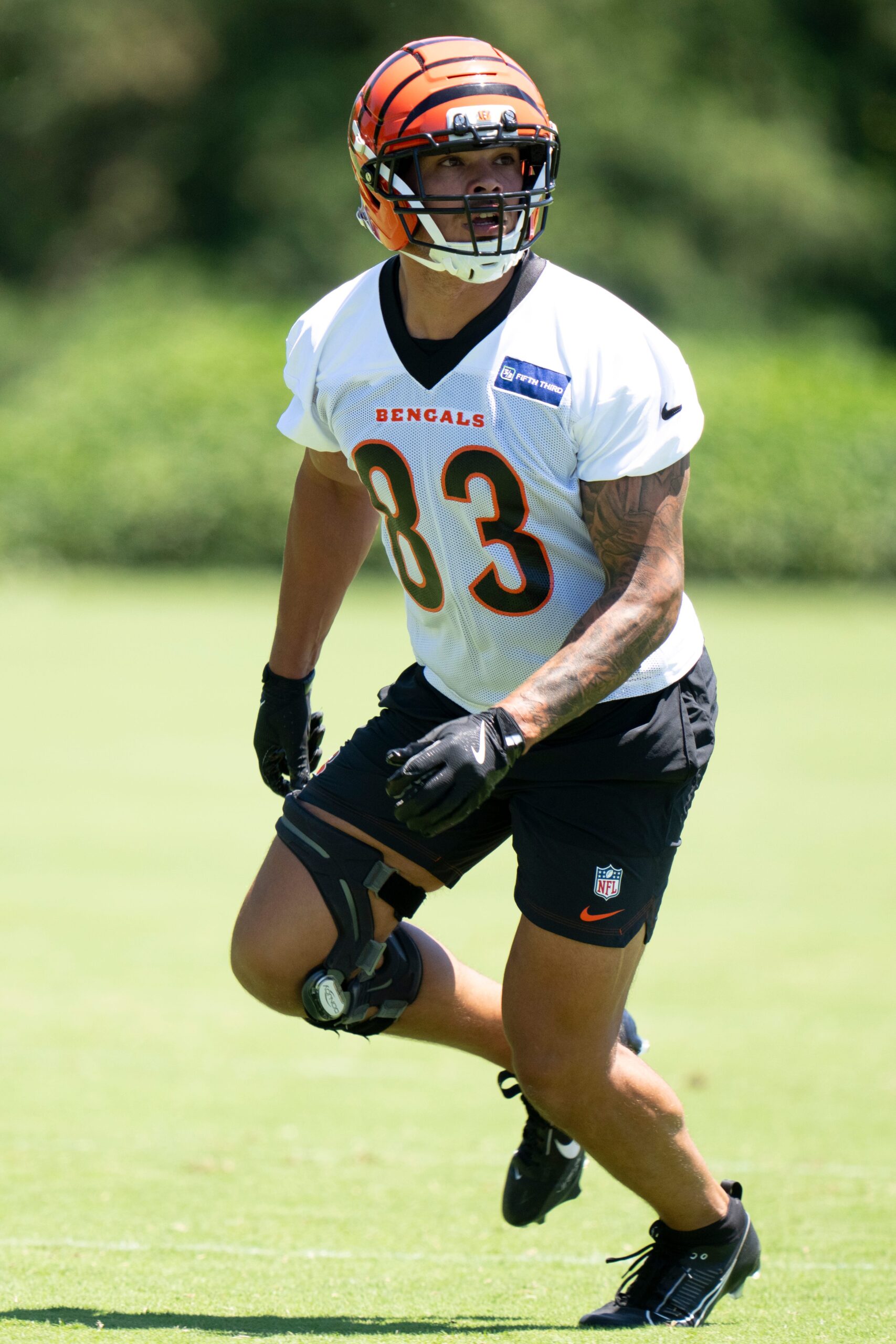 Things will be much different if all goes according to plan for the coming year, however. All has been able to participate in spring practices with the Bengals, and he has healed in full. Adding to his career total of just nine NFL games will be expected in 2026 as a result.
“I feel a lot better than I did when I first got here,” All said (via Sports Illustrated’s Jay Morrison). “Like, a lot better. Completely healthy, 2024 season to now. I feel like a completely different person.”
When speaking to the media about his health status, All revealed the reason for his lengthy rehab process. The surgery stemming from his college ACL tear was not done correctly, so a separate procedure was required after he tore the same ACL in 2024. A waiting period of three months took place before All’s second ACL repair could be performed. That left him unavailable through all of last season.
The initial ACL injury played a role in All falling to the fourth round of his draft class. The Michigan/Iowa product was nevertheless a key figure when on the field during his rookie season, logging a 42% offensive snap share. A notable role as a run blocker in particular could be in store once he returns to game action. Cincinnati ranked just 29th in the NFL on the ground in 2025, and improving in that regard could go help spark a trip to the playoffs this season.
The Bengals’ tight end depth chart will be topped by Mike Gesicki, Drew Sample and Tanner Hudson in 2026. All will spend training camp looking to carve out a rotational role and avoiding any further issues with his knee. Provided he does, he could prove to be an impactful depth contributor on Cincinnati’s offense.
Latest On Zach Carbonnet, Seahawks’ RBs
Seahawks running back Zach Charbonnet is just five months removed from tearing his ACL in a January playoff win over the 49ers, but he is not a lock to miss time in 2026. Head coach Mike Macdonald isn’t closing the door on Charbonnet suiting up in Week 1 (via Mike Florio of PFT).
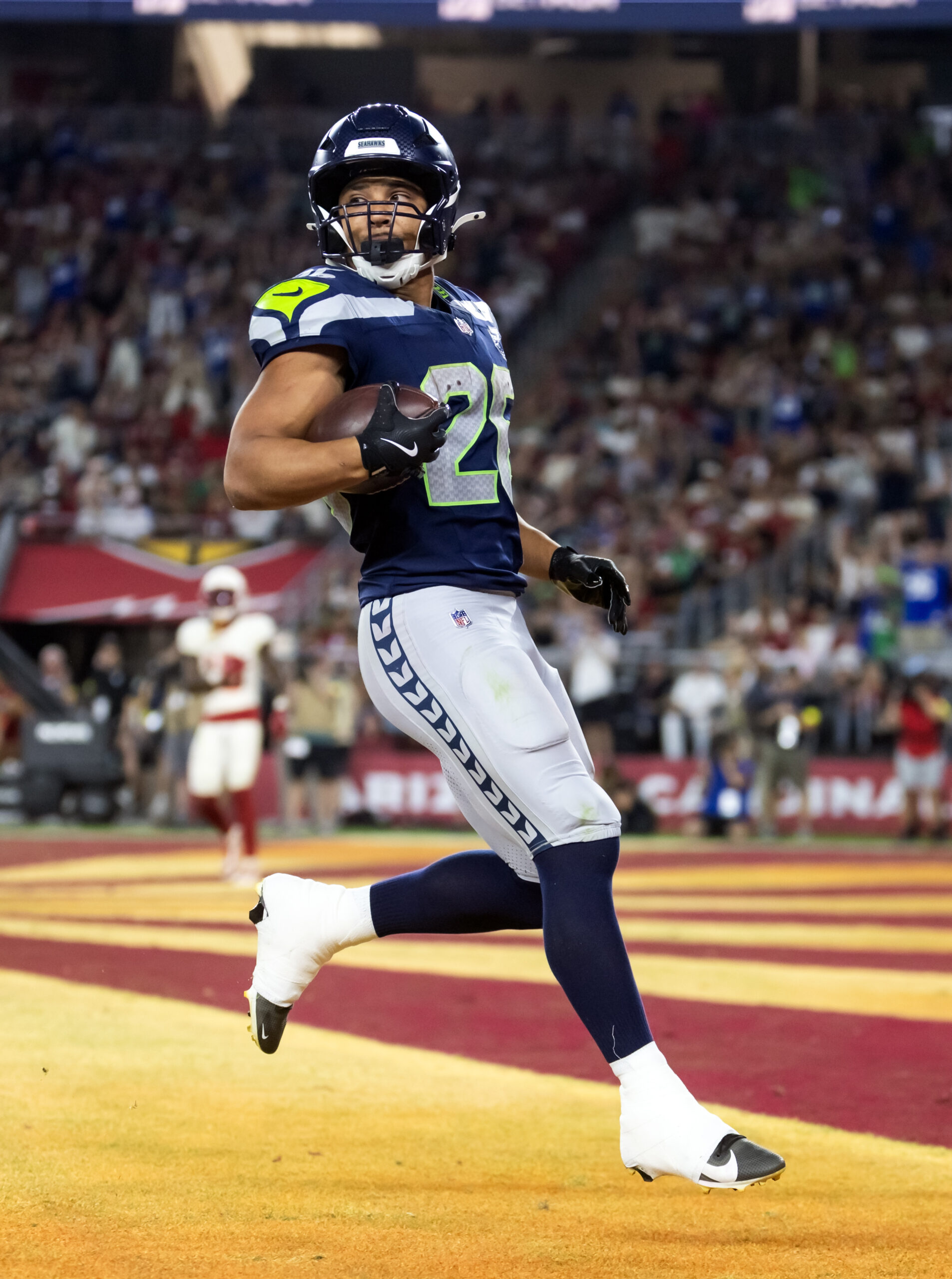
“Everything’s possible, yeah,” Macdonald said when asked if Charbonnet could be ready for the start of the season.
The Seahawks will open 2026 with a Super Bowl LX rematch against the Patriots on Sept. 9, just under eight months after Charbonnet’s injury. It would be an ideal outcome for Charbonnet to be ready by then, though it seems improbable for someone who didn’t undergo surgery until Feb. 20.
It may be more realistic to expect Charbonnet to return sometime in October or November, according to Bob Condotta of the Seattle Times. If that is the case, Charbonnet could begin the year on the reserve/PUP list, which would require at least a four-game absence.
Charbonnet, whom the Seahawks chose in the second round in the 2023 draft, spent his first three seasons splitting snaps with Kenneth Walker. While Walker got more touches during that span, Charbonnet still piled up 427 carries and 95 catches. He set career highs in rushing attempts (184), yards (730) and touchdowns (12) over 16 regular-season games last year, though his injury limited him to five carries and 20 yards in the playoffs. Meanwhile, Walker capped off the Seahawks’ run to a championship with a Super Bowl-MVP winning performance in a 29-13 victory over the Pats. A month later, he left Seattle to sign a three-year, $43.05MM deal with Kansas City in free agency.
With Charbonnet recovering from a major injury and Walker out of the picture, the Seahawks spent their first-round pick (No. 32) on former Notre Dame running back Jadarian Price. He and Charbonnet could be the Seahawks’ one-two punch whenever the latter returns. In the meantime, George Holani and Price were “basically 1 and 1A” during mandatory minicamp this week, Gregg Bell of the Tacoma News Tribune relays. Free agent addition Emanuel Wilson was third in the pecking order.
Kenny McIntosh is also in the fold, but he is still on the mend from the ACL tear he suffered last July. Macdonald indicated McIntosh could begin training camp on the active/PUP list, per Bell.
Browns Could Extend S Grant Delpit
Browns safety Grant Delpit attended voluntary minicamp this week, but he did not participate in practice. That led to speculation Delpit was staging a “hold-in” as an attempt to land a raise, though Mary Kay Cabot of cleveland.com points to a minor injury as the reason he sat out.
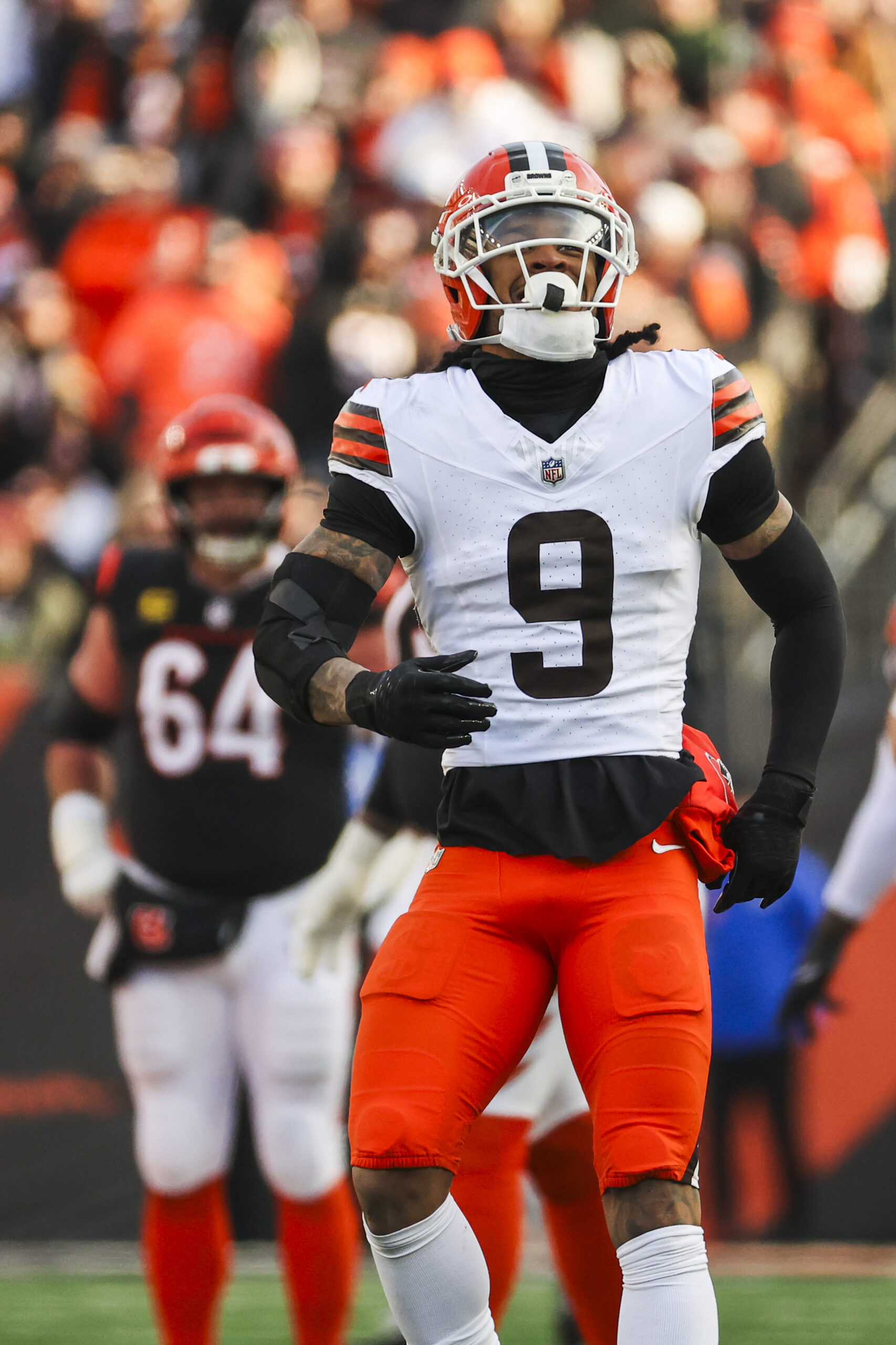
If Delpit is interested in landing a contract extension before a potential trip to free agency next March, it appears he will be in luck. The Browns “will undoubtedly explore” a new deal for Delpit before or during the season, per Cabot, who writes the team is “still as excited” as ever about the soon-to-be 28-year-old.
Delpit has spent his entire career in Cleveland, which drafted him in the second round in 2020. The former LSU Tiger wound up missing his entire rookie year after tearing his Achilles in training camp, but he has bounced back well since then. After coming off the bench in eight of 15 games in 2021, Delpit started in 61 of 63 appearances from 2022-25. The 6-foot-3, 208-pounder has notched a pair of 100-tackle seasons and totaled seven interceptions, including a career-high four in 2022.
Delpit contributed 89 tackles and another pick last year, his second 17-game season. He was on the field for 95.92% of defensive plays, trailing only safety partner Ronnie Hickman (98.48%). While amassing 391 snaps in the box, 271 in the slot, 227 at free safety and 96 along the defensive line, the versatile Delpit posted career highs in quarterback hits (seven), sacks (three), forced fumbles (two) and fumble recoveries (two). His performance ranked a respectable 40th among Pro Football Focus’ 91 qualifying safeties.
Thanks in part to Delpit, the Browns’ defense ranked fourth in the NFL in an otherwise bleak year for the team. The unit has since undergone a couple of massive changes. Acclaimed defensive coordinator Jim Schwartz resigned in February after the Browns hired Todd Monken instead of him as their head coach. Monken then replaced Schwartz with first-time DC Mike Rutenberg.
When Monken and Rutenberg signed up for their jobs over the winter, reigning Defensive Player of the Year Myles Garrett was on the Browns’ roster. That is no longer the case, as they shipped the future Hall of Fame pass rusher to the Rams in a blockbuster trade on June 1. Although Cleveland is unlikely to compete for a playoff spot this year, Garrett’s departure is not expected to lead to a fire sale. Otherwise, players like Delpit and cornerback Denzel Ward could have been candidates to follow Garrett out the door in summer trades.
If Delpit sticks around in Cleveland on another extension, it would be his second with the franchise. Delpit is entering the last season of the three-year, $36MM accord he signed in December 2023. It was the 12th-richest deal for safeties at the time. Delpit is now just inside the top 20 in guarantees (17th; $23.61MM), total value (18th) and average annual salary (18th). His standing in those categories could improve if he and the Browns work something out in the coming months.
Colts WR Ashton Dulin In Lead For Starting Job?
After trading Michael Pittman Jr. to the Steelers in March, the Colts are on track to head into the season with a questionable receiving corps. Their four-year, $114MM offer was enough to keep deep threat Alec Pierce from leaving in free agency, but his status for training camp is up in the air in the wake of offseason ankle surgery.
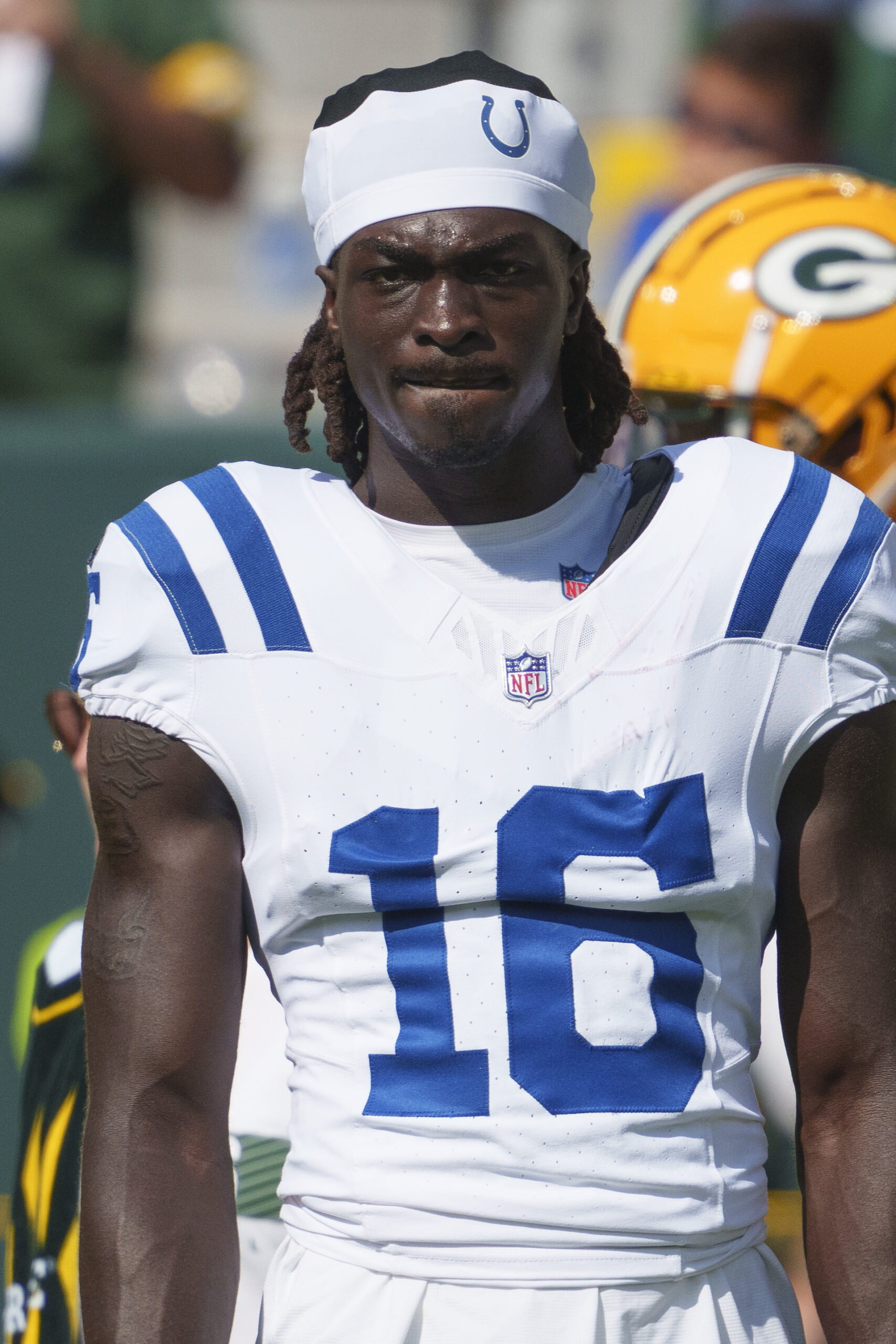
Assuming Pierce is healthy by the time Week 1 rolls around, he and slot wideout Josh Downs will fill major roles. The other starting spot is up for grabs. Ashton Dulin, free agent addition Nick Westbrook-Ikhine, Laquon Treadwell and seventh-round rookie Deion Burks are vying for the gig. Dulin’s familiarity with head coach Shane Steichen‘s offense could tip the scale in his favor, James Boyd of The Athletic observes. Meanwhile, Mike Chappell of FOX 59 pegs Dulin as the front-runner for the job.
Dulin has been a member of the Colts since he signed with them as an undrafted free agent in 2019. He came out of Division II Malone, which Boyd notes no longer even has a football program.
This season will be Dulin’s fourth under Steichen, who has primarily deployed him as a special teamer. The 6-foot-2, 215-pounder has logged a special teams snap share between 51% and 71% in each of his five seasons (he missed all of 2023 with a torn ACL). For good reason, as Dulin earned second-team All-Pro honors as a gunner in 2021 and has averaged an impressive 29.8 yards on 37 career kick returns. He returned a personal-high 16 kicks last year and averaged the second-most yards in the NFL (32.3).
While Dulin has established himself as an asset on special teams, he will have to show he is capable of taking on a larger offensive workload. Dulin has put up a robust 15.6 yards per reception in the pros, but he has caught just 40 passes and four touchdowns in 82 games. The 29-year-old combined for a mere seven catches in 27 games from 2024-25. The good news for Dulin is that he isn’t facing especially stiff competition.
Westbrook-Ikhine recorded four straight seasons of over 25 catches and 370 yards with the Titans from 2021-24, but the Dolphins released him after he managed just 11 and 89 in those respective categories last year. He had to settle for a cheap deal with the Colts, who included only $250K in guaranteed money in the pact.
Treadwell was a first-round pick of the Vikings in 2016, though he is now a 31-year-old journeyman who has never lived up to his 23rd overall draft slot. Treadwell has been in and out of the Colts organization for the past couple of years, but his most recent reception came as a member of the Ravens back in 2023. He caught one ball in five games that year.
If the Colts decide Dulin & Co. are not starting-caliber receivers, they may be candidates to sign one of the proven veterans left in free agency. Stefon Diggs, Deebo Samuel, Keenan Allen, Tyreek Hill, Brandin Cooks and DeAndre Hopkins are some of the names still on the market. Indianapolis has the league’s seventh-most cap space ($31.67MM), giving the team ample room to upgrade at the position.
Pats Not Expected To Add Edge Defender; Latest On Gabe Jacas
Despite finishing 19th in pass rush win rate and 26th in sacks last year, the Patriots have not been ultra-aggressive in upgrading their group of outside linebackers this offseason. Their most notable moves have included swapping out K’Lavon Chaisson for Dre’Mont Jones in free agency and spending a second-round pick on Gabe Jacas.
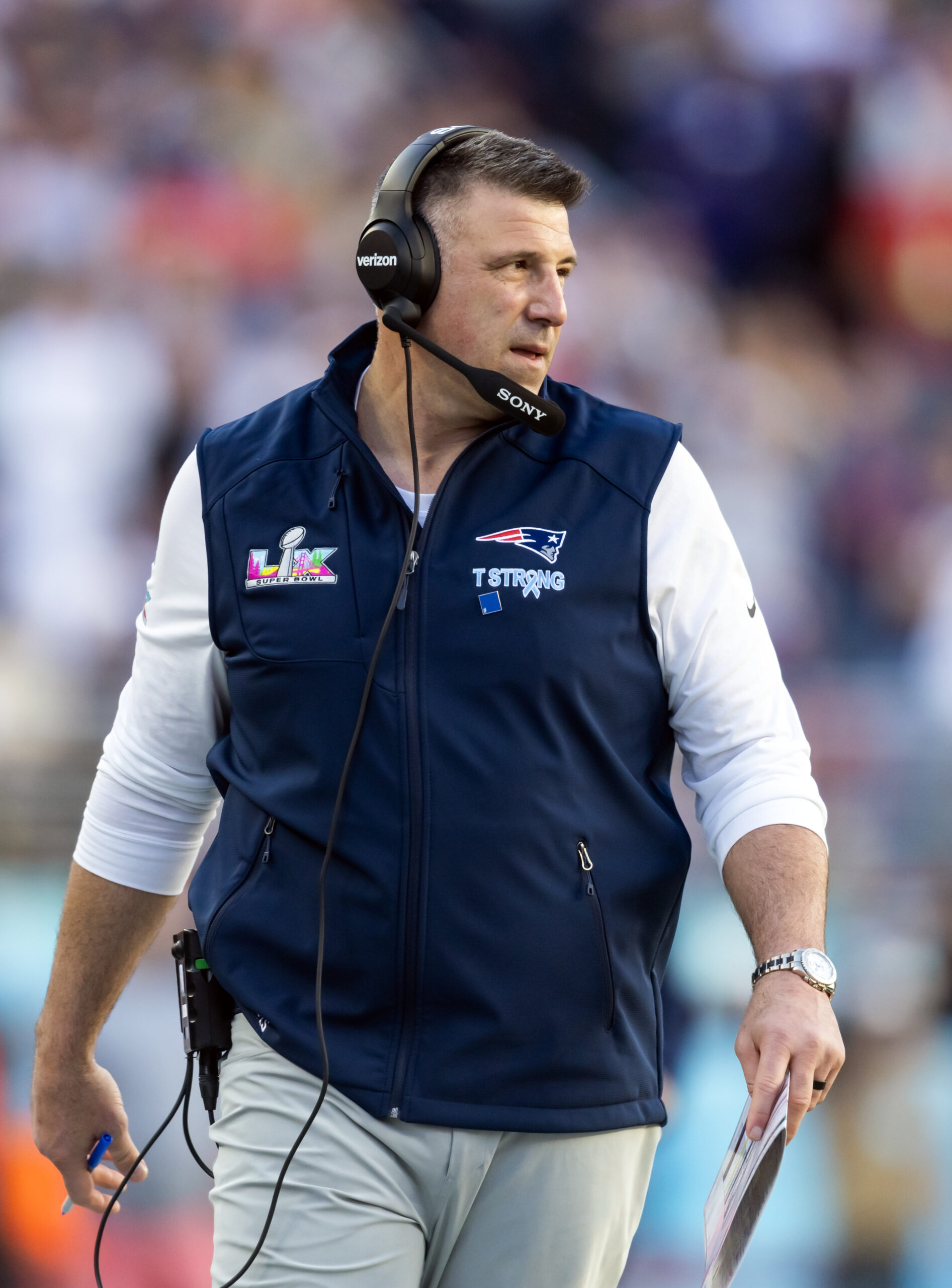
Edge defenders such as Cameron Jordan, Joey Bosa, Jadeveon Clowney, Von Miller, Leonard Floyd and former Patriot Kyle Van Noy are among the accomplished veterans still looking for jobs. Any could help a team in need of a pass-rushing boost, but the Pats are not expected to add anyone between now and training camp, according to Doug Kyed of the Boston Herald. Head coach Mike Vrabel called his current cast “a good group” on Thursday.
Jones and Harold Landry, who led the AFC-winning Patriots with 8.5 sacks in 2025, are in line to start this season. A healthy Jacas could fall in line right behind them, but the problem is that the former Illinois standout has not been at full strength this spring.
Vrabel revealed earlier this week that Jacas, who has mostly been away from the team since the draft, is recovering from surgery. He didn’t go into detail, but it turns out Jacas had a cleanup procedure on his knee, Mike Reiss of ESPN reports. The surgery should not affect Jacas’ availability for 2026, per Reiss, who adds that he could be ready for training camp.
Along with his knee, there are other health-related questions with Jacas. He did not participate at the Combine in February or Illinois’ pro day in March as a result of a hamstring injury. There are also concerns that a labral tear in Jacas’ shoulder could need medical attention at some point, two sources from different NFL teams told Reiss. Additionally, there is a stress fracture in Jacas’ foot that might “worsen over time,” Reiss writes. Despite those problems, the two sources informed Reiss that their teams gave Jacas a passing grade on his physical.
While New England is hopeful Jacas will make an impact this year, it will have to get him under contract first. Jacas is the lone member of the Patriots’ nine-player draft class and the only second-rounder in the league who has not signed yet. As a result, he has not been with the team since rookie minicamp in early May. That largely stems from the fact that the Patriots have not given Jacas a standard “participation agreement,” which most rookies receive, Reiss relays. As Reiss explains, those agreements state that if a player a suffers an injury before inking his rookie deal, the team would still have to sign him to a pact based on the value of his draft slot.
As the 55th pick, Jacas is in line to receive around $8.6MM on his four-year accord. Most of it will be guaranteed, though there is more haggling required in this case because of his health questions.
If the Patriots aren’t confident Jacas will be ready when camp rolls around, perhaps they will take a harder look at the available group of free agent OLBs. As things stand, Jones, Landry, Elijah Ponder, Bradyn Swinson, Jesse Luketa and seventh-round rookie Quintayvious Hutchins are among in-house options who are under contract.
Health A Factor In Baker Mayfield Extension Talks
As quarterback Baker Mayfield completed his third season as the Buccaneers’ starting quarterback on the second year of a three-year deal, it became clear that there were zero intentions on either side for the veteran to play on a contract year for the upcoming season. Tampa Bay’s most recent ideas for a long-term deal appeared to be far under what Mayfield had been expecting, and according to Rick Stroud of the Tampa Bay Times, it seems health is a main factor why.
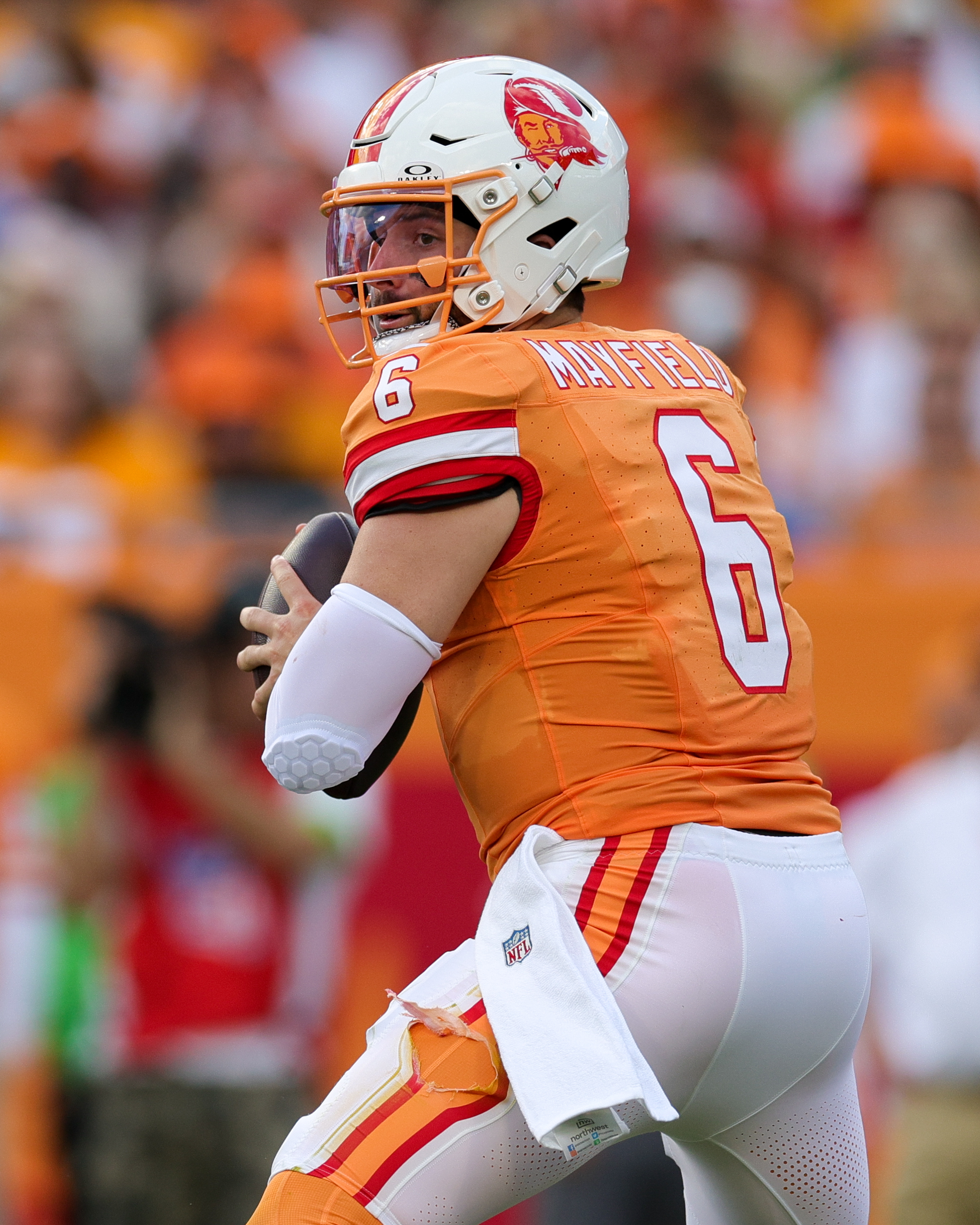 Over the course of the 2025 season, it became clear that, if an extension was going to get done, it wouldn’t come until the offseason. Ownership and the front office were all on board, and head coach Todd Bowles added his approval to the chorus yesterday.
When asked abut the progress of a new deal just over a week ago, though, Mayfield told reporters that he and the team were “not anywhere close” to an agreement. This comment came after some initial talks had taken place, and it seemed clear that the two sides will just need to continue working towards progress with no holdout likely on the table.
On its face, people might wonder how health can be considered a factor dragging down value for a quarterback who has started 51 of a possible 51 regular season games behind center since joining the Buccaneers. While that’s true, that doesn’t necessarily mean that Mayfield has been the picture of health. In fact, just last year, he suffered a shoulder sprain in his non-throwing should that limited him but didn’t hold him out. Following the injury, the team would go on to lose four of its last six games to just barely miss the playoffs. The year before saw Mayfield play through an Achilles injury suffered in a Week 13 matchup.
The team has Super Bowl aspirations, but that ultimate goal will be extremely difficult to attain if the driver of their offense continues to blow tires down crucial stretches of the season. The Buccaneers see it as an aspect of the game that Mayfield tends to neglect. His aggressive, sometimes ill-advised scrambles over the years will continue to have greater and greater effects on his health as he gets older each season. Bowles told the media that, while Mayfield “makes some great scrambles…understanding how to get down and putting himself out of harm’s way” will be crucial to the team’s success moving forward.
The two sides will have to continue to be open about these conversations in order to get their next ideas for an extension closer together. Per Stroud, Mayfield has reportedly set a deadline of the start of training camp to reach a new deal. If they can’t get it done by then, he does not intend to negotiate into the season. General manager Jason Licht isn’t worried about what that will mean for Mayfield’s in-season effort for the team, though. Mayfield has been in the position of having one year to earn his worth in the past, and it already led to an extension of his time in Tampa once before.
DE Aldon Smith Dies At 36
Former NFL defensive end Aldon Smith has died, as noted in a press release from the 49ers. He was 36.
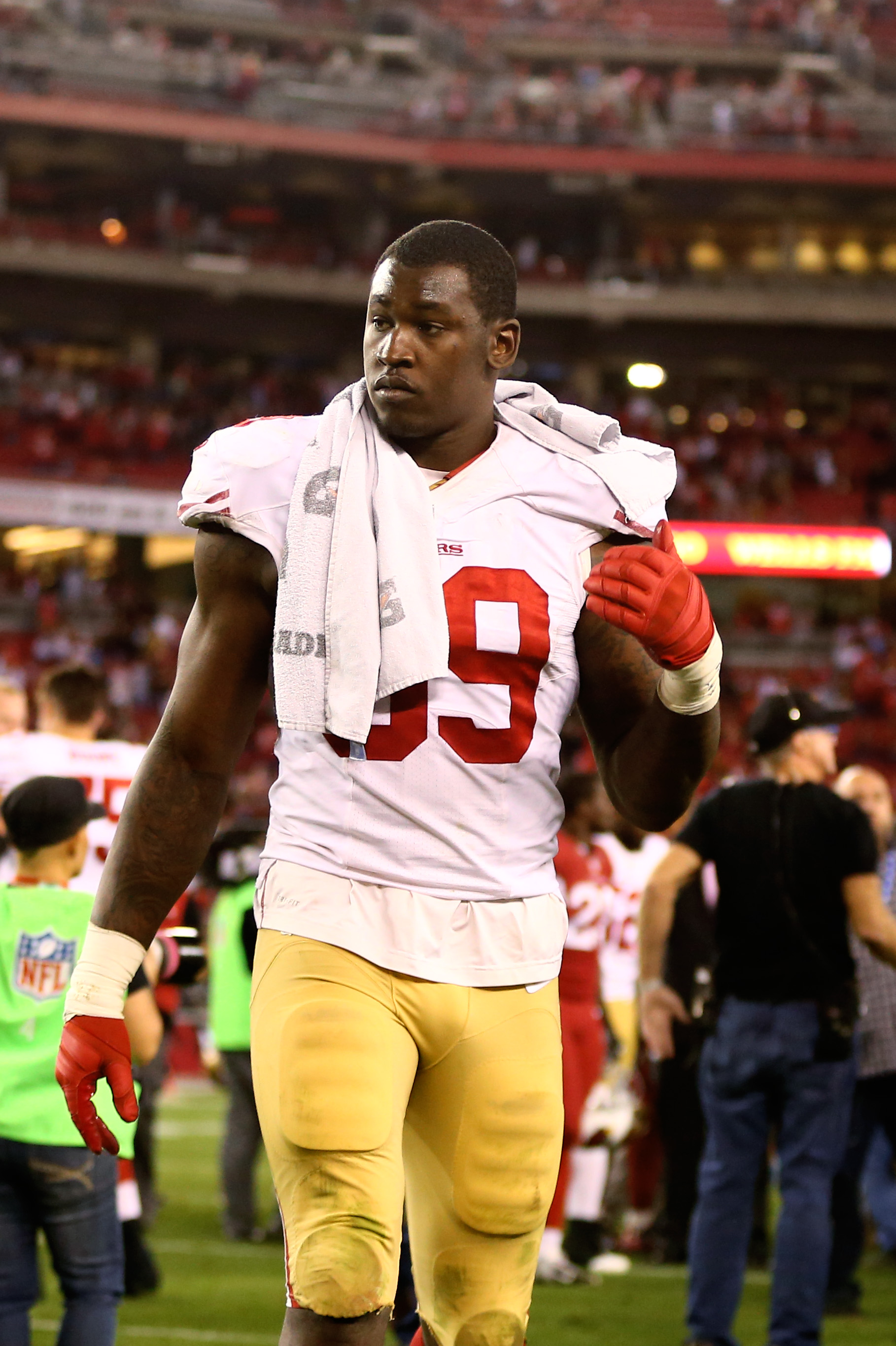 “We are devastated by the sudden and tragic passing of Aldon Smith,” a team statement reads. “Aldon’s undeniable talent and sheer dominance on the field were on display from the moment he joined our organization, having recorded one of the best rookie seasons the National Football League has seen. Beyond his excellence as a player, Aldon will be remembered for his infectious smile that lit up every room he walked into.
“Our entire organization sends its deepest condolences to the Smith family and all who knew and loved Aldon.”
Smith was the seventh overall pick in the 2011 draft. He made an immediate impact in San Francisco, nothing 14 sacks that season. Smith finished second in Defensive Rookie of the Year voting. A strong follow-up campaign ensued, with the Missouri product totaling 19.5 sacks en route to a Pro Bowl nod and first-team All-Pro honors.
Legal issues increasingly became a theme during Smith’s NFL tenure. He spent time on the NFI list in 2013 following the decision to voluntarily enter a rehabilitation in the wake of a DUI arrest. Smith later saw charges stemming from an incident at the Los Angeles International Airport in 2014 dropped, but he served a nine-game suspension that season.
During the following summer, Smith was involved in an alleged hit and run incident which resulted in charges including DUI and vandalism. The 49ers released him on the following day. Smith managed to quickly sign with the Raiders upon becoming a free agent, although he was issued another suspension (this time spanning one year) late in the 2015 campaign.
Smith unsuccessfully applied for reinstatement and wound up remaining suspended from 2016-19. A domestic violence allegation resulted in his Raiders release in 2018. Smith’s return to NFL action took place in 2020 as a member of the Cowboys. After serving as a full-time starter for one year in Dallas, a free agent deal with the Seahawks was worked out. Shortly after the Seattle signing, however, Smith was booked on a battery charge. That resulted in his Seahawks release. In December 2021, Smith was arrested and booked on a felony charge of DUI causing injury. A 12-month jail sentence came about as a result of that latest off-field incident.
Smith was not connected to any attempts at an NFL return following the end of that sentence. His legacy on the field includes the all-time record for sacks during a player’s first two seasons, but also the missed time following that encouraging start due to a number of legal issues which resulted in a brief playing career.
Saints WR Chris Olave Still Recovering From Blood Clot
Saints wide receiver Chris Olave missed the end of the 2025 season due to a blood clot in his lung. His original return timeline was four weeks, but more than six months later, he has yet to complete his recovery.
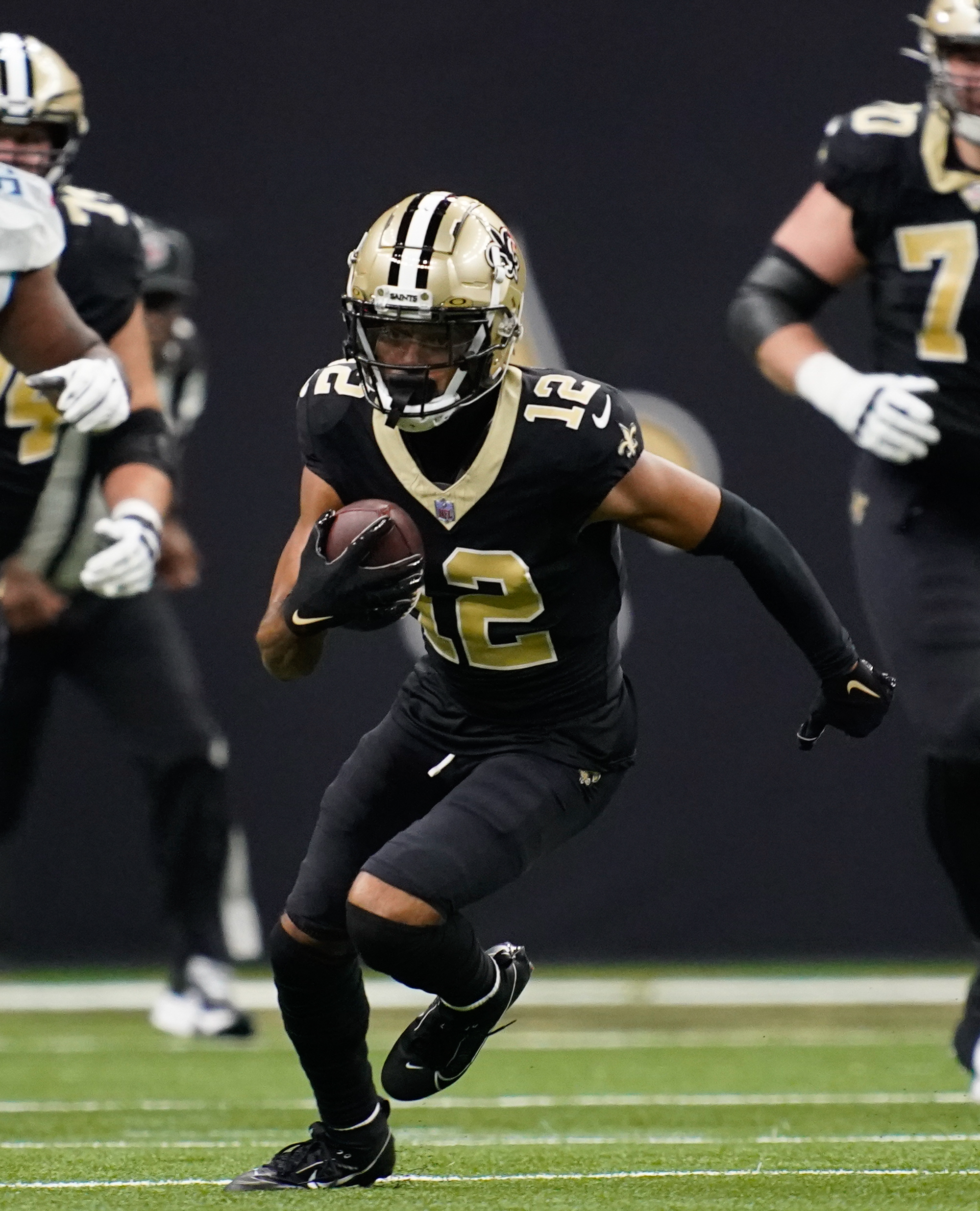 Olave has not participated in team drills during New Orleans’ offseason practices, per Matthew Paras of The Times-Picayune. He has been present at OTAs – notable since he and the Saints are in the middle of contract negotiations – but the team is giving him a long runway to ramp up his involvement. Clubs are generally cautious about player injuries during the offseason, especially with a highly dangerous medical issue like a blood clot, especially when there is big money involved.
Olave, 24, has two years left on his rookie contract and is due $3.33MM this season and a $15.49MM fifth-year option in 2027. That is not the money the Saints are looking to protect. They want to ensure a long-term investment in their star wideout – which could include $100MM or more in guarantees – rewards them with several years of high-level play. Continuing a gradual ramp-up process may be ideal for both Olave’s health and financial security.
The Saints have also been cautious with several members of their rookie class. First-round receiver Jordyn Tyson is still dealing with the lingering hamstring issue that plagued him during the pre-draft process. He was a limited participant at OTAs, per Mike Triplett of NewOrleans.Football, along with second-round defensive tackle Christen Miller and fifth-round safety Lorenzo Styles. Head coach Kellen Moore revealed that fourth-round tight end Oscar Delp, who was also limited, is dealing with a hamstring injury of his own.