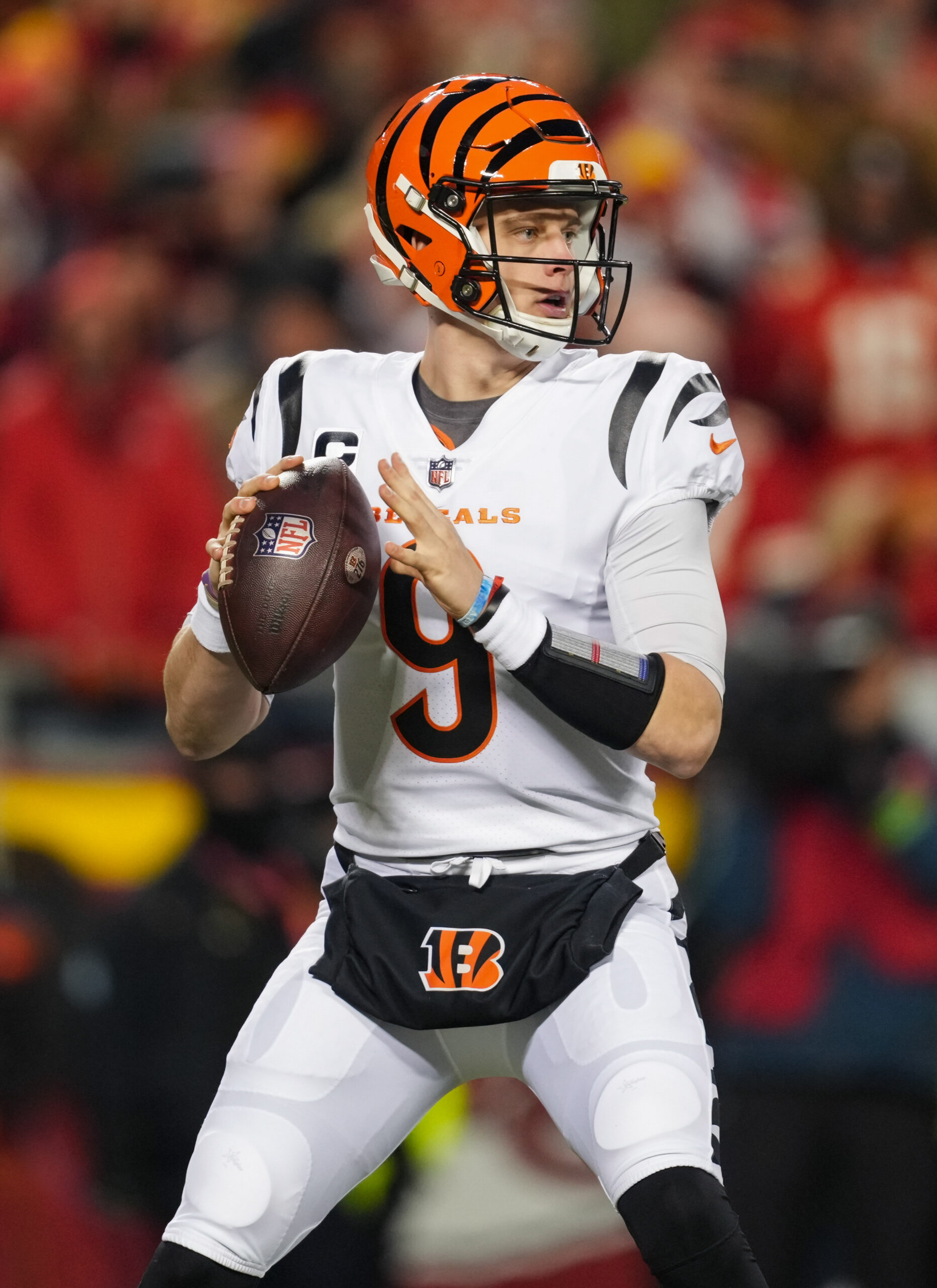
Bengals, Trey Hendrickson Not Expected To Agree To Extension Before Training Camp
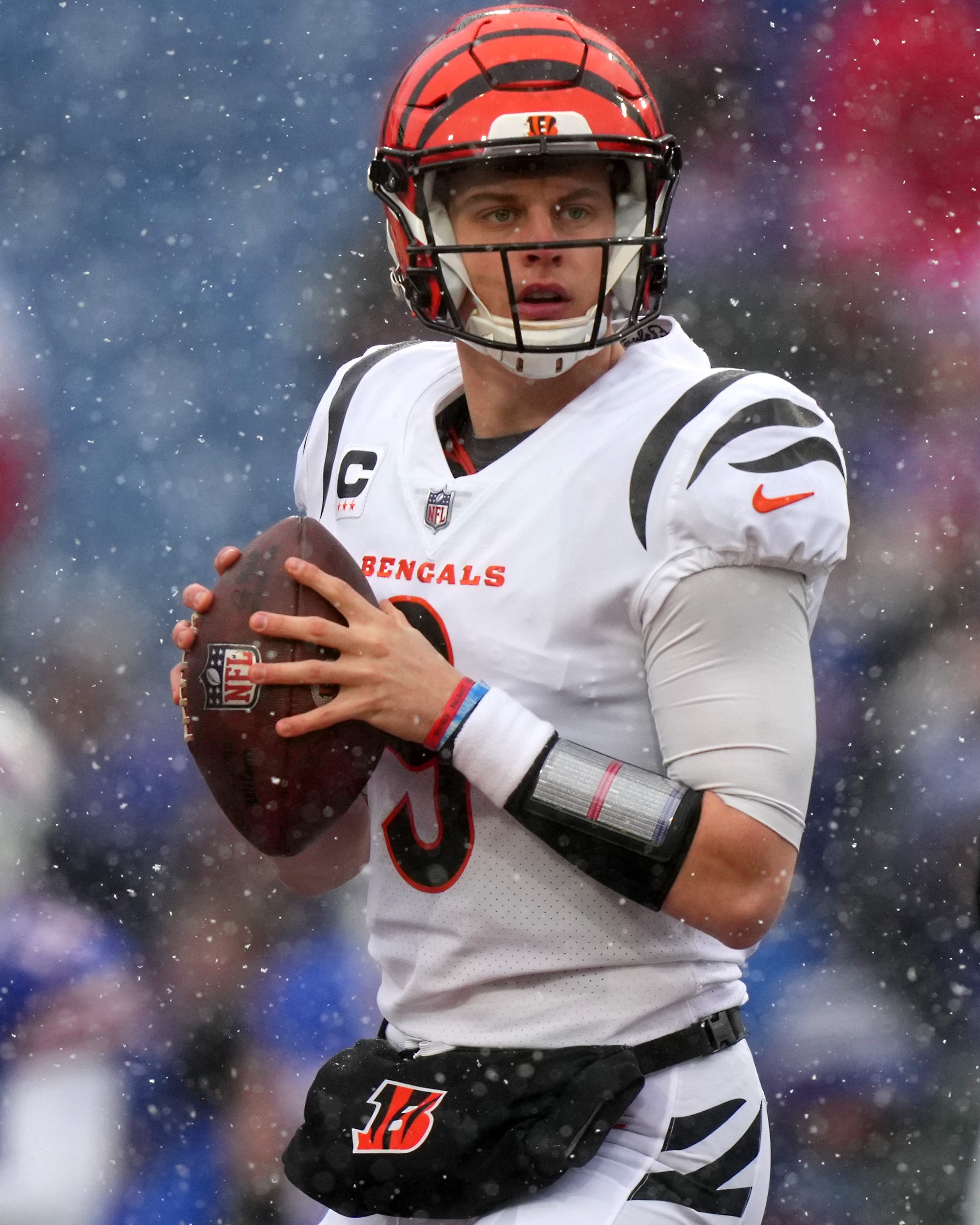
There appears to be no end in sight to the standoff between Trey Hendrickson and the Bengals. While the 2025 version of the organization would benefit from an immediate resolution, it doesn’t sound like that will end up coming to fruition. While Paul Dehner Jr. of The Athletic says that the “best play” for the Bengals’ chemistry would be to wrap up this saga ASAP, the writer doesn’t anticipate a new deal being signed before training camp.
[RELATED: Checking In On Unresolved Edge Rusher Situations]
To review: Hendrickson has made it clear he doesn’t intend to play the upcoming season on his expiring contract, and the pass rusher also admitted that negotiations between the two sides got personal. The Bengals have been known to dig their heels during negotiations, and they’ve also been apprehensive about giving veterans a third NFL contract. That would seem to signal that Hendrickson’s tenure with the organization would soon be coming to an end, although the team hasn’t been all that receptive to dealing the star defender.
For what it’s worth, we heard recently that the two sides resumed communications as they work towards a contract resolution, with the front office starting to feel some desperation to get their defensive leader back on the practice field. Of course, after handing out lucrative new contracts to Ja’Marr Chase and Tee Higgins, the cash-strapped Bengals may be hard pressed to fit Hendrickson into their cap sheet.
We also heard that there’s been a disagreement about the structure of any contract. While Hendrickson is rightfully seeking some long-term security, the Bengals have traditionally front loaded contracts so they’d have the ability to bail early. The two sides dealt with similar negotiations last offseason, with the Bengals and the defender ultimately agreeing to a one-year, $21MM extension that kept him attached to Cincy through the upcoming season.
That $21MM average annual value keeps Hendrickson just outside of the top-10 among pass rushers, although the four-time Pro Bowler certainly deserves to be among the highest-paid players at his position. Since joining the Bengals ahead of the 2021 campaign, Hendrickson has compiled 57 sacks, a total that already places him sixth on the franchise’s all-time leaderboard. The veteran has been especially productive over the past two seasons, collecting a total of 35 sacks.
We heard recently that Hendrickson is still willing to hold out into the regular season if necessary. Assuming the organization wants to avoid that worst-case scenario, they’ll have to make some major progress in negotiations over the next month-plus.
33 Unsigned 2025 Draft Picks Remain
The NFL has hit a logjam and is collectively lagging far behind where it normally is at this point in the offseason. Two years ago, the league hit its last 30 unsigned players before July. Last year, teams were signing rookies as quickly as they were drafting them, and only 10 players remained unsigned by June 17. A couple intriguing situations have caused pens to go quiet in 2025, and as a result, here are the 33 remaining unsigned rookies of the 2025 NFL Draft:
Round 1:
- No. 17 (Bengals): Shemar Stewart (DE, Texas A&M)
- No. 20 (Broncos): Jahdae Barron (CB, Texas)
Round 2:
- No. 35 (Seahawks): Nick Emmanwori (S, South Carolina)
- No. 36 (Browns): Quinshon Judkins (RB, Ohio State)
- No. 37 (Dolphins): Jonah Savaiinaea (G, Arizona)
- No. 38 (Patriots): TreVeyon Henderson (RB, Ohio State)
- No. 39 (Bears): Luther Burden (WR, Missouri)
- No. 40 (Saints): Tyler Shough (QB, Louisville)
- No. 41 (Bills): T.J. Sanders (DT, South Carolina)
- No. 42 (Jets): Mason Taylor (TE, LSU)
- No. 43 (49ers): Alfred Collins (DT, Texas)
- No. 44 (Cowboys): Donovan Ezeiruaku (DE, Boston College)
- No. 45 (Colts): JT Tuimoloau (DE, Ohio State)
- No. 46 (Rams): Terrance Ferguson (TE, Oregon)
- No. 47 (Cardinals): Will Johnson (CB, Michigan)
- No. 48 (Texans): Aireontae Ersery (T, Minnesota)
- No. 49 (Bengals): Demetrius Knight (LB, South Carolina)
- No. 50 (Seahawks): Elijah Arroyo (TE, Miami)
- No. 51 (Panthers): Nic Scourton (OLB, Texas A&M)
- No. 52 (Titans): Oluwafemi Oladejo (OLB, UCLA)
- No. 53 (Buccaneers): Benjamin Morrison (CB, Notre Dame)
- No. 54 (Packers): Anthony Belton, T (NC State)
- No. 55 (Chargers): Tre Harris (WR, Ole Miss)
- No. 56 (Bears): Ozzy Trapilo (T, Boston College)
- No. 57 (Lions): Tate Ratledge (G, Georgia)
- No. 58 (Raiders): Jack Bech (WR, TCU)
- No. 59 (Ravens): Mike Green (OLB, Marshall)
- No. 60 (Broncos): RJ Harvey (RB, Central Florida)
- No. 61 (Commanders): Trey Amos (CB, Ole Miss)
- No. 62 (Bears): Shemar Turner (DT, Texas A&M)
- No. 63 (Chiefs): Omarr Norman-Lott (DT, Tennessee)
- No. 64 (Eagles): Andrew Mukuba (S, Texas)
Round 4:
- No. 107 (Jaguars): Jack Kiser (LB, Notre Dame)
In recent years, a trend has seen second-rounders lasting the longest, but what we’re seeing this year is unheard of. As rookies have been getting a bit of flexibility in negotiating structures of guarantees, getting deals done has become a waiting game of seeing what surrounding picks are getting for comparison. Last year, teams breezed through the issue, but 2025 has seen significantly increased troubles.
Texans wide receiver Jayden Higgins set the tone by signing a fully guaranteed rookie contract, the first ever for a second-round selection. The next day, the Browns were essentially forced to do the same for Carson Schwesinger, picked one slot before Higgins. Shough, the Saints rookie quarterback, is seeking the same deal, hoping that his elevated status as a passer will help convince New Orleans to continue making history. Shough’s efforts have caused every pick between him and Higgins to stand pat, waiting to see if they get to ask for full guarantees from their teams, as well. This would be a drastic development, as last year’s 40th overall pick, Cooper DeJean, received only two fully guaranteed years with only partial guarantees in Year 3.
The biggest story outside of the second round is that of the standoff between Stewart and the Bengals. Stewart has issues with what he perceives as a lack of protection in Cincinnati’s offer that causes a contract default in any year to void any guarantees in all the following years. It’s a new precedent the team is trying to set, and Stewart seems intent on preventing them from doing so.
It will be interesting to see which standoff gets settled first: Stewart’s or Shough’s. The latter standoff ending would likely set off a domino reaction of second-round deals that would help a large number of teams close out their rookie classes. To this point, only four NFL teams have done so.
Checking In On Unresolved Edge Rusher Situations
At the offseason’s outset, we projected the edge rusher market — which had not moved too much aside from Nick Bosa‘s contract since T.J. Watt‘s 2021 extension — would take center stage due to the volume of marquee players entering contract years. The fireworks have not disappointed.
The Raiders entered the fray despite having Maxx Crosby contracted for two more seasons, and their early play led the Browns to make the same move — one that took Myles Garrett off the trade block. Garrett’s $40MM-per-year number — which led to Ja’Marr Chase‘s asking price changing, as the title of “highest-paid non-quarterback” gains steam in the NFL — still leads the way at his position, but a glut of edge rushers are still deep in negotiations.
Although both Odafe Oweh and Kwity Paye are heading into their fifth-year option seasons, rumors of negotiations have not emerged involving the Ravens and Colts edge players. Those situations are worth monitoring, but front-burner matters involving All-Pro-caliber rushers — and one curious rookie case — have produced a wave of headlines this offseason. As training camps near, here is where everything stands:
Trey Hendrickson, Bengals
The messiest of these situations has brought a staredown. Although the Bengals have seen a few players (Tee Higgins, Jonah Williams, Germaine Pratt) request trades in recent years, they have not buckled. Hendrickson, though, levied accusations against the team at OTAs and is prepared to sit out regular-season games. This came after executive VP Katie Blackburn‘s comments taking issue with Hendrickson’s stance. Highlighted by the Carson Palmer standoff 14 years ago, the Bengals have not been known to cave. But the team seemingly went from being prepared to move on from Higgins to paying its No. 2 wideout after Joe Burrow‘s crusade. Burrow has stumped for Hendrickson as well.
Trade rumors here have died down, despite the Bengals giving Hendrickson’s camp permission to shop around. The Bengals rejected multiple offers, and teams viewed the Bengals’ asking price — believed to be at least a first-round pick — as unrealistic since an acquiring team would need to hand out a monster extension as well. Hendrickson made it clear early in the offseason he wanted either a Bengals extension or to be traded to a team that would authorize one; months have passed without either resolution, leading to frustration from a player who has anchored Cincinnati’s pass rush since signing in 2021.
Hendrickson, 30, went public after no talks commenced in the weeks following the draft and made it known he would extend his holdout into the regular season. The Bengals are likely betting the 2024 sack leader will cave rather than miss game checks, and they have not offered a $35MM-per-year deal — which would surpass Bosa and land in the range Crosby set — to their top defender.
The Bengals also have a long-held precedent of not guaranteeing salary beyond Year 1, joining the Packers and Steelers in that approach. Though, Cincy bent for Chase and Burrow. The team is aiming to give Hendrickson another one-year deal, after extending him (one year, $21MM) in 2023; the ninth-year vet wants a true extension, even if he is not expecting to match Garrett’s Browns terms.
Cincinnati paid Geno Atkins at 30 and Carlos Dunlap at 29 in 2018, authorizing third contracts for both. Hendrickson will be 31 by season’s end, adding urgency to his situation. The team saw its defense regress in 2024, denying an MVP-caliber Burrow season and Chase’s triple-crown showing from producing a playoff berth. Hendrickson has leverage of denying his services to prop up a defense that needs to improve to better the Bengals’ chances at making the playoffs for the first time since 2022. But the sides are not close to an agreement.
Aidan Hutchinson, Lions
Hendrickson’s price may well change if other rushers land deals that move the bar; Hutchinson is a player to monitor here. The Lions acted early with Penei Sewell, giving the All-Pro right tackle a deal that topped both tackle markets in April 2024. Sewell still resides as the NFL’s highest-paid RT. Hutchinson enters his fourth training camp in position to top the EDGE market, as he is going into an age-25 season. He is also now fully cleared from the broken leg that ended his 2024 season early.
The Lions made it known they were preparing to extend Hutchinson, and fifth-year GM Brad Holmes acknowledged the price could change as other extensions are completed at the position around the league. Hutchinson’s second contract will almost definitely come in north of $40MM per year, as he is nearly five years younger than Garrett. The Lions lacking a proven presence opposite the former No. 2 overall pick also increases his leverage, and the sides are expected to accelerate talks now that a full recovery has taken place.
Detroit striking first here likely would provide a discount. The NFL’s 2023 pressures leader, Hutchinson showing All-Pro-level form again would up his price come 2026. Even with the team having Hutchinson signed through 2026 via the fifth-year option, waiting until the option year could lead to a notably higher price if/once Micah Parsons and T.J. Watt receive their big-ticket extensions before Week 1.
Micah Parsons, Cowboys
Considering how the Cowboys played it with Dak Prescott and CeeDee Lamb, this situation has generated headlines since Parsons became extension-eligible in January 2024. Parsons, 26, is a three-time All-Pro who is the top player on a team. Trade rumors emerged in 2024, but they fizzled fairly early. Even as the Cowboys paid Prescott and Lamb on top-market deals, with the QB breaking new ground by reaching $60MM AAV, Parsons has long been expected to receive an extension. Once again, however, the Cowboys are dragging their feet. This routine has even surprised Parsons, who said the Cowboys waiting once again will lead his price to rise.
Parsons said during the Cowboys’ 2024 offseason program he was fine waiting until his contract year to sign a new deal, and he expected to become the NFL’s highest-paid defender. Although the Penn State-developed dynamo missed time due to injury in 2024, nothing has really changed regarding that ask. Parsons floated out what appeared to be a $50MM-per-year ask by the spring. It is unlikely the Cowboys will go there, but the fifth-year rusher admitted his price has already risen based on the Crosby and Garrett deals. Parsons’ age and early-career performance work in his favor, and he just saw his top two teammates lead the Cowboys to breaking on their usual term-length aim.
Both Prescott and Lamb secured four-year extensions, being the rare high-profile Cowboys to land deals shorter than five years. Term length is an issue for Dallas with Parsons, but five- and six-year deals are largely avoided now. Only one free agent (Will Fries) agreed to even a five-year deal this year; the cap’s record growth has led players to prefer shorter-term pacts to cash in again sooner. Rumblings of Parsons and Jerry Jones being in step on price emerged, but no reports of a true agreement have come out.
Parsons is still holding out hope for an extension to be done by training camp, even as Cowboys delays have been much discussed, and it represented a good sign he attended the team’s offseason program and participated at points. A hold-in still should be considered likely until a deal is done.
Shemar Stewart, Bengals
The Bengals have managed to pay both Chase and Higgins while still seeing many question their commitment. The team has attempted to distance itself from a frugal reputation; its handling of the Hendrickson and Stewart situations has made that difficult.
While Hendrickson is amid a classic holdout, Stewart is at odds with his new team over minor contract language. He and Broncos safety Jahdae Barron are the only unsigned first-rounders. Barron signed a waiver that allowed him to participate in Denver’s offseason program; Stewart and the Bengals could not accomplish that. This created a situation in which the Bengals’ top two D-ends were not on the field for offseason work.
Language included in the Bengals’ rookie waiver did not sit well with Stewart, who left minicamp early after voicing confusion about the team’s overall goal. The Bengals want to include a clause in Stewart’s contract “that causes a default in the current year to trigger a default in all remaining years.” Stewart also expressed an issue with bonus payments, as his contract would not match the bonus schedule of 2023 and ’24 Cincy first-rounders Myles Murphy and Amarius Mims. Stewart’s agent wants to negotiate this or potentially secure his client a concession rather than the Bengals making an all-or-nothing crusade on this minor matter.
Regardless of how the sides got here, this is not a good place to start — especially given the Hendrickson situation and the team’s poor 2024 defensive showing. Stewart will be attached to a fully guaranteed $18.96MM rookie deal. Offset language has played a role in some of the few holdouts in the rookie-scale era, but the 2011 CBA largely did away with rookie standoffs. The Bengals’ past shows they are unlikely to budge here, putting the onus on Stewart to accept the team’s terms. But this relationship has endured a seemingly unnecessary early hiccup.
T.J. Watt, Steelers
Watt separated from Parsons’ track by skipping minicamp. This also diverges from the All-Pro’s 2021 course, when he staged a hold-in at minicamp and training camp. More material on Watt’s negotiations has come out this time around; the prospect of a training camp holdout — a practice largely curbed by the 2020 CBA — looms. Watt, 30, is aiming to become the NFL’s highest-paid defender. His resume warrants a commitment on this level, but as of this week, no deal is close. Guarantees are an issue this time around.
The Steelers ended Watt’s hold-in days before the 2021 season, reaching a then-market-setting extension (four years, $112MM). More importantly, Pittsburgh gave Watt $80MM fully guaranteed. This broke the team’s non-QB precedent of not providing guaranteed salary beyond Year 1. With Garrett securing $40MM ahead of his age-30 season, Watt (31 in October) naturally wants what his 2017 draft classmate received. Watt can use the threat of not playing — the Steelers are 1-10 in games he has missed — against a team hellbent on changing its recent one-and-done playoff pattern, having signed Aaron Rodgers and traded for D.K. Metcalf, Jalen Ramsey, and Jonnu Smith.
With this situation still unresolved when the team made the trades with the Dolphins, buzz about teams looking into Watt circulated. The team is undeterred. Moving Watt would seemingly be a nonstarter for the Steelers, as it would make little sense to add the cast of veterans they have only to deal away their best player. Even if the Steelers could use a second first-round pick as ammo to trade up for a 2026 QB prospect — after Rodgers’ expected retirement — trading Watt now would severely wound the 2025 team’s chances.
It will be interesting to see if Watt holds out, as the Steelers famously do not negotiate in-season. That separates these talks from the other three veterans’ negotiations. A resolution will happen by Week 1, and it is still expected Pittsburgh will pay up. As it stands, though, the sides are apart on both guarantees and term length. A 2026 franchise tag would become necessary in the event no agreement is reached, but with the team not having negotiated in-season since 1993, a Watt threat to miss regular-season games — no such threat has come out yet — would carry more weight. Both parties want an extension done by camp, but hurdles remain.
Bengals DE Trey Hendrickson Still Prepared To Hold Out During Regular Season
We’ve heard it before; the Bengals do not typically give out third contracts to veterans. The exceptions they did make were on the defensive line, with players like Carlos Dunlap and Geno Atkins, but they just can’t seem to get across the finish line with star defensive end Trey Hendrickson. On a recent SportsCenter appearance, ESPN’s Jeremy Fowler broke down the latest on the extension negotiations between the two parties. 
Back during voluntary workouts Hendrickson had expressed that things were starting to get personal. These sentiments seem to be echoed by the team’s most recent first-round pick, Shemar Stewart, who told the media that the Bengals prioritize winning contract arguments over winning games. Regardless, Hendrickson returned to the table in recent weeks, and the two sides have been communicating as they work towards an extension. While that’s all good news, it hasn’t yet led to Hendrickson putting pen to paper.
Per Fowler, Cincinnati wants desperately to get this done. They came into the offseason with the goal of extending its three stars. Wide receivers Ja’Marr Chase and Tee Higgins enjoyed their impressive new contracts together all the way back in March when a joint announcement delivered the news of both players’ extensions. Three and a half months later, and the team is still chipping away at that third star.
The big hurdle here, according to Fowler, appears to be structure. When structuring extensions, Cincinnati doesn’t typically spread guaranteed money evenly throughout the contract, preferring instead to focus guarantees mostly in Year 1 of the new deal, usually in the form of the signing bonus. This makes it easier for the team to back out of a long-term deal early without having to shoulder the burden of excessive dead money.
Teams that operate in this fashion are part of the reason we’ve seen a push from players who desire fully guaranteed contracts. As we saw in the recent NFLPA’s collusion grievance arbitration ruling, though, the NFL appears to be highly motivated to steer the league away from full guarantees.
Hendrickson feels as if he’s earned more long-term security, and it’s going to be hard to disagree. The 30-year-old appears to be aging like fine wine. After a quiet first three years in New Orleans, in which he only accumulated 6.5 sacks, Hendrickson exploded in a contract year with 13.5. The breakout season led him to Cincinnati on a four-year, $60MM deal, and he rewarded his new team with a new career-high 14.0 sacks. Only eight sacks in 2022 qualified that season as a “down” year for Hendrickson before he rebounded with another new career-high 17.5 sacks in 2023 and repeated that total in 2024.
After his first 17.5-sack season, Hendrickson held out in an effort to put pressure on the team’s front office for an extension. When a deal wasn’t reached, the Bengals added a one-year, $21MM extension to his contract to effectively kick the can down the road to this offseason, giving them a bit more time to work towards a deal. Hendrickson has made it clear this offseason that he has no intention of playing for the Bengals on his current contract. The one additional year will, apparently, not work a second time.
Hendrickson also threatened back in May that he was prepared to hold out into the regular season, if that’s what it takes. According to Fowler, he is still very willing to follow through on that threat. Hendrickson is looking for big money. for sure, but more importantly, he wants big money in multiple years. After putting forth his best seasons in Years 7 & 8 of his career, he wants the Bengals to have faith that he’ll be able to deliver into the later years of his contract.
Bengals QB Joe Burrow Says Throwing Wrist Still Not 100%
Much of the discussion surrounding the Bengals this offseason has been focused upon new deals for wide receivers Ja’Marr Chase and Tee Higgins and edge rusher Trey Hendrickson (the Hendrickson matter continues to drag on with no obvious end in sight). Star quarterback Joe Burrow, meanwhile, has taken advantage of his status with the franchise and in the league to advocate for extensions for Higgins – who once appeared unlikely to stay in Cincinnati given the investment the club knew it would be making in Chase – and Hendrickson.
During mandatory minicamp last month, Burrow also talked about his own performance and his hopes for the upcoming campaign. Interestingly, he said the torn ligament he suffered in his right (throwing) wrist in November of 2023, which ended that season prematurely, continued to impact him last year.
“I think I talked about it last year – I still wasn’t quite back to throwing it the way that I expect,” Burrow said (via SI.com’s Jay Morrison). “It’s improved this year, and it will continue to improve. As long as I keep making those reps, taking the extra time to get that rhythm back, it will continue to improve.”
Those comments are surprising for several reasons. One, even though the timing and nature of the injury threatened Burrow’s availability for the Bengals’ offseason program in 2024, the two-time Pro Bowler was already throwing by early May of 2024. Additionally, Burrow was terrific last season, leading the league with 4,918 passing yards and 43 passing touchdowns while throwing just nine interceptions in a full slate of games. He did that while maintaining a 70.6% completion percentage and finishing third in the NFL in both quarterback rating (108.5) and QBR (74.7).
That performance led to a fourth-place finish in MVP voting, which may have been impacted by the fact that Cincinnati did not qualify for the playoffs. Still, the team would surely sign up for a repeat of his 2024 showing, albeit with more success in the win-loss department.
The Bengals’ inability to return to the postseason over the past two years is partially attributable to their poor starts. The club lost its first two contests of the 2023 slate and its first three games in 2024 and eventually proved unable to make up that ground. Morrison suggests those slow starts, in turn, were a function of Burrow’s health.
The former Heisman Trophy winner suffered a calf strain in training camp in 2023 and did not post a QB rating over 85.6 until Week 5 of that season. Last year, of course, he was still dealing with wrist rehab, but his play was mostly elite from Week 2 onward, despite the nagging wrist issue.
While acknowledging his team’s need to avoid digging an early hole, Burrow noted his wrist continues to heal.
“We’re getting there,” he said. “I think I’m learning new things every single day and refining my motion, refining everything about what I’m doing out there. That’s exciting for me to feel that improvement.”
When asked how he would handle the layoff between the end of mandatory minicamp last month and training camp, which opens on July 23, Burrow added, “I’m feeling good right now. I’ll just take it as my body’s telling me. If I need a couple days off, I’m gonna take a couple days off. But I’m feeling good, and we’ll keep grinding and take it day by day.”
As the Hendrickson dilemma dominates Bengals-related headlines and invites increased scrutiny of the team’s negotiation practices, Cincinnati at least knows it has an enviable quarterback situation, one that theoretically could get even better as Burrow’s wrist gets better.
The NFL’s Longest-Tenured GMs
The NFL’s 2025 HC carousel brought five new sideline leaders; this year’s GM market eventually featured four new hires. Two teams made quick-trigger decisions involving front office bosses this offseason.
Not long after the Raiders fired Antonio Pierce, they booted Tom Telesco — brought in to give the inexperienced HC a seasoned GM — after just one season. New minority owner Tom Brady, who certainly appears to have downplayed his Raiders role in a recent interview, wanted a fresh start. That meant firing Telesco despite the GM’s Brock Bowers draft choice last year. John Spytek, an ex-Brady Michigan teammate who was with the Buccaneers when the team signed the QB icon, replaced him. Formerly the Chargers’ front office boss, Telesco had entered every season in a GM chair since 2013.
Ran Carthon received two years in charge in Tennessee, but owner Amy Adams Strunk — a year after the surprise Mike Vrabel firing — moved on and arranged an interesting power structure this offseason. The Titans installed Chad Brinker, who had been one of Carthon’s two assistant GMs, as president of football operations. The ex-Carthon lieutenant holds final say over new hire Mike Borgonzi, who did run the Titans’ draft this year. Borgonzi, who interviewed for the Jets’ GM job as well, comes over after a lengthy Chiefs tenure.
The in-season Joe Douglas firing brought a Jets GM change for the first time in six years. As Woody Johnson overreach became a regular talking point in New York, the Jets started over with Darren Mougey. Johnson changed up his workflow upon hiring Mougey, however. Rather than the GM directly reporting to the owner (as Douglas had), both Mougey and Aaron Glenn will do so. Mougey, though, does control the roster.
Telesco’s January firing left Trent Baalke as the NFL’s lone second-chance GM. The Jaguars had kept Baalke despite firing Doug Pederson, but as the team’s coaching search brought significant concerns from candidates about the presence of the resilient GM, Shad Khan eventually made a change. This move came after top HC candidate Liam Coen initially turned down a second interview, doing so after Ben Johnson concerns about the situation circulated. Gladstone is now in place as the NFL’s youngest GM, at 34, coming over from the Rams.
This offseason also brought three GM extensions — for Jason Licht, Kwesi Adofo-Mensah and Omar Khan. Licht is heading into his 12th season at the helm. Adofo-Mensah joined Vikings HC Kevin O’Connell in being extended this offseason. Also a 2022 GM hire/promotion, Khan signed a Steelers extension this week.
Although Jerry Jones and Mike Brown have been in place longer, the Cowboys and Bengals’ owners hold de facto GM titles. Mickey Loomis is not only the longest-tenured pure GM in the NFL; the Saints boss trails only Hall of Famer Tex Schramm as the longest-tenured pure GM in NFL history. Hired four years before Sean Payton in New Orleans, Loomis heads into his 24th season at the controls. Loomis hired his third HC as a GM (Kellen Moore) in February.
Here is how long every GM has been in place across the NFL:
- Jerry Jones (Dallas Cowboys): April 18, 1989[1]
- Mike Brown (Cincinnati Bengals): August 5, 1991[2]
- Mickey Loomis (New Orleans Saints): May 14, 2002
- John Schneider (Seattle Seahawks): January 19, 2010; signed extension in 2021
- Howie Roseman (Philadelphia Eagles): January 29, 2010[3]; signed extension in 2022
- Les Snead (Los Angeles Rams): February 10, 2012; signed extension in 2022
- Jason Licht (Tampa Bay Buccaneers): January 21, 2014; signed extension in 2025
- Chris Grier (Miami Dolphins): January 4, 2016[4]
- John Lynch (San Francisco 49ers): January 29, 2017; signed extension in 2023
- Chris Ballard (Indianapolis Colts): January 30, 2017; signed extension in 2021
- Brandon Beane (Buffalo Bills): May 9, 2017; signed extension in 2023
- Brett Veach (Kansas City Chiefs): July 11, 2017; signed extension in 2024
- Brian Gutekunst (Green Bay Packers): January 7, 2018; agreed to extension in 2022
- Eric DeCosta (Baltimore Ravens): January 7, 2019
- Andrew Berry (Cleveland Browns): January 27, 2020; signed extension in 2024
- Nick Caserio (Houston Texans): January 5, 2021
- George Paton (Denver Broncos): January 13, 2021
- Brad Holmes (Detroit Lions): January 14, 2021; agreed to extension in 2024
- Terry Fontenot (Atlanta Falcons): January 19, 2021
- Joe Schoen (New York Giants): January 21, 2022
- Ryan Poles (Chicago Bears): January 25, 2022
- Kwesi Adofo-Mensah (Minnesota Vikings): January 26, 2022; signed extension in 2025
- Omar Khan (Pittsburgh Steelers): May 24, 2022; signed extension in 2025
- Monti Ossenfort (Arizona Cardinals): January 16, 2023
- Adam Peters (Washington Commanders): January 12, 2024
- Dan Morgan (Carolina Panthers): January 22, 2024
- Joe Hortiz (Los Angeles Chargers): January 29, 2024
- Eliot Wolf (New England Patriots): May 11, 2024
- Mike Borgonzi (Tennessee Titans): January 17, 2025
- John Spytek (Las Vegas Raiders): January 22, 2025
- Darren Mougey (New York Jets): January 24, 2025
- James Gladstone (Jacksonville Jaguars): February 21, 2025
Footnotes:
- Jones has been the Cowboys’ de facto general manager since former GM Tex Schramm resigned in April 1989.
- Brown has been the Bengals’ de facto GM since taking over as the team’s owner in August 1991.
- The Eagles bumped Roseman from the top decision-making post in 2015, giving Chip Kelly personnel power. Roseman was reinstated upon Kelly’s December 2015 firing.
- Although Grier was hired in 2016, he became the Dolphins’ top football exec on Dec. 31, 2018
The NFL’s Longest-Tenured Head Coaches
By the end of the 2024 regular season, the Bears, Jets and Saints had already moved on from their head coaches. Those teams were joined by Cowboys, Jaguars, Raiders and Patriots in making a change on the sidelines. 
After their midseason terminations, Matt Eberflus, Robert Saleh and Dennis Allen each landed defensive coordinator gigs during the 2025 hiring cycle. The staffers who remained in place through the end of the campaign have yet to line up their next NFL opportunity, however. Mike McCarthy withdrew from the Saints’ search, setting the 61-year-old for at least one year out of coaching (just like the pause between his Packers and Cowboys stints).
Meanwhile, Doug Pederson was unable to parlay interest in an offensive coordinator position into a hire this spring. The former Super Bowl winner is thus set to be out of coaching for 2025. The same will also be true of Antonio Pierce and Jerod Mayo after their one-and-done stints as full-time head coaches did not go as planned.
While recent months have brought about the latest round of changes, many of the longest-tenured head coaches around the league remain in place. McCarthy was the only staffer within the top 10 on last year’s list in that regard who has been replaced. In all, nine head coaches hired at the beginning of this decade (or earlier) will carry on with their respective teams in 2025.
Six of those reside in the AFC, with Mike Tomlin – who became the league’s longest-tenured head coach last year in the wake of Bill Belichick’s Patriots departure – once again leading the way, albeit with questions about his future beyond this season present. The NFC will include Sean McVay, Kyle Shanahan and Matt LaFleur handling their familiar roles in 2025, although the latter (who has two years left on his deal) will not receive an early extension.
Here is a look at how the league’s head coaches shape up entering the 2025 campaign:
- Mike Tomlin (Pittsburgh Steelers): January 27, 2007; extended through 2027
- John Harbaugh (Baltimore Ravens): January 19, 2008; extended through 2028
- Andy Reid (Kansas City Chiefs): January 4, 2013; extended through 2029
- Sean McDermott (Buffalo Bills): January 11, 2017; extended through 2027
- Sean McVay (Los Angeles Rams): January 12, 2017; extended through 2027
- Kyle Shanahan (San Francisco 49ers): February 6, 2017; extended through 2027
- Matt LaFleur (Green Bay Packers): January 8, 2019: extended through 2026
- Zac Taylor (Cincinnati Bengals): February 4, 2019; extended through 2026
- Kevin Stefanski (Cleveland Browns): January 13, 2020; signed extension in June 2024
- Dan Campbell (Detroit Lions): January 20, 2021; extended through 2027
- Nick Sirianni (Philadelphia Eagles): January 21, 2021; signed offseason extension
- Brian Daboll (New York Giants): January 28, 2022
- Kevin O’Connell (Minnesota Vikings): February 2, 2022; signed offseason extension
- Mike McDaniel (Miami Dolphins): February 6, 2022; extended through 2028
- Todd Bowles (Tampa Bay Buccaneers): March 30, 2022; extended through 2028
- Sean Payton (Denver Broncos): January 31, 2023
- DeMeco Ryans (Houston Texans): January 31, 2023
- Shane Steichen (Indianapolis Colts): February 14, 2023
- Jonathan Gannon (Arizona Cardinals): February 14, 2023
- Brian Callahan (Tennessee Titans): January 22, 2024
- Jim Harbaugh (Los Angeles Chargers): January 24, 2024
- Dave Canales (Carolina Panthers): January 25, 2024
- Raheem Morris (Atlanta Falcons): January 25, 2024
- Mike Macdonald (Seattle Seahawks): January 31, 2024
- Dan Quinn (Washington Commanders): February 1, 2024
- Mike Vrabel (New England Patriots): January 12, 2025
- Ben Johnson (Chicago Bears): January 20, 2025
- Aaron Glenn (New York Jets): January 22, 2025
- Liam Coen (Jacksonville Jaguars): January 23, 2025
- Pete Carroll (Las Vegas Raiders): January 24, 2025
- Brian Schottenheimer (Dallas Cowboys): January 24, 2025
- Kellen Moore (New Orleans Saints): February 11, 2025
Details Of Bengals’ Rookie Waiver Dispute With Shemar Stewart Revealed
The Bengals’ standoff with first-round pick Shemar Stewart kept him on the sidelines through mandatory minicamp amid a dispute over both his offseason participation agreement and his rookie contract.
Offseason participation agreements (or waivers) ensure that players are protected if they get injured during the team’s offseason program, including rookie minicamp, OTAs, and mandatory minicamp. Should an injury occur, the agreement guarantees that rookie contract negotiations continue in good faith so players can still receive the same deal as if they were not injured. That goal is explicitly stated in at least one other team’s agreement, but not the Bengals’, according to Pro Football Talk’s Mike Florio
Florio revealed two other major differences that could be disadvantageous to Stewart. First, the Bengals’ rookie waiver takes effect if the player “sustains a disabling NFL football-related injury.” Another team omits “disabling” to ensure that all injuries suffered by a player while participating in the offseason program are covered by the agreement.
Second, the other team includes a commitment that the player’s rookie contract “shall be commensurate” with their draft slot. Cincinnati does not include such a commitment. While rookie contract values are predetermined by draft slot, players can still negotiate for better guarantee or payment structures, which has been a key issue with Stewart’s deal.
In short, the Bengals’ offseason participation agreement “did not provide the same level of protection as other teams give their rookies,” according to NFL Network’s Tom Pelissero. He said on the Rich Eisen Show that Bengals second-round pick Demetrius Knight initially refused to sign his waiver because of the same issue, though it was resolved by the second day of rookie minicamp. Importantly, the Bengals used the same language for 2024 first-round pick Amarius Mims last year, per Florio.
With Cincinnati’s offseason program complete, the rookie waiver itself no longer matters as it does not apply to training camp. Stewart will have to come to an agreement on his full contract to participate. However, the different language is still important. The Bengals wanted Stewart to sign the same waiver as Mims – with language that diverges from other teams – while asking him to accept language in his rookie deal that differs from Mims’ but matches other teams. Essentially, the Bengals were asking Stewart to accept worse terms relative to the rest of the league in his offseason participation agreement and worse terms relative to Cincinnati’s other first-round picks in his first rookie deal.
However, NFL contract negotiations are largely driven by existing team precedent. If the Bengals wanted to change their precedent in Stewart’s rookie deal to match other teams, they could have offered him better terms in his participation agreement that would do the same. That potential fix is now off the table, and Stewart has not budged from his position.
With those details now revealed, it is hardly surprising that Stewart would hold firm, especially given the franchise’s history of difficult, protracted negotiations with top players. If he were to give in to the Bengals’ desires, he would set a worse precedent for himself and both present and future teammates. Stewart’s stance also sends a clear message to Cincinnati’s front office that he will not be pushed around in future negotiations, either.
Pelissero believes that Stewart and the team will ultimately come to an agreement at or around the start of training camp, but it remains unclear what middle ground both sides would be willing to accept.
Largest 2025 Cap Hits: Offense
Last offseason brought about a record-breaking jump in the salary cap. This year, the ceiling rose to $279.2MM, another notable spike. The market at a number of positions will benefit from the ongoing surge in spending power available to teams, with quarterbacks obviously the largest standout in that respect.
In 2024, a pair of signal-callers surpassed the $50MM mark in terms of cap charges for the season. That will not be the case this time around, but to little surprise quarterbacks once again lead the way in terms of representing the largest share of many teams’ financial commitments for 2025. Positions such as receiver and offensive tackle have also generally not reached the same peak in terms of cap commitments as last year.
Leading up to training camp, are the NFL’s top 25 cap charges for offensive players:
- Dak Prescott, QB (Cowboys): $50.52MM
- Matthew Stafford, QB (Rams): $47.47MM
- Joe Burrow, QB (Bengals): $46MM
- Lamar Jackson, QB (Ravens): $43.5MM
- Kyler Murray, QB (Cardinals): $43.33MM
- Kirk Cousins, QB (Falcons): $40MM
- Geno Smith, QB (Raiders): $40MM
- Tua Tagovailoa, QB (Dolphins): $39.18MM
- Justin Herbert, QB (Chargers): $37.35MM
- Josh Allen, QB (Bills): $36.34MM
- Deshaun Watson, QB (Browns): $35.97MM
- Jared Goff, QB (Lions): $32.6MM
- Taylor Moton, RT (Panthers): $31.35MM
- Jordan Love, QB (Packers): $29.69MM
- Patrick Mahomes, QB (Chiefs): $28.06MM
- Calvin Ridley, WR (Titans): $28MM
- Tyreek Hill, WR (Dolphins): $27.7MM
- Jawaan Taylor, RT (Chiefs): $27.39MM
- Baker Mayfield, QB (Buccaneers): $26.48MM
- Terry McLaurin, WR (Commanders): $25.5MM
- Mike Evans, WR (Buccaneers): $25.36MM
- D.J. Moore, WR (Bears): $24.9MM
- Tee Higgins, WR (Bengals): $24.06MM
- Ja’Marr Chase, WR (Bengals): $23.57MM
- Trey Smith, RG (Chiefs): $23.4MM
Prescott’s last-minute 2024 Cowboys extension made him the first player in NFL history to carry an AAV of $60MM. That pact will have lasting impacts well beyond the coming campaign, as the team looks to also fit in the big-ticket extension CeeDee Lamb inked last summer and the one Micah Parsons is in position to sign at some point before Week 1. 
Once again, Stafford and the Rams entered the spring with plenty of uncertainty. Retirement was a consideration quickly done away with in the case of the 37-year-old, but it remained to be seen if he would remain in Los Angeles. Trade offers came in from numerous suitors, and the chance existed for Stafford to land a more lucrative deal elsewhere. In the end, though, team and player reached agreement on another reworked pact. Stafford is now in line to receive $84MM over the next two years, including guaranteed money in 2026. A bit of continuity will thus be in place under center for the Rams.
2020 draft classmates Burrow, Tagovailoa and Herbert are understandable top-10 players on this list given their respective deals. All three are on the books for years to come as they look to unseat the Chiefs atop the AFC. Burrow spoke about restructuring his pact to create the cap space necessary for the Bengals to retain or extend each of their key in-house players this offseason. That has yet to take place, and it will be interesting to see if a reworking is explored while talks on the Trey Hendrickson front continue.
The Ravens have worked out a few extensions on offense already (Derrick Henry, Rashod Bateman) but Jackson looms as a candidate for a new deal. Three years remain on his pact, but starting in 2026 his cap charge is scheduled so spike well past its current figure. The two-time MVP has discussed a new arrangement this offseason, and a bump in guarantees and overall compensation similar to what the Bills did with Allen would come as no surprise.
Cousins’ figure stands out, of course, given the fact he is slated to operate as Atlanta’s backup this season. With no release coming and no trade imminent, the four-time Pro Bowler is set to stay in place behind Michael Penix Jr. Cousins has made progress in his rehab from shoulder and ankle injuries suffered prior to his benching midway through his debut Atlanta season. With $10MM already guaranteed for next year, it will be interesting to see if a trade market develops in the coming months in his case.
With the exception of Watson – whose second Achilles tear is set to sideline him for most or all of the coming campaign – the remaining quarterbacks on the list are positioned to serve as starters for their respective teams. Only Geno Smith will be suiting up for a new organization after he was traded from the Seahawks to the Raiders. That swap was followed up by a two-year, $75MM extension and allowed him to reunite with head coach Pete Carroll. A short-term upgrade under center will be key as Vegas looks to find stability on the sidelines and in the front office.
Moton’s cap figure was a talking point earlier this offseason, but the Panthers are content to avoid a fourth restructure in his case. The pending free agent hopes to finish his career in Carolina, but an extension would have helped ensure that while lowering his immediate cap charge. In the absence of such an agreement, it will be interesting to see if Moton, 30, can deliver another strong showing in 2025.
Ridley is perhaps a surprising figure to lead the way in terms of cap charges at the receiver spot. He will operate as a key member of the Titans’ offense, a unit whose success will of course depend in large part on the play of rookie Cam Ward. Ridley has two more years left on his deal beyond 2025, but with limited guarantees owed over that span his Tennessee future could be greatly impacted by who this season plays out. 
The likes of Hill, Evans and Moore are not currently the subject of speculation regarding their future. McLaurin, however, was absent from much of the Commanders’ spring practices with little progress being made at the negotiating table. Plenty of work is still required at this point to avoid a potential free agent departure next spring. Coming off a career-high in touchdowns while thriving alongside Jayden Daniels, the two-time Pro Bowler is in line for a raise which will likely lower his cap hit this season.
Chase and Higgins inked their deals simultaneously, putting an end to questions regarding where the latter in particular would play on his second contract. Those two, together with Burrow, will serve as foundational players for years to come in Cincinnati. It will be interesting to see how long Chase (with an AAV of $40.25MM) remains the league’s top earner in that respect for non-quarterbacks.
Kansas City’s offensive line faces questions entering the season. Despite his big-ticket contract, Taylor is not a lock to remain a starter at this point. With no guaranteed left on the final year of his deal (2026), a parting of ways could be in store next spring if a backup gig ensues. Trey Smith, meanwhile, remains attached to the franchise tag although an extension is among the team’s remaining offseason priorities.
Bengals Not Expected To Add More Guard Depth
The Bengals have added depth to both guard positions this offseason, opening the door for position battles on both sides of the offensive line. While a handful of notable veteran guards remain unsigned, it sounds like Cincy is currently content rolling with their current options at the position. As Paul Dehner Jr. of The Athletic writes, it’s unlikely the Bengals make any additions as they evaluate their options at the guard position.
On the flip side, Dehner opines that the front office should at least be considering adding another body to the fray, even if that acquisition would face an uphill battle for a starting spot. The writer points to a handful of veterans who remain unsigned, including Brandon Scherff, Dalton Risner, and Will Hernandez.
On the right side of the line, Cody Ford and Lucas Patrick were clearly battling it out for reps during OTAs. Ford is the holdover, and the veteran actually garnered nine starts for the Bengals in 2024 (his highest total since his rookie season with the Bills in 2019). Pro Football Focus has never been particularly fond of Ford’s performance, and while the Bengals signed the veteran to a two-year extension this offseason, they’re clearly setting the stage for a position battle.
That’s because the team brought in Patrick on a one-year deal. Patrick has continued to start during his post-Packers career, including stops with the Bears and Saints. PFF graded him 37th among 77 qualifying guards in 2024, when he started 10 of his 11 appearances for New Orleans. His season ended early thanks to a knee injury.
Cordell Volson has been the team’s starting left guard for the past three years, as the 2022 fourth-round pick has started 48 of his 50 appearances since joining the organization. Unfortunately, he hasn’t truly impressed, and following a 2024 campaign where he allowed 43 pressures in 984 offensive snaps, the team is considering some alternatives.
That competition would come via Dylan Fairchild, who the Bengals just selected in the third round of this year’s draft. The Georgia product brings a winning pedigree to Cincinnati, and at six-foot-five and 318 pounds, he brings the necessary size to the position. The Bengals clearly haven’t been afraid of starting late-round lineman in the past, and Fairchild could end up replacing a former example at left guard.
Both guard positions will be competitions to watch heading into training camp. If the Bengals don’t like what they see, then perhaps they reconsider pursuing a free agent option.