
Steelers Make Front Office Promotions
The Steelers recently made three promotions in their front office (via InsideTheLeague’s Neil Stratton), including a new role for longtime executive Sheldon White.
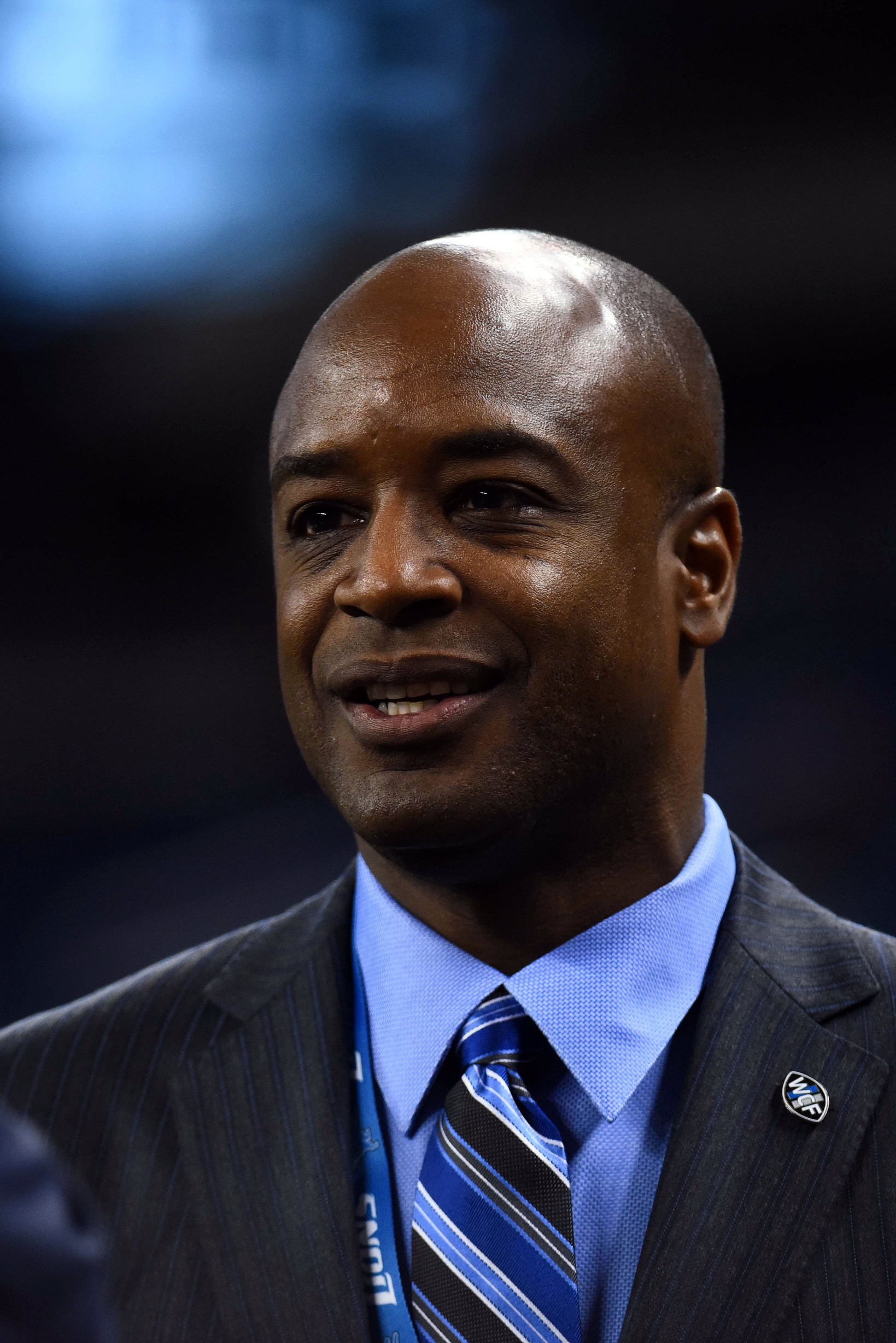 White, 61, is a former Giants, Lions, and Bengals cornerback who retired in 1993. He has been in Pittsburgh since 2022, first as the director of pro scouting and now as a senior personnel executive.
White began his front office career as a scout in Detroit in 1997. He was promoted to director of player personnel in 2000 and vice president in 2009 with a brief stint as interim general manager in 2015. White was considered for the Lions’ full-time GM gig, but lost out to Bob Quinn. He then spent four years at Michigan State, primarily as the executive director of player personnel and recruiting.. He also interviewed for the Raiders’ GM vacancy last year, and additional success in Pittsburgh could keep him on the radar for future hiring cycles.
The Steelers also promoted Max Gruder from assistant director of player scouting to director of pro personnel. The former Pitt linebacker spent one training camp with the Falcons in 2012 before retiring as a player and joining the Dolphins as a scouting assistant the following year, per his LinkedIn. Gruder was promoted to pro scout in 2014 and remained in Miami until 2019, when he was hired as the Eagles’ assistant director of pro scouting. A promotion to director followed in 2022; two years later, he was poached by the Steelers.
Kelvin Fisher, another ex-player, has been promoted from senior scouting assistant to senior national scout. The former Jets and Cardinals fullback is in the middle of his second scouting stint in Pittsburgh. His first came from 2000 to 2013, during which time the Steelers made the playoffs eight times, appeared in three Super Bowls, and won two. Fisher then moved to Buffalo as the Bills’ director of college scouting and returned to Pittsburgh in 2018. Draft hits during his time with the Steelers include franchise legends like Troy Polamalu, Ben Roethlisberger, and Cameron Heyward, as well as more recent stars like Alex Highsmith, Joey Porter Jr., and Nick Herbig.
Finally, the Steelers landed on a formal title for January hire Tim Gribble, who will be the senior director of college personnel.
Browns GM Andrew Berry Not Ruling Out New Deshaun Watson Deal
Between the nature of his Cleveland tenure and the status of his contract, 2026 has long been viewed as Deshaun Watson‘s final Browns season. He would welcome a second contract with the team, though, and the door could be open to such an arrangement.
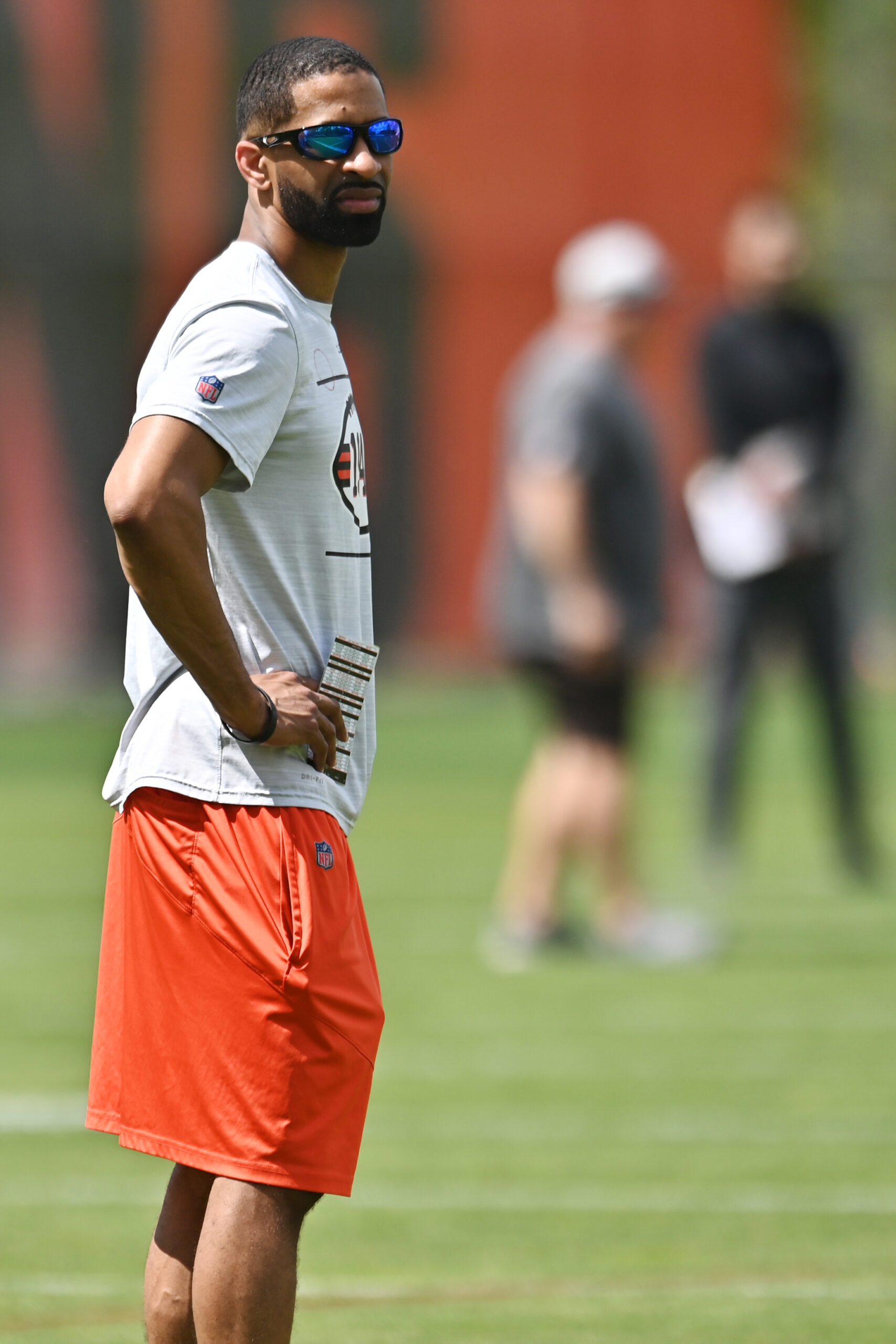 “I think everything is on the table,” general manager Andrew Berry during an appearance on 92.3 The Fan (video link). “I think it would be silly to go into a season saying, ‘Something absolutely can or cannot happen.’ And I think particularly at the quarterback position, we’ve seen it with guys whether it’s Sam Darnold, or Daniel Jones, or Geno Smith, even Baker [Mayfield] after he left us and Carolina.
“So I think you have to be open-minded and flexible. But I wouldn’t rule out anything. We’re looking for guys who can perform and who can lead.”
Watson, 30, has one year remaining on the fully guaranteed, $230MM contract he signed upon arrival following the blockbuster trade which sent him to Cleveland. That swap saw the Browns part with three first-round picks in addition to the team’s massive financial commitment. Due to the suspension which opened his Cleveland tenure and injuries including two Achilles tears, however, Watson has totaled only 19 starts over the past four years.
The three-time Pro Bowler has not been able to regain his previous form when on the field during that span. Many have therefore anticipated a post-June 1 release taking place next spring, something which would allow the Browns to spread out a hefty dead cap charge across two seasons. An alternative to that plan would of course be a new contract being signed altogether.
The performance of Shedeur Sanders through training camp and beyond in 2026 will be critical in shaping the decision from Berry and Co. The 2024 fifth-rounder has been taking part in a competition with Watson for the QB1 gig. Head coach Todd Monken initially wanted to have clarity atop the depth chart by the end of this week’s minicamp, but the competition will continue through the summer. Sanders doing enough to earn a lengthy first-team opportunity could result in Cleveland parting ways with Watson next year.
On the other hand, Watson winning and retaining the starting spot in 2026 could pave the way for at least the exploration of a new Browns deal. A agreement on that front would no doubt cover a shorter term than his current pact and come at a lower cost, but it would give Cleveland the opportunity to generate value (up to a certain extent) from an investment which has certainly not gone according to plan.
NFL Mailbag: Rams, Seahawks, Crosby, 49ers, Mahomes, Jackson, Nabers
This week's edition of the PFR mailbag addresses questions regarding the top three NFC West teams from 2025. Patrick Mahomes' new Chiefs deal, its implications, and more, are also covered.
James asks:
If [Aaron] Donald comes back, do you see the Rams as the clear favorite? Or are the Seahawks somehow being slept on?
It will certainly be interesting to see if Donald really does come back in 2026, won’t it? I don’t know if he’s in position to play a full season after two years out of the game, but signing in time for the playoffs would (well, should) make that defensive front even scarier to go up against.

Jonathon Cooper Arrested; Broncos OLB Facing Four New Charges
10:07pm: The newer arrest warrant reveals Cooper confirming one of his girlfriend’s allegations, indicating (h/t Klis) he “grabbed her neck” while trying to retrieve his phone. In an incident last week that saw both Cooper and his girlfriend receive charges, Cooper said “I really wasn’t squeezing; it was more to keep her at bay while I’m trying to rip (his) cellphone away from her.” He did say he was “aggressive” in the effort to do so.
The judge in this case increased a protective order against Cooper. He and his girlfriend must stay 50 feet away from each other, with the exception of a church both attend, Klis adds. Cooper will be forced to sign a protection order to facilitate his release from jail, according to the Denver Post’s Luca Evans, who adds the judge ordered “no new offenses while on bond.” The sixth-year outside linebacker will need prior court approval to leave Colorado. A motions hearing in this case is set for July 14, Klis adds.
Responding to the new charges, Cooper’s attorney said (via Klis) he was “surprised by the DA’s decision to upcharge Mr. Cooper. The police had a full, thorough and complete investigation and determined there was not probable cause for these new charges. Notwithstanding that fact, without further investigation the DA increased the charges even though the police didn’t find supporting evidence.”
9:01am: Jonathon Cooper has been arrested once more. The Broncos edge rusher is now back in Douglas County jail, as detailed by 9News’ Mike Klis.
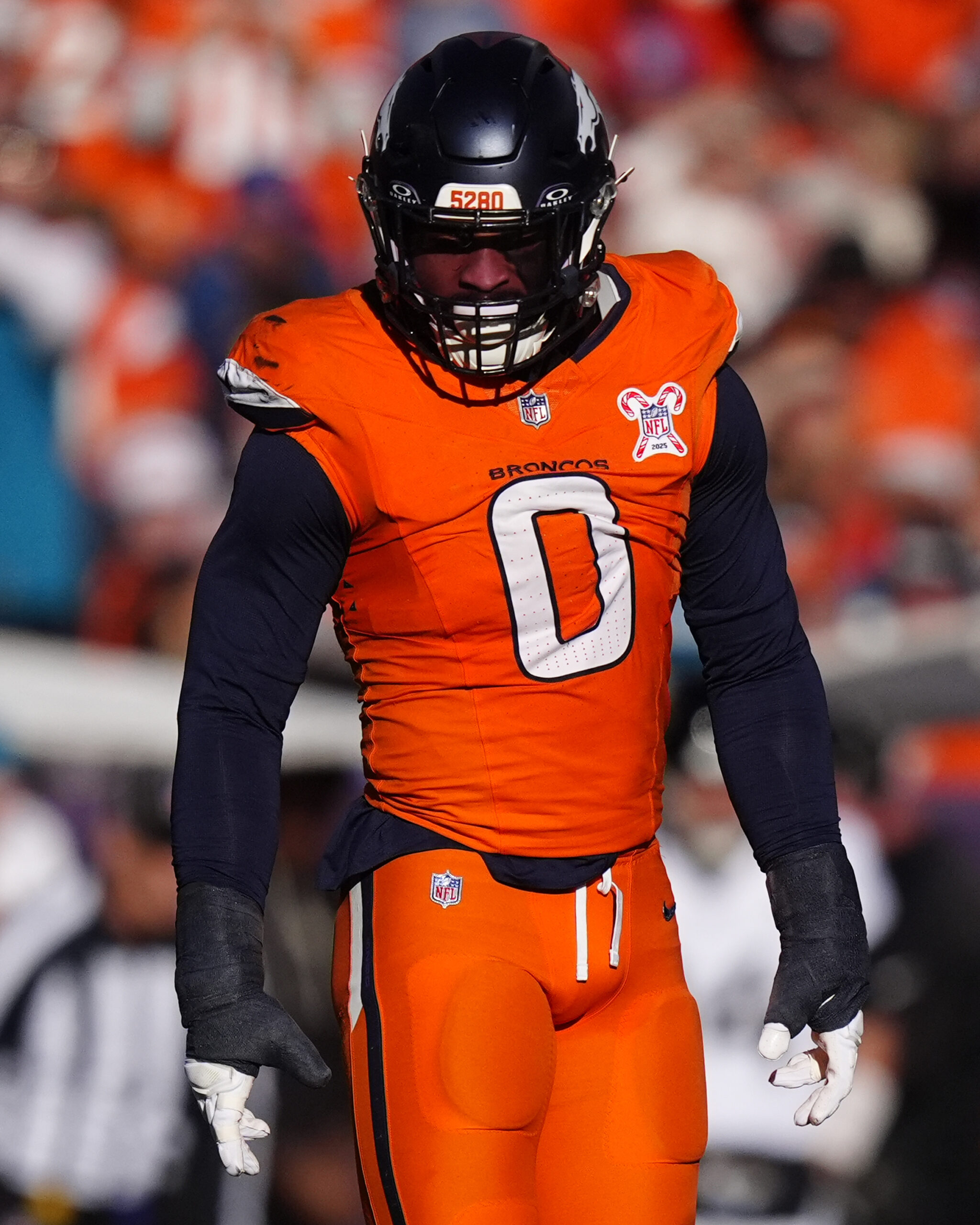 Cooper was arrested and then booked at 10:07pm Thursday night. Per an earlier 9News report, court documents showed an additional two charges being laid in this case: second-degree assault by strangulation along with third-degree assault – knowingly or recklessly causing bodily injury. As Klis notes, however, Cooper has now also been charged with harassment and with violating a protective order which was issued in the aftermath of his initial arrest. He is due to appear in court today.
“We are disappointed to learn of Jonathon Cooper’s arrest on Thursday and continue to review this matter,” a statement from the Broncos reads (h/t Klis).
An alleged incident involving Cooper and his girlfriend on June 4 resulted in both parties being arrested and facing misdemeanor domestic violence and criminal mischief charges. The second-degree assault charge Cooper now faces is a felony. According to Klis, the officers who arrived on scene decided “there was no probable cause for assault charges” based on the conflicting statements which were given and a lack of physical evidence.
The new charges come after Cooper’s girlfriend gave an account which recalled the confrontation over Cooper’s phone and subsequent events. She alleges Cooper “grabbed [her] by her neck with one hand and lifted her feet off the ground and up against the wall” and kept her there for approximately one minute. It was at that point, per her statement, that Cooper grabbed his phone back. The girlfriend alleges Cooper then “proceeded to pick her up and throw her back on the ground approximately three times” while also punching a wall next to her face.
Last week’s affidavit did not indicate any Cooper physical assault, but the one released Friday does. An officer suggested the as-of-now-unnamed woman undergo an exam from a forensic nurse, according to the Denver Gazette’s Chris Tomasson, and the exam revealed a “serious injury as a result of the strangling, including hypoxia and a traumatic brain injury.”
These ugly details, at the very least, point to a six-game suspension being likely. That would seemingly the best-case scenario for the starting Denver OLB at this point, with his future in Denver and in the NFL potentially in doubt.
On Monday, Cooper entered a not guilty plea to the three charges he was facing at the time. The 28-year-old also took to Instagram to apologize for his actions. “This situation is not who I am,” the post reads in part. Cooper has been with the Broncos since 2021, and he has served as a full-time starter for the past three seasons. His extension runs through the 2028 campaign and includes $12MM in scheduled compensation for the coming year.
A trial is set to begin on July 22. As is standard practice with domestic violence cases, an investigation by the NFL in advance of any potential supplemental discipline under the personal conduct policy will wait until the legal proceedings have run their course.
Todd Bowles ‘Absolutely’ Wants Baker Mayfield To Be Buccaneers’ Long-Term QB
Set for his fourth season as the Buccaneers’ starting quarterback, Baker Mayfield is aiming for an extension. The veteran passer is signed for just one more season — on a team-friendly contract — and is attempting to apply pressure on the Bucs by indicating he will not continue contract discussions once training camp starts.
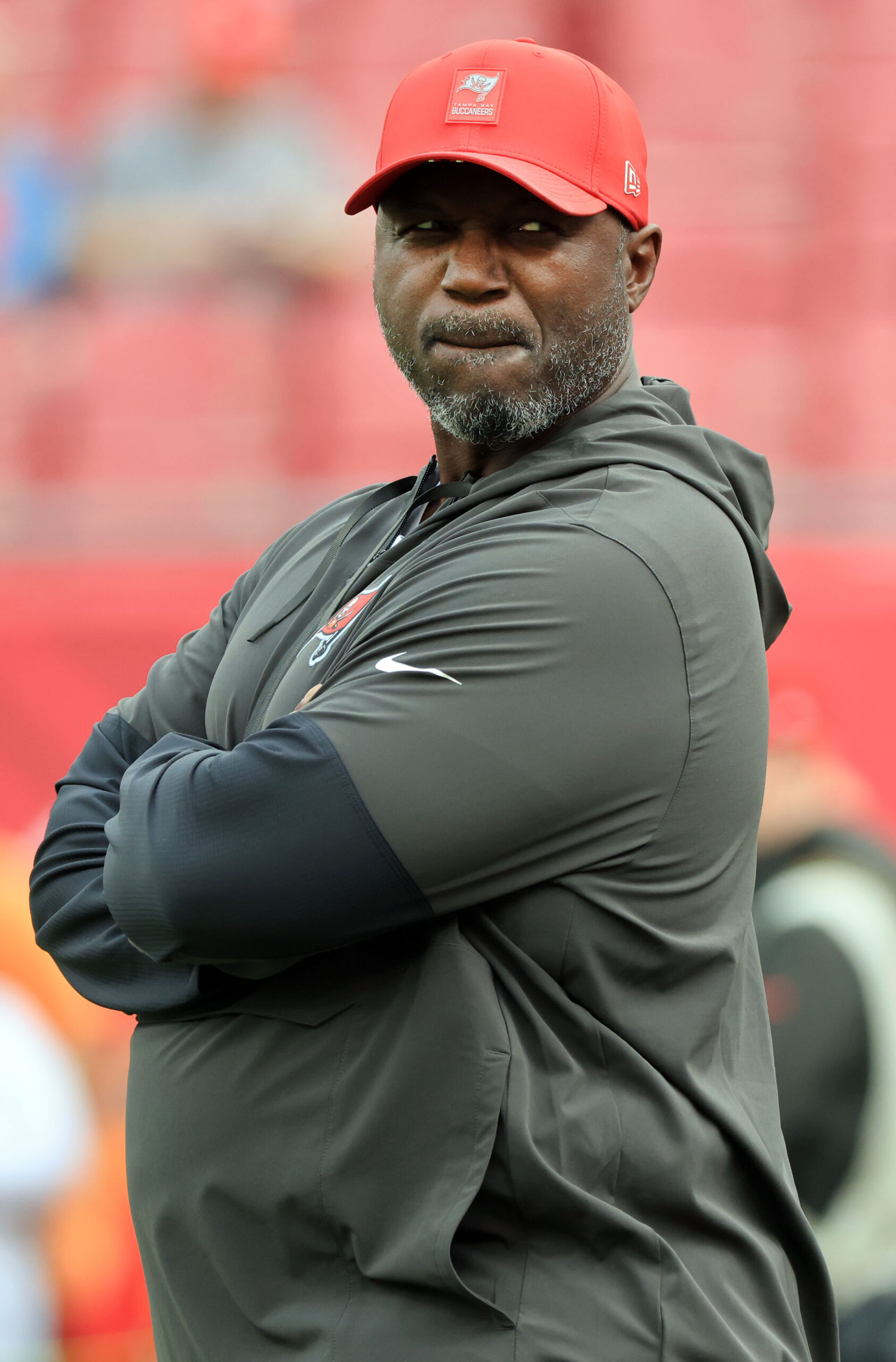
Mayfield is not expected to stage a holdout, but the ninth-year vet has made it clear he does not intend to conduct extension talks once he reports next month. Bucs GM Jason Licht has said he wants Mayfield to remain the team’s centerpiece player beyond 2026, and Todd Bowles doubled down by indicating (via ESPN.com’s Jenna Laine) he has “absolutely no question” about wanting the current QB around for the long haul.
 [RELATED: How Should Bucs Proceed With Mayfield?]
Licht’s view is probably more relevant to the team’s grand scheme than Bowles’, with the latter on the hot seat despite agreeing to an extension last year. The Bucs’ injury-accelerated tailspin last season led Bowles to fire offensive coordinator Josh Grizzard and bring in Zac Robinson, with Mayfield providing input that helped him reunite with his short-lived position coach (with the Rams). Robinson and Mayfield will play the lead roles in determining if Bowles is still calling the shots in 2027.
Mayfield has played out both his previous NFL contracts. The Browns traded him to the Panthers, and the teams agreed to split his fifth-year option; Mayfield accepted a pay cut to facilitate the move. Carolina waived Mayfield, leading to the short-term Los Angeles stay, and he caught on with Tampa Bay — on a one-year, $4MM deal — in 2023. After a bounce-back season with the Bucs, the former No. 1 overall pick did not re-sign until the eve of the 2024 legal tampering period.
The Bucs gave Mayfield a three-year, $100MM pact; that contract now resides at the bottom of the franchise-QB level. Although Tampa Bay showed its commitment to Mayfield by giving him a sizable guarantee increase for 2026 before the 2025 season, the QB market now has two $60MM-per-year players and 11 north of $50MM AAV. Patrick Mahomes‘ new Chiefs deal nearly doubles Mayfield’s per annum.
Sam Darnold undoubtedly used Mayfield’s AAV in his 2025 Seahawks negotiations, and Daniel Jones eclipsed it by a wide margin — ending up with a two-year, $88MM Colts deal following a transition tag — in March. Mayfield, 31, ranks 16th in quarterback AAV entering the season. Negotiating while still in his prime, Mayfield understandably wants to cash in on a midcareer resurgence.
The Bucs have shown a continued willingness to wait until free agency — or the winter period leading up to the market opening — to re-sign players rather than complete true extensions. Licht did not let Mayfield hit the market two years ago, but he was hours away from doing so. The veteran GM also re-signed Shaquil Barrett, Jamel Dean, Carlton Davis, Lavonte David (on multiple occasions) and Rob Gronkowski — among others — as free agents. Ryan Jensen (2022) preceded Mayfield in re-signing with the Bucs hours before a free agency period, while Mike Evans re-signed shortly before the QB in 2024. The Bucs made an attempt to re-sign Evans as a free agent this year but saw him opt for a change, via a three-year 49ers deal.
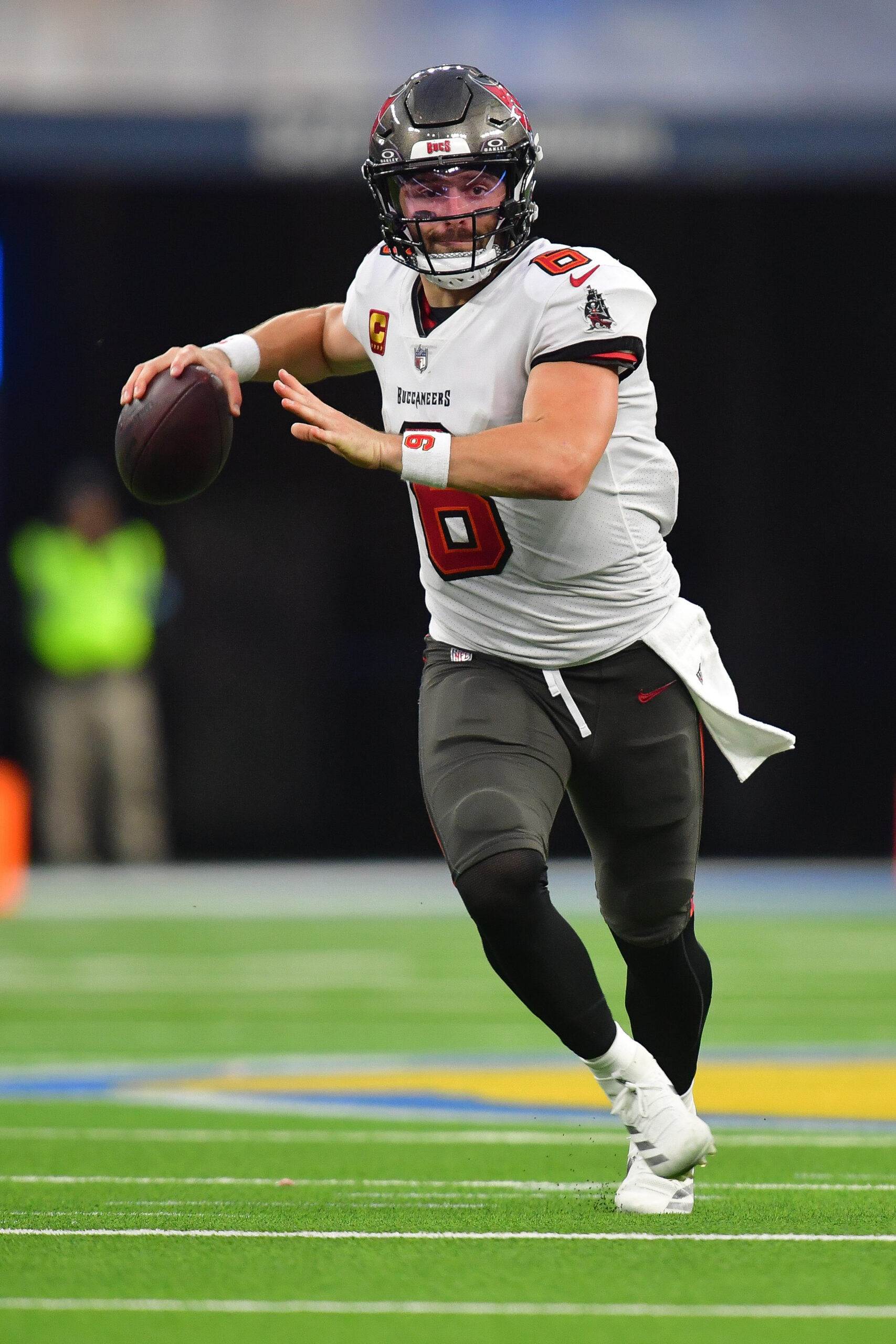 Tampa Bay did make exceptions to this riskier blueprint for Antoine Winfield Jr. and Tristan Wirfs. The team franchise-tagged Winfield before a 2024 extension and extended Wirfs in his ’24 contract year. Mayfield is pushing for this timeline, which the Bucs have reserved for high-priority players. The team also extended Tom Brady following Super Bowl LV, and his 2022 unretirement came when he was still contracted.
The Bucs would have the franchise tag available for Mayfield if no deal comes to pass by training camp, though the team has certainly taken its chances with many key free agents without unholstering the tag in the past. Tampa Bay does not have much of a history extending QBs, either. While the team gave Brady a one-year bump and re-signed Mayfield, its other long-term starters — Doug Williams, Vinny Testaverde, Trent Dilfer, Brad Johnson, Jameis Winston — did not agree on long-term second contracts, with no Bucs QB1 reaching Year 7 with the team (Dilfer’s rookie deal included a 1997 option that eventually pushed his stay to six seasons, but he left as a free agent in 2000).
Mayfield’s deadline reminds of Evans’ 2023 effort, though the decorated wideout set Week 1 of that season as his negotiating endpoint for that year (before re-signing in 2024). Tremendous interest would likely come Mayfield’s way as a free agent next year. If the QB sticks to his guns and does not negotiate during training camp, the Bucs have a pivotal stretch upcoming. If they do not reach a deal with Mayfield over the next six weeks, this will resemble a de facto franchise tag timeline in which negotiations pause until the following year.
Vikings To Name Andrew Healy, Trent Kirchner Assistant GMs
The Vikings announced a number of front office updates yesterday as new general manager Nolan Teasley began to shape the group around him. In some of those updates, Minnesota parted ways with quite a few personnel staffers, chief among them being former assistant general manager Demitrius Washington. According to Tom Pelissero of NFL Network, the team is expected to name his replacement(s) soon.
Per Pelissero, Andrew Healy and Trent Kirchner are expected to be named assistant general managers sometime over the next few days. Pelissero’s NFL Network colleague Ian Rapoport added that Healy “will serve as the team’s secondary football executive,” and Kirchner, who “is widely regarded as one of the NFL’s top talent evaluators,” will be another “top lieutenant” for Teasley. Additionally, Ryan Grigson — who also served as an assistant GM next to Washington under former GM Kwesi Adofo-Mensah — will be retained in Minnesota but will serve in a new capacity.
Healy’s entire NFL career has come in Cleveland, where he started as a senior strategist, player personnel in 2016 before getting promoted to vice president, strategy three years later. Before finding his way to the NFL, Healy spent quite a bit of time in academia. After earning Bachelors in Applied Mathematics and Political Science at Yale, Healy spent six years earning his PhD in Economics at MIT. Following his time as a student, Healy worked six years as an Assistant Professor of Economics at Loyola Marymount University and held an Associate Professor of Economics position for four more years before being named Professor of Economics. He held that role for a year before joining the Browns.
Kirchner is following Teasley in the move from Seattle to Minneapolis. Kirchner started his tenure with the Seahawks before Teasley did. A Minnesota-native, Kirchner first found his way to the NFL as an intern for the Seahawks in 2000. After a season as college scouting coordinator for Washington, Kirchner spent eight seasons as a pro scout for the Panthers before returning to Seattle in 2010 as assistant director of player personnel. He earned a series of promotions in his time with the Seahawks, starting with an elevation to pro personnel director in 2013. He was named co-director of player personnel in 2015 then vice president of player personnel in 2019. After last year, Kirchner has now helped build two Super Bowl-winning rosters after winning his first ring in Carolina.
After a short playing career as an offensive tackle, Grigson tried his hand at coaching before turning to scouting in 1998. His first NFL role came the next year as a national scout with the Rams. Grigson joined the Eagles in 2004 and worked his way up the ladder in Philadelphia until being named general manager of the Colts in 2012. In between his final year as GM in 2016 and his first year with the Vikings in 2022, Grigson worked in the same front office as Healy in Cleveland in 2017 then again from 2020-21, working the two vacant years between Browns stints as a senior football consultant in Seattle with Teasley and Kirchner. Grigson won’t retain his title, but with experience working with staffers across the top of the personnel department, he should fair well under new leadership.
NFL Staff Updates: Bills, Cowboys, Chiefs
The Bills announced four promotions in their scouting department last week. Alonzo Dotson was elevated from college scout to assistant director of college scouting, Tyler Pratt was promoted from southeast area scout to national scout, former scouting assistant Kellyn Gerenstein was named the team’s new BLESTO scout, and Gardner Temkin filled Gerenstein’s vacated scouting assistant role.
Dotson joined the team in 2022 as a college scout and worked his way up after four years. Pratt arrived in Buffalo in 2016, working internships with broadcasting and player personnel/football operations before being named player personnel coordinator in 2018. He was promoted to west coast scout after three years and worked the southeast area for the past four years. After recruiting roles at Ohio State and Boston College and a scouting internship with the 49ers, Gerenstein landed in Buffalo as a scouting assistant in 2024. Temkin has been working a scouting internship over the past year.
Here are a few other staff updates from around the NFL:
- The Cowboys have announced a few promotions in their analytics department over the last couple weeks. ESPN’s Seth Walder pointed out today that, in an flyer advertising the Black Sports Business Symposium, Cowboys director of strategic football operations John Park revealed that his new title with the team is Vice President, Football Strategy & Operations. Neil Stratton of SucceedinFootball.com reports that Piper Hampsch has been elevated from senior strategic football fellow to strategic football analyst, and Walder followed that report up a few days later to report that fellow strategic football fellow Shane Hauck had been promoted to data scientist.
- In coaching, a little over a month after it was announced that Chiefs cornerbacks coach David Merritt‘s domestic battery case had been dismissed, Mike Garafolo of NFL Network reports that Merritt will face no punishment from the league. The NFL concluded its investigation, per Garafolo, and “found insufficient evidence of a violation of the personal conduct policy.”
C Frank Ragnow Staying Retired After Failed Comeback
A little over a year ago, Lions center Frank Ragnow made one of the hardest decisions an NFL player can make, opting to hang up his cleats before the age of 30 for the sake of his health. When a rash of injuries spread across Detroit’s offensive line midway through the season, the then-29-year-old tried — and failed — to make a comeback. According to Dave Birkett of the Detroit Free Press, another comeback attempt isn’t likely to occur.
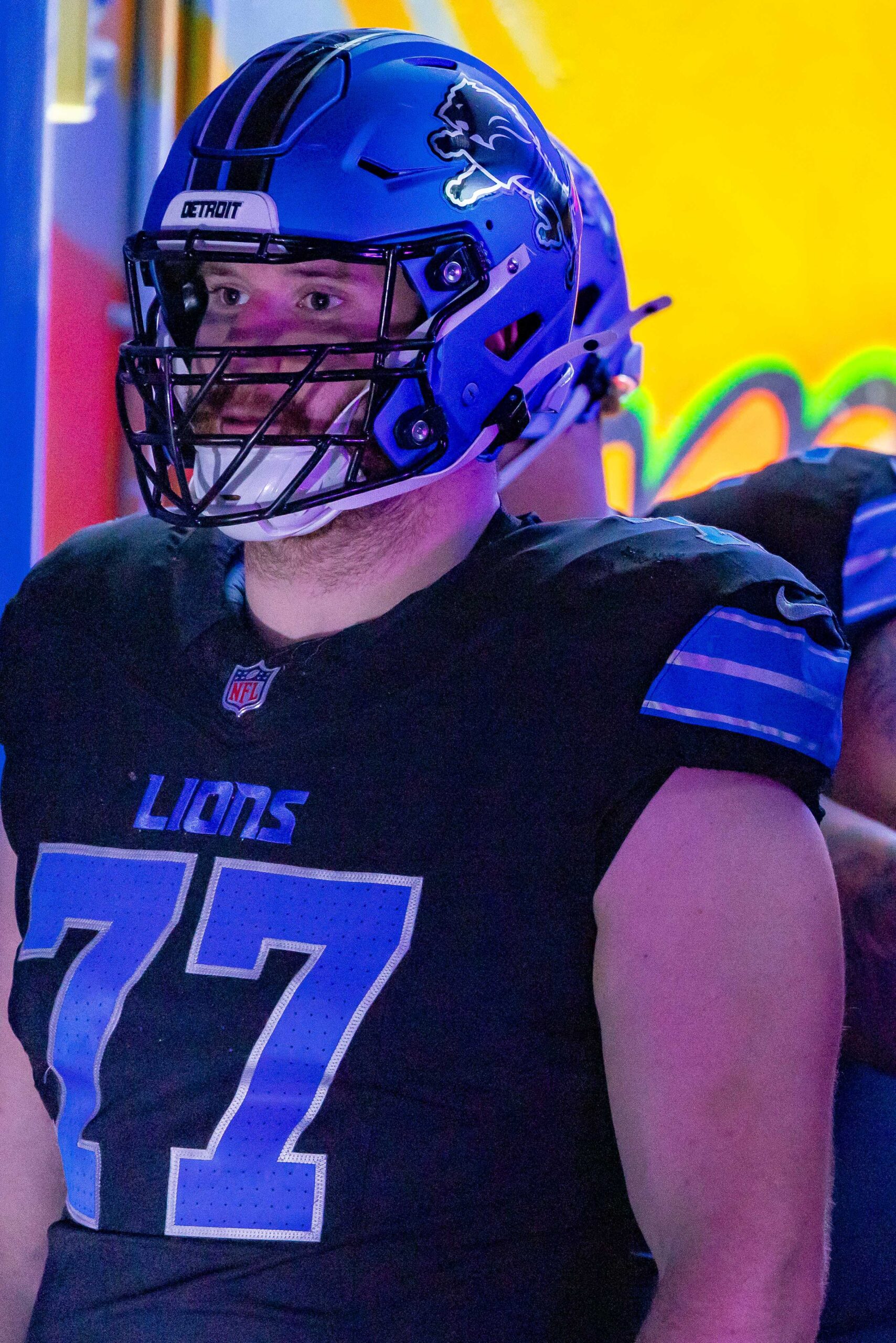 Following an injury that had led to Ragnow missing all but four games in 2021, the Arkansas-product rebounded to play at least 15 games in each of the next three seasons, which delivered his second, third, and fourth Pro Bowl nods and his second and third second-team All-American campaigns.Still, in his final season with the Lions, Ragnow played through a pectoral injury that underlined the health struggles that he had been dealing with.
After missing last year’s Organized Team Activities as he mulled over the decision of his future, Ragnow announced that he was “officially retiring,” claiming that, even though he tried to convince himself that he felt good and still had something left in the tank, he just didn’t. When his successor, Graham Glasgow, became the latest of several starters on the team’s offensive line last year to go down with an injury, Ragnow proved just how hard his retirement decision had been as he attempted to unretire to help his team.
In the end, a Grade 3 hamstring sprain found in Ragnow’s physical prevented him from returning. As the season was coming to an end, Lions quarterback Jared Goff was asked about his former center’s chances of taking another stab at coming back. Goff told the media that he didn’t think it was “in the cards” as Ragnow’s “interest level” just wasn’t there anymore. Per Birkett, Ragnow claimed to feel guilty about his decision to retire, but after the failed comeback, he has “closed the door on a possible return.”
“To shoot it to you straight,” he began to reporters, “I was trying to will myself to play. I was. And my body was telling me otherwise, and I was just in, like, paralysis, if you will. I did not plan on retiring in the middle of the summer, believe it or not. It was like I was trying to get like, ‘You can do it for the guys, for the fans, it’s who you are,’ but it’s just, like, I was uncomfortable.”
Ragnow’s guilt stemmed partially from the fact that he tried to “avoid games” early into his retirement as he tried to distract himself. When the Lions got off to a rough start for the year and injuries and inconsistency along the offensive line led to Goff getting sacked a career-high number of times, he blamed himself and the butterfly effects from his absence.
“I felt guilt,” Ragnow said. “Like Jared’s getting hit. That’s my guy. Those are my guys, and they’re struggling. And then I made a bonehead decision and tried to get ready to play and got hurt and it’s just, like, that was tough. That was really tough. But, you know, it all — everything happens for a reason, and I am where I am now, and I’m in a great place.”
Early Guarantee Dates, Record-Setting Four-Year Payout Highlight Patrick Mahomes’ Chiefs Extension
Patrick Mahomes is rehabbing ACL and LCL tears, but Week 1 remains the superstar quarterback’s goal. The NFL schedule — which features Chiefs primetime games in Weeks 1, 2 and 6 — certainly points to an expectation Kansas City will have its top player available to open the season. For the long term, the Chiefs are expressing tremendous confidence in Mahomes as well.
Already having the all-time great signed through 2031 — via the 10-year extension reached in 2020 — the Chiefs added two seasons to the deal and signed off on a record AAV. Mahomes agreed to an eight-year, $504.75MM extension Wednesday, tying him to the Chiefs through 2033. This is the NFL’s first $500MM player contract, and this one looks better for the quarterback than his $450MM pact from 2020 did.
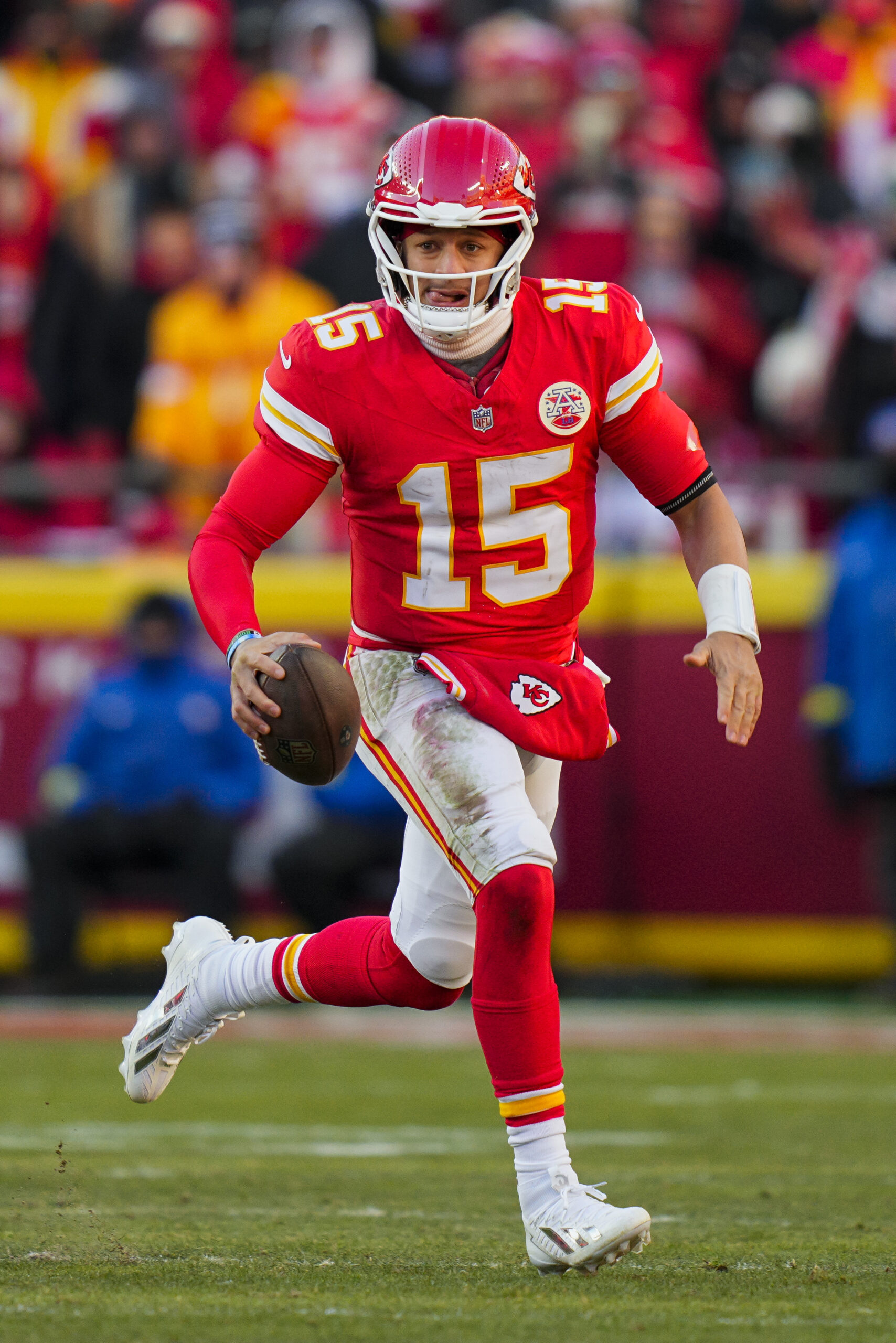 With Mahomes’ previous deal expiring after the 2031 season, it may not be a coincidence the Chiefs tacked on the additional two years months after agreeing to move across the Kansas state line beginning in 2031. But the key points of this agreement will come in the 2020s, even if the team now has a selling point to prospective season-ticket holders well into the 2030s now.
Although initial reports indicated the deal included four fully guaranteed years, a deeper look into the contract reveals that to be a slight exaggeration. The deal does include two fully guaranteed years and a sizable chunk of Year 3 guaranteed at signing, according to Sports Illustrated’s Albert Breer, who adds the $63.1MM-AAV contract will bring a record $237.25MM over four years (Dak Prescott‘s $175.56MM three-year cash total bests Mahomes’ updated number — $174.75MM — according to Spotrac).
That entire four-year sum is guaranteed for injury. The $237.25MM brings an NFL record in total guarantees, surpassing Prescott’s $231MM number from 2024. Mahomes agreeing to add years to his historically long Chiefs deal will also help the AFC West franchise, which restructured his previous contract to create cap space on five occasions. It would not surprise to see that trend continue on the new through-2033 accord.
Restructures are almost certainly set to occur beginning next year. Mahomes is now tied to a $34.65MM cap number in 2026, according to OverTheCap, but will see his 2027 figure check in at $90.35MM. That number will be adjusted via a restructure, as it is an untenable cap hit at this point in time.
 Mahomes’ 2028 and ’29 cap figures are beyond $82MM, and his 2030 number checks in above $74MM. While more manageable — especially as the cap will keep rising — cap hits are in place from 2031-33 ($65.8MM, $68MM, $70MM), Mahomes returning to his previous form will likely lead to another revised agreement by that point.
Mahomes will see $35.5MM of his 2028 compensation lock in next week, per Breer, who adds the remaining $24.75MM will vest in 2028. March 2028 also brings a key date, as Mahomes will see his 2029 roster bonus ($30MM) vest a year early. The Chiefs used a rolling guarantee structure in lieu of a monster at-signing guarantee in 2020, and they triggered a new batch of guarantees in September 2023 — after a host of less accomplished QBs passed the two-time MVP on the market.
The remainder of the three-time Super Bowl MVP’s 2029 compensation ($32.5MM) will shift from an injury guarantee to a full guarantee in March of that year, Breer notes. Mahomes will see a $30MM 2030 roster bonus vest in March 2029 as well, with the remaining $33.75MM of his Year 5 compensation vesting in March 2030. The same rolling bonus structure is in place for 2031 and 2032, per Breer, with $30MM bonuses for those years respectively due in March 2030 and March 2031.
No year-out guarantee exists for the final year of the contract, which carries $70MM in cash — the most of any year in this accord — though all $70MM does become guaranteed in March 2033. Mahomes will be 37 then, and it would be presumptuous to assume he will still be attached to this contract by then. Things certainly change in the NFL, and with the Chiefs redoing the QB’s 10-year extension twice by 2026, it would stand to reason they will be prepared to make more adjustments to it as other passers — on much shorter contracts — bring market updates.
Although the term length favors the Chiefs, this contract is much more player-friendly than Mahomes’ July 2020 extension. Mahomes was riding more momentum when he inked that deal, as the Chiefs had won Super Bowl LIV in comeback fashion and were powered by an explosive offense. The team’s firepower has waned over the past three seasons, with Travis Kelce‘s decline and failures in the run game and at wide receiver limiting Mahomes, who has not closely approached the heights he reached over his first five seasons as a starter.
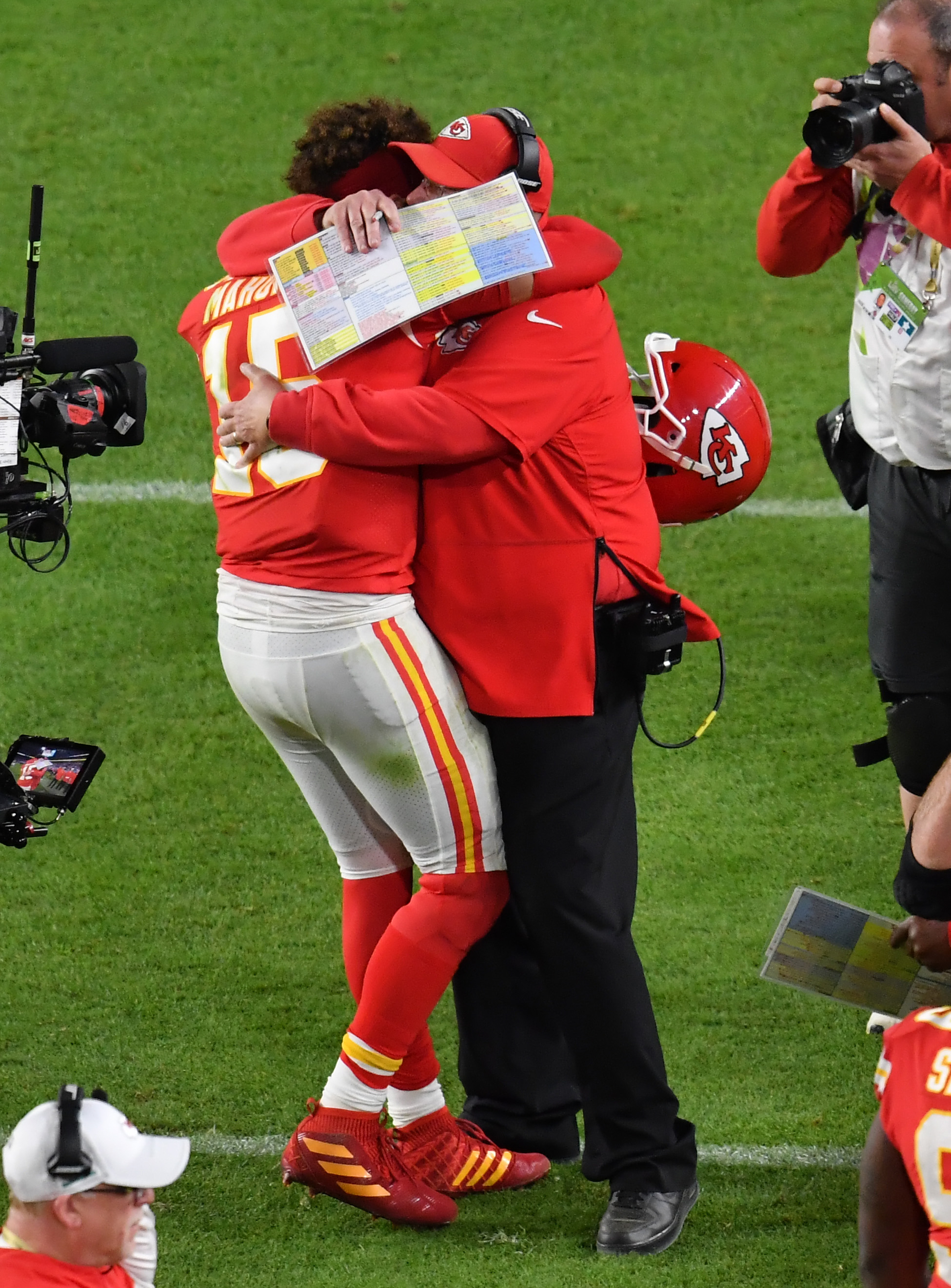 The Chiefs have ranked 15th, 15th and 21st in scoring offense over the past three seasons. They were 6-8 in games Mahomes started last year, seeing the close-game mojo that powered them over the previous three seasons fade. That adds intrigue to this Chiefs commitment, as the franchise is understandably placing full faith in the 30-year-old passer recovering from his knee setback and returning to top form.
It will be interesting to see when or if Mahomes regains his elusiveness, as his historic improvisational skills depend on that component of his game. Superior pocket passers exist in the NFL, and the Chiefs have not done well — especially with Rashee Rice proving unreliable — in equipping Mahomes with consistent skill-position talent. Kansas City’s left tackle position has also been in flux since Orlando Brown Jr.‘s 2023 departure. Josh Simmons is in place to potentially fix that, and the Chiefs have two interior O-linemen — Creed Humphrey, Trey Smith — signed long term as well.
The Chiefs did not have to adjust Mahomes’ deal now, making it rather interesting — especially as the quarterback ceiling had not moved since Prescott’s September 2024 extension. No one else had topped $60MM per year between that Cowboys megadeal and Mahomes’ new Chiefs pact.
Kansas City, which built a dynasty after trading up for Mahomes in 2017, will bet on its mobile passer aging well. And, as the market has spiked in the 2020s, it took a more player-friendly guarantee structure to complete the latest agreement.
Broncos Give Patrick Surtain $5MM Raise
JUNE 12: Surtain’s raise will come with a restructure. The Broncos will create cap space in the short term by converting all of Surtain’s remaining base salaries to option bonuses, according to OverTheCap. Denver created $4.1MM in cap space in 2026, $9.3MM in 2027, $8MM in 2028 and $9.59MM in 2029 via this restructure. As a result of the 2026 adjustment, OverTheCap lists the Broncos as having $29.79MM in cap space.
Of course, this will mean issues down the road. A $41.1MM void years bill now sits on the contract in 2031. The Broncos, however, can move to delay that with another extension. Should Surtain stay on a Hall of Fame trajectory, and see more corners surpass him on the market, it is not hard to see the Broncos coming in with a true extension. This pay raise would seemingly be a prelude to that.
JUNE 2: In September 2024, Broncos superstar Patrick Surtain inked a four-year, $96MM extension and became the NFL’s highest-paid cornerback by average annual value. That deal will not kick in until this year, but the Broncos are already giving Surtain a pay bump.
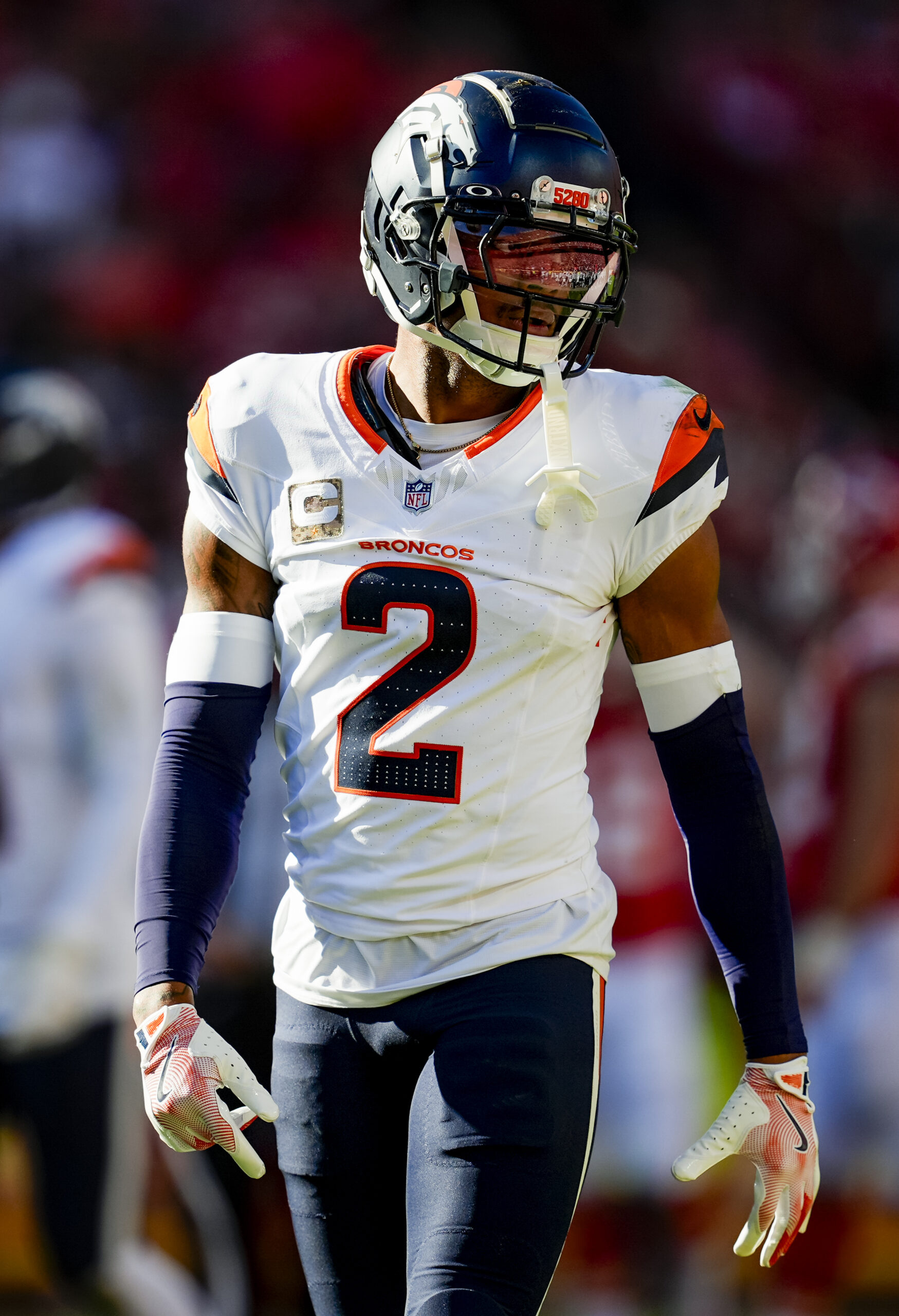
Denver will hand Surtain a $5MM raise for 2026, Ian Rapoport of NFL Network reports. He will have a chance to earn another $5MM with a Pro Bowl or All-Pro selection. Surtain will have to make the Pro Bowl on the original ballot, not as an alternate, according to Chris Tomasson of the Denver Gazette.
Surtain entered the day fourth at his position in guarantees, fifth in average annual value and sixth in total money. Fellow cornerbacks Trent McDuffie, Sauce Gardner,Jaycee Horn and Derek Stingley Jr. have all signed massive extensions over the past year-plus, leading to Surtain’s drop in the financial pecking order. Recognizing his importance to their team, the Broncos are upping Surtain’s pay in an act of good faith. His base salary will climb from $7.632MM to $12.632, per Tomasson.
Surtain entered the NFL in 2021 as the ninth overall pick, one selection after the Panthers made Horn the highest-drafted corner in the class. While Horn has enjoyed a successful career, Surtain has turned into one of the game’s elite players. The 6-foot-2, 202-pounder has made the Pro Bowl four times and earned three All-Pro selections (two first-team nods and a second-teamer). In his most impressive accomplishment, Surtain took home Defensive Player of the Year honors in 2024, during which he tied a career high with four interceptions and allowed a measly 58.9 passer rating on 62 targets.
Surtain missed three games with a pectoral tear and saw his INT total drop to one last year, but he held passers to an awful 54.1 completion percentage and 66.6 rating on 61 targets. It went down as yet another Pro Bowl/All-Pro season for Surtain, whose history suggests he will earn the extra $5MM in incentives that are now available to him in 2026.