
Release Candidate: Ravens RB Kenneth Dixon
Could a running back with a career average of 4.8 yards per carry really be on the roster bubble? That’s the case with Ravens tailback Kenneth Dixon, who finds himself on a crowded depth chart at the position. 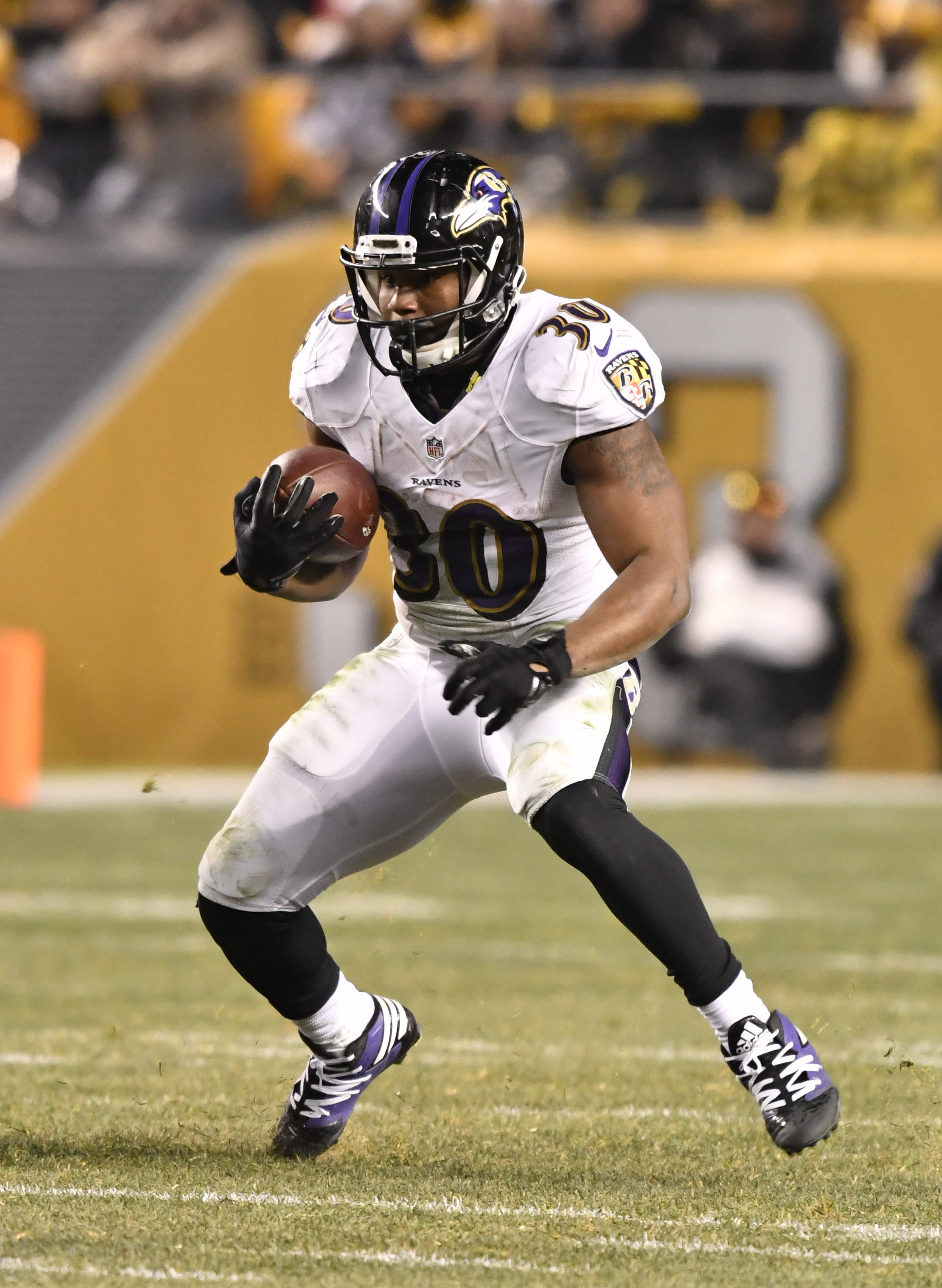
[RELATED: Ravens WR Marquise Brown May Not Be Ready For Training Camp]
Its been a rocky road for Dixon, who entered the league as a fourth-round pick in 2016. He made a splash early on, averaging 4.3 yards per carry as a rookie, but lost his 2017 season to a torn meniscus. Before the surgery, Dixon was slapped with a four-game suspension for PEDs, which already hurt his standing in the organization.
Last year, Dixon was primed to serve as the Ravens’ leading rusher, but a knee injury midway through the season opener sent him to IR. When he was brought back in December, he showed serious promise in a limited sample. Dixon ran for 289 yards off of 47 carries, giving him a 5.5 yards per tote average on the year.
In short bursts, Dixon has looked the part of a starter. Unfortunately, the 25-year-old hasn’t been able to find sustained success and he now finds himself behind free agent pickup Mark Ingram, Gus Edwards, and possibly fourth-round rookie Justice Hill.
If the Ravens carry only three running backs on the Week 1 roster, it seems unlikely that Dixon will make the cut. He has a shot at staying with the flock if they carry four, but team history suggests that they’ll roll with just a trio of RBs when the season begins.
A Dixon release would result in just $87K in dead money against $720K in cap savings.
Largest 2019 NFL Cap Hits By Position: Quarterbacks
The largest free agent contracts of 2019 featured some massive numbers, but, due to the way new contracts are structured, many of those big free agent contracts won’t rank among this year’s top cap hits. While guaranteed money is typically frontloaded on the first couple years of new agreements, teams can structure contracts to ensure that larger cap hits come later on in the life of the deal, and often those cap charges will be reduced or eliminated altogether when the guaranteed money runs out.
We’ll tackle other key positions later, but for now, here are the top 10 QB cap hits for 2019, with a few notes and observations accompanying the figures:
Quarterbacks:
- Matthew Stafford (Lions): $29.5MM
- Kirk Cousins (Vikings): $29MM
- Andrew Luck (Colts): $27.5MM
- Tom Brady (Patriots): $27MM
- Aaron Rodgers (Packers): $26.5MM
- Russell Wilson (Seahawks): $26.3MM
- Ben Roethlisberger (Steelers): $26.2MM
- Eli Manning (Giants): $23.2MM
- Cam Newton (Panthers): $23.2MM
- Philip Rivers (Chargers): $23MM
- Quarterbacks who recently signed big-money extensions, such as Carson Wentz, may find their way onto this list in future seasons, but for now, their cap numbers are relatively modest.
- Alex Smith‘s $20.4MM cap figure may be an issue for the Redskins, but the quarterback market has advanced to the point where his charge ranks only as the 15th highest at the position. In 2020, Smith’s 2020 base salary is fully guaranteed, meaning that the Redskins are on the hook for $16MM. He’s scheduled to carry a $21.4MM cap charge in that season and releasing him would result in a $32.2MM cap hit. The Redskins, realistically, can only escape Smith’s contract in 2021 when his release would result in a more palatable $10.8MM dead money hit.
- Other players notably absent from this list include Drew Brees ($22.7MM, 11th among QBs), Jameis Winston ($20.9MM, T-QB13), Marcus Mariota ($20.9MM, T-QB13), Jimmy Garoppolo ($19.35MM, T-QB16), and Matt Ryan ($15.8MM, QB19).
- Next year, several teams will start to feel the implications of big money QB deals. The cap hits for Roethlisberger and Ryan will jump to $33.5MM, tying them atop the chart for 2020. Meanwhile, Rodgers, Stafford, Cousins, and Wilson are all scheduled to carry cap hits of at least $31MM.
PFR’s NFL Glossary: Supplemental Draft
The supplemental draft allows NFL teams to select players who, for one reason or another, were barred from entering the regular draft in the spring. When a team selects a player in the supplemental draft, they forfeit the corresponding pick in the regular draft next year. For example, if a team selects a player in the sixth round of the supplemental draft this year, they will have to give up their 2020 sixth round selection. 
There were no players taken in the supplemental draft in 2016 or 2017, but the Giants snapped the cold streak when they selected Western Michigan cornerback Sam Beal in the third round of last year’s draft. Then, the sixth round, the Redskins tapped Virginia Tech cornerback Adonis Alexander.
In the past, teams have found gems in the supplemental draft. In 2011, the Raiders selected Ohio State quarterback and future standout NFL receiver Terrelle Pryor. In 2012, the Browns used a second round pick to take the talented and troubled Josh Gordon. Other supplemental draft alums include quarterback Bernie Kosar (Browns, 1985), wide receiver Cris Carter (Eagles, 1987), running back Bobby Humphrey (Broncos, 1989), wide receiver Rob Moore (Jets, 1990), nose tackle Jamal Williams (Chargers, 1998), and linebacker Ahmad Brooks (Bengals, 2006).
The date has not been set for this year’s supplemental draft, but it’s likely to take place in the second week of July. On Thursday, West Virginia wide receiver Marcus Simms became the first known entrant.
Note: This is a PFR Glossary entry. Our glossary posts explain specific rules relating to free agency, trades, or other aspects of the NFL’s Collective Bargaining Agreement.
Marcus Simms Enters Supplemental Draft
West Virginia wide receiver Marcus Simms has filed paperwork to enter the supplemental draft, Tony Pauline of DraftAnalyst.com tweets. Simms is expected to work out for teams in early July. 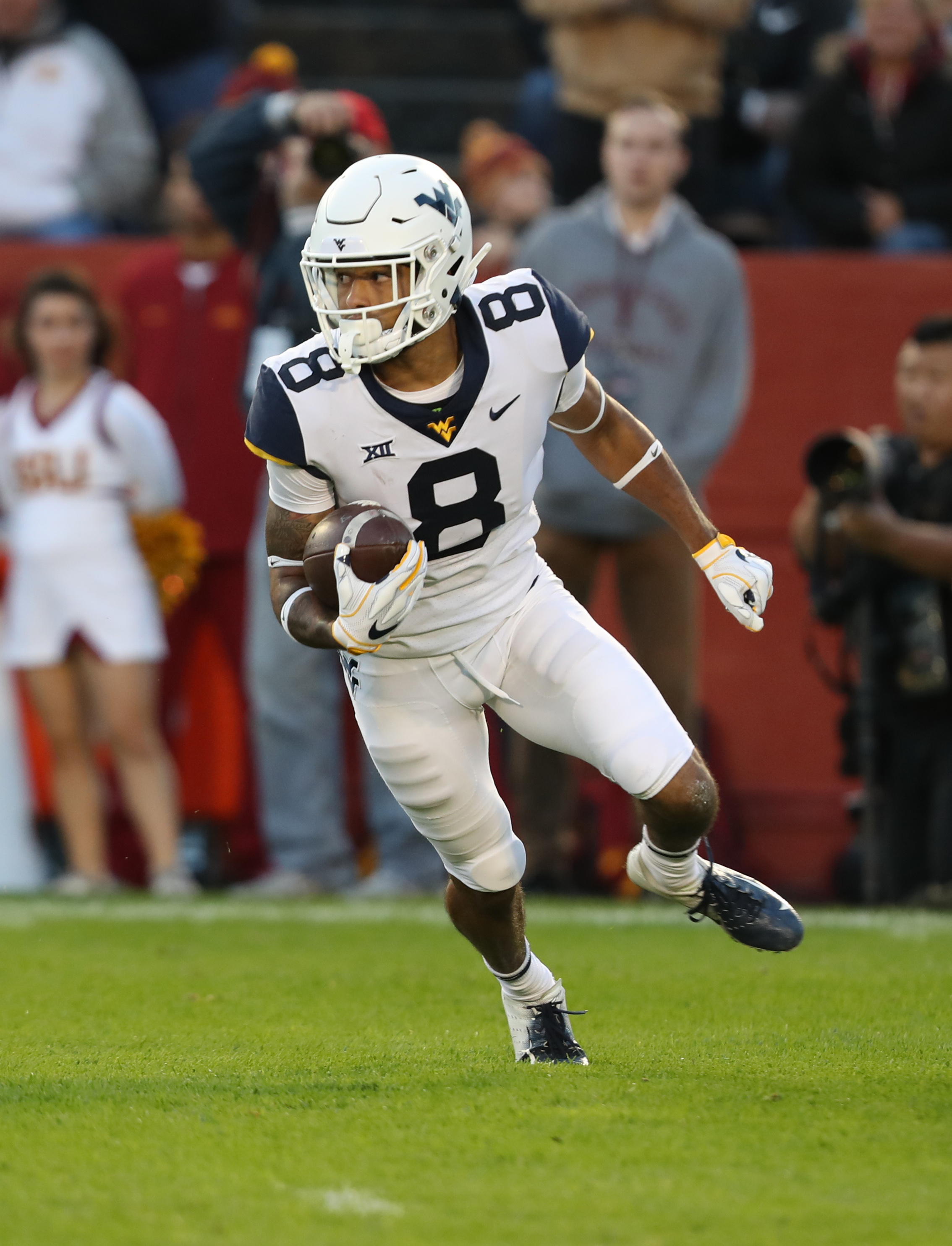
This spring, Simms entered his name into the NCAA transfer portal, signaling a desire to play for a different school. Instead, he’ll go pro with one year of college eligibility remaining.
Simms hauled in 87 career receptions for 1,457 yards and eight touchdowns with the Mountaineers, but fell out of favor under new head coach Neal Brown. He skipped most of the team’s spring practices due to a reported hamstring injury, but Brown later said that the receiver was dealing with a personal issue.
No date has been set for the 2019 NFL Supplemental Draft just yet, but it’s likely to take place in mid-July.
Extra Points: XFL, AAF, Saints
The new XFL is confident that it can succeed, in large part because of its willingness to take on players who are not yet eligible for the NFL Draft, as ESPN.com’s Kevin Seifert writes. Players who are forced to wait three years until after leaving high school could jump to Vince McMahon‘s football experiment 2.0 to jumpstart their professional career rather than play for free in college while risking injury.
XFL commissioner Oliver Luck estimates that his league will feature somewhere between five and 15 of these players in 2020. To establish a pipeline of young talent, he hopes to work in concert with the NCAA.
“The NCAA would have a pretty good argument,” Luck said, “to be able to say, ‘Hey, you don’t have to go to college to play professional football in the NFL.’ You could spend a year in college and then go to the XFL, and then in a couple of years you could be in the NFL that way.”
From a business perspective, it would be a major boon – the XFL could add players who already have a fan base at a fraction of what they’ll earn at the NFL level. In fact, establishing this pipeline could be the XFL’s only real path to success. Otherwise, the league will have to draw from the outer fringes of the football world to fill out its rosters, which could make it tough for the league to keep fan interest in the long run.
Here’s more from the world of football:
- Speaking of alternative football leagues, Seth Wickersham and Michael Rothstein of ESPN.com took a deep dive into the short-lived Alliance of American Football. The AAF crumbled in the midst of its inaugural season when new investor Tom Dundon decided that the league did not have a path to profitability. As Wickersham and Rothstein write in their must-read investigative piece, the ambitious spring league lacked a common vision among its key figures, resulting in a mess of damaged reputations, bankruptcy, and lawsuits.
- Free agent defensive tackle Tomasi Laulile, who was on the Saints‘ practice squad last season, has been suspended by the NFL for the first two games of the season, veteran NFL reporter Howard Balzer tweets. Laulile re-signed with the club on a reserve/future contract in January, but was waived on May 13.
Bears Wrap Draft Class
On Thursday, the Bears announced the signing of sixth-round cornerback Duke Shelley. With Shelley in the fold, the Bears have now wrapped up their entire 2019 NFL Draft class. 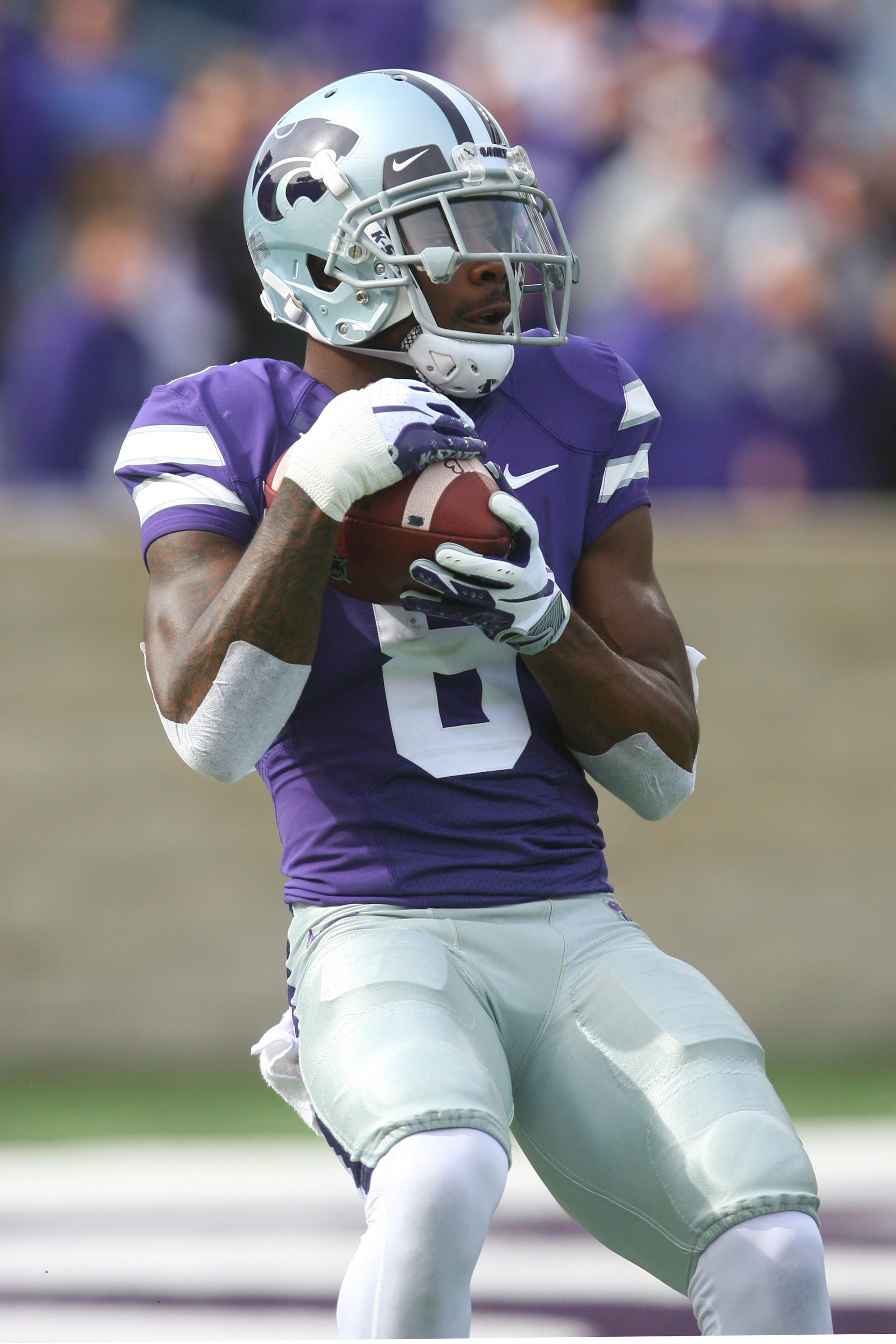
[RELATED: Champ Kelly To Stay With Bears]
Shelley, a 5’9″ Kansas State product, will compete for time as a slot corner and special teams player. He might not see a ton of defensive snaps in 2019, but he showed future promise for the position with three interceptions last year.
Here’s the full rundown of the Bears’ draft class, via PFR’s tracker:
- 3-73: David Montgomery, RB (Iowa State): Signed
- 4-126: Riley Ridley, WR (Georgia): Signed
- 6-205: Duke Shelley, CB (Kansas State): Signed
- 7-222: Kerrith Whyte Jr., RB (Florida Atlantic): Signed
- 7-238: Stephen Denmark, CB (Valdosta State): Signed
After Shelley’s signing, there are just 15 unsigned draft picks remaining in the NFL.
Lions Negotiating With Domata Peko
Free agent Domata Peko told TMZ Sports that he met with the Lions last week. The defensive tackle added that he “had a nice visit” in Detroit and that his agent is “trying to work some stuff out” for a contract. 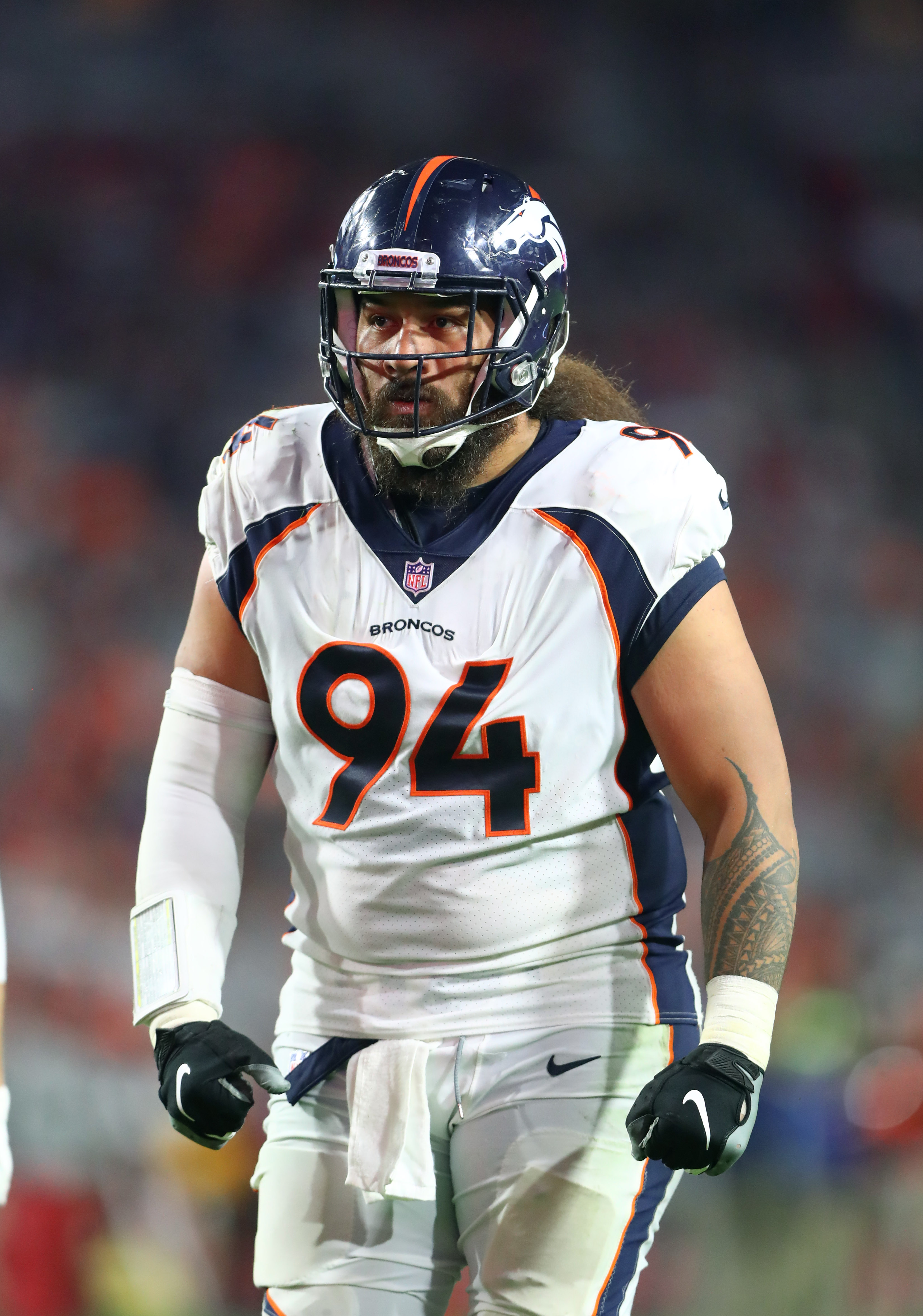
Peko also indicated that he would be interested in joining the Rams, though it’s not clear if that interest is being reciprocated.
“I would like to be with Aaron Donald, man,” Peko says … “Hell yeah! That would be dope.”
Peko spent the first eleven years of his career with the Bengals before joining the Broncos on a two-year, $7.5MM deal in 2017. Over the past two seasons, Peko has only missed two games, racking up 44 tackles (eight for loss) during that time frame. In 2018, Pro Football Focus ranked Peko as the No. 39 interior defender among 112 qualifiers.
Peko wouldn’t necessarily start for the Lions, but he could be a solid rotational piece for the team’s defensive front. He’d also give the team some extra firepower as Trey Flowers continues to rehab from shoulder surgery and Damon Harrison stays away from the club amidst his contract dispute.
Release Candidate: Tavon Austin
In 2013, the Rams were blown away by the blazing speed of Tavon Austin and used the No. 8 overall pick draft to secure him. In 2016, the Rams inked him a four-year, $42MM extension, making him the 12th highest-paid wide receiver in the NFL at the time. Today, Austin finds himself on the Cowboys’ roster bubble. 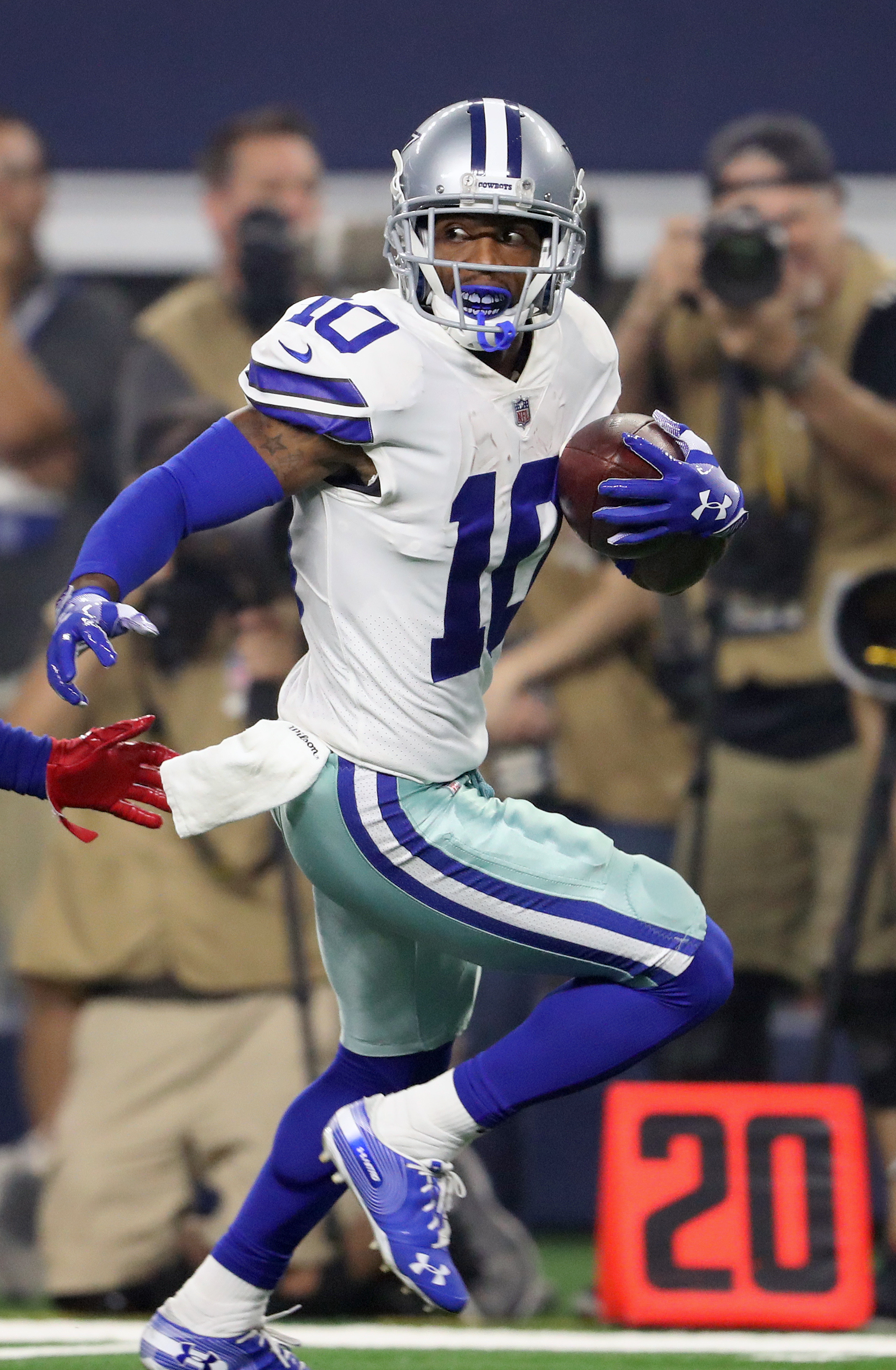
Austin still possesses game-changing speed, but injuries continue to hold him back. Last year, a groin pull limited him to just seven games in which he caught eight passes for 140 yards and two touchdowns, which more or less sums up his career to date – Austin put up a DeSean Jackson-type yards per catch average, but couldn’t stay on the field.
Austin also holds appeal for his ability to play out of the backfield and serve as a slippery returner, but both roles seem to have been filled in Dallas. The Cowboys tapped Memphis product Tony Pollard in the draft to play as the change-of-pace back behind star Ezekiel Elliott and return kicks. Meanwhile, newcomer Randall Cobb is slated to be the Cowboys’ main slot receiver.
Wide receivers Amari Cooper, Michael Gallup, and Cobb are locks for the roster and Allen Hurns isn’t far behind in the pecking order. That leaves one, or possibly two, WR spots on the 53-man roster, and Noah Brown and Jon’Vea Johnson both seem to have a leg up on Austin, who was limited in OTAs and minicamp.
The Cowboys re-upped Austin on a one-year deal in the spring, but the pact includes just $500K guaranteed. Unless Austin can quickly prove that he is healthy and ready to make an impact, he’ll likely be released in the coming weeks.
Packers Waive Michael Roberts
Its been a rough offseason for Michael Roberts. On Wednesday, the Packers waived the tight end due to a failed physical, according to Field Yates of ESPN.com (on Twitter). 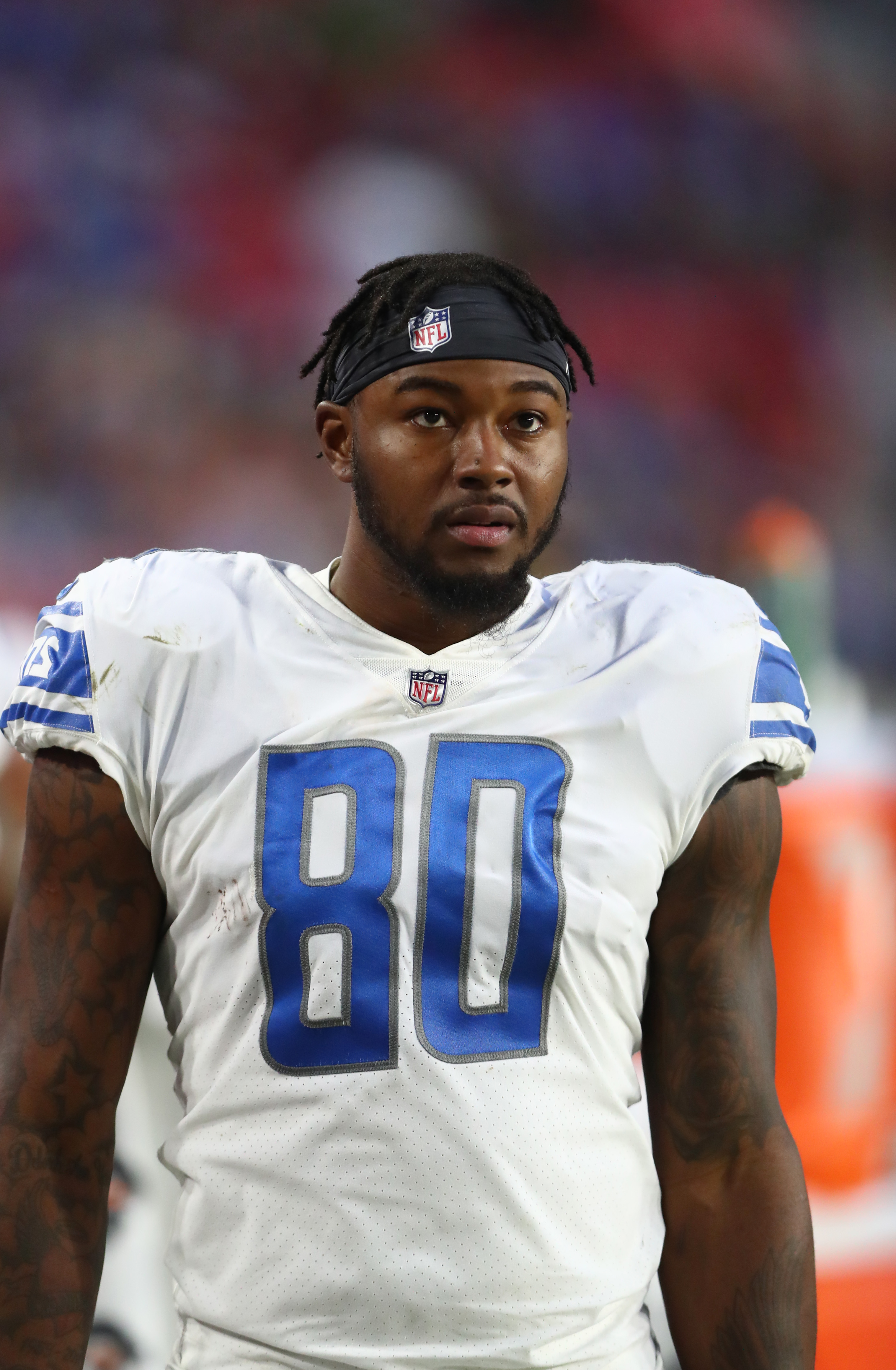
The Lions traded Roberts to the Patriots earlier this month for a conditional seventh-round pick. However, the deal was quickly nixed when he failed the Pats’ physical. Roberts reverted to the Lions’ roster, but the team immediately waived him.
The Packers, wanting to see what the 2017 fourth-round pick could offer, picked Roberts up. But, after failing his second physical in the span of a week, Roberts may have to take some time off before landing his next NFL opportunity. The exact reason for Roberts’ failed physical is not yet known, but it’s likely tied to the shoulder injury that sidelined him midway through 2018.
Roberts, 25, has 13 career receptions for 146 yards. The Toledo alum, who caught three touchdown passes last season despite playing in just eight games, still has his practice squad eligibility.
Champ Kelly To Stay With Bears
On Wednesday, Bears assistant director of player personnel Champ Kelly announced that he’ll be staying in Chicago. Kelly previously interviewed for the Jets’ GM job that ultimately went to Joe Douglas and there was talk that he still might join Gang Green’s front office.
[RELATED: Josh McCown Retires From NFL]
“I’m blessed and grateful to continue the pursuit of the Super Bowl trophy with the most storied franchise in NFL history,” Kelly tweeted.
Kelly joined the Bears in 2015 after spending eight years with the Broncos. He’ll return for a fifth season in Chicago while the Jets will move ahead with Phil Savage, Rex Hogan, and Chad Alexander as the new lieutenants under Douglas.