
Panthers Sign Second-Rounder Greg Little
The Panthers have signed second-round pick Greg Little, according to a team announcement. With that, the Panthers have just one unsigned draft pick remaining in first-round defensive end Brian Burns. 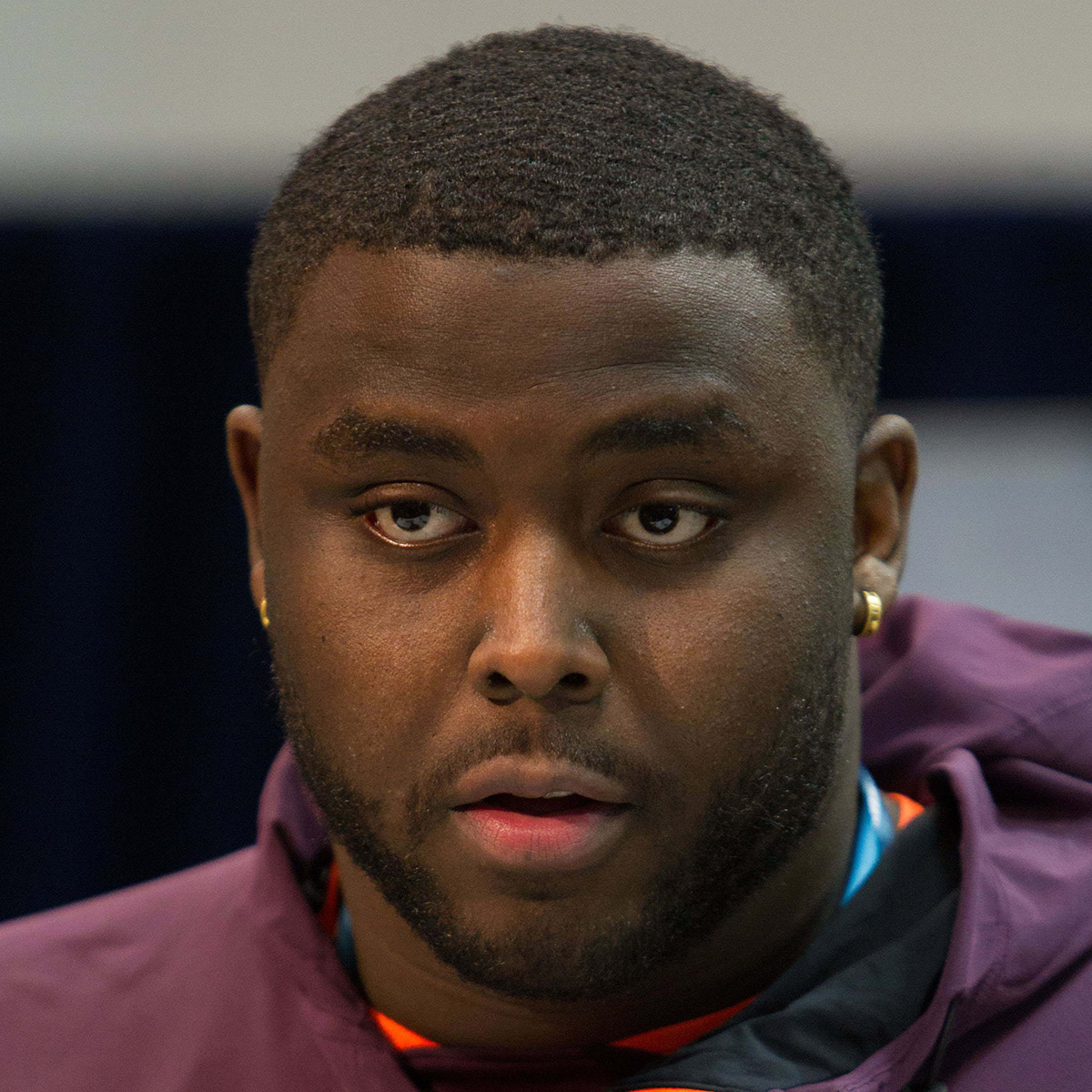
The Panthers traded up in the second round of the NFL Draft to land the Ole Miss product and he may be on track for the starting left tackle job in 2019. The Panthers used Taylor Moton on the blindside last season, but GM Marty Hurney‘s preference is to have Moton play right tackle. Daryl Williams is still in the mix for a spot on the right side of the line, but the club appears prepared to pencil in Little as its starting LT.
The 6’5″, 310-pound lineman started in all 12 games last year at left tackle and was named a Second-Team All-American by multiple outlets. Thanks in large part to Little, Ole Miss had the best offense in the SEC and finished fifth in the nation in passing offense with 346.4 yards per game.
With prototypical size for the tackle position, Little could be one of the league’s most successful rookies this season.
Saints, Michael Thomas Far Apart On Deal
The Saints and Michael Thomas are far apart in contract talks and no extension is imminent, according to Jeff Duncan of NOLA.com (on Twitter). Still, the two sides remain motivated to get a deal done and hope to have one in place by the start of training camp. 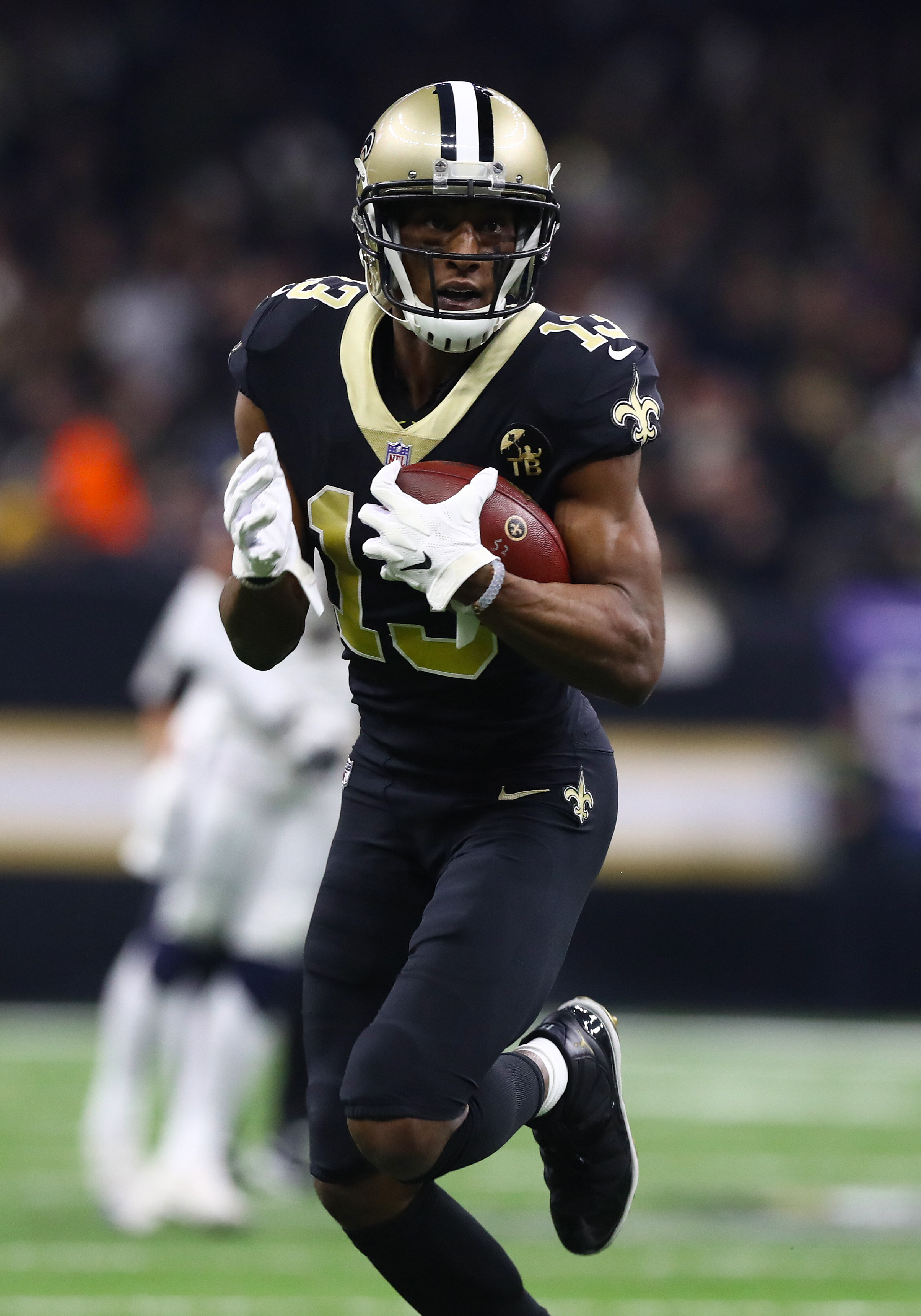
This news somewhat conflicts with what we heard earlier this week. The two sides seemed to be in a good place, especially since the Saints are reportedly comfortable with making Thomas the highest-paid wide receiver in the NFL.
For one reason or another, the two sides have hit a snag. It’s possible that the Saints have offered to make Thomas the highest-paid wideout by certain metrics such as average annual value, but his guarantees might not be on par with that of Odell Beckham Jr., who leads the way with $65MM in total guarantees and a whopping $41MM guaranteed at signing. Thomas, who leads the league in receptions (321) over the past three seasons and ranks fifth in yards (3,787) since the start of the ’16 campaign, is likely seeking to be the new leader across every major category.
Thomas recently signed with agent Andrew Kessler after cutting ties with David Mulugheta in November. a sign that he is not content with simply cracking the top five at the position. The Saints may want to get something done with Thomas sooner rather than later, because his asking price could inch up if the rival Falcons sign Julio Jones to a multi-year extension first.
Only 16 Draft Picks Remain Unsigned
Roughly 7% of this year’s draft picks have yet to sign their rookie contracts, as shown in PFR’s tracker. So far, 238 of this year’s 254 selections have inked their deals.
Here’s the complete breakdown, sorted by round:
First Round (6)
- 49ers, 1-2: Nick Bosa, DE (Ohio State)
- Jets, 1-3: Quinnen Williams, DT (Alabama)
- Buccaneers, 1-5: Devin White, LB (LSU)
- Giants, 1-6: Daniel Jones, QB (Duke)
- Panthers, 1-16: Brian Burns, DE (Florida State)
- Raiders, 1-24: Josh Jacobs, RB (Alabama)
Second Round (3)
- 49ers, 2-36: Deebo Samuel, WR (South Carolina)
- Broncos, 2-41: Dalton Risner, T (Kansas State)
- Broncos, 2-42: Drew Lock, QB (Missouri)
Third Round (5)
- Bengals, 3-72: Germaine Pratt, LB (North Carolina State)
- Jets, 3-92: Chuma Edoga, T (USC)
- Ravens, 3-93: Miles Boykin, WR (Notre Dame)
- Buccaneers, 3-94: Jamel Dean, CB (Auburn)
- Giants, 3-95: Oshane Ximines, LB (Old Dominion)
Sixth Round (1)
- Bears, 6-205: Duke Shelley, CB (Kansas State)
Seventh Round (1)
- Vikings, 7-250: Austin Cutting, LS (Air Force)
Unsurprisingly, the first round (6) and third round (5) still lead the way in stragglers. First-round picks tend to have the most leverage, which means agents will often haggle on issues such as offset language. Third-round negotiations also tend to drag since there is wiggle room when it comes to their base salaries.
As an unsigned seventh-round pick, Cutting’s situation is an unusual one. The Air Force product has signed an “injury protection agreement” instead of his rookie contract, giving the academy time to render a final decision on whether he can play in 2019. Depending on how things shake out, Cutting may have to leave the team for two years to fulfill his service requirements.
PFR Social Media Feeds By Team
We’ve detailed how you can follow Pro Football Rumors on Facebook, Twitter, Google+, or using an RSS reader to ensure that you receive all of our updates, 365 days a year. If you prefer to only receive news about your favorite NFL team, PFR has you covered. Below are links to our Facebook, Twitter, and RSS pages and feeds for all 32 teams.
AFC East
- Bills: Facebook / Twitter / RSS
- Dolphins: Facebook / Twitter / RSS
- Jets: Facebook / Twitter / RSS
- Patriots: Facebook / Twitter / RSS
AFC North
- Bengals: Facebook / Twitter / RSS
- Browns: Facebook / Twitter / RSS
- Ravens: Facebook / Twitter / RSS
- Steelers: Facebook / Twitter / RSS
AFC South
- Colts: Facebook / Twitter / RSS
- Jaguars: Facebook / Twitter / RSS
- Texans: Facebook / Twitter / RSS
- Titans: Facebook / Twitter / RSS
AFC West
- Broncos: Facebook / Twitter / RSS
- Chargers: Facebook / Twitter / RSS
- Chiefs: Facebook / Twitter / RSS
- Raiders: Facebook / Twitter / RSS
NFC East
- Cowboys: Facebook / Twitter / RSS
- Eagles: Facebook / Twitter / RSS
- Giants: Facebook / Twitter / RSS
- Washington: Facebook / Twitter / RSS
NFC North
- Bears: Facebook / Twitter / RSS
- Lions: Facebook / Twitter / RSS
- Packers: Facebook / Twitter / RSS
- Vikings: Facebook / Twitter / RSS
NFC South
- Buccaneers: Facebook / Twitter / RSS
- Falcons: Facebook / Twitter / RSS
- Panthers: Facebook / Twitter / RSS
- Saints: Facebook / Twitter / RSS
NFC West
Raiders Sign Clelin Ferrell
The Raiders have signed No. 4 overall pick Clelin Ferrell, according to a team announcement. Per the terms of his slot, the Clemson product will receive a four-year deal worth $31.4MM with a $20.8MM signing bonus. And, as a first-round pick, the Raiders will hold a fifth-year team option to continue his contract through the 2023 season. 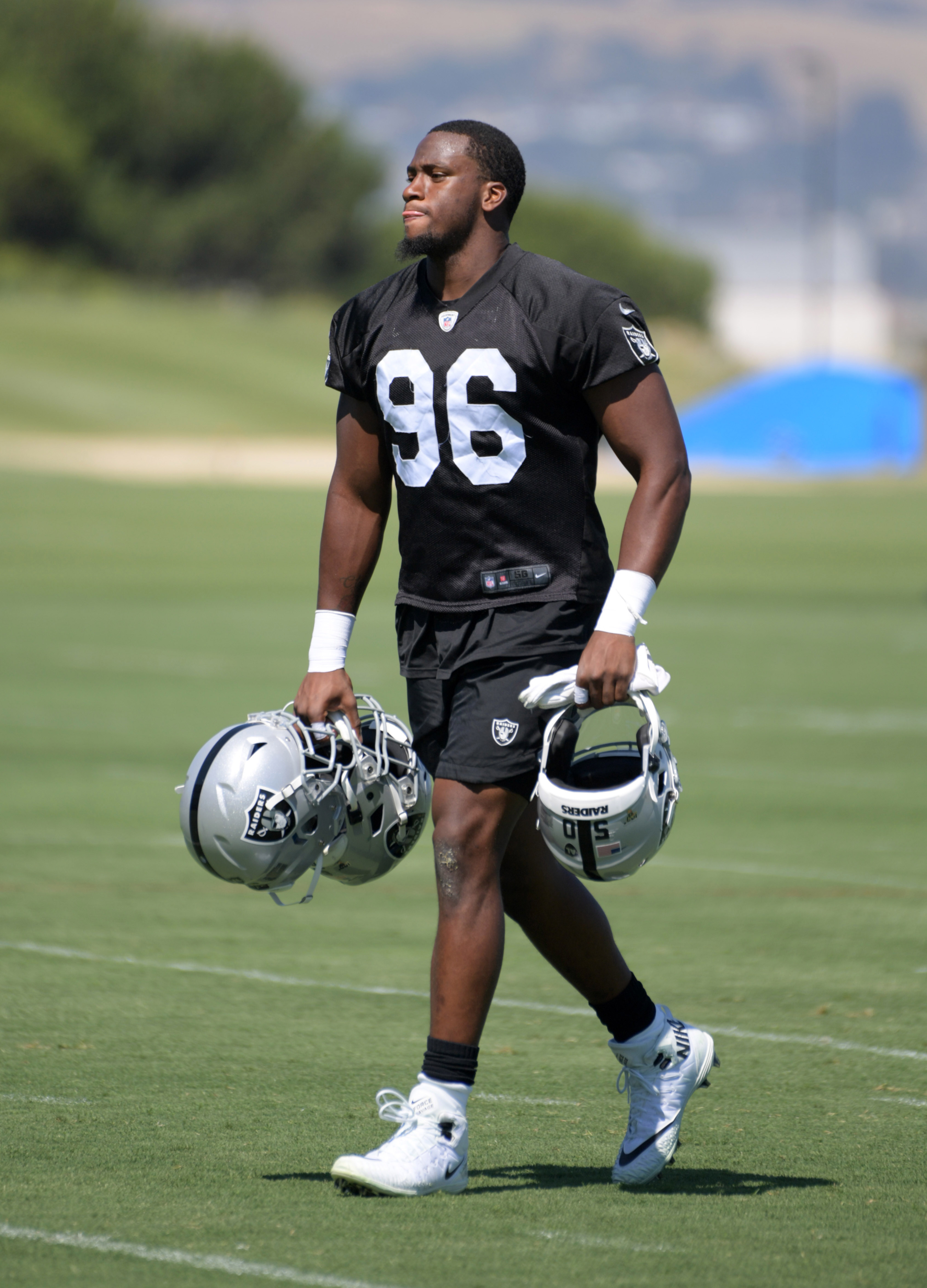
Ferrell’s selection was the first major shock of the draft. With the No. 4 overall pick, many expected the Raiders to tap Kentucky pass rusher Josh Allen, but as it turns out, the Raiders were never all that enamored with him. The Raiders badly wanted Ferrell, and despite his late first-round rank on most draft boards, the Raiders were not willing to wait and risk losing out on him.
Ferrell, lauded for his toughness and work ethic, finished out his Clemson stay with new career highs in tackles for a loss (20) and sacks (11.5). Questions remain about his agility and open-field tackling ability, but the Raiders still envision big things for the 6’4″, 264-pound athlete.
With Ferrell and five other draft picks signed, the Raiders still need to address fellow first-rounders Josh Jacobs and Johnathan Abram, as well as second-round cornerback Trayvon Mullen.
PFR’s NFL Glossary: Restructuring Contracts
When an NFL team finds itself short on cap flexibility and in need of some space, one of the most effective short-term fixes is to restructure a player’s long-term contract. While cutting or trading players can often be solutions as well, a contract restructure allows the team to keep its roster intact while also providing immediate cap relief.
The base salaries of NFL contracts typically aren’t guaranteed, but players can receive guaranteed money in the form of signing bonuses. While those bonuses are considered to be up-front payments, for cap purposes they can be spread out over up to five years of the contract. For instance, if a player were to sign a four-year deal with a $12MM signing bonus, that figure would prorate equally over the four years of the contract, amounting to a $3MM cap hit per year. If a team were to release that player one season into the deal, the club could avoid paying most of the player’s annual base salaries, but would still be on the hook for the remaining bonus money, along with the cap total for that money.
As such, the most common form of contract restructuring involves converting a portion of a player’s base salary for a given year into a new signing bonus. That bonus can then be spread out over several years, moving it away from the current season.
This is exactly the sort of agreement the Vikings and linebacker Eric Kendricks reached this offseason. In 2018, the Vikings signed Kendricks to a five-year, $50MM deal. This year, the Vikes moved some of that cash around to give themselves breathing room under the cap. Minnesota converted $2.15MM of Kendricks’ $4.15MM salary for 2019 into a salary bonus, which created about $1.72MM in space.
Restructuring a contract by converting base salary to a signing bonus creates immediate relief, but also creates problems in future years. A year from now, the Ravens may have to make another move with Kendricks, which will likely mean restructuring his deal once again, to reduce a larger cap number for 2019.
There are ways a player can remain under contract with a team while also helping to create or maintain both short-term and long-term cap flexibility. A player agreeing to take a pay cut, for instance, could allow a team to reduce his current cap number without necessarily moving that money further down the line in the contract. However, that generally happens in situations in which the team’s leverage outweighs the player’s leverage.
In most cases then, a restructured contract that sees base salary converted into bonus money is the simplest short-term fix for a club. The bill will come due eventually, but restructuring a deal allows a team to put off a more significant decision for at least one more year.
Note: This is a PFR Glossary entry. Our glossary posts explain specific rules relating to free agency, trades, or other aspects of the NFL’s Collective Bargaining Agreement. Information from Joel Corry and Over the Cap was used in the creation of this post.
NFC South Notes: Saints, Brees, Panthers, Smith
Many have wondered how much longer Saints quarterback Drew Brees will continue to play, but GM Mickey Loomis says he isn’t stressing over the 40-year-old quarterback’s future.
“You know, I don’t think we look at it that way anymore. I think we look at it in terms of, ‘Hey, this year,’ you know? And man, he had a great season last year, and we expect a great season this year,” Loomis said (via The Advocate). “And so for as long as he wants to play and can play, he’s going to have that opportunity.”
If Brees returns for 2020, he’ll might not have any worlds left to conquer. Already, the veteran has set new NFL all-time records for career completions and passing yards. Meanwhile, he’s just 20 career passing touchdowns away from vaulting past Peyton Manning‘s 539 mark.
The Saints will happily keep Brees as long as he’s playing at an elite level, but they will have to figure out his contractual situation in order to stay the course. As it stands, Brees is set to count for $21.3MM in dead money against the Saints’ cap in 2020, which may prompt the team to kick the can down the road with yet another contract adjustment.
Here’s more from the NFC South:
- Torrey Smith has already has taken a $2MM pay cut to stay with the Panthers, but the club could release him this offseason and charge ahead with younger wide receivers, David Newton of ESPN.com writes. D.J. Moore projects as the team’s No. 1 wide receiver, Curtis Samuel figures to serve as the No. 2 WR, and new addition Chris Hogan seems primed for a big role. Even after the pay cut, a Smith release could save the Panthers $2MM with just $1MM left in dead money.
- This week, we looked at what it might take for the Falcons to hammer out an extension with Julio Jones.
- On Tuesday, the Buccaneers freed up some cap space by tweaking Mike Evans‘ contract.
This Date In Transactions History: Bengals Cut Terrelle Pryor
On this date in 2015, the Bengals released quarterback Terrelle Pryor. After four unremarkable years in the NFL, the move didn’t mean much at the time. However, the release changed the trajectory of the former Ohio State star’s career. 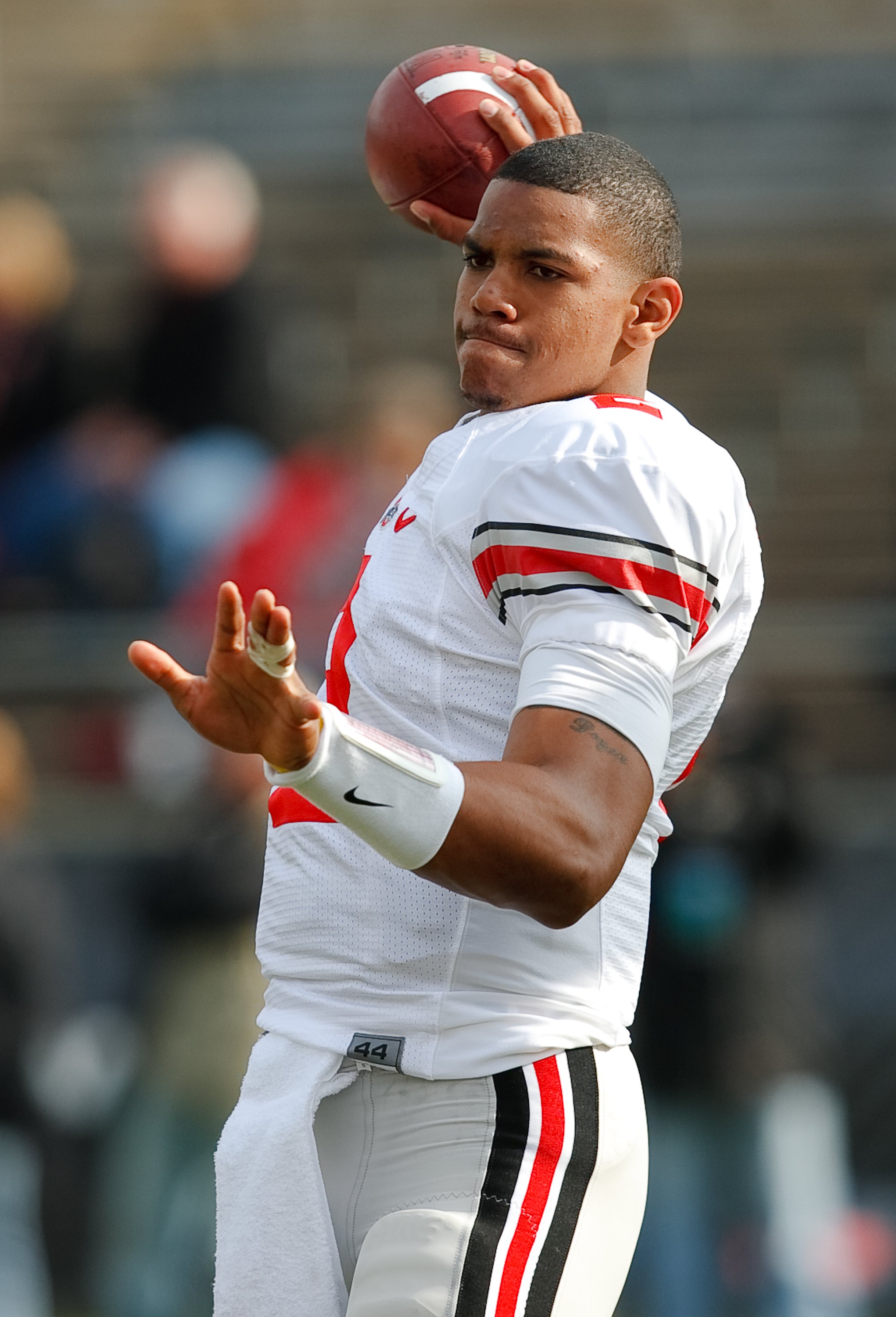
The late Al Davis brought Pryor into the league after selecting him in the third round of the 2011 supplemental draft. Pryor didn’t play much in his first two seasons and struggled on the whole in 2013, although there were some impressive moments. Pryor was traded to the Seahawks in 2014, but was cut prior to Week 1 and wound up sitting out of football altogether that year. In January of 2015, the Chiefs signed Pryor, but released him in May. The Bengals scooped him up, but cut him from the roster five weeks later on June 18, 2015.
Clearly, Pryor’s athleticism could not carry him at the quarterback position in the NFL, but he was reluctant to give up on his lifelong dream. Prior to signing with the Bengals, Pryor declared, “If I can’t play quarterback, I can’t play football.” But, after his release from the Bengals, agent Drew Rosenhaus informed teams that Pryor was willing to line up as a wide receiver.
Ohio’s other team – the Browns – moved quickly to claim Pryor off of waivers. Pryor didn’t see much time on the field in that season, but things changed when the Browns shifted him to wide receiver prior to the 2016 offseason. The Browns were optimistic about what the 6’4″, 228-pound athlete could do at his new position, but few expected him to finish the season with 77 catches for 1,007 yards and four touchdowns.
Pryor parlayed his huge season into a one-year, $6MM free agent deal with the Redskins, but he was held back by an ankle injury and did little in D.C. He tried to regain his footing with the Jets last year, but injuries got the best of him once again. After his midseason release, his deal with the Bills amounted to nothing more than a cup of coffee.
Pryor resurfaced again in May when he signed a veteran’s minimum contract with the Jaguars. The former quarterback could have an opportunity to stand out in Jacksonville’s lackluster WR group, if he’s healthy.
Buccaneers, Mike Evans Rework Contract
The Buccaneers have done a simple restructure on wide receiver Mike Evans’ contract, as Tom Pelissero of NFL.com tweets. The adjustment will create an additional $3.2MM in cap space, though Evans will still earn $20MM in cash this year. 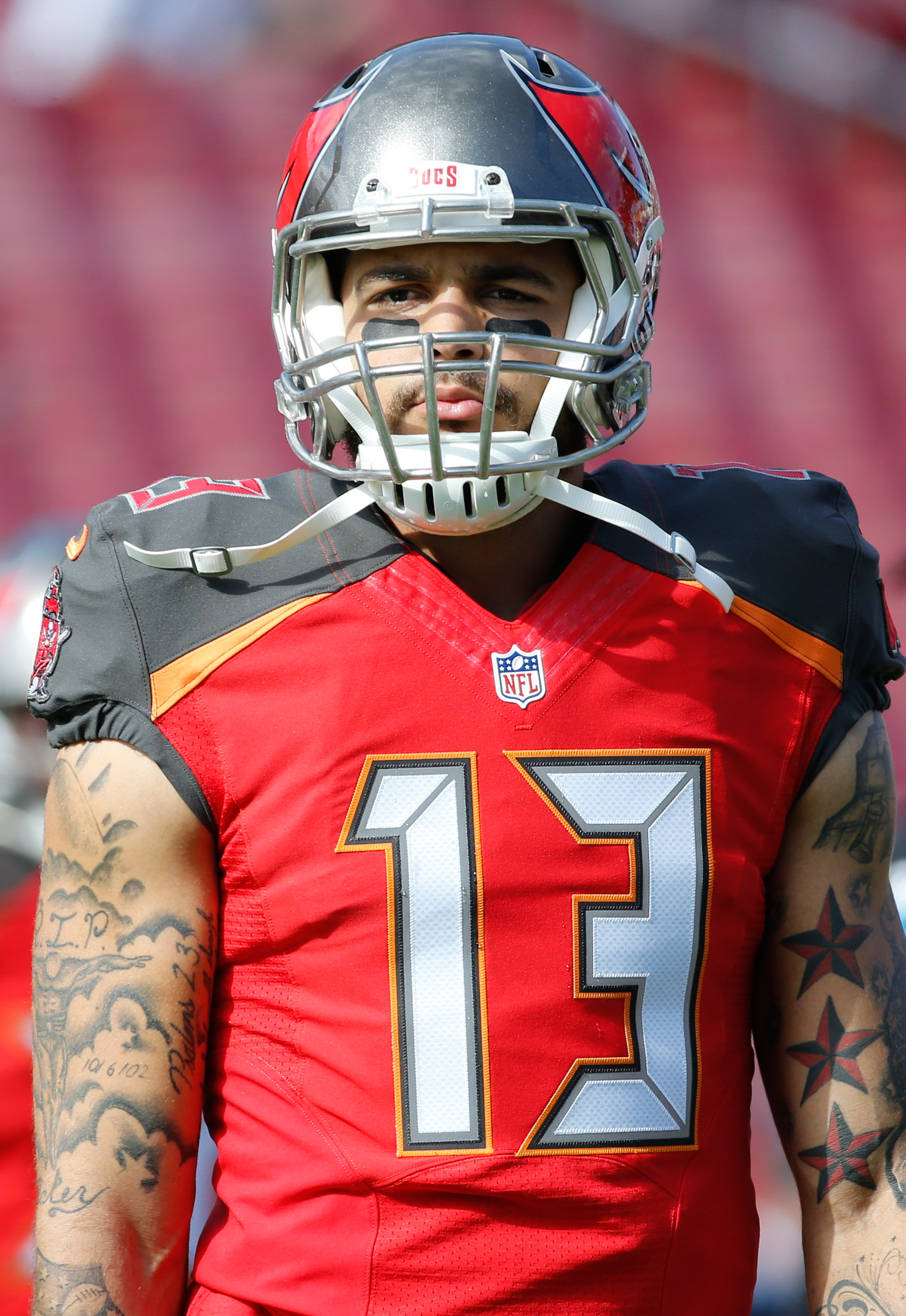
[RELATED: Former Bucs QB Josh McCown Retires From NFL]
Heading into Tuesday, the Bucs had roughly $4.7MM in cap room. By adjusting Evans’ deal, the Bucs will have about $8MM to use on late-stage free agents and address some of their own players.
Evans, 26 in August, inked a five-year, $82.5MM extension with the Bucs last offseason. With incentives, Evans has the ability to earn nearly $96MM over the course of the pact. This marks the second time that Evans has adjusted his contract this offseason, though the previous revision did not address the Bucs’ cap situation.
Even with a fat new contract in hand, Evans did not rest on his laurels in 2018. The wide receiver earned his second career Pro Bowl nod as he hauled in 86 catches with a career-high 1,524 yards. He also set a new career best in yards-per-catch with 17.7 per reception and scored eight touchdowns.
Extension Candidate: Julio Jones
After skipping voluntary OTAs, Falcons star Julio Jones reported for the team’s mandatory minicamp earlier this month. There’s clear mutual interest in a new deal, but Jones’ situation is trickier than most. 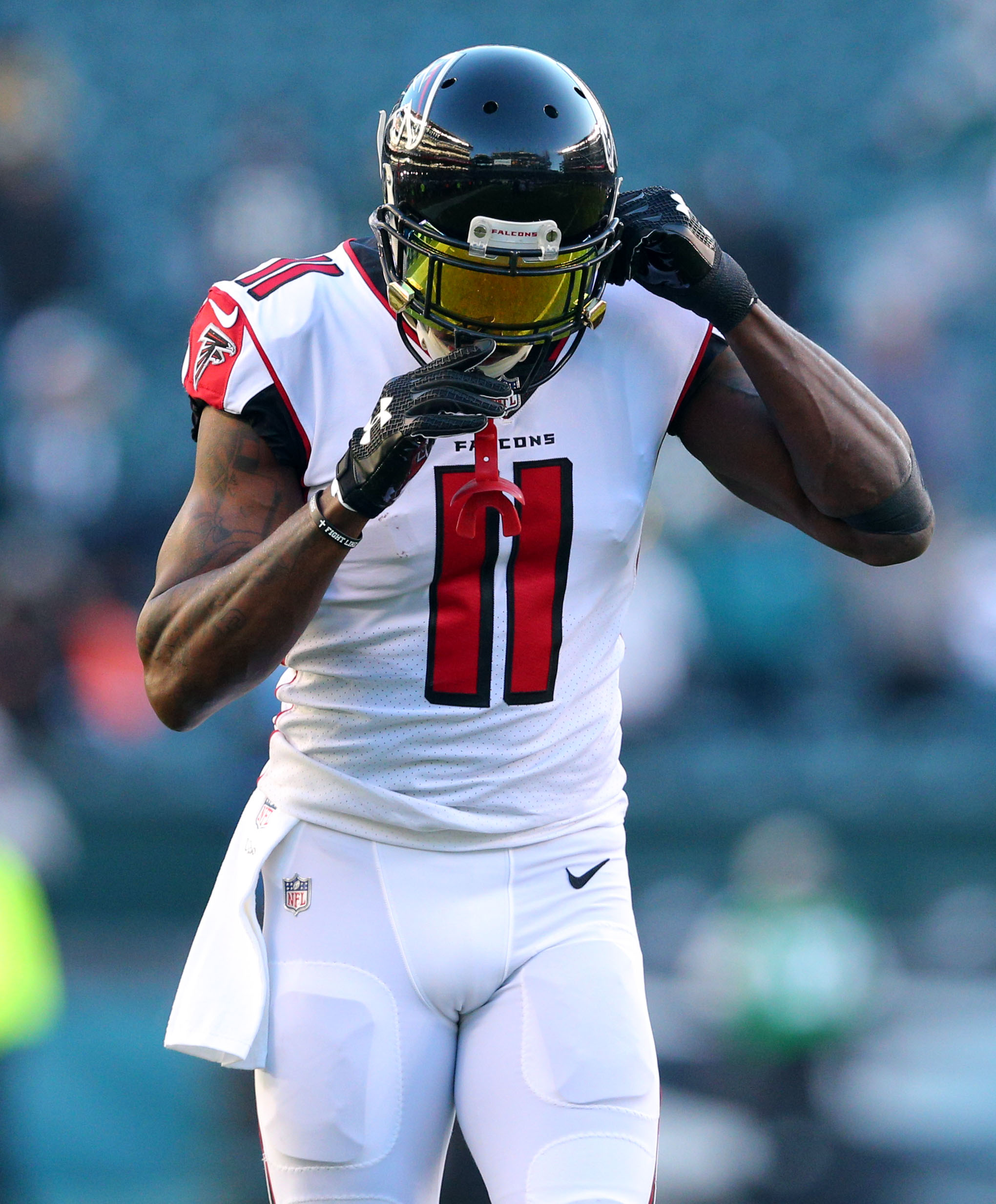
Jones is one of the league’s most accomplished wide receivers, but figuring out a multi-year extension for a 30-year-old skill player is never easy. He’s topped 1,400 receiving yards in each of the last five seasons, but it’s hard to bank on his speed holding up across multiple seasons.
Still, Jones led the league with 1,677 receiving yards in 2018 and continues to draw double coverage from overwhelmed defenses on a regular basis. And, while his contract has two more years to go, the Falcons cannot risk a rift – or a holdout – with their most potent offensive weapon.
A fresh deal for Jones would likely take him through the end of his career, but what would such an add-on look like? Currently, Jones’ salary has him ranked just 12th among wide receivers with an average annual value of $14.25MM. Making Jones No. 1 in AAV would mean vaulting him ahead of Antonio Brown‘s $19.8MM/year and Odell Beckham Jr.’s $18MM/year, which should be doable for the Falcons. However, Jones is unlikely to match the length of OBJ’s contract or, more importantly, the guarantees.
Beckham’s five-year, $90MM extension granted him $65MM in total guarantees and a whopping $41MM guaranteed at signing. Jones, who is already under contract through his age 32 season, is probably looking at no more than an additional three years. From there, you can expect a hefty signing bonus, and a decent sum scheduled for Year One of the new deal, but it’s unrealistic to expect the Falcons to ensure $41MM to the aging superstar.
So, how can the two sides reach an accord that is satisfactory for everyone? Recently, Joel Corry of CBSSports.com suggested the following:
- Length: Three years
- New money total: $60MM (Bringing total remaining value to $81MM over five years)
- Signing bonus: $25MM
- Guaranteed money: $50.526MM
- Fully guaranteed at signing: $37.526MM
Ultimately, that amounts to a $20MM average annual value, allowing Jones to edge Brown and OBJ in that category. Meanwhile, the Falcons preserve some flexibility, as Jones’ total guarantees would be $14.475MM shy of OBJ’s.
A new deal for Jones and the Falcons seems like an inevitability, but it will be interesting to see when they get it done, how they get it done, and what the cashflow of the extension looks like.