
Browns Could Extend S Grant Delpit
Browns safety Grant Delpit attended voluntary minicamp this week, but he did not participate in practice. That led to speculation Delpit was staging a “hold-in” as an attempt to land a raise, though Mary Kay Cabot of cleveland.com points to a minor injury as the reason he sat out.
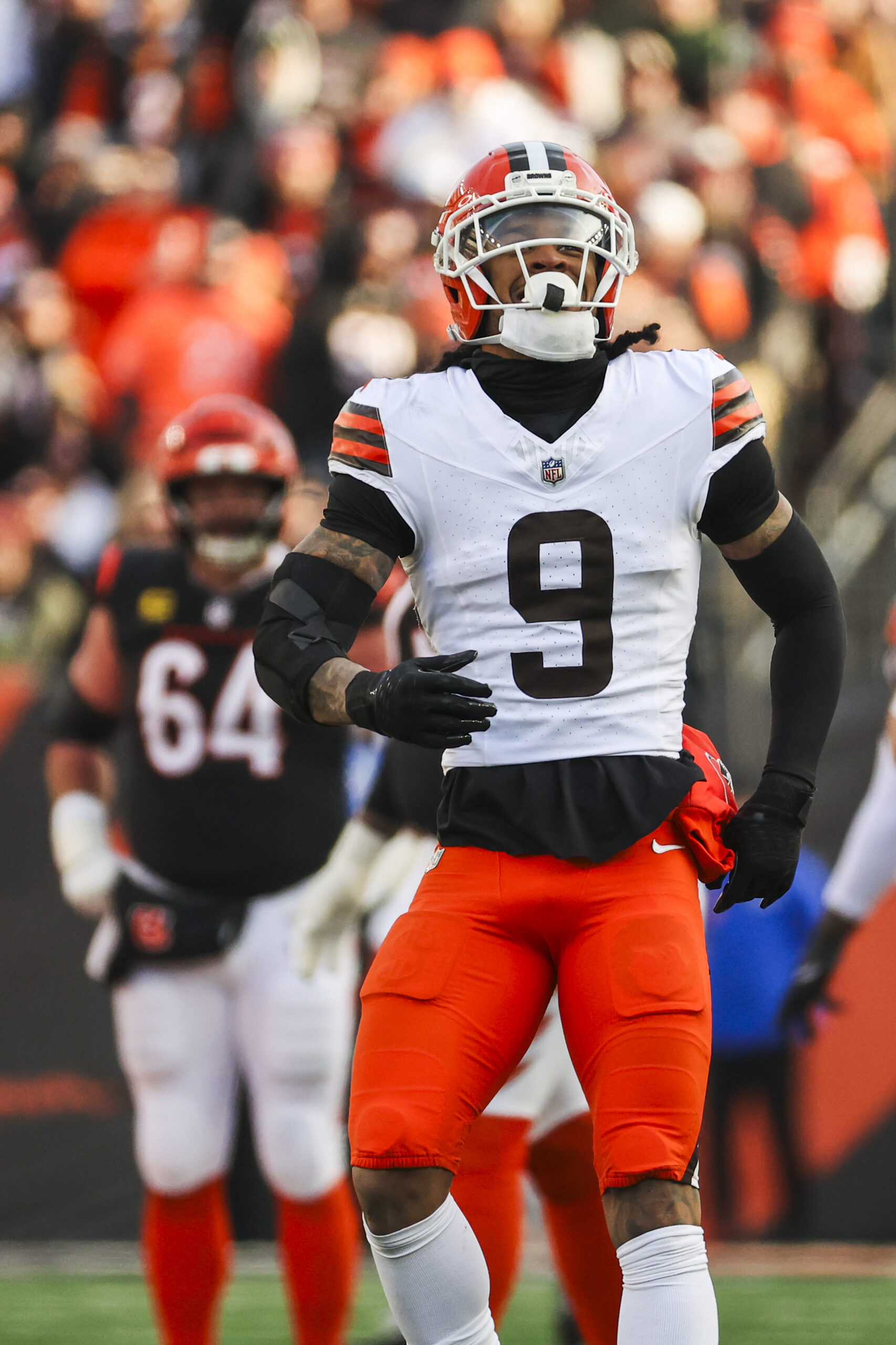
If Delpit is interested in landing a contract extension before a potential trip to free agency next March, it appears he will be in luck. The Browns “will undoubtedly explore” a new deal for Delpit before or during the season, per Cabot, who writes the team is “still as excited” as ever about the soon-to-be 28-year-old.
Delpit has spent his entire career in Cleveland, which drafted him in the second round in 2020. The former LSU Tiger wound up missing his entire rookie year after tearing his Achilles in training camp, but he has bounced back well since then. After coming off the bench in eight of 15 games in 2021, Delpit started in 61 of 63 appearances from 2022-25. The 6-foot-3, 208-pounder has notched a pair of 100-tackle seasons and totaled seven interceptions, including a career-high four in 2022.
Delpit contributed 89 tackles and another pick last year, his second 17-game season. He was on the field for 95.92% of defensive plays, trailing only safety partner Ronnie Hickman (98.48%). While amassing 391 snaps in the box, 271 in the slot, 227 at free safety and 96 along the defensive line, the versatile Delpit posted career highs in quarterback hits (seven), sacks (three), forced fumbles (two) and fumble recoveries (two). His performance ranked a respectable 40th among Pro Football Focus’ 91 qualifying safeties.
Thanks in part to Delpit, the Browns’ defense ranked fourth in the NFL in an otherwise bleak year for the team. The unit has since undergone a couple of massive changes. Acclaimed defensive coordinator Jim Schwartz resigned in February after the Browns hired Todd Monken instead of him as their head coach. Monken then replaced Schwartz with first-time DC Mike Rutenberg.
When Monken and Rutenberg signed up for their jobs over the winter, reigning Defensive Player of the Year Myles Garrett was on the Browns’ roster. That is no longer the case, as they shipped the future Hall of Fame pass rusher to the Rams in a blockbuster trade on June 1. Although Cleveland is unlikely to compete for a playoff spot this year, Garrett’s departure is not expected to lead to a fire sale. Otherwise, players like Delpit and cornerback Denzel Ward could have been candidates to follow Garrett out the door in summer trades.
If Delpit sticks around in Cleveland on another extension, it would be his second with the franchise. Delpit is entering the last season of the three-year, $36MM accord he signed in December 2023. It was the 12th-richest deal for safeties at the time. Delpit is now just inside the top 20 in guarantees (17th; $23.61MM), total value (18th) and average annual salary (18th). His standing in those categories could improve if he and the Browns work something out in the coming months.
49ers WR Brandon Aiyuk Hints At Potential Release
In what has been a wild ongoing saga for 49ers wide receiver Brandon Aiyuk, this week saw some very interesting updates. The latest of those updates could be indicating an end to the troubled partnership between the two parties as Aiyuk advertises that his talents could be “coming to an endzone near (you)” (via his Instagram account).
 The social media post is one of a few from within the past week that have drawn critical reactions from the public. Last Sunday, per ESPN’s Nick Wagoner, Aiyuk posted a video on Instagram with a caption that read, “If you scared just say dat.” In the video, though Aiyuk didn’t name them specifically, he seemed to be referring to the 49ers organization as afraid “little boys” and “female dogs.” In the video, Aiyuk tried to imply that the team is afraid to release him in fear that he might make them regret it as a player for another team.
The taunt could ultimately prove to be true, but at that moment, it didn’t hold much weight in light of the fact that Aiyuk’s own actions have put the 49ers in a position in which they don’t benefit from releasing him. After Aiyuk failed to show up for rehabilitation sessions for the torn ACL, MCL, and meniscus in his right knee, the team placed him on the reserve/left team list. Because Aiyuk did not follow the team’s protocol or recovery plan, the team voided the remaining guaranteed money on his contract at the time. As he remains on the reserve/left team list, Aiyuk does not have to be paid and does not count against the teams 90-man roster.
Eventually, if Aiyuk does not report for training camp, the team could then move him to the reserve/did not report list and begin fining him up to $50K per day. Until he returns to the facility and starts earning a paycheck again, though, San Francisco has no motivation to do anything with him. While there’s seemingly been nothing but contention between the two sides for several months, Mike Florio of Pro Football Talk believes that they could be close to turning the page.
Aiyuk recently deleted the previously mentioned Instagram post calling the team scared, in addition to another that criticized the 49ers, and Florio believes those actions could be akin to the extension of an olive branch. Aiyuk, soon after, posted the video about “coming to an endzone near” an as of yet undetermined destination, which could indicate that the olive branch gesture may have pushed things in the right direction.
If so, it’s an ideal time for Aiyuk to come to an agreement with the team. Now that the June 1 deadline has passed, any trade or release by the 49ers would allow them to split up the dead money owed to Aiyuk over the next two years instead of all in 2026. As Aiyuk has made his opinions clear on social media, Washington has become the presumed preferred destination for the 28-year-old. By joining the Commanders, Aiyuk would be reuniting with quarterback Jayden Daniels, who threw him eight touchdowns in his final season at Arizona State.
Unfortunately for San Francisco, the Commanders have already made it clear that they are not interested in trading for Aiyuk. In fact, the Niners have called him “untradeable,” so Aiyuk’s future would likely have to be determined as a free agent. According to Jonathan Jones of NFL on CBS, though, the Commanders are interested in his services, so if things get worked out for Aiyuk to hit the open market and sign a new free agent deal, his long-awaited move could be in the works.
Latest On Zach Charbonnet, Seahawks’ RBs
Seahawks running back Zach Charbonnet is just five months removed from tearing his ACL in a January playoff win over the 49ers, but he is not a lock to miss time in 2026. Head coach Mike Macdonald isn’t closing the door on Charbonnet suiting up in Week 1 (via Mike Florio of PFT).
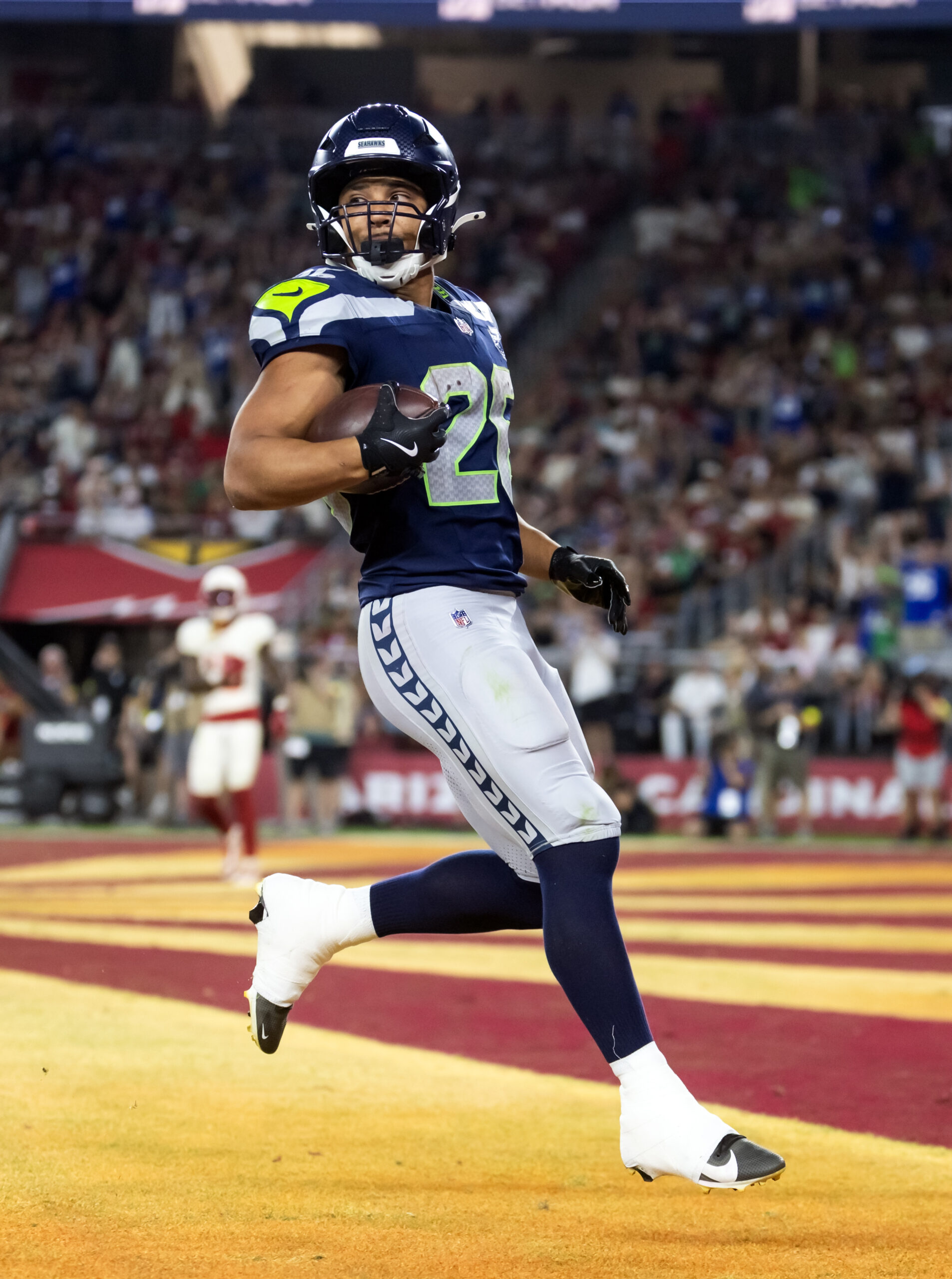
“Everything’s possible, yeah,” Macdonald said when asked if Charbonnet could be ready for the start of the season.
The Seahawks will open 2026 with a Super Bowl LX rematch against the Patriots on Sept. 9, just under eight months after Charbonnet’s injury. It would be an ideal outcome for Charbonnet to be ready by then, though it seems improbable for someone who didn’t undergo surgery until Feb. 20.
It may be more realistic to expect Charbonnet to return sometime in October or November, according to Bob Condotta of the Seattle Times. If that is the case, Charbonnet could begin the year on the reserve/PUP list, which would require at least a four-game absence.
Charbonnet, whom the Seahawks chose in the second round in the 2023 draft, spent his first three seasons splitting snaps with Kenneth Walker. While Walker got more touches during that span, Charbonnet still piled up 427 carries and 95 catches. He set career highs in rushing attempts (184), yards (730) and touchdowns (12) over 16 regular-season games last year, though his injury limited him to five carries and 20 yards in the playoffs. Meanwhile, Walker capped off the Seahawks’ run to a championship with a Super Bowl-MVP winning performance in a 29-13 victory over the Pats. A month later, he left Seattle to sign a three-year, $43.05MM deal with Kansas City in free agency.
With Charbonnet recovering from a major injury and Walker out of the picture, the Seahawks spent their first-round pick (No. 32) on former Notre Dame running back Jadarian Price. He and Charbonnet could be the Seahawks’ one-two punch whenever the latter returns. In the meantime, George Holani and Price were “basically 1 and 1A” during mandatory minicamp this week, Gregg Bell of the Tacoma News Tribune relays. Free agent addition Emanuel Wilson was third in the pecking order.
Kenny McIntosh is also in the fold, but he is still on the mend from the ACL tear he suffered last July. Macdonald indicated McIntosh could begin training camp on the active/PUP list, per Bell.
Eagles Comfortable With Safety Options?
In a disappointing followup to their Super Bowl-winning 2024 campaign, the Eagles had several areas of concern, and they’ve attempted to address many of them so far in the offseason. There is one position at which they didn’t make much of an effort to change, though, as the team appears to be comfortable with its situation at the safety position.
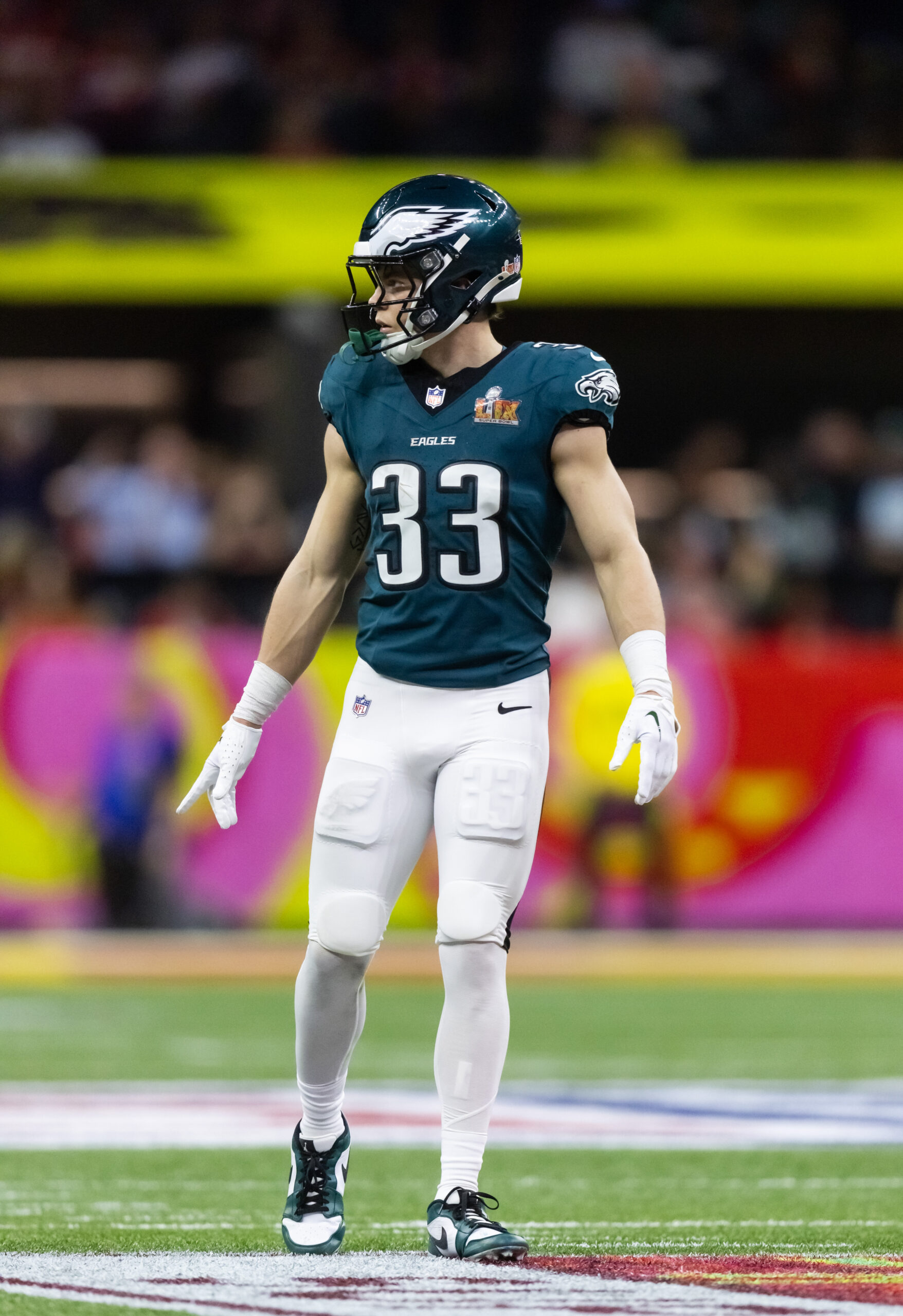 In 2025, the Eagles saw three players — Reed Blankenship, Andrew Mukuba, and Marcus Epps — get significant snaps at safety. Mukuba, the second-round rookie out of Texas, graded the highest of the three, per Pro Football Focus (subscription required), but only graded out as the 73rd best safety out of 91 players graded at the position. Blankenship, the other starter, finished the season 89th of 91, and while Epps didn’t play enough snaps to make the rankings, his overall defensive score of 51.8 would’ve slotted him in around 80th.
Philadelphia’s secondary does look a bit different at this point in the offseason with Blankenship departing in free agency, but the team hasn’t done anything so far to add a starting caliber safety, aside from re-signing Epps. The Eagles did announce that first-team All-Pro nickelback Cooper DeJean would be the team’s starting safety in the defense’s base package, but Philadelphia only used it’s base package about 20 percent of the time last year. More often, the team ran packages with additional defensive backs, for which the plan in 2026 will be for DeJean to shift back up into his specialized nickel role.
When DeJean steps back up into the slot, Epps appears to be the first backup in line to step into the first-team defense next to Mukuba. The only offseason additions at the position are veteran free agent and former All-Pro special teamer J.T. Gray and Texas Tech seventh-round rookie Cole Wisniewski.
Jimmy Kempski of the PhillyVoice expected the team to do more at the position, and after the draft came and went with no major improvements, Kempski thought a trade for a starting-caliber defender would occur sometime soon after June 1. It doesn’t appear the Eagles are in any hurry to make a change at this point in time, though, so Kempski now believes the team may wait to evaluate how their current group looks in training camp before opting for a big move to bring in outside help.
Seahawks TE AJ Barner ‘Feeling Good’ After Surgeries
Through two years of NFL play, Seahawks tight end AJ Barner has not missed a single game. That doesn’t mean he’s been perfectly healthy. After undergoing two surgeries a week after the team’s Super Bowl LX parade, Barner has not participated in any on-field work in Seattle’s offseason workout program. Per Seahawks senior reporter John Boyle, Barner “fully expects to be ready for training camp.”
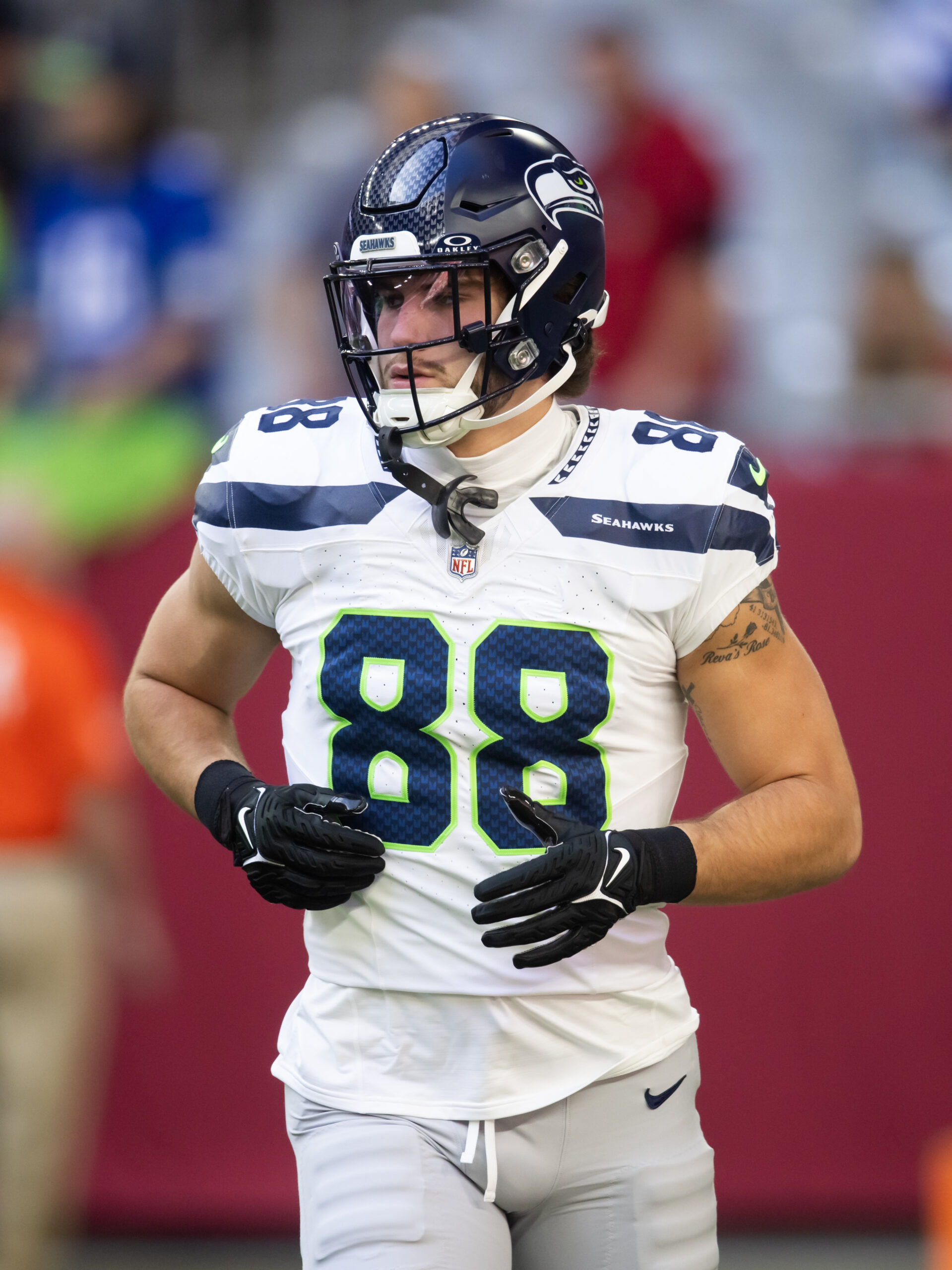 According to Boyle, while Barner was able to put up an impressive first year as a full-time starter, he did so while playing through multiple injuries last year. Neither Barner nor the team disclosed what surgeries he underwent, but based on Seattle’s injury reports throughout the season, Barner’s name appeared in seven of the 10 weeks leading up to the Seahawks’ first game of the postseason as he dealt at different times with hip, elbow, shoulder, knee, ankle, and calf injuries.
The 24-year-old’s durability was ideal for Seattle’s offense in 2025. The team relied on him throughout the season as second-round rookie Elijah Arroyo struggled to make an impact before landing on injured reserve with a knee injury of his own. The only other significant contributor from the tight ends group was veteran Eric Saubert, who mostly contributed as a blocker. Barner finished second on the team in receptions (52) and receiving touchdowns (6) and third on the team in receiving yards (519). Arroyo and Saubert combined for 22 catches, 210 yards, and one touchdown, while reserve Nick Kallerup went the season without a single catch.
With Barner still rehabbing, his offseason participation has been mostly limited to that, but as mentioned above, Barner expects to be back in action in time for training camp. Plus, when he does return, he’ll be doing so fully healthy. Barner felt that the injuries throughout the season took away from “his ability to prepare for games,” but he is looking forward to what he might be able to do with full time to game prep in 2026.
“I’m definitely feeling better,” Barner told the media earlier this month. “It’s definitely still a process to get back out there, but by the time training camp rolls around, I’m going to be ready to go.”
Ravens LB Teddye Buchanan ‘Ahead of Schedule’ In Recovery
The Ravens gave linebacker Teddye Buchanan a tough assignment last year when the fourth-round pick out of Cal was given a full-time starting role by the second game of his rookie campaign. Buchanan answered the call to action admirably up until he tore his ACL in a Week 15 trip to Cincinnati. According to Jeff Zrebiec of The Athletic, new head coach Jesse Minter informed the media that Buchanan is “really far ahead of schedule” in his recovery.
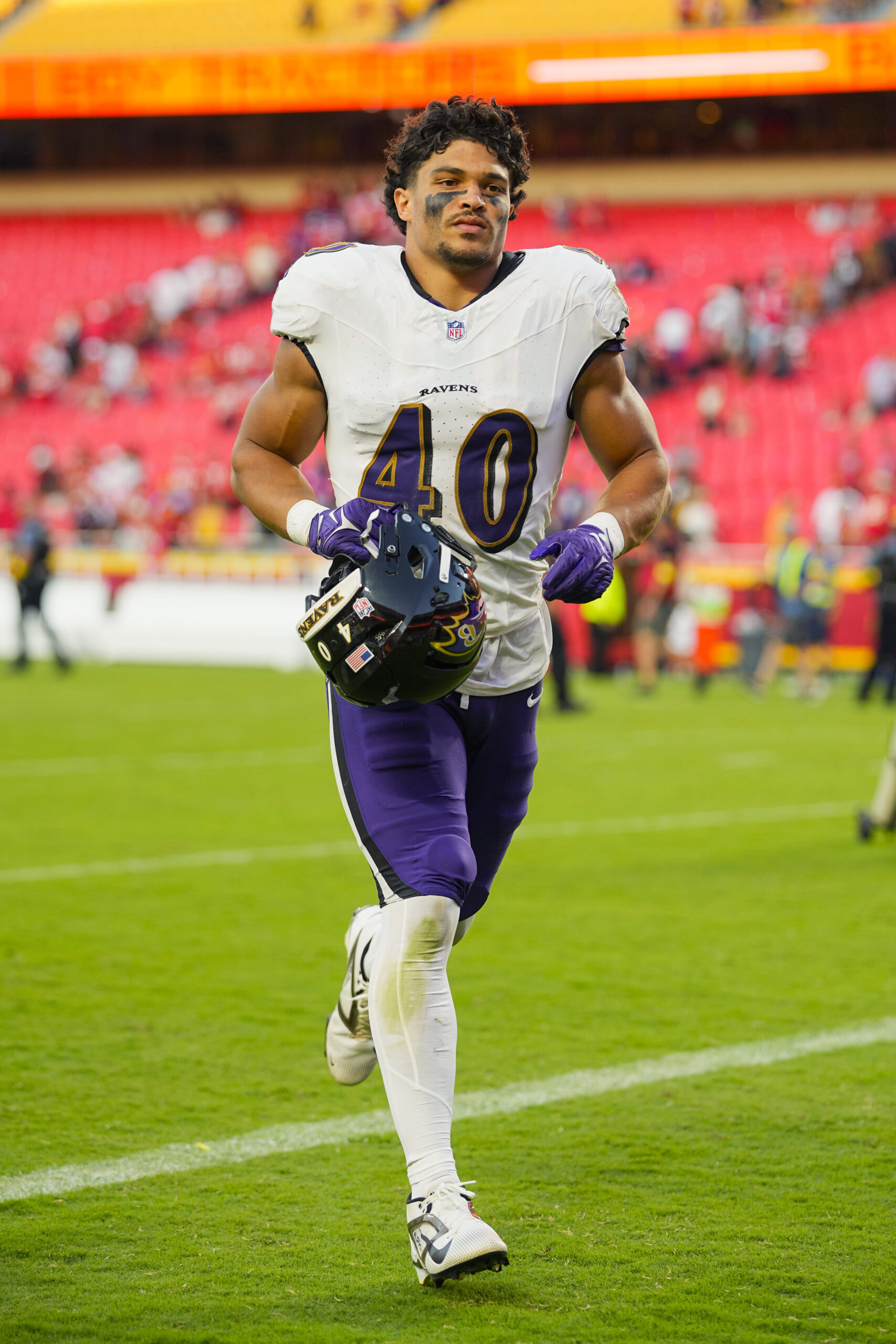 Before tearing his ACL, the former Golden Bear had quickly taken up the task of manning the front seven next to All-Pro teammate Roquan Smith. Smith was criticized at times for not having a stereotypically impactful season in Baltimore this year. Though he led the team in tackles, Smith recorded his lowest tackle total in seven years, forced no fumbles, and recorded zero sacks or interceptions for the first time in his career. Partially, his numbers lacked due to an injury that held him out for two games, but also, Smith found himself painted into a more conservative role this year as injuries handicapped the defense’s roster around him.
Buchanan was one of several young/backup players in Baltimore that were forced to step up to fill a bigger role. The team had hoped to see former Clemson third-round pick Trenton Simpson take the next step after he started 13 games in his sophomore campaign the year prior, but Buchanan replaced Simpson after the Ravens’ Week 1 defensive letdown in Buffalo. Simpson started the two games Smith missed in Weeks 5 & 6 then didn’t start another game until Buchanan was sidelined with his torn ACL.
Simpson did show improved quality of play in his reduced role off the bench, according to Pro Football Focus (subscription required), going from a grade that had him ranked 60th of 84 players graded at the position in 2024 to 27th of 88 last year. Even though Buchanan ranked lower — 49th of 88 — his composure as a Day 3 pick earning starting minutes made him the clear choice as the starter. Buchanan excelled in run-stopping situations over the course of his rookie year, and once healthy, the Ravens will hope to see him improve in coverage.
Buchanan wasn’t able to fully participate in the team’s Organized Team Activities, and Minter didn’t give an exact timeline for the second-year defender’s return, but he sounded optimistic. “Everybody kind of knows the timeline of when it happened, but the way that guy operates, the way that guy works, I don’t think there is a timeline for him,” Minter told the media. “He’s an impressive dude, in how he goes about his business, just as most of our guys are.”
5 Key Stories: 6/7/26 – 6/14/26
The first week of June brought about a wave of developments in the NFL. Things remained busy around the league over the next few days with the end of offseason programs drawing near. In case you missed any of this week’s top stories, here is a quick recap:
- Mahomes Lands New Chiefs Megadeal: Patrick Mahomes and the Chiefs worked out a 10-year extension in 2020. That pact remained an outlier in terms of length, but several quarterbacks surpassed him in terms of average annual value. Another massive contract has now been finalized, with the three-time Super Bowl MVP in line to collect over $500MM between now and 2033. Mahomes is entering his age-31 season and is recovering from the major knee injury (including an ACL tear) which ended his 2025 campaign. The Chiefs are certainly confident a full recovery can take place; the team has made a record-breaking upfront commitment in terms of guarantees (over $230MM) and in overall AAV ($63.1MM). A new QB benchmark has been set.
- Broncos Extend Payton: Earlier this offseason, the Broncos expectedly agreed to an extension with general manager George Paton. Head coach Sean Payton now has a deal of his own in place. He and Paton are each under contract through 2030 as a result. Denver finished atop the AFC standings in 2025, Payton’s third season at the helm. That marked a second straight playoff appearance, and expectations will remain high for years to come after the team hosted the AFC title game. Payton, 62, will not call plays on offense in 2026, although his role in continuing the development of quarterback Bo Nix will be key. The Broncos endured an eight-year playoff drought after their latest Super Bowl victory, but the team will hope to maintain a foundation for sustained success with the Payton-Paton partnership in place for the foreseeable future.
- Sorsby In Line To Retain NCAA Eligibility: Many expected quarterback Brendan Sorsby to fall short in his efforts to apply for NCAA reinstatement following an admission to gambling earlier in his college career. However, an injunction has been granted in this case, paving the way for Sorsby to play for Texas Tech in 2026. The NCAA has issued an appeal, so finality regarding Sorsby’s future remains to be seen. As things currently stand, though, he will not be required to enter the NFL this summer via the supplemental draft. Sorsby is seen by numerous evaluators as a first-round prospect in terms of on-field ability, but the willingness of NFL teams to bring him into the fold figures to remain a talking point leading up to the time when he attempts to turn pro (whenever that comes).
- Dolphins, Brewer Agree To Extension: The Dolphins have been busy in terms of moving on from several veterans this spring, but Aaron Brewer was known to be the target for a new deal. An extension has, to little surprise, been worked out between team and player. Brewer earned second-team All-Pro acclaim in 2025, cementing his status as an anchor up front for Miami and one of the league’s top centers. That success has now resulted in a three-year extension including $37MM in guarantees. In terms of average annual value ($17.5MM), Brewer sits third in the pecking order among centers. If he can maintain his level of play from last season over the next few years, the Dolphins’ interior along the O-line could become a strong point as the team rebuilds.
- Panthers Extend Coker: Since entering the NFL as an undrafted free agent, Jalen Coker has proven to be an impactful figure for the Panthers. He was on course to enter the 2027 offseason as an exclusive rights free agent, but a long-term Carolina deal has been finalized instead. Coker has agreed to a three-year deal with a base value of $35MM. The pact could top out at $41MM, an indication of how the 24-year-old figures to remain an important contributor in the passing game in 2026 and beyond. Coker has totaled 872 yards and five touchdowns during two Carolina seasons to date, and both figures can be expected to increase by a wide margin over the course of this new deal.
HC John Harbaugh Addresses GM Joe Schoen’s Giants Extension
Last month, questions about Joe Schoen‘s future were put to rest. The Giants finalized a multiyear extension agreement with their much-maligned general manager.
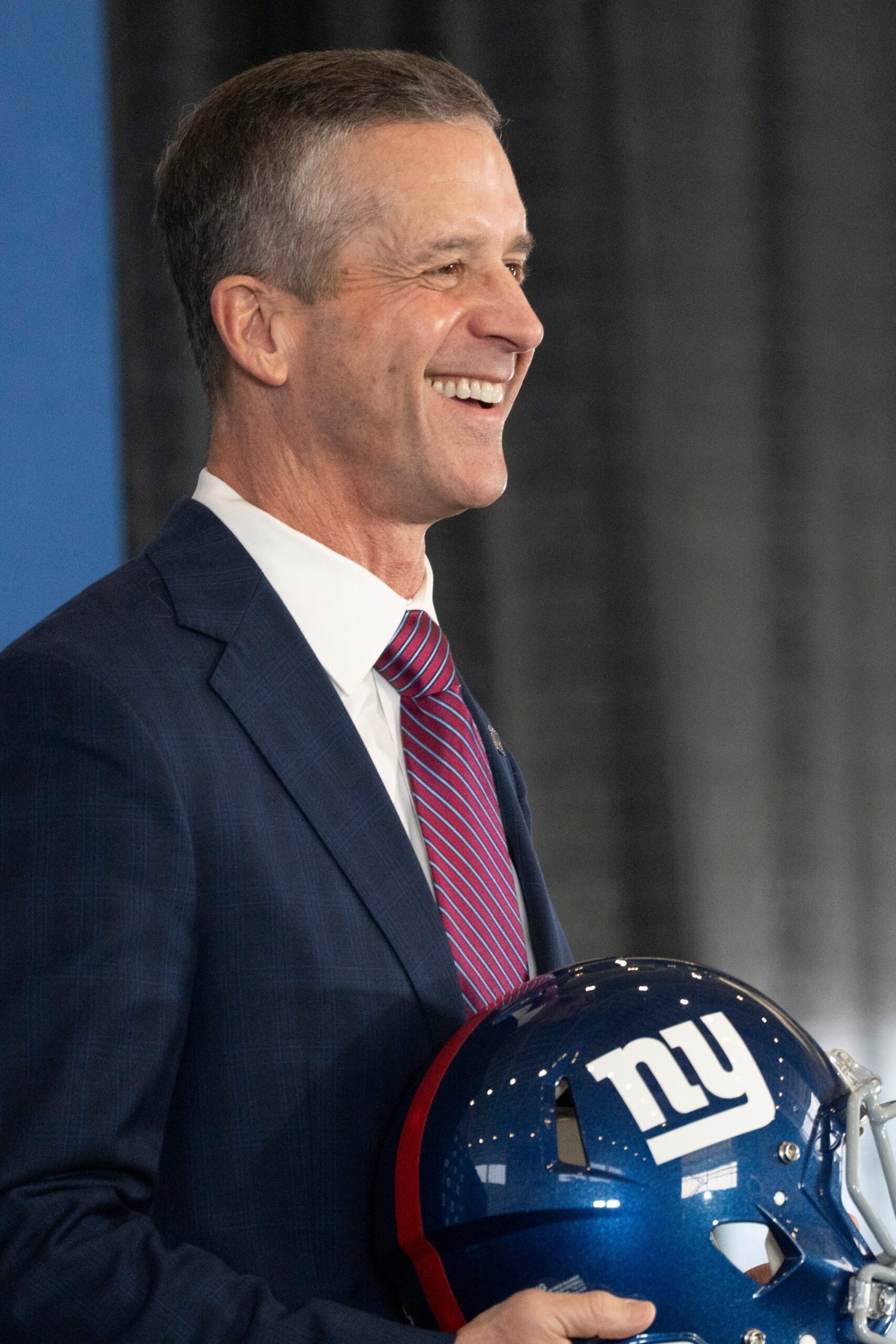 Schoen remained in place through former head coach Brian Daboll‘s dismissal and played a key role in the search for his replacement. That process resulted in an aggressive – and successful – push to land John Harbaugh. The relationship between Schoen and the Super Bowl-winning head coach has been a talking point, given the formal arrangement which sees Harbaugh report directly to ownership. When speaking about the Schoen news, Harbaugh struck a positive tone.
“I respect ownership. That’s their call,” Harbaugh said during a recent press conference (video link via SNY). “I was happy – he’s a good guy, I enjoy working with him. It’s a good decision, I agree with it.”
Schoen has been in place since 2022. The Giants made a surprise run to the divisional round of the playoffs during his and Daboll’s first year at the helm, but success has not been attainable since then. Across the past three seasons, New York has totaled a record of 13-38. Ownership saw that primarily as a coaching issue, though, leading to the continued confidence in Schoen. He will lead a revamped front office through 2026 and beyond.
Harbaugh’s voice will no doubt carry significant weight for the Giants considering the efforts made to hire him and the level of authority he was granted relative to other coaching candidates. New hire Dawn Aponte is also believed to be a key figure on the decision-making front, something which could limit Schoen’s power moving forward. As the Giants look to take needed steps forward over the coming season, the workings of their new organizational setup will make for an interesting storyline.
The level of success with with respect to Harbaugh and Schoen collaborating will of course also be something to watch closely. Barring a dismissal shortly after a new deal being signed in either case, the two will have a long period working together.
Bengals TE Erick All Fully Healed
An ACL tear brought an abrupt end to Erick All‘s college career. A repeat of that injury suffered to the same knee resulted in an abbreviated rookie season and an absence spanning the entire 2025 campaign.
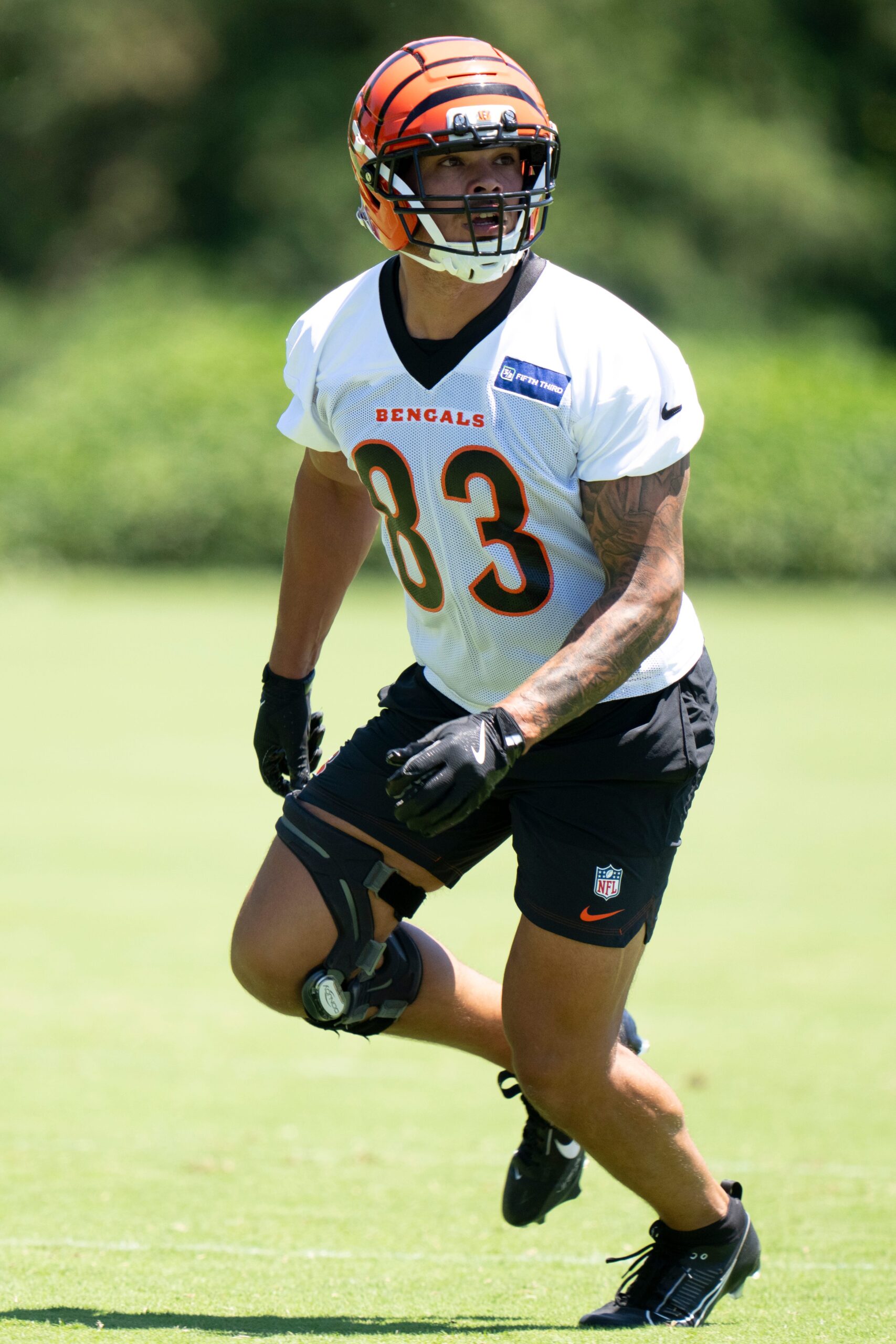 Things will be much different if all goes according to plan for the coming year, however. All has been able to participate in spring practices with the Bengals, and he has healed in full. Adding to his career total of just nine NFL games will be expected in 2026 as a result.
“I feel a lot better than I did when I first got here,” All said (via Sports Illustrated’s Jay Morrison). “Like, a lot better. Completely healthy, 2024 season to now. I feel like a completely different person.”
When speaking to the media about his health status, All revealed the reason for his lengthy rehab process. The surgery stemming from his college ACL tear was not done correctly, so a separate procedure was required after he tore the same ACL in 2024. A waiting period of three months took place before All’s second ACL repair could be performed. That left him unavailable through all of last season.
The initial ACL injury played a role in All falling to the fourth round of his draft class. The Michigan/Iowa product was nevertheless a key figure when on the field during his rookie season, logging a 42% offensive snap share. A notable role as a run blocker in particular could be in store once he returns to game action. Cincinnati ranked just 29th in the NFL on the ground in 2025, and improving in that regard could go help spark a trip to the playoffs this season.
The Bengals’ tight end depth chart will be topped by Mike Gesicki, Drew Sample and Tanner Hudson in 2026. All will spend training camp looking to carve out a rotational role and avoiding any further issues with his knee. Provided he does, he could prove to be an impactful depth contributor on Cincinnati’s offense.
Colts WR Ashton Dulin In Lead For Starting Job?
After trading Michael Pittman Jr. to the Steelers in March, the Colts are on track to head into the season with a questionable receiving corps. Their four-year, $114MM offer was enough to keep deep threat Alec Pierce from leaving in free agency, but his status for training camp is up in the air in the wake of offseason ankle surgery.
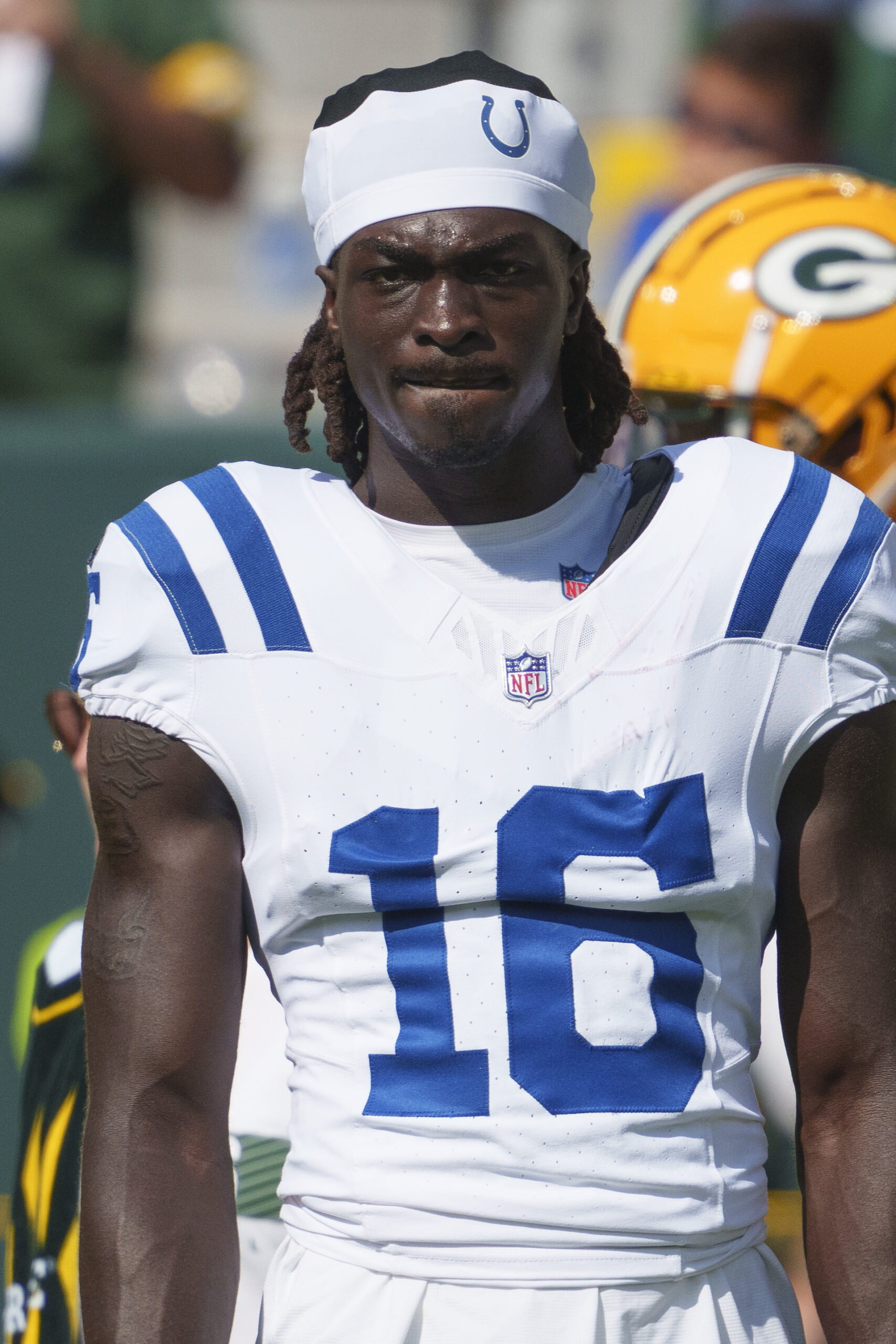
Assuming Pierce is healthy by the time Week 1 rolls around, he and slot wideout Josh Downs will fill major roles. The other starting spot is up for grabs. Ashton Dulin, free agent addition Nick Westbrook-Ikhine, Laquon Treadwell and seventh-round rookie Deion Burks are vying for the gig. Dulin’s familiarity with head coach Shane Steichen‘s offense could tip the scale in his favor, James Boyd of The Athletic observes. Meanwhile, Mike Chappell of FOX 59 pegs Dulin as the front-runner for the job.
Dulin has been a member of the Colts since he signed with them as an undrafted free agent in 2019. He came out of Division II Malone, which Boyd notes no longer even has a football program.
This season will be Dulin’s fourth under Steichen, who has primarily deployed him as a special teamer. The 6-foot-2, 215-pounder has logged a special teams snap share between 51% and 71% in each of his five seasons (he missed all of 2023 with a torn ACL). For good reason, as Dulin earned second-team All-Pro honors as a gunner in 2021 and has averaged an impressive 29.8 yards on 37 career kick returns. He returned a personal-high 16 kicks last year and averaged the second-most yards in the NFL (32.3).
While Dulin has established himself as an asset on special teams, he will have to show he is capable of taking on a larger offensive workload. Dulin has put up a robust 15.6 yards per reception in the pros, but he has caught just 40 passes and four touchdowns in 82 games. The 29-year-old combined for a mere seven catches in 27 games from 2024-25. The good news for Dulin is that he isn’t facing especially stiff competition.
Westbrook-Ikhine recorded four straight seasons of over 25 catches and 370 yards with the Titans from 2021-24, but the Dolphins released him after he managed just 11 and 89 in those respective categories last year. He had to settle for a cheap deal with the Colts, who included only $250K in guaranteed money in the pact.
Treadwell was a first-round pick of the Vikings in 2016, though he is now a 31-year-old journeyman who has never lived up to his 23rd overall draft slot. Treadwell has been in and out of the Colts organization for the past couple of years, but his most recent reception came as a member of the Ravens back in 2023. He caught one ball in five games that year.
If the Colts decide Dulin & Co. are not starting-caliber receivers, they may be candidates to sign one of the proven veterans left in free agency. Stefon Diggs, Deebo Samuel, Keenan Allen, Tyreek Hill, Brandin Cooks and DeAndre Hopkins are some of the names still on the market. Indianapolis has the league’s seventh-most cap space ($31.67MM), giving the team ample room to upgrade at the position.