
C Frank Ragnow Staying Retired After Failed Comeback
A little over a year ago, Lions center Frank Ragnow made one of the hardest decisions an NFL player can make, opting to hang up his cleats before the age of 30 for the sake of his health. When a rash of injuries spread across Detroit’s offensive line midway through the season, the then-29-year-old tried — and failed — to make a comeback. According to Dave Birkett of the Detroit Free Press, another comeback attempt isn’t likely to occur.
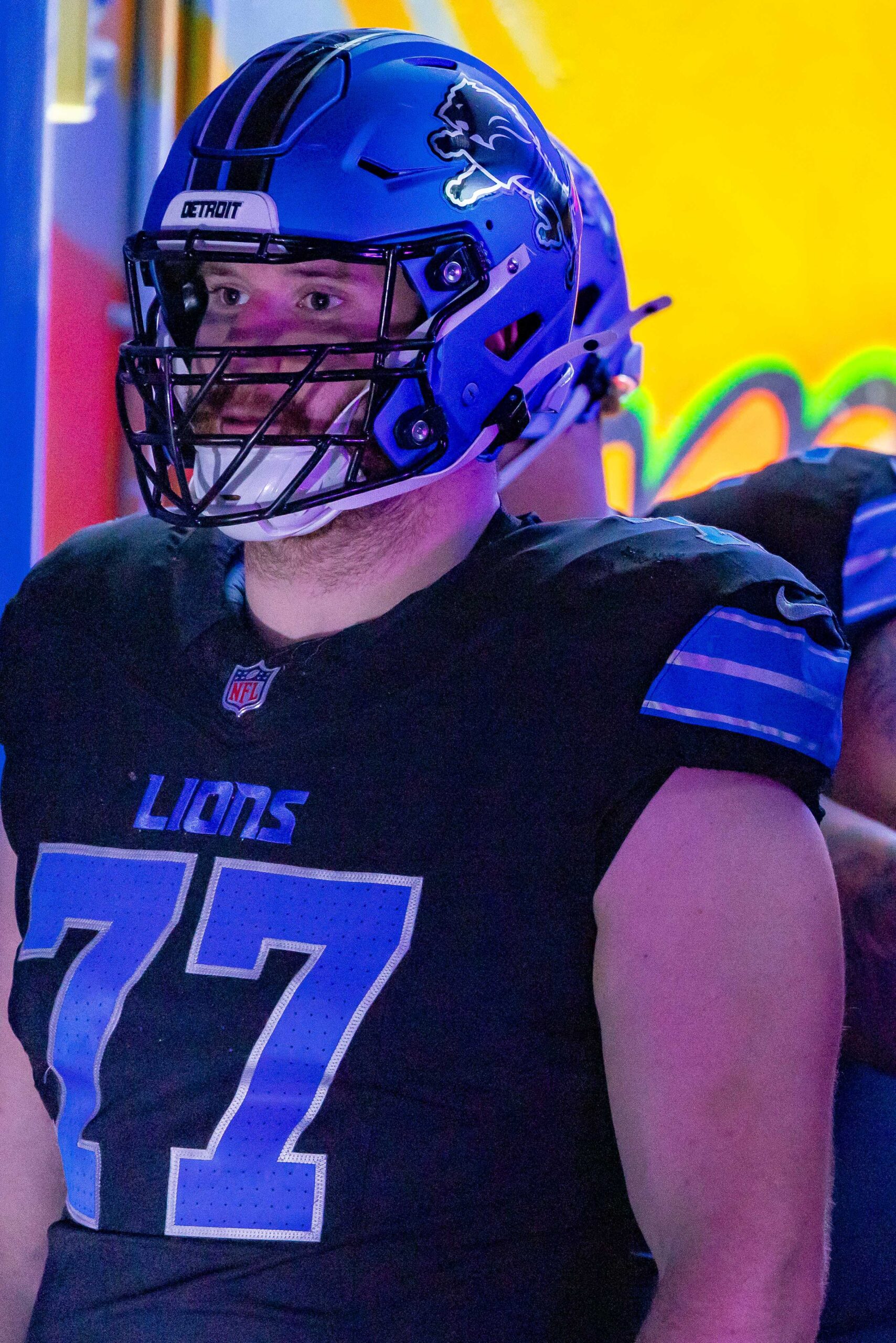 Following an injury that had led to Ragnow missing all but four games in 2021, the Arkansas-product rebounded to play at least 15 games in each of the next three seasons, which delivered his second, third, and fourth Pro Bowl nods and his second and third second-team All-American campaigns.Still, in his final season with the Lions, Ragnow played through a pectoral injury that underlined the health struggles that he had been dealing with.
After missing last year’s Organized Team Activities as he mulled over the decision of his future, Ragnow announced that he was “officially retiring,” claiming that, even though he tried to convince himself that he felt good and still had something left in the tank, he just didn’t. When his successor, Graham Glasgow, became the latest of several starters on the team’s offensive line last year to go down with an injury, Ragnow proved just how hard his retirement decision had been as he attempted to unretire to help his team.
In the end, a Grade 3 hamstring sprain found in Ragnow’s physical prevented him from returning. As the season was coming to an end, Lions quarterback Jared Goff was asked about his former center’s chances of taking another stab at coming back. Goff told the media that he didn’t think it was “in the cards” as Ragnow’s “interest level” just wasn’t there anymore. Per Birkett, Ragnow claimed to feel guilty about his decision to retire, but after the failed comeback, he has “closed the door on a possible return.”
“To shoot it to you straight,” he began to reporters, “I was trying to will myself to play. I was. And my body was telling me otherwise, and I was just in, like, paralysis, if you will. I did not plan on retiring in the middle of the summer, believe it or not. It was like I was trying to get like, ‘You can do it for the guys, for the fans, it’s who you are,’ but it’s just, like, I was uncomfortable.”
Ragnow’s guilt stemmed partially from the fact that he tried to “avoid games” early into his retirement as he tried to distract himself. When the Lions got off to a rough start for the year and injuries and inconsistency along the offensive line led to Goff getting sacked a career-high number of times, he blamed himself and the butterfly effects from his absence.
“I felt guilt,” Ragnow said. “Like Jared’s getting hit. That’s my guy. Those are my guys, and they’re struggling. And then I made a bonehead decision and tried to get ready to play and got hurt and it’s just, like, that was tough. That was really tough. But, you know, it all — everything happens for a reason, and I am where I am now, and I’m in a great place.”
Minor NFL Transactions: 6/11/26
Today’s minor moves:
Arizona Cardinals
- Signed: TE Kenny Yeboah
- Waived: LB Stephen Dix Jr.
Pittsburgh Steelers
- Signed: WR Joaquin Davis, CB Daryl Porter
- Released: LS Cal Adomitis, OT Aiden Williams
Kenny Yeboah has landed with a new squad, as the veteran tight end got a one-year deal from the Cardinals. The former UDFA out of Ole Miss spent the first four seasons of his career with the Jets, where he got into 33 games (two starts). He was utilized as mostly a blocker and special teamer, but he had occasional flashes on offense. He finished his Jets tenure with nine catches for 111 yards and one touchdown.
Yeboah caught on with the Lions last offseason. However, an undisclosed injury landed him on injured reserve in August, meaning he wouldn’t see the field with Detroit in 2025. He was release with an injury settlement in November but didn’t end up finding a new team for the stretch run.
The 27-year-old will now be joining a relatively deep depth chart in Arizona. Trey McBride will continue to lead the way, but Yeboah could emerge as a backup ahead of the likes of Elijah Higgins, Tip Reiman, Teagan Quitoriano, Jameson Geers, and Rivaldo Fairweather.
Lions S Brian Branch Could Start Season On PUP
Lions safety Brian Branch‘s 2025 season came to an end when he tore his Achilles in a Week 14 win over the Cowboys. The injury occurred late enough in the year that it may shelve Branch for a portion of the upcoming season.
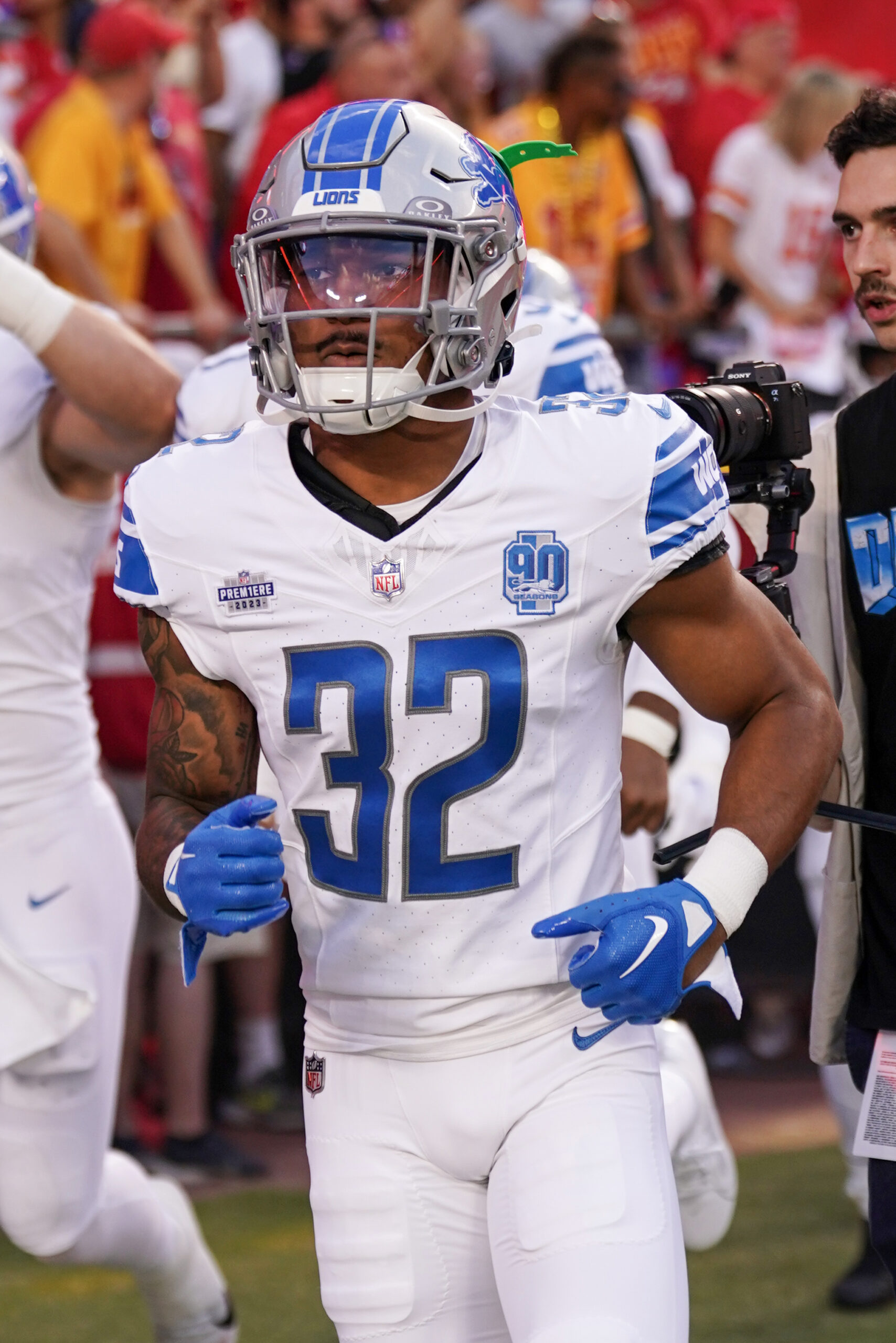
Although Branch has not dealt with any setbacks, there is no clear timetable for his return as training camp approaches. With that in mind, head coach Dan Campbell admitted Branch “could be” a candidate to open 2026 on the reserve/PUP list, per Dave Birkett of the Detroit Free Press. Doing so would require Branch to miss at least four games, which would keep him out of meetings with the Saints, Bills, Jets and Panthers.
The Lions entered 2025 with the elite safety tandem of Branch and Kerby Joseph, but injuries undermined the pair during a disappointing 9-8 season for the club. Branch missed five games (including one for a suspension), while Joseph sat out 11 as he battled knee problems. With Joseph managing a degenerative condition, it is unclear if he will be ready for Week 1. The Lions are preparing free agent pickup Christian Izien to fill in for Joseph if he misses time. Some combination of free agent addition Chuck Clark, Thomas Harper and Avonte Maddox could help pick up Branch’s slack if he is unavailable.
Joseph missed just two games in his first three seasons. Thanks to his combination of durability and stellar production, the Lions inked him to a four-year, $86MM extension in April 2025. Branch, who is entering a contract year, won’t be as fortunate. On the heels of Branch’s injury last December, Birkett reported the three-year veteran and one-time Pro Bowler was unlikely to receive a new deal in the offseason. Campbell all but confirmed an extension with Branch has no chance of coming together during his rehab.
“I think you always want to know that your guys are, that they are healthy and that this is truly healed,” Campbell said. “You’re always going to kind of want to lean that way knowing the investment that would go into that.”
Extending a healthy Branch could have been a priority for general manager Brad Holmes, but the injured version is down in a pecking order that includes two other 2023 draftees: running back Jahmyr Gibbs and tight end Sam LaPorta. Holmes already hammered out a four-year, $81MM extension with linebacker Jack Campbell, another member of the Lions’ loaded 2023 draft haul, in late May.
Christian Izien To Fill Kerby Joseph’s Role In Lions’ Defense
Lions safety Kerby Joseph may not be ready for Week 1 of the 2026 regular season as he wrestles with a degenerative knee condition that sidelined him for much of last year.
 Head coach Dan Campbell said last week that the team would not know more about Joseph’s prognosis until they were well into training camp. In the meantime, according to Justin Rogers of the Detroit Football Network, the Lions have tapped free agent signing Christian Izien to step into Joseph’s free safety role over the top of their defense.
Izien emerged as the Buccaneers’ primary nickel defender as an undrafted rookie in 2023 before stepping into a more varied role in 2024 with 308 snaps at free safety, 205 in the slot, and 135 in the box, per Pro Football Focus (subscription required). But last year, the 26-year-old was pushed to the periphery by Tampa Bay’s offseason additions to their secondary and played just 166 defensive snaps in total. It initially seemed like he might have to fight for a rotational role to re-establish himself with a new team, but Joseph’s ongoing knee troubles have opened a door to a potential starting job.
Joseph has played a majority of his career snaps at free safety with 24.7% in the box and 14.5% in the slot (via PFF). But in 2025, Detroit’s first year under defensive coordinator Kelvin Sheppard, he saw more time in the first two roles and a significant drop in the final in his six games before going down. Izien’s experience would seem to be a better fit for the diverse usage from Joseph’s first three seasons, but the expected return of Brian Branch and the signing of Chuck Clark give Detroit other options for slot and box duties.
Izien did primarily play free safety for two of his years at Rutgers, but his junior and senior seasons featured more involvement closer to the line of scrimmage. He is back at his former spot, now in the Lions defense, and can focus purely on that role rather than lining up all over the secondary. The team is still holding out hope that Joseph can play sooner rather than later, but until and unless that happens, Izien seems poised for a key role in Detroit’s defense.
Lions Have Chance To Capitalize On Depressed Markets
An inability to build around the likes of Barry Sanders, Calvin Johnson and Matthew Stafford shortened these greats' tenures in Detroit. Stafford asking for a trade in 2021 brought another rebuild, one that now stands as a signature overhaul in the 21st-century NFL.
Brad Holmes and Dan Campbell ignited a moribund franchise. As former Lions peers in the NFL basement go through more structural turnover, we are now in Year 6 of the Holmes-Campbell regime. Although Sanders lifted reasonably talented rosters in the 1990s -- albeit without consistent quarterback play -- it is safe to call the current Lions setup the most well-run operation in the Motor City since the AFL-NFL merger 56 years ago.
The team is now in a third offseason where extensions are due for homegrown talent. The 2024 offseason brought timely paydays for Amon-Ra St. Brown, Penei Sewell and Jared Goff. The Lions later circled back to extending Taylor Decker and Alim McNeill as well. Last year brought re-ups for Kerby Joseph and Jameson Williams. This offseason does not supply decisions at cornerstone positions, giving it less flash but arguably more intrigue.
The Lions' batch of extension candidates entering the offseason play positions featuring three depressed markets, with the fourth candidate -- safety Brian Branch -- coming off an ACL tear. Detroit already paid Jack Campbell, who is now the NFL's second-highest-paid off-ball linebacker, and must decide on Jahmyr Gibbs' value and whether to let Sam LaPorta play out a contract year or reach an agreement now. The positions these young talents play present an interesting opportunity, though having so many candidates for top-market deals at low- or medium-priority areas will require a critical macro evaluation from the Holmes-led front office.

Lions’ Alim McNeill Back To Full Strength
Defensive injuries have become an ongoing trend during this mid-2020s Lions resurgence. While no position group has been spared here, Detroit entered last season limited at defensive tackle. Neither Alim McNeill nor Levi Onwuzurike were available, and the latter did not play at all in 2025.
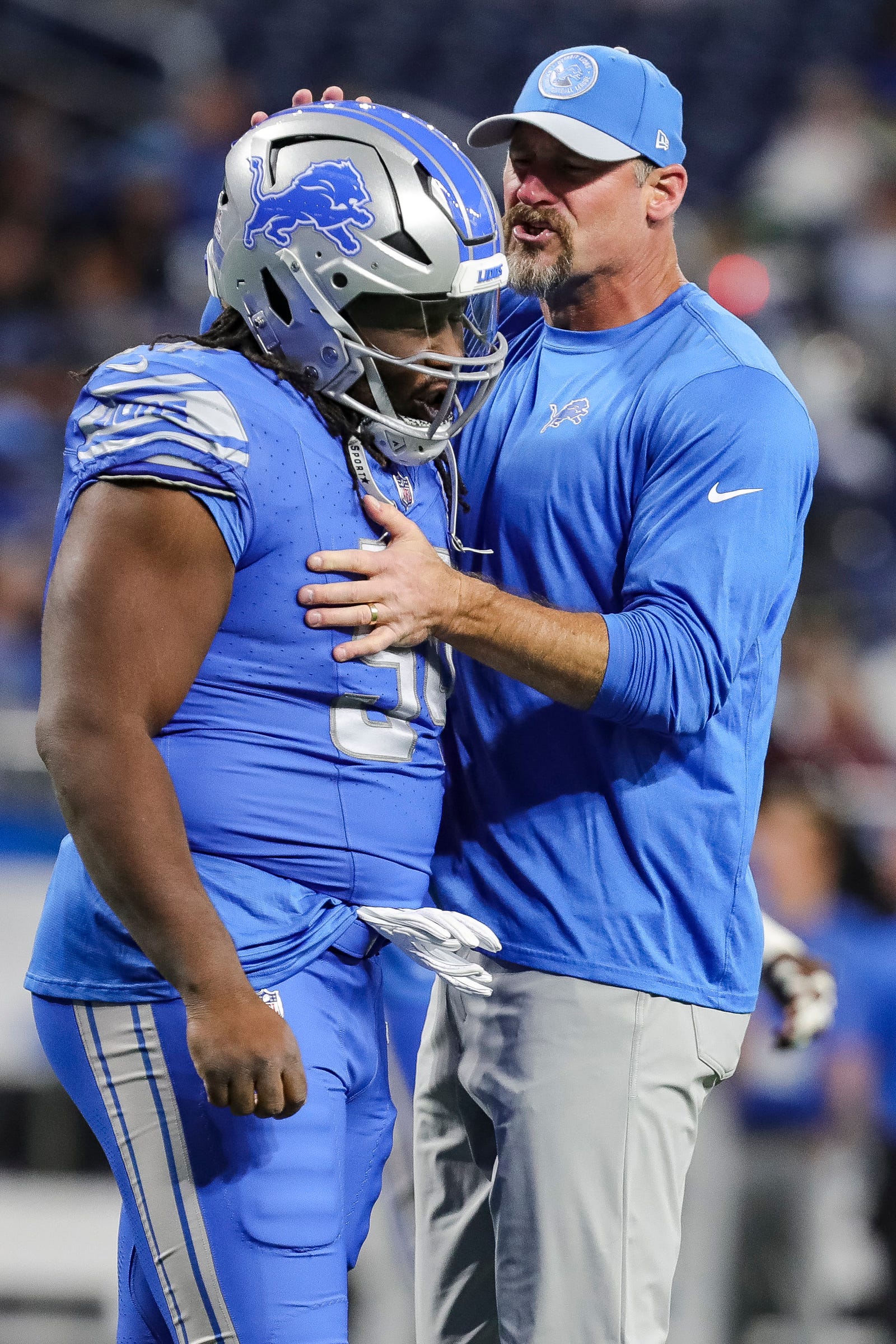 McNeill, whose ACL tear was among the slew of injuries Detroit endured during its 15-2 2024 season, did not make his debut until Week 7 of last season. He joined Onwuzurike on the Lions’ reserve/PUP list to start the campaign. McNeill, whom the Lions extended two months before his injury in 2024, played 10 games last season but said he was not fully healthy. That has since changed.
[RELATED: S Kerby Joseph Uncertain For Week 1]
Describing himself as limited in his first season back from ACL rehab, McNeill said (via DetroitLions.com’s Tim Twentyman) there is a “night and day” difference between then and now in terms of health. That is certainly welcome news for the Lions, who gave the former third-round pick a four-year, $97MM extension. The interior disruptor accompanies 2025 first-round pick Tyleik Williams as centerpieces of Detroit’s defensive line.
“Just being able to connect the mind and the body. Just my brain being able to know this leg is good and I can step and plant here,” McNeill said. “If you don’t have an inside rush, it doesn’t matter what you do. It’s what I’m here to do and what I’m going to do.”
McNeill, 26, finished last season with just one sack and two tackles for loss; the latter figure represented a career-low mark. McNeill had recorded at least six TFLs in each of the previous three seasons, combining for 19 from 2022-24. The high-priced D-lineman tallied just three quarterback hits; he combined for 24 over the previous three seasons. The Lions will be expecting a return to form in McNeill’s sixth season. His contract carries a full guarantee for 2026 and a $3MM guarantee in 2027.
McNeill heads up a Lions interior D-line corps that still includes Owuzurike, whose 2025 contract tolled due to him spending a full season on the team’s reserve/PUP list in a contract year (h/t Detroit Football’s Justin Rogers), to go with Williams, free agency addition Jay Tufele, third-year player Mekhi Wingo and sixth-round rookie Skyler Gill-Howard.
Lions Unsure If S Kerby Joseph Will Be Ready For Week 1
The Lions are a little over three months away from kicking off their season against the Saints on Sept. 13. It is unclear if standout safety Kerby Joseph, who is managing a degenerative knee condition, will be ready by then (via Dave Birkett of the Detroit Free Press).
Asked Thursday if Joseph will be on the field in Week 1, head coach Dan Campbell said, “Honestly, we probably won’t know until we get into the thick of training camp.”
Joseph, a third-round pick in 2022, did enough over his first three seasons to earn a massive extension. Coming off a first-team All-Pro campaign in which he pulled in an NFL-leading nine interceptions, he inked a four-year, $86MM deal in April 2025. The agreement briefly made the 25-year-old the league’s highest-paid safety (the Ravens’ Kyle Hamilton surpassed him last August).
After the Lions made a huge long-term commitment to Joseph, it was clear they expected him and Brian Branch to continue forming an elite safety duo for at least a couple of more years. Unfortunately for Detroit, injuries foiled those plans for most of 2025. Joseph’s knee limited him to six games, and his last appearance came in an Oct. 12 loss to the Chiefs. Branch, meanwhile, missed five games (one because of a suspension) and tore his Achilles in a Week 14 win over the Cowboys on Dec. 4. Thanks in part to their absences, the Lions went a middling 9-8 and missed the playoffs for the first time since 2022.
Because Branch suffered his Achilles tear late last season, he is not expected to be ready for the start of camp in late July. It is up in the air whether Joseph will still be sidelined then, though Campbell said the defender has “done everything he can do to this point” during the rehab process.
With Joseph and Branch on the mend from major injuries, the Lions added veteran safeties Christian Izien and Chuck Clark on modest free agent deals earlier in the offseason. Those two have worked with the first-team defense in OTAs this spring, per Birkett, and could be in for big roles if one or both of the Lions’ starters are still on the shelf in September.
Lions Not Close To Extension Agreement With RB Jahmyr Gibbs
JUNE 4: When speaking to the media on Thursday, Gibbs said (via ESPN’s Eric Woodyard) he is not worried about agreeing to a new deal in time for the upcoming season. He added he is also not concerned about the possibility of Robinson signing his extension earlier. It will be interesting to see how the timing shakes out with those two backs, and the impact one deal will ultimately have on the other.
MAY 30: The Lions have finalized one big-money second contract with a member of their 2023 draft class (linebacker Jack Campbell). Three other notable players from that group are eligible for extensions, including Jahmyr Gibbs.
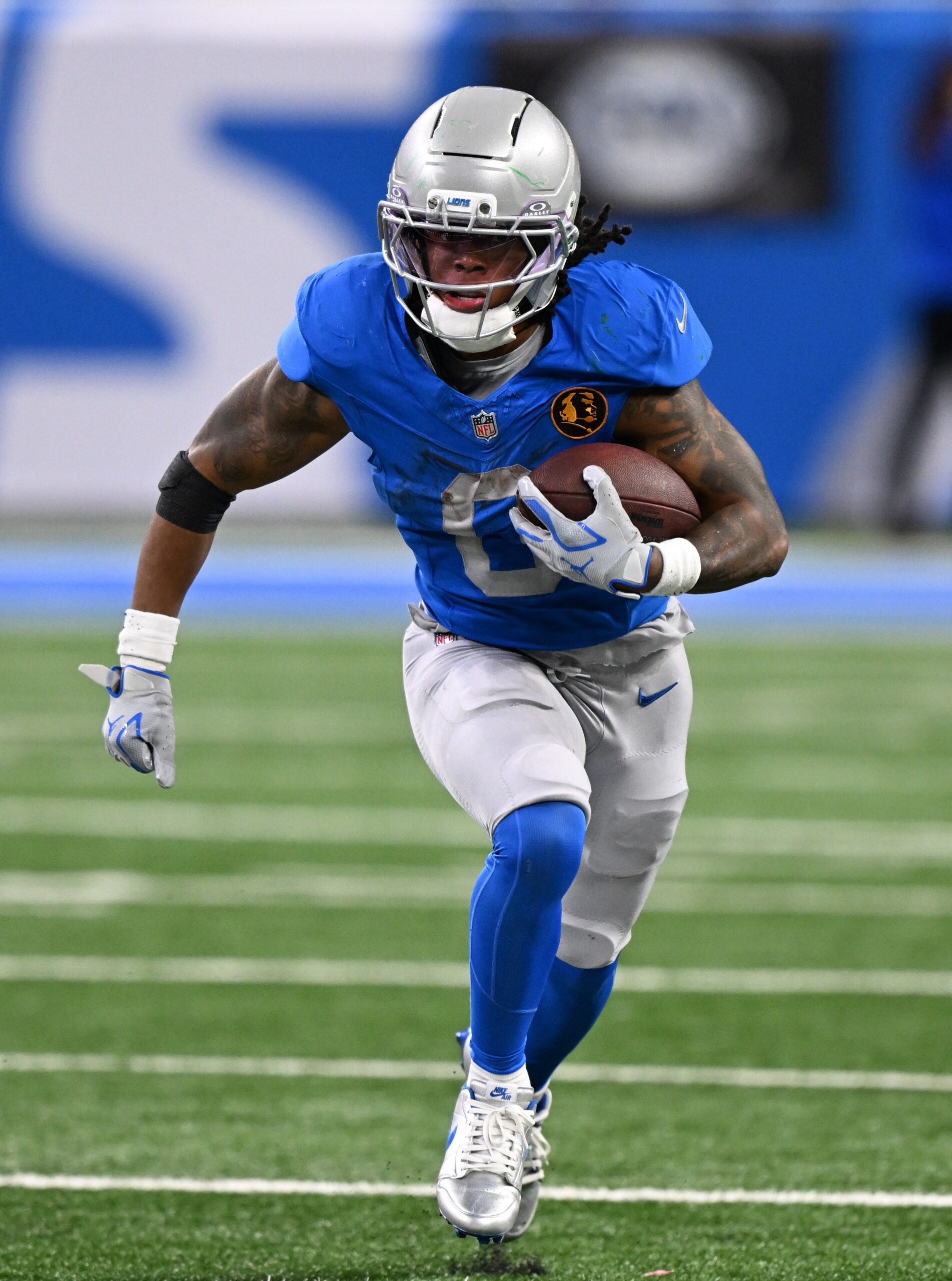 A payday for Detroit’s lead back has long been on the team’s radar. It would come as little surprise if Gibbs were to find himself securing a new deal relatively soon as he appears to be the next in line for one. There is plenty of work still to be done on that front, however.
During an appearance on NFL Live yesterday (video link), ESPN’s Jeremy Fowler reported there has not yet been much progress during negotiations between Gibbs and the Lions. Plenty of time remains for an agreement to be reached before the start of training camp, of course. Detroit also has the option of remaining patient in this case with Gibbs under team control through 2027.
A key factor as it pertains to Gibbs will no doubt be the movement seen in the running back market as early as this summer. Fowler noted, to no surprise, a pact averaging $20MM or more per year is likely for Gibbs. Saquon Barkley‘s pact currently leads all running backs with an average annual value of $20.6MM, but the bar could move multiple times in short order. Bijan Robinson is a strong candidate to become the league’s highest-paid back; he and Gibbs have become two of the NFL’s most productive at the position across the past three years.
A report from last month indicated Robinson is expected to land a more valuable extension than Gibbs. According to Fowler, however, some around the league view Detroit’s RB1 as being better than Atlanta’s. That could result in Gibbs moving to the top of the financial pecking order. In any case, the timing of extensions being worked out will no doubt be critical, and each fourth-year producer could prefer to wait until the other signs a deal.
Gibbs split carries with David Montgomery during his rookie season in particular, but he has taken on a major workload on the ground and through the air since arriving as a first-round pick. The 24-year-old has amassed over 5,000 scrimmage yards to date while scoring 49 total touchdowns. Any commitment made by the team will ensure Gibbs remains in the Motor City while making him one of several offensive players attached to a big-ticket deal.
The likes of quarterback Jared Goff, receiver Amon-Ra St. Brown and left tackle Penei Sewell are already on the books at a large cost for Detroit. Tight end Sam LaPorta is a pending 2027 free agent, and the Lions are also interested in a new contract in his case. Fitting Gibbs into that financial setup will carry challenges, but an uptick in negotiations to work out a long-term pact is likely to take place over the coming weeks.
Lions WR Kendrick Law Suffers ACL Tear
Kendrick Law will not be available to the Lions in 2026. Head coach Dan Campbell said on Thursday (via team reporter Tim Twentyman) the rookie receiver tore his ACL in practice earlier this week.
Law was the second of two players selected in the fifth round of April’s draft by the Lions. The Alabama and Kentucky product experienced a significant uptick in production during the 2025 season, his first and only as a member of the Wildcats. Law posted 540 yards on 53 catches during his final college campaign.
A depth role awaited him upon entry into the NFL, but Law’s attention will now turn to a lengthy recovery period instead. The soon-to-be 23-year-old will attempt to rehab in time for spring workouts and training camp next year and in doing so allow himself to carve out a roster spot in 2027. Law’s rookie contract runs through 2029.
Detroit’s passing attack will once again lean heavily on Amon-Ra St. Brown and Jameson Williams this season. Both veterans remain attached to big-ticket deals, and their performances will be key in allowing the Lions to return to the playoffs in 2026. Isaac TeSlaa – taken in the third round of last year’s draft – along with free agent signings Greg Dortch and Cedrick Wilson round out the top spots on the WR depth chart.
Law will be headed to injured reserve as confirmation his rookie campaign ended well before it began. Meanwhile, the Lions signed another wideout in the form of Kyre Duplessis on Thursday, per a team announcement. He will look to fill in for Law in terms of competing for a backup/special teams role over the course of the summer.
Lions Add Chris Grier To Front Office
Lions general manager Brad Holmes is adding another experienced voice to his front office. Holmes has hired former Dolphins GM Chris Grier as a personnel executive, Adam Schefter of ESPN reports.
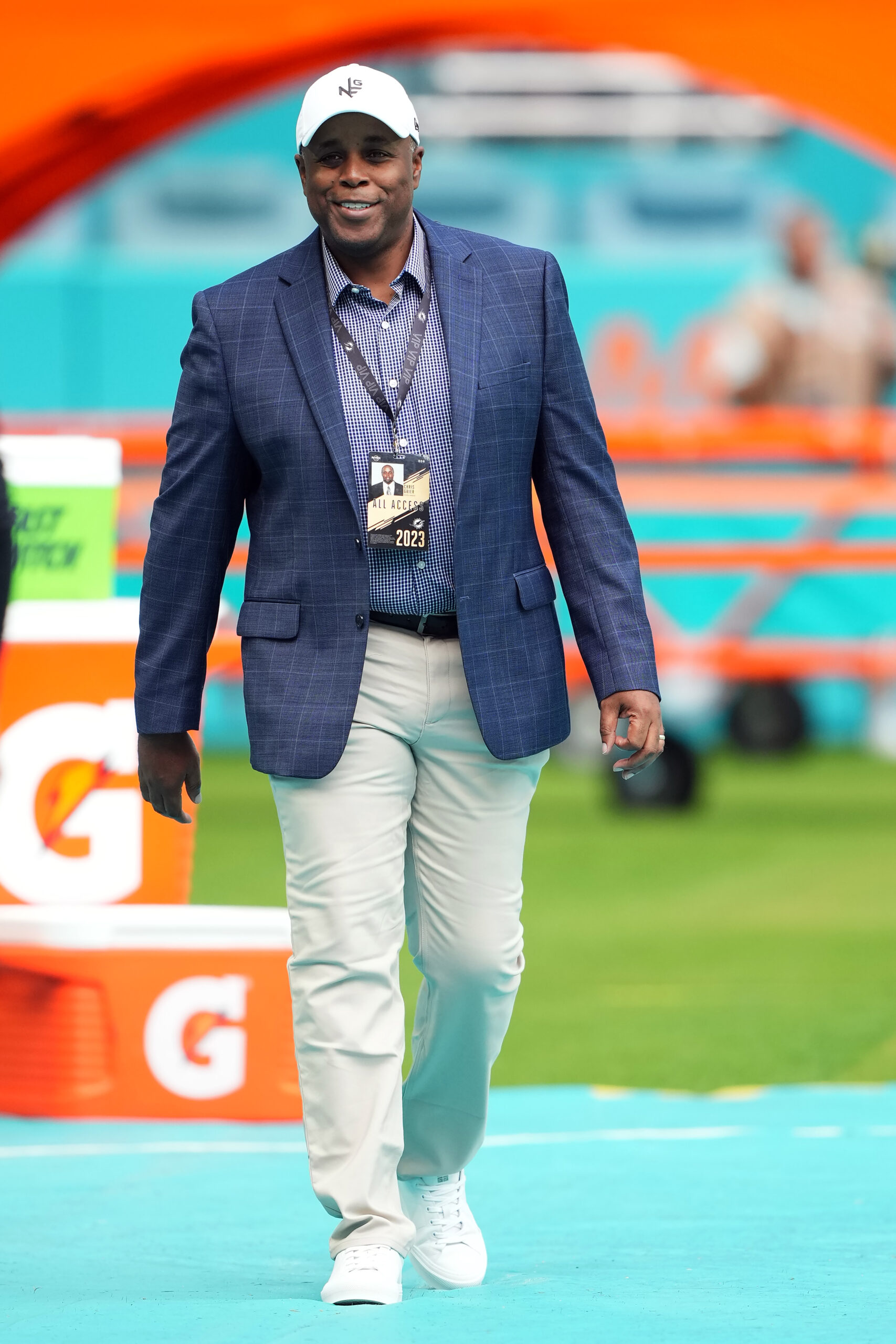
After the Dolphins struggled to a 2-7 start in 2025, they and the 56-year-old Grier parted ways on Halloween. The split ended a long run in Miami for Grier, who began his tenure with the organization as a scout in 2000. Grier worked his way up from there to become the Dolphins’ GM in 2016, though he did not have full autonomy at first. He reported to vice president of football operations Mike Tannenbaum until his late-2018 demotion.
Grier’s time atop the Dolphins’ front office included a pair of head coaching hires in Brian Flores (2019) and Mike McDaniel (2022). His first-round draft picks consisted of Laremy Tunsil, Charles Harris, Minkah Fitzpatrick, Christian Wilkins, Tua Tagovailoa, Jaylen Waddle, Chop Robinson and Kenneth Grant. Grier spent other first-rounders on veterans Tyreek Hill and Bradley Chubb in high-profile trades. Out of that group, only Robinson and Grant are still with the organization.
Tagovailoa looked like a franchise quarterback at times in Miami, leading Grier to authorize a four-year, $212.4MM extension with $167.1MM guaranteed in July 2024. That decision proved disastrous for the Dolphins, who released the former fifth overall pick this past March and ate a record-breaking $99.2MM in dead money. They are spreading that money out over the next two years, meaning Tagovailoa will be on their books through 2027. The same goes for Chubb. Tagovailoa, Hill and Chubb will combine to count over $96MM in dead money against the Dolphins’ cap this season. Former Grier acquisitions like Waddle, Fitzpatrick and Jalen Ramsey are also among ex-Dolphins who are eating into their cap to significant degrees.
Miami went to the playoffs three times with Grier as its GM and finished better than .500 in five seasons, but the team never won a playoff game. Rookie GM Jon Eric-Sullivan, Grier’s replacement, is now leading a full-fledged rebuild.