
Considerable Interest In S Justin Simmons
Jamal Adams followed Marcus Maye in coming off the free agent board this summer, landing a deal with the Titans on Thursday. Safety talent still resides on the market, and Justin Simmons headlines that list.
The former Broncos standout, who received four second-team All-Pro nods over the past five seasons, has been available for four months now. A lack of interest is not keeping the eight-year veteran unsigned. As could be expected given Simmons’ age (30) and accomplishments, money is the lead driver here.
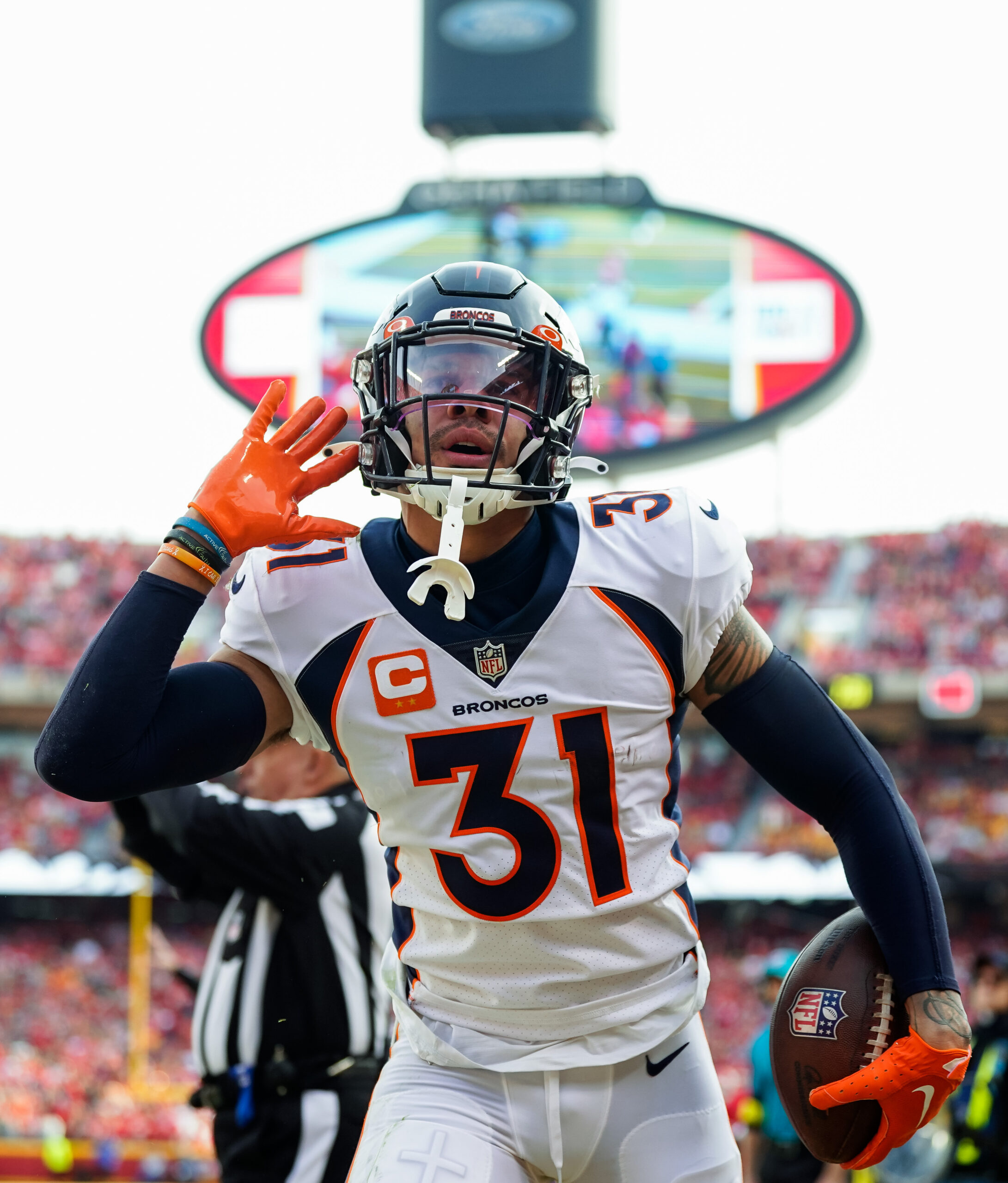 Several teams consider Simmons the top free agent remaining, per NFL.com’s Ian Rapoport, who adds the longtime Denver starter has drawn considerable interest during his time on the market. A recent report suggested low-money deals featuring incentives were likely for a safety glut that still includes Simmons, Quandre Diggs and Eddie Jackson. Simmons probably checks in a tier higher here, which has made his availability somewhat curious even as the safety market has fluctuated.
This offseason brought three big-ticket deals — for Antoine Winfield Jr., Xavier McKinney and Kyle Dugger — with the Buccaneers defender scoring a position-record extension. Winfield’s four-year, $84.1MM contract not only set a safety record, it came in with a higher AAV than any cornerback has secured to date.
Free agency, however, also brought a modest contract for Kamren Curl (two years, $9MM) and midlevel pacts for the likes of Geno Stone (2/14) and Rayshawn Jenkins (2/12). Kevin Byard joined Simmons as a cap casualty; the Bears gave him a two-year, $15MM pact. C.J. Gardner-Johnson, who has an extensive past in the slot, signed a nine-year, $27MM deal to return to the Eagles. But just $10MM is guaranteed at signing.
It would stand to reason Simmons is aiming fairly high, given his production. Since coming into the league in 2016, Simmons has snared more interceptions (30) than anyone else. This came after the former third-round pick waited a year to start behind former Super Bowl cogs T.J. Ward and Darian Stewart. Simmons also already cashed in, having played the 2020 season on the franchise tag before spending three seasons on a four-year, $61MM extension.
With considerable earnings banked, Simmons is also likely prioritizing a fit. The Broncos drafted Simmons two months after a Super Bowl parade but have not made the playoffs since. Landing with a contender makes sense for the Boston College alum; a Broncos reunion is viewed as highly unlikely, as the team has made lower-cost plans at the position.
Experienced players have been known to wait until training camp or occasionally into the preseason to sign. Camp gives teams a better view of where position groups stand, and injuries obviously can shake up depth charts. With camps starting in less than three weeks, Simmons’ 2024 destination should be known fairly soon. It will be interesting to see if he lands a one-year deal with hopes of a better market in 2025 or secures a notable multiyear commitment this summer.
Former Bucs DC Monte Kiffin Dies At 84
Monte Kiffin, who served as the Buccaneers’ defensive coordinator for 13 seasons in the 1990s and 2000s, died Thursday. He was 84. An NFL assistant for nearly 30 years, Kiffin served as the driving force behind the Bucs’ dominant Super Bowl XXXVII-winning defense.
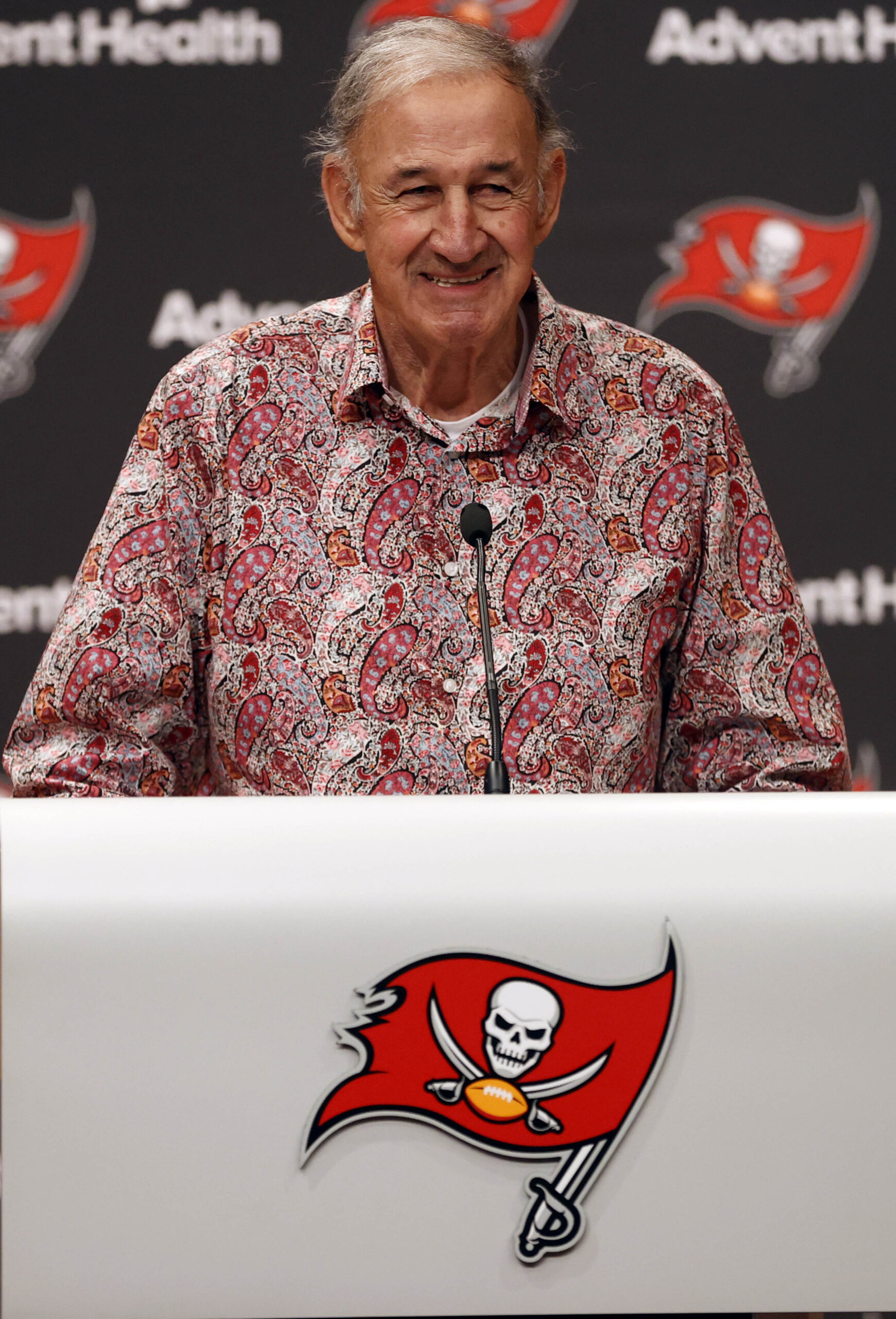 Tony Dungy brought Kiffin to Tampa upon being hired in 1996; the two had worked together in Minnesota previously. Kiffin stayed on beyond Dungy’s 2002 firing, remaining with the team under Jon Gruden and architecting one of the best defenses in NFL history. Featuring four Hall of Fame-bound defenders, the ’02 Bucs led the NFL in scoring and total defense and intercepted five passes in a Super Bowl rout of the Raiders.
Prior to unleashing the Tampa-2 defense he helped create, Kiffin had previously served as Vikings DC in 1991 and Saints DC four years later. Those were one-offs, however, with Dungy’s offer cutting the New Orleans stay short. Kiffin certainly played a significant role in Derrick Brooks, Warren Sapp, Ronde Barber and John Lynch establishing Canton candidacies.
“Monte Kiffin was a beloved and iconic member of the Buccaneers family, and our entire organization mourns his loss today,” the Bucs said in a statement. “As a coach, Monte was a true innovator who got the best out of his players and helped create one of the signature defenses of the early 2000s. His passionate and energetic leadership style resonated with all his players, and he was instrumental in our first Super Bowl win and the success of Hall of Famers such as Warren Sapp, Derrick Brooks, John Lynch and Ronde Barber.”
Also an assistant with the Packers, Bills and Jets, Kiffin later served as the defensive coordinator for son Lane during the latter’s one-season stay as the Tennessee Volunteers’ head coach. Monte Kiffin followed his son to USC, a stint that helped reestablish the former Raiders HC in the college game, before returning to the NFL as Cowboys DC.
The Dallas 2013 stint also stopped after one season, with Dallas hiring Rod Marinelli as DC in 2014. Monte Kiffin stayed on for one more season as a Cowboys assistant, however, before a Jaguars stop. Kiffin’s final two coaching roles came under Lane at Florida Atlantic and Ole Miss. The Kiffin patriarch was a Rebels analyst as recently as last season.
The Bucs gig earned Kiffin a place in the franchise’s ring of honor. While the Bucs peaked in 2002, Dungy and Kiffin led the way in rebooting a moribund franchise in the late 1990s. The Bucs voyaged to the Super Bowl XXXIV precipice, intercepting Kurt Warner three times in an 11-6 defensive tussle. After two playoff losses in Philadelphia doomed top-10 defenses, the Bucs outscored their 2002 playoff opposition 116-37. Four of Tampa Bay’s postseason TDs came on pick-sixes, with three of those taking place in the team’s Super Bowl romp.
Cornerback Addition On Falcons’ Radar?
AJ Terrell resides as one of the NFL’s better corners, and an extension for the 2020 first-rounder is under consideration. Supplementing the Terrell-fronted position group may be as well.
As of now, the Falcons are planning to pit Mike Hughes and Clark Phillips in a matchup for the No. 2 cornerback post alongside slot Dee Alford. This competition could certainly determine if the team views it is a man short at this premium position. Although Hughes and Phillips were both Falcons regulars last season, a new coaching staff is calling the shots. The Falcons should “probably” be viewed as prepared to add a corner before or during training camp, The Athletic’s Josh Kendall writes (subscription required).
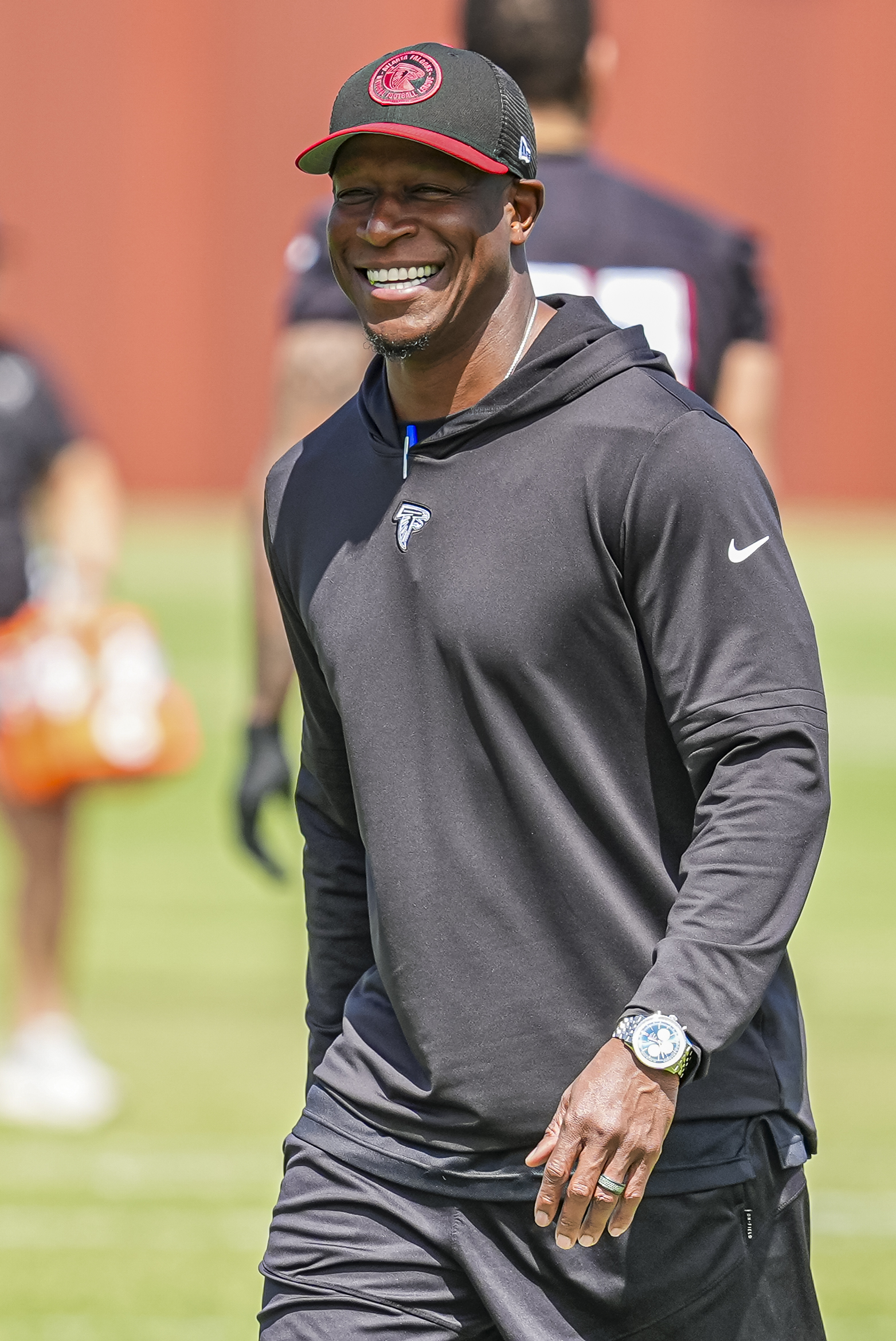 This is interesting due to the team having already added Antonio Hamilton, who spent the past two seasons with the Cardinals. Though, Hamilton is going into his age-31 season and operated as a part-time starter in Arizona. A former Vikings first-round pick, Hughes started four games last season. Phillips, a 2023 fourth-rounder, was a five-game starter. This array of Terrell sidekicks may prove sufficient, but Raheem Morris and DC Jimmy Lake eyeing more help would not surprise.
Pro Football Focus rated Hughes outside the top 100 among CB regulars last season while slotting Phillips 85th. Seeing more time on Atlanta’s perimeter in 2023, Jeff Okudah left for Houston in free agency. Okudah was among the many veteran corners to change teams this offseason, but a few longtime starters are still unsigned.
After three seasons as a Giants starter, Adoree’ Jackson is still available. The former first-rounder is going into what would be his age-29 season. One of this era’s premier ballhawks, Xavien Howard turned 31 last week. The nine-year Dolphin was also hit with a civil suit this offseason, though it would surprise if no team showed interest in a four-time Pro Bowler.
Patrick Peterson said recently he is staying ready ahead of what would be his 14th season, and 2019 Defensive Player of the Year Stephon Gilmore is unsigned. Peterson is 34, and Gilmore will turn 34 in September. Only two cornerbacks this decade — Josh Norman and Johnathan Joseph — have started a game at age 34 or older. The pedigrees of Peterson and Gilmore, however, will likely open the door to opportunities soon.
The Falcons passed on bolstering their pass defense in Round 1, choosing Michael Penix Jr. instead, though they attempted to trade back into the round for an edge defender. The team did not draft a corner. With big questions regarding Atlanta’s pass rush, it would stand to reason it will consider another move to bolster its coverage abilities.
Rams Re-Sign S John Johnson
JULY 11: Johnson will receive a slight raise for 2024, with USA Today’s Howard Balzer indicating his latest Rams contract is a one-year, $1.38MM accord. The Rams are guaranteeing Johnson $750K. This obviously pales in comparison to the eight-figure-per-year Browns contract Johnson inked in 2021, but he has settled in as a role player during his second Rams stint.
JULY 4: The Rams made the move to reunite with John Johnson last year, bringing the former Super Bowl LIII starter back midway through training camp. Working on a holiday, the club again moved to keep Johnson in the fold.
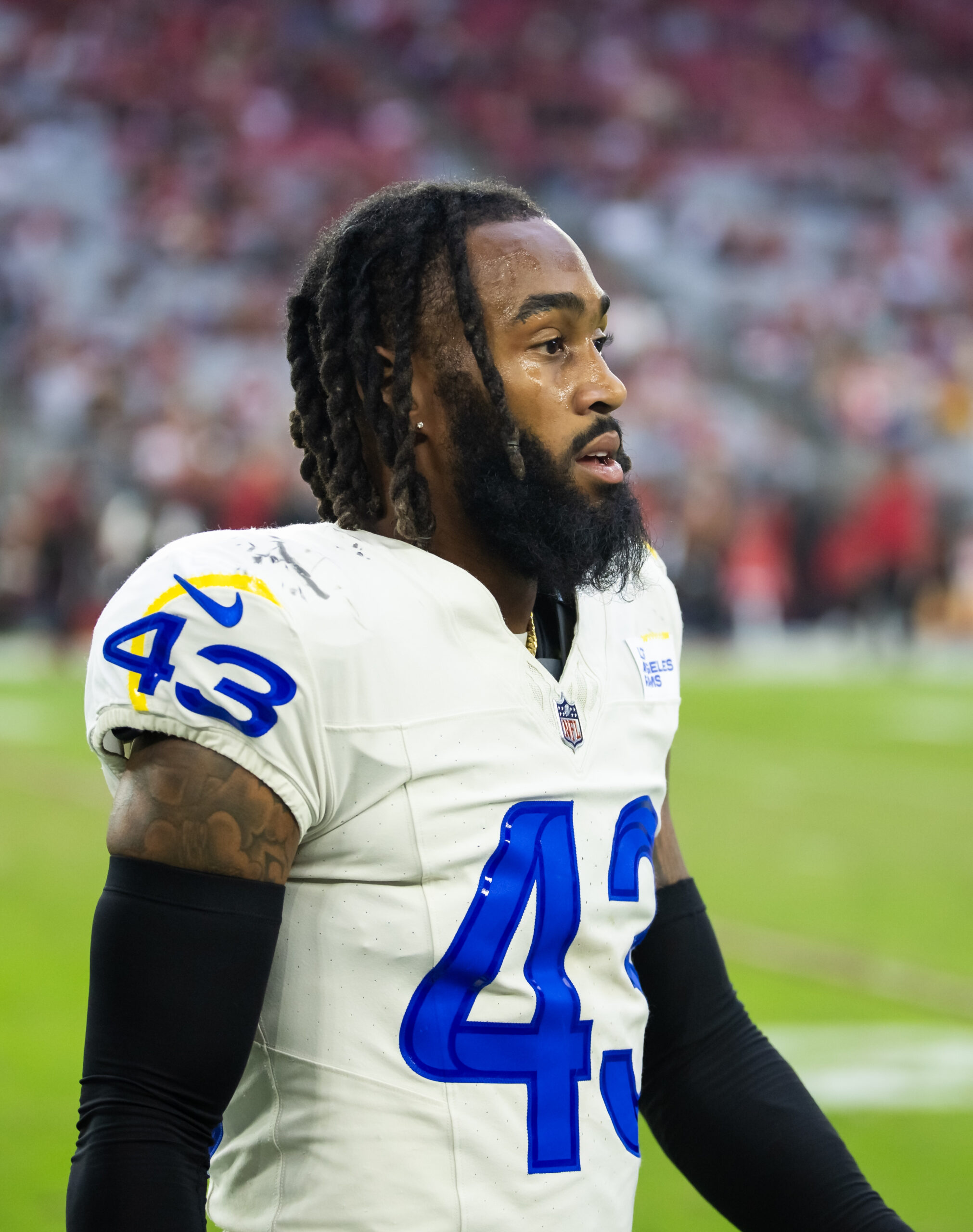 Johnson re-signed with the Rams on Thursday, the team announced. He will join some new safeties in L.A., most notably Kamren Curl. With Thursday’s agreement poised to extend Johnson’s second Rams stint to two years, this will be his sixth season with the team.
After the Browns cut bait on Johnson’s three-year, $33MM deal in 2023, he played in every Rams game last season. The 2017 third-round pick made eight starts and lined up with Los Angeles’ first-stringers in the team’s narrow wild-card loss in Detroit. Going into his age-28 season, Johnson will vie for another regular role at a position group that has seen some offseason updates.
As they did with Johnson three years ago, the Rams let safety starter Jordan Fuller walk in free agency. The Day 3 find wound up with the Panthers. The Rams replaced him with Curl, who signed a modest contract (two years, $9MM) despite being one of the top free agent DBs available. Curl’s contract overlaps with Russ Yeast‘s rookie deal. With both Curl and Yeast signed through 2025, Los Angeles also added Kamren Kinchens in the third round. Despite Fuller’s exit, Johnson returns to a more crowded group.
Johnson played 574 defensive snaps last season, making 42 tackles and intercepting two passes. Pro Football Focus ranked Johnson 77th at the position, however, and no free agency rumors followed the Boston College alum this offseason. Johnson played for just $1.1MM last season; it stands to reason his third Rams contract comes in at a similar rate.
Commanding the three-year Cleveland commitment in 2021, Johnson delivered good value for a Rams team that needed to keep hitting on later-round draft choices due to the lack of first-round picks available and high-priced contracts flooding the top of the payroll. Chosen in Sean McVay‘s first offseason in L.A., Johnson started 48 games from 2017-20. While the 2018 NFC championship game is better known for a missed pass interference call, Johnson keyed the team’s route to the Super Bowl by intercepting an overtime Drew Brees pass.
Johnson was initially one of the starters the Rams were comfortable parting with to afford their high-end contracts, but after the veteran DB tumbled off the eight-figure-per-year level, he has settled in as a role player back with his original team.
Community Tailgate: The Cowboys’ Contract Dilemma
The 2019 Cowboys offseason featured several extension candidates. The team ended up paying most of them, giving extensions to Ezekiel Elliott, Dak Prescott, La’el Collins and Jaylon Smith. Dallas eventually re-signed Amari Cooper, though he hit free agency before that deal was finalized. Byron Jones departed for Miami shortly before the Cooper agreement.
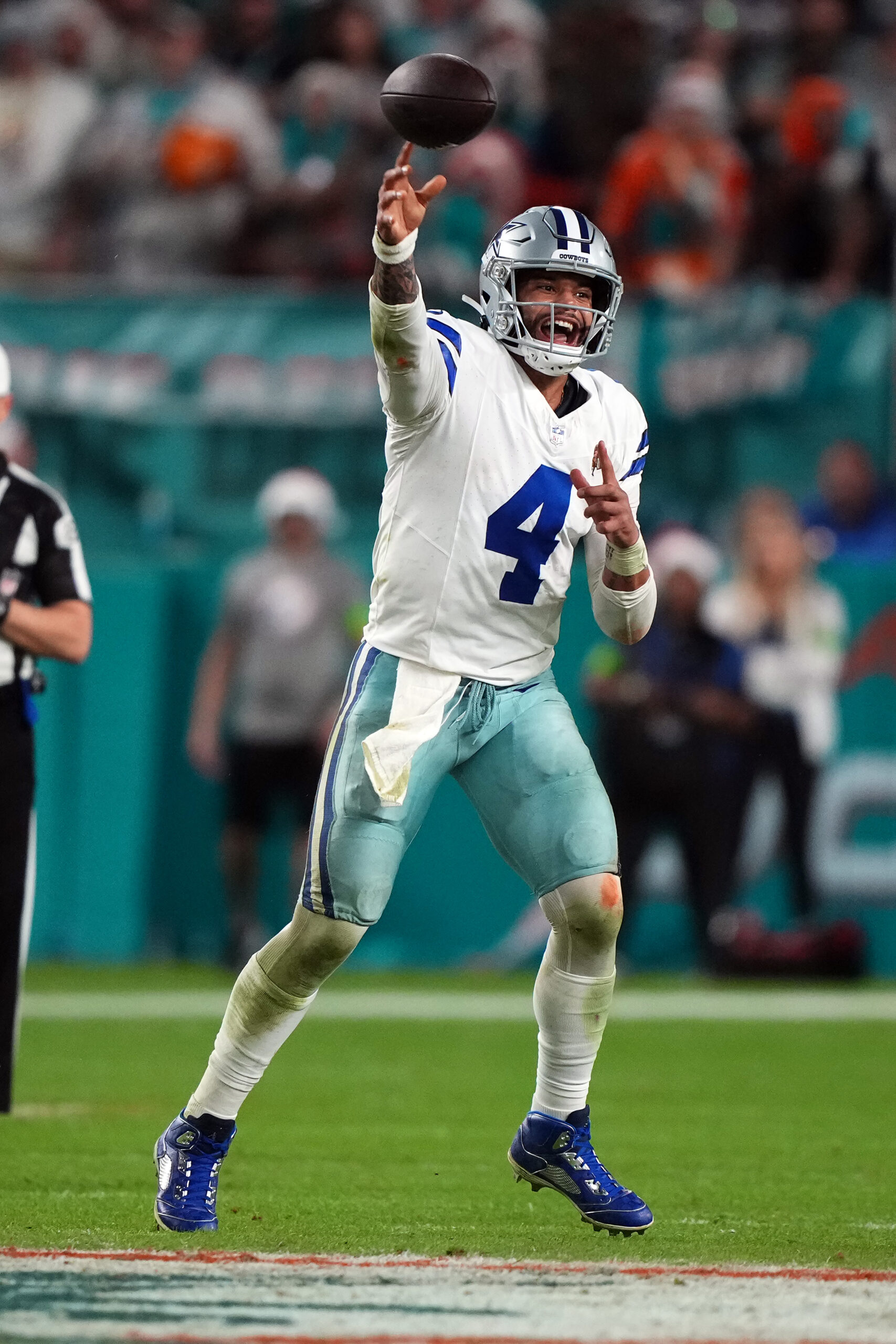 Although one of the extensions — Prescott’s — affects where the Cowboys are now, this offseason’s dilemma dwarfs where Dallas stood five years ago. Three players — Prescott, CeeDee Lamb, Micah Parsons — are either in contract years or eligible for an extension. Each member of the trio can make a case to become the highest-paid player at his position. For Lamb and Parsons, that means the highest-paid non-QB. Prescott has unique leverage to force the issue into not only becoming the NFL’s highest-paid player but creating a gap between himself and No. 2 on that list.
The Cowboys are not believed to want to set markets, but they may not have a choice. This qualifies as a good problem, given the talent Parsons and Lamb have displayed on their rookie deals. Prescott has not proven himself to be as good at his position compared to the younger Cowboys stars, but as an upper-echelon quarterback, he would carry significant leverage even if his contract situation veered toward a standard place.
But Dak’s circumstances are far from standard. The former Day 3 sensation bucked the trend by playing out his fourth season, for fourth-round money, and waiting on an extension. This meant a year on the franchise tag. Despite that 2020 season being cut short by an ankle injury that still impacts him today, Prescott secured a four-year, $160MM deal just before the March 2021 deadline to apply franchise tags. Prescott became the outlier Cowboy standout, signing for less than five years, and his leverage-maximization tactics led to a procedural franchise tag and a no-trade clause. Part one of that effort looms large years later.
It is hard to overstate how much leverage the Cowboys have given their ninth-year quarterback. Not only can Prescott not be tagged or traded, an offseason restructure placed a $40.13MM dead money figure in play for 2025. That penalty would hit Dallas’ 2025 cap sheet if Prescott is not re-signed before the start of the 2025 league year. The Vikings are taking this medicine after Kirk Cousins departed in March, though Minnesota’s dead cap hit from that defection is $28.5MM.
 Prescott is also tied to what would be a record-setting 2024 cap number ($55.13MM) — Dak, Deshaun Watson and Daniel Jones would each set that record barring changes to their contracts — but the void years on his contract threaten a future penalty. A Zack Martin restructure would also give Dallas a $26.5MM dead cap hit if he is not re-signed before the ’25 league year. Prescott, 30, securing a deal in the $60MM-per-year ballpark should be considered in play based on the ammo he carries.
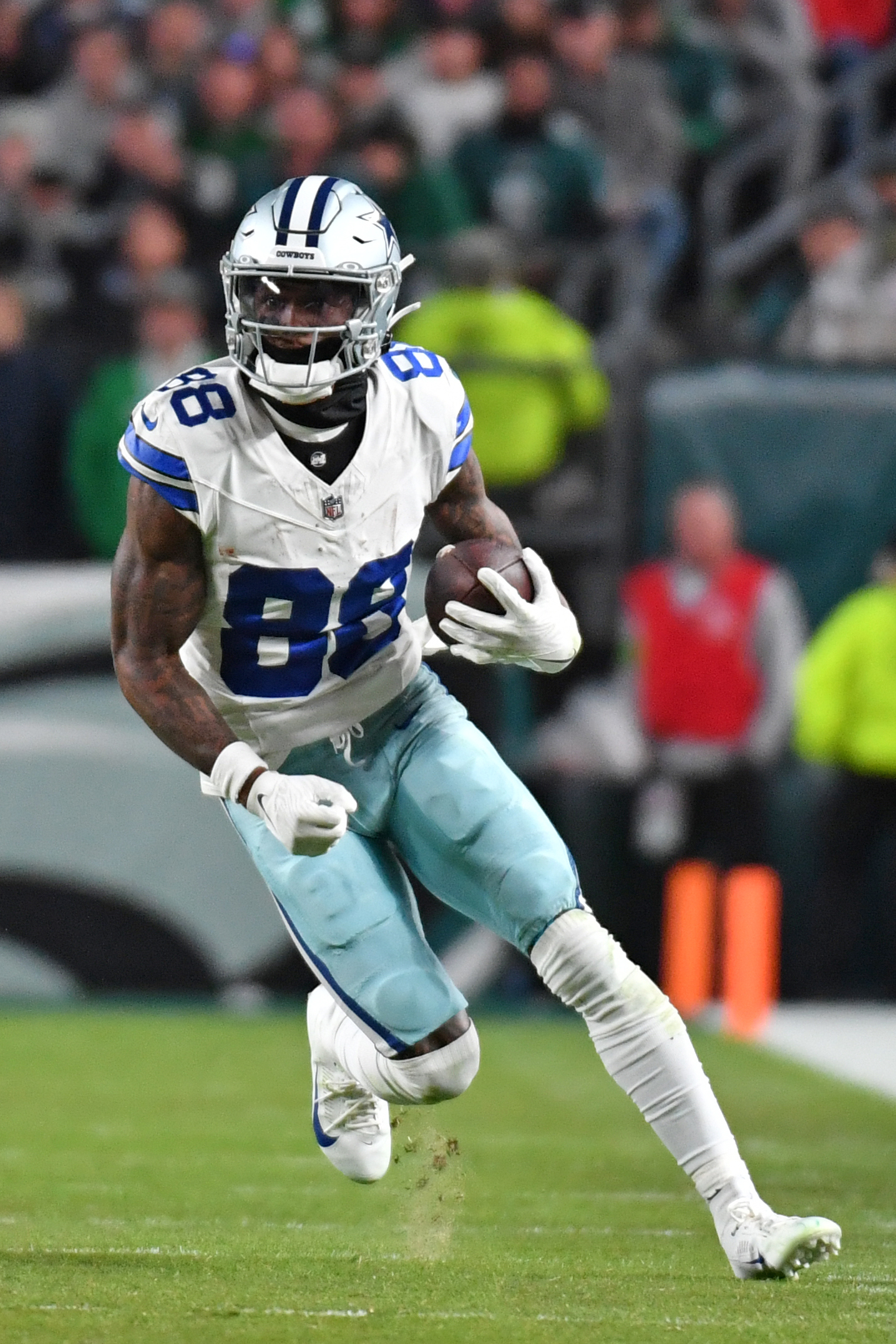
While the 49ers have seen their Brandon Aiyuk talks impacted by another receiver market boom, the Cowboys are more directly affected by what took place in Minnesota last month. The Vikings gave Justin Jefferson a $35MM-per-year deal that includes record-smashing guarantees ($110MM in total, $88.7MM at signing). The latter figure hovers a staggering $36MM north of the next-closest wideout. Aiyuk has been tied to wanting a guarantee north of $80MM; Lamb — a two-time Pro Bowler and 2023 first-team All-Pro — has proven more and can make a stronger case for Jefferson-level terms.
As they prepare to make a strong Prescott offer, the Cowboys may well have their QB in place as a higher priority compared to their top pass catcher. Lamb can be tagged in 2025, and while the team has used its franchise tag in six of the past seven years, a cap hold near $25MM would be an issue. Though, the Cowboys — albeit without Prescott, Martin and Lamb signed for 2025 — are projected to hold more than $64MM in cap space next year. They would have an easier time tagging Lamb than the 49ers would cuffing Aiyuk. For 2024, a Lamb holdout looms. Martin succeeded down this path last year, but Lamb’s matter is different due to the WR seeking a monster extension instead of more security on an existing contract.
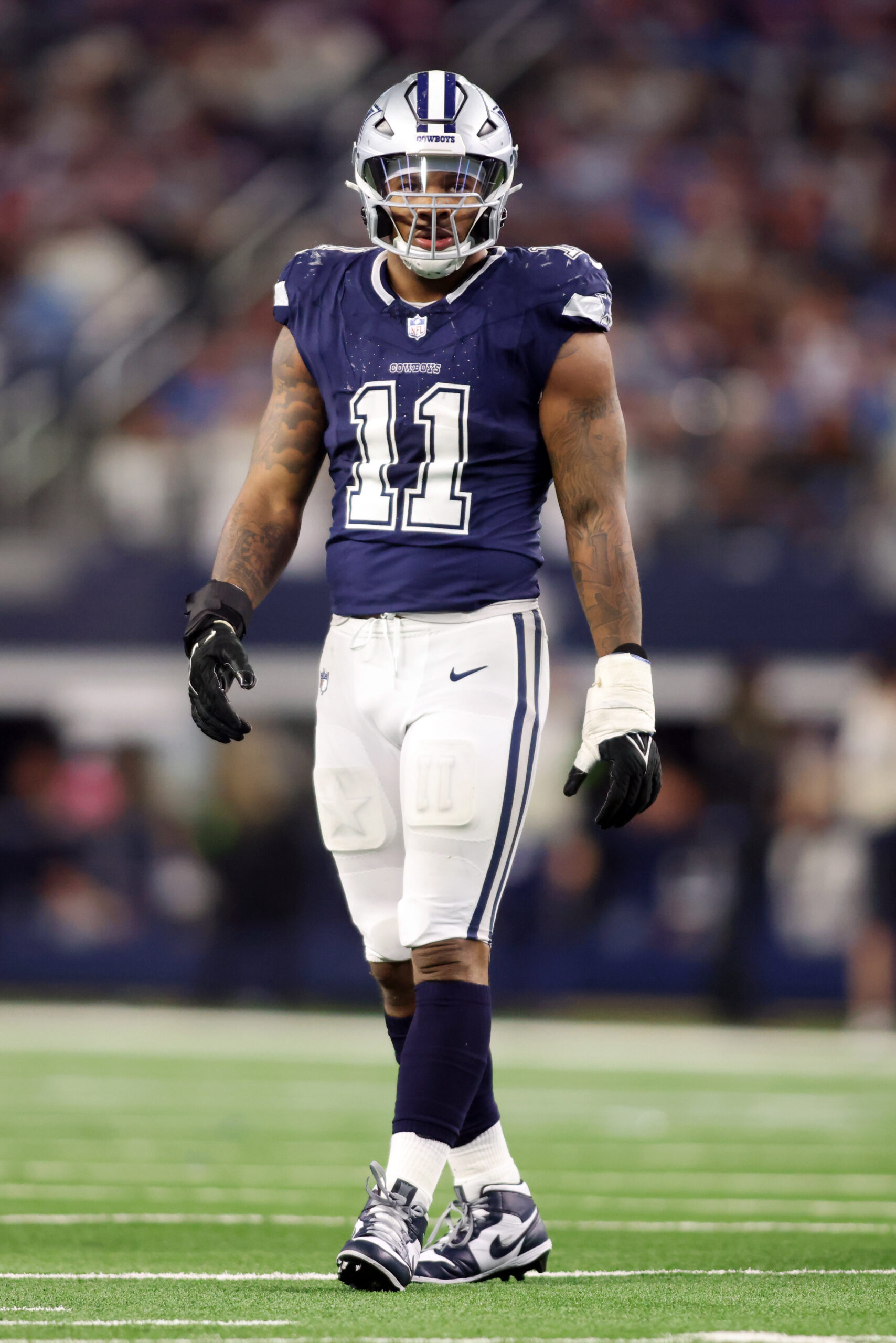 Expecting to become the NFL’s highest-paid non-QB, Parsons has said waiting until 2025 for his payday would be acceptable. Another cap jump and another dominant season would put him on track to command close to $40MM per year, though the Cowboys do not expect next year’s cap spike to match this year’s $30.6MM jump. If the Cowboys do finalize extensions for Prescott and Lamb this year, will three top-market contracts be a workable scenario?
Of the three, Parsons is probably the best overall player. The three-time All-Pro is tied to a 2025 fifth-year option and could be tagged in 2026, separating this matter from the near-future Prescott and Lamb deadlines. But the Cowboys will certainly need to factor in a Parsons payday as they navigate talks for their QB-WR combo.
The team would have saved money by extending Prescott or Lamb last year, but the team checked off other boxes — re-ups for Trevon Diggs and Terence Steele — as these expensive matters lingered. Time is running out for Jerry Jones and Co. to begin enacting solutions before training camp.
How will the team end up resolving this quandary? As costs rise, will trade rumors emerge surrounding one of the standouts? Weigh in with your thoughts on the Cowboys’ situation in PFR’s latest Community Tailgate.
The NFL’s Longest-Tenured GMs
The NFL’s general manager ranks featured some key shakeups this offseason. One of the longest-tenured pure GMs in the game, Tom Telesco, lost his Chargers seat 11 years in. The Raiders, however, gave Telesco a second chance. He now controls the Las Vegas roster. Only Telesco and the Jaguars’ Trent Baalke reside as second-chance GMs currently.
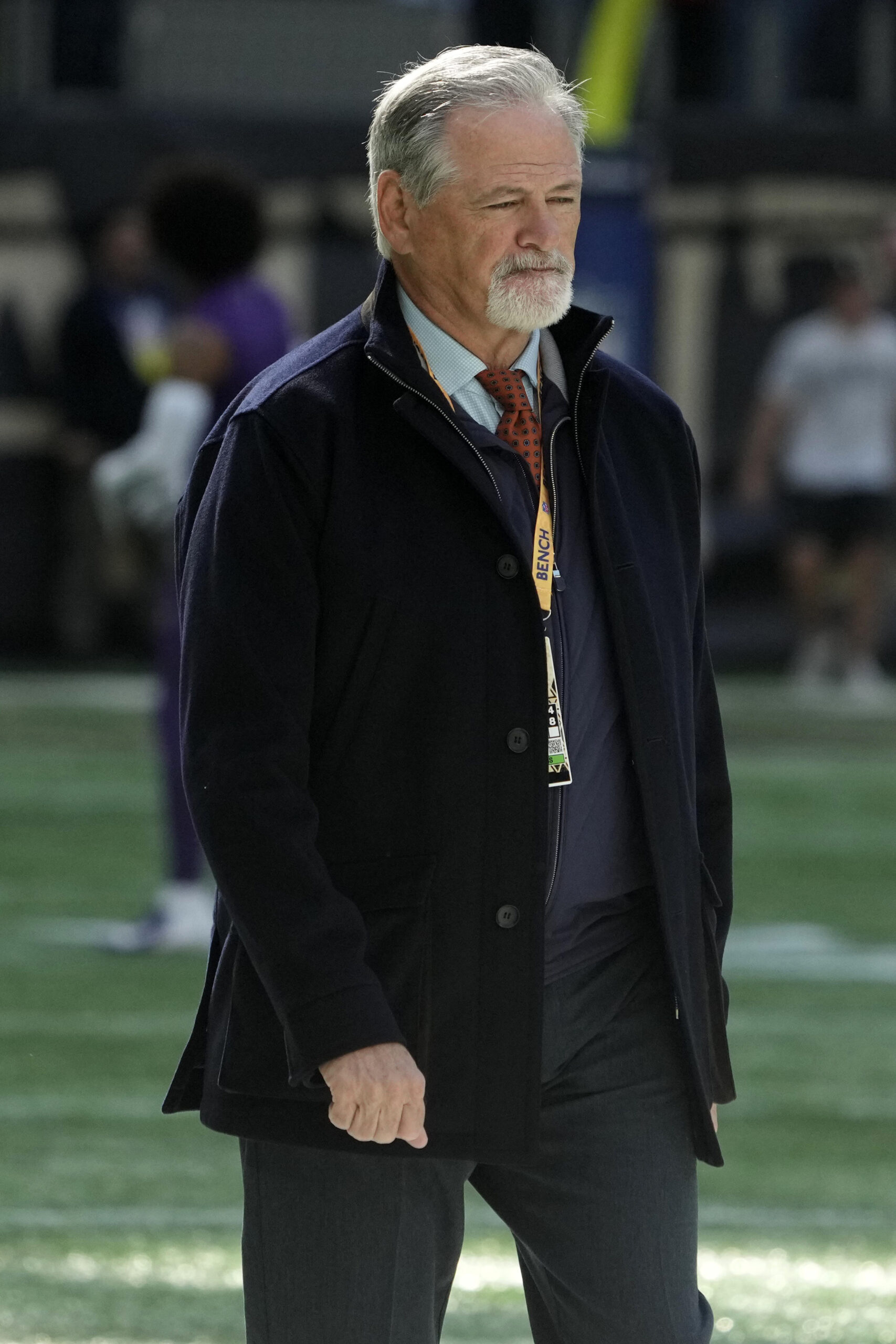 Two long-serving personnel bosses also exited this offseason. The Patriots’ decision to move on from 24-year HC Bill Belichick gave Jerod Mayo a head coaching opportunity but also resulted in Eliot Wolf belatedly rising to the top of the team’s front office hierarchy. A former Packers and Browns exec, Wolf held decision-making power through the draft and kept it on an official basis soon after. While John Schneider arrived in Seattle with Pete Carroll in 2010, the latter held final say. Following Carroll’s ouster after 14 seasons, Schneider has full control.
[RELATED: The NFL’s Longest-Tenured Head Coaches]
The Commanders changed GMs this offseason, hiring ex-San Francisco staffer Adam Peters, but Martin Mayhew received merely a demotion. The three-year Washington GM, who worked alongside Peters with the 49ers, is now in place as a senior personnel exec advising Peters. Rather than look outside the organization, Panthers owner David Tepper replaced Scott Fitterer with Dan Morgan, who had previously worked as the team’s assistant GM.
Going into his 23rd season running the Saints, Mickey Loomis remains the NFL’s longest-serving pure GM. This will mark the veteran exec’s third season without Sean Payton. An eight-year gap now exists between Loomis and the NFL’s second-longest-tenured pure GM.
As the offseason winds down, here is how the league’s 32 GM jobs look:
- Jerry Jones (Dallas Cowboys): April 18, 1989[1]
- Mike Brown (Cincinnati Bengals): August 5, 1991[2]
- Mickey Loomis (New Orleans Saints): May 14, 2002
- John Schneider (Seattle Seahawks): January 19, 2010; signed extension in 2021
- Howie Roseman (Philadelphia Eagles): January 29, 2010[3]; signed extension in 2022
- Les Snead (Los Angeles Rams): February 10, 2012; signed extension in 2022
- Jason Licht (Tampa Bay Buccaneers): January 21, 2014; signed extension in 2021
- Chris Grier (Miami Dolphins): January 4, 2016[4]
- John Lynch (San Francisco 49ers): January 29, 2017; signed extension in 2023
- Chris Ballard (Indianapolis Colts): January 30, 2017; signed extension in 2021
- Brandon Beane (Buffalo Bills): May 9, 2017; signed extension in 2023
- Brett Veach (Kansas City Chiefs): July 11, 2017; signed extension in 2024
- Brian Gutekunst (Green Bay Packers): January 7, 2018; agreed to extension in 2022
- Eric DeCosta (Baltimore Ravens): January 7, 2019
- Joe Douglas (New York Jets): June 7, 2019
- Andrew Berry (Cleveland Browns): January 27, 2020: signed extension in 2024
- Nick Caserio (Houston Texans): January 5, 2021
- George Paton (Denver Broncos): January 13, 2021
- Brad Holmes (Detroit Lions): January 14, 2021: agreed to extension in 2024
- Terry Fontenot (Atlanta Falcons): January 19, 2021
- Trent Baalke (Jacksonville Jaguars): January 21, 2021
- Joe Schoen (New York Giants): January 21, 2022
- Ryan Poles (Chicago Bears): January 25, 2022
- Kwesi Adofo-Mensah (Minnesota Vikings): January 26, 2022
- Omar Khan (Pittsburgh Steelers): May 24, 2022
- Monti Ossenfort (Arizona Cardinals): January 16, 2023
- Ran Carthon (Tennessee Titans): January 17, 2023
- Adam Peters (Washington Commanders): January 12, 2024
- Dan Morgan (Carolina Panthers): January 22, 2024
- Tom Telesco (Las Vegas Raiders): January 23, 2024
- Joe Hortiz (Los Angeles Chargers): January 29, 2024
- Eliot Wolf (New England Patriots): May 11, 2024
Footnotes:
- Jones has been the Cowboys’ de facto general manager since former GM Tex Schramm resigned in April 1989.
- Brown has been the Bengals’ de facto GM since taking over as the team’s owner in August 1991.
- The Eagles bumped Roseman from the top decision-making post in 2015, giving Chip Kelly personnel power. Roseman was reinstated upon Kelly’s December 2015 firing.
- Although Grier was hired in 2016, he became the Dolphins’ top football exec on Dec. 31, 2018
Justin Jefferson Viewed Contract Situation Impacting Kirk Cousins’ Free Agency
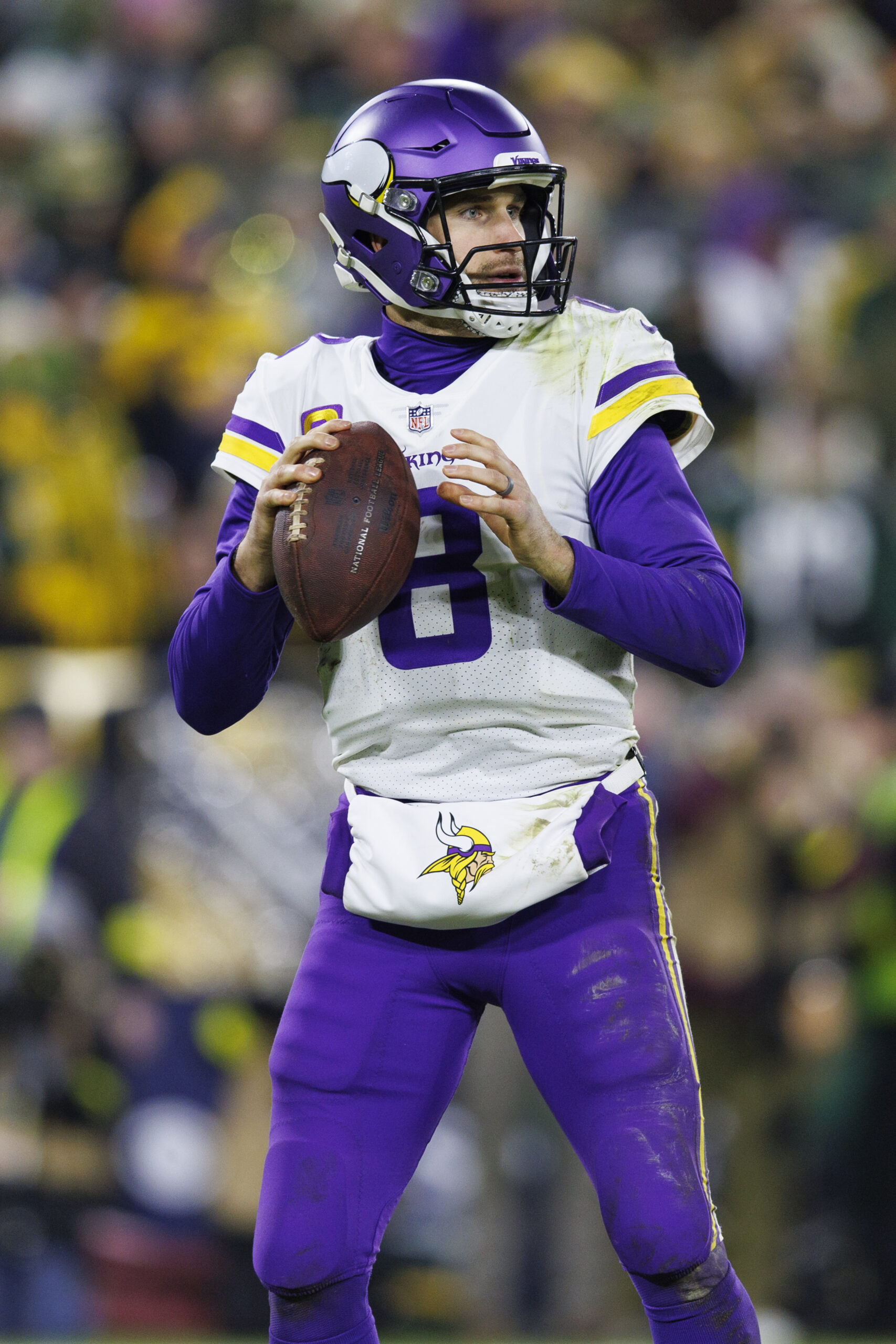
Kirk Cousins has said he viewed the Vikings as using a year-by-year approach at quarterback during the latter part of his Minnesota run. The Vikings passed on extending Cousins in 2023 and then did not come especially close to the Falcons’ offer in March.
A move to Sam Darnold or J.J. McCarthy come Week 1 will mark a change for Minnesota, which has used Cousins as its starting quarterback to open each of the past six seasons. Cousins had said on many occasions he wanted to stay with the Vikings, but those comments died down this offseason. Falcons rumors emerged in early March and did not slow down, leading to the 13th-year QB’s four-year, $180MM deal — one that features a $100MM practical guarantee.
 [RELATED: Offseason In Review: Minnesota Vikings]
The Vikings soon gave Darnold a one-year, $10MM deal and focused on a landmark Justin Jefferson extension. Given the money Cousins commanded from the Falcons, the Vikes — after already handing T.J. Hockenson a market-setting extension — would have experienced a difficult time extending Jefferson after re-signing their six-year passer. Jefferson knew this would factor into the Cousins conversation.
“I always knew that Kirk was going to do whatever he needs to do for his businesses-wise,” Jefferson said during an appearance on the Rich Eisen Show (video link), “and I just knew that everything just wasn’t the way he wanted it to be here, especially just with having to pay me and having to pay so many other different guys.
“I feel like he just wanted a new start, a new opportunity to start with Atlanta and a clean slate, and I’m not mad at him at all for that. I’m grateful for what he has brought to me and the things that we have accomplished together.”
Via his practical guarantee, Cousins is on track to move his career earnings past $330MM. The former Washington fourth-rounder is certainly one of the shrewdest NFLers of his era and probably any era. Cousins maximized his value six years ago, maneuvering out of Washington after two franchise tags en route to a fully guaranteed $84MM Vikings contract. That three-year deal gave Cousins the upper hand in his ensuing negotiations with the team, leading to player-friendly extensions in 2020 and 2022. Guarantees held up the parties in 2023, and the Kwesi Adofo-Mensah-led front office let the veteran starter walk this year.
Jefferson signed a monster extension in June, committing to the Vikings on a four-year, $140MM deal that includes a whopping $110MM guaranteed. Both Jefferson’s guarantee and guarantee at signing ($88.7MM) shattered wide receiver records. Although the Vikings paid Jefferson despite a $28.5MM Cousins dead money hit due to void years, rivaling the Falcons’ offer and paying Jefferson would have been difficult. Jefferson’s $35MM-per-year extension will overlap with McCarthy’s rookie contract.
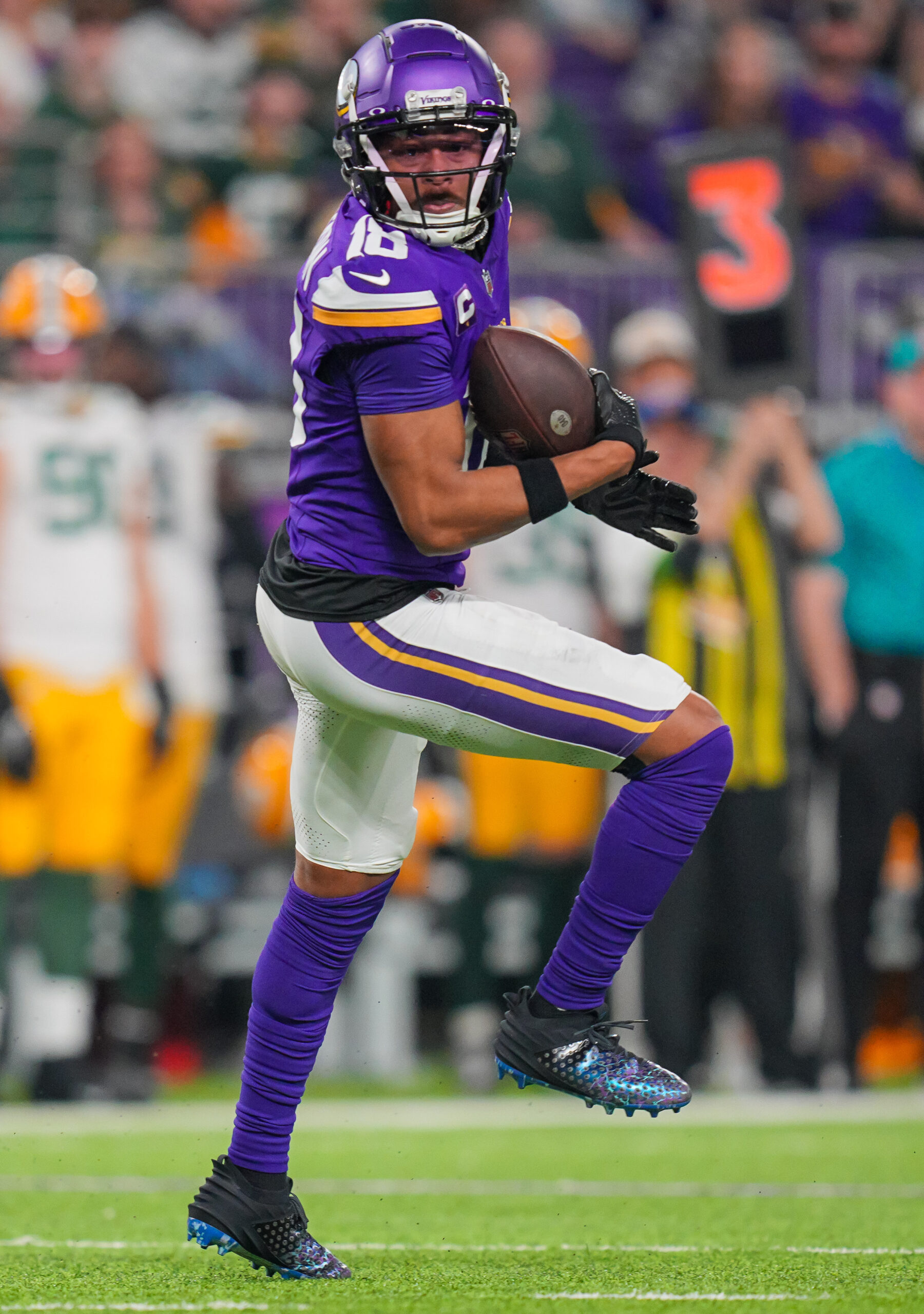 “At the end of the day, it’s a business and you’ve got to do what you’ve got to do for yourself and for your family, and I clearly understand that. But it’s on to the next,” Jefferson said. “It doesn’t really matter what quarterback it is in my eyes. I’m always going to try to make the best of the opportunity. I’m always going to try to be the quarterback’s friend and make his job a lot easier. It doesn’t matter if it was Kirk or if it’s Sam or if it’s J.J. I’m going to make it as easy as possible for him.”
Darnold will work with the starters to begin training camp, but the seventh-year veteran will eventually face a challenge from the No. 10 overall draftee. Cousins, 36 in August, now teams with two former top-10 skill-position draftees on rookie deals (Drake London, Kyle Pitts), and the Falcons brought in Darnell Mooney on a midlevel pact (three years, $39MM). Though, it is certainly possible that the Falcons pivot to first-rounder Michael Penix Jr. by the time those two are on veteran deals — if those extensions come to fruition in Atlanta.
Joe Schoen, Saquon Barkley Discussed Giants Matching FA Offer
Although the Antonio Brown-Raiders saga from 2019 brought some notable content, Hard Knocks‘ traditional training camp format rarely crosses into PFR’s purview. HBO’s offseason effort surrounding the Giants certainly has, and after three years of Saquon Barkley rumors, the divorce is being chronicled.
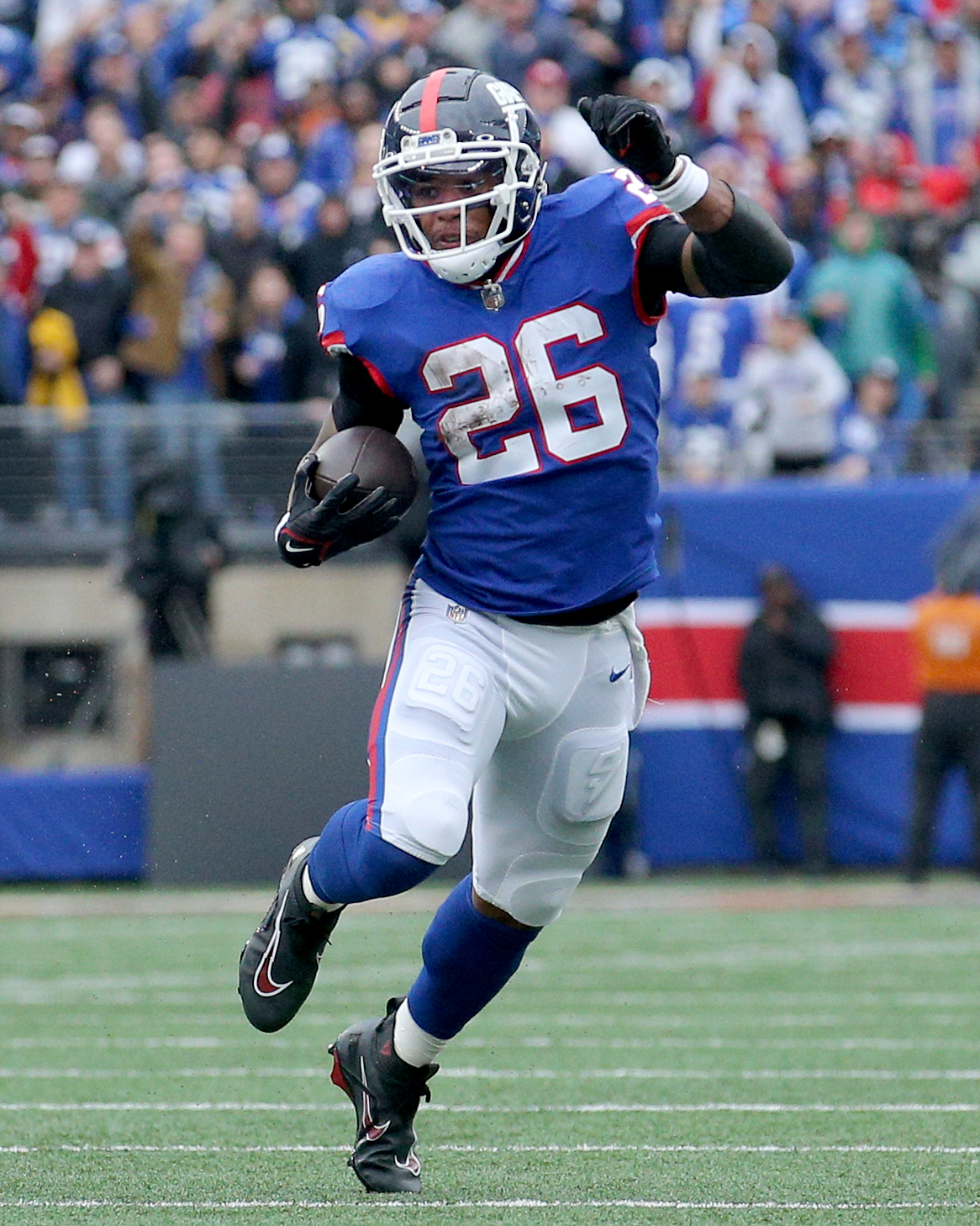
Reports detailing the split between the Giants and their biggest star of the post-Eli Manning period pointed to the Giants never actually making an offer this year. The Giants memorably made multiple offers in 2023, following an initial proposal during their 2022 bye week, only to see the franchise-tagged running back not agree to terms. GM Joe Schoen took a more passive approach this offseason.
 [RELATED: Eagles Cleared Of Saquon Barkley Tampering Charges]
After meeting with staffers to assess the potential RB market, Schoen made it clear to John Mara the team would not apply the tag — which would have checked in at $12MM — for a second time. The third-year Giants GM then contacted Barkley to communicate the team’s plan of letting him test free agency. This otherwise cordial conversation featured a point in which Schoen directly asked the two-time Pro Bowler to provide his word he would give the Giants a chance to match the best offer he received.
“Can you give me your word on that, or you not going to give us a chance?” Schoen said to Barkley in a phone conversation, with the seventh-year veteran replaying, “I already told you where I want to be.”
An offseason report indicated the Giants would likely wait for Barkley to come back to them with an offer to match. Barkley, 27, had said on several occasions he wanted to finish his career with the Giants. Big Blue resisted trade interest in the tagged RB at last year’s deadline. Doing so seemingly would have pointed to the Giants displaying genuine interest in retaining him for 2024. This Hard Knocks offering suggests otherwise, and Schoen’s discussions with his staff did not seem to indicate the Giants’ front office boss expected Barkley to fetch the contract he did from the Eagles.
Philly gave Barkley a three-year, $37.75MM deal that included $26MM fully guaranteed. The Giants’ final offer to Barkley at the July 2023 tag deadline featured a guarantee of around $22MM, with the sides being less than $2MM apart in terms of AAV. It is unclear if that was the full guarantee. Despite coming off another season that featured a notable injury (a high ankle sprain), Barkley pocketed the money from the $10.1MM tag and will collect an additional $26MM from the Eagles. Even after 2023 painted a bleak picture for RBs, the former Offensive Rookie of the Year came out way ahead of where he would have been financially had he accepted the Giants’ 2023 extension offer. ESPN.com’s Jordan Raanan confirms the Giants never offered Barkley terms on the level of the Eagles’ proposal.
Schoen made multiple references this offseason to RB production falling off around age 27; the Eagles will bet on their superior offensive line and weaponry keeping Barkley in prime form. The Giants signed a soon-to-be 27-year-old replacement, giving Devin Singletary a three-year, $16.5MM deal with $9.5MM guaranteed at signing. Though, to be fair, the ex-Brian Daboll Bills charge has logged 426 fewer NFL touches.
As the Eagles bet big on Barkley, the Giants will hope their midlevel solution — a player who has proven more durable by comparison, having missed only one game during the 2020s — can offer reasonable production.
Bills To Shift Connor McGovern To C
While the Jets have not re-signed four-year starter Connor McGovern, the AFC East will not be without a Connor McGovern at center this season. A Bills change will ensure this.
After Buffalo signed the younger of the NFL’s Connor McGoverns last year, they slotted the ex-Cowboys draftee at left guard. Rather than moving the re-signed David Edwards to center to fill Mitch Morse‘s old post, the Bills are signing off on a more natural transition. McGovern confirmed he will be the one replacing Morse this season.
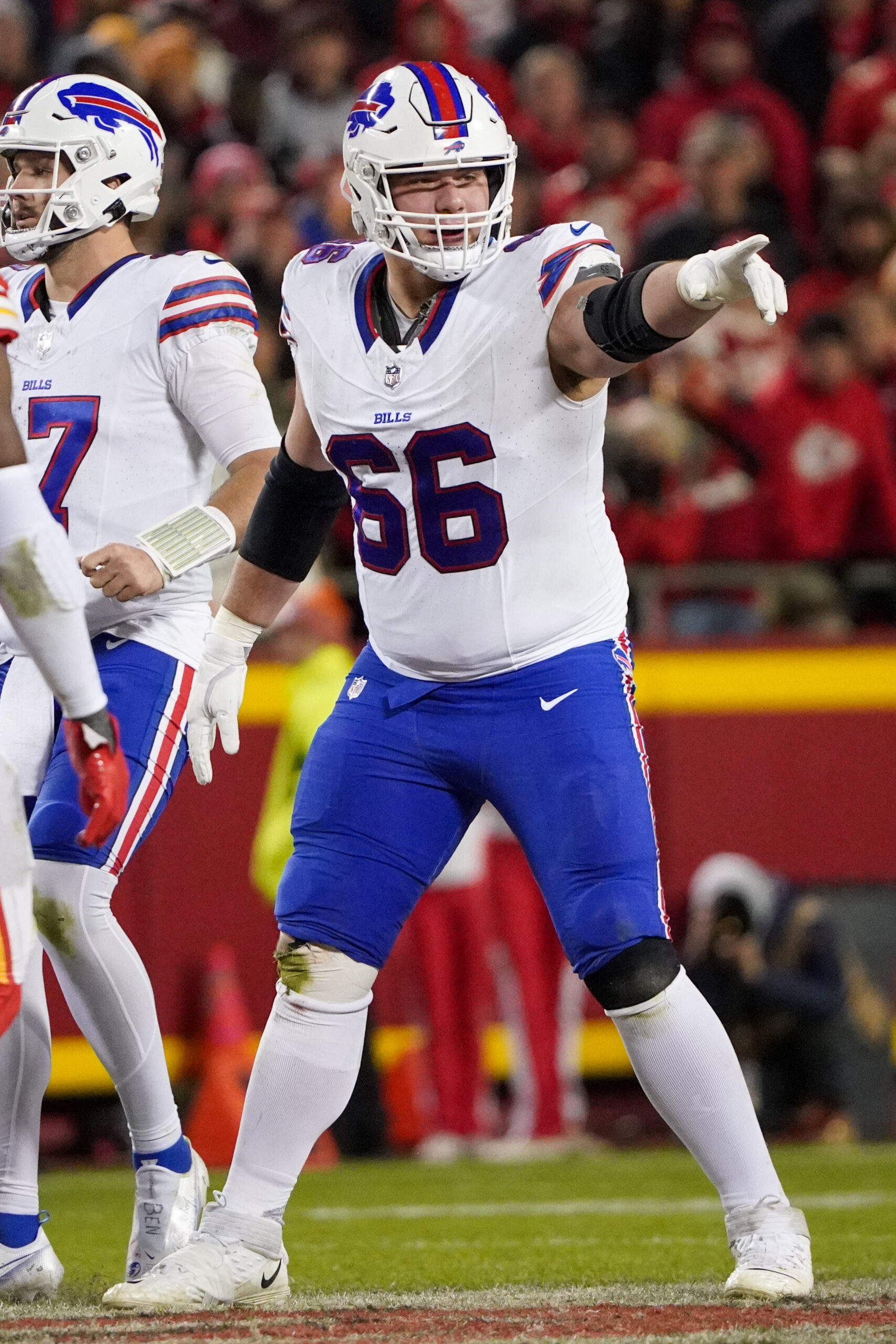 “I would say center is my natural position,” McGovern said, via the Buffalo News’ Mark Gaughan. “So it’s just going back home. I missed it a lot. I was drafted as a center originally. Then a new coaching staff came in and I got moved to guard. I always kind of sought my way back to center. Every time something happened, I’d play a little bit (at center) and I’d get moved back to guard. Now officially I can move back to center, so I’m very happy.”
The Jets’ Joe Tippmann plan will deny the world a division of two Connor McGoverns at center, but the Bills will give a player with 100 career snaps at center that role in 2024. Morse started at center in Buffalo for five seasons, but a cost-cutting spree led him off the roster. The Jaguars signed Morse soon after. While McGovern has a center past, he played 12 snaps there in 2021 and 88 at the pivot in 2022. Otherwise, his center work came in Cowboys practices or prior to the NFL.
Saquon Barkley‘s final Penn State season featured 13 McGovern starts at center. The Nittany Lions moved McGovern to guard in 2018, however, and the Cowboys slotted him there for the most part. Last season, all 1,135 McGovern snaps came at left guard. This will be a transition for the Bills’ second-highest-paid O-lineman, though his 2017 role points to an easier transition. McGovern, 26, is tied to a three-year, $22.35MM deal.
Edwards, who re-signed on a two-year deal worth $6MM, appears poised to take over at left guard. The former Rams starter has never played an NFL snap at center and primarily played right tackle at Wisconsin. His background makes a McGovern move more logical for the four-time reigning AFC East champs. Dion Dawkins, Spencer Brown and O’Cyrus Torrence are primed to reprise their 2023 roles up front, with Edwards — a 45-game Rams starter from 2019-22 — likely to re-emerge as a starter after a concussion-marred 2022 season and a 2023 campaign spent as a Bills backup.
Giants Looked Into DL Christian Wilkins
While a number of teams undoubtedly gave consideration to pursuing Christian Wilkins in free agency, the Giants having their inner workings subject to the masses in HBO’s maiden Hard Knocks offseason voyage illuminates their interest in bolstering the pass rush.
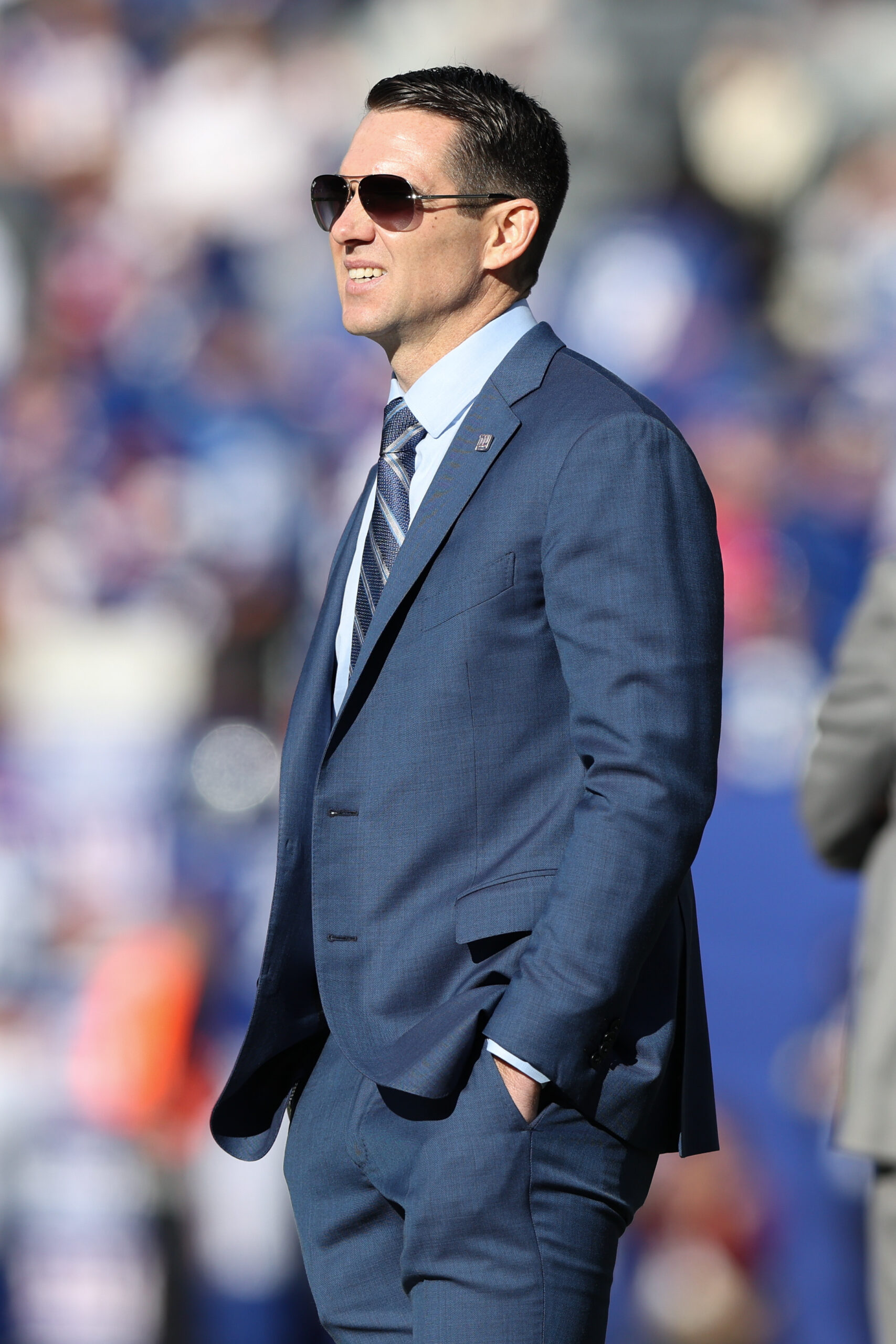
New York’s effort ended up producing Brian Burns via trade, but the team considered a Wilkins run. Third-year GM Joe Schoen‘s close ties to ex-Panthers and Bills coworker Dan Morgan, now Carolina’s GM, played a key role in the teams completing the Burns trade. Had the Panthers gone with an outside hire at GM rather than a longtime Schoen friend, a Giants pursuit of Wilkins may have been necessary.
 [RELATED: Offseason In Review: New York Giants]
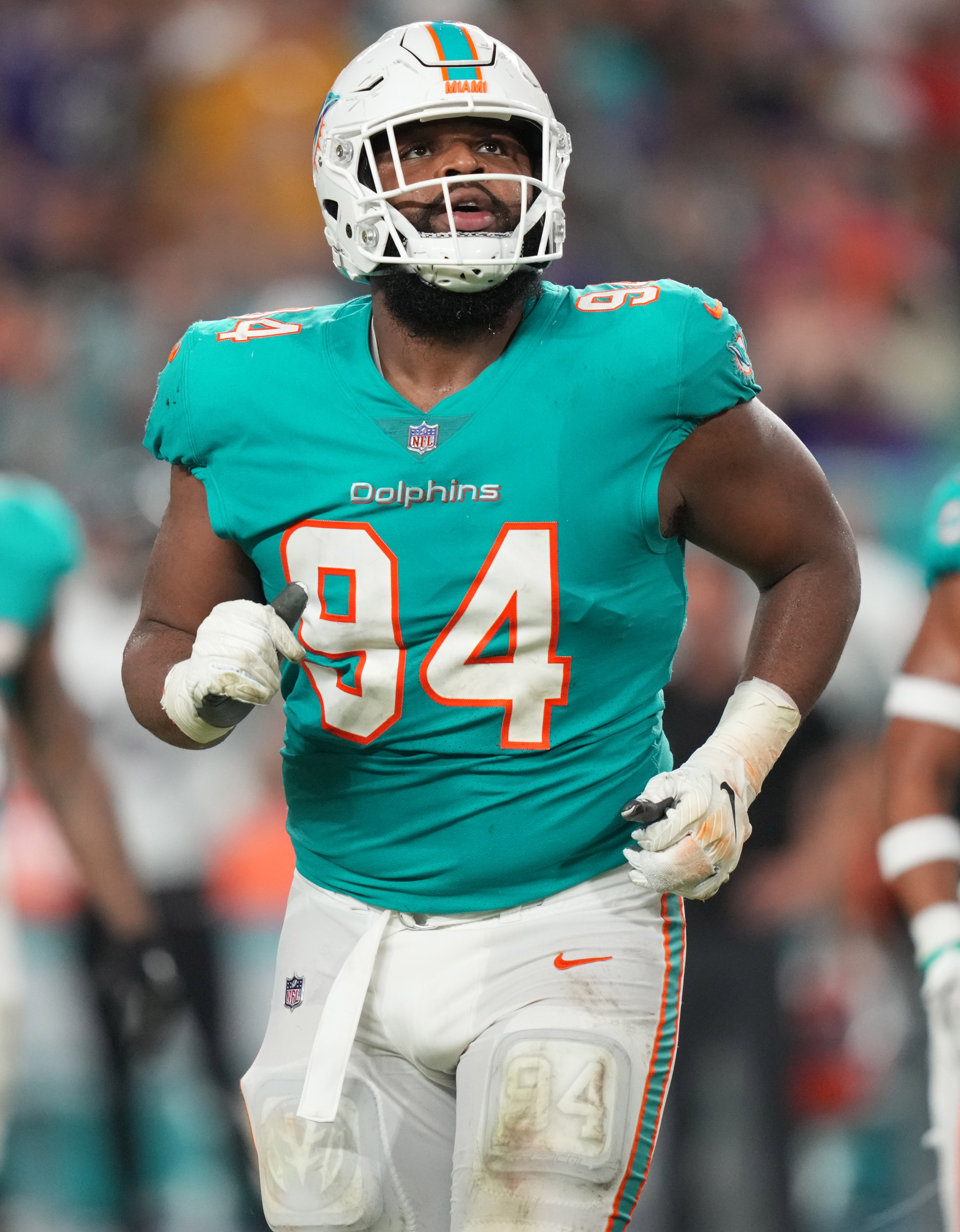
Schoen and assistant GM Brandon Brown discussed Wilkins at the Combine, with the former loosely applying a $22MM-per-year price tag on the five-year Dolphins defender. Brown gave a positive review of Wilkins to Schoen, though the Giants joined the Dolphins in having questions about the 2019 first-rounder’s pass-rushing impact.
After Giants pro scouting director Chris Rossetti referred to Wilkins as Dexter Lawrence‘s best friend, Schoen confirmed the All-Pro Giants D-tackle asked him if the front office was considering a run at the former Clemson standout. Rossetti referred to Wilkins as a “really good football player who will do well for himself” but called the eventual Raider a non-difference-making presence on third down.
The Dolphins stopped short of an extension offer in the Lawrence-Quinnen Williams–Jeffery Simmons range ($22-$24MM per year) due to Wilkins’ limited pass-rushing impact through four seasons. Last year, however, the 28-year-old defender launched a well-timed breakthrough by totaling nine sacks and 23 QB hits. He had previously never surpassed 4.5 sacks or 13 QB hits in a season. Teams certainly took notice, with the Dolphins’ cap situation making a franchise tag untenable. Though, Miami made a last-ditch attempt to keep Wilkins off the market.
Indicating a third-down presence alongside Lawrence was an offseason goal, Rossetti provided a sign the Giants would pass on a true Wilkins pursuit. Though, it is notable Schoen and Brown were still discussing the five-year starter at the Combine. Schoen’s early prediction on Wilkins’ AAV turned out to undersell where his market went, with the Raiders needing to give the top-flight run defender/emerging pass rusher a $27.5MM-per-year accord. Wilkins committed to the Raiders hours before the Giants traded for Burns.
 Chris Jones, whom Rossetti understandably held in higher regard, did not reach free agency. The likely Hall of Famer re-signed with the Chiefs — on a market-resetting contract that included a $95MM practical guarantee — two days before the legal tampering period. With Jones out of the mix, Wilkins’ price assuredly rose due to becoming the top FA DT available.
PFR’s No. 4 overall free agent, Wilkins scored an $82.75MM guarantee from the Raiders. Wilkins’ guarantee at signing ($57.5MM) came in just south of Jones’ $60MM number. Both DTs smashed the previous guarantee highs at the position, capitalizing on the offseason cap spike and the Chiefs and Dolphins not unholstering the franchise tag.
The Texans and Vikings were also linked to Wilkins; Houston held more cap room than New York, and Minnesota employed ex-Miami HC Brian Flores as its DC. Had the Falcons not signed Kirk Cousins, they would have pursued Wilkins as well.
Schoen floated out a Burns AAV between $28-$29MM at the Combine; that proved to be telling, as the Giants ended up giving the franchise-tagged Panther a $28.2MM-per-year extension. As for Big Blue’s DT post alongside Wilkins, lower-cost cogs — as the big money went to Burns — will be asked to contribute. While the Giants have a formidable trio (Lawrence, Burns, Kayvon Thibodeaux) anchoring their pass rush, the likes of Rakeem Nunez-Roches, Jordan Phillips, D.J. Davidson and Ryder Anderson will vie for time next to Lawrence on the D-line.