
Release Candidate: Tamba Hali
After winning just 29 games in the six seasons prior to head coach Andy Reid’s arrival, the Chiefs have won 20 games in the past two seasons alone, earning a postseason berth in 2013. Reid’s first season in Kansas City was a massive success, as the club went from owning the No. 1 overall draft pick after posting a 2-14 record to finishing 11-5. Many correctly predicted 2014 would be a year of regression for the Chiefs, but the team didn’t fall off a cliff — it still managed to win nine games, and nearly made the playoffs for the second year in a row.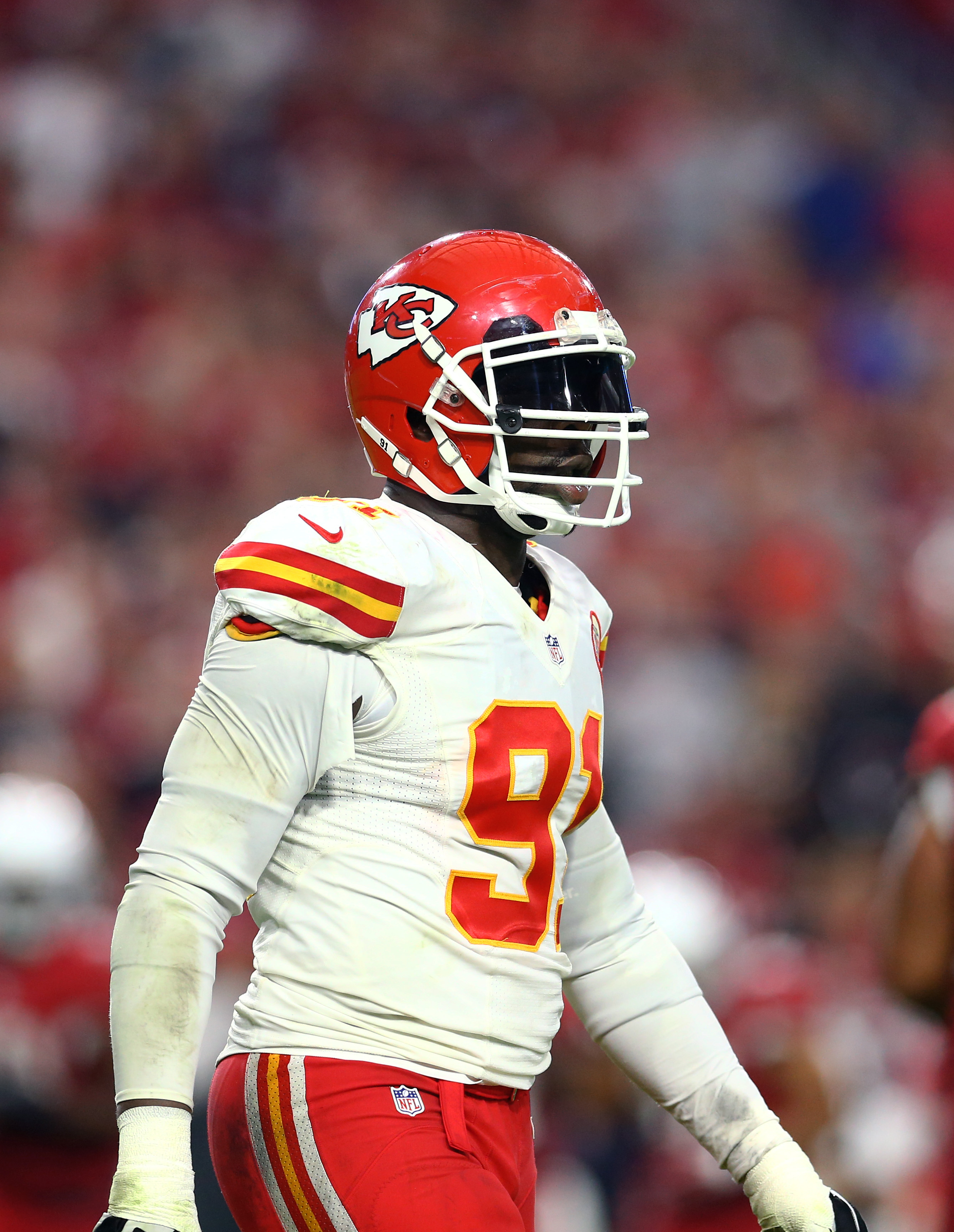 Tamba Hali” width=”232″ height=”300″ />
Reid and general manager John Dorsey surely believe their club is a year-in, year-out contender, and with quarterback Alex Smith now signed through the 2018 season, the Chiefs have their most important piece locked up. Continuity is an important factor in building a championship-caliber team, something Dorsey acknowledges. “We’re not in the game to blow things up,” Dorsey told Terez A. Paylor of the Kansas City Star earlier this month. “I don’t think you can do that, but these guys understand that, in order to achieve a high level of success, you’re going to be in this thing together.”
Still, fiscal decisions will have to be made in the coming months — assuming a $140MM cap for 2014, Over the Cap’s data shows the Chiefs to be more than $2MM in the red. Small restructures can be finagled to move money around, ensuring that the team can sign its draft class and make modest free agent additions. But unless Kansas City does something drastic, it won’t be able to do much to upgrade this offseason. That’s why the notion of cutting longtime pass-rusher Tamba Hali isn’t so crazy.
The Chiefs selected Hali, now 31, in the first round of the 2006 draft. The Penn State alum entered the league as a 4-3 defensive end in former Kansas City coach Herm Edwards’ scheme and struggled to find success, accruing -11.5 and +0.1 grades in ’06 and ’07, respectively, according to Pro Football Focus (subscription required). Todd Haley took over as KC’s head coach in 2008, and the team installed a 3-4 look, the scheme they’ve employed ever since. After moving to outside linebacker, Hali has excelled, registering a positive PFF grade every season (including 2010, when he was ranked as the league’s top 3-4 OLB); since the position switch in ’08, he ranks eighth in the league with 64 sacks.
Hali’s play has declined with age, to be sure — he posted just six sacks last season, and while his +11.2 PFF grade still ranked him among the top-15 3-4 OLBs, his production clearly isn’t where it was a few years ago. Even more pressing is Hali’s salary as he enters the final year of his contact. He’s set to earn a base salary of $6.75MM, and is due a $2MM roster bonus and a $250K workout bonus — combined with his signing bonus proration, Hali will count roughly $11.965MM against the cap in 2015, the third-highest figure at his position in the league. That roster bonus is due on March 19, so the Chiefs have just under two months to make a decision on Hali.
As I noted, Kansas City is projected to be roughly $2MM over the cap in 2015 — however, that number doesn’t account for pass-rusher Justin Houston, a free-agent-to-be who seems destined for the franchise tag (at a value of around $13MM). Additionally, the club is not without needs, as upgrades could be used at positions like receiver, offensive line, and the secondary. By releasing Hali, the Chiefs would save $9MM in cap space (they’d only be on the hook for his a portion of his signing bonus, roughly $2.965MM), enabling them to pursue improvements in other areas.
Of course, Hali isn’t the only Chief who could be cut in order to save the club money. Receiver Dwayne Bowe was ineffective in 2013, is set to have the second-highest cap number on the team next year; Kansas City would save $5MM by releasing him. Fellow WR Donnie Avery will be almost certainly be cut, a move that would save KC more than $3.5MM. Releasing Mike DeVito ($4MM), Joe Mays ($3MM), and A.J. Jenkins (~$1.34MM) could also clear out cap space for the Chiefs, so there are definitely other options to create financial breathing room. But if Kansas City is aiming to either franchise tag or re-sign Houston and make additions in other areas, it might not make sense to allow an aging (albeit still effective) pass-rusher like Hali to take up more than eight percent of its cap.
For his part, Hali seems amenable to taking a pay cut, or at least he’s paying lip service to that effect (via Paylor):
“At this stage of my career, it isn’t about money. The Kansas City Chiefs have taken care of me, financially. I have some good people in my corner that have positioned me to be able to live a lifestyle a lot of people won’t be able to live. So I’m not one of those guys who gets all bent out of shape over money. I love playing the game, I want to win a championship in Kansas City. If money is going to be a hindrance in doing that, we’ll find a way … we’ve got to get Justin (Houston) paid and get our guys, Dee Ford, ready to be playing at a higher level … but we’ve got to get Houston paid, I’m optimistic about that … that’s something we’ve got to get done.”
If Hali is released (if pressed, I’d say he’s about 75% likely to be cut, though a pay reduction scenario would render that estimation moot), he’d likely find a strong market for his services. Pass-rushers are always rewarded in free agency, and luckily for Hali, there are a number of teams who run a 3-4 front who will have ample cap space to use in the coming months. The Colts present the most intriguing scenario in my mind — the team will be three seasons into playing a 3-4 look, are open to spending in free agency, need pass-rush help, and will have more than $37MM of cap space to use. The Titans, with more than $40MM in space, and the Raiders (if they continue to mix in 3-4 looks) could also be interested in signing Hali, as could the Falcons (again, pending scheme changes) and the Eagles in the NFC.
At 31, Hali probably wouldn’t garner a deal in excess of four years or so, but as cap expert Joel Corry notes in the Paylor article linked above, he’d probably come out ahead by entering the market. He wouldn’t face much in the way of positional competition — with Houston likely to be franchised, the other top 3-4 OLBs include Jason Worilds, Brandon Graham, and Brian Orakpo. Hali would probably be looking at a deal in the neighborhood of DeMarcus Ware (three years, $10MM AAV, $16.5MM guaranteed) or Julius Peppers (three years, $8.67MM AAV, $7.5MM guaranteed). He’s younger than both of those comparables, so it’s conceivable he could get a four-year contract, but his AAV would probably sit in that $8.5MM range, with perhaps 40% of his total guaranteed.
Photo courtesy of USA Today Sports.
PFR Originals: 1/11/15 – 1/18/15
The original content produced by the PFR staff during the past week:
- We’ve set up our Offensive/Defensive Coordinator Tracker, which will keep track of reported interest and interviews as clubs look to fill assistant coach vacancies. Of course, you can also follow all the HC news with our Head Coaching Search Tracker. Both lists will be updated daily.
- We also unveiled the second edition of our 2015 Free Agent Power Rankings. Lions defensive tackle Ndamukong Suh overtook Chiefs linebacker Justin Houston for the No. 1 spot, while Patriots safety Devin McCourty, Bills edge rusher Jerry Hughes, and Panthers defensive end Greg Hardy were new additions to the list.
2015 Offensive/Defensive Coordinator Tracker
While seven NFL teams are making head coaching changes this offseason, the number of clubs replacing offensive and/or defensive coordinators figures to be much higher than that. In addition to all those teams hiring new head coaches, who will want to bring in their own assistants, several clubs also figure to make changes on one side of the ball or the other after getting disappointing results in 2014.
With reports about potential candidates, interview requests, and actual meetings circulating throughout January, we’ll use the space below to keep tabs on all the latest updates on teams hiring new offensive and/or defensive coordinators. This post, which will be updated daily, can be found under the “PFR Features” menu on the right-hand side of the site.
Here’s the latest:
Updated 2-12-15 (2:16pm CT)
Offensive coordinators
- Atlanta Falcons
- Out: Dirk Koetter
- In: Kyle Shanahan
- Baltimore Ravens
- Out: Gary Kubiak
- In: Marc Trestman
- Buffalo Bills
- Out: Nathaniel Hackett
- In: Greg Roman
- Chicago Bears
- Out: Aaron Kromer
- In: Adam Gase
- Cleveland Browns
- Out: Kyle Shanahan
- In: John DeFilippo
- Dallas Cowboys
- Out: Bill Callahan
- In: Scott Linehan (Linehan had already been the Cowboys’ play-caller in 2014, but Callahan still held the formal OC title)
- Denver Broncos
- Out: Adam Gase
- In: Rick Dennison
- Green Bay Packers
- Out: Tom Clements
- In: Edgar Bennett (Bennett gets formal OC title, but Clements will handle play-calling duties)
- Houston Texans
- The Texans didn’t have an offensive coordinator on staff in 2014, as head coach Bill O’Brien acted as the de facto OC. At least one report has suggested the team could add one for 2015, though Doug Marrone was the only candidate mentioned, and he has since landed in Jacksonville.
- Jacksonville Jaguars
- Out: Jedd Fisch
- In: Greg Olson
- New York Jets
- Out: Marty Mornhinweg
- In: Chan Gailey
- Oakland Raiders
- Out: Greg Olson
- In: Bill Musgrave
- San Francisco 49ers
- Out: Greg Roman
- In: Geep Chryst
- St. Louis Rams
- Out: Brian Schottenheimer
- In: Frank Cignetti
- Tampa Bay Buccaneers
- Out: Jeff Tedford, Marcus Arroyo (interim)
- In: Dirk Koetter
Defensive coordinators
- Arizona Cardinals
- Out: Todd Bowles
- In: James Bettcher
- Atlanta Falcons
- Out: Mike Nolan
- In: Richard Smith
- Buffalo Bills
- Out: Jim Schwartz
- In: Dennis Thurman
- Chicago Bears
- Out: Mel Tucker
- In: Vic Fangio
- Denver Broncos
- Out: Jack Del Rio
- In: Wade Phillips
- New York Giants
- Out: Perry Fewell
- In: Steve Spagnuolo
- New York Jets
- Out: Dennis Thurman
- In: Kacy Rodgers
- Oakland Raiders
- Out: Jason Tarver
- In: Ken Norton Jr.
- Pittsburgh Steelers
- Out: Dick LeBeau
- In: Keith Butler
- San Francisco 49ers
- Out: Vic Fangio
- In: Eric Mangini
- Seattle Seahawks
- Out: Dan Quinn
- In: Kris Richard
- Washington
- Out: Jim Haslett
- In: Joe Barry
2015 Free Agent Power Rankings
Only four teams are left in the Super Bowl hunt, but even more importantly from a roster standpoint, less than two months remain until the start of the new league year and the beginning of free agency. We have seven more weeks of data since the previous edition of our free agent power rankings, and one player included in the prior list — Broncos cornerback Chris Harris — has signed an extension. With that in mind, let’s update our stock watch of the 2015 unrestricted free agent class:
1. Ndamukong Suh, DT: Already among the best available free agents heading into the stretch run, Suh ramped up his level of play during the last six games of the year, racking up four sacks and 21 tackles. He then posted a dominating performance during the Lions’ wild card round loss to the Cowboys, sacking Tony Romo twice, hurrying him five times, and registering his third-highest grade of the season per Pro Football Focus (subscription required). Detroit general manager Martin Mayhew recently said the club would “leave every option open” with regards to retaining Suh, who turned 28 six days ago, but recent reports suggested that as many as 10 teams could be prepared to make “titanic pitches” to the star defensive tackle. PFR’s Luke Adams recently examined several Suh-related scenarios that could play out in the coming months, including the Lions working out a long-term agreement, using the franchise tag, or allowing the 2014 All-Pro to walk.
2. Justin Houston, OLB: Like Suh, Houston’s production in the final leg of the season was outstanding, as he posted an astounding nine sacks and 22 tackles during the Chiefs’ final five games — he took down Chargers quarterback Philip Rivers four times in Week 17 alone, hurrying him another three times. He finished the year with 22 sacks, which led the league and was just a half-sack shy of matching Michael Strahan’s all-time record. Houston, who turns 26 next Wednesday, graded out as the No. 1 3-4 outside linebacker per PFF; his +51.1 score was nearly double that of Pernell McPhee, the No. 2 finisher. There hasn’t been much news regarding Houston as of late, but the more time that passes without a long-term deal being agreed upon, the more likelier it becomes that Kansas City places the franchise tag on its pass-rusher.
3. Dez Bryant, WR: In November, reports indicated that Bryant’s camp didn’t believe they would agree to a multiyear pact with the Cowboys, meaning the star pass-catcher is likely to be franchise-tagged. Dallas has reportedly offered Bryant an extension worth $114MM over 10 years, but with just $20MM guaranteed. With the franchise tag figure for receivers expected to approach $13MM in 2015, it would make little sense for Bryant to accept such a deal. Bryant, who earned just $1.78MM in base salary this season, finished the year with 88 receptions for 1,320 yards and 16 touchdowns.
4. Demaryius Thomas, WR: Thomas, who turned 27 on Christmas Day, was solid down the stretch, averaging six receptions for 86 yards and a score over the Broncos’ final six games, before tacking on five catches for 59 yards and a touchdown in Denver’s playoff loss to the Colts on Monday; on the season, he caught 111 balls for more than 1,600 yards. In December, Thomas indicated that he was open to accepting a hometown discount to remain in Denver, noting that he was fond of playing with Peyton Manning. Now, with Manning’s future uncertain and the entire Broncos organization in a state of upheaval, it’s unclear if Thomas would offer those same sentiments. His preferences will likely be determined by the choice of head coach and Manning’s decision on retirement, but the club ultimately will have final say: if an extension can’t be worked out, the Broncos will almost certainly franchise-tag Thomas.
5. Jason Pierre-Paul, DE: Perhaps no player did more to raise his stock during the final stretch of the season than Pierre-Paul. During the Giants’ final six games, he registered nine sacks, five QB hits, and 15 QB hurries — also a stout run defender, JPP finished as PFF’s No. 6 overall 4-3 defensive end. Giants owner John Mara said in December that he’d be very surprised if Pierre-Paul wasn’t with New York next season, but JPP has been adamant that he won’t accept a hometown discount to stay with the team that drafted him in the first round in 2010. PFR’s Rory Parks took a look at Pierre-Paul’s contract situation last month, and estimated a contract in the neighborhood of five years, $80MM for the pass-rusher.
6. Randall Cobb, WR: One of only two members of this list who plays for a team that remains in the postseason, Cobb was able to stay healthy for all of 2014, something he’s had trouble with in the past. As of mid-December, there was no movement on extension talks between Cobb and the Packers. Cobb, who caught 91 passes for 1,287 yards and 12 touchdowns this season, could seek to match the five-year, $35MM contract signed by Eric Decker last offseason. As Luke noted in the link above, however, Green Bay may want to ensure that Cobb doesn’t earn more than No. 1 receiver Jordy Nelson, who inked a four-year, $39MM extension during the summer. The youngest player on this list, Cobb won’t turn 25 until August.
7. Devin McCourty, S: With Harris off the board, McCourty is now the top defensive back available among free agents. Aside from Brandon Flowers (who will be 29 when next season begins) there aren’t many options at cornerback, so teams looking for secondary help will have to turn to McCourty, who stands alone in a FA safety class that contains middling players like Chris Conte and Rahim Moore. McCourty, 27, will hit free agency with his stock high — he rated as the league’s eighth-best safety per PFF after racking up 54 tackles and two interceptions for the Patriots this season. On December 14, Jeff Howe of the Boston Herald reported that there was “nothing happening” between McCourty and New England regarding an extension. I examined McCourty, a 2010 first-round pick, as an extension candidate in November, projecting that he could match Jairus Byrd‘s $9MM AAV.
8. Jeremy Maclin, WR: Maclin didn’t finish the season as strong as some of the others on this list — he averaged just five receptions for 56 yards during the Eagles’ final six games, and scored only once during that time. Maclin was adjusting to playing with a new quarterback in Mark Sanchez, however, who trailed off after a hot start and seemed to favor slot receiver Jordan Matthews at times. Nevertheless, Maclin enjoyed a strong comeback season in 2014, catching 85 balls for more than 1,300 yards while playing under a one-year, prove-it deal worth $6MM. Eagles head coach Chip Kelly said in December that it was a priority to retain Maclin, whom Luke projected could surpass Decker’s contract.
9. Jerry Hughes, EDGE: The most unheralded player on this list, Hughes has been a revelation with the Bills since being considered a bust after Indianapolis selected him in the first round of the 2010 draft. In 2014, he posted 10 sacks and graded as the 14th-best 4-3 defensive end in the league per PFF — he’d have placed much higher if not for his -9.1 penalty grade. He’d fit in either a 3-4 or a 4-3 look; in new Buffalo head coach Rex Ryan’s scheme, he’d work best as an OLB. In late December, Hughes indicated he would not be open to accepting a hometown discount to remain in Buffalo. It’s conceivable that he could garner $10MM annually on the open market.
10. Greg Hardy, DE: The most difficult player to slot on these rankings, Hardy played in just one game in 2014 before being placed on the commissioner’s exempt list after being charged in a domestic violence incident. The league is extremely sensitive to cases like Hardy’s, as it should be, and it’s beyond PFR’s purview to determine what the proper penalty for Hardy’s actions should be. But the fact remains that NFL teams pay for production, and Hardy is extremely productive. He posted consecutive double-digit sack seasons in 2012 and 2013, grading as a top-six 4-3 defensive end per PFF in both years. With his trial date set for February 9, Hardy should have some sort of resolution regarding his status shortly. If not for his off-the-field baggage, the 2010 sixth-rounder would easily be in the top half of this list, if not in the top three.
Dropped out: Chris Harris, CB (signed extension); Julius Thomas, TE; DeMarco Murray, RB
PFR Originals: 12/28/14 – 1/4/15
The original content produced by the PFR staff during the past week:
- Broncos offensive coordinator Adam Gase’s name has been tossed around for many of the league’s head coaching vacancies, and Rory Parks wondered where the coach would ultimately land. About 24% of you believe he’ll end up being the 49ers head coach, with San Francisco barely edging out the Falcons‘ opening.
- Luke Adams began compiling the reported candidates for the league’s head coaching vacancies. Check out the list to see the latest updates on the Falcons, Bills, Bears, Jets, Raiders and 49ers.
- The Trade Rumors app is now available, bringing you content from PFR, MLBTR, and Hoops Rumors. Download it today on iTunes orAndroid!
2015 NFL Head Coaching Search Tracker
Several NFL teams are currently hunting for a new head coach, and amidst reports about interview requests and potential candidates, it’s easy to lose track of the latest updates in the shuffle. So we’ll use this space – which will be updated until every team has hired a new head coach – to keep track of the most recent news and rumors. It can be found on the right-hand sidebar under “PFR Features.”
Listed below are the head coaching candidates that have been linked to each of the teams with current vacancies, along with their current status. Here’s the current breakdown:
Updated 2-3-15 (2:39am CT)
Atlanta Falcons
- Dan Quinn, defensive coordinator (Seahawks): Hired
- Keith Armstrong, special teams coordinator (Falcons): Interviewed
- Teryl Austin, defensive coordinator (Lions): Interviewed twice; was viewed as strong candidate
- Todd Bowles, defensive coordinator (Cardinals): Was viewed as strong candidate; hired by Jets
- Adam Gase, offensive coordinator (Broncos): Interviewed
- Doug Marrone, former head coach (Bills): Interviewed
- Josh McDaniels, offensive coordinator (Patriots): Interviewed
- Rex Ryan, former head coach (Jets): Interviewed; hired by Bills
Buffalo Bills
- Rex Ryan, former head coach (Jets): Hired
- Teryl Austin, defensive coordinator (Lions): Interviewed
- Darrell Bevell, offensive coordinator (Seahawks): Interviewed
- Adam Gase, offensive coordinator (Broncos): Interviewed
- Pep Hamilton, defensive coordinator (Colts): Requested interview
- Hue Jackson, offensive coordinator (Bengals): Interviewed
- Josh McDaniels, offensive coordinator (Patriots): Requested interview
- Dan Quinn, defensive coordinator (Seahawks): Interviewed
- Frank Reich, offensive coordinator (Chargers): Interviewed
- Greg Roman, offensive coordinator (49ers): Interviewed
- Jim Schwartz, defensive coordinator (Bills): Interviewed
- Kyle Shanahan, offensive coordinator (Browns): Interviewed
- Mike Shanahan, former head coach: Interviewed
- Pat Shurmur, offensive coordinator (Eagles): Interviewed
Chicago Bears
- John Fox, former head coach (Broncos): Hired
- Teryl Austin, defensive coordinator (Lions): Interviewed
- Todd Bowles, defensive coordinator (Cardinals): Interviewed; hired by Jets
- Adam Gase, offensive coordinator (Broncos): Interviewed
- Gary Kubiak, offensive coordinator (Ravens): Declined to interview
- Doug Marrone, former head coach (Bills): Interviewed
- Dan Quinn, defensive coordinator (Seahawks): Interviewed
- Mike Shanahan, former head coach: Was viewed as possible candidate
- Mike Singletary, NFL executive: He had interest in interviewing
Denver Broncos
- Gary Kubiak, offensive coordinator (Ravens): Hired
- Teryl Austin, defensive coordinator (Lions): Withdrew from consideration
- Adam Gase, offensive coordinator (Broncos): Interviewed
- Vance Joseph, secondary coach (Bengals): Interviewed
- Doug Marrone, former head coach (Bills): Canceled interview
- Dan Quinn, defensive coordinator (Seahawks): Was candidate to interview
- Eric Studesville, running backs coach (Broncos): Was candidate to interview
New York Jets
- Todd Bowles, defensive coordinator (Cardinals): Hired
- Tom Cable, assistant head coach (Seahawks): Interviewed; had been viewed as a top candidate
- Gary Kubiak, offensive coordinator (Ravens): Declined to interview
- Anthony Lynn, running backs coach (Jets): Interviewed
- Doug Marrone, former head coach (Bills): Interviewed
- Sean McDermott, defensive coordinator (Panthers): Interview cancelled
- Jim Mora, head coach (UCLA): Inquired on UCLA contract/buyout clause
- Dan Quinn, defensive coordinator (Seahawks): Interviewed; had been viewed as favorite
- Frank Reich, offensive coordinator (Chargers): Interviewed
Oakland Raiders
- Jack Del Rio, defensive coordinator (Broncos): Hired
- Darrell Bevell, offensive coordinator (Seahawks): Interviewed
- Todd Bowles, defensive coordinator (Cardinals): Declined to interview; hired by Jets
- Pep Hamilton, offensive coordinator (Colts): Interviewed
- Scott Linehan, passing game coordinator (Cowboys): Requested interview
- Eric Mangini, tight ends coach (49ers): Interviewed
- Mike Shanahan, former head coach: Interviewed
- Pat Shurmur, offensive coordinator (Eagles): Interviewed
- Tony Sparano, interim head coach (Raiders): Interviewed
San Francisco 49ers
- Jim Tomsula, defensive line coach (49ers): Hired
- Teryl Austin, defensive coordinator (Lions): Interviewed
- Todd Bowles, defensive coordinator (Cardinals): Interviewed; hired by Jets
- Vic Fangio, defensive coordinator (49ers): Interviewed
- Adam Gase, offensive coordinator (Broncos): Interviewed twice; was viewed as top candidate
- Gary Kubiak, offensive coordinator (Ravens): Team had interest
- Doug Marrone, former head coach (Bills): Interviewed
- Josh McDaniels, offensive coordinator (Patriots): Interviewed
- Jim Mora, head coach (UCLA): Team was thought to have interest
- Dan Quinn, defensive coordinator (Seahawks): Interviewed
- Rex Ryan, former head coach (Jets): Interviewed; hired by Bills
- Kyle Shanahan, offensive coordinator (Browns): Was viewed as candidate
- Mike Shanahan, former head coach: Interviewed
Examining Notable Pro Bowlers’ Contracts
The NFL announced its Pro Bowl rosters on Tuesday night, a collection of 42 offensive players, 36 defenders, and eight special teams players. The list features the usual suspects such as Tom Brady, Peyton Manning, and Aaron Rodgers, as well as new faces like Le’Veon Bell, T.Y. Hilton, and Chris Harris, and can be viewed in full right here (PDF link).
Among the 86 players initially selected to appear in the game, several have signed new contracts in 2014, many more will be eligible for new deals in 2015, and others will receive a bump in pay based on their Pro Bowl nods. Here’s a breakdown of the Pro Bowl players with notable contract situations:
Recently signed or extended:
- Jamaal Charles, RB (Chiefs): Signed two-year, $18MM extension in July.
- Vontae Davis, CB (Colts): Signed four-year, $36MM contract in March.
- Jimmy Graham, TE (Saints): Signed four-year, $40MM contract in July.
- Brent Grimes, CB (Dolphins): Signed four-year, $32MM contract in March.
- Joe Haden, CB (Browns): Signed five-year, $67.5MM extension in May.
- Chris Harris, CB (Broncos): Signed a five-year, $42.5MM extension in December.
- Devin Hester, KR (Falcons): Signed three-year, $9MM contract in March (changed teams).
- Jason Kelce, C (Eagles): Signed six-year, $37.5MM extension in February.
- John Kuhn, FB (Packers): Signed one-year, $1.03MM contract in April.
- Pat McAfee, P (Colts): Signed five-year, $14.5MM contract in March.
- Gerald McCoy, DT (Buccaneers): Signed seven-year, $95.2MM extension in October.
- Jordy Nelson, WR (Packers): Signed four-year, $39.05MM extension in July.
- Jason Peters, T (Eagles): Signed four-year, $38.3MM extension in February.
- Patrick Peterson, CB (Cardinals): Signed five-year, $70.05MM extension in July.
- Maurkice Pouncey, C (Steelers): Signed five-year, $44.14MM extension in June.
- Robert Quinn, DE (Rams): Signed four-year, $57MM extension in September.
- Darrelle Revis, CB (Patriots): Signed two-year, $32MM contract in March (changed teams).
- Richard Sherman, CB (Seahawks): Signed four-year, $56MM extension in May.
- Matt Slater, ST (Patriots): Signed two-year, $4MM extension in November.
- Tyron Smith, T (Cowboys): Signed eight-year, $97.6MM extension in July.
- Darren Sproles, PR (Eagles): Traded by Saints, then signed two-year, $7MM extension in March (changed teams).
- Joe Staley, T (49ers): Signed two-year, $19.6MM extension in July.
- Aqib Talib, CB (Broncos): Signed six-year, $57MM contract in March (changed teams).
- Earl Thomas, S (Seahawks): Signed four-year, $40MM extension in April.
- Adam Vinatieri, K (Colts): Signed two-year, $5MM contract in March.
- T.J. Ward, S (Broncos): Signed four-year, $22.5MM contract in March (changed teams).
- DeMarcus Ware, OLB (Broncos): Signed three-year, $30MM contract in March (changed teams).
- J.J. Watt, DE (Texans): Signed six-year, $100MM extension in September.
Eligible for free agency in 2015:
- Dez Bryant, WR (Cowboys)
- Tashaun Gipson, S (Browns), restricted
- Stephen Gostkowski, K (Patriots)
- Justin Houston, OLB (Chiefs)
- Mike Iupati, G (49ers)
- John Kuhn, FB (Packers)
- DeMarco Murray, RB (Cowboys)
- Ndamukong Suh, DT (Lions)
- Demaryius Thomas, WR (Broncos)
- Julius Thomas, TE (Broncos)
Received Pro Bowl bonuses:
(via Jason Fitzgerald of Over The Cap)
- Mario Williams, DE (Bills): $400K
- Matt Slater, ST (Patriots): $300K
- Pat McAfee, P (Colts): $250K
- Josh Sitton, G (Packers): $250K escalator
- Kyle Williams, DT (Bills): $150K
- Kam Chancellor, S (Seahawks): $100K
- Joe Haden, CB (Browns): $100K
- Marcel Reece, FB (Raiders): $100K
- Darren Sproles, PR (Eagles): $100K
Perhaps the most interesting – or at least unusual – takeaway from this data is the abundance of cornerbacks on the first list. In fact, all eight cornerbacks initially named as Pro Bowlers (Davis, Grimes, Haden, Harris, Peterson, Revis, Sherman, and Talib) have signed new contracts, either extensions or free agent deals, since March. Rival teams hoping to get their hands on a Pro Bowl corner this offseason will have to focus on Revis — he’s the only one of the eight who can reasonably be expected to become available within the next few months, due to the structure of his contract with the Pats.
Data from Over the Cap was used in the creation of this post.
PFR Originals: 12/14/14 – 12/21/14
The original content produced by the PFR staff during the past week:
- Luke Adams looked at the options available to the Lions regarding free-agent-to-be Ndamukong Suh. Detroit can either sign the star defensive tackle to a long-term extension, place the franchise tag on him, or allow him to sign with another team.
- Luke asked which club will ultimately win the NFC South, and nearly 60% of you believe Saints have the best chance to finish in first place. Thanks for voting!
- Luke also passed along a list of the important 2015 NFL offseason dates.
- Pro Football Rumors is looking to hire part-time writers. Take a look at the criteria, and send an email to pfrapplications@gmail.com if you’re qualified.
The Lions’ Options For Ndamukong Suh
In the first installment of our 2015 free agent power rankings, we placed Ndamukong Suh second behind Chiefs pass rusher Justin Houston, and you can certainly make a case that the Lions defensive tackle deserves that top spot over Houston. The cornerstone of an elite Detroit defense that has propelled the team into the postseason, Suh ranks as the league’s third-best defensive tackle, according to Pro Football Focus’ grades (subscription required). Only one other defensive tackle has logged more snaps than Suh’s 768, and very few defenders have had the same sort of impact Suh has had against both the pass and the run.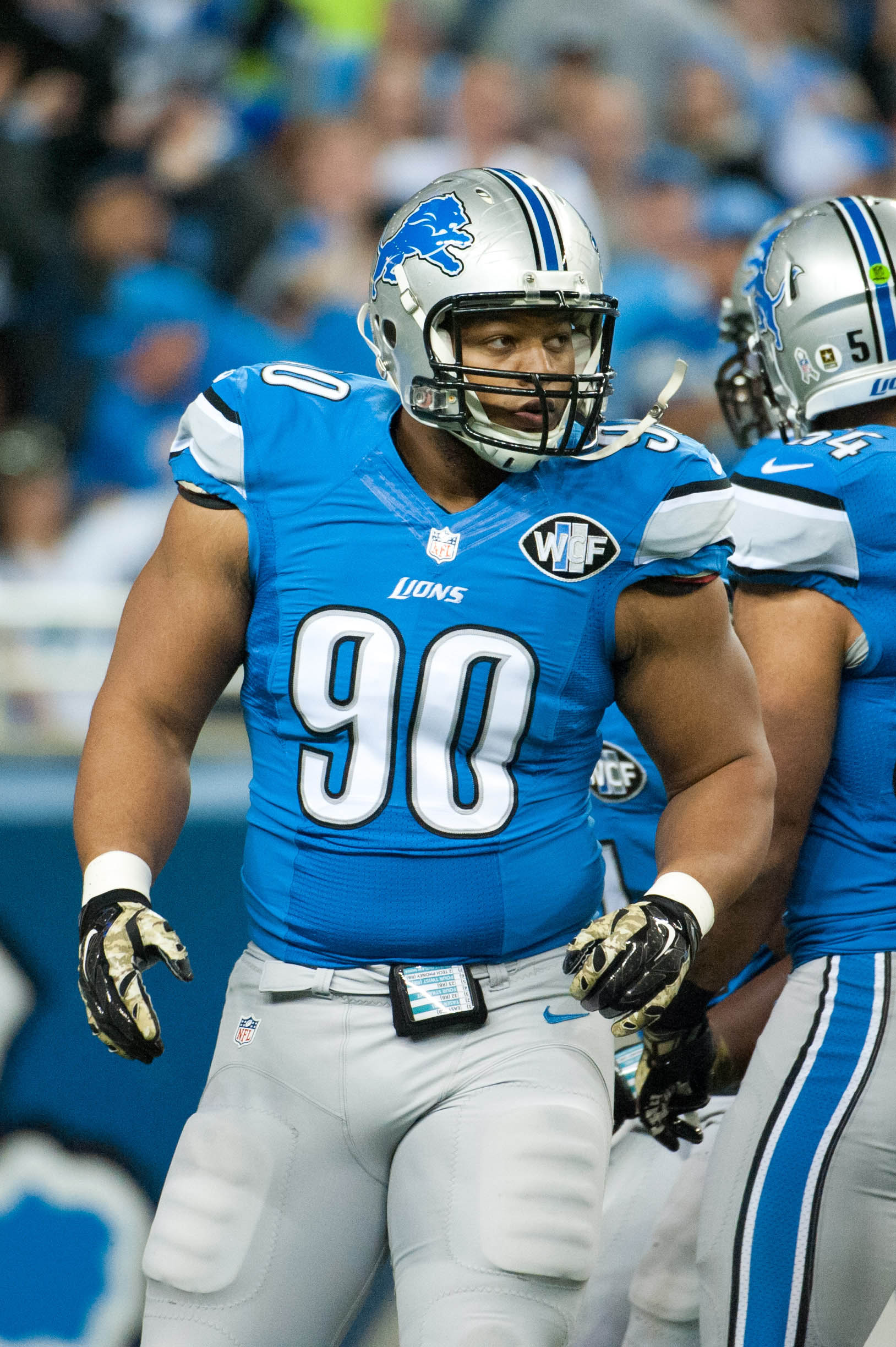
With a player of Suh’s caliber, a team’s decision is usually simple — the front office will do everything it can to lock up its prospective free agent to a long-term deal. If an agreement can’t be reached, the franchise tag can keep the player from reaching the open market, and also gives the club some extra time to negotiate a multiyear pact. Depending on the kind of franchise tag the team uses, exclusive negotiating rights can be retained throughout that process as well.
Suh’s is perhaps the most unique case among this year’s group of top free-agents-to-be though, and the Lions’ approach to keeping him isn’t quite that simple. Let’s break down the team’s three options for dealing with Suh as his contract nears its end….
Working out a long-term extension:
Among defensive tackles, Gerald McCoy‘s seven-year, $95.2MM contract, which works out to an annual average of $13.6MM, is the gold standard. However, even that per-year figure may not be enough to appease Suh. A pair of defensive ends, J.J. Watt and Mario Williams, have cracked $16MM annually on their most recent deals, and I’d expect Suh and agent Jimmy Sexton to target a figure approaching – or even exceeding – that benchmark.
Having mentioned Sexton, it’s worth pointing out that Suh’s most recent public comments about his contract situation certainly didn’t undersell the agent’s role in the process. According to Suh, Sexton will not only handle the negotiations, but he’ll also decide the defensive tackle’s next team. In other words, Suh appears interested in playing for the club willing to offer him the most money. That’s not a surprising stance, and not one for which he should be vilified, but it’s certainly not what we expect to hear, considering most prospective free agents at least pay lip service to the idea of wanting to stick with their current teams.
In any case, the fact that Suh and Sexton will likely accept the bigger and best offer they get doesn’t rule out the Lions by any means. The team currently has $123MM on its cap for 2015, but the cap limit is expected to rise to the $140MM neighborhood, and there are ways for the club to create enough additional flexibility to comfortably accommodate a lucrative long-term deal for Suh.
The Lions’ problem is this: If Suh and Sexton want to see what kind of big offers are out there, it will mean hitting the open market without an agreement in place with the Lions. Even if they’re confident they could match any rival offer Suh receives, the Lions may not want to let it reach that point, for fear of another suitor making the star defensive tackle an offer he couldn’t refuse, perhaps by frontloading it or including a ton of bonus money. As such, if no extension agreement is in place by March, the Lions may want to use the franchise tag to retain exclusive negotiating rights.
Using the franchise tag:
For many elite free agents, the franchise tag makes the most sense — the franchise dollar figure typically falls in line with other top salaries around the league, and such an investment, particularly for just one year, is worthwhile if you’re trying to keep a star player. I anticipate we’ll see teams like the Broncos and Cowboys use it this year, if they have to, for standouts like Demaryius Thomas and Dez Bryant.
However, unlike Thomas and Bryant, Suh is already on the books for a 2014 massive cap hit that actually exceeds what the franchise figure would be for virtually any other player in the league. In Suh’s case, his franchise figure will be 120% of his current cap hit, which works out to a staggering $26.895MM for 2015.
As I noted above, the Lions don’t currently have the space to accommodate a cap number of $26.895MM, but by cutting a few players, and perhaps restructuring contracts for a few others, it’s conceivable that the team could make it work. Still, Suh will already count for over $9.7MM in dead money on the 2015 cap, due to the way his current contract is structured. Keeping him by using the franchise tag would mean the Lions would be committing over $35MM of their cap room to a single player, which is essentially unprecedented.
As such, it may not be feasible for the Lions to carry Suh all season at that $26.895MM cap figure, but the team will likely strongly consider using the tag anyway, since it would at least allow the club to hang onto its exclusive negotiating window for another year. The franchise figure could be used a placeholder, and then if the two sides were to reach a long-term agreement later in the year, that cap hit for 2015 could be significantly reduced.
Allowing him to leave:
Of course, while we rarely see big-name players in their primes hit the open market and change teams, it’s not out of the question that the Lions allow Suh to walk. The 27-year-old’s comments about his contract don’t make it sound as if he’s overly eager to remain in Detroit, and while I don’t think that necessarily means he wants to leave, you’d prefer to hear a little more enthusiasm from your star player about the team and its future.
Additionally, letting Suh go would free up a ton of cap space to use on several other players. By way of comparison, the Lions’ top four free agent signings from last offseason – Golden Tate, Brandon Pettigrew, Joique Bell, and James Ihedigbo – are counting for less than $9MM against the 2014 cap — or about a third of Suh’s potential $26.9MM franchise salary.
Still, as a handful of Lions beat writers have pointed out, Suh’s impact on the defensive unit is hard to understate, and it’s not like this year’s free agent list is overflowing with viable alternatives. Letting Suh leave would mean Detroit would be under more pressure to retain its other free agent defensive tackles, such as Nick Fairley, and would probably have to select a player at the position early in the draft. There’d certainly be more money available to bolster the roster in other spots, but it would come at the expense of a unit (the defensive line) that has played a huge role in the club’s success this season.
Ultimately, there are no easy decisions for the Lions when it comes to Suh, who has much more leverage than your typical free-agent-to-be. I’d be surprised if the team let him go, but it may take some extensive cap maneuvering in Detroit to make things work.
Photo courtesy of USA Today Sports Images.
Important 2015 NFL Offseason Dates
With just two weeks’ worth of games left in the 2014 NFL regular season, we’re only 11 days away from the offseason getting underway for 20 of the league’s 32 teams. As such, it’s worth looking ahead to the offseason calendar – which the NFL released yesterday (PDF link) – for an idea of which dates will be more important over the next several weeks and months. With clubs preparing to make changes to front offices, coaching staffs, and rosters, there are plenty of days to circle on the calendar.
Here’s a breakdown of a few of the NFL’s key offseason dates and deadlines:
December 29: Teams may begin signing players to reserve/futures contracts for the 2015 season. Teams may also begin exercising fifth-year options on 2012 first-round picks and signing 2012 draftees to contract extensions.
January 4: Assistant coaches for playoff teams with byes can interview for head coaching positions through the conclusion of the Wild Card games.
January 11: Assistant coaches for Wild Card teams that won their first round games can interview for head coaching positions through the conclusion of the divisional playoff games.
January 24: Senior Bowl in Mobile, Alabama.
January 25: Assistant coaches for teams in the Super Bowl who have previously interviewed for a head coaching job, can interview a second time with the club no later than the Sunday before the Super Bowl.
February 2: 2015 waiver system begins.
February 10: As of 11:00am central time, NFL teams can sign players whose 2014 CFL contracts have expired.
February 16: First day for teams to designate a franchise or transition player.
February 17-23: The NFL scouting combine will be held in Indianapolis.
March 2: As of 3pm CT, teams can no longer designate a franchise or transition player.
March 7: First day for teams to contact agents of players who will become unrestricted free agents on March 10. Free agent contracts can’t be signed yet, but informal agreements can be reached.
March 10: The 2015 league year begins, and free agency opens. By 3pm CT, teams must make decisions on player options, submit qualifying offers to restricted free agents, submit minimum tenders to exclusive rights free agents, and be under the 2015 salary cap. Trades can be made after 3pm CT.
March 22-25: The NFL owners meetings will be held in Phoenix.
April 24: Deadline for restricted free agents to sign offer sheets.
April 29: Deadline for previous club to exercise right of first refusal (ie. match offer sheets) on restricted free agents.
April 30 – May 2: The NFL draft will be held in Chicago.
May 18-20: The NFL spring meeting will be held in San Francisco.
June 1: Deadline for previous club to submit a June 1 tender to its unsigned unrestricted free agents, and to submit a June 1 tender to its unsigned restricted free agents who haven’t signed an offer sheet.
June 15: Deadline for teams to withdraw qualifying offers to their restricted free agents and still retain exclusive negotiating rights via the June 15 tender.
July 15: Deadline for teams to work out multiyear contracts with free agents designated as franchise players (3pm CT).
July 22: Signing period ends for unrestricted free agents who received a June 1 tender, and for transition players with outstanding tenders. The player’s previous club retains exclusive negotiating rights from this date until Week 10 of the regular season.