
Minor NFL Transactions: 7/23/18
Here are Monday’s minor moves.
Arizona Cardinals
- Signed: TE Chris Bazile
Chicago Bears
- Signed: LB Ro’Derrick Hoskins
- Waived: OL Jerami Hall
Jacksonville Jaguars
- Signed: OL Tony Adams
- Waived/Injured: OL Sean Hickey
New England Patriots
- Signed: WR Devin Lucien
- Waived/Injured: DB David Jones
Tampa Bay Buccaneers
- Signed: DE Kiante Anderson
Cardinals’ David Johnson Reports To Camp
Cardinals running back David Johnson has reported to training camp, the team announced on Monday morning. It’s a big development for Arizona after Johnson opted to skip the team’s mandatory minicamp in June.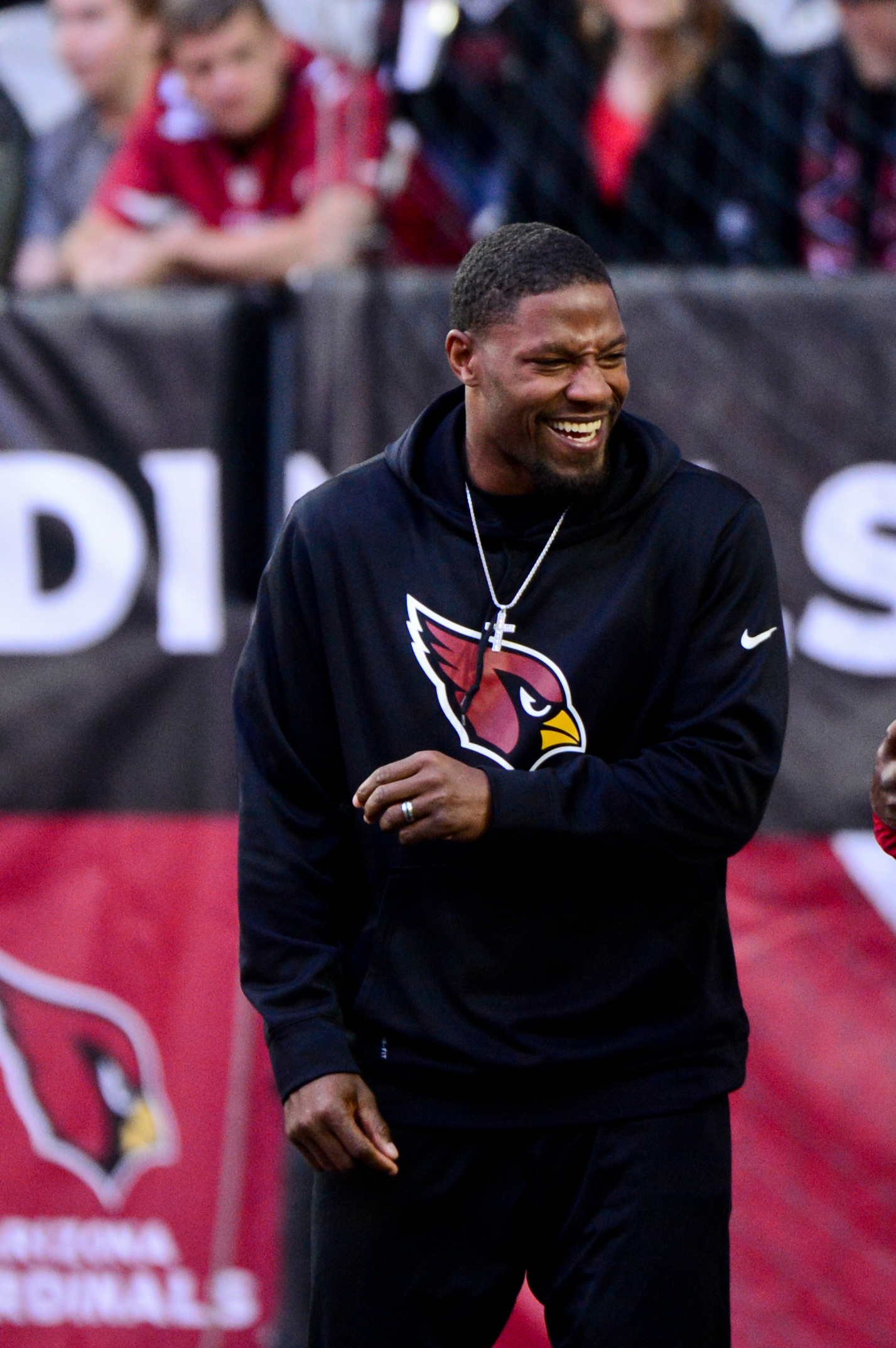
[RELATED – Extension Candidate: David Johnson]
Johnson scheduled to earn a base salary of $1.8MM in the final year of his deal. After losing the 2017 season to injury, Johnson is understandably concerned about his financial security. If Johnson were to suffer another serious injury this year, he would be left without a safety net and a fairly low floor in free agency, despite all of his past accomplishments.
By skipping minicamp, Johnson was fined more than $84K. Missing training camp would have resulted in even more substantial fines, and that’s not something Johnson wanted to mess with. Over the first three years of his career, Johnson has earned $2.3MM in salary. That’s not chump change, but the fines would have hurt him more than other players who are pushing for new deals.
Johnson was arguably the league’s best offensive player in 2016 as he racked up more than 2,100 yards from scrimmage and scored 20 touchdowns. He remains one of the NFL’s premier talents at running back, despite missing the majority of the 2017 campaign with a dislocated wrist.
The Cardinals would like to lock Johnson up, but his lost 2017 season likely complicates negotiations. The Cardinals can also afford to exercise patience thanks to the franchise tag, which would pay Johnson $11.9MM in 2019.
Minor NFL Transactions: 7/20/18
Here are Friday’s minor moves.
Arizona Cardinals
- Waived/NFI: TE Beau Sandland
Detroit Lions
- Released from IR: TE Brandon Barnes
New England Patriots
- Placed on reserve/retired list: OL Andrew Jelks
Patrick Peterson Could Become All-Time Highest-Paid CB
Darrelle Revis earlier this week retired as the NFL’s highest-paid cornerback of all time, but Cardinals defensive back Patrick Peterson has a chance to pass him in due time, as Kyle Odegard of AZCardinals.com notes. Peterson is currently under contract in the desert through the 2020 season, and if he plays out his deal, he’ll have collected $98.6MM, which would place him just $26MM behind Revis. Of course, Peterson will be 31 years old by that time, so he’ll need to have kept up something close to his current level of play in order to bridge the Revis gap. But Peterson hasn’t shown any recent signs of slowing down, and it’s possible that he’ll eventually overtake Revis as the league’s most expensive cornerback.
Poll: Which First-Round QB Will Start Most Games?
Five quarterbacks — Baker Mayfield, Sam Darnold, Josh Allen, Josh Rosen, and Lamar Jackson — were selected in the first round of the 2018 draft, but each signal-caller will have different outlooks for his rookie campaign. Team status, the presence of other options under center, and each quarterback’s own development will play a role in when exactly he starts his first game.
So which rookie passer will start the most contests in 2018? Let’s take a look at each individually:
Baker Mayfield, Browns
None of the first-round quarterbacks are guaranteed to open as a Week 1 starter, and Mayfield especially may face an uphill battle to overtake his club’s presumptive starter. Cleveland management has been adamant that Tyrod Taylor will be under center to begin the season, and there’s no reason (at present) to think that will change. However, Mayfield could certainly change minds during training camp and the preseason, and if the Browns get off to a slow start, Taylor could conceivably be benched in favor of the No. 1 overall pick.
Sam Darnold, Jets
Mayfield only needs to overtake Taylor in order to become the Browns’ starter, but Darnold might need to beat out two veterans: Josh McCown, who started 13 games for the Jets in 2017, and Teddy Bridgewater, who reportedly impressed during organized team activities. Darnold is the future of the New York franchise, of course, but that doesn’t mean the Jets are interested in throwing him on the field behind a porous offensive line and with limited offensive weapons.
Josh Allen, Bills
Like Darnold, Allen may also be competing against two other quaterbacks, as Buffalo signed former Bengal A.J. McCarron this offseason while 2017 draft pick Nathan Peterman is also still in the fold. Additionally, Allen was viewed as a raw prospect coming out of Wyoming, and the Bills will field one of the league’s worst offensive lines during the upcoming season. Buffalo’s wide receiver depth chart is a terrifying sight, while the club’s best offensive player — running back LeSean McCoy — could face discipline if domestic violence accusations prove true. The Bills may want to hold Allen on the bench for awhile, allowing either McCarron or Peterman more reps.
Josh Rosen, Cardinals
Another rookie quarterback facing a battle with two other options? Sounds familiar. Although in Rosen’s case, it’s unclear if Mike Glennon is a serious obstacle. Sam Bradford is the favorite to act as the Cardinals’ starter in Week 1, but Rosen is viewed as the most pro-ready signal-caller of the rookie bunch, so he could get on the field sooner rather than later. Arizona faces a stiff schedule to open the 2018 campaign, and if the club struggles, the Cards’ staff may choose to turn to Rosen.
Lamar Jackson, Ravens
Jackson might be the first-round quarterback who sees the field first in 2018, but it may not be under center. The Ravens are reportedly interested in deploying Jackson as an “offensive weapon,” and could line him up on the field with starting quarterback Joe Flacco. Flacco has produced poor performances in recent seasons, so Jackson is a reasonable candidate to see starts later in the year, especially if Baltimore falls out of the playoff picture.
So what do you think? Which first-round quarterback will make the most starts in 2018? Vote below!
Cardinals TE Ricky Seals-Jones Arrested
Cardinals tight end Ricky Seals-Jones was arrested last Saturday on charges of assault, disorderly conduct, and criminal trespassing, according to KTAR News in Arizona.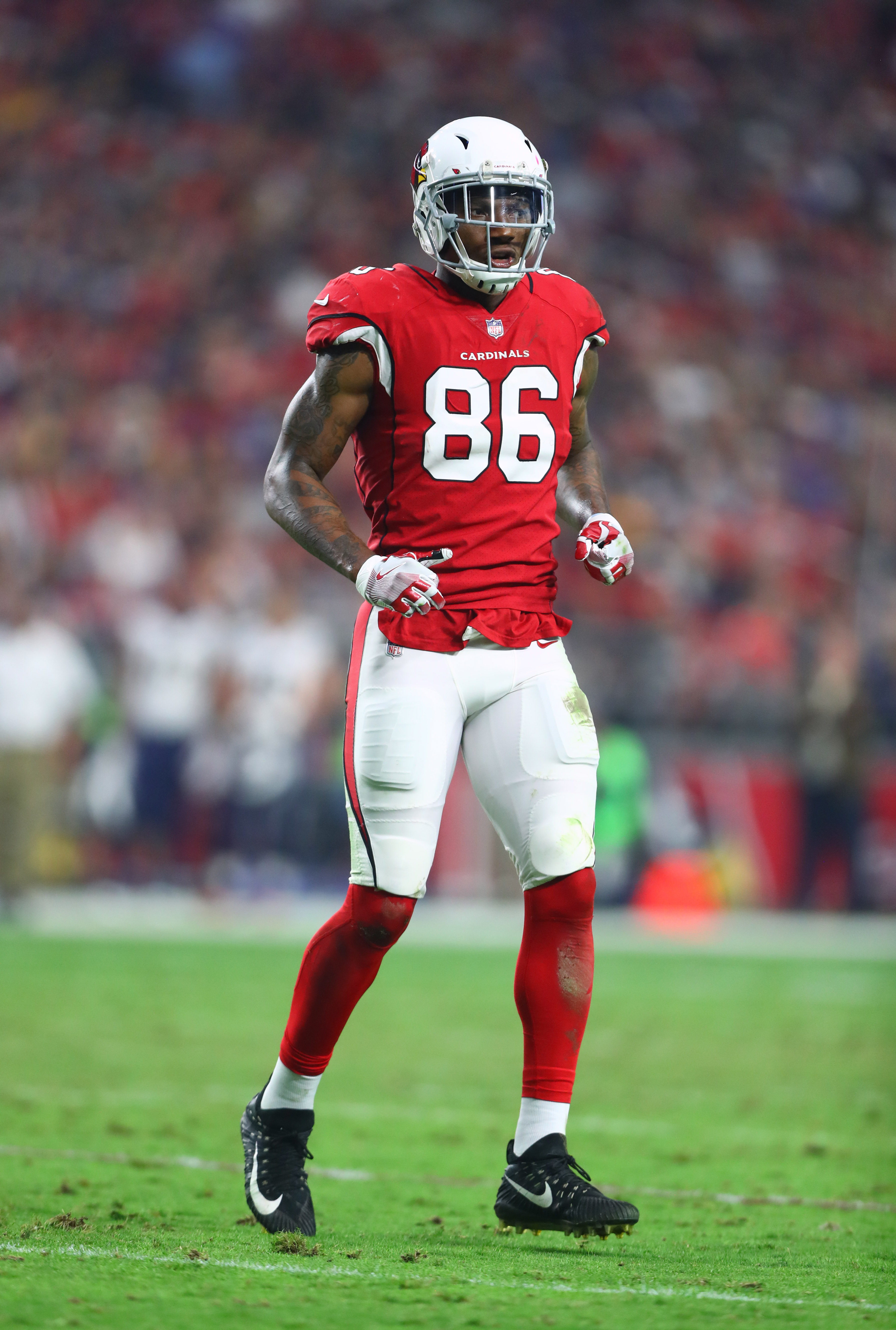
Per the Scottsdale Police Department, Seals-Jones attempted to use a restroom both at the W Hotel and in a restaurant within the hotel, but was denied access in both instances, as staff told Seals-Jones only hotel guests were able to use the bathrooms. A hotel employee says Seals-Jones became combative and shoved the employee, but Seals-Jones maintains he tried to walk past the objecting staff before he was forced to the ground. The police report also indicates Seals-Jones appeared intoxicated when he was arrested.
If alcohol was a factor in Seals-Jones’ arrest, it would mark the second alcohol-related Cardinals incident this month. Arizona general manager Steve Keim was arrested and later plead guilty to extreme DUI earlier in July, and has subsequently been suspended and fined by the team. Keim will pay a $200K fine and spend five weeks away from the club, but there’s no word as to whether he’ll also face an NFL ban.
The NFL reserves the right to suspend players who have been involved in off-field incidents, even if said instances don’t result in legal discipline. Seals-Jones’ case may take a while to filter through the legal system, so regardless of outcome, he likely won’t be facing a ban in 2018. League discipline could come after Seals-Jones’ case is resolved, however, meaning a suspension may be looming in 2019.
Seals-Jones, 23, signed with the Cardinals as an undrafted free agent out of Texas A&M in 2017. While he didn’t manage a reception until late November, Seals-Jones posted three receptions for 54 yards and two touchdowns against the Texans before putting up a 4/72/1 line against the Jaguars the following week. Seals-Jones could be ticketed for starting duty if fellow tight end Jermaine Gresham isn’t ready for Week 1 after suffering a torn Achilles in the 2017 season finale.
Cardinals Notes: Fitzgerald, Keim, Johnson
Larry Fitzgerald will be back for a 15th season in Arizona, and the long-time Cardinals wideout is set to hit free agency next offseason. Of course, the future Hall of Famer can’t envision himself playing elsewhere, as he essentially told Jace Frederick of TwinCities.com that he’d hang up his cleats if he wasn’t retained by Arizona.
- Cardinals general manager Steve Keim pleaded guilty today to extreme DUI, and the Cardinals subsequently fined and suspended the executive. Kent Somers of AZCentral tweets that there won’t be an interim general manager during Keim’s absence, as the team will ultimately divide his responsibilities. Terry McDonough will likely handle the “evaluation side,” while Mike Disner will focus on contracts and the cap. Somer adds that Keim won’t face further discipline from the NFL.
- Meanwhile, NFL Network’s Mike Garafolo tweets that Keim’s suspension “doesn’t preclude” the Cardinals from working out a long-term deal with running back David Johnson, echoing that Disner would likely negotiate the contract. The Pro Bowler skipped mandatory minicamp last month as he looks for a raise on his $1.8MM base salary.
Cardinals Suspend GM Steve Keim
Cardinals general manager Steve Keim pleaded guilty today to extreme DUI. Shortly thereafter, the organization announced that they have suspended and fined the executive. The punishment stems from an incident earlier this month.
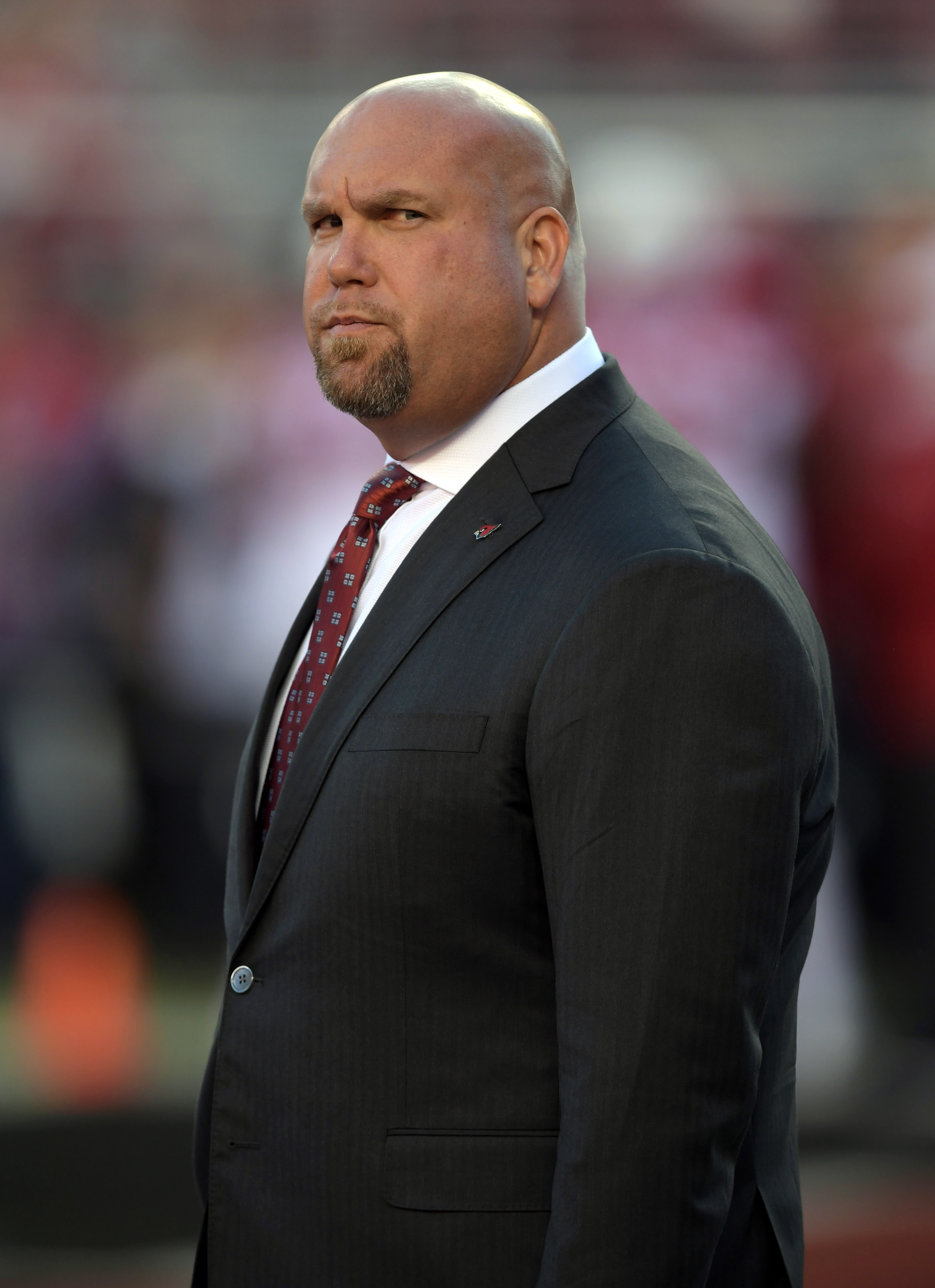 Keim will ultimately be suspended for five weeks and will be fined $200K. According to the team, that money will be donated to the Arizona chapter of Mothers Against Drunk Driving. During the suspension, Keim won’t be allowed to contact or visit the team. He also won’t be allowed to return until he completes “counseling and evaluation, in addition to a DUI education course.”
“As stated at the time of the incident, this behavior is indefensible and completely unacceptable,” the team said in a statement. “While Steve has accepted full accountability and responsibility for his actions, that does not diminish their gravity nor the severity of the consequences that result from them.”
Keim was cited for a DUI back on July 5th. He was booked and released that same night. Keim joined the organization as a college scout in 1999, and he quickly worked his way up the ranks. He was named general manager back in 2013, and he inked a four-year extension with the team in February.
Corry: Bell's Offer Could Affect Johnson
- One player who had a vested outside interest in Bell reaching an agreement with the Steelers is now on his own. But Joel Corry of CBS Sports tweets David Johnson‘s agent should now use the Steelers’ leaked five-year, $70MM offer as the new running back ceiling rather than Devonta Freeman‘s five-year, $41.25MM contract when negotiating with the Cardinals. Considering how big of a gap there is between these numbers (nearly $6MM AAV) and the lack of known guarantees, that might be a tough sell for the Cardinals. Corry adds that a Johnson 2019 tag would come out to approximately $11.3MM. That figure is now more relevant now that Bell is set to play on his $14.5MM tag rather than a market-resetting long-term deal.
What Would David Johnson Extension Cost Cardinals?
After losing the majority of the 2017 season to injury, extension talks between David Johnson and the Cardinals could prove to be tricky. When healthy in 2016, Johnson was one of the very best running backs in the NFL. The Cardinals understand Johnson’s importance to the team, but there could be a divide between the two sides when it comes to money.
With that in mind, Hardik Sanghavi of Over The Cap took a stab at estimating a proper extension for Johnson. He believes a five-year extension with $48.75MM in new money ($9.75MM/year) and $19.5MM in full guarantees would get the job done. That deal would allow Johnson to top Devonta Freeman‘s annual average and three-year cash flow, while giving the Cardinals a lengthy period of control.