
Offseason In Review: Jacksonville Jaguars
Notable signings:
- Zane Beadles (G): Five years, $30MM. $9.475MM guaranteed.
- Red Bryant (DE): Four years, $19MM. $4.725MM guaranteed.
- Toby Gerhart (RB): Three years, $10.5MM. $4.5MM guaranteed.
- Chad Henne (QB): Two years, $8MM. $4.5MM guaranteed.
- Chris Clemons (DE): Four years, $17.5MM. $4.475MM guaranteed.
- Ziggy Hood (DT): Four years, $16MM. $4MM guaranteed.
- Dekoda Watson (OLB): Three years, $6.25MM. $1.5MM guaranteed.
- Clay Harbor (TE): Two years, $3MM. $1.45MM guaranteed.
- Cameron Bradfield (OT): Two years, $3MM. $1.225MM guaranteed.
- Sherrod Martin (S): One year, $780K. $100K guaranteed.
- Tandon Doss (WR): Two years, $1.505MM. $65K guaranteed.
- Will Blackmon (CB): Two years, $2.125MM. $50K guaranteed.
Notable losses:
- Russell Allen (LB): Released; Retired due to injury
- Stephen Burton (WR): Retired
- Delone Carter (RB): Waived
- Brandon Deaderick (DT)
- Jeremy Ebert (WR): Waived
- Justin Forsett (RB): Released
- Maurice Jones-Drew (RB)
- Kyle Love (DT)
- Brad Meester (C): Retired
- Drake Nevis (DL): Waived
- Danny Noble (TE): Waived
- Uche Nwaneri (G): Released
- Will Rackley (OL): Waived
- Allen Reisner (TE)
Trades:
- Acquired a sixth-round pick (No. 205) and a conditional 2015 pick from the 49ers in exchange for Blaine Gabbert. 2015 pick (unknown round) changes hands if Gabbert starts eight or more games for the Niners in 2014.
- Acquired a second-round pick (No. 61) from the 49ers in exchange for a third-round pick (No. 70) and a fifth-round pick (No. 150).
- Acquired a third-round pick (No. 93) from the Patriots in exchange for a fourth-round pick (No. 105) and a sixth-round pick (No. 179).
Draft picks:
- Blake Bortles, QB, UCF (1.3): Signed
- Marqise Lee, WR, USC (2.39)
- Allen Robinson, WR, Penn State (2.61): Signed
- Brandon Linder, G, Miami (FL) (3.93): Signed
- Aaron Colvin, CB, Oklahoma (4.114): Signed
- Telvin Smith, LB, Florida State (5.144): Signed
- Chris Smith, DE, Arkansas (5.159): Signed
- Luke Bowanko, C, Virginia (6.205): Signed
- Storm Johnson, RB, UCF (7.222): Signed
Other:
- Signed Alex Mack to a five-year, $42MM offer sheet, which was matched by the Browns.
- Re-signed Jason Babin after he voided his contract, then later released him.
- Have discussed extension for Cecil Shorts.
- Claimed Bradie Ewing off waivers.
- Signed 17 rookie free agents after the draft.
As our Luke Adams pointed out yesterday, the Jaguars are probably at least a year or two away from making a legitimate run at the AFC South, which the Colts appear to have firmly in hand in 2014. Nonetheless, there is a positive vibe surrounding second-year head coach Gus Bradley, and the Jags acquired a number of solid veterans on both sides of the ball in free agency in an attempt to remain competitive as they continue to build for the long-term.
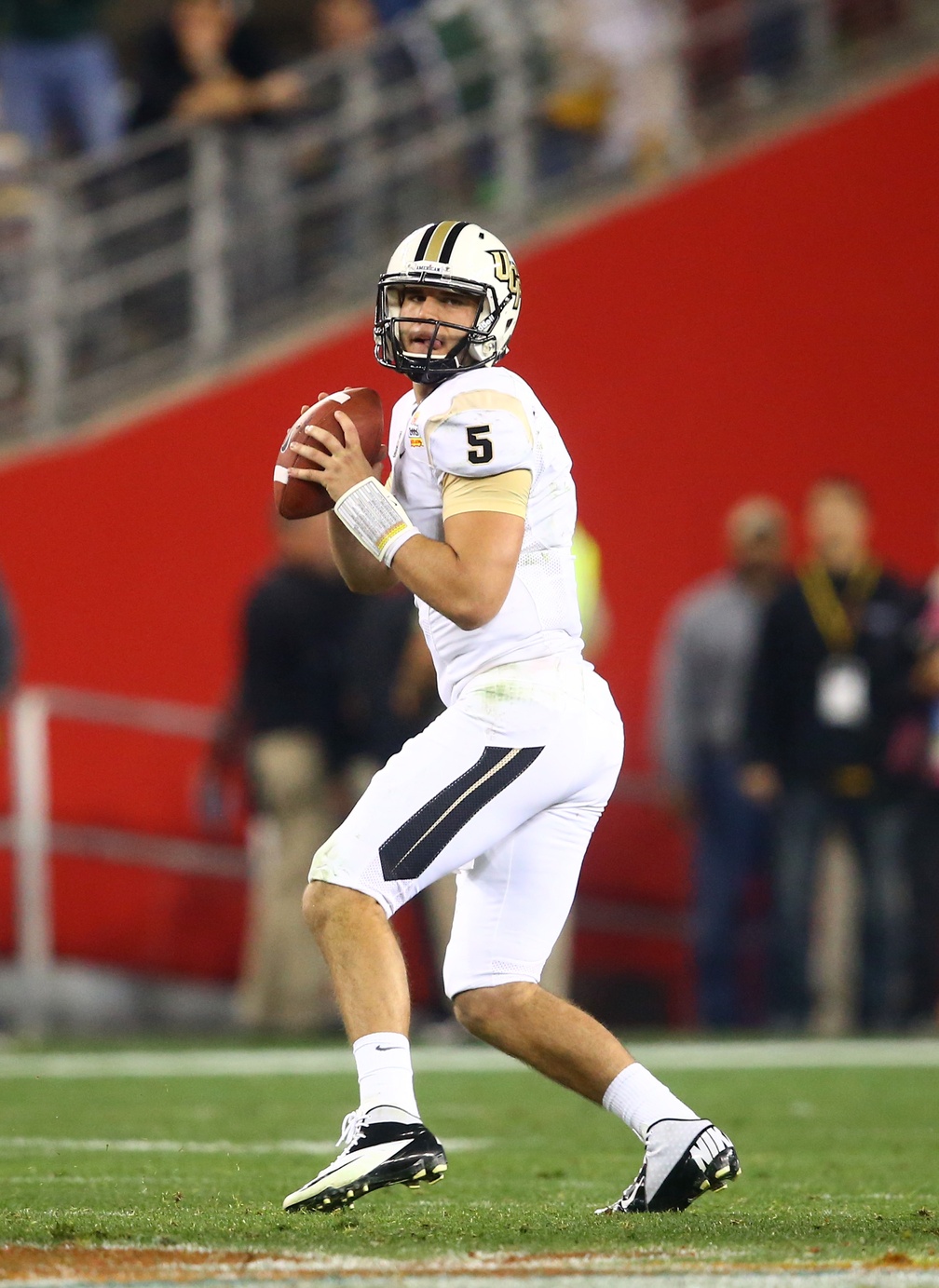
Former Broncos left guard Zane Beadles, who was given a lucrative five-year, $30MM deal, should add stability along the interior of the offensive line. Beadles’ best season came in 2012, when he earned a trip to the Pro Bowl after yielding just one sack and finishing 17th out of 81 eligible guards according to Pro Football Focus’ (PFF) advanced metrics (subscription required). One concern is that, outside of that 2012 campaign, Beadles has not performed especially well by PFF’s standards in any of his other three seasons in the league, and the few number of sacks he allowed in 2012 and 2013 can be attributed, at least in part, to Peyton Manning‘s quick release. However, Beadles is one of those players whose game film often belies his next-level analytics, and although Jacksonville may have overpaid for him, he represents a significant upgrade over Will Rackley, who started 11 games at left guard for the club in 2013.
In the offensive backfield, the team parted ways with Maurice Jones-Drew, one of the most dynamic playmakers in Jacksonville’s brief history, and replaced him with former Viking Toby Gerhart. Gerhart has only served as a spot starter and change-of-pace back for Minnesota, but the Jaguars apparently liked the former Heisman finalist enough to hand him a three-year, $10.5MM contract and a starting role. Gerhart certainly has talent, and it was probably time to move on from Jones-Drew, but Gerhart’s lack of a track record does create an element of unease. However, seventh-round pick Storm Johnson from the University of Central Florida is a strong runner with quick feet and could be a late-round steal for the club.
The Jaguars also targeted defensive help in free agency. Red Bryant, an accomplished run-stopper, will team with pass rushers Chris Clemons and Dekoda Watson to form a stronger front-seven. The team’s coaching staff believes that Watson has “unique pass-rushing skills” and envision him as the “Otto” linebacker in Bradley’s defensive scheme. Clemons had posted at least 11 sacks in each of his first three seasons in Seattle before dropping off last season as he recovered from a torn ACL. Even at age 32, however, a healthy Clemons should be able to get to the quarterback fairly frequently, and the team expects continued improvement from 2012 second-round pick Andre Branch. In short, then, the team’s pass rush will not make opposing signal-callers lose much sleep, but it should still be more effective than it was in recent seasons. This is not to mention the addition of former Steelers’ mainstay Ziggy Hood, who has struggled in the past several years but who still offers some limited upside.
Of course, the NFL is becoming increasingly driven by the passing game, and, to that end, the club traded former first-round pick and abject disappointment Blaine Gabbert to the 49ers and selected Blake Bortles with the No. 3 overall pick in this year’s draft. However, the club learned from its mistakes with Gabbert, and veteran Chad Henne, who has performed as well as could be expected for the Jaguars, was re-signed in order to give Bortles some time to learn without being thrown into the fire from day one.
After drafting Bortles, the Jaguars selected talented receivers Marqise Lee and Allen Robinson with their two second-round picks. In any other year, Lee and Robinson might have been first-round selections, but with the historically deep wide receiver class this year, Jacksonville got a little lucky. Although the members of the team’s receiving corps outside of the oft-overlooked Cecil Shorts and tight end Marcedes Lewis do not have an extensive track record, they do have explosive talent. Shorts, Lee, Robinson, and Lewis will combine with Ace Sanders and Denard Robinson to form a young and intriguing unit for Henne and Bortles.
Again, the Jags will likely not compete for the playoffs this year, but the foundations are being laid properly. They have made an effort to beef up their offensive and defensive fronts, and they have surrounded their quarterback of the future with plenty of high-upside talent. There is reason to hope in Jacksonville, and this time, perhaps, that hope may eventually give way to on-field results.
Spotrac and Over The Cap were used in the creation of this post.
Photo courtesy of USA Today Sports Images
Josh Gordon Fallout
Following Josh Gordon‘s DWI arrest early Saturday morning, his $500 bond was posted by the man who was in the car with him at the time of the arrest, Haydn “Fats” Thomas, according to Mike Florio of Pro Football Talk. As Florio observes, Thomas is a convicted felon and “well-known hustler” in the Triangle region of North Carolina, which makes Gordon’s choice of traveling companions nearly as troubling as the DWI itself.
As far as the on-field fallout from Gordon’s latest incident, there are several items of note this morning:
- Gordon, of course, was already facing a season-long suspension for his most recent violation of the league’s substance abuse policy, and his appeal hearing is set for late this month. As Florio notes in a different piece for Pro Football Talk, the DWI charge will technically have no impact on that hearing, as the league’s substance abuse policy creates a separate track for alcohol-related violations. However, Roger Goodell–or his designee–will certainly be less inclined to reduce the length of Gordon’s drug-related ban in the wake of the DWI. Furthermore, Gordon could face a separate suspension for Saturday’s arrest, which means that he is now not only more likely to miss all of 2014, but a portion of his 2015 season is in jeopardy as well.
- Jeff Schudel of The News-Herald tweets that the Browns should still not cut ties with Gordon. The teams does not have to pay him while he is suspended, and not getting paid could be strong motivation to get clean.
- Even before Gordon’s DWI arrest, Field Yates of ESPN.com (subscription required) discussed how the Browns might go about replacing him this season. Yates writes that the team should rely more heavily on slot options like Nate Burleson, Andrew Hawkins, and Jordan Cameron, as perimeter receivers like Miles Austin and Anthony Armstrong are big question marks at this point.
- Jason Fitzgerald of OverTheCap.com tweets that Saturday’s arrest proves that departed GM Mike Lombardi was right to try and trade Gordon last season. Fitzgerald notes that Lombardi should have come down on his asking price.
Offseason In Review: Denver Broncos
Notable signings:
- DeMarcus Ware (DE/OLB): Three years, $30MM. $16.5MM guaranteed.
- Aqib Talib (CB): Six years, $57MM. $11.5MM guaranteed.
- T.J. Ward (S): Four years, $22.5MM. $7MM guaranteed.
- Emmanuel Sanders (WR): Three years, $15MM. $6MM guaranteed.
- Andre Caldwell (WR): Two years, $2.7MM. $400K guaranteed.
- Winston Justice (OT): One year, $1.138MM. $75K guaranteed.
- Chris Harris (CB): One year, $2.187MM. Accepted RFA tender.
- Mitch Unrein (DT): One year, $1.431MM. Accepted RFA tender.
- Will Montgomery (OL): One year, $1.325MM.
Notable losses:
- Mike Adams (S)
- Robert Ayers (DE)
- Champ Bailey (CB): Released
- Zane Beadles (G)
- Eric Decker (WR)
- Trindon Holliday (KR)
- Michael Huff (S)
- Quentin Jammer (CB)
- Dan Koppen (C)
- Chris Kuper (G): Retired
- Paris Lenon (ILB)
- Jeremy Mincey (DE)
- Knowshon Moreno (RB)
- Shaun Phillips (DE)
- Dominique Rodgers-Cromartie (CB)
- Steve Vallos (OL)
- Wesley Woodyard (ILB)
Trades:
- Acquired a second-round pick (No. 56) and a seventh-round pick (No. 242) from the 49ers in exchange for a second-round pick (No. 63), a fifth-round pick (No. 171), and a 2015 fourth-round pick.
Draft picks:
- Bradley Roby, CB, Ohio State (1.31): Signed
- Cody Latimer, WR, Indiana (2.56): Signed
- Michael Schofield, OT, Michigan (3.95): Signed
- Lamin Barrow, LB, LSU (5.156): Signed
- Matt Paradis, C, Boise State (6.207): Signed
- Corey Nelson, LB, Oklahoma (7.242): Signed
Other:
- Extended John Elway through 2017 as executive VP of football operations; added general manager to his title.
- Extended John Fox through 2016 as head coach.
- Extended Jack Del Rio through 2016 as defensive coordinator.
- Have discussed extensions for Demaryius Thomas and Julius Thomas.
- Exercised Von Miller‘s fifth-year option for 2015 ($9.754MM).
- Signed 15 rookie free agents after the draft.
After acquiring living legend Peyton Manning two years ago, the Broncos probably thought they would have another Lombardi Trophy in their collection by now. But after being upset by Baltimore in a double-overtime thriller in the 2012 playoffs, Denver was blindsided by Seattle’s suffocating defense one year later in Super Bowl XLVIII. In an attempt to get his team over the hump, GM John Elway was very aggressive in free agency, landing a number of marquee pieces to ensure that the Broncos get another crack at the title.
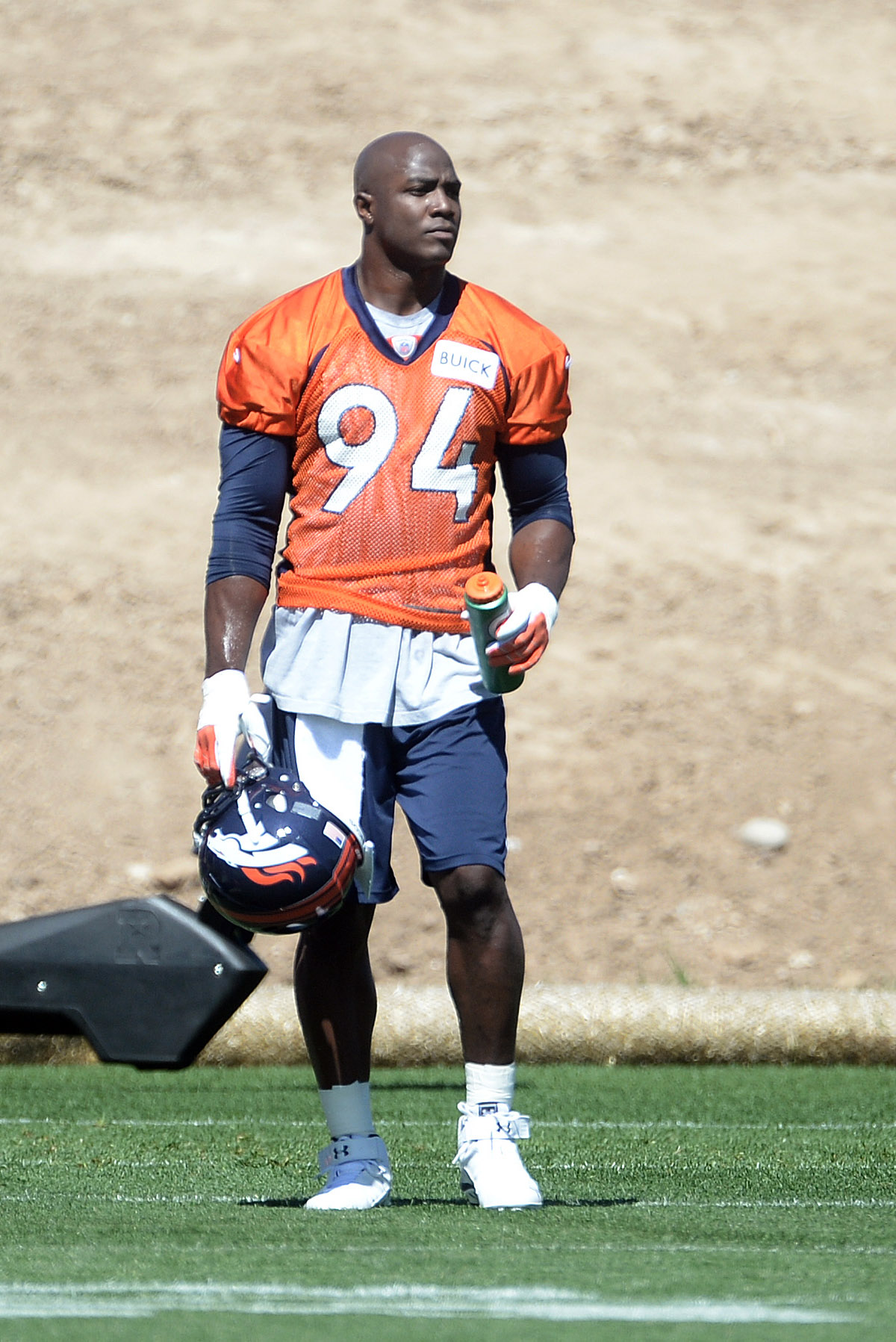
On offense, Elway made the difficult decision to let wide receiver Eric Decker walk in free agency. Decker had put up over 1,000 yards and double-digit touchdowns in each of the past two seasons, but the Broncos knew they would be unable to meet Decker’s open-market price (especially since they are also mulling extensions to dynamic receiving threats Demaryius Thomas and Julius Thomas). The team did sign former Steeler’s wideout Emmanuel Sanders, who offers a different skillset than Decker and whose speed and elusiveness, combined with Manning’s accuracy, could create nightmarish problems over the middle of the field.
Along the offensive line, Denver added veteran center Will Montgomery and will reshuffle the unit with the return of Ryan Clady from injury and the departure of left guard Zane Beadles. Clady will resume his post at left tackle, so Chris Clark–who replaced Clady at that spot last season–will move over to right tackle. Orlando Franklin, last year’s right tackle, gets bumped inside to left guard to replace Beadles. The mix-up might have created a bit of confusion and disappointment for Franklin, but it should not negatively impact what was a tremendous offensive line in 2013. The group excelled in pass protection, giving up just 20 sacks–though Manning’s quick trigger surely played a significant part in that–and they were effective in run blocking as well.
Speaking of the running game, the Broncos let running back Knowshon Moreno leave in free agency–he ultimately signed a modest deal with the Dolphins–and have not attempted to replace him with a veteran. Instead, they seem comfortable riding their stable of young backs, none of whom have started a game in the NFL. But all the Broncos really need from their run game is the ability to pick up first downs off of short yardage and touchdowns off of goal-to-go situations. Talented but unproven runners like Montee Ball, Ronnie Hillman, and C.J. Anderson should be able to carry the load.
The defensive side of the ball is where the Broncos made the biggest splashes in free agency. According to Football Outsiders’ metrics, Denver had a middle of the pack defense in 2013, ranking 9th against the run–as measured by Defense-adjusted Value Over Average (DVOA)–but 21st against the pass and 15th overall. Those evaluations were supported by Pro Football Focus’ advanced metrics (subscription required), which ranked the Broncos’ defense second-best in the league against the run but just 17th in coverage and 14th in pass rushing.
Enter DeMarcus Ware. Released by the Cowboys, the perennial All-Pro found a home in the Mile High City, where he and Von Miller will create a formidable pass rush duo that should boost the team’s sack total (the Broncos racked up 41 sacks in 2013, tied for 13th-most in the league). In the secondary, although Denver lost Dominique Rodgers-Cromartie to the Giants, they replaced him with Aqib Talib, who resurrected his career with back-to-back solid seasons in New England. Although Pro Football Focus (subscription required) suggests this is something of a downgrade–Talib was ranked 57th out of 110 qualified corners, whereas Rodgers-Cromartie was ranked 6th-best–it would be surprising if Talib did not perform at least as well as the man affectionately known as DRC. This is not to mention, of course, the addition of first-round selection Bradley Roby, a talented cornerback in his own right.
The Broncos also added safety T.J. Ward to boost the back end of the defense. Ward thrives against both the run and the pass, and he adds some much-needed athleticism to a defense that said goodbye to aging veterans Mike Adams, Champ Bailey, and Quentin Jammer.
Manning, who is an aging veteran himself, shows no signs of slowing down and said that he plans to play out his current contract, which runs through the 2016 season (when Manning will be 40). Because of Manning’s age and the age of other key players–Ware and Wes Welker, for instance–there is a belief that Denver’s window to win it all is fairly small. However, as shown above, the Broncos are also getting younger and more athletic in some areas, and should they reach extensions with Demaryius and Julius Thomas, they will have secured a key part of their offensive future.
In any event, barring an injury to Manning, this team is not going anywhere in the next several years. They should take home the AFC West title again this season, and, although it is rare for such things to happen in the NFL, we may see a Super Bowl XLVIII rematch in Super Bowl XLIX. The Broncos are certainly favorites to represent the AFC in the big game again, and if they do, their offseason additions may just be enough to bring a third title to Denver.
Spotrac and Over The Cap were used in the creation of this post.
Photo courtesy of USA Today Sports Images
Monday Roundup: Graham, Taylor, Dolphins
Let’s take a look at some links from around the league on this Monday evening:
- Arbitrator Stephen Burbank will issue his decision on Saints tight end Jimmy Graham‘s franchise tag grievance on Thursday, according to Adam Schefter and Mike Triplett of ESPN.com.
- Steelers‘ cornerback Ike Taylor, who agreed to reduce his 2014 salary from $7MM to $2.5MM in March, and who seemed at peace when speaking with reporters about his decision just a month ago–he simply said “my [new] salary is a lot of money”–has apparently had a change of heart. As Mark Kaboly of The Pittsburgh Tribune-Review writes, Taylor recently appeared on The Jim Rome Show and stated, “Did it hurt me? Hell yeah. Does it still hurt? Yeah, it hurts, but hopefully I can go in and bounce back this year, do what I need to do on the field and we will see what happens after.” Of course, there is nothing Taylor can do about it now, and both he and the Steelers are hoping for a bounce-back year in 2014.
- ESPN’s Adam Caplan tweets a couple of options for the Eagles as they make to shuffle their offensive line in the wake of the Lane Johnson suspension.
- Jason Fitzgerald of OverTheCap.com continues his Best Contract/Worst Contract series with the Falcons. He explains why the team’s best contract is with wideout Roddy White, and the worst is with LT Sam Baker.
- Dr. David Chao, whose piece for the National Football Post we referenced earlier today with regards to the dangers associated with playing football on dirt–as they do in the Oakland Coliseum–also passed along a couple of Dolphins injury notes. Chao confirms that running back Knowshon Moreno has had his knee scoped and should return in time for the majority of training camp, but he expects center Mike Pouncey to wind up on the PUP list, requiring him to miss at least the first six weeks of the season.
Fittipaldo On The Steelers
Ray Fittipaldo of The Pittsburgh Post-Gazette hosted a chat with fans this afternoon, and some noteworthy tidbits came out of it. For instance, he says it was not foolish for the Steelers to not make a run at Brandon Flowers. Flowers can make up to $5MM this year in incentives and the club has only $6MM of cap space, which it would like to keep for potential signings or extensions.
Speaking of which, Fittipaldo believes Cortez Allen may be the next player to get an extension. He writes, “[Allen] hasn’t exactly been a model of consistency but he has the raw skills to be a good corner in this defense. The last time the Steelers let a CB play out the final year of his deal [Keenan Lewis] they could not afford to keep him.”
Sunday Roundup: Thomas, Davis, Momah
It’s been a surprisingly exciting morning in the NFL, with the false report from the Dallas Police Department that Broncos cornerback Aqib Talib was arrested early this morning dominating the Twitterverse. Now that things have quieted down and Talib has been absolved–his brother, Yaqub, was the person taken into custody–let’s have a look at some links from around the league.
- Mike Kiszla of The Denver Post writes that the Broncos cannot afford to overpay star wideout Demaryius Thomas. He adds that, although Thomas is set to become a free agent after this season, the franchise tag is a legitimate option if an extension cannot be worked out (check out our Luke Adams’ piece on what a deal for Thomas might look like). Kiszla believes that giving Thomas more than $30MM in easily-obtained guarantees is too much for a receiver who greatly benefits from being in the same huddle as Peyton Manning.
- The Panthers exercised linebacker Thomas Davis‘ 2014 and 2015 options in February after his stellar 2013 campaign, but if they had not done so, Davis would have retired, according to Jonathan Jones of The Charlotte Observer. Davis said, “If I’m going to play football and represent an organization, it’s going to be with the team that stuck beside me and never gave up on me.“
-
Free agent defensive tackle Johnny Jolly, who played for the Packers last season, has gained medical clearance after undergoing neck surgery in January, writes Aaron Wilson of The National Football Post. As we learned several weeks ago, the Packers remain open to Jolly’s return.
- The Titans‘ top three wide receivers–Nate Washington, Kendall Wright, and Justin Hunter–are set. But as Lauren Moore of The Tennessean writes, second-year man Michael Preston, who has been dubbed a “jack-of-all-trades” by wide receivers coach Shawn Jefferson, hopes to seize the fourth receiver role from the likes of veteran free agent acquisitions Brian Robiskie, Derek Hagan, and Dorin Dickerson, as well as a few 2013 and 2014 undrafted free agents.
- Mary Kay Cabot of The Cleveland Plain Dealer writes that, although the Browns would love to extend tight end Jordan Cameron, Cameron’s agent, Tom Condon, will drive a hard bargain. She adds that wide receiver Josh Gordon must have some “compelling arguments” given that there has yet to be an announcement regarding his suspension (although an appeal hearing has not been set).
- Ryan O’Halloran of The Florida Times-Union writes that the Jaguars will need to grab a standout pass rusher in the 2015 draft, and he lists some potential candidates for Jags fans to keep an eye on this season.
- Tim McManus of PhillyMag.com writes that Ifeanyi Momah, the physically gifted wide receiver whom the Eagles released last season during final cutdowns, is back with Philadelphia this year and stands a real chance at making the roster.
Offseason In Review: San Diego Chargers
Notable signings:
- Donald Butler (ILB): Seven years, $51.8MM. $11.15MM guaranteed.
- Donald Brown (RB): Three years, $10.5MM. $4MM guaranteed.
- Chad Rinehart (G): Two years, $5.1MM. $2MM guaranteed.
- Darrell Stuckey (S): Four years, $7.6MM. $1.735MM guaranteed.
- Brandon Flowers (CB): One year, $3MM. $1.5MM guaranteed.
- Kellen Clemens (QB): Two years, $3MM. $645K guaranteed.
- Reggie Walker (OLB): Two years, $2.05MM. $320K guaranteed.
- Brandon Ghee (CB): Two years, $1.65MM. $300K guaranteed.
- Kavell Conner (LB): Three years, $2.7MM. $270K guaranteed.
- David Johnson (TE): Two years, $1.7MM. $220K guaranteed.
- Seyi Ajirotutu (WR): One year, minimum salary benefit. $65K guaranteed.
- Rich Ohrnberger (OL): One year, minimum salary benefit. $65K guaranteed.
- Cordarro Law (OLB): Two years, $933K. $2.5K guaranteed.
- Richard Marshall (CB): One year, minimum salary benefit.
Notable losses:
- Danario Alexander (WR)
- Bront Bird (ILB)
- Ronnie Brown (RB)
- Derek Cox (CB): Released
- Le’Ron McClain (FB): Released
- Johnny Patrick (CB): Waived
- Stephen Schilling (OL)
- Brandon Taylor (S): Waived
- Cam Thomas (DT)
- Charlie Whitehurst (QB)
Extensions and restructures:
- Eddie Royal (WR): Restructured contract. 2014 base salary reduced from $4.5MM to $1.75MM. Received $1.75MM signing bonus and fully guaranteed base salary.
- Jarret Johnson (OLB): Restructured contract. 2014 base salary reduced from $4MM to $1MM. Received $2MM signing bonus.
- Dwight Freeney (OLB): Restructured contract. 2014 base salary reduced from $2.5MM to $1.625MM. Roster bonus reduced from $500,000 to $375,000
Trades:
- Acquired a second-round pick (No. 50) from the Dolphins in exchange for a second-round pick (No. 57) and a fourth-round pick (No. 125).
Draft picks:
- Jason Verrett, CB, TCU (1.25): Signed
- Jeremiah Attaochu, OLB, Georgia Tech (2.50): Signed
- Chris Watt, G, Notre Dame (3.89): Signed
- Ryan Carrethers, DT, Arkansas State (5.165): Signed
- Marion Grice, RB, Arizona State (6.201): Signed
- Tevin Reese, WR, Baylor (7.240): Signed
Other:
- Exercised Corey Liuget‘s fifth-year option for 2015 ($6.969MM).
- Signed 17 rookie free agents after the draft.
The Chargers were a surprise entrant in last year’s playoffs, gutting out a tense victory over division-rival Kansas City on the last day of the regular season and getting some help from other clubs along the way to secure the AFC’s second wild-card spot. They went on the road to knock off AFC North champion Cincinnati on wild card weekend before finally succumbing to Denver in the divisional round.
Nonetheless, 2013 was a year of fresh starts and pleasant surprises for San Diego and first-year head coach Mike McCoy. Quarterback Philip Rivers set a career-high with a 69.5% completion percentage and threw 32 touchdown passes, just two short of his career best. Eight of Rivers’ touchdown passes went to rookie wideout Keenan Allen, who fell to the third round of the 2013 draft because of injury concerns and made the other 31 clubs in the league look foolish for passing on him. Rivers was also sacked just 30 times after being dropped almost 50 times in 2012, perhaps a testament to the surprisingly strong performance of free agent acquisition King Dunlap at left tackle and the steady play of rookie D.J. Fluker on the right side.
In an attempt to ensure continued stability along the offensive line in 2014 and beyond, the Chargers re-signed guard Chad Rinehart to a two-year, $6MM deal in March. Although Rinehart enjoyed his best season in 2011, according to Pro Football Focus’ advanced metrics (subscription required), he did perform well in San Diego’s two playoff games last season and still has the potential to be an above-average starter in the league.
The biggest concern on offense may be the loss of offensive coordinator Ken Whisenhunt, who was hired to be the Titans head coach after his one impressive season in San Diego. The Chargers promoted quarterbacks coach Frank Reich to offensive coordinator just one day after Whisenhunt’s hiring, and early returns are encouraging. As Eric D. Williams of ESPN.com writes, the Chargers’ offense was “purring” in offseason workouts, with Rivers distributing the football all over the field to diverse and talented playmakers like Allen, Ladarius Green, Malcom Floyd, and Vincent Brown.
The Chargers are largely relying on their incumbents to ensure that the offense remains among the league’s most productive units for the second consecutive season. The club did not enter the offseason with a great deal of salary cap space, and they did not draft an immediate playmaker on offense. The biggest acquisition on that side of the ball was former Colts’ running back Donald Brown, who signed a three-year, $10.5 million deal in March. Brown adds a quality complement to Ryan Mathews and Danny Woodhead, and he represents a useful insurance policy should Mathews struggle with injuries after finally putting together a healthy and productive campaign in 2013.
The team did hand out a lucrative contract extension to linebacker Donald Butler, keeping the prospective free agent off the market with a seven-year, $51.8MM deal (though only $11.5MM of that is guaranteed). Butler suffered through injury and inconsistency in 2013, but he is just 25 and still has a great deal of potential. Butler will team with Manti Te’o to form what the Chargers hope will be one of the most dynamic pairs of inside linebackers for years.
Te’o and Butler will be flanked by outside linebackers Dwight Freeney and Jarret Johnson (both of whom agreed to take a pay cut in March), but perhaps not for long. Given the age and declining skills of both Freeney and Johnson, the Chargers targeted edge rushing help in the draft and, to that end, traded their second- and fourth-round selections (Nos. 57 and 125 overall) to the Dolphins in order to trade up seven spots to No. 50. With that pick, the team chose Jeremiah Attaochu, a 6’3″, 243-pound pass rusher out of Georgia Tech. The Chargers also exercised defensive end Corey Liuget‘s fifth-year option for 2015, thereby keeping another young, high-ceiling defender who can get to the quarterback under club control.
The most pressing concern for the Chargers this offseason was their porous secondary, and they attacked that unit with vigor. They re-signed Richard Marshall, who was largely ineffective in a part-time role in 2013, but they perhaps hit a pair of home runs in the draft and free agency. They used their first-round pick to select top cornerback prospect Jason Verrett out of TCU, and they were the winners of the recent Brandon Flowers sweepstakes, signing the former Chiefs’ corner to a one-year, $3MM deal to prove that he is the elite defender that everyone thought he was in 2011 and 2012.
So the secondary, anchored by stalwart Eric Weddle at free safety, received a significant upgrade, which may be enough to catapult defensive coordinator John Pagano‘s group into the top half of the league (last year, the Chargers ranked 23rd in yards allowed, though they did yield the 11th-fewest points per game). Combined with what projects to be a strong offensive unit, the Chargers should challenge for the playoffs again. Although dethroning the Broncos in the AFC West may be too much to ask, the wildcard is well within reach.
Spotrac and Over The Cap were used in the creation of this post.
Aqib Talib Falsely Accused Of Public Intoxication
10:52am: It’s official. Aqib Talib’s brother, Yaqub, was arrested, not Aqib himself. Major Geron, who initially tweeted the arrest, has corrected his mistake and issued an apology (via Twitter). And the city of Denver heaves a collective sigh of relief.
10:41am: The Dallas Police Department has yet to amend its statement that Yaqub Talib, and not Aqib Talib, is the individual currently held at the city’s processing center, tweets Jason La Canfora of CBS Sports. According to a rather confident tweet from Pro Football Talk, Dallas PD does not have Aqib in custody. One confusing factor in all of this is that Synn, the nightclub where the alleged incident took place, was said to be hosting an “Official NFL Camp After Party” last night, according to Robert Wilonsky of The Dallas Morning News. Several other NFL players were reportedly in attendance. It could be that the Talib brothers were there together, but that is just speculation at this point. As of right now, all signs indicate that the Dallas PD made a (rather egregious) mistake. Stay tuned.
10:18am: Perhaps what looked to be a major story is instead a non-story. According to Pro Football Talk, Talib’s agent, Todd France, says that Talib’s brother, Yaqub Talib, was the individual arrested in Dallas this morning (Twitter link).
10:06am: New Broncos cornerback Aqib Talib was arrested at a Dallas night club at approximately 1:45 this morning, tweets Major Max Geron of the Dallas Police Department. Geron adds that Talib was arrested for public intoxication as he was throwing bottles, causing a disturbance and creating a danger to himself and others.
AFC East Links: Brady, Satele, Trump
Ben Volin of The Boston Globe notes that there are seven Patriots players set to make more money than Tom Brady this year, whose $2MM base salary is tied for eighth-most on the club. Of course, Brady did receive $33MM as a result of last year’s extension that pushed his contract into 2017. However, if Brady honors that deal, he will be making a total of $27MM over the course of the next three seasons, just $9MM per year when the going rate for franchise quarterbacks is at least twice as much.
Brady’s contract situation has made Volin wonder if there was any subliminal meaning to head coach Bill Belichick‘s statement, “we know what Tom’s age and contract situation is” after the team drafted Jimmy Garoppolo in the second round of last month’s draft. Although neither side has mentioned anything about a contract dispute, Volin opines that the Patriots could be preparing themselves for one just in case.
Now some more notes from the AFC East:
- In a video segment for CSNNewEngland, Tom Curran, Mike Giardi and Phil Perry discuss the success of the Patriots‘ two first-round picks in 2012, Chandler Jones and Dont’a Hightower. They agree that the team needs to decrease Jones’ workload a bit to ensure his continued effectiveness, and they also note that 2014 is a “pseudo-contract year” for both players. As first-round picks under the new CBA, they will be under club control for two more seasons (assuming that New England picks up the fifth-year option for both, which is probably a given). Nonetheless, the Patriots do like to get contract issues resolved early, so 2014 may well be the best time for Jones and Hightower to boost their leverage.
- In their continuing search for a replacement for injured center Mike Pouncey, the Dolphins will bring in Samson Satele–who spent the first two seasons of his career with Miami–for a workout on Monday, according to Barry Jackson of The Miami Herald. Jackson adds that the team will bring in two other linemen as well, but it is unclear who those players are at this point.
- Although the Jets‘ competition is not an open one–Geno Smith is expected to take 70 to 75 percent of the first-team reps in training camp–it is not an entirely closed competition either, writes Rich Cimini of ESPNNewYork.com. Normally, a veteran starter takes about 90 percent of reps with the first team.
- As our Luke Adams wrote last week, Donald Trump, one potential bidder for the Bills franchise, believes he is the only bidder who would keep the team in Buffalo. Phil Perry of CSNNewEngland writes that if Trump were to purchase the club–which is a dubious proposition at best–he has indicated that the Bills would need a new stadium, perhaps within the Buffalo city limits.
Sunday Roundup: Jags, Colts, Graham
Let’s round up some of today’s links from around the league:
- As our Luke Adams noted earlier this month, the Jaguars do not know when Justin Blackmon will be reinstated by the league. The team does not expect Blackmon to contribute in 2014, and they are distancing themselves from even talking about the troubled wideout, writes Gene Frenette of The Florida Times-Union. Even friends, teammates, and ex-coaches are finding it difficult to get a read on where Blackmon is and how his recovery is progressing.
- Ryan O’Halloran of The Florida-Times Union writes that the ulnar nerve damage that Jaguars‘ jack-of-all-trades Denard Robinson suffered through last season is behind him, so he hopes to put his full skill-set on display in 2014.
- In the same piece, O’Halloran adds that the Jaguars are likely to keep three tight ends on their roster, and with Marcedes Lewis and Clay Harbor as locks to make the team, the competition between Brandon Barden, Marcel Jensen, Reggie Jordan and D.J. Tialavea will be a fascinating one to watch.
- John Keim of ESPN.com explains why he is impressed with Redskins‘ outside linebackers coach Brian Baker.
- Bo Smolka of CSNBaltimore.com wonders if Ravens‘ wide receiver Jeremy Butler can become this year’s Marlon Brown: an undrafted gem that unexpectedly turns into a legitimate threat in the passing game.
- Clifton Brown of CSNBaltimore.com gives a list of five Ravens that will be “feeling the heat” this summer.
- In a photo gallery, The Detroit Free Press projects the Lions‘ starters on both sides of the ball.
- Mary Kay Cabot of The Cleveland Plain Dealer believes the Browns will try to add another receiver or two, and she writes that if quarterback Connor Shaw impresses in training camp as he did in OTAs and minicamp, the team may have to keep him on the 53-man roster rather than put him on the practice squad and risk his being signed by another club.
- George Thomas of The Akron Beacon-Journal describes the battle for playing time that Browns‘ cornerback Leon McFadden–who was projected to be a starter in his rookie season in 2013–now faces after the influx of talent in the team’s secondary.
- In a two-part mailbag, Mike Wells of ESPN.com looks at a number of Colts-related items. He writes that, although the team will not hand a starting job to Mike Adams, he would not be surprised to see Adams starting alongside LaRon Landry at safety. Wells also notes that GM Ryan Grigson does not plan on using all of the team’s $13.7MM in salary cap space because he wants to have room to pay Andrew Luck and T.Y. Hilton down the road.
- Mike Florio of Pro Football Talk writes that the league wants the Saints to settle Jimmy Graham‘s grievance case, and Florio believes the team would be wise to do so.