
AFC East Notes: Unga, McCourty, Jets
The Bills will be the first team to open training camp in 2014, with a 6pm practice this evening. And, as ESPN’s Adam Schefter tweets, every team in the league will be in camp by this time next week. As the anticipation continues to build, let’s take a look at some Bills notes and swing around the rest of AFC East on this Sunday morning:
- Mike Rodak of ESPN.com wonders if the recently-signed Stevenson Sylvester can crack the Bills‘ roster. Rodak pegs Sylvester’s chances at 40%, writing that Sylvester’s best chance to make the club is as a contributor on special teams.
- Rodak also tweets that the Bills have removed guard J.J. Unga from the active/non-football injury list, but Marcell Dareus remains on that list.
- Rock star Jon Bon Jovi has been confirmed as a partner in a Toronto-based group interested in buying the Bills, writes Tom Precious of The Buffalo News.
- Mike Reiss of ESPN.com says a contract extension between the Patriots and Devin McCourty is not imminent at this time.
- Tom E. Curran of CSNNewEngland pegs Danny Amendola as the Patriots‘ top breakout candidate (as he is every year).
- Rich Cimini of ESPNNewYork.com breaks down the Jets‘ current linebacker corps.
- Manish Mehta of The New York Daily News looks at five issues facing the Jets as training camp approaches, including whether the secondary can hold up and what newly-signed running back Chris Johnson has left in the tank.
- Adam H. Beasley of The Miami Herald writes that a renovation of Sun Life Stadium and a more aggressive sales force are helping the Dolphins regain their share of the local market.
Monday Roundup: Finley, Young, Big Ben
Free agent tight end Jermichael Finley, who has been medically cleared to play by his own doctor, said he will undergo another series of medical tests on Wednesday and will send the results of those tests to all 32 clubs in an effort to convince them that he is fully healthy, writes Tom Pelissero of USA Today. Finley has stated that he would like to return to the Packers, and that he certainly wants to continue playing rather than collect the $10MM insurance policy he would receive if he retired from the game.
However, he has also demonstrated that he will be patient as he waits for the right deal. The Steelers‘ team neurosurgeon, Dr. Joseph Maroon, performed Finley’s vertebrae fusion in November and declared him fit to play a few months later. Pittsburgh subsequently made several contract offers, according to Finley, but none of those offers were financially appealing enough for him. Pelissero believes that Finley ultimately will re-sign with Green Bay (Twitter link).
Now for some links from around the league to wind up this Monday evening:
- In an increasingly sad and troubling narrative, former Lions receiver Titus Young was arrested in Los Angeles on July 9 for battery with serious bodily injury–a felony–and associated charges, writes David Leon Moore of The Detroit Free Press. The arrest took place one day before Young was to appear for a pre-trial conference in Newport Beach, California, where he faces 11 charges, four of which are felonies.
- Brandon George of The Dallas Morning News writes that, on the heels of his strong finish to the 2013 campaign, Cowboys linebacker Kyle Wilber should find himself in a starting role and could be on the verge of a breakout season.
- In a video clip, Jon Machota of The Dallas Morning News looks at a few under-the-radar players on the Cowboys roster to keep an eye on, including undrafted finds Ben Malena and L’Damian Washington.
- Bob Condotta of The Seattle Times writes that the Seahawks‘ backup quarterback competition is wide open, and Terrelle Pryor and Tarvaris Jackson will each get an extended opportunity to prove themselves in the preseason. However, both players could end up making the club, as Seattle carried three quarterbacks on its roster for a few weeks last season.
- Time is running out for the Steelers and quarterback Ben Roethlisberger to reach an agreement on a contract extension, writes Mike Florio of Pro Football Talk. Roethlisberger has two years left on his current deal, but Florio believes he is underpaid by current standards. However, no progress has been reported on a possible extension–though that does not mean that progress has not been made–and the Steelers do not negotiate new contracts once the regular season begins.
- Texans wide receiver Andre Johnson has limited leverage in trying to force a trade, as Adam Schefter, Louis Riddick, and Mark Brunell of ESPN explain (video link).
- Iowa offensive tackle Brandon Scherff could be the No. 1 overall pick in the 2015 draft, tweets Gil Brandt of NFL.com. Scherff, a 280-pound quarterback in high school, has blossomed into a strong 6’4″, 320-pound force with Ndamukong Suh-type strength.
Zach Links contributed to this post.
Free Agent Stock Watch: Santonio Holmes
Veteran wide receiver Santonio Holmes is perhaps the biggest name left on the free agent market at the moment. Holmes was released by the Jets in March, but it is unclear if any team has made contact with him since then. In May, we learned that Holmes has interest in returning to his first club, the Steelers, but it does not appear as though the interest is mutual at this point.
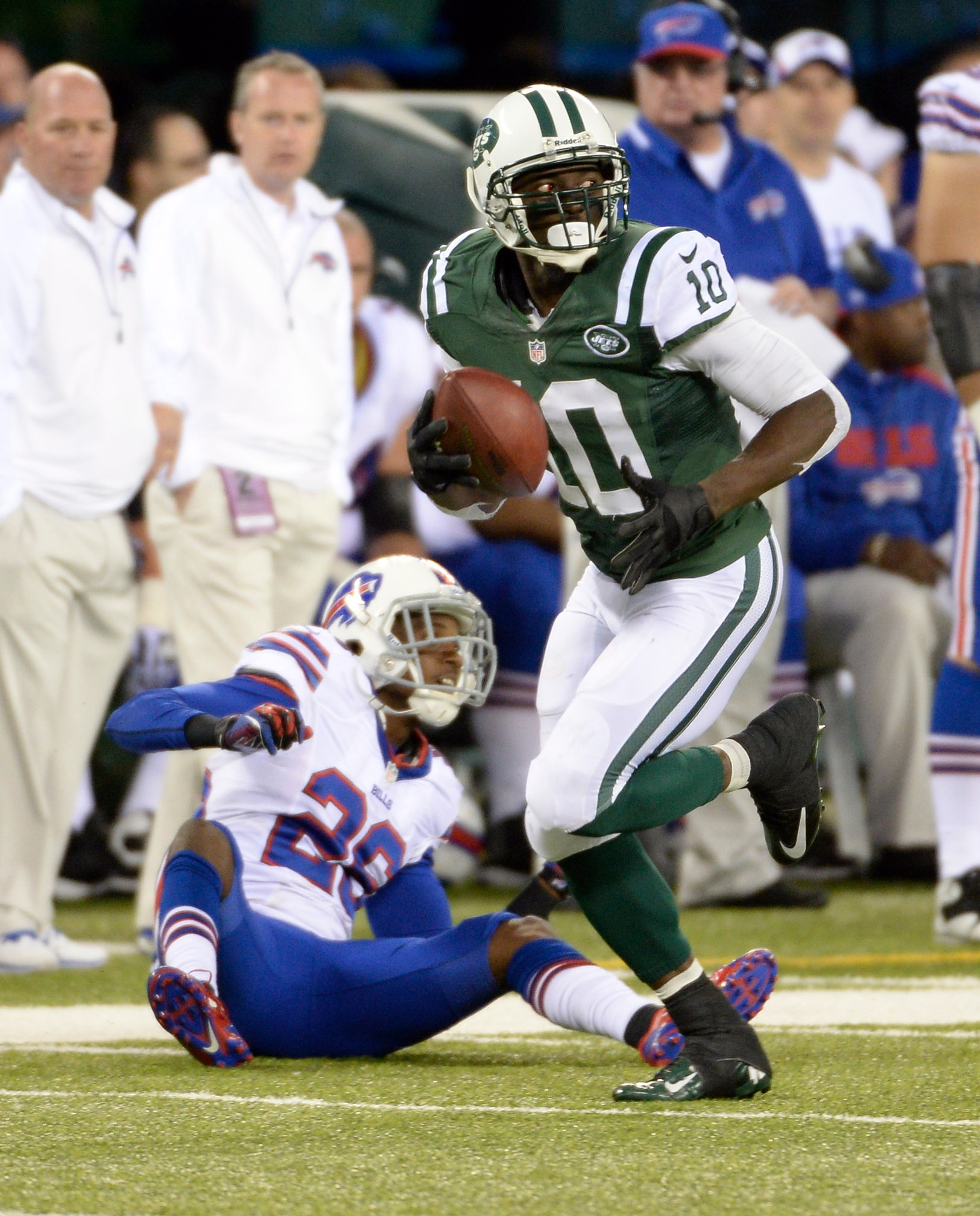
Holmes, who established himself as an electrifying playmaker and Super Bowl hero with Pittsburgh, saw very little success after signing a lucrative free agent deal with the Jets. During his four seasons in New York, Holmes totaled a meager 2,128 total yards. Of course, not all of that was entirely his fault. The Jets’ quarterback play has been shaky at best in recent years, and Holmes suffered through injury as well, appearing in just 15 games over the past two seasons.
Nonetheless, Holmes’ attitude has also negatively impacted his value as he searches for a new team and a fresh start. As one unnamed front office executive said last month, “We’d have to look more closely at what happened in New York with him in the locker room.” And Holmes’ trainer, Tom Shaw, recently said that Holmes would find a team this season–if he can find one that doesn’t think he would be a distraction.
There is no doubt that Holmes still offers some intriguing upside. Even though injuries and age–he turned 30 in March–have combined to take away some of his explosiveness, he could still be effectively utilized as a playmaking threat out of the slot, and getting a fresh start after his disastrous stint in the Meadowlands can only help. Improved maturity, which Shaw believes Holmes has demonstrated, would also go a long way.
He will probably have to wait until someone suffers a training camp injury to demonstrate that he has, in fact, matured, and that he still has some of the ability that once made him a favorite target of Ben Roethlisberger. Anticipating Holmes’ release in February, Mike Florio of Pro Football Talk suggested the Cardinals, Rams, and Steelers as potential destinations for Holmes, but that was based more upon speculation than anything else. Assuming an injury does indeed claim a wideout in training camp, Holmes will begin to look a lot more appealing to the afflicted club. At that point, he will look like a low-cost, high-upside risk that might just pay off in a big way in 2014.
Jimmy Haslam’s Company Avoids Criminal Charges
Pilot Flying J, the Knoxville-based chain of truck stops chaired by Browns owner Jimmy Haslam, reached a deal with federal prosecutors to avoid criminal charges against the company, writes Josh Flory of KnoxNews.com. In exchange, Pilot must pay a $92MM penalty over the course of the next two years and must also cooperate with the ongoing criminal investigation into diesel fuel rebate fraud.
However, while the company itself might have avoided criminal sanctions, Haslam and other company employees might not be out of the woods just yet. As Marla Ridenour of the Akron Beacon Journal points out, the deal does not exempt any individual from prosecution. Indeed, after the government’s investigation of Pilot’s alleged diesel rebate fraud became public last year, 10 former company employees pleaded guilty to charges stemming from the investigation (Pilot also reached civil settlements totaling $85MM with trucking customers who claimed to have been victimized by the company’s fraudulent activities). As far as Haslam and his associates are concerned, Ridenour writes, “There is still time for the government to find proof that Haslam had knowledge of the fraud. There is still time for the 10 former Pilot employees who have pleaded guilty to turn against him. There is still time for more people to be charged.”
On the other hand, as Flory observes, former assistant United States Attorney Tom Withers has stated that he would be surprised if the company would have resolved the charges against it without some indication from the government that Haslam himself would not be criminally charged. So, despite the government’s assertion that the agreement “demonstrate[s] quite clearly that no corporation, no matter how big, influential, or wealthy, is above the law,” there might have been another, unpublicized portion of the deal that made it more palatable for Haslam.
How does all of this affect the Browns? It probably won’t. Ridenour writes that Pilot has opened several locations recently and business is apparently doing quite well. And, as Jason La Canfora of CBS Sports tweets, the NFL has stated that “there are no allegations that apply to [the league’s] personal conduct policy.” Therefore, the Browns might yet achieve some front office stability, something they hoped they were getting from Haslam all along.
Sunday Roundup: Bills Ownership, NFC West
In May, Former Sabres owner B. Thomas Golisano and Syracuse developer Scott Congel had preliminary talks to form a partnership and purchase the Bills. Now, however, those conversations are dead, writes Tim Graham of The Buffalo News. According to Graham, Golisano would still like to bid on the team by himself, and Congel may also be interested in purchasing the club on his own. If Golisano were to buy the club, he would not rule out selling a minority share in the team to Congel.
Now for some more links from around the league:
- Rich Campbell of The Chicago Tribune lays out a “superlative guide” to the Bears‘ training camp, naming Marquess Wilson the player “most likely to succeed”–Wilson emerged from spring workouts as the team’s clear No. 3 receiver–and declaring the team’s fiercest frontline position battle to be at the safety position.
- Curtis Crabtree of Pro Football Talk continues PFT’s series of preseason power rankings by looking at the Rams. Crabtree notes that the team still lacks a true No. 1 receiver and depth along the secondary, and despite adding quality talent in the draft and boasting perhaps the best defensive line in the game, St. Louis plays in the league’s best division and so will probably remain on the outside looking in.
- Speaking of the talented NFC West, Kent Somers of AZCentral.com examines the Cardinals‘ outlook for the 2014 campaign. Somers notes that the Cards, who finished 10-6 under first-year head coach Bruce Arians in 2013, should see continued improvement as they continue to settle into Arians’ offensive system. There is talent up and down the roster, but the rebuilt offensive line and the linebacker group–which lost Karlos Dansby to free agency and Daryl Washington to suspension–could hold the team back.
- Seahawks‘ pass rusher Bruce Irvin, who underwent hip surgery this offseason, is progressing well, writes Todd Dybas of The News Tribune. Although Irvin tweeted last month that he would return by training camp, which opens July 25, Dybas notes that he will be sidelined quite a bit longer than that.
- Defensive lineman Vance Walker, who signed a three-year, $13MM free agent contract with the Chiefs this offseason, is feeling right at home with his new club, writes Terez A. Paylor of The Kansas City Star.
- Bo Smolka of CSNBaltimore.com examines the battle for the Ravens‘ No. 3 running back spot. Smolka notes that if Ray Rice is suspended as expected, both Justin Forsett and rookie Lorenzo Taliaferro will make the club and Baltimore can reexamine its options when Rice returns. However, if Rice somehow escapes suspension, Smolka predicts that Rice, Bernard Pierce, and Taliaferro will make up the team’s running back corps.
Offseason In Review: Detroit Lions
Notable signings:
- Golden Tate (WR): Five years, $31MM. $10.5MM guaranteed.
- Brandon Pettigrew (TE): Four years, $16MM. $5.2MM guaranteed.
- Joique Bell (RB): Three years, $9.3MM. $4.3MM guaranteed.
- James Ihedigbo (S): Two years, $3.15MM. $750K guaranteed.
- Don Carey (DB): Three years, $2.935MM. $600K guaranteed.
- Rashean Mathis (CB): One year, minimum salary benefit. $565K guaranteed.
- Dominic Raiola (C): One year, $1.5MM. $250K guaranteed.
- Dan Orlovsky (QB): One year, minimum salary benefit. $125K guaranteed.
- Kevin Ogletree (WR): One year, minimum salary benefit. $100K guaranteed.
- Don Muhlbach (LS): One year, minimum salary benefit. $65K guaranteed.
- Darryl Tapp (DE): One year, minimum salary benefit. $65K guaranteed.
- Jed Collins (FB): One year, minimum salary. $65K guaranteed.
- Isa Abdul-Quddus (S): One year, minimum salary. $50K guaranteed.
- Andre Fluellen (DL): One year, minimum salary benefit.
- Cassius Vaughn (CB): One year, minimum salary benefit.
Notable losses:
- David Akers (K)
- Nate Burleson (WR): Released
- Louis Delmas (S): Released
- Dorin Dickerson (TE)
- Jason Fox (OT)
- Dylan Gandy (OL)
- Leroy Harris (G): Released
- Shaun Hill (QB)
- Chris Houston (CB): Released
- Israel Idonije (DL)
- Rocky McIntosh (LB)
- Micheal Spurlock (WR/KR)
- John Wendling (S)
- Willie Young (DE)
Extensions and restructures:
- Montell Owens (RB): Restructured contract. 2014 base salary reduced from $1.25MM to $855K in exchange for $100K roster bonus, $50K workout bonus, and up to $200K in per-game incentives.
- Cory Greenwood (LB): Restructured contract. Reduced 2014 base salary from $730K to $645K, eliminated $20K workout bonus, and eliminated 2015 season.
Trades:
- Acquired a second-round pick (No. 40) from the Seahawks in exchange for a second-round pick (No. 45), a fourth-round pick (No. 111), and a seventh-round pick (No. 227).
- Acquired a fifth-round pick (No. 158) and a seventh-round pick (No. 229) from the Cowboys in exchange for a fifth-round pick (No. 146).
Draft picks:
- Eric Ebron, TE, North Carolina (1.10): Signed
- Kyle Van Noy, LB, BYU (2.40): Signed
- Travis Swanson, C, Arkansas (3.76): Signed
- Nevin Lawson, CB, Utah State (4.133): Signed
- Larry Webster, DE, Bloomburg (4.136): Signed
- Caraun Reid, DT, Princeton (5.158): Signed
- T.J. Jones, WR, Notre Dame (6.189): Signed
- Nate Freese, K, Boston College (7.229): Signed
Other:
- Hired Jim Caldwell as head coach.
- Hired Joe Lombardi as offensive coordinator and Teryl Austin as defensive coordinator.
- Longtime owner William Clay Ford Sr. passed away.
- Have discussed extension for Ndamukong Suh.
- Declined Nick Fairley‘s fifth-year option for 2015 ($5.477MM).
- Signed and later released Vaughn Martin ($65K guaranteed).
- Received two compensatory draft picks.
- Signed 12 rookie free agents after the draft.
When the Lions qualified for the playoffs in 2011 after an 11-year absence, it seemed only a matter of time before they would make a serious run at the Lombardi Trophy. They had an explosive offense, a strong enough defense, and had shown steady improvement under head coach Jim Schwartz. Unfortunately, they were unable to continue along that positive trajectory. After failing to reach the playoffs in 2012 and 2013, the team overhauled its coaching staff in the hopes of re-establishing itself as a serious contender in the NFC.
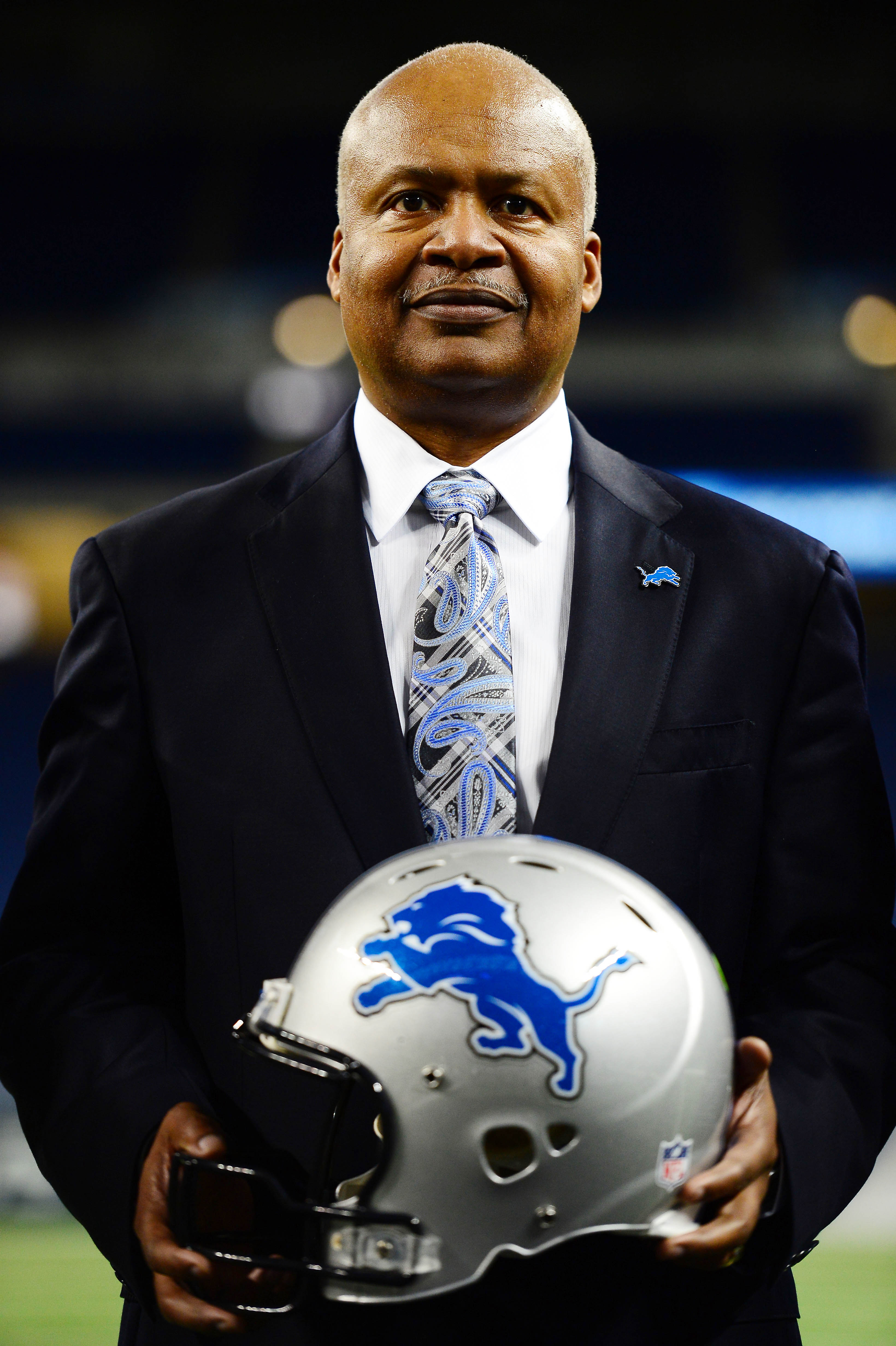
After firing Schwartz, the team hired Jim Caldwell in January of this year as his replacement. Caldwell’s hire was something of a surprise. He served as head coach of the Colts from 2009 to 2011, guiding Indianapolis to two AFC South titles and an AFC championship during that time. However, star quarterback Peyton Manning missed the 2011 season due to injury, and the team collapsed in his absence. After a 2-14 campaign, Caldwell was fired and resurfaced as quarterbacks coach of the Ravens shortly thereafter.
Despite not having any experience as a playcaller, Caldwell replaced Cam Cameron as Baltimore’s offensive coordinator when Cameron was fired late in the 2012 season. Caldwell utilized Cameron’s playbook more effectively than Cameron did, and he oversaw Joe Flacco‘s historic playoff run that culminated in a Super Bowl victory. However, 2013 was an unmitigated disaster for the Ravens’ offense, and Caldwell had no remedy for his woeful unit. Nonetheless, the Lions liked what they saw in Caldwell as a manager of staff and players, and handed him the reins of their promising but underachieving roster.
Caldwell brought in Joe Lombardi, a young and respected offensive mind who had served as the Saints’ quarterbacks coach since 2009, as his offensive coordinator. He then hired Teryl Austin, who had been the Ravens’ secondary coach since 2011, to run the defense.
As is often the case when a new coaching regime takes over, there has been a great deal of optimism surrounding the Lions’ new staff. As far as the team’s offense is concerned, such optimism is more than justified. An already dynamic attack was augmented by two significant additions, Golden Tate and Eric Ebron. Tate slowly came into his own in Seattle before signing a lucrative deal with Detroit, and he projects as the team’s No. 2 receiver opposite the game’s most dominant wideout, Calvin Johnson. The Lions hope Tate, who is a talented playmaker in his own right, can direct some of the attention of opposing defenses off of Johnson, something that Nate Burleson–who left for the Browns this offseason–could never really accomplish.
In Ebron, the team landed the consensus No. 1 tight end in this year’s draft. Many pundits predict that Ebron, with his blend of size and speed, can impact Detroit’s passing game the way Jimmy Graham and Rob Gronkowski impacted the offenses of their respective clubs. While Ebron may eventually approach that level of success, it might take a season or two before the Lions truly reap the benefits of his talent. Ebron has struggled with drops in offseason workouts–which is a concern, given that drops plagued him in college as well–and with grasping Lombardi’s offense. Nonetheless, it will be impossible for defenses to adequately cover every player in the Lions’ aerial attack, and if those defenses continue to double-team Johnson, quarterback Matt Stafford might see Ebron running free down the seam many times over the course of the season (it is also important to note that the team re-signed tight end Brandon Pettigrew. Pettigrew is a talented enough pass catcher himself, but he is also one of the few tight ends in the league who offers receiving and blocking abilities, so his presence will probably be an underappreciated but invaluable glue for this offense).
Defense, however, will again be a concern. The Lions struggled mightily against the pass in 2013, and they released top corner Chris Houston and safety Louis Delmas. They added veteran corners Rashean Mathis and Cassius Vaughn on one-year minimum contracts, but it is unrealistic to expect much out of those two players. New strong safety James Ihedigbo, signed as a free agent from the Ravens, offers quality play as a run-stopper and occasional pass rusher, but, like traditional strong safeties, does not offer much by way of pass coverage. As such, the onus will fall upon corner Darius Slay and free safety Glover Quin to pick up the slack on the back end of the defense.
The front seven, however, offers more promise. The defensive line is anchored by Nick Fairley and Ndamukong Suh, and Ziggy Ansah demonstrated tremendous upside in his rookie campaign that he should be able to build upon in 2014. Meanwhile, the Lions supplemented their linebacker corps, anchored by veterans Stephen Tulloch and DeAndre Levy–who enjoyed the very definition of a breakout season in 2013–with intriguing talent Kyle Van Noy, whom they selected in the second round of this year’s draft. Van Noy was a late riser in the draft, and the Lions liked him enough to trade their No. 45, No . 111, and No. 227 picks to Seattle to move up five spots to nab him. Van Noy is not an elite athlete–which probably kept him out of the first round–but he does everything else well, and he should see a lot of snaps in his rookie season.
There will also be a kicking competition between Nate Freese, whom the team selected in the seventh round of this year’s draft, and Giorgio Tavecchio, who has been in camp with the 49ers and Packers in recent seasons but who has not yet established himself in the league. Freese, as a draftee, is the presumptive favorite, and the Lions hope he will be the team’s long-term solution at the position after veteran David Akers struggled in 2013 to replace the production of stalwart Jason Hanson. Both Freese and Tavecchio, however, have struggled thus far.
The Lions are unquestionably a team with talent, and the coaching changes were probably necessary ones, as the proverbial message of Schwartz and company had apparently grown stale. However, outside of their possibly dynamic offense, they are also a team with flaws. Fortunately for them, the Packers and Bears have vulnerabilities of their own, and the Vikings appear to be at least a year away from legitimate contention. As such, the Lions have a real chance to make a run at the NFC North crown, but, failing that, a wild card berth is well within their reach.
Spotrac and Over The Cap were used in the creation of this post.
Photo courtesy of USA Today Sports Images
Pouncey Brothers Accused Of Assault
Miami Beach police are investigating a South Florida man’s claim that he was assaulted by Maurkice Pouncey and Mike Pouncey, writes Omar Kelly of The Sun Sentinel. The assault allegedly occurred a little after 4am on Saturday morning at the Cameo nightclub, where the twin brothers were celebrating their annual birthday party. The alleged victim, Ricky Vazquez, took to Twitter to report the assault. Vasquez claims he was jumped by the Pouncey twins and by four of the club’s bouncers.
Although the police are of course obligated to investigate Vasquez’s allegations, the circumstances surrounding the incident are murky at best and it is far too soon to condemn either brother at this point. However, while publicity of this ilk is unwelcome for any NFL player, it is especially troublesome for the Pouncey brothers. During their birthday party at the Cameo nightclub last year, the Pouncey’s were spotted wearing “Free Hernandez” hats in support of former college teammate Aaron Hernandez, who has since been charged with the murders of three different men. Mike Pouncey was later called to give testimony concerning his relationship with Hernandez before a grand jury.
That is not to mention Mike Pouncey’s involvement in the highly-publicized bullying scandal that consumed the Dolphins’ locker room last season. He was one of three Miami players said to have been involved in the harassment of former Dolphin Jonathan Martin, who left the team last October.
Perhaps the investigation into the latest incident involving the Pounceys will absolve them of any wrongdoing, but the Dolphins and Steelers will surely hold their breath when the brothers celebrate their birthday next July.
Dolphins Sign Daryn Colledge
JULY 7: According to ESPN.com’s Adam Caplan (Twitter link), Colledge’s one-year pact with the Dolphins can be worth up to $2MM, with $250K guaranteed. The deal has a $1.25MM base, with up to $750K in per-game roster bonuses (Twitter link).
JUNE 30: The Dolphins have agreed to sign offensive lineman Daryn Colledge, according to the team’s official Twitter account (link). Barry Jackson of The Miami Herald first reported that the two sides were close to a deal. The Dolphins, looking for a center after Mike Pouncey underwent hip surgery last week, brought Colledge in for a workout today and apparently liked what they saw. James Walker of ESPN.com tweets that it is a one-year deal.
Colledge has never missed a game as a professional, playing five years with the Packers before joining the Cardinals for three seasons. He was released by Arizona in March.
Sunday Roundup: Smith, Broyles, Johnson
Ravens wide receiver Torrey Smith entered the league out of the University of Maryland with high upside and explosive play-making ability, but he was still very raw. He struggled with drops in training camp prior to his rookie season in 2011, but he was given a chance to start against the Rams in Week 3 of that year when Lee Evans went down with an injury. In the first quarter in St. Louis, Smith recorded the first three receptions of his pro career; they all went for touchdowns.
Since then, even if Smith has not been the team’s No. 1 wideout by name, he has been the receiving threat that has garnered the most attention from opposing defenses. He has quietly become one of the premier deep threats in the game, but, as Mike Florio of Pro Football Talk points out, he enters his contract season with very little fanfare. The Ravens would like to extend his contract, but no progress has been made on that front as of yet. Although new offensive coordinator Gary Kubiak does not run a pure West Coast offense–which means that Joe Flacco will still have a chance to take a few deep shots per game to burners like Smith and Jacoby Jones–Smith must become a more reliable short and intermediate route runner in order to thrive and earn a contract on par with some of the better receivers in the league. As Florio notes, Smith has every reason to emerge as one of the better wideouts in the game in 2014, and, given his work ethic and the strides he has made thus far, it would be foolish to bet against him.
Now for some more notes from around the league:
- Speaking of Smith and the Ravens‘ receiving corps, Clifton Brown of CSNBaltimore.com writes that, although the top four receivers are set–Torrey Smith, Steve Smith Sr., Marlon Brown, and Jones–the battle among the remaining wideouts will be an intense one. Seventh-round pick Michael Campanaro could emerge as a reliable slot receiver, the team has been impressed with undrafted find Jeremy Butler, and veterans like Deonte Thompson and LaQuan Williams will also have a shot.
- Joseph Person of The Charlotte Observer writes that, despite losing Smith Sr. and Jordan Gross, the Panthers‘ leadership void can be adequately filled by franchise cornerstones like Cam Newton and Luke Kuechly, who have slowly developed into locker room leaders.
- Free agent offensive tackle Bryant McKinnie is not only looking for a job, but he probably needs one, writes Michael David Smith of Pro Football Talk. Despite having made tens of millions of dollars in the league, McKinnie has not managed his money wisely and recently had his car repossessed.
- Ryan Broyles, who is attempting to secure a spot as the Lions‘ primary slot receiver, has made good progress in his recovery from a torn Achilles tendon, writes Carlos Monarrez of The Detroit Free Press.
- Josh Katzenstein of The Detroit News takes a crack at the Lions‘ starting lineups for 2014, and he also notes that the competitions at right tackle, strongside linebacker, and kicker will be ones to watch.
- In a column for CBSSports.com, and in the wake of an arbitrator’s ruling in Jimmy Graham‘s grievance case, recently-retired tight end Tony Gonzalez argues that players should be paid based on their production rather than their position.
- The NFL announced the suspensions of Dion Jordan and Rokevious Watkins on Friday, which has left some to wonder why there has not been an official announcement regarding Eagles‘ right tackle Lane Johnson‘s suspension. Tim McManus of PhillyMag.com explains the league’s process when a player tests positive for a banned substance and posits that Johnson is still going through that process.
Offseason In Review: Jacksonville Jaguars
Notable signings:
- Zane Beadles (G): Five years, $30MM. $9.475MM guaranteed.
- Red Bryant (DE): Four years, $19MM. $4.725MM guaranteed.
- Toby Gerhart (RB): Three years, $10.5MM. $4.5MM guaranteed.
- Chad Henne (QB): Two years, $8MM. $4.5MM guaranteed.
- Chris Clemons (DE): Four years, $17.5MM. $4.475MM guaranteed.
- Ziggy Hood (DT): Four years, $16MM. $4MM guaranteed.
- Dekoda Watson (OLB): Three years, $6.25MM. $1.5MM guaranteed.
- Clay Harbor (TE): Two years, $3MM. $1.45MM guaranteed.
- Cameron Bradfield (OT): Two years, $3MM. $1.225MM guaranteed.
- Sherrod Martin (S): One year, $780K. $100K guaranteed.
- Tandon Doss (WR): Two years, $1.505MM. $65K guaranteed.
- Will Blackmon (CB): Two years, $2.125MM. $50K guaranteed.
Notable losses:
- Russell Allen (LB): Released; Retired due to injury
- Stephen Burton (WR): Retired
- Delone Carter (RB): Waived
- Brandon Deaderick (DT)
- Jeremy Ebert (WR): Waived
- Justin Forsett (RB): Released
- Maurice Jones-Drew (RB)
- Kyle Love (DT)
- Brad Meester (C): Retired
- Drake Nevis (DL): Waived
- Danny Noble (TE): Waived
- Uche Nwaneri (G): Released
- Will Rackley (OL): Waived
- Allen Reisner (TE)
Trades:
- Acquired a sixth-round pick (No. 205) and a conditional 2015 pick from the 49ers in exchange for Blaine Gabbert. 2015 pick (unknown round) changes hands if Gabbert starts eight or more games for the Niners in 2014.
- Acquired a second-round pick (No. 61) from the 49ers in exchange for a third-round pick (No. 70) and a fifth-round pick (No. 150).
- Acquired a third-round pick (No. 93) from the Patriots in exchange for a fourth-round pick (No. 105) and a sixth-round pick (No. 179).
Draft picks:
- Blake Bortles, QB, UCF (1.3): Signed
- Marqise Lee, WR, USC (2.39)
- Allen Robinson, WR, Penn State (2.61): Signed
- Brandon Linder, G, Miami (FL) (3.93): Signed
- Aaron Colvin, CB, Oklahoma (4.114): Signed
- Telvin Smith, LB, Florida State (5.144): Signed
- Chris Smith, DE, Arkansas (5.159): Signed
- Luke Bowanko, C, Virginia (6.205): Signed
- Storm Johnson, RB, UCF (7.222): Signed
Other:
- Signed Alex Mack to a five-year, $42MM offer sheet, which was matched by the Browns.
- Re-signed Jason Babin after he voided his contract, then later released him.
- Have discussed extension for Cecil Shorts.
- Claimed Bradie Ewing off waivers.
- Signed 17 rookie free agents after the draft.
As our Luke Adams pointed out yesterday, the Jaguars are probably at least a year or two away from making a legitimate run at the AFC South, which the Colts appear to have firmly in hand in 2014. Nonetheless, there is a positive vibe surrounding second-year head coach Gus Bradley, and the Jags acquired a number of solid veterans on both sides of the ball in free agency in an attempt to remain competitive as they continue to build for the long-term.
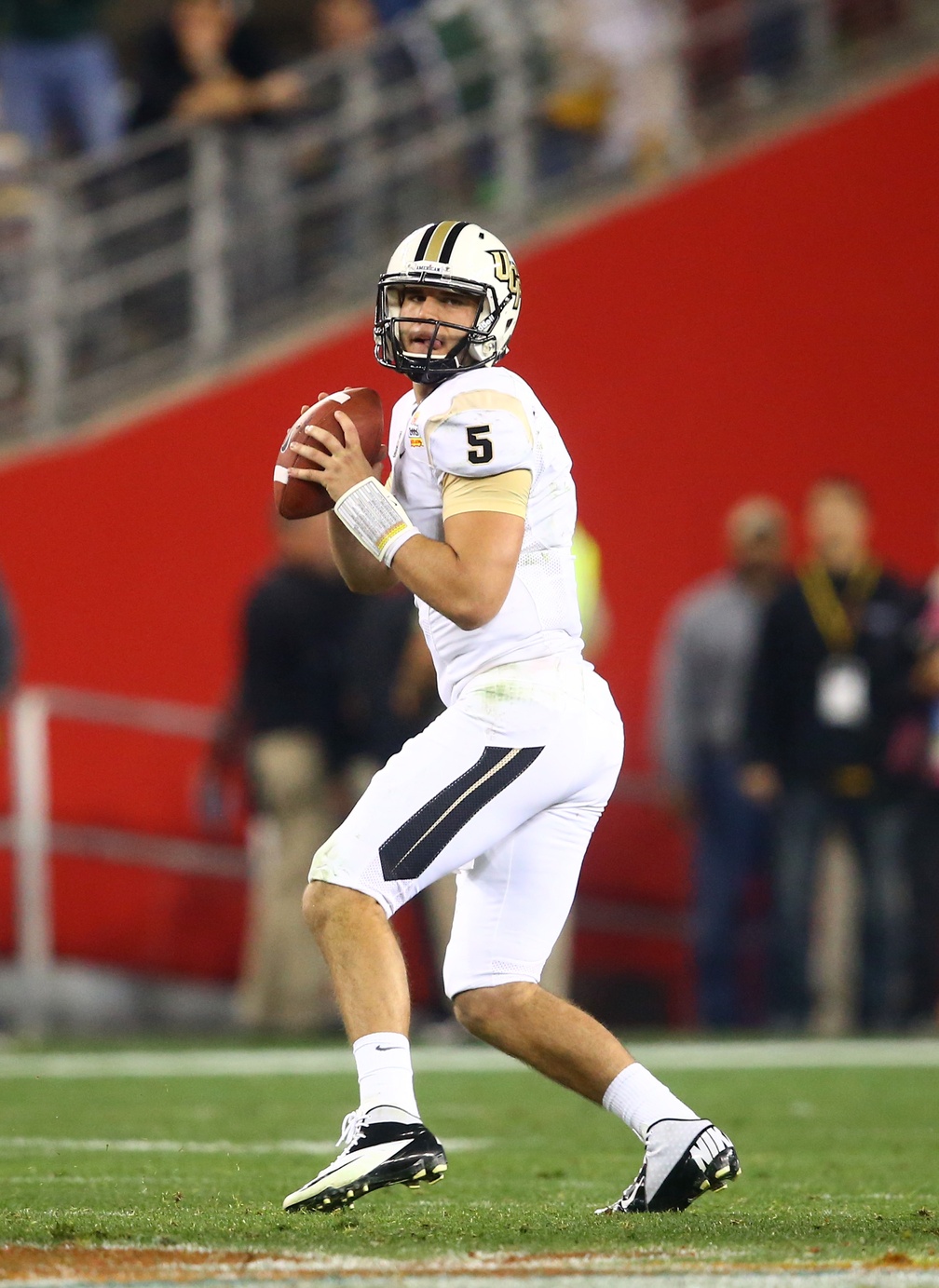
Former Broncos left guard Zane Beadles, who was given a lucrative five-year, $30MM deal, should add stability along the interior of the offensive line. Beadles’ best season came in 2012, when he earned a trip to the Pro Bowl after yielding just one sack and finishing 17th out of 81 eligible guards according to Pro Football Focus’ (PFF) advanced metrics (subscription required). One concern is that, outside of that 2012 campaign, Beadles has not performed especially well by PFF’s standards in any of his other three seasons in the league, and the few number of sacks he allowed in 2012 and 2013 can be attributed, at least in part, to Peyton Manning‘s quick release. However, Beadles is one of those players whose game film often belies his next-level analytics, and although Jacksonville may have overpaid for him, he represents a significant upgrade over Will Rackley, who started 11 games at left guard for the club in 2013.
In the offensive backfield, the team parted ways with Maurice Jones-Drew, one of the most dynamic playmakers in Jacksonville’s brief history, and replaced him with former Viking Toby Gerhart. Gerhart has only served as a spot starter and change-of-pace back for Minnesota, but the Jaguars apparently liked the former Heisman finalist enough to hand him a three-year, $10.5MM contract and a starting role. Gerhart certainly has talent, and it was probably time to move on from Jones-Drew, but Gerhart’s lack of a track record does create an element of unease. However, seventh-round pick Storm Johnson from the University of Central Florida is a strong runner with quick feet and could be a late-round steal for the club.
The Jaguars also targeted defensive help in free agency. Red Bryant, an accomplished run-stopper, will team with pass rushers Chris Clemons and Dekoda Watson to form a stronger front-seven. The team’s coaching staff believes that Watson has “unique pass-rushing skills” and envision him as the “Otto” linebacker in Bradley’s defensive scheme. Clemons had posted at least 11 sacks in each of his first three seasons in Seattle before dropping off last season as he recovered from a torn ACL. Even at age 32, however, a healthy Clemons should be able to get to the quarterback fairly frequently, and the team expects continued improvement from 2012 second-round pick Andre Branch. In short, then, the team’s pass rush will not make opposing signal-callers lose much sleep, but it should still be more effective than it was in recent seasons. This is not to mention the addition of former Steelers’ mainstay Ziggy Hood, who has struggled in the past several years but who still offers some limited upside.
Of course, the NFL is becoming increasingly driven by the passing game, and, to that end, the club traded former first-round pick and abject disappointment Blaine Gabbert to the 49ers and selected Blake Bortles with the No. 3 overall pick in this year’s draft. However, the club learned from its mistakes with Gabbert, and veteran Chad Henne, who has performed as well as could be expected for the Jaguars, was re-signed in order to give Bortles some time to learn without being thrown into the fire from day one.
After drafting Bortles, the Jaguars selected talented receivers Marqise Lee and Allen Robinson with their two second-round picks. In any other year, Lee and Robinson might have been first-round selections, but with the historically deep wide receiver class this year, Jacksonville got a little lucky. Although the members of the team’s receiving corps outside of the oft-overlooked Cecil Shorts and tight end Marcedes Lewis do not have an extensive track record, they do have explosive talent. Shorts, Lee, Robinson, and Lewis will combine with Ace Sanders and Denard Robinson to form a young and intriguing unit for Henne and Bortles.
Again, the Jags will likely not compete for the playoffs this year, but the foundations are being laid properly. They have made an effort to beef up their offensive and defensive fronts, and they have surrounded their quarterback of the future with plenty of high-upside talent. There is reason to hope in Jacksonville, and this time, perhaps, that hope may eventually give way to on-field results.
Spotrac and Over The Cap were used in the creation of this post.
Photo courtesy of USA Today Sports Images