
NFL Sets 2024 Salary Cap At $255.4MM
Initial salary cap projections pointed to a potential $20MM increase, and a recent report revealed the 2024 NFL spending ceiling could check in higher than expected. Both turned out to be conservative estimates.
The NFL announced Friday the cap will settle at $255.4MM, NFL.com’s Tom Pelissero reports. That represents a record-setting single-year increase. The 2023 cap came in at $224.8MM, marking a 13.6% spike. This provides teams with more flexibility this year and players with increased opportunities.
 [RELATED: 2024 Franchise/Transition Tag Numbers]
Friday’s number shatters the previous single-year record for a cap increase. The previous instance occurred in 2022, when the league’s salary ceiling rose by more than $26MM. That came, however, after only the second-ever cap decrease. After the COVID-19 pandemic — which brought fanless venues or significantly reduced capacities — led to the cap dropping by $16MM from 2021 to ’22, it ballooned by $26MM before returning on its course. Even as the cap had been rising since that one-year reduction, this represents an unexpected boom.
Teams were indeed working with models that settled the 2024 cap between $242-$245MM, ESPN.com’s Dan Graziano notes, making Friday’s final number a significant development as teams make their final preparations for free agency. This will help teams afford some costs they may have previously determined unfeasible while boosting the values of this year’s top free agents. It also introduces another complication for teams negotiating landmark extensions with top talent.
Prior to the pandemic becoming a reality, the CBA negotiations — complete with the expected finalizations of new TV deals soon after — did paint a picture of unprecedented cap growth. A February 2020 report hinted at a monster cap increase by the mid-2020s. While nothing on the $300MM radar has emerged, the 2020 CBA is bringing cap growth that far outpaces the 2011 agreement, which had settled in at approximately $10MM-per-year climbs once growth was restored around the mid-2010s.
The 2021 television deals and YouTube TV’s $2 billion NFL Sunday Ticket agreement, along with gambling partnerships and full repayment of COVID-19-related deferrals, collectively produced this spike. While it was rumored the league sought a more gradual rise, NFL-NFLPA negotiations produced this whopping number. As a result, franchise tag numbers and the four-tiered fifth-year option salary structure — for the 2021 first-round contingent — are locked in.
Prior to the 2020 CBA, the highest single-year cap increase occurred in 2006. That year’s CBA brought an approximately $17MM climb — to $102MM — from 2005. But the 2011 CBA leveled off growth for a stretch, leading to the cap residing between $116MM and $124MM for a five-year period (2008-13). We are in a different era now. The 2014 offseason increased the cap by $10MM from that previous years-long range; we are now more than $120MM beyond that number.
Here are the NFL’s salary caps over the past two CBAs:
- 2011: $120.4MM
- 2012: $120.6MM
- 2013: $123.6MM
- 2014: $133MM
- 2015: $143.3MM
- 2016: $155.3MM
- 2017: $167MM
- 2018: $177.2MM
- 2019: $188.2MM
- 2020: $198.2MM
- 2021: $182.5MM
- 2022: $208.2MM
- 2023: $224.8MM
- 2024: $255.4MM
Dolphins To Release CB Xavien Howard
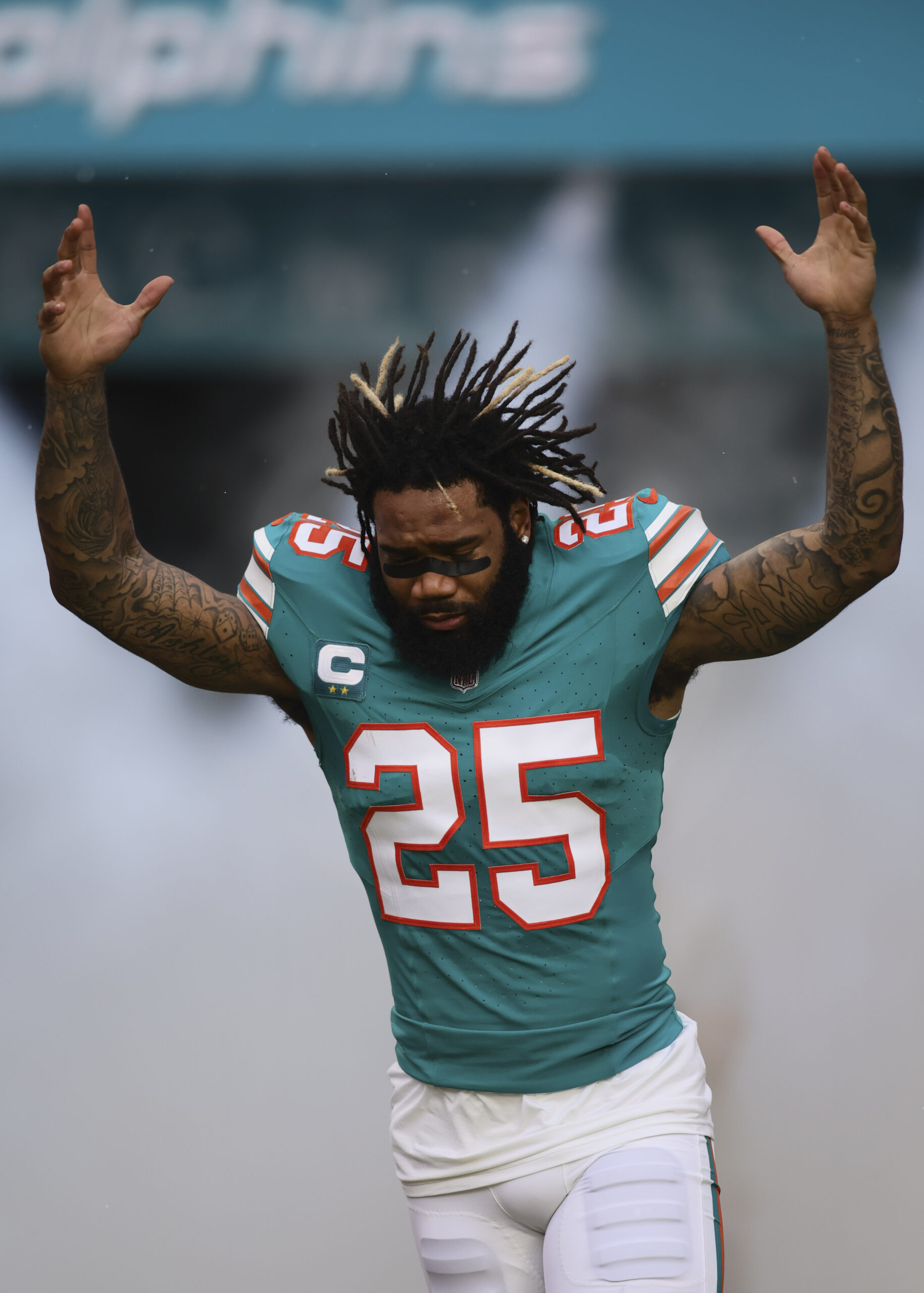
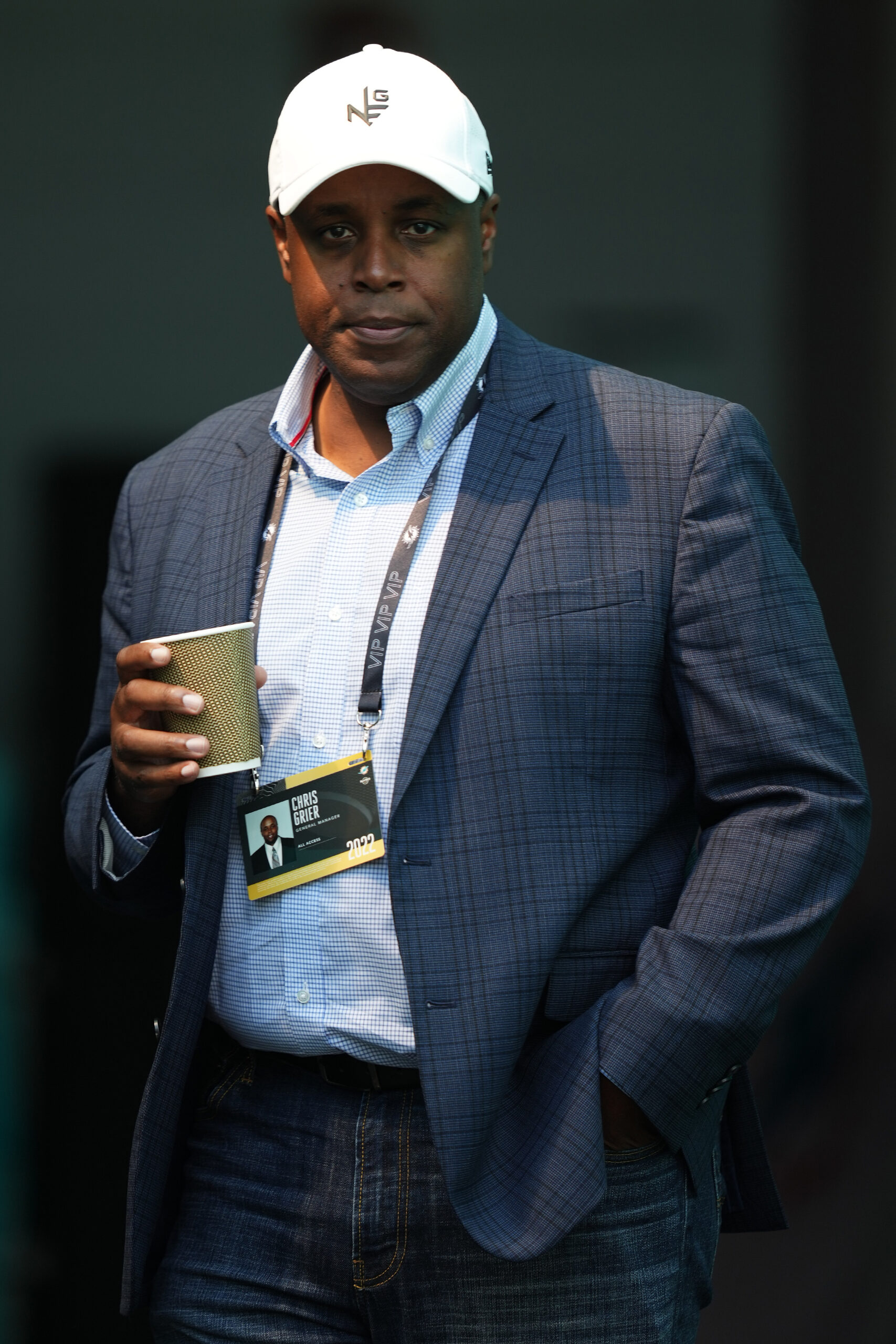
Part of two pricey cornerback tandems in Miami, Xavien Howard did not have a chance to operate in the second one for too long. Less than a year after the Dolphins acquired Jalen Ramsey to pair him with Howard, they will move on from the latter.
The Dolphins have informed Howard he will be cut, NFL.com’s Mike Garafolo and Peter Schrager report. Chosen in the 2016 draft, Howard is the Dolphins’ longest-tenured player. The two-time All-Pro will soon become a high-profile free agent. This move comes shortly after the Dolphins released Emmanuel Ogbah. Howard’s deal ran through 2026.
 This release will not occur until the start of the league year, per NFL.com. This is presumably because the Dolphins intend to designate Howard, as they did Byron Jones in 2023, a post-June 1 cut. Not making this designation would prevent Miami from benefiting much from releasing Howard. By using it, the Dolphins would save $18.5MM this year. If Miami did use the post-June 1 option, its savings would barely exceed $2MM.
Teams can make two post-June 1 cuts each year, and although the league no longer mandates teams wait until June to make these moves, the Dolphins cannot release Howard now and designate him a post-June 1 cut. Needing to wait until the start of the 2024 league year, the Dolphins will still make plans for a 2024 roster that does not include Howard. Between the Ogbah and Howard moves — assuming the latter’s release is of the post-June 1 variety — the Dolphins will save more than $32MM. That moves the team to within $6MM of cap compliance.
One of this era’s top ballhawks, Howard has intercepted 29 passes — tied for fourth-most in Dolphins history. Twice leading the league in INTs, Howard has been a starter throughout his career. Set to turn 31 in June, Howard will now explore options outside of Miami. He is expected to generate significant interest, per Garofolo and Schrager. With the Bears preparing to use the franchise tag on Jaylon Johnson and the Chiefs probably considering the tag for L’Jarius Sneed, this year’s cornerback market could thin out quickly soon. Players like Howard would benefit.
Howard’s season under Vic Fangio was far from his best. Intercepting only one pass, Howard allowed 62.9% of the passes thrown his way to be completed. He brought down his passer rating-against number from 101.2 in 2022 to 81.3 under Fangio, but Pro Football Focus ranked the experienced cover man 98th among corners last season. Howard, however, had been one of this period’s better corners in previous years. The Dolphins rewarded him on multiple occasions in the process.
During the second half of the 2010s, the cornerback market stagnated. This affected Howard, who had signed a five-year, $75.25MM extension in May 2019. Despite Howard’s deal being finalized three years after Josh Norman‘s then-record-setting Washington pact, it barely raised the CB ceiling. Howard became disgruntled after the Dolphins agreed to terms with Jones on a more lucrative contract in 2020. Reaching free agency, the ex-Cowboys first-rounder did raise the bar. Howard, who had intercepted 10 passes during Jones’ 2020 Miami debut, was already seeking a new deal by 2021.
 When talks did not progress that year, Howard requested a trade. The Dolphins did not budge there, but they not hold their ground for long on the financial front. They reworked Howard’s deal before the ’21 season, fully guaranteeing his salary while adding incentives. In March 2022, the Dolphins further rewarded their top corner by redoing his contract — an agreement that provided $50.6MM in new money. This reworking ballooned the dead money associated with a Howard cut, though it was probably unrealistic for the Dolphins to keep the veteran tied to his 2019 pact for two more seasons given the circumstances.
Howard did not quite live up to the latest contract adjustment, which the team made despite his original extension running through 2024. With Jones attached to a higher AAV and a better guarantee, the Dolphins broke with norms and gave into Howard’s demands that year. Howard soon became indispensable, with Jones missing all of the ’22 season with what looks like a career-ending injury.
Earlier this offseason, Howard said he was not prepared to take a pay cut if the Dolphins were to ask. It is unclear if they did, but the organization will close the book on a lengthy CB chapter. Howard also brought headaches off the field. In addition to the contract grumbling, the four-time Pro Bowler was arrested on a domestic battery charge. It was later dropped, but the Baylor alum was later named in a police report in connection with a shooting at his former agent’s home. That case was later closed. Howard never encountered a suspension during this period, and the Dolphins compensated him well over the course of his career.
Acquiring Ramsey in 2023, the Dolphins gave their new CB prize more guaranteed money by reworking his deal post-trade. With Tua Tagovailoa and Jaylen Waddle on the Fins’ extension radar, they look to be moving forward with just one high-end cornerback payment on their books. The Dolphins also have UDFA Kader Kohou on a rookie deal and used a second-round pick on Cam Smith last year.
49ers Release CB Isaiah Oliver
Signed to work alongside starters Charvarius Ward and Deommodore Lenoir, Isaiah Oliver was unable to hold down a regular role in San Francisco. As a result, he will be sent back to free agency.
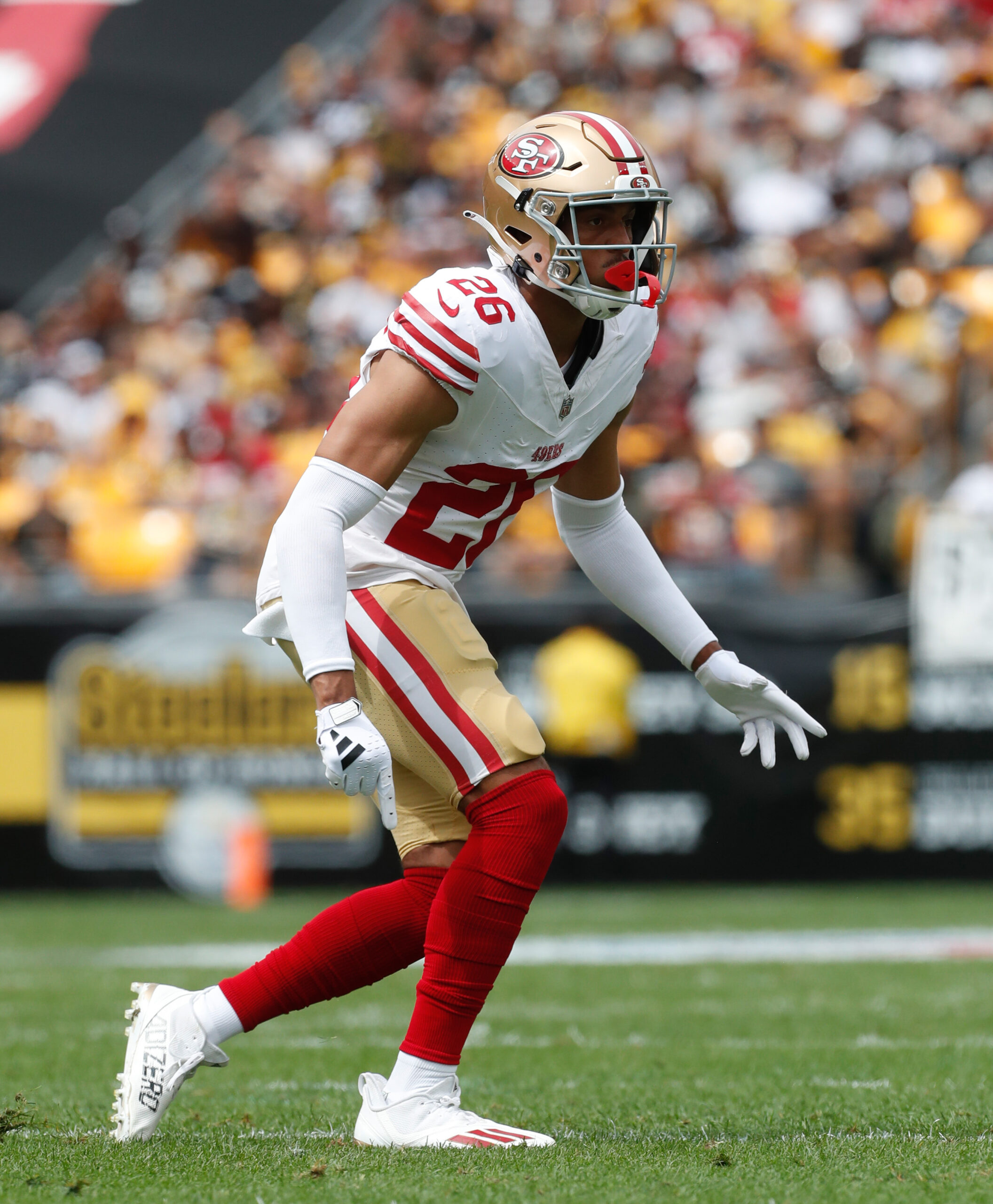 The 49ers cut Oliver on Friday, the team announced. The NFC champions will pick up $2.4MM in cap space by moving on from the veteran cornerback, who came over after five years in Atlanta. San Francisco had given Oliver a two-year, $6.75MM deal.
Oliver, 27, played 46% of the 49ers’ defensive snaps last season. Targeted as a big nickel-type presence by one-and-done DC Steve Wilks, the former second-round pick was demoted following a three-game midseason skid. Once the 49ers re-emerged for their Jaguars matchup in Week 8, Ambry Thomas had taken over as the team’s primary third corner. This came after the team pursued the likes of Patrick Surtain, Jaylon Johnson and Nate Hobbs before the deadline.
The 49ers only gave Oliver a notable role again in a Week 18 game that involved many backups, as it came after the team clinched home-field advantage. During the 49ers’ three playoff games, Oliver only played on special teams. For the season, he still made 67 tackles, intercepted a pass and recovered a fumble. The Colorado alum will be looking for a new team, however.
The 6-foot-2 cover man had been a Falcons regular for five years. An ACL tear sustained in Week 4 of the 2021 season crushed Oliver’s contract year, leading to a low-cost deal to stay in Atlanta for the ’22 campaign. Starting 38 games for the Falcons during that five-year tenure, Oliver has been unable to rebuild his stock since.
Ward, Lenoir and Thomas are each under contract for the 2024 season. Thomas struggled at point during San Francisco’s playoff journey, and with Oliver unable to man the slot in the way K’Waun Williams and Jimmie Ward had, the 49ers may be on the lookout for more help soon. Lenoir shifting inside on passing downs remains in play for the 49ers, but it seems likely the 49ers will add a piece to this equation this offseason.
Steelers Release C Mason Cole
The Steelers’ starting center for the past two years, Mason Cole is back in free agency. The team announced the release of the veteran interior offensive lineman Friday.
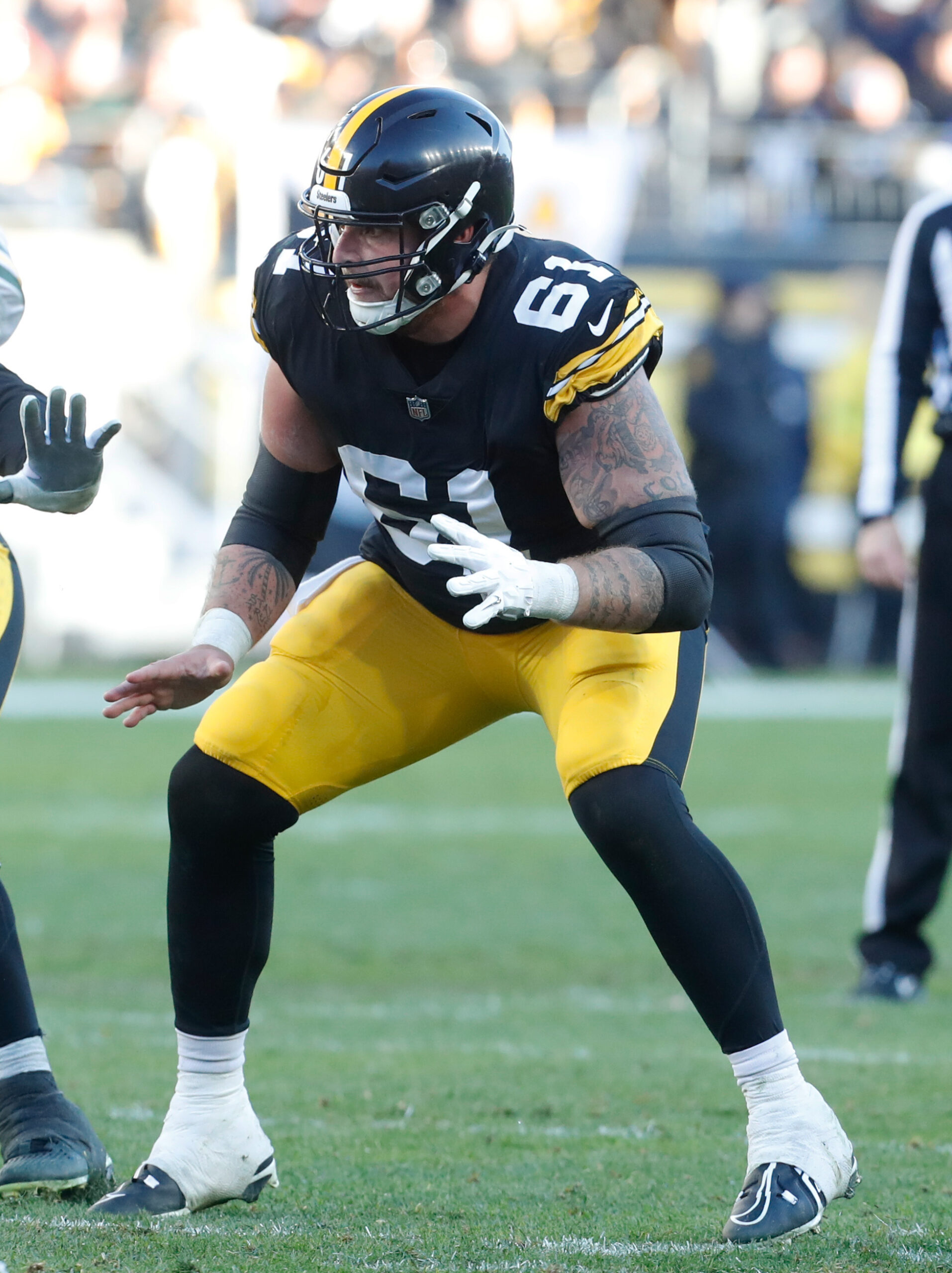 Pittsburgh has used free agency to make upgrade efforts up front over the past two offseasons, signing Cole, James Daniels and Isaac Seumalo. The guards remain with the team, but Cole will now be looking for a new NFL employer. He had started every Steelers game over the past two seasons.
One season remained on Cole’s three-year, $15.75MM deal. No void years complications or other restructure matters, which the Steelers dabble in frequently, are part of this transaction. The Steelers will save $4.75MM by releasing Cole, whom ProFootballNetwork.com’s Adam Caplan notes was due a $1.5MM roster bonus if he was on the roster as of March 17.
The former Cardinals starter is only going into his age-28 season; he will likely generate interest on the open market. Being released now gives Cole a head-start on the unrestricted free agents set to populate the market in mid-March.
After Pro Football Focus ranked Cole as the NFL’s 12th-best center in 2022, the advanced metrics site dropped him to 29th last season. With the Steelers’ offensive slump extending to the point the team made its first in-season coordinator firing in several decades, the team will be looking for at least one new starter up front. Despite the offensive struggles, the Steelers have enjoyed good continuity up front since adding Cole and Daniels in 2022. After seeing their starting five blockers play together throughout 2022, the Steelers had Cole and Seumalo in uniform for 18 games last season. Dan Moore started 17 games, while Daniels was available for 16.
Not known for lavish free agent spending, the Steelers did move to fortify their O-line with some veteran contracts during Kenny Pickett‘s rookie deal. The moves were half-measures of sorts, with each Pittsburgh interior O-line starter on a midlevel accord. Cole’s $5.25MM-per-year center pact represented good value for the team, but it will move on — during an offseason in which Pickett is on shakier ground.
Cole did give the Steelers some stability after Kendrick Green‘s rough 2021 as the starting center. The team traded both Green and guard starter Kevin Dotson last year, committing fully to the free agent trio inside. The Steelers have utilityman Nate Herbig under contract and used a seventh-round pick on Spencer Anderson last year. In all likelihood, however, Cole’s replacement is not yet on the roster.
2025 Fifth-Year Option Salaries Revealed
Friday’s salary cap reveal ($255.4MM) both cements the franchise tag tender amounts and sets the fifth-year option prices for the 2021 first-round class. The record-setting spike represents good news for the latter contingent.
This will be the fourth offseason for the tiered fifth-year option format. The NFL’s 2020 CBA changed the option structure for first-round picks, fully guaranteeing the options but doing so based on performance and usage rate. The 2011 CBA gave teams flexibility by making the options guaranteed for injury only, allowing franchises to cut players free of charge as long as they passed March physicals. The 2018, ’19, ’20 and ’21 draft classes have now gained access to fully guaranteed options.
Players who have been original invitees to two or more Pro Bowls (original ballot only) reside on the top tier. Micah Parsons, Patrick Surtain and Ja’Marr Chase check in here. Matching the 2024 franchise tag prices, here is how those numbers will look in 2024 (courtesy of NFL.com’s Tom Pelissero):
- Quarterback: $38.3MM
- Running back: $11.95MM
- Wide receiver: $21.82MM
- Tight end: $12.69MM
- Offensive line: $20.99MM
- Defensive end: $21.32MM
- Defensive tackle: $22.1MM
- Linebacker: $24MM
- Cornerback: $19.8MM
- Safety: $17.12MM
- Kicker/punter: $5.98MM
Tier 2 on the option structure covers players who have been selected to one Pro Bowl as non-alternates. Penei Sewell, Rashawn Slater and Kyle Pitts‘ option prices come in here. This tier matches the 2024 transition tag values.
- Quarterback: $34.37MM
- Running back: $9.77MM
- Wide receiver: $19.77MM
- Tight end: $10.88MM
- Offensive line: $19MM
- Defensive end: $19.1MM
- Defensive tackle: $18.49MM
- Linebacker: $19.97MM
- Cornerback: $17.22MM
- Safety: $13.82MM
- Kicker/punter: $5.43MM
Participation impacts the final two tiers. Players who achieve any of the following will get the average of the third-20th highest salaries at their position. Tier 3 consists of players who played at least 75% in two of their first three seasons, those who averaged at least a 75% snap share through three seasons or those who crossed the 50% snap barrier in each of their initial three slates. Trevor Lawrence, DeVonta Smith, Jaylen Waddle and Christian Darrisaw are among the players whose options will come in on Tier 3.
- Quarterback: $25.66MM
- Running back: $6.79MM
- Wide receiver: $15.59MM
- Tight end: $7.96MM
- Offensive line: $16.04MM
- Defensive end: $14.58MM
- Defensive tackle: $13.1MM
- Linebacker: $14.48MM
- Cornerback: $13.38MM
- Safety: $9.51MM
- Kicker/punter: $4.39MM
The fourth and final tier consists of players who failed to reach those participation rates:
- Quarterback: $22.41MM
- Running back: $6.14MM
- Wide receiver: $14.35MM
- Tight end: $7.21MM
- Offensive line: $13.31MM
- Defensive end: $13.39MM
- Defensive tackle: $11.75MM
- Linebacker: $13.25MM
- Cornerback: $12.47MM
- Safety: $8.65MM
- Kicker/punter: $4.1MM
Dolphins To Release DE Emmanuel Ogbah
Seeing his playing time reduced last season, Emmanuel Ogbah became needed as the Dolphins saw their top edge rushers go down with major injuries. With Bradley Chubb and Jaelan Phillips expected back before or during the 2024 season, Miami will make an expected cap-driven move.
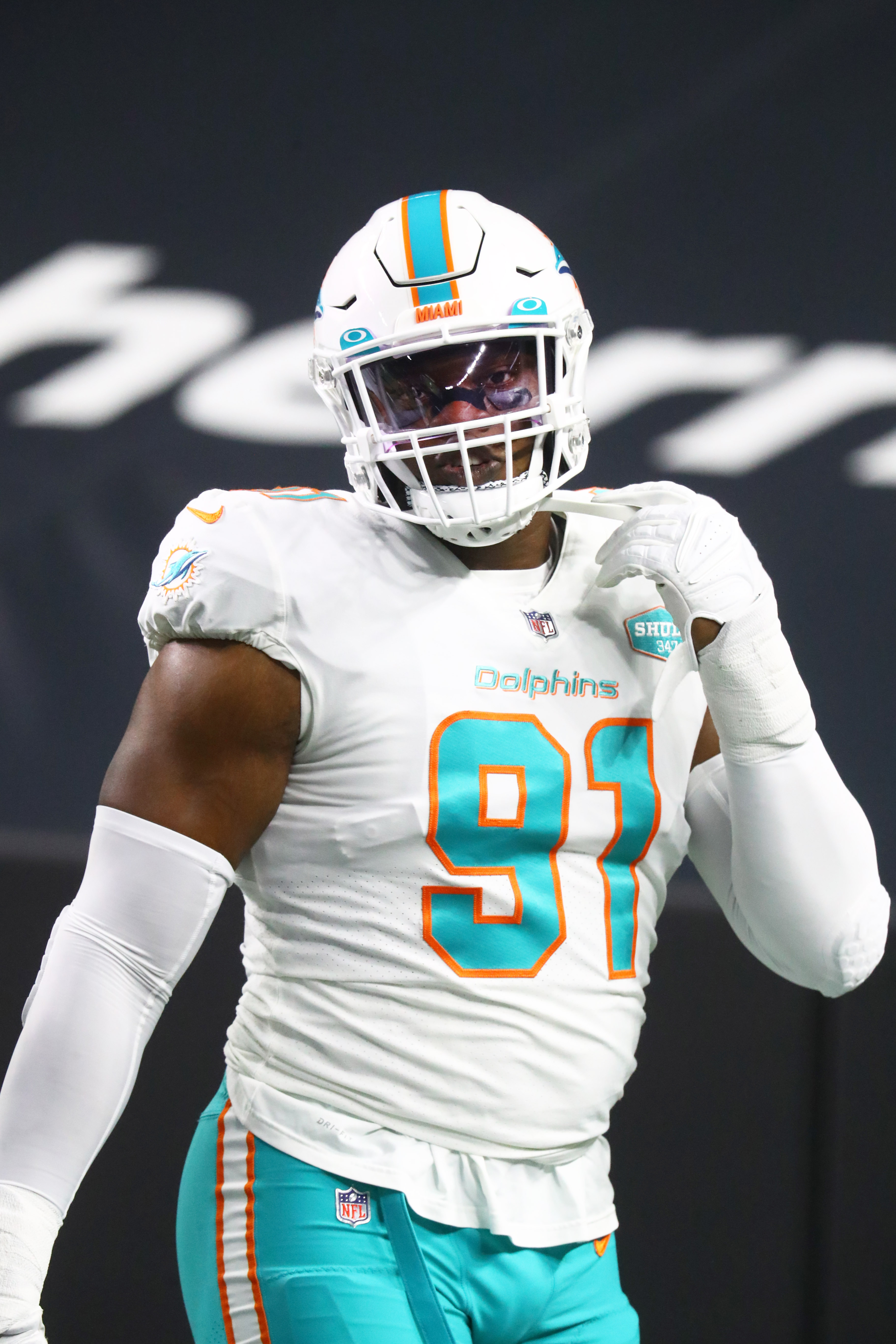 The Dolphins intend to release Emmanuel Ogbah, according to ESPN.com’s Adam Schefter. Although Ogbah was a regular presence before Vic Fangio‘s one-and-done season as Dolphins DC, the former starter’s demotion made him a release candidate.
Friday’s $255.4MM salary cap reveal brought good news for cap-strapped teams, but the Dolphins still have plenty of work to do. Before this Ogbah move is calculated, Miami sits more than $38MM over the 2024 cap. Releasing Ogbah will $13.7MM in cap space for the Dolphins. Ogbah was attached to a four-year, $65.4MM deal agreed to in 2022; he was set to carry a $14.93MM base salary next season. Considering his Miami trajectory, that proved unrealistic for the team.
Ogbah, 30, had been a productive pass rusher for the Dolphins on his previous contract. The Dolphins re-signed the former Browns second-round pick in free agency two years ago, but a torn triceps sustained midway through that season — a development that came shortly after the team traded a first-round pick for Chubb at the trade deadline — changed the previous starter’s trajectory.
Between the 2020 and ’21 seasons, Ogbah cemented his case for a significant raise by registering nine sacks in each season. He totaled 45 quarterback hits in that span. After the Dolphins had Ogbah on a two-year, $15MM deal, the raise did not go as planned. Ogbah will hit free agency on a downturn, and while he could still profile as a rotational rusher somewhere else, the veteran is unlikely to fetch much on the open market given his minimal production over the past two years.
The Chiefs used Ogbah primarily as a rotational player during their 2019 Super Bowl-winning team, acquiring him that year via trade from the Browns. But a torn pectoral muscle shelved him midway through that season. Ogbah did not play during that playoff run, and after missing Miami’s 2022 wild-card game due to injury as well, his only postseason contest came back at Arrowhead Stadium on a frigid night — a 26-7 Dolphins loss. Ogbah only started because of the injuries to Phillips, Chubb and Andrew Van Ginkel. The Dolphins had brought in veterans Melvin Ingram, Bruce Irvin and Justin Houston to help Ogbah in that emergency circumstance, but Chubb and Phillips will be expected to anchor new DC Anthony Weaver‘s edge-rushing corps next season.
Miami has Chubb signed through 2026, and should the team pick up Phillips’ fifth-year option by May 2, he will be locked down through 2025. Van Ginkel is on track for free agency, seeing his contract expire shortly after an injury. Following Phillips’ Achilles tear and Chubb’s ACL setback, Van Ginkel suffered a foot injury in Miami’s regular-season game.
2024 Franchise/Transition Tag Numbers
Friday afternoon’s unveiling of the 2024 salary cap brings clarity to the franchise tag scene. Already in this year’s window to apply tags, teams now know officially what it will cost to do so.
This marks the 32nd offseason in which NFL teams could use franchise or transition tags, a player-retention tool brought on along with the emergence of full-fledged free agency in 1993. Teams can use either the franchise or transition tag during an offseason, but not both. While Xavier McKinney has already come up as a transition tag candidate, only four players have been slapped with that designation over the past 10 years. Handfuls of players are franchise-tagged each year, however.
A number of candidates are on the radar to be tagged, though no team has designated a franchise player yet this year. Here are the 2024 non-exclusive tag numbers by position, according to NFL.com’s Tom Pelissero:
- Quarterback: $38.3MM
- Running back: $11.95MM
- Wide receiver: $21.82MM
- Tight end: $12.69MM
- Offensive line: $20.99MM
- Defensive end: $21.32MM
- Defensive tackle: $22.1MM
- Linebacker: $24MM
- Cornerback: $19.8MM
- Safety: $17.12MM
- Kicker/punter: $5.98MM
This does not apply to all franchise tag candidates. Players who were tagged in 2023 would be tied to a number that comes in 120% north of their 2023 salary. This previously established the tag prices of Saquon Barkley, Josh Jacobs and Tony Pollard. None of those running backs are a lock to be tagged this year, and due to the cap growth, Barkley’s tag figure of barely $12MM is roughly the same as what it will cost a team to tag a running back for the first time this year.
 Chris Jones‘ situation also differs, due to the star Chiefs defensive tackle being tagged in 2020. A Jones tag would cost the Chiefs 120% of his pre-restructure 2023 salary. That number coming in beyond $32MM makes the eight-year veteran prohibitive to tag. Jones’ camp received some good news via the $255.4MM cap reveal, which gives teams more money to spend this offseason.
Only one other player — Lamar Jackson — has been tagged for beyond $30MM. That move cost the Ravens $32.4MM last year; it will now cost teams $38.3MM to tag a quarterback. No QBs are on the radar to be tagged this year, with Friday’s cap reveal all but slamming the door shut on the Buccaneers tagging Baker Mayfield. While teams can enjoy more flexibility in making final preparations for their free agency budgets, tagging players will be a bit costlier than clubs expected.
The exclusive tag, which prevents players from speaking with other teams, is rarely used due to the increased costs and the non-exclusive tag being an effective deterrent at keeping players off the market. The non-exclusive tag mandates a team that signs a player to an unmatched offer sheet send two first-round picks to the player’s previous club. The transition tag, however, entitles a team to no compensation if it fails to match an offer sheet for a player.
Here are the 2024 transition tag numbers:
- Quarterback: $34.37MM
- Running back: $9.77MM
- Wide receiver: $19.77MM
- Tight end: $10.88MM
- Offensive line: $19MM
- Defensive end: $19.1MM
- Defensive tackle: $18.49MM
- Linebacker: $19.97MM
- Cornerback: $17.22MM
- Safety: $13.82MM
- Kicker/punter: $5.43MM
2024 NFL Salary Cap To Approach $250MM?
Last year brought an earlier resolution on the salary cap front. The $224.8MM figure emerged in late January, but it is not out of the ordinary for the process to take longer to produce a number. A slower run-up is transpiring this year.
In December, we heard teams were expecting the cap to check in around $240MM. Teams’ internal projections at that point were going on a salary ceiling between $235-$240MM. It looks like clubs are now expecting that number to be a bit higher; a year-to-year increase of more than $20MM may now be in play.
After indicating an expectation the 2024 cap would be north of $243MM, Pro Football Talk’s Mike Florio added the number will likely veer closer to $250MM. This would be approaching a historic one-year increase.
The previous record came between the 2021 and ’22 offseasons, and extraordinary circumstances drove that. After the COVID-19 pandemic led to the second-ever cap decrease, the 2022 number ($208.2MM) came in $26MM higher than the 2021 ceiling. Flirting with that type of increase under more normal circumstances would be an interesting development for the league.
The NFL and NFLPA negotiate the salary cap, and Florio adds the league may be attempting to enact a more gradual increase from the 2023 number. The March 2021 TV agreements, along with money coming in from gambling partnerships, will factor into this year’s salary cap. The YouTube TV seven-year “NFL Sunday Ticket” agreement, worth more than $2 billion, will impact future caps as well.
Once the 2024 salary ceiling emerges, matters like franchise tag numbers and RFA tenders — along with fifth-year option prices for the 2021 first-rounders — will crystallize. The cap has only climbed by $20MM-plus in a year once, and it has only jumped more than $15MM twice (last year and in 2006, when a new CBA was ratified).
Illustrating the league’s growth, the 2024 cap is expected to reside more than $110MM above where it stood in 2014. Here is how the salary cap has climbed over the past two CBAs:
- 2011: $120.4MM
- 2012: $120.6MM
- 2013: $123.6MM
- 2014: $133MM
- 2015: $143.3MM
- 2016: $155.3MM
- 2017: $167MM
- 2018: $177.2MM
- 2019: $188.2MM
- 2020: $198.2MM
- 2021: $182.5MM
- 2022: $208.2MM
- 2023: $224.8MM
Matt Eberflus To Retain Defensive Play-Calling Duties
Matt Eberflus avoided the two-and-done reality many expected, instead being given the power to fire his offensive coordinator and other members of his 2023 staff. The third-year Bears HC will also operate in a dual role in 2024.
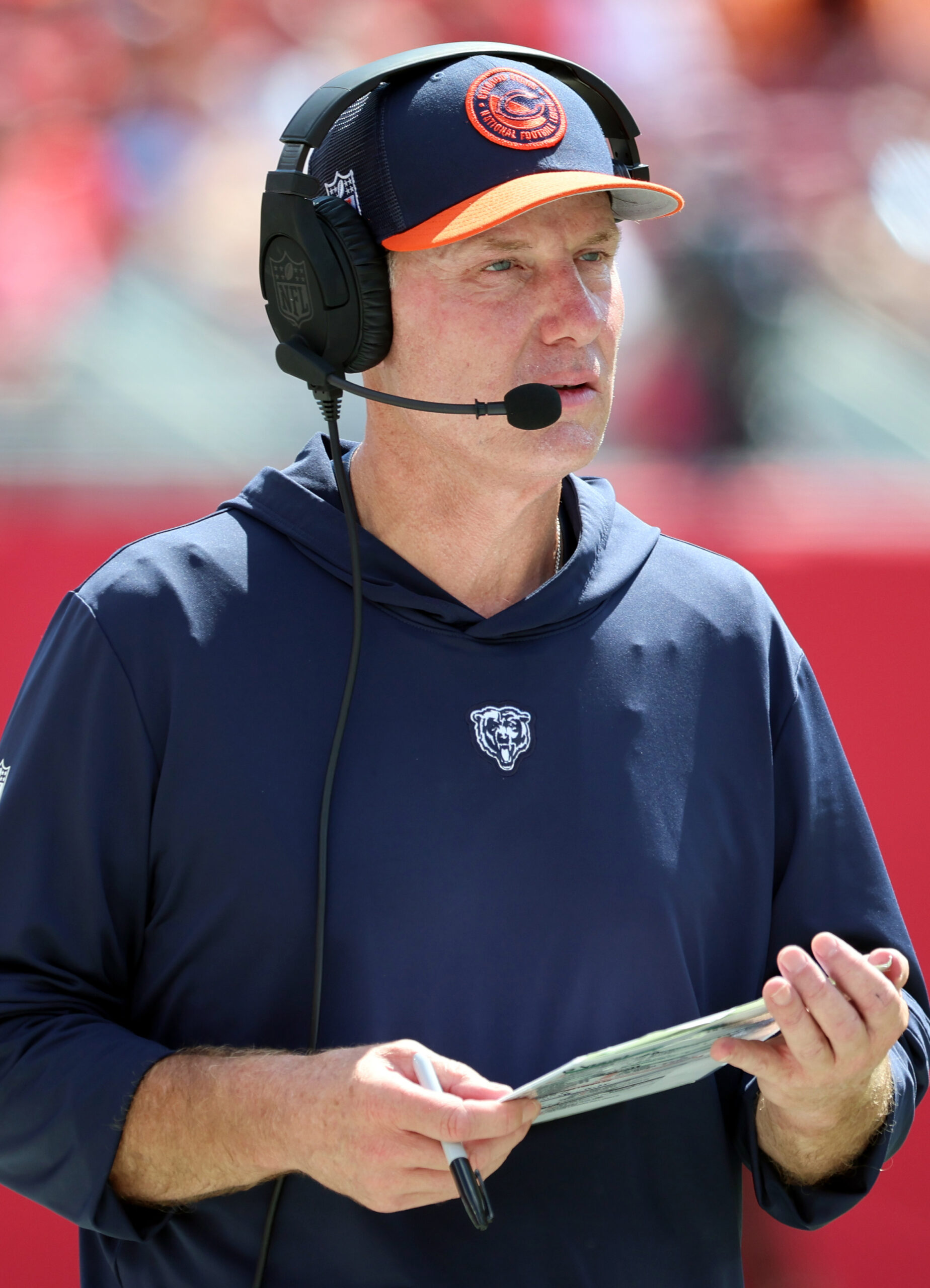 Although the Bears hired Eric Washington, the former Bills assistant will be a non-play-calling defensive coordinator to start his Chicago tenure. Eberflus said Thursday he will retain play-calling duties in 2024. This comes after he held the role for most of the 2023 season, following Alan Williams‘ September departure.
[RELATED: Bears Expected To Tag CB Jaylon Johnson]
Williams, who followed Eberflus from Indianapolis, did not fare well running the show in 2022. Granted, the Bears had purged their defense of veterans — including the trades of Khalil Mack and Robert Quinn — that year. The team ranked last in points allowed and 29th in total defense. Williams then left under somewhat mysterious circumstances, leading to Eberflus abandoning his status as a CEO coach and calling signals beginning in Week 3.
Last year’s Bears featured more defensive talent, seeing offseason and in-season additions bolster Eberflus’ unit. The team gave Tremaine Edmunds a top-five linebacker deal and added T.J. Edwards from the Eagles. Chicago, which entered the season with more questions at defensive end, traded for — and then extended — Montez Sweat. The team, which also received a breakthrough contract-year effort from Jaylon Johnson, finished 20th in scoring defense and 12th in yardage yielded.
Eberflus came to Chicago after four seasons with a play-calling role in Indianapolis. The Colts finished as a top-10 defense in three of those years, elevating Eberflus to the HC interview circuit. Washington has been in a play-calling position previously, serving as the Panthers’ DC from 2018-19. He spent the past four years as the Bills’ defensive line coach. While Washington taking the call sheet at some point during his Bears tenure is not a farfetched proposition, he will not carry it to begin his tenure.
Lions To Re-Sign K Michael Badgley
Winning a prolonged practice competition last season, Michael Badgley reclaimed his job after the Lions had previously traded for Riley Patterson. Closing the season as Detroit’s kicker again, Badgley is poised to enter the team’s offseason program in the role.
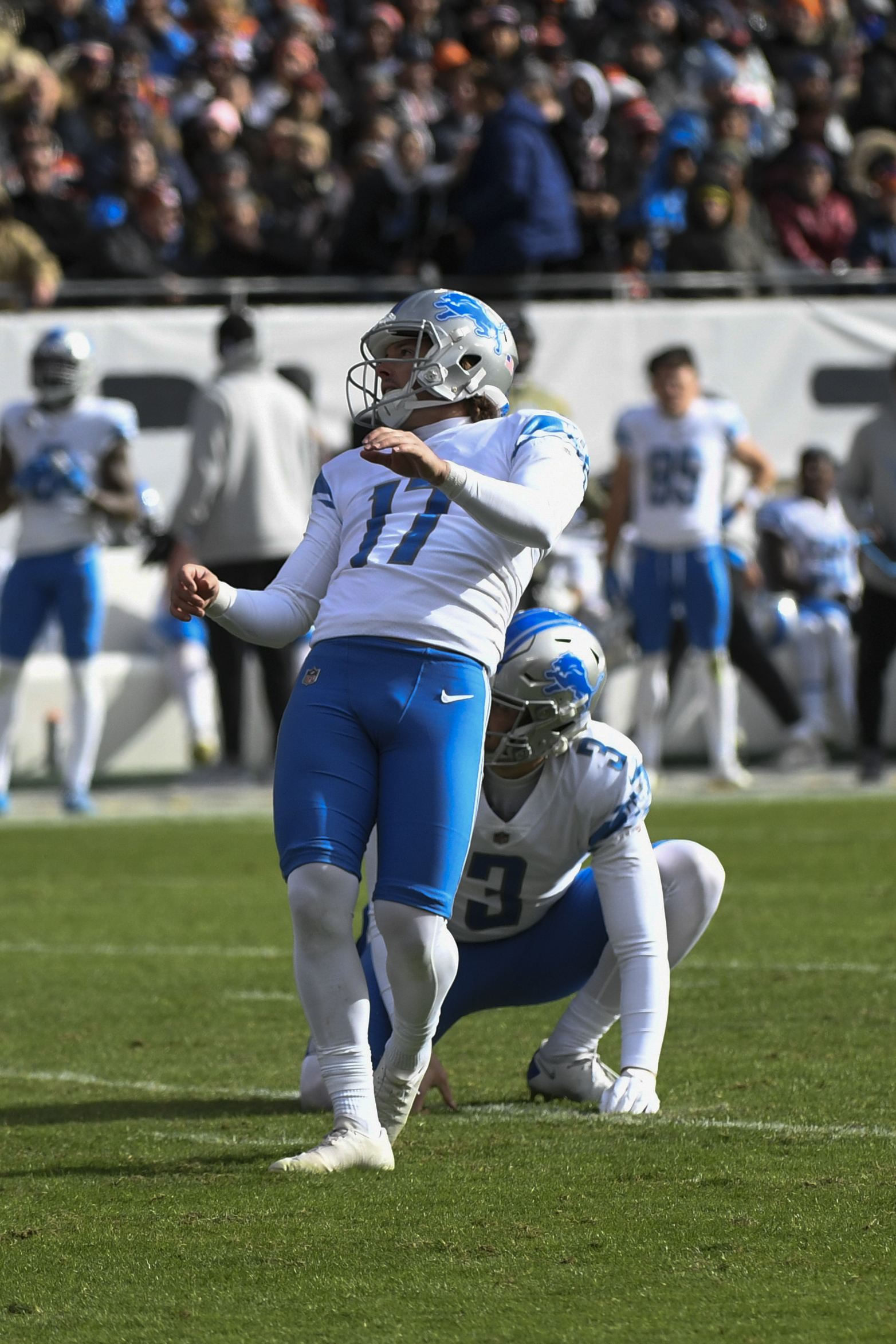 The Lions are keeping Badgley, according to his agency (via NFL.com’s Ian Rapoport), by agreeing to a one-year deal Thursday. Badgley, 28, kicked in seven games — counting three playoff tilts — for the NFC North champions last season. This continues an on-again, off-again partnership.
Detroit had brought Badgley back on a practice squad agreement last year, continuing a busy run of transactions for the kicker. The Lions had cut Badgley just before training camp, leading him to the Commanders. Badgley did not stick as Washington’s kicker, being released last summer, and spent a few days in Tennessee. But the Lions circled back to their primary 2022 kicker, stashing him on their P-squad in August. That pickup eventually led to Detroit giving him the kicking reins back late in the season.
A kicker chain reaction produced the Badgley-Patterson practice competition. The Broncos released longtime kicker Brandon McManus last year, leading to the Jaguars picking him up. That led them to dangle Patterson in deals. After speaking with the Cowboys, the Jags ultimately dealt Patterson to the Lions. That prompted Detroit to release Badgley, despite having re-signed him in March 2023. Despite Patterson making more than 85% of his kicks during the regular season, the Lions booted him and rolled with Badgley for the stretch run.
Badgley made each of his four regular-season field goal tries last year, missing two extra points. He was 3-for-3 in the playoffs, though the sequences in which Dan Campbell left his kicker on the sideline proved more memorable than those makes. Campbell eschewed two second-half Badgley tries inside of 50 yards to go for fourth-and-shorts; both plays failed in a 34-31 loss to the 49ers.
In 2022, Badgley was 33-for-33 on PATs and 20 of 24 on field goals with the Lions. The team had signed Badgley in October 2022, scooping him up after the Bears cut him. Badgley replaced Dominik Eberle that year. Overall, Badgley has played six NFL seasons. While he enjoyed steady Chargers employment for three years, the past three have brought in-season transactions. Since leaving Los Angeles in 2021, Badgley has kicked for the Colts, Titans, Bears and Lions. He will make an attempt at a more stable 2024.