
Jets Preparing For Kirk Cousins Pursuit
The Jets will search for their franchise quarterback this offseason, and New York is “willing to pay whatever it takes” to land free agent signal-caller Kirk Cousins, according to Rich Cimini of ESPN.com.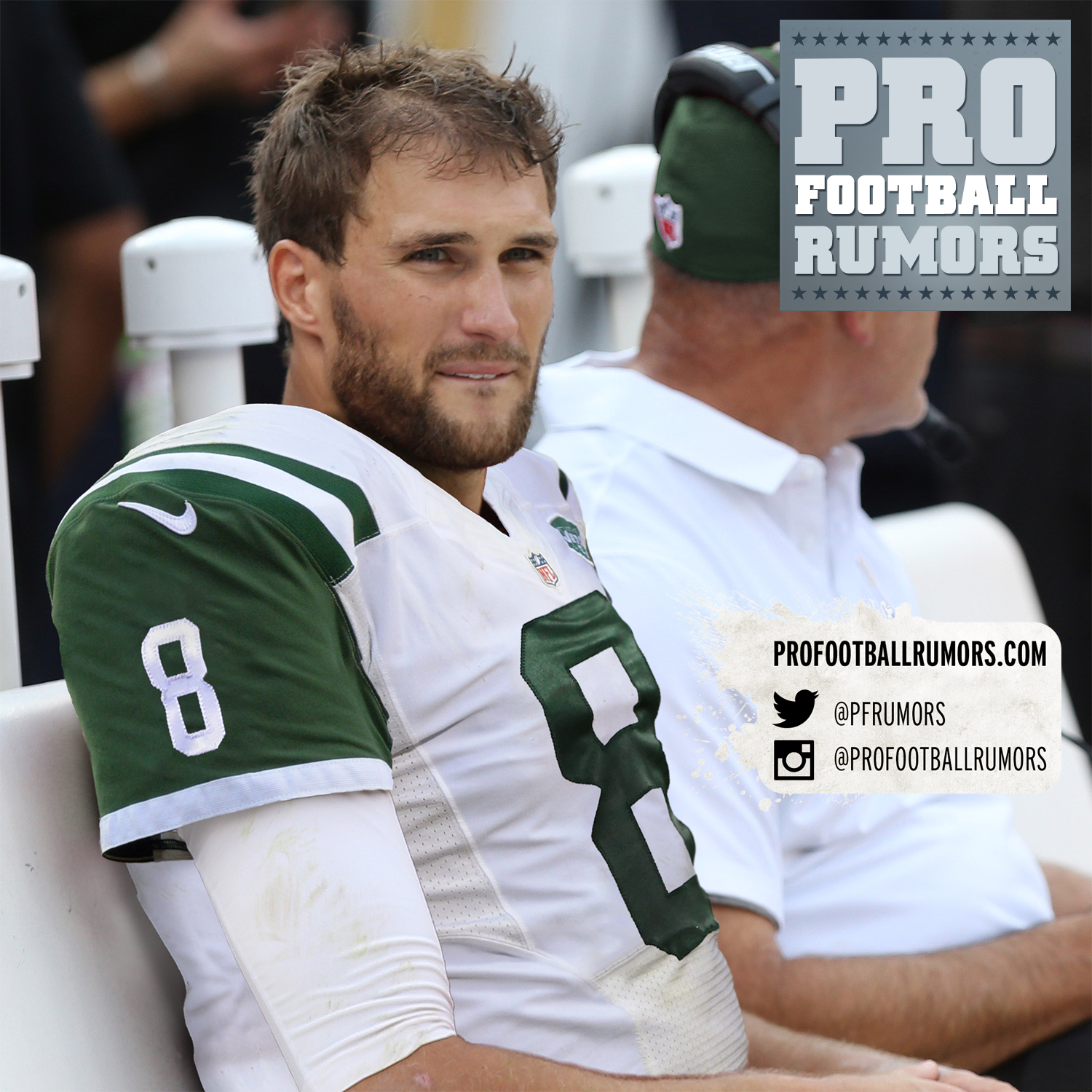
Gang Green is just the latest team to reportedly express interest in Cousins, as the Broncos are “all in” on the 29-year-old passer. Quarterbacks of Cousins’ ilk rarely hit the free agent market, and given the number of teams searching for signal-callers (the Browns, Cardinals, and Vikings could all make plays for Cousins), the ex-Redskin figures to reset the quarterback market by topping Jimmy Garoppolo‘s $27.5MM annual salary.
The Jets and general manager Mike Maccagnan have the financial wherewithal to make a serious push for Cousins, as the club is currently projected to have more than $70MM available in 2018 cap space. As such, New York should be able to offer Cousins a hefty 2018 payout that other teams may not be able to match. Per Cimini, the Jets will also attempt to sell Cousins on their “championship vision” and stress scheme familiarity, as new offensive coordinator Jeremy Bates enjoys a relationship with Cousins.
If the Jets aren’t able to land Cousins, they’ll have to explore other options including veteran Josh McCown, who is open to returning to New York for the 2018 campaign. If the Jets do re-sign McCown, they’ll likely need to select another quarterback early in the draft, per Cimini.
Photo courtesy of Pro Football Rumors on Instagram.
Texans Plan To Release Brian Cushing
Brian Cushing will not make it to a 10th season with the Texans. The former first-round pick will be a free agent soon.
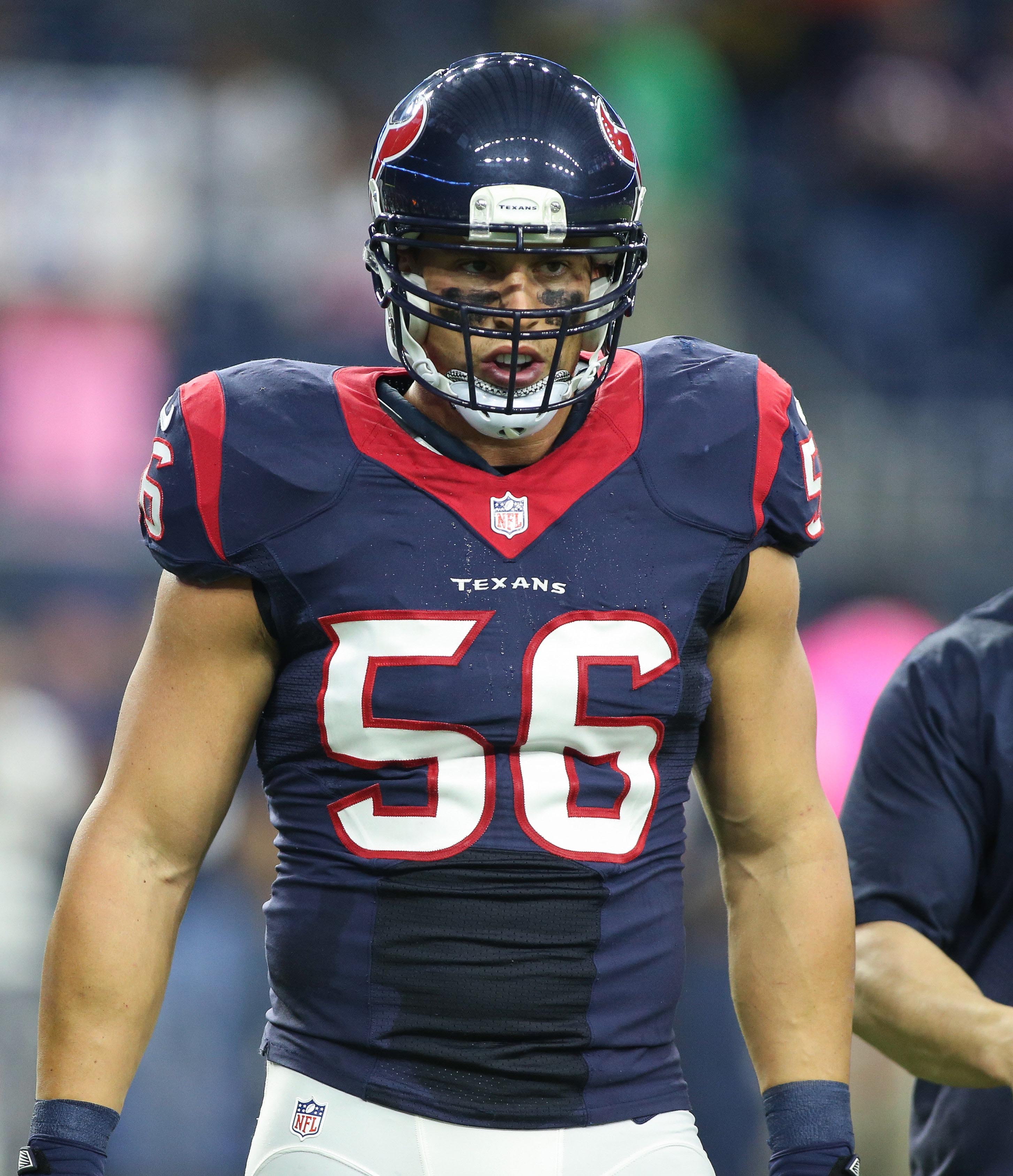 The Texans plan to release Cushing before the start of free agency, Mark Berman of Fox 26 reports (on Twitter). The former defensive rookie of the year played in only five games last season and has encountered trouble with performance-enhancing drugs.
Cushing started all 104 regular-season games he played with Houston but will turn 31 this offseason and will save the franchise $7.64MM in cap space. Two years remain on Cushing’s contract.
This release would give the Texans more than $64MM in cap room as they prepare for an offseason that will feature upgrade attempts along their offensive line and in the secondary, John McClain of the Houston Chronicle notes.
McClain reports Cushing texted him this is “part of the business” (Twitter link). The veteran linebacker will join the list of non-rush ‘backers available as free agents. Once the Texans release Cushing, he’ll be free to sign with any team immediately as a street free agent.
Cushing played an integral role for the Texans for nearly a decade. He’s the franchise’s all-time leading tackler with 664 stops. But the team drafted Zach Cunningham in last year’s second round and added productive rookie UDFA Dylan Cole last year as well, marginalizing the longtime defender.
The former USC talent has experienced frequent injury problems as well, tabbing his career surgery count at more than 20. He served a 10-game ban for a positive PED test last season and was popped for four games back in 2010. Knee injuries sidelined Cushing for extensive portions of the 2012 and ’13 campaigns, but he rebounded to be a full-time player in both of Houston’s subsequent AFC South championship slates in 2015 and ’16.
NFL Will Increase Access To Tracking Data
NFL teams will begin receiving in-game tracking data on every player in the league beginning this spring, according to Tom Pelissero of NFL.com.
Club have been seeing data on their own players since 2014, but access to other teams’ players had not yet been available. However, the NFL’s Compensation Committee recently agreed to a proposal allowing every team to collect data on every player, per Pelissero. Clubs will be sent information from the 2016-17 campaigns in mid-April, and will subsequently receive data on a weekly basis during the 2018 season.
Zebra Technologies collects tracking information through sensors placed in players’ shoulder pads, per Pelissero, who says one NFL analyst believes the data could have “massive scouting potential.” “More new metrics,” said the analyst. “Understanding if certain fields are slower or faster. Fatigue and injury prevention. Seeing which players are really explosive but maybe don’t make plays because the scheme is bad.”
As Pelissero notes, some clubs have placed an increased importance on studying tracking data and hiring analysts to further delve into the information. Those teams will presumably have a leg up when the data is released on a league-wide scale, while clubs that haven’t invested in analytics have registered concern over the program. In 2016, for example, Kevin Clark of the Ringer discussed the activities of Zebra Technologies, and Panthers head coach Ron Rivera didn’t sound amenable to increasing data being made available.
“I want to get beat on the field. I don’t want to get beat because someone used a tool or technology — that is not coaching at that point,” Rivera said. “I work all week, I’m preparing and kicking your ass. All of the sudden you see a piece of live video and you figure out, ‘Oh crap, that’s what he’s doing.’ And how fair is that?”
Top 3 Offseason Needs: Philadelphia Eagles
In advance of March 14, the start of free agency in the NFL, Pro Football Rumors will detail each team’s three most glaring roster issues. We’ll continue this year’s series with the Philadelphia Eagles, who overcame the loss of their MVP-caliber starting quarterback to win the Super Bowl.
Depth Chart (via Roster Resource)
Pending Free Agents:
- Beau Allen, DT
- Kenjon Barner, RB
- Will Beatty, T
- LeGarrette Blount, RB
- Nigel Bradham, LB
- Bryan Braman, DE
- Trey Burton, TE
- Dannell Ellerbe, LB
- Najee Goode, LB
- Corey Graham, S
- Patrick Robinson, CB
- Darren Sproles, RB
- Caleb Sturgis, K
- Jaylen Watkins, S (RFA)
Top 10 Cap Hits for 2018:
- Fletcher Cox, DT: $17,900,000
- Lane Johnson, T: $12,250,000
- Jason Peters, T: $11,666,666
- Vinny Curry, DL: $11,000,000
- Brandon Brooks, G: $10,886,397
- Zach Ertz, TE: $10,345,000
- Malcolm Jenkins, S: $10,000,000
- Rodney McLeod, S: $8,406,250
- Mychal Kendricks, LB: $7,600,000
- Nick Foles, QB: $7,600,000
Other:
- Projected cap space (via Over the Cap): -$9,426,190
- 32nd pick in draft
- Must exercise or decline 2019 fifth-year option for WR Nelson Agholor
Three Needs:
1) Figure out what to do with Nick Foles: After the Eagles lost starting quarterback Carson Wentz to a torn ACL in Week 14, no one gave them much of a chance to sustain an extended postseason run. Although Philadelphia boasted one of the best overall rosters in the NFL, backup signal-caller Nick Foles didn’t inspire a ton of confidence. And he probably shouldn’t have: aside from one solid 2016 start with the Chiefs, Foles hadn’t been productive since the 2013 campaign (which also came with the Eagles). Philadelphia received a first-round bye after securing the No. 1 seed in the NFC, but a short playoff stint looked exceedingly likely.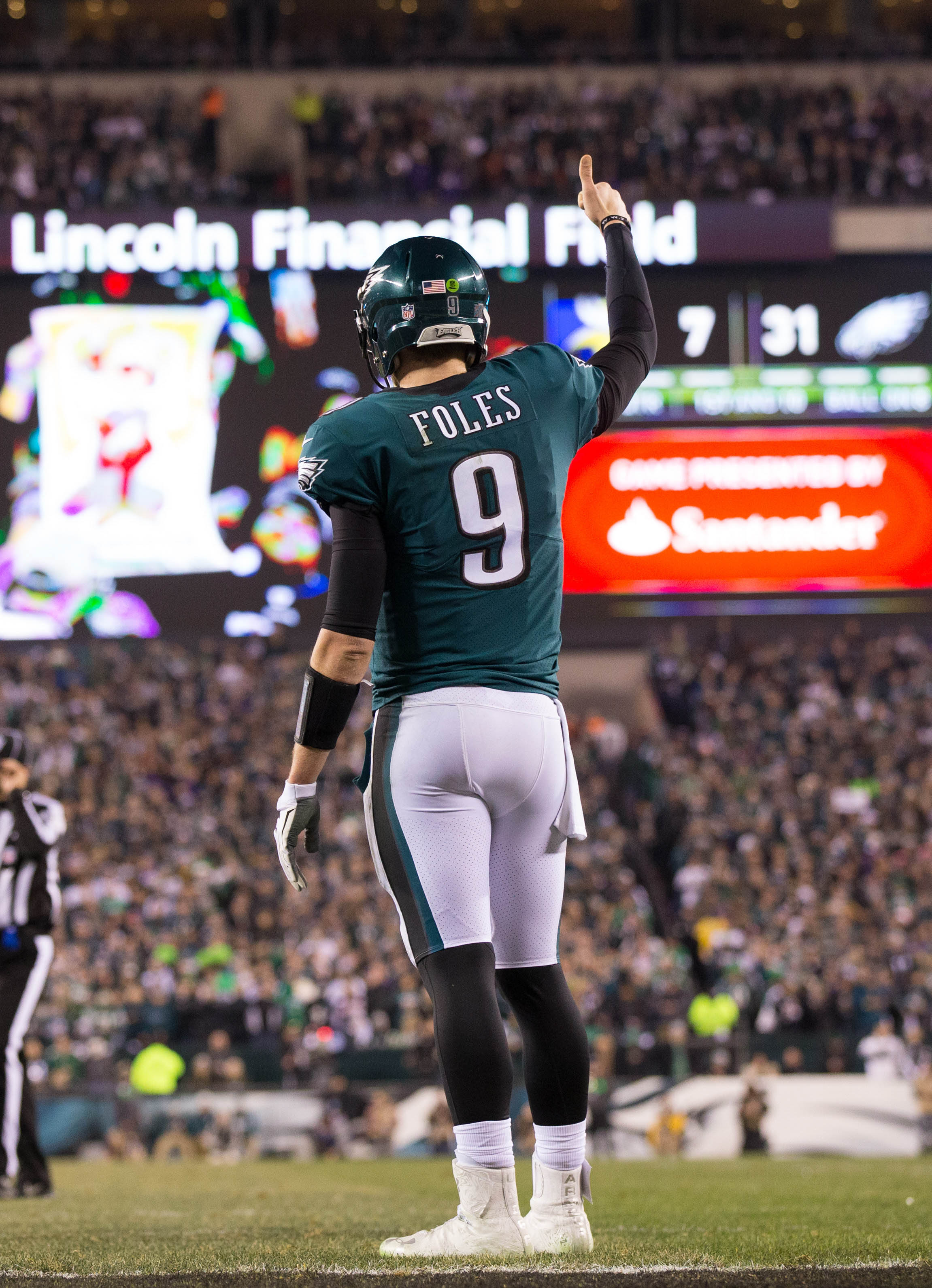
We all know what happened next. Despite being the underdog in each game, the Eagles held on against the Falcons in the Divisional Round, destroyed the Vikings in the NFC Championship, and pulled out a classic against the Patriots to win the first Super Bowl in franchise history. Foles was surgical, completing 28-of-43 attempts for 373 yards and three touchdowns while catching a touchdown pass from tight end Trey Burton on a fourth down, Philly Special play call. Two years after contemplating retirement, Foles is the reigning Super Bowl MVP.
So what do the Eagles do with Foles now? He’s not going to return as a starter in 2018, as Wentz is Philadelphia’s franchise quarterback and was on track to be named league MVP before he went down with injury. But that doesn’t mean Foles can’t come back as Wentz’s backup for another season, especially given how he proved his value during the Eagles’ Super Bowl run. But Foles is expensive: discounting Mike Glennon, who is sure to be released this offseason, Foles is the league’s highest-paid No. 2 quarterback. He’s due to count for $7.6MM on Philadelphia’s 2018 salary cap, and will collect $6MM in cash next season.
Most clubs would be able to afford a top-tier backup signal-caller at Foles’ price, but the Eagles’ salary cap situation is dire. At present, Philadelphia ranks dead last in expected 2018 space, and is projected to be nearly $10MM over the cap when the new league year begins in March. If Foles is traded, the Eagles would pick up $5.2MM in cap room, a penance to many teams but a critical amount for Philadelphia. There are other ways for vice president of football operations Howie Roseman to create space, to be sure, but trading Foles would also allow the Eagles to add draft capital, another benefit for a team that currently lacks a second- or third-round pick.
What type of return the Eagles can expect for Foles is an open question. Here’s a look at how much several comparable quarterbacks have cost over the past two seasons:

Jacoby Brissett is the absolute floor for a possible Foles trade, but Jimmy Garoppolo and Sam Bradford are both acceptable comps. Sure, Jimmy G now looks like one of the NFL’s next great quarterbacks, but at the time the Patriots dealt him to the 49ers, Garoppolo boasted only two career starts and 94 career attempts — Foles topped both of those marks (and posted a superior quarterback rating) during the Eagles’ playoff run alone. Of course, Garoppolo hadn’t put any poor performances on film and was 26 years old when he was traded, while Foles does have some substandard play on his record and is entering his age-29 season.
Like Foles, Bradford was an Eagle at the time he was dealt, and was coming off a campaign in which he completed 65% of his passes for 19 touchdowns, 14 interceptions, and an 86.4 passer rating. While he never hit the highs that did Foles, Bradford managed his competent performance over a 14-game stretch, giving an indication that his production would be sustainable going forward. Foles was excellent over a three-playoff-game sample, but will other NFL clubs be willing to bet on him as a starter in 2018?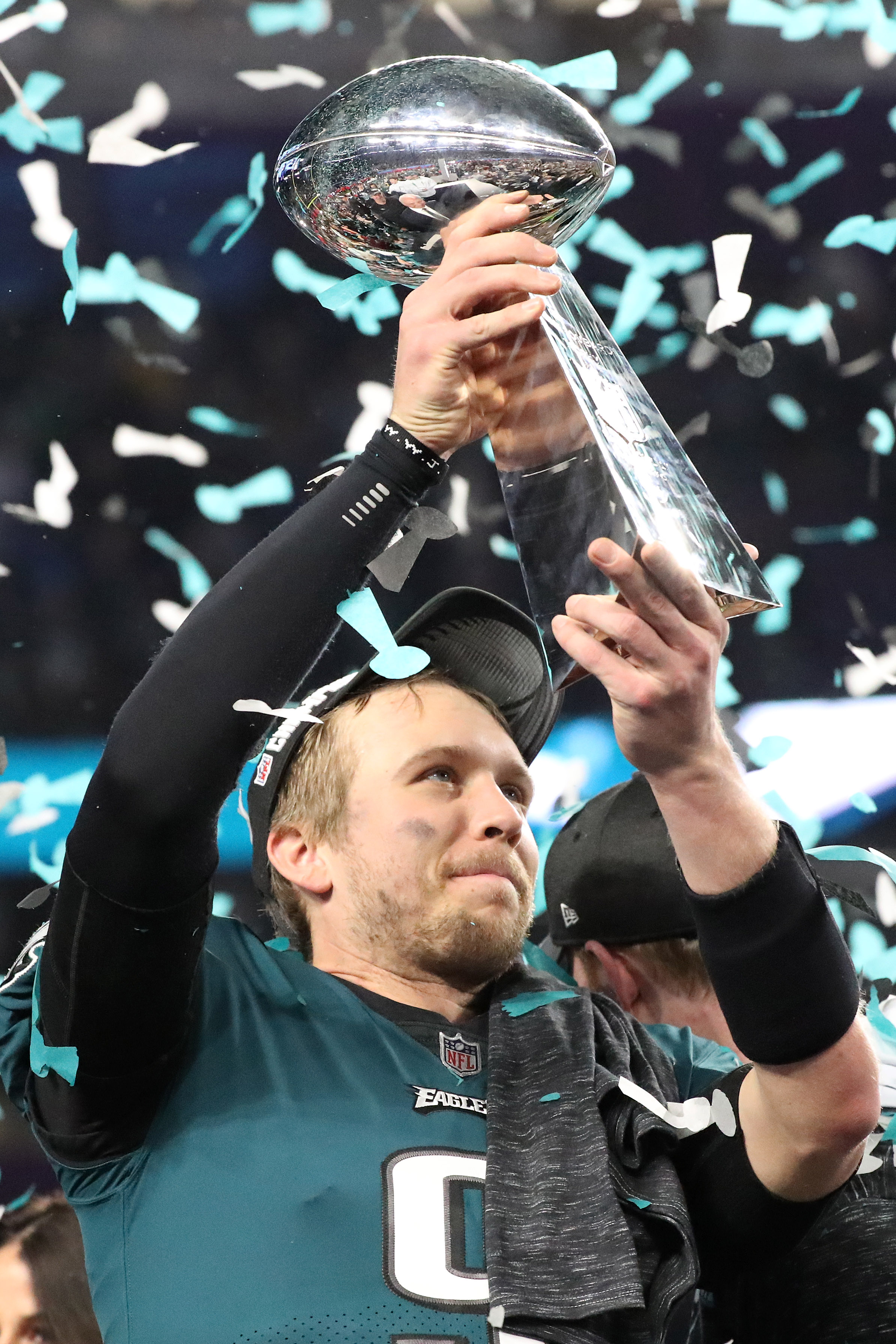
Given that Foles’ value is at an all-time high, I don’t see how the Eagles can’t at least explore his trade value, especially given their salary cap and draft capital situation. I’d set parameters, though, and likely wouldn’t accept anything less than a early-to-mid second-round selection. The 2018 quarterback market offers more options — Kirk Cousins, Case Keenum, Bradford — than any in recent memory, so teams may not be clamoring to acquire Foles, but clubs such as the Browns (pick Nos. 33 and 35 in the early second round), the Jets (No. 37), the Broncos (No. 40), the Cardinals (No. 47), and Bills (No. 53) could all express interest.
If Foles is gone, the Eagles will need a new backup quarterback (although they have indicated confidence in third-stringer Nate Sudfeld). Philadelphia isn’t likely to find a better option than Sudfeld late in the draft, so a free agent signal-caller would represent the expected solution. Of course, any veteran inked by the Eagles would need to come at a cheaper rate than Foles (otherwise there’d be no financial reason to trade him). Josh McCown and Matt Moore stand out as experienced quarterbacks who could competently fill in for Wentz, while a trade acquisition — perhaps the Browns include DeShone Kizer or Cody Kessler in a Foles swap — can’t be ruled out.
2) Part ways with Jason Peters, but find a swing tackle: We’ve already covered the Eagles’ ominous salary cap situation, but trading Nick Foles might not be the only financially-motivated move Philadelphia needs to make over the coming weeks. Veteran left tackle Jason Peters, who played in seven games before tearing his ACL, is set to count for $10.667MM in 2018, an unpalatable figure for a 36-year-old coming off injury. While Eagles head coach Doug Pederson recently indicated Peters will return to Philadelphia next season, Pederson isn’t the one making the tough cap-related decisions — those calls will fall to Howie Roseman, who must weigh Peters’ ability against his cost.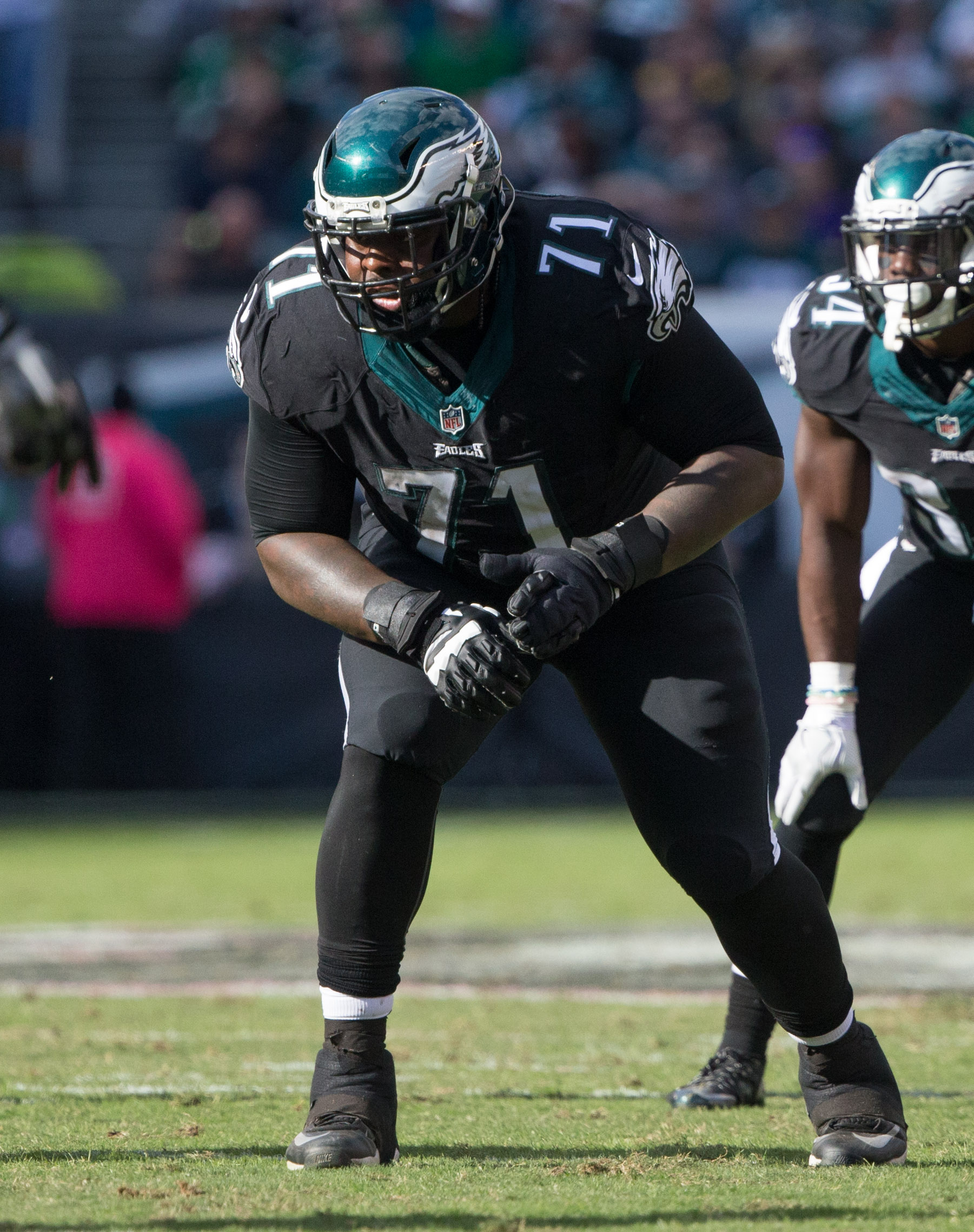
However, the Eagles will almost certainly have to trade Peters if they want to experience any cap relief. Under the terms of his recent extension, Peters garnered a $4.5MM injury guarantee for the 2018 season. Given that he tore his ACL in October, Peters likely won’t be able to pass a physical before that total becomes fully guaranteed in March, so Philadelphia will be paying the sum either way. In fact, it will cost more — $10,833,334 vs. $10,666,666 — to cut Peters than to keep him on the roster next year, provided that $4.5MM guarantee kicks in.
As such, a trade of Peters is the only way the Eagles can get his cap charge off their books, and I’d expect a number of teams to be interested in acquiring a high-quality tackle, even an aged one with a knee injury. Peters, a likely future Hall of Famer, graded as the NFL’s seventh-best offensive tackle before going down in 2017, per Pro Football Focus, meaning he’s still a valuable commodity. Club such as the Patriots (if they lose Nate Solder to free agency), the Bengals, the Texans, the Jaguars, the Buccaneers, and the Cardinals could all use a left tackle, and Peters would only cost an acquiring team $6.75MM next season.Read more
Chiefs Sign CB David Amerson
The Chiefs have signed free agent cornerback David Amerson, the club announced tonight. Amerson will stay in the AFC West after being released by the Raiders earlier this week.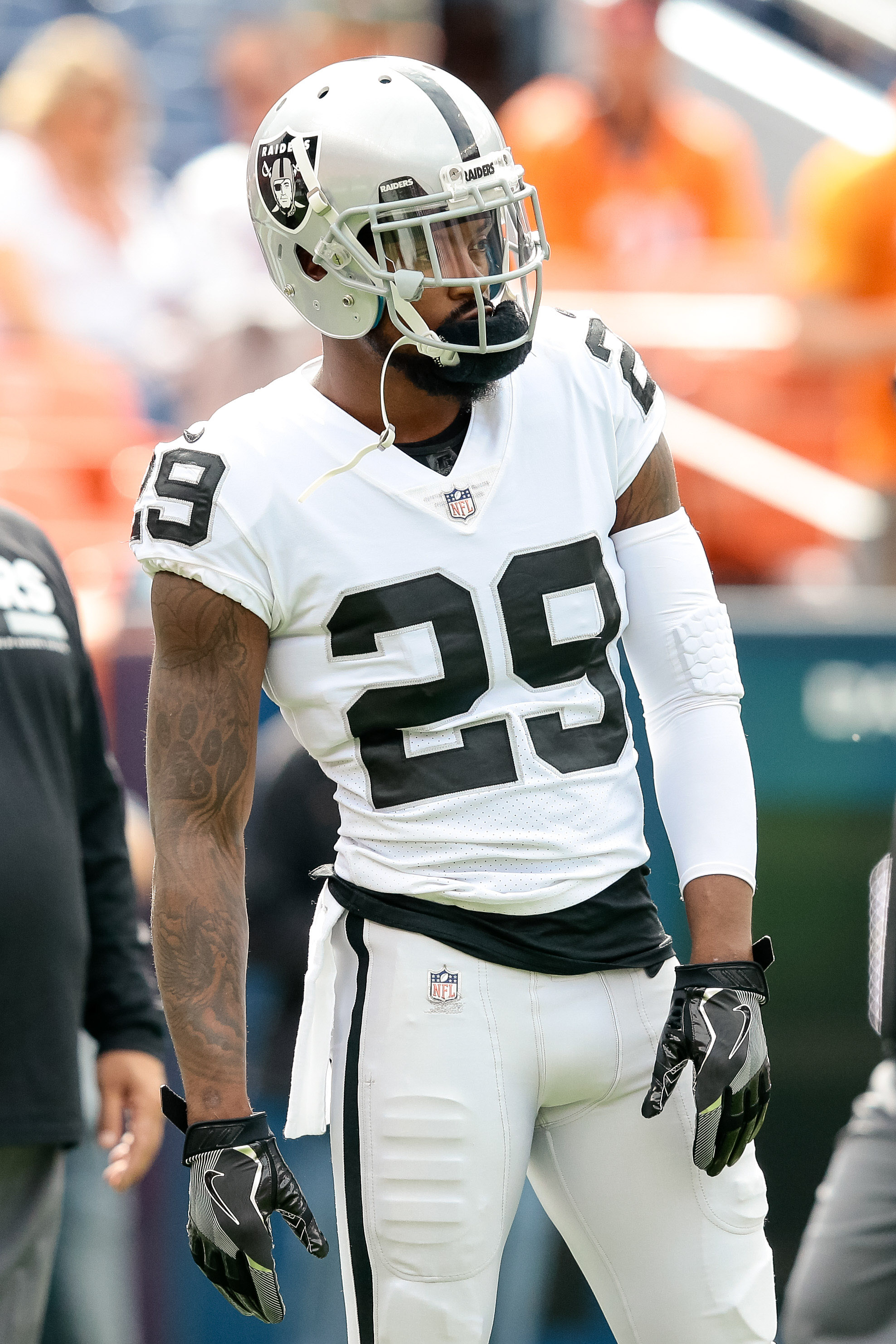
Amerson agreed to a one-year deal that contains a $2.25MM base salary, according to Terez A. Paylor of the Kansas City Star (Twitter link). The pact comes with escalating incentives, and can max out at $6MM, tweets Ian Rapoport of NFL.com.
While Amerson has only been in the NFL since 2013, he’s now set to join his third team. Originally drafted in the second round by the Redskins, Amerson went to the Raiders via waiver claim in 2015. After becoming a full-time starter in Oakland, Amerson inked a four-year, $38MM extension, but only saw two years of the deal before being released.
The 2017 campaign was a frustrating one for Amerson, as a foot strain forced him to miss the final nine games of the season. The year prior, Amerson was a 15-game starter for the Raiders, but offered a middling performance. He ranked 50th among 84 qualified cornerbacks in Football Outsiders’ success rate, and 61st in yards allowed per pass.
Amerson is the second former Redskins cornerback the Chiefs have acquired this offseason, as he’ll join Kendall Fuller — part of Kansas City’s return in the Alex Smith trade — in the club’s secondary. Both Amerson and Fuller excel in man coverage, a requirement in defensive coordinator Bob Sutton‘s scheme, and will play alongside Marcus Peters in what is rapidly becoming an excellent defensive backfield.
Before agreeing to terms with the Chiefs, Amerson took free agent visits with the Bears and Texans. The 49ers also expressed some level of interest in signing the 26-year-old Amerson, but no reports of a formal meeting ever surfaced.
Top 3 Offseason Needs: Detroit Lions
In advance of March 14, the start of free agency in the NFL, Pro Football Rumors will detail each team’s three most glaring roster issues. We’ll continue this year’s series with the Detroit Lions, who missed the postseason in 2017 and subsequently replaced head coach Jim Caldwell with former Patriots defensive coordinator Matt Patricia.
Depth Chart (via Roster Resource)
Pending Free Agents:
- Ezekiel Ansah, DE
- Don Barclay, OL
- Jace Billingsley, WR (ERFA)
- Nick Bellore, LB
- Don Carey, S
- Rodney Coe, DT (ERFA)
- Brandon Copeland, DE (RFA)
- Darren Fells, TE
- Dwight Freeney, DE
- D.J. Hayden, CB
- Jordan Hill, DT
- Kerry Hyder, DE (ERFA)
- Zac Kerin, G (RFA)
- Mike James, RB
- T.J. Jones, WR (RFA)
- Nevin Lawson, CB
- Don Muhlbach, LS
- Haloti Ngata, DT
- Kasey Redfern, P (ERFA)
- Christian Ringo, DT (ERFA)
- Greg Robinson, T
- Jake Rudock, QB (ERFA)
- Travis Swanson, C
- Tahir Whitehead, LB
- Tavon Wilson, S
- Paul Worrilow, LB
- Zach Zenner, RB (RFA)
Top 10 Cap Hits for 2018:
- Matthew Stafford, QB: $26,500,000
- T.J. Lang, G: $10,916,666
- Golden Tate, WR: $9,351,250
- Marvin Jones, WR: $8,600,000
- Eric Ebron, TE: $8,250,000
- Glover Quin, S: $6,516,666
- Ricky Wagner, T: $5,900,000
- Darius Slay, CB: $5,576,269
- DeAndre Levy, LB: $4,800,000 (dead money)
- Theo Riddick, RB: $3,887,500
Other:
- Projected cap space (via Over the Cap): $52,184,502
- 20th pick in draft
Three Needs:
1) Reset the running game: The Lions famously have gone four-plus years without a running back posting 100 yards in a single game — Reggie Bush last managed that feat in 2013, and he’s also the last Detroit runner to put up 1,000 yards rushing over a full season. Those struggles have lead the Lions to address their backfield in recent years, but 2015 second-round pick Ameer Abdullah hasn’t been able to hold up as an every-down back, while Theo Riddick excels far more as a receiver than as a between-the-tackles runner. After ranking dead last in rushing yards per attempt a season ago, Detroit needs to acquire a new running back in the coming months.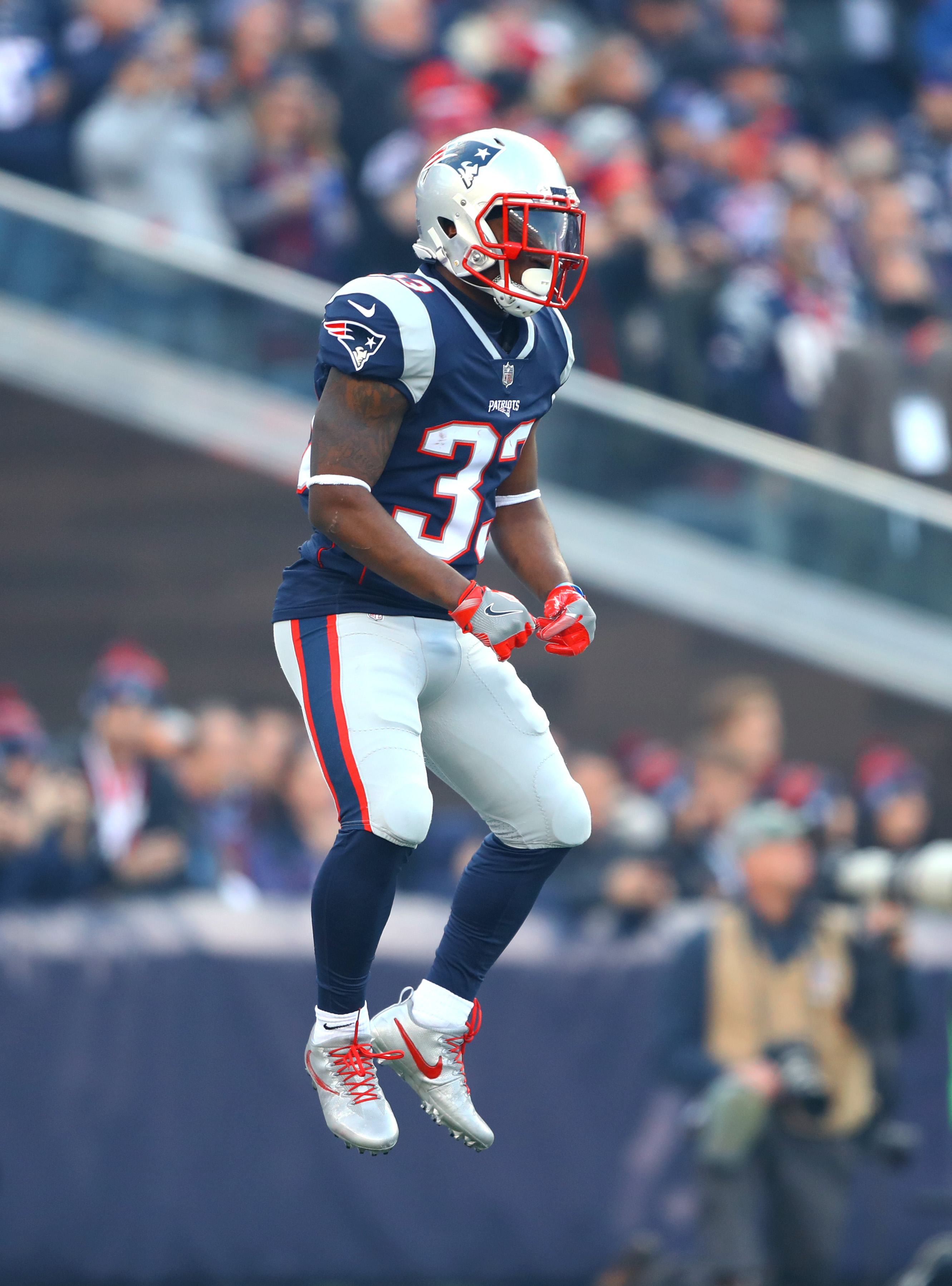
The most obvious free agent target for the Lions should be Dion Lewis, as both he and new head coach Matt Patricia spent the past three years with the Patriots. Detroit general manager Bob Quinn is a former New England staffer, as well, and was the club’s director of pro staffing when Lewis was signed to a futures contract prior to the 2015 campaign. As far as fits go, Lewis and the Lions are like a glove, and Detroit should easily be able to meet Lewis’ reported asking price of $18MM over a three-year term.
While Lewis may have been viewed as a rich man’s Abdullah as recently as last season, he proved in 2017 that he’s capable of being the foundation of a rushing offense. He handled 180 carries last year (eight more than he’d managed over the first four years of his career) and averaged five yards per rush. Lewis also finished first in Football Outsiders’ DYAR (which measures value over a replacement running back), second in DVOA (per-play value), and fourth in success rate (how a back keeps his team “on schedule” with regards to down and distance). Throw in his efforts in the passing game — 32 receptions and a No. 6 ranking in pass-blocking efficiency, per Pro Football Focus — and Lewis is just about as complete a running back as you’ll find on the open market.
Of course, Lewis isn’t the only runner the Lions could consider this offseason. Fellow Patriots free agent Rex Burkhead was given 100 total touches over 10 games in 2017, and could be an option for Detroit if he’s not re-signed by New England. Carlos Hyde and Isaiah Crowell could both offer a bruising style that would mesh well with Abdullah and Riddick. And C.J. Anderson, a rumored candidate for release in Denver, might be on the table, especially given that former Broncos offensive line coach Jeff Davidson is now on staff in Detroit.
The Lions may also look to the draft to find another running back, and while I wouldn’t typically advocate selecting a runner in the first round, the Lions are sitting late enough on Day 1 that a first-round RB contract wouldn’t break the bank. If Saquon Barkley is taken in the top five picks, for example, he’ll receive a four-year contract that pays him nearly $7MM annually. That would immediately place him within the top five highest-paid running backs in the entire NFL. The financial value just isn’t there to make a top-10 running back worth the risk, but the Lions are picking 20th overall. Any RB Detroit takes at that point will only earn roughly $3MM per year, a more than palatable cost.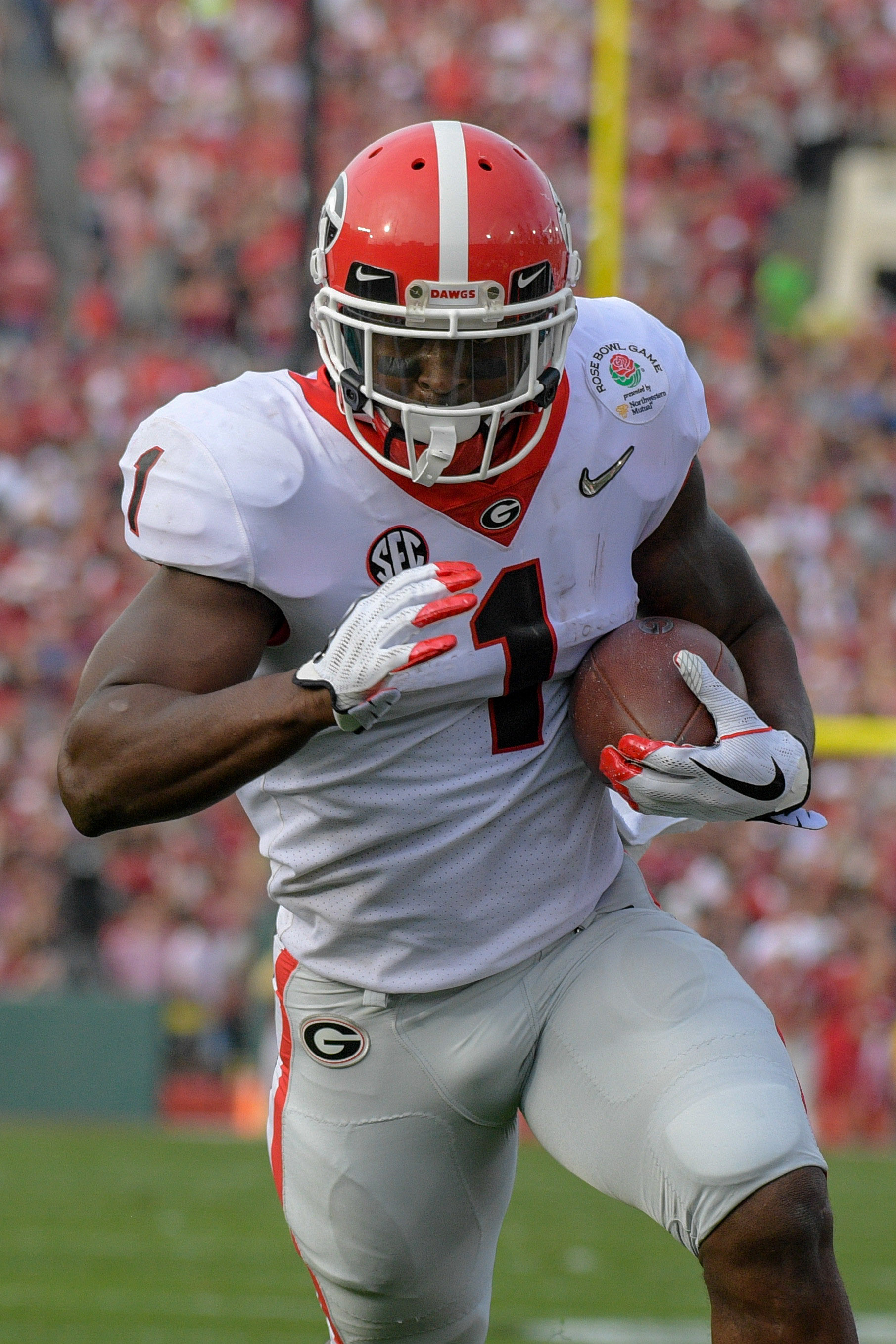
Barkley will be long gone by the time Detroit gets to turn in its card, but there are other backs who will be worth a Day 1 or 2 selection. Georgia’s Sony Michel should be available at pick No. 20, and Lance Zierlein of NFL.com says the 215-pounder will “drop his pads and meet force with force when it’s time to finish.” Derrius Guice (LSU), Rashaad Penny (San Diego State), and Nick Chubb (Georgia) are among the other burly runners that could come off the board before Day 3.
2) Fix the interior offensive line: Now entering his second season as the Lions’ general manager, Quinn has shown a willingness to pay for offensive line upgrades thus far during his Detroit tenure. Last year, the Lions opted to move on from competent linemen Larry Warford and Riley Reiff, replacing them with fellow free agents T.J. Lang and Ricky Wagner. Unfortunately, Detroit will need to bring in at least one addition lineman this offseason, as the club’s front five was sub-par in 2017.
The problem for the Lions’ line resides on the interior: while guards Lang and Graham Glasgow offered acceptable play last year, longtime center Travis Swanson ranked as the worst pivot in the league a season ago, per PFF. Detroit was dead last in adjusted line yards, and also finished last in ALY when running up the middle. Swanson is now a free agent, and given Quinn’s focus on offensive line upgrades during his Lions tenure, I’d expect the club to move on from its 27-year-old center.Read more
A.J. McCarron To Be Unrestricted Free Agent
Quarterback A.J. McCarron has won his grievance against the Bengals, according to Ian Rapoport of NFL.com (on Twitter). He’ll be an unrestricted free agent this offseason and finally get his opportunity to be a starting quarterback. 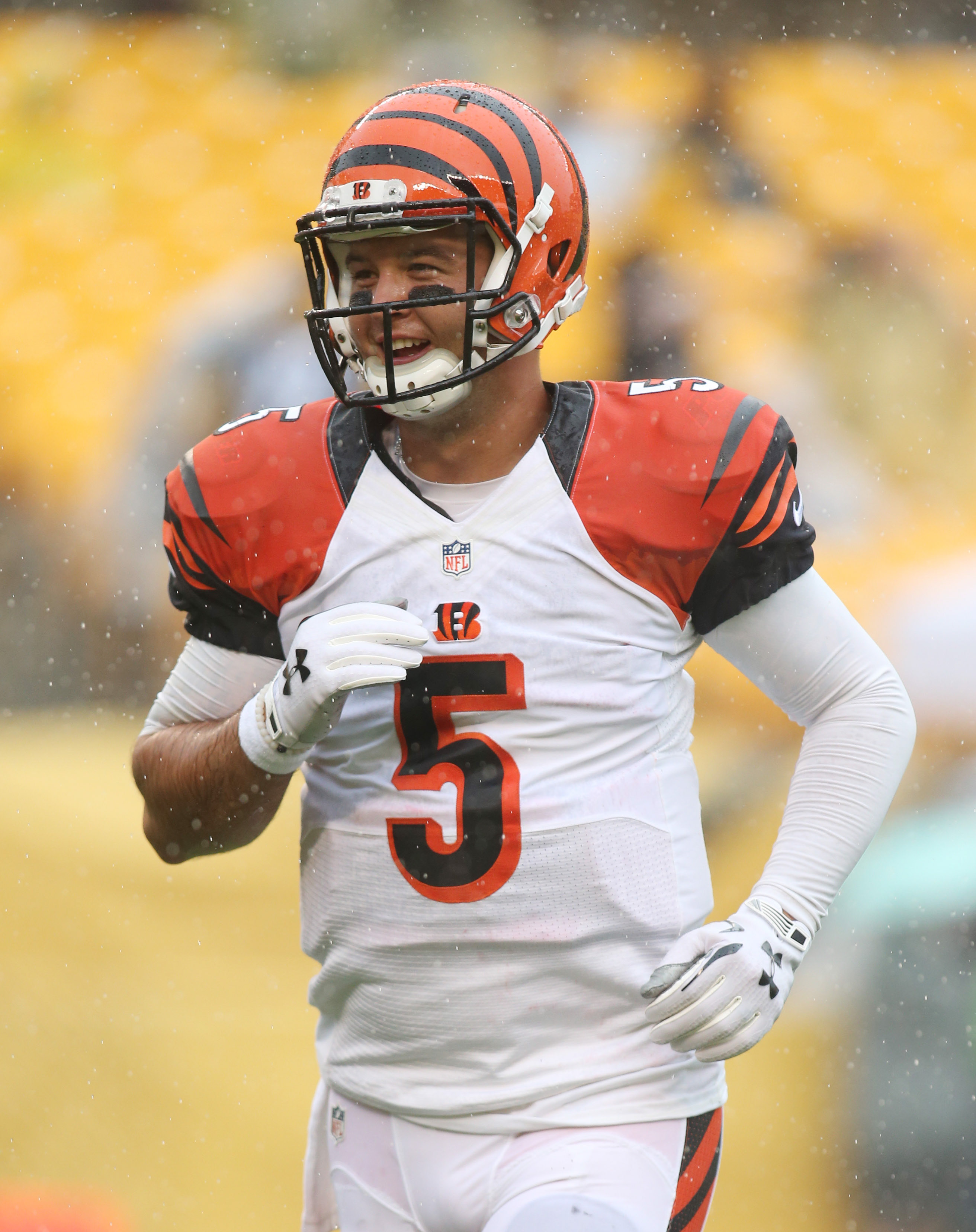
McCarron has not seen a lot of playing time behind Andy Dalton, but he has impressed in a limited sample. In the final four games of 2015, when Dalton was out with an injury, he passed for 832 yards and six touchdowns against just two interceptions.
Last year, the Bengals were able to keep McCarron at a very modest $735K cap number. Had they been able to tag him as a restricted free agent with the first-round tender, they would have been able to either retain him for about $4MM or acquire a first-round pick from the team signing him. Instead, McCarron will hit free agency completely unfettered, making a return to the Bengals unlikely. Already, head coach Marvin Lewis has dismissed the idea of moving on from Dalton as the team’s starter this season and the Bengals can’t afford to give McCarron starter-type money.
In addition to winning UFA status, McCarron will also collect on lost salary from the 2014 season, with interest (Twitter link via Rapoport). In that season, McCarron was placed on the NFI list due to a shoulder injury.
This year’s unrestricted free agent QB class was already shaping up to be one of the best in recent memory and the addition of McCarron makes it even stronger. Kirk Cousins is the unanimous top draw, but Vikings QBs Case Keenum, Sam Bradford, and Teddy Bridgewater are also scheduled to reach the open market in March. Technically speaking, Saints QB Drew Brees is also a free agent, but he is widely expected to re-sign with the club before things open up next month.
Beyond those free agents, there’s also likely trade candidate Tyrod Taylor and a handful of intriguing QB prospects in this year’s draft. Teams with uncertainty under center like the Jets, Broncos, Browns, and Cardinals couldn’t ask for more in the way of options.
Cardinals’ Larry Fitzgerald To Play In 2018
Larry Fitzgerald isn’t going anywhere. In a radio interview, Cardinals coach Steve Wilks told 98.7 FM in Arizona that the wide receiver will return for the 2018 season. 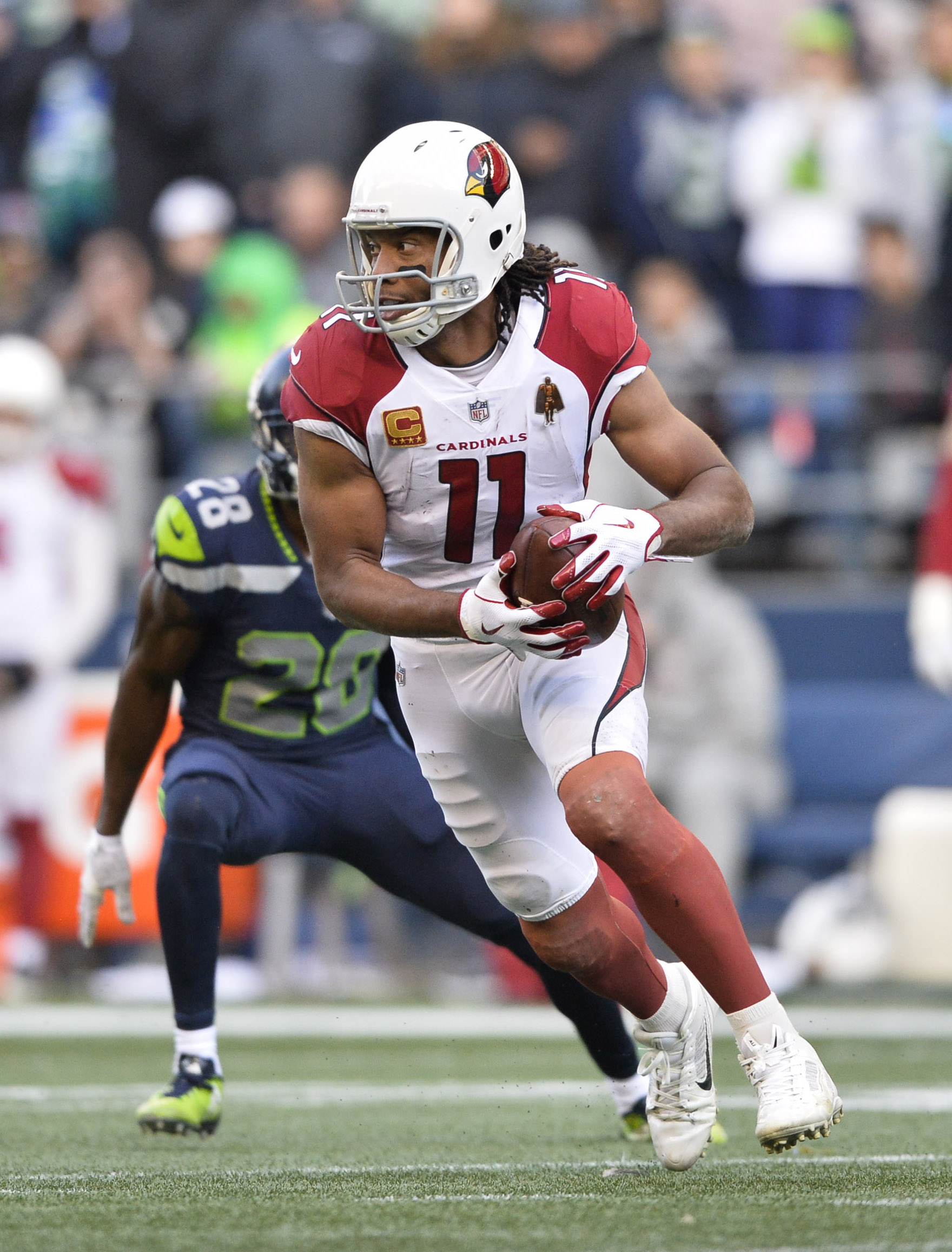
“It’s a very exciting time for all of us. To all the Arizona Cardinals fans around the world, it’s very exciting because Larry mentioned to me last night that he is coming back for the 2018 season,” Wilks said. “I’m extremely excited…You’re talking about a future first-ballot Hall-of-Famer. I couldn’t be more excited to have Larry coming back next year. He is totally committed — those are his words — so we’re ecstatic to have him be part of the Arizona Cardinals.”
The 11-time Pro Bowler is now set to take the field for his 15th NFL season. Even at his advanced age, Fitzgerald is still among the best at his position. After moving to the slot in 2015, the veteran has topped 100 catches and 1,000 yards in each season and has cemented his status as one of the game’s all-time greats. This past season, despite being the league’s oldest wideout, Fitzgerald caught a career-high 109 passes and tallied 1,156 receiving yards with six touchdowns.
Thanks to the one-year extension signed in November, the Cardinals have Fitzgerald under contract for $11MM in 2018. The deal includes a no-trade clause and incentives that can give him an extra $1MM if he reaches No. 2 on the league’s all-time receiving list. Fitzgerald can hit that marker with 92 catches to top tight end Tony Gonzalez’s 1,325 career catches. That’s very doable since Fitzgerald has averaged 108 grabs over the past three years. He also only needs 390 receiving yards to pass Terrell Owens’ 15,934 for No. 2 all-time.
This week, the Cardinals promoted assistant receivers coach Kevin Garver to WR coach, a move that reportedly pleased Fitzgerald and may have nudged him towards playing. Quarterback Carson Palmer and coach Bruce Arians are gone, but Garver will be among the familiar faces for Fitz in 2018.
Top 3 Offseason Needs: Pittsburgh Steelers
In advance of March 14, the start of free agency in the NFL, Pro Football Rumors will detail each team’s three most glaring roster issues. We’ll continue this year’s series with the Pittsburgh Steelers, who went 13-3 and finished with their best record in 13 years. But their season turned on a controversial call and a frightening injury, leading to a disappointing home playoff defeat in Round 2. The Steelers are still one of the NFL’s best teams, however, and their Super Bowl window continues to stay open.
Depth Chart (via Roster Resource)
Pending Free Agents:
- Le’Veon Bell, RB
- Chris Boswell, K (RFA)
- Anthony Chickillo, LB (RFA)
- Greg Ducre, CB (RFA)
- B.J. Finney, C (ERFA)
- Christopher Hubbard, T
- Justin Hunter, WR
- Mike Matthews, C (ERFA)
- Daniel McCullers, DT
- Arthur Moats, LB
- Stevan Ridley, RB
- Eli Rogers, WR (RFA)
- Sean Spence, LB
- Fitzgerald Toussaint, RB (RFA)
Top 10 Cap Hits for 2018:
- Ben Roethlisberger, QB: $23,200,000
- Antonio Brown, WR: $17,675,000
- Stephon Tuitt, DE: $13,600,000
- Cameron Heyward, DE: $12,456,250
- Joe Haden, CB: $11,916,666
- David DeCastro, G: $10,780,000
- Maurkice Pouncey, C: $10,551,000
- Ryan Shazier, LB: $8,718,000
- Mike Mitchell, S: $8,135,418
- Alejandro Villanueva, T: $7,625,000
Other:
- Projected cap space (via Over the Cap): $2,697,525
- 28th pick in draft
- Must exercise or decline 2019 fifth-year option for LB Bud Dupree
Three Needs:
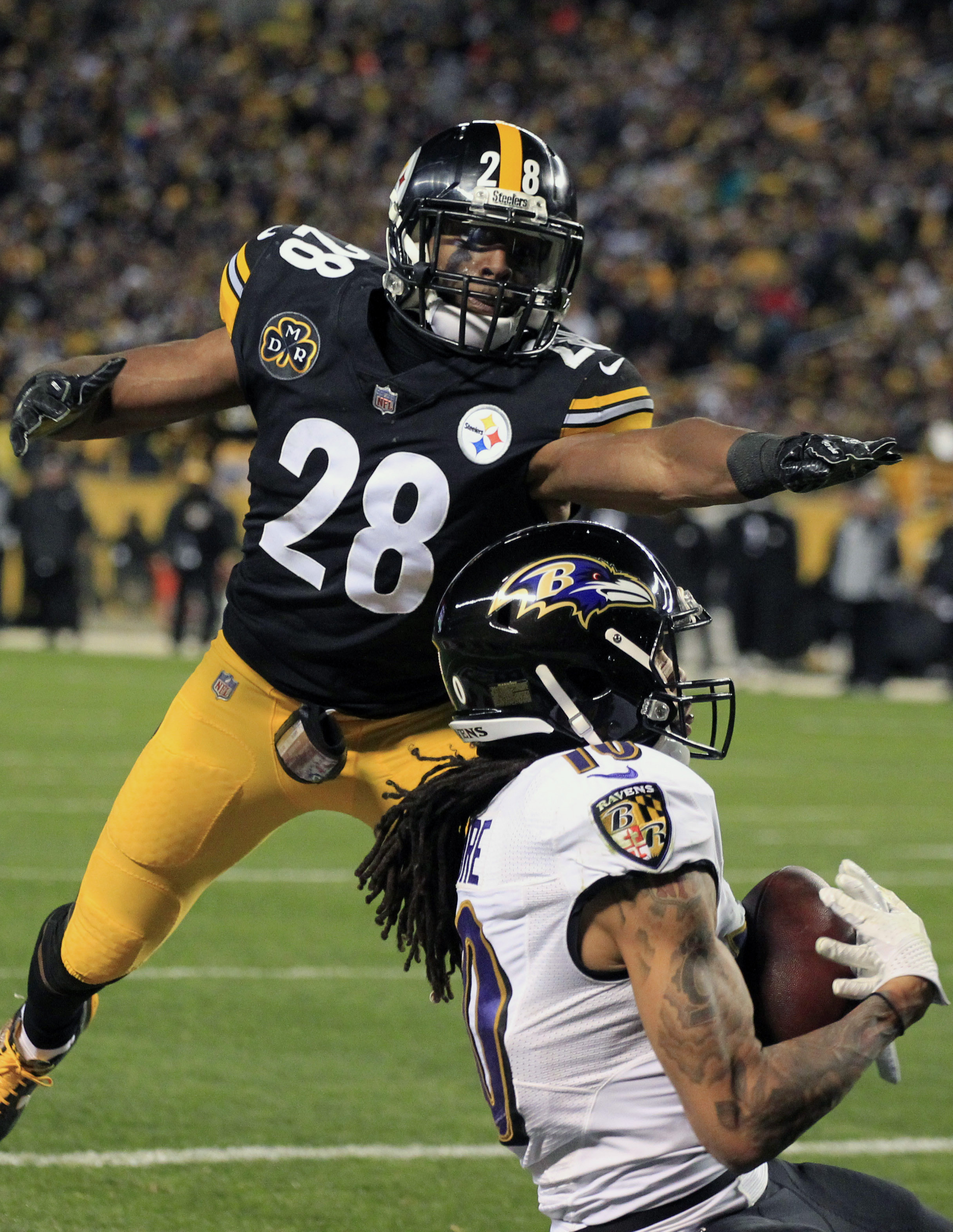
1) Find a way to replace Ryan Shazier: Coming in a nationally televised game, Shazier’s injury provided one of the scariest moments in recent NFL history. The Steelers lost their best linebacker and one of their cornerstone players during a season that saw them boast an NFL-high eight Pro Bowlers. But they still finished behind the Patriots in a high-stakes race for the AFC’s No. 1 seed. The franchise is going to need more help at linebacker, with Shazier facing a more important battle than merely returning to an NFL field.
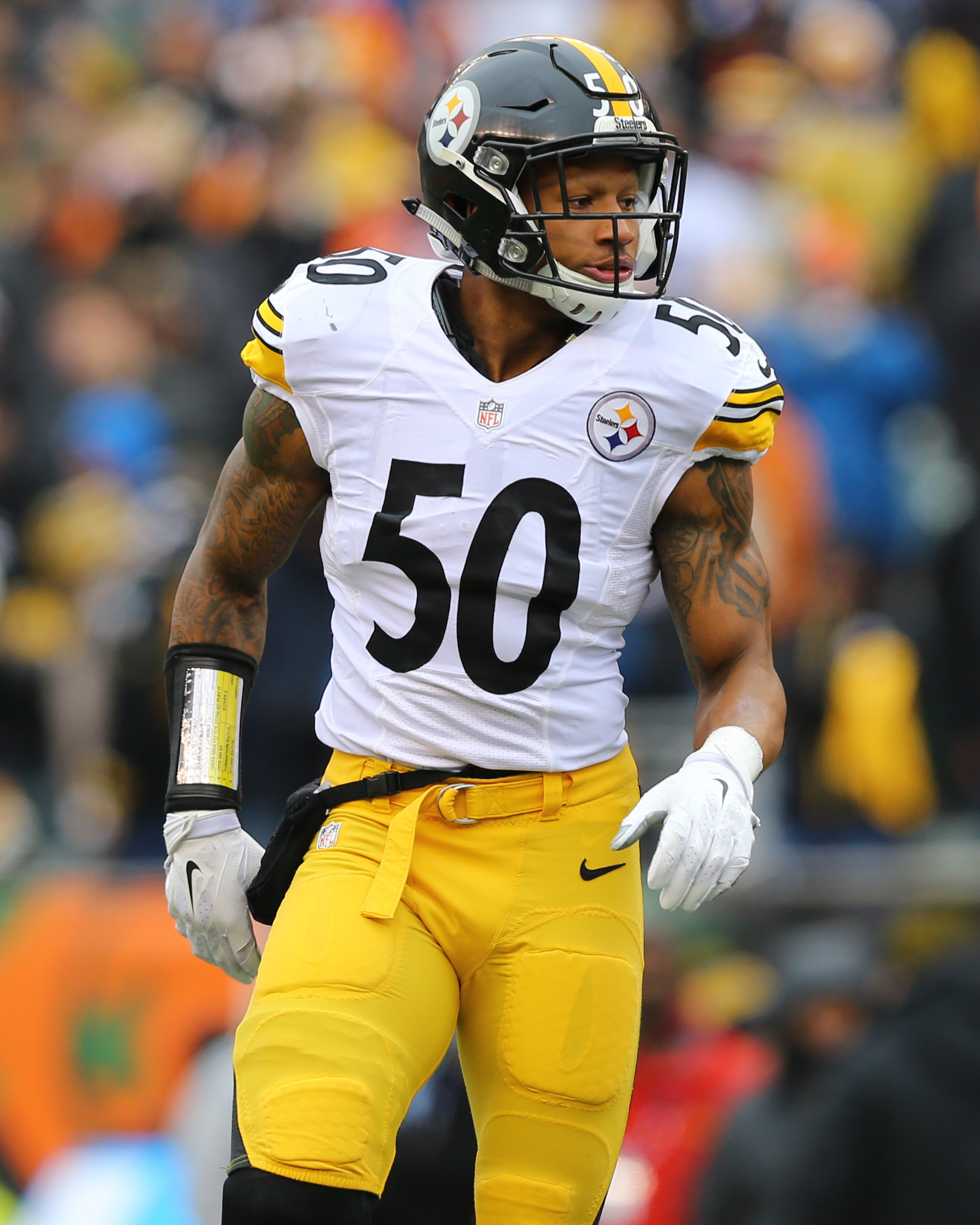 Shazier was a staple in a Heinz Field suite down the stretch for the Steelers, who rallied around their ailing inside linebacker. Shazier’s been released from the hospital and is now walking with assistance, receiving a standing ovation at a Pittsburgh Penguins game after standing up on his own.
These are important strides for the 25-year-old defender, and it looks like he’s making steady progress. But football will probably be a secondary concern at this juncture, with a return presumably not happening in 2018. The Steelers are going to need to find a replacement for one of their best players, with their defense — as evidenced in the Jaguars’ 45-point divisional-round showing — needing far more help than the offense.
From a football perspective, Pittsburgh’s need for linebackers is curious.
The franchise has used a first-round pick on a linebacker in four of the past five drafts, but of those, only Shazier and T.J. Watt have panned out. The jury being out on Bud Dupree entering Year 4 may not make his fifth-year option an open-and-shut decision, and the 2015 first-rounder’s status makes both linebacker spots in need of supplementation. But Dupree will be on the field for the Steelers next season; Shazier probably won’t, illustrating the need for inside help.
Pittsburgh’s run defense caved in without Shazier. Five of the Steelers’ final six opponents surpassed 100 ground yards, the Jags’ 164 damaging the franchise’s hopes of parlaying its first bye in seven years into at least a return to the AFC title game. The Steelers used three of those aforementioned first-round picks on pass-rushing outside players, with only Shazier being brought in to fortify the inside. Vince Williams established himself as a capable starter following Lawrence Timmons‘ departure, but he will need a running mate next season.
The franchise has obviously shown no fear of using high picks on linebackers, but could its recent draft history here induce a rare foray into free agency’s upper echelon? Pittsburgh does not, however, have much cap space — and that’s without Le’Veon Bell on its books.
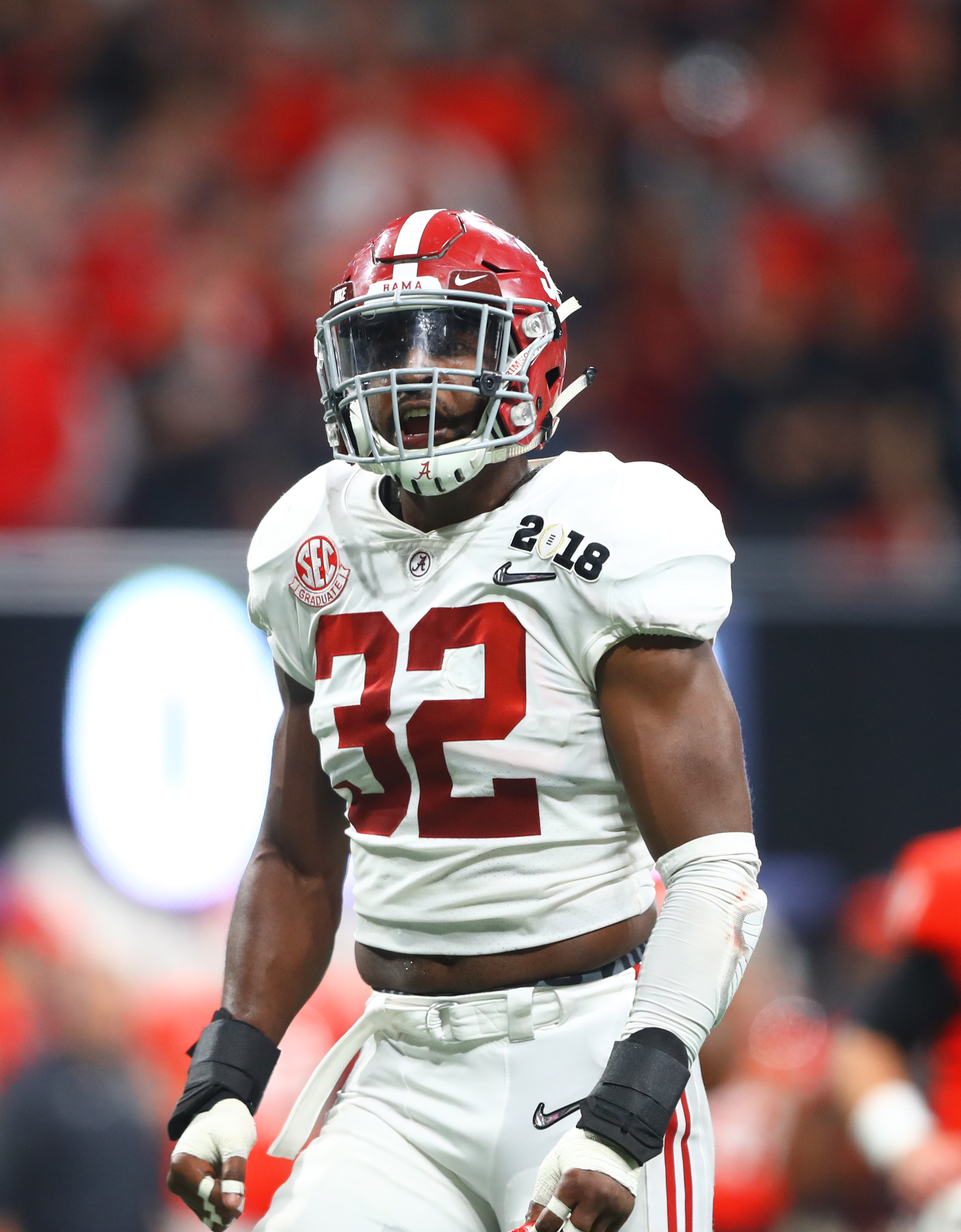
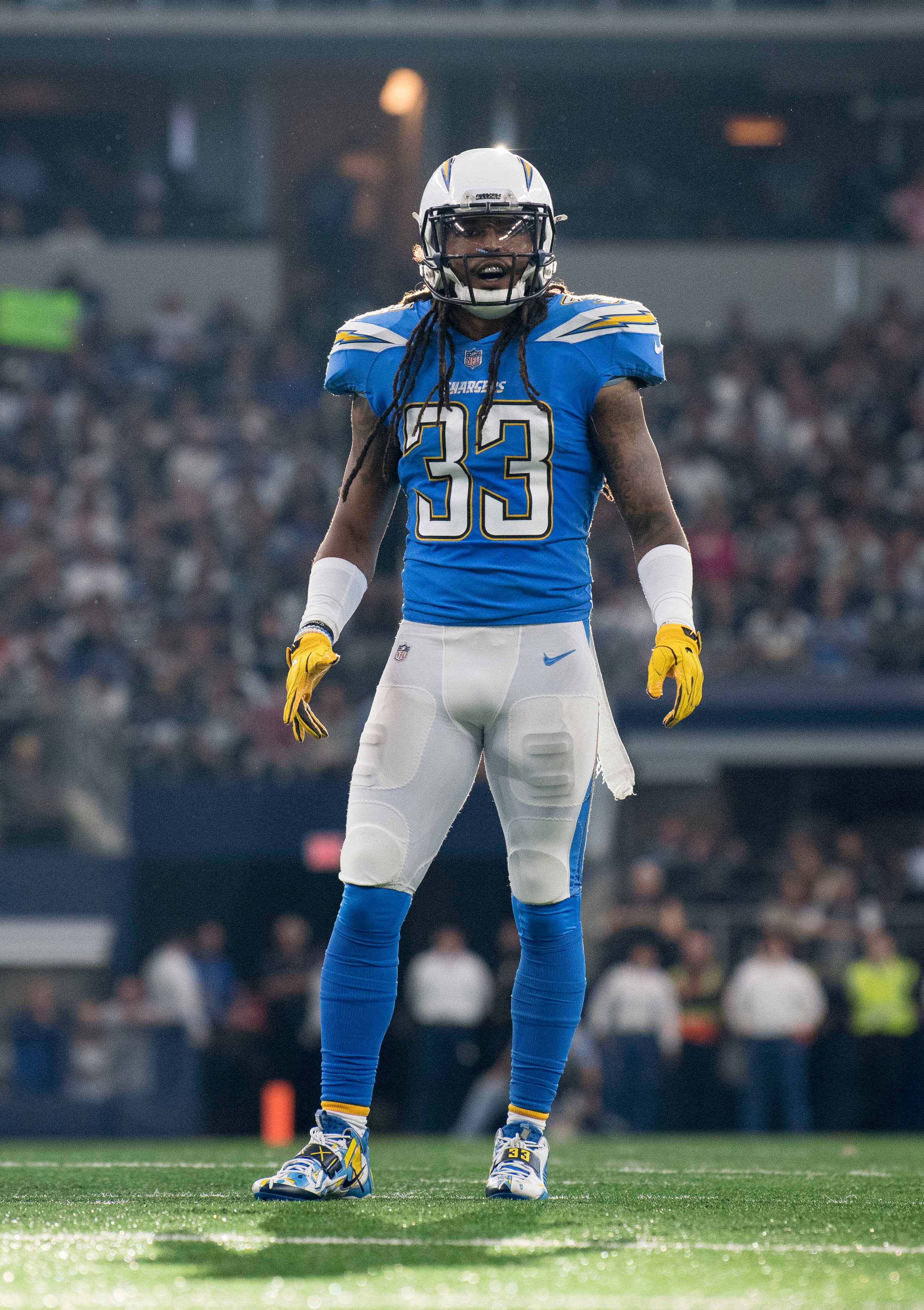
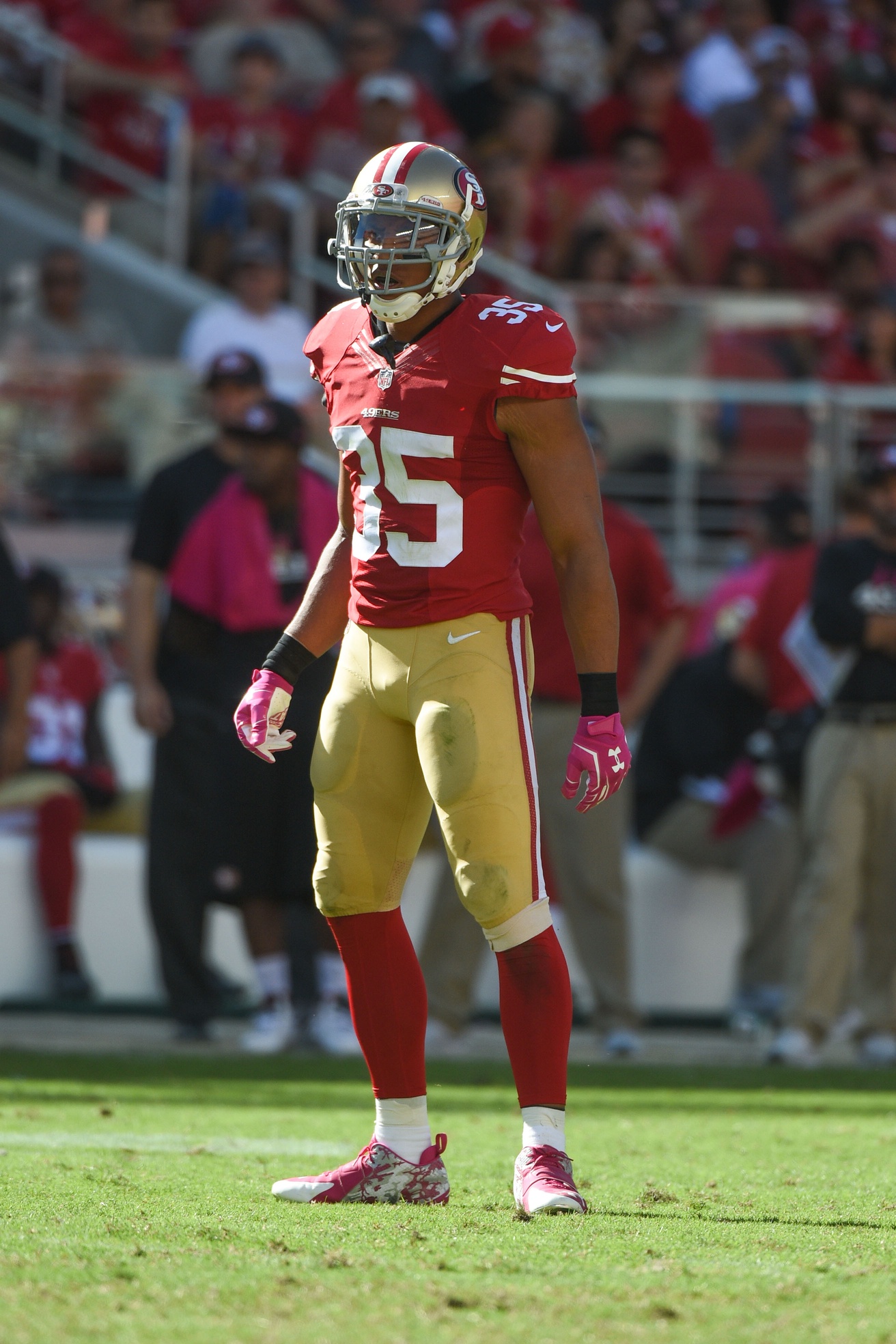
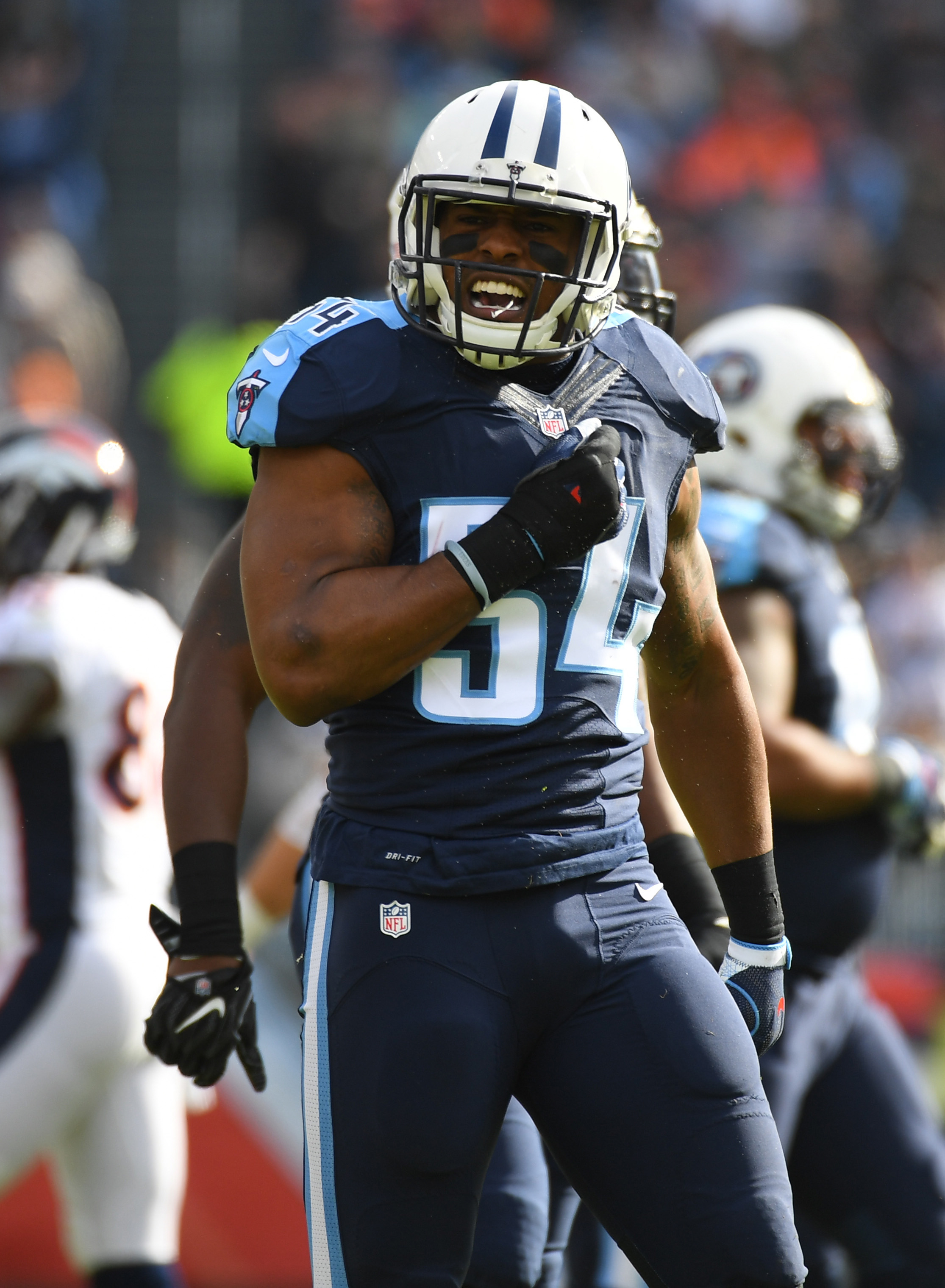 With the Broncos expected to pursue Kirk Cousins and already having plenty of veteran defender deals on their books, Todd Davis seems likely to hit the market like Wesley Woodyard and Danny Trevathan did before him. Davis displayed improvement in his second season as a starter and will be a coveted talent if/once available. However, he graded as a poor coverage ‘backer during his two seasons as a Denver starter.
A four-year starter with the Titans, Avery Williamson will also be a sought-after commodity. The former fifth-round pick graded as Pro Football Focus’ No. 10 non-rush ‘backer last season. He displayed top-flight run-defense last season, it’s likely he will be a well-paid defender come mid-March. Williamson also has 11.5 career sacks despite playing his entire career as a 3-4 inside man.
The Redskins could become the third straight Zach Brown employer to let him reach free agency, a route the Titans initially took in 2016. The sides are already negotiating, however. The Raiders aren’t a lock to retain NaVorro Bowman, although considering their troubles at linebacker in recent years, they will likely make a serious effort to do so before the market opens.
Would the Steelers consider Timmons at a reduced rate? The Dolphins are expected to cut the soon-to-be 32-year-old, free of charge thanks to his September suspension, and PFF rated the longtime Steeler as nearly as good of a coverage player as Williams. Neither is on Shazier’s level, however. He will not be easy to replace.

Raiders Part Ways With Sebastian Janikowski
Sebastian Janikowski‘s 18-year run with the Raiders has come to an end. On Wednesday, the Raiders informed the kicker that he will not be re-signed for the 2018 season, Adam Schefter of ESPN.com tweets. 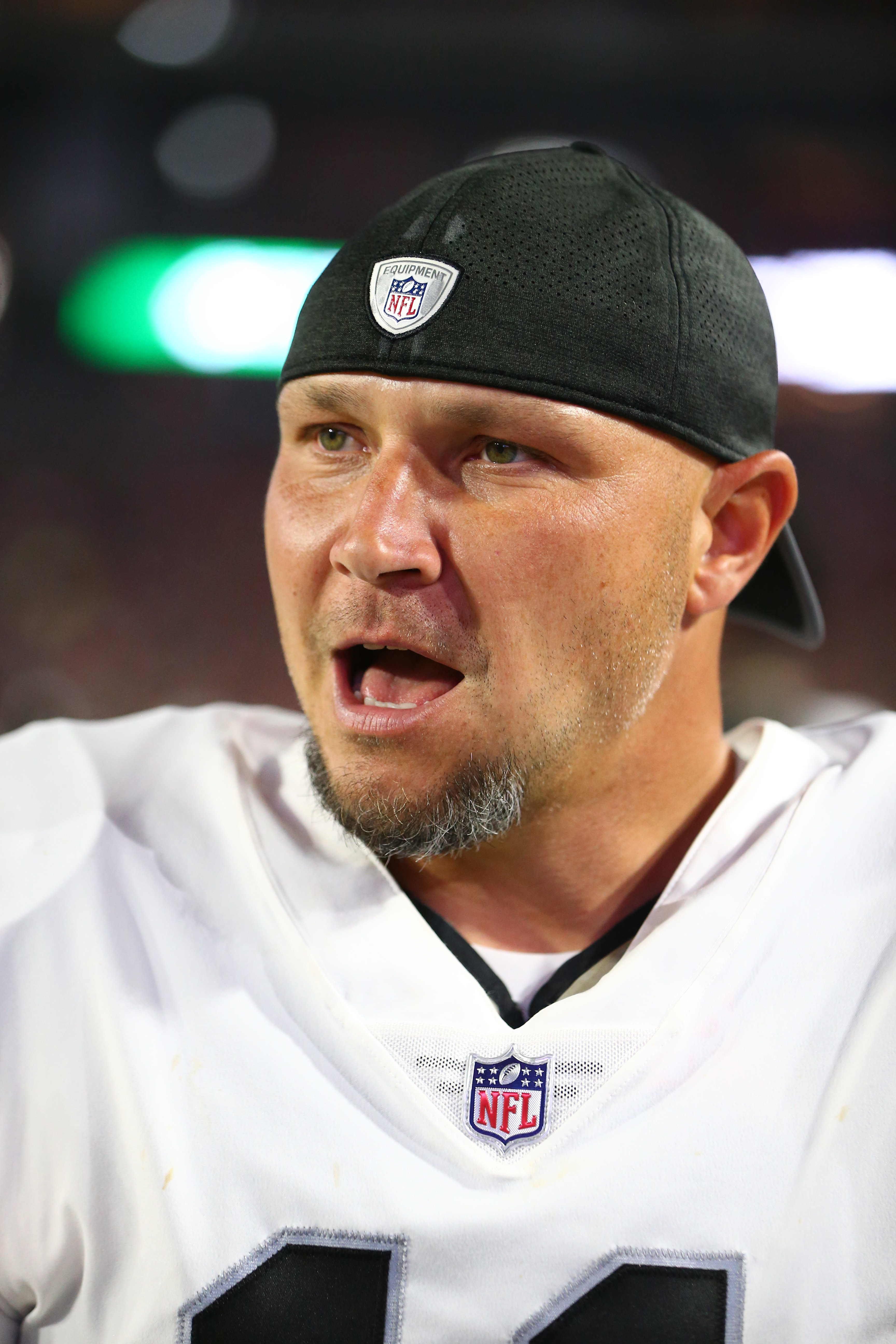
Last offseason, Janikowski initially balked when the Raiders asked him to take a pay cut, and that nearly marked the end of his tenure in Oakland. The kicker eventually acquiesced, but a preseason back injury kept him off of the field for the entire season.
Janikowski’s replacement, Giorgio Tavecchio, may have the inside track on the job, but new coach Jon Gruden could also open up a competition. Last year, the 27-year-old (28 in July), connected on 76.2% of his field goal tries and made 33 of 34 extra point attempts.
Before 2017, the 2000 first-round pick missed four games with the Raiders, and his 268 appearances are the most in franchise history. Despite his long-running history with team, the Raiders clearly had concerns about his age and possible decline. In 2016, Janikowski made 82.9% of his field goals and went 37-of-39 on extra point tries. He has not cleared the 83% mark on field goals since 2014. If not for the timing of the team announcing a move to Las Vegas, Janikowski might have been released before the 2017 season.
Janikowski turns 40 in March, but it seems likely that he’ll want to continue playing.
With Janikowski out of the picture in Oakland, Patriots quarterback Tom Brady stands as the only player from the 2000 NFL draft still with the team that drafted him.