Top 3 Offseason Needs: Atlanta Falcons
In advance of March 14, the start of free agency in the NFL, Pro Football Rumors will detail each team’s three most glaring roster issues. We’ll continue this year’s series with the Atlanta Falcons, who finished with a 10-6 record before being bounced in the Divisional Round of the playoffs.
Depth Chart (via Roster Resource)
Pending Free Agents:
- Ricardo Allen, S (RFA)
- Matt Bryant, K
- Adrian Clayborn, DE
- Derrick Coleman, FB
- Taylor Gabriel, WR
- Ben Garland, OL (RFA)
- Kemal Ishmael, S
- Leon McFadden, CB
- Sharrod Neasman, S (ERFA)
- Austin Pasztor, T
- Dontari Poe, DT
- LaRoy Reynolds, LB
- Andre Roberts, WR
- Ahtyba Rubin, DT
- Jordan Tripp, LB
- Courtney Upshaw, DE
- Terron Ward, RB (RFA)
- Sean Weatherspoon, LB
- Nick Williams, WR (RFA)
- Blidi Wreh-Wilson, CB
Top 10 Cap Hits for 2018:
- Matt Ryan, QB: $21,650,000
- Julio Jones, WR: $12,900,000
- Desmond Trufant, CB: $12,900,000
- Jake Matthews, T: $12,496,000
- Alex Mack, C: $11,050,000
- Robert Alford, CB: $9,600,000
- Andy Levitre, G: $8,375,000
- Mohamed Sanu, WR: $7,400,000
- Ryan Schraeder, T: $6,500,000
- Derrick Shelby, DE: $5,750,000
Other:
- Projected cap space (via Over the Cap): $12,035,622
- 26th pick in draft
- Must exercise or decline 2019 fifth-year option for DE Vic Beasley
Three Needs:
1) Bring in at least one starting guard: The problem with boasting a solid core on both sides of the ball is that cap space gets eaten up quickly. The Falcons project to only have ~$12MM in available salary cap room this offseason, and even if the club makes a few predictable cuts, it’s difficult to see their funds rising much above $20MM. But with the small amount of cap space that Atlanta does possess, it should target a clear upgrade on the interior of its offensive line.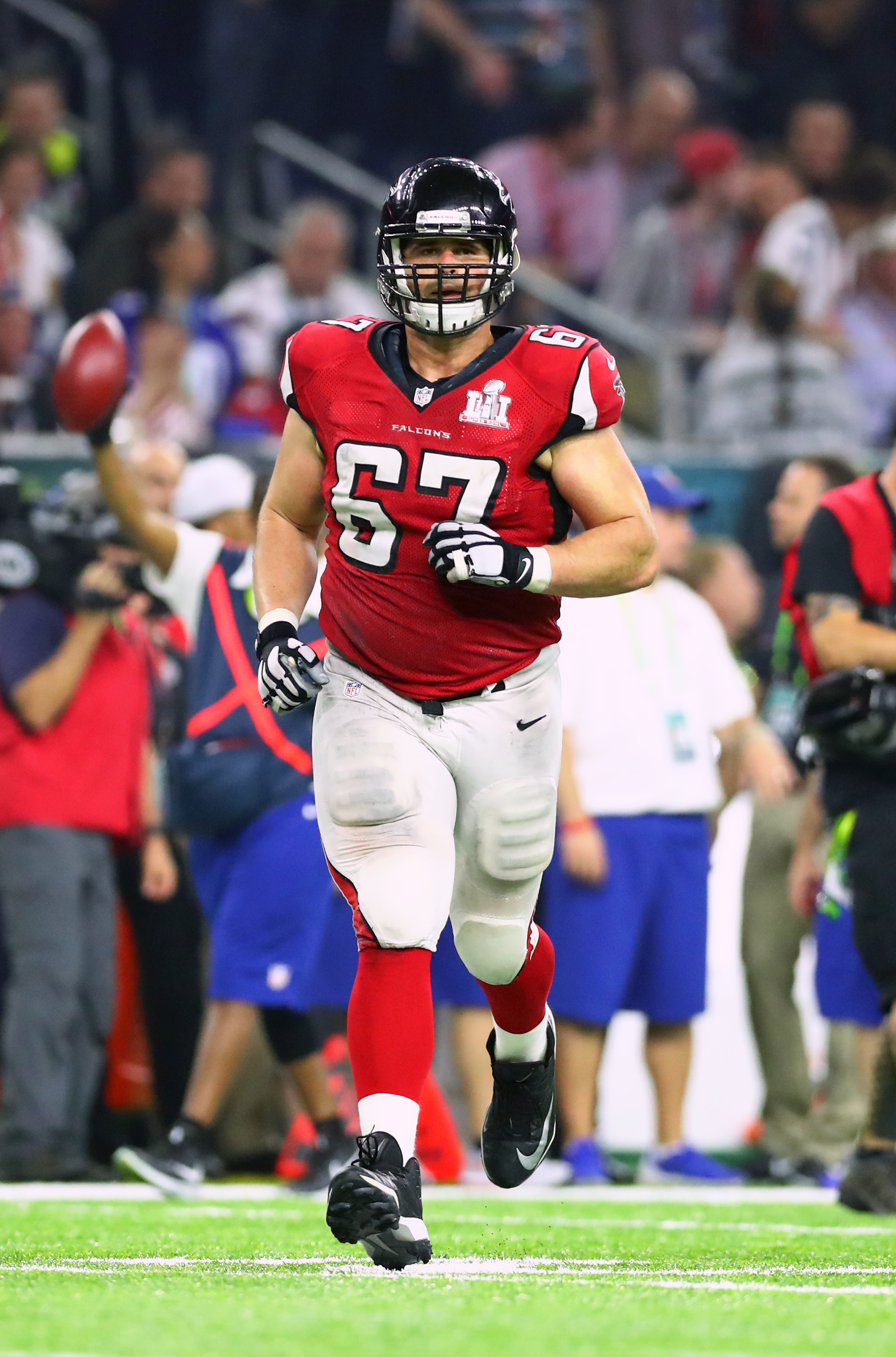
The Falcons could potentially need two new guards to play alongside All-Pro center Alex Mack, depending on what they do with incumbent left guard Andy Levitre. Acquired from the Titans prior to the 2015 season, Levitre has been a solid starter in Atlanta, but he’s coming off a relatively down campaign that ended with a trip to injured reserve. The Falcons can create $7MM in cap savings by releasing Levitre this offseason, but they could also approach the 31-year-old about a contract restructure that reduces his cap charge and keeps him on the roster.
At right guard, 2016 sixth-round pick Wes Schweitzer played nearly offensive snap for the Falcons, but graded as just the No. 54 guard among 77 qualifiers, per Pro Football Focus, which assigned Schweitzer poor marks in both the run and pass game. The majority of writers at The Falcoholic — SB Nation’s excellent Falcons blog — don’t believe Schweitzer will return as a starting guard in 2018, but Atlanta does have other possible solutions on its roster. 2017 fourth-rounder Sean Harlow could be in for an increased role, as could Ty Sambrailo, whom the Falcons acquired from the Broncos last September.
While Atlanta would surely love to poach Andrew Norwell from the division rival Panthers, the club won’t be able to afford a guard that is expected to reset the positional market. However, given that the Falcons are certainly in win-now mode, the perfect guard fit may have just become available: Josh Sitton will now become a free agent when the market opens on March 14 after the Bears declined his $8MM option for 2018. Sitton will be 32 years old when next season gets underway, but that shouldn’t scare Atlanta, which is squarely in its contention window and won’t be adverse to inking a veteran player to a multi-year deal. A two-year, backloaded pact that allows Sitton to collect that $8MM he won’t be earning from Chicago could make sense for both sides.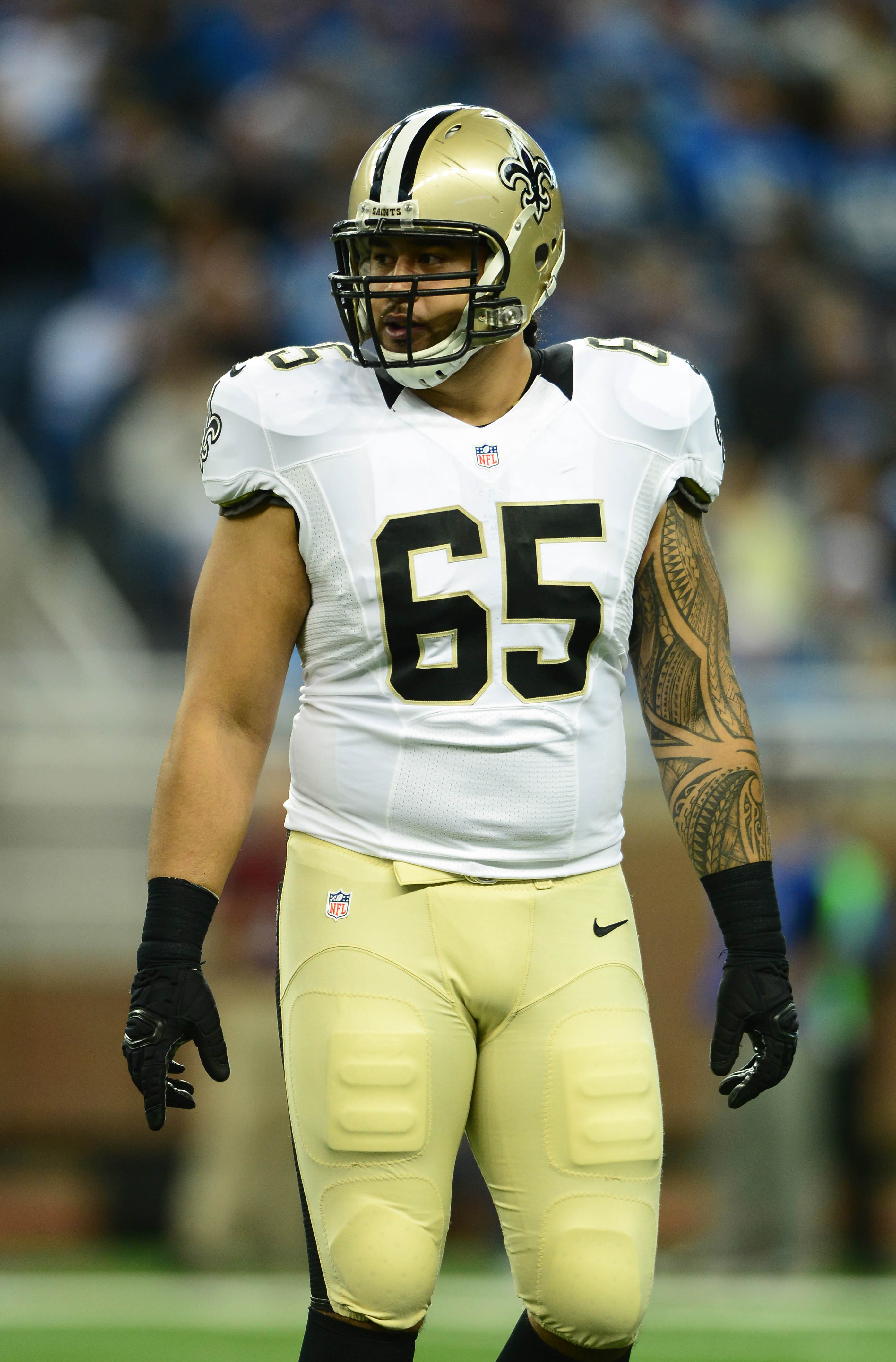
If Sitton lands elsewhere, the Falcons should still have their pick of veteran guards, and the sheer volume of available experienced players at the position could potentially reduce prices overall. The Saints’ Senio Kelemete has proven himself all over the offensive line, and would offer Atlanta positional versatility at positions beyond guard. Zach Fulton (Chiefs) is only 26 years old and offers 46 starts worth of experience. Alex Boone, Spencer Long, Matt Slauson, Brandon Fusco, Jahri Evans, Josh Kline…the Falcons’ primary weakness has a ton of free agent panaceas, so the club shouldn’t struggle to find a resolution.
A draft selection is also on the table for the Falcons, but keep in mind that general manager Thomas Dimitroff has only selected one interior offensive linemen — Peter Konz in 2012 — prior to the third round. Atlanta either doesn’t value the guard position very highly, or believes it can find competent options later in the draft. Perhaps the Falcons take a shot on Texas’ Connor Williams (who many teams are viewing as a guard) if he slips to the bottom of the first round, but they’ll probably look to find a mid-round gem instead. Wyatt Teller (Virginia Tech), Sean Welsh (Iowa), and Skyler Phillips (Idaho State) are among the collegiate players who could be available at the beginning of Day 3, per Dane Brugler and Rob Rang of NFLDraftScout.com.
2) Reorganize the defensive line: Only eight 4-3 defensive tackles saw at least 70% playtime in 2017, and the Falcons boasted two of them in Grady Jarrett and Dontari Poe. Jarrett is one of the better interior defenders in the NFL and is now eligible for an extension, but Poe is scheduled to hit free agency in March. While Atlanta could pursue an extension with Poe in the coming weeks, it might be worthwhile to allow the 27-year-old to reach the open market and assess his value before re-opening talks.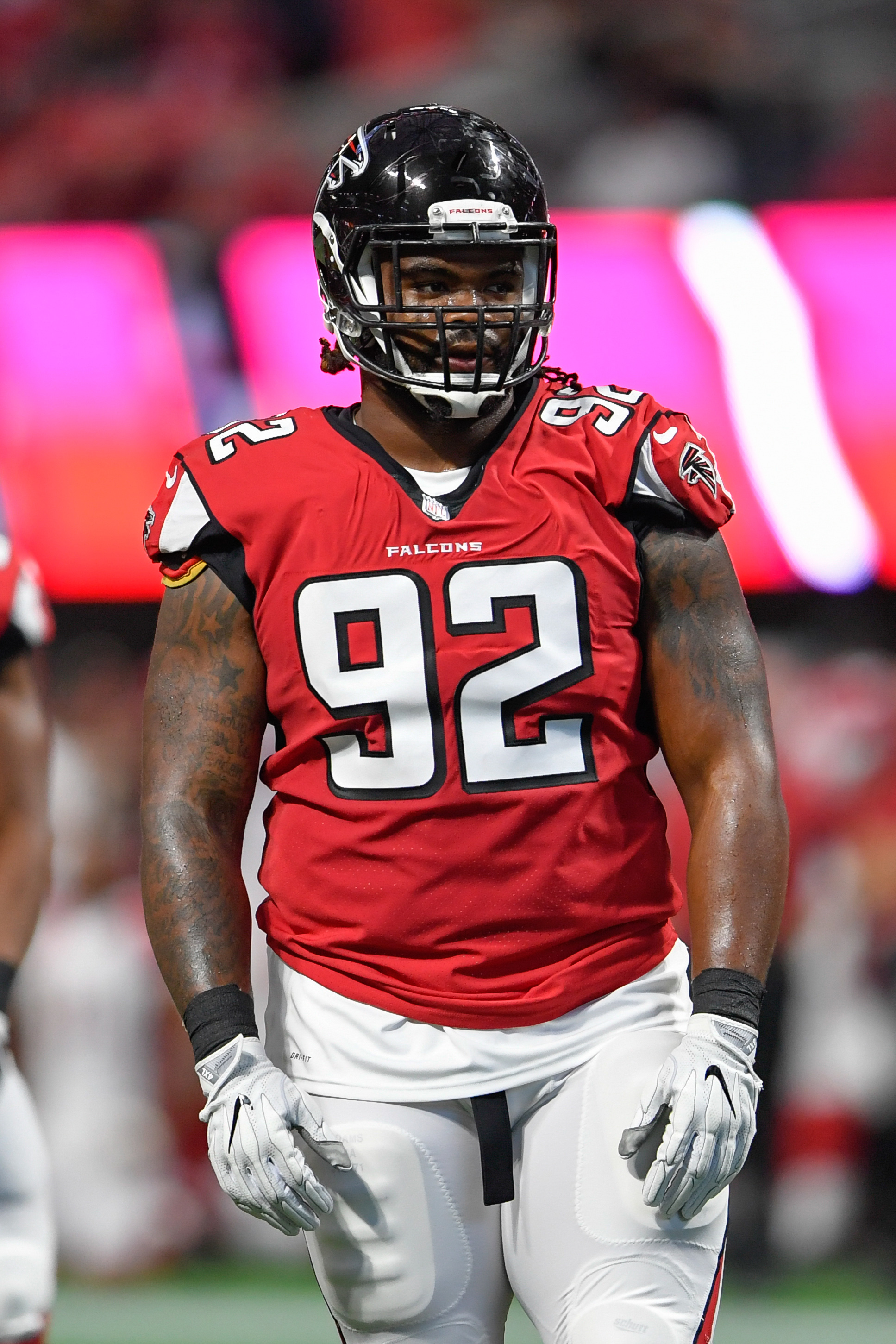
Poe was one of the top defensive tackles available in 2017, but even after garnering interest from multiple clubs around the league, he was forced to settle for a one-year, $8MM deal. Now that he’s now a year older and has nearly 800 more snaps worth of wear, will teams now be willing to commit to Poe for the long term? Poe will likely be targeting something in the Johnathan Hankins range (three years, $27MM, with $10MM in guarantees), but it’s possible he’s not able to reach that payday. The Falcons should hold off on re-signing Poe in the hopes that his price comes down as a result of a weak market.
If Poe is not retained, Atlanta will likely use an early round draft pick on a new defensive tackle. Josh Norris of Rotoworld and Albert Breer of TheMMQB.com had the same idea in their most recent mock drafts, as both sent Florida’s Taven Bryan to the Falcons at pick No. 26. Lance Zierlein of NFL.com provides the best prospect profiles around, and he says the 6″4, 290-pound Bryan “flashes disruptive potential that is waiting to be fully cultivated” but notes the ex-Gator’s “below-average power and contact balance.” The 2018 draft class offers a good number of interior options, so perhaps Vita Vea (Stanford), Da’Ron Payne (Alabama), Harrison Phillips (Stanford), or Maurice Hurst (Michigan) could fall to the end of the first round.Read more
Top 3 Offseason Needs: Cleveland Browns
In advance of March 14, the start of free agency in the NFL, Pro Football Rumors will detail each team’s three most glaring roster issues. We’ll continue this year’s series with the Cleveland Browns, who have established the NFL futility standard by being just 1-31 over the past two seasons. There are many areas in need of upgrades for a franchise that went 0-16 last season, but one obviously dwarfs the rest.
Depth Chart (via Roster Resource)
Pending Free Agents:
- Isaiah Crowell, RB
- Josh Gordon, WR (ERFA)
- Tank Carder, LB
- Lavar Edwards, DE
- Marcus Martin, LG
- Jamie Meder, DT (RFA)
- Josh Keyes, LB (RFA)
- Bryce Treggs, WR
- Chris Barker, G (ERFA)
- Matt Hazel, WR (ERFA)
- Austin Reiter, C (ERFA)
- Kevin Hogan, QB (ERFA)
- Dan Vitale, FB (ERFA)
- B.W. Webb, CB
Top 10 Cap Hits for 2018:
- Joe Thomas, T: $14,250,000
- Kevin Zeitler, G: $12,400,000
- Jamie Collins, LB: $12,400,000
- Myles Garrett, DE: $6,911,876
- J.C. Tretter, C: $6,250,000
- Christian Kirksey, LB: $6,200,000
- Joel Bitonio, G: $6,000,000
- Jamar Taylor, CB: $5,275,000
- Kenny Britt, WR: $4,875,000 (dead money)
- Danny Shelton, DT: $3,723,895
Other:
- Projected cap space (via Over the Cap): $110,849,880
- First and fourth picks in draft
- Must exercise or decline 2019 fifth-year option for DT Danny Shelton
Three Needs:
1) End a complex QB search with a franchise player: Browns fans know the list of failed quarterback investments by now that there’s no point in rehashing them. But the Sashi Brown-era decisions to trade out of the Carson Wentz and Deshaun Watson draft slots did not bode well for the organization. It has a chance to rectify those missteps in April, but the decision won’t be easy.
Unlike past years that featured No. 1-selecting teams making choices between two players — Jared Goff-over-Wentz (2016), Jameis Winston-over-Marcus Mariota (2015), Andrew Luck-over-Robert Griffin III (2012) — the Browns could possibly have four passers on their radar at No. 1. No draft has featured three QBs go in the top five since 1999, which is unique symmetry considering the Browns’ Tim Couch decision set their rebooted franchise on this course.
 The Browns are expected to decide between Josh Rosen, Josh Allen, Sam Darnold and Baker Mayfield at No. 1. But the franchise is sending some mixed messages about its plans at American sports’ premier position.
Cleveland attempted to unload one of its three second-round picks for Alex Smith, who almost certainly would have been good enough to keep whomever the team selects at No. 1 on the bench throughout the 2018 season. Is that how a franchise that went 0-16 last season and 2-43 in its past 45 games should be operating? Now with A.J. McCarron on the UFA radar, might the Browns be considering him again after being willing to fork over two Day 2 picks for him at the trade deadline?
A bridge quarterback could make sense here. If the Browns go with ESPN draft guru Mel Kiper Jr.’s choice and pick Allen, who is considered raw but a player potentially possessing the highest upside of the ’18 passer crop, they would probably need a veteran to take the snaps while the Wyoming prodigy learns. The same could be said for Darnold or Mayfield, with Rosen being viewed as the readiest pro prospect of this quartet. But the Browns approaching this QB market like they need a multiyear starter doesn’t seem logical.
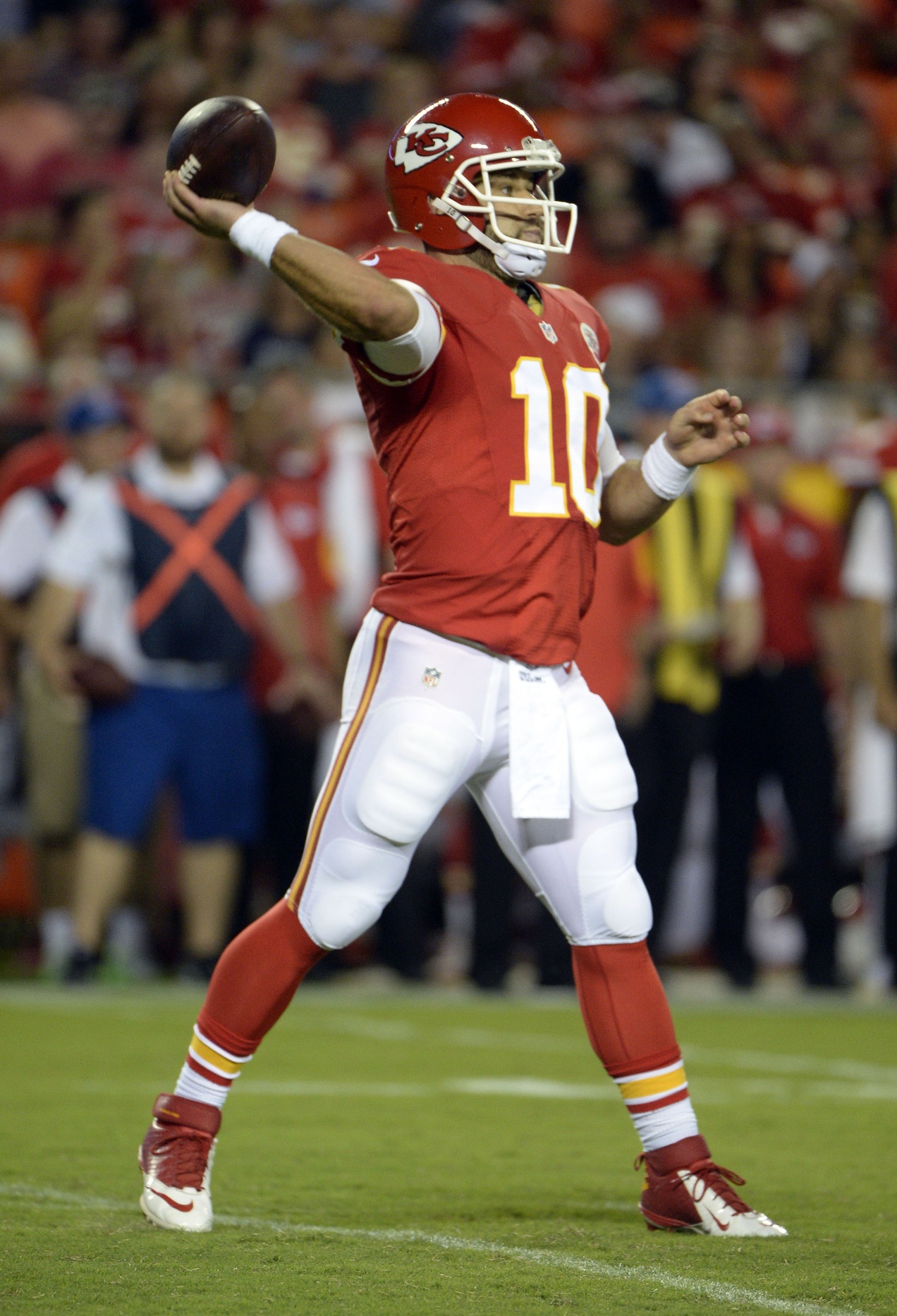 The Browns’ insane amount of cap space would put them in position to outgun any Kirk Cousins suitor, but that doesn’t really make much sense given Cousins’ preferences and the team’s trajectory. Even a deal for McCarron, who could be viewed by some as a Cousins backup plan, may be too steep for this franchise’s purposes. If the Browns do go after a starter-level veteran as Hue Jackson has said he may want (possibly to increase his chances at keeping the HC job beyond next season?), it should be a player whose market did not meet expectations. Injury-risk Vikings Sam Bradford or Teddy Bridgewater come to mind here.
For their short-term mentor type, it would make sense for the Browns to target a veteran with experience but someone who doesn’t profile as a multiyear starter. It’s difficult to envision, barring an over-the-top offer, a starter-level UFA choosing the Browns over a comparable proposal from another team. But high-level backup types like Chase Daniel — a John Dorsey addition while he was in Kansas City and Smith’s backup for three years — or Matt Moore would make sense. An agreement with a nearing-retirement player like Ryan Fitzpatrick or a reunion with Josh McCown, would make more sense as a groomer for the No. 1 pick-to-be.
None of these options are as exciting as Cousins or even McCarron. But if the team is going to pick a quarterback at No. 1, over-investing here to help only the 2018 team seems short-sighted, as the 2017 Bears’ plan showed.
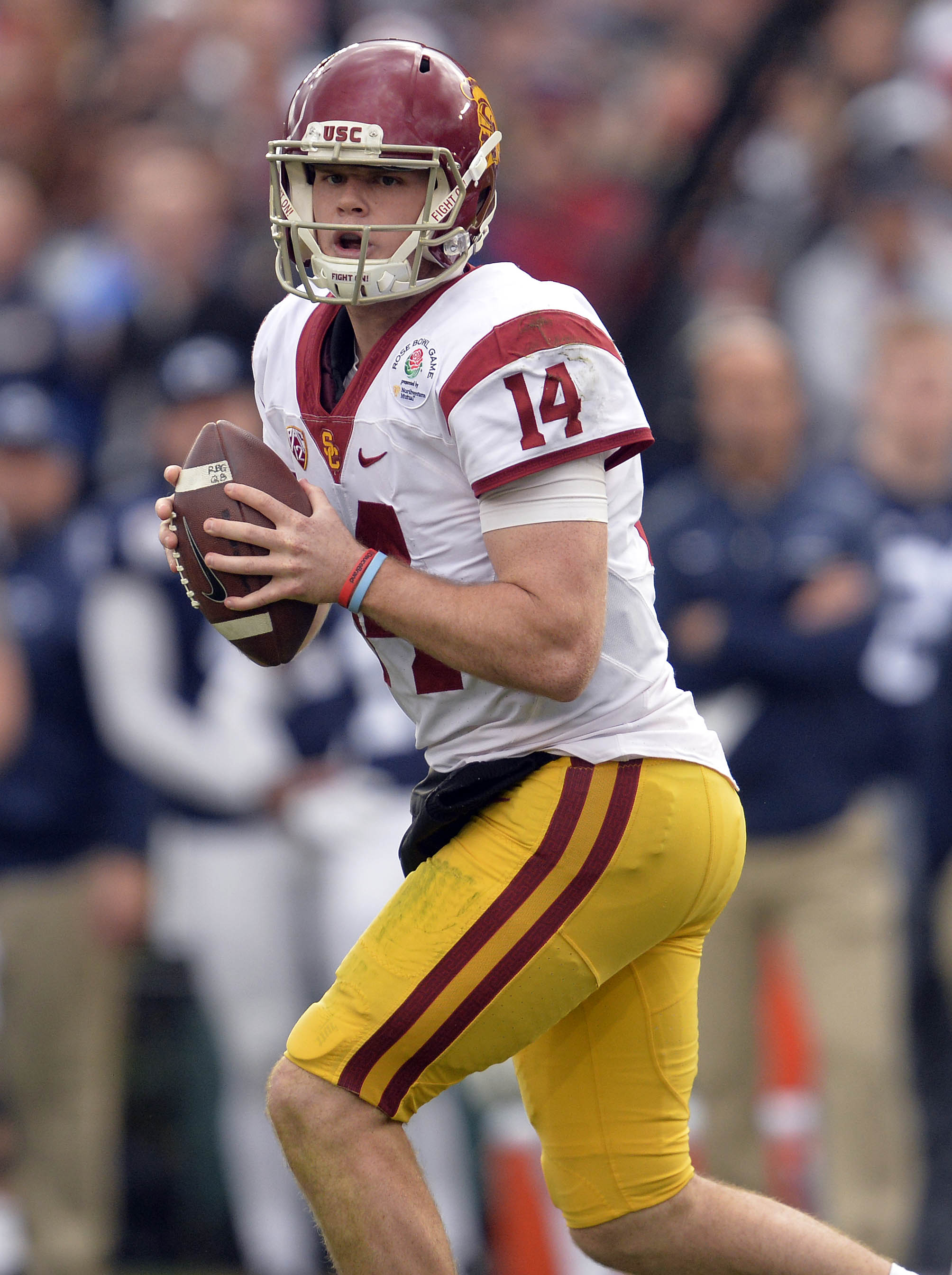 Since the sports media landscape has expanded significantly since the Couch/Donovan McNabb/Akili Smith trio went Nos. 1-3 in 1999, the next two-plus months should be flooded with headlines involving Darnold, Rosen, Allen and Mayfield. As of now, not much appears to be separating these passers, making the Browns’ decision all the more interesting. After misfiring on Brady Quinn, Brandon Weeden and Johnny Manziel, Cleveland will face pressure to get this one right.
Darnold’s been mentioned as a Browns pick, with Yahoo.com’s Charles Robinson reporting multiple evaluators believe it will be a Darnold-or-Mayfield decision by late April. The USC product left two college seasons on the table to leave but has been deemed a candidate for the No. 1 overall pick since his redshirt-freshman campaign. He’s viewed as a better athlete than Rosen but a player whose delivery might need some ironing out before becoming a starting professional passer.
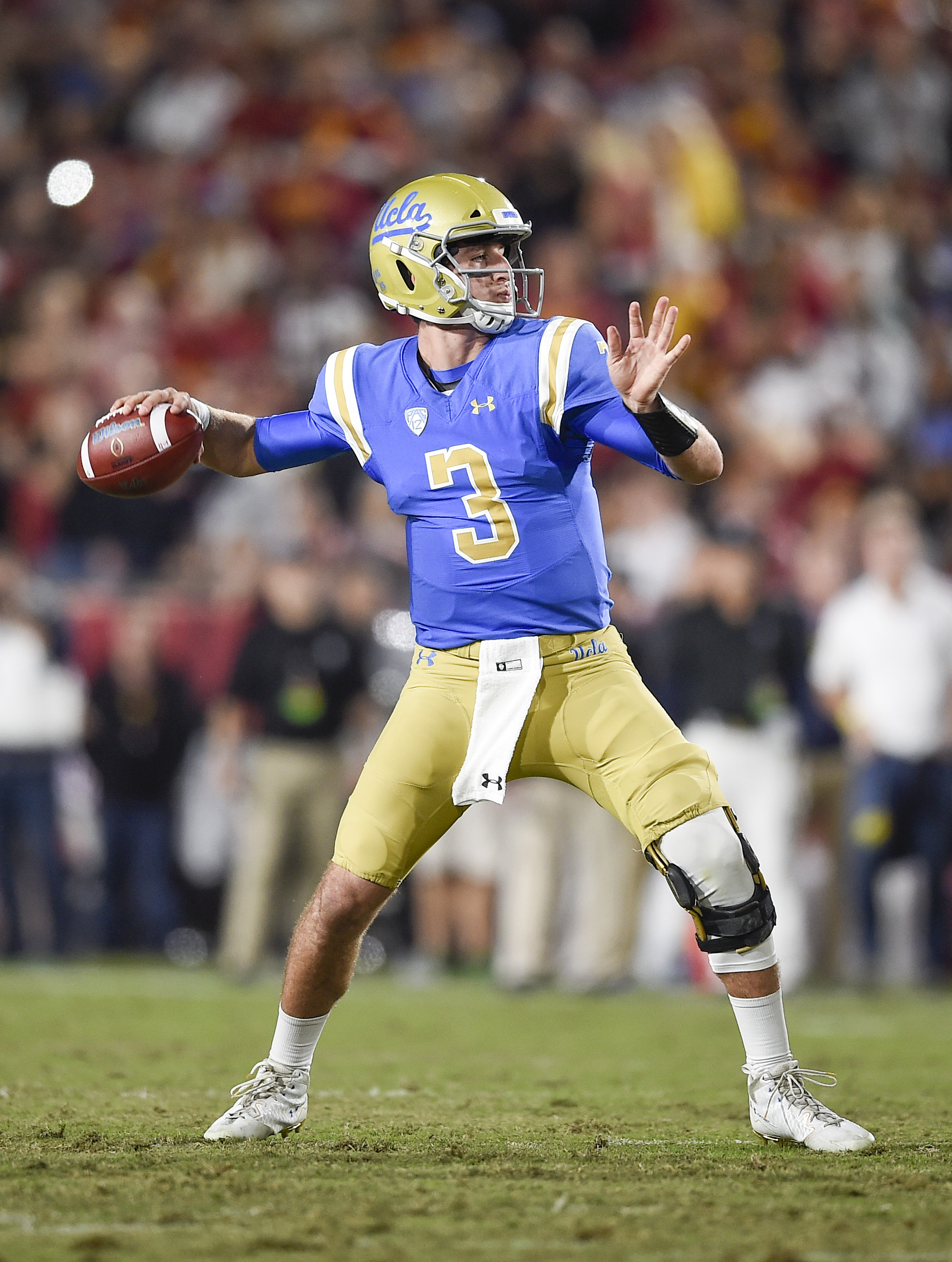 Rosen may be the safest pick from a pure passing standpoint, but the outspoken former UCLA centerpiece hasn’t made a secret of the fact Cleveland might not be the best place for him. And his interviews and visits may be critical leading up to the draft. But the polished signal-caller would probably be the least likely of these quarterbacks to require a bridge passer, and with Jackson wanting to have such a setup in place, maybe the Browns do opt for one of the others over the outspoken signal-caller. However, the longtime offensive coach has been reportedly enamored with the ex-Bruin. Again, it’s too early in the process to make a prediction here.
A high-level personnel executive — one that said in early 2016 the Browns would be set for 15 years if they took Wentz — told cleveland.com’s Mary Kay Cabot that Allen-to-Cleveland would be the most likely scenario unfolding. Allen has been compared to Wentz and Ben Roethlisberger, and the high-ceiling/possibly low-floor talent will obviously be a player to monitor here as the workout season commences.
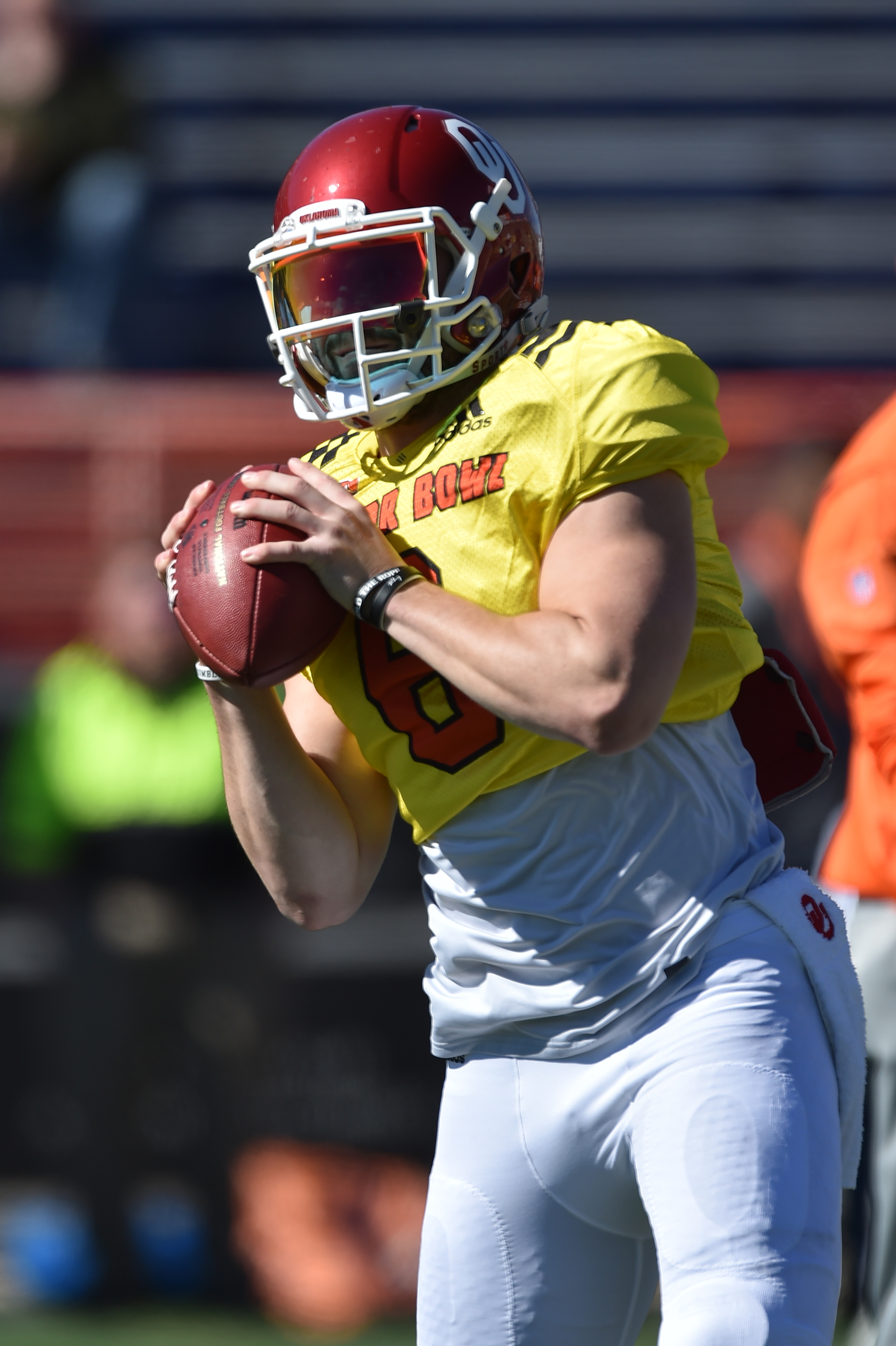 Mayfield’s path may be the most interesting. The most accomplished college quarterback of this group, the Heisman Trophy winner has turned off some execs with his attitude and drawn Manziel comparisons from scouts and execs. He also is seen as more of a developmental player and one whose 6-foot stature could steer Dorsey and Jackson elsewhere.
2018 NFL Franchise Tag Candidates
Starting today, NFL teams will be able to place franchise and transition tags on potential free agents for the first time. While the window for franchise tags is open, most clubs won’t actually tag any players right away.
As our list of important dates for the 2018 offseason shows, the deadline for teams to assign those tags doesn’t come until Tuesday, March 6. Usually, when it comes to NFL contract discussions, deadlines spur action, so teams will wait until that deadline approaches to officially use franchise tags, once it becomes clear that they won’t be able to strike a longer-term deal yet with their respective free-agents-to-be.
Even though the action might not heat up for a couple more weeks, it’s worth taking a closer look at what to expect during 2018’s franchise tag period. The NFL hasn’t officially announced the salary cap figure for 2017, but OverTheCap.com recently projected the 2018 franchise tag salaries based on a presumed $178MM cap. Here are the expected non-exclusive franchise tag amounts:
- Quarterback: $23.09MM
- Running back: $11.72MM
- Wide receiver: $16.23MM
- Tight end: $10.36MM
- Offensive line: $14.54MM
- Defensive end: $17.52MM
- Defensive tackle: $14.53MM
- Linebacker: $15.47MM
- Cornerback: $14.88MM
- Safety: $11.08MM
- Punter/kicker: $5.06MM
(For a refresher on the characteristics of the exclusive and non-exclusive franchise tags, as well as the transition tag, be sure to check out PFR’s glossary entry on the subject.)
Here’s our look at the most likely candidates to be tagged, along with several more outside possibilities:
Virtual Locks:
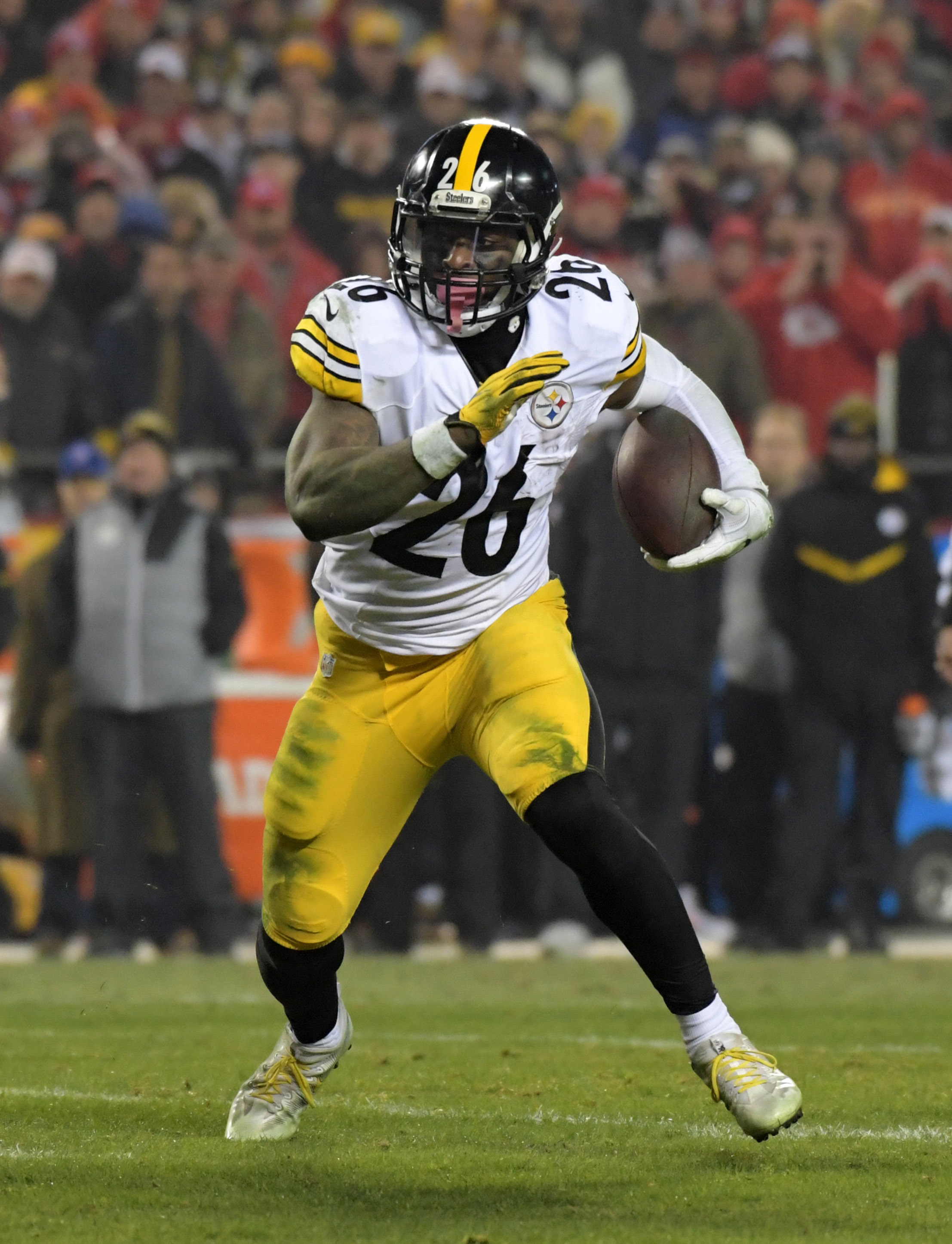
- Le’Veon Bell, RB, Steelers: Last offseason, things got pretty weird between the Steelers and Bell. Just before the deadline to extend franchise tagged players, the Steelers believed that they had agreed on a five-year offer worth roughly $60MM. Ultimately, Bell backed out because he did not find the guarantees and cash flow to be to his liking. Soon after, friend and former teammate Ike Taylor said that Bell wanted a contract that reflects his performance as both a No. 1 back and a No. 2 receiver – something in the neighborhood of $15MM per year.
 This year, Bell topped his 75 catch total with 85 grabs, so one has to imagine that his position hasn’t changed. Despite some retirement threats in January, Bell has indicated that talks are going better this time around. Here’s where things get interesting – the Steelers say that today (Feb. 20) is the “deadline” for a long-term deal to get signed. If not, they’ll go ahead and franchise tag him for a second consecutive season, leaving Bell with a one-year, $14.5MM pact when factoring in the 20% increase. Will Bell buckle and sign a deal that isn’t quite to his satisfaction? In theory, the running back could abstain from offseason activities and even reboot retirement talk in an effort to get the Steelers to cave and abide by the real extension deadline on July 16.
 - Demarcus Lawrence, DE, Cowboys: It has already been reported that the Cowboys will go ahead and tag Lawrence to prevent him from reaching free agency. Once that happens, you can expect the cash-strapped Cowboys to get to work on an extension that will smooth out the $17.5MM cap hit for defensive ends. There won’t be much drama as to whether the Cowboys will or won’t tag Lawrence, but the subsequent multi-year negotiations will be interesting to watch. Lawrence had a rocky first three seasons in the NFL, but he stepped up big in his contract year with 14.5 sacks. The Cowboys must be willing to pay Lawrence like a top DE, but they may insist on protections like an easy escape hatch or heavy roster bonuses in the event that he is injured or suspended.
Strong Candidates:
- Sammy Watkins, WR, Rams: As our own Micah Powell explained on Sunday, Watkins is a candidate for the tag with mutual interest on both sides in continuing their union. Committing major dollars to Watkins is dicey, however, given his injury history and his somewhat disappointing stat line in 2017. If the Rams let Watkins hit the open market, they’ll risk losing him to other teams with more wiggle room under the salary cap. In the land of the blind, the one-eyed man is king. And in a weak crop of free agent wide receivers, Watkins could clean up and leave the Rams without an obvious replacement.
- Allen Robinson, WR, Jaguars: Tagging Watkins will be a tough call for the Rams and the Jaguars have a similarly difficult decision to make when it comes to Robinson. Robinson played only three snaps in 2017 before going down with a torn ACL and he didn’t set the world on fire in 2016. However, his 2015 performance – 80 catches, 1,400 yards, and a league-leading 14 touchdowns – makes it hard for Jacksonville to let him walk. In theory, the Jaguars could re-sign fellow free agent Marqise Lee and let Robinson go, but Robinson is clearly the more talented of the two and one could argue that Lee’s late-season emergence was fueled by advantageous matchups. It’ll be pricey, but the Jaguars are suddenly in position to win and they can’t afford to let one of their best weapons bolt.
Toss Up:
- Kyle Fuller, CB, Bears: Frankly, I’m conflicted on this one. I’m sure Bears GM Ryan Pace can relate. Fuller turned in a strong rookie campaign and an excellent contract year, but he was a victim of the sophomore jinx and an unfortunate knee injury which cost him his entire season as an NFL junior. Jason La Canfora of CBSSports.com hears that Fuller will not be with the Bears this year. But, considering that Fuller graded out as Pro Football Focus’ No. 22 ranked cornerback and the position is already a major area of need for the team, the Bears have to at least think about tagging him for $14.88MM.
- Ezekiel Ansah, DE, Lions: Ansah has performed pretty well over the last two seasons, despite playing through some serious pain. The Lions probably aren’t thrilled about extending a one-year, $17.5MM tender to Ansah, but pressure generating edge rushers like him are at a premium. Consider this: Ansah tallied 12 sacks last year despite knee, ankle, and back ailments. Only seven players topped that total: Chandler Jones, Calais Campbell, DeMarcus Lawrence, Everson Griffen, Cam Jordan, Ryan Kerrigan, and Joey Bosa.
- Case Keenum, QB, Vikings: Is one year as an elite quarterback enough to justify the franchise tag? Maybe, but the Vikings have options at their disposal, including two other pending free agents already on the roster. If the Vikings can’t retain Keenum or Bradford or Bridgewater with a reasonable multi-year deal between now and free agency, they can use their mountain of cap space to get involved in the Cousins sweepstakes.
- Sheldon Richardson, DT, Seahawks: The Jets had both Richardson and Muhammad Wilkerson under contract, but they could only afford to pay one of the two defensive linemen. Clearly, they chose wrong. For all of the headaches that Richardson gave the team, the five-year, $86MM deal given to Wilkerson wound up being a monumental mistake and will continue to be an albatross for the Jets even after they cut him this offseason. The Seahawks gave up a second-round choice and wide receiver Jermaine Kearse to get Richardson – will they make the same mistake and let him get away? Perhaps not, but it would also be a major gamble to tag him at $14.5MM with limited cap space and other holes to address. The best course of action here may be to try and work out a fresh deal without the franchise tag as a floor for Richardson’s camp. If that fails and the two sides can’t come to terms, the Seahawks can at least collect a 2019 compensatory pick.
Franchise Tag Candidate: Sammy Watkins
The Rams pulled off a blockbuster move leading up to the 2017 season, trading defensive back E.J. Gaines and a second-round pick in 2018 to the Bills in exchange for former first-round receiver Sammy Watkins and a sixth-round selection in 2018. 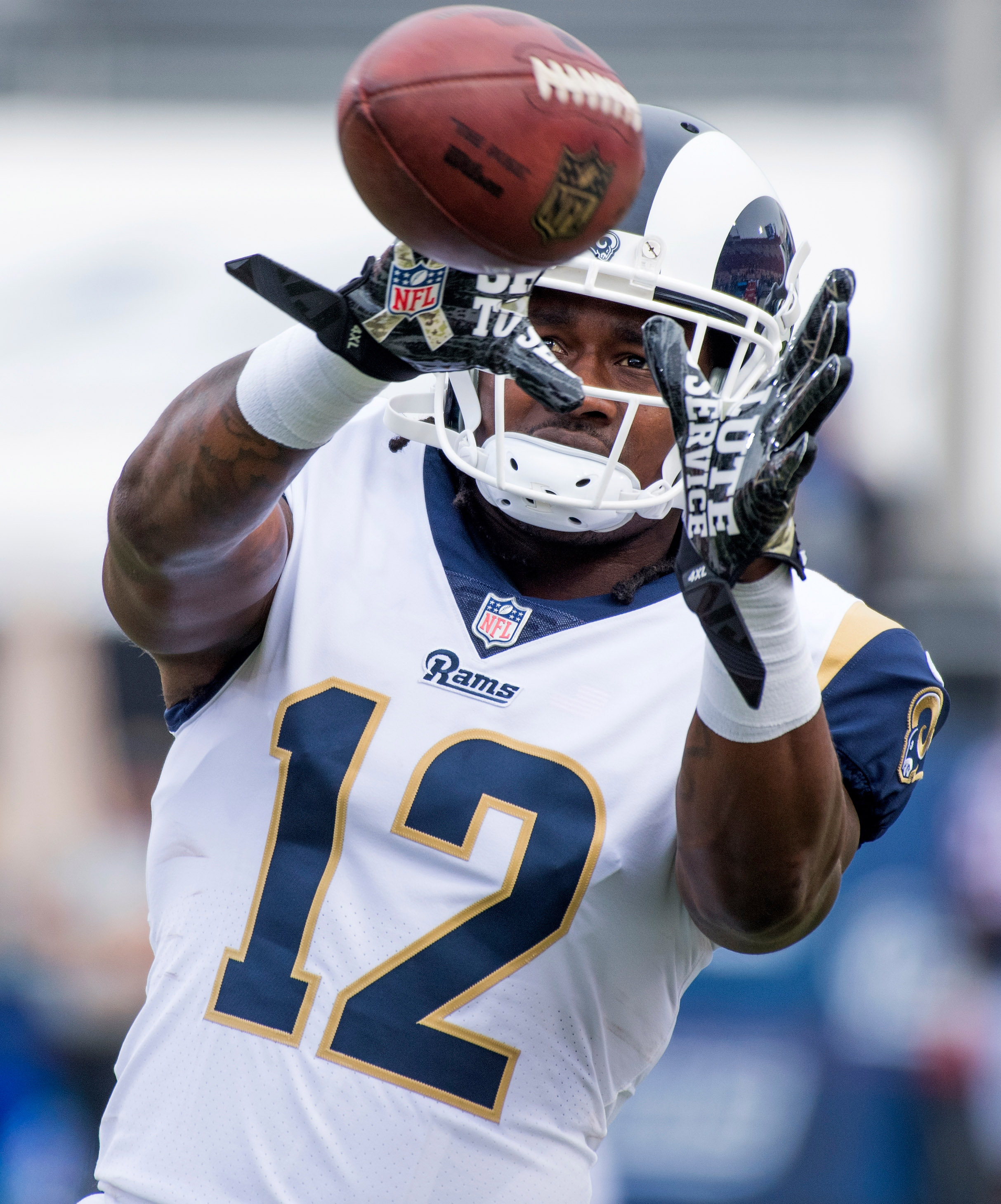
The move was a mixed bag for Los Angeles. On the one hand, Watkins led the team with eight receiving touchdowns, averaged 15.2 yards per reception and helped the Rams post the No. 1 scoring offense in the league. On the other hand, however, the fourth-year wideout made only 39 receptions on the season and ranked fourth on the team with 593 yards. The thought is that the receiver will benefit of a full offseason with the high-powered offense.
“I just think he got on a roll with the guys that [Jared Goff] had during OTAs, and once a guy is used to throwing it to someone else, he throws to his guys,” Watkins said. “It’s just part of the game where you need more time, or maybe another year.”
It shouldn’t come as a surprise that Watkins would like the remain with the Rams and that they would like to have him back. His proficiency on vertical routes opens up the middle of the field for chain movers like Robert Woods and Cooper Kupp, and frees up space in the flats for Todd Gurley. What could hold the team back from tagging the explosive wideout is twofold. First, the cost to franchise tag a receiver is projected to be $16.2 MM, according to overthecap.com. That’s a hefty price to pay for a receiver who has missed 12 games in the last three seasons and didn’t show much in 2018. The second reason is that the Rams are also debating placing the franchise tag on safety Lamarcus Joyner. That would only cost Los Angeles a projected $11 MM.
In 2018, Pro Football Focus rated Watkins the No. 33 receiver in the NFL with a grade of 76.2, tying him with Ted Ginn. The site also published a piece on the receiver, detailing how his touchdown rate — 11.43 — is almost impossible to replicate. From the in-depth article:
So, from 2007 to 2016, 60 players had a 10-percent touchdown rate on 50-plus targets. Of those 60, two (2012-13 Danario Alexander and 2013-14 Marvin Jones) did not play at all the next season. So 58, then. Those 58 players averaged 10.8 touchdowns on 87.12 targets (12.7 percent). A year later, that same group averaged 5.5 touchdowns on 83.8 targets (6.8 percent). Essentially, guys who score touchdowns at a 10-percent rate one year see that rate cut in half the next.
There is no doubting the talent Watkins possesses. If he can recapture and build on his success from his Buffalo days, there is no doubt the Clemson product has the potential to be an 80-catch, 1,200-yard, 10-touchdown receiver in one of the most explosive offenses in the NFL.
As detailed earlier on Pro Football Rumors, receiver is not one of the Rams’ most pressing needs entering the 2018 offseason. With Woods, Cupp and the emerging Josh Reynolds, Los Angeles appears set with plenty of talent at the position. With a projected $51 MM in cap space, however, the team could afford to bring back Watkins for another year to see if Watkins can live up to his projected playmaker status coming out of college.
The choice is a boom-or-bust one for the Rams. Do they think he is likely to emerge as a No. 1 pass catcher in a potent attack with a full season working with Goff in the books? Or do they think that 2018 is the beginning of a trend rather than an outlier?
PFR Glossary: Franchise/Transition Tags
Tuesday will mark the first day that teams can apply the franchise tag to free-agents-to-be for 2018. While no clubs have designated franchise players yet, there will likely at least a handful of players receiving the tag before the March 6 deadline, so it’s worth taking an in-depth look at what exactly it means to be designated as a franchise player.
Essentially, the franchise tag is a tool that a team can use to keep one of its free agents from freely negotiating with rival suitors on the open market. Designating a franchise player means tendering that player a one-year contract offer. The amount of that offer varies from year to year and from position to position, and also differs slightly depending on what sort of specific tag the team employs. Here’s a breakdown of the three types of franchise/transition tags:
Exclusive franchise tag:
- The amount of the one-year offer is either the average of the top five highest-paid players at the player’s position in the current league year or 120% of the player’s previous salary, whichever is greater. The top five highest-paid players at the position are determined once the free agent signing period ends in May, so the exact amount isn’t known until then.
- The player isn’t allowed to negotiate with other teams.
- The player and his team have until July 15 (or the first business day thereafter, which falls on Monday July 16 this year) to work out a multiyear agreement. After that date, the player can only sign a one-year contract.
- The exclusive tag is generally only used for extremely valuable free agents, such as franchise quarterbacks.
Non-exclusive franchise tag:
- The amount of the one-year offer is determined by a formula that includes the salary cap figures and the non-exclusive franchise salaries at the player’s position for the previous five years. Alternately, the amount of the one-year offer can be 120% of the player’s previous salary, if that amount is greater.
- The player is free to negotiate with other teams. If he signs an offer sheet with another team, his current team has five days to match the offer.
- If the offer is not matched, the player’s previous team will receive two first-round draft picks as compensation from the signing team.
- As is the case with the exclusive franchise tag, July 15 (which, again, falls on July 16 this year) represents the deadline for a multiyear agreement.
- Due to the attached compensatory picks, the non-exclusive franchise tag is generally sufficient for free agents — few rival suitors are willing to give up multiple first-rounders in order to sign a free agent to a lucrative deal, so there’s not much risk for a team to give up exclusive negotiating rights.
Transition tag:
- The amount of the one-year offer is either the average of the top 10 highest-paid players at the player’s position in the previous league year or 120% of the player’s previous salary, whichever is greater.
- The player is free to negotiate with other teams. If he signs an offer sheet with another team, his current team has five days to match the offer.
- If the offer is not matched, the player’s previous team does not receive any compensatory draft picks.
- Because it does not include any draft compensation or exclusive negotiation rights, and is only slightly more affordable, the transition tag is rarely used.
The exact amounts of these tags won’t be known until the salary cap number for 2018 is announced, and even then, the exclusive franchise tag amount won’t be established immediately. However, OverTheCap.com has a breakdown of the projected non-exclusive figures, ranging from around $5.06MM for a punter or kicker all the way up to $23MM+ for a quarterback. We already know that the Cowboys intend to use the tag on defensive end Demarcus Lawrence, with an eye on hammering out a long-term pact before the deadline. Steelers running back Le’Veon Bell also appears to be a very likely candidate for the designation. Others in the franchise tag mix include Jaguars wide receiver Allen Robinson, Rams wide receiver Sammy Watkins, and Panthers guard Andrew Norwell.
Here are a few relevant details on franchise tags:
- Each year, the period for teams to designate franchise players runs from the 22nd day before the new league year begins, right up until the eighth day before that new year. In 2018, that means February 20 to March 6, with the 2018 league year set to start on March 14.
- A team can withdraw a franchise or transition tag at any time once when the free agent period begins, but it would immediately make the player an unrestricted free agent, allowing him to sign with any team.
- If a player is designated a franchise player for a third time, the amount of his one-year offer is equal to the exclusive franchise salary for the highest-paid position (QB), 120% of the five largest prior-year salaries at his position, or 144% of his previous salary. That’s why, for instance, the Rams won’t franchise cornerback Trumaine Johnson this offseason — it would be his third straight franchise tag, so he’d be eligible for roughly $20MM for 2018.
- Teams are allowed to designated one franchise player and one transition player per offseason. A team can also designate two transition players if it doesn’t designate a franchise player, but can’t designate two franchise players.
- Restricted free agents can be designated as franchise players.
- If a player chooses to sign the one-year franchise tender, his salary is essentially guaranteed. The CBA notes that if a team releases the player due to a failure “to establish or maintain his excellent physical condition,” the team may recoup his salary. However, a franchise player released due to poor performance, injury, or cap maneuvering will receive his full salary.
Note: This is a PFR Glossary entry, modified from an earlier entry by editor emeritus Luke Adams. Our glossary posts explain specific rules relating to free agency, trades, or other aspects of the NFL’s Collective Bargaining Agreement. Information from Joel Corry and OverTheCap.com was used in the creation of this post.
2018 Top 3 Offseason Needs Series
Over the last few weeks, Pro Football Rumors has been taking a closer look at the 2018 offseason on a team-by-team basis. Our Top 3 Offseason Needs series focuses on each club’s most glaring roster issues, free agents, potential cap casualties, positions of possible focus, and other issues facing teams this winter.
Just in case you missed our preview for your favorite team, we’re rounding up all of our Offseason Needs pieces in this post. We have several more teams to examine before free agency officially gets underway on March 14, so if your team isn’t linked below, be sure to keep a close eye on PFR — it’ll be coming soon.
Here are the links to our 2018 Top 3 Offseason Needs pieces to date:
AFC East:
- Buffalo Bills
- Miami Dolphins
- New England Patriots
- New York Jets
AFC North:
- Baltimore Ravens
- Cincinnati Bengals
- Cleveland Browns
- Pittsburgh Steelers
AFC South:
- Houston Texans
- Indianapolis Colts
- Jacksonville Jaguars
- Tennessee Titans
AFC West:
NFC East:
- Dallas Cowboys
- New York Giants
- Philadelphia Eagles
- Washington Redskins
NFC North:
NFC South:
NFC West:
- Arizona Cardinals
- Los Angeles Rams
- San Francisco 49ers
- Seattle Seahawks
PFR Originals: 2/11/18 – 2/18/18
The original content and analysis produced by the PFR staff during the past week:
- As the offseason progresses, PFR will assess each team by examining the top three needs on each respective NFL roster. We covered five organizations last week:
- Kirk Cousins won’t be back in Washington after the Redskins acquired fellow quarterback Alex Smith, so Sam Robinson asked PFR readers where the top free agent quarterback will end up in 2018. A number of clubs — including the Vikings, Browns, and Cardinals — could theoretically express interest, but the Broncos have thus far garnered the majority of the vote.
Poll: Who Will Sign Kirk Cousins?
With less than a month until free agency begins, Kirk Cousins looks to be — barring an 11th-hour Redskins franchise tag he would fight — close to signing a long-term contract with the team of his choice.
It’s an incredibly unique situation, and teams with disparate profiles figure to make runs at signing the 29-year-old quarterback. Rebuilding teams, contending teams and operations that would seemingly be contenders if supplied a quarterback are going to pursue Cousins. So, where will he go?
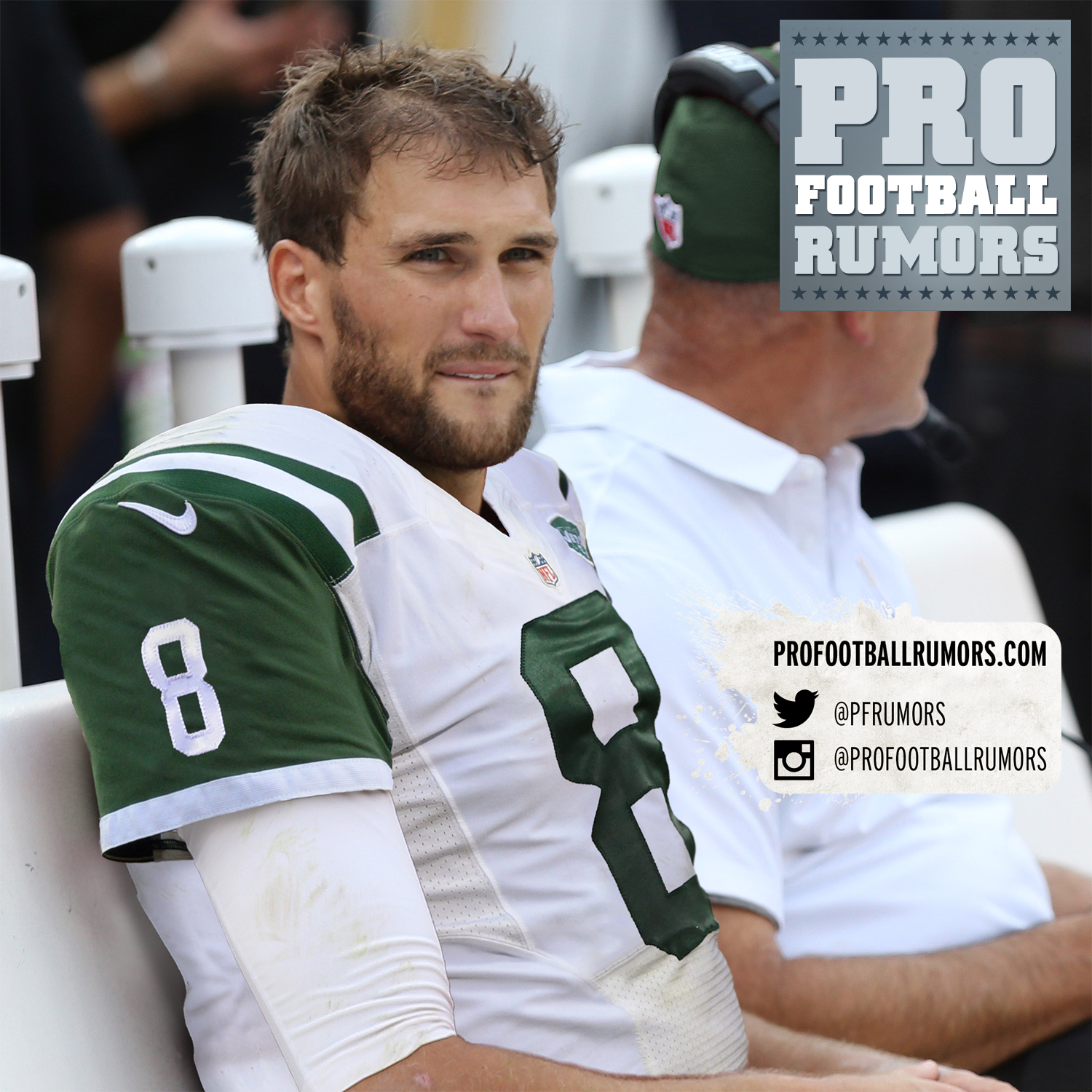 The Jets and Browns are going to have the most money to chase Cousins, and the former makes sense as a destination. New York surprised many last season by winning five games and finishing well off the pace for the No. 1 pick, which many predicted the rebuilding team would secure. The Jets could have more than $90MM in cap space after a few sensible roster moves, and despite their troubles in recent years, could make a case they are a young team who could build a long-term foundation around Cousins.
Cousins has said repeatedly that after making more than $44MM the past two years he wants to play for a contending team. The Browns, though, have a staggering amount of cap space at $110MM-plus. They could sell a free agent QB on their ability to construct a foundation, but their past does not inspire much confidence. And this, by just about every indication to this point, seems like the year they draft a quarterback.
The Bills made a surprise run to the playoffs last season, but Brandon Beane said upon being hired he doesn’t plan to make many high-cost free agent signings. Considering this figures to be the most expensive free agent in NFL history, it’s difficult to envision a Bills push for Cousins. And Tyrod Taylor may not be completely out of the picture yet.
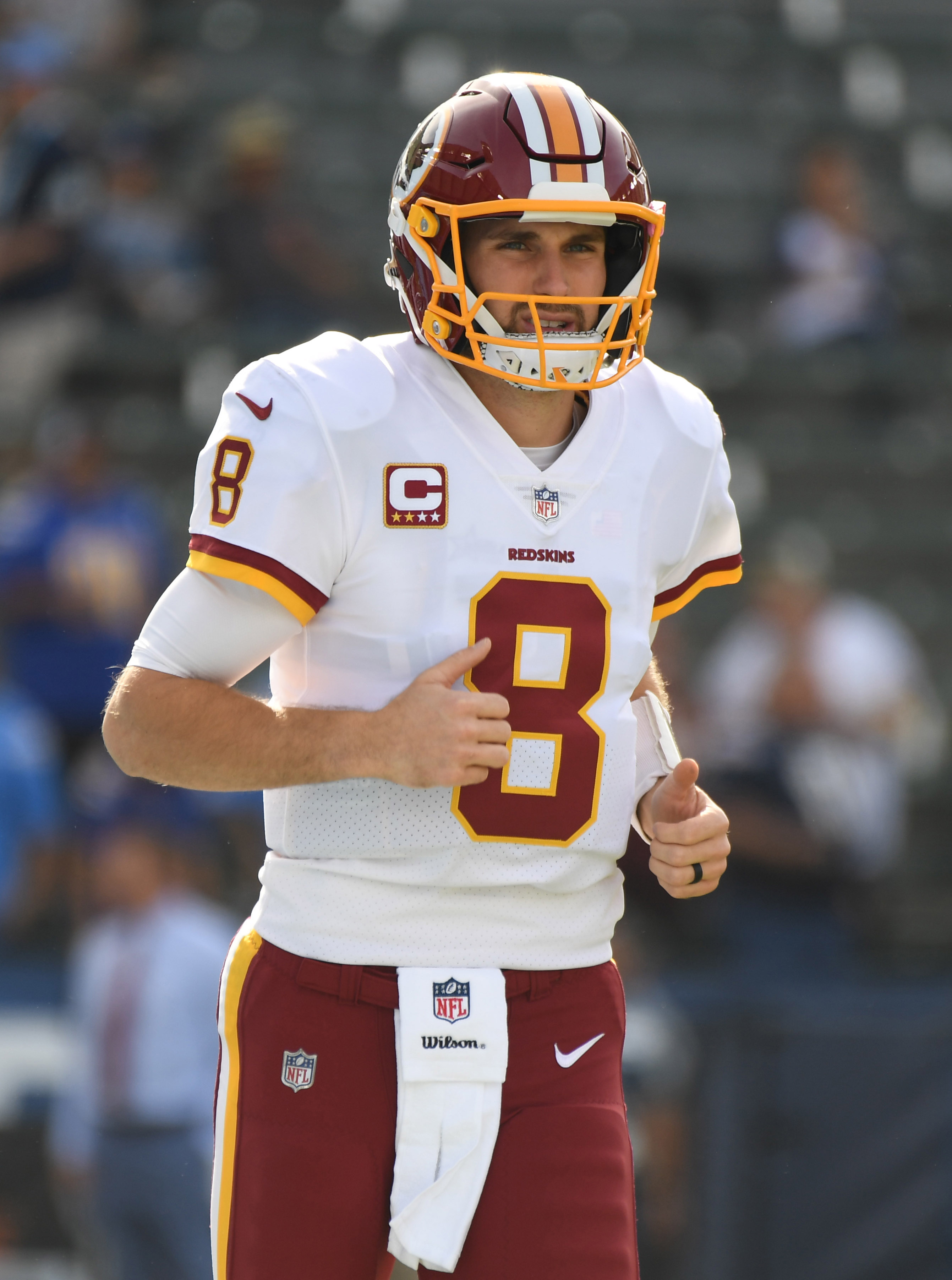 The Broncos and Cardinals are in similar positions as recent contenders who have fallen off the pace a bit, and neither will have the cap space to outflank the Jets or Browns. Both saw quarterback play lower their ceilings last season, and the Cardinals saw their longtime starter retire and his backups’ contracts expire. Denver has both Paxton Lynch and Trevor Siemian under contract but has made no secret about wanting to upgrade — via free agency or the draft — with that desire presumably being centered around complementing the core players remaining from the Super Bowl season.
Both the Broncos and Jets are rumored to be gearing up for entrances into the Cousins sweepstakes, and the Bovada sports book has these two as the early frontrunners. However, both the Vikings and Jaguars fit the profile of franchises that could use Cousins as a possible springboard to a Super Bowl. How serious are they about this, though?
The Jaguars may have complications because of Blake Bortles‘ wrist surgery. The embattled starter not being able to pass a physical come mid-March will guarantee his $19MM fifth-year option salary and cloud a potential Cousins pursuit. Jacksonville’s current plan is to keep Bortles, but is a chance at Cousins too tempting to avoid?
The Vikings would make sense as well but may opt to stick with Case Keenum via franchise tag. However, Cousins has proven more than Keenum, and although he would make for a costlier expense, Minnesota being on the doorstep of its first Super Bowl berth in 40-plus years may make ditching their 2017 setup for Cousins a worthwhile gamble. The Vikings do have several core players entering contract years, which could make a near-$30MM-AAV Cousins accord complicated. Anthony Barr, Eric Kendricks, Stefon Diggs and Danielle Hunter are four who fit that profile. How much will that factor into a Cousins push?
So, where does Cousins end up?
Does he stick to his winning-situation statements and avoid teams who have struggled in recent years, or can the Browns or Jets submit an offer he can’t refuse? Can the Broncos make a sales pitch that their history surrounding a UFA QB with championship-caliber talent would be worth sacrificing a bit of cash, or is their nucleus’ window closing to the point Cousins looks elsewhere? How serious are the Cardinals and Bills in this derby? And how much would the Vikings or Jaguars entering the fray change the outlook of this high-stakes process? Take PFR’s latest poll and weigh in with your thoughts in the comments section.
Who will sign Kirk Cousins?
-
Denver Broncos 35% (2,345)
-
New York Jets 21% (1,367)
-
Minnesota Vikings 18% (1,184)
-
Cleveland Browns 9% (627)
-
Arizona Cardinals 9% (570)
-
Jacksonville Jaguars 4% (261)
-
Buffalo Bills 2% (144)
-
Another team 2% (115)
Total votes: 6,613
Top 3 Offseason Needs: Philadelphia Eagles
In advance of March 14, the start of free agency in the NFL, Pro Football Rumors will detail each team’s three most glaring roster issues. We’ll continue this year’s series with the Philadelphia Eagles, who overcame the loss of their MVP-caliber starting quarterback to win the Super Bowl.
Depth Chart (via Roster Resource)
Pending Free Agents:
- Beau Allen, DT
- Kenjon Barner, RB
- Will Beatty, T
- LeGarrette Blount, RB
- Nigel Bradham, LB
- Bryan Braman, DE
- Trey Burton, TE
- Dannell Ellerbe, LB
- Najee Goode, LB
- Corey Graham, S
- Patrick Robinson, CB
- Darren Sproles, RB
- Caleb Sturgis, K
- Jaylen Watkins, S (RFA)
Top 10 Cap Hits for 2018:
- Fletcher Cox, DT: $17,900,000
- Lane Johnson, T: $12,250,000
- Jason Peters, T: $11,666,666
- Vinny Curry, DL: $11,000,000
- Brandon Brooks, G: $10,886,397
- Zach Ertz, TE: $10,345,000
- Malcolm Jenkins, S: $10,000,000
- Rodney McLeod, S: $8,406,250
- Mychal Kendricks, LB: $7,600,000
- Nick Foles, QB: $7,600,000
Other:
- Projected cap space (via Over the Cap): -$9,426,190
- 32nd pick in draft
- Must exercise or decline 2019 fifth-year option for WR Nelson Agholor
Three Needs:
1) Figure out what to do with Nick Foles: After the Eagles lost starting quarterback Carson Wentz to a torn ACL in Week 14, no one gave them much of a chance to sustain an extended postseason run. Although Philadelphia boasted one of the best overall rosters in the NFL, backup signal-caller Nick Foles didn’t inspire a ton of confidence. And he probably shouldn’t have: aside from one solid 2016 start with the Chiefs, Foles hadn’t been productive since the 2013 campaign (which also came with the Eagles). Philadelphia received a first-round bye after securing the No. 1 seed in the NFC, but a short playoff stint looked exceedingly likely.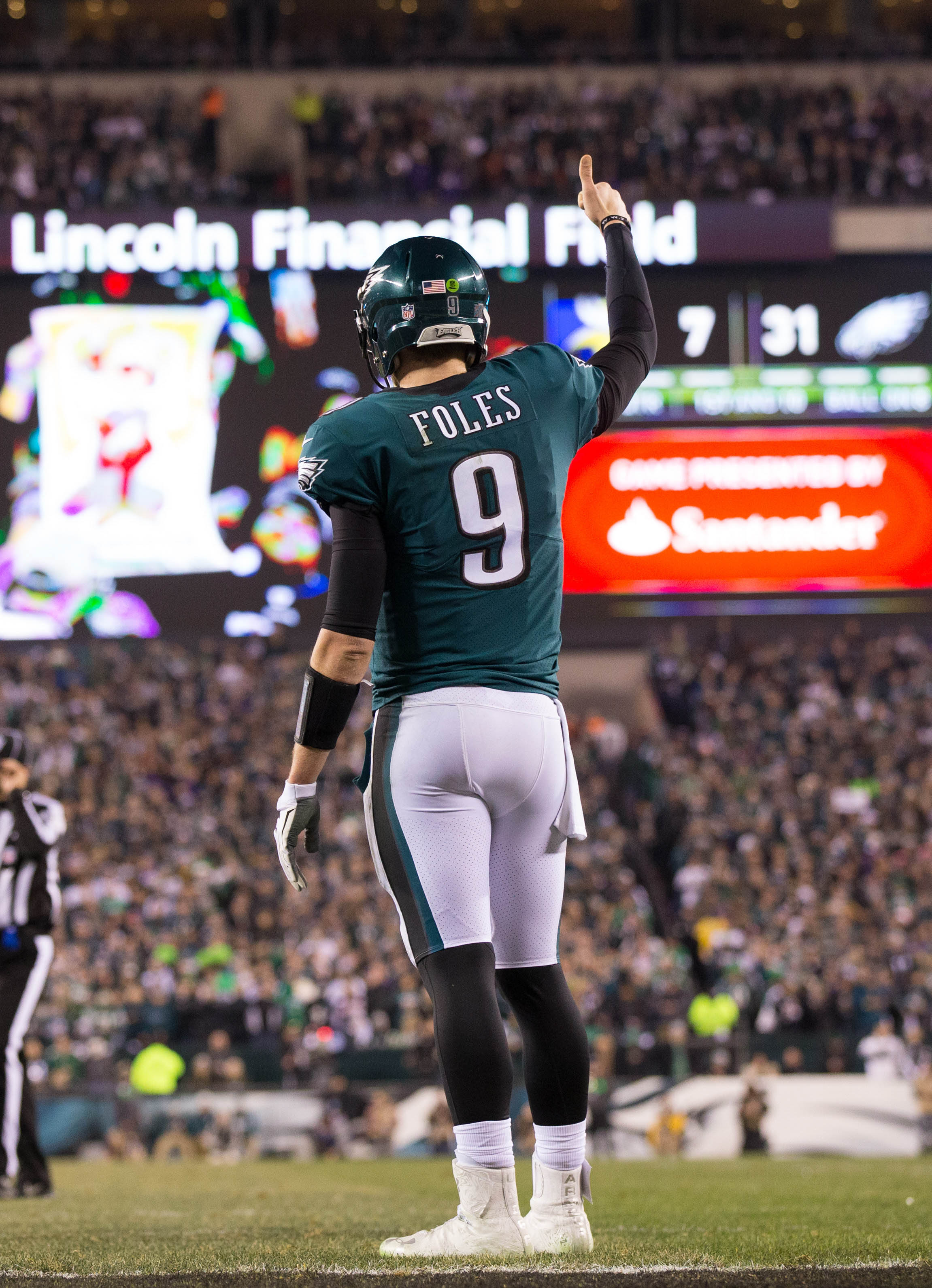
We all know what happened next. Despite being the underdog in each game, the Eagles held on against the Falcons in the Divisional Round, destroyed the Vikings in the NFC Championship, and pulled out a classic against the Patriots to win the first Super Bowl in franchise history. Foles was surgical, completing 28-of-43 attempts for 373 yards and three touchdowns while catching a touchdown pass from tight end Trey Burton on a fourth down, Philly Special play call. Two years after contemplating retirement, Foles is the reigning Super Bowl MVP.
So what do the Eagles do with Foles now? He’s not going to return as a starter in 2018, as Wentz is Philadelphia’s franchise quarterback and was on track to be named league MVP before he went down with injury. But that doesn’t mean Foles can’t come back as Wentz’s backup for another season, especially given how he proved his value during the Eagles’ Super Bowl run. But Foles is expensive: discounting Mike Glennon, who is sure to be released this offseason, Foles is the league’s highest-paid No. 2 quarterback. He’s due to count for $7.6MM on Philadelphia’s 2018 salary cap, and will collect $6MM in cash next season.
Most clubs would be able to afford a top-tier backup signal-caller at Foles’ price, but the Eagles’ salary cap situation is dire. At present, Philadelphia ranks dead last in expected 2018 space, and is projected to be nearly $10MM over the cap when the new league year begins in March. If Foles is traded, the Eagles would pick up $5.2MM in cap room, a penance to many teams but a critical amount for Philadelphia. There are other ways for vice president of football operations Howie Roseman to create space, to be sure, but trading Foles would also allow the Eagles to add draft capital, another benefit for a team that currently lacks a second- or third-round pick.
What type of return the Eagles can expect for Foles is an open question. Here’s a look at how much several comparable quarterbacks have cost over the past two seasons:

Jacoby Brissett is the absolute floor for a possible Foles trade, but Jimmy Garoppolo and Sam Bradford are both acceptable comps. Sure, Jimmy G now looks like one of the NFL’s next great quarterbacks, but at the time the Patriots dealt him to the 49ers, Garoppolo boasted only two career starts and 94 career attempts — Foles topped both of those marks (and posted a superior quarterback rating) during the Eagles’ playoff run alone. Of course, Garoppolo hadn’t put any poor performances on film and was 26 years old when he was traded, while Foles does have some substandard play on his record and is entering his age-29 season.
Like Foles, Bradford was an Eagle at the time he was dealt, and was coming off a campaign in which he completed 65% of his passes for 19 touchdowns, 14 interceptions, and an 86.4 passer rating. While he never hit the highs that did Foles, Bradford managed his competent performance over a 14-game stretch, giving an indication that his production would be sustainable going forward. Foles was excellent over a three-playoff-game sample, but will other NFL clubs be willing to bet on him as a starter in 2018?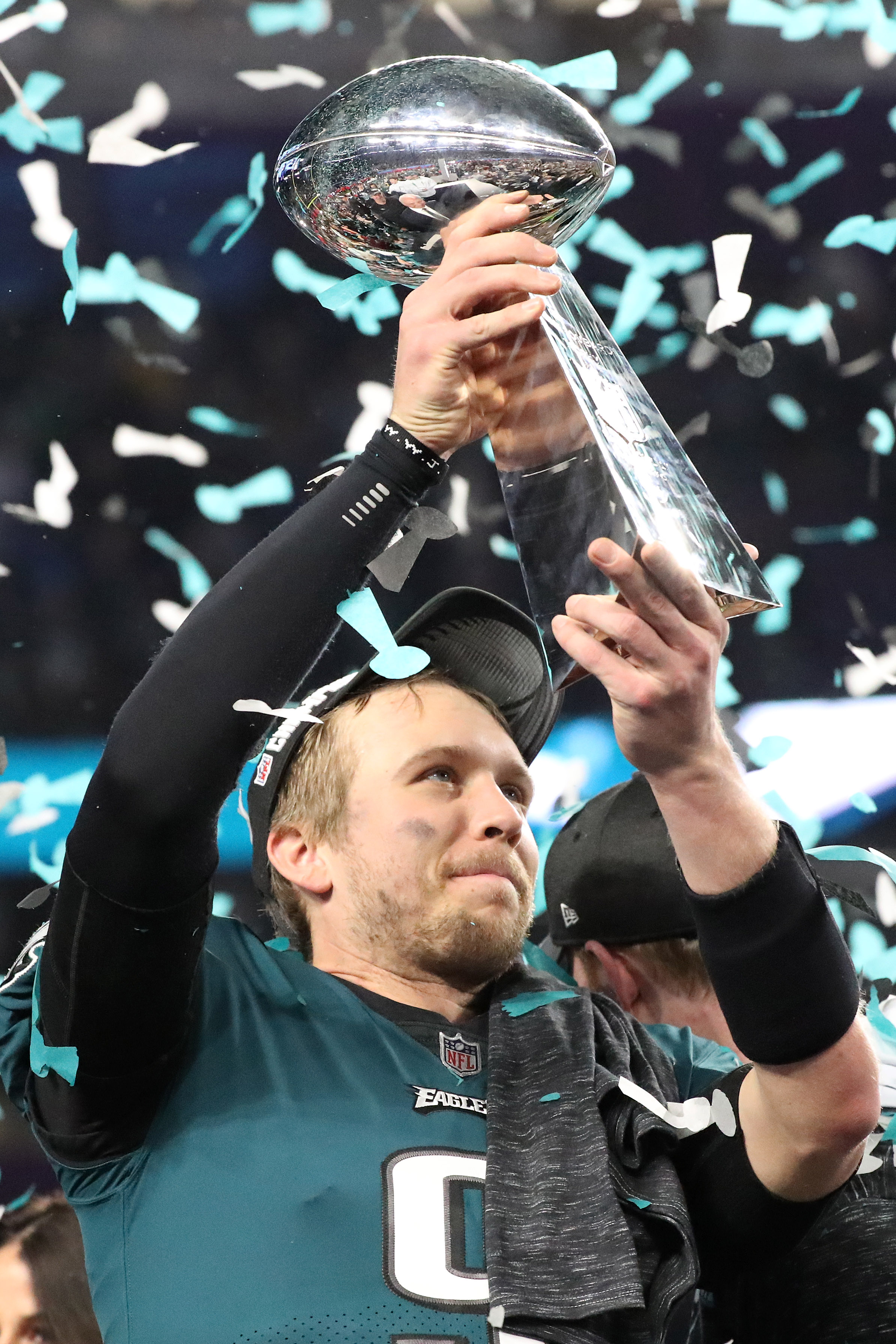
Given that Foles’ value is at an all-time high, I don’t see how the Eagles can’t at least explore his trade value, especially given their salary cap and draft capital situation. I’d set parameters, though, and likely wouldn’t accept anything less than a early-to-mid second-round selection. The 2018 quarterback market offers more options — Kirk Cousins, Case Keenum, Bradford — than any in recent memory, so teams may not be clamoring to acquire Foles, but clubs such as the Browns (pick Nos. 33 and 35 in the early second round), the Jets (No. 37), the Broncos (No. 40), the Cardinals (No. 47), and Bills (No. 53) could all express interest.
If Foles is gone, the Eagles will need a new backup quarterback (although they have indicated confidence in third-stringer Nate Sudfeld). Philadelphia isn’t likely to find a better option than Sudfeld late in the draft, so a free agent signal-caller would represent the expected solution. Of course, any veteran inked by the Eagles would need to come at a cheaper rate than Foles (otherwise there’d be no financial reason to trade him). Josh McCown and Matt Moore stand out as experienced quarterbacks who could competently fill in for Wentz, while a trade acquisition — perhaps the Browns include DeShone Kizer or Cody Kessler in a Foles swap — can’t be ruled out.
2) Part ways with Jason Peters, but find a swing tackle: We’ve already covered the Eagles’ ominous salary cap situation, but trading Nick Foles might not be the only financially-motivated move Philadelphia needs to make over the coming weeks. Veteran left tackle Jason Peters, who played in seven games before tearing his ACL, is set to count for $10.667MM in 2018, an unpalatable figure for a 36-year-old coming off injury. While Eagles head coach Doug Pederson recently indicated Peters will return to Philadelphia next season, Pederson isn’t the one making the tough cap-related decisions — those calls will fall to Howie Roseman, who must weigh Peters’ ability against his cost.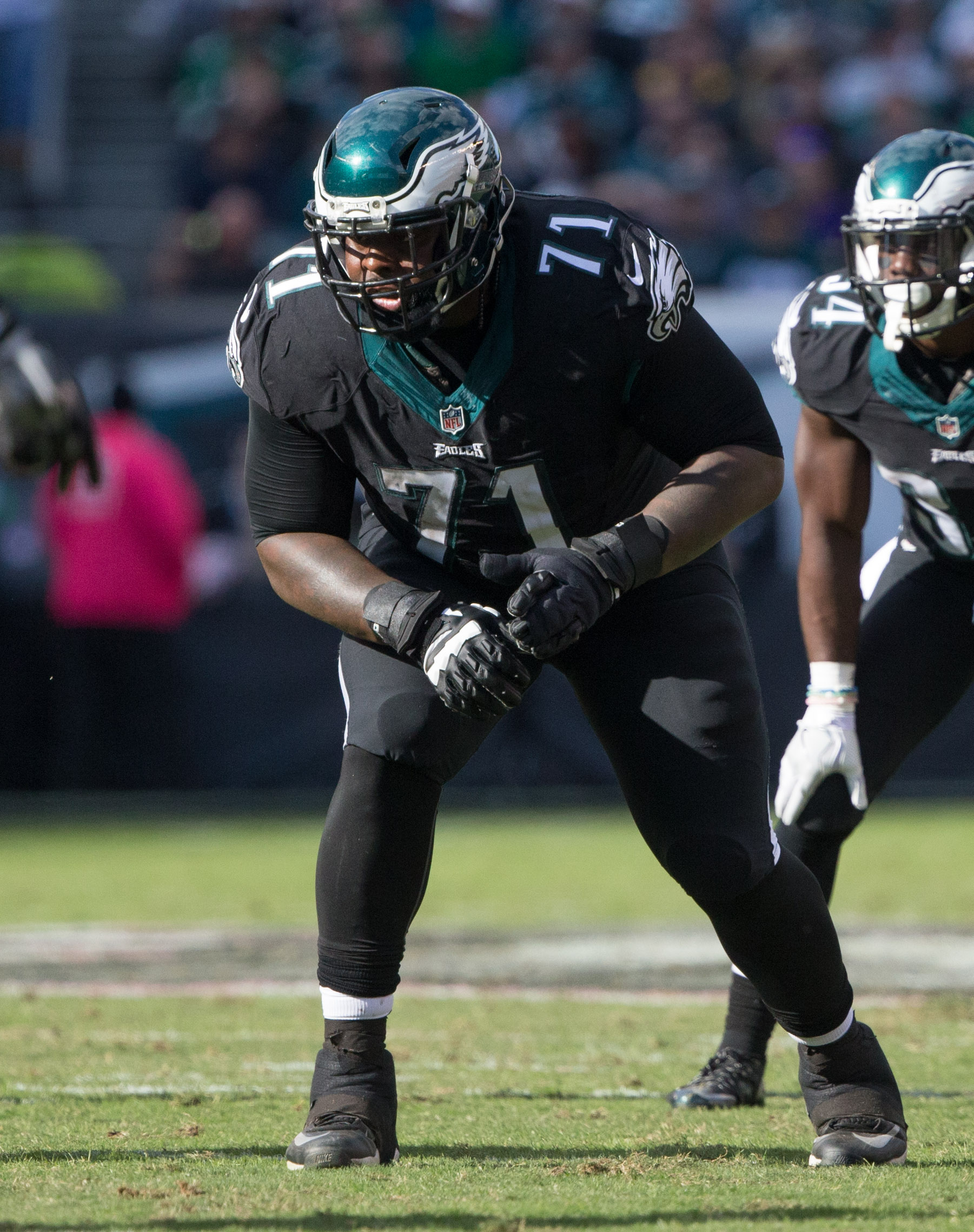
However, the Eagles will almost certainly have to trade Peters if they want to experience any cap relief. Under the terms of his recent extension, Peters garnered a $4.5MM injury guarantee for the 2018 season. Given that he tore his ACL in October, Peters likely won’t be able to pass a physical before that total becomes fully guaranteed in March, so Philadelphia will be paying the sum either way. In fact, it will cost more — $10,833,334 vs. $10,666,666 — to cut Peters than to keep him on the roster next year, provided that $4.5MM guarantee kicks in.
As such, a trade of Peters is the only way the Eagles can get his cap charge off their books, and I’d expect a number of teams to be interested in acquiring a high-quality tackle, even an aged one with a knee injury. Peters, a likely future Hall of Famer, graded as the NFL’s seventh-best offensive tackle before going down in 2017, per Pro Football Focus, meaning he’s still a valuable commodity. Club such as the Patriots (if they lose Nate Solder to free agency), the Bengals, the Texans, the Jaguars, the Buccaneers, and the Cardinals could all use a left tackle, and Peters would only cost an acquiring team $6.75MM next season.Read more
Top 3 Offseason Needs: Detroit Lions
In advance of March 14, the start of free agency in the NFL, Pro Football Rumors will detail each team’s three most glaring roster issues. We’ll continue this year’s series with the Detroit Lions, who missed the postseason in 2017 and subsequently replaced head coach Jim Caldwell with former Patriots defensive coordinator Matt Patricia.
Depth Chart (via Roster Resource)
Pending Free Agents:
- Ezekiel Ansah, DE
- Don Barclay, OL
- Jace Billingsley, WR (ERFA)
- Nick Bellore, LB
- Don Carey, S
- Rodney Coe, DT (ERFA)
- Brandon Copeland, DE (RFA)
- Darren Fells, TE
- Dwight Freeney, DE
- D.J. Hayden, CB
- Jordan Hill, DT
- Kerry Hyder, DE (ERFA)
- Zac Kerin, G (RFA)
- Mike James, RB
- T.J. Jones, WR (RFA)
- Nevin Lawson, CB
- Don Muhlbach, LS
- Haloti Ngata, DT
- Kasey Redfern, P (ERFA)
- Christian Ringo, DT (ERFA)
- Greg Robinson, T
- Jake Rudock, QB (ERFA)
- Travis Swanson, C
- Tahir Whitehead, LB
- Tavon Wilson, S
- Paul Worrilow, LB
- Zach Zenner, RB (RFA)
Top 10 Cap Hits for 2018:
- Matthew Stafford, QB: $26,500,000
- T.J. Lang, G: $10,916,666
- Golden Tate, WR: $9,351,250
- Marvin Jones, WR: $8,600,000
- Eric Ebron, TE: $8,250,000
- Glover Quin, S: $6,516,666
- Ricky Wagner, T: $5,900,000
- Darius Slay, CB: $5,576,269
- DeAndre Levy, LB: $4,800,000 (dead money)
- Theo Riddick, RB: $3,887,500
Other:
- Projected cap space (via Over the Cap): $52,184,502
- 20th pick in draft
Three Needs:
1) Reset the running game: The Lions famously have gone four-plus years without a running back posting 100 yards in a single game — Reggie Bush last managed that feat in 2013, and he’s also the last Detroit runner to put up 1,000 yards rushing over a full season. Those struggles have lead the Lions to address their backfield in recent years, but 2015 second-round pick Ameer Abdullah hasn’t been able to hold up as an every-down back, while Theo Riddick excels far more as a receiver than as a between-the-tackles runner. After ranking dead last in rushing yards per attempt a season ago, Detroit needs to acquire a new running back in the coming months.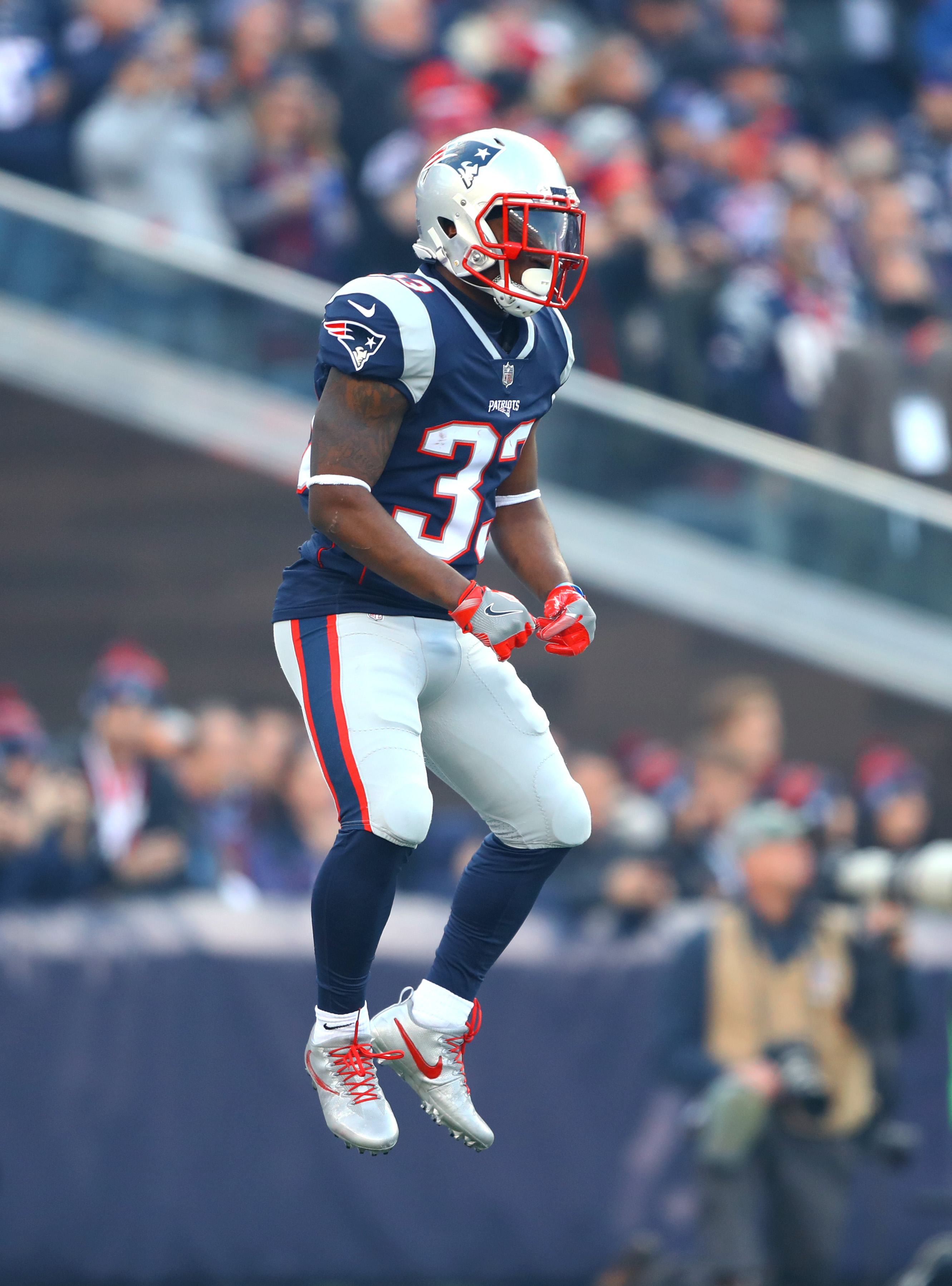
The most obvious free agent target for the Lions should be Dion Lewis, as both he and new head coach Matt Patricia spent the past three years with the Patriots. Detroit general manager Bob Quinn is a former New England staffer, as well, and was the club’s director of pro staffing when Lewis was signed to a futures contract prior to the 2015 campaign. As far as fits go, Lewis and the Lions are like a glove, and Detroit should easily be able to meet Lewis’ reported asking price of $18MM over a three-year term.
While Lewis may have been viewed as a rich man’s Abdullah as recently as last season, he proved in 2017 that he’s capable of being the foundation of a rushing offense. He handled 180 carries last year (eight more than he’d managed over the first four years of his career) and averaged five yards per rush. Lewis also finished first in Football Outsiders’ DYAR (which measures value over a replacement running back), second in DVOA (per-play value), and fourth in success rate (how a back keeps his team “on schedule” with regards to down and distance). Throw in his efforts in the passing game — 32 receptions and a No. 6 ranking in pass-blocking efficiency, per Pro Football Focus — and Lewis is just about as complete a running back as you’ll find on the open market.
Of course, Lewis isn’t the only runner the Lions could consider this offseason. Fellow Patriots free agent Rex Burkhead was given 100 total touches over 10 games in 2017, and could be an option for Detroit if he’s not re-signed by New England. Carlos Hyde and Isaiah Crowell could both offer a bruising style that would mesh well with Abdullah and Riddick. And C.J. Anderson, a rumored candidate for release in Denver, might be on the table, especially given that former Broncos offensive line coach Jeff Davidson is now on staff in Detroit.
The Lions may also look to the draft to find another running back, and while I wouldn’t typically advocate selecting a runner in the first round, the Lions are sitting late enough on Day 1 that a first-round RB contract wouldn’t break the bank. If Saquon Barkley is taken in the top five picks, for example, he’ll receive a four-year contract that pays him nearly $7MM annually. That would immediately place him within the top five highest-paid running backs in the entire NFL. The financial value just isn’t there to make a top-10 running back worth the risk, but the Lions are picking 20th overall. Any RB Detroit takes at that point will only earn roughly $3MM per year, a more than palatable cost.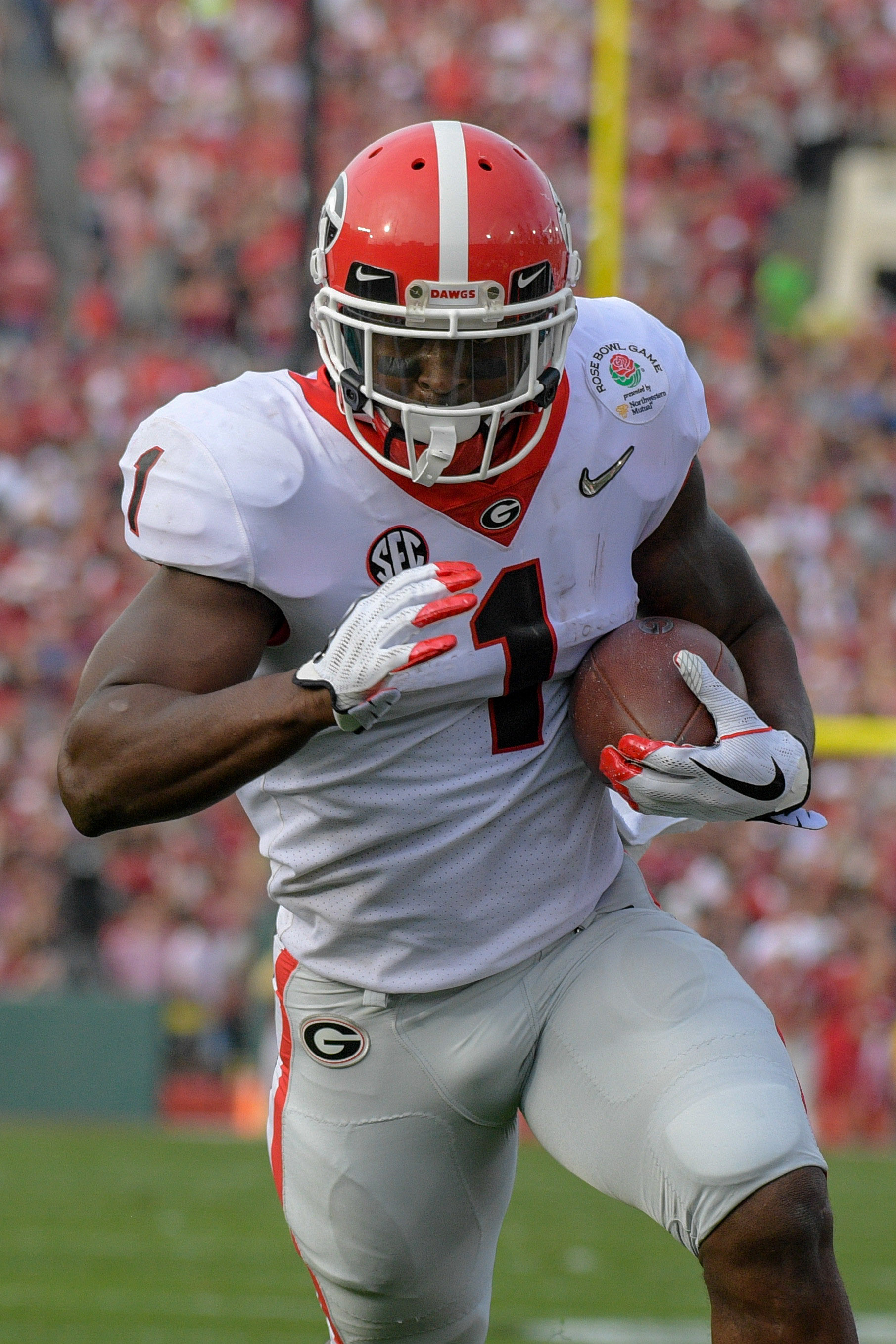
Barkley will be long gone by the time Detroit gets to turn in its card, but there are other backs who will be worth a Day 1 or 2 selection. Georgia’s Sony Michel should be available at pick No. 20, and Lance Zierlein of NFL.com says the 215-pounder will “drop his pads and meet force with force when it’s time to finish.” Derrius Guice (LSU), Rashaad Penny (San Diego State), and Nick Chubb (Georgia) are among the other burly runners that could come off the board before Day 3.
2) Fix the interior offensive line: Now entering his second season as the Lions’ general manager, Quinn has shown a willingness to pay for offensive line upgrades thus far during his Detroit tenure. Last year, the Lions opted to move on from competent linemen Larry Warford and Riley Reiff, replacing them with fellow free agents T.J. Lang and Ricky Wagner. Unfortunately, Detroit will need to bring in at least one addition lineman this offseason, as the club’s front five was sub-par in 2017.
The problem for the Lions’ line resides on the interior: while guards Lang and Graham Glasgow offered acceptable play last year, longtime center Travis Swanson ranked as the worst pivot in the league a season ago, per PFF. Detroit was dead last in adjusted line yards, and also finished last in ALY when running up the middle. Swanson is now a free agent, and given Quinn’s focus on offensive line upgrades during his Lions tenure, I’d expect the club to move on from its 27-year-old center.Read more