
Saquon Barkley, Josh Jacobs, Tony Pollard Fail To Reach Extension Agreements
As the running back market resides as a shell of its form of even a few months ago, the franchise tag deadline has come and gone without any of the three tagged backs reaching extension agreements.
After multiple reports suggested Tony Pollard was not close on a deal with the Cowboys, the Giants and Raiders will not come to terms with Saquon Barkley or Josh Jacobs on respective extensions, NFL.com’s Ian Rapoport, Tom Pelissero and Mike Garafolo report (Twitter links). All three backs will be tied to the $10.1MM franchise tag.
[RELATED: Franchise Tag Recipients Since 2013]
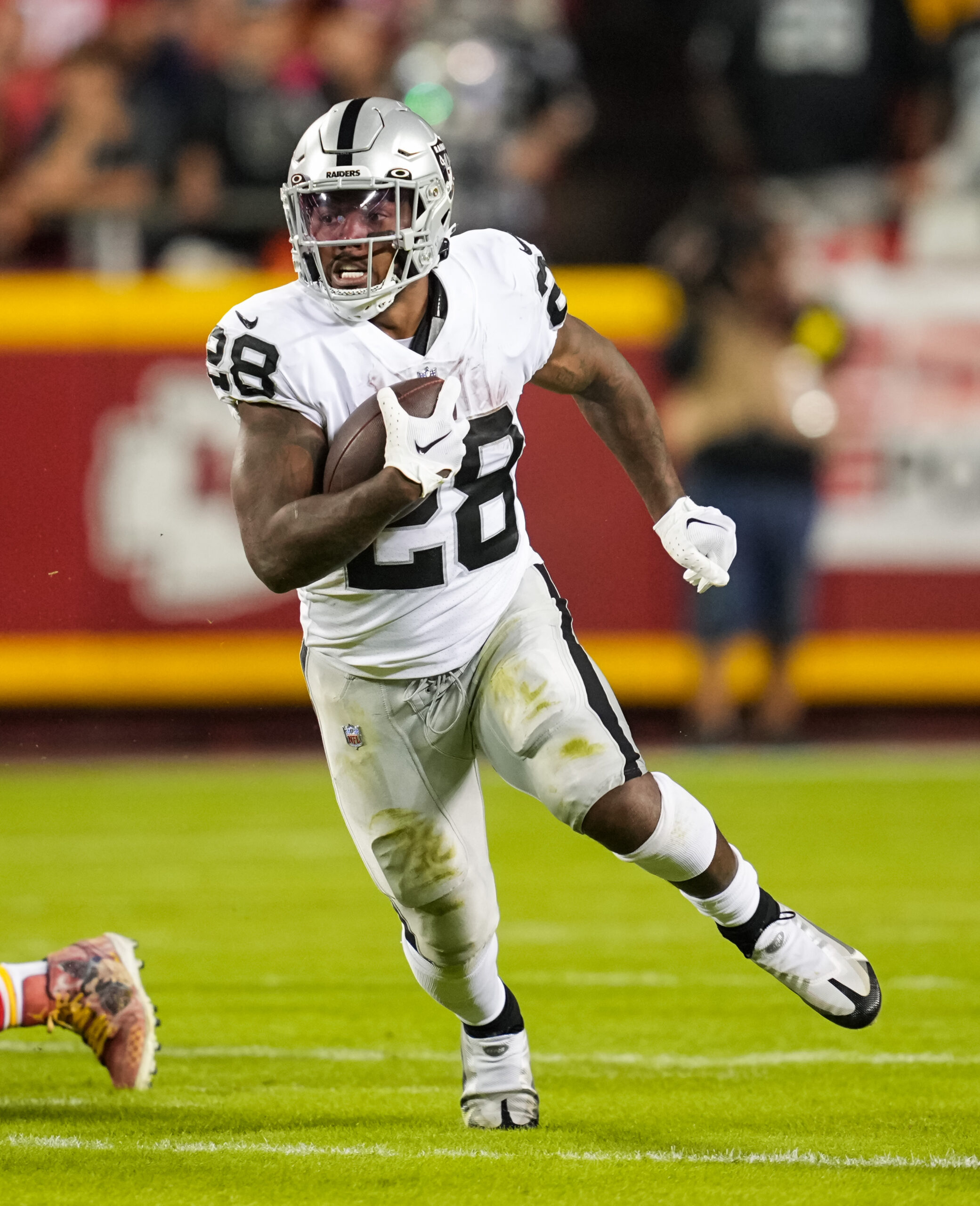 The Giants and Barkley looked to be the closest on terms, and the sides had engaged in extension talks since last November. But guaranteed money loomed as a sticking point for the Giants, who will not be seeing their tagged back for a while. As should be expected, Barkley will not report to training camp on time, Adam Schefter of ESPN.com tweets. Likewise, The Athletic’s Vic Tafur notes Jacobs will not be rejoining the Raiders for a while (Twitter link). All extension talks between the backs and their respective teams must be tabled to 2024.
Both Barkley and Jacobs have been connected to potentially skipping regular-season time; Pollard signing his franchise tender in late March will not allow him to miss training camp work without fines coming his way. Barkley and Jacobs have not signed their tenders and cannot be fined for missing camp workouts. While Pollard will be expected to report to the Cowboys on time, it will almost definitely be a while before Barkley and Jacobs — both of whom having voiced frustration during this process — show up.
Considering the damage done to the RB market this offseason, it is unsurprising the tag deadline played out this way. Jacobs and the Raiders were never believed to be close on terms, while the Cowboys and Pollard may not have engaged in substantive talks.
The 2023 backfield market crash involved four of the eight-figure-per-year players at the position either being released (Ezekiel Elliott, Dalvin Cook) or forced into pay cuts (Aaron Jones, Joe Mixon). It would be easier at this point to mention the top-market backs whose contracts were not reduced or shed. For what it’s worth, Christian McCaffrey, Alvin Kamara, Derrick Henry and Nick Chubb did not see any pay reductions this year. Austin Ekeler, however, requested a trade and was given permission to seek a relocation; the Chargers back — he of 38 touchdowns over the past two seasons — did not generate much interest. The Cowboys, Giants and Raiders kept their backs off the market; no back who did hit free agency signed a deal averaging even $6.5MM per year.
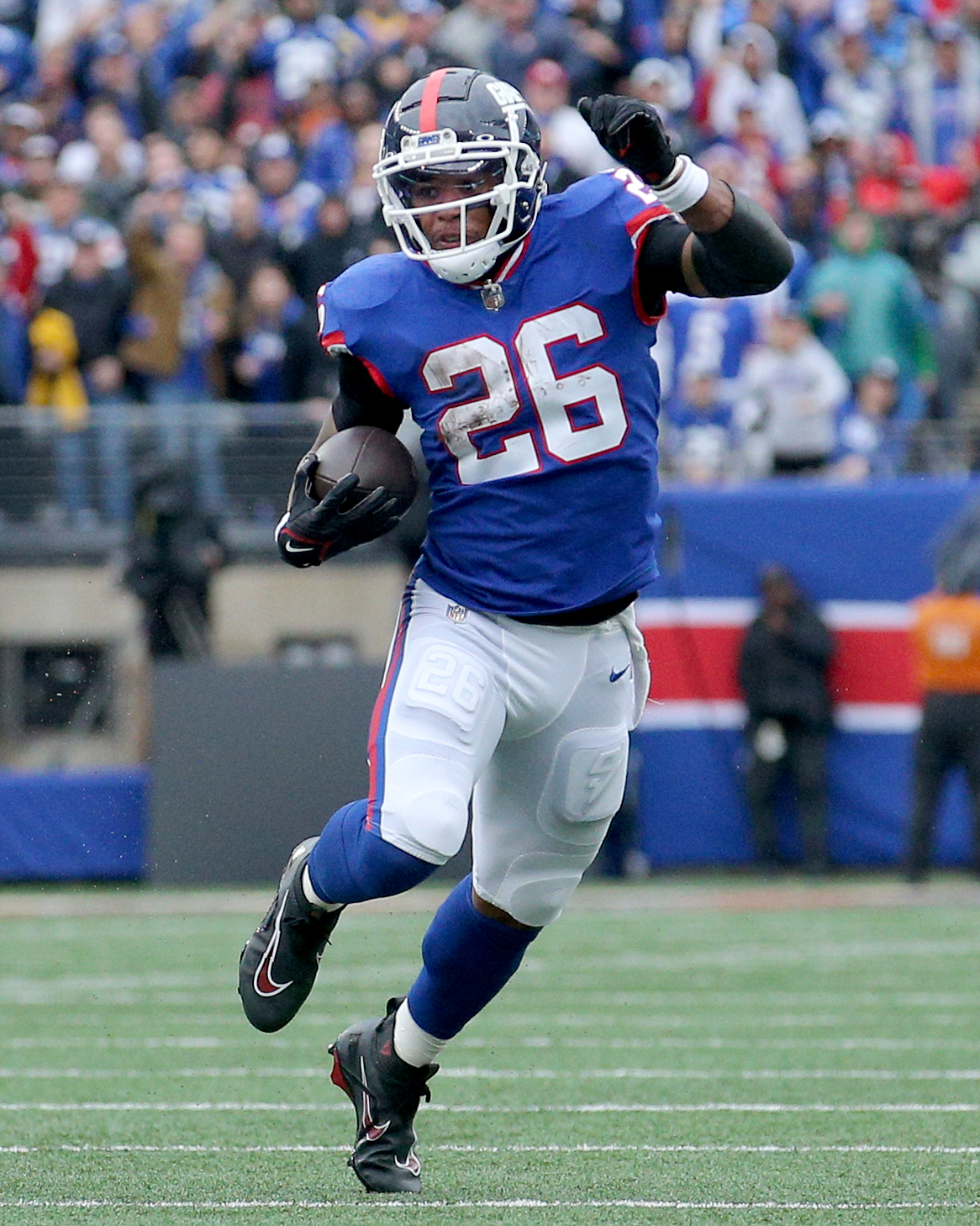 The Giants and Barkley attempted to come to terms today, with ESPN’s Dianna Russini noting negotiations ran up until the deadline (Twitter link). No deal commenced. After the Giants were believed to have climbed a bit on guarantees, their final offer was also lower on average annual value. New York had previously offered Barkley a deal averaging in the $13MM-per-year neighborhood — a proposal the team made during the parties’ winter negotiations — and included around $19MM in guarantees. The team came up on guarantees earlier today, with that number rising toward $22MM. None of it ended up mattering, as Fox Sports’ Ralph Vacchiano adds neither side moved “nearly enough” to finalize an extension (Twitter link).
No terms are known in the Jacobs talks, which provided a fairly clear indication a deal was not especially close. Like the Giants, the Raiders appeared fine carrying their starting running back’s $10.1MM tag number on their cap sheet. Of course, it will be worth wondering when both players show up.
Jacobs has earned barely $11MM — via his rookie contract — during his career, while Barkley has pocketed almost $40MM. The Giants back would be in a better position to exercise the Le’Veon Bell nuclear option — skipping games in protest of the tag. Barkley listed the Bell boycott as a potential option, but that also likely was a leverage ploy. It would be interesting to see if Barkley would be willing to use his money earned to punish the Giants here, but that has never loomed as a realistic scenario. Barkley and Jacobs will cost themselves $560K for each game missed. To be fair, Bell still found a willing buyer — the Jets, who gave him a four-year, $52.5MM deal — in free agency after sitting out a season for preservation purposes. It would not seem such a suitor would exist, given the present state of the position, if Barkley or Jacobs took this route.
 The last eight-figure-AAV running back contract to be authorized came in July 2021 — the Browns’ three-year, $36.6MM Chubb extension. While Chubb, Jones, Henry, Cook and, to an extent, Kamara and McCaffrey have played well on their big-ticket extensions — McCaffrey doing so after being traded to the 49ers — teams are shifting in the other direction at this position. Barkley and Colts extension candidate Jonathan Taylor sent out ominous tweets regarding their position’s state Monday afternoon. Taylor’s rookie deal expires after this season. Seeing as the running back tag has gone down from the time Bell was twice tagged — for $12.12MM (2017) and $14.54MM (2018) — a Taylor tag certainly will be a logical next step for the Colts.
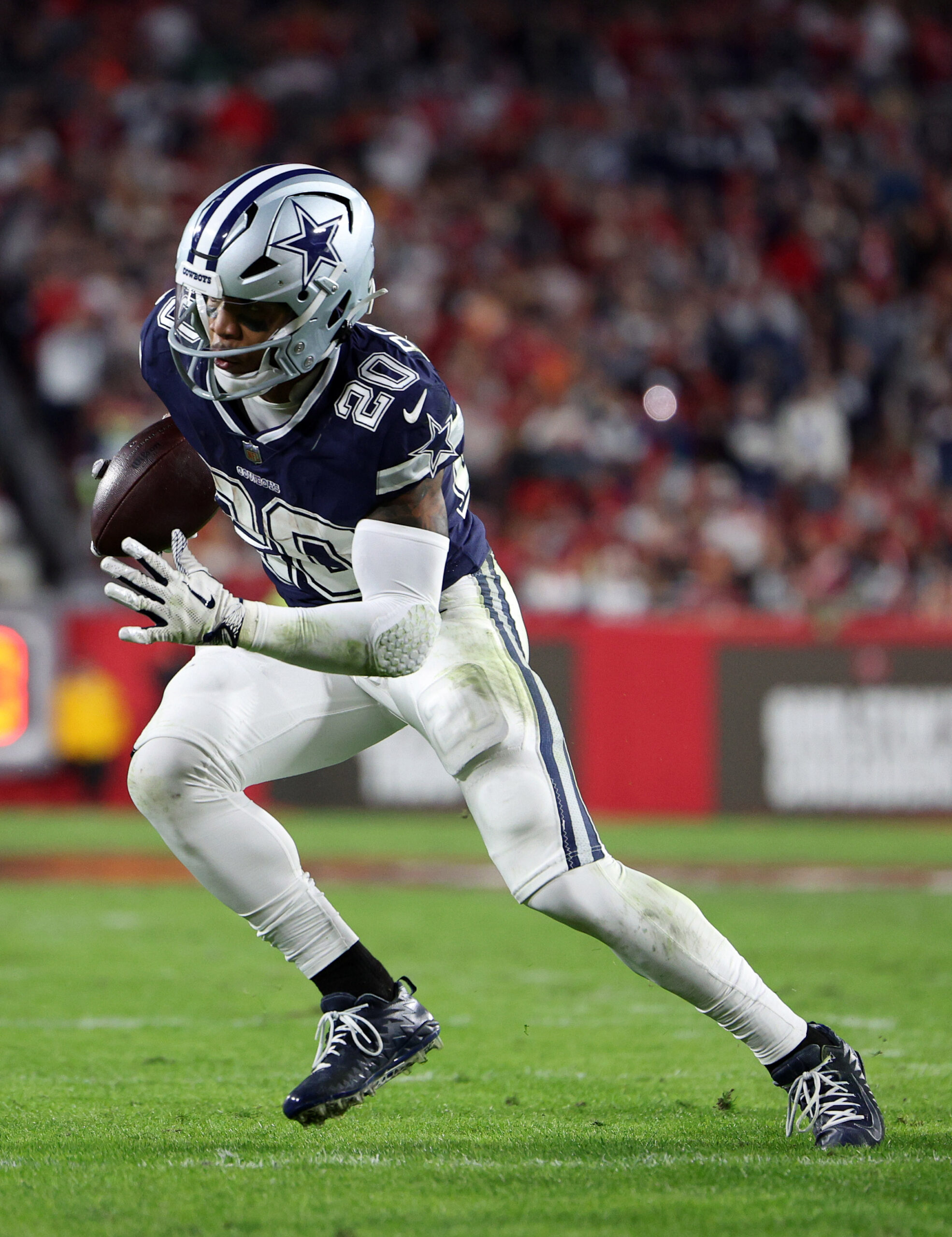
As for Pollard, ESPN.com’s Todd Archer indicates the Cowboys did submit a proposal to their tagged back. But it does not sound like the sides went too deep on contract talks (Twitter link). Pollard has been fine playing on the tag, per the Fort Worth Star-Telegram’s Clarence Hill (on Twitter). Unlike Barkley and Jacobs, however, Pollard may not be a strong candidate to be retagged in 2024. Trevon Diggs is also set to play on an expiring contract this year.
Tag Rumors: Barkley, Jacobs, Engram
With the Monday deadline for franchise tagged players to sign long-term deals approaching fast, NFL Network’s Mike Garafolo gave some quick updates on the last remaining franchise tagged players. The Ravens and quarterback Lamar Jackson agreed to a long-term deal, as did the Commanders and defensive tackle Daron Payne, while Cowboys running back Tony Pollard has decided to play out the 2023 season on the franchise tag. This leaves Giants running back Saquon Barkley, Raiders running back Josh Jacobs, and Jaguars tight end Evan Engram as the last remaining cases to be solved.
- According to Garafolo, there hasn’t been much good traction on a deal between New York and Barkley. He reports that the two sides “are still far apart.” He notes that three days is technically plenty of time to get a deal done, especially for the franchise that signed quarterback Daniel Jones to a new deal minutes before the franchise tag deadline. Garafolo confirms that Barkley has “threatened to potentially holdout into the season,” meaning that he certainly shouldn’t be expected at training camp unless a new deal is reached.
- Similar news for Jacobs, as we’ve been reporting throughout the day. It’s become clear that he and Las Vegas are not near an agreement as the clock ticks down. Garafolo relays a report from colleague Tom Pelissero that Jacobs is not going to be at training camp without a new deal and is also a candidate to holdout into the regular season.
- Engram’s situation appears to be a bit less harrowing. Despite the fact that Engram wasn’t present for the team’s spring OTAs and minicamp because of the unsigned tag, he is still expected to be present at training camp, even if the two sides fail to reach an agreement on a long-term deal. According to Garafolo, the likelihood of that deal coming to fruition appears to just under a 50-50 chance.
‘Significant’ Value Gap Between Raiders, Josh Jacobs
The second-most publicized of the negotiations between running backs and the teams who franchise-tagged them, the Josh Jacobs-Raiders talks do trail the Giants and Saquon Barkley for volume. But more is emerging in these Las Vegas-based discussions.
Although this is likely to come down to the wire, the Las Vegas Review-Journal’s Vincent Bonsignore notes a significant gap is believed to exist between Jacobs and the Raiders. The sides have not broken off talks, but less than three days remain until the deadline for tagged players to be extended. If the Raiders and Jacobs cannot agree on terms by 3pm CT Monday, he will be tied to the $10.1MM tag number this season.
If Jacobs does not sign by Monday, he is almost certain to miss training camp. Jacobs’ camp has relayed this, Paloma Villicana of FOX 5 News in Las Vegas tweets, with Bonsignore and Yahoo.com’s Charles Robinson confirming the fifth-year running back is prepared to skip camp if he remains on the tag after Monday’s deadline. With teams unable to fine players who have not signed their franchise tenders, Jacobs is not subject to the five-figure-per-day fines mandatory for contracted players who miss camp days. Jacobs, Barkley and Jaguars tight end Evan Engram have not signed their tenders; Tony Pollard signed his Cowboys tag in March.
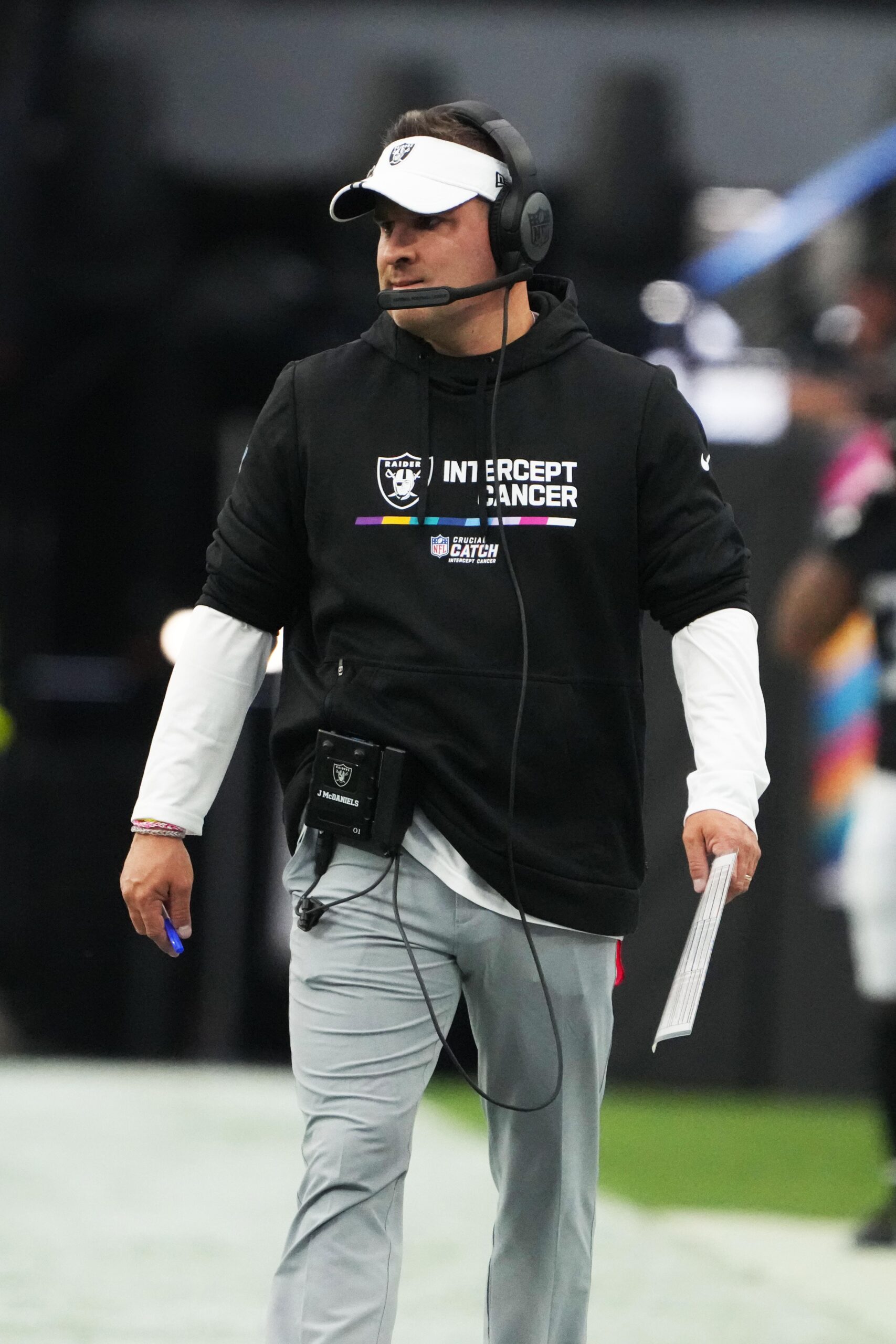
A guarantee gap — one that may not be especially wide — stands between the Giants and Barkley coming to terms, but more hurdles may be present on Jacobs’ path to an extension. Authorizing a big-ticket running back contract is incongruent with the way Josh McDaniels and GM Dave Ziegler are planning to build the Raiders’ roster, Robinson adds. This is in step with The Patriot Way, which has seldom rewarded backs.
New England did extend trade acquisition Corey Dillon in 2005, but running back value began to shift in the years following that agreement. The Patriots later passed on re-ups for Laurence Maroney, BenJarvus Green-Ellis, Stevan Ridley or Damien Harris. LeGarrette Blount‘s second Pats deal did not eclipse $2MM per year. After extending Dion Lewis on a low-level accord, the Patriots let the Titans pay him in 2018. Seeing as McDaniels and Ziegler are the latest ex-Patriot bastions given the keys to a franchise, how the Pats proceeded is relevant regarding the Raiders-Jacobs talks.
 The Raiders traded away their top-market tight end contract, growing concerned about Darren Waller‘s injuries and shipping him to the Giants, but still have three eight-figure-per-year wide receiver deals on the books. The team added ex-McDaniels Patriots charge Jakobi Meyers on a three-year, $33MM accord ($16MM guaranteed) to go with Davante Adams‘ $28MM-per-year pact and Hunter Renfrow‘s two-year, $32MM extension. Rumblings about Renfrow going into his last year with the Raiders have surfaced, but the veteran slot receiver remains tied to an upper-middle-class receiver contract.
The team is carrying Jacobs’ $10.1MM franchise tag number along with these wideout contracts, and while that cap hit would drop with an extension, it does not seem like too much urgency exists on the Raiders’ part. Unlike Barkley’s negotiations, no terms have come out to indicate where the Raiders are with Jacobs. The reigning rushing champion, however, has not sounded particularly pleased with how the talks have unfolded.
A Jacobs trade should not be considered out of the question, Bonsignore adds, but the bleak Austin Ekeler and Dalvin Cook markets make such a move an unlikely scenario. And tag-and-trade scenarios after the July deadline lead to rental agreements, since Jacobs would be unable to sign a long-term deal with anyone until 2024. McDaniels also may face some pressure in Year 2, considering his 6-11 debut. Jacobs staying healthy — after logging a league-high 393 touches — will be key for the second-year Las Vegas HC. But the team does not appear ready to pay up to keep Jacobs around past 2023. The former first-rounder staying in Vegas beyond this season may be contingent on him making a major compromise.
Barkley has collected nearly $40MM during his five-year career; Jacobs has accumulated just more than $11MM in four seasons. Neither player is a realistic candidate to follow in Le’Veon Bell‘s 2018 footsteps, and Jacobs — despite a rumor that suggested Week 1 is up in the air if no deal is reached by Monday — should be considered less likely than Barkley to pass on game checks. But if no deal happens over the next 70 hours, the Raiders should not expect to see their starting running back for a while.
No Deal Imminent Between Raiders, Josh Jacobs
The deadline for franchise-tagged players to sign a long-term deal is fast approaching, meaning the Raiders have plenty to do with respect to Josh Jacobs negotiations. Talks are not expected to produce an agreement in the immediate future. 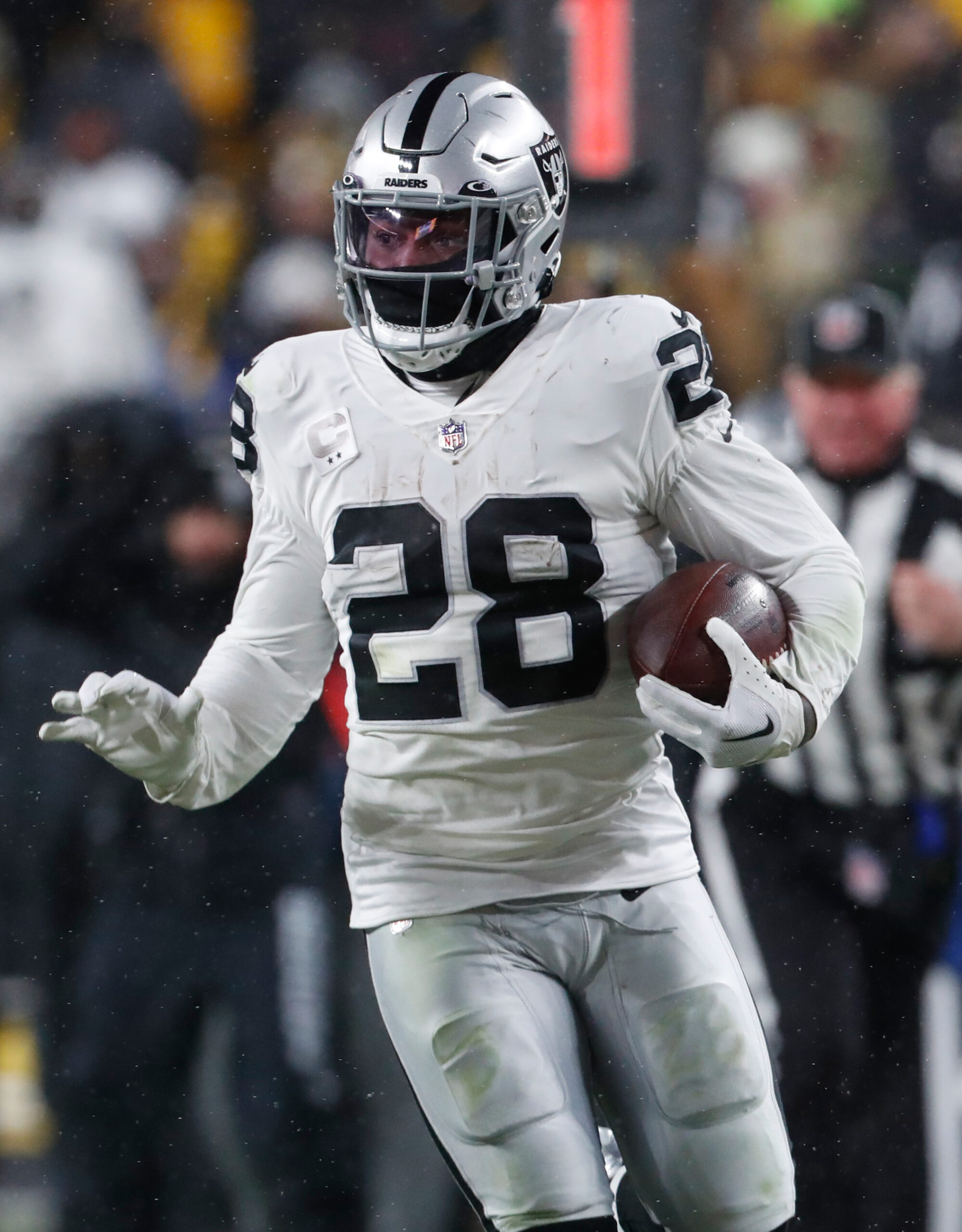
Instead, they are likely to “come down to the wire” on Monday, per The Athletic’s Vic Tafur (subscription required). A deal must be agreed upon by 3pm central on July 17 to avoid Jacobs (and the other three franchise tag recipients yet to sign a new contract) playing on the one-year pact in 2023. He would earn $10.1MM in that event, a lower figure than what his play last season would suggest he is worth on an extension.
The former first-rounder led the NFL in scrimmage yards in 2022, making the team’s decision to decline his fifth-year option a regrettable one in retrospect. Now, the Raiders are faced with the prospect of committing to a lucrative multi-year contract, or leaving one of the franchise’s most respected players disgruntled ahead of a season in which notable improvement compared to last campaign is seen as a requirement. The Dave Ziegler-Josh McDaniels regime must calculate Jacobs’ value within the context of what is unlikely to be an all-in approach in the near future.
The Alabama product has a fan in owner Mark Davis, however, and reports of mutual interest regarding an extension have emerged over the course of the offseason. Running backs have not fared well this offseason, though, which leaves the Raiders with plenty of leverage as negotiations continue. Jacobs has expressed frustration at his own financial situation and that of the position in general, leading to the outside possibility of a Week 1 absence on the All-Pro’s part.
Much of the speculation centered on the franchise tag has been related to Giants back Saquon Barkley, as negotiations on that front have become increasingly public. The situation has been quieter for Jacobs, but many have felt the two situations could be connected with respect to the value one (or both) will be able to earn on a long-term deal. On that point, Tafur adds that it “seems unlikely” either back will wait to see how the other fares, given the limited time remaining before the deadline.
Jacobs’ camp and the Raiders will have the weekend and Monday morning to hammer out an agreement, and both sides will presumably operate with more urgency in the coming days. The wait will, however, likely continue all the way to the deadline to determine if a satisfactory pact can be worked out in time.
Options As Clock Ticks Down On RB Franchise Tags
JULY 10: During an appearance on the Rich Eisen Show, Darlington added to his previous reporting on the Barkley and Jacobs situations (video link). He stated that Barkley remains the likelier of the two backs to ultimately sign a long-term deal before the deadline, with Jacobs’ tenure in Vegas having seemed uncertain since the arrival of head coach Josh McDaniels last year. Many of the remaining RB free agents – including, quite possibly, Dalvin Cook – will see their value determined in part by the developments (or lack thereof) which take place with the Giants and Raiders in the coming days.
JULY 9: Running back has notoriously become the most difficult position at which to earn a salary worth your performance in the NFL. For the clearest examples we’ve seen of this, look no further than Josh Jacobs and Saquon Barkley.
Both running backs delivered elite performances in contract years, which at any other position would set them up for big extensions. Unfortunately, both players were franchise tagged by their respective teams and have threatened holdouts to try and gain leverage in their contract negotiations. So, how do their teams respond to the situation? After talking with league executives, Dan Graziano of ESPN provided a few options.
The first option involves both players getting a “fair market” deal, a new contract extension that will keep Jacobs and Barkley home. Another option involves the team’s doing nothing. They would allow the backs to play out their tags and likely tag them a second time the following offseason. A third option would try to avoid the second. With the second option being the most likely, the teams could offer the two a two-year, fully guaranteed deal that would pay slightly more than two consecutive franchise tags. This provides slightly more security over the next year and a half before the two would hit free agency again. Lastly, Graziano mentions a fourth, “nuclear” option of rescinding the tags then signing someone cheaper.
Because the combination of youth and rookie contracts have proven some success in the recent past, it really feels like most of the decision lies with the teams. Both teams have the simple option of locking the backs down with the franchise tag and then tagging them a second time in 2024 at a still relatively cheap price, compared to other positions. In that situation, the teams get to have their star running backs for the 2023 season but aren’t committed to them past that. If either back shows signs of regression next season, they can allow them to walk away at no financial risk. Jacobs and Barkley can always hold out during the regular season (as their own financial burden), but they’ll just come out the other side in a similar situation.
With the deadline for franchise players to sign multi-year contract approaching on Monday, July 17, conversations are expected to pick up between the teams and running backs. New York and Las Vegas are both expected to make some last-ditch efforts to sign their backs to a deal other than their franchise tags. If either player gets a deal done before the deadline, it will certainly lay the groundwork for the other.
Regardless, in today’s NFL, hitting the open market is the worst-case scenario for a running back. If two consecutive franchise tags is the alternative, at least it keeps them on a roster for 2023. Barkley’s relationship with the Giants has proven a bit less rocky than Jacobs’s relationship with the Raiders, so it might be on Barkley and New York to set the tone if new deals are going to get done.
Looking Into The Four Remaining Franchise Tag Situations
Less than two weeks remain until this year’s franchise tag extension deadline. Following spring extensions for Lamar Jackson and Daron Payne, four franchise-tagged players remain. Three of those (Saquon Barkley, Evan Engram, Josh Jacobs) have not signed their respective tenders. Cowboys running back Tony Pollard has, guaranteeing his 2023 salary.
If no extension agreements are finalized before 3pm CT on July 17, these players will be tied to the tag this season. For players who remain on the tag after that date, no long-term negotiations are permitted until season’s end. With one position dominating the tag landscape this year, here is how the four situations look entering crunch time:
Saquon Barkley, Giants; tag price: $10.1MM
Easily the negotiation that has brought the most twists and turns, Barkley has been in off-and-on talks with the Giants since November. The Giants’ Joe Schoen–Brian Daboll regime inherited Barkley, but they have extended two other Dave Gettleman-era draftees (Daniel Jones, Dexter Lawrence) this offseason. But the team’s most popular player finds himself is battling another leaguewide devaluation of the running back position. As Barkley turned down two offers with AAVs north of $12MM — one of those being higher than $13MM per year — the Giants pulled their top proposal off the table after their March extension-tag sequence involving Jones and Barkley.
Barkley, 26, took issue with being characterized as greedy, citing Giants leaks that did not reveal the full truth about the offers he declined. Insufficient guarantees hover at the root of Barkley’s gripes. With the Giants having the option of re-tagging Barkley for barely $12MM in 2023, it is understandable the two-time Pro Bowler would seek a guarantee north of $22MM per year — to cover both tags.
Only two veteran backs (Christian McCaffrey and Derrick Henry) are tied to deals including more than $20MM fully guaranteed. While McCaffrey encountered injuries on his second contract, the 1,000-1,000 performer did not run into Barkley’s rookie-deal health issues. Those could certainly be giving Giants brass pause regarding guarantees.
These talks have included rumblings of Barkley skipping training camp — if unsigned by July 17 — and a (likely idle) threat of following Le’Veon Bell‘s 2018 path of sitting out the season in protest. The Giants are believed to be OK with Barkley playing on the tag, but ownership remains high on the former No. 2 overall pick. That might be driving the recent optimism in these talks. The skill-position-deficient Giants relied on Barkley (1,650 scrimmage yards) last season, and while they have let two players (Jason Pierre-Paul, Leonard Williams) play on the tag, the team has never not extended a player whom it tagged. (Both D-linemen signed extensions after being tagged again.)
Evan Engram, Jaguars; tag price: $11.35MM
Barkley’s former Giants teammate broke through for a Jaguars single-season tight end record last season, posting 766 receiving yards to boost Trevor Lawrence‘s development. The Jaguars added Calvin Ridley but cuffed Engram as well. Both the Jags and the seventh-year tight end want to strike a deal, but the most recent rumor coming out of these talks placed the sides as far apart on terms.
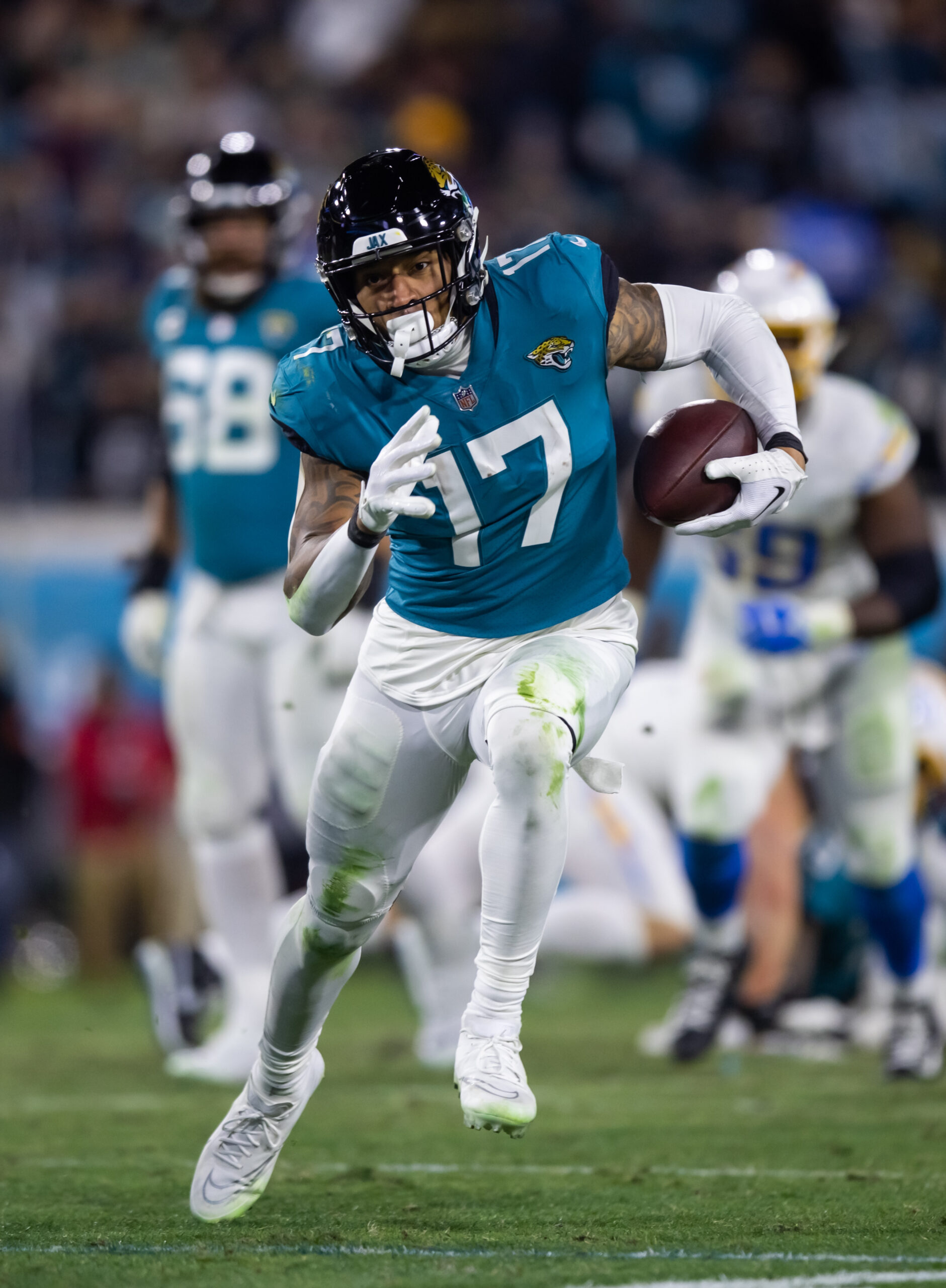 Dating back to their Julius Thomas miss, the Jaguars have struggled to staff this position. Engram provided a win for GM Trent Baalke, whose first free agency class as lead Jags decision-maker made significant contributions. But Engram also has a history of inconsistency, having never put it together for an extended stretch as a Giant. Engram does have an original-ballot Pro Bowl nod on his resume (2020) and saw the Giants pick up his fifth-year option prior to that performance. His 2021 provided a letdown, but the Giants — with Jones going down with a neck injury that November — were not exactly in position to see any pass catcher thrive at that point.
Guarantees are undoubtedly an issue here. A 2024 Engram tag would cost $13.62MM, likely giving the 28-year-old pass catcher a guarantee target of $25MM. Only three veteran tight ends (Mark Andrews, George Kittle, Hunter Henry) have secured that at signing, but with those deals taking place in 2020 or ’21, Engram can make a case — on a $224.8MM salary cap — he deserves such security as well. The tight end market appears out of step with its top cogs’ contributions, with Travis Kelce still tied to a $14.3MM-per-year deal. That offers an interesting complication in these Engram discussions as well.
Josh Jacobs, Raiders; tag price: $10.1MM
A threat to miss game checks makes more sense from Barkley, who has earned nearly $40MM in five seasons. Jacobs following suit is less logical, as he has made $11.9MM in four NFL years. The Raiders passed on Jacobs’ fifth-year option, and he proceeded to become the team’s first rushing champion since Marcus Allen did so in a 1985 MVP season. Jacobs, 25, zoomed onto the tag radar with his 2022 performance, but while the Giants have made multiple offers to Barkley, it is unclear if the Raiders are making a serious push to extend Jacobs. The team is still hopeful, but numbers have proven elusive.
The Alabama product has offered cryptic assessments of his negotiations, hinting at making a stand for the running back position. Seeing as Bell has expressed belated regret for passing on $14MM with his 2018 anti-tag crusade, it would surprise if Barkley or Jacobs stayed away into the season. It might be a negotiating tactic, as RBs are low on leverage these days, but the threat of Jacobs skipping Week 1 has surfaced. With Josh McDaniels in a crucial year — after his first Raiders HC season went south quickly — and the Raiders now employing the league’s most injury-prone quarterback (Jimmy Garoppolo), Jacobs putting regular-season absences on the table is an interesting move.
While Jacobs is still more likely than not to be in uniform in Week 1, the prospect of an injury or regression affecting his 2024 market should be a factor here. Jacobs’ light Crimson Tide workload (251 college carries) worked in his favor, but the Raiders giving him an NFL-most 393 touches last season undercuts that advantage to a degree. Players to log that many touches in a season over the past 10 years (Henry, McCaffrey, Bell, DeMarco Murray) either fared far worse the following year or, in Bell’s case, skipped the next season.
With Jacobs not the same threat out of the backfield McCaffrey, Barkley or Alvin Kamara are, a top-market pact will be hard for the fifth-year vet to secure. With McDaniels previously expressing support for the Jon Gruden-era draftee, will be interesting to see what numbers come out of these talks.
Tony Pollard, Cowboys; tag price: $10.1MM
The Cowboys are certainly unafraid to unholster their franchise tag, having used it in each of the past six years. In addition to keeping Pollard away from free agency, Dallas tagged Dalton Schultz, Dak Prescott and DeMarcus Lawrence in that span. With Prescott and Lawrence being tagged twice and Schultz leaving after his tagged season, the Cowboys have been fine letting players carry tag figures into seasons. Considering Pollard’s is the lowest cap hit among Dallas’ recent tags, the team is likely OK with the $10MM number staying on its books this year.
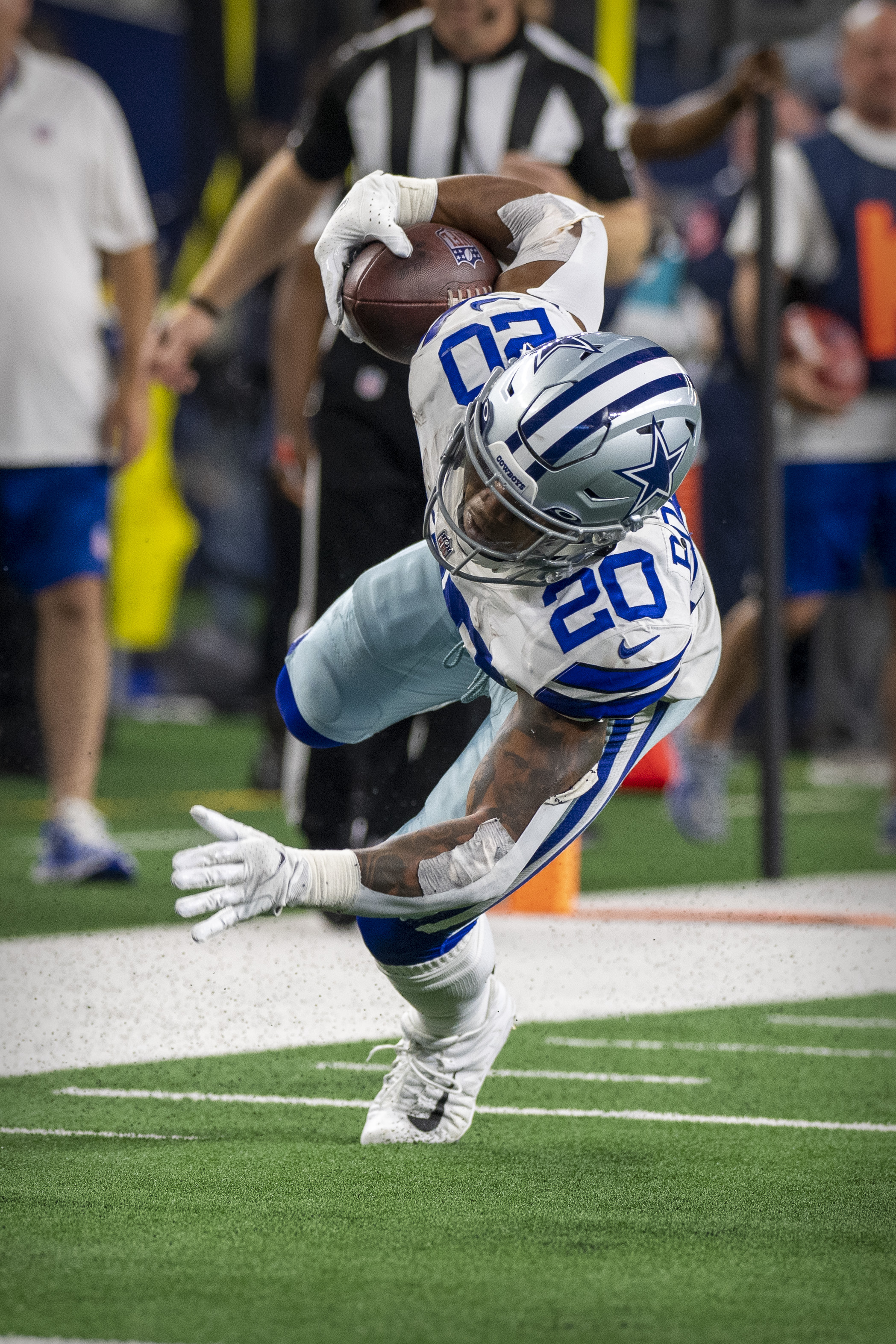 Pollard, 26, presents perhaps a more interesting case for a mid-2020s ascent compared to the Giants and Raiders backs. He has taken just 510 handoffs as a pro — Barkley sits at 954, Jacobs at 1,072 — and offers pass-game explosiveness that helped lead Dallas to drop Ezekiel Elliott.
The six-year, $90MM Elliott extension did not age well for the Cowboys, who are eating $11MM-plus in dead money over the next two years after the post-June 1 cut designation. But Elliott also accumulated more mileage (868 carries) before signing that extension. Pollard’s rookie-contract usage rate and skillset point to a promising late-20s stretch. Although Elliott’s deal helped spread out his cap hits, the Cowboys are eyeing a shorter-term Pollard pact.
As a former fourth-round pick, Pollard was smart to sign his tender and secure the guaranteed salary. Coming off a season in which he totaled 1,378 scrimmage yards and 12 touchdowns, the Memphis alum’s arrow is pointing up. The Cowboys can look at the deal the Packers gave dual-threat back Aaron Jones in 2021 (four years, $48MM) as an example of a good contract for a multipurpose back. The organization’s history with re-tagging players should also point to Pollard aiming for $22MM-plus in guarantees, but with no back earning between $7MM and $12MM on average, both Pollard and the team have interesting decisions to make in the coming days. Unlike Schultz’s 2022 tag period, however, updates have been scarce regarding Pollard talks.
This Date In Transactions History: Raiders In Contract Dispute With Rookie RB
Josh Jacobs and the Raiders are currently engaged in a stare down regarding the running back’s next contract. Interesting, this isn’t the first time Jacobs and his camp have been embroiled in a contract dispute with the organization.
 [RELATED: Raiders’ Josh Jacobs Could Sit Out Week 1?]
On this date in 2019, we learned that negotiations weren’t progressing between the Raiders and their rookie running back. In fact, things were so bad, there was growing belief that Jacobs would not report for the start of training camp.
This kind of threat was almost unheard of following the 2011 collective bargaining agreement, with rookie contracts and signing bonuses being mostly predetermined. So, while Jacobs was the team’s only unsigned draft pick at this point of the offseason, it was assumed that negotiations weren’t contentious and would be finalized eventually.
While some first-year players pushed for changes to the offset language in their rookie contracts, Jacobs was actually looking for changes to the payment schedule of his signing bonus. As our own Rory Parks pointed out at the time, teams don’t have to pay the full amount of a bonus upfront and can instead pay in installments. If the player suffers a non-football injury, the team can then withhold or even recover part of that signing bonus. While the running back surely wasn’t counting on an NFI stint, it made sense that he was looking to cash in as soon as possible.
Ultimately, Jacobs ended up signing his four-year, $11.9MM contract (not including a fifth-year option). The signing came three weeks after the organization inked their other two first-round picks, Clelin Ferrell and Johnathan Abram.
The rookie quickly showed off his first-round pedigree, finishing second in Offensive Rookie of the Year voting after finishing with 1,316 yards from scrimmage and seven touchdowns. He topped 1,300 yards again in 2020, this time adding 12 touchdowns.
His counting stats took a step back in 2021, and with a new regime at the helm, the Raiders didn’t pick up Jacobs’ fifth-year options. As an impending free agent, the running back proceeded to have the most productive season of his career in 2022, finishing with 2,053 yards from scrimmage and 12 touchdowns. The Raiders slapped Jacobs with the franchise tag following the season.
Despite the production, the Raiders and Jacobs still haven’t been able to agree on a long-term extension, with the two sides having until July 17 to negotiate a new contract. Throughout the ordeal, Jacobs has talked of taking a stance for future running backs, and he’s also hinted at “bad business” coming from the Raiders organization.
Even with the looming deadline, Jacobs is still threatening to sit out games in 2023 if he’s not signed to an extension. In that scenario, Jacobs still wouldn’t get his wish of a new deal, and he’d be sacrificing game checks once the regular season starts. Still, you clearly can’t put it past the running back to hold out, even if there’s little financial incentive when all is said and done. We can just point to the RB’s contract dispute with the organization back in 2019, and while Dave Ziegler has since replaced Mike Mayock as the Raiders GM, the front office is surely aware of who they’re dealing with.
Raiders’ Josh Jacobs Could Sit Out Week 1?
Running back Josh Jacobs has already missed the Raiders offseason program and mandatory minicamp as he pursues a long-term pact, and he could extend his unofficial holdout into the regular season. During an appearance on the Rich Eisen Show, NFL Network’s Tom Pelissero hinted that Jacobs could sit out part of the regular season if he doesn’t get a new deal.
[RELATED: Raiders Not Closing Door On Josh Jacobs Extension]
“The one [running back situation] that nobody’s talking about is Josh Jacobs,” Pelissero said (h/t to CBS Sports’ Tyler Sullivan). “At this point, if there’s not a long-term deal, I don’t anticipate Josh Jacobs being there at the start of training camp and I don’t know that he shows up Week 1.”
Jacobs was slapped with the franchise tag earlier this offseason, locking him into a guaranteed $10.1MM salary for next season. Since Jacobs hasn’t signed his franchise tag, he wouldn’t face any penalties for missing training camp or preseason games. If he sits out regular season games, he would lose checks for each contest missed.
Jacobs and the Raiders have until July 17 to negotiate a long-term deal. As a result of that deadline, any hypothetical Jacobs holdout wouldn’t do anything to help his case for signing a long-term pact in 2023. The running back could point to preserving future earnings as a reason for sitting out regular season games, but running backs like Le’Veon Bell and Melvin Gordon struggled to recoup their value when they followed a similar mindset.
It’s not a surprise that Jacobs is trying to grasp at the little leverage he has as we get closer to that July 17 deadline. Jacobs has previously talked of taking a stance for future running backs, and he’s also hinted at “bad business” coming from the Raiders organization. The threat of a holdout probably won’t be enough to make the Raiders front office blink, but if the two sides don’t agree to a long-term deal, the organization at least has to prepare for a potential Jacobs absence.
We heard earlier this week that the Raiders wanted to lessen Jacobs’ workload in 2023 while expanding the roles of 2022 draftees Zamir White and Brittain Brown. White got into 14 games as a rookie, collecting 70 total yards from scrimmage. Brown got into six games as a rookie but exclusively played on special teams.
Raiders Notes: Hobbs, Pass Rush, Jacobs
Let’s round up a few notes on the NFL’s Sin City franchise:
- Raiders cornerback Nate Hobbs, a fifth-round pick in 2021, earned nine starts in his first professional season and started all 11 contests he appeared in last year (he missed six games with a broken hand). Working primarily as a boundary corner, the Illinois product regressed a bit from his strong rookie campaign, when he spent most of his time in the slot. Per Vic Tafur and Tashan Reed of The Athletic (subscription required), Hobbs would like to return to nickelback, where he apparently feels more comfortable. However, Tyler Hall, who played in seven games (three starts) for Las Vegas in 2022 after joining the club’s taxi squad in October, is expected to push Hobbs for that role.
- During this year’s predraft process, we learned that the Raiders were eyeing Texas Tech edge rusher Tyree Wilson and believed that Wilson (or a similar player) could ease some of the burden on Chandler Jones, thereby making Jones more productive after the veteran underwhelmed during his first season in Vegas. Of course, the club ended up selecting Wilson with the No. 7 overall pick, and as Albert Breer of SI.com writes, the Raiders hope that Wilson’s presence will allow both the 33-year-old Jones and soon-to-be 26-year-old Maxx Crosby to see less time on the field. The coaching staff envisions a rotation among the three players to keep everyone fresh, healthy, and productive. Indeed, Wilson himself saw his final college season cut short due to a Lisfranc injury, though he is expected to be cleared in time for training camp.
- The Raiders also want to create more of a rotation for their running backs. Assuming franchise-tagged RB Josh Jacobs does not hold out — both he and the club are reportedly motivated to strike an accord on a multiyear deal prior to the July 17 deadline — he will obviously be the feature back. But as Vincent Bonsignore of the Las Vegas Review-Journal writes, the team wants to expand the roles of 2022 draftees Zamir White and Brittain Brown in an effort to ease Jacobs’ workload and, perhaps, to begin preparing for a Jacobs departure in 2024.
Raiders Not Closing Door On Josh Jacobs Extension
Some recent cryptic social media posts from Josh Jacobs would seem to suggest the franchise-tagged running back is displeased with his Raiders talks. The reigning rushing champion has just more than three weeks to reach an extension agreement.
Less has come out regarding the Raiders’ long-term plans with Jacobs compared to the Giants’ negotiations with Saquon Barkley. While at least two known Giants offers have surfaced, no numbers have emerged in the Jacobs-Raiders talks. This could point to no true negotiations having taken place, even after the key Raiders decision-makers have praised the former first-round pick this offseason. As of April, no serious talks had begun. Conversely, the Giants had already submitted the two offers to Barkley (and rescinded them) by that point.
The quiet nature of these talks aside, Vincent Bonsignore of the Las Vegas Review-Journal notes both sides are motivated to reach an agreement before the July 17 deadline. The Raiders not simply viewing this as a potential rental year is notable, but it is clear a sizable gap needs to be bridged between team and player before an agreement can be expected.
Devalued significantly over the past decade and change, the running back position has taken more lumps this offseason. Two of the top four RB contracts — given to Ezekiel Elliott (2019) and Dalvin Cook (2020) — are no longer active, with the Cowboys and Vikings moving on from their longtime starters. This year’s top free agency RB contract (Miles Sanders‘ $6.35MM-per-year Panthers pact) checked in nearly $10MM south of Christian McCaffrey‘s long-position-topping AAV. It is safe to assume Jacobs, Barkley and Tony Pollard would have done better if allowed to hit the market, but it does not look like any of the tagged backs are in position to threaten McCaffrey’s $16MM-per-year position record.
While six running back deals at or north of $11.5MM per year remain, the Packers gave Aaron Jones a pay cut — in exchange for additional 2023 guarantees — and the Bengals have long prepared to impose a slash on Joe Mixon‘s $12MM-AAV accord. The bottom drops out after the Jones deal, with James Conner‘s $7MM-per-year Cardinals contract the only one between Sanders’ and the eight-figure-per-year crowd. Jacobs obviously will have his sights set on checking in near the McCaffrey-Alvin Kamara tier ($15MM-plus per annum), but if the Raiders are comfortable with his $10.9MM tag salary being on the books, the fifth-year back carries minimal leverage.
Jacobs, 25, did not enter the NFL with a heavy college workload (just 251 carries in three Alabama seasons), but he totaled an NFL-leading 393 touches last season. Of the four backs who topped that over the past 10 years (McCaffrey, DeMarco Murray, Le’Veon Bell and Derrick Henry), each failed to come close to matching their production the following year. McCaffrey and Henry suffered injuries in 2020 and 2021, respectively, while Murray gained just 702 yards in 15 Eagles games in 2015. Bell sat out the 2018 season, protesting a second Steelers tag, but was never the same upon returning to action.
Through that lens, it would probably behoove Jacobs to cash in now. An injury could affect his 2024 value. But without knowing what the Raiders are offering — or if a firm offer has been put on the table — it is difficult to assess his strategy. He is tied to a $10.9MM guarantee, but that money does not become locked in until he signs his franchise tender.
Jacobs, Barkley and Jaguars tight end Evan Engram have not signed their respective tenders and thus can skip training camp free of fines. While Barkley has pocketed nearly $40MM in his career, Jacobs has barely made a fourth of that ($11.9MM). The latter should not be considered a live candidate to skip regular-season games. Rookie-deal earnings aside, neither should Barkley. The threat of missed game checks has given teams leverage in negotiations with tagged players since the tag’s 1993 inception.
Jacobs is the first Raiders tag recipient since Tyvon Branch in 2012. The former Oakland safety reached an extension agreement, but Jacobs is in a more complicated position. Will this end in a deal before July 17?