
Falcons To Use Feleipe Franks In Hybrid Role
Briefly thought to be the winner of the Deshaun Watson sweepstakes, the Falcons were among the teams most heavily connected to a quarterback in this year’s draft after the Browns swooped in and submitted the winning bid for Watson. Atlanta did indeed select a QB, adding Cincinnati signal-caller Desmond Ridder in the third round, and the club also signed free agent passer Marcus Mariota in March, shortly after trading franchise icon Matt Ryan to the Colts.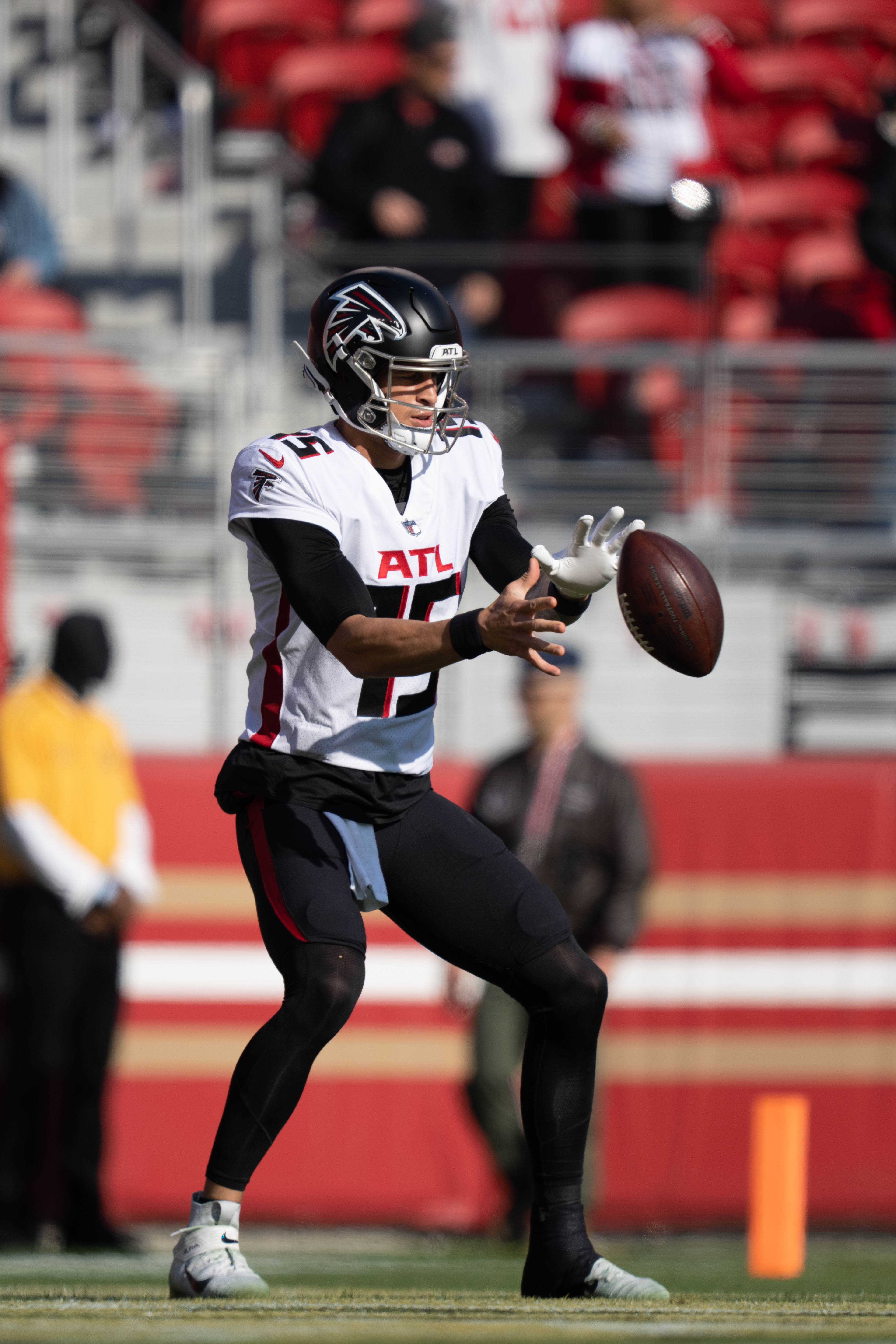
With Mariota and Ridder at the top of the first QB depth chart of the post-Ryan era, 2021 UDFA Feleipe Franks was facing long odds to see the field, at least as a quarterback. As such, the team has converted Franks to a “hybrid” player, as head coach Arthur Smith recently told reporters, including D. Orlando Ledbetter of the Atlanta Journal-Constitution (subscription required).
Franks enjoyed a successful redshirt sophomore season with Florida in 2019 and then suffered a season-ending ankle injury early in the 2020 season. He finished his collegiate career with SEC rival Arkansas, throwing 17 TDs against just four interceptions in nine games with the Razorbacks in 2021. The Falcons signed him after he went undrafted last April, and he made the roster as the third-string QB behind Ryan and Josh Rosen. He was elevated to QB2 late in the season.
While Franks will still sit in the quarterback room and take reps as a passer, he is also getting work as a tight end, where he got some practice time last season as well. At 6-6, Franks has the right height for a TE, but at 228 pounds, he is a little light relative to full-time tight ends around the league.
“Right now, it doesn’t mean that doesn’t change, but right now he’s working more at tight end than quarterback, but he also is a quarterback,” offensive coordinator Dave Ragone said.
Perhaps the Falcons are envisioning a role like the one Taysom Hill has enjoyed in recent seasons with the Saints, though Franks’ 2.2 yards-per-carry rate as a collegian is a far cry from Hill’s 5.3 YPC average, which he has replicated as a pro. If Franks is to have success as a hybrid player, it will likely be more as a receiver than as a runner.
Atlanta, of course, has 2021 first-rounder Kyle Pitts entrenched as its top tight end option, and the team has also made significant investments into the rest of its receiving corps this offseason, signing fellow TE Anthony Firkser, trading for WR Bryan Edwards, and drafting wideout Drake London with the No. 8 overall pick. So Franks will still have something of an uphill battle to make an impact as a pass catcher, but he has embraced the opportunity.
“I’m doing whatever they ask me to,” he said. “There are a lot more things I have to learn. A lot of the tight ends in the room have helped me with my route crafting and blocking. There are a ton of things I need to learn.”
Latest On Minkah Fitzpatrick, Kenny Pickett Contracts
In terms of overall structure, the extension that the Steelers recently authorized for star safety Minkah Fitzpatrick is fairly straightforward. As Mike Florio of Pro Football Talk writes, Fitzpatrick landed a $17.5MM signing bonus, and from 2022-26, the two-time First Team All-Pro will earn base salaries of $4MM, $14.5MM, $14.5MM, $15.5MM, and $17.6MM.
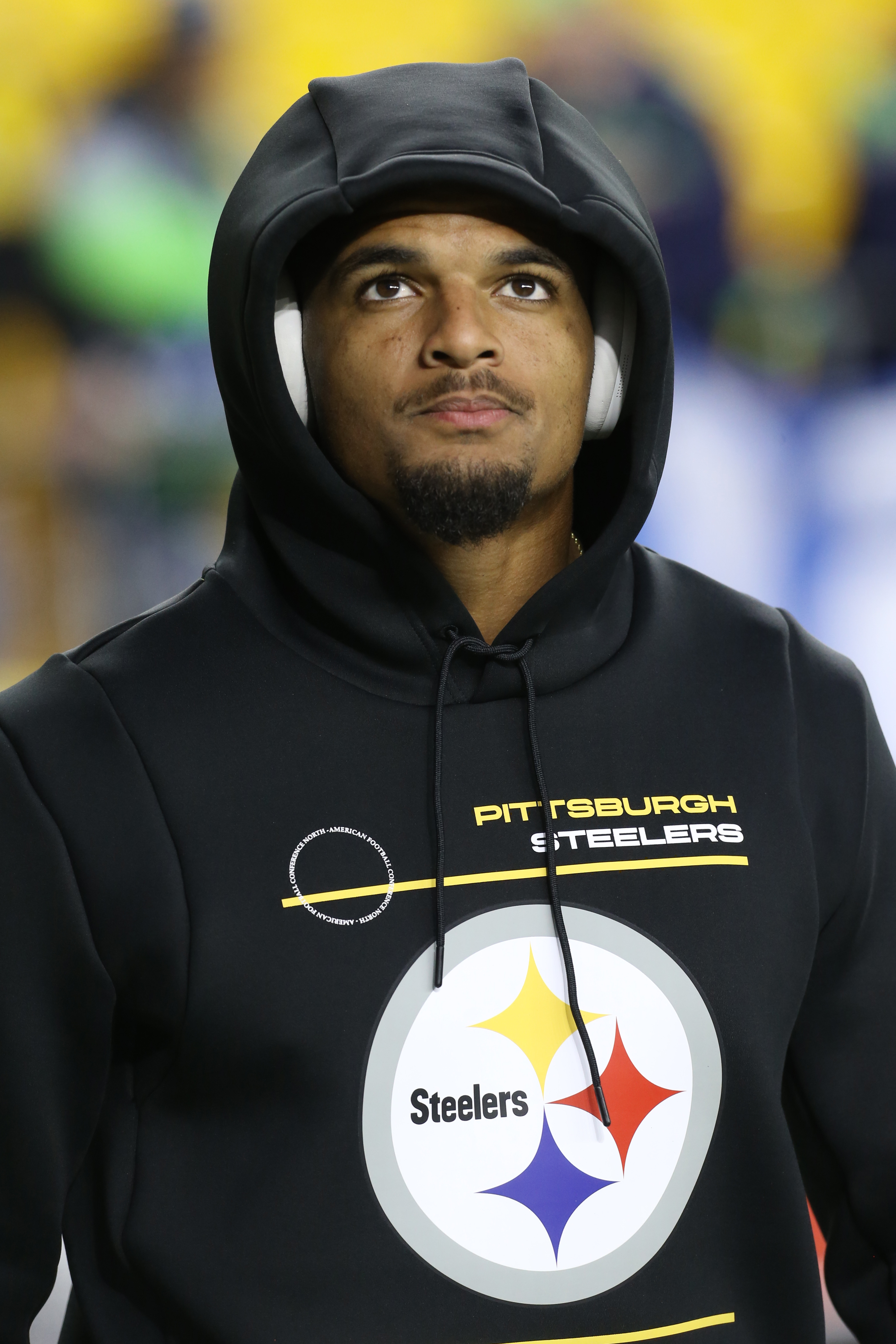
What is particularly notable in light of Pittsburgh’s historic approach to contract negotiations is that, in addition to guaranteeing Fitzpatrick’s $4MM salary for 2022, his $14.5MM salary for 2023 is also fully-guaranteed. Before edge defender T.J. Watt signed his record-setting extension last year, the Steelers had never guaranteed any money beyond a contract’s first year for a non-QB veteran player. But Watt landed three fully-guaranteed years, and now Fitzpatrick has two fully-guaranteed seasons.
Former GM Kevin Colbert was at the helm when Watt’s deal was signed, and the Fitzpatrick signing will go on new GM Omar Khan‘s ledger. Khan, like Colbert, has been in the Steelers’ front office for over 20 years, so as Florio suggests, the Watt contract was not so much an aberration as it was a sign of an organizational policy shift.
Still, Fitzpatrick’s deal shouldn’t be particularly difficult for Pittsburgh to stomach. There is every reason to believe that the 25-year-old will continue to play at a high level over the 2022-23 seasons, and if the team does not want to continue the relationship beyond that, it will be easy enough to get out of the remainder of the contract. Given that the Steelers’ QB depth chart presently features a rookie signal-caller (Kenny Pickett), a former first-rounder looking to reestablish himself as a starter (Mitchell Trubisky), and a player who has enjoyed limited success in his first four years as a pro (Mason Rudolph), it will be especially important for their defensive stars to keep shining for them to to stay competitive in the near term.
Speaking of Pickett, the University of Pittsburgh product is one of just two 2022 first-rounders who have yet to sign their rookie deals. And it could be that he is pushing the Steelers to set yet another new precedent. As Ben Volin of the Boston Globe writes, the structure of Pickett’s four-year, $14MM fully-guaranteed contract is really the only explanation for the delay. Many rookies push for higher roster bonuses and lower base salaries so they can get paid more money upfront, but the Steelers have never authorized that type of payout. It will be interesting to see if they make an exception for the player they hope will serve as their starting quarterback for years to come, and if so, how that will impact negotiations with future draft choices.
Patriots CB Jack Jones To Challenge For Starting Role?
The Patriots lost top cornerback J.C. Jackson in free agency this offseason, and one of the biggest questions facing the club ever since has been how it will replace the 2021 Pro Bowler. Earlier this month, we learned that Malcolm Butler had emerged as the favorite to fill that void, but as Mike Reiss of ESPN.com writes, fourth-round rookie Jack Jones is already making a strong case of his own.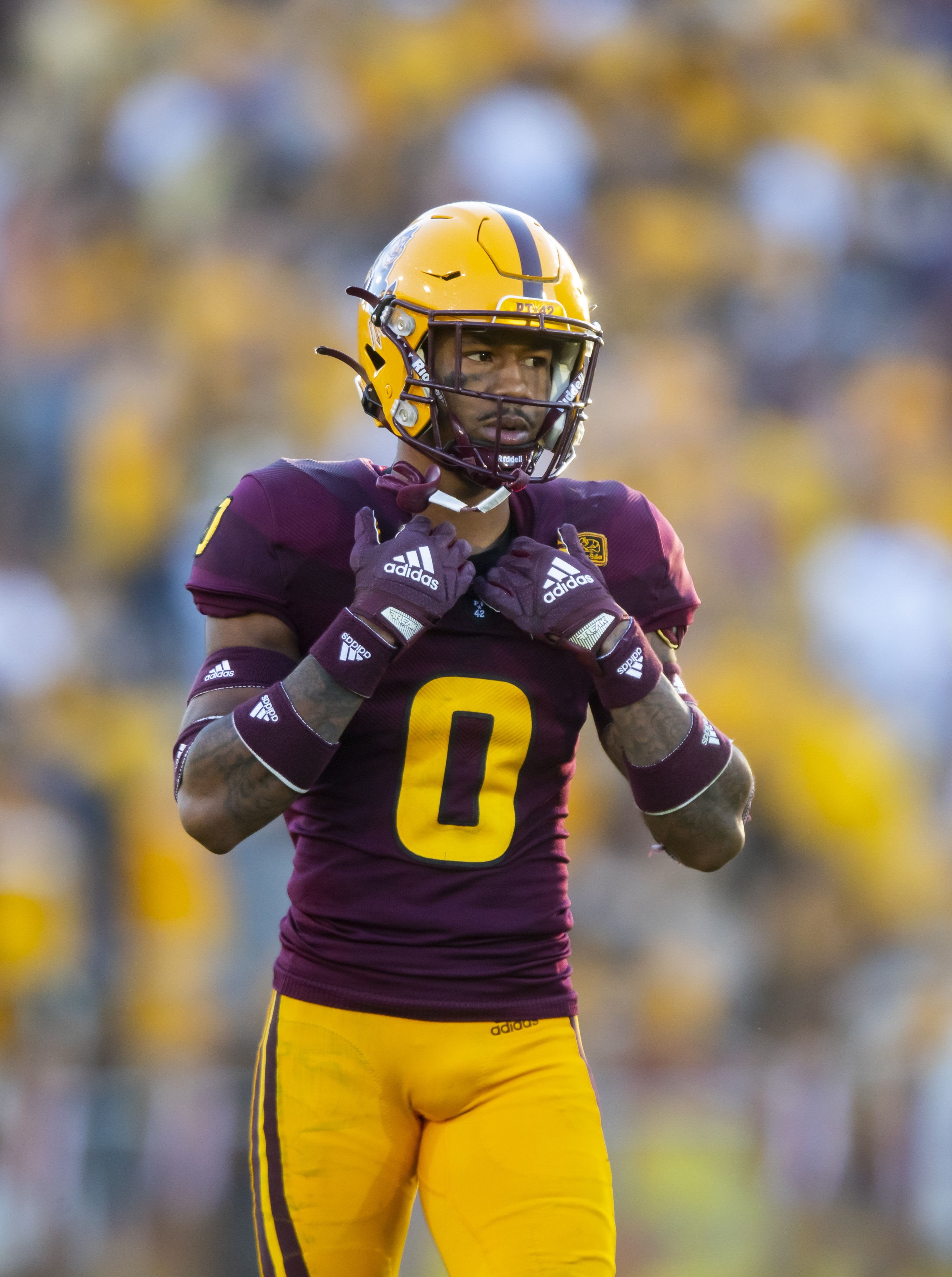
Reiss observes that Jones lined up across from Jalen Mills — a 16-game starter in 2021 — during one mandatory minicamp practice. Jones was able to maintain tight coverage against some of New England’s top wideouts, and he also flashed his instincts in intercepting rookie quarterback Bailey Zappe.
His coverage ability and ballhawking traits were on display throughout Jones’ tumultuous collegiate career. A five-star recruit, Jones committed to USC and started all 14 of the Trojans’ games during his sophomore season in 2017, intercepting a team-high four passes. However, he was ruled academically ineligible for the 2018 season, and in June 2018, he was arrested for breaking into a restaurant after hours (he resolved that matter by pleading guilty to a second-degree misdemeanor charge of commercial burglary).
USC dismissed him from the program, and after a year at Moorpark College, he enrolled at Arizona State. Under the tutelage of former NFL defensive back and head coach Herm Edwards, Jones intercepted three more passes in 2019, but he once again hit a roadblock in 2020, when he was suspended for violating team rules and appeared in just one game. He put himself back on the NFL radar in 2021, playing 11 games and picking off three passes.
As one might expect in light of that history, Jones is a little older than most rookies, as he will turn 25 in December. And while it can be fairly argued that his off-field issues led to his falling to the fourth round, he was not a perfect prospect even from an on-field perspective, despite his obvious ball skills. He lacks ideal size for an outside-the-numbers corner (5-10, 177), displayed inconsistent technique in college, and can struggle when attempting to press opposing receivers.
Still, the Patriots and HC Bill Belichick have never been afraid to blaze their own trail in the draft. Jones’ instincts and route recognition offer a strong foundation to build upon, and he has an opportunity that many fourth-rounders do not have. Although Mills appears to have one starting CB spot locked up, he is not exactly irreplaceable, and the same can be said of veteran Terrance Mitchell, who signed a one-year, $3MM deal with New England in March after being released by the Texans.
Butler has a permanent place in Patriots lore for his heroics in Super Bowl XLIX, but he did not play at all in 2021, as he went into a pseudo-retirement. He is also 32, and while he signed a two-year contract to return to Foxborough, the Pats can easily release him (and Mills) after the 2022 season with minimal dead cap ramifications.
So if Jones can continue to progress after his strong showing in spring practices, he could soon find himself in the starting lineup, even if Belichick opts to err on the side of veteran experience when the regular seasons opens.
Panthers’ Robbie Anderson Contemplating Retirement?
JUNE 15: Addressing the matter at Panthers minicamp, Anderson said he was merely “thinking out loud” and was not seriously considering walking away, via Panthers.com’s Darin Gantt (on Twitter). Two years remain on the wideout’s current Carolina contract.
JUNE 12: Panthers wide receiver Robbie Anderson — who announced this offseason that he would be changing the spelling of his first name from “Robby” to “Robbie” — tweeted yesterday that he was contemplating retirement. “Ain’t gone lie Thinking bout Retiring,” Anderson said (via Michael David Smith of Pro Football Talk). Anderson later deleted the tweet.
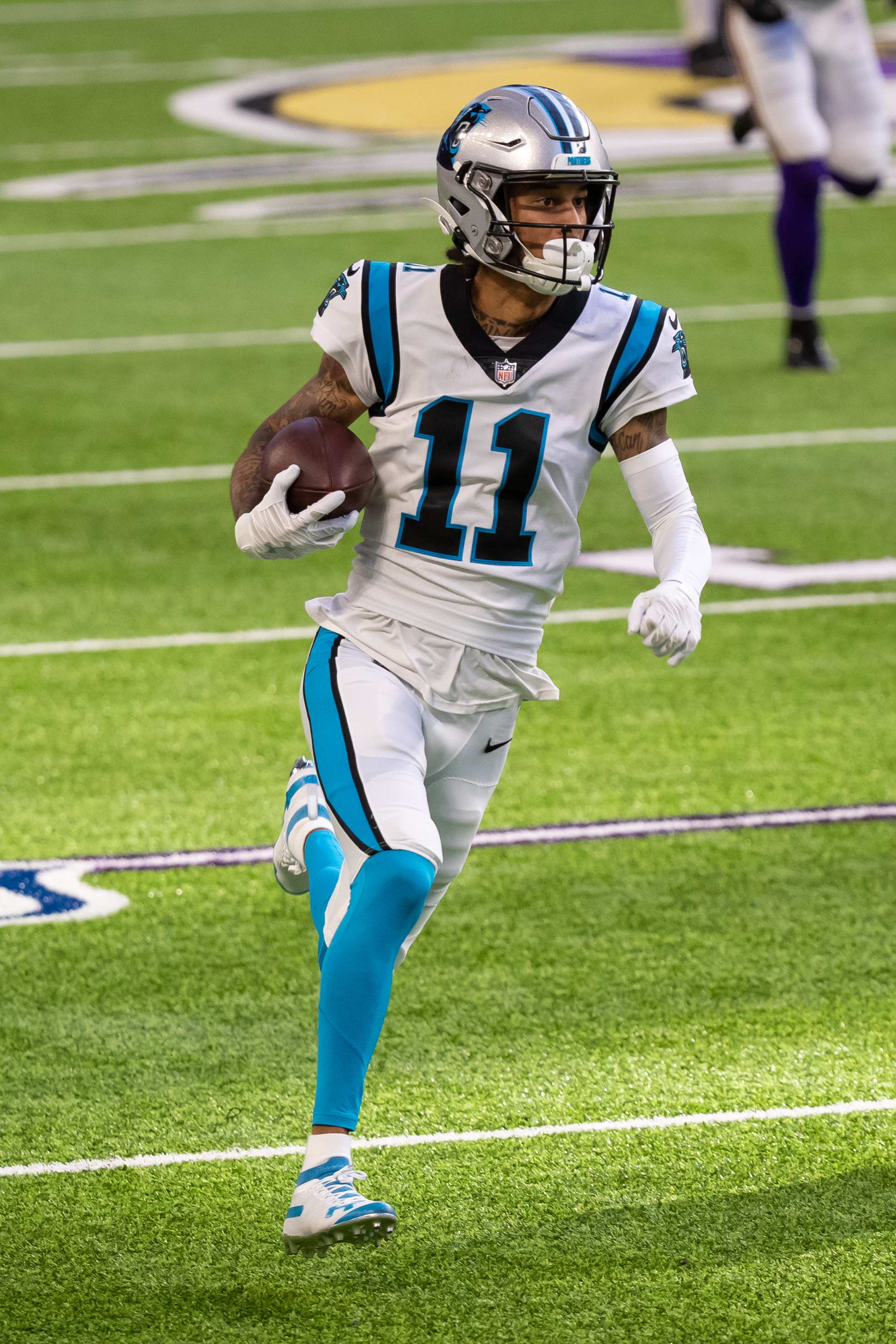
It’s unclear if Anderson is truly considering leaving the game, or if he had something else on his mind. With mandatory minicamp scheduled to take place this week, there may be more clarity in that regard in short order. For now, he is expected to reprise his role as a starting boundary receiver opposite D.J. Moore.
In 2020, his first year in Carolina, Anderson posted career-highs in targets (136), receptions (95), and receiving yards (1,096). The deep threat’s yards-per-reception rate (11.5) was down considerably from the averages he posted as a member of the Jets, but that could be explained by the fact that the Panthers deployed Teddy Bridgewater — whose deep ball is not a strength — under center that season. On the flip side, Anderson’s catch percentage, which never exceeded 58.8% during his time in New York, skyrocketed to 69.9% in 2020, thereby demonstrating that he could work intermediate routes just as well as deep routes.
The Panthers handed Anderson a two-year, $29.5MM extension shortly before the 2021 season got underway, but in a campaign filled with inconsistent quarterback play from Sam Darnold, Cam Newton, and P.J. Walker, the former UDFA took a major step back in almost every statistical category. Anderson was still targeted 110 times, but he caught just 53 of those targets, for a career-worst catch percentage of 48.2%. His 519 receiving yards and 9.8 yards-per-reception were also career lows.
Perhaps attempting to buy low, the Patriots engaged the Panthers in trade talks earlier this offseason. Nothing materialized on that front, although Carolina — which subsequently added Rashard Higgins in free agency — was reportedly more than willing to listen to offers.
The club and Anderson later agreed to a restructure for cap purposes, whereby $11.765MM of Anderson’s 2022 salary was converted to a signing bonus. As Smith observes, Anderson would have to pay back that signing bonus if he were to retire, so it seems unlikely that he will actually hang up the cleats this year.
However, the 29-year-old’s future in Charlotte beyond 2022 is certainly up in the air. Although he is under contract through 2023 as a result of the aforementioned extension, his cap charge for the 2023 season spikes to $21.7MM from just under $11MM this year. If he can return to his 2020 level of performance, player and team could work out another extension, and if he cannot, the Panthers will almost certainly release him.
Speculatively, Anderson’s retirement chatter might have stemmed from discontent with the Panthers’ QB situation. The club was unsuccessful in its Deshaun Watson pursuit — which may not have been a bad thing, given recent developments — and currently has Darnold, Walker, and third-round rookie Matt Corral as the top three passers on the depth chart. Carolina continues to be linked to Browns passer Baker Mayfield, but Anderson seems to be decidedly against a potential Mayfield acquisition.
Raiders’ Clelin Ferrell Getting Reps At DT
Clelin Ferrell, the No. 4 overall selection of the 2019 draft, was the first draft choice made by then-Raiders GM Mike Mayock. The pick was widely panned at the time, and it did not get better with age, as Ferrell has failed to make much of an impact in his first three years in the Silver-and-Black. 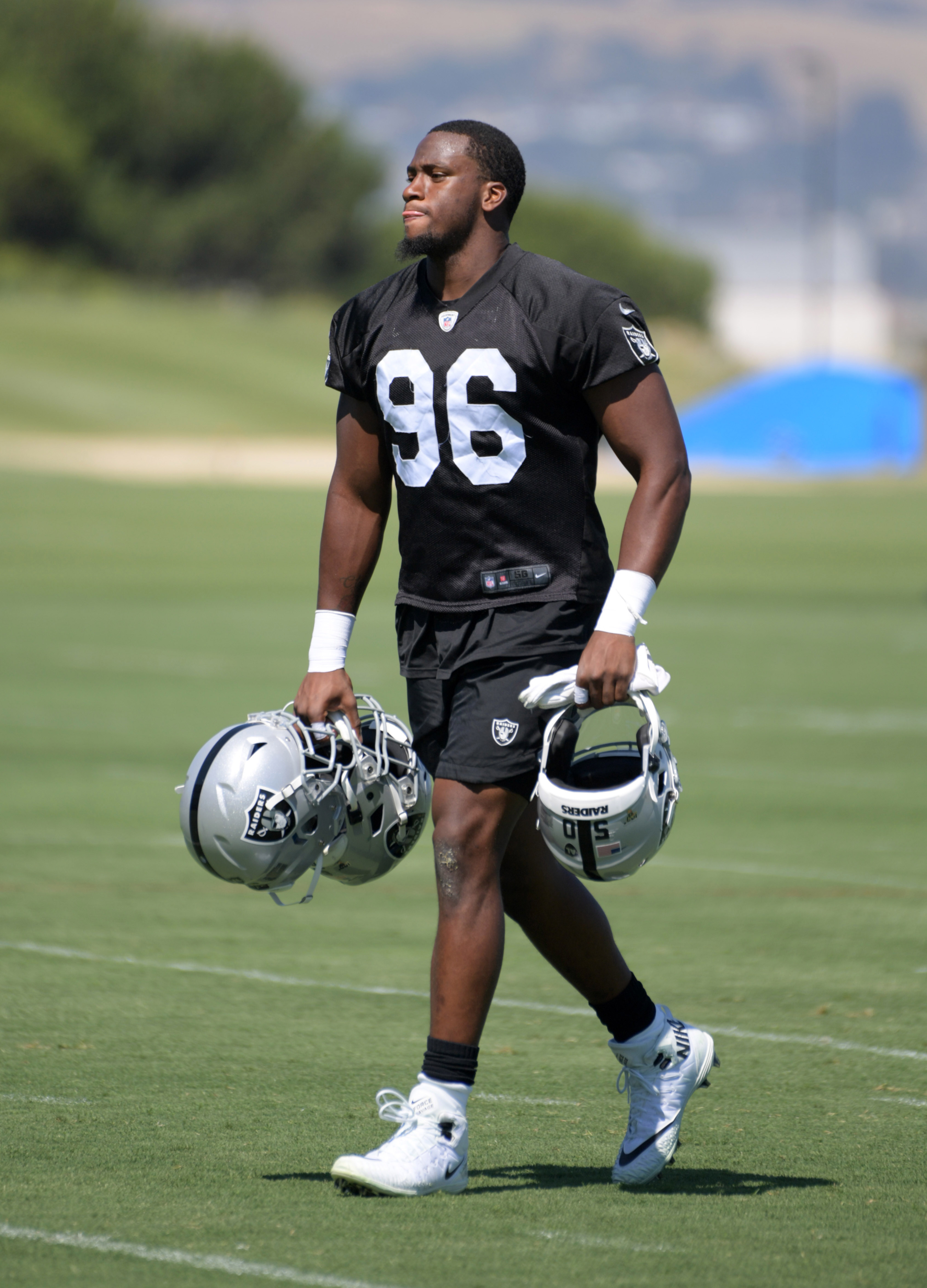
Mayock was fired in January, and the club’s new regime, fronted by GM Dave Ziegler and HC Josh McDaniels, declined Ferrell’s fifth-year option in May (they also declined the options for the Raiders’ other two first-round picks in 2019, Josh Jacobs and Johnathan Abram). As such, 2022 will be a platform year for Ferrell, who will earn $4.77MM this season.
As Vincent Bonsignore of the Las Vegas Review-Journal writes, Ferrell was seeing significant time at defensive tackle during last week’s minicamp. That would constitute a noteworthy position change for a player who established himself as a defensive end during his college career. Upon his arrival in the NFL, preference was quickly given at that spot to fourth-rounder Maxx Crosby, though, who has emerged as a franchise cornerstone and been signed to a sizeable extension.
The presence of Crosby and other edge rushers – including Yannick Ngakoue in 2021 – has led to serious drops in Ferrell’s playing time; his path to an increase in snaps would be further blocked by Chandler Jones this year. That makes a position switch a logical experiment at this point in the offseason. The Raiders have seen several changes along the interior of their defensive line, and brought in Tyler Lancaster, Vernon Butler, Bilal Nichols, Andrew Billings and Kyle Peko in free agency, while also using Day 3 picks on Neil Farrell Jr. and Matthew Butler in the draft.
At six-foot-four, 265 pounds, Ferrell could have the frame to operate on the inside this season. Given how his career has panned out so far, and the team’s resulting actions, his performance – regardless of where he lines up – will go a long way to determining his future.
Adam La Rose contributed to this post.
Trent Brown At LT, Isaiah Wynn At RT, During Patriots’ Minicamp; Latest On Cole Strange
Could Isaiah Wynn‘s absence from Patriots OTAs, which compelled New England to deploy Trent Brown at left tackle in Wynn’s stead, have precipitated a permanent shakeup? Per Jeff Howe of The Athletic (subscription required), Wynn suited up at right tackle during mandatory minicamp last week, while Brown remained at left tackle.
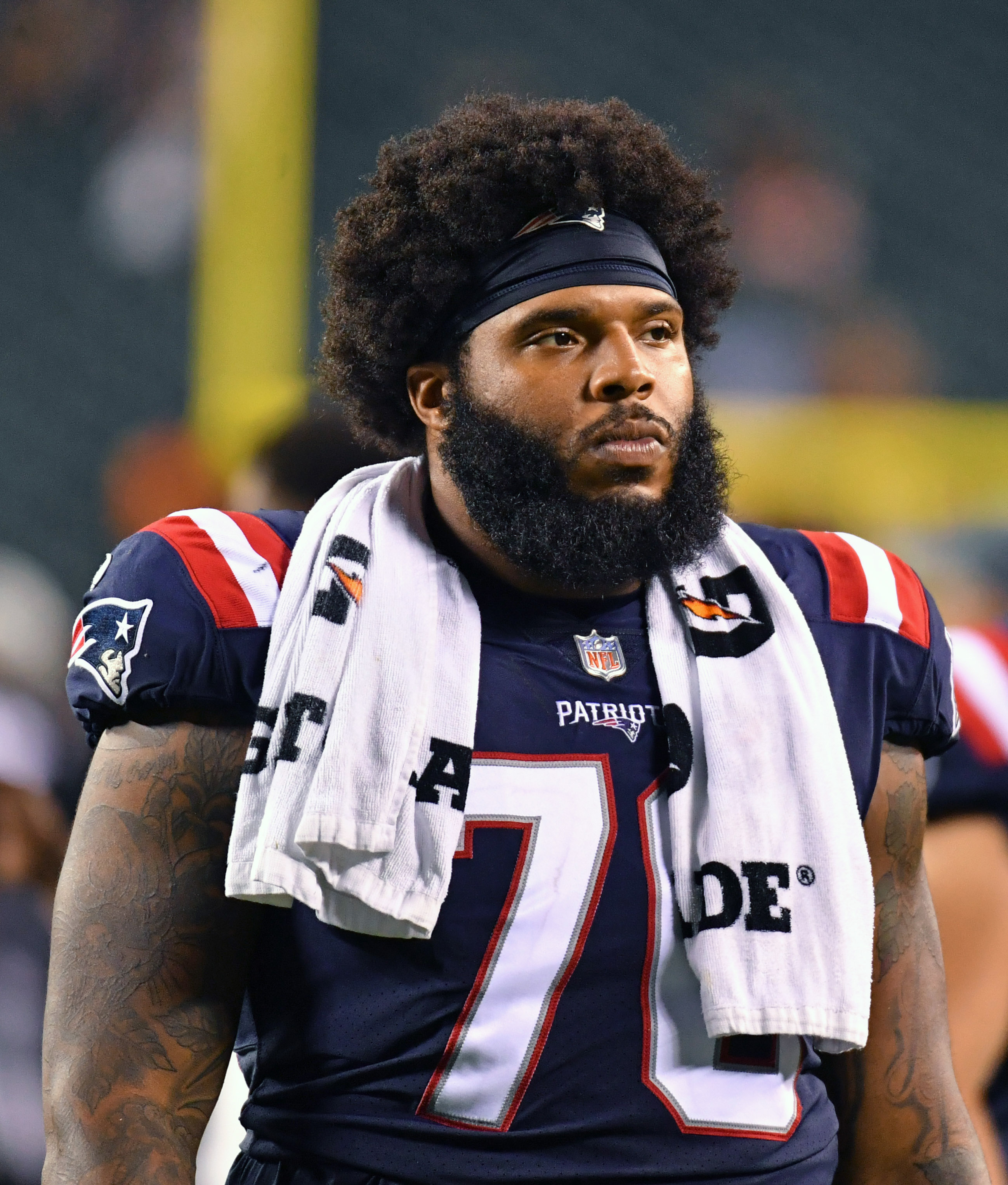
Howe reminds us that, at the Patriots’ 2018 minicamp — during Brown’s first stint in Foxborough — Brown worked at LT while Wynn lined up at RT. The two players switched roles for that year’s training camp, but Wynn suffered an Achilles tear during a preseason game several weeks later, and he missed the entire season as a result. Following Wynn’s injury, Brown returned to left tackle and parlayed a strong showing at the position into a lucrative free agent contract with the Raiders the following offseason.
Still, there is precedent for the team to use Brown and Wynn at LT and RT, respectively, before training camp begins, only to have them flip-flop when the serious work gets underway in late July. On the other hand, 2018 was Wynn’s rookie season, so it could be that head coach Bill Belichick was simply easing him into the professional ranks during minicamp that year.
So there is no way of knowing what Belichick is currently envisioning with respect to his OL bookends, though he downplayed the significance of last week’s minicamp alignment. When asked about Wynn’s RT time, Belichick said it is in keeping with the team’s modus operandi for the last 20 years, thereby suggesting that he is merely trying to create positional flexibility (via Andy Hart of WEEI.com).
Wynn, who is entering a platform year and whose earning power could be seriously undermined if he were to remain at right tackle, is saying the right things at this point. “Do I like the change? It’s wherever they need me, player,” he said. When asked about his contract status, he replied, “I ain’t worried about no contract right now. I’m focused on being the best player I can be for the team so we can move forward to the season. … That’ll come when it comes.”
Another factor to consider is that Brown, not Wynn, has been the one developing chemistry with rookie first-rounder Cole Strange, the team’s presumptive LG. Although many pundits believed New England was reaching when it made Strange the No. 29 overall pick of this year’s draft, Mike Reiss of ESPN.com said the Chattanooga product looks like a plug-and-play starter, so the reps shared by him and whomever lines up to his left are especially meaningful.
On a related note, Strange is just one of two 2022 first-rounders who have yet to sign their rookie deals (Steelers QB Kenny Pickett is the other). As Ben Volin of the Boston Globe writes, there are a few reasons for that. One, the Pats simply do not have enough cap space at the moment, which is a matter that can easily be resolved. Two, it could be that Strange is angling for larger roster bonuses and lower base salaries over the life of his rookie deal, just so he can get his money more quickly every year. And finally, while the top 28 picks of the 2021 draft received fully-guaranteed contracts, last year’s No. 29 selection, Eric Stokes, received a 96% guarantee for the fourth and final year of his rookie accord. Since Strange is this year’s No. 29 pick, perhaps a modicum of guaranteed money is at issue between player and team.
However, even the 30th-32nd picks in this year’s draft class received a 100% guarantee, so Strange has some leverage here if that really is one of the reasons for the delay.
Lions Notes: QB2, Williams, Sosna
The Lions passed on adding a quarterback in this year’s draft, and they will go into the 2022 season with Jared Goff as their starting signal-caller. Behind Goff on the depth chart are Tim Boyle and David Blough, both of whom re-signed with the club in March.
Boyle, who joined the Packers as a UDFA in 2018 and who signed with the Lions last offseason after Green Bay non-tendered him as a restricted free agent, started the first three games of his career in 2021 in relief of an injured Goff. Detroit went 0-3 in those contests, and Boyle completed 64.9% of his passes for three TDs against six interceptions. Blough, meanwhile, has been in the Motor City since he was acquired in a minor trade with the Browns in advance of the 2019 campaign. He has not started a game since that 2019 season, when he went 0-5 with a 64.0 QB rating and a 4:6 TD:INT ratio.
Obviously, the club’s QB2 options are less than inspiring, but the battle between Boyle and Blough will be meaningful for both players as they attempt to extend their NFL careers. And head coach Dan Campbell said it will be an open competition when training camp begins next month, as Dave Birkett of the Detroit Free Press writes.
“Competition is great thing,” Campbell said. “I respect what both of them did this spring. That’s what I love about both of them. I know they are going out there to compete against each other.”
Now for several more Lions-related items:
- As expected, rookie wideout Jameson Williams will not be on the field when training camp opens, as Birkett writes in a separate piece. Per Birkett, Williams — who tore his ACL in the 2022 College Football Playoff National Championship Game in January — is likely to begin camp on the active PUP list, which is consistent with earlier reporting on the matter. If he has not been medically cleared when the regular season begins, he will revert to the reserve PUP list and will be required to miss at least the first six weeks of the season. The Lions are not expected to be a playoff outfit in 2022, and GM Brad Holmes has stated that Williams will be brought along slowly. Given his vast potential, which compelled Holmes to make an aggressive trade up the draft board from No. 32 to No. 12 to land the Alabama star, a conservative approach makes sense. Holmes does expect Williams to suit up for the club this season, though that might not be until November, and Campbell conceded that Williams will spend most of the summer rehabbing. Given all of that, a reserve PUP list designation appears to be the most likely outcome here.
- The Lions have hired Brandon Sosna as senior director of football administration, according to Pete Thamel of ESPN.com. Sosna, who worked as a salary-cap and contract analyst for the Browns from 2017-18, had served as the right-hand man to USC athletic director Mike Bohn since 2019. The Trojans reportedly made a strong push to retain Sosna, but the opportunity to rejoin the NFL ranks was too appealing for the UPenn alumnus to turn down.
- Yesterday, Lions DL John Penisini announced his retirement.
- Our Adam La Rose recently profiled Lions TE T.J. Hockenson as an extension candidate.
Seahawks HC Pete Carroll On QB Competition
Geno Smith and Drew Lock have been engaged in a battle for the Seahawks’ starting quarterback job throughout the team’s spring work, and Smith has been taking the bulk of the first-team snaps. Head coach Pete Carroll, echoing offensive coordinator Shane Waldron‘s recent remarks, said that Smith continues to lead the race after mandatory minicamp, which took place last week.
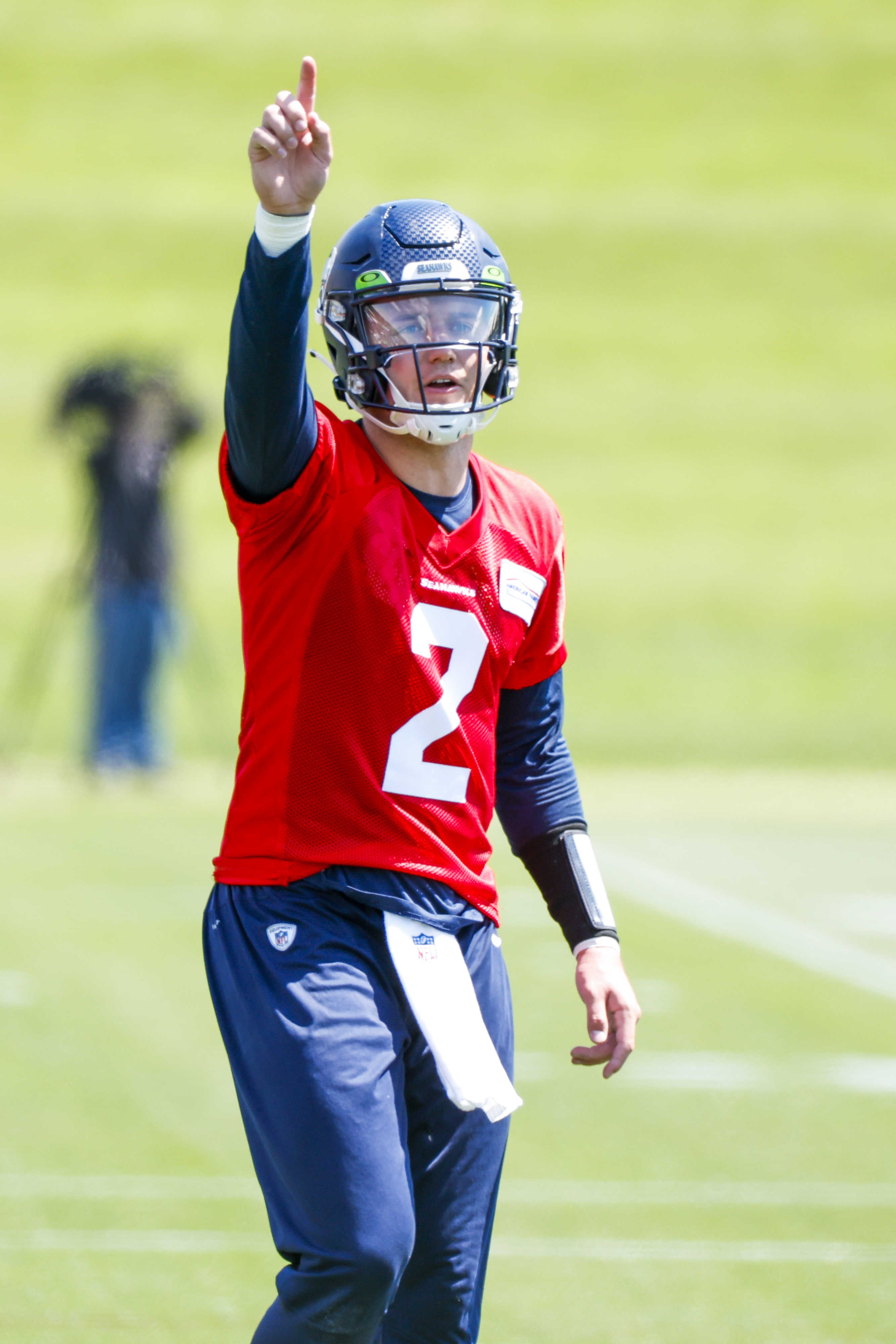
“Geno’s still ahead, you can tell that,” Carroll said, via Liz Mathews of Seahawks Wire. However, like Waldron, Carroll was quick to point out that the competitors’ current status is largely a function of their familiarity with the offense. Smith has been with the club since 2019, and Lock was just acquired in March as part of the blockbuster trade that sent Russell Wilson to the Broncos.
Carroll added, “it’s not going to be too much for Drew to be caught up. By the time we get through [training] camp he’ll be there. He’s really bright. It makes sense to him. He’s really sharp in the huddle and at the line of scrimmage and all of that. So it’s just time that he needs, and there’s nothing we can do but gain some more of that.”
As Mathews confirms, both Smith and Lock will get opportunities with the first-team offense when training camp opens in July. It has been reported that, despite Lock’s early-career struggles in Denver, Seattle brass truly believes that he can emerge as a legitimate NFL starter, and Albert Breer of SI.com recently detailed GM John Schneider‘s faith in the Missouri product. Breer expects Lock to be anointed the QB1 before the regular season begins, and given his age (25) and the upside that the organization apparently sees in him, it’s not difficult to see why.
The 31-year-old Smith, meanwhile, had started only two games from 2015-20 before being forced into action last year in the wake of Wilson’s finger injury. In four games (three starts) in 2021, the former Jets second-rounder performed reasonably well, completing over 68% of his passes for five TDs against just one interception, while adding nine carries for 42 yards and a TD. In all three of his starts, Smith posted QB ratings of at least 94.3.
Still, his age and limited usage make it clear that Smith is no longer viewed as a franchise passer. So it makes sense that the ‘Hawks would give Lock every opportunity to prove his worth in 2022, and if he cannot live up to his potential, Seattle will be in the market for a QB next offseason.
Carroll, though, is not tipping his hand. “It’s gonna be a real battle,” he said. “It’s going to be really an exciting time for our team and for those guys in particular and for our people watching. I’m pumped up about it. I really am.”
Of course, a possible Baker Mayfield acquisition continues to loom over the Lock-Smith duel. Although the Seahawks are not expected to trade for the disgruntled Browns passer, the team reportedly would be interested if Cleveland ultimately elects to cut him.
Kenny Moore Wants To Be Paid As Elite Corner
Colts cornerback Kenny Moore is unhappy with his current contract, and the latest reporting on the matter suggested that negotiations towards a new deal have not gained much traction. Moore, who is due base salaries of $6.5MM and $6.795MM over the next two years, believes those figures are not reflective of his value to the club.
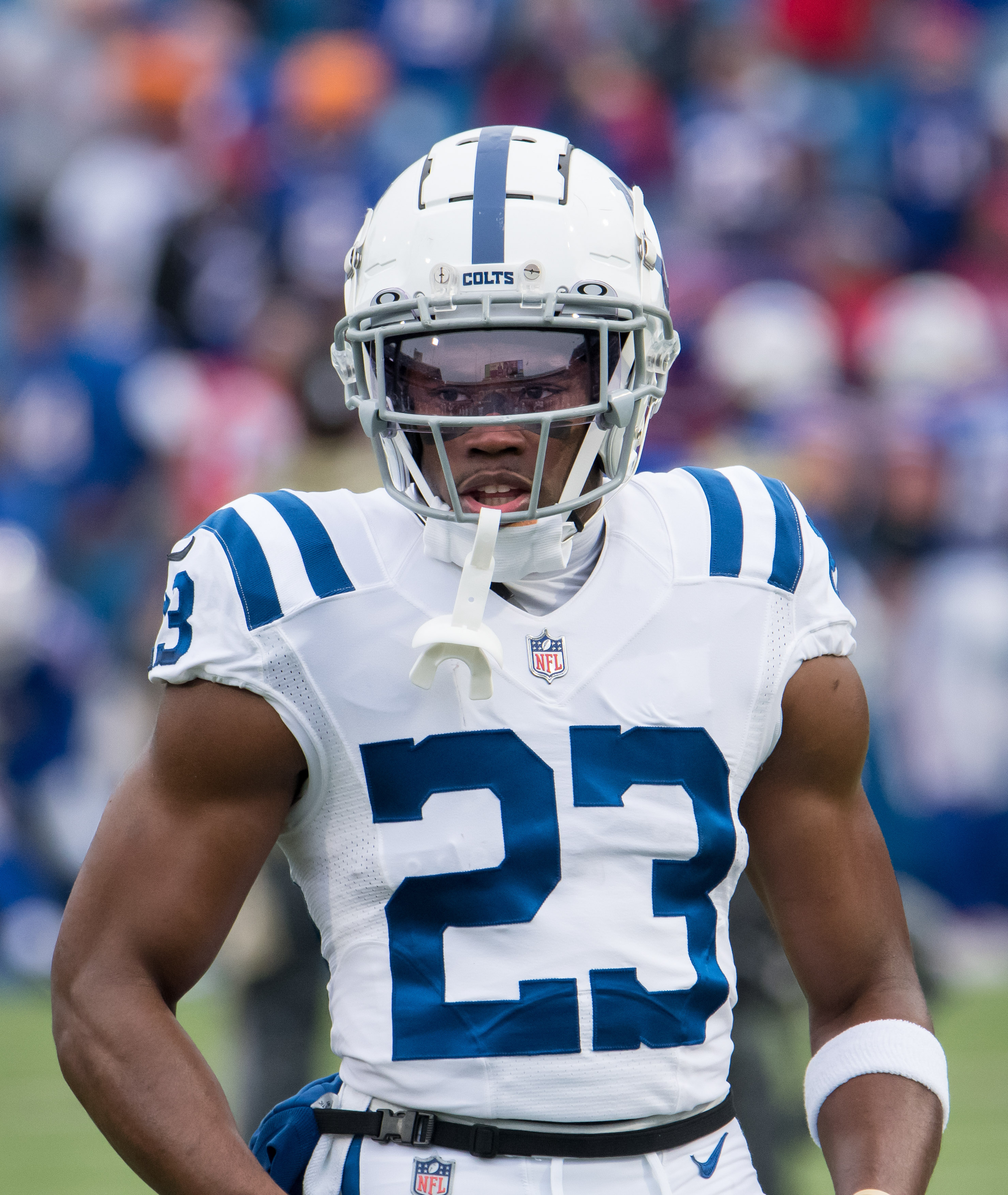
Specifically, as Zak Keefer of The Athletic tweets, Moore wants to be paid as an elite cornerback, not as an elite slot cornerback. “I want to play football … [I don’t] like the whole nickel slot corner thing,” Moore said. “I’m a corner at the end of the day. You guys watch the same games that we play.”
Moore’s current contract, signed in 2019, gave him $30MM in new money, which was a record for slot defenders. That deal was authorized after the former UDFA had accrued just two years of service time, and between that and the fact that the early payout gave Moore an opportunity to hit the open market before he turns 29 — to say nothing of the two years of club control that still remain — the Colts do not seem particularly inclined to offer many concessions.
On the other hand, Moore’s dissatisfaction is understandable. Because teams are deploying nickel packages more and more frequently, a team’s top slot DB is really a starter, and while no one has played more slot coverage snaps than Moore since 2018 — h/t Anthony Treash of Pro Football Focus — he has seen plenty of time outside the numbers and has proven adept at tackling in space and playing behind the line of scrimmage. He is also a bonafide playmaker, having notched eight interceptions over the last two seasons (including one pick-six), and he tallied 102 total tackles in 2021, which saw him earn his first Pro Bowl bid.
Still, there is a considerable gap between Moore’s $8.325MM average annual value and the AAVs enjoyed by the game’s elite boundary corners. Jaire Alexander‘s new contract with the Packers made him the first $21MM/year corner in NFL history — though that deal was comparatively light on guaranteed money — and there are ten CBs making at least $16.5MM per year. So even if the Colts agree to address Moore’s contract in some way, he probably should not expect to be catapulted into the top ten earners at the cornerback position.
Perhaps, as our Sam Robinson recently posited, the two sides can come together on some sort of incentive package for the 2022 campaign. And assuming Moore continues to perform at a high level, the Colts will probably be more serious about a lucrative extension next offseason, when Moore will be entering a platform year. The Valdosta State product did attend the team’s mandatory minicamp after skipping voluntary OTAs, so unless talks truly turn sour, it seems likely that he will appear for training camp as well.
Contract Details: Alexander, Moreau
Here are the details on several recently-signed contracts:
- Jaire Alexander, CB (Packers): Four years, $84MM. $30MM signing bonus (previously reported). Base salary of $1.076MM in 2022 creates manageable cap charge of $7.076MM. Base salaries remain modest in 2023-24 ($1.2MM and $6.65MM), but roster bonuses ($11.45MM due on third day of 2023 league year, $8MM due on third day of 2024 league year) are significant. Cap charge increases to $20MM in 2023. Base salaries increase to $16.15MM in 2025 and $18.15MM in 2026. Each year from 2023-26 includes weekly roster bonuses of up to $650K, workout bonuses of $700K, and $250K Pro Bowl escalator (Twitter thread via Rob Demovsky of ESPN.com).
- Fabian Moreau, CB (Texans): One year, $2MM. $1MM guaranteed ($350K signing bonus, $650K of $1.4MM salary). Up to $250K in weekly roster bonuses. $500K in available incentives (Twitter link via Aaron Wilson of Pro Football Network).