By Dallas Robinson |
at January 25, 2017 10:00 pm
In advance of March 9, the start of free agency in the NFL, Pro Football Rumors will detail each team’s three most glaring roster issues. We’ll continue this year’s series with the Green Bay Packers, who rallied from a poor start to take the NFC North crown before being defeated in the NFC championship game.
Pending Free Agents:
- Geronimo Allison, WR (ERFA)
- Don Barclay, G
- Jared Cook, TE
- John Crockett, RB (ERFA)
- Jayrone Elliott, LB (RFA)
- Brett Goode, LS
- Micah Hyde, DB
- Don Jackson, RB (ERFA)
- Datone Jones, DE/LB
- Joe Kerridge, FB (ERFA)
- Eddie Lacy, RB
- T.J. Lang, G
- Christine Michael, RB
- Julius Peppers, LB
- Nick Perry, LB
- Christian Ringo, DT (ERFA)
- Jacob Schum, P (ERFA)
- Joe Thomas, LB (ERFA)
- J.C. Tretter, C
- Jordan Tripp, LB (RFA)
Top 10 Cap Hits for 2017:
- Aaron Rodgers, QB: $20,300,000
- Clay Matthews, LB: $15,200,000
- Randall Cobb, WR: $12,750,000
- Sam Shields, CB: $12,125,000
- Jordy Nelson, WR: $11,550,000
- Mike Daniels, DL: $10,400,000
- Bryan Bulaga, T: $7,850,000
- Morgan Burnett, S: $7,000,000
- David Bakhtiari, T: $6,171,000
- James Starks, RB: $3,750,000
Other:
Three Needs:
1) Clean up the secondary: Let’s begin with one obvious fact: Anyone who watched Sunday’s NFC championship game witnessed the Falcons and quarterback Matt Ryan continuously torch Green Bay’s defensive backfield — which gave up the NFL’s most yards per attempt during the regular season — on their way to nearly 400 yards and four touchdowns. Here’s another obvious fact: Packers general manager Ted Thompson, for the most part, doesn’t venture into the free agency waters, preferring to build his club internally.
Those two opposing statements leave Green Bay with two possible offseason approaches to addressing its secondary. One option sees the club sticking to its usual formula, pinning its hopes on improvement from third-year cornerbacks Damarious Randall and Quinten Rollins, and filling in the gaps with developmental draft picks. Alternatively, the Packers could — as quarterback Aaron Rodgers termed it earlier this week — “reload” by attacking the free agent market with vigor for the first time since the Julius Peppers signing in 2014.
An offseason search for a free agent corner isn’t without precedent in Green Bay, as Thompson & Co. were suitors for Darrelle Revis in 2015. Cap room shouldn’t be an issue for the Packers, as the club already boasts more than $35MM in space and could clear more by releasing (or demanding a paycut from) Clay Matthews, Randall Cobb, Sam Shields, and James Starks. The open market should be flush with cornerback options, although a number of elite defenders — such as the Texans’ A.J. Bouye and the Rams’ Trumaine Johnson — could be facing the franchise tag.
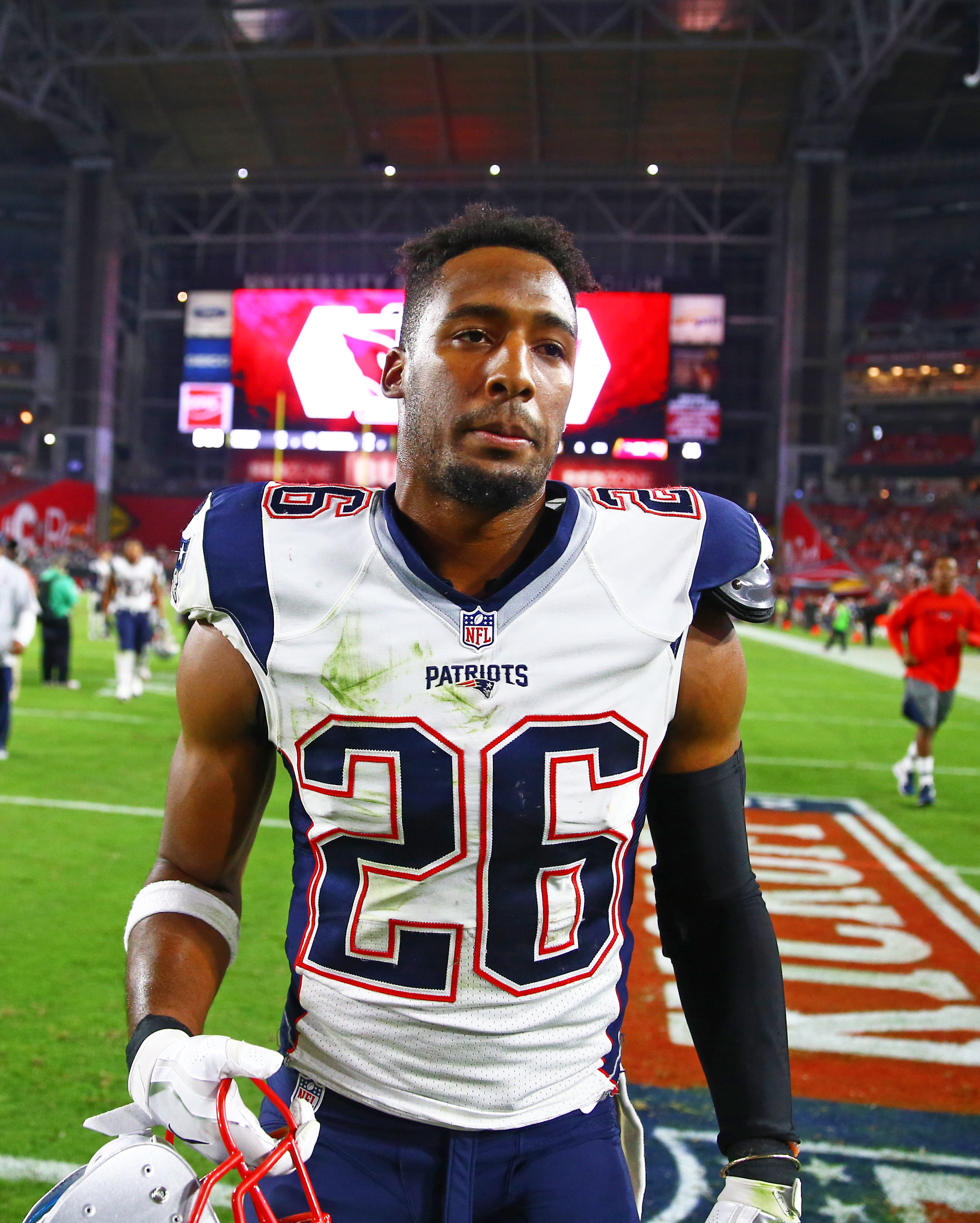
Still, while Green Bay might not be open to hunting for a true No. 1 corner, the team should at least target a second-tier option that could lock down one side of the field, alleviating pressure on the rest of the Packers’ young defensive backfield. Logan Ryan (Patriots) jumps off the page as a near-perfect fit for Green Bay, as the 25-year-old ranked as the No. 14 CB in the league last season, per Pro Football Focus, and would serve as an immediate upgrade to the team’s current depth chart. Ryan should require a multiyear deal, so if the Packers are only interested in short-term commitments, Brandon Carr, Morris Claiborne, or Prince Amukamara could be preferable.
If Green Bay wants to get a bit more creative, it could also explore a trade for Browns defensive back Joe Haden, whom multiple teams scouted in advance of last year’s trade deadline. Haden is still only 27 years old and is signed through the 2019 campaign, and although injuries have affected his play over the past few seasons, he’d be a worthwhile project for the Packers. Fellow Cleveland corner Tramon Williams (a former Packer) was also the subject of trade rumors last fall, and could be a target for Green Bay following his likely release this spring.
The draft offers the final avenue for the Packers to acquire a new cornerback, and the club should have several options when pick No. 29 comes around. While Ohio State’s Marshon Lattimore will be long gone, his teammate Gareon Conley could still be available, as could Florida’s Teez Tabor, Washington’s Sidney Jones, or Alabama’s Marlon Humphrey. If Green Bay goes in another direction in Round 1, the team could still look at corner on Day 2, and Chad Reuter of NFL.com projects the Packers to select Fabian Moreau (UCLA) at pick No. 61 in his first mock draft of the year.
Read more
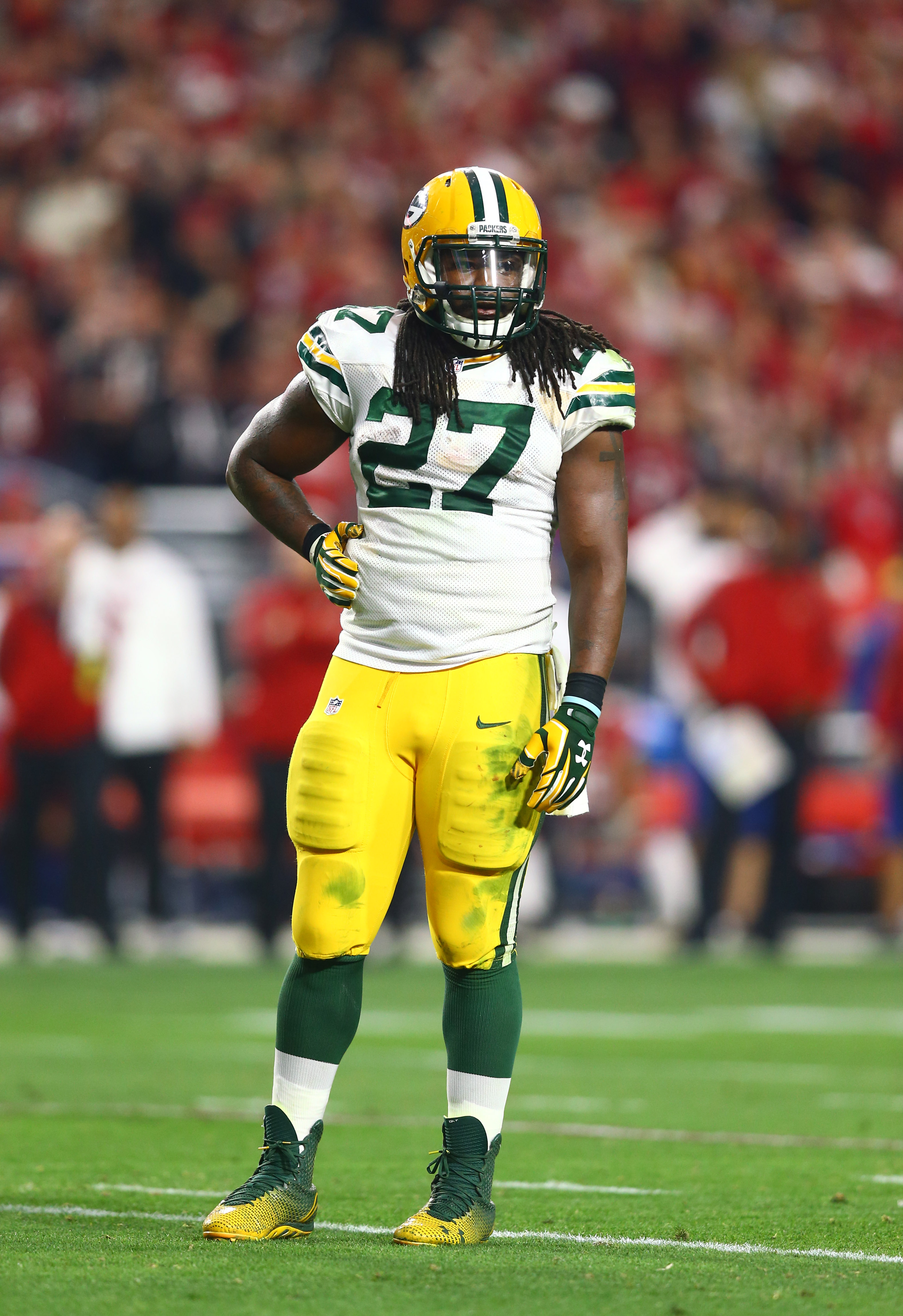
2) Reset the running game: Injuries to Eddie Lacy and James Starks forced the Packers to get imaginative at running back last year, and the club ultimately turned to converted wide receiver Ty Montgomery to lead the backfield over the final third of the season, with waiver claim Christine Michael chipping in, as well. Montgomery was successful as a back, but he struggled in pass protection and, as Rob Demovsky of ESPN.com notes, only topped 12 carries once, leaving open the question of whether Montgomery can serve as a foundational running back.
Indeed, Green Bay’s rushing attack is, in some respects, just as mangled as it was in-season. Lacy is scheduled to become a free agent this spring, and while he played well in limited action before suffering a season-ending injury, it’s unclear whether the Packers would be interested in a reunion — especially given Lacy’s weight struggles. A short-term pact could make some sense, but it’s entirely possible that Lacy could find a better offer on the open market. Starks, meanwhile, looks like a prime candidate for release thanks to his 2017 cap charge of $3.75MM and his 2016 yards per carry average of 2.3.
Ideally, the Packers would re-sign either Lacy or Michael to a low-cost deal, give Montgomery an offseason to further adjust to running back, and look for another back in the draft. Running back has been a popular target for Green Bay in recent mock drafts, as both Mel Kiper Jr. of ESPN.com (Stanford’s Christian McCaffrey) and Daniel Jeremiah of NFL.com (Tennessee’s Alvin Kamara) sent RBs to the Packers in their latest projections. Leonard Fournette and Dalvin Cook will be off the board by the time Green Bay’s turn comes up, but the club could target D’Onta Foreman (Texas), Curtis Samuel (Ohio State), or Matthew Dayes (NC State) later in the draft.
Outside of Lacy, Le’Veon Bell, and Latavius Murray, there’s next to no starting talent available in free agency, and the open market probably isn’t the best place to find a new back anyhow. A few interesting veterans could be released in the coming months, however, and a few could be of note to the Packers. Specifically, Jamaal Charles, Ryan Mathews, and Jonathan Stewart would seemingly fit in the Green Bay offense if released (the former two are more likely to be cut than Stewart).
3) Address the front seven: Green Bay’s defensive line is probably set for the 2017 campaign, as Mike Daniels — one of the more underrated defenders in the NFL — Kenny Clark, and Letroy Guion all played well last season and should make up a solid front next year. The second level of the Packers’ defense, however, needs work, meaning the club could look to add both edge rushers and off-ball linebackers over the next few months.
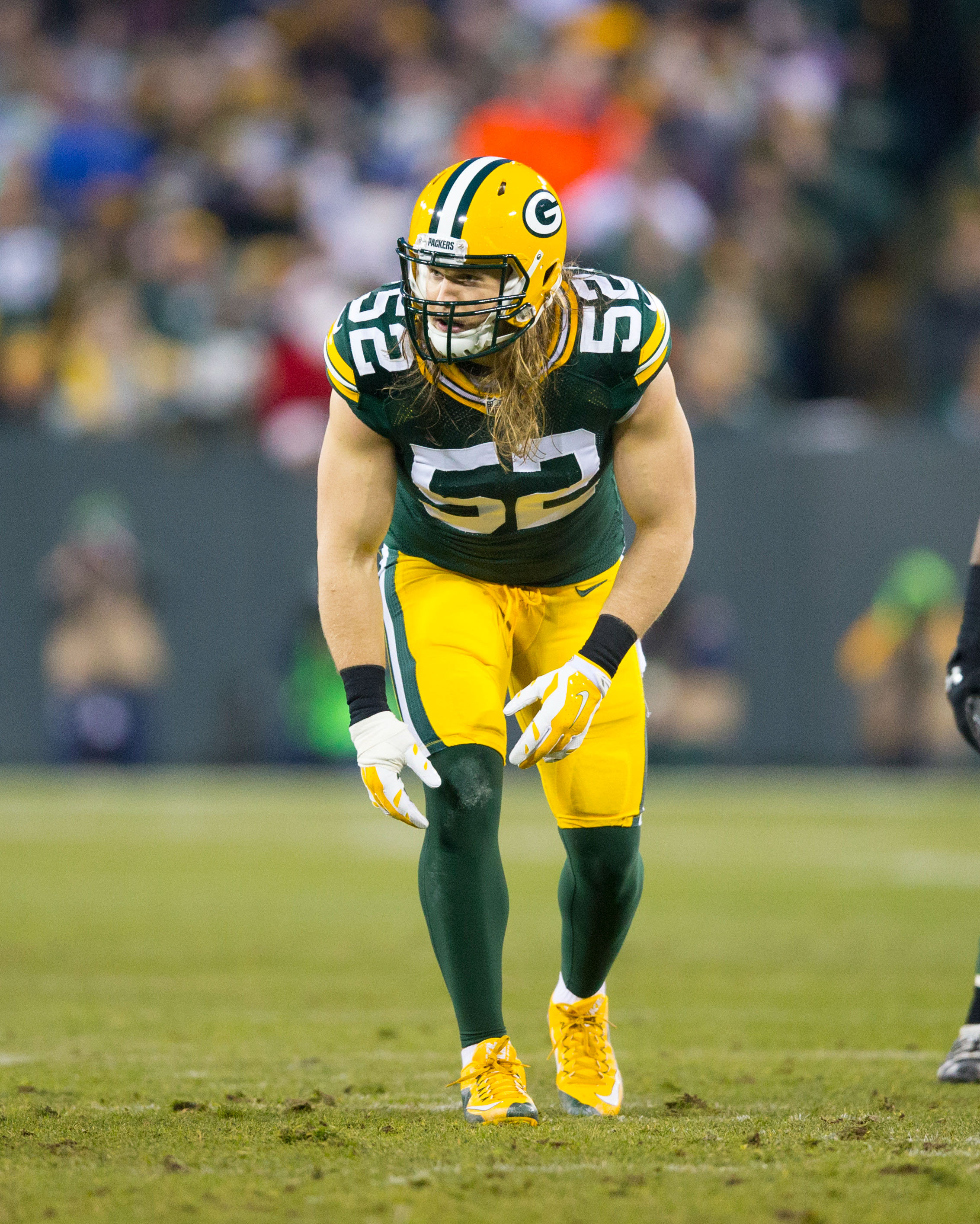
The key to the revamp could be veteran ‘backer Clay Matthews, who spent time both inside and outside from 2014-15 before moving back to the edge full-time last season. The 30-year-old Matthews struggled, grading as the league’s No. 96 edge defender among 109 qualifiers, according to PFF. But his poor play can be somewhat excused by the nagging injuries that hampered him all year long. Still, given that Matthews will count more than $15MM on Green Bay’s salary cap in 2017, the club will have to at least explore the idea of releasing him or asking him to accept a paycut.
That course of action isn’t set in stone, however, and the Packers could simply hang onto Matthews in the hope that he fully recovers from his 2016 ailments and becomes the force he once was. Alternatively, Green Bay could consider moving Matthews back to inside linebacker, where he’d probably be an improvement over the likes of Jake Ryan, Joe Thomas, and Blake Martinez, and instead focus on bolstering the pass rush through other means. Matthews might not be amendable to such a shift, however, as he’s called outside linebacker his most “natural position.”
Edge options should be plentiful on the open market, but Green Bay’s search should begin with one of its own free agents, pass-rusher Nick Perry. The former first-round pick was forced to sign a one-year, $5MM deal to stay with the Packers last offseason, but he should land a larger contract after posting the best season of his career in 2016. In 14 games, Perry posted 11 sacks (eighth-most in the NFL, and nearly equal to his career total prior to last year) while grading out as an excellent run defender. Only 26 years old, Perry should require a long-term commitment this spring, and Green Bay should be willing to give it to him.
Datone Jones, another former first-rounder, has never seemed like a great scheme fit and figures to look for greener pastures in free agency, while veteran Julius Peppers hasn’t yet decided if he’ll continue his career next season. Even if Peppers does return, the Packers should seek another edge rusher, either through free agency or the draft. Free agent targets might include Jabaal Sheard (whose versatility would play nicely in Green Bay) or a low-cost option in the Cowboys’ Ryan Davis, while the draft could produce acquisitions such as Tennessee’s Derek Barnett, Alabama’s Tim Williams, or Wisconsin’s T.J. Watt.
By Sam Robinson |
at January 25, 2017 5:45 pm
In advance of March 9, the start of free agency in the NFL, Pro Football Rumors will detail each team’s three most glaring roster issues. We’ll continue this year’s series with the Oakland Raiders, who ended a 13-season playoff drought by going 12-4 and advancing to the AFC bracket. A historically ill-timed injury to Derek Carr spoiled the Raiders’ realistic chances at making a postseason run, but the team is well-positioned to be a factor for years to come. Whether they’re going to be identified with Oakland or Las Vegas, the Raiders have the pieces to be considered one of the AFC favorites in 2017.
Depth Chart (via Roster Resource)
Pending Free Agents:
- Nate Allen, S
- Denico Autry, DE (RFA)
- Daren Bates, S
- Jon Condo, LS
- SaQwan Edwards, S (ERFA)
- D.J. Hayden, CB
- Andre Holmes, WR
- Gabe Holmes, TE (ERFA)
- Denver Kirkland, G-T (ERFA)
- Stacy McGee, DT
- Matt McGloin, QB
- Latavius Murray, RB
- Perry Riley, LB
- Mychal Rivera, TE
- Seth Roberts, WR (RFA)
- Malcolm Smith, LB
- Brynden Trawick, S
- Menelik Watson, T
Top 10 Cap Hits for 2017:
- Kelechi Osemele, G: $13,200,000
- Sean Smith, CB: $9,500,000
- David Amerson, CB: $8,500,000
- Michael Crabtree, WR: $7,000,000
- Bruce Irvin, LB: $7,000,000
- Rodney Hudson, C: $6,850,000
- Austin Howard, T: $6,400,000
- Amari Cooper, WR: $6,180,151
- Donald Penn, T: $6,100,000
- Khalil Mack, LB/DE: $5,942,683
Other:
- Projected cap space (via OverTheCap): $46,560,487
- 24th pick in draft
- Must exercise or decline fifth-year option for LB Khalil Mack
Three Needs:
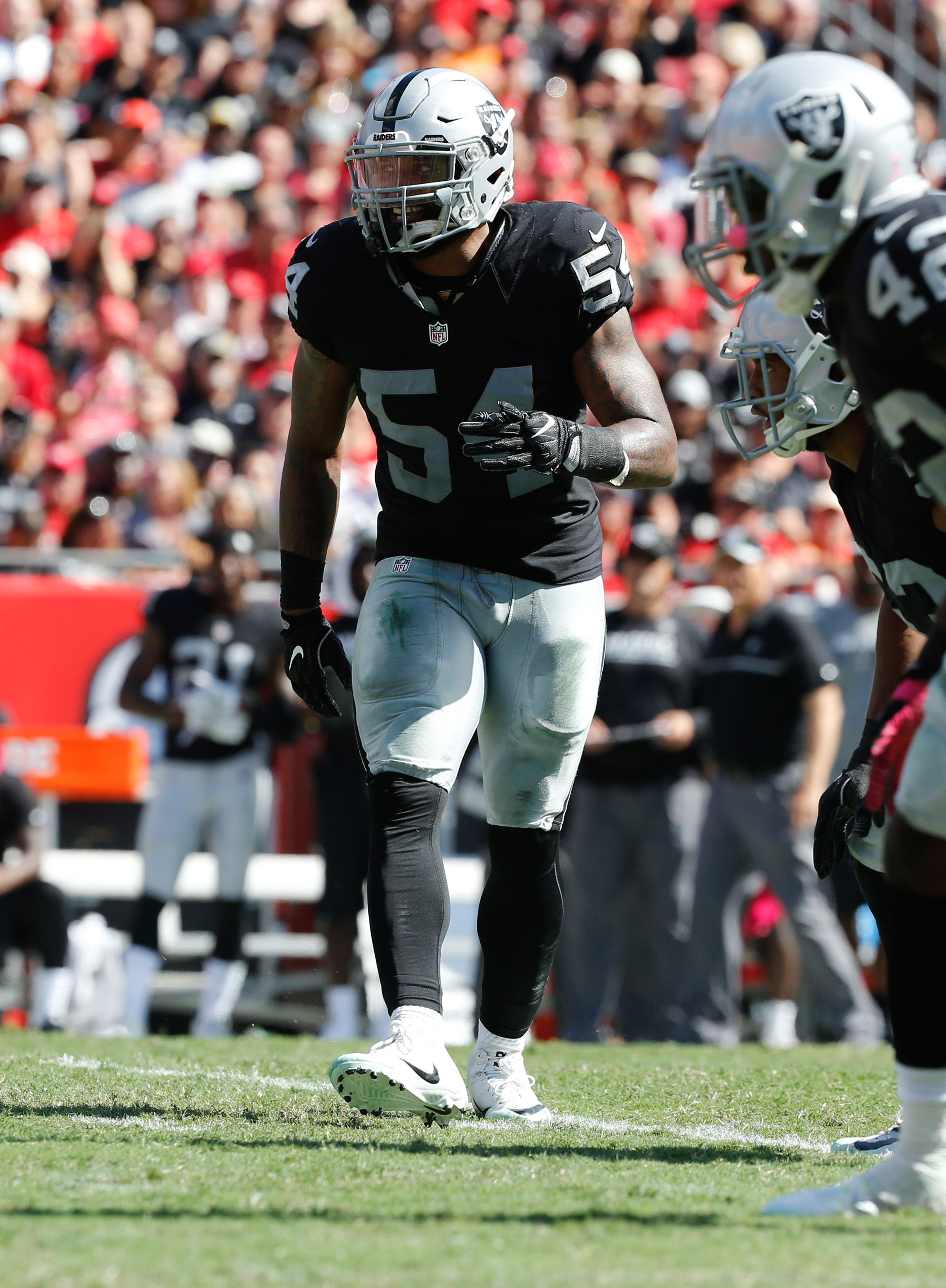
1.) Address the defensive interior: Extensions for Derek Carr and, eventually, Khalil Mack will begin to affect the Raiders’ offseason spending after years of the team’s payroll being devoid of homegrown re-ups. But if they were going to make a big outside investment at a position this year, interior defensive line would be a key spot to target. Oakland actually entered training camp in fairly good shape here, but enduring the ignominy of finishing a season with a league-worst 25 sacks despite having a possible defensive player of the year leading that charge will force Reggie McKenzie into addressing this area. Mack and Bruce Irvin delivered 18 of those 25 sacks and give the Raiders their best set of bookend pass-rushers since Howie Long and Greg Townsend during their early Los Angeles days. But they don’t have a lot of help right now.
Mario Edwards remains an intriguing prospect, but this latest injury — a hip malady that sidelined him for 14 regular-season games after he was initially expected to be shelved for merely a few — showed durability will likely be an issue. He’s now missed 16 games in two years. The Raiders can’t count on him to be the top interior presence he was in 2015, when he graded out as a top-10 run-stopper among edge defenders (per Pro Football Focus). Edwards is the Raiders’ best holdover interior rusher and when available solves multiple problems for a defense that ranked 23rd against ground attacks, but Oakland needs help here.
Its investment in Jihad Ward did not reveal a piece ready to make an impact, with the raw second-rounder recording no sacks in 13 starts. PFF tabbed the Illinois product as its worst interior defender. Denico Autry profiles as a backup at best. Stacy McGee finished with 2.5 sacks to lead the uninspiring supporting cast, and he’s a UFA. Oakland uses both 4-3 and 3-4 looks, with new defensive assistant John Pagano likely to implement additional usage of the latter alignment, and has run-stopping DTs Dan Williams and Justin Ellis under contract for 2017. Neither is a high-end option, and Williams’ $4.5MM cap number can be shed entirely to gain more space if the Raiders so choose. But the team will need some incumbents to supplement whatever talent is acquired. However, as the only non-rookie-deal player in this mix, Williams looms as a release candidate.
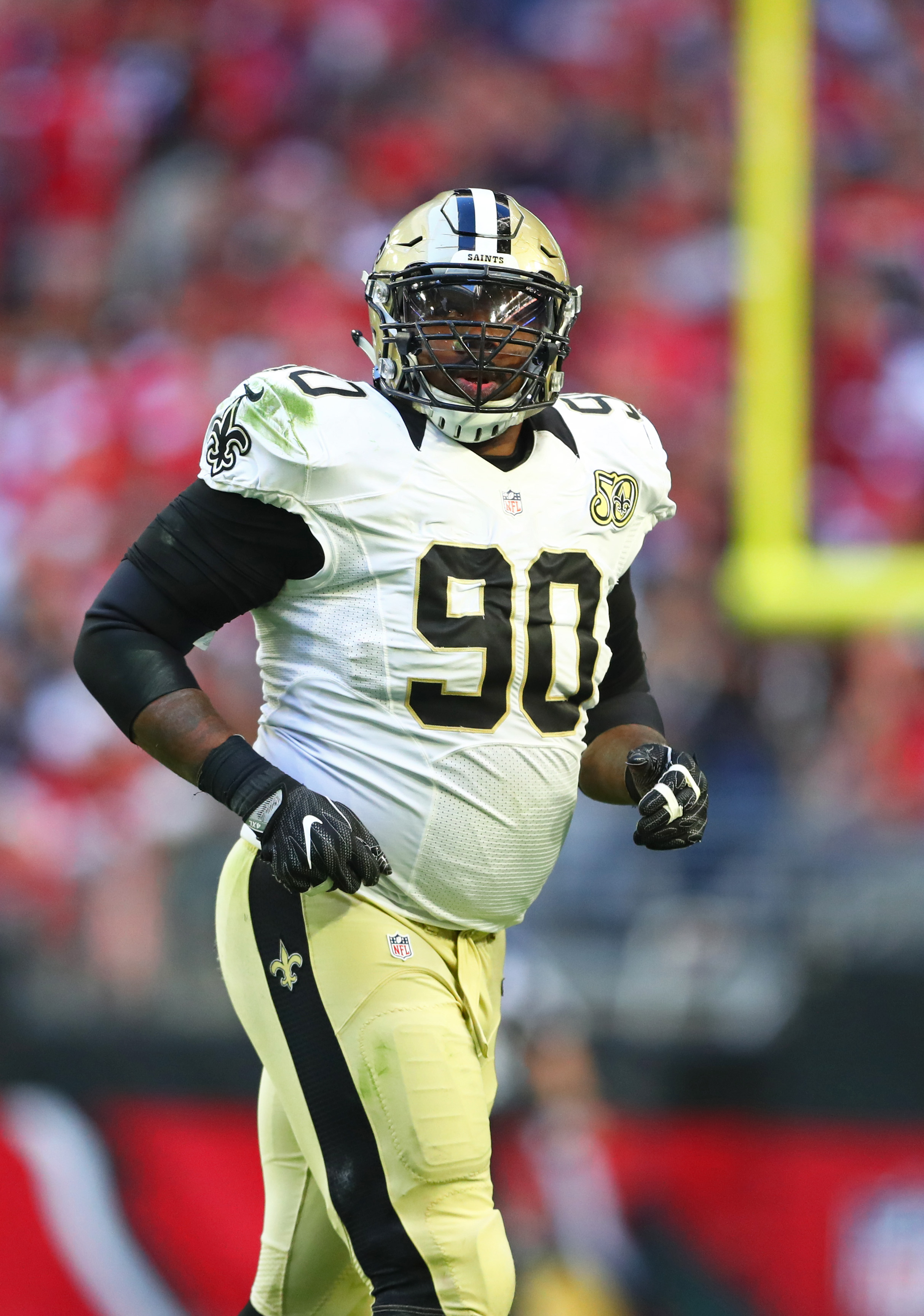
An issue in upgrading on the D-line could be a lack of realistic options to make any kind of real impact on the UFA market. Kawann Short is unlikely to leave Carolina, and if Calais Campbell manages to make it to the market, he will be seeking a major payday. The 30-year-old dynamo would obviously be a fit, but given the current level at which he’s playing, Campbell could command $10MM per year or close to it on a medium-length deal. That would be a pursuit McKenzie would be wise to be involved in, but again, the Cardinals — who have spent to retain their homegrown defenders — would have to pass on him before the new league year commences. Nick Fairley capitalized on his prove-it deal with the Saints and could have a robust market for his services. Fairley’s career-high 6.5 sacks gave the former first-rounder three seasons of at least 5.5 takdeowns. While he’s not known as being a particularly formidable run-defending presence, the 29-year-old would provide a major upgrade as an inside pass-rusher. He would prefer to stay in New Orleans but may like what he encounters on the market if he makes it back to free agency.
Beyond Campbell and Fairley, players like former Raider Vance Walker — who is coming off a torn ACL but was productive in 2015 for the Broncos as an off-the-bench pass-rusher — and Alan Branch would represent some mid-tier stopgap avenues. The Titans’ Karl Klug also profiles as an under-the-radar buy and would fit as a three-technique rusher the Raiders covet.
ESPN.com’s Mel Kiper Jr. has the Raiders taking Michigan State defensive tackle Malik McDowell in the first round of his initial mock draft (ESPN Insider link). Florida’s Caleb Brantley also could be available when the Raiders pick at 24, but with this position generally flooding first rounds in the recent past, it’s difficult to see a gap between Jonathan Allen — expected to go in the top five — and these talents existing in time for the Raiders to potentially choose between them. One of them might still be around by the time the Raiders are on the clock, however. McDowell is a proven disruptive presence who, while not being the most productive sacker (7.5 in three seasons in East Lansing), would add much-needed young talent to the Raiders’ rotation. If they wanted to wait until Day 2 to address this need, players like Chris Wormley (Michigan) and Jaleel Johnson (Iowa) showed ability to beat Big Ten offensive linemen, registering 5.5 and 7.5 sacks, respectively, in 2016.
Read more
2.) Find answers at non-rush linebacker: For the first time in years, a batch of glaring needs aren’t staring down the Raiders. But both of Oakland’s three-down linebackers are UFAs. The team also must balance how it approaches this position due to the financial issues that are set to enter into play. Irvin is already signed through 2019 to a top-market deal for 4-3 outside linebackers — even if his responsibilities are closer to a 3-4 edge player’s. A potential record-breaking extension for Mack is coming as well, so Oakland will need to be mindful of how much it contributes to its non-rush linebacker spots. But these positions certainly present a noticeable short-term need, with Malcolm Smith and Perry Riley being UFAs.
Riley came in midseason and proved to be a vital fixture for a team that could not find an answer at middle linebacker. Recent draft picks Ben Heeney and Cory James could not stick there, either due to injury or present talent level, and after an October signing, Riley finished the season as Pro Football Focus’ No. 15 non-rush linebacker. His career profile resembles that of David Amerson, being a Redskins castoff who found a spot to revive his career in Oakland. Riley, though, will turn 29 this offseason. It’s unlikely both Riley and Smith return, as the Raiders’ defense (No. 23 in DVOA) was not talented enough for a run-it-back scenario here — especially given what it would cost to retain both — so a setup where the team finds a linebacker in free agency and one with a high draft pick makes sense. A mid-term Riley pact could be a solid low-cost option if the Raiders are intent on preserving some capital.
Heeney, James and Neiron Ball still factor into the equation, but none of the trio has given indications he’s the answer as a three-down linebacker thus far. The priority should be finding players who can contribute on passing downs, when Irvin and Mack move to defensive end. Oakland owns its lowest pick since 2003, but traditional linebackers can be added without upper-first-round selections.
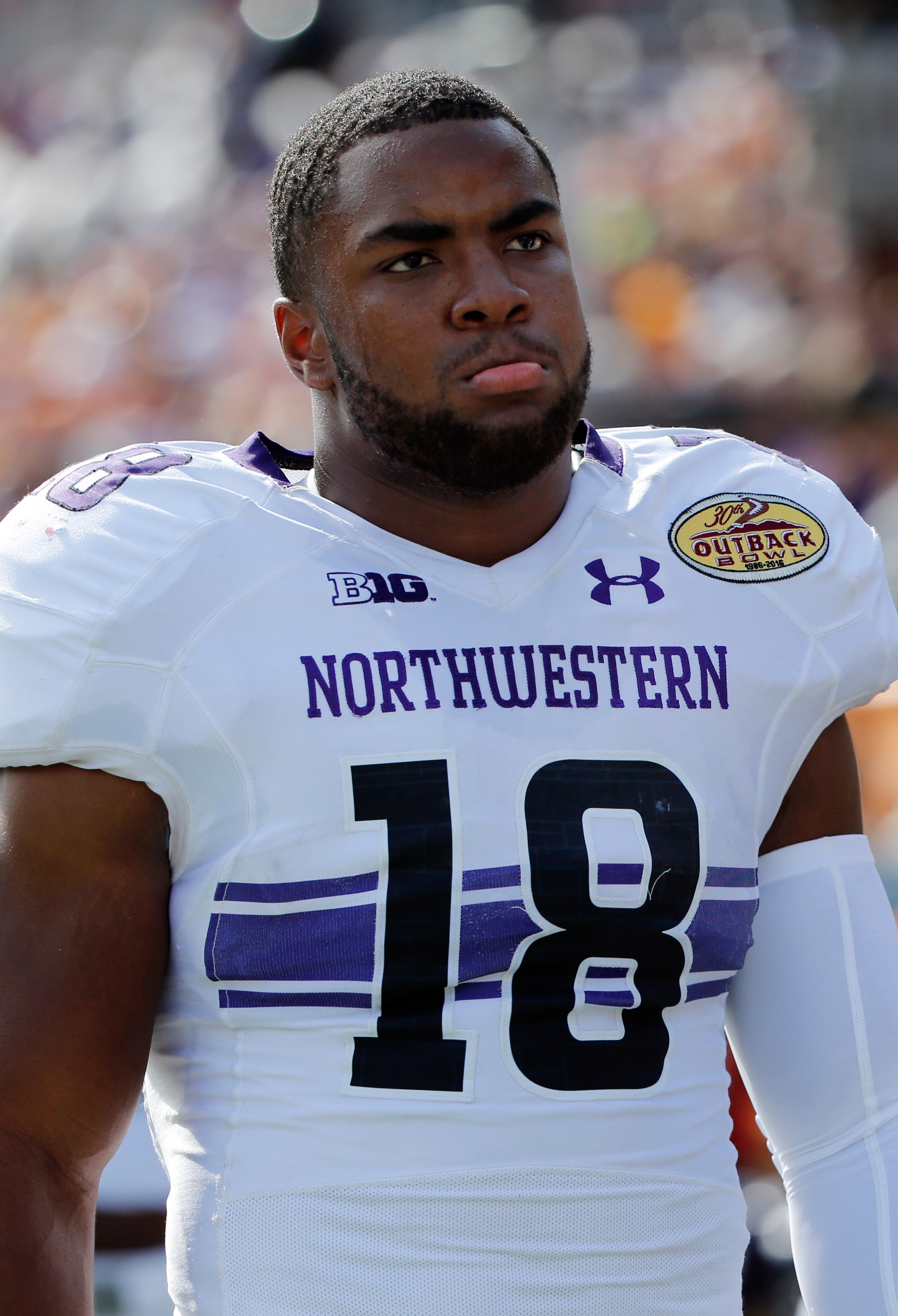
Oakland won’t be able to realistically target Alabama’s Reuben Foster, but could be in position to add Vanderbilt’s Zach Cunningham (125 tackles, 16.5 for loss, in 2016) with its No. 24 pick. Ohio State’s Raekwon McMillan (back-to-back 100-tackle seasons) and Northwestern’s Anthony Walker (29 tackles for loss in the 2015 and ’16 seasons) also qualify as options if the Raiders want to take an inside ‘backer in Round 1. This would be drafting for need, and given the ability to find ILBs down the draft board, such a tactic may not be the best use of a first-rounder.
If the Raiders pass on this position in the first round, they will need to address it at some point in their next few selection windows, because it’s unlikely they’re adding two veterans to fill the current vacancies, not when they could soon be the rare club with two $20MM-per-year players. The team hasn’t deployed a long-term presence at inside ‘backer since Kirk Morrison in the late 2000s, so infusing the defense with a high-level prospect to go along with Mack, Irvin and Karl Joseph makes sense as a foundation-setting move. Then again, is inside linebacker worth a foundation pick? Depends on the organization’s viewpoint.
As far as free agency goes, it’s not a special crop. Dont’a Hightower likely won’t make it to the market, and Lawrence Timmons could be eyeing a big third contract surpassing recent 30-plus linebackers like Derrick Johnson or David Harris. Johnson signed for $7MM AAV last year, and Timmons is nearly three years younger. Zach Brown, Kevin Minter and Manti Te’o are lesser-known options. Brown will undoubtedly seek a raise after signing a one-year deal with the Bills for $1.125MM last spring, but with 149 tackles this season and plus coverage skills, the 27-year-old ‘backer is someone who fits the profile of a UFA target. Te’o now becomes a more realistic option due to his history with Pagano, although he’s coming off injury and an inconsistent four years in San Diego.
3.) Add a third receiving option: The Raiders’ offense powered them into the playoffs, but it did stall at some inopportune times — both Chiefs contests being a prime example — even with Carr in the fold. Oakland has needs at tackle and in the secondary, but the team may consider making a move to add a third pass-catching weapon.
Neither the auxiliary receivers nor the tight ends did enough for the Raiders this season. Seth Roberts may be better suited as a No. 4 target, his penchant for clutch TD grabs notwithstanding. The top slot man eclipsed 40 yards in just two games and saw his yards-per-catch figure drop from 15.0 (480 total yards) in 2015 to 10.4 (397) in ’16. This is understandable given Amari Cooper and Michael Crabtree comprising one of the league’s premier receiving tandems, but that duo could use more assistance. Oakland also did not receive much from its tight ends. Second-year man Clive Walford totaled fewer than 350 receiving yards for a second straight season despite seeing more time, and Mychal Rivera will likely not be retained as a UFA. There is room for an addition here, but it will have to be on a budget.
Their present top-heavy financial arrangement at the position, as well as the aforementioned needs, may preclude the Raiders from spending much here. But they might have some low-cost options in free agency before likely using at least one draft choice on a wideout. Kendall Wright and Jeremy Kerley profile as two UFA buy-low candidates.
Wright, 27, is coming off two down years, but the former first-round Titans pick did put together a 1,000-yard season in 2013. With two entrenched receivers outside, Wright would be clearly the third option — and given his current stock could fall into the Raiders’ price range. He hasn’t played in an upper-echelon offense or with a high-caliber quarterback. Considering his marginalization in Tennessee’s run-heavy attack in 2016, there could be some untapped potential for the former Baylor standout who seems to know he’s done in Nashville.
Kerley has put up reasonable numbers with poor quarterbacks for most of his career, save for a 2015 season during which he fell out of favor in Chan Gailey‘s then-potent Jets offense. He exceeded 800 receiving yards with Mark Sanchez in 2012 and surpassed 600 while equipped with Colin Kaepernick and Blaine Gabbert this season. At 28 and as a lesser-regarded talent, Kerley should be available for less than Wright. Should Markus Wheaton not encounter a quality market for his services, he could be a short-term option as well while he attempts to rebuild from an injury-marred contract year.
Should the Raiders add a wide receiver in free agency, they could continue to let Walford develop. Although, 2017 looms as a critical year for the former third-round selection. Another season of substandard tight end production would result in the team moving to acquire a better option. The tandem of Walford and Lee Smith might be good enough for another year, if the Raiders can add a wideout capable of threatening defenses and taking some pressure off Cooper and Crabtree.
Having chosen Cooper with the No. 4 pick two years ago, the Raiders don’t need to use another high draft choice on a wideout. But come the middle rounds it should be a area the team looks to fortify, especially as receiver classes continue to enter the league with several talents ready to contribute. NFL.com’s Chad Reuter has the Raiders selecting LSU wideout Malachi Dupre in the third round. Alabama’s ArDarius Stewart or Oklahoma statistical dynamo Dede Westbrook (1,524 yards, 17 air TDs in 2016) profile as appealing second-round talents.
The Raiders were fortunate neither Crabtree nor Cooper missed any time in 2016, because the team would have been severely undermanned in that event. If nothing else, the Silver and Black need depth. As of now, Oakland’s receiving corps houses two ex-top-10 picks and UDFAs. A middle-ground supplementary option would help.
By Dallas Robinson |
at January 24, 2017 6:31 pm
In advance of March 9, the start of free agency in the NFL, Pro Football Rumors will detail each team’s three most glaring roster issues. We’ll continue this year’s series with the Chicago Bears, who regressed to a 3-13 record in their second season under head coach John Fox‘s leadership.
Pending Free Agents:
- Sam Acho, LB
- Mike Adams, T
- Johnthan Banks, CB
- Matt Barkley, QB (RFA)
- Connor Barth, K
- Nick Becton, T
- Josh Bellamy, WR (ERFA)
- Daniel Brown, WR (ERFA)
- Brandon Boykin, CB
- Bryce Callahan, CB (ERFA)
- David Fales, QB (ERFA)
- Brian Hoyer, QB
- Demontre Hurst, WR (RFA)
- Alshon Jeffery, WR
- Christian Jones, LB (RFA)
- Eric Kush, OL
- Ted Larsen, OL
- Danny Mason, LB (ERFA)
- Matt McCants, T
- Logan Paulsen, TE
- Chris Prosinski, S
- Patrick Scales, LS (ERFA)
- Connor Shaw, QB (ERFA)
- Deonte Thompson, WR
- Cornelius Washington, DE
- C.J. Wilson, DL
- Marquess Wilson, WR
Top 10 Cap Hits for 2017:
- Jay Cutler, QB: $16,000,000
- Kyle Long, G: $8,000,000
- Pernell McPhee, LB: $7,825,000
- Lamarr Houston, LB: $6,990,000
- Danny Trevathan, LB: $6,850,000
- Josh Sitton, G: $6,822,916
- Bobby Massie, T: $6,034,275
- Akiem Hicks, DE: $5,500,000
- Eddie Royal, WR: $5,000,000
- Kevin White, WR: $4,517,195
Other:
Three Needs:
1) Secure a long-term option at quarterback: Jay Cutler is fresh off the worst Total Quarterback Rating of his career, and whether that was a product of multiple injuries or the fact that former offensive coordinator Adam Gase is no longer around, Cutler is almost assuredly set to be released this offseason. Not only is Bears head coach John Fox reportedly “done” with Cutler, but Chicago can clear $14MM off its books by cutting the 33-year-old QB this spring. Of course, by parting ways with Cutler, the Bears would be creating another gaping vacancy at the most important position in the game, meaning the club would need to conduct an extensive search for a franchise quarterback this offseason.
The Bears do have at least one other signal-caller currently on the roster who could provide some sort of value in Matt Barkley, though he clearly doesn’t solve Chicago’s long-term problems under center. The former fourth-round pick likely made himself some money during the 2016 campaign by proving he can sustain backup level production, but he completed less than 60% of his passes, tossed 14 interceptions in six starts, and ranked 25th in DYAR among 34 qualifiers, per Football Outsiders. Barkley, who can be retained through the restricted free agent system, could potentially serve as a bridge quarterback in 2017, but the Bears shouldn’t pin their hopes on him.
Veteran Brian Hoyer also fits into the bridge QB discussion, as the 31-year-old managed six touchdowns against no picks in five starts last season before going down with a broken non-throwing arm. Hoyer had to settle for a one-year, $2MM deal last offseason despite a quietly productive 2016 campaign with the Texans, and he could be forced to agree to a similar contract this spring. With Barkley likely coming back next season, the Bears needn’t be forced to retain Hoyer, but if the club can get him back on a cheap pact, he’s not a poor option to have around.
Even if Barkley and Hoyer are kept around, Chicago still clearly needs to find a signal-caller who can lead the club for the long haul. The organization isn’t going to find such a player in free agency, where Mike Glennon represents the best target outside of Kirk Cousins, who seems likely to remain in Washington. The draft, then, represents the best avenue for the Bears to land their next quarterback, and the team’s front office has reportedly been researching the 2017 class of QBs for some time.
Miami’s Brad Kaaya has been the one collegiate prospect to be directly linked to the Bears, as Matt Miller of Bleacher Report said in November that Chicago was putting in “extensive research” on the Hurricanes quarterback. Generally considered one of the top four or five QBs available this year, Kaaya is expected to be selected on Day 2. Dane Brugler of CBSSports.com credits Kaaya for his toughness, and says the 21-year-old has an “unforced throwing motion with the arm strength to make all the necessary NFL throws,” but notes that Kaaya could improve his poise under pressure.
Given that Chicago holds the third overall pick, however, the club doesn’t have to settle for Kaaya or another mid-round option, and could target one of the top three quarterbacks available this year: Clemson’s Deshaun Watson, North Carolina’s Mitch Trubisky, or Notre Dame’s DeShone Kizer. Of course, the two teams drafting ahead of the Bears — the Browns and 49ers — are also in the market for a quarterback, so Chicago’s choice could be limited once it officially gets on the clock. Still, the Bears should get a shot at one of those three QBs, and though the club hasn’t been specifically linked to any of the trio t
hus far, it’s entirely fair to assume Chicago will go after a quarterback at No. 3.
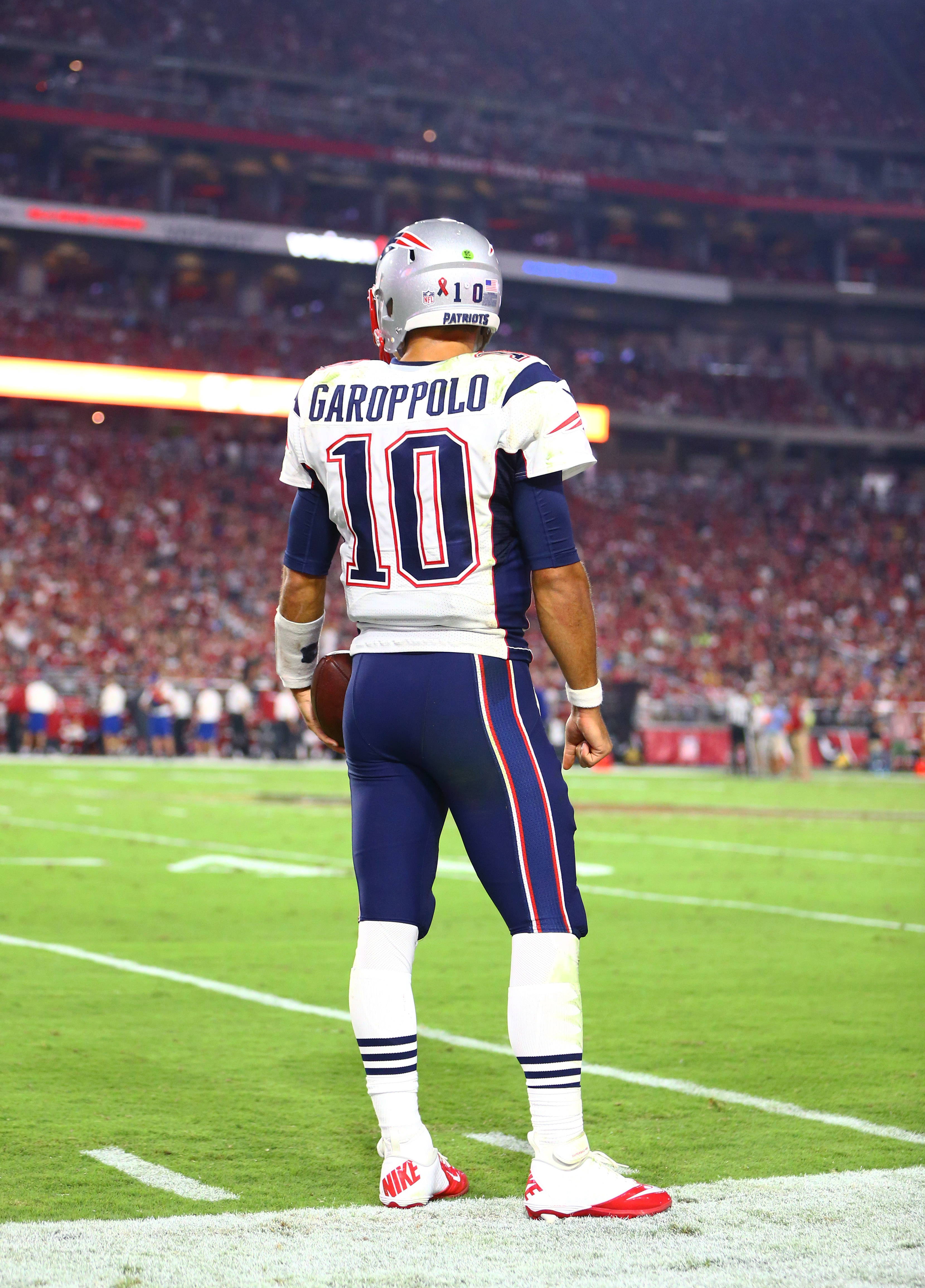
The trade market could be yet another route for the Bears, especially since one NFL executive recently told Bucky Brooks of NFL.com that he’s “scared to death” of the 2017 quarterback draft class. Tony Romo could make sense for Chicago, but general manager Ryan Pace & Co. are probably looking for a signal-caller who can stick around for awhile. Instead of Romo, then, the Bears might target another Eastern Illinois graduate, Patriots backup Jimmy Garoppolo, whom New England is reportedly willing to deal this offseason. The Pats, though, are thought to be seeking a first- and fourth-round pick in exchange for Garoppolo, an extremely high ask especially considering that Garoppolo would still need to be extended. The Bengals’ A.J. McCarron, who is open to being traded, could represent a more affordable target.
Read more
2) Fix the secondary: Chicago’s front office spent much of the 2016 offseason adding talent to its defense: defensive lineman Akiem Hicks, and linebackers Jerrell Freeman, Danny Trevathan, and Leonard Floyd were acquired through free agency/the draft, and each provided production during their first season in the Windy City under the guidance of defensive coordinator Vic Fangio. The one area of the defense that wasn’t addressed was the secondary, leaving the back end as an obvious area of need in 2017.
Let’s start with safety, where the Bears already have one spot locked down thanks to 2015 fifth-round pick Adrian Amos. The most successful Chicago draft choice from last season, Amos has started 30 games during his first two years in the league, and in 2016 graded out as the NFL’s No. 26 safety, per Pro Football Focus. Opposite Amos, Harold Jones-Quartey, Deon Bush, Chris Prosinski, Demontre Hurst, and DeAndre Houston-Carson all saw varying levels of playing time, though Jones-Quartey played the most snaps (732).
Typically, safeties aren’t enough of a positional priority to justify a top-five pick, but the 2017 draft class features two back-end defenders whom the Bears could look at with the third overall selection. Ohio State’s Malik Hooker and LSU’s Jamal Adams both rank among the four best players in the entire draft, according to Daniel Jeremiah of NFL.com, who adds that both Hooker and Adams are ready to start right away. Safeties who could be available when Chicago’s turn comes up on Day 2 include Budda Baker (Washington), Jabrill Peppers (Michigan), and Marcus Williams (Utah).
Free agency isn’t full of talented safeties, but there are two options who each graded within PFF’s top-10 at the position: Kansas City’s Eric Berry and Arizona’s Tony Jefferson. Recent reports have indicated the Chiefs are more likely to place the franchise tag on defensive tackle Dontari Poe than Berry, meaning the veteran safety could hit the market this spring (unlike last year when Kansas City did employ the franchise tender). Jefferson, 25 this week, should draw a great deal of interest, though — surprisingly — no club signed him to an offer sheet in 2016 after the Cardinals tendered him at the lowest restricted free agent level.
Other free agent safeties that could attract the eye of Bears management include Jonathan Cyprien (Jaguars), Barry Church (Cowboys), Duron Harmon (Patriots), and D.J. Swearinger (Cardinals). Colts defensive backs Mike Adams and Darius Butler — the latter of whom recently said he’s comfortable making the transition to safety — could also make sense, especially given that former Indianapolis safeties coach Roy Anderson is now Chicago’s assistant DBs coach. Adams, at age-36, would clearly represent more of a “win-now” addition, so Butler (30) might be the more palatable option. San Francisco’s Antoine Bethea could be of interest if he gets released, thanks to the presence of former 49ers coaches Fangio and Ed Donatell in Chicago.
Cornerback is perhaps even an even more dire need than safety, as the Bears could use at least two new starters at the position. 2014 first-round Kyle Fuller, who missed the entirety of last season, doesn’t figure to be among them, as Chicago looks increasingly likely to trade or release Fuller before next season. Cre’Von LeBlanc, an astute 2016 waiver pickup by GM Ryan Pace, showed enough during his rookie campaign that he could be asked to take on a larger role in 2017, but veteran Tracy Porter is in danger of being cut after grading out as the league’s fifth-worst cornerback, per PFF.
While the Bears could certainly target a corner like Ohio State’s Marshon Lattimore at pick No. 3, the club will more likely turn to the open market in its search for defensive backs. Ideally, Chicago would come out of the free agent period with one top-tier CB and one second-tier CB, and fill in the rest of the secondary through the draft. Given the Bears’ salary cap situation, and the fact they likely won’t be paying an elite quarterback salary, it would be a disappointment if the team wasn’t holding one of A.J. Bouye, Trumaine Johnson, Stephon Gilmore, or — at the very least — Dre Kirkpatrick when the free agent dust clears. Logan Ryan, Nolan Carroll, Brandon Carr, or Prince Amukamara would make for fine No. 2 corner targets.
3) Retain Alshon Jeffery: The Bears are likely to open the 2017 season with a young quarterback under center, so the club needs to start thinking of ways to ensure his development. Chicago already boasts an above-average offensive line, a talented running back, and a reliable veteran tight end. Receiving weapons are the next logical priority, and the Bears have a decision to make on one of their own: Alshon Jeffery, who projects as the best pass-catcher available on the 2017 free agent market.
Jeffery, who turns 27 years old next month, was franchised last offseason, meaning he was paid a fully guaranteed one-year salary of $14.599MM. The Bears can use the franchise tag again in 2017, although it will require them to raise Jefferey’s salary by 120% to ~$17.5MM. While such a price tag would make Jeffery the highest-paid WR on a per-year basis, using the tag for a second consecutive looks like Chicago’s best course of action. Jeffery has dealt with a myriad of injuries throughout his career and was suspended four games for PEDs in 2016, so it’s fair to wonder if the Bears fully trust him. However, it’s probably better to keep Jeffery around for one more season at an admittedly high cost than to hand him significant guarantees to lock him up through his early-30s.
If Jeffery walks in free agency, the Bears’ receiver depth chart looks incredibly sparse. Cameron Meredith was a mini-sensation who posted four games with nine-plus receptions and more than 100 yards, but he also struggled through a three-game stretch where he managed only one catch per contest, so it’s unclear if Chicago views him as a clear starter going forward. Former first-round pick Kevin White remains a total question mark after being injured for most of his first two years in the league, while veteran slot man Eddie Royal is expected to be cut this offseason.
The Bears have too many other holes to use a first- or second-round pick on a receiver, so if Jeffery leaves and they need to replace him, they’ll have to wade into free agency. The problem is, as noted, that Jeffery is the clear No. 1 WR available, and the dearth of other options figures to drive up the prices of Terrelle Pryor, Michael Floyd, DeSean Jackson, and the like. Could Chicago compete with a receiving corps of Meredith, Daniel Braverman, and one of Kenny Stills, Kenny Britt, or Robert Woods? Maybe, but the presence of Jeffery would better grease the offensive wheels.
By Connor J. Byrne |
at January 24, 2017 2:14 pm
In advance of March 9, the start of free agency in the NFL, Pro Football Rumors will detail each team’s three most glaring roster issues. We’ll continue with the Houston Texans, who are fresh off their third straight nine-win season and second consecutive AFC South title. After a 27-14 victory over the injury-plagued Raiders in the wild-card round, the Texans’ season ended at the hands of the Patriots in a 34-16 divisional romp.
Pending Free Agents:
- Oday Aboushi, LG
- A.J. Bouye, CB
- Quintin Demps, S
- Akeem Dent, LB
- Ryan Griffin, TE
- Jonathan Grimes, RB
- Don Jones, S
- Shane Lechler, P
- Nick Novak, K
- David Quessenberry, LT
- John Simon, LB
- Antonio Smith, DE
- Devon Still, DE
- Vince Wilfork, DT
Top 10 Cap Hits For 2017:
- Brock Osweiler, QB: $19,000,000
- J.J. Watt, DE: $14,500,000
- Duane Brown, LT: $9,650,000
- Brian Cushing, LB: $9,547,500
- Kareem Jackson, CB: $9,000,000
- DeAndre Hopkins, WR: $7,915,000
- Jeff Allen, RG: $6,500,000
- Lamar Miller, RB: $6,500,000
- Whitney Mercilus, LB: $6,050,000
- Derek Newton, RT: $5,500,000
Current Projected Cap Room (via Over the Cap): $25,757,451
Other:
- Twenty-fifth overall pick in draft
- Must exercise or decline DE Jadeveon Clowney‘s fifth-year option for 2018
Three Needs:
1.) Once again, find a quarterback: The Texans thought they solved their long-standing quarterback woes last offseason when they released 2015 playoff goat Brian Hoyer and signed ex-Broncos backup Brock Osweiler to a big-money deal in free agency. Instead, all they did was make their situation under center much worse. Osweiler was an utter disaster in his first year as a Texan, leading head coach Bill O’Brien to bench him in favor of unexciting reserve Tom Savage toward the end of the season. While Savage was far from special in three showings, he was more effective than Osweiler and would have remained the team’s starter if not for a Week 17 concussion.

Savage’s injury forced O’Brien to pivot back to Osweiler for the playoffs, and he was decent enough in the Texans’ win over Oakland. Unsurprisingly, though, Osweiler couldn’t handle Super Bowl-bound New England, which held him to a microscopic 4.93 yards per attempt and intercepted two of his 40 passes in a game the Texans could have made interesting with a better signal-caller.
Osweiler’s showing against the Pats was all too typical of his 15-game regular season, in which he completed 59 percent of passes, recorded a paltry 5.8 YPA and tossed 15 scores against 16 picks. Those numbers wouldn’t have been satisfactory for a starter with a guaranteed $3.7MM on his contract, let alone the $37MM Houston handed Osweiler.
Moving forward, the good news for the Texans is that they won’t be tethered to Osweiler for the life of his four-year, $72MM accord; on the negative side, his contract will once again be an albatross next season. Even if the Texans were to designate the 26-year-old as a post-June 1 cut, he’d cost them $19MM in dead money in 2017. Regardless, they’re going to have to search for a superior QB this offseason and hope Osweiler’s successor does a better job complementing Houston’s abundance of talented performers on both sides of the ball. That includes superstar receiver DeAndre Hopkins, whom Osweiler managed to render somewhat ordinary (by Hopkins’ spectacular standards) in 2016.

Having spent his entire career in Texas to this point, soon-to-be ex-Cowboy Tony Romo seems like a natural fit for a win-now team like the Texans as he approaches his 37th birthday. However, along with his age, there are other obvious concerns regarding Romo, including what he has left in the tank after missing the majority of the past two seasons because of injuries and a demotion. There’s also a question of whether Cowboys owner Jerry Jones would deal Romo to Texas’ younger franchise. And whether he comes as a trade acquisition or gets his release and signs as a free agent, Romo figures to be pricey next season. That, of course, wouldn’t be ideal for a Houston club which will have Osweiler occupying a massive amount of spending room.
Salary notwithstanding, there may not be a better match than the Texans for Romo. He’d reportedly like to go to the Broncos, but they’re inclined to roll with a younger, homegrown option. Teams like the Bills, Jets and Bears could chase Romo, though none are as close to contention as Houston.
If we’re to assume the Redskins will either re-sign Kirk Cousins or place the franchise tag on him, the free agent market won’t offer much in the way of proven options. And if the Texans are going to bring in a veteran via the open market, it’s hard to imagine them pinning their hopes on another backup — Mike Glennon, Landry Jones or Matt Barkley, for instance — given how poorly the Osweiler experiment has gone.
More established signal-callers like Tyrod Taylor, Jay Cutler and Colin Kaepernick might end up on the open market, too, if their teams release them (or if Kaepernick opts out of his deal). While Taylor is the most intriguing of the three, his potential availability looks increasingly unlikely. Cutler isn’t far removed from a respectable 2015 in Chicago, though he’s coming off a poor, injury-riddled season and was on the verge of losing his job to Hoyer. Kaepernick bounced back to a degree in 2016, meanwhile, but teams that explore signing him will have to make multiple determinations: 1. Is he a legitimate starter anymore? 2. Are they on board with having such a politically polarizing player in a prominent role? As shown in a late-August poll of various club executives, Kaepernick’s outspokenness hasn’t exactly endeared him to decision-makers within the league.

The trade route could represent a possibility for QB-needy Houston, too. Considering both his potential and his minimal salary for next season, Patriots backup Jimmy Garoppolo would seem to make sense as a target. New England is open to moving Garoppolo — and, for what it’s worth, O’Brien is friendly with Patriots head coach Bill Belichick — but his presence on the trade market would perhaps spark a bidding war. Thus, the Texans would once again have to ask themselves whether it would be worthwhile to spend valuable assets on a largely untested signal-caller who has played second fiddle to an all-time great. It hasn’t worked with Osweiler, Peyton Manning‘s former understudy.
There’s also the draft, in which the Texans hold the 25th overall selection, but many scouts regard this year’s class of passers as among the worst in recent memory. Plus, the highest-ranked QBs in the 2017 crop — in some order, Clemson’s Deshaun Watson, North Carolina’s Mitch Trubisky and Notre Dame’s DeShone Kizer — should all be off the board when the Texans’ pick arrives. No one else even ranks among NFL.com draft guru Daniel Jeremiah’s top 50 prospects, while Texas native and ex-Texas Tech star Patrick Mahomes (No. 50) is the only QB outside the Watson-Trubisky-Kizer group on Bleacher Report prospect expert Matt Miller’s latest big board.
Read more
2.) Upgrade at right tackle: Derek Newton had been a longtime stalwart at right tackle for Houston until he tore both patella tendons in late October, thereby putting his career in question. Even if optimism surrounding Newton’s future eventually proves warranted, the Texans certainly can’t go into 2017 banking on him to play a substantial role. Nor can they count on swing tackle Chris Clark, who allowed an unsightly 67 QB pressures and took 13 penalties this season (per Sam Monson of Pro Football Focus). Unfortunately for the Texans, it doesn’t appear there will be copious options to replace Clark in either free agency or the draft.
The Ravens’ Ricky Wagner is the standout when it comes to pending free agents at the position, and he could garner around $10MM per year as a result. That would likely price him out of Houston’s range. Riley Reiff (Lions), Mike Remmers (Panthers), Austin Pasztor (Browns) and Jordan Mills (Bills) are the best of the rest when it comes to veterans, though none are anywhere near as appealing as Wagner. As far as younger choices go, Jeremiah has just three OTs in his top 50 — Wisconsin’s Ryan Ramczyk (14), Utah’s Garrett Bolles (28) and Alabama’s Cam Robinson (40). Only Ramczyk (30) and Robinson (40) are on Miller’s list, on the other hand, so it doesn’t seem as if there are going to be a cavalcade of early round-caliber tackles in play for the Texans come draft time.
3.) Address the secondary: Few teams excelled more versus the pass in 2016 than the Texans, whose defense finished anywhere from second to seventh in the league in yardage surrendered, yards per attempt against, DVOA and quarterback rating allowed. One of the driving forces behind that success was A.J. Bouye, a once-anonymous cornerback who’s coming off a stellar fourth season and is now set to cash in with free agency looming.
Bouye only intercepted one pass in his age-25 season after combining for five picks over the prior two years, but he set a career high in passes defensed (16) and essentially turned opposing QBs into Osweiler when they challenged him. Bouye yielded completions a measly 54.5 percent of the time on balls thrown his way and limited signal-callers to a 73.1 rating (right in line with Osweiler’s 72.2). As a result, Pro Football Focus ranked Bouye the league’s third-best corner among 112 qualifiers.

Bouye’s brilliance could lead him to sign a mega-deal on the open market, especially considering the Texans might not have the cap room to place the ~$14.297MM franchise tag on him. He’d like to re-sign with the club that picked him up as an undrafted free agent in 2013, but the contracts awarded in free agency to corners in recent offseasons indicate it’s going to be quite difficult for the Texans to retain him.
An untagged Bouye could head to the open market and secure a pact in the neighborhood of the ones Josh Norman, Darrelle Revis, Janoris Jenkins and Byron Maxwell nabbed over the previous two free agency periods. That would mean anywhere from $63MM to $75MM in total worth, $10.5MM to $15MM in yearly value and $25MM to $39MM in guarantees.
Speculatively, Houston could help create spending room for Bouye by cutting fellow corner and franchise linchpin Johnathan Joseph, who will turn 33 in April. Joseph isn’t under contract past next season, though, so the Texans wouldn’t find any cap relief beyond then by releasing him. If they do anyway, it would open up $6.5MM for 2017. Otherwise, the team could let Bouye walk because of his price tag and ride out next season with Kareem Jackson, Joseph and 2015 first-round pick Kevin Johnson as its top three corners.
In addition to Bouye, strong safety and fellow integral secondary cog Quintin Demps is without a contract as March nears. That’s good timing for Demps, a journeyman whose ninth season was his best. Demps, 31, tied a career high in starts (13) and amassed a personal-best/safety-leading six INTs. He also graded as PFF’s No. 12 safety among 90 qualifiers. Given his age and position, Demps won’t be nearly as tough to keep as Bouye, though the Texans could theoretically let the safety walk and replace him with an Andre Hal–Corey Moore duo.
Hal and Moore played notable roles this season and fared respectably in the process, but the latter didn’t flash much playmaking ability in his first full campaign. With that in mind, the Texans may well target a safety early in the draft – ESPN’s Mel Kiper Jr. forecasts Washington’s Budda Baker to Houston at No. 25, while Rotoworld’s Josh Norris has the team landing ballyhooed Michigan product Jabrill Peppers with that pick.
By Dallas Robinson |
at January 23, 2017 3:01 pm
In advance of March 9, the start of free agency in the NFL, Pro Football Rumors will detail each team’s three most glaring roster issues. We’ll continue this year’s series with the Seattle Seahawks, who earned their fifth straight postseason appearance in 2016 before being bounced in the divisional round.
Pending Free Agents:
- Tavaris Barnes, DE (ERFA)
- Brandon Cottom, RB (ERFA)
- Brock Coyle, LB (RFA)
- Garry Gilliam, T (RFA)
- Steven Hauschka, K
- Devin Hester, WR
- Stanley Jean-Baptiste, CB (ERFA)
- John Jenkins, DT
- Jeron Johnson, S
- Terrence Magee, RB (EFFA)
- Kelcie McCray, S
- Tony McDaniel, DT
- Dewey McDonald, LB (ERFA)
- Damontre Moore, DE
- Mike Morgan, LB
- Troymaine Pope, RB (ERFA)
- Marcel Reece, FB
- Ronnie Shields, TE (ERFA)
- Mohammed Seisay, CB (RFA)
- DeShawn Shead, CB (RFA)
- Tyler Slavin, WR (ERFA)
- Joe Sommers, TE (ERFA)
- Bradley Sowell, T
- Steven Terrell, S (RFA)
- Neiko Thorpe, CB
- Will Tukuafu, FB
- Luke Willson, TE
- Brandon Williams, TE
Top 10 Cap Hits for 2017:
- Russell Wilson, QB: $18,800,000
- Richard Sherman, CB: $13,361,000
- Michael Bennett, DL: $10,768,750
- Earl Thomas, S: $10,400,000
- Jimmy Graham, TE: $10,000,000
- Doug Baldwin, WR: $9,650,000
- Kam Chancellor, S: $8,125,008
- Bobby Wagner, LB: $7,600,000
- K.J. Wright, LB: $6,800,000
- Cliff Avril, DE: $5,500,000
Other:
- Projected cap space (via Over the Cap): $32,879,707
- Twenty-sixth pick in draft
Three Needs:
1) Ameliorate the offensive line: Seattle’s problems up front have been incredibly well-documented, and realistically, the offensive line could probably be listed first, second, and third in this piece. But although the Seahawks ranked 25th in adjusted sack rate and 26th in adjusted line yards, head coach Pete Carroll said earlier this month that his club probably won’t be active in free agency as it attempts to address the front five.
“I don’t think that way. That’s now how we — ‘OK, let’s take money and put it here and all of a sudden you’re going to get better.’ You’ve got to get guys that can play worthy of it, and when they demonstrate that then they get paid,” Carroll said. “I don’t think you can just buy your way to it. We’re not going to do that. We’re not going to go out and spend a ton of money in free agency on one guy to try to save the day. That’s now how we function at all.”
The Seahawks did find one solution during the 2016 season, as Justin Britt — who has been shifted from offensive tackle to guard to center during his three years in the NFL — finally found a home at the pivot, and should solidify the middle of Seattle’s line for years to come. The rest of the group, however, represents what Sam Monson of Pro Football Focus termed an “unavoidable problem.” George Fant, Garry Gilliam, and Bradley Sowell all ranked as bottom-10 tackles last season, per PFF, while guards Mark Glowinski and Germain Ifedi also graded out poorly.
Guard is probably the lesser of the two priorities, as Glowinski (fourth round, 2015) and Ifedi (first round, 2016) are both recent draft picks who just completed their first seasons as starters. But if the Seahawks want to scour the free agent market for a cheap alternative, there are options available. Chance Warmack is set to become a free agent after flaming out with the Titans, and though he clearly never lived up to his draft billing (10th overall in 2013), Warmack might offer the sort of tool package that Seattle offensive coach Tom Cable could seek to rework. Saints veteran Jahri Evans, who spent training camp with the Seahawks last season, is also expected to be available once again.
Tackle — both right and left — needs to be the primary focus for Seattle this offseason, and though Carroll clearly doesn’t think free agency is the correct avenue to find talent, the Seahawks would do well to bring in at least one external option in the next few months. Old friend Russell Okung could hit the market if the Broncos decline his option, which seems likely given that said option will lock in an additional four years, $48MM, and $19.5MM in guarantees. Fellow left tackle Kelvin Beachum is in a similar situation, as the Jaguars hold an option that is also likely to be declined.
Aside from Okung or Beachum, it’s difficult to see how the Seahawks could improve via the free agent market, assuming that they’re not going to spend at the top of the market to bring in Riley Reiff, Andrew Whitworth, Ricky Wagner, or the like. The Vikings’ Matt Kalil figures to be available, but he’s been among the worst tackles in the league since his promising rookie season. Menelik Watson and Sebastian Vollmer could come cheap, but neither has played a significant number of snaps lately. Veteran Andre Smith, who managed only four games with the Vikings before being placed on injured reserve, stands out as a potential option on one-year deal.
If Seattle wants to add a new tackle through the draft, the club should have several options on Days 1 and 2. Alabama’s Cam Robinson is viewed as the best tackle in the 2017 class, in the estimation of Mel Kiper Jr. of ESPN.com, while Wisconsin’s Ryan Ramczyk — whom Josh Norris of Rotoworld recently mocked to the Hawks — isn’t far behind. Garett Bolles (Utah) is also “shooting up” draft boards, as Matt Miller of Bleacher Report recently noted, and could end up becoming the first tackle selected. Florida States’ Roderick Johnson, Temple’s Dion Dawkins, and Notre Dame’s Mike McGlinchey could also be considered in the first few rounds of the draft.
Read more
2) Augment the Legion of Boom: The Seahawks have already suffered two injuries in their secondary that could affect their plans for the 2017 offseason. First, safety Earl Thomas broke his tibia in early December, and though he recently announced that he will return next year after contemplating retirement, there’s no telling how Thomas’ leg injury will affect his readiness for the beginning of the 2017 campaign.
Second, cornerback DeShawn Shead went down with an ACL tear in Seattle’s divisional round loss to the Falcons, and is now facing a lengthy recovery process. Shead is scheduled to become a restricted free agent at season’s end, meaning that the Seahawks are now in unenviable position regarding Shead’s contract. Acting as the starter opposite Richard Sherman, Shead performed pretty well in 2016 and likely would have been tendered at the first- or second-round level. Now, Shead is probably looking at a right of first refusal tender, or might not be offered a new contract at all.
Safety should be the easiest concern to alleviate this offseason. Even if Thomas isn’t at full health by the time the 2017 campaign gets underway, Seattle can turn to Steven Terrell (who should be retained as an RFA) to fill in as he did over the season’s final month, and the Seahawks may also choose to re-sign backup safeties Jeron Johnson or Kelcie McCray. Adding a safety through the draft wouldn’t be the worst idea, however, especially given that strong safety Kam Chancellor is heading into the final year of his contract.
Seattle’s empty cornerback spot, meanwhile, could be a little more difficult to fill in, as the Seahawks are seemingly eternally searching for a defensive back to play alongside Sherman. Since 2012, Brandon Browner, Byron Maxwell, Walter Thurmond, and Cary Williams have filtered through Seattle with varying levels of success. Jeremy Lane will return in 2017 and is capable of playing outside corner, but he’s been much more successful in the slot during his career.
The Seahawks have shown an ability to find corners without pedigree — Browner was a CFL star, for example, while Maxwell was a sixth-round pick — but the club might look to bring in a young defensive back in the first few rounds of the 2017 draft. Seattle, at pick No. 26, is sitting too far back in the first round to acquire one of the top corners in this year’s class, meaning Ohio State’s Marshon Lattimore, Alabama’s Marlon Humphrey, and Florida’s Teez Tabor are probably off the table. Clemson’s Cordrea Tankersley could make sense, and ESPN.com’s Mel Kiper Jr. sent Tankersley to Seattle in his most recent mock draft, noting that Tankersley has the type of size the Seahawks covet.
Free agency wasn’t kind the last time the Seahawks ventured into the open market, as Williams was released three months into a three-year deal that contained $7MM in guarantees. Seattle has already dipped into free agency this offseason, agreeing to sign Perrish Cox to a futures deal, and although Cox offers a wealth of starting experience, he won’t be counted on next season. The Hawks aren’t going to go after Trumaine Johnson or A.J. Bouye or any of the other elite options that will come available this spring, but there a few free agent corners who could be a fit.
Corey White played under current Seahawks defensive backs coach Andre Curtis with the Saints from 2012-14, and that level of familiarity means Seattle could express interest this offseason. Free agent Keenan Lewis was also in New Orleans with Curtis during that time and could make for an interesting bargain-bin option, but we haven’t heard any updates on Lewis since September, when the 30-year-old appeared to have undergone surgery. Johnthan Banks (Bears) and Marcus Cooper (Cardinals), meanwhile, offer the size qualifications the Seahawks seek. Finally, it wouldn’t be a surprise to see Tharold Simon make his way back to Seattle if he doesn’t make it through the summer with Washington after signing a futures contract.
3) Find a young defensive lineman: Seattle’s front four is still among the best in the NFL, ranking in the top 10 in both adjusted sack rate and adjusted net yards thanks to performances by Cliff Avril, Michael Bennett, and Frank Clark. The interior of the club’s line didn’t fare as well, however, as defensive tackles Tony McDaniel, Jarran Reed, and Ahtyba Rubin graded as the league’s No. 52, No. 91, and No. 113 interior defenders among 127 qualifiers, respectively, according to PFF.
Reed just finished his first NFL season and has room to grow, but Rubin is a potential release candidate given that the Seahawks could save $2.2MM on the salary cap by designating him as a post-June 1 cut. McDaniel and fellow DT John Jenkins, meanwhile, are pending free agents. Jenkins is a former third-round pick and only 27 years old, so he could be a serviceable player as a cheap run-stuffer (he stands 6-foot-3, 360 pounds). A defensive tackle should be a priority this offseason, but given that Bennett and Avril are both now in their 30s, a lineman capable of playing on the interior and on the edge would seem to be the ideal find.
That’s easier said than done, of course, and acquiring a standard defensive tackle should be a lot simpler. Several prospects could fit the bill in the first- or second-round of the draft, including Malik McDowell (Michigan State), Caleb Brantley (Florida), and Carlos Watkins (Clemson). New Seahawks defensive line coach Clint Hurtt could also play a role as the club searches for interior options. Before joining the NFL ranks, Hurtt served as DL coach and director of recruiting for Louisville, meaning DeAngelo Brown, billed as fifth-round pick by CBSSports.com, could come under consideration.
Hurtt’s professional experience could also factor into Seattle’s free agent forays. Given that Hurtt most recently coached in Chicago, reserve defensive tackle Cornelius Washington might be of interest to the Hawks. Lamarr Houston, a potential cap casualty, as well as young linemen like Will Sutton and Ego Ferguson — each of whom has been involved in trade rumors — could also follow Hurtt to the Pacific Northwest. Prior to his Louisville days, Hurrt coached pending free agent Calais Campbell at Miami, as Bob Condotta of the Seattle Times details, and while certainly not youthful, Campbell would add another imposing force to Seattle’s front four.
By Dallas Robinson |
at January 20, 2017 10:00 pm
In advance of March 9, the start of free agency in the NFL, Pro Football Rumors will detail each team’s three most glaring roster issues. We’ll continue this year’s series with the Miami Dolphins, who earned a postseason berth for the first time since 2008 after finishing 10-6 under new head coach Adam Gase.
Pending free agents:
- Kiko Alonso, LB (RFA)
- Andre Branch, DE
- Jermon Bushrod, G
- Donald Butler, LB
- Jordan Cameron, TE
- Chimdi Chekwa, CB
- John Denney, LS
- Thomas Duarte, TE (ERFA)
- Mike Hull, LB (ERFA)
- Jelani Jenkins, LB
- Dominique Jones, TE (RFA)
- Jason Jones, DE
- Spencer Paysinger, LB
- Lafayette Pitts, CB (ERFA)
- Bacarri Rambo, S
- Dion Sims, TE
- Anthony Steen, C (ERFA)
- Kenny Stills, WR
- Michael Thomas, S (RFA)
- Damien Williams, RB (RFA)
- Nicholas Williams, DE (RFA)
- T.J. Yates, QB
Top 10 Cap Hits for 2017:
- Ryan Tannehill, QB: $20,300,000
- Ndamukong Suh, DT: $19,100,000
- Branden Albert, T: $10,600,000
- Mario Williams, DE: $10,500,000
- Mike Pouncey, C: $8,975,000
- Byron Maxwell, CB: $8,500,000
- Reshad Jones, S: $8,037,938
- Cameron Wake, DE: $7,000,000
- Isa Abdul-Quddus, S: $5,083,333
- Koa Misi, LB: $4,778,000
Other:
- Projected cap space (via Over the Cap): $30,734,458
- 22nd pick in draft
- Must exercise or decline 2018 fifth-year option for T Ja’Wuan James
Three Needs:
1) Find a tight end: The Dolphins offense as a whole managed to grow under Adam Gase, as the unit improved from 22nd in DVOA in 2015 to 14th last season. Ryan Tannehill posted the highest quarterback rating of his career, second-year running back Jay Ajayi emerged as a legitimate threat by registering three 200+ yard rushing performances, and receivers Jarvis Landry, DeVante Parker, and Kenny Stills each put up more than 700 yards through the air. The one component missing from Miami’s newly-potent offense? A legitimate threat at tight end.
Veteran Jordan Cameron has been a free agent bust since signing a two-year, $15MM deal prior to the 2015 season, but it’s been no fault of his own that he’s struggled to produce after leaving the Browns for the Dolphins. In 2016, Cameron suffered the fourth reported concussion of his career, and was sidelined for the majority of the year by his most recent brain injury. Cameron, 28, is now considering retirement due to the repeated head trauma, and Miami isn’t expected to be interested in a reunion even if Cameron does decide to continue playing.
Given that Cameron only played in three games last year, the Dolphins’ tight end cadre was headlined by Dion Sims, who posted 26 receptions for 256 yards and four touchdowns in 11 starts. Though Sims has never topped 30 catches or 300 yards during his four-year NFL career, Miami reportedly views him as its starter going forward, and as such, intends to re-sign him this offseason. Indeed, despite the club’s interest in retaining Sims, nearly every tight end currently on the roster is a free agent of some kind, so the unit figures to see a good deal of turnover during the next few months.
One place to look for a new weapon at tight end could be the free agent market, where the No. 1 option available figures to be the Patriots’ Martellus Bennett. The 29-year-old recently turned down a $7MM per year extension offer from New England, and while details were scant as to the structure or guarantees in the deal, the rejection does give some indication as to what Bennett’s asking price could be. Bennett figures to be an offseason priority for the Pats, and the Dolphins likely won’t be the only team competing for his services. However, Bennett does have a connection to Gase, as the veteran tight end played under the current Fins head coach while the latter served as Bears OC in 2015 (alas, Bennett posted his worst statistics in recent memory under the tutelage of Gase).
If Bennett proves to be too costly, there are certainly other options available in free agency, though only a few offer the relative youth and perceived upside that does Sims. Houston’s Ryan Griffin (27), Indianapolis’ Jack Doyle (26), Green Bay’s Jared Cook (29), and Dallas’ Gavin Escobar (26) all jump off the page as potential second-tier tight ends who might have a lower price tag than Bennett. If Miami wants a veteran presence to replace Cameron, the club could take a look at Vernon Davis, who just finished a solid first campaign with the Redskins, or Jacob Tamme, who should come cheaply given the nature of his recent shoulder injury.
The Dolphins, who hold the 22nd overall pick in the draft, are situated right in the wheelhouse where a tight end selection might make sense. Alabama’s O.J. Howard is generally regarded as the nation’s best collegiate TE, but Daniel Jeremiah of NFL.com recently ranked Miami’s David Njoku slightly ahead of Howard, listing the Hurricanes pass-catcher as the draft’s 13th overall player. Both Howard and Njoku could be in consideration during the first round, while Evan Engram (Mississippi), Jake Butt (Michigan), and Gerald Everett (South Alabama) could make sense farther down the line.
Read more
2) Solidify the linebacker position: With new defensive coordinator Matt Burke in tow, the Dolphins figure to add at least two new starting linebackers this offseason, as Armando Salguero of the Miami Herald reported earlier this week, meaning the club could need to part with a few LBs already on the roster. Donald Butler, Jelani Jenkins, and Spencer Paysinger are all free agents and likely won’t return to South Beach unless it’s in a backup role, while Koa Misi could be released amid concerns about his long-term health.
2016 trade acquisition Kiko Alonso, an upcoming restricted free agent, will likely play a major role in Miami’s plans for the linebacking unit, as Salguero notes at the link above that Dolphins coaches previously bandied about the idea of shifting Alonso from middle linebacker to the weakside. Although the staff opted not make the switch in-season — in an effort not to “mess with [Alonso’s] head” — it’s entirely possible that the club will reconsider the move this offseason. The flexibility of Alonso means the Dolphins can target linebackers, both in free agency and in the draft, without regards to their specific position (middle vs. outside), as Alonso can presumably fill in whatever spot remains open.
Alabama’s Reuben Foster is the best all-around linebacker in the 2017 draft, and would represent an absolute godsend for the Dolphins, but he’s extremely unlikely to be available at pick No. 22. Given that Mel Kiper Jr. of ESPN.com recently said Foster is the “best inside linebacker Alabama has ever produced,” Miami could attempt to trade up, but will more likely look at linebackers a bit farther down the board. Fellow ‘backers Jarrad Davis (Florida) — who was recently sent to the the Dolphins in Kiper’s first mock draft of the year — Raekwon McMillan (Ohio State), and Zach Cunningham (Vanderbilt) could be potential Miami targets.
In free agency, the top two linebackers are likely already spoken for, as the Browns are reportedly nearing an extension with Jamie Collins, while the Patriots don’t figure to let defensive leader Dont’a Hightower get away. That’s not to say there aren’t high-quality options available on the open market, however, and one reasonable target for the Dolphins might be Buffalo free agent Zach Brown, who rehabbed his career with the Bills this season after flaming out with the Titans. Brown, 27, ranked as Pro Football Focus‘ No. 17 linebacker, and should be obtainable for a reasonable price. Arizona’s Kevin Minter is another underrated linebacker who could add experience to the middle of Miami’s defense.
Other linebackers could soon hit the market after being released by their respective clubs, and a few might make sense for the Dolphins based on Burke — who was previously Miami’s LBs coach — and his professional history. Before joining the Dolphins in 2016, Burke worked for the Bengals for two seasons, meaning inside linebacker Rey Maualuga could be an option for Miami if released by Cincinnati. Maualuga is 30 years old (today!) and is only an early-down run thumper at this point, but he’d offer 104 games of starting experience. The Lions were also a previous stop for Burke, so if DeAndre Levy gets cut loose by Detroit, he could make his way to Miami.
3) Rebuild the pass rush: For all of the criticism Ndamukong Suh has garnered over the years, there’s no question that he’s an excellent player that has thus far lived up to the massive contract he signed with the Dolphins two offseasons ago. Suh ranked as the league’s fourth-best defensive tackle in 2016, according to PFF, while defensive end Cameron Wake graded out as No. 10 at his position. Those two pass rushers can’t do it by themselves, however, meaning that Miami will need to supplement a defensive line which ranked just 31st in adjusted sack rate last year.
There should be open spots on said line, especially at end, where Mario Williams is fully expected to be released when the new league year begins. Williams, 32 later this month, became a reserve as the season progressed, and the Dolphins can save $8.5MM on the salary cap by cutting bait, making the transaction an easy decision. Former mega-bust Dion Jordan, too, isn’t expected to be on Miami’s roster much longer, while Jason Jones has already been released. Andre Branch gobbled up much of the playtime reserved for Williams, and though he’s indicated that he’d like to return to South Beach in 2017, could perhaps find a better deal in free agency.
If the Dolphins intend on drafting a defensive lineman in the first or second round, one prospect who could be a natural fit is Florida’s Caleb Brantley, who Rob Rang of CBSSports.com says “springs off the snap with the initial quickness to penetrate gaps and wreak havoc in the backfield.” Brantley played under defensive line coach Terrell Williams — who now holds the same position with the Dolphins — with the Gators in 2015, so the Fins coaching staff should have a good handle on his attributes. Defensive ends are also plentiful in the 2017 class, and though Miami won’t have a shot at Myles Garrett or Jonathan Allen, it could get lucky and see a draft-day fall for Tennessee’s Derek Barnett. Alternatively, they could take a look at Stanford’s Solomon Thomas, UCLA’s Takkarist McKinley, or Michigan’s Taco Charlton, the latter of whom Josh Norris of Rotoworld recently mocked to the Dolphins.
Free agency doesn’t offer a ton of options on the edge — especially given that Miami is unlikely to pay for an elite defender like Jason Pierre-Paul — and aging veterans such as Dwight Freeney and Julius Peppers comprise much of the pass-rushing market. Interior players could be a bit more abundant, and Nick Fairley stands out as a more-than-capable rusher from the inside. Oakland’s Stacy McGee — not a well-known name by any stretch — might be on Miami’s radar thanks, again, to the presence of Williams, who served as the Raiders’ DL coach from 2012-14 and therefore should have some familiarity with McGee, who last season earned positive marks from PFF while playing in a limited role.
By Dallas Robinson |
at January 19, 2017 9:15 pm
In advance of March 9, the start of free agency in the NFL, Pro Football Rumors will detail each team’s three most glaring roster issues. We’ll continue this year’s series with the Washington Redskins, who narrowly missed a Wild Card berth after finishing with a 8-7-1 record.
Pending Free Agents:
- Chris Baker, DT
- Will Compton, LB (RFA)
- Kirk Cousins, QB
- Vernon Davis, TE
- Ziggy Hood, DT
- Junior Galette, LB
- Pierre Garcon, WR
- Terence Garvin, LB
- Kedric Golston, DT
- Duke Ihenacho, S
- DeSean Jackson, WR
- Cullen Jenkins, DL
- Ty Nsekhe, T (ERFA)
- Vinston Painter, T (ERFA)
- John Sullivan, C
- Nick Sundberg, LS
- Chris Thompson, RB (RFA)
- Greg Toler, CB
- Donte Whitner, S
Top 10 Cap Hits for 2017:
- Josh Norman, CB: $20,000,000
- Trent Williams, T: $15,200,000
- Ryan Kerrigan, LB: $11,700,000
- Jordan Reed, TE: $5,800,000
- Brandon Scherff, G: $5,786,083
- DeAngelo Hall, S: $5,062,500
- Shawn Lauvao, G: $5,000,000
- Kory Lichtensteiger, C: $4,050,000
- Ricky Jean-Francois, DL: $4,000,000
- Colt McCoy, QB: $3,600,000
Other:
Three Needs:
1) Commit to Kirk Cousins: The Redskins are reportedly willing to use the franchise tag on quarterback Kirk Cousins for a second consecutive year, a move that would guarantee the sixth-year signal-caller nearly $24MM for the 2017 campaign. Cousins would likely sign the tender immediately (as he did last offseason), as the two one-year pacts would net him ~$44MM over a two-year period. From Washington’s perspective, however, continuing to employ the franchise tag doesn’t make much sense.
Had the Redskins worked out a long-term extension with Cousins last offseason, the club would have likely been forced to guarantee something in the neighborhood of $45MM — roughly the same total he’ll earn from 2016-17 if franchised again — over the life of the contract. Cam Newton received $41MM in guarantees under the terms of his extension signed in June 2015, while Andrew Luck got $47MM fully guaranteed one year later (Aaron Rodgers still ranks first among quarterbacks with $54MM guaranteed). Because Washington is clearly willing to hand Cousins a significant amount of guaranteed cash, an extension is the best outcome for both parties.
Clearly, however, hindsight is 20/20, and there were legitimate reasons not to extend Cousins at this time last year. Cousins was coming off an excellent season, to be sure, but it was his first year as a full-time NFL starter, and there was some concern that he was simply a product of an effectively-schemed Redskins offense. Had Washington locked up Cousins for the long haul, only to see him turn back into a pumpkin this season, management would have been the subject much scorn. But the 28-year-old Cousins largely backed up his results this year, completing 67% of his passes for nearly 5,000 yards, 25 touchdowns, and 12 interceptions, while ranking third in DYAR and fifth in DVOA.
Head coach Jay Gruden has found his franchise quarterback, and while Cousins may not a be a top-five signal-caller, he’s certainly among the league’s top-12 QBs, making him an extremely valuable asset. The Redskins aren’t going to start over the position — as usual, there is no quarterback talent available on the free agent market, and a win-now club like Washington isn’t going to turn over its fortunes over to a rookie passer. Getting Cousins, who places first on PFR’s 2017 Free Agent Power Rankings, under contract for the foreseeable future is the logical next step.
Cousins is reportedly targeting $23.94MM — the same total he’d garner under the franchise tag — annually, a figure that would make him the third-highest paid quarterback in the league on a per-year basis. Over the course of a five-year contract, Washington would be paying Cousins nearly $120MM, and given that recent quarterback contracts have included 35-40% fully guaranteed, Cousins would be looking at $45MM in guarantees. It’s a huge total, but contract negotiations are based as much on timing as they are on talent. Cousins has played the free agency game correctly by betting on himself, and he’s now poised to cash in.
Read more
2) Get younger on the defensive line: Most of the Redskins’ interior defenders are heading for free agency, with Chris Baker, Cullen Jenkins, Kedric Golston, and Ziggy Hood all scheduled to reach the open market in March. Baker is both the youngest and the best of Washington’s impending free agent defensive lineman, as he graded as the NFL’s No. 19 interior defender, per Pro Football Focus. Baker heads up the second-tier of free agent DLs, and given that he could land a nice contract from an opposing club, it wouldn’t be a shock if he doesn’t return next season, as John Keim of ESPN.com recently wrote.
Any potential additions made by Washington will likely be affected by the club’s choice of defensive coordinator, and the Redskins’ search is still ongoing at present. With the exception of Gus Bradley, every candidate that’s interviewed for the job runs a 3-4 front, which would seem to indicate that Washington wants to keep its 2016 scheme intact. Defenses are now so multiple, and front-line defenders so capable of moving around, that the 4-3 vs. 3-4 distinction holds little value, and most of the linemen available in the draft and free agency could fit with the Redskins regardless of who takes over as DC.
Michigan State’s Malik McDowell looks like the top interior lineman in the 2017 draft class, in the estimation of ESPN.com’s Mel Kiper Jr., who rounds out his top-five at the position with Caleb Brantley (Florida), Elijah Qualls (Washington), Charles Walker (Oklahoma) and Ryan Glasgow (Michigan). The 6’4″, 300-pound Glasgow was specifically singled out by Kiper as a future run-stuffer who’s “as good as any college defensive tackle.” Walker, too, is an interesting case, as scouts were less than complimentary (labeling Walker a “quitter” who “doesn’t want to hit anymore” ) about his decision to leave OU early to begin draft preparations. For what it’s worth, Josh Norris of Rotoworld sent McDowell to the Redskins in his most recent mock draft.
Washington could also look to free agency for reinforcements, but the options aren’t exactly brimming with youth — Arizona’s Calais Campbell, for example, might be a nice fit, but he’ll be 31 years old when the 2017 campaign gets underway. Dontari Poe (26) would be another interesting choice, and although he could be aiming to break the bank on the open market, the Redskins should have the cap space to accommodate him. The Giants’ Johnathan Hankins and the Eagles’ Bennie Logan could also be in consideration, as their respective signings would not only bolster Washington’s front, but weaken that of a division rival. Farther down the list of free agents, Devin Taylor and John Jenkins jump out as defenders who still have youth on their side.
3) Sort out the secondary: Washington is clearly set at one cornerback spot after signing Josh Norman to a massive contract last offseason, and we’ll start with one side note about his deal: The Redskins should absolutely not succumb to any financial pressure to restructure his deal this year despite his hefty cap hit of $20MM, tops among corners and tied for second-greatest among all defenders. Although the figure is high, Washington has the cap space to bite the bullet and withstand the charge this season. If the club reworks the deal, likely by converting a large chunk of Norman’s fully guaranteed $16.5MM base salary into a prorated signing bonus, it won’t find it easy to part ways with Norman down the road if his play suffers a decline.
Norman should lock down one side of the field in 2017, but the rest of Washington’s defensive backfield is up in the air. At corner, Bashaud Breeland, Kendall Fuller, and Quinton Dunbar all graded out as bottom-30 CBs among the NFL’s 115 qualifiers, per PFF, while safety was manned by something of a rotation, as Will Blackmon, Donte Whitner, David Bruton, and DeAngelo Hall each played on at least 15% of the club’s defensive snaps. Safety, in particular, should see a great deal of turnover this offseason, as Whitner is a free agent, Bruton has already been released, and Hall seems like a cap casualty.
We’ll start with safety, a position that could be affected by the fate of 2016 second-rounder Su’a Cravens. Viewed as something of a hybrid LB/S in the mold of Arizona’s Deone Bucannon, Cravens said earlier this month that he “can’t wait” to play safety in 2017, a sign he’s been told he’ll be moving to the secondary full-time. Along with Blackmon, he’ll likely form the Redskins’ safety duo, but that doesn’t mean the team shouldn’t search for more back-end help. There’s no guarantee that Cravens will take to playing safety on a regular basis, while Blackmon is entering both his age-33 season and the final year of his contract, meaning Washington needs to find his replacement. As such, Ohio State’s Malik Hooker was sent to the Redskins at pick No. 18 by Kiper in his first mock draft of the year.
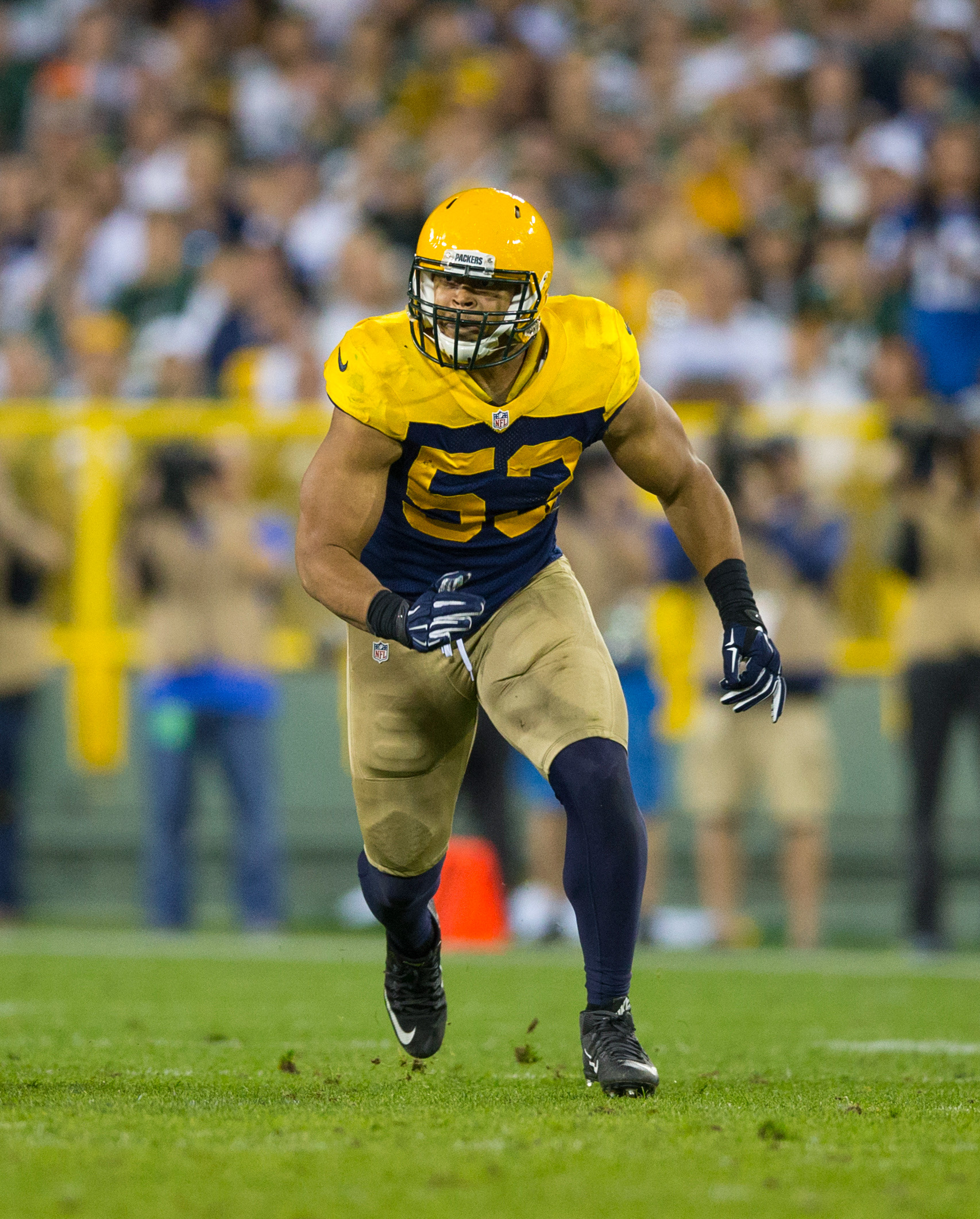
Given that Washington ranked 24th in DVOA against the pass, it can also afford to look for cornerback help. The trio of Breeland, Fuller, and Dunbar are all under 25 years of age and still have to room to grow, but the club could certainly use a veteran in the secondary. This year’s class of free agents offers quite a few top-end talents such as A.J. Bouye and Trumaine Johnson, but the Redskins won’t be in the market for another elite corner after reeling in Norman last season. Instead, Washington could look to secure a short-term pact with the Cowboys’ Brandon Carr or Morris Claiborne, or add a young player — such as Josh Robinson (26) — that hasn’t yet put it all together.
The Redskins’ choice of defensive coordinator could also play a significant role in the types of cornerbacks the club chooses to target. For example, if one of Rex Ryan‘s disciples (Rob Ryan, Mike Pettine, or Dennis Thurman) lands the job, Washington could take a look at Bills defensive backs Stephon Gilmore and/or Corey White, each of whom would presumably offer scheme familiarity. If the Redskins opt to hire Gus Bradley, perhaps Washington will express interest in Jaguars corners Prince Amukamara or Davon House, the latter of whom is currently employed but is viewed as a release candidate.
By Dallas Robinson |
at January 18, 2017 9:55 pm
In advance of March 9, the start of free agency in the NFL, Pro Football Rumors will detail each team’s three most glaring roster issues. We’ll continue this year’s series with the Philadelphia Eagles, who posted a solid 7-9 record in what was thought to be a rebuilding season.
Pending Free Agents:
Top 10 Cap Hits for 2017:
- Jason Peters, T: $11,700,000
- Lane Johnson, T: $10,000,000
- Fletcher Cox, DT: $9,400,000
- Vinny Curry, DE: $9,000,000
- Connor Barwin, DE: $8,350,000
- Chase Daniel, QB: $8,000,000
- Brandon Graham, DE: $7,500,000
- Malcolm Jenkins, S: $7,500,000
- Brandon Brooks, G: $7,200,000
- Mychal Kendricks, LB: $6,600,000
Other:
Three Needs:
1) Find an explosive wide receiver: No. 2 overall pick Carson Wentz tailed off at the end of his rookie season, unable to sustain the incredible production that he posted earlier in the year. But Wentz’s first NFL campaign should still be viewed in an extremely positive light, as the weapons he had at his disposal were among the worst in the league. The Eagles’ three primary receivers — Jordan Matthews, Nelson Agholor, and Dorial Green-Beckham — all finished outside the top-75 in DYAR, Football Outsiders‘ total value metric for pass-catchers, and no member of that trio amassed more than 850 yards (Agholor and DGB failed to crack even 400 yards).
All three should return in 2017, and there’s certainly room for growth, as none of Matthews, Agholor, or Green-Beckham are even yet 25 years old. But Matthews probably is what he is at this point (a big body who can excel in the slot but isn’t a fit on the outside), while Agholor has completely face-planted during his first two years in the NFL after being selected in the first round of the 2015 draft. Green-Beckham is the best athlete of the three, and Philadelphia, pleased with his grasp of the club’s offense, increased his snaps as the year progressed.
The Eagles know they have a problem at wide receiver, as evidenced by their reported pursuit of the 49ers’ Torrey Smith at last year’s trade deadline. The two clubs never came to an agreement, but it’s possible that talks could be revived during the offseason. In the midst of a deep rebuild, San Francisco could do without paying a wide receiver $8MM per year, and Smith would give the Eagles the deep threat they so desperately covet. As is the case when considering any addition Philadelphia might make, the club will likely need to clear out cap space before making such a move. Cutting Jason Kelce (who is rumored to be on the outs), Ryan Mathews, Leodis McKelvin, and Ron Brooks, for example, would save the Eagles north of $10MM, more than enough to account for a potential Smith trade.
Free agency could also be of interest as Philadelphia explores new pass-catchers, and one option that has been repeatedly linked to the team is former Eagle DeSean Jackson, who is set to become an unrestricted free agent after spending the past three seasons in Washington. The interest between the two parties appears to be mutual, as Jackson is reportedly “intrigued” by the idea of rejoining the Eagles. The 30-year-old Jackson led the league in yards per reception for the third time in his career in 2016, and would add a deep-ball threat to an Eagles offense that was limited to the short passing game last year.
The Eagles could also aim even higher and target the best wide receiver on the open market, the Bears’ Alshon Jeffery. Chicago could of course re-sign or franchise Jeffery before he ever hits free agency, but if Philadelphia does get a shot at him, it would be able to finally acquire a true No. 1 receiver to pair with its complementary pass-catchers. Other free agent choices (of varying price) include Terrelle Pryor (who is familiar with current Eagles QBs coach/former Browns OC John DeFilippo) Michael Floyd, Kenny Stills, and Kenny Britt, while veteran Ted Ginn. Jr. could also make sense if the Eagles simply want a receiver who can get deep with regularity.
If Philadelphia strikes out during free agency, the team could certainly look to the draft to fill its WR void, but I wonder if the Eagles would shy away from another first-round receiver after being burned by Agholor. Still, a number of intriguing prospects should be available during the middle of Day 1, and Western Michigan’s Corey Davis — whom Daniel Jeremiah of NFL.com somewhat surprisingly ranks ahead of Clemson’s Mike Williams — could be among them. Calling Davis a “high floor, high ceiling” athlete with excellent separation skills, Jeremiah lists Davis as the eighth overall player in this year’s class. Fellow receivers Williams, John Ross (Washington), Cooper Kupp (Eastern Michigan), Chad Hansen (California) also place among this year’s top-50 prospects, per Jeremiah.
Read more
2) Decide on a running back: Only five teams — the Packers, Lions, Buccaneers, Seahawks, and Jaguars — had their lead backs handle fewer carries than Ryan Mathews‘ 155, and of those clubs, only Jacksonville wasn’t dealing with some sort of extraordinary situation that necessitated a rotation in the backfield. Mathews has previously dealt with some of the worst injury luck in the NFL, but he’s actually managed to stay healthy for the Eagles, playing in 26 of a possible 32 games over the past two seasons. But Philadelphia didn’t feed him the rock, instead divvying up touches among him, Darren Sproles, and Wendell Smallwood.
The Eagles’ run game wasn’t successful in 2016, as the team ranked just 25th in rushing DVOA, and it’s possible that head coach Doug Pederson & Co. will look for a fresh approach at running back. Mathews is an easily identifiable potential cap casualty, as Philadelphia can create $4MM in savings against only $1MM in dead money by cutting him this offseason. Given the fact that the Eagles were willing to trade Mathews last spring, and that he was signed by former head coach Chip Kelly and not the current regime led by de facto general manager Howie Roseman, it wouldn’t be surprising to see the Birds part ways with Mathews in the coming months.
Sproles will return in 2017 after agreeing to an extension last summer, but he’s been historically used as more of a receiving threat, and at age 33 and likely entering his final NFL season, isn’t a part of the Eagles’ long-term future. Smallwood, meanwhile, garnered 77 carries during his rookie campaign, but didn’t show enough to indicate that he’s a feature back going forward. As such, Philadelphia should probably look to this year’s draft in order to find a true foundational back who can handle all three downs.
As I wrote yesterday when examining the Panthers’ needs, drafting a running back early can have dire consequences, especially because there are usually a bounty of options available in later rounds. But if the Eagles do decide to go ahead with an RB on Day 1, there are several options from which to choose. LSU’s Leonard Fournette is considered a generational talent, and may not even be available when Philadelphia’s turn comes up in the middle of Round 1. Dalvin Cook (Florida State) isn’t regarded as quite the specimen that Fournette is, but is still expected to come off the board in the first round. If the Eagles wait until Round 2, they could take a look at someone like Ohio State’s Curtis Samuel or Texas’ D’Onta Foreman.
Free agency typically isn’t the place to acquire a long-term solution at running back, but there are a few players who could make sense for the Eagles based on coaching connections. Jamaal Charles seems likely to be released by the Chiefs, and though he’s been hampered by injuries over the past few seasons (he’s missed 24 games since 2015), he is familiar with Pederson, who was Kansas City’s offensive coordinator before coming to Philadelphia. Free agent Danny Woodhead, too, knows a member of the Eagles’ coaching staff, as OC Frank Reich previously held the same position with the Chargers. Woodhead offers an extremely similar skillset to Sproles, however, and probably isn’t a realistic target.
3) Fix the only truly weak part of the defense — the secondary: Before we delve into the defensive backfield, it’s important to note that there are two components to pass defense: coverage and the pass rush. Philadelphia’s front seven, with defenders such as Fletcher Cox, Brandon Graham, Jordan Hicks, and Nigel Bradham, is among the best in the NFL, and is the far more important component in the Eagles’ No. 2 DVOA ranking against the pass. The push by Philly’s defensive line, plus the excellent coverage abilities of the club’s linebackers and safeties, shouldn’t obscure the fact that the Eagles need to revamp their cornerback group.
Philadelphia tried to gloss over its issues in the secondary last season by signing two former Bills who had played under defensive coordinator Jim Schwartz, but neither Leodis McKelvin nor Ron Brooks offered starting-caliber play. Both could be released this offseason, moves that would save the Eagles nearly $10MM. Nolan Carroll wasn’t effective in 2016, either, but at last check, Philadelphia was considering signing him to an extension. Rookie seventh-round pick Jalen Mills was pressed into duty and ended up playing the second-most snaps of any Eagles corner, but graded as the single worst CB in the league, according to Pro Football Focus.
The Eagles could go down the ex-Bill route again, as Buffalo cornerback Stephon Gilmore is expected to become an unrestricted free agent this spring. Gilmore, 26, suffered a huge drop-off in his play last season, as he fell from PFF’s No. 9 corner in 2015 to No. 62 in 2016. That sub-par performance could lower his price tag, but Gilmore will still likely command a hefty contract this spring. He’s familiar with Schwartz, however, and he’d instantly become the Eagles’ top corner.
If Philadelphia is able to clear some cap space before the new league year begins, the club should be in a position to sign at least one free agent corner, and the list of options is plentiful. Trumaine Johnson, A.J. Bouye, Dre Kirkpatrick, Morris Claiborne, Brandon Carr, Logan Ryan, and many others are scheduled to become free agents in March, while Darrelle Revis, Johnathan Joseph, and Sam Shields could soon be released by their respective teams. There’s no reason why the Eagles shouldn’t be in the running for at least two starting cornerbacks during the free agent period.
One other cornerback who could be on the Eagles’ radar is pending Broncos free agent Kayvon Webster, if only because current Philadelphia defensive backs coach Cory Undlin held the same position in Denver during the early part of Webster’s career. Clearly, Webster isn’t the answer to all the Eagles’ cornerback problems. But he’s only 25 years old and, having been buried beneath elite options with the Broncos, shouldn’t cost much. Webster is a complete lottery ticket that should be worth Philadelphia’s time, and if he doesn’t work out, no harm will have been done.
By Connor J. Byrne |
at January 18, 2017 6:02 pm
In advance of March 9, the start of free agency in the NFL, Pro Football Rumors will detail each team’s three most glaring roster issues. We’ll continue this year’s series with the New York Giants, who exceeded expectations in the first season of the Ben McAdoo era. After four straight non-playoff years – including three consecutive sub-.500 campaigns – to close out Tom Coughlin‘s tenure, Big Blue went 11-5 in 2016 en route to a wild-card berth. The Giants were one and done in the postseason, though, as the Packers trounced them at Lambeau Field, 38-13.
Pending Free Agents:
- Will Beatty, OT
- Orleans Darkwa, RB (RFA)
- Zak DeOssie, LS
- Larry Donnell, TE
- Ben Edwards, WR (ERFA)
- Robbie Gould, K
- Leon Hall, CB
- Johnathan Hankins, DT
- Mark Herzlich, LB
- John Jerry, G
- Josh Johnson, QB
- Matt LaCosse, TE (ERFA)
- Ryan Nassib, QB
- Marshall Newhouse, OT
- Jason Pierre-Paul, DE
- Bobby Rainey, RB
- Keenan Robinson, LB
- Coty Sensabaugh, CB
- Kelvin Sheppard, LB
- Robert Thomas, DT (ERFA)
- Will Tye, TE (ERFA)
- Trevin Wade, CB (RFA)
- Nikita Whitlock, RB (ERFA)
- Kerry Wynn, DE (RFA)
Top 10 Cap Hits For 2017:
- Eli Manning, QB: $19,700,000
- Olivier Vernon, DE: $16,000,000
- Janoris Jenkins, CB: $15,000,000
- Damon Harrison, DT: $10,600,000
- Victor Cruz, WR: $9,400,000
- Justin Pugh, G: $8,821,000
- Dominique Rodgers-Cromartie, CB: $8,500,000
- Shane Vereen, RB: $4,916,668
- J.T. Thomas, LB: $4,000,000
- Ereck Flowers, OT: $3,925,045
Current Projected Cap Room (via Over the Cap): $31,936,507
Other:
- Twenty-third overall pick in draft
- Must exercise or decline 2018 fifth-year option for WR Odell Beckham Jr.
Three Needs:
1.) Acquire more offensive weapons: Quarterback Eli Manning took a step backward this season, though it didn’t help his cause that the Giants had such a non-threatening ground game. Only two teams finished with a worse yards-per-carry average than the Giants’ 3.5, and the club went until Week 17 without a 100-yard rusher. That was Paul Perkins, who had a decent rookie season in a limited showing, but it’s debatable whether he did enough over 112 carries to earn a role as the Giants’ featured back going into 2017. No one else on the roster appears capable of filling the position, especially with Rashad Jennings and Shane Vereen looking like potential cap casualties. It would make sense to move on from Jennings, who averaged a paltry 3.3 yards per rush in his age-31 season, in order to clear $2.5MM in spending room. While cutting Vereen would save $3.75MM, that might come down to whether New York is confident he’ll be able to bounce back from an injury-plagued season. The soon-to-be 28-year-old has been eminently useful as a change-of-pace, pass-catching back throughout his career, but he went on injured reserve twice because of triceps issues in 2016.
If the Giants look for a No. 1 back via free agency, Eddie Lacy, LeGarrette Blount and Latavius Murray stand out as the best soon-to-be available options (forget about Le’Veon Bell), while Adrian Peterson and Jamaal Charles could end up on the market if their teams cut them. In at least some of those cases, however, it’s questionable whether the Giants would actually be upgrading over Perkins. Regarding Lacy, it’s worth noting that he and McAdoo are familiar with one another. Before McAdoo joined Coughlin’s staff in 2014, he worked as the Packers’ quarterbacks coach during Lacy’s rookie year.
In the event the free agent crop doesn’t appeal to the Giants, there will be several early round possibilities available in the draft. Bleacher Report prospect guru Matt Miller currently places six backs (including the controversial Joe Mixon, whom the Giants probably wouldn’t dare take in the wake of the Josh Brown fiasco) in the top 50 of his player rankings.
Turning to the passing game, the Giants have an all-world receiver in Odell Beckham Jr. and a promising one in Sterling Shepard, but not much else. To Victor Cruz‘s credit, the longtime Giant bounced back from two straight lost seasons to play in 15 games in 2016, though he’s far from the star-caliber producer he was from 2011-13. The G-men could move on from Cruz this offseason and open up an extra $7.5MM in cap room. Regardless of his 2017 status, the Giants need at least one more legitimate option in their receiving corps – preferably someone with size.
With Beckham around to serve as the alpha dog among their receivers, it’s difficult to imagine the Giants pursuing either of the best soon-to-be free agent WRs, Alshon Jeffery or Terrelle Pryor. There will be plenty of other veteran choices with size, however, including Vincent Jackson (like Cruz, his health is a concern), New Jersey native and ex-Rutgers star Kenny Britt, Kamar Aiken, Brandon LaFell, Brian Quick, Justin Hunter and Terrance Williams. Any of those players would be a good fit for the Giants, who would be better off signing a free agent than investing another high pick in a receiver after taking Beckham and Shepard in the top two rounds in two of the past three drafts.
On the other hand, the Giants haven’t selected a tight end prior to Round 3 since 2009. Their incumbent starter, Will Tye, has back-to-back 40-plus-catch seasons under his belt, but he’s not an impact player, evidenced by both his 8.2 yards-per-reception mark and third-worst ranking among Pro Football Focus’ qualified tight ends this season. As a result, the likes of O.J. Howard (Alabama), David Njoku (Miami) and Bucky Hodges (Virginia Tech) could be on the Giants’ radar during the first couple rounds of the draft. In free agency, the Patriots’ Martellus Bennett should at least pique New York’s interest if he reaches the open market.
Read more
2.) Decide Jason Pierre-Paul‘s future: The Giants’ two Super Bowl victories earlier in the Manning era came thanks in large part to dominant defensive fronts, which the team once again possessed in 2016. Signing Olivier Vernon and Damon Harrison to big-money contracts in free agency last winter has gone swimmingly thus far, but their paydays could help cost the Giants Pierre-Paul this offseason. The soon-to-be free agent end finished second among Giants D-linemen in snaps in 2016 and was stunningly effective as he continued to distance himself from a gruesome July 2015 fireworks accident. The 28-year-old bounced back from an eight-game, one-sack 2015 to take down opposing QBs seven times in 12 contests this season, though he went on the shelf for good in early December on account of sports hernia and groin surgery. Despite missing a quarter of the season, Pierre-Paul ranked 13th among PFF’s 109 qualified edge defenders and totaled the league’s 15th-most QB hurries (24).

JPP signed a one-year pillow contract with the Giants last offseason, but he’s unwilling to do that again after reestablishing himself as a top-tier pass rusher. Those players come at premium prices in free agency (Exhibit A: Vernon’s five-year, $85MM deal with $52MM in guarantees), so Pierre-Paul doesn’t have much incentive to sign before the market opens if his motivation is to secure a massive contract. Of course, the Giants could keep Pierre-Paul from leaving by applying the estimated $16.955MM franchise tag to him. That would cost the Giants a significant chunk of spending space, but they might not be averse to using it on Pierre-Paul. After all, they were willing to hand JPP $10MM last winter despite both his off-field accident and dip in production.
3.) Address the offensive line: The Giants have two clear solutions among their front five in left guard Justin Pugh and center Weston Richburg. Everything else is up in the air as the offseason approaches in earnest.
Although Ereck Flowers was the ninth overall pick in the draft just two years ago, the Giants are already considering moving him off the left tackle position. While Flowers has been durable (31 appearances and starts) and strong in the running game, he hasn’t been a particularly effective pass blocker. The 22-year-old was disastrous for a large part of this season, as he allowed 59 QB pressures and took a league-high 13 penalties.
Going forward, the Giants could shift Flowers to the right and relegate Bobby Hart to the bench to take the place of pending free agent Marshall Newhouse. That would still leave the team bereft at left tackle, though, and free agency won’t offer much help aside from the Bengals’ Andrew Whitworth and maybe the Lions’ Riley Reiff. Despite his age (35), Whitworth remains one of the game’s sturdiest tackles and, given both that and the lack of competition in free agency, could encounter a bidding war on the market. If the Giants do pursue Whitworth and/or Reiff but don’t land one of them, would they use yet another high draft pick on a tackle? As is the case with free agency, the tackle class in this year’s draft isn’t strong, so general manager Jerry Reese is going to have a difficult time finding a better option than Flowers if he moves the still-young lineman (he’ll be 23 in April) away from the blind side.
Elsewhere on the line, Reese will have to determine whether to bring back right guard John Jerry, who’s without a contract after starting 16 games, playing 99.7 percent of snaps and grading as PFF’s 34th-best guard among 76 qualifiers in 2016. Jerry shouldn’t break the bank, which isn’t true for fellow pending free agent right guards like T.J. Lang and Kevin Zeitler, so it would likely behoove the Giants to re-sign him and avoid creating another need.
By Dallas Robinson |
at January 17, 2017 7:15 pm
In advance of March 9, the start of free agency in the NFL, Pro Football Rumors will detail each team’s three most glaring roster issues. We’ll continue this year’s series with the Carolina Panthers, who fell to 6-10 this season after making a Super Bowl appearance in 2015.
Pending Free Agents:
- Mario Addison, DE
- Chas Alecxih, DT (ERFA)
- Brenton Bersin, WR (RFA)
- Corey Brown, WR (RFA)
- LaRon Byrd, WR
- Ted Ginn, WR
- Michael Griffin, S
- Wes Horton, DE
- Ben Jacobs, LB (ERFA)
- A.J. Klein, LB
- Charles Johnson, DE
- Leonard Johnson, CB
- Colin Jones, S
- Tyler Larsen, G (ERFA)
- Kyle Love, DT
- Andrew Norwell, G (RFA)
- Michael Palardy, P (ERFA)
- Mike Remmers, T
- Chris Scott, G
- Kawann Short, DT
- Ryan Wendell, C
- Fozzy Whittaker, RB
- Teddy Williams, CB
Top 10 Cap Hits for 2017:
- Cam Newton, QB: $20,166,000
- Luke Kuechly, LB: $12,363,324
- Greg Olsen, TE: $10,350,000
- Ryan Kalil, C: $8,329,000
- Thomas Davis, LB: $8,250,000
- Jonathan Stewart, RB: $8,250,000
- Star Lotulelei, DT: $6,757,000
- Michael Oher, T: $5,500,000
- Graham Gano, K: $3,850,000
- Kurt Coleman, S: $3,650,000
Other:
Three Needs:
1) Protect Cam Newton. Offensive tackle has seemingly been among the list of the Panthers’ needs since the 2014 offseason, when longtime blindside protector Jordan Gross announced his retirement. Problems have arisen on the right side, as well, and Carolina has run out the likes of Byron Bell, Nate Chandler, David Foucault, and Mike Remmers over the past several years in an effort to keep Cam Newton upright.
At present, Michael Oher is slated to return as the club’s left tackle. The 30-year-old was above-average in 2015, his first season with Carolina, and subsequently agreed to a three-year extension that locks him up through the 2019 campaign. Oher missed all but three games in 2016 while dealing with concussion issues, and there’s an outside chance he’s released this offseason (the Panthers would create $4.5MM in cap space by designating Oher a post-June 1 cut). On the right side, third-year pro Daryl Williams looks like the starter, as 16-game starter Mike Remmers is headed for unrestricted free agency.
Remmers shouldn’t be an offseason priority, especially given that he’s mostly been a disaster during his tenure with the Panthers. A combination of Oher and Williams can probably get by, but ideally, Carolina would try to find a new left tackle in the coming months, a move that would allow Oher to slide back to right tackle. That solution sounds like a doable plan in theory, but the 2017 class of offensive tackles is underwhelming, and Mel Kiper Jr. of ESPN.com says that there isn’t a ton of first-round talent in the group.
Alabama’s Cam Robinson is considered the top prospect at the position, but even he comes with flaws that could cause him to fall past the top-10 picks. As Rob Rang of CBSSports.com notes, Robinson has faced off-field concerns (an arrest on weapons and drug charges which were ultimately dropped), while some observers doubt that he’ll be able to stay at left tackle. Wisconsin’s Ryan Ramczyk, Utah’s Garett Bolles, and Pittsburgh’s Adam Bisnowaty are among the other OTs who could potentially come off the board on Day 1. For what it’s worth, one scout recently told Matt Miller of Bleacher Report that Bolles is set to “shoot up” draft boards, and potentially overtake Robinson as the No. 1 tackle available.

The Panthers could also take a dip into free agency in its search for a new left tackle, a plan that isn’t out of the question given that the club is still very much in win-now mode. Still, given that options like Matt Kalil and Sebastian Vollmer wouldn’t represent an upgrade over Oher, Carolina would essentially be limited to two free agents: Andrew Whitworth or Riley Reiff. The Bengals likely want to re-sign Whitworth, but given that Cincinnati recently spent two high picks on tackles, a reunion is no sure thing. Whitworth has made it clear that he wants to remain at left tackle, and as Pro Football Focus‘ No. 2 rated tackle, he’d signify an improvement over Oher. Reiff, meanwhile, spent 2016 on the right side after the Lions drafted Taylor Decker, but he’d presumably relish an opportunity to move back to the blindside.
The interior of Carolina’s offensive line could also be addressed this offseason in the form of extensions, as guards Andrew Norwell and Trai Turner are heading into the final seasons of their rookie deals (Norwell is a restricted free agent and will be offered a tender). It’s unclear whether the Panthers will be able to retain both guards, or will even feel the need to do so — after all, Turner was a third-round choice while Norwell was an undrafted free agent, so perhaps the club is confident in its ability to unearth low-cost interior line talent. From the players’ point of view, Norwell and Turner may want to wait until free agents such as Kevin Zeitler and T.J. Lang set the guard market this spring before beginning negotiations.
Read more
2) Draft a young running back. Injuries have limited Jonathan Stewart for most of his career, but he’s actually managed to play in 26 of a possible 32 regular season games overt the past two years. Unfortunately, though no longer hampered by health issues, Stewart’s play is declining — his yards per carry has dropped in each of the last three seasons, while he ranked 35th and 36th in DYAR and DVOA, respectively, in 2016.
Throw in Stewart’s contract situation — he’ll count $8.25MM against the cap in 2017 before becoming a free agent next offseason — and the Panthers need to start thinking about Stewart’s replacement. Carolina has very little depth behind the soon-to-be 31-year-old Stewart, as Fozzy Whittaker, Mike Tolbert, and 2015 fifth-rounder Cameron Artis-Payne (who has typically been a healthy inactive during his two years in the league) comprise the rest of the Panthers’ running back corps.
Carolina is highly unlikely to enter free agency in order to find a running back, although I’d be especially curious to see what Christine Michael could do in the Panthers’ power-running scheme. Perhaps if the Panthers opt to release Stewart — a move that would free up north of $6MM in cap room if done as a post-June 1 transaction — the team could start over at the running back position, and at that point, a free agent might make sense. But the draft is probably the more realistic avenue for Carolina to locate its new back.
This year’s draft is full of running backs who could be selected in the first few rounds, as Daniel Jeremiah of NFL.com places five runners among his top-50 prospects: Leonard Fournette (LSU), Dalvin Cook (Florida State), Christian McCaffrey (Stanford), Alvin Kamara (Tennessee), and Curtis Samuel (Ohio State). Fournette, at No. 6 overall, is the top back in the 2017 class, and Jeremiah writes that the Tigers RB “rarely attempts to make anyone miss, preferring to punish instead,” while also noting that Fournette has improved his pass protection skills. Last month, one scout told Ian Rapoport of NFL.com that Fournette is a better prospect than was Todd Gurley when he entered the draft two years ago.
The Panthers could certainly aim high and draft Fournette with the eighth overall selection — just last week, Rotoworld’s Josh Norris mocked Fournette to Carolina — but there is an inherent risk in selecting running backs early in the draft, let alone in the top-10 picks. It’s such a fungible position that, for many teams, it simply doesn’t make sense to invest prime resources when a suitable option could be found later in the draft. Plus, given the bottoming-out of free agent RB contracts around the NFL, the benefits of a first-round rookie deal don’t apply to running backs as much as they do to other, more valuable positions.
3) Sort out — and bolster — the pass rush. There’s no question that the Panthers got after opposing quarterbacks last season. Under former coordinator (and current Bills head coach) Sean McDermott, Carolina ranked second in the NFL with 47 sacks, and placed fifth in the league with a 7.3% adjusted sack rate. However, many of the Panthers’ key pass rushers are entering, or nearing, free agency, and given that the club’s entire defensive unit hinges on strong production up front, Carolina needs to address its defensive line immediately.
Let’s take a look at the current scope of the Panthers’ DL, starting on the interior: Kawann Short and Star Lotulelei form one of the more effective defensive tackle duos in the NFL, but Short is about to become a free agent, while Lotulelei will hit free agency next year after playing out his fifth-year option. Short, 28 next month, recently placed third on PFR’s 2017 Free Agent Power Rankings, and figures to be incredibly expensive on the open market. The franchise tag looms an option, but Short briefly held out of camp last year after failing to reach a long-term agreement with the Panthers. Short has maintained he would quickly sign the franchise tender if offered, but if he does stage some sort of disruption, general manager Dave Gettleman — the man who rescinded Josh Norman‘s franchise tag last year — might not put up with it.
Veteran defensive tackle Paul Soliai looks like an obvious cut this offseason, leaving 2016 first-round pick Vernon Butler as Carolina’s top reserve (or potentially a starter if Short departs) on the inside. Last year’s selection of Butler was a wise move on the part of the Panthers, as the club is now set up to withstand the loss of either Short or Lotulelei over the next two seasons. As such, the more pressing problems for Carolina exist on the edge, where the team could stand to add an extra option in the next few months.
Defensive ends Mario Addison and Charles Johnson, who respectively ranked first and fourth in sacks among Panthers defenders, are both free agents. Johnson, who re-signed with Carolina last year after being released earlier in the offseason, has already expressed interest in staying with the Panthers. Addison, meanwhile, came out of nowhere to post 9.5 sacks and grade as Pro Football Focus’ No. 16 edge defender, but played on fewer than 500 snaps and will be 30 years old when the 2017 campaign begins, meaning he’s probably not cut out to be a full-time starter. Kony Ealy, another defensive end, is entering the last season of his rookie deal and will become a free agent in 2018.
All of which to say that the Panthers need to invest in their edge rush, both in the near term and for the future. Free agent defensive ends that may interest Carolina could include Jabaal Sheard, Datone Jones, and veteran Dwight Freeney, but those options are only on the table if the Panthers don’t think they can land a top-notch defensive end in the draft. At pick No. 8, Carolina should see at least one of Stanford’s Solomon Thomas, Alabama’s Jonathan Allen, or Tennessee’s Derek Barnett on the board, and should probably pounce.
Despite the Panthers’ poor 2016 record, the club is still very much a 2017 contender, and should be able to paper over many of the holes listed above (at least for the time being). Michael Oher and Daryl Williams represent a viable tackle combination, Jonathan Stewart can probably produce for at least one more season, and Carolina can hold onto Kawann Short for one more year via the franchise tag. As such, the Panthers should be able to truly employ a “best player available” strategy when the eighth pick rolls around in late April.