
Browns DE Chris Odom Out For Season
Browns defensive end Chris Odom suffered a torn ACL during the team’s preseason finale against the Bears on Saturday, per head coach Kevin Stefanski (Twitter link via Jake Trotter of ESPN.com). Odom will miss the 2022 season as a result.
This is an especially difficult blow for Odom, who earned United States Football League Defensive Player of the Year honors following the rebooted league’s inaugural season this year. A second-round pick of the Houston Gamblers in the USFL draft in February, Odom went on to post 41 total tackles, 12.5 sacks, six forced fumbles, and four blocked field goals. He auditioned for the Bengals, Cardinals, Chiefs, Saints, and Texans this summer before finally signing with the Browns.
Now 27, Odom signed with the Falcons as a UDFA in 2017. He saw action in seven regular games with the Packers that year after being waived by Atlanta, and his performance with a different alternative league in 2018 — the now-defunct Alliance of American Football — led to another contract with the Falcons in 2019. But he was waived again during final cutdowns in August 2019 and subsequently hooked on with Washington’s practice squad. He ultimately appeared in four games for Washington.
A stint with the CFL’s Calgary Stampeders preceded his successful run with the Gamblers. His admirable perseverance in continuing his playing career will be tested yet again as a result of the ACL tear.
Of course, it is unclear if the Arkansas State product would have made the roster anyway, as the Browns’ edge rush contingent consists of two drafted rookies — Alex Wright and Isaiah Thomas — trade acquisition Chase Winovich, and others behind starters Myles Garrett and Jadeveon Clowney.
In 11 regular season NFL contests, Odom has 16 tackles and two sacks.
Browns WR Anthony Schwartz Not At Risk Of Being Cut
The Browns are not planning to cut wide receiver Anthony Schwartz. Head coach Kevin Stefanski confirmed as much to reporters, including Mary Kay Cabot of Cleveland.com, after the team’s preseason loss to the Bears on Saturday.
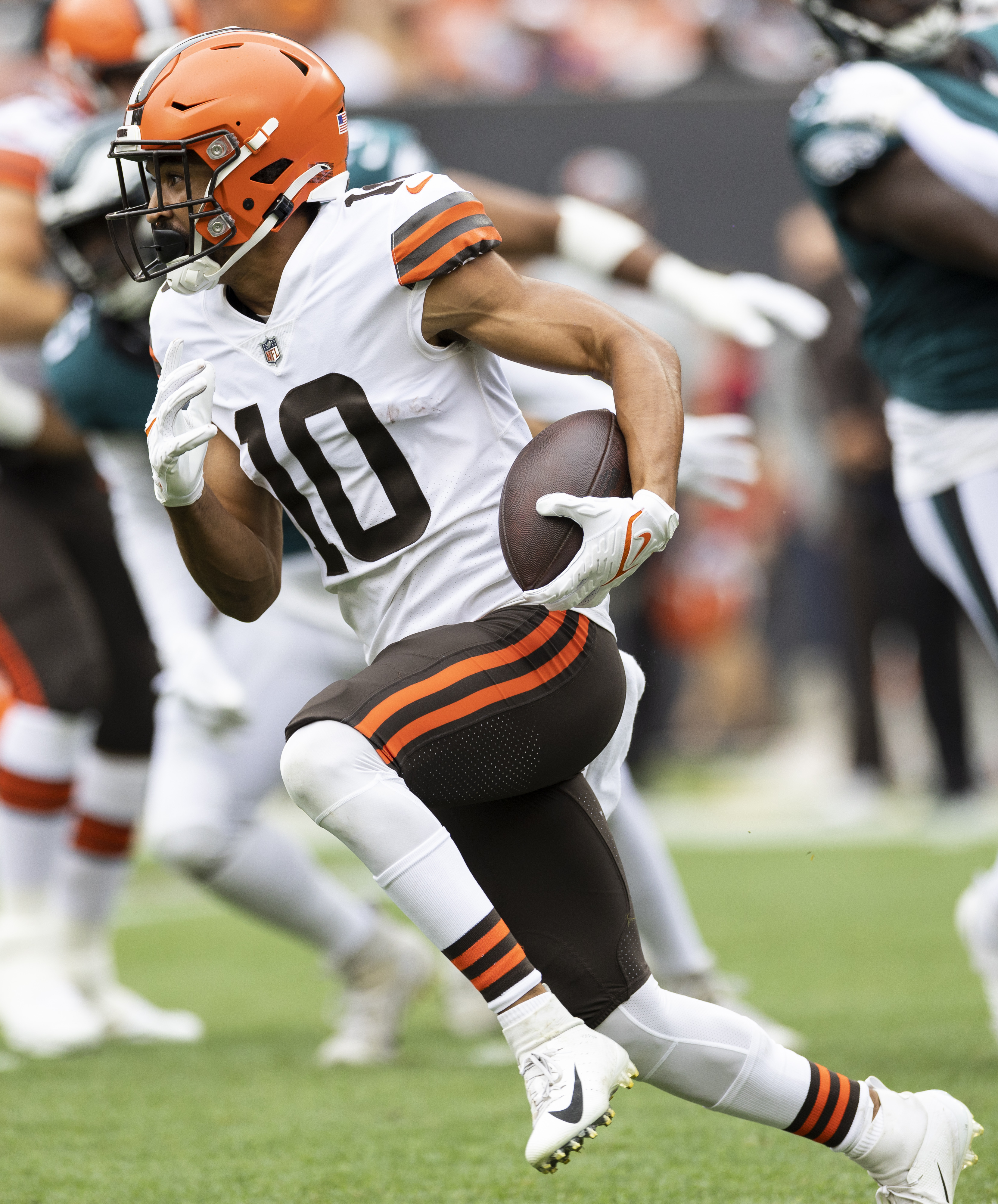
Given that Schwartz was selected in the third round of the 2021 draft, Stefanski’s announcement should not come as much of a surprise. However, Schwartz was largely quiet in his rookie year, posting 10 catches for 135 yards and a score while playing one-third of the Browns’ offensive snaps, and he has struggled mightily this preseason.
In Saturday’s matchup with Chicago, the Auburn product dropped three passes, giving him a total of six drops through the club’s three preseason contests. His third drop elicited a chorus of boos from the crowd at FirstEnergy Stadium, and the social media reaction to his performance led to Stefanski’s being asked about the wideout’s job security.
“Respectfully, we’re going to make sure that we deal with things that are important, which are our players and how they respond to these things,” Stefanski said. When asked if Schwartz was at risk of being waived, Stefanski simply said, “no.”
In addition to his draft pedigree, the Browns’ collection of WR talent offers another reason for the team to retain Schwartz. After parting ways with Odell Beckham Jr., Jarvis Landry, and Rashard Higgins over the past 10 months, Cleveland’s receiver room boasts little by way of proven talent outside of trade acquisition Amari Cooper. The team has steadfastly maintained that it feels no pressure to acquire another veteran pass-catcher, and at present, the depth chart is topped by Cooper, 2020 sixth-rounder Donovan Peoples-Jones, and third-round rookie David Bell.
Schwartz slots in somewhere behind that trio, along with sixth-round rookie Michael Woods II. So while Schwartz might not see much more playing time in 2022 than he did in 2021, it seems he will at least have a roster spot.
Raiders TE Darren Waller Leaves Klutch Sports
Per Adam Hill of the Las Vegas Review-Journal, Raiders tight end Darren Waller has left Klutch Sports, the agency founded by NBA superstar LeBron James and his close friend, Rich Paul. Waller signed with Klutch less than a year ago.
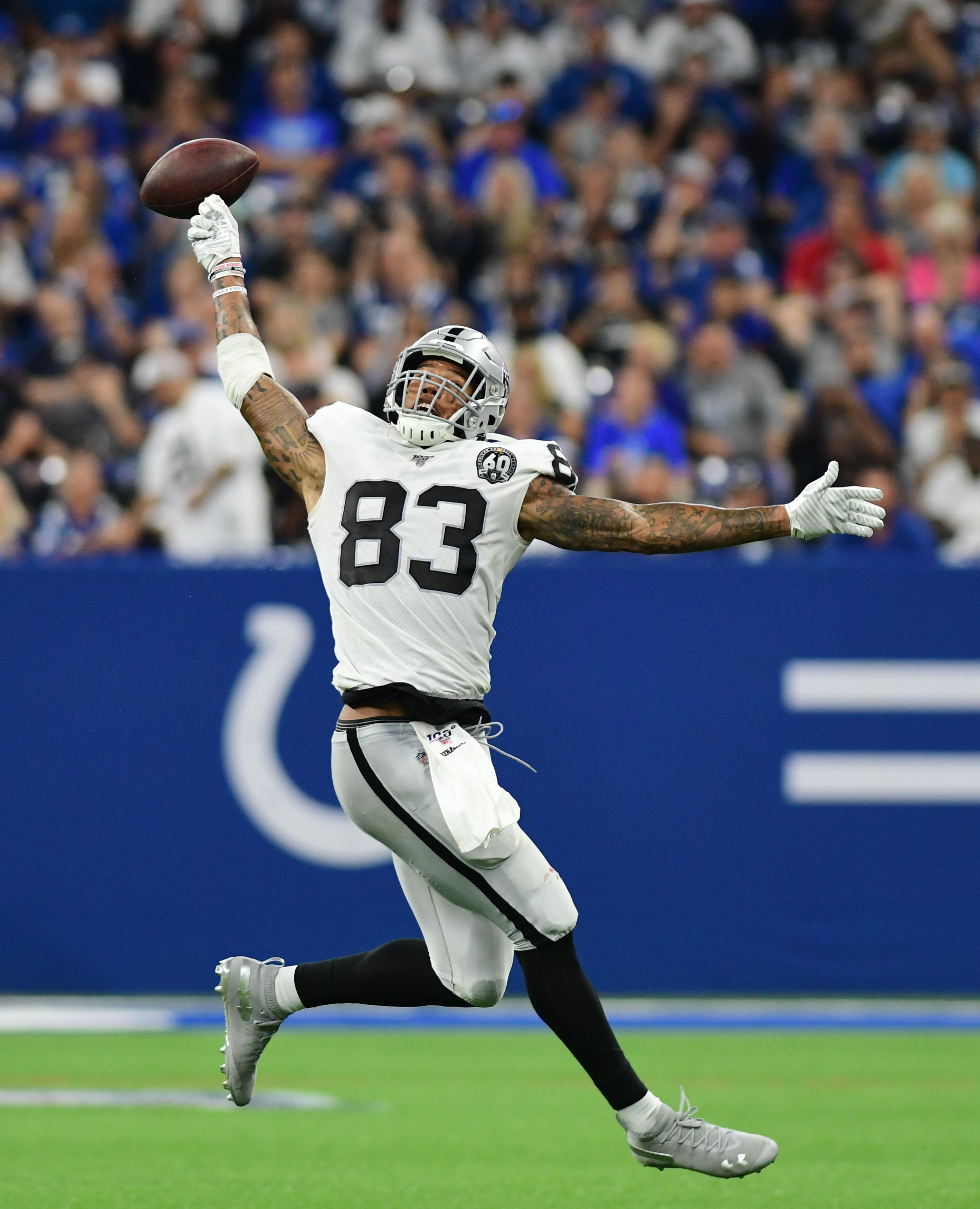
Waller’s decision is particularly notable because of his contract status. The soon-to-be 30-year-old is slated to earn non-guaranteed base salaries of $6.25MM in 2022 and ’23, and given his elite performance and his importance to the Raiders’ offense, he was naturally mentioned as a candidate for a new contract earlier this year.
Subsequent reports suggested that an extension for Waller is a “priority” for Las Vegas, and we heard in June that a deal was “imminent” (though that June report also indicated that the team may be trying to delay the matter to 2023, and as clubs generally do not like to negotiate contracts with players who have multiple years of club control remaining, that could well be the case).
Waller did report to training camp on time, but he has been dealing with a hamstring injury and has practiced just once since July 30. The fact that the ailment is considered a minor one has led to speculation that Waller’s absence is more a function of his contract situation than his health, though there is nothing to substantiate those rumors at this point.
Whatever the reason, the fact remains that Waller has decided to change representation at a time when he is looking to sign the most lucrative contract of his career. The extension he signed in October 2019 was something of a gamble on the Raiders’ part, as the former sixth-round pick of the Ravens was suspended multiple times during his stint in Baltimore for violations of the league’s substance-abuse policy, including a year-long ban in 2017. The Raiders plucked him off the Ravens’ taxi squad in November 2018, and they handed him his current deal, a ~$7.5MM/year accord, after a few encouraging performances to open the 2019 season.
Over the 2019-20 campaigns, Waller rewarded the team’s faith in him by averaging just under 100 catches for 1,170 yards. Although the 2021 season saw him miss time due to a knee injury, the Georgia Tech product ranks second among tight ends in catches and yards over the past three years, behind only Chiefs star Travis Kelce.
The remaining club control, along with last year’s knee injury and the current hamstring issue, could prevent a deal from getting done this summer. But assuming there are no long-term health concerns, Waller will undoubtedly be shooting for the top of the tight end market, which is currently paced by George Kittle‘s $15MM AAV and $40MM in practical guarantees. He must wait until Wednesday to hire a new agent, and Mike Florio of Pro Football Talk hears that the plan is to retain super agent Drew Rosenhaus.
Such a hire would seem to indicate that Waller has no intention of waiting until 2023 to see his name at or near the top of the TE pay scale.
Patriots Notes: Wynn, RBs, Thornton
The Patriots are reportedly open to trading OT Isaiah Wynn, who has been moved from left tackle to right tackle this year after lining up exclusively on the blindside over his first few seasons in the NFL (aside from a 2020 cameo at LG and some training camp work at RT as a rookie). As expected, however, outside interest in the former first-rounder is limited at this point, as Jeff Howe of The Athletic tweets.
Although Wynn did play in 16 regular season contests in 2021, he comes with an extensive injury history. He is also tethered to a $10.4MM salary for 2022 since New England exercised the fifth-year option on his rookie deal, and at least some teams consider him a tackle-guard “tweener.” All of that suggests that the Pats — who must also consider the injury history of LT Trent Brown and the underwhelming training camp performances of backups Justin Herron and Yodny Cajuste — may not fetch a high enough return to pull the trigger.
Now for more out of Foxborough:
- Per Mike Giardi of the NFL Network, Brown was not told he would be lining up at left tackle when he re-signed with the Patriots this offseason (Twitter link). The 29-year-old has taken all of his snaps on the right side of the line since 2019, and one wonders if he would have signed the contract, which pays him $6.5MM per year over the next two years, if he had known he would be playing a premium position. Giardi also tweets that Wynn — perhaps as a result of a position switch in his platform year — is not a “happy camper,” so there is plenty of intrigue surrounding the team’s OL bookends in 2022.
- As Mike Reiss of ESPN.com writes, Patriots running backs Rhamondre Stevenson and Damien Harris will be part of a timeshare this year, but as opposed to 2021, they are more likely to remain on the field on third downs. In light of James White‘s retirement, New England is unlikely to have a defined “passing down back,” and that is especially true in the wake of the ankle injury that Ty Montgomery suffered during the team’s preseason finale on Friday. Reiss notes in a separate piece that Montgomery seemed like a roster lock as a third option behind Stevenson and Harris, and the Pats are still awaiting word on the severity of his injury.
- On Monday, rookie receiver Tyquan Thornton underwent surgery to repair his fractured clavicle, as Jeremy Fowler of ESPN.com tweets. It was previously reported that Thornton is expected to return to the field sometime in October, and the six-to-eight-week recovery timeline that Fowler provides jibes with that report.
- The injury that landed rookie OL Andrew Stueber on the reserve/NFI list is a torn hamstring, as Aaron Wilson of Pro Football Network reports (via Twitter). Stueber sustained the injury while training after the draft, and it could sideline him for his entire rookie season.
Steelers To Consider Extension For CB Cameron Sutton
Steelers cornerback Cameron Sutton, who is under club control through 2022, recently indicated that he does not expect to sign a new contract before the 2023 league year. Although a report from earlier this month confirmed that no extension talks had taken place between player and team, Gerry Dulac of the Pittsburgh Post-Gazette believes that a new deal for Sutton remains “a very real possibility.”
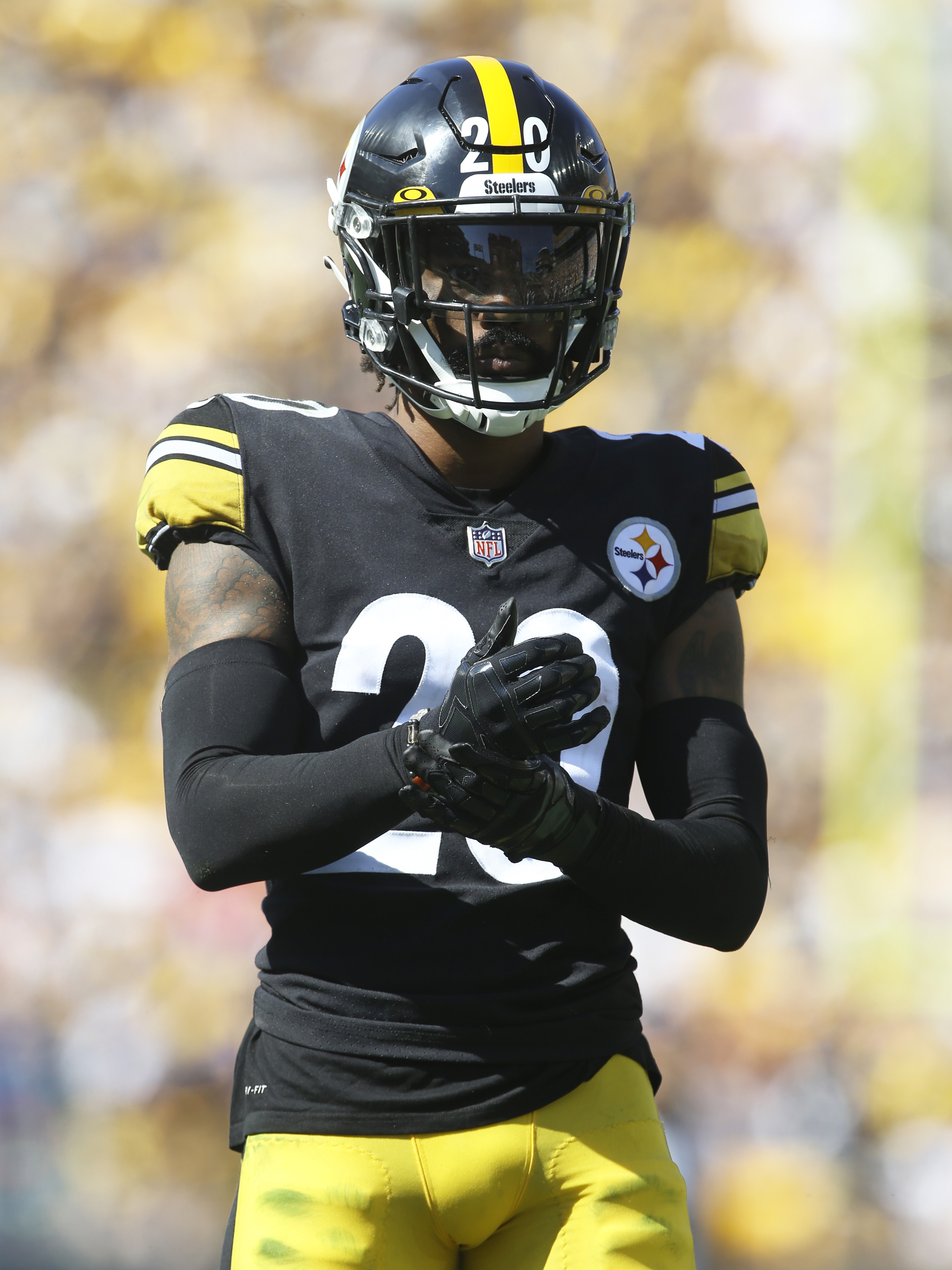
Dulac does not say whether contract discussions have commenced, so it is difficult to handicap the likelihood of an agreement at this point. Still, newly-promoted GM Omar Khan has extended three contract-year players — Minkah Fitzpatrick, Chris Boswell, and Diontae Johnson — in recent weeks, and a Sutton extension would certainly not be as costly as the Fitzpatrick and Johnson deals. As such, there should still be time to get something done before the start of the regular season on September 11.
Sutton, 27, was selected by the Steelers in the third round of the 2017 draft. He worked as a rotational player throughout his first three years in the league, finally exceeding 50% of the team’s defensive snaps in the fourth and final year of his rookie deal in 2020. His performance that season was enough to land him a two-year, $9MM contract last March, and in the 2021 campaign, he started all 16 games in which he appeared and logged 99% of Pittsburgh’s defensive snaps.
That increased playing time exposed some weaknesses in Sutton’s game. He allowed a 104.9 passer rating as the closest defender and 8.6 yards per target — numbers well north of his 2019 and ’20 marks — and graded outside Pro Football Focus’ top-75 at the position (PFF considered Sutton a top-30 corner in 2020).
Nonetheless, the Tennessee product is in line for another significant role in 2022. The expectation is that he will line up on the boundaries in base sets and then move to the slot in sub-packages, meaning that he will rarely leave the field.
Sutton, Levi Wallace, and Ahkello Witherspoon are the top three players on the Steelers’ CB depth chart, and none of them are playing on contracts with an AAV in excess of $5MM. Pittsburgh presently has just shy of $10MM in cap space, so there is room for a Sutton extension, both from a salary cap standpoint and when considering the team’s other commitments to the cornerback position.
Broncos LB Jonas Griffith Dislocates Elbow
AUGUST 25: In a surprising yet encouraging update, head coach Nathaniel Hackett stated (via the team’s website) that the injury is not nearly as significant as originally thought. “Yeah, we’re definitely hoping for Jonas to be [ready for] Week 1, that’s kind of our aiming point ,” Hackett said. “We very much dodged a bullet on that one.” Griffith being ready in time to start the regular season (or at least miss less time than initially feared) would be a significant boost to the Broncos’ defense.
AUGUST 14: Broncos linebacker Jonas Griffith sustained a dislocated elbow during the team’s preseason victory over the Cowboys on Saturday, as Mike Klis of 9News.com tweets. Griffith is expected to miss the next four to six weeks, so his availability for the first several games of the regular season is in doubt.

The 25-year-old ‘backer entered the league as a UDFA with the 49ers and joined the Broncos via minor trade last August. He saw his first professional defensive snap in Week 14 of the 2021 season and performed quite well down the stretch, compiling 45 tackles — including four for loss and 5.5 run “stuffs” — in the final five games of the year.
He carried that momentum into spring work in 2022, taking first-team reps during OTAs and training camp. He and Josey Jewell have been viewed as the starting ILB tandem for months.
GM George Paton did not do much to address his team’s inside linebacker position this offseason, aside from re-signing Jewell and signing former Eagles LB Alex Singleton to a modest contract. He did not draft an ILB, and he did not retain players like Alexander Johnson, Kenny Young, and Micah Kiser (perhaps due to his confidence in Griffith).
Singleton, however, was Philadelphia’s leading tackler over the past two seasons, and he is the most likely Griffith replacement. While Singleton’s work in coverage is generally poor, he should be effective in Denver’s base packages, which is where Griffith is expected to see most of his action anyway.
Klis also names 2020 fifth-rounder Justin Strnad, who started fives games last year, as a candidate to see more snaps in Griffith’s absence, and he suggests that the Broncos could explore a reunion with Johnson (Twitter link). Singleton, whose contract includes a playtime incentive, may now have a better chance to cash in on that incentive.
Minor NFL Transactions: 8/21/22
We will keep track of today’s minor moves right here:
Chicago Bears
- Signed: FB Jake Bargas
- Placed on IR: WR David Moore
Green Bay Packers
- Waived: OL Ty Clary, LB Chauncey Manac
Houston Texans
- Released: LB Tae Davis
Los Angeles Rams
- Reverted to IR: WR J.J. Koski
New England Patriots
- Waived: TE Dalton Keene
New Orleans Saints
- Waived: QB K.J. Costello, RB Devine Ozigbo, K John Parker Romo
Tampa Bay Buccaneers
- Released: WR Vyncint Smith
- Waived: S Troy Warner
Washington Commanders
- Claimed (from Rams): Kendall Blanton
- Placed on IR: DE Bunmi Rotimi
Moore’s placement on IR indicates that his season is over, and as James Palmer of the NFL Network tweets, a leg injury is the culprit. Moore, who signed with the Bears in April, was a useful complementary receiver in Seattle from 2018-20, and he may have had a shot to carve out a rotational role with Chicago. He was arrested on drug and weapons charges in July and could face league discipline as a result.
The Patriots made Keene the second piece of their two-tight end third round in 2020, trading up (via the Jets) to No. 104 to nab the Virginia Tech product. But neither Keene nor the No. 91 overall pick from that draft (Devin Asiasi) have made big impacts as Patriots. Keene missed all of the 2021 season due to a knee injury. In six games in 2020, Keene caught three passes for 16 yards. In the offseason following the Pats’ Day 2 tight end dive, they signed Jonnu Smith and Hunter Henry to big-ticket deals. That duo remains in place in front of Asiasi.
Bucs G Aaron Stinnie Out For Season
Buccaneers guard Aaron Stinnie tore the ACL and MCL in his left knee during Saturday’s preseason loss to the Titans and will miss the entire 2022 season, as head coach Todd Bowles confirmed to reporters. Jenna Laine of ESPN.com reported the news (via Twitter) shortly before Bowles’ announcement.
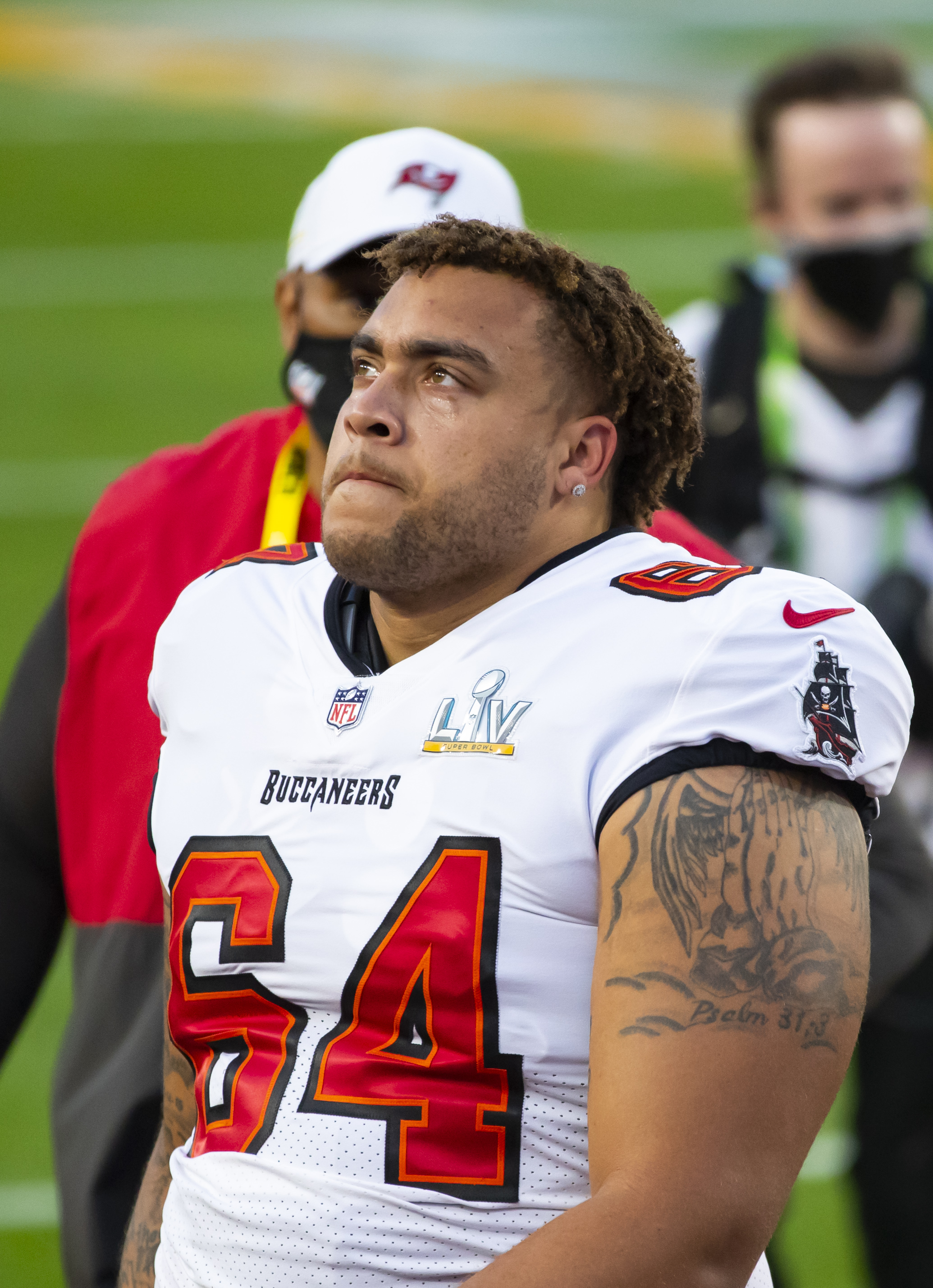
This was the feared outcome after Stinnie was carted off the field, and it will further test an O-line that does not seem capable of withstanding many more losses. Seven-year starter Ali Marpet surprisingly announced his retirement in February, three-year starter Alex Cappa signed with the Bengals in March, and center Ryan Jensen may be lost for the season after sustaining a serious knee injury of his own. At the very least, it appears that Jensen will miss significant time.
Stinnie, who re-signed with Tampa this offseason on a one-year deal worth up to $2.5MM, was competing with Nick Leverett and second-round rookie Luke Goedeke for the starting left guard gig. Leverett was also battling Robert Hainsey for the starting pivot role in Jensen’s absence, though recent reports have suggested that Hainsey may have that job sewn up.
Stinnie, 28, signed with the Titans as a UDFA in 2018. Tampa claimed him off waivers from Tennessee in 2019, and he became a valuable contributor for the Bucs during their 2020 Super Bowl run. He started the final three playoff games that season — including Super Bowl LV — in the wake of Cappa’s ankle injury.
Bowles did have some good news for Bucs fans today, announcing that right tackle Tristan Wirfs, who sustained an oblique injury, is not at risk of missing Week 1 and is considered day-to-day (Twitter link via Scott Smith of the team’s official website). Bowles added that, while he is comfortable with his existing OL depth, he expects the club to monitor the FA market for reinforcements.
Commanders RB Brian Robinson In Line For Starting Role?
Commanders running backs Antonio Gibson and Brian Robinson are engaged in a battle for the team’s starting RB job, and Robinson may have a leg up. As Michael David Smith of Pro Football Talk writes, Robinson has outplayed Gibson during training camp, and the former earned the starting nod in the team’s preseason loss to the Chiefs on Saturday.
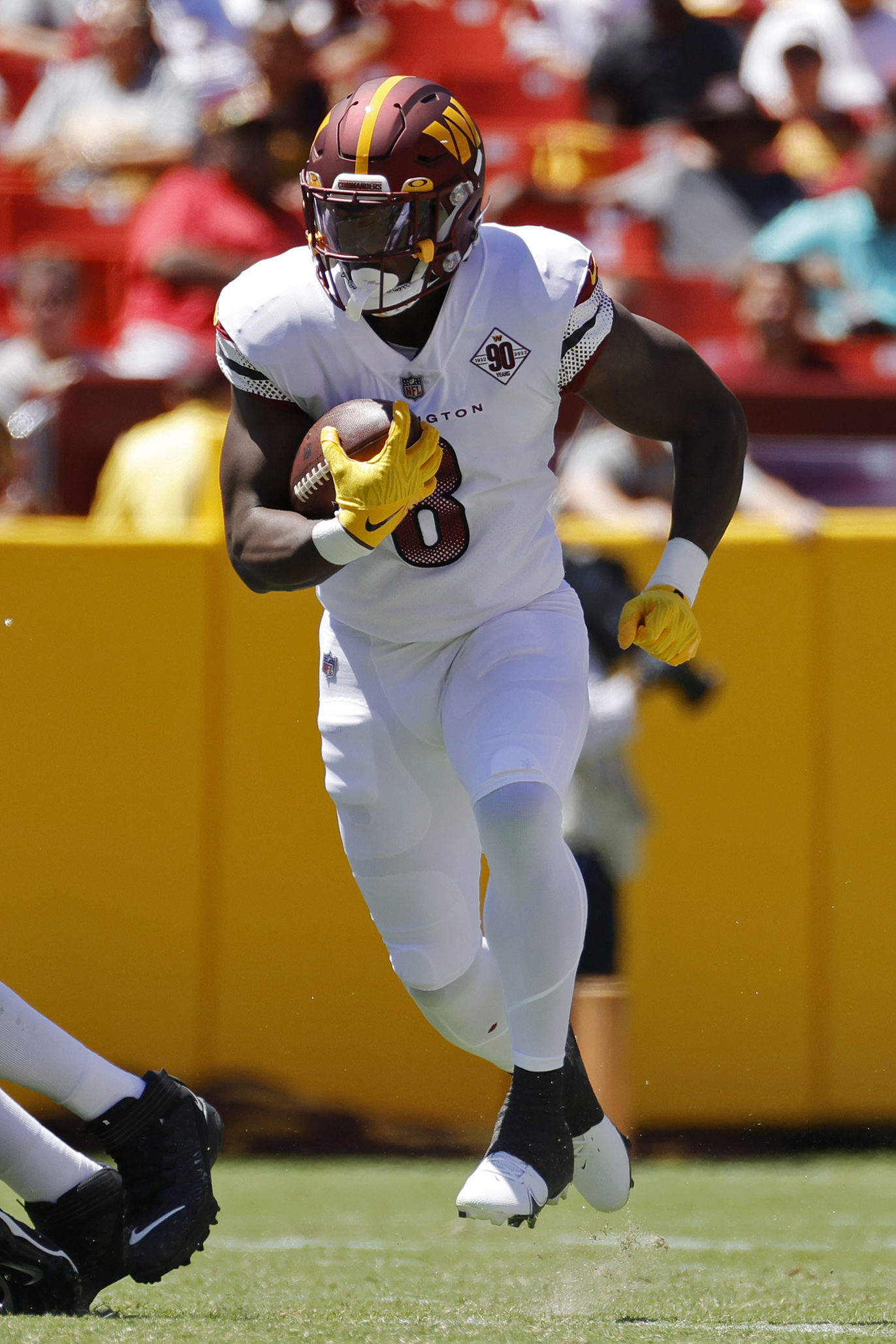
Robinson, a third-round rookie, carried the ball eight times for 31 yards, while Gibson handled just two carries for three yards (though he did have three receptions for 37 yards). What is particularly interesting is that Gibson, despite not handling any kick returns during his first two years in the league, took the opening kickoff in the Kansas City contest.
That usage represents the continuation of a developing trend. Gibson fumbled the ball on his second carry in Washington’s preseason opener against the Panthers last Saturday, and he was relegated to special teams duty when the Commanders hit the practice field on Tuesday, operating as a blocker on the punt team and working with the third-team offense. He began working as a kick and punt returner on Wednesday.
Head coach Ron Rivera has criticized Gibson for excessive stutter-stepping (Twitter link via John Keim of ESPN.com), and while he tried to downplay the significance of Gibson’s special teams deployment and pointed out that his third-year back ran better after the fumble, it presently appears as if Robinson is in line to earn more carries than his veteran counterpart. Indeed, a starting running back probably would not be returning kicks, and after Gibson fumbled six times in 2021, Rivera is understandably willing to give more of a role to a player he thinks will take better care of the football.
Of course, Gibson should remain a key member of the Commanders’ offense. Over 30 games (24 starts) from 2020-21, the Memphis product has accumulated 428 rushes for 1,832 yards (4.3 YPC) and 18 touchdowns. He has added 78 catches for 541 yards and three scores, which is perhaps why Smith speculates Gibson could serve as Washington’s third down/receiving back.
On the other hand, Robinson added more of a receiving element to his game in his final season at Alabama in 2021, catching 35 balls for 296 yards and two TDs to go along with his 271/1,343/14 line as a ball-carrier. In the Carolina game, he had six carries for 26 yards and a score and two catches for 15 yards. He looks the part of a starting-caliber back, and he may well get the chance to prove as much when Week 1 rolls around.
Broncos CB Michael Ojemudia Dislocates Elbow
Another week, another dislocated elbow for a Broncos defender. Per Mike Klis of 9News.com, Denver cornerback Michael Ojemudia dislocated his elbow during the team’s preseason loss to the Bills on Saturday (Twitter link).
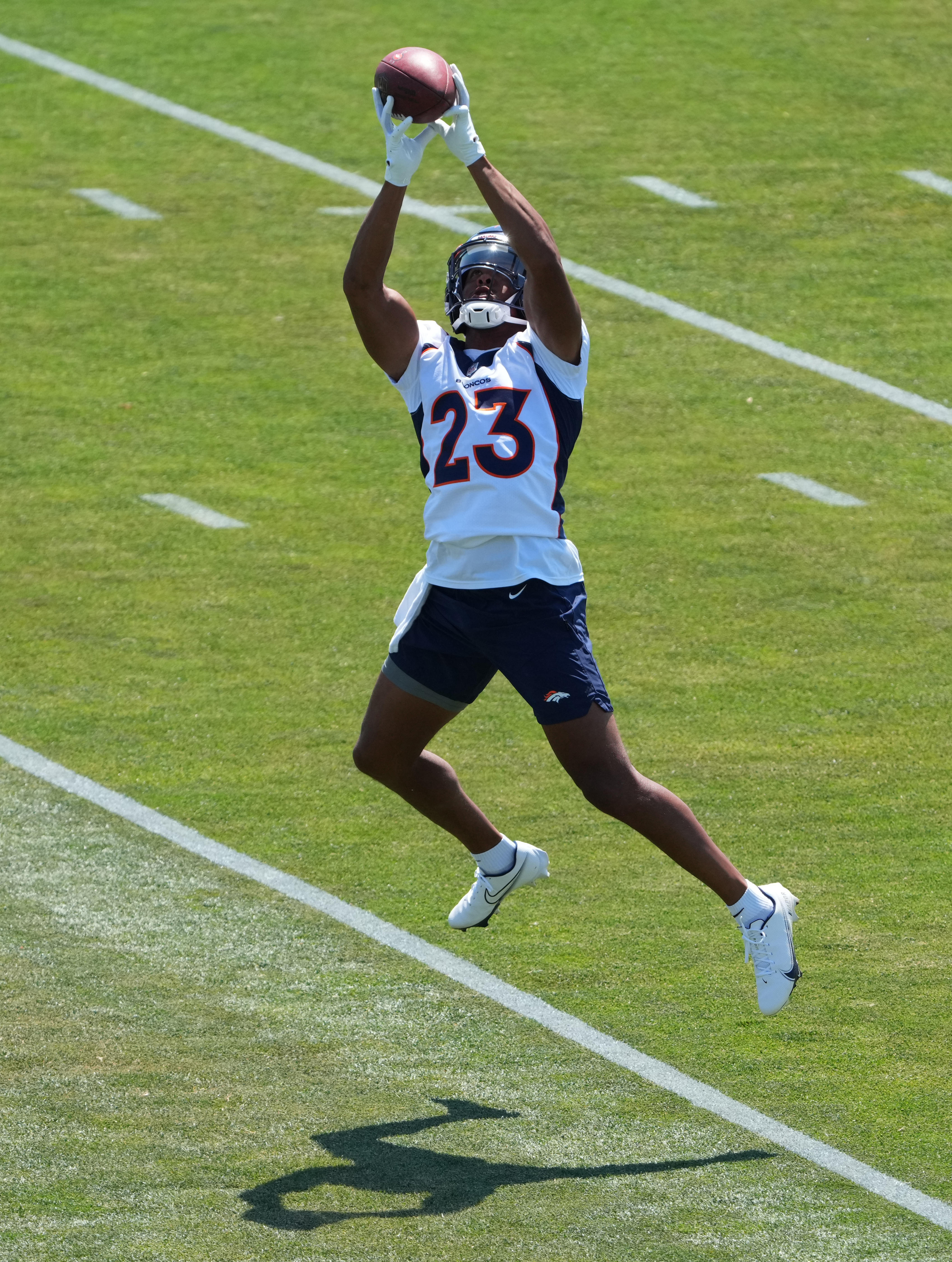
The Broncos lost linebacker Jonas Griffith to the same injury last week. While Kilis did not provide a recovery timeline for Ojemudia, it seems safe to assume that Griffith’s expected absence of four to six weeks would apply to Ojemudia as well.
It may also be fair to expect a corresponding roster move. Denver’s CB starters appear to be set, with Patrick Surtain II and Ronald Darby penciled in as the primary boundary corners and K’Waun Williams in the slot, but the depth behind that trio was questionable even before Ojemudia’s injury. Ojemudia and fourth-round rookie Damarri Mathis had been battling for the CB4 role, and while earlier reports suggested that Ojemudia was faring well in that competition, the 2020 third-rounder played poorly during his time in the Buffalo game.
Mathis and players like Bless Austin and Essang Bassey could see an uptick in playing time, though GM George Paton could also look for reinforcements on the open market, just as he did when signing Joe Schobert in the wake of Griffith’s injury. There are a few notable corners still available, including Chris Harris, Joe Haden, and Jimmy Smith.
Ojemudia appeared in all 16 games (11 starts) in his rookie campaign in 2020, and he tallied six passes defensed and four forced fumbles while surrendering a 103.2 QB rating. He finished with a poor 48.7 overall grade from Pro Football Focus, and he slipped down the depth chart last summer. He was placed on IR at the start of the 2021 season and was not activated until December 11. He ultimately appeared in just two contests, though he did earn a start in the final game of the season, recording 11 tackles and two passes defensed.