
Teams View Ravens As Likely To Match Lamar Jackson Offer Sheet
More than a week has passed since Lamar Jackson‘s negotiation window opened. No offer sheets have emerged, with several teams showing immediate indications they would not pursue the superstar quarterback. Only the Colts have kept the door open, and that it does not sound like the AFC South team is seriously considering an offer sheet.
As the offer sheet would need to be fully guaranteed or featuring guarantees far north of Russell Wilson‘s $124MM — currently the league’s second-most fully guaranteed number — to entice a unique player who has long been connected to seeking a figure in the Deshaun Watson neighborhood ($230MM). Teams also appear hesitant to extend an offer to Jackson due to the Ravens’ ability to match it.
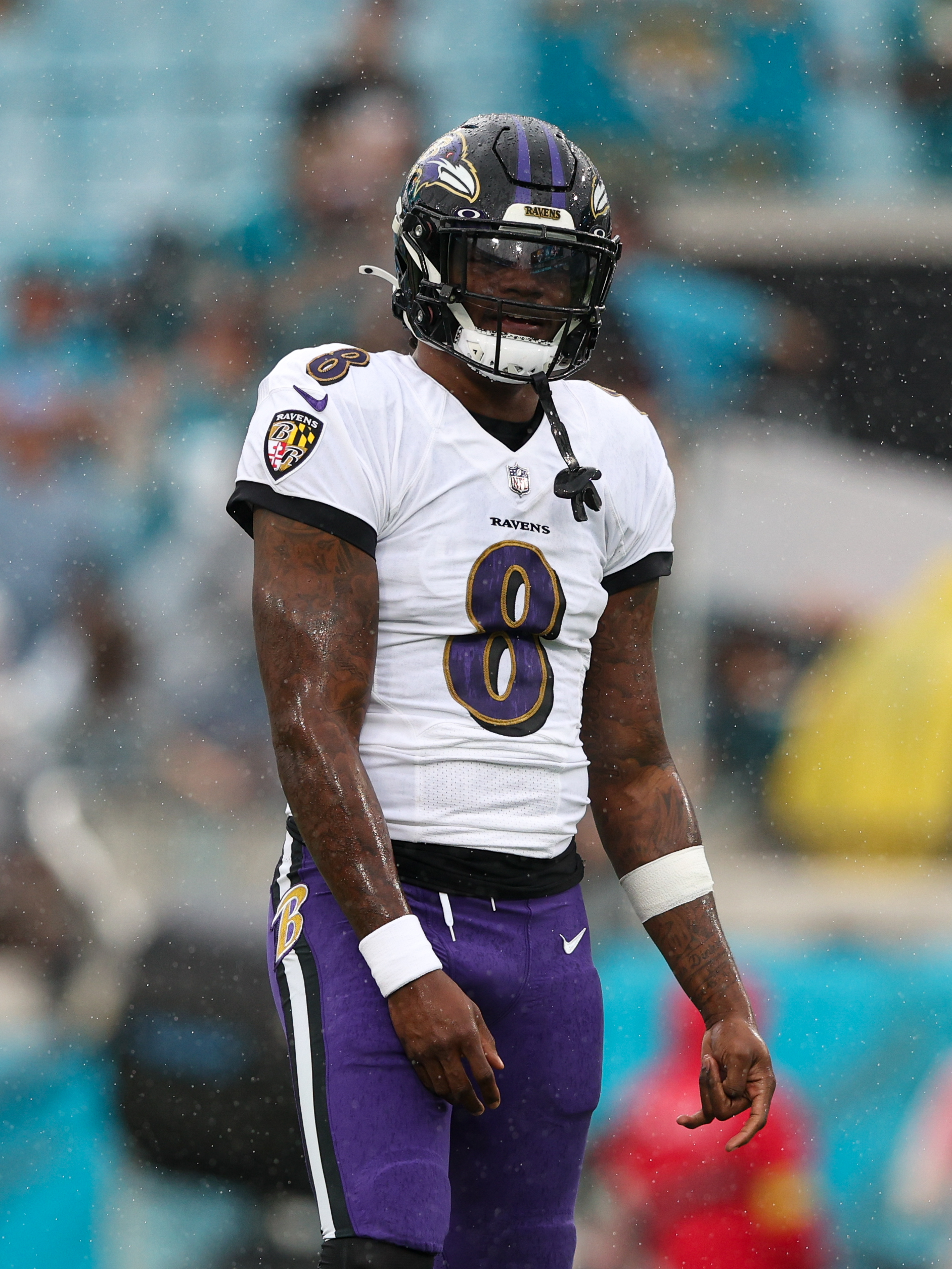 The current belief around the league is the Ravens would match a Jackson offer sheet that comes either before or after the draft, PFT’s Mike Florio said during a recent Rich Eisen Show appearance (video link). The Ravens would have five days to match an offer; their refusal to do so would mean the team that lands Jackson would send over two first-round picks. Baltimore and another team could also agree on a separate trade, which may be the preference for QB-seeking squads.
Extension-eligible since January 2021, Jackson became the rare high-end QB draftee to play a fourth season on a rookie deal and joined the rarer club of passers to play on a fifth-year option. His $32.4MM cap number has hamstrung the Ravens in free agency, but as a nonexclusive franchise tag recipient, he is free to talk to other teams. The agent-less QB has not been connected to doing so, but a person claiming to represent Jackson now has.
Florio initially reported this Jackson associate, now believed to be Ken Francis, has attempted to negotiate on the quarterback’s behalf with multiple teams in an attempt to increase interest. The NFL, per ESPN’s Adam Schefter, sent a memo to teams instructing them not to negotiate with Francis, who is not an NFLPA-certified agent. Francis is a Jackson business partner on a fitness endeavor, and while Jackson plugged the duo’s venture Thursday, he denied Francis is negotiating on his behalf (Twitter links). Under the CBA, only Jackson — since he does not have an agent — can speak to teams regarding a contract.
Francis was believed to be telling teams Jackson is ready to move on from the Ravens, Florio adds, and that the sixth-year player does not want a fully guaranteed deal. Even in the event Jackson is not asking for a fully guaranteed contract, he is believed to want guarantees well north of where non-Browns teams have authorized for a player.
Another team that could conceivably be interested should not be expected to meet Jackson’s price point. While the Patriots could make a significant upgrade by replacing Mac Jones with Jackson, the former being under rookie-contract control — potentially through 2025 — will likely lead to, per the Boston Globe’s Ben Volin, the Pats steering clear of a monster offer sheet for the former MVP. Will there be a team that does come forward as a serious suitor?
Colts Mulling Lamar Jackson Offer Sheet
Amidst the frenzy of free agent deals being handed out over the past few days, the presence of Ravens quarterback Lamar Jackson has hovered over the shifting NFL landscape at the position. Recent deals have seemed to shrink the number of potential suitors for an offer sheet, but one team which has yet to be mentioned in much detail to date on the subject is the Colts.
Indianapolis is one of many teams whose quarterback room would be upgraded with the addition of Jackson, 26. The Colts have an open spot at the top of their depth chart after releasing Matt Ryan and adding a new backup in Gardner Minshew. Jackson could be an option to fill the team’s latest starting vacancy, one which has yet to be addressed on a permanent basis since Andrew Luck‘s retirement. 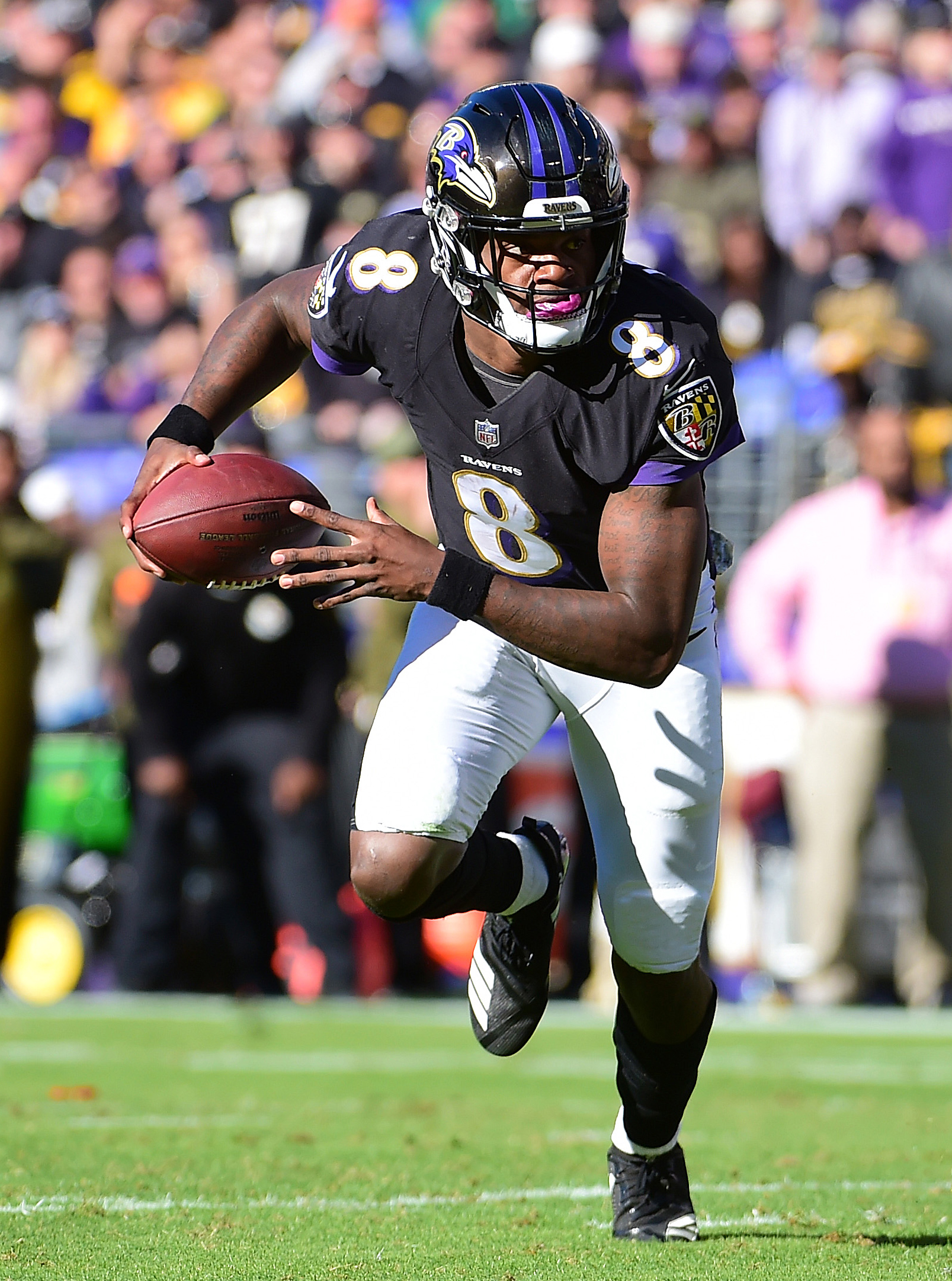
On that point, ESPN’s Stephen Holder notes that the Colts have not ruled out discussing the possibility of submitting an offer sheet to the former MVP. Several teams – including the Falcons, Panthers, Commanders and Dolphins – have been reported to have little to no interest in adding Jackson. Signing him would require him agreeing to a massive contract offer (quite possibly, one which is fully guaranteed) and the Ravens declining to match. In that instance, the acquiring team would lose their first-round pick in each of the next two years.
Holder adds, though, that the Colts have not taken any “substantive steps” at this point with respect to preparing any firm offers to Jackson. The team, like all others, would be hesitant to do the Ravens’ negotiating for them, and put themselves in a five-day waiting period while the Ravens decide to match or decline any hypothetical offer sheet. Making an enormous financial commitment to the two-time Pro Bowler would be difficult for Indianapolis, even with the cap space created with the Ryan release and the cost-cutting trade of cornerback Stephon Gilmore.
As Holder mentions, owner Jim Irsay has shown a willingness to sign both Luck, and before him, Peyton Manning, to then-record-breaking contracts. While the Jackson situation is different to those former Colts No. 1 picks, there is nevertheless a degree of precedence with Indianapolis and sizeable splashes at the position. Making one in Jackson’s case would represent one avenue to fixing the team’s multi-year QB problem.
The other, of course, is the upcoming draft. The Colts currently hold the No. 4 selection, but with the Panthers and Texans set to pick first and second, respectively, Indianapolis could be faced with the third-best signal-caller in the class being their top option on the board. That reality could steer them towards a push for Jackson, a more known commodity and a player who could fit well in head coach Shane Steichen‘s scheme after his work with another dual-threat quarterback in Jalen Hurts.
With Derek Carr and Jimmy Garoppolo having each signed new free agent deals, and Aaron Rodgers seemingly destined to play for the Jets in 2023, Jackson represents the only starting quarterback still (potentially) available. In the absence of many other known suitors, the Colts could become a team to watch if they decide to actively pursue the latter in the near future.
Latest On Ravens, Lamar Jackson
Free agency has taken over the NFL landscape this week, but one of the top storylines around the league remains the future of Lamar Jackson. Contract talks between the Ravens and the former MVP have left the parties in a stalemate, which resulted in the usage of the non-exclusive franchise tag. 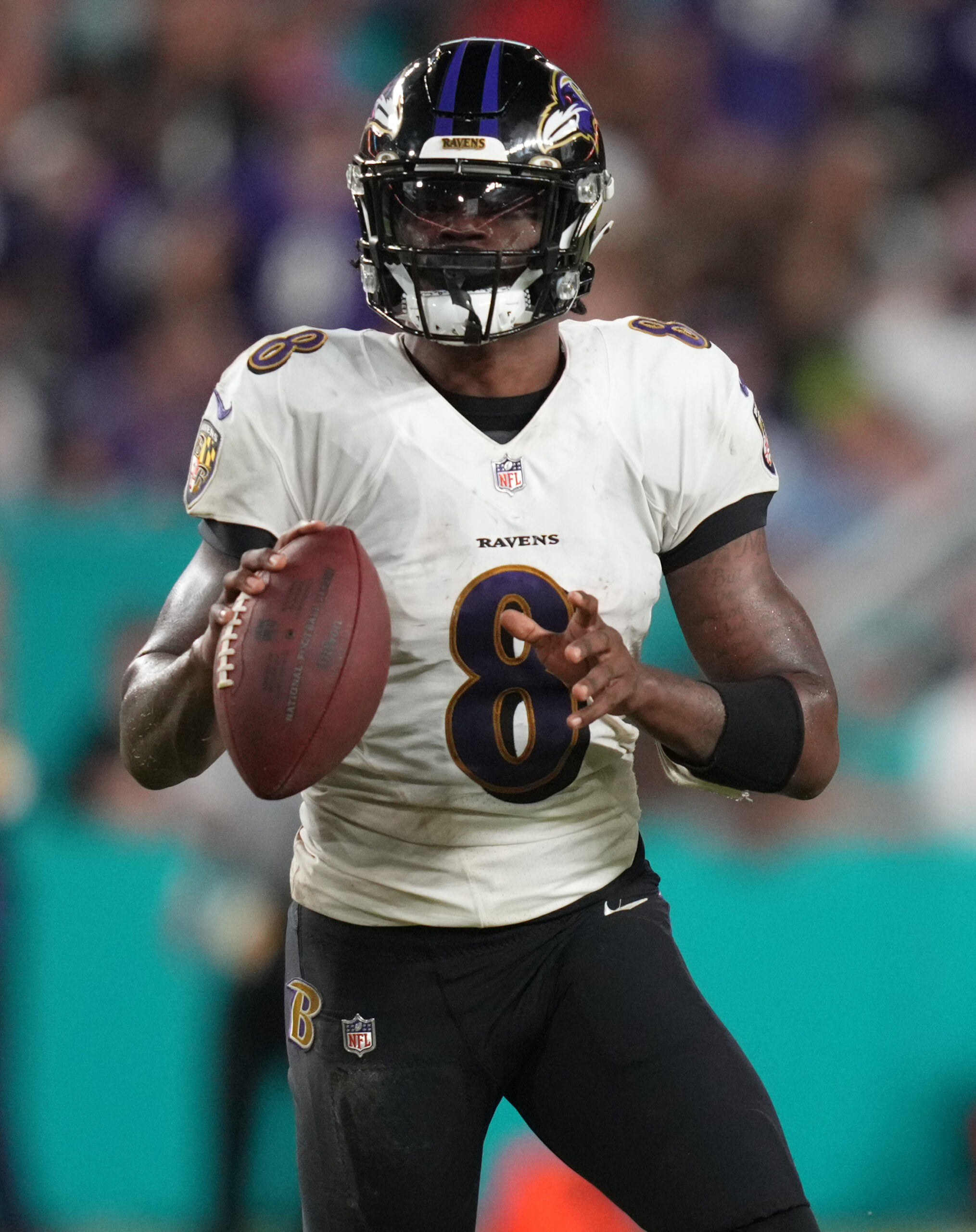
Taking that route opens up the possibility of another team signing Jackson to an offer sheet, something which could not take place until tomorrow at the earliest. During the league’s 48-hour legal tampering period, teams are allowed to negotiate deals with a player’s representatives, but not the player themselves. Since Jackson has quite notably gone throughout the process of handling his next deal without an agent, he is not eligible to speak with teams other than the Ravens, who have been adamant that their goal remains a long-term deal.
Speaking of, it looks unlikely that Jackson will suddenly hire an agent. Those in league circles tell Mike Florio of ProFootballTalk.com that the QB is unlikely to suddenly change his mind and hire representation. Those sources believe Jackson is unlikely to admit his mistake, even if hiring an agent is best for his career.
A number of teams have reportedly bowed out of any potential pursuit of the 26-year-old, who has long been thought to be seeking a fully guaranteed pact in a similar vein to the one signed by Deshaun Watson last offseason after the Browns traded for him. Baltimore’s hesitancy to match or exceed those terms (five years, $230MM) has left the two sides in their current situation.
Potential suitors are wary of offering Jackson a contract because they’d surely be in limbo while the Ravens determine how to proceed, per Rapoport (on Twitter). Ultimately, it sounds like these teams believe the QB will end up back in Baltimore, and those potential suitors have no interest in doing Baltimore’s negotiating for them. ESPN’s Dan Graziano writes that teams would rather discuss a potential trade with the Ravens after the franchise tag has been resolved, although that path would still require those suitors to eventually talk with Jackson.
Jackson recently gave us a quick look behind the curtain, revealing on Twitter that the Ravens have offered him a three-year, $133MM deal that’s fully guaranteed. As NFL Network’s Ian Rapoport points out (via Twitter), Jackson preferred to take the franchise tag over that offer, and the reporter adds that the Ravens have tried a number of contract lengths to get Jackson to bite.
AFC Free Agency Rumors: Jackson, Broncos, Ya-Sin, Raiders
In a recent interview, ESPN’s Adam Schefter expounded a theory on why so many teams are coming out and voicing their disinterest in Lamar Jackson, who received the non-exclusive franchise tag last week and is allowed to negotiate terms with other teams than the Ravens. The theory has nothing to do with Jackson and his outstanding abilities; it has to do with the Ravens’ player personnel staff.
One of the advantages that we teased in earlier reports on the situation was that, by tagging Jackson with the non-exclusive tag, the team would effectively be allowing other teams to do their negotiating for them, since they would likely match any offer opposing teams would make. There was speculation that the Ravens could do this to essentially allow the market to set the value on Jackson.
Schefter theorizes that other teams have no interest in doing Baltimore’s homework for them. Other franchises are fully aware that the Ravens have no intention of letting Jackson walk, so any offer they might make just does the Ravens’ job for them of organizing a new deal for Lamar.
Another added detriment for other teams is that the Ravens would have five days to match the offer or accept Jackson’s departure. In the meantime, the offering team would be stuck in salary cap purgatory, not knowing whether or not it would be taking on the contract of a premier veteran quarterback or not. This is extremely unattractive as free agency is due to open next week. If a team is stuck for five days not knowing their financial position, it becomes difficult to negotiate with other free agents.
Here are a few other free agency rumors from around the conference:
- An example not too unsimilar from the above phenomenon may occur in Denver, where new Broncos defensive coordinator Vance Joseph has recently arrived from Arizona. Joseph may also bring along a former player as, according to freelance journalist and former Cardinals staff writer Mike Jurecki, the Broncos reportedly have lots of interest in Cardinals pending free agent defensive end Zach Allen. Allen is expected to earn an impressive contract this offseason after a standout contract year in Arizona.
- In a recent mailbag with Las Vegas Review-Journal writer Vincent Bonsignore, a question was posed about the potential for the Raiders to re-sign cornerback Rock Ya-Sin. According to Bonsignore, the team is certainly open to bringing Ya-Sin back, for the right price. Ya-Sin followed up an impressive 2021 season in Indianapolis with a decent year in Las Vegas after being traded straight up for defensive end Yannick Ngakoue. The team could certainly use Ya-Sin as their cornerback depth has been whittled down over the years, and a semi-down year for the young corner could assist in setting up the “right price” for the Raiders.
Panthers, Commanders, Dolphins Unlikely To Pursue Lamar Jackson
The Ravens ended one of the least suspenseful (but highest-profile) tag sagas Tuesday, cuffing Lamar Jackson amid a third offseason of negotiations with the former MVP. That will turn attention to what teams are out there for Jackson.
So far, teams with quarterback needs are standing down. There stands to be interest in Jackson, though it remains to be seen if any would approach his hope at a fully guaranteed contract. The Panthers pursued Deshaun Watson for two offseasons, but The Athletic’s Joe Person notes (via Twitter) they are not expected to make a push for Jackson. The Commanders offered three first-round picks for Russell Wilson in 2022, but Kimberley Martin of ESPN.com adds they are considered unlikely to go after the five-year Raven (Twitter link).
The Falcons also made it pretty clear, based on the numerous reports to emerge since the Ravens slapped the non-exclusive tag on their quarterback, they will not be part of a pursuit. The Jets are currently meeting with Aaron Rodgers in California, while the Saints signed Derek Carr. As expected, the Giants and Seahawks re-signed Daniel Jones and Geno Smith. This thins the market, but other suitors will loom for a player of Jackson’s talent.
Frank Reich said the Panthers, in an ideal world, would land a long-term option in the draft. The Panthers have not handed the reins to a rookie since Cam Newton in 2011, spending time on a years-long carousel after cutting the former MVP in 2020. Carolina has begun talks with Sam Darnold, presumably as a bridge option. The Commanders just released Carson Wentz and have Taylor Heinicke set to hit free agency. Despite the efforts Ron Rivera‘s team made to acquire a high-end veteran last year, they continue to be linked to giving fifth-round pick Sam Howell a legitimate opportunity to win the starting job. That appears a risky scenario for a team with a coach on the hot seat, but Washington was not closely connected to Carr, either.
Considering Jackson is a South Florida native, it would stand to reason he would be interested in joining his hometown team. How willing the Dolphins are to grant Jackson’s contractual wishes while sending the Ravens at least two first-round picks could be a sticking point here. The Dolphins are not expected to pursue Jackson or anyone else this offseason, Jeff Darlington of ESPN.com tweets. The Dolphins, who had the inside track for Watson in 2021, committed to Tua Tagovailoa last year. While recent reports appeared to reveal that trust weakening, Darlington adds Mike McDaniel “fully believes Tua is the perfect fit for his system.”
The Raiders would also seemingly loom for Jackson and hold a top-five cap-space figure ($39.1MM as of Tuesday afternoon), but while Josh McDaniels coached Newton in 2020, it would be a transition for his offense to install a player like Jackson. Still more than $40MM over the cap, the Buccaneers probably lack the funds to make a legitimate pursuit.
Teams would need to revamp their offenses to bring in a unique talent like this; it will be interesting to see which ones move into position as a legitimate suitor. However, this many quickly surfacing as uninterested parties is a bit odd given Jackson’s accomplishments and the value of this position. Teams working in concert to prevent another guaranteed contract from coming to pass would represent collusion, but it is a bit too early to make such a claim. That said, there does not appear to be as many interested parties as expected here.
Raiders QB Notes: Lamar, Garoppolo, Rodgers, Mac, Hoyer
After an unusual number of teams have been mentioned as not being interested in Lamar Jackson, the Raiders can be included as a potential suitor. The Silver and Black have not eliminated Jackson or any of the big-name QBs still available, Dianna Russini of ESPN.com tweets.
Jackson would represent the biggest fish left, and the list of teams listed as early stay-aways dwarfs those being connected to the Ravens’ franchise player. The Commanders, Dolphins, Falcons and Panthers have been connected to steering clear of Jackson — at least on the fully guaranteed contract he seeks. The Raiders moved on from Derek Carr and created some cap space as a result, though they still have three skill-position players — Davante Adams, Darren Waller, Hunter Renfrow — tied to extensions.
It would cost the Raiders at least two first-round picks to obtain Jackson from the Ravens, who would have the option to match an offer sheet. The teams could also work out a trade involving another compensation package.
The Raiders’ most logical connection remains Jimmy Garoppolo, who has ties to Josh McDaniels and Dave Ziegler. The Raiders were mentioned as a potential Garoppolo suitor in January, and many at the Combine voiced an expectation the team will pursue the former Patriots and 49ers passer, Dan Graziano of ESPN.com notes.
Garoppolo still might be a backup plan, with Aaron Rodgers rumblings surfacing again. The Jets are currently meeting with the future Hall of Famer, but Graziano adds McDaniels has long respected him. Pushback regarding the Raiders’ Rodgers interest has also emerged, and McDaniels indicated an aim to develop a young passer. Rodgers would not qualify as a bridge option like Garoppolo, as a trade for the Packers great would be for a Super Bowl run. Garoppolo, conversely, could be used as a high-end placeholder.
The Jets have made their interest in Rodgers crystal clear, and the Packers greenlit an all-hands-on-deck Jets recruiting effort Tuesday in California. The Raiders have kept their cards closer to the vest. Way back when Rodgers dropped his initial trade-request bombshell on the league — in April 2021 — the Raiders joined the Broncos as being an acceptable destination. Much has changed in Las Vegas since. Jon Gruden making a controversial exit that ultimately led to McDaniels and Ziegler taking over, but that duo signed off on a blockbuster trade for Adams. Rodgers attempted to convince Adams to stay in Green Bay last year, but the longtime Carr ally had made up his mind.
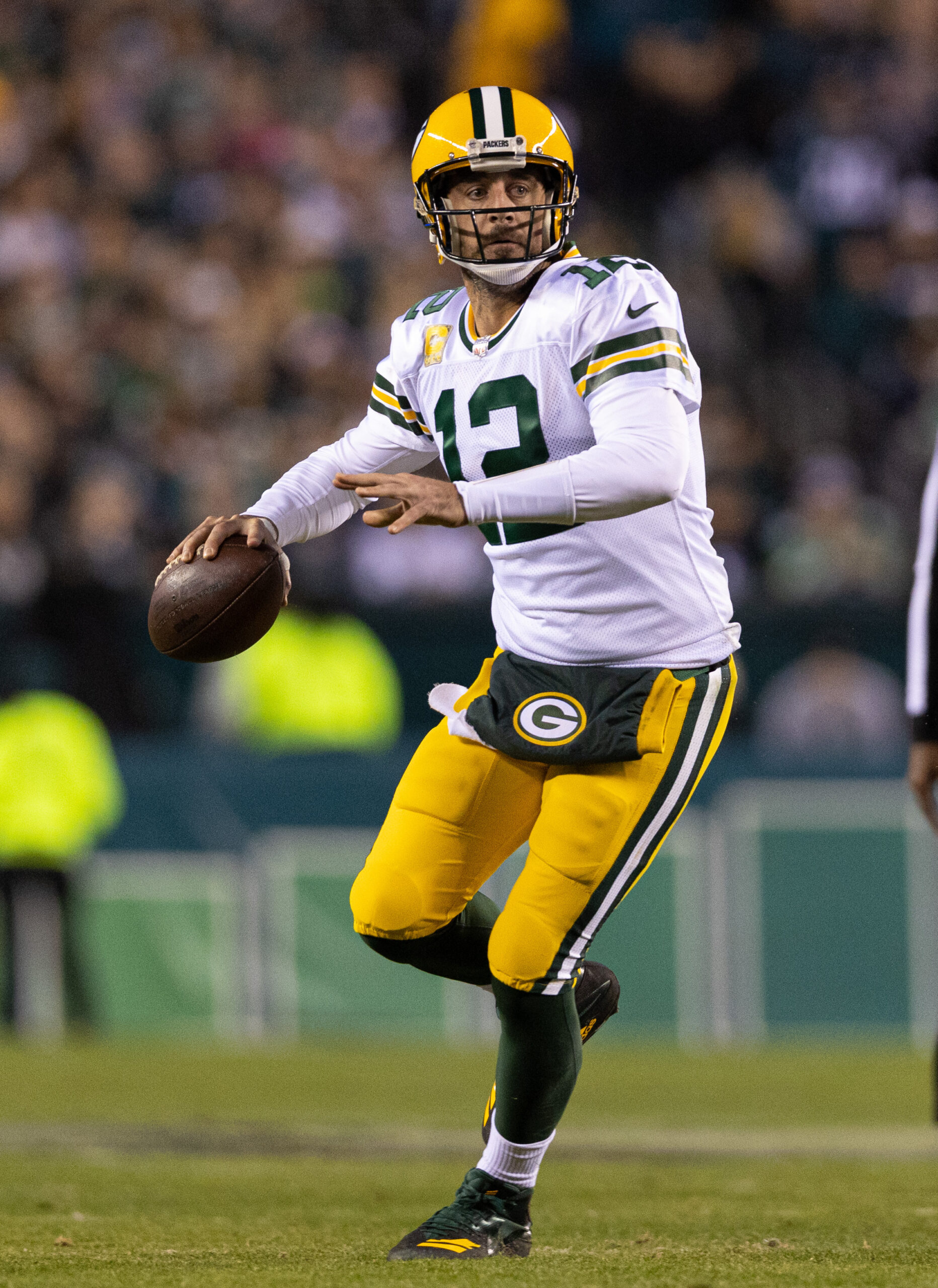 In the event Rodgers removes himself from the Jets’ equation, Garoppolo would have an apparent path to New York. But he spent the first three-plus seasons of his career in McDaniels’ offense. After the new Raiders power duo deemed Carr an iffy fit for McDaniels’ attack, a familiar face running the show would be a logical move for the team.
On the familiarity front, Graziano also mentions chatter about the Raiders having interest in acquiring Mac Jones while adding the Patriots are unlikely to move him. Jones regressed last season and fared better under McDaniels compared to Matt Patricia, but the Pats appear prepared to see how their 2021 first-rounder looks in Bill O’Brien‘s offense. The Raiders have eyes on another ex-Patriot, however, with the Boston Globe’s Ben Volin adding Brian Hoyer would be on McDaniels’ radar as a mentor-type presence. But Hoyer is leaning toward retiring, per Volin. McDaniels worked with Hoyer, 37, from 2017-18 and again from 2020-21. The former Patriots UDFA has been in the NFL since 2008.
The Raiders have begun talks to bring back Jarrett Stidham, who has been a McDaniels pupil at every step of his NFL career. With only ex-UDFA Chase Garbers under contract with the Silver and Black, the team will continue to be connected to big names and/or a first-round investment at the game’s premier position.
Ravens Place Non-Exclusive Franchise Tag On Lamar Jackson
Many around the league have been waiting to see the Ravens’ decision with Lamar Jackson. A long-term deal will not be finalized in time for today’s deadline, though. ESPN’s Kimberley Martin reports (via Twitter) that Baltimore is using the non-exclusive franchise tag. A team announcement confirms that the less expensive tag option is their chosen route with the former MVP.
With contract talks resulting in an impasse between the two sides, it comes as little surprise at this point that the tag has been used. Over the course of the weekend, reports emerged that the Ravens were leaning towards going the no-exclusive route, something which carries potential financial benefits from the team’s perspective but also a great deal of risk. 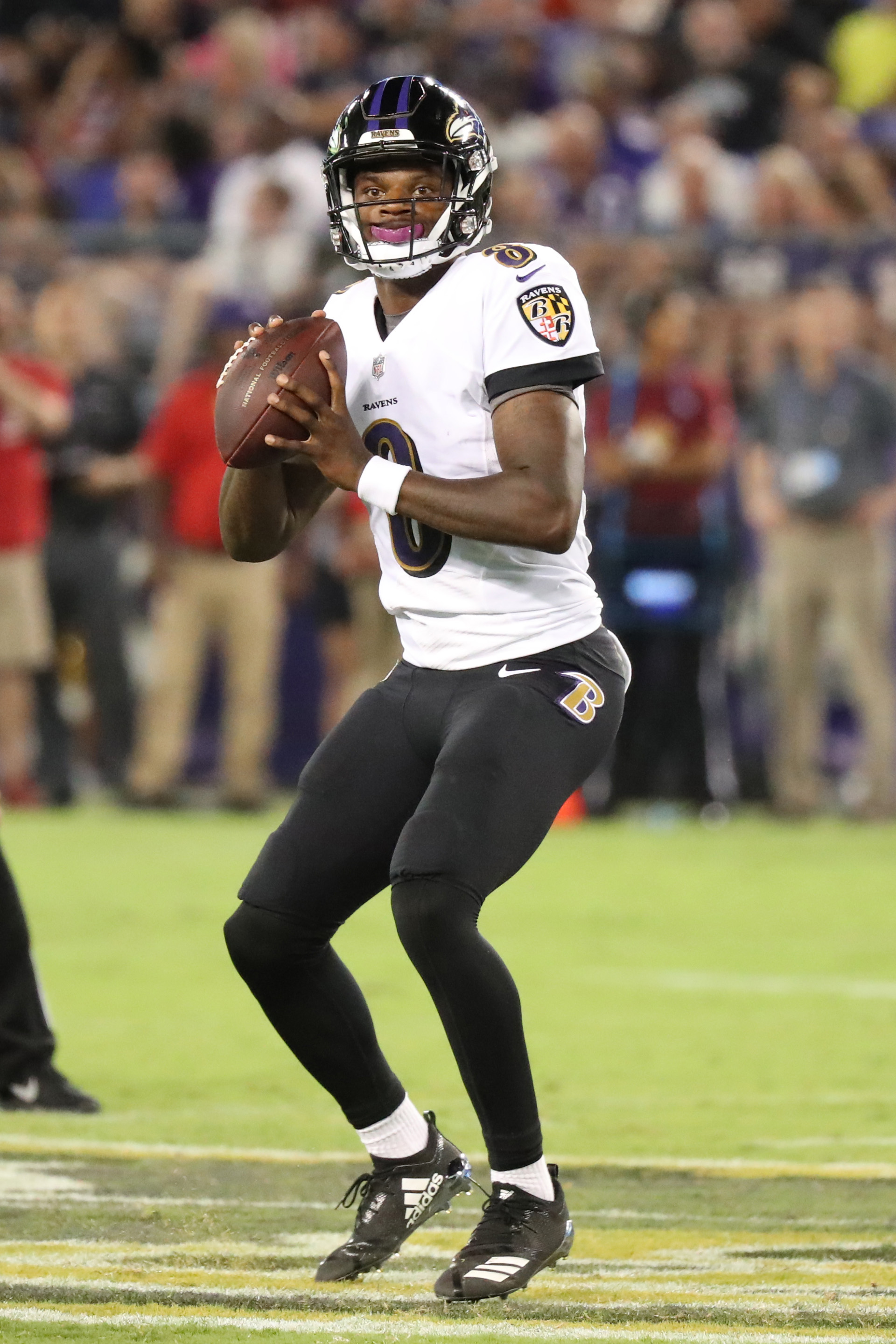
The non-exclusive tag carries a value of $32.4MM, a figure which is far lower than the roughly $45MM the exclusive version would have cost. In that regard, the former option was the most logical one with respect to Baltimore’s cap situation. However, other teams will now be eligible to send the 26-year-old an offer sheet, which would not have been possible had the Ravens used the exclusive tag. One team frequently linked to Jackson via an offer sheet or tag-and-trade scenario is the Falcons. However, Atlanta will not pursue such a move, per ESPN’s Dianna Russini (Twitter link).
Baltimore would have the option to match any offer sheet which Jackson signs. If they elect not to, they will receive two first-round picks as compensation from Jackson’s new team. The fact that not every squad currently owns Day 1 selections in each of the next two years slightly shrinks the list of potential suitors for him, but competition could quickly ramp up. Jackson, a two-time Pro Bowler, would constitute a significant upgrade over many other incumbent QBs.
The Louisville product has been eligible for a new deal from the Ravens since 2020, but at no point has one seemed to be particularly close. Annual compensation is not thought to be a sticking point from the Ravens’ side, even though any multi-year extension would have surely been the most lucrative in franchise (perhaps league) history. Rather, the matter of guarantees has long been the most pressing issue. Jackson is reportedly seeking a fully-guaranteed pact, a desire seemingly made more plausible after Deshaun Watson‘s historic deal signed with the Browns last offseason.
The Ravens – led by owner Steve Bisciotti – have publicly spoken out against the possibility of making such a commitment to Jackson (and, by extension, a number of other young QBs around the league when they sign second contracts). New deals for Kyler Murray and Russell Wilson signed in 2022 pointed to the Watson accord being an outlier, rather than a new benchmark. That presumably gave the Ravens some leverage in negotiations, but a compromise has not been found.
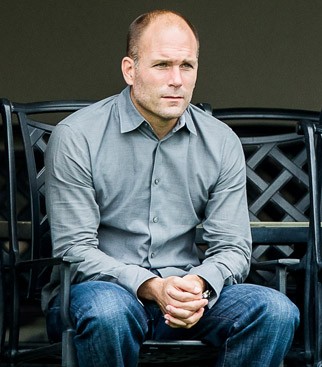 By going the non-exclusive route, Baltimore is banking on the rest of the league agreeing that full guarantees are too great of a risk for Jackson. The All-Pro has missed five regular season games in each of the past two seasons, including the Ravens’ wild-card loss in 2022. The nature of his PCL injury increasingly became a point of contention as his absence continued deeper into the year, and tension is thought to have increased during the direct negotiations between Jackson himself and GM Eric DeCosta.
Injury problems could scare off other teams to the point where they don’t make an offer to Jackson, or at least one which the Ravens don’t feel comfortable matching. The earliest that teams can submit an offer sheet is the start of the new league year on March 15. Another factor to keep in mind is the possibility of a tag-and-trade situation, where Baltimore could deal him anywhere for any package of trade compensation. That would only be possible, however, after he signed the franchise tender – something he is under no obligation to do until much later in the offseason.
Jackson is the eighth player in franchise history to receive the tag, a move which has more often than not resulted in a long-term deal being agreed upon before the July deadline. Attention will continue to be placed on the two sides in this situation, as negotiations will continue in the hopes of a mega-deal being finalized before the possibility of Jackson skipping portions of the offseason becomes more likely.
A statement from DeCosta reads in part, “We will continue to negotiate in good faith with Lamar, and we are hopeful that we can strike a long-term deal that is fair to both Lamar and the Ravens. Our ultimate goal is to build a championship team with Lamar Jackson leading the way for many years to come.”
Jackson’s importance to the Ravens – from his numerous all-time NFL records to his overall winning percentage of .707% since 2019 – is clear for any observer. The degree to which it is seen and acted upon by any other team (and if so, Baltimore’s willingness to keep him in place for the long-term future) will be a major storyline as the QB landscape takes shape.
Latest On Ravens, QB Lamar Jackson
The Ravens appear to be putting forth maximum effort towards extending star quarterback Lamar Jackson. According to Tom Pelissero of NFL Network, Ravens general manager Eric DeCosta went down to South Florida to meet with Jackson in an attempt to further negotiations. 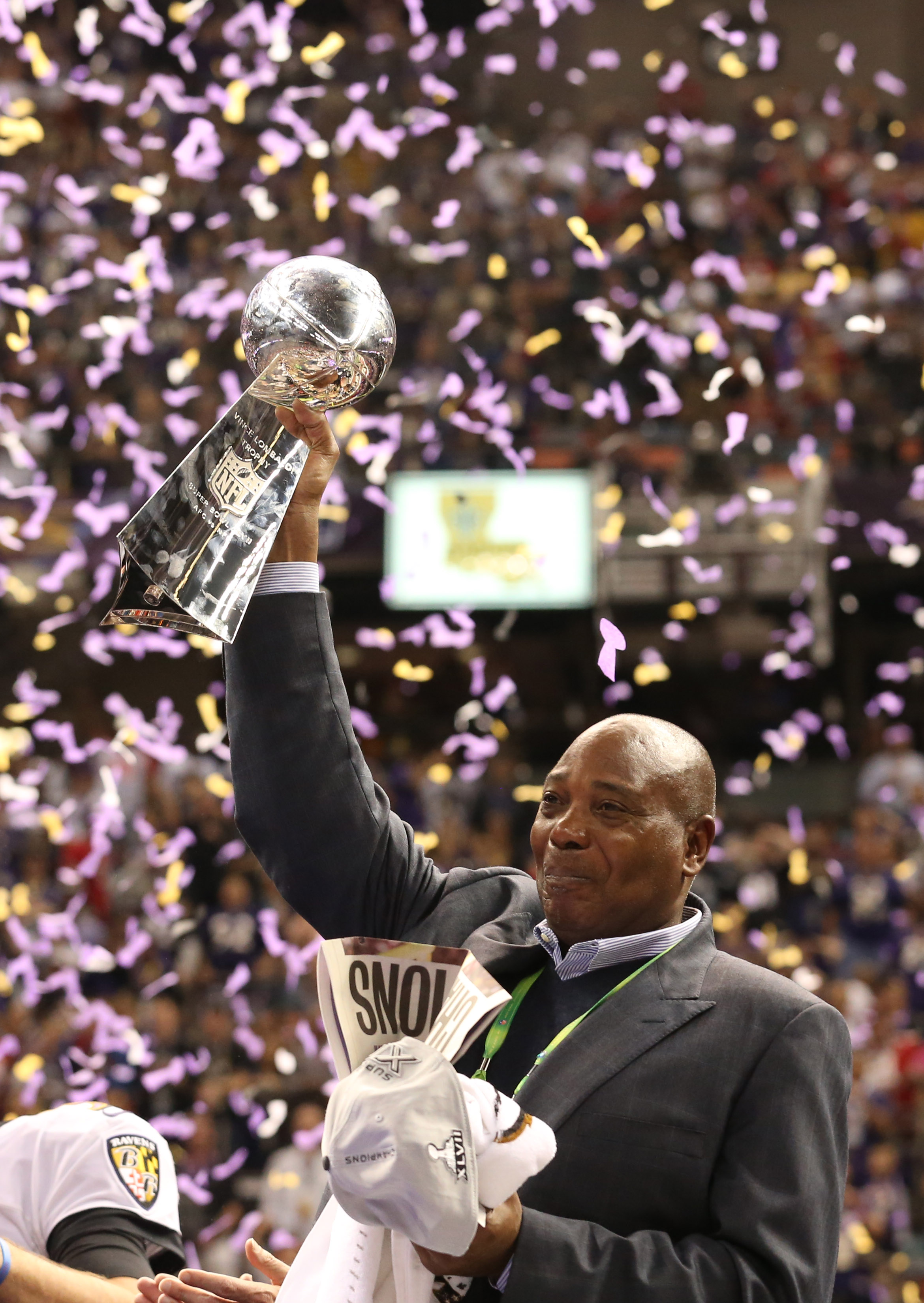
DeCosta reportedly left Miami with work to be done, as Pelissero claims the two sides remain on track for a franchise tag. The two parties have been the subject of much speculation, and after a year of negotiations, no consensus has been reached on a long-term deal. Former general manager and current Ravens executive vice president/player personnel Ozzie Newsome spoke on the subject today and seemed to confirm Pelissero’s assessment, according to ESPN’s Jamison Hensley.
“Today and up until 3:30 tomorrow, a lot of energy will be utilized in trying to get a deal done,” Newsome said on “The Bernie Kosar Show.” “If not, we will put the franchise tag on him.”
Baltimore has not utilized the franchise tag since using it in 2020 told hold on to pass rusher Matt Judon, but with Jackson’s status as a Raven hanging in the balance, the team seems fated to go that route again. The biggest question following “will Jackson be a Raven and how” is currently “which franchise tag with they use?”
If the Ravens administer the non-exclusive tag, it will allow other teams to negotiate potential deals with Jackson, presenting Baltimore with the option to match the offer or refuse it and be awarded two first-round picks as compensation. It’s difficult to imagine any offer another team would put up that the Ravens wouldn’t match, so it’s a dangerous route that could bite them. The exclusive franchise tag would restrict Jackson from participating in such negotiations but would allow him to hold out all the way up until the regular season if a new deal is not reached, a la Jessie Bates or, even worse, Le’Veon Bell.
Regardless of which decision the Ravens have in mind, they’re still going to give Jackson’s extension the old college try. As hopeless as it may seem, Newsome, DeCosta, and company will be working up until the finish line in an attempt to keep Jackson in black and purple long-term.
Ravens Strongly Considering Non-Exclusive Tag For QB Lamar Jackson
Last month, Ian Rapoport of NFL.com reported that there is a very real possibility that the Ravens use the non-exclusive franchise tag on quarterback Lamar Jackson. Today, Jeremy Fowler of ESPN.com reports that Baltimore has strongly considered that option, and several rival executives believe it makes the most sense for the club (subscription required).
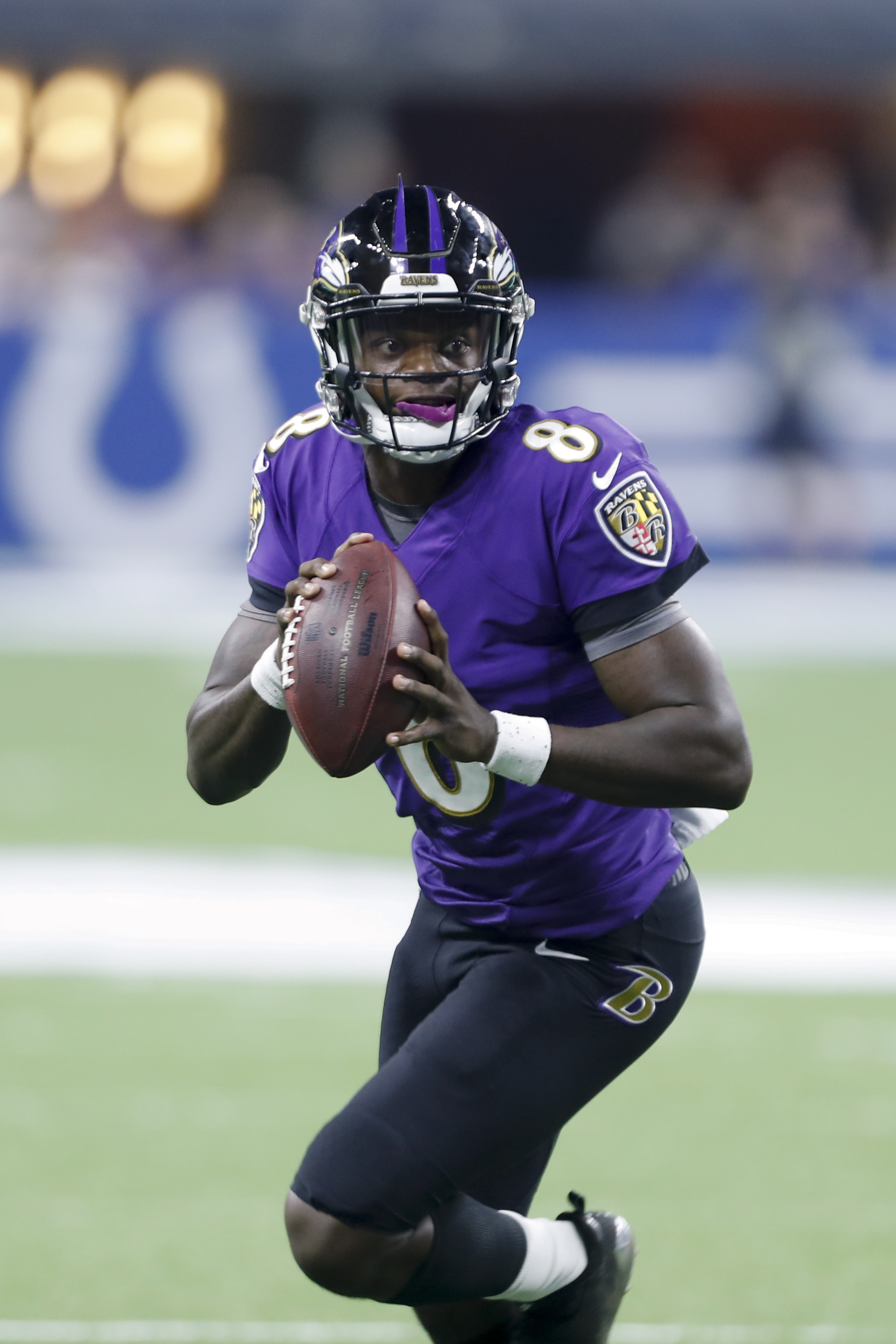
The benefits of the non-exclusive tag are obvious. There is, of course, the considerable difference in price between the non-exclusive tag ($32.4MM) and exclusive tag ($45MM). Plus, player and team have been negotiating for a long time, and it is unclear whether any real progress has been made. By utilizing the non-exclusive tag, the Ravens would effectively be allowing other teams to do their negotiating for them, and they may feel confident that no other club is willing to give Jackson the fully-guaranteed contract he has been seeking. If they are correct in that regard, then they would be able to simply match an offer sheet and keep the 2019 MVP in the fold.
By the same token, allowing Jackson to speak with other clubs allows Baltimore to maintain neutrality should the two sides part ways, as Fowler posits. And, in the event that the Ravens choose not to match an offer sheet, they would obtain two first-round picks and would clear up a great deal of salary cap space to use on a different passer.
On the other hand, Baltimore may be able to fetch more than two first-round picks if it were to seek a Jackson trade, and using the lower tag may create additional tension at a time when the relationship between the parties may already be strained. One way or another, GM Eric DeCosta has a career-defining decision to make, and he must make it no later than March 7, the deadline to utilize a tag.
It seems unlikely that a long-term extension will be reached by that deadline, though the Ravens are still trying. Just yesterday, we learned that the club remains optimistic about the chances of such a deal coming to fruition, with one rumor indicating that Baltimore is willing to pay Jackson up to $50MM per year while guaranteeing 80% of the contract. Jackson’s teammate, veteran defensive lineman Calais Campbell, also indicated that Jackson wants to remain in Baltimore.
AFC North Rumors: Jackson, Watson, Steelers
A common conception of the situation surrounding the Ravens and quarterback Lamar Jackson‘s efforts towards a new deal has been that Jackson has refused to participate in negotiations. Jackson’s teammate, defensive lineman Calais Campbell, told the media this week that Jackson is more than willing to work out a new contract, according to Jamison Hensley of ESPN.
“He wants to get a deal done, and that’s the most important part” Campbell said on NFL Network. “Sometimes guys who are part of a team and don’t want to be there anymore use (free agency) as an opportunity to go elsewhere, but he wants to be (a Raven).”
Josina Anderson of CBS Sports reported yesterday that the Ravens remain “hopeful” for a new deal and that the team currently has their best offer yet on the table for Jackson. It’s reportedly not an all or nothing offer, as the Ravens are waiting for a counter to their proposal from Jackson. We have no certain facts as to what the deal may entail, but on The Athletic Football Show podcast hosted by Robert Mays, rumors were mentioned that Baltimore is willing to go up to $50MM per year and 80% guaranteed money. The team is running out of time before they’ll be required to tag Jackson or, barring a more preferred resolution, trade him.
Here are a few more rumors from around the AFC North, starting with one of the main reasons the Ravens are having such an issue with Jackson’s new contract:
- News that comes as a surprise to absolutely nobody, the Browns are exploring restructuring the historic fully-guaranteed contract of quarterback Deshaun Watson, according to Mary Kay Cabot of Cleveland.com. The team is facing a challenge in getting under the salary cap and have already confirmed plans to release safety John Johnson in order to clear some space. After a first year of Watson’s contract that held a base salary of $402,500 and a cap hit of $9.40MM, Watson’s numbers in 2023 jump up to a base salary of $46MM and a record-setting cap hit of $54.99MM. Browns general manager Andrew Berry acknowledged that, with the team currently about $13.42MM over the cap, Watson’s mammoth contract could be a source of wiggle room with a restructure.
- Since the Steelers waited until after last year’s draft to replace then-general manager Kevin Colbert, new general manager Omar Khan is going through his first draft process. According to Mark Kaboly of The Athletic, Khan plans to use assistant general manager Andy Weidl much in the way Weidl was used in Philadelphia. That is to say that the Steelers will rely on Weidl to put together the team’s draft board before turning it over to the higher ups who will make the draft decisions. Weidl will utilize input from director of player scouting Mark Sadowski, director of college scouting Dan Colbert, and director of pro scouting Sheldon White, then Khan will work together with head coach Mike Tomlin and owner Art Rooney to make decisions.