
Broncos Expected To Shop Trevor Siemian
The Broncos are expected to make quarterback Trevor Siemian available via trade at the upcoming combine, Ian Rapoport of NFL.com tweets. This doesn’t come as a huge surprise since the Broncos were already expected to make QB a priority this offseason. 
In 2016, Siemian performed better under center than most expected as he completed 59.5% of his passes for 3,401 yards, 18 touchdowns, and ten interceptions. Unfortunately, Siemian’s third season was a disappointment for Denver. His adjusted net yards per completion dropped by nearly 25%, his total quarterback rating slipped by 25 points. and he threw for only 12 touchdowns against 13 interceptions. The Broncos yanked Siemian from the starting lineup midway through the season and he only regained his job after Brock Osweiler faltered and Paxton Lynch was injured.
Lynch is expected to return in Denver, though not necessarily as the starter. Whether it’s through trades, free agency, or the draft, the Broncos will look to acquire at least one new signal caller. Meanwhile, the Broncos could move Siemian to fill holes elsewhere on the roster.
Colts To Re-Sign Adam Vinatieri
Adam Vinatieri is coming back to the Colts this season. The kicker’s agent is nearing a new deal to re-sign with the Colts, according to Ian Rapoport of NFL.com (on Twitter). 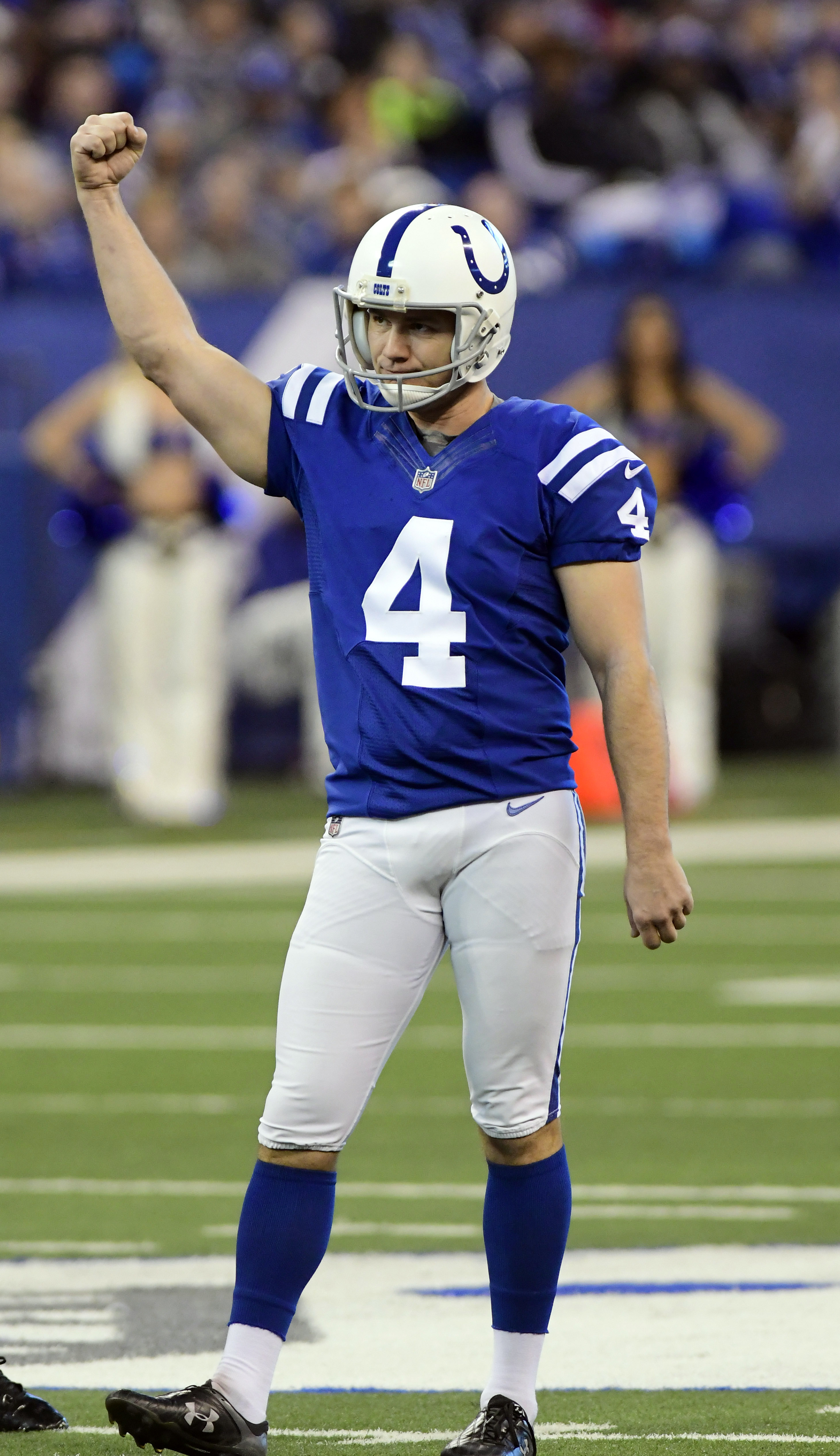
Vinatieri has been with the Colts for the last 12 seasons and the team is now looking to make it a baker’s dozen. The kicker recently celebrated his 45th birthday, but the team believes that he still has enough left in the tank.
Technically speaking, Vinatieri’s completion percentage has been sliding since he connected on a career-high 96.8% of his kicks in 2014. He’s still doing okay in his old age, however. In 2017, Vinatieri made 85.3% of his attempts, placing him 13th in the NFL. He also nailed five kicks of 50+ yards and missed only two extra points.
Vinatieri already has his place in the record books as he is No. 2 all-time in points with 2,487 and field goals with 559. Witha nother 58 points, he can surpass Morten Andersen’s watermark of 2,544.
Vinatieri is off the market, but this year’s free agent class of kickers still includes names such as Nick Folk (who just received medical clearance this week), Kai Forbath,Matt Bryant, Graham Gano, and Sebastian Janikowski.
Minor NFL Transactions: 2/20/18
Today’s minor moves:
New Orleans Saints
- Re-signed: LS Zach Wood (ERFA)
Philadelphia Eagles
- Signed: DT Winston Craig
Dolphins To Franchise Tag WR Jarvis Landry
The top wide receiver in this year’s free agent class is off of the table. The Dolphins will place the franchise tag on Jarvis Landry, a source tells Ian Rapoport of NFL.com (on Twitter). The official numbers are not out yet, but it is believed that the one-year tender will be worth approximately $16.23MM. The Dolphins have since confirmed the transaction via press release.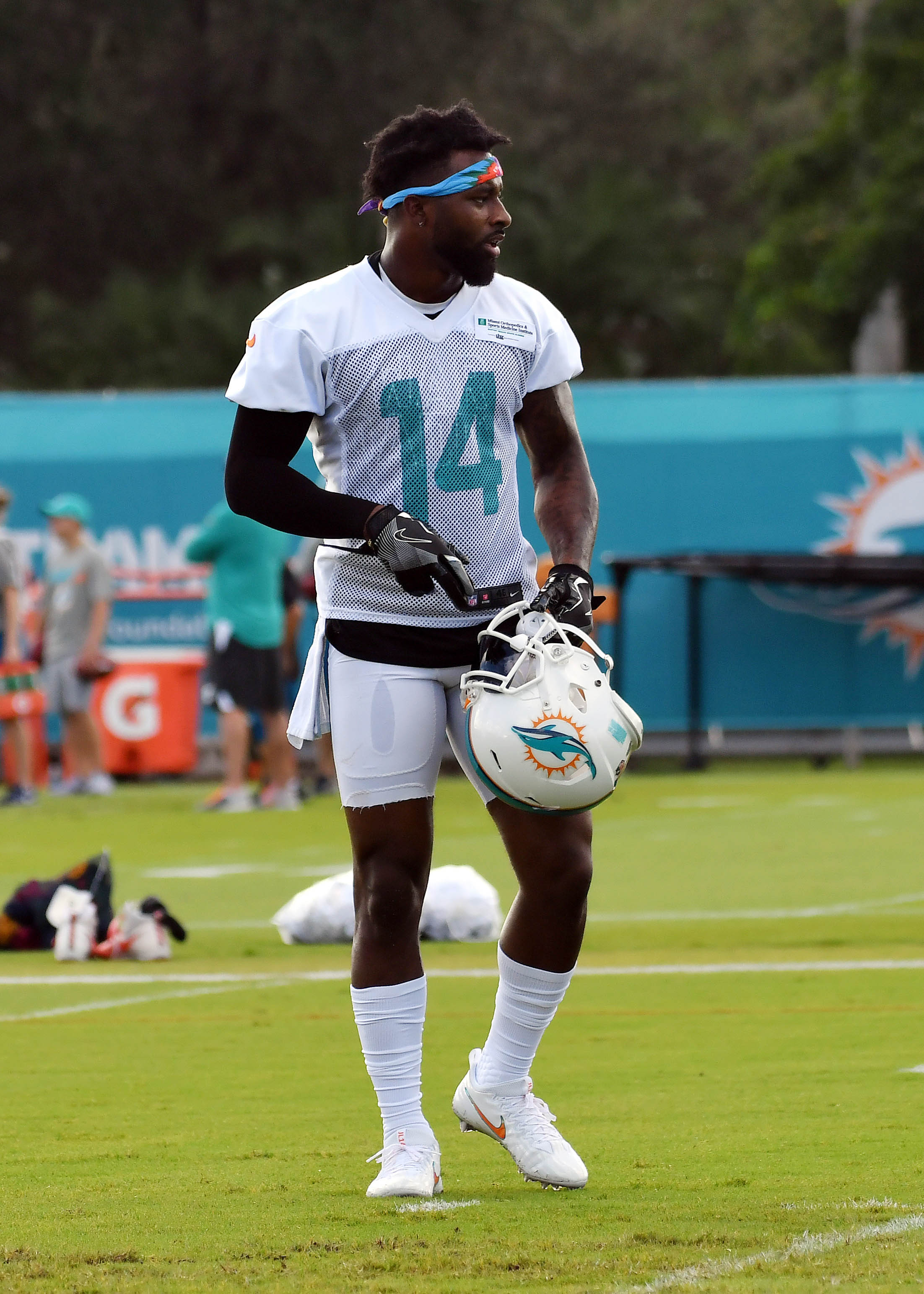
It’s a surprising turn of events considering the lack of fruitful negotiations between the two sides. For months, all indications have been that the Dolphins would not tag Landry, preferring instead to negotiate with him up until March and potentially allow him to explore the open market.
In December, Landry’s agent Damarius Bilbo asked the Dolphins for a contract worth roughly $14MM per year with $30MM in guarantees. It’s expected that he’ll enter the coming round of negotiations with a similar ask. The Dolphins, who are looking to preserve what limited cap space they have, will push back and potentially open up talks with Kenny Britt‘s four-year, $32MM deal from last offseason as a starting point.
At one point, the Dolphins were wary of giving Landry a bloated multi-year deal because they wanted to preserve room for locking up DeVante Parker down the line. After a so-so injury-ladened season from the former first-round pick, they’re probably less concerned on that front. The Dolphins have Parker under contract through the 2018 season at a reasonable $3.46MM charge. If he breaks out in 2018, they can use the fifth-year option to control him through 2019.
Landry has topped 1,100 yards in two of his NFL seasons and nearly reached 1,000 yards in 2017. He also scored a career-high nine touchdowns and broke his own franchise record with 112 receptions. However, his yards per catch average dipped to a career low 8.8 per contest. At the end of the day, Landry presents a difficult conundrum for the Dolphins. There’s no denying that he is a lethal slot receiver, but is a slot receiver worth a potentially market shifting contract?
A $14MM/year deal would put Landry in line with Demaryius Thomas and Dez Bryant, putting him just outside of the league’s top five wide receivers in terms of average annual value. The request of $30MM in full guarantees would give him the fifth-highest total among WRs, behind only DeAndre Hopkins, Julio Jones, Thomas, and Bryant (If you’re wondering where Antonio Brown is in all of this – he has the highest AAV at $17MM, but trails the aforementioned players in those other categories).
Per league rules, the Dolphins have until July 16 to hammer out a long-term contract with Landry. Otherwise, Landry will play under the one-year deal and the two sides cannot resume negotiations until after the season.
With Landry off the board, Allen Robinson and Sammy Watkins are now positioned to be the best available wide receivers in free agency. Of course, the Jaguars and Rams could change that by also using the franchise tag on them. If Robinson and Watkins don’t reach the open market, then there will be a serious dearth of quality wide receivers available. In that scenario, Marqise Lee of the Jaguars could wind up as the belle of the ball.
Titans, Ryan Succop Agree To Extension
The Titans have signed Ryan Succop to an extension. Succop was scheduled to reach unrestricted free agency in March. Instead, he’s now under contract with the team for the next five years, a source tells ESPN.com’s Cameron Wolfe (on Twitter). The deal is worth $20MM in total with $7.25MM guaranteed at signing. He’s slated to earn $8.25MM over the first two years, which signifies a healthy cash flow.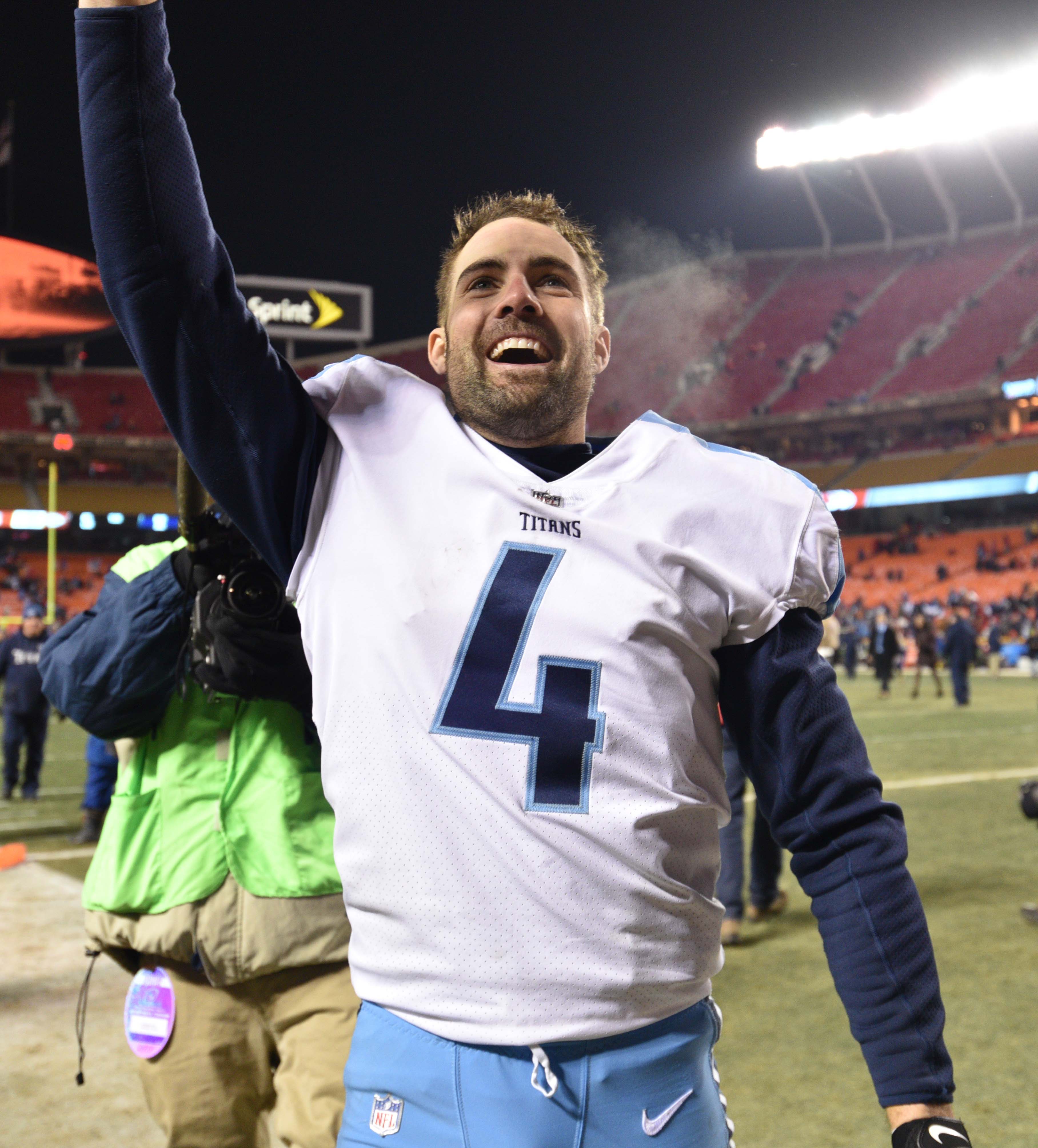
According to Over The Cap, Stephen Gostkowski of the Patriots has the league’s most lucrative contract in terms of average annual value at $4.3MM. With an AAV of $4MM, Succop slots in as the fourth-highest paid kicker in the league, behind only Gostkowski, Justin Tucker of the Ravens ($4.2MM/year), and Mason Crosby of the Packers ($4.025MM). Succop’s total guarantee of $7.25MM trails Gostkowski ($10.1MM) and Tucker ($10.8MM), but puts him ahead of all other NFL kickers.
Succop, 32 in September, connection on 83.3% of his field goal tries in 2017. He also set an NFL record with 56 consecutive made field goals from inside the 50-yard line and edged out Al Del Greco for the team’s single-season scoring record (136 points).
Although Succop hit those milestones, it wasn’t a perfect year for him from start to finish. His field goal percentage was his lowest since 2013 and he missed two extra points. Succop will work to get back to his usual self this year – he made 88.7% of his FG tries from 2014-2016 in Tennnessee and 96% of his extra point attempts.
In other Titans news, Ian Rapoport of NFL.com recently speculated that the team could part ways with DeMarco Murray this offseason. Murray is a potential cap casualty thanks to his $6.75MM charge and the presence of Derrick Henry.
AFC West Notes: Chiefs, Peters, Raiders
Chatter that Marcus Peters may not be long for the Chiefs continues to circulate in league circles, according to Jason La Canfora of CBSSports.com (on Twitter). That talk figures to pick up next week at the combine, JLC notes, and that could spur action on a deal.
If the Chiefs are serious about dealing the cornerback, now would be the time to do it, opines Mike Florio of PFT. For now, the complete details surrounding Peters’ late-season suspension are unknown, and that’s ideal for the team if they want to unload him. The more time that goes by, the more likely it is that teams will dig in to his locker room behavior and possibly uncover something they don’t like. Peters’ talent is undeniable, but if the Chiefs are unwilling to make a big commitment to him beyond his fifth-year option in 2019, now is the time to act.
How serious are the Chiefs are about moving Peters? That’s not immediately clear, but this is telling: while no one has confirmed to Mike Garafolo or Ian Rapoport of NFL.com (video link) that Peters is on the block, no one has shot down the possibility either.
While we wait to see how things play out with the 25-year-old, here’s more from the AFC West:
- In a conversation with a fan, Raiders coach Jon Gruden indicated that he wants Marshawn Lynch to be fully committed to his conditioning this year. “We’re not going to have that,” Gruden said (via S.L. Price of The MMQB). “No. I said to him: ‘I need Marshawn Lynch. I don’t need this part-time Lynch. I need full-time Lynch.” Lynch is signed through the 2018 season and with a cap number of $6MM, so there is some speculation as to whether he’ll be a part of Gruden’s second go ’round in Oakland. It sounds like Gruden will be gauging Lynch’s health as the team weighs the decision.
- Chargers wide receiver Travis Benjamin is scheduled to carry a $7MM cap charge this year and the Bolts could save $4.5MM by cutting him with just $2.5MM in dead money. That may be tempting for L.A., but Eric D. Williams of ESPN.com feels that he is worth the cost. Benjamin has scored nine touchdowns for the Chargers since coming on board in 2016 and his speed opens things up in the short/medium range for Keenan Allen, Antonio Gates, and Hunter Henry. Williams argues that Benjamin’s salary – which puts him No. 29 amongst WRs at the moment – is something the Bolts could live with. That’s reasonable, but it stands to reason that the Chargers could ask the veteran to accept a mild pay cut this offseason.
- Peter King of The MMQB expects Kirk Cousins to wind up with the Broncos.
49ers To Meet With Vontae Davis
The Niners will meet with cornerback Vontae Davis on Tuesday, according to Adam Schefter of ESPN.com (on Twitter). This marks Davis’ third known free agent visit of the offseason. 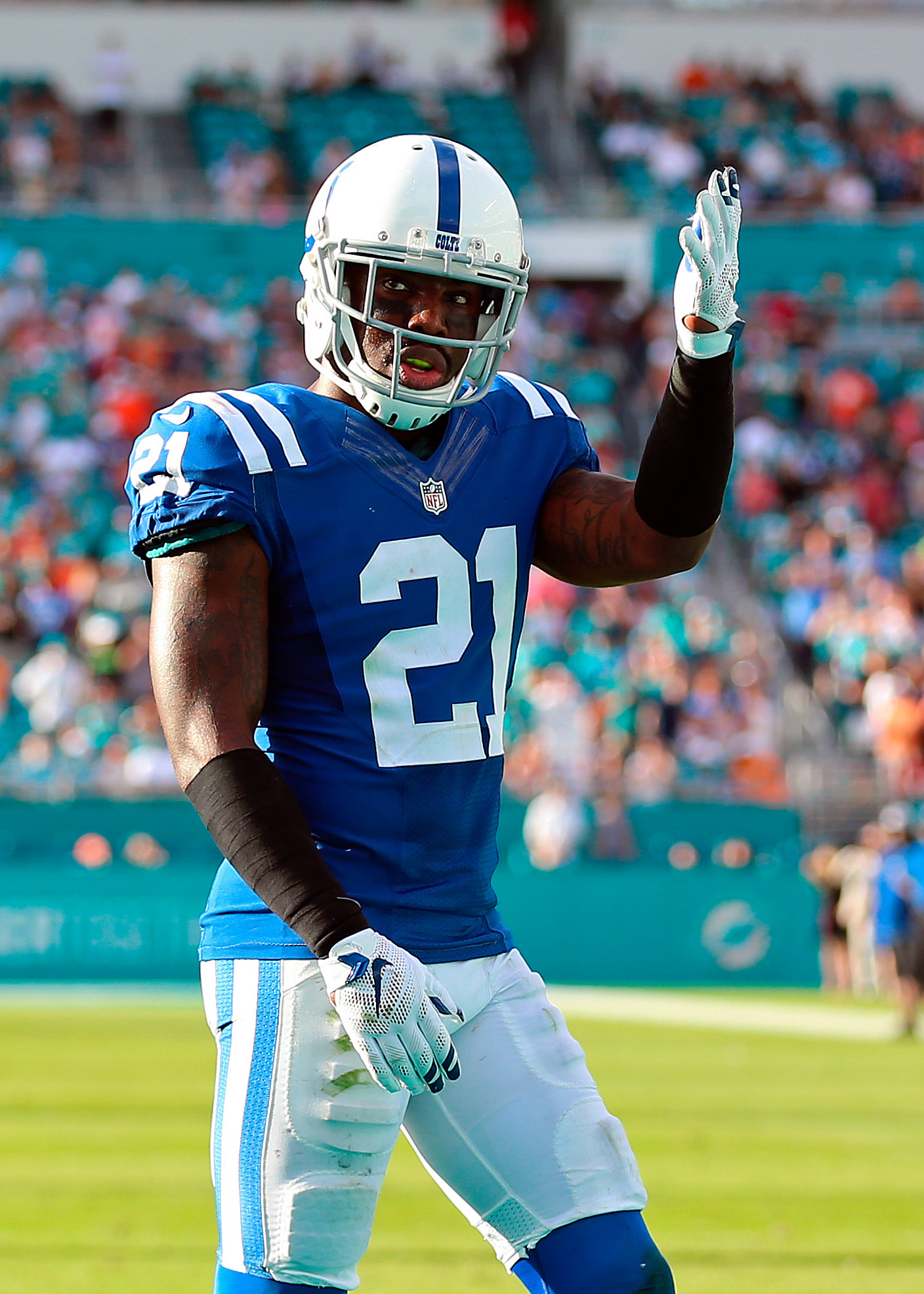
Davis, 30 in May, was released by the Colts in November due to health issues and a rumored clashing between him and the coaching staff. Recently, Davis was given medical clearance by doctors, paving the way for him to meet with interested clubs. After meetings with the Bills and Browns, Davis is now discussing things with the cash-flush Niners.
With $74.5MM in cap room, the Niners trail only the Browns and Colts in flexibility. Davis is in a unique spot as a valuable free agent who is eligible to sign in February and both the 49ers and Browns are in the unique position of being able to sign the corner without really impacting plans for March. For what it’s worth, the Bills also have a decent amount of breathing room with roughly $29.6MM in space.
Davis disappointed in 2016 and didn’t see the field much last year thanks to his core injury, but he was among the league’s best corners in 2014 and 2015. The Niners could be interested in seeing if he could turn back the clock. perhaps on an affordable one-year deal.
Eagles Won’t Tender Jaylen Watkins
The Eagles do not plan to tender defensive back Jaylen Watkins as a restricted free agent, Ian Rapoport of NFL.com (on Twitter) hears. Watkins was a candidate for the original round tender, but instead it sounds like he’lll be allowed to explore the open market in March. 
Watkins first joined the Eagles a fourth-round pick in the 2014 draft. The Florida product didn’t see a ton of time on the field in his first two seasons, but he got his chance to be a regular contributor starting in 2016. Watkins has appeared in 28 regular season games over the last two years and recorded 51 total tackles.
This past season, Watkins saw most of his playing time on special teams with only 170 defensive snaps to his credit. He was not a star for the defending champs, but he still played a vital role.
“He’s Mr. Do-It-All,” Eagles cornerback Jalen Mills recently said of Watkins (via the News-Press). “Whatever spot, if anybody happens to bust a shoelace, equipment issue, you can plug him in, and you know he’s going to go out there and do the job.”
2018 NFL Franchise Tag Candidates
Starting today, NFL teams will be able to place franchise and transition tags on potential free agents for the first time. While the window for franchise tags is open, most clubs won’t actually tag any players right away.
As our list of important dates for the 2018 offseason shows, the deadline for teams to assign those tags doesn’t come until Tuesday, March 6. Usually, when it comes to NFL contract discussions, deadlines spur action, so teams will wait until that deadline approaches to officially use franchise tags, once it becomes clear that they won’t be able to strike a longer-term deal yet with their respective free-agents-to-be.
Even though the action might not heat up for a couple more weeks, it’s worth taking a closer look at what to expect during 2018’s franchise tag period. The NFL hasn’t officially announced the salary cap figure for 2017, but OverTheCap.com recently projected the 2018 franchise tag salaries based on a presumed $178MM cap. Here are the expected non-exclusive franchise tag amounts:
- Quarterback: $23.09MM
- Running back: $11.72MM
- Wide receiver: $16.23MM
- Tight end: $10.36MM
- Offensive line: $14.54MM
- Defensive end: $17.52MM
- Defensive tackle: $14.53MM
- Linebacker: $15.47MM
- Cornerback: $14.88MM
- Safety: $11.08MM
- Punter/kicker: $5.06MM
(For a refresher on the characteristics of the exclusive and non-exclusive franchise tags, as well as the transition tag, be sure to check out PFR’s glossary entry on the subject.)
Here’s our look at the most likely candidates to be tagged, along with several more outside possibilities:
Virtual Locks:
- Le’Veon Bell, RB, Steelers: Last offseason, things got pretty weird between the Steelers and Bell. Just before the deadline to extend franchise tagged players, the Steelers believed that they had agreed on a five-year offer worth roughly $60MM. Ultimately, Bell backed out because he did not find the guarantees and cash flow to be to his liking. Soon after, friend and former teammate Ike Taylor said that Bell wanted a contract that reflects his performance as both a No. 1 back and a No. 2 receiver – something in the neighborhood of $15MM per year.
 This year, Bell topped his 75 catch total with 85 grabs, so one has to imagine that his position hasn’t changed. Despite some retirement threats in January, Bell has indicated that talks are going better this time around. Here’s where things get interesting – the Steelers say that today (Feb. 20) is the “deadline” for a long-term deal to get signed. If not, they’ll go ahead and franchise tag him for a second consecutive season, leaving Bell with a one-year, $14.5MM pact when factoring in the 20% increase. Will Bell buckle and sign a deal that isn’t quite to his satisfaction? In theory, the running back could abstain from offseason activities and even reboot retirement talk in an effort to get the Steelers to cave and abide by the real extension deadline on July 16.
 - Demarcus Lawrence, DE, Cowboys: It has already been reported that the Cowboys will go ahead and tag Lawrence to prevent him from reaching free agency. Once that happens, you can expect the cash-strapped Cowboys to get to work on an extension that will smooth out the $17.5MM cap hit for defensive ends. There won’t be much drama as to whether the Cowboys will or won’t tag Lawrence, but the subsequent multi-year negotiations will be interesting to watch. Lawrence had a rocky first three seasons in the NFL, but he stepped up big in his contract year with 14.5 sacks. The Cowboys must be willing to pay Lawrence like a top DE, but they may insist on protections like an easy escape hatch or heavy roster bonuses in the event that he is injured or suspended.

Strong Candidates:
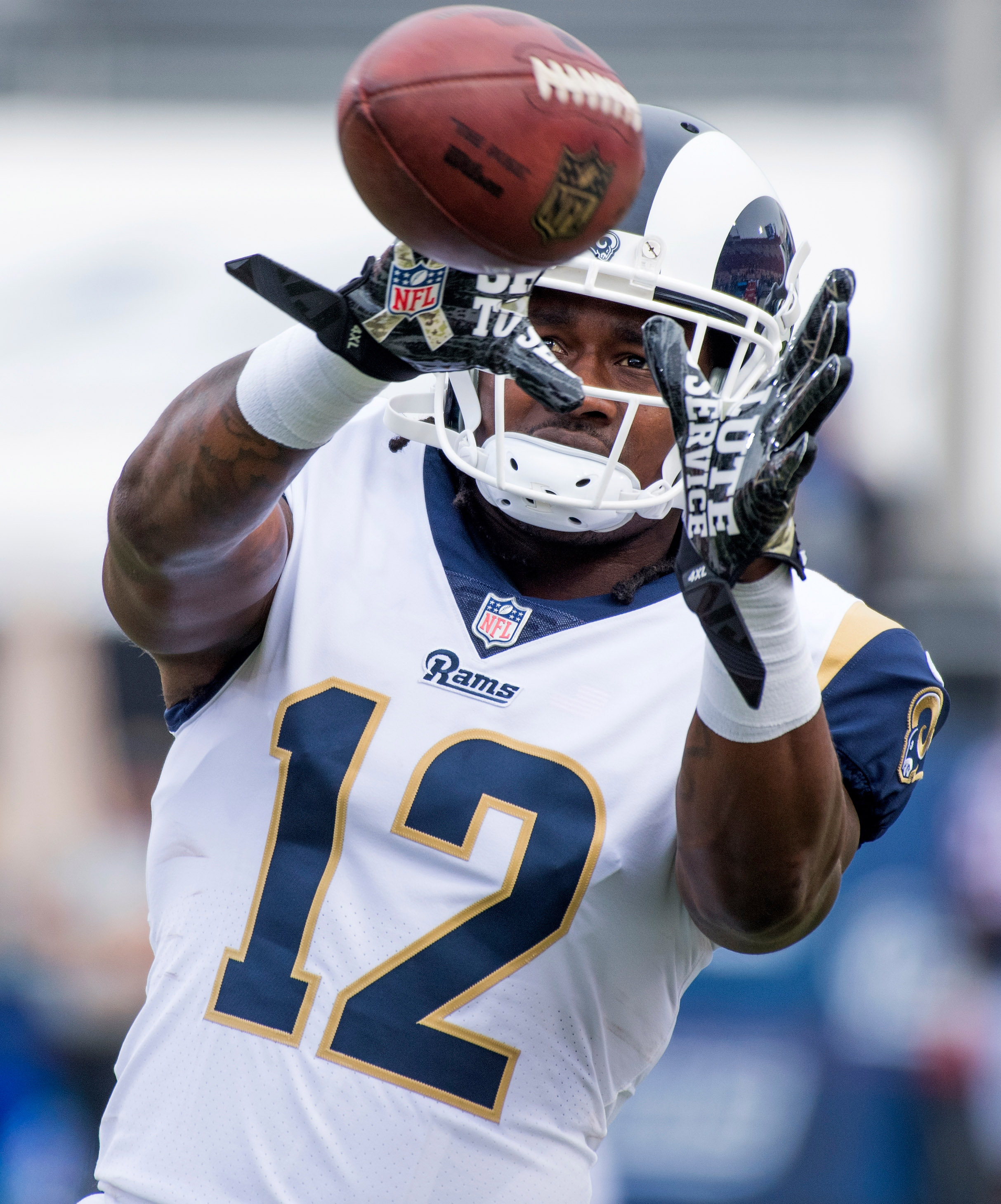
- Sammy Watkins, WR, Rams: As our own Micah Powell explained on Sunday, Watkins is a candidate for the tag with mutual interest on both sides in continuing their union. Committing major dollars to Watkins is dicey, however, given his injury history and his somewhat disappointing stat line in 2017. If the Rams let Watkins hit the open market, they’ll risk losing him to other teams with more wiggle room under the salary cap. In the land of the blind, the one-eyed man is king. And in a weak crop of free agent wide receivers, Watkins could clean up and leave the Rams without an obvious replacement.
- Allen Robinson, WR, Jaguars: Tagging Watkins will be a tough call for the Rams and the Jaguars have a similarly difficult decision to make when it comes to Robinson. Robinson played only three snaps in 2017 before going down with a torn ACL and he didn’t set the world on fire in 2016. However, his 2015 performance – 80 catches, 1,400 yards, and a league-leading 14 touchdowns – makes it hard for Jacksonville to let him walk. In theory, the Jaguars could re-sign fellow free agent Marqise Lee and let Robinson go, but Robinson is clearly the more talented of the two and one could argue that Lee’s late-season emergence was fueled by advantageous matchups. It’ll be pricey, but the Jaguars are suddenly in position to win and they can’t afford to let one of their best weapons bolt.
Toss Up:
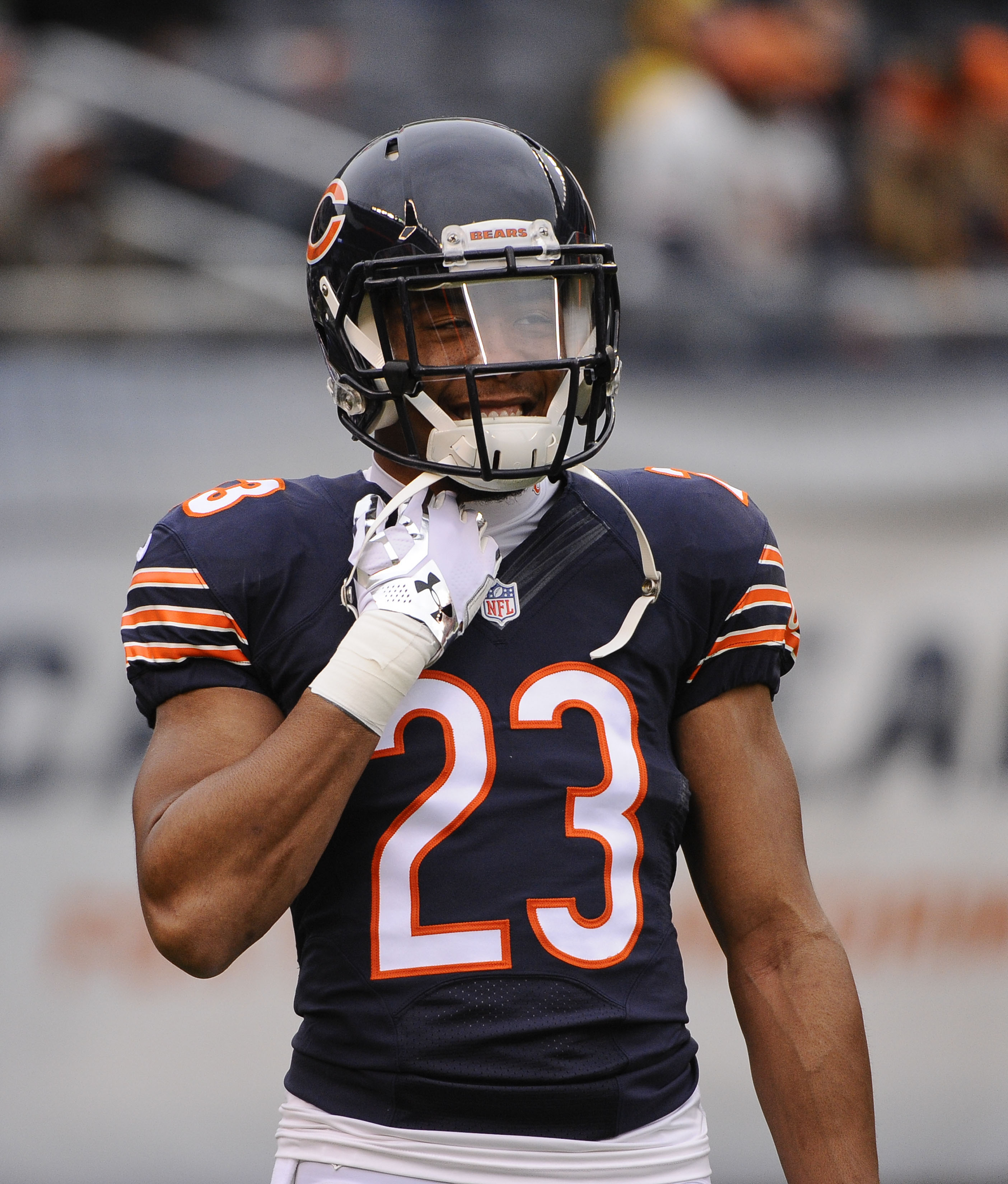
- Kyle Fuller, CB, Bears: Frankly, I’m conflicted on this one. I’m sure Bears GM Ryan Pace can relate. Fuller turned in a strong rookie campaign and an excellent contract year, but he was a victim of the sophomore jinx and an unfortunate knee injury which cost him his entire season as an NFL junior. Jason La Canfora of CBSSports.com hears that Fuller will not be with the Bears this year. But, considering that Fuller graded out as Pro Football Focus’ No. 22 ranked cornerback and the position is already a major area of need for the team, the Bears have to at least think about tagging him for $14.88MM.
- Ezekiel Ansah, DE, Lions: Ansah has performed pretty well over the last two seasons, despite playing through some serious pain. The Lions probably aren’t thrilled about extending a one-year, $17.5MM tender to Ansah, but pressure generating edge rushers like him are at a premium. Consider this: Ansah tallied 12 sacks last year despite knee, ankle, and back ailments. Only seven players topped that total: Chandler Jones, Calais Campbell, DeMarcus Lawrence, Everson Griffen, Cam Jordan, Ryan Kerrigan, and Joey Bosa.
- Case Keenum, QB, Vikings: Is one year as an elite quarterback enough to justify the franchise tag? Maybe, but the Vikings have options at their disposal, including two other pending free agents already on the roster. If the Vikings can’t retain Keenum or Bradford or Bridgewater with a reasonable multi-year deal between now and free agency, they can use their mountain of cap space to get involved in the Cousins sweepstakes.
- Sheldon Richardson, DT, Seahawks: The Jets had both Richardson and Muhammad Wilkerson under contract, but they could only afford to pay one of the two defensive linemen. Clearly, they chose wrong. For all of the headaches that Richardson gave the team, the five-year, $86MM deal given to Wilkerson wound up being a monumental mistake and will continue to be an albatross for the Jets even after they cut him this offseason. The Seahawks gave up a second-round choice and wide receiver Jermaine Kearse to get Richardson – will they make the same mistake and let him get away? Perhaps not, but it would also be a major gamble to tag him at $14.5MM with limited cap space and other holes to address. The best course of action here may be to try and work out a fresh deal without the franchise tag as a floor for Richardson’s camp. If that fails and the two sides can’t come to terms, the Seahawks can at least collect a 2019 compensatory pick.
PFR Glossary: Franchise/Transition Tags
Tuesday will mark the first day that teams can apply the franchise tag to free-agents-to-be for 2018. While no clubs have designated franchise players yet, there will likely at least a handful of players receiving the tag before the March 6 deadline, so it’s worth taking an in-depth look at what exactly it means to be designated as a franchise player.
Essentially, the franchise tag is a tool that a team can use to keep one of its free agents from freely negotiating with rival suitors on the open market. Designating a franchise player means tendering that player a one-year contract offer. The amount of that offer varies from year to year and from position to position, and also differs slightly depending on what sort of specific tag the team employs. Here’s a breakdown of the three types of franchise/transition tags:
Exclusive franchise tag:
- The amount of the one-year offer is either the average of the top five highest-paid players at the player’s position in the current league year or 120% of the player’s previous salary, whichever is greater. The top five highest-paid players at the position are determined once the free agent signing period ends in May, so the exact amount isn’t known until then.
- The player isn’t allowed to negotiate with other teams.
- The player and his team have until July 15 (or the first business day thereafter, which falls on Monday July 16 this year) to work out a multiyear agreement. After that date, the player can only sign a one-year contract.
- The exclusive tag is generally only used for extremely valuable free agents, such as franchise quarterbacks.
Non-exclusive franchise tag:
- The amount of the one-year offer is determined by a formula that includes the salary cap figures and the non-exclusive franchise salaries at the player’s position for the previous five years. Alternately, the amount of the one-year offer can be 120% of the player’s previous salary, if that amount is greater.
- The player is free to negotiate with other teams. If he signs an offer sheet with another team, his current team has five days to match the offer.
- If the offer is not matched, the player’s previous team will receive two first-round draft picks as compensation from the signing team.
- As is the case with the exclusive franchise tag, July 15 (which, again, falls on July 16 this year) represents the deadline for a multiyear agreement.
- Due to the attached compensatory picks, the non-exclusive franchise tag is generally sufficient for free agents — few rival suitors are willing to give up multiple first-rounders in order to sign a free agent to a lucrative deal, so there’s not much risk for a team to give up exclusive negotiating rights.
Transition tag:
- The amount of the one-year offer is either the average of the top 10 highest-paid players at the player’s position in the previous league year or 120% of the player’s previous salary, whichever is greater.
- The player is free to negotiate with other teams. If he signs an offer sheet with another team, his current team has five days to match the offer.
- If the offer is not matched, the player’s previous team does not receive any compensatory draft picks.
- Because it does not include any draft compensation or exclusive negotiation rights, and is only slightly more affordable, the transition tag is rarely used.
The exact amounts of these tags won’t be known until the salary cap number for 2018 is announced, and even then, the exclusive franchise tag amount won’t be established immediately. However, OverTheCap.com has a breakdown of the projected non-exclusive figures, ranging from around $5.06MM for a punter or kicker all the way up to $23MM+ for a quarterback. We already know that the Cowboys intend to use the tag on defensive end Demarcus Lawrence, with an eye on hammering out a long-term pact before the deadline. Steelers running back Le’Veon Bell also appears to be a very likely candidate for the designation. Others in the franchise tag mix include Jaguars wide receiver Allen Robinson, Rams wide receiver Sammy Watkins, and Panthers guard Andrew Norwell.
Here are a few relevant details on franchise tags:
- Each year, the period for teams to designate franchise players runs from the 22nd day before the new league year begins, right up until the eighth day before that new year. In 2018, that means February 20 to March 6, with the 2018 league year set to start on March 14.
- A team can withdraw a franchise or transition tag at any time once when the free agent period begins, but it would immediately make the player an unrestricted free agent, allowing him to sign with any team.
- If a player is designated a franchise player for a third time, the amount of his one-year offer is equal to the exclusive franchise salary for the highest-paid position (QB), 120% of the five largest prior-year salaries at his position, or 144% of his previous salary. That’s why, for instance, the Rams won’t franchise cornerback Trumaine Johnson this offseason — it would be his third straight franchise tag, so he’d be eligible for roughly $20MM for 2018.
- Teams are allowed to designated one franchise player and one transition player per offseason. A team can also designate two transition players if it doesn’t designate a franchise player, but can’t designate two franchise players.
- Restricted free agents can be designated as franchise players.
- If a player chooses to sign the one-year franchise tender, his salary is essentially guaranteed. The CBA notes that if a team releases the player due to a failure “to establish or maintain his excellent physical condition,” the team may recoup his salary. However, a franchise player released due to poor performance, injury, or cap maneuvering will receive his full salary.
Note: This is a PFR Glossary entry, modified from an earlier entry by editor emeritus Luke Adams. Our glossary posts explain specific rules relating to free agency, trades, or other aspects of the NFL’s Collective Bargaining Agreement. Information from Joel Corry and OverTheCap.com was used in the creation of this post.