
Chargers Consider Dontrelle Inman Trade
The Chargers have had trade talks about wide receiver Dontrelle Inman, sources tell Tom Pelissero of NFL.com (on Twitter). As Pelissero notes, several teams are looking to deal wide receivers as the 53-man deadline approaches. 
[RELATED: Seahawks WR Jermaine Kearse Also On Market]
Inman has been with the Bolts for the last three seasons following a post-college stint in the CFL. The 28-year-old has a breakout campaign in 2016, with career-highs in receptions (58), receiving yards (810), and touchdowns (four). Despite that performance, it appears he has slipped in the Chargers’ pecking order.
Per the terms of his second-round tender, Inman is set to earn a non-guaranteed $2.797MM base salary for the coming season. If the Chargers do not find a taker for Inman and would rather use his roster spot on someone else, they could release him without financial penalty.
Keenan Allen, Tyrell Williams, and Travis Benjamin figure to see the most looks out of Los Angeles’ wide receivers this year. Inman, Isaiah Burse, Geremy Davis, and UDFA Artavis Scott are jostling for supporting roles while first-round rookie Mike Williams looks to recover from his back injury.
Jermaine Kearse of the Seahawks is also among the wide receivers on the trade block.
Offseason In Review: Los Angeles Chargers
The Chargers are everyone’s favorite 2017 sleeper. The Bolts are moving to a new city, coming off of two consecutive double-digit loss seasons, and have earned only one postseason berth in the past seven years, but Los Angeles looks poised to at least contend for the AFC West during the upcoming campaign. Here’s what general manager Tom Telesco & Co. did this offseason:
Notable signings:
- Melvin Ingram, DE: Four years, $54MM. $34MM guaranteed. $2MM available via incentives. Had been assigned franchise tag.
- Russell Okung, T: Four years, $53MM. $25MM guaranteed.
- Jahleel Addae, S: Four years, $22.5MM. $8MM guaranteed.
- Damion Square, DL: Two years, $4MM. $1.225MM guaranteed.
- Mike Windt, LS: Four years, $4.421MM. $620K guaranteed.
- Tre Boston, S: One year, $900K. $100K guaranteed.
- Kellen Clemens, QB: One year, minimum salary benefit. $80K guaranteed.
- Kenny Wiggins, OL: One year, $865K. $75K guaranteed.
- Kenjon Barner, RB: One year, $815K. $75K guaranteed.
- Branden Oliver, RB: One year, $800K. $50K guaranteed.
- Dontrelle Inman, WR: One year, $2.746MM. Signed second-round RFA tender.
- Jeff Cumberland, TE: One year, $775K.
- Tenny Palepoi, DL: One year, $615K.
The Chargers’ offensive line has been a clear weakness for the past few seasons, and that was never more apparent than in 2016. With ineffectiveness plaguing the club’s guard positions, Los Angeles ranked in the bottom third of the NFL in adjusted sack rate, adjusted line yards, and pressure rate. Left tackle was a problem, as well, as King Dunlap graded as a below-average blindside protector in his second straight injury-shortened campaign. With an eye towards improving Philip Rivers‘ protection, the Chargers struck quickly to sign tackle Russell Okung on the first day of free agency.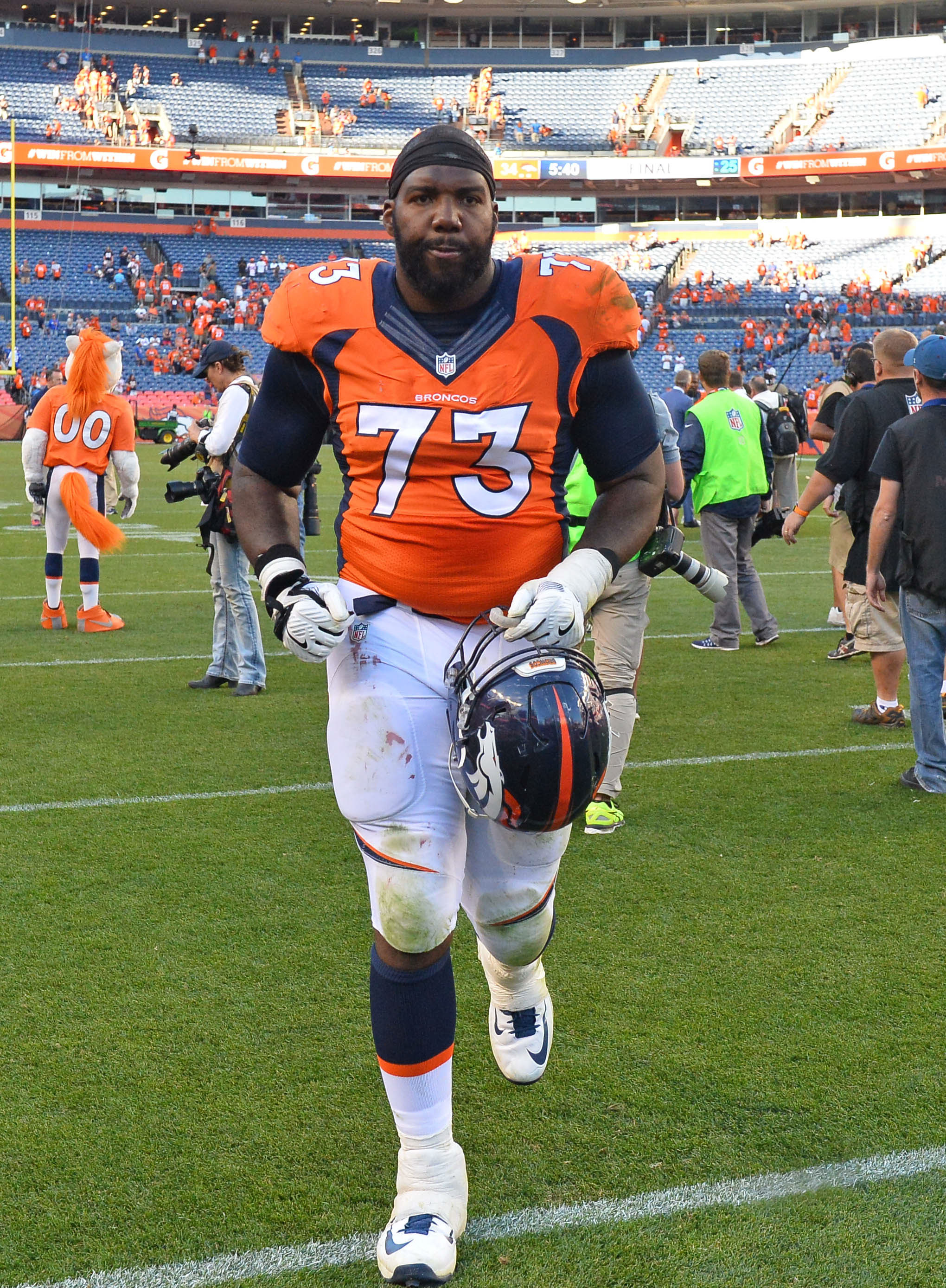
Okung spent the 2016 season with the division rival Broncos after inking an oft-criticized, self-negotiated contract that contained no guaranteed money. Although Okung ended up earning $8MM last year, Denver declined a multi-season option on the veteran offensive lineman that would have locked him in with the Broncos through 2020. Okung ultimately came out on top, however, as his new Chargers deal makes him the league’s highest-paid tackle on an annual basis, slightly ahead of Washington’s Trent Williams.
Clearly, the pact is an overpay, as Okung only offered middling production last season (No. 38 among offensive tackle among 78 qualifiers, per Pro Football Focus). And if the Chargers are looking for reliability, they aren’t getting it with Okung, who’s missed 24 games during his seven-year career. But for a club that’s been looking for any kind of consistent effort along the offensive line, Okung should be able to stabilize the left tackle position for the next several seasons.
Okung wasn’t the Chargers’ most significant investment of the offseason, however — that moniker goes to edge rusher Melvin Ingram, who was initially assigned the franchise tag before agreeing to a four-year extension. Ingram, 28, dealt with injury issues earlier in his career, but he’s appeared in all 16 games in each of the past two seasons. During that time, Ingram ranks fourth among 3-4 outside linebackers with 125 total pressures, and also registered 18.5 sacks.
In new defensive coordinator Gus Bradley‘s 4-3 scheme, Ingram will move to defensive end, meaning he should have even more chances to get after opposing quarterbacks. The change shouldn’t be all that extreme, however, as head coach Anthony Lynn says Los Angeles played “four-down spacing” in 2016 even though it used a 3-4 front. Lining up opposite reigning Defensive Rookie of the Year Joey Bosa, Ingram should be able to help the Chargers improve upon their 15th ranked adjusted sack rate.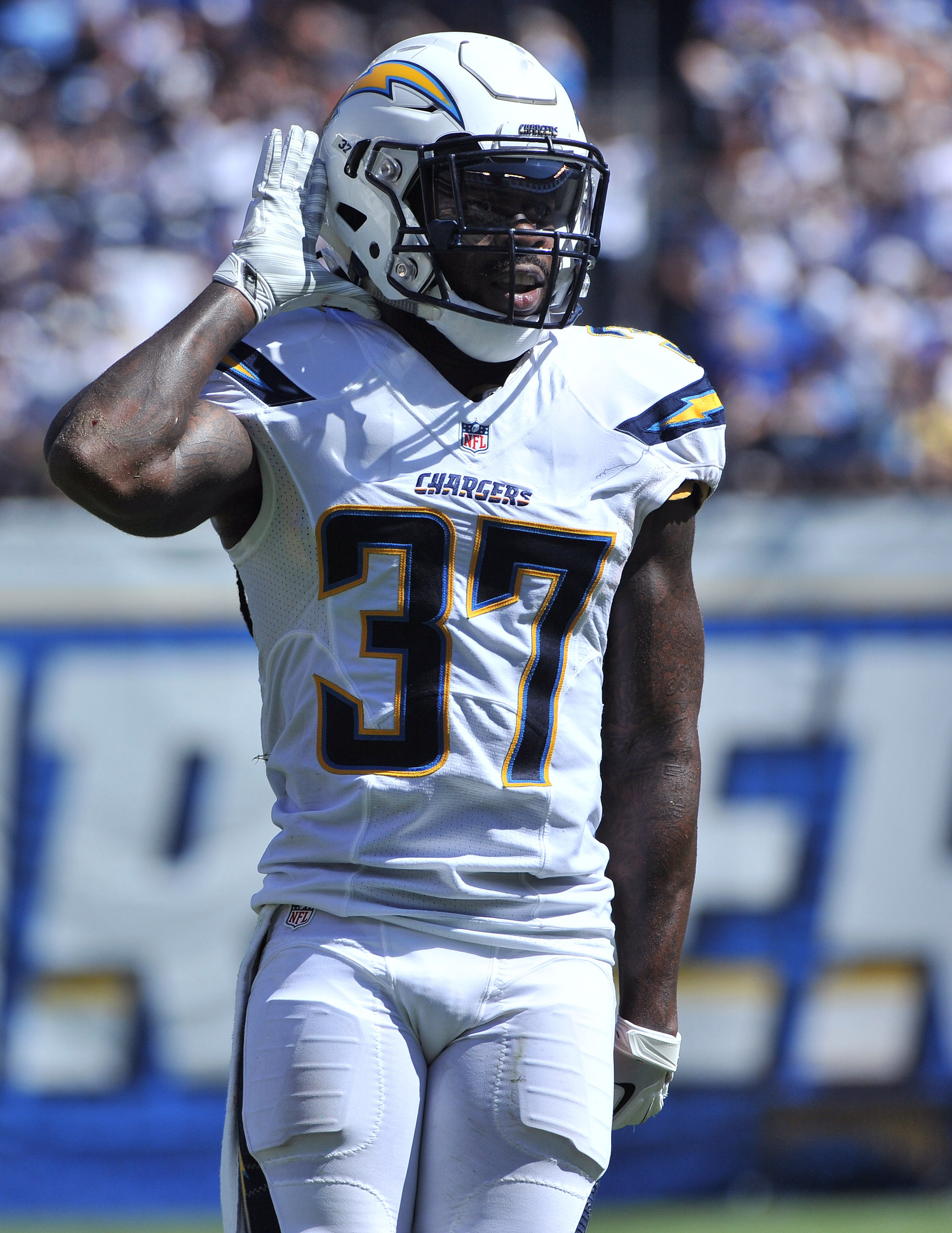
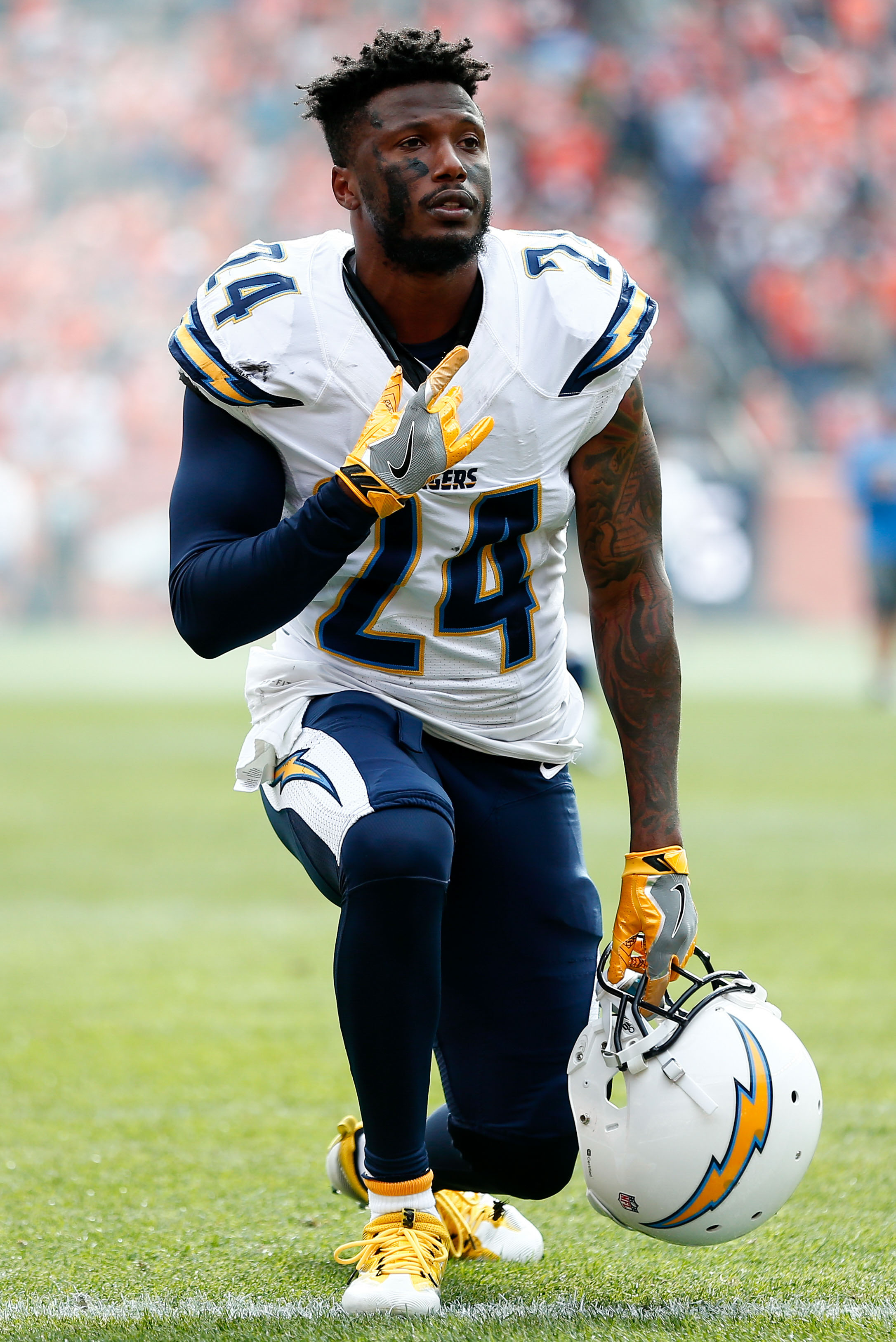
In the second level of their defense, the Chargers re-signed Jahleel Addae to a four-year pact and also brought in fellow safety Tre Boston, inking the latter after he was cut by the Panthers. Addae is quietly one of the more effective safeties in the NFL: in 2016, he graded 13th overall at his position, per PFF, although he missed half the season after suffering a broken collarbone in Week 2. Among all defensive backs, Addae ranked 32nd in PFF’s tackle per opportunity, and is effective against both the run and pass. Boston, meanwhile, is still only 25 years old and is competing with incumbent Dwight Lowery for a starting job.
Like Lowery, offensive lineman Kenny Wiggins is fighting for a starting role, although Wiggins may have a near-lock on the No. 1 slot at right guard. Wiggins, a 29-year-old journeyman who was nearly out of the league as recently as 2013, is now slated to play a major role along Los Angeles’ offensive line following second-round rookie Forrest Lamp‘s season-ending injury. Lamp wasn’t the only offensive lineman on which the Chargers used a relatively early pick, as third-rounder Dan Feeney is also in contention for the right guard job.
Melvin Gordon will Los Angeles’ primary back running behind Wiggins and the rest of the Chargers’ offensive line, and his workload doesn’t figure to be reduced after he played 659 offensive snaps a year ago (sixth among NFL running backs). The Chargers signed Branden Oliver and Kenjon Barner to cheap single-season pacts, and Kenneth Farrow is returning, but Gordon could see an increase on his 254 rushing attempts. It won’t be surprising if Los Angeles seeks to acquire another — preferably pass-catching — running back during roster cuts, with Travaris Cadet, Andre Ellington, and Jamaal Charles among the candidates for release next week.

Minor NFL Transactions: 8/22/17
Today’s minor moves:
Los Angeles Chargers
- Signed: DE Whitney Richardson
- Waived/injured: DE Chris Landrum
Los Angeles Rams
- Signed: DB Tyquwan Glass, LB Willie Mays
- Waived: RB De’Mard Llorens, DE Caushaud Lyons
New York Giants
- Signed: OL Matt Rotheram (Twitter link via Aaron Wilson of the Houston Chronicle)
Tampa Bay Buccaneers
- Signed: LS Andrew DePaola
- Waived/injured: CB Jude Adjei-Barimah
NFL Suspends Chargers OL Max Tuerk
Chargers guard/center Max Tuerk has been suspended four games by the league office. Tuerk violated the NFL’s policy on performance enhancing substances, according to the press release. For his part, Tuerk denies any real wrongdoing. 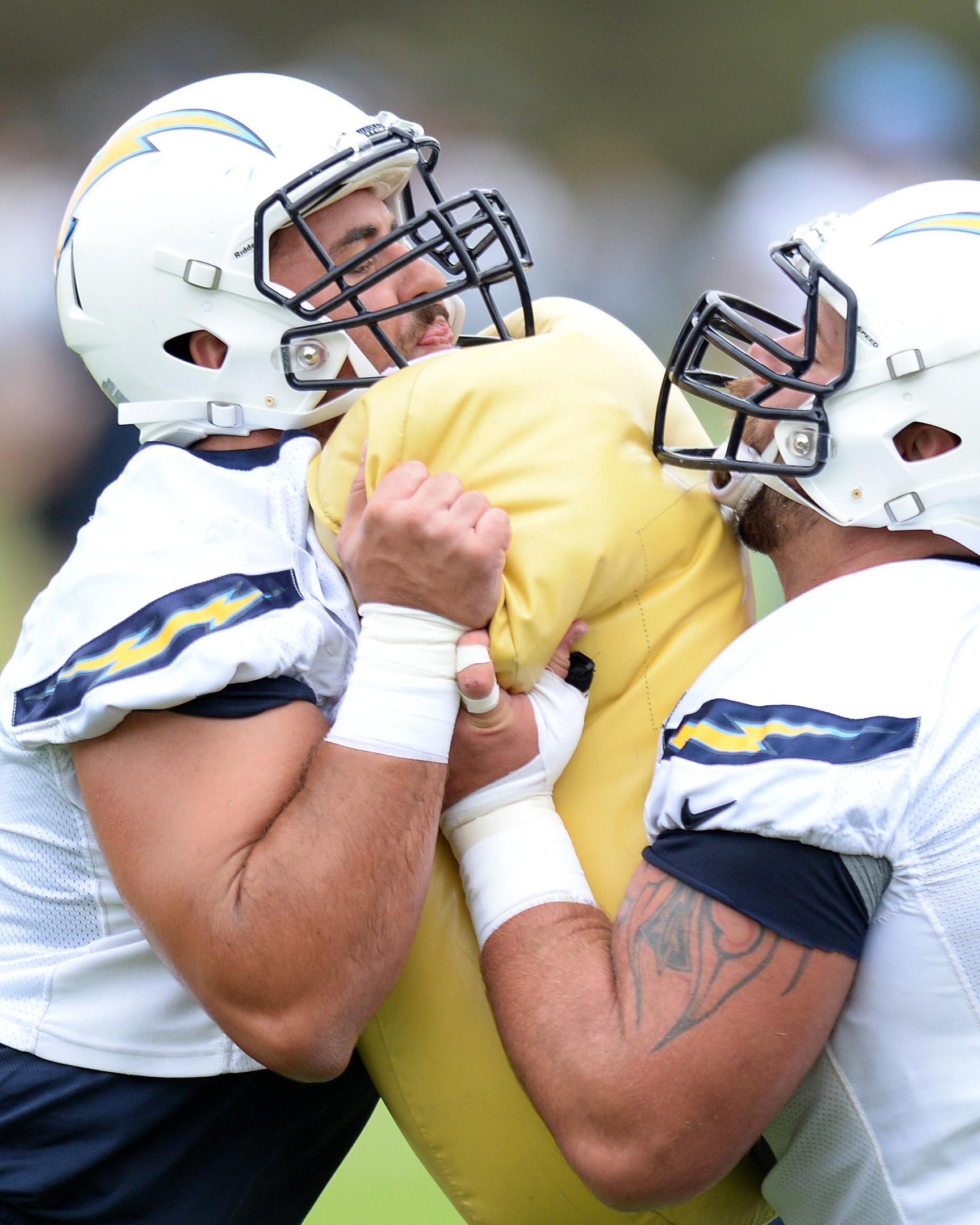
“This offseason, I made the mistake of taking over-the-counter supplements,” Tuerk said in a statement. “In doing so, I opened myself up to the possibility of consuming a tainted supplement – something that ultimately led to a positive test for a banned substance. I accept responsibility for my actions and understand the NFL’s policy is very clear on this matter. This is a very hard way to learn a lesson, and I will never make this mistake again.”
Tuerk will be eligible to return to the Chargers’ active roster on Monday, October 2 following the team’s October 1 game against the Eagles. This is far from ideal for L.A., but it’s not necessarily devastating since Tuerk was likely in line for a reserve role. The Chargers project to start Russell Okung, Matt Slauson, Spencer Pulley, Kenny Wiggins, and Joe Barksdale on the offensive line. Tuerk had been listed as Slauson’s primary backup at left guard on the Chargers’ early edition of the depth chart.
Chargers' Burwell Suffers Injury
- Chargers back up offensive tackle Tyreek Burwell has a broken hand, as Alex Flanagan of NFL Network tweets. Burwell first joined the Bolts as an undrafted free agent in 2015. He appeared in eleven games as a rookie and five last season.
Minor NFL Transactions: 8/15/17
Today’s minor moves:
Atlanta Falcons
- Waived from injured reserve: RB/WR B.J. Daniels
Carolina Panthers
- Waived from injured reserve: S Dean Marlowe
Dallas Cowboys
- Signed: CB Dejaun Butler, CB John Green, TE M.J. McFarland, WR Corey Washington
- Waived: OL Ruben Carter, WR Javontee Herndon, LB Lucas Wacha
- Waived/injured: TE Connor Hamlett
Detroit Lions
- Placed on injured reserve: DE Kerry Hyder, RB Mike James
- Waived: G Matt Rotheram
- Waived from injured reserve: WR Ryan Spadola
Green Bay Packers
- Waived: DL Shaneil Jenkins
Indianapolis Colts
- Signed: WR Justice Liggins
- Waived/injured: RB Dalton Crossan
Los Angeles Chargers
- Signed LB Kyle Coleman
- Waived/injured: LB Mike Moore
Miami Dolphins
- Signed: T Sean Hickey, WR Rashad Lawrence
- Waived: T Kwayde Miller
- Waived/injured: WR Francis Owusu
- Waived from injured reserve: WR Jordan Westerkamp
Free Agent Stock Watch: Ryan Mathews
The Eagles finally ended the NFL’s longest charade today, releasing veteran running back Ryan Mathews months after it became clear they’d do so. Philadelphia had reason to wait, of course, as now that Mathews has received medical clearance, the club is off the hook for $1.15MM in injury protection.
Mathews, a first-round selection back in 2010, has mostly been defined by his lack of availability through seven NFL campaigns. He’s appeared in all 16 games just one time, and has missed roughly a quarter of the 112 total games in which he could’ve played. Additionally, Mathews is now on the wrong side of 30, and is hitting an age when some running backs break down.
Those negative attributes are obvious, but Mathews still has quite a bit to offer interested NFL clubs. In fact, he’s perhaps the perfect NFL backup running back. Here’s why:
Production
Given that Mathews has missed so much time during his career, it’s more informative to assess his production on a per-play basis rather than in the aggregate. Defense-adjusted value over average (DVOA) is a Football Outsiders metric that measures value on a rate basis, and can be applied to either team or individual performance. In seven NFL seasons, Mathews has ranked among the top-20 running backs in DVOA five times, including a No. 3 finish in 2015. So while Mathews’ counting statistics might not be all that impressive (he’s crossed the vaunted 1,000-yard threshold only twice), he’s been extremely valuable when he’s been on the field.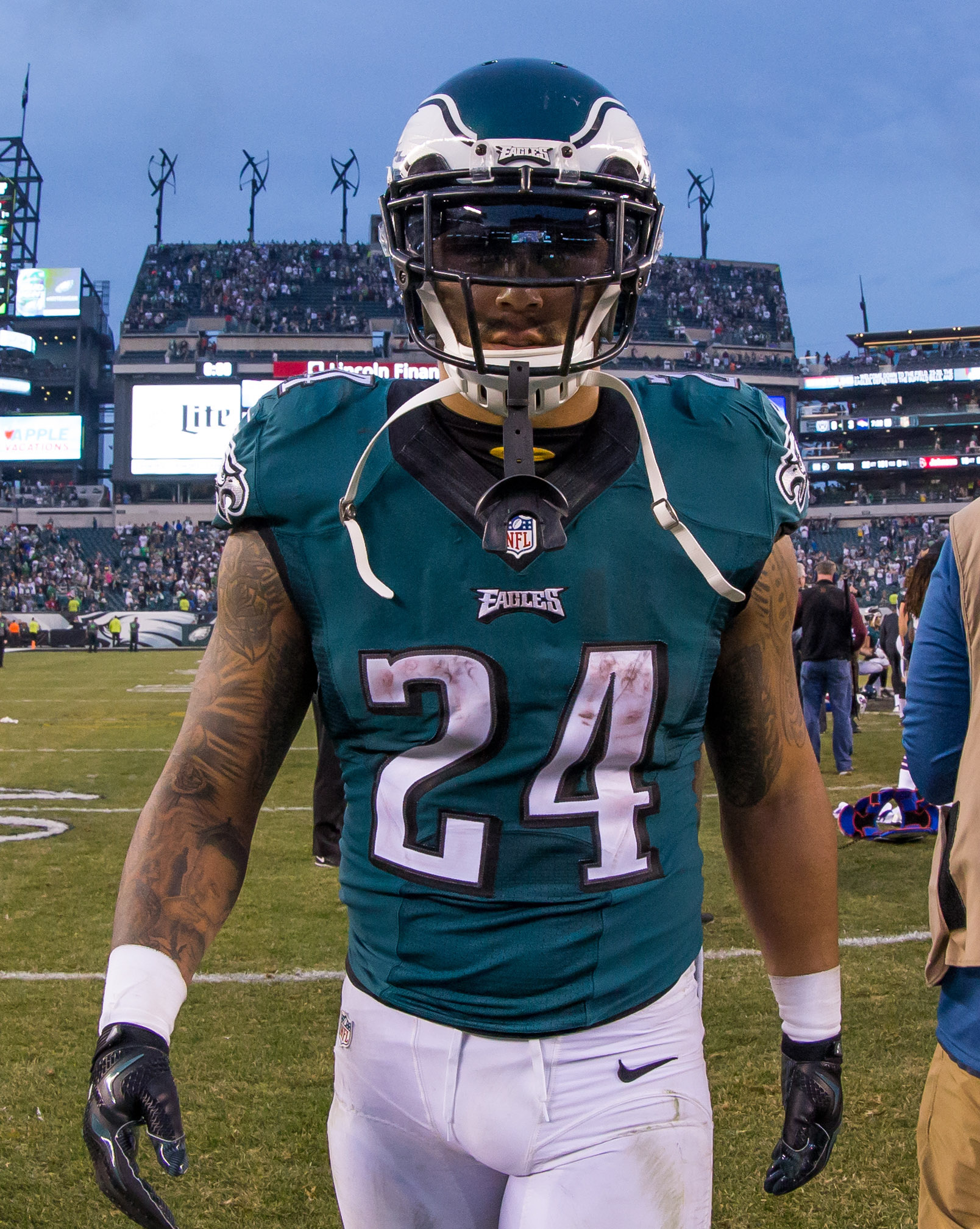
Success rate is another Football Outsiders metric that’s often helpful when evaluating running backs, at it determines how well a back keeps an offense moving. In general, a run will deemed a success if a back gains 40% of the needed yards on first down, 60% of the needed yards on second down, and 100% of the needed yardage on third down.
Different situations can adjust those percentage tiers, but overall the formula is a good indicator of how well a back is keeping an offense “on schedule,” as Bill Barnwell of ESPN.com writes. Mathews grades incredibly well based on success rate: In his seven NFL campaigns, he’s finished as a top-25 back in success rate six times, and ranked among the top-10 twice (2013 and 2015).
While he’s not an above-average pass blocker, Mathews can be useful in the passing game. He’s averaged 26 receptions per season during his career, and even reached 50 catches in 2011. Since entering the league in 2010, Mathews ranks eighth among all running backs with a 79.3% catch rate on 226 targets, so he can be relied on as a passing game weapon. Fumbles have been an issue for Mathews, however, as he ranks first among NFL backs with 21 fumbles since 2010.
As a backup running back, Mathews would — by definition — see his touches reduced. Not only would that perhaps allow Mathews to stay healthy, but he can still remain productive when he is called upon. Not being asked to play starter’s snaps would help both Mathews and the team that signs him.
Scheme Fit
When the Eagles signed Mathews prior to the 2015 season, NFL Films producer Greg Cosell called him a “decisive downhill runner,” and Fran Duffy of PhiladelphiaEagles.com explained why those traits worked so well for what was — at the time — a zone-blocking-Eagles run game. But Mathews can conceivably fit in any number of offenses, as Sam Monson of Pro Football Focus explained to me.
“I think [Mathews] can be a useful member of a backfield,” said Monson. “I actually think he’s quite scheme diverse and pretty versatile as a back, so he should have options.”
Additionally, Mathews has played under a number of offensive minds who are still employed in various roles throughout the league. That list includes Mike McCoy (Broncos offensive coordinator), Rob Chudzinski (Colts OC), Pat Shurmur (Vikings OC), Hal Hunter (Browns offensive line coach), and Jason Michael (Titans quarterbacks coach), meaning there’s no shortage of offensive coaches who have firsthand experience with Mathews.
Cost
Coming off an injury-plagued season in 2014, Mathews landed a three-year deal worth $11MM ($5MM guaranteed) with the Eagles. As he hits free agency for the second time in his career, Mathews won’t come anywhere near that total: while he’s offered solid production on a rate basis over the past two seasons, he’s also two years older and just recovered from a serious neck injury.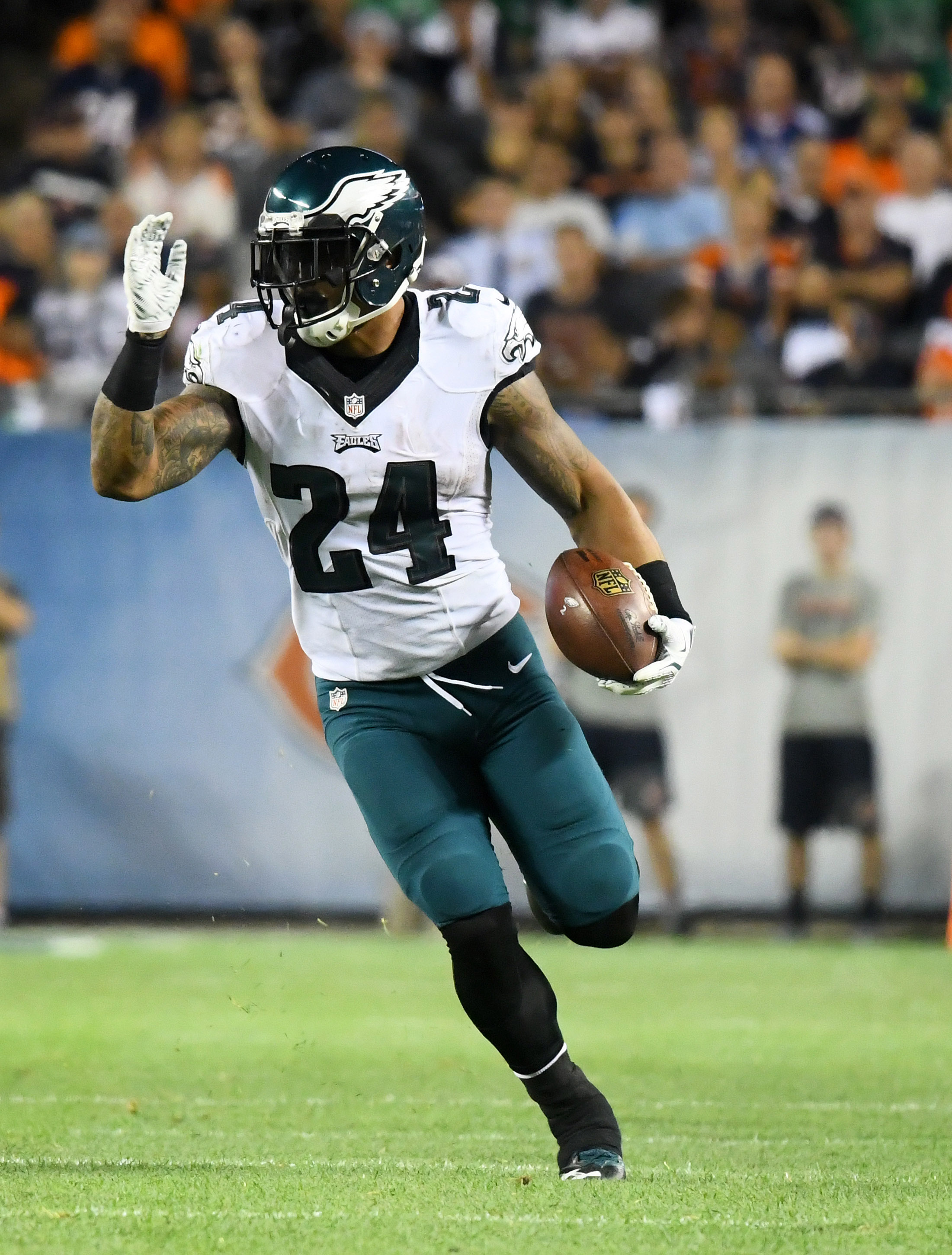
It shouldn’t come as a surprise if Mathews can only score a minimum salary benefit deal in the coming weeks. Such a contract would allow a club to pay Mathews at the seven-year veteran rate of $900K while only using $615K in cap space. Mathews could also receive a signing bonus of up to $80K.
Recent contracts for veteran running backs include Jacquizz Rodgers (two years, $3.3MM), Robert Turbin (two years, $2.7MM), and Lance Dunbar (one year, $1.5MM). Dunbar is probably the best comparable given that he’s spent most of the past two seasons dealing with injuries and ineffectiveness, but he’s also three years younger than Mathews. Whichever team signs Mathews should plan on taking on an eminently affordable salary, and cap space won’t be a barrier.
Signing Mathews would also eliminate another potential opportunity cost — the draft pick capital it may require to trade for a running back. Earlier today, I examined several backs that could be dealt in the near future, including Carlos Hyde, Jeremy Hill, and T.J. Yeldon, all of whom are probably upgrades on Mathews, but all of whom will require the sacrifice of a draft pick. For clubs that aren’t inclined to trade away future value, signing Mathews would cost only money, not picks.
Market
Mathews became the best available free agent running back the second he was released by the Eagles. While other veteran options include Rashad Jennings, DeAngelo Williams, and James Starks, none offer the combination of talent and relative youth that does Mathews. Any team looking for running back help should instantly vault Mathews to their top of their free agent lists.
With that said, here’s a look at several clubs that could make sense as a landing spot for Mathews:
- Baltimore Ravens: Kenneth Dixon was already going to miss the first four games of the season after being suspended, but now he’ll be sidelined for the entire 2017 campaign after undergoing knee surgery. Terrance West looks like Baltimore’s bell-cow, while Danny Woodhead will play on passing downs. Mathews could give the Ravens another viable option in the backfield, and Baltimore’s coaches “have a lot of respect for” Mathews, as Jeff Zrebiec of the Baltimore Sun tweets.
- Detroit Lions: On an NFL-low 350 rushing attempts, the Lions finished 27th in yards per carry, 25th in DVOA, and 31st in adjusted line yards last season. Detroit has already upgraded its offensive line by signing Ricky Wagner and T.J. Lang, but the club is still relying on Ameer Abdullah, Dwayne Washington, Zach Zenner, and free agent addition Matt Asiata at running back. The Lions have reportedly talked with Rashad Jennings, but Mathews is a better player.
- Los Angeles Chargers: Back to where it all began? With new head coach Anthony Lynn in town, the Chargers figure to lean heavily on the run, meaning Melvin Gordon could need a breather every once in awhile. Los Angeles’ reserves behind Gordon — Kenneth Farrow, Branden Oliver, Kenjon Barner, Andre Williams — are nothing to write home about, so Mathews could help out, especially as a pass-catcher.
- Miami Dolphins: Mathews makes sense for the Dolphins, opines Armando Salguero of the Miami Herald (Twitter link), especially given that Jay Ajayi is recovering from a concussion. Ajayi, who dealt with knee injuries in college, needs a solid backup behind him in case injury issues crop up again. Damien Williams and Kenyan Drake (also battling a concussion) are interesting players, but Mathews is a more known commodity.
- New York Giants: Big Blue ranked 26th in rushing DVOA last season, and the only investment they’ve made at the running back position since has been fourth-round rookie Wayne Gallman. While the Giants have made noise about Paul Perkins serving as a three-down back, Jordan Raanan of ESPN.com reports Perkins “hasn’t blown anyone away” at camp, meaning the club could be searching for reinforcements.
- Pittsburgh Steelers: Franchise-tagged running back Le’Veon Bell hasn’t yet reported to training camp, and while the Steelers may expect him to show up before the regular season starts, Pittsburgh might not want to rely too heavily on Fitzgerald Toussaint and rookie James Conner. Playing behind one the league’s best offensive lines, Mathews could have success with the Steelers.
Photos courtesy of USA Today Sports Images.
Latest On Denzel Perryman
- Chargers linebacker Denzel Perryman will be out 8-10 weeks after getting surgery to repair his torn ankle ligament, sources tell Ian Rapoport of NFL.com (on Twitter). That timeline would put Perryman on track for a mid-season return. Perryman suffered the injury in Sunday night’s preseason game.
Chargers LB Denzel Perryman To Miss Time
Chargers linebacker Denzel Perryman will miss at least the first four games of the regular season after suffering an ankle injury in Sunday’s preseason game, according to Ian Rapoport of NFL.com (Twitter link), who adds Perryman may require surgery.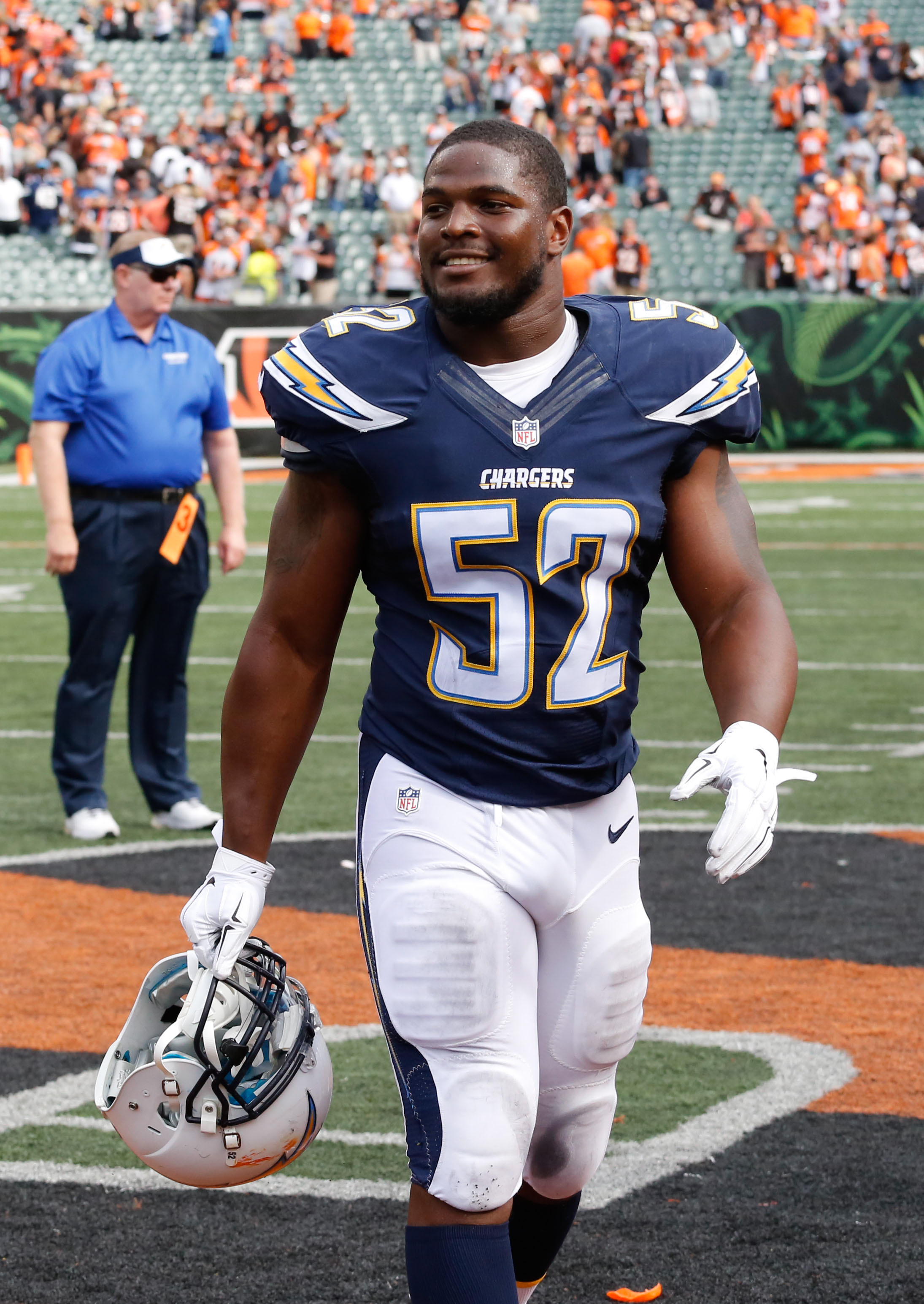
Although initial reports indicated Perryman could miss only four weeks (starting today), an MRI apparently showed a more severe injury and led to a longer timeline. If Perryman does indeed miss the first four weeks of the 2017, he’ll be absent for contests against the Broncos, Dolphins, Chiefs, and Eagles.
Perryman has been no stranger to injuries throughout his two-year career, as pectoral, shoulder, hamstring, and knee issues have sidelined him since he entered the league as a second-round draft pick in 2015. He’s been relatively effective when on the field, however, especially against the run. Last year, the 23-year-old Perryman started 11 games and played on 45% of the Chargers’ defensive snaps, racking up 71 tackles, two sacks, and grading as the league’s No. 43 linebacker in the process, per Pro Football Focus.
Los Angeles has the depth to withstand a Perryman absence, especially given that he was only expected to be a two-down player thanks to his lack of coverage abilities. Joshua Perry, a fourth-round choice in 2016, should take over as the Chargers’ middle linebacker in base packages, while outside ‘backers Jatavis Brown and Korey Toomer will stay on the field in nickel situations.
Chargers’ Mike Williams Eyeing Oct. Debut
The Chargers are eyeing an October debut for first-round pick wide receiver Mike Williams, Ian Rapoport of NFL.com hears. That’s a good sign for Williams considering that the team was uncertain about whether he would be able to play at all in 2017. 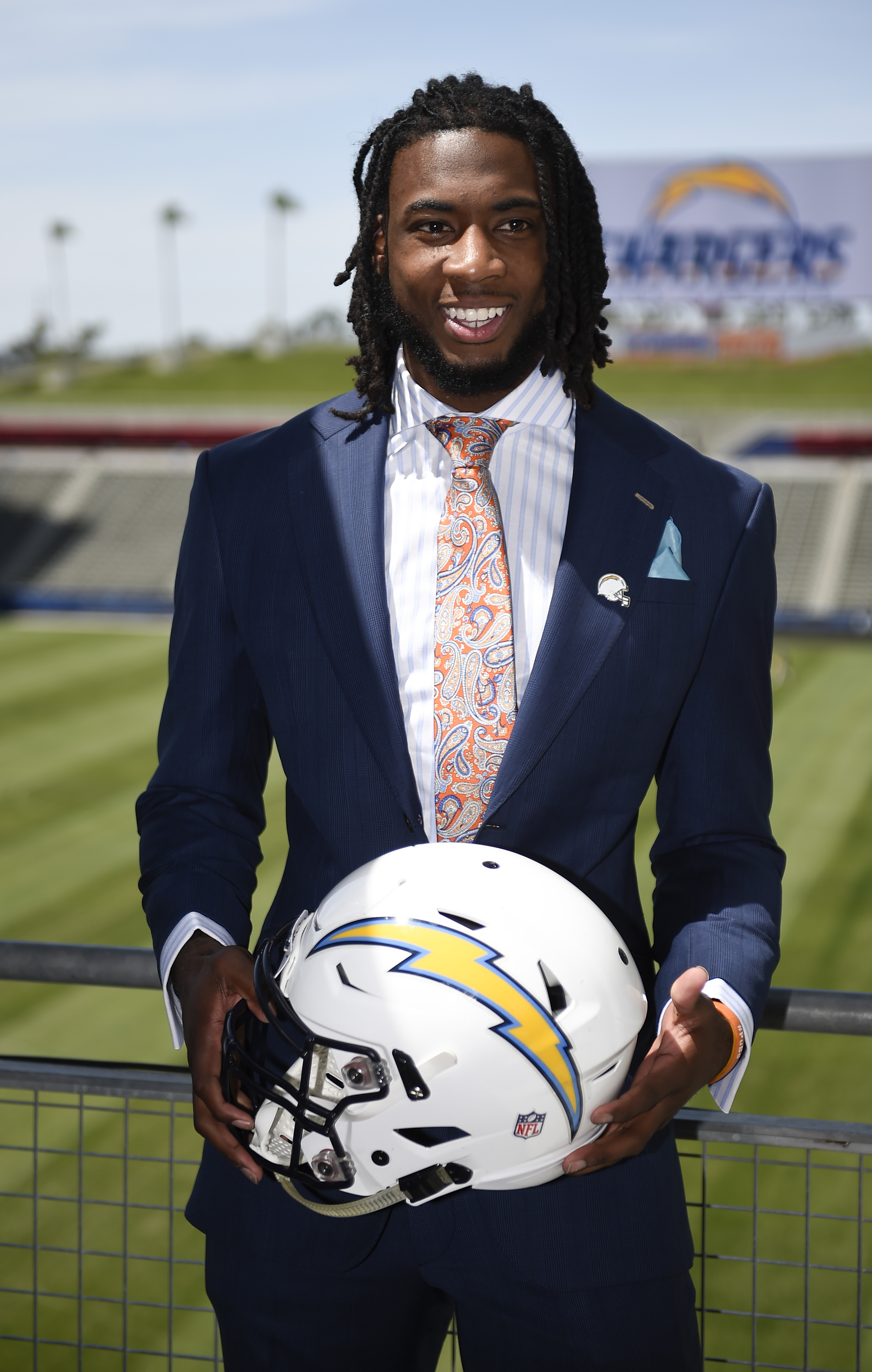
The Chargers selected Williams with the No. 7 overall pick in this year’s draft. Los Angeles is hoping to slot Williams in as the team’s No. 2 wide receiver this year, providing support to top target Keenan Allen. For however long he is out, the Bolts will have to rely more heavily on Travis Benjamin, Tyrell Williams, and Dontrelle Inman.
Los Angeles will be closely monitoring Williams over the next few weeks to get a better handle on his timeline. If Williams needs to rest until Week 7 (October 22 vs. the Broncos), then starting the season the PUP list could be the way to go. However, if they think he can take the field sooner, they may refrain from doing that.
Williams, a 6’4″, 218-pound receiver, turned in a 98-catch, 1,361-yard, 11-touchdown season in 2016. The Chargers are hoping to see what he can do at the next level sooner rather than later.