
Four NFL Teams Set To Receive Cap Space
Four teams are set to receive some cap space tomorrow due to post-June 1st cuts, as ESPN’s Field Yates points out on Twitter. Those clubs include:
- Bears: $1MM (Cody Parkey, story)
- Chiefs: $9.55MM (Eric Berry, story)
- Falcons: $6.45MM (Ryan Schraeder, story)
- Panthers: $7MM (Matt Kalil, story)
Way back in the day, our own Luke Adams explained all of the nuances of the June 1st designation. In simplest terms, a team’s salary cap can account for a released-player’s bonuses based on two separate time periods.
If a player is designated for release prior to June 1st, the remaining bonus money is immediately added to the upcoming year’s cap. Jason Fitzgerald of OverTheCap.com uses the 2013 release of Steve Breaston (Chiefs) as an example. The wide receiver only completed two years of his five-year contract, meaning he was only paid $2MM of his $5MM bonus. Therefore, since he was designated for release prior to June 1st, the remaining $3MM in bonus money was added to the Chiefs’ 2013 salary cap.
However, if the player is designated for release after June 1st, then the player’s current-year bonus remains the same for that respective year (in regards to the salary cap) . The rest of that bonus money would then be added to the following year’s cap. So, using Breaston as an example, if the Chiefs had designated him for release after June 1st, then the team would have seen his $1MM bonus money added to their salary cap in 2013. Then, in 2014, the remaining $2MM would be accounted for.
So why were teams announcing these releases prior to today? Well, the NFL allows each team to designate two players as a post-June 1st cut. This provides the player with more time to find their next gig. This was seemingly a concession by the teams, as they benefit via the salary-cap relief.
For the Bears, Chiefs, Falcons, and Panthers, this added cap space will be especially useful as they look to sign their draft picks or extend their current players. These teams could also be looking to clear some space for a free agent acquisition, as the Panthers are presumably doing for Gerald McCoy.
How The Bills Revamped Their Offensive Line In A Single Offseason
There’s little question offensive line continuity is an important facet of any winning NFL team’s success. As Thomas Emerick of the Sporting News and Rotoviz recently examined, many of the league’s best front fives – including the Eagles, Steelers, Colts, Ravens, and Bears — are set to return all five starters in 2019. Given that the offensive line is an extremely cerebral position group where all five members are consistently working as one, it makes sense that the most productive lines are those were familiarity is a constant.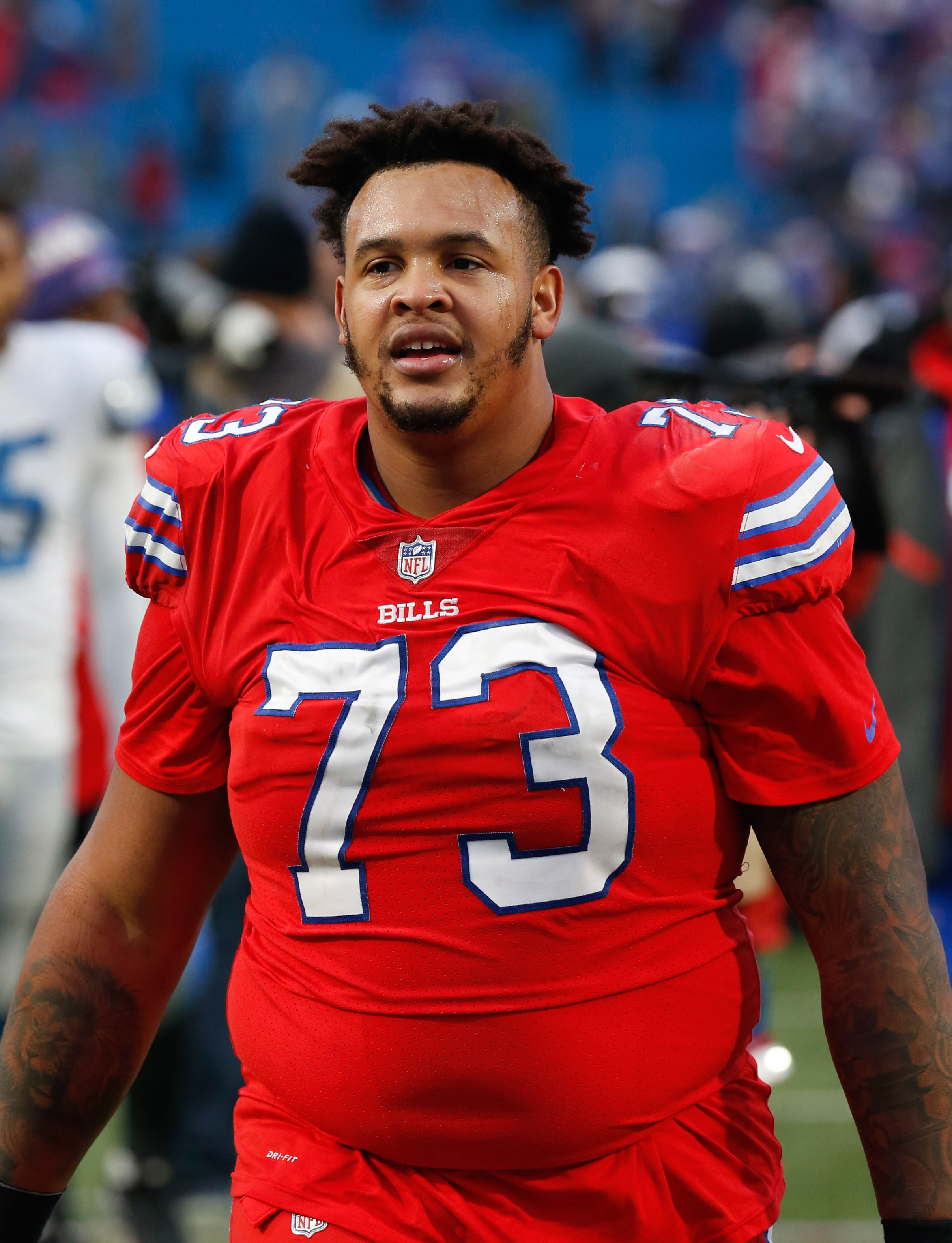
But what about when things go wrong? The 2018 Bills ranked 30th in adjusted line yards, Football Outsiders’ attempt to filter out what part of a team’s rushing performance can be attributed specifically to its linemen. While Buffalo finished in the middle of the pack with 41 sacks allowed, they ranked just 23rd in adjusted sack rate, which accounts for down, distance, and opponent. The Bills ended the season as a bottom-five club in pressure rate allowed, and Pro Football Focus listed Buffalo as a bottom-seven offensive line in overall grading.
The Bills’ struggles can’t be blamed on offensive line changes. As Vincent Verhei of FO wrote in April, Buffalo actually ranked 10th in offensive line continuity score, which factors in the number of starters a team used, the number of weekly changes to its front five, and the longest starting streak of any single five-man unit. The Bills can’t point to injuries, either, as they finished with only 5.5 adjusted games lost along their offensive line, sixth-best in the NFL.
So what exactly was the problem for the Bills’ line last season? Frankly, it was a question of talent. Buffalo didn’t have a single offensive lineman grade among PFF’s top-60 OLs, while only one — left tackle Dion Dawkins — ranked top-90 positionally. Non-starting-caliber players such as Russell Bodine, Jordan Mills, Vlad Ducasse, and Ryan Groy each played more than 500 snaps a season ago.
In order to rectify their offensive line issues, the Bills deployed an interesting offseason plan: throw everything against the wall and see what sticks. Buffalo struck quickly in February, signing interior veteran Spencer Long just a week after he’d been released by the division-rival Jets. Long is no world-beater, but he’s got 44 games worth of starting experience under his belt, can play center and both guard positions, and will cost less than $4MM against the Bills’ 2019 salary cap before a series of options kick in 2020-21.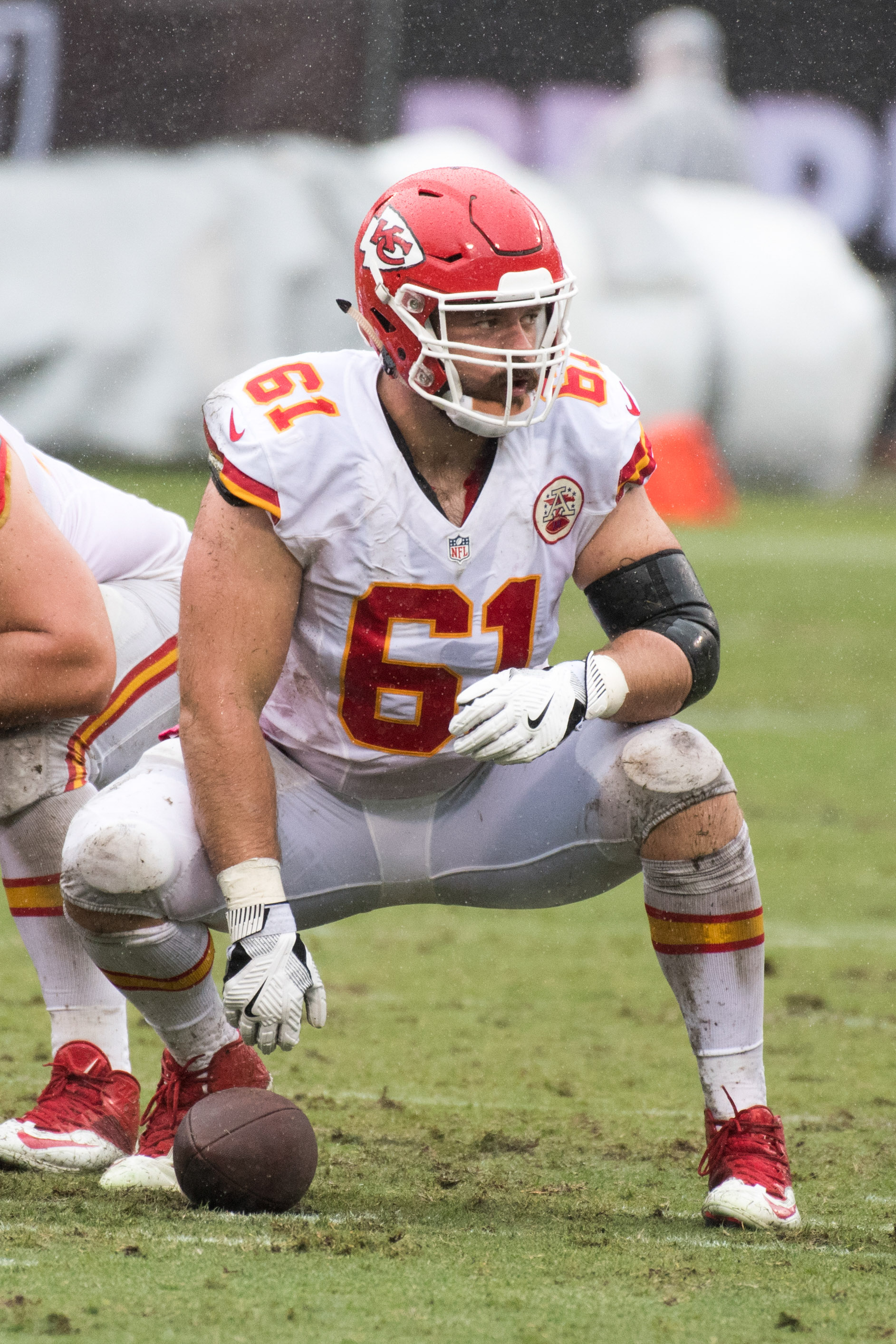
The Bills waited until the free agent market officially opened in March before making their big-ticket purchase, inking former Chiefs center Mitch Morse to a four-year, $44.5MM deal that made him the NFL’s highest-paid pivot. The 27-year-old Morse would prove to be Buffalo’s only high-priced addition to its front five, as the club wisely avoided an exploding offensive tackle market that saw Trent Brown reel in $16.5MM annually and Ja’Wuan James collect $12.75MM per year.
Instead, the Bills targeted mid-level veteran contracts to improve their offensive line, a strategy often employed by the Patriots (albeit typically at other positions). Buffalo stole tackle Ty Nsekhe from the rest of the league, signing the 33-year-old away from the Redskins on a two-year deal worth only $10MM. Nsekhe, who didn’t garner regular NFL playing time until he was 30 years old, sat behind two high-quality tackles in Washington but produced whenever he was called upon.
Buffalo didn’t stop there, and continued to add role players throughout the rest of March and April. Former Raiders backup Jon Feliciano came to town on a two-year, $7.25MM pact, tackle LaAdrian Waddle received a one-year, $2MM deal, and 48-game Titans starter Quinton Spain got one year and $2.05MM.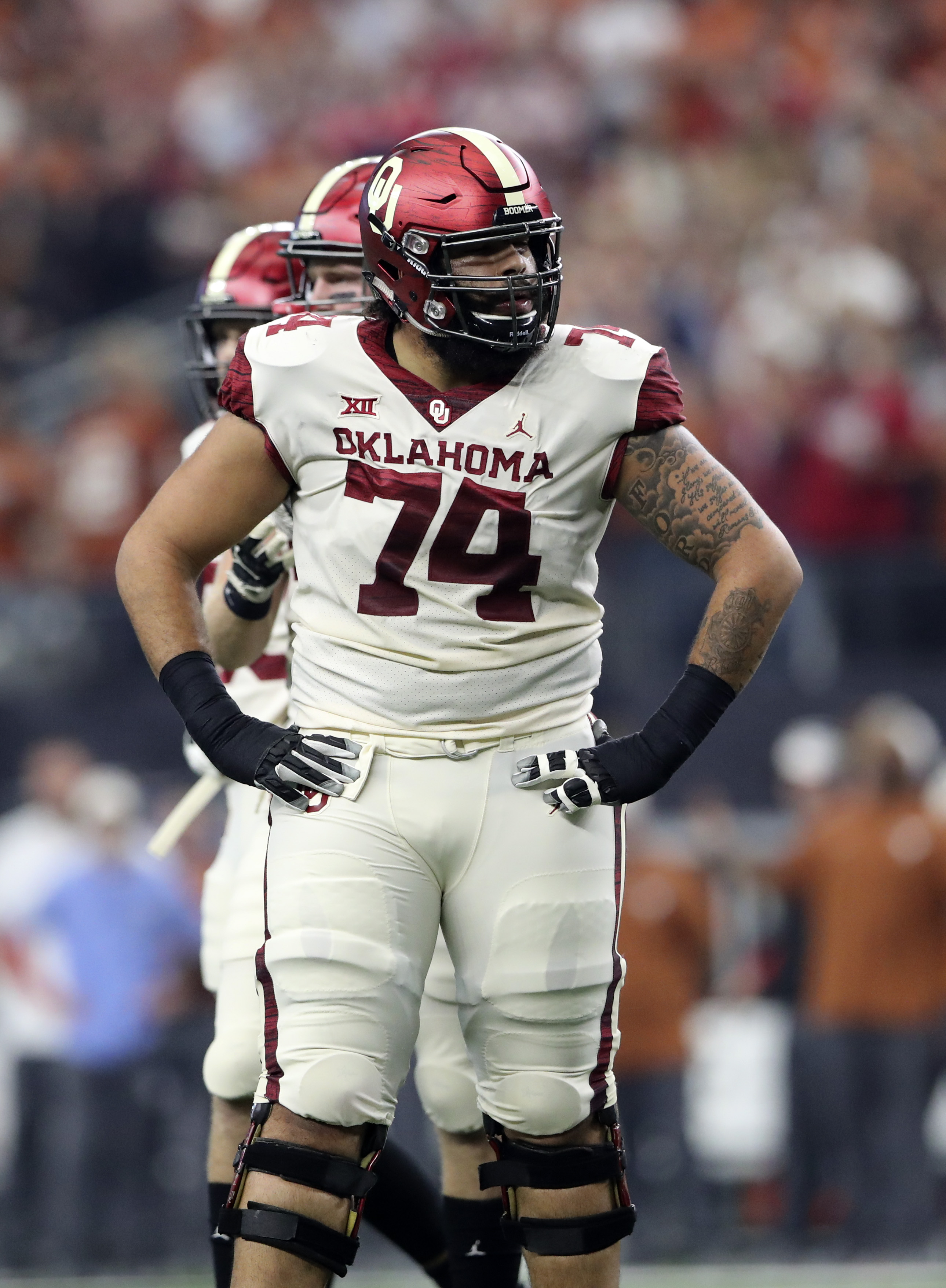
The Bills’ final offensive line improvement came in Round 2 of the draft, when general manager Brandon Beane moved up from No. 40 overall to No. 38 by trading the Raiders a fifth-round pick. That swap enabled Buffalo to select Oklahoma guard/tackle Cody Ford, a prospect whom many analysts had pegged as a first-rounder. In the Bills’ excellent behind-the-scenes draft video, Beane and his staff are seen attempting to trade back into Day 1 for Ford, expressing disappointment when they believed he was headed to the Panthers at No. 37, and registering elation realizing they’ll acquire the ex-Sooner.
Now that Buffalo has added seven offensive linemen capable of starting, the team has some decisions to make. Who exactly will play where? Morse, at center, is seemingly the only player locked into a certain position. At the Bills’ most recent practice sessions, the line has been Dawkins-Long-Feliciano-Wyatt Teller-Ford from left-to-right, but with both Morse and Spain battling injuries, that’s probably not a fair representation of what the front five will look like when the regular season begins. A more realistic guess at the 2019 starting unit might be, from left-to-right, Dawkins-Spain-Morse-Ford-Nsekhe.
An improved offensive line should do wonders for second-year quarterback Josh Allen, who struggled after being selected seventh overall in the 2018 draft. Allen finished 29th in adjusted net yards per pass attempt during his rookie campaign, and his 4.37 mark was the sixth-worst figure by a rookie signal-caller since 2011 (minimum 300 attempts).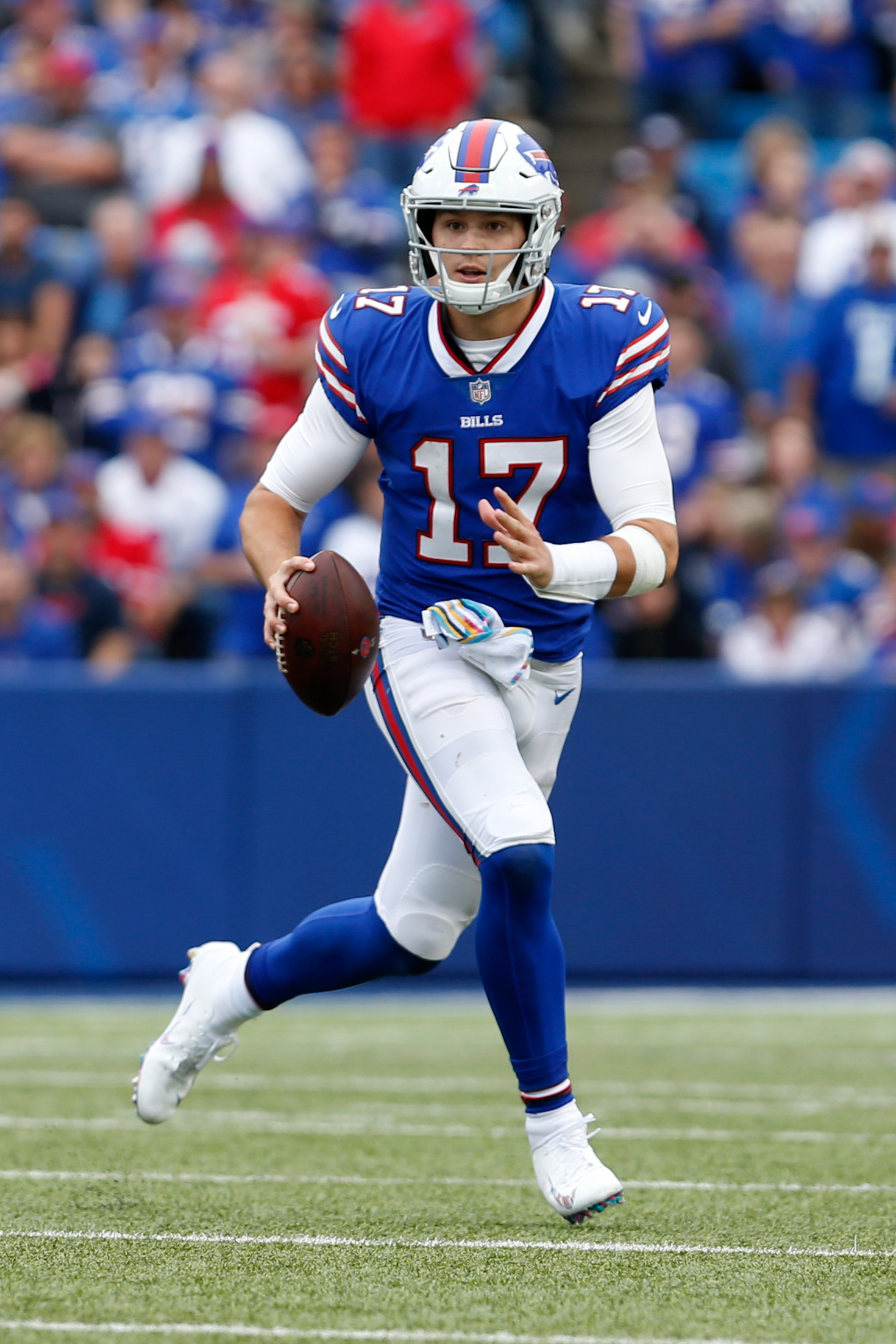
While Next Gen Stats charted Allen with the most time to throw in the NFL (3.22 seconds), that was likely a result of the Wyoming product’s scrambling ability — Allen’s legs allowed him to escape the pocket and continue the play until he could attempt a pass. Allen also led the league in both average intended air yards and air yards differential, meaning that while he was attempting a high number of deep throws, Allen wasn’t very effective with such passes. A more established pocket could allow the 23-year-old to go deep with greater efficiency.
And go deep he will. Allen showed late-season rapport with undrafted rookie wideout Robert Foster, who posted 19 receptions, 285 yards, and two touchdowns over the final four games of the season. Per PFF, Foster posted the highest average depth of target of any receiver who played at least 25% of his club’s offensive snaps. Free agent addition John Brown, signed to a three-year, $27MM contract, ranked sixth in aDOT.
Eric Eager and George Chahrouri of Pro Football Focus have researched the tremendous value of simply improving from replacement level to average along the offensive line. In fact, based on their wins above replacement metric, a team will realize a greater benefit from a front five going from below replacement level to average than it would from one that improved from average to elite.
That’s essentially the strategy the Bills have employed this offseason. No new member of their offensive line, not even Morse, qualifies as an elite level player. But Buffalo has significantly raised the overall floor of their offensive line, and could reap the benefits in 2019.
Photos courtesy of USA Today Sports Images.
200 NFL Draft Picks Have Signed
When Bengals fourth-round quarterback Ryan Finley inked his rookie deal on Thursday, he became the 200th member of the 2019 NFL Draft class to do so. With that, we have only 54 unsigned picks, meaning that nearly 79% of this year’s picks are officially under contract.
[RELATED: 2019 NFL Draft Results By Team]
Unsurprisingly, most of the remaining stragglers are third-round picks. Third round negotiations tend to drag since there is wiggle room when it comes to base salaries. In fact, only ten of this year’s 31 third-rounders have signed as of this writing: Cardinals defensive end Zach Allen, Bills running back Devin Singletary, Panthers quarterback Will Grier, Browns linebacker Sione Takitaki, Jaguars tight end Josh Oliver, Vikings running back Alexander Mattison, Patriots tackle Yodny Cajuste, Jets linebacker Jachai Polite, Steelers wide receiver Diontae Johnson, and 49ers wide receiver Jalen Hurd.
We also have 12 unsigned players in the first-round, which also doesn’t come as a shock. First round picks tend to have the most leverage, which means that agents will often haggle on issues such as offset language. Half of those unsigned first-rounders come from the Raiders and Giants, who have three first-round picks each. It’s possible that the agents for each player are playing a bit of a waiting game to see how the team’s other first-round picks fare when it comes to offsets.
Poll: Which 2018 Last Place Team Is Likeliest To Make Playoffs In 2019?
Turnarounds in the NFL often don’t take long. Unlike Major League Baseball, where prospects usually face a minimum promotion time of two years, new NFL players can make an impact during their respective rookie seasons. With more teams embracing the use of free agency and trades as avenues of player acquisition, it’s possible to improve a club year-over-year.
Worst-to-playoffs revamps happen nearly every season, and 2018 was no exception. A year after finishing last in the NFC North, the Bears and new head coach Matt Nagy rebounded to take the division crown. Meanwhile, the Texans and Colts both posted 4-12 records in 2017 before earning a postseason appearance this past season.
So, which last place team from 2018 will make a leap into the playoffs during the upcoming season? Let’s take a look at the candidates:
New York Jets
The Jets are searching for a new general manager after firing Mike Maccagnan, but they should be poised for an improvement on the field as 2018 third overall pick Sam Darnold heads into his sophomore campaign. Gang Green gave Darnold a few more weapons by signing running back Le’Veon Bell and wide receiver Jamison Crowder, but failed to augment an offensive line that ranked dead last in run-blocking and 18th in pass-blocking, per Football Outsiders. While New York could see a jump in their win total, will it be enough to overtake the Patriots?
Cincinnati Bengals
Although the Bengals didn’t make any splash additions during the offseason, they did attempt to address their porous offensive line by drafting Alabama tackle Jonah Williams (which will push incumbent blindside protector Cordy Glenn to guard), and signing ex-Bills guard John Miller. Improving their front five from “horrible” to simply “average” would be a win for the Bengals, especially as quarterback Andy Dalton enters a make-or-break year under new head coach Zac Taylor.
Jacksonville Jaguars
Among the clubs that finished in last place in 2018, the Jaguars have experienced the most recent success: as recently as 2017, Jacksonville finished 10-6 and was a few plays away from making a Super Bowl appearance. The Jaguars retained head coach Doug Marrone after last year’s 5-11 record, but quarterback Blake Bortles was cut, clearing the way for free agent signee Nick Foles. Rookie first-round edge rusher Josh Allen will join a defense that’s bringing back most of its key parts aside from linebacker Telvin Smith, who won’t play in 2019.
Oakland Raiders
The Raiders raised eyebrows by adding controversial locker room presences such as Vontaze Burfict and Richie Incognito this offseason, but they’ve also brought in talent at positions of import, such as wideouts Antonio Brown and Tyrell Williams, offensive tackle Trent Brown, and edge rusher Clelin Ferrell. The wisdom of drafting a running back (Josh Jacobs) and box safety (Johnathan Abram) in the first round notwithstanding, Oakland has undoubtedly augmented its roster. Whether the Raiders’ moves will be enough to overtake two of the AFC’s best teams in the Chiefs and Chargers is another question.
New York Giants
The Giants’ offseason has been…interesting. After trading away star pass-catcher Odell Beckham Jr. for pennies on the dollar, general manager Dave Gettleman made a number of questionable decisions in free agency and the draft. Big Blue handed Golden Tate a four-yar $37.5MM deal to replace OBJ, but Tate is best in the slot, a position already spoken for by Sterling Shepard. Gettleman then used the sixth overall selection on quarterback Daniel Jones, a prospect most analysts had pegged as a Day 2 selection, and the No. 17 pick on Clemson’s Dexter Lawrence, a run-stuffing defensive tackle who likely won’t be a full-time player.
Detroit Lions
One of only three last place teams to keep their head coach in place, the Lions actually finished with the highest Pythagorean win total (the number of games a club should win based solely on points scored/allowed) of any team on this list, per FO. Detroit went on a minor spending spree over the past few months, adding three former ex-Patriots: defensive end Trey Flowers, cornerback Justin Coleman, and wide receiver Danny Amendola. Even with regression expected for the Bears, it’s difficult to see the Lions overtaking Chicago, Green Bay, and Minnesota for the division crown.
Tampa Bay Buccaneers
The Buccaneers ranked as a top-12 offensive team in both expected points and DVOA despite trailing off at the end of season, and now they’re turning over their loaded passing unit to Bruce Arians. Scoring points shouldn’t a problem, so the onus will be on new defensive coordinator Todd Bowles to improve a unit that fell apart in 2018. New additions like Devin White, Shaquil Barrett, and Deone Bucannon will buttress a defensive backfield largely populated by first- and second-year players.
Arizona Cardinals
While they’re not necessarily expected to compete for the postseason in 2019, the Cardinals will certainly be a fascinating club to watch during the upcoming year. New head coach Kliff Kingsbury will bring some version of his Air Raid offense to the NFL, and Heisman winner/No. 1 overall pick Kyler Murray will be under leading the attack. Arizona’s draft garnered a wealth of “A” grades across the industry, so the future could be bright for the Cardinals, but they probably don’t have the talent to compete with the rest of the NFC West just yet.
So what do you think? Which of these last place teams is likeliest to earn a postseason berth — either as a division winner or a wild card club — in 2019? Link for app users.
2019 General Manager Search Tracker
The Jets and Texans commenced mid-offseason GM firings, with Mike Maccagnan and Brian Gaine respectively displaced from their posts. We’ll keep track of all developments related to these vacancies in this post.
Listed below are the GM candidates that have been linked to the Jets and Texans, along with their current status. If and when other teams decide to make general manager changes, they’ll be added to this list. Here’s the current breakdown:
Updated 6-16-19 (10:22 pm CT)
Houston Texans
- Nick Caserio, Patriots director of player personnel: No longer pursuing
- Ray Farmer, former Browns general manager: Interviewed
- Martin Mayhew, former Lions general manager: Interviewed
New York Jets
- Joe Douglas, VP of player personnel (Eagles) Hired
- Scott Fitterer, co-director of player personnel (Seahawks): To be interviewed on 5-30
- Terry Fontenot, director of pro scouting (Saints): To be interviewed on 6/1
- Champ Kelly, assistant director of player personnel (Bears): To be interviewed on 6/3
- George Paton, assistant GM (Vikings): Turned down interview 5/30
Poll: Which Rookie RB Will Rush For Most Yards In 2019?
Last year, the Giants pounced on the opportunity to take Saquon Barkley at No. 2 overall. The decision to use a high draft pick on a running back was panned by some, but, so far, things have panned out just fine. The Penn State product rushed for 1,307 yards, led the NFL with 2,028 total scrimmage yards, and averaged 5.0 yards per carry, despite the Giants’ overall offensive struggles. 
Barkley wasn’t the only gem in last year’s class – Sony Michel (Patriots, No. 31 overall), Nick Chubb (Browns, No. 35 overall), and Kerryon Johnson (Lions, No. 43 overall) all showed serious promise for the future.
This year’s crop of running backs is not believed to be on the same level, nor was there a consensus top RB like Barkley, which complicates projections for rookie production. A look at some of this year’s strongest contenders to lead the pack in rushing yards:
- Joshua Jacobs, Raiders: At No. 24 overall, Jacobs was the first running back taken in the 2019 draft. Even then, many in the football world felt that Mike Mayock & Co. reached for the Alabama product. Of course, after taking Clemson defensive end Clelin Ferrell No. 4 overall, the Raiders showed that they aren’t afraid of bucking convention. Jacobs rushed for just 640 yards in his final year on campus, which doesn’t necessarily point to major production as an NFL rookie. But, with Marshawn Lynch no longer in the fold, there’s a clear opportunity for Jacobs to shine, provided that he can get a larger share of work than Doug Martin.
- Miles Sanders, Eagles: Another running back was not selected until 29 picks later when the Eagles took Sanders towards the back end of the second round. Lauded for his size and power, Sanders has the potential to break tackles early and gut out the tough yards. On the other hand, he’ll have to push past newcomer Jordan Howard and last year’s leading rusher Josh Adams in order to carve out opportunities.
- Darrell Henderson, Rams: Could Todd Gurley‘s backup lead rookie RBs in rushing? Well, that depends on Gurley’s health, and there are plenty of question marks in that regard after the star’s disappointing finish to the 2018 season. Henderson had more touchdowns (22), yards (1,909), and yards per carry (8.9) than anyone else in this year’s draft class, so he could be one snap away from a monster freshman year.
- David Montgomery, Bears: With Tarik Cohen slotted for serious work in the passing game, the stage could be set for Montgomery to serve as the Bears’ top rusher. Montgomery topped 250 rushing attempts in each of his final seasons at Iowa State and averaged 4.7 yards per carry in his final collegiate campaign.
- Devin Singletary, Bills: LeSean McCoy is the man in Buffalo – for now. The Bills say they’re moving forward with McCoy, but if he’s released or traded, Singletary could easily edge Frank Gore and T.J. Yeldon for the starting gig. Singletary bombed at the combine, but his track record for powering into the end zone should make him a favorite of offensive coordinator Brian Daboll early on.
Will one of those five RBs take the crown, or will it be another rookie rusher? Vote in the poll below (link for app users) and back up your choice in the comment section.
This Date In Transactions History: Giants Release Ryan Clark
On this date in 2004, the Giants released former undrafted free agent Ryan Clark. The move didn’t make waves at the time, but it proved to be a missed opportunity for the G-Men.
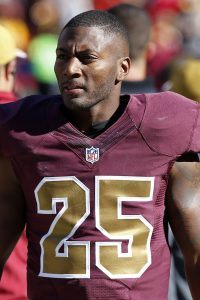 After going undrafted out of LSU in 2002, Clark spent two forgettable seasons with the Giants. The defensive back was relatively productive during his sophomore campaign (21 tackles, one sack, two passes defended in 16 games (four starts)), but he seemingly didn’t do enough to earn a longer look from the organization. On May 27th, 2004, the Giants let go of the young safety.
This ended up being a blessing in disguise for the Steelers, but it’d take several years to translate. After all, Clark initially caught on with the Redskins, who he’d play with for two seasons. Thanks to injuries to Matt Bowen and Andre Lott, Clark got an opportunity to start, and he ended up starting 24 games between 2004 and 2005. However, in a widely-panned moved, Washington ended up moving on from Clark after inking Adam Archuleta to a lucrative deal.
Clark then landed in Pittsburgh, where he’d spend the next eight years of his career. The safety started all but two of his games while he was with the Steelers, and he compiled at least 80 tackles for six straight seasons. Clark started all three postseason games for the Steelers en route to their Super Bowl XLIII victory, and he also helped guide the team to a Super Bowl loss during the 2010 campaign. He even made a Pro Bowl in 2011 after finishing with 100 tackles, one sack, five passed defended, and one interception.
By the time Clark ended up returning to Washington in 2014, he had earned a spot on a couple of the Steelers all-time top-1o lists, including tackles (10th – 448) and passes defended (8th – 44). Still, if the Giants had decided to give the safety a longer look, who knows if Clark would have ever found his way to Pittsburgh.
Photo courtesy of USA Today Sports Images.
PFR Originals: 5/19/19-5/26/19
The original content and analysis produced by the PFR staff during the past week:
- As part of our ‘this date in transactions history’ series, Ben Levine took a look at the Dolphins’ decision to sign cornerback Will Allen to a two-year, $16.2MM extension in 2009. His promising career was quickly derailed due to an arrest and an ACL tear, and he ended up not playing a single game under the terms of his new extension.
- After his recent release, the biggest name left on the free agent market is Gerald McCoy. In a quiet period for the league, all eyes are on McCoy and where he will sign. Micah Powell ran through some of the options and asked readers in a poll where they think McCoy will end up signing. As of right now the Browns are in first place, with 22.49 percent of the vote.
- Speaking of polls, Ben also examined the known candidates for the Jets’ GM job, the other big developing story in the NFL right now. The Jets have been taking their time with Adam Gase currently installed as the interim GM, and Eagles executive Joe Douglas won the vote with 36.4 percent.
- Also as part of our ‘this date in transactions history’ series, Zach Links looked back on the Broncos’ signing of Jerry Rice. Rice’s career is so legendary, that people often forget he briefly spent some time in Denver. He signed with them back in 2005, but ended up retiring before the season started after realizing he wouldn’t have a huge role with the team.
- Zach also wrote about the Cowboys’ signing of Randy Gregory to his first contract, and reflected on his tumultuous career. Gregory was viewed as a top-ten talent, but fell to the second round due to off-field concerns. Those concerns turned out to be valid, as Gregory has been suspended several times. He most recently was banned indefinitely after this past season, although the Cowboys are sticking by him.
- Another big story around the league right now is the standoff between Chris Harris and the Broncos. The star cornerback is demanding a new contract and staying away from the team, and there’s been a lot of buzz about a potential trade. Sam Robinson asked readers how the situation will play out in a poll, and despite all the trade talk readers seem to think an extension will be reached at some point.
This Date In Transactions History: Will Allen
In 2009, Will Allen was coming off three productive seasons with the Dolphins, and he was quickly establishing himself as one of the most reliable cornerbacks in the NFL. On May 26th, the cornerback signed a two-year, $16.2MM extension ($10MM guaranteed) with Miami… and he proceeded to play zero games under his new deal.
With one year still remaining on his contract, the deal was set to kick in during the 2010 campaign and would last through 2011. Allen looked like he was worth the money during the first chunk of the 2009 season, compiling 21 tackles, two interceptions, and six passes defended. It quickly went down hill for the defensive back, however, as he tore his ACL in a Week 6 matchup with the Saints, ending his season. That offseason, Allen was arrested and charged with driving under the influence after nearly blowing through a police roadblock.
Then, one week before the 2010 season (the season when his new contract was set to kick in), Allen was placed on the IR with a knee issue. To stick around Miami for the 2011 campaign, the defensive back had to rip up his lucrative deal and settle for a new, one-year contract that paid significantly less than the $5.5MM he was set to make. However, the veteran was ultimately released from this new deal prior to the start of the regular season.
Allen ended up catching on with Miami again in mid-September, and he ultimately compiled 43 tackles and three passes defended in 15 games. However, the team technically ended up getting zero production out of their initial $10MM investment.
Poll: Who Should Jets Hire As GM?
It’s been 10 days since the Jets suddenly fired general manager Mike Maccagnan, leaving a major hole atop their front office. Yesterday, we finally got some clarity on definitive candidates, as the organization requested interviews with Eagles executive Joe Douglas and Bears assistant director of player personnel Champ Kelly.
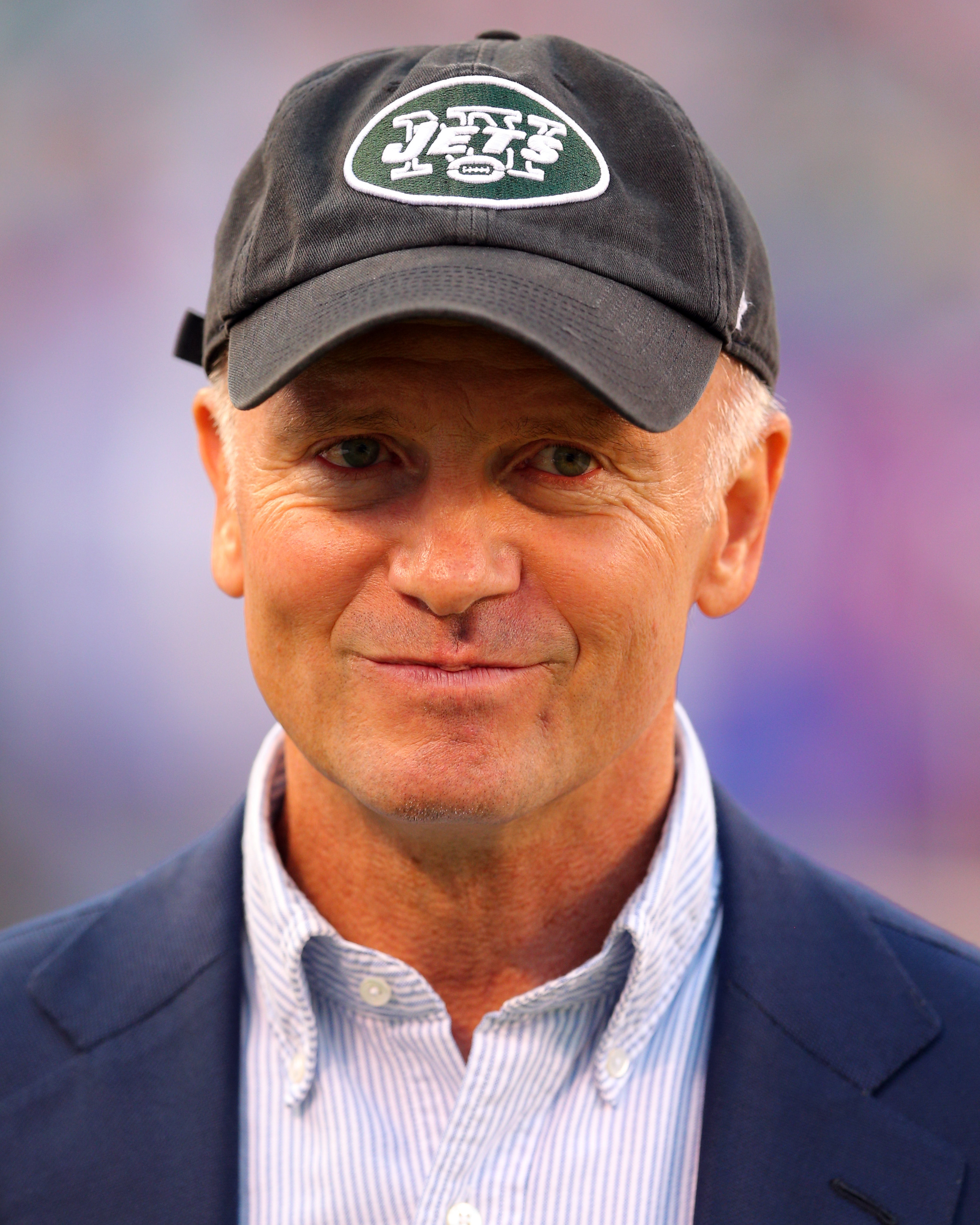 Following reports of tension between Maccagnan and head coach Adam Gase, Kelly would seemingly be a good choice. The two have a history that dates back to their tenures with the Broncos, with Denver earning four division titles during Kelly’s five seasons as Assistant Director of Pro Personnel. Kelly also played a role in signing eight veteran free agents who would go on to earn Pro Bowl nods with the Broncos.
The executive has spent the past four years with the Bears, including the last two as the team’s Assistant Director of Player Personnel. In this role, Kelly has directed both Chicago’s pro personnel and college scouting departments. Kelly was one of the Fritz Pollard Alliance’s recommended GM candidates this offseason, but he didn’t get an interview in the thick of the cycle.
Despite Gase’s connection to Kelly, Douglas is reportedly his top choice for the position. Douglas spent the past three seasons as the Eagles’ vice president of player personnel, and he played a major role in constructing the Super Bowl LII-winning roster. Douglas had a brief stint with the Bears in 2015 after having spent the previous 16 years with the Ravens. Douglas is expected to be choosy when it comes to his next opportunity. Many pundits are questioning the Jets’ power structure given the timing and nature of Maccagnan’s firing, so it’s uncertain if Douglas would be willing to take on the challenge.
Besides Kelly and Douglas, the Jets have also been connected to Peyton Manning. Following Maccagnan’s firing, there were rumblings that the Jets were eyeing the future Hall of Fame quarterback for the open GM gig. However, subsequent reports have indicated that the notion of Manning becoming the Jets’ GM is “unrealistic,” with a source stating that being an NFL GM is “not a job he seems to want.”
Of course, there’s also Gase, who earned the interim GM tag following Maccagnan’s ouster. The head coach has been relatively busy since taking on the job; he’s moved on from a pair of former draft picks (tight end Jordan Leggett and linebacker Darron Lee), and he’s added wideout Deonte Thompson. There were reports that Gase was opposed to Le’Veon Bell‘s lucrative contract, and the organization’s apparent trust in their head coach indicates that he’ll surely have a say in future transactions (assuming he doesn’t maintain the GM role).
There are a number of additional candidates who could emerge in the coming days. We learned earlier this week that Gase would be receptive to a number of GM hires, including the 49ers’ Adam Peters and the Lions’ Lance Newmark. Additionally, Jets ownership is believed to “think highly” of Vikings exec George Paton.
So that brings us to today’s question: who should Christoper Johnson hire as the team’s next GM? Should they bring on Douglas, Kelly, or another executive from outside the organization? Should they take a flyer on Manning, who has no front office experience? Should they allow Gase to maintain control over the 53-man roster?
Vote in PFR’s latest poll and weigh in with your thoughts in the comments section.