
This Date In Transactions History: Broncos QB Drew Lock Signs Rookie Contract
On this date two years ago, Drew Lock signed his first NFL deal. On July 17, 2019, the second-round pick signed his rookie contract with the Denver Broncos.
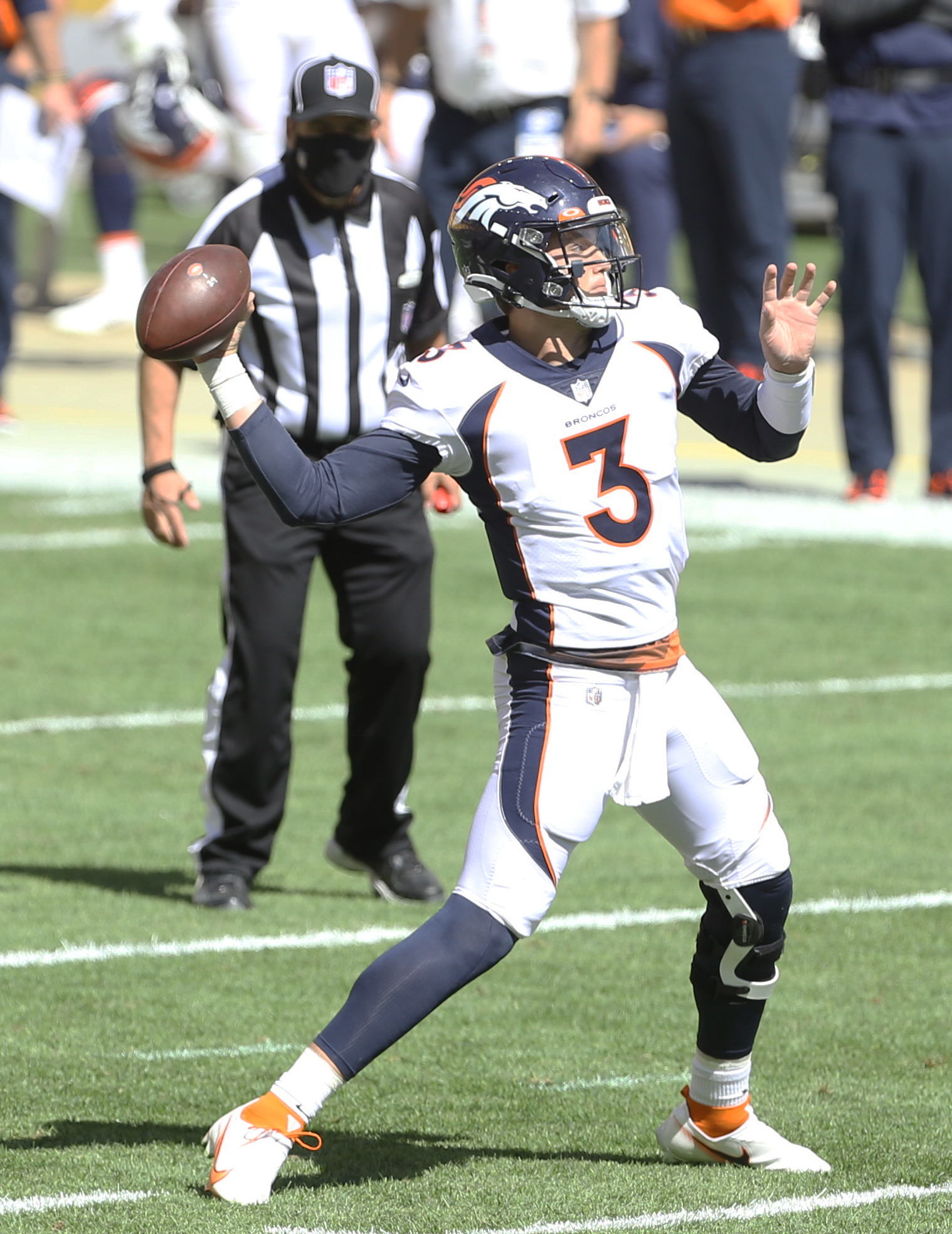 By the 2019 offseason, John Elway was preparing for his third attempt to find Peyton Manning‘s long-term successor. His first two swings (2012 second-round pick Brock Osweiler and 2016 first-round pick Paxton Lynch) hadn’t worked out, and after the Broncos completed their third-straight losing season, Elway was willing to give it another go.
Unfortunately for Elway, the 2019 draft wasn’t known for its QB depth. Outside of presumed number-one pick Kyler Murray, there were only a handful of alternatives (Daniel Jones, Dwayne Haskins, Lock) with a first- or second-round grade. So, instead of reaching for someone with the No. 10 pick (or trading up for Jones), Elway decided to trade back in the first round and later trade up in the second to select Lock.
Lock was a worthy choice at No. 42. The Mizzou product finished his collegiate career with 99 touchdown passes — including 44 as a junior — and 12,193 yards, and he earned All-SEC honors in both 2017 and 2018. Thanks to that performance, Lock’s camp seemed to think that he was worthy of a first-round salary (or at least more than the allotted salary for an early-ish second-round pick). Lock’s agent was reportedly seeking a “quarterback premium,” which meant they wanted more money than the draft slot dictated.
However, the two sides ultimately came to an agreement on this date in 2019. The Broncos didn’t end up giving into any demands of an overslot deal; the team gave Lock the same workout bonuses as their other second-round pick (Dalton Risner), and the quarterback’s $3.1MM signing bonus was the standard amount for the No. 42 slot.
Declining to overpay Lock may have been a wise decision by the Broncos front office. While Lock impressed a bit after replacing Joe Flacco during his rookie season (4-1 record, 7 touchdowns vs. three interceptions), he struggled during his first full season as a starter in 2020. The quarterback guided Denver to a 4-9 record in 13 starts, connecting on 57.3-percent of his passes for 2,933 yards, 16 touchdowns, and an NFL-high 15 interceptions.
2021 will surely be a make-or-break season for the 24-year-old, and he probably won’t see as long of a leash during the early parts of the season. For starters, head coach Vic Fangio is likely fighting for his job, and secondly, the organization has a serviceable backup plan with veteran Teddy Bridgewater. Further, the organization recently hired GM George Paton, and if the Broncos struggle in 2021, there’s a good chance the front office will be looking to bring in their own young QB.
As always, there was plenty of optimism surrounding Lock’s signing on this date in 2019. However, fast forward two years, and the second-round QB is now struggling to retain his starting gig.
Poll: Who Will Be First Head Coach To Lose Their Job?
We know, we know…it’s probably a bit early to speculate about the job security of NFL head coaches. However, let’s not forget Bum Phillips‘ famous (supposed) quote: “There’s two kinds of coaches, them that’s fired and them that’s gonna be fired.”
 [RELATED: The Longest-Tenured Head Coaches In The NFL]
Even with the start of the NFL season more than a month away, a handful of head coaches already find themselves on the hot seat. Nowadays, it isn’t all that hard to determine which head coaches are at risk of losing their jobs. You can pretty much remove the 12 first- and second-year coaches, and you can definitely remove the successful, long-term coaches (the likes of Bill Belichick, Sean Payton, etc.).
That leaves about 15 coaches with at least two years of tenure but fewer than eight years of tenure (yes, we chose eight to shoehorn Andy Reid into the “definitively safe” section but not the likes of Mike Zimmer). Have those coaches had successful teams? You can remove them from the list. Have those coaches continually shown improvement? You can probably remove them from the list, too. Have those coaches’ teams disappointed or underwhelmed, especially recently? Ding ding ding…those are the coaches on the hot seat.
As we all know, those on the hot seat either redeem themselves and save their jobs or…ultimately get canned. So, that brings us to today’s question: which head coach will be fired first? We used Bovada’s top-three options below, but we’d like to hear your thoughts in the comments.
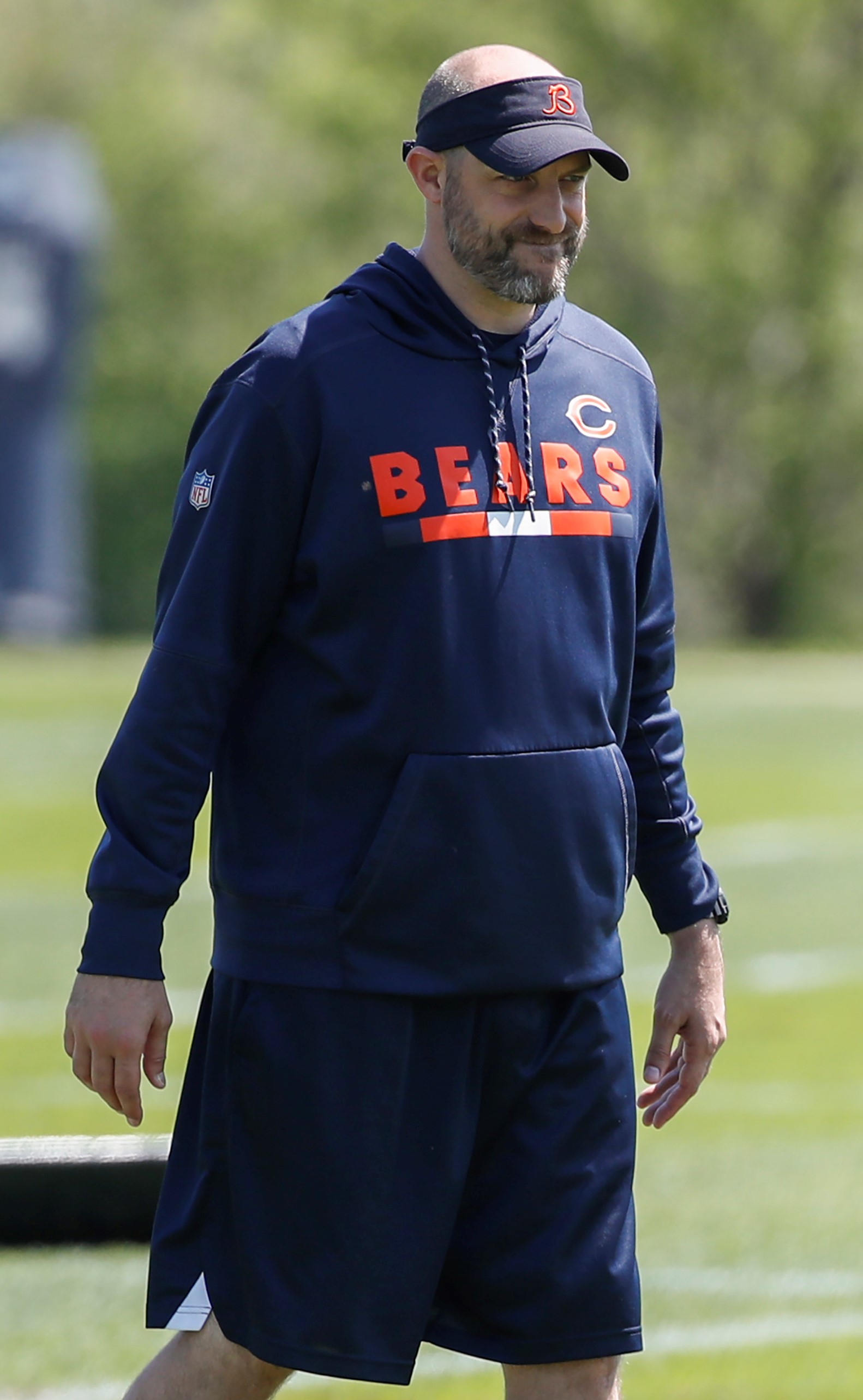
Matt Nagy, Bears
Following a 12-4 campaign to begin his coaching career, Nagy found his seat getting a bit warm following a disappointing 8-8 campaign in 2019. The former Chiefs offensive coordinator didn’t do a whole lot to inspire confidence in 2020. The team finished 8-8 for a second-straight season, and the former QB whisperer found his passing offense ranking in the bottom-half of the NFL in most categories.
The Bears finally bailed on Mitchell Trubisky this past offseason, and they added a pair of QBs to replace him: veteran Andy Dalton and first-round pick Justin Fields. With a solid defense that’s in win-now mode, Nagy will have to get something out of one of these signal-callers if he hopes to retain his job. Considering Dalton’s recent play and Fields’ inexperience, things are looking bleak.
Zac Taylor, Bengals
It’s easy to put an asterisk on the Bengals’ 2020 campaign following the season-ending injury to Joe Burrow, but there’s no denying that Taylor’s staff has now collected an ugly 6-25-1 record through two seasons. There’s really nowhere to go but up for the head coach, but even if the Bengals improve their record in 2021, the team would still have to pass the smell test. Specifically, we should expect the offensive guru to guide Burrow and the rest of the offense to at least an above-average performance, and it’d be encouraging if the defense was able to show some progress after finishing as one of the worst units in the league in 2020.
As we saw with Marvin Lewis, the Bengals organization values continuity. It’s hard to envision the team not giving Taylor at least another full season, but if the team is unable to show any improvement over 2020, then the 38-year-old could find himself without a job.
Vic Fangio, Broncos
There are a number of things working against Fangio and his future in Denver. For starters, he hasn’t done a whole lot during his two seasons at the helm, leading the team to a 12-20 record. Making it worse, the team took a clear step back in 2020, and with a questionable roster on paper, it’s hard to envision the Broncos getting a whole lot better in 2021.
Next, GM George Paton was only recently hired, so he surely won’t be feeling pressure throughout the 2021 season. However, a disappointing campaign could change things. In that hypothetical, you can bet the executive would be looking to right the ship immediately, and that would probably start with the head coach.
The final factor is the uncertain status of Broncos ownership. If the team is ultimately sold, the new owners would presumably be looking to clean house, at least from an on-field perspective. That means Fangio would surely be handed his walking papers, even if the team did show some progress in 2021.
Poll: Who Will Be First Head Coach To Lose Their Job?
-
Matt Nagy, Bears 34% (1,054)
-
Vic Fangio, Broncos 34% (1,053)
-
Other 18% (566)
-
Zac Taylor, Bengals 13% (407)
Total votes: 3,080
For reference, the next four head coaches listed by Bovada are Jon Gruden (Raiders), Mike Zimmer (Vikings), Matt LaFleur (Packers), and Mike McCarthy (Cowboys). Let us know what you think in the comments below!
Latest On Future Of Broncos Ownership
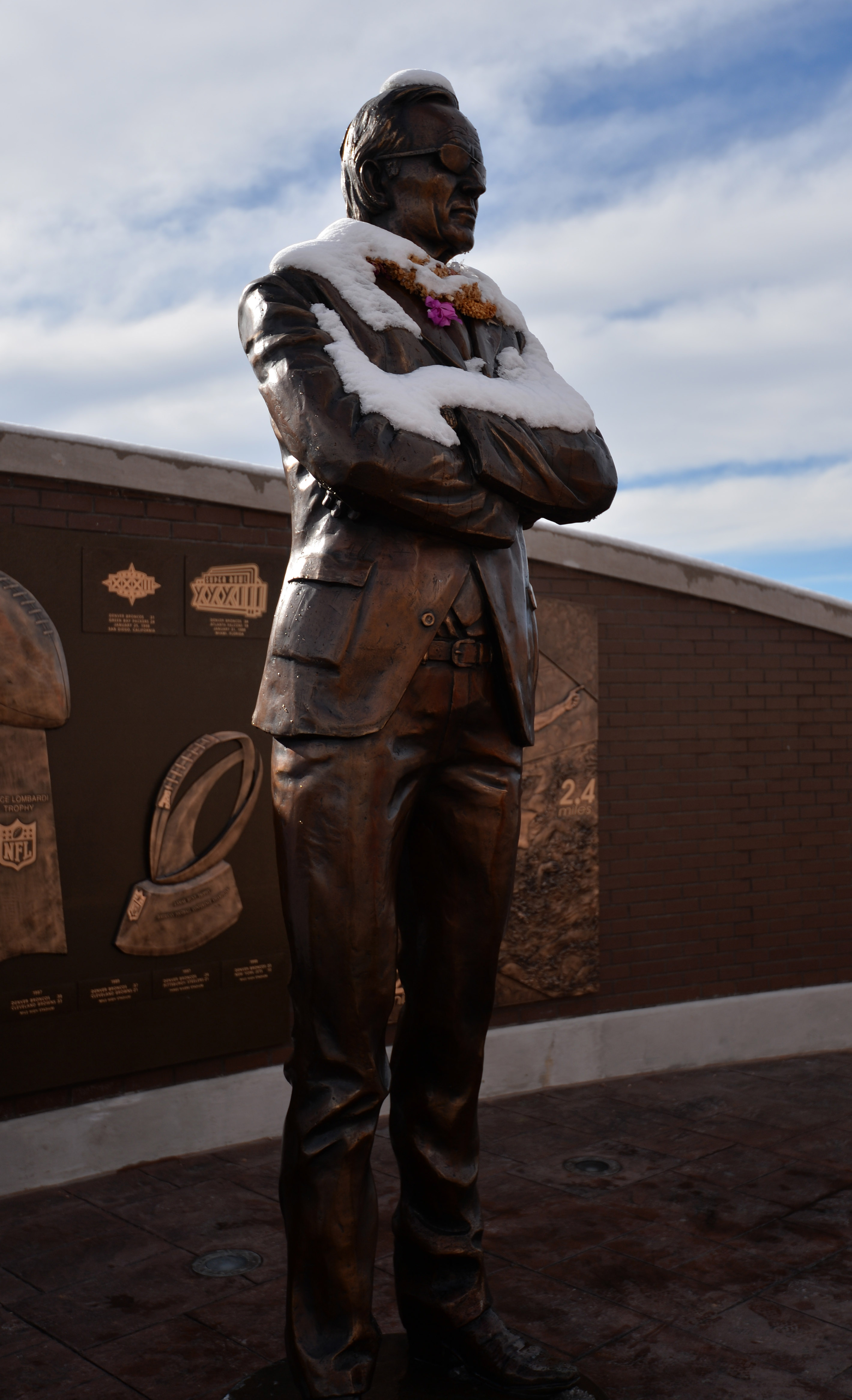
The lawsuit filed by two of late Broncos owner Pat Bowlen‘s daughters has been dismissed, per Mike Klis of 9News.com. The trial was intended to clarify and finalize Bowlen’s estate, including the future ownership status of the Broncos organization.
 [RELATED: Peyton Manning Discusses Potential Future Role With Broncos]
Following Pat Bowlen’s death, it was widely assumed that Brittany Bowlen would be the one of Bowlen’s seven children to take over ownership of the franchise. Brittany Bowlen seemingly had the support of the Pat Bowlen Trust, a group that includes Broncos CEO Joe Ellis. However, two of Pat’s daughters from an earlier marriage, Amie Klemmer and Beth Bowlen Wallace, filed a lawsuit challenging their father’s mental capacity to approve the Trust. The lawsuit specifically names Ellis, Broncos executive Rich Slivka, and attorney Mary Kelly as members of the Trust who influenced Pat Bowlen’s decision.
We learned recently that the trial had been vacated after both sides filed a joint motion. Today’s development was the natural next step, although we haven’t heard any word about a potential settlement. Klemmer and Wallace previously stated that selling the organization could be the only resolution; while there’s a chance that the dismissed trial means they’re effectively conceding that Brittany Bowler will take over ownership, it could also hint that a sale is imminent.
In a statement to 9News, Ellis didn’t seem to hint at one particular route, but he did seem to imply that the two sides are still working towards a resolution:
“Regarding the future of the Denver Broncos’ organization, our No. 1 priority remains a timely, responsible and orderly determination of ownership,” Klis said. “There are no changes with the operation of the team, which is completely focused on a successful 2021 season.”
Peyton Manning Discusses Potential Future Role With Broncos
Despite spending only four seasons in Denver, Peyton Manning established himself as a Broncos legend, with the QB guiding the organization to four division titles, two Super Bowl appearances, and one Super Bowl championship.
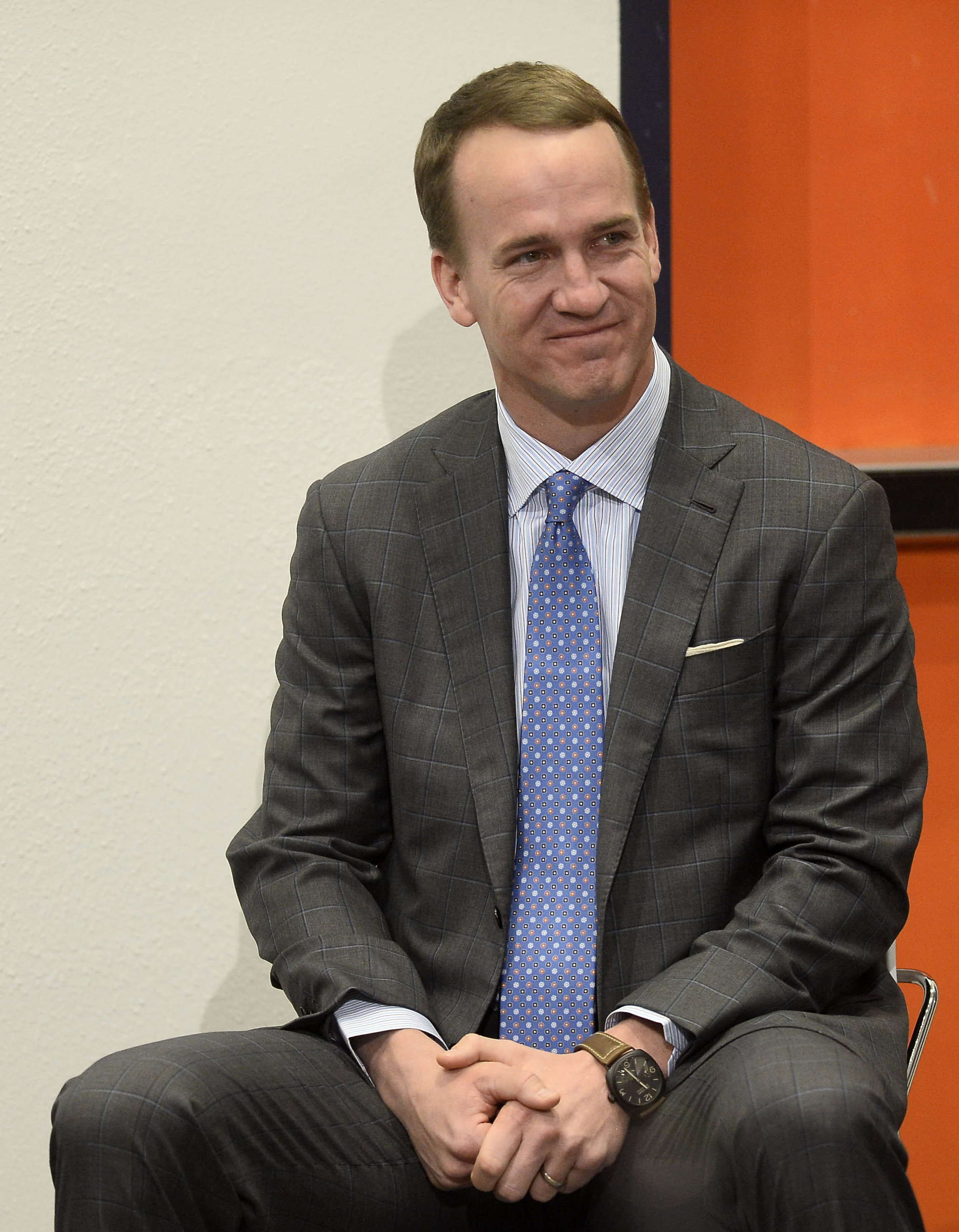 Since Manning decided to retire following the 2015 campaign, the Hall of Famer has still maintained a consistent presence within the organization, leading some to wonder if he’d ultimately take a role in the Broncos’ front office. While Manning has yet to officially rejoin the organization, he told Mike Klis of 9News in Denver that he’d certainly be interested in an official reunion.
“I am as interested in what’s going to happen as anybody because I care about it,” Manning said.“…I’ve gone on a year-to-year basis in this 2nd chapter. I’m going to try to do this, this year. I don’t go past that because you try different things and maybe you like it, maybe you don’t. I will always be a part of the Broncos and Colts organizations in some way. But I’m interested in what’s going to happen. I haven’t said no to anything officially forever. I’ve just said no to some things each year. The next year, maybe things change. So, who knows what will happen in that.”
Specifically, Manning was referring to the current squabble in Denver regarding ownership. We heard recently that the trial between several of the children of late Broncos owner Pat Bowlen‘s is off, and it could ultimately result in a sale of the organization. Manning would presumably prefer to see how that ordeal is resolved before he commits to an official role, but it certainly sounds like he’s receptive to some kind of gig down the road.
Von Miller Discusses Long-Term Plans, Recovery From Ankle Injury
Von Miller‘s Pro Bowl run and dominant showing in the 2015 playoffs placed him on course to be a Hall of Famer. The Broncos’ all-time sack leader, however, hit a road block last year in the form of a severe ankle injury wiping out his entire 2020 season.
The 10-year veteran has said in the past he did not have retirement on the immediate horizon. Now 32 and coming off a major injury setback, Miller reaffirmed that stance and added some clarity to his post-injury career outlook.
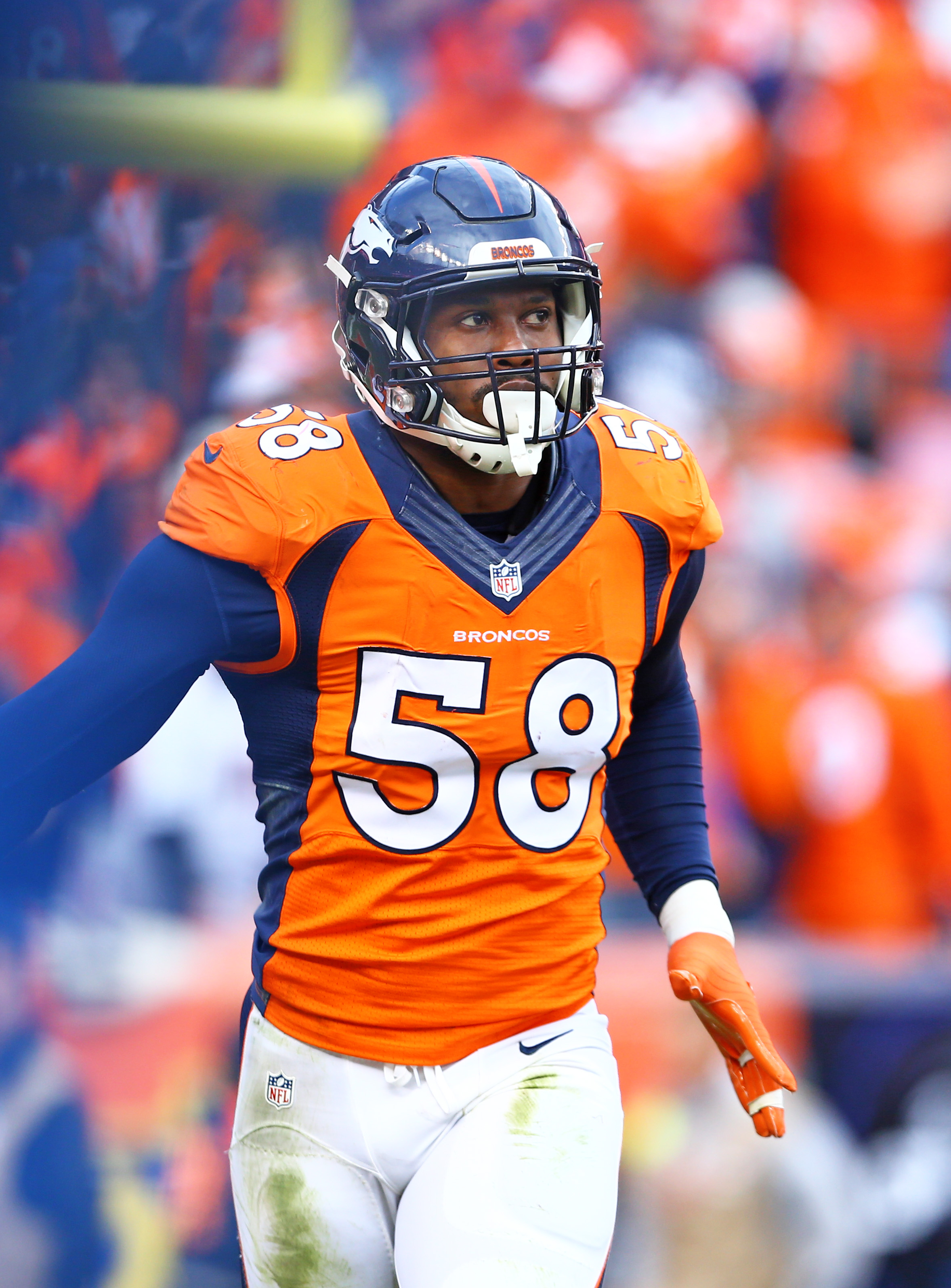 “I’ve got a son. He’ll be here in about three or four weeks. I definitely want him to be able to see me play. That’s going to take about five to seven years,” Miller said, via Mike Klis of 9News. “That’s what I have on my heart. That’s what I have on my mind: another five to seven years.”
Despite rumors the Broncos would force Miller to take a pay cut to return in 2021, new GM George Paton picked up his 2021 option in March. Miller is set to play out his then-record six-year, $114.1MM contract; he will make $17.5MM in base salary this season. The Broncos have not had both Miller and Bradley Chubb line up together since Week 4 of the 2019 season. Denver picked up Chubb’s fifth-year option in March, and Paton views the 2018 first-round pick as a building-block player. It is unclear where Miller fits in long-term, but he has long professed a desire to stay in Denver.
A number of edge rushers have played into their late 30s, with Julius Peppers, Terrell Suggs and Dwight Freeney establishing a modern-era foundation for such longevity. Miller, who is 8-for-8 in Pro Bowls in seasons in which he finished, returned from a December 2013 ACL tear with a 14-sack 2014 season. Without contract certainty beyond 2021, the former Super Bowl MVP enters a key season to re-establish his run as one of the league’s best pass rushers.
A dislocated peroneal tendon just before the 2020 season sidelined Miller, who underwent surgery shortly after. He participated in Denver’s offseason program and is nearly back to full strength.
“I’m feeling good. My ankle is about 94%,” Miller said. “The 6% I got to get I got to get rushing the passer in practice with pads on, leaning on guys, guys leaning on me. I haven’t rushed the passer in over year. Haven’t played in a game in longer than that.”
Poll: Which Rookie Running Back Will Finish With Most Rushing Yards?
Quarterbacks, per usual, dominated this year’s pre-draft coverage. The Falcons made Kyle Pitts the highest-drafted tight end in NFL history, and four wide receivers then went off the board in the top 20. Running backs, as they have done in a few drafts over the past decade, waited.
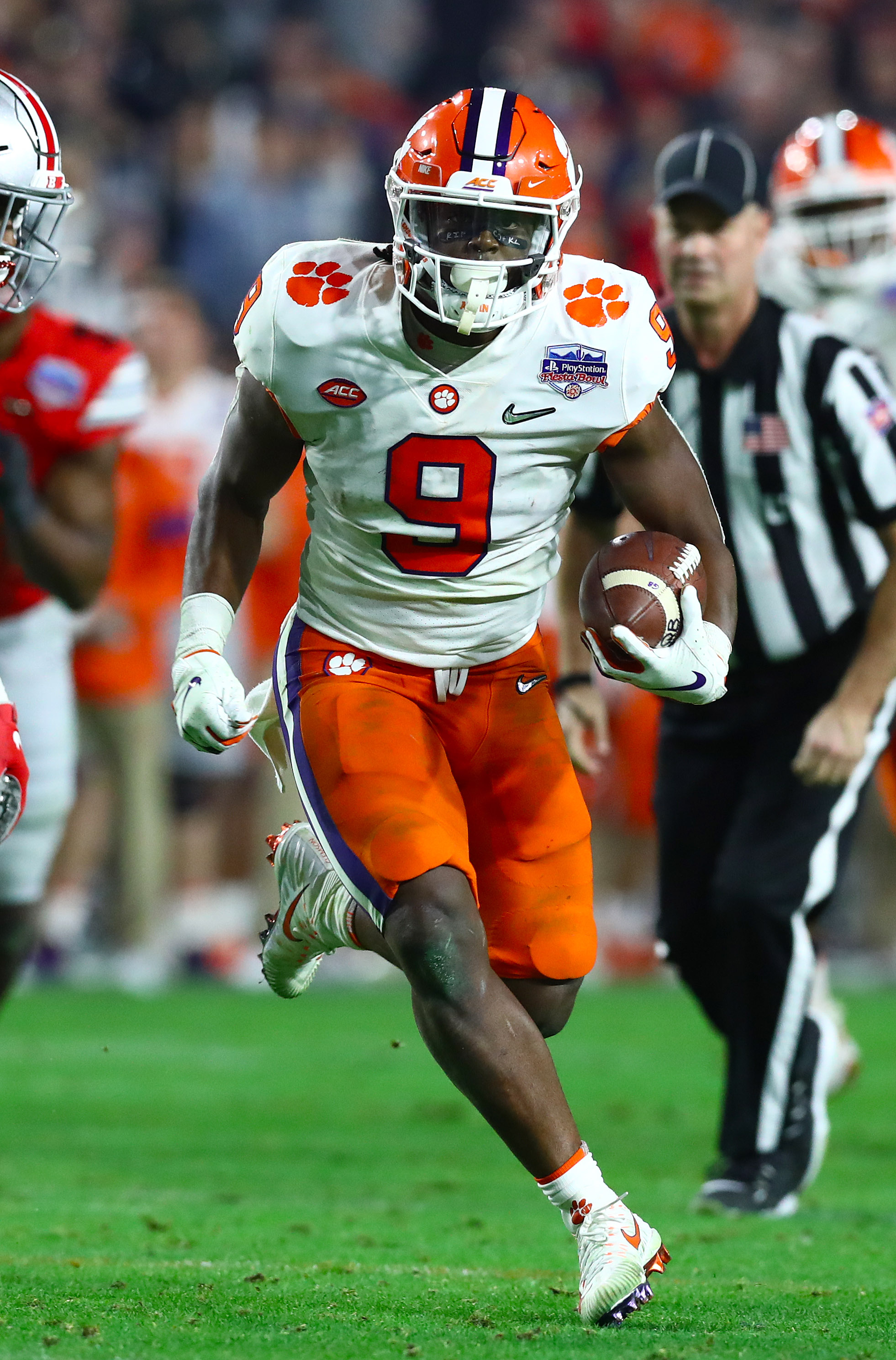 While two went in Round 1, the Jaguars’ Travis Etienne pick preceded a 60-pick stretch during which just one running back — the Broncos’ Javonte Williams choice — went off the board. The 2021 draft matches 2016 and 2003 for the fewest backs chosen in the top 80 (three) in the common draft era (1967-present), continuing a grim era for this once-storied position. But several of this year’s draftees have quick paths to key roles.
Linked to Najee Harris ahead of the draft, the Steelers took the Alabama standout at No. 24. Harris will join a Steelers team that ranked last in rushing in 2020. Although the Alabama product scored 30 touchdowns in his senior season and topped 1,200 rushing yards in two straight years, he will now play behind an offensive line that went through considerable turnover this offseason. The Steelers lost 17 Pro Bowls on their offensive line this year. They will replace Maurkice Pouncey and Alejandro Villanueva with far less experienced players, and David DeCastro‘s replacement (Trai Turner) struggled in 2020. Will Harris’ talent be enough to overcome significant O-line concerns in Pittsburgh?
Etienne joins a Jags team that just saw James Robinson set the rookie UDFA record for scrimmage yards (1,414) despite missing two games in 2020. Jacksonville also signed Carlos Hyde, who played for Urban Meyer at Ohio State. Etienne spent time at receiver during the Jags’ offseason program but should be expected to contribute heavily in the backfield. Like Harris, Etienne stayed in college for four years. He twice surpassed 1,600 rushing yards and totaled 78 college TDs — most of which coming alongside No. 1 overall pick Trevor Lawrence — but will this unusual setup (for a first-round back, that is) translate to rookie-year production?
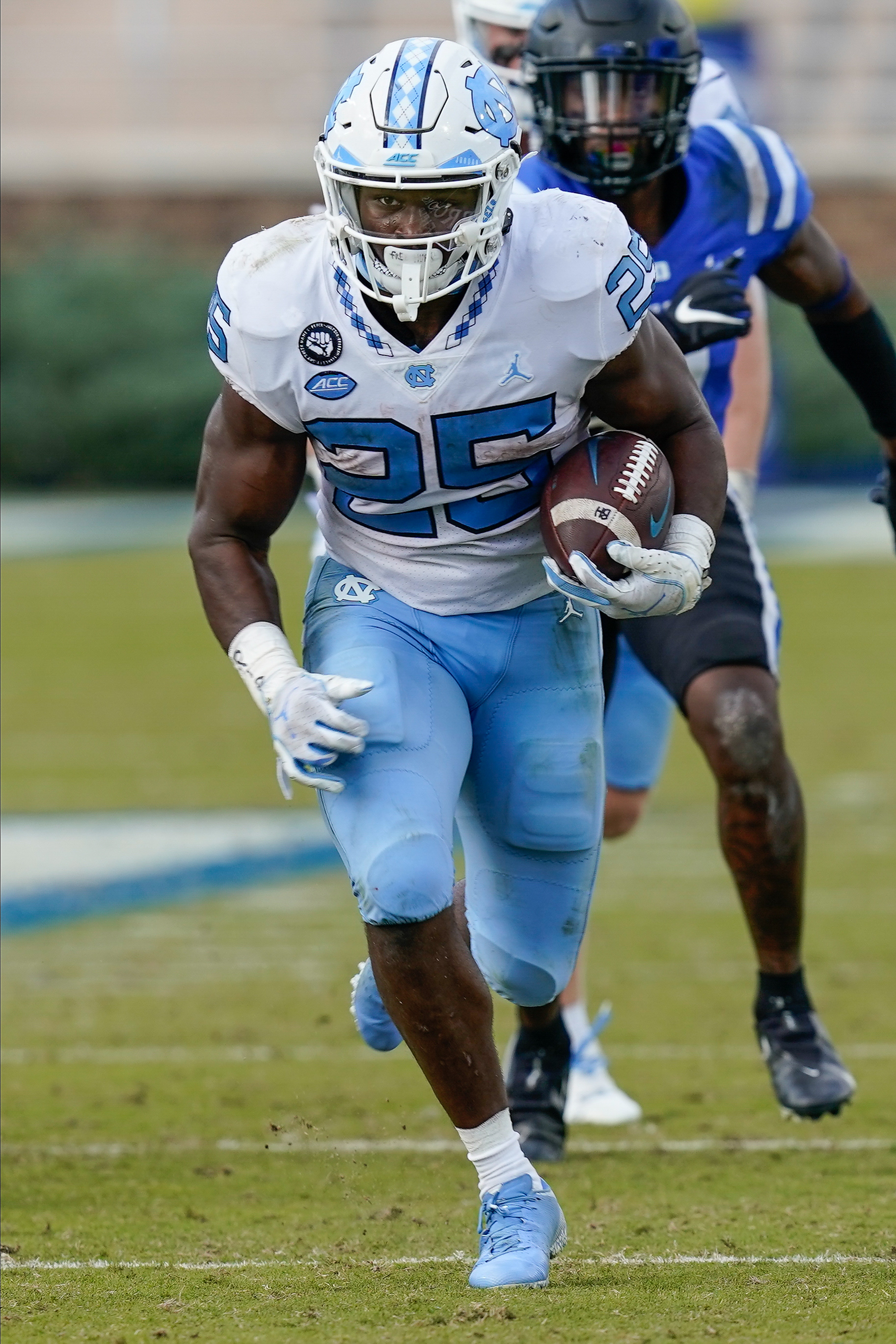 The Broncos traded up four spots for Williams in Round 2, Pro Football Focus’ top-rated back in this class, and chose the North Carolina product 36th overall. Williams teamed with Jets draftee Michael Carter to form one of the nation’s top backfield tandems. Williams compiled just one 1,000-yard season with the Tar Heels but led Division I-FBS with 75 broken tackles in 2020. The Broncos have Melvin Gordon signed through 2021, but the John Elway-era addition does not appear to be a lock to hold off Williams for the starting role.
The rest of the rookie field includes third-rounder Trey Sermon (49ers), Carter (fourth round, Jets) and a host of backs ticketed for early-career backup roles. While injuries certainly will hit the running back position, potentially forcing some of the later-round picks into the fray, Sermon and Carter have the best bets of seeing steady action among the mid- and late-round selections.
An Oklahoma and Ohio State product, Sermon also played four years. He averaged more than seven yards per carry in each of his past two, though he never topped 1,000 on the ground. Lead 49ers back Raheem Mostert is coming off an injury-marred season. The Jets added Tevin Coleman, who joined Mostert in missing most of last season, but do not have another back with much experience. This could allow Carter (two 1,000-yard years at North Carolina) early upward mobility, despite his 5-foot-8 frame.
Which rookie back will rush for the most yards in 2021? Who are the later-round candidates or UDFAs who can join these players as early contributors? Vote in PFR’s latest poll and weigh in with your thoughts in the comments section.
Which rookie running back will rush for the most yards in 2021?
-
Najee Harris 53% (1,369)
-
Trey Sermon 13% (332)
-
Javonte Williams 12% (311)
-
Michael Carter 11% (275)
-
Travis Etienne 9% (226)
-
Another back (specify in comments) 3% (82)
Total votes: 2,595
Seven Teams Exceed 85% Vaccination Threshold
MONDAY: A seventh team has crossed the 85% barrier, Pelissero adds (on Twitter). As for the players who have received at least one vaccine dose, that number has now surpassed 70%.
FRIDAY: With training camps less than three weeks away, an interesting date is approaching regarding vaccinations. Any player who has not received two vaccine doses, or one dose of the Johnson & Johnson vaccine, by Monday will not be considered fully vaccinated by camp. But the number of players who have taken that step continues to increase.
 Six teams have hit the 85% vaccination threshold, Tom Pelissero of NFL.com tweets. This includes the Broncos, who have seen nearly 95% of their 90-man roster receive one or two vaccine doses, Mike Klis of 9News tweets.
[RELATED: No Players Opt Out Of 2021 Season]
As a whole, the NFL’s player base has surpassed the 69% vaccination threshold, Pelissero adds. This is up from 65% two weeks ago. Geared around players’ vaccination decisions, this season’s COVID-19 protocols create two sets of rules. Teams who reach high vaccination levels will have advantages.
Players who choose not to be vaccinated — a right the NFLPA collectively bargained, though teams’ Tier 1 and Tier 2 staffers are required to do so — must take virus tests daily once camp starts and will face the prospect of missing multiple games if they test positive. Nearly all Tier 1 and Tier 2 personnel are vaccinated, Pelissero tweets. Coaches fall under this umbrella; a coach must be fully vaccinated to be allowed to work directly with players.
The league’s high-risk close contact policy still applies to unvaccinated players, who, like last season, would need to isolate for five days if they are classified as such. Teams with lower vaccination rates will also need to create social distancing setups for their unvaccinated sects of players; this will pertain to meetings and affect weight-room policies.
The Dolphins, Saints and Steelers joined the Broncos in being around the 85% threshold in late June, and the Jaguars and Panthers had progressed to near that rate at that point. Twenty-nine teams begin training camp July 27.
2021 Cap Space For All 32 NFL Teams
There are still plenty of quality free agents left on the board as we look ahead to training camp. Cornerback Steven Nelson, tackle Russell Okung, and longtime Legion of Boom leader Richard Sherman headline the list, along with accomplished edge rushers like Justin Houston, Melvin Ingram, and Olivier Vernon. That list will only grow larger, of course, as more teams shed veterans to redirect their funds elsewhere.
With that in mind, here’s a look at every NFL team’s cap situation, starting with the league-leading Jaguars:
- Jacksonville Jaguars — $32.7MM
- Denver Broncos — $28.9MM
- New York Jets — $28.5MM
- Cleveland Browns — $20.6MM
- Los Angeles Chargers — $19.9MM
- Detroit Lions — $17.9MM
- San Francisco 49ers — $17.8MM
- Cincinnati Bengals — $17.4MM
- Washington Football Team — $16.7MM
- Indianapolis Colts— $14.3MM
- Carolina Panthers— $14.3MM
- Minnesota Vikings — $13.5MM
- Pittsburgh Steelers — $13.1MM
- New England Patriots — $13.1MM
- New Orleans Saints — $11.4MM
- Arizona Cardinals — $11.3MM
- Buffalo Bills — $10.5MM
- Baltimore Ravens — $8.8MM
- Atlanta Falcons — $8.6MM
- Seattle Seahawks — $8.3MM
- Tennessee Titans — $8.3MM
- Kansas City Chiefs — $7.9MM
- Los Angeles Rams — $7MM
- Chicago Bears — $6MM
- Dallas Cowboys — $6MM
- Miami Dolphins — $5.3MM
- Green Bay Packers — $5MM
- Houston Texans — $5MM
- Las Vegas Raiders — $3.3MM
- Philadelphia Eagles — $3.2MM
- New York Giants — $2.4MM
- Tampa Bay Buccaneers — $489K
LB Anthony Chickillo Retires
Former Steelers and Broncos linebacker Anthony Chickillo is calling it a career. The 28-year-old announced his retirement via Instagram earlier today.
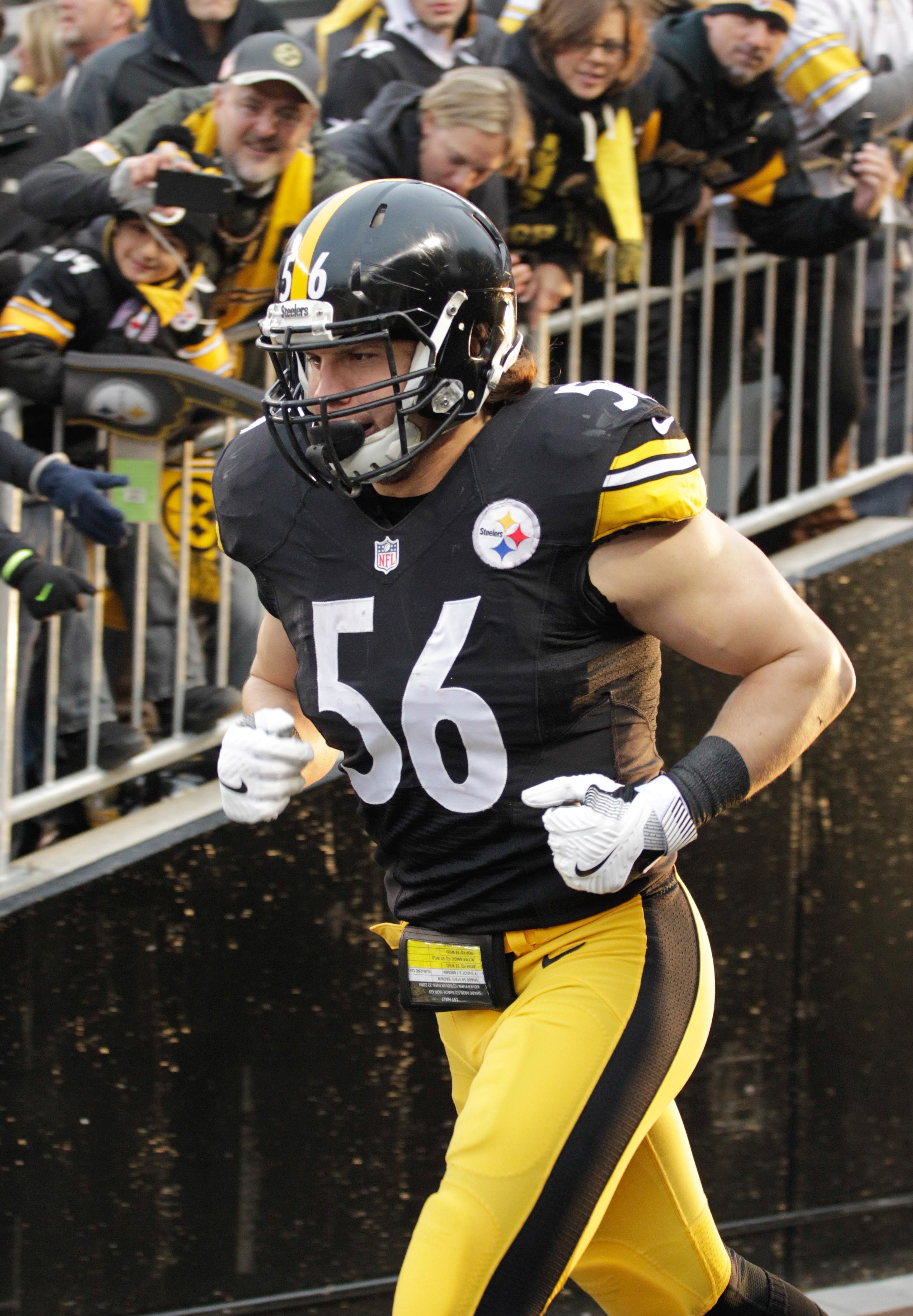
Chickillo entered the league as a sixth-round pick of the Steelers in 2015. Over five years in Pittsburgh, he played in 65 games, primarily as a rotational defender and as a key special teams contributor.
After a quality platform campaign in 2018, during which he graded out as Pro Football Focus’ 40th-best edge defender out of 103 qualifiers, Chickillo drew free agent interest from the Patriots but elected to re-up with the Steelers on a two-year, $8MM contract. However, a foot injury and an assault arrest — on charges that were later dropped — marred his 2019 season, and the Steelers cut him last March.
Chickillo hooked on with the Saints several months later, but he did not survive final cutdowns and was ultimately signed to New Orleans’ practice squad. The Broncos poached him from there and he went on to appear in 11 games for Denver in 2020, with his snaps almost equally divided between defense (164) and special teams (147).
The Miami product ends his playing career with 108 tackles, 8.5 sacks, and roughly $7.5MM in career earnings. We at PFR wish Chickillo the best in the next chapter of his life.
Extension Candidate: Courtland Sutton
Having fully transitioned at wide receiver following the in-season trades of Demaryius Thomas and Emmanuel Sanders, the Broncos have assembled an interesting group of pass catchers. Denver’s quartet consists of a first-rounder (Jerry Jeudy), two second-rounders (Courtland Sutton, K.J. Hamler) and a contract-year UDFA (Tim Patrick) — all tied to rookie contracts or an RFA tender.
Joining Patrick in entering a contract year, Sutton is in line to be the first Broncos wideout to sign a lucrative extension since Sanders’ September 2016 re-up. A Sutton deal would top Thomas’ five-year, $70MM pact as the richest the Broncos have given a receiver. But a few factors complicate the 25-year-old playmaker’s status going into his fourth season, making him one of the more interesting 2021 extension candidates.
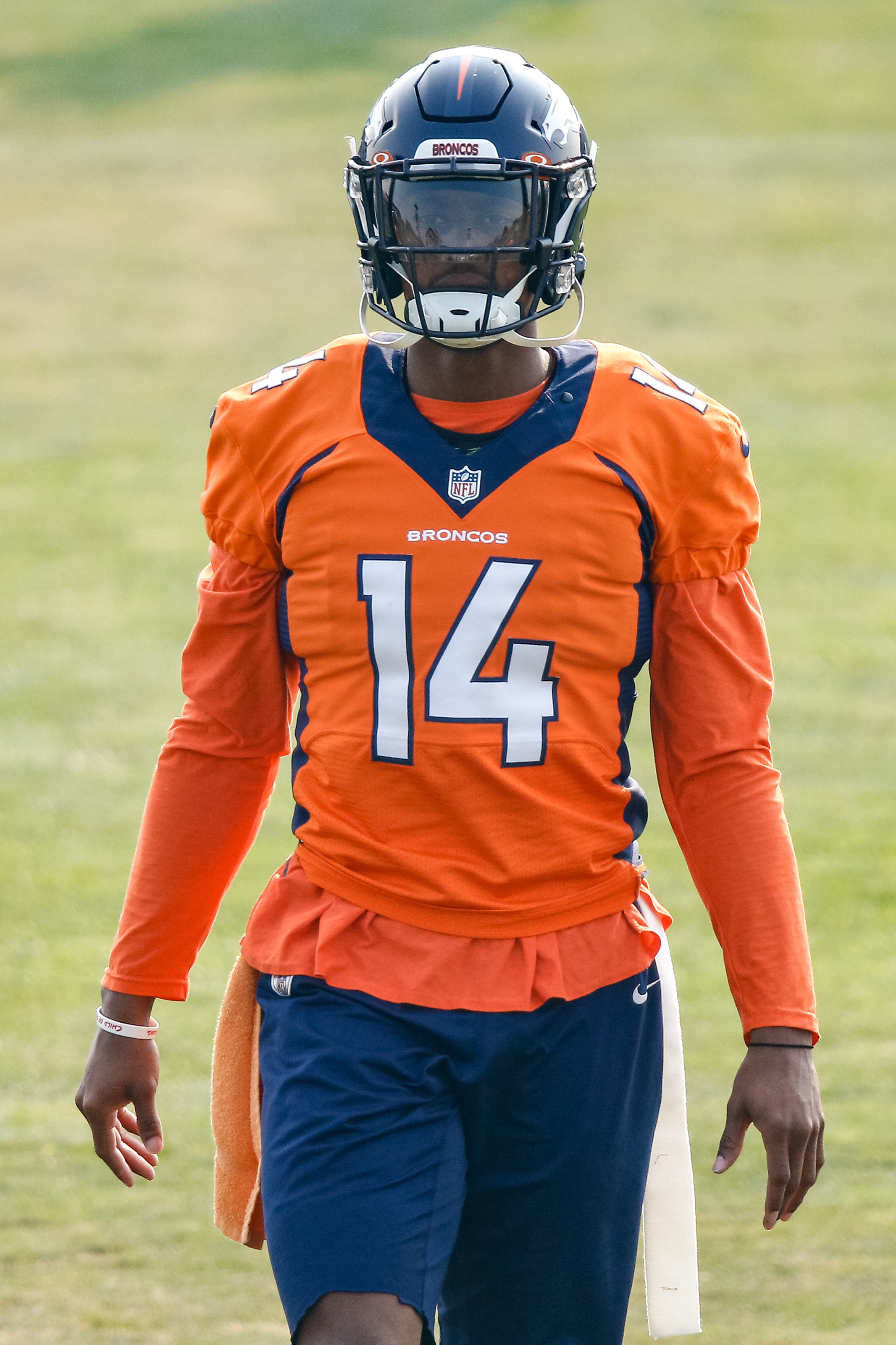 Sutton’s rookie-year form prompted the Broncos to trade Thomas, and the SMU product built on that in 2019. Despite Denver using three starting QBs in Sutton’s second year, the jump-ball standout served as the top weapon in an offense lacking other notable targets. The 6-foot-4 pass catcher’s 72-reception, 1,112-yard season — with an aging Joe Flacco, rookie Drew Lock and inexperienced backup Brandon Allen targeting him — garnered a Pro Bowl nod and opened the door to the prospect of an extension.
The Broncos then became the first team since the 2003 Cardinals to select receivers in the first and second rounds of a draft, but Sutton’s ACL tear — after just 31 snaps — changed the club’s plans to have the draftees develop in a Sutton-centered attack. Denver will now give its hopeful Sutton-Jeudy-Hamler trio, with Patrick mixing in, another try.
Since Sutton’s injury, the Broncos hired a new GM. But George Paton identified Sutton as a core player the Broncos want to keep around long-term. They have an opening for a veteran receiver contract, with Jeudy and Hamler not extension-eligible for a while and only one skill-position player — Melvin Gordon, whose roster spot may not be assured — making midlevel money. Sutton’s production with suboptimal quarterback play points to untapped potential for when/if the Broncos acquire a long-term passer.
Waiting makes some sense for both parties. Sutton is not expected to begin camp on the active/PUP list and will be on track to lead or co-lead Denver’s receiving corps this season. The Broncos making an offer before they determine Sutton’s fit alongside the younger receivers in Pat Shurmur‘s offense would be a bit of a gamble, but the team could also reap some value if Sutton wanted to lock in a slightly lower AAV now as protection against a sluggish season following ACL rehab. The Broncos certainly have the cap space to do a deal now or in the fall; their $28MM in room ranks behind only the Jaguars.
An in-season extension could be in play, too. That would make for an interesting middle ground — similar to Garett Bolles‘ November 2020 deal — and avoid a situation where this forces the Broncos to use their franchise tag for a third straight year. Of course, if Sutton proves willing to bet on himself going into a post-injury contract year, it would take a big offer to convince him to bypass a potential free agency bid or — in the more likely scenario — the leverage that comes with being tagged.
Sutton picking up where he left off would be a good problem for the Broncos, who have not featured this kind of depth at receiver since the mid-2010s. This has likely caught the attention of Aaron Rodgers, though that situation has produced little of consequence in months. A return to form would put Sutton on the radar to land a deal in the Kenny Golladay range — four years, $72MM — with perhaps some upside from this salary place, as the cap balloons over $200MM after 2021’s dip.
Sutton’s production alongside Jeudy will illustrate how the Broncos view him. With the fifth-year option allowing the Broncos to table Jeudy’s payday — if the impressive route runner proves worthy — until 2024, a window for a Sutton extension should be open. Given the Rodgers connection and the receiving corps’ new look since Sutton’s last full season, his contract status will be monitoring in the coming weeks and/or months.