
Offseason In Review: Philadelphia Eagles
Led by rookie quarterback Carson Wentz and first-year head coach Doug Pederson, the Eagles posted a respectable 7-9 mark, an even more encouraging plus-36 point differential and a stunning fourth-place DVOA ranking in 2016. It was apparent, though, that Wentz didn’t have a talented enough supporting cast, so executive vice president Howie Roseman went to work in the offseason to give the 24-year-old face of the franchise more weaponry.
Notable signings:
- Alshon Jeffery, WR: One year, $9.5MM. $8.75MM guaranteed. $4.5MM available via incentives.
- Nick Foles, QB: Two years, $11MM. $4MM guaranteed. $5MM available via incentives.
- Stefen Wisniewski, OL: Three years, $8MM. $3.525MM guaranteed.
- Torrey Smith, WR: Three years, $15MM. $500K guaranteed.
- Chris Long, DE: Two years, $4.5MM. $500K guaranteed. $1.5MM available via incentives.
- Chance Warmack, G: One year, $1.51MM. $500K guaranteed.
- LeGarrette Blount, RB: One year, $1.25MM. $100K guaranteed. $1.55MM available via incentives.
- Najee Goode, LB: One year, $875K. $50K guaranteed.
- Matt McGloin, QB: One year, minimum salary benefit. $25K guaranteed.
- Trey Burton, TE: One year, $2.746MM. Signed second-round RFA tender.
- Patrick Robinson, CB: One year, $775K.
- Gabe Wright, DT: One year, $615K.
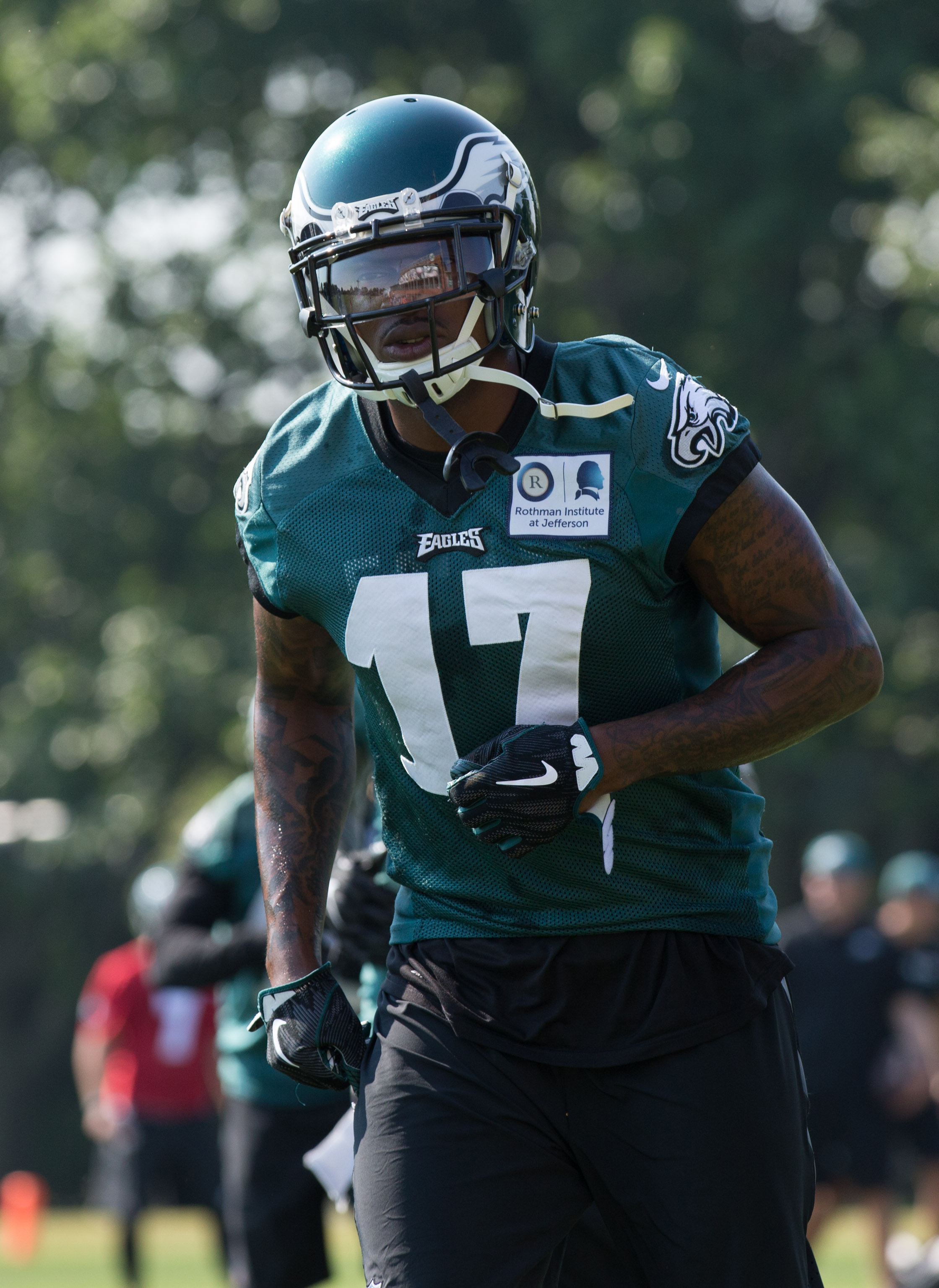
As PFR’s Dallas Robinson noted entering the offseason, Wentz played his initial NFL campaign with an underwhelming group of wide receivers. Aside from Jordan Matthews, who registered his third straight prolific pass-catching year (73 receptions), Philadelphia had very little at the position. Nelson Agholor, the Eagles’ first-rounder in 2015, notched a second straight lackluster showing, while fellow sophomore Dorial Green-Beckham was also once again unable to put it together. The Eagles waived DGB last month, which they were able to do in part because of the upgrades Roseman made over the winter.
Although the Eagles were hardly flush with cap space entering free agency, they managed to reel in arguably the best receiver available, former Bear Alshon Jeffery, on a shockingly reasonable pact. While less established wideouts such as Kenny Britt and Robert Woods, among others, landed long-term deals, Jeffery settled for a one-year, $9.5MM contract. That came on the heels of a PED suspension-shortened season in which Jeffery recorded career lows in receptions (52) and touchdowns (two) over 12 games.
Jeffery’s suspension seems like more of a blip than a major character concern, if you’re to believe that he unknowingly took a banned substance. The question now is whether he’ll bounce back to resemble the player he was from 2013-15, when the 6-foot-4, 230-pounder combined for 228 catches, 3,361 yards and 21 scores over 41 games. That translates to 89-1,312-eight over a full season, which is the type of top-shelf production no Eagles receiver has offered since Jeremy Maclin in 2014. Much of Jeffery’s damage this year should come in the red zone, where the Eagles logged the league’s ninth-worst touchdown percentage last season.
Like Jeffery, the Eagles’ other significant signing at receiver, Torrey Smith, brings a quality resume to the table. However, Smith fell off over the previous two years after leaving Baltimore for San Francisco, which couldn’t find anything resembling a solution under center during his Bay Area tenure. Smith suffered for it, especially during a 20-catch 2016, but he’s still relatively young (28), capable of stretching the field (17.0 yards per catch over 92 games) and durable. Prior to last season, when he missed four contests, Smith racked up five straight 16-game slates.
Even if Smith’s unable to regain the form he showed as a Raven in Philadelphia, it’s fair to say the Eagles took a calculated risk here. Worst-case scenario: Smith is on a one-year, $5MM deal that the Eagles will be able to escape if things go poorly. But a renaissance from Smith could keep him in Philly at affordable prices for the foreseeable future, as his contract includes a $5MM club option for both 2018 and ’19.
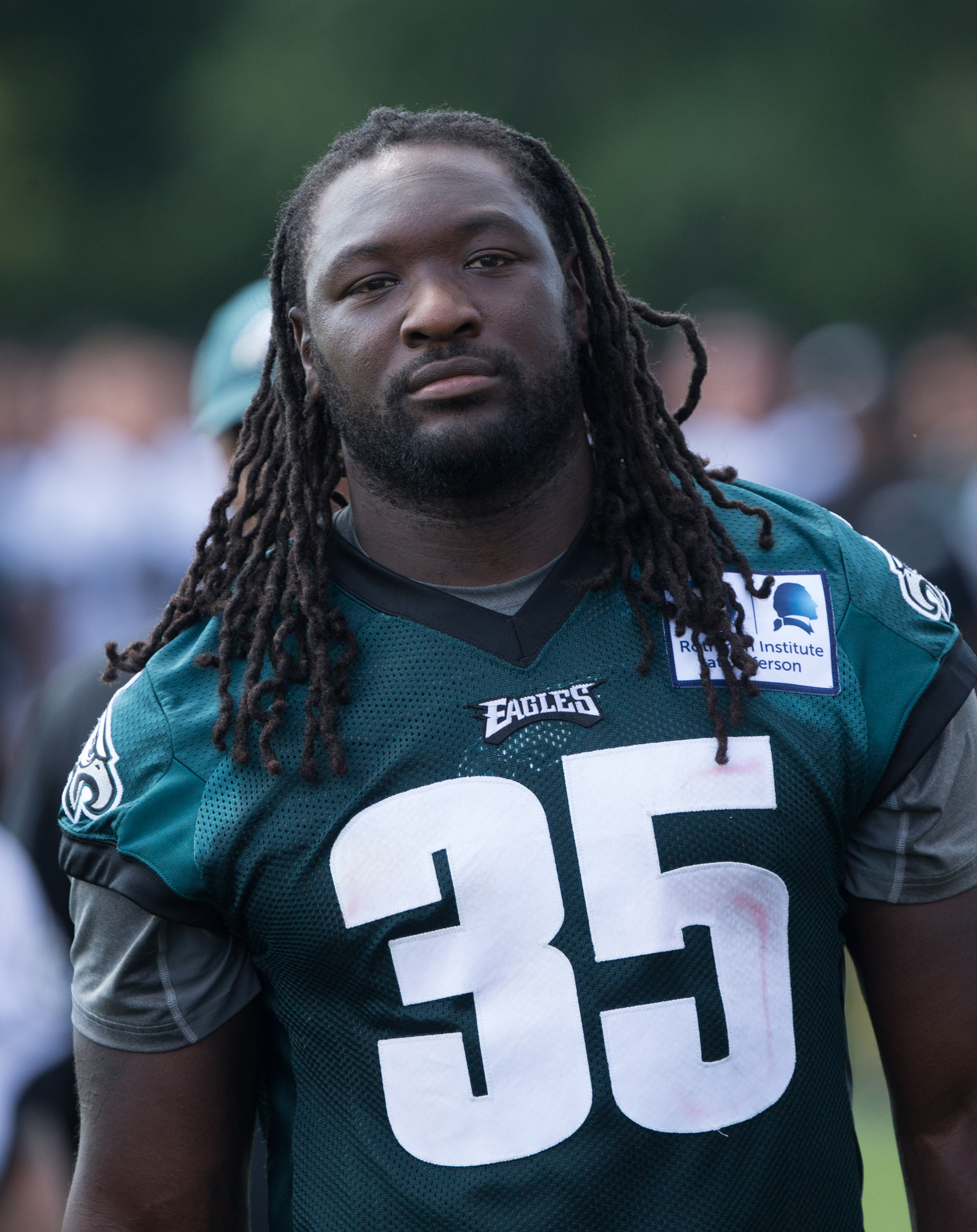
Along with upgrading the Eagles’ passing attack, Roseman addressed the team’s ground game with the addition of ex-Patriots bruiser LeGarrette Blount, yet another one-year deal recipient. The 245-pounder might not meaningfully boost the Eagles’ 18th-ranked yards-per-carry average from last year (4.1), as he only put up 3.9 per rush himself, but the $1.25MM man should join Jeffery in bettering their subpar red zone attack. Blount led all backs last season with 18 rushing TDs, a league-high 15 of which came inside the opposing 10-yard line. The Eagles’ primary ball carrier from last year, Ryan Mathews, also did well in that category (his eight TDs ranked tied for seventh), but he still lagged well behind Blount.
With his health in question, Mathews’ time in Philly is on the verge of ending, which will leave the backfield to Blount, Darren Sproles, Wendell Smallwood and rookie fourth-rounder Donnel Pumphrey. It’s not the most exciting group on paper, but it’s a low-cost quartet that should be reasonably effective. Further, those backs will run behind what might be the league’s premier offensive line, which will help cover up for their deficiencies.
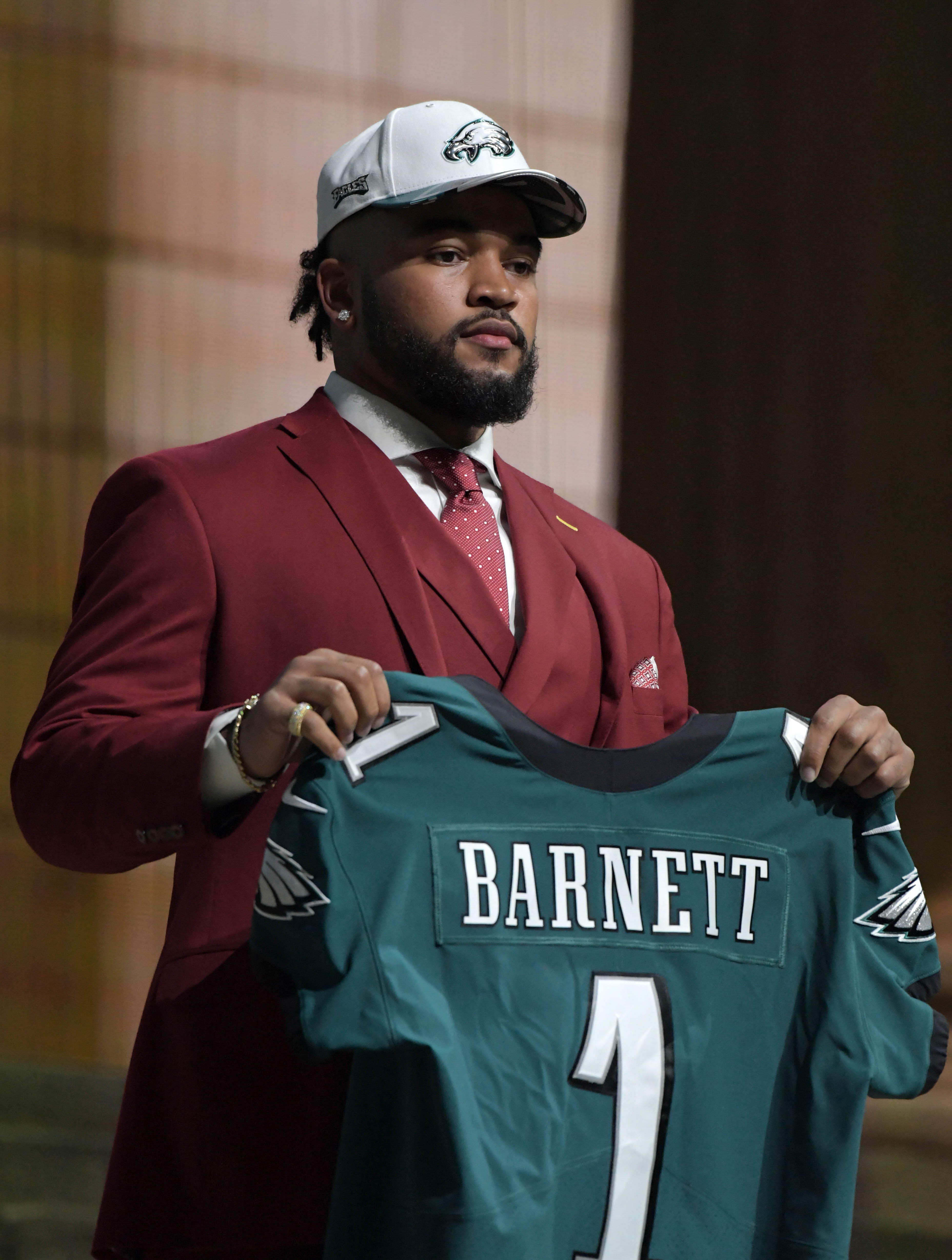
Continuing the inexpensive veteran theme, the Eagles made a somewhat splashy move on defense when they added end Chris Long on a two-year, $4.5MM accord. There’s significant name value with Long, who was with Blount on last season’s Super Bowl-winning New England squad, but the 32-year-old isn’t the force he was earlier in his career with St. Louis. Still, it’s another sensible investment for the Eagles, who found a better fit for their defense than the released Connor Barwin when they reeled in Long. Barwin was great at times during his four years with the Eagles, but he clearly wasn’t an ideal match for defensive coordinator Jim Schwartz‘s 4-3 scheme last season. Conversely, Long prefers a 4-3, where he can come off the edge, to the 3-4 hybrid he worked in last season with the Pats, who often deployed him along the interior of their D-line. On paper, Long looks like a rather impressive No. 4 end for a Philadelphia team that will enter the season with Brandon Graham, first-rounder Derek Barnett and Vinny Curry ahead of him on its depth chart.
Extra Points: Strike, Rams, Relocation
Contracts are guaranteed in the NBA, where even mediocre players are capable of landing mega-deals, leading some NFLers to publicly express displeasure with the fact that their league’s deals are non-guaranteed. While discussing that issue Wednesday, Seahawks cornerback Richard Sherman offered a possible solution, albeit a controversial one.
“If we want as the NFL, as a union, to get anything done, players have to be willing to strike,” Sherman told ESPN’s Jalen Rose. “That’s the thing that guys need to 100 percent realize. You’re going to have to miss games, you’re going to have to lose some money if you’re willing to make the point, because that’s how MLB and NBA got it done. They missed games, they struck, they flexed every bit of power they had, and it was awesome. It worked out for them.”
NFL players haven’t gone on strike since 1987, though there was a brief lockout in 2011. With the collective bargaining agreement the owners and players negotiated then set to expire after the 2020 season, more labor strife is seemingly brewing. Back in February, months before Sherman’s strike recommendation, union boss DeMaurice Smith shot down the possibility of extending the CBA, and the players hadn’t given him permission as of last month to begin talks with the league on a new agreement.
More from around the league:
- While Sherman and others aren’t thrilled with the league’s current financial setup, one player who has done well in the system is Rams cornerback Trumaine Johnson, writes Mike Florio of Pro Football Talk. The Rams placed the franchise tag on Johnson both last year and this offseason, putting him in position to collect $30.672MM in guaranteed money from 2016-17. To hit Johnson with the franchise tag again next winter would cost the Rams an untenable $24.1MM, so he’ll reach the open market at the age of 28 and have an opportunity to cash in on a long-term contract.
- Thanks to the relocations of the Rams, Chargers and Raiders, the league’s other 29 teams will each receive a gross sum of $55.2MM over an 11-year span, reports Darren Rovell of ESPN. The two Los Angeles teams, the Rams and Chargers, will each pay a $645MM relocation fee from December 2019 to December 2028, while the soon-to-be Las Vegas Raiders will owe $378MM. They won’t have to begin paying until the year they actually move to Vegas.
- Bears linebacker Danny Trevathan is likely to open the season on the physically unable to perform list, suggests Chris Boden of CSN Chicago. Trevathan ruptured the patella tendon in his right knee last November, forcing him to sit out the Bears’ final five games of 2016, and he’ll miss their first six contests this year if he goes on the PUP list. The former Bronco is entering the second season of the four-year, $24.5MM pact he signed with Chicago in March 2016.
Tony Romo “Done” Playing Football
As of late May, most NFL teams believed that retired quarterback Tony Romo would return to the gridiron “sooner” rather “than later.” However, Romo indicated Wednesday that his career is indeed over (via Marc Sessler of NFL.com).
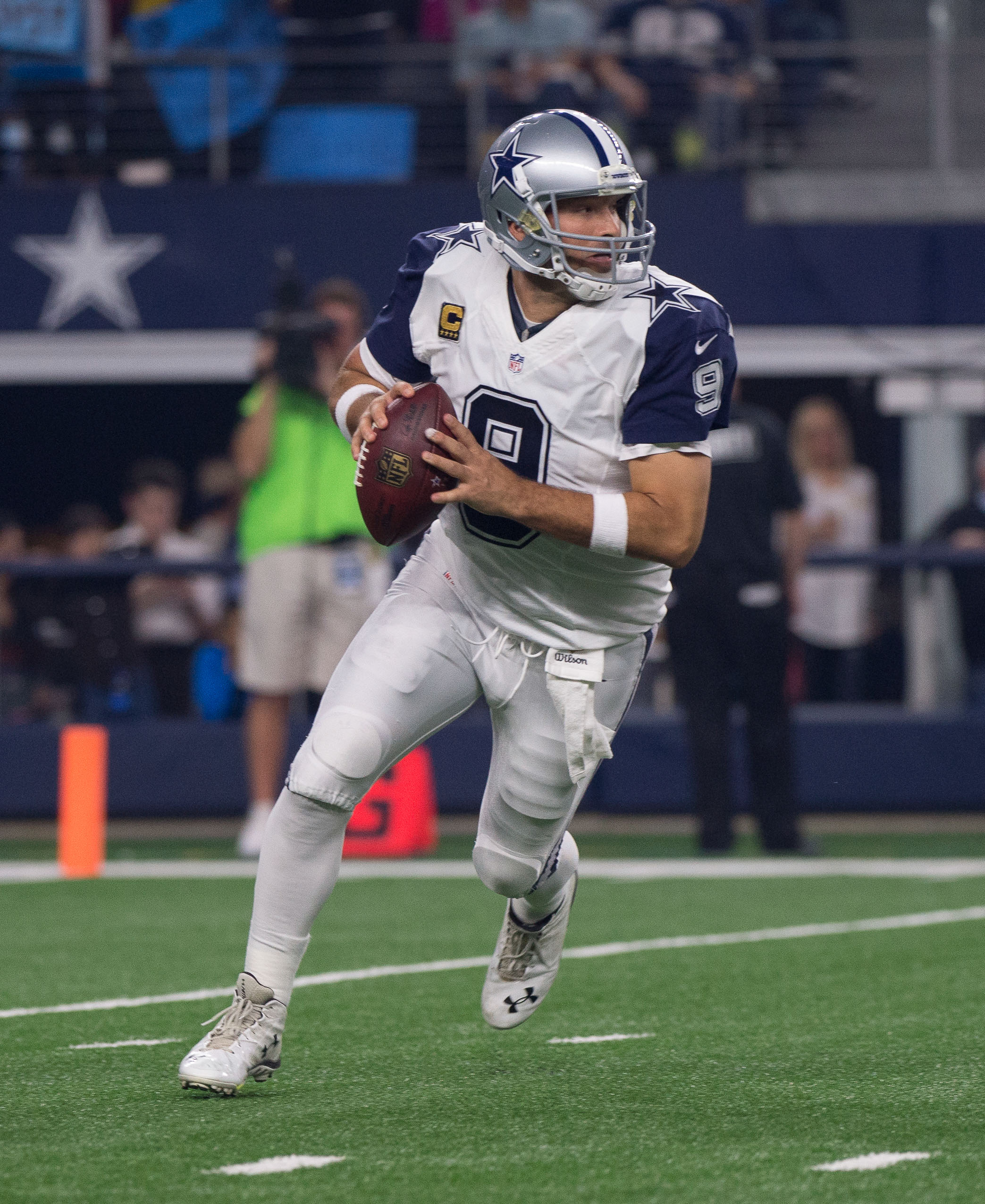
“Like I said before, I’m done,” Romo declared in an interview with NFL Network.
That’s a far cry from Romo’s mindset in April, when he refused to completely rule out a comeback immediately after announcing his retirement and signing with CBS to become its lead color announcer.
“I’m pretty happy and excited about the opportunity that was presented to me,” Romo said Wednesday in regards to joining CBS.
Even though the 37-year-old Romo says he’s content in his new role, speculation about a return to the field could rear its head again if a team loses its starting quarterback to injury in the preseason. That’s what happened to the Cowboys last summer, who saw Romo go down in August with a broken bone in his back. The Cowboys replaced Romo from within, going with backup Dak Prescott – who had a shockingly brilliant rookie season – but only after first kicking the tires on potential starters from outside the organization.
While injuries limited Romo to just four games in 2015 and four passing attempts last year, he drew interest in the offseason from a few teams – including the Texans and Broncos – and said in April he could “play tomorrow” if he wanted to. Now, Houston, Denver and the league’s 30 other teams seem content to go forward with what they have under center, while Romo appears satisfied with his decision to walk away from football.
Latest On Packers GM Ted Thompson
Given that he’s 64 years old and only under contract for two more seasons, Ted Thompson‘s shelf life as the Packers’ general manager has been a popular topic over the past several months. Packers president Mark Murphy addressed Thompson’s future Wednesday, suggesting to reporters (including Jason Wilde of the Wisconsin State Journal) that he doesn’t want the longtime GM to leave his post anytime soon.

“Ted and I, we have a great relationship,” said Murphy. “As long as he wants to continue to work, and he’s still doing a good job — and I think he still does a great job for us — we want him to continue to be our general manager. At a point he decides he doesn’t want to do it anymore for whatever reason, then we would do a search.”
Thompson has arguably earned the right to stay on until he sees fit, having served atop an organization that has generated outstanding on-field results since his hiring in 2005. Across 12 seasons, the Thompson-led Packers have made nine playoff trips, including eight in a row, earned six NFC North titles and won a Super Bowl. At the helm of that championship-winning team in 2010 was quarterback Aaron Rodgers, who was Thompson’s initial draft pick as Green Bay’s GM. Rodgers, who unexpectedly plummeted to the Packers at No. 24 in the first round of the 2005 draft, has evolved into one of the greatest signal-callers in NFL history since he succeeded Hall of Famer Brett Favre in 2008.
While Thompson has brought Rodgers and a score of other quality contributors to Wisconsin during his tenure, the executive’s conservative approach to free agency has come under fire. Thompson has typically avoided making big splashes in free agency, thus making it easier to secure compensatory draft picks, but his decision to let guard T.J. Lang leave for NFC North rival Detroit over the winter reportedly left Packers coaches and players “incensed.” However, as evidenced by his satisfaction with Thompson’s work, Murphy wasn’t among the angered faction.
If Thompson does remain in charge of the Packers’ football department for the foreseeable future, it’ll be interesting to see if they’re able to keep his top underlings from taking higher-profile jobs elsewhere. Both director of football operations Eliot Wolf and director of player personnel Brian Gutekunst drew interest earlier this offseason from GM-needy teams, and vice president of football administration Russ Ball is also highly regarded. Wolf, Gutenkust or Ball could conceivably end up as Green Bay’s next GM, though Murphy hasn’t promised any of the three Thompson’s job when he departs. Another potential candidate for the Packers, ex-Chiefs GM John Dorsey, worked in Green Bay for nearly all of his career prior to taking over in Kansas City in 2013. Dorsey shockingly lost his job in late June, which could set up a return to the Pack’s front office, though that’s reportedly unlikely.
Asked Wednesday whether the Packers are interested in bringing back Dorsey, Murphy said, “I can’t answer that.”
Offseason In Review: Carolina Panthers
No NFL team experienced a more stark fall from grace last year than the Panthers, who went from a 15-1, NFC championship-winning juggernaut in 2015 to a bottom feeder in 2016. On the heels of a six-win, last-place season, Panthers general manager Dave Gettleman handed contracts to several household names, mostly on defense, and used the early portion of the draft to give quarterback Cam Newton more help.
Notable signings:
- Kawann Short, DT: Five years, $80.5MM. $35MM guaranteed. Had been assigned franchise tag.
- Matt Kalil, T: Five years, $55.5MM. $24MM guaranteed. $2MM available via incentives.
- Mario Addison, DE: Three years, $22.5MM. $9MM guaranteed.
- Captain Munnerlyn, CB: Four years, $17MM. $6.9MM guaranteed. $4MM available via incentives.
- Charles Johnson, DE: Two years, $8MM. $2.5MM guaranteed. $1.5MM available via incentives.
- Russell Shepard, WR: Three years, $10MM. $2.1MM guaranteed.
- Julius Peppers, DE: One year, $3.5MM. $1.65MM guaranteed.
- Mike Adams, S: Two years, $4.5MM. $1.2MM guaranteed.
- Fozzy Whittaker, RB: Two years, $2.5MM. $500K guaranteed.
- Wes Horton, DE: Two years, $2.7MM. $425K guaranteed.
- Colin Jones, S: Two years, $2.375MM. $400K guaranteed.
- Charles Johnson, WR: One year, $1.675MM. $325K guaranteed.
- Kyle Love, DT: Two years, $2.2MM. $200K guaranteed.
- Chris Scott, G: One year, minimum salary benefit. $80K guaranteed.
- Amini Silatolu, G: One year, minimum salary benefit. $80K guaranteed.
- Teddy Williams, CB: One year, minimum salary benefit. $80K guaranteed.
- Andrew Norwell, G: One year, $2.746MM. Signed second-round RFA tender.
- Darrel Young, FB: One year, $775K.
- Brenton Bersin, WR: One year, $690K.
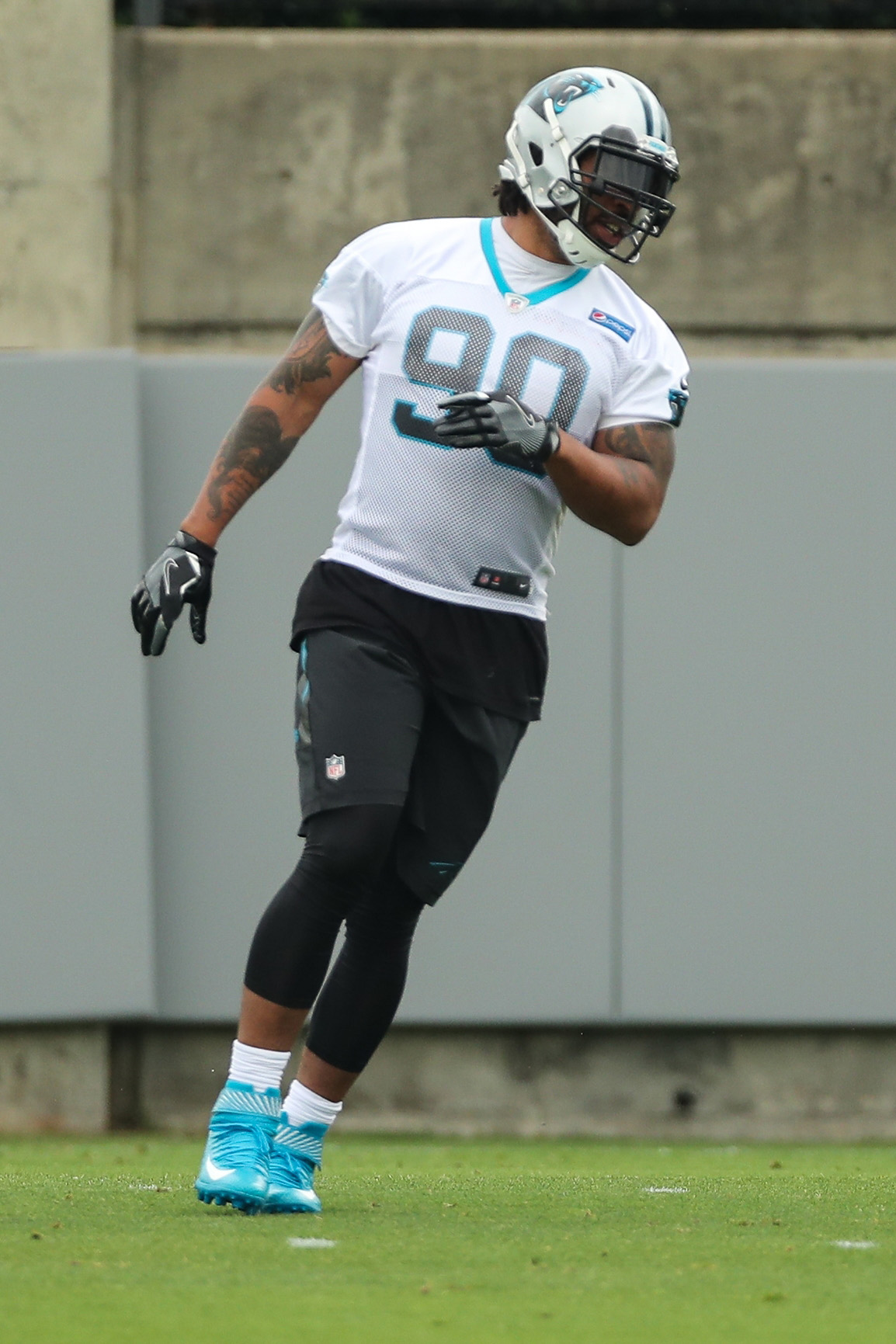
Carolina’s defense finished anywhere from second to sixth in the league in scoring, yardage, sacks and DVOA two years ago, and while the unit’s dominance dropped off last season, it was still a formidable group. The Panthers ended up with the league’s second-most sacks (48) and a more-than-respectable DVOA ranking (10th), so Gettleman didn’t do anything extreme on that side of the ball. Three of his biggest moves included extending his premier defensive lineman, franchise-tagged tackle Kawann Short, on a whopper of a deal and re-upping dependable veteran ends Mario Addison and Charles Johnson for very reasonable money. Those three combined for 19.5 sacks last year, and they’ll have assistance from local favorite Julius Peppers in 2017.
Peppers, who attended North Carolina and starred with the Panthers from 2002-09, returned on a palatable contract. Age isn’t on the 37-year-old’s side, but the former Bear and Packer hasn’t recorded fewer than seven sacks in a season since 2007. Peppers logged 584 defensive snaps in Green Bay last season, his ninth straight 16-game campaign (11 starts), and Pro Football Focus ranked his performance a solid 35th among 109 edge defenders. Now, Peppers will replace the 25-year-old Kony Ealy, whom the Panthers sent with a third-round pick (No. 72) to the Patriots for a second-rounder (No. 64). Jettisoning a capable player in favor of one who’s 12 years his senior is clearly a risk, but it’s worth noting that Ealy’s running out of team control. Ealy will be a free agent next offseason, so if the Panthers weren’t expecting to re-sign the Super Bowl 50 standout, moving him for a slightly better draft selection and presumably upgrading for a year with Peppers isn’t unjustifiable.
Peppers wasn’t the only past Panthers defender whom they reunited with in free agency. Slot cornerback Captain Munnerlyn, a Panther from 2009-13, returned after a three-year stint in Minnesota. Like Peppers, Munnerlyn is back with gas remaining in the tank, with PFF’s Sam Monson noting that he yielded just one touchdown on 68 targets last season. At 29, Munnerlyn’s easily the elder statesman in a Panthers corner corps that lost Josh Norman a year ago and subsequently received encouraging performances from rookie starters James Bradberry and Daryl Worley. At the same time, the rest of Carolina’s CBs didn’t provide much, meaning Munnerlyn should be a welcome addition.
Another established newcomer, safety Mike Adams, will also have an important role in the Panthers’ secondary this year. Like Peppers, Addison, Johnson and Munnerlyn, the 36-year-old Adams is past a prime age, though he’s still an adept defender. Adams was PFF’s 19th-rated safety in 2016, when the then-Colt started in each of his appearances (15) for the third year in a row, intercepted two passes and forced a pair of fumbles. Playmaking has been the norm for Adams, who picked off 12 passes and forced seven fumbles during his three-year Indianapolis tenure. Barring an age-related decline, which certainly isn’t out of the realm of possibility, he should be a better starting free safety option than predecessor Tre Boston, whom Carolina cut after it signed Adams.
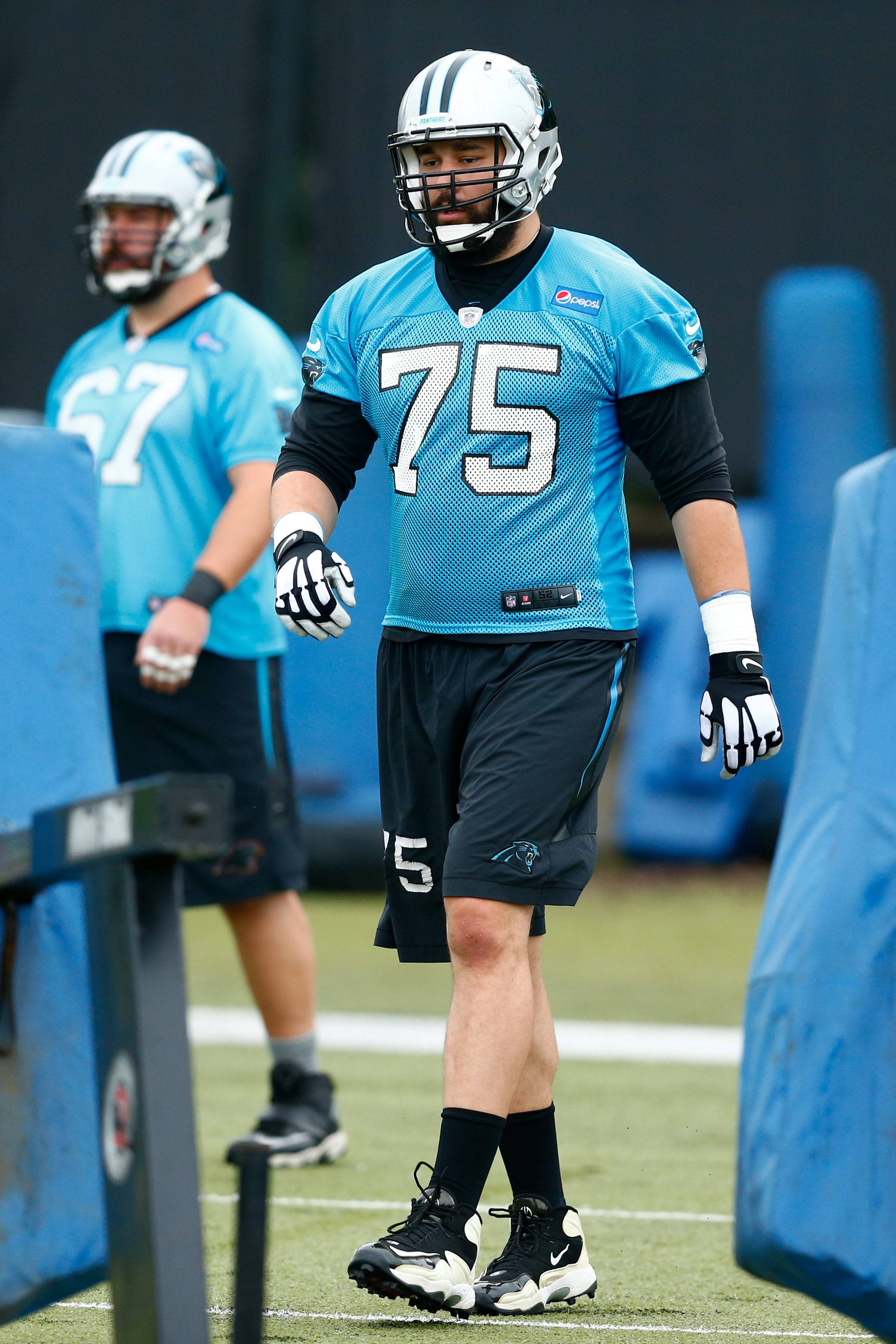
While nearly all of the sizable contracts Gettleman doled out in free agency went to defenders, left tackle Matt Kalil received the largest deal of any new Panther. Matt Kalil is now teammates with his brother, starting center Ryan Kalil, but the former isn’t a lock to remain with the club beyond this year. If Carolina’s not impressed with Matt Kalil’s work, it’ll be able to void his contract – a scenario that doesn’t seem particularly far-fetched. After all, the 27-year-old was somewhat of a disappointment over the past few seasons in Minnesota, which selected him fourth overall in 2012. Kalil’s best trait during the first four seasons of his career may have been his durability, as he started in 64 straight games in that span. However, because of a hip injury, he didn’t play past Week 2 last year.
The good news for the Panthers is that Kalil’s health shouldn’t be an issue going forward. That isn’t necessarily the case with their previous No. 1 left tackle, Michael Oher, whom concussion issues have troubled since last September and who might not play again. Thanks in part to Oher’s 13-game absence in 2016, the Panthers’ protection of Newton took a step backward with Mike Remmers on the blindside (Remmers is now with Kalil’s old team, the Vikings). The Panthers obviously expect Kalil to outdo Remmers, though it’s far from a lock that he’ll warrant a large long-term investment.
Make-Or-Break Year: Blake Bortles
Quarterback Blake Bortles is under Jaguars control for the next two years, but it’s reasonable to suggest he’s entering the quintessential make-or-break season. The Jaguars decided in May to pick up Bortles’ fifth-year option for 2018, which will cost them upward of $19MM if he plays the season under it, though that’s guaranteed for injury only. That means they’ll be able to end the Bortles experiment next offseason if he struggles through 2017 but emerges with his health intact.
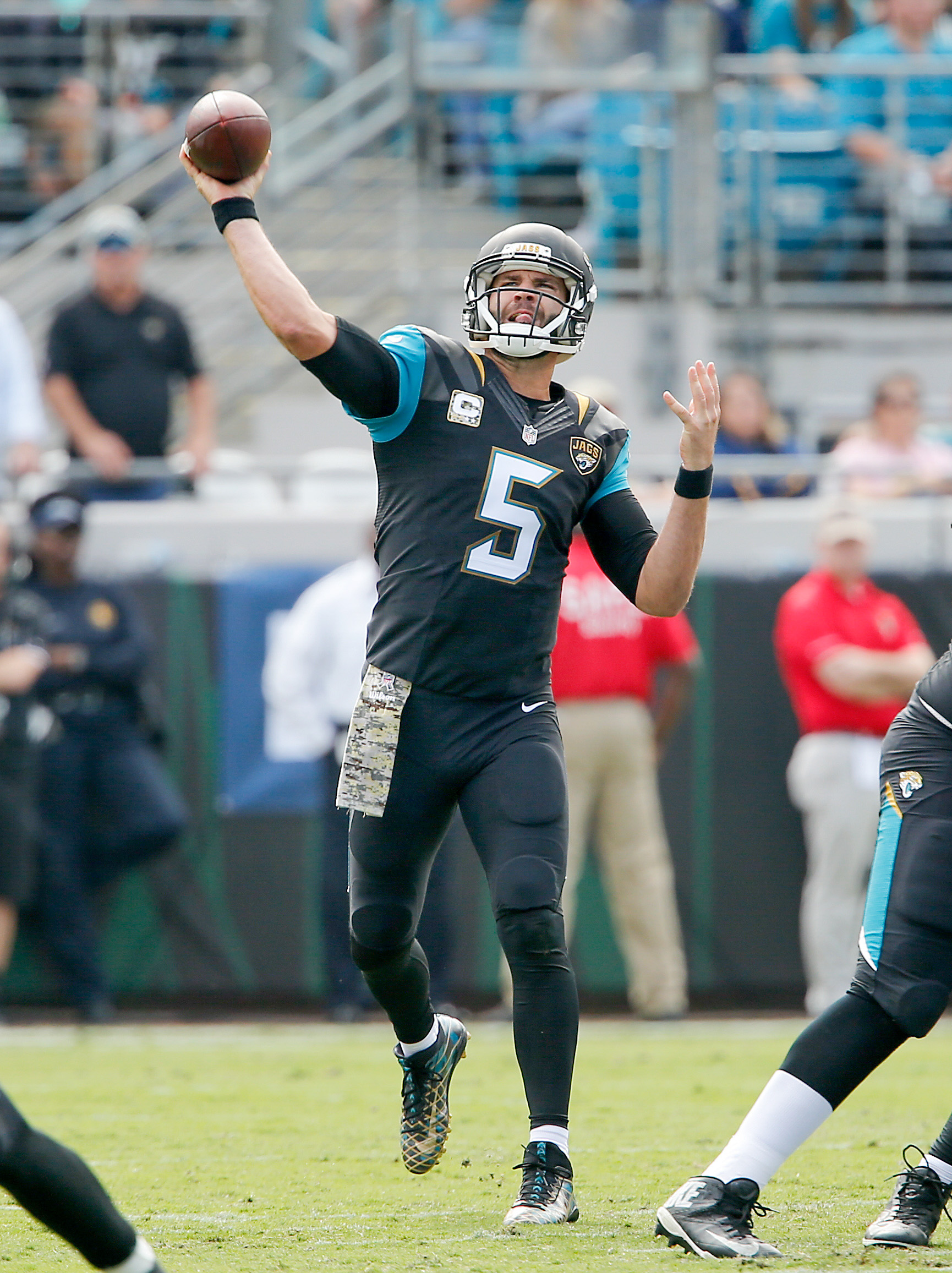
Staying on the field hasn’t been an issue to this point for Bortles, who has appeared in no fewer than 14 games in any of his three seasons and played full slates in each of the previous two years. While Bortles has shown durability, his run-of-the-mill output leaves questions as to whether he’ll end up as Jacksonville’s long-term solution under center. Bortles starred at Central Florida from 2012-13, leading the quarterback-starved Jaguars to use the third overall pick on him in 2014, but he hasn’t lived up to his draft slot in the pros.
At his best, Bortles showed real promise in 2015, his second season, when he fired the NFL’s second-most touchdowns (35, one behind Tom Brady) and amassed the league’s seventh-most passing yards (4,428, on 7.3 yards per attempt). He also averaged an outstanding 6.0 yards per carry and added two more scores on 52 rushes. Bortles’ performance that year came with negatives, namely the league’s fifth-worst completion rate (58.6 percent) and highest interception total (18), but it still looked as if the Jaguars had a legitimate building block on their hands.
The Jags went just 5-11 in 2015, but thanks to Bortles’ progress and an action-packed offseason, the club went into last year as a somewhat popular pick to push for a playoff spot. Instead, both the team and Bortles flopped en route to a 3-13 mark, and the QB was among the main reasons for its awful season. Even though Bortles took a career-low 34 sacks – down from 55 as a rookie and 51 in 2015 – and was once again a threat on the ground (6.2 YPC, three TDs on 58 carries), there was a notable decline in his production as a passer. The 6-foot-5, 232-pounder threw for 23 scores, 12 fewer than he tossed as a sophomore, against 16 INTs, saw his YPA drop over a yard (6.2), and completed under 59 percent of attempts for the third straight year.
Toward the end of their nightmarish 2016, the Jaguars fired head coach Gus Bradley. At the time, general manager Dave Caldwell suggested that Bradley’s successor could pick a different quarterback. But the Jags then tabbed ex-Bradley assistant Doug Marrone as his replacement, and both Marrone and Caldwell’s new superior, executive vice president of football operations Tom Coughlin, quickly showed confidence in Bortles.
The Coughlin-led Jaguars went to work in the offseason to ensure Bortles would have more at his disposal in his age-25 year than he did in any of his first three campaigns. Jacksonville used its first-round pick (No. 4 overall) on former LSU running back Leonard Fournette, who should add another dimension to an offense that finished a below-average 17th in yards per carry and a far worse 29th in rushing DVOA last season. The Jaguars also reinforced their offensive line, adding veteran bookend Branden Albert and second-round tackle Cam Robinson to a group that already had capable starters in center Brandon Linder, guards Patrick Omameh and A.J. Cann, and right tackle Jermey Parnell.
With Fournette, improved personnel along the line and the established wide receiver trio of Allen Robinson, Marqise Lee and Allen Hurns returning, it should be harder than ever for Bortles to fail. If he does, the Jaguars would be within reason to cut the cord and go back to the drawing board at the game’s foremost position next offseason. At that point, Kirk Cousins, Jimmy Garoppolo, Tyrod Taylor and Alex Smith could be among the league’s free agents and the likes of USC’s Sam Darnold, Wyoming’s Josh Allen and Louisville’s Lamar Jackson may offer enticing options in the draft.
NFC Notes: Donald, Cousins, Eagles, Bucs
While Rams defensive tackle and extension candidate Aaron Donald could be pushing for Ndamukong Suh-like money ($20MM per year), his team control status makes securing that type of deal unlikely, observes Mike Florio of Pro Football Talk. Suh was a free agent when he landed his massive contract with the Dolphins back in 2015, whereas Donald can’t voluntarily leave the Rams for a while. The superstar’s controllable at a relatively meager ~$10MM combined for at least the next two years (the Rams exercised his fifth-year option for 2018), and Los Angeles can then use the franchise tag on him during the ensuing couple offseasons if there’s no long-term deal in place. Because of that, there’s little incentive for the Rams to hurry into a Suh-esque extension for Donald.
More from the NFC:
- With the Redskins running out of time to extend quarterback Kirk Cousins by the July 17 deadline, the next week-plus could solidify or destroy their future, contends Jerry Brewer of the Washington Post. Locking up the franchise-tagged Cousins would be a sign of stability for the Redskins, argues Brewer, who criticizes the club for lowballing the signal-caller in past negotiations. Washington’s reluctance to buy into Cousins for the long haul has led it to franchise him in back-to-back offseasons, thereby costing the team around $44MM. The Redskins designating Cousins as their franchise player again next offseason probably isn’t going to happen, as doing so would come with a price tag upward of $34MM (the transition tag will come in at $28MM); as such, there’s a legitimate chance the productive Cousins will head elsewhere after 2017 and leave the Redskins searching for an answer under center again.
- Nolan Carroll and Leodis McKelvin were among the cornerbacks the Eagles relied on most last season, but the former left for the Cowboys in free agency and the latter is on the unemployment line. Now, with training camp approaching, the Eagles are unsure who will fill any of their top three corner roles, according to defensive backs coach Cory Undlin. Not even Jalen Mills, who finished second among Philadelphia’s CBs in snaps as a rookie last season (662), is guaranteed a prominent position. “It’s just going to be who’s going to step up here in training camp and through the preseason,” Undlin said (via Reuben Frank of CSNPhilly.com). “Who’s going to say, ‘Listen, I’m starting here, I’m starting here, I’m going to play the nickel,’ and then here’s the backups.” Mills, whom Pro Football Focus’ ranked as the league’s worst corner last season, and the underwhelming veteran trio of Patrick Robinson, Ron Brooks and Dwayne Gratz are the only Eagles corners with real pro experience. The club does have a pair of rookies with upside in second-rounder Sidney Jones, who tore his Achilles in March and could miss the start of the season, and third-rounder Rasul Douglas.
- The Buccaneers waived undrafted rookie linebacker Paul Magloire at the end of May, but he’ll stay with the team on injured reserve, reports Greg Auman of the Tampa Bay Times. Magloire is facing a 30-week recovery after undergoing surgery on a double hernia and torn groin muscle. The Bucs originally added Magloire on a split contract, which will allow the ex-Arizona standout to earn 75 percent of the $465K rookie minimum ($348K) while on IR.
Offseason In Review: Tennessee Titans
Even though the Titans extended their playoff drought to eight years in 2016, the team made noticeable progress for the first time in a while. The Titans matched the Texans at 9-7, only finishing behind the AFC South champions because of a tiebreaker, and ranked a division-best 13th in the NFL in Football Outsiders’ DVOA metric. After his club nearly broke through last year, Titans general manager Jon Robinson spent the offseason making meaningful upgrades on both sides of the ball.
Notable signings:
- Logan Ryan, CB: Three years, $30MM. $12MM guaranteed.
- Sylvester Williams, DT: Three years, $16.5MM. $7.25MM guaranteed.
- Jonathan Cyprien, S: Four years, $25MM. $7MM guaranteed.
- Brynden Trawick, S: Two years, $4.75MM. $3MM guaranteed.
- Eric Decker, WR: One year, $4MM. $2.5MM guaranteed. $1.5MM available via incentives.
- Daren Bates, LB: Three years, $6MM. $1MM guaranteed.
- Karl Klug, DL: Two years, $5MM. $1MM guaranteed. $800K available via incentives.
- Phillip Supernaw, TE: Two years, $3MM. $600K guaranteed.
- Matt Cassel, QB: Two years, $5.25MM. $500K guaranteed.
- Nate Palmer, LB: Two years, $2.3MM. $350K guaranteed.
- Eric Weems, WR: Two years, $2.6MM. $275K guaranteed.
- Tim Lelito, OL: One year, $1MM. $100K guaranteed.
- Demontre Hurst, S: One year, $690K.
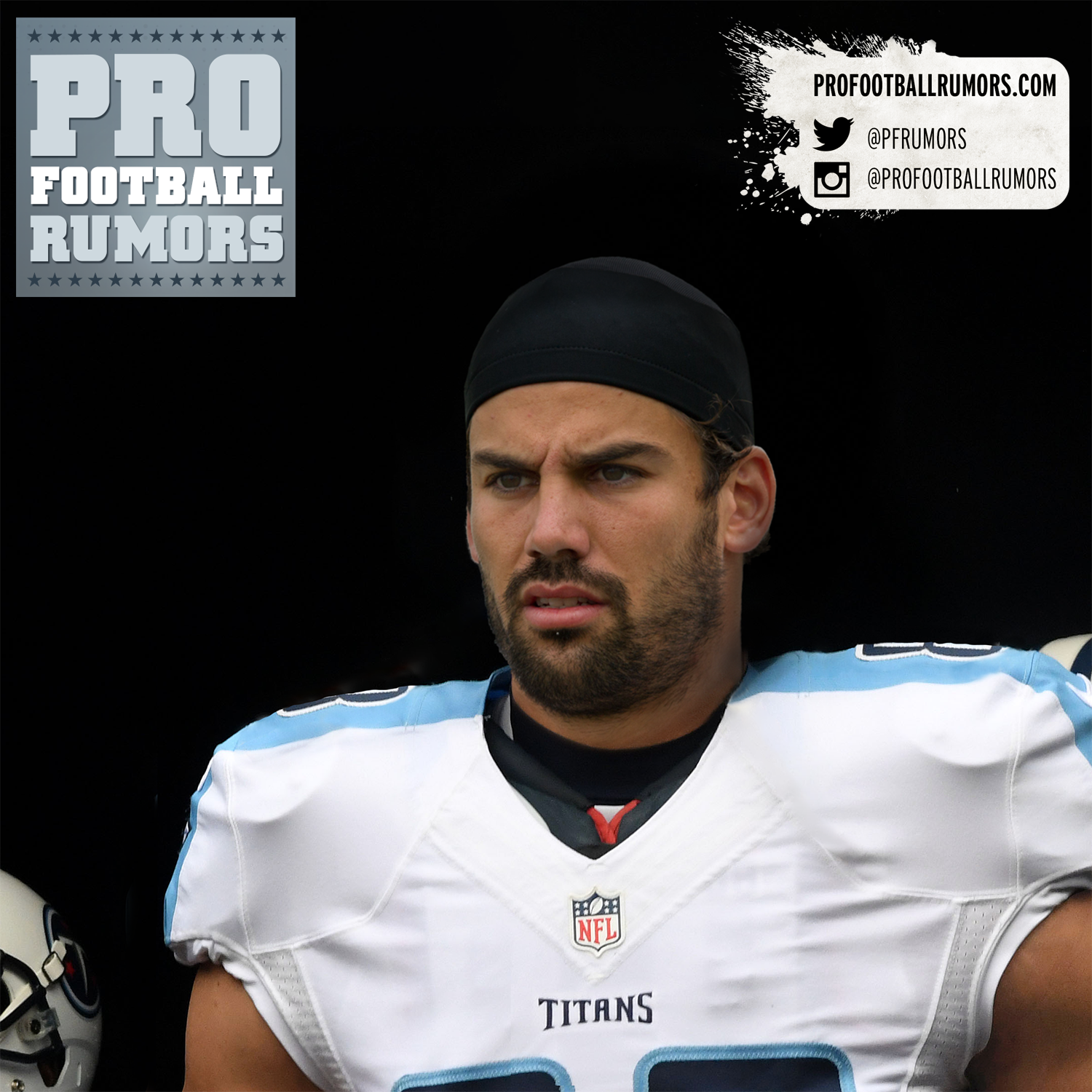
Robinson’s most recent splash came last month with the signing of wide receiver Eric Decker, who unexpectedly fell into the Titans’ laps after the rebuilding Jets released him. A shoulder injury limited Decker to three games last season and kept him out of the Jets’ lineup for the final three months of the campaign, but there’s no indication that it’ll hamper him going forward. That means a Tennessee offense which finished 2016 atop the league in red zone touchdown percentage should continue to be a force inside the opposition’s 20-yard line.
The 6-foot-3, 206-pound Decker has been a major threat near the goal line throughout his career, and he’s second only to ex-Jets teammate Brandon Marshall in red zone TD receptions since 2012 (33). The 30-year-old figures to mesh beautifully with Titans quarterback Marcus Mariota, who dominated in the red zone with 18 TD passes and no interceptions during his initial two years in the league.
When he signed with the Titans, Decker became the fourth potentially significant passing game weapon Robinson picked up for Mariota this offseason. The executive struck three times in the draft, using high selections on two wideouts – first-rounder Corey Davis and third-rounder Taywan Taylor – and another on tight end Jonnu Smith (Round 3). Of course, the headliner is Davis, who went fifth overall after surpassing 1,400 yards and 12 touchdowns in each of the past three seasons at Western Michigan. Interestingly, Lance Zierlein of NFL.com likens Davis to Decker, calling the 6-2, 205-pound rookie a “touchdown juggernaut.”
With Decker, Davis, Rishard Matthews and Taylor serving as the top four in their receiving corps and Smith joining the prolific Delanie Walker at tight end, Mariota has an enviable supply of aerial options on hand. Plus, the dual-threat signal-caller should again be a key contributor to a top-tier rushing attack. DeMarco Murray, Derrick Henry and Mariota ran behind arguably the NFL’s best offensive line and led a ground game that finished third in the league in rushing and fourth in yards per carry in 2016. Murray and Henry remain in the fold, as does the Titans’ starting O-line from last year, which is an unfortunate reality for opposing defenses.
Minor NFL Transactions: 7/7/17
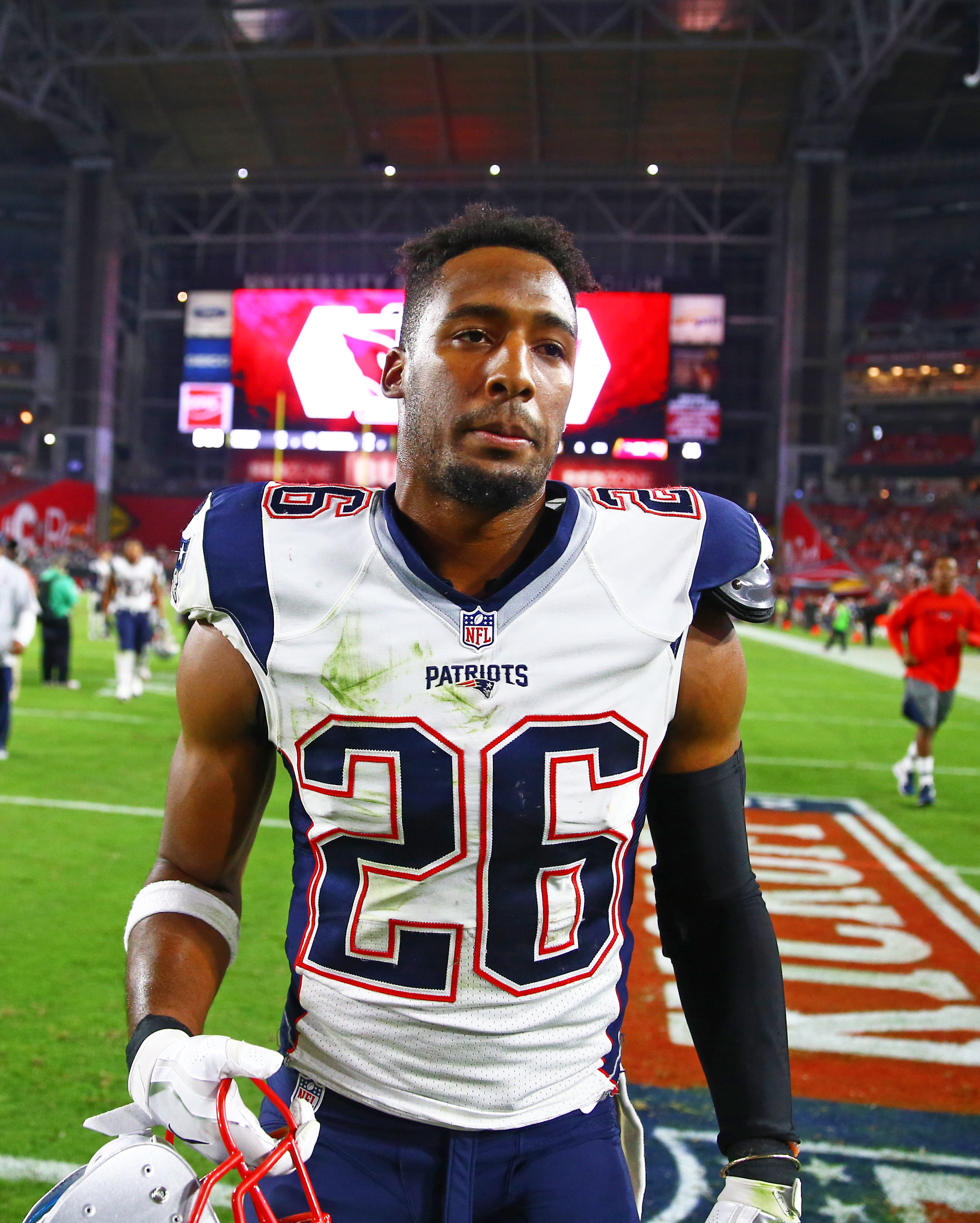
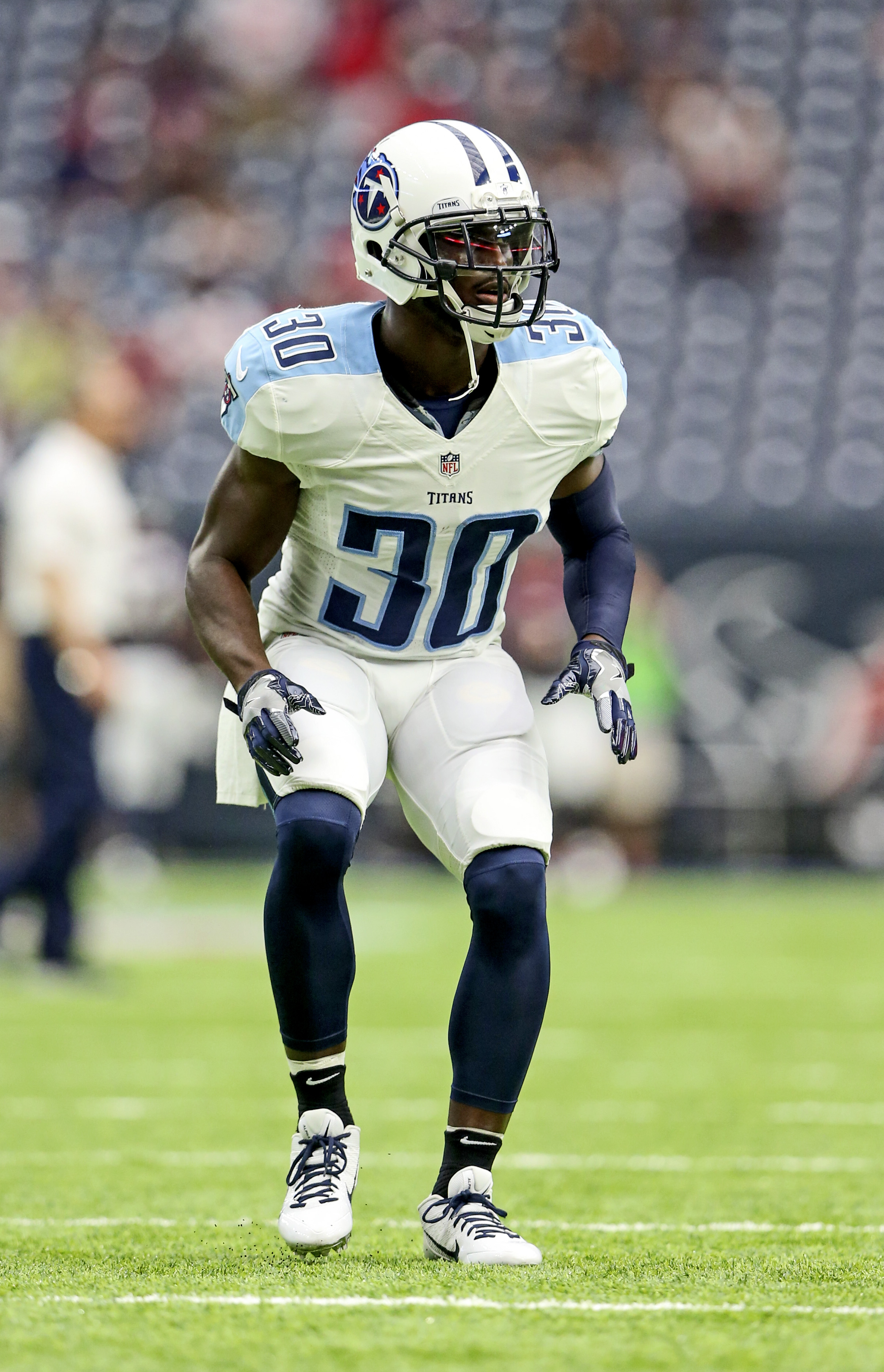
Friday’s minor NFL moves:
- The Colts have waived wide receiver Trey Griffey off injured reserve, according to Bob Condotta of the Seattle Times (on Twitter). Indianapolis first waived Griffey, who’s the son of Baseball Hall of Famer Ken Griffey Jr., three weeks ago, but he reverted to IR because no one claimed him. Trey Griffey signed with Indianapolis in May as an undrafted free agent from Arizona, where he hauled in 23 receptions for 382 yards and two touchdowns last season.
- The Raiders announced that they’ve waived linebackers Andy Mulumba and Neiron Ball and long snapper Anthony Kukwa. The team designated Ball as waived/injured. He and Mulumba have banked NFL experience, though neither has logged game action since 2015. Mulumba, whom the Raiders signed in January, has a longer track record than Ball, having appeared in 22 games (three starts) with the Packers from 2013-15. As a rookie in 2015, when the Raiders used a sixth-round pick on him, Ball started in two of six appearances and picked up a sack. He didn’t play last season after the Raiders waived/injured him prior to Week 1. As for Kukwa, he just signed with the Raiders as an undrafted free agent from Lake Erie College back in May.
Extra Points: Contracts, Fisher, Cowboys
Quarterback may be the most important position in sports, and the NFL features more teams than starting-caliber signal-callers, observes Joel Corry of CBS Sports. Those factors should put QBs in advantageous positions when it comes to negotiating contracts, but Corry argues that their salaries aren’t high enough. When the Packers’ Aaron Rodgers signed a five-year, $110MM deal to become the league’s highest-paid player in 2013, the salary cap was $123MM. The cap has risen 35.77 percent since then, going to $167MM, but the league’s new benchmark deal – the five-year, $125.05MM pact the Raiders’ Derek Carr inked last month – is only 13.7 percent higher than Rodgers’. But if the Redskins’ Kirk Cousins reaches the open market next winter, that could be a true game changer for QB salaries, posits Corry. Cousins might end up with a deal worth $30MM per year as a free agent, which would set the standard for the extensions Rodgers and the Falcons’ Matt Ryan could sign next offseason.
- As is the case with Cousins, the 2014 draft class could dramatically influence earning power throughout the league, writes Dan Graziano of ESPN.com. A few members of the class, including Carr, have already inked rich contracts this offseason. More high-paying accords are on the way, notes Graziano, who points to 2014’s star-studded group of receivers (Odell Beckham Jr. leads the way), elite defenders Khalil Mack and Aaron Donald, running back Devonta Freeman and cornerback Malcolm Butler, among others, as players in line for enormous paydays in the near future.
- While the unemployed Jeff Fisher would like another head coaching job, he hasn’t done enough to deserve another opportunity, says Don Banks of Patriots.com (video link). Fisher, whom the Rams fired last season after a 4-9 start, wouldn’t be the type of hire capable of energizing a fan base, notes Banks. The 59-year-old hasn’t coached an above-.500 team team since 2008, when he was with the Titans, and hasn’t been at the helm of a club that won a playoff game since 2003. Further, with a combined 165 losses in his 22 years with the Titans and Rams, Fisher’s tied with Dan Reeves for the most defeats of all-time.
- Among last year’s playoff teams, the Cowboys have experienced the most roster turnover this offseason, per Jason Fitzgerald of Over the Cap. Dallas has lost 27.5 percent of snaps, including 21.4 percent of quality snaps, since 2016, according to Fitzgerald. Ronald Leary, Doug Free, Morris Claiborne, Brandon Carr, Barry Church, Terrell McClain, J.J. Wilcox and Jack Crawford were among the Cowboys’ notables who either went elsewhere as free agents or retired. There aren’t any indispensable players in that group, but having to replace all of them at once is a tall task, opines Fitzgerald.