
Updated 2023 NFL Draft Order
As the NFL determines how it will proceed with the postponed Bills-Bengals game, Week 18 is on as scheduled. The No. 1 overall pick remains in doubt, and seven teams enter the final week either 6-10 or 7-9. Several games will impact how the top 10 shakes out.
Having lost nine straight, the Bears (3-13) are a half-game behind the Texans (2-13-1) for the No. 1 overall pick. Houston last held that draft slot in 2014, while Chicago has not picked first since 1947. The Texans are also playing a Colts team they tied in Week 1; Indianapolis enters Week 18 on a six-game skid. Conversely, the Bears face a Vikings squad that still has a path to the NFC’s No. 2 seed.
Week 17 also brought clarity on the NFC South. Although the Buccaneers have disappointed, their comeback win over the Panthers secured the franchise’s third straight playoff berth. That will mean Tampa Bay’s pick will check in no higher than 18th overall, while the Carolina and New Orleans slots could land in the top 10. The loser of Saturday’s Jaguars-Titans game would also see their draft slot rise several positions. Four of the five traded picks remain in the top 12, with the Seahawks’ spot (via the Broncos) still slotting highest — behind only the Texans and Bears’ positions.
For non-playoff teams, the draft order will be determined by the inverted 2022 standings — plus a series of tiebreakers, starting with strength of schedule — with playoff squads being slotted by their postseason outcome and regular-season record. Here is how the draft order looks entering Week 18:
- Houston Texans: 2-13-1
- Chicago Bears: 3-13
- Seattle Seahawks (via Broncos)
- Arizona Cardinals: 4-12
- Indianapolis Colts: 4-11-1
- Detroit Lions (via Rams)
- Atlanta Falcons: 6-10
- Las Vegas Raiders: 6-10
- Carolina Panthers: 6-10
- Philadelphia Eagles (via Saints)
- Tennessee Titans: 7-9
- Houston Texans (via Browns)
- New York Jets: 7-9
- Washington Commanders: 7-8-1
- Pittsburgh Steelers: 8-8
- Green Bay Packers: 8-8
- Detroit Lions: 8-8
- Seattle Seahawks: 8-8
- Jacksonville Jaguars: 8-8
- Tampa Bay Buccaneers: 8-8
- New England Patriots: 8-8
- New York Giants: 9-6-1
- Baltimore Ravens: 10-6
- Los Angeles Chargers: 10-6
- Cincinnati Bengals: 11-4
- Minnesota Vikings: 12-4
- Dallas Cowboys: 12-4
- Denver Broncos (via 49ers)
- Buffalo Bills: 12-3
- Kansas City Chiefs: 13-3
- Philadelphia Eagles: 13-3
Latest On Bills S Damar Hamlin’s Recovery
JANUARY 5: The Bills released a statement Thursday morning indicating Hamlin has shown “remarkable improvement” over the past day. The team said (via Twitter) Hamlin’s lungs continue to heal, and members of his family informed NFL.com’s Cameron Wolfe that the young defender is neurologically intact (video link). While the Bills statement said Hamlin remains “critically ill,” Ian Rapoport of NFL.com reports he opened his eyes Wednesday night (Twitter links).
Doctors believe Hamlin is ahead of schedule in his recovery, according to Dianna Russini of ESPN.com (on Twitter). Damar’s father, Mario Hamlin, addressed the team Wednesday and informed the players of the progress his son has made, Adam Schefter of ESPN.com tweets.
JANUARY 4: Damar Hamlin remains under sedation in the intensive care unit at the University of Cincinnati Medical Center, but updates continue to emerge. Hamlin’s recovery effort is “moving in a positive direction,” according to his marketing representative (via NFL.com’s Cameron Wolfe, video link). Hamlin remains in critical condition; the Bills recently announced (via Twitter) he has shown signs of improvement.
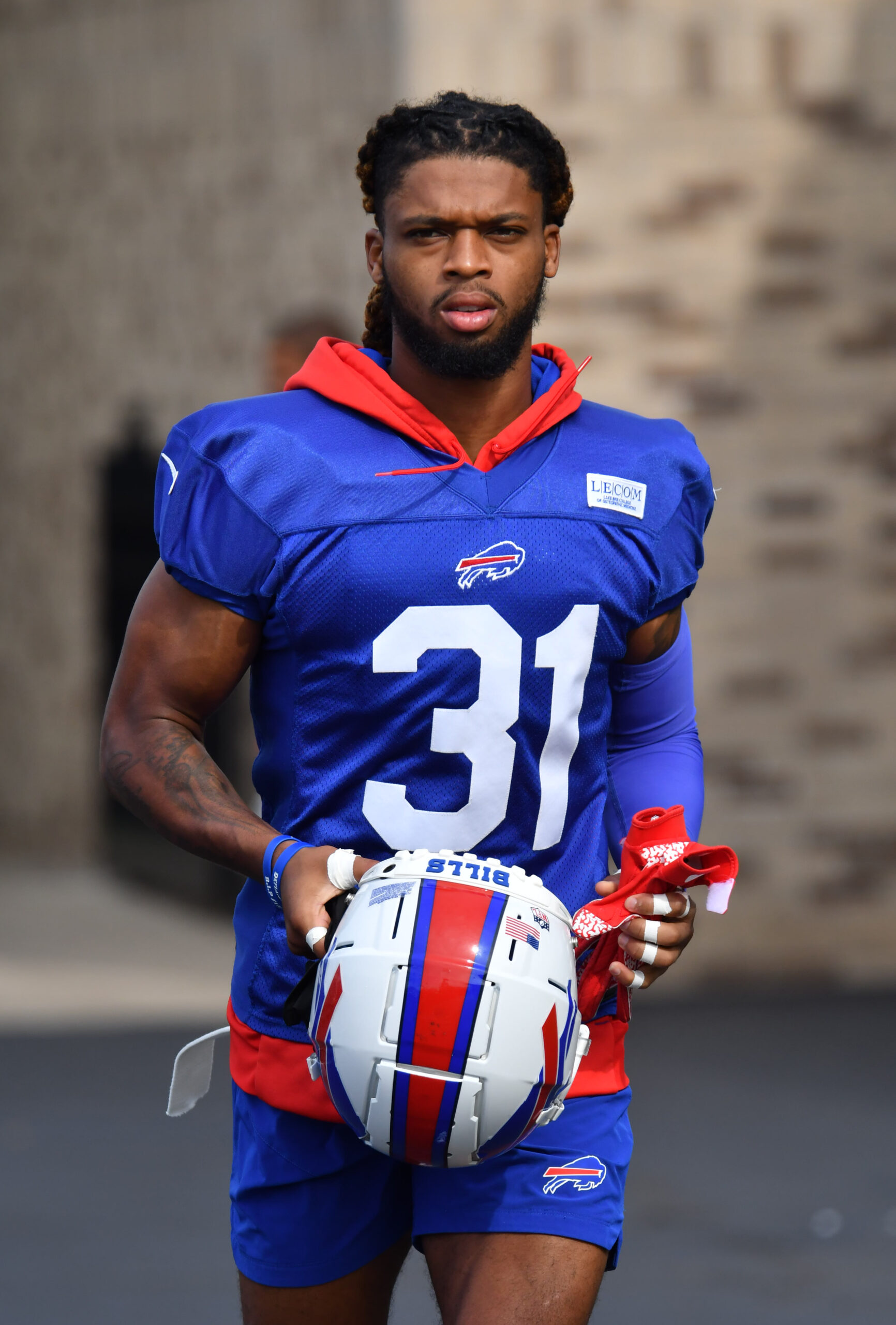 Hamlin is on a ventilator, and reports indicated he had progressed from needing 100% of the ventilator’s oxygen to requiring around 50% by Tuesday night. Hamlin’s agent also said his client’s oxygen levels have improved, Jeremy Fowler of ESPN.com adds. Wednesday morning, doctors have seen the “promising readings” they had hoped for by this point, Coley Harvey of ESPN.com reports (on Twitter).
Medical personnel performed CPR on Hamlin for multiple minutes. Although Hamlin’s uncle indicated resuscitation was twice required following his nephew’s cardiac arrest, the family said Wednesday (via Harvey, on Twitter) the 24-year-old defensive back only needed to be resuscitated once. That instance occurred on the field at Paycor Stadium.
Hamlin’s first-quarter tackle on Tee Higgins, which led to the cardiac arrest and an ambulance transporting the second-year safety to the hospital, initially preceded a short stretch in which it looked like the Bills-Bengals game would resume. The NFL has pushed back on the reported five-minute warmup period initially announced by ESPN, but Albert Breer of SI.com notes (via Twitter) multiple Bengals coaches heard “five minutes” — a usual timeframe following a major injury — regarding a return to play.
The ensuing on-field meeting between Sean McDermott and Zac Taylor led to the players returning to the locker room, Breer adds. Taylor said Wednesday that McDermott told him, “I need to be at the hospital with Damar and I shouldn’t be coaching this game.” The two teams re-emerged from their respective locker rooms in street clothes, shifting their full focuses toward Hamlin.
The NFL has not announced a resumption date for the Week 17 matchup. Bills players traveled back to Buffalo on Tuesday morning. The team remains scheduled to host the Patriots on Sunday. Rather than going through a typical Wednesday practice ahead of a Sunday game, the Bills announced they will hold a walkthrough.
Minor NFL Transactions: 1/4/23
Today’s minor NFL transactions:
Baltimore Ravens
- Designated for return: CB Daryl Worley
Buffalo Bills
- Signed off Jets practice squad: S Jared Mayden
- Waived: CB Xavier Rhodes
Chicago Bears
- Placed on IR: CB Josh Blackwell, G Teven Jenkins, OT Michael Schofield III
- Signed to active roster: LB DeMarquis Gates, DE Jalyn Holmes, LB Terrell Lewis
Dallas Cowboys
- Designated for return: G Matt Farniok
Detroit Lions
- Designated for return: CB Chase Lucas
Indianapolis Colts
- Placed on IR: CB Kenny Moore II
- Signed off Jaguars practice squad: DE Rashod Berry
Minnesota Vikings
- Designated for return: DL Jonathan Bullard
New Orleans Saints
- Placed on NFI: RB Dwayne Washington
- Signed to active roster: WR Keith Kirkwood
Seattle Seahawks
- Signed to active roster: TE Tyler Mabry
Washington Commanders
- Placed on IR: LB De’Jon Harris
Latest On Damar Hamlin, Bills-Bengals
6:41pm: Hamlin is on a ventilator, according to the Syracuse Post-Standard’s Matt Parrino, who spoke with Hamlin’s uncle, Dorrian Glenn. However, it is believed Hamlin’s breathing is improving, CBS Sports’ Josina Anderson adds (Twitter links).
Hamlin needed to be resuscitated twice — once on the field and once after he arrived at the University of Cincinnati Medical Center — according to ESPN.com’s Coley Harvey, who also spoke with Glenn (Twitter link). Lung damage is a concern, per Harvey, but Glenn added (via Parrino) his nephew is only using 50% of the ventilator Tuesday. He needed 100% of the ventilator’s oxygen Monday. Hamlin remains sedated, Cameron Wolfe of NFL.com tweets.
Further updates to the situation will be provided as they become available.
9:01am: All attention around the NFL continues to be focused on the well-being of Bills safety Damar Hamlin after he went into cardiac arrest during last night’s game between the Bills and Bengals. The early hours of Tuesday morning provided further clarification on the way the incident was handled.
Hamlin, 24, received care on the field which included CPR after he collapsed immediately following a tackle made on Bengals wideout Tee Higgins. That, as noted by a team announcement, restored his heartbeat before he was ultimately loaded directly into an ambulance and taken to hospital. He has since been intubated and, as of the latest update, remains sedated and in critical condition.
The situation left the NFL, NFLPA, on-field officials and both teams in need of making a determination with respect to how to proceed (if at all) with the game. While the ESPN broadcast mentioned the potential of a five-minute warmup period being given to each squad before resuming the contest, NFL EVP Troy Vincent denied that such a scenario was ever in consideration.
“There was no time period for the players to get warmed up,” Vincent said on a conference call (Twitter link via NFL Network’s Mike Garafolo). “It never crossed our mind to talk about warming up to resume play. That’s ridiculous. That’s insensitive. That’s not a place we should ever be in.”
Indeed, the contest was temporarily suspended, and later postponed in the wake of Hamlin’s uncertain condition. After a number of players and staff members from both teams visited the hospital where he is receiving treatment, it was initially reported that some Bills players would remain in Cincinnati instead of returning home. Further clarification from Jay Skurski of the Buffalo News confirms, however, that the team has traveled in full back to Buffalo (Twitter link).
As they and the rest of the NFL await further updates on Hamlin’s status, the matter of potentially resuming the game has been brought up. On the aforementioned conference call, NFL EVP of communications Jeff Miller said (via the Ringer’s Lindsay Jones, on Twitter) that that is “not a consideration right now.” While such a stance is certainly understandable in the aftermath of last night’s frightening events, the Buffalo-Cincinnati contest carries significant playoff implications for both teams. The situation is further complicated by the relation of its outcome to other AFC games set to be played this Sunday as the regular season is scheduled to come to a close.
Bills-Bengals Game Remains Without Resumption Date
The Bills announced Tuesday afternoon Damar Hamlin remains in critical condition at the University of Cincinnati Medical Center. Hamlin going into cardiac arrest during the first quarter of Monday night’s game has brought other NFL matters to a halt.
The NFL addressed the on-field procedures and decision to postpone the Bills-Bengals game early Tuesday morning, but as of this afternoon, its schedule is unchanged. Roger Goodell said Monday’s game will not be resumed this week. Week 18 remains slated to begin Saturday. While this invites logistical questions, Hamlin’s status continues to be the league’s focus.
 “The NFL continues to be in regular contact with the medical team caring for Damar Hamlin, and also the Bills and Bengals organizations and the NFL Players Association. After speaking with both teams and NFLPA leadership, NFL Commissioner Roger Goodell informed the clubs today that the Bills-Bengals game will not be resumed this week,” the NFL said in a statement.
“The NFL has made no decision regarding the possible resumption of the game at a later date. The league has not made any changes to the Week 18 regular season schedule.”
Bills players traveled back to Buffalo on Tuesday morning. The team is next scheduled to play against the Patriots on Sunday. The Bengals are set to host the Ravens in Week 18. Monday’s game being ruled a no-contest would obviously produce a historic ripple effect. The Bengals would win the AFC North title by default, while the Bills would go from controlling their own destiny for the AFC’s No. 1 seed to seeing the Chiefs have that control.
Postponing the playoffs in order to complete one game would be a drastic step for the league, though there is precedent for altering the schedule. Following a lengthy players’ strike, the 1982 season featured a 16-team playoff bracket that did not begin until Jan. 8, 1983. The September 11 attacks prompted the NFL to postpone Week 2 games in 2001, leading to a pushed-back playoff schedule. The COVID-19 pandemic also required forced flexibility from the league, which rescheduled several games during the 2020 and ’21 seasons.
Bills-Bengals Game Postponed Following Damar Hamlin Hospitalization
JANUARY 3, 1:38am: The Bills announced Hamlin went into cardiac arrest on the field. The on-field treatment restored Hamlin’s heartbeat, according to the team (on Twitter), but he remains in critical condition.
JANUARY 2, 9:37pm: Hamlin’s vitals have normalized, according to his marketing representative (on Twitter). Doctors will put him to sleep to place a breathing tube down his throat. Tests are ongoing.
9:01pm: This game will not resume tonight, according to ESPN. No resumption date has been announced. Goodell announced the postponement. Hamlin is in critical condition, according to the NFL (Twitter link).
“The NFLPA and everyone in our community is praying for Damar Hamlin. We have been in touch with Bills and Bengals players, and with the NFL. The only thing that matters at this moment is Damar’s health and well being,” the union said in a statement.
8:21pm: An ambulance transported Bills safety Damar Hamlin off the field in the first quarter of Monday night’s game. Teams had been given five minutes to warm up to begin play again, but after a discussion, both squads have left the field.
Twenty-five minutes after the Hamlin injury, the game has been suspended. Medical personnel administered CPR to Hamlin, a 24-year-old in his second NFL season. Both teams gathered together around Hamlin and the ambulance as he was stretchered into the vehicle. After Sean McDermott and Zac Taylor spoke briefly, the teams headed to their respective locker rooms.
The terrifying scene began after Hamlin made a tackle on Bengals wide receiver Tee Higgins. As Hamlin rose to his feet, he fell backward onto the turf, leading to the game’s stoppage. In addition to the application of CPR, medical staffers gave him oxygen. Hamlin is being transported to the University of Cincinnati Medical Center.
Hamlin moved into Buffalo’s starting lineup earlier this season, becoming the team’s primary replacement for Micah Hyde, who suffered a season-ending foot injury in September. The Bills drafted Hamlin 212th overall out of Pittsburgh last year. He spent the first season of his pro career as a backup to Hyde and Jordan Poyer but has made 14 starts this year.
Bills officials, including McDermott and GM Brandon Beane, met with referees minutes ago, according to ESPN.com’s Alaina Getzenberg (on Twitter). If tonight’s game ends up being postponed, the NFL will make the decision. Roger Goodell will speak to the teams at some point, but that is obviously the secondary issue here after what just transpired.
Minor NFL Transactions: 1/2/23
Here are Monday’s minor moves:
Buffalo Bills
- Promoted: OL Alec Anderson, WR Cole Beasley
Cincinnati Bengals
- Signed from practice squad: CB Allan George
- Promoted: QB Jake Browning
Tennessee Titans
- Signed off Browns’ practice squad: S Mike Brown
- Placed on IR: S Andrew Adams
Minor NFL Transactions: 12/29/22
Here are today’s minor moves from around the league, including the Cowboys’ and Titans’ standard gameday elevations for the season’s last Thursday Night game:
Buffalo Bills
- Designated to return from IR: CB Christian Benford
Dallas Cowboys
- Promoted from practice squad: C Brock Hoffman, RB Qadree Ollison
Denver Broncos
- Signed off Ravens practice squad: RB Tyler Badie
Tennessee Titans
- Signed to active roster: OLB Sam Okuayinonu, LB Andre Smith, RB Jonathan Ward
- Promoted from practice squad: OL Zack Johnson, DL Jayden Peevy
Badie is a rookie sixth-round pick that failed to make the Ravens initial 53-man roster. The 22-year-old had a breakout senior season at Mizzou that saw him rush for 1,604 yards and 14 touchdowns, adding 330 receiving yards and four receiving touchdowns, as well. After being waived in the team’s final roster cuts before the season, Badie signed to the Ravens practice squad, where he’s remained all season. Badie adds to the quantity of the Broncos’ room of running backs that currently holds Latavius Murray, Chase Edmonds, and Marlon Mack, as well as fullback Andrew Beck.
The three Titans’ signees are filling roster spots vacated by quarterback Ryan Tannehill and linebackers Bud Dupree and Zach Cunningham, all of whom were placed on injured reserve today.
Updated 2023 NFL Draft Order
With two weeks remaining in the regular season, much is still to be decided both in terms of playoff positioning and the order of the upcoming draft. Five teams are still eligible to land the top pick.
The Texans remain in pole position to hold the No. 1 spot, but their win over the Titans (coupled with the Bears’ losing streak extending to eight games) leaves Chicago just a half-game away. The fact that the Bears would likely select a defensive player rather than a quarterback with the top pick adds considerable intrigue to the potential implications of them ending up with that slot.
With the Browns continuing to struggle even with Deshaun Watson back from suspension, there is a distinct possibility that four first-rounders which changed hands (including Cleveland’s top 2023 pick, part of the package they sent to Houston for Watson) land in the top 10. Another premium selection would obviously soften the blow of losing out on the No. 1 spot from the Texans’ perspective, should that take place.
The final Wild Card spot in each conference is still being contested by several teams, resulting in a logjam of 7-8 squads in the middle of the order. Several head-to-head matchups will be played out between those clubs, which could lead to plenty of change in their positioning over the next two weeks. The race for both the AFC and NFC South titles will also have a significant impact on the final order, given the average (at best) record each division’s winner will have at the end of the regular season.
For non-playoff teams, the draft order will be determined by the inverted 2022 standings — plus a series of tiebreakers, starting with strength of schedule — with playoff squads being slotted by their postseason outcome and regular-season record. Here is how the draft order looks entering Week 17:
- Houston Texans: 2-12-1
- Chicago Bears: 3-12
- Seattle Seahawks (via Broncos)
- Arizona Cardinals: 4-11
- Indianapolis Colts: 4-10-1
- Atlanta Falcons: 5-10
- Detroit Lions (via Rams)
- Carolina Panthers: 6-9
- Las Vegas Raiders: 6-9
- Philadelphia Eagles (via Saints)
- Houston Texans (via Browns)
- Seattle Seahawks: 7-8
- Tennessee Titans: 7-8
- New England Patriots: 7-8
- New York Jets: 7-8
- Pittsburgh Steelers: 7-8
- Green Bay Packers: 7-8
- Detroit Lions: 7-8
- Jacksonville Jaguars: 7-8
- Tampa Bay Buccaneers: 7-8
- Washington Commanders: 7-7-1
- New York Giants: 8-6-1
- Los Angeles Chargers: 9-6
- Baltimore Ravens: 10-5
- Denver Broncos (via 49ers through Dolphins)
- Dallas Cowboys: 11-4
- Cincinnati Bengals: 11-4
- Kansas City Chiefs: 12-3
- Minnesota Vikings: 12-3
- Buffalo Bills: 12-3
- Philadelphia Eagles: 13-2
Next year’s draft will feature a 31-pick first round. The Dolphins’ penalty for the Tom Brady–Sean Payton tampering scandal cost them their 2023 first-round choice
Minor NFL Transactions: 12/23/22
Today’s minor moves heading into the NFL’s largest slate of Saturday games of the season:
Baltimore Ravens
- Signed to active roster: DT Isaiah Mack
Buffalo Bills
- Promoted from practice squad: WR Cole Beasley, DE Kingsley Jonathan
Chicago Bears
- Activated from IR: RB Khalil Herbert (story)
- Signed to active roster: CB Breon Borders
- Promoted from practice squad: TE Chase Allen, WR Nsimba Webster
- Placed on IR: CB Jaylon Johnson, CB Kindle Vildor
Cincinnati Bengals
- Promoted from practice squad: CB Allan George
Dallas Cowboys
- Promoted from practice squad: CB Mackensie Alexander, C Brock Hoffman
Detroit Lions
- Promoted from practice squad: S Brady Breeze, TE Garrett Griffin
Kansas City Chiefs
- Activated from IR: TE Blake Bell
- Promoted from practice squad: DT Danny Shelton
- Placed on IR: TE Jody Fortson
Minnesota Vikings
- Promoted from practice squad: G Kyle Hinton
New England Patriots
- Signed to active roster: LS Tucker Addington
- Promoted from practice squad: K Tristan Vizcaino, TE Scotty Washington
- Placed on IR: LS Joe Cardona
New Orleans Saints
- Signed to active roster: WR Kirk Merritt
- Promoted from practice squad: G Josh Andrews, WR Keith Kirkwood
Philadelphia Eagles
- Signed to active roster: LB Christian Elliss
- Promoted from practice squad: P Brett Kern
- Placed on IR: TE Tyree Jackson
San Francisco 49ers
- Promoted from practice squad: DL Michael Dwumfour, WR Willie Snead
Seattle Seahawks
- Promoted from practice squad: RB Godwin Igwebuike, RB Wayne Gallman
Tampa Bay Buccaneers
- Signed to active roster: WR Deven Thompkins
- Placed on IR: LB Genard Avery
Tennessee Titans
- Promoted from practice squad: LB Andre Smith, Jonathan Ward