
Half Of Teams Have Wrapped Draft Class
Half of the NFL’s teams have wrapped up their NFL draft classes, as shown in PFR’s tracker. There are still 16 teams with at least one draft pick left to sign, but the following clubs have no more work left in that area as we get ready for training camp:
Arizona Cardinals
- 1-10: Josh Rosen, QB (UCLA): Signed
- 2-47: Christian Kirk, WR (Texas A&M): Signed
- 3-97: Mason Cole, C (Michigan): Signed
- 4-134: Chase Edmonds, RB (Fordham): Signed
- 6-182: Christian Campbell, CB (Penn State): Signed
- 7-254: Korey Cunningham, T (Cincinnati): Signed
Baltimore Ravens
- 1-25: Hayden Hurst, TE (South Carolina): Signed
- 1-32: Lamar Jackson, QB (Louisville): Signed
- 3-83: Orlando Brown, T (Oklahoma): Signed
- 3-86: Mark Andrews, TE (Oklahoma): Signed
- 4-118: Anthony Averett, CB (Alabama): Signed
- 4-122: Kenny Young, LB (UCLA): Signed
- 4-132: Jaleel Scott, WR (New Mexico State): Signed
- 5-162: Jordan Lasley, WR (UCLA): Signed
- 6-190: DeShon Elliott, S (Texas): Signed
- 6-212: Greg Senat, T (Wagner): Signed
- 6-215: Bradley Bozeman, C (Alabama): Signed
- 7-238: Zach Sieler, DE (Ferris State): Signed
Carolina Panthers
- 1-24: D.J. Moore, WR (Maryland): Signed
- 2-55: Donte Jackson, CB (LSU): Signed
- 3-85: Rashaan Gaulden, CB (Tennessee): Signed
- 4-101: Ian Thomas, TE (Indiana): Signed
- 4-136: Marquis Haynes, DE (Ole Miss): Signed
- 5-161: Jermaine Carter Jr., LB (Maryland): Signed
- 7-234: Andre Smith, LB (North Carolina): Signed
- 7-242: Kendrick Norton, DT (Miami): Signed
Dallas Cowboys
- 1-19: Leighton Vander Esch, LB (Boise State): Signed
- 2-50: Connor Williams, G (Texas): Signed
- 3-81: Michael Gallup, WR (Colorado State): Signed
- 4-116: Dorance Armstrong, DE (Kansas): Signed
- 4-137: Dalton Schultz, TE (Stanford): Signed
- 5-171: Mike White, QB (Western Kentucky): Signed
- 6-193: Chris Covington, LB (Indiana): Signed
- 6-208: Cedrick Wilson, WR (Boise State): Signed
- 7-236: Bo Scarbrough, RB (Alabama): Signed
Detroit Lions
- 1-20: Frank Ragnow, C (Arkansas): Signed
- 2-43: Kerryon Johnson, RB (Auburn): Signed
- 3-82: Tracey Walker, S (Louisiana-Lafayette): Signed
- 4-114: Da’Shawn Hand, DE (Alabama): Signed
- 5-153: Tyrell Crosby, T (Oregon): Signed
- 7-237: Nick Bawden, FB (San Diego State): Signed
Green Bay Packers
- 1-18: Jaire Alexander, CB (Louisville): Signed
- 2-45: Josh Jackson, CB (Iowa): Signed
- 3-88: Oren Burks, LB (Vanderbilt): Signed
- 4-133: J’Mon Moore, WR (Missouri): Signed
- 5-138: Cole Madison, T (Washington State): Signed
- 5-172: JK Scott, P (Alabama): Signed
- 5-174: Marquez Valdes-Scantling, WR (USF): Signed
- 6-207: Equanimeous St. Brown, WR (Notre Dame): Signed
- 7-232: James Looney, DT (California): Signed
- 7-239: Hunter Bradley, LS (Mississippi State): Signed
- 7-248: Kendall Donnerson, LB (Southeast Missouri): Signed
Houston Texans
- 3-68: Justin Reid, S (Stanford): Signed
- 3-80: Martinas Rankin, T (Mississippi State): Signed
- 3-98: Jordan Akins, TE (UCF): Signed
- 4-103: Keke Coutee, WR (Texas Tech): Signed
- 6-177: Duke Ejiofor, DE (Wake Forest): Signed
- 6-211: Jordan Thomas, TE (Mississippi State): Signed
- 6-214: Peter Kalambayi, LB (Stanford): Signed
- 7-222: Jermaine Kelly, CB (San Jose State): Signed
Los Angeles Chargers
- 1-17: Derwin James, S (Florida State): Signed
- 2-48: Uchenna Nwosu, LB (USC): Signed
- 3-84: Justin Jones, DT (North Carolina State): Signed
- 4-119: Kyzir White, S (West Virginia): Signed
- 5-155: Scott Quessenberry, CB (UCLA): Signed
- 6-191: Dylan Cantrell, WR (Texas Tech): Signed
- 7-251: Justin Jackson, RB (Northwestern): Signed
Los Angeles Rams
- 3-89: Joseph Noteboom, OL (TCU): Signed
- 4-111: Brian Allen, C (Michigan State): Signed
- 4-135: John Franklin-Myers, DE (Stephen F. Austin): Signed
- 5-147: Micah Kiser, LB (Virginia): Signed
- 5-160: Ogbonnia Okoronkwo, LB (Oklahoma): Signed
- 6-176: John Kelly, RB (Tennessee): Signed
- 6-192: Jamil Demby, T (Maine): Signed
- 6-195: Sebastian Joseph, DT (Rutgers): Signed
- 6-205: Trevon Young, LB (Louisville): Signed
- 7-231: Travin Howard, LB (TCU): Signed
- 7-244: Justin Lawler, DE (SMU): Signed
New Orleans Saints
- 1-14: Marcus Davenport, DE (UTSA): Signed
- 3-91: Tre’Quan Smith, WR (UCF): Signed
- 4-127: Rick Leonard, T (Florida State): Signed
- 5-164: Natrell Jamerson, S (Wisconsin): Signed
- 6-189: Kamrin Moore, CB (Boston College): Signed
- 6-201: Boston Scott, RB (Louisiana Tech): Signed
- 7-245: Will Clapp, G (LSU): Signed
Oakland Raiders
- 1-15: Kolton Miller, T (UCLA): Signed
- 2-57: P.J. Hall, DT (Sam Houston State): Signed
- 3-65: Brandon Parker, T (North Carolina A&T): Signed
- 3-87: Arden Key, DE (LSU): Signed
- 4-110: Nick Nelson, CB (Wisconsin): Signed
- 5-140: Maurice Hurst, DT (Michigan): Signed
- 5-173: Johnny Townsend, P (Florida): Signed
- 6-216: Azeem Victor, LB (Washington): Signed
- 7-228: Marcell Ateman, WR (Oklahoma State): Signed
Philadelphia Eagles
- 2-49: Dallas Goedert, TE (South Dakota State): Signed
- 4-125: Avonte Maddox, CB (Pittsburgh): Signed
- 4-130: Josh Sweat, DE (Florida State): Signed
- 6-206: Matt Pryor, T (TCU): Signed
- 7-233: Jordan Mailata, T (Australia): Signed
Seattle Seahawks
- 1-27: Rashaad Penny, RB (San Diego State): Signed
- 3-79: Rasheem Green, DE (USC): Signed
- 4-120: Will Dissly, TE (Washington): Signed
- 5-141: Shaquem Griffin, DE (UCF): Signed
- 5-146: Tre Flowers, S (Oklahoma State): Signed
- 5-149: Michael Dickson, P (Texas): Signed
- 5-168: Jamarco Jones, T (Ohio State): Signed
- 6-186: Jacob Martin, LB (Temple): Signed
- 7-220: Alex McGough, QB (Florida International): Signed
Tampa Bay Buccaneers
- 1-12: Vita Vea, DT (Washington): Signed
- 2-38: Ronald Jones, RB (USC): Signed
- 2-53: M.J. Stewart, CB (North Carolina): Signed
- 2-63: Carlton Davis, CB (Auburn): Signed
- 3-94: Alex Cappa, G (Humboldt State): Signed
- 4-117: Jordan Whitehead, S (Pittsburgh): Signed
- 5-144: Justin Watson, WR (Pennsylvania): Signed
- 6-202: Jack Cichy, LB (Wisconsin): Signed
Tennessee Titans
- 1-22: Rashaan Evans, LB (Alabama): Signed
- 2-41: Harold Landry, DE (Boston College): Signed
- 5-152: Dane Cruikshank, CB (Arizona): Signed
- 6-199: Luke Falk, QB (Washington State): Signed
Washington Redskins
- 1-13: Da’Ron Payne, DT (Alabama): Signed
- 2-59: Derrius Guice, RB (LSU): Signed
- 3-74: Geron Christian, OL (Louisville): Signed
- 4-109: Troy Apke, S (Penn State): Signed
- 5-163: Tim Settle, DT (Virginia Tech): Signed
- 6-197: Shaun Dion Hamilton, LB (Alabama): Signed
- 7-241: Greg Stroman, CB (Virginia Tech): Signed
- 7-256: Trey Quinn, WR (SMU): Signed
This Date In Transactions History: T.J. Yates, Akeem Dent
Four years ago today, we had a rare June NFL trade. In a relatively interesting move (at the time), the Texans sent quarterback T.J. Yates to the Falcons for linebacker Akeem Dent.
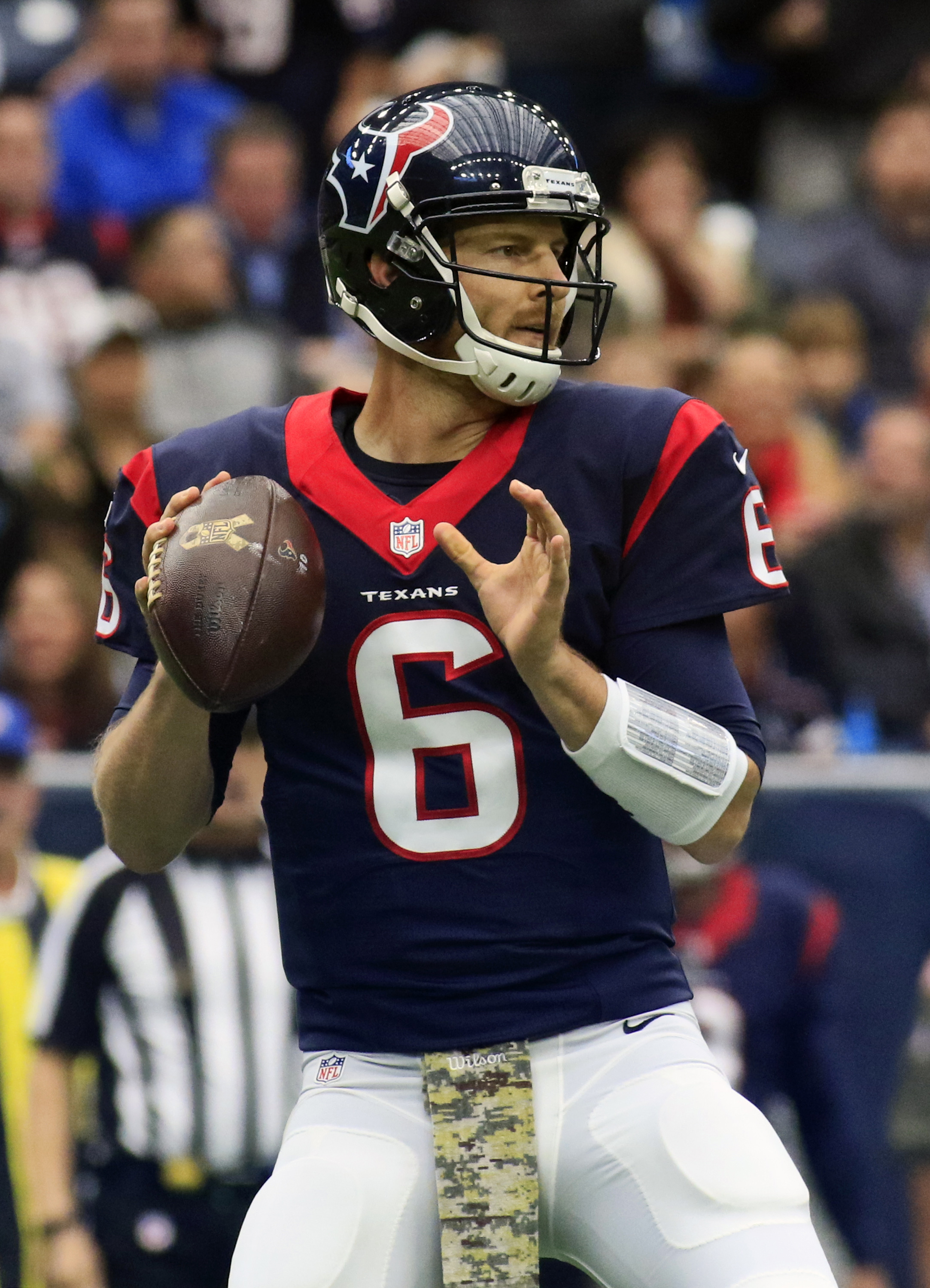 Houston had actually planned on releasing Yates, their 2011 fifth-round pick. The North Carolina product had failed to show much during his first three years in the NFL, throwing three touchdowns and six interceptions in 13 games. With coach Bill O’Brien deciding to roll with the trio of Ryan Fitzpatrick, Case Keenum, and Tom Savage, Yates was set to be released and hit free agency. However, once word of Yates’ impending release got around the NFL, teams started calling in on the young signal-caller.
Houston ended up landing on a deal with the Falcons, receiving the intriguing Dent in return. The 2011 third-round pick had looked solid during his stint in Atlanta, starting 10 games and compiling 136 tackles in three years. While the Georgia product failed to progress during his time in Houston, the trade still appears to be a win for the Texans. Dent collected 38 tackles and one sacks in 15 games (seven starts) during his first season in Houston, earning himself a two-year extension. However, over the next two seasons, Dent only managed to compile a combined 29 tackles and zero sacks. The 30-year-old hasn’t appeared in the NFL since 2016.
Yates’ tenure with the Falcons was short-lived. The quarterback appeared in only a single game for the franchise, completing three of four passes for 64 yards and one interception. He was released by Atlanta prior to the 2015 season, and he ended up catching on again with… the Texans. Yates looked a bit better during his second (and third) stint in Houston, and he earned a chance to play this past season due to injuries. He finished the 2017 campaign having completed 48.5-percent of his passes for 523 yards, four touchdowns, and three interceptions.
PFR Glossary: Contract Incentives
This year’s biggest free agents have already come off of the board, but there are still plenty of notable veterans available, including Antonio Gates, DeMarco Murray, Dez Bryant, Tre Boston, and Johnathan Hankins. When these players eventually sign, they’re likely to have contract incentives built into their deals. With that in mind, we wanted to give a refresher on contract incentives and their various forms.
Signing bonuses can sweeten the pot for free agents and are largely self-explanatory, but incentives are a bit trickier. At the most basic level, contract incentives are designed to reward a player for his performance — in some cases, these financial rewards are linked to individual or team production, while other incentives can be earned simply by the player earning a spot on his team’s active roster from week to week. These incentives are divided into two categories: Likely to be earned (LTBE) and not likely to be earned (NLTBE).
Under the NFL’s definition, a likely to be earned incentive is generally one that was achieved the year before. So if a running back racked up 1,300 yards on the ground in 2017 and has an incentive in his contract that would reward him for surpassing 1,200 yards in 2018, that incentive is viewed as likely to be earned and counts against his cap hit from the start of the year. On the other hand, a back who has never surpassed 700 rushing yards in a season could have an incentive on his deal for 2014 that would reward him for rushing for 800 yards — such a bonus would be considered not likely to be earned, and wouldn’t count against the player’s cap number.
Because the player’s or team’s performance in a given season dictates whether or not the incentive is actually earned, the player’s cap number is sometimes altered after the fact. For instance, there’d be no change if a player met the criteria for a $50K LTBE incentive, but if he failed to earn that incentive, his team would be credited with $50K in cap room for the following season. Similarly, if a $50K NLTBE incentive isn’t reached, nothing changes, but if a player does earn that incentive, his club’s cap space for the following season is reduced by $50K.
A simple incentive linked to yardage or touchdown totals in a season isn’t too hard to track, but there are more convoluted forms of bonuses. Let’s say a player coming off an injury that limited him to six games played signs a contract that would pay him $500K in per-game roster bonuses. That player would be considered likely to appear in six games, but unlikely to appear in more beyond that. So, of his $500K in roster bonuses, $187,500 would initially count against the cap, as the LTBE portion.
Here are a few more notes on contract incentives and how they work:
- Any incentive that is considered to be in the player’s sole control, such as weight bonuses, or his presence at workouts, is considered likely to be earned.
- Any incentive in the first year of a rookie contract is considered likely to be earned.
- Individual performance incentives can be linked to most basic statistical categories, such as yardage, yards per attempt, and touchdowns. However, more obscure stat categories typically aren’t allowed for individual incentives. For instance, a receiver couldn’t have an incentive tied to receptions of 20+ yards. Meanwhile, a defender could have an incentive linked to sacks or interceptions, but not to tackles for a loss.
- In some cases, individual performances can also dictate the value of traded draft picks. For example, the Jaguars making the playoffs in 2017 altered their trade for Marcell Dareus. The Bills received a conditional 2018 sixth-round pick for Dareus in the parties’ October trade, but that pick became a fifth-rounder when the Jags reached the postseason.
Note: This is a PFR Glossary entry, modified from an earlier entry by editor emeritus Luke Adams. Our glossary posts explain specific rules relating to free agency, trades, or other aspects of the NFL’s Collective Bargaining Agreement. Information from Russell Street Report, Over The Cap, and Salary Cap 101 was used in the creation of this post.
10% Of NFL Draft Picks Remain Unsigned
As shown in PFR’s tracker, the bulk of this year’s draft picks are now under contract. Of this year’s 256 selections, 230 have inked their first NFL deal. As of Monday morning, that leaves just 26 players – or approximately 10% of this year’s class – unsigned. Here’s the complete breakdown of the stragglers, round by round:
First Round (16)
- Browns, 1-1: Baker Mayfield, QB (Oklahoma)
- Giants, 1-2: Saquon Barkley, RB (Penn State)
- Jets, 1-3: Sam Darnold, QB (USC)
- Browns, 1-4: Denzel Ward, CB (Ohio State)
- Broncos, 1-5: Bradley Chubb, DE (North Carolina State)
- Bills, 1-7: Josh Allen, QB (Wyoming)
- Bears, 1-8: Roquan Smith, LB (Georgia)
- 49ers, 1-9: Mike McGlinchey, T (Notre Dame)
- Patriots, 1-23: Isaiah Wynn, T (Georgia)
- Panthers, 1-24: D.J. Moore, WR (Maryland)
- Ravens, 1-25: Hayden Hurst, TE (South Carolina)
- Falcons, 1-26: Calvin Ridley, WR (Alabama)
- Steelers, 1-28: Terrell Edmunds, S (Virginia Tech)
- Jaguars, 1-29: Taven Bryan, DT (Florida)
- Vikings, 1-30: Mike Hughes, CB (UCF)
- Patriots, 1-31: Sony Michel, RB (Georgia)
Second Round (4)
- Colts, 2-36: Darius Leonard, LB (South Carolina State)
- Colts, 2-37: Braden Smith, G (Auburn)
- Dolphins, 2-42: Mike Gesicki, TE (Penn State)
- 49ers, 2-44: Dante Pettis, WR (Washington)
Third Round (5)
- Broncos, 3-71: Royce Freeman, RB (Oregon)
- Redskins, 3-74: Geron Christian, OL (Louisville)
- Bengals, 3-77: Sam Hubbard, DE (Ohio State)
- Bengals, 3-78: Malik Jefferson, LB (Texas)
- Seahawks, 3-79: Rasheem Green, DE (USC)
Fifth Round (1)
- Giants, 5-139: RJ McIntosh, DT (Miami)
Sixth Round (0)
Seventh Round (0)
Fourth Round (0)
Rookie holdouts are pretty rare under the current CBA, but the Joey Bosa drama of 2016 reminded all of us that it’s still a possibility. We have yet to hear of a significant divide between this year’s first-round picks and their respective teams, but it’s something to keep in mind as we inch closer to training camp.
Typically, first-round picks take longer to sign as they haggle over offset language. Offset language relates to what happens to a player’s salary if he’s cut during the first four years of his career, while he’s still playing on his rookie contract. For example, if a player has $4MM in guaranteed money remaining on his contract and is cut, he’ll still be owed that $4MM.
However, if a team has written offset language into the contract, that club can save some money if and when the player signs with a new team. For example, if that player who had $4MM in guaranteed money left on his contract signs with a new club on a $1MM deal, his old team would only be on the hook for $3MM, with the new team making up the difference. Some teams hold the line on the issue of offset language while others are willing to either give into the agent’s demands or meet them halfway with “partial” offset language.
Third-round picks also tend to take a while to sign due to flexibility in base compensation, but that list of stragglers has been cut in half – from 10 to 5 – over the last two weeks.
The Fifth-Year Option
This summer, we’ve seen a handful of notable players from the 2014 NFL Draft hold out from their respective clubs. The standard rookie deal runs for four years, but first-round picks such as linebacker Khalil Mack, Rams defensive tackle Aaron Donald, and Titans tackle Taylor Lewan are under contract through the 2018 season thanks to the fifth-year option. With one year left on their deals at a pre-determined rate, they are looking to gain leverage in their extension talks.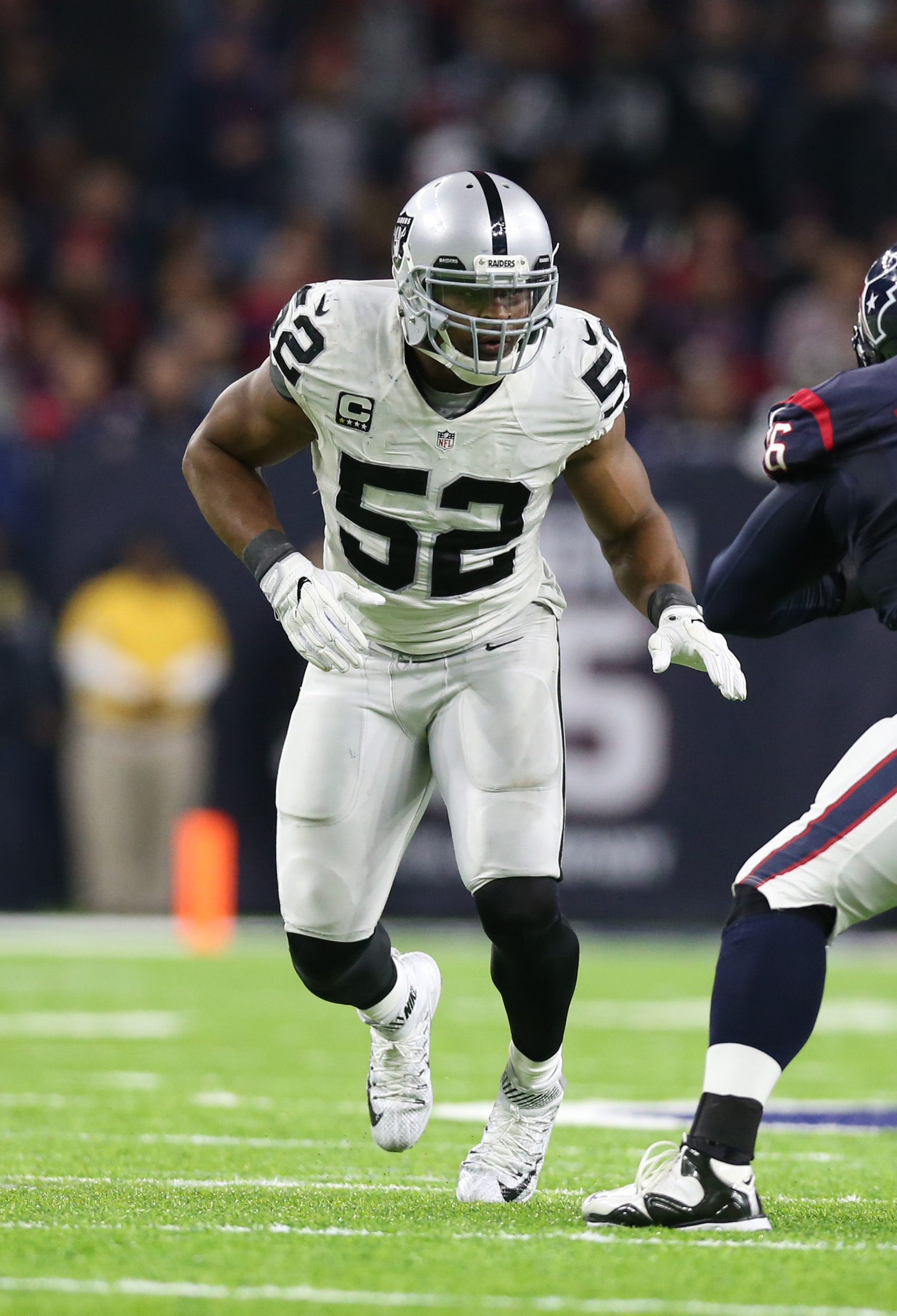
So what exactly is the fifth-year option? Essentially, it’s a way to extend a player’s rookie contract by an extra year, at the club’s discretion. Players don’t have any say in whether or not these options are picked up, though players and teams are still free to negotiate longer-term contracts that would render the fifth-year option unnecessary. Otherwise though, the decision is in the hands of the team, and must be made by May 3 in the player’s fourth season.
Last year, 25 players (out of a possible 32) had their fifth-year options picked up for the 2018 season. As a top-10 pick, Mack’s fifth-year salary was equivalent to the transition tender at his position during his fourth season, which came out to $13.846MM.
For first-rounders picked outside the top 10, like Lewan and Donald, the calculation was a bit more complicated. Their fifth-year option was determined by the average of the third through 25th top salaries at that position. That’s why Lewan is in line for $9.34MM this season and Donald is set to earn just $6.9MM.
Fifth-year options are guaranteed for injury only between May 3 and the start of the following league year. As such, they’re not entirely risk-free, but as long as the player remains healthy, a team could exercise his fifth-year option, then cut him before his option year gets underway without being on the hook for his salary. When the league year begins, the player’s fifth-year salary becomes guaranteed for skill and cap purposes, as well as injury.
With a new CBA on the horizon, it’s conceivable that the fifth-year option will be amended to allow first-round picks to test free agency sooner. Then again, the NFLPA might not want to make the concessions needed in order to do away with the fifth-year option, even though it would help to accelerate the market at every position.
Note: This is a PFR Glossary entry. Our glossary posts explain specific rules relating to free agency, trades, or other aspects of the NFL’s Collective Bargaining Agreement. This post was modified from an early entry by editor emeritus Luke Adams.
This Date In Transactions History: Jake Delhomme
Much like the way the Colts were able to land Andrew Luck thanks to one disastrous season without their previous franchise quarterback available, the Panthers used 2010 to bottom out and be in position to draft Cam Newton.
Like the 2011 Colts, the Panthers only endured one woeful season without a clear quarterback plan. However, the long-term signal-caller solution prior to Newton produced some memorable moments. And the years-long partnership came together on this date 14 years ago. The Panthers agreed to a five-year extension with Jake Delhomme on June 17, 2004, locking him in as their quarterback of the 2000s.
Illustrating where the quarterback market has gone in the past several years, Delhomme’s deal was worth only $38MM. But Carolina initially signed Delhomme, previously a Saints backup behind Aaron Brooks, for $4MM over two years in 2003. That fall signaled the beginning of a nice run for the Panthers. Delhomme started 15 games to help lift Carolina to its first Super Bowl, after the Panthers notched upset victories in St. Louis and Philadelphia. Delhomme’s explosive second half in Super Bowl XXXVIII (in a game where he threw for 323 yards and three touchdowns) had the Panthers poised for overtime, only an illegal procedure penalty gave the Patriots prime field position for a game-winning drive that ended Carolina’s championship bid.
Nevertheless, the Panthers saw enough from Delhomme to extend him the following summer, and he delivered the best statistical seasons of his career on this contract. Delhomme threw a career-high 29 touchdown passes in 2004 and followed that up with a 24-TD-pass 2005 — his only Pro Bowl campaign — for a Panthers team that stormed to the NFC title game.
Carolina’s return to the playoffs, in 2008, brought the beginning of the end for the Delhomme’s run with the franchise.
Delhomme was unable to shake the five-interception performance in a divisional-round loss to the Cardinals, but he nevertheless played out that extension — and signed another (for five years and $42.5MM) shortly after the seminal 2009 loss to the Cards — starting 11 games in the ’09 campaign. Carolina, though, cut Delhomme in March 2010 and pivoted to Matt Moore and second-round rookie Jimmy Clausen for that 2010 slate. The Panthers went 2-14 that season, securing the No. 1 pick and a path for a new regime to draft Newton.
Perhaps the Panthers retaining Delhomme for one more season would not have afforded them No. 1 overall real estate and thus shaken up a loaded 2011 draft, one that saw the Broncos, Bills, Bengals, Cardinals and Falcons select standout performers at the Nos. 2-6 spots. However, the QBs selected in the first round after Newton (Jake Locker, Blaine Gabbert and Christian Ponder) did not prove to be remotely in Newton’s class, making that No. 1 slot extraordinarily valuable.
Newton eclipsed Delhomme’s franchise record for most quarterback starts (90) in 2016; he’s at 108 entering this season.
PFR Originals: 6/10/18 – 6/17/18
The original content and analysis produced by the PFR staff during the past week:
- With this year’s holdout contingent featuring several big names, I rounded up the respective situations. The 2014 draft class’ top defenders are headlining this group, but David Johnson and Earl Thomas have unique cases as well.
- Speaking of the ’14 draft class, it appears at least one of its top members will begin the 2018 season with a record-breaking defensive contract. While it’s uncertain if the Rams, Raiders (or Texans, in Jadeveon Clowney‘s case), will go first, Von Miller‘s six-year, $114.6MM contract probably won’t lead the pack any longer. I asked PFR readers which defender will enter the ’18 slate tethered to the most lucrative contract.
- As teams continue to steadily sign draft picks, Zach Links determined 88 percent of players — including every fourth-, sixth- and seventh-round pick — have signed their rookie pacts. But several big names have yet to reach agreements.
- We covered three notable moves in our This Date In Transactions History series:
- Zach looked at the Dolphins’ ill-fated signing of Chad Johnson in 2012. The outspoken wideout arrived in Miami as Chad Ochocinco before reverting to his given name upon getting to work with the Dolphins. But the stay ended without Johnson suiting up for a Dolphins game. His last game ended up being the Patriots’ Super Bowl XLVI loss.
- Zach then looked at the Falcons’ June 2009 decision to release Michael Vick shortly after he’d been released from prison. One of the best weapons in Falcons history, Vick did not fit with the franchise after Atlanta selected Matt Ryan in the previous year’s draft. This led Vick eventually to Philadelphia.
- Andrew Ortenberg examined a lesser-known transaction, the Packers’ decision to bring in former No. 1 overall pick Tim Couch in 2004. The Kentucky star ended up being released by both the Browns and Packers that summer.
Poll: Who Will End Offseason As NFL’s Highest-Paid Defender?
The league’s seen a large number of standout players skip mandatory workouts this week, setting up an eventful stretch despite teams being on break between minicamps and training camps.
The star power from the 2014 draft is driving part of this spree of holdouts, and this summer figures to produce at least one mega-contract for a defender (and likely more). By the time this offseason concludes, the defensive contract landscape will look different. Who will be the league’s new standard-bearer here?
Von Miller‘s held that title for two years, since signing his six-year, $114.6MM extension at the 2016 franchise tag deadline. Multiple stars drafted in the 2014 first round are gunning for contracts that would surpass Miller’s.
 Will it be Aaron Donald? Despite playing a position that has not been traditionally compensated as well as Miller’s, Ndamukong Suh‘s 2015 free agency windfall notwithstanding, Donald has been the league’s most dominant interior defender for a bit now. With quarterbacks’ release times steadily accelerating, defenders lined up closer to the ball have seen a change in compensation patterns. Defensive tackles like Fletcher Cox and Kawann Short are each paid more than $16MM annually, and Donald’s operated on a higher level than each during his four-year career.
Holding out for a second straight year, Donald is a key component to a Rams operation that’s taking a more aggressive approach to contention than it did last year. While no deal is imminent, talks will presumably heat up soon. Les Snead‘s already said a Donald resolution will need to involve an NFL-high defender contract, but will other defenders end up with a better deal?
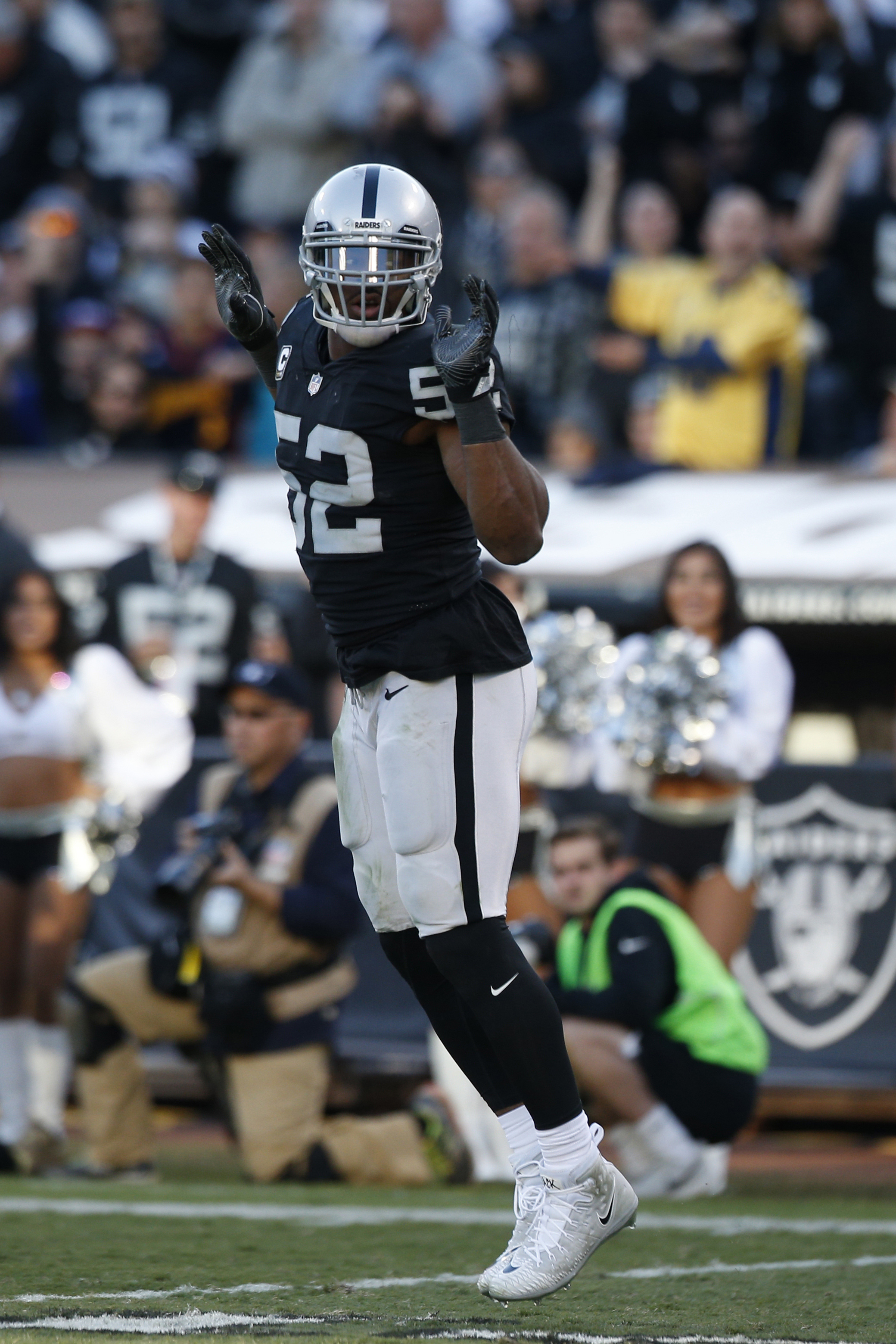
Khalil Mack didn’t follow Donald’s lead and hold out last year, despite both being on the same timeline and the Raiders defensive end beating the Rams defensive tackle to the defensive player of the year throne. Now, Mack’s stayed away from the Raiders throughout the offseason. While the Raiders may be a tad behind the Rams on the preseason hype scale, Mack has been vital to their defense — a perennially shaky unit despite his dominance — and plays the game’s most valuable defensive role.
 At 27, Mack is two years younger than Miller. And the cap is now $22MM higher than it was when the Broncos signed their edge-rushing phenom. It stands to reason Mack will sign a more lucrative deal. However, Derek Carr accepted less than market value at $25MM per year to help Oakland be in better position to keep its core together. With that contract on the books, and a situation the Rams do not have to navigate with Jared Goff just yet, will Mack end up just behind Donald in this pursuit? The Raiders also signed Carr in June of last year. Mack signing in June, to conclude a less contentious process than Donald’s, would open the door for Donald to come in and exceed whatever deal the Bay Area parties reach.
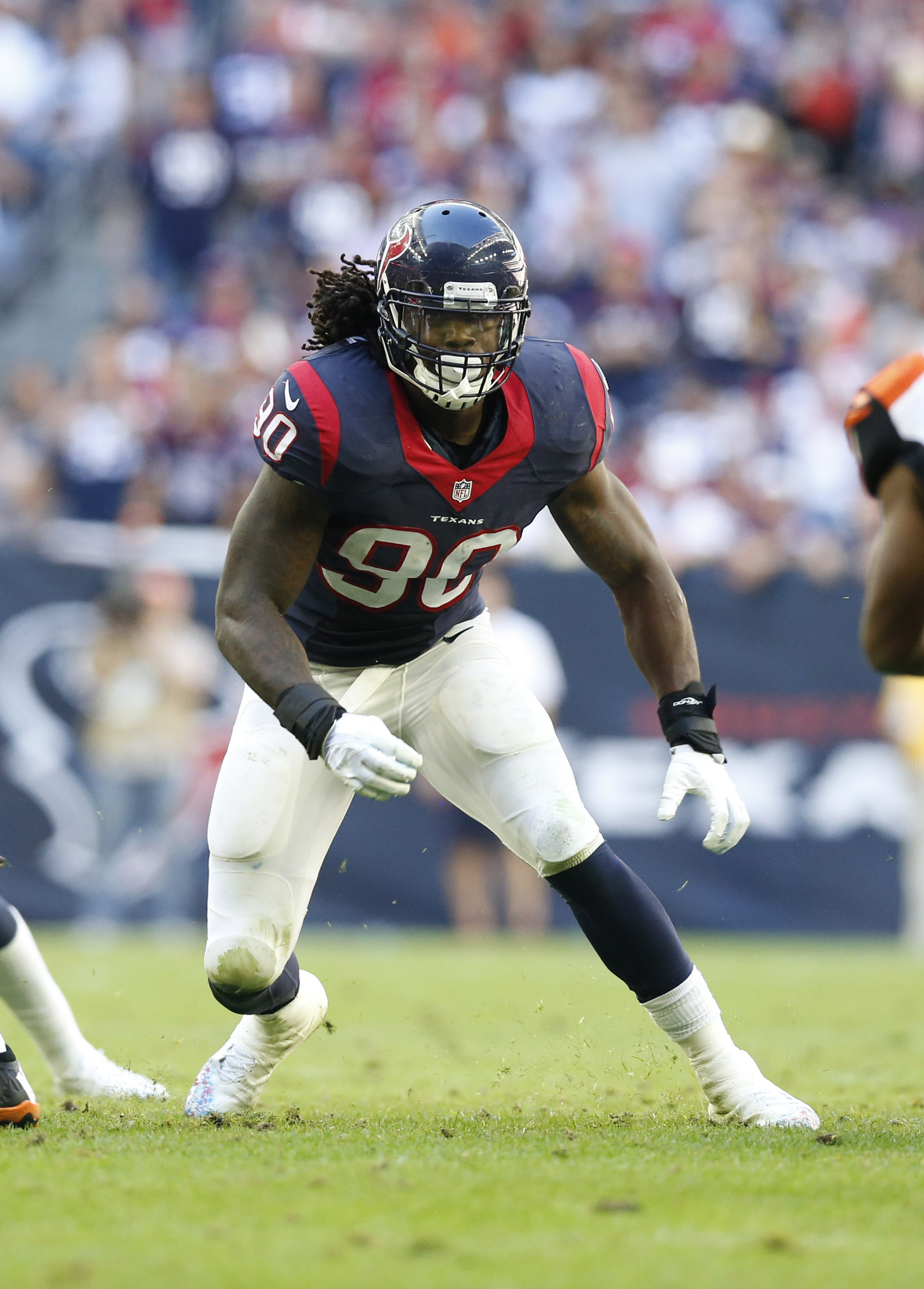
What about Jadeveon Clowney? Not as accomplished as the California-dwelling duo, the No. 1 pick in 2014 has become a star in his own right. And at 25, he’s two years younger than both. As injuries have sidetracked J.J. Watt‘s otherworldly career, Clowney’s become one of the league’s best players. The Texans have a history of authorizing this kind of contract — as they did with Watt’s six-year, $100MM pact in 2014 — and have a quarterback at least two years away from an extension.
While Watt’s maladies have clouded his future and made Clowney more indispensable in the process, might Houston be leery of paying league-record money to another injury-prone performer? Clowney is not holding out, but he did not participate in minicamp while recovering from another surgery.
So, which defender will assume Miller’s position? What will it take to finalize such a deal? Will this derby end with a $20MM- or $21MM-per-year contract? Is there a darkhorse player (perhaps the franchise-tagged Demarcus Lawrence?) that could swoop in here? Vote in PFR’s latest poll and weigh in with your view in the comments section!
Who will end offseason as NFL's highest-paid defender?
-
Aaron Donald 53% (378)
-
Khalil Mack 32% (224)
-
Von Miller 7% (48)
-
Jadeveon Clowney 5% (36)
-
Other 3% (22)
Total votes: 708
Examining Key 2018 Holdouts
The 2014 first round produced some of the NFL’s best players, and they comprise part of an extensive group of that skipped minicamp and could well be training camp holdouts. But several other standout players didn’t show for their respective teams’ mandatory workouts either. Here’s a look on where things stand with this absent contingent.
Aaron Donald, Los Angeles Rams: The reigning defensive player of the year is holding out for a second straight summer. He skipped the Rams’ minicamp, as expected, and remains focused on a landscape-changing deal. Both Donald and Khalil Mack are in line to eclipse Von Miller‘s $19MM annual salary, but the California-based franchises may be hesitant to be the first to authorize a $20MM-per-year pact for a defender. However, Les Snead‘s already conceded the Rams will have to finalize a Donald deal that makes him the league’s highest-paid defender. But with the Broncos superstar having signed his extension in a $155MM cap year, it’s likely Donald’s camp — particularly on the heels of a season where the all-world interior defender won DPOY honors after his holdout induced a two-game absence — is targeting a figure well north of Miller’s, with the cap now at $177.2MM.
The Rams see this process unfolding in a less contentious fashion this year, but a Donald deal — one that’s putting other priorities on hold — isn’t imminent.
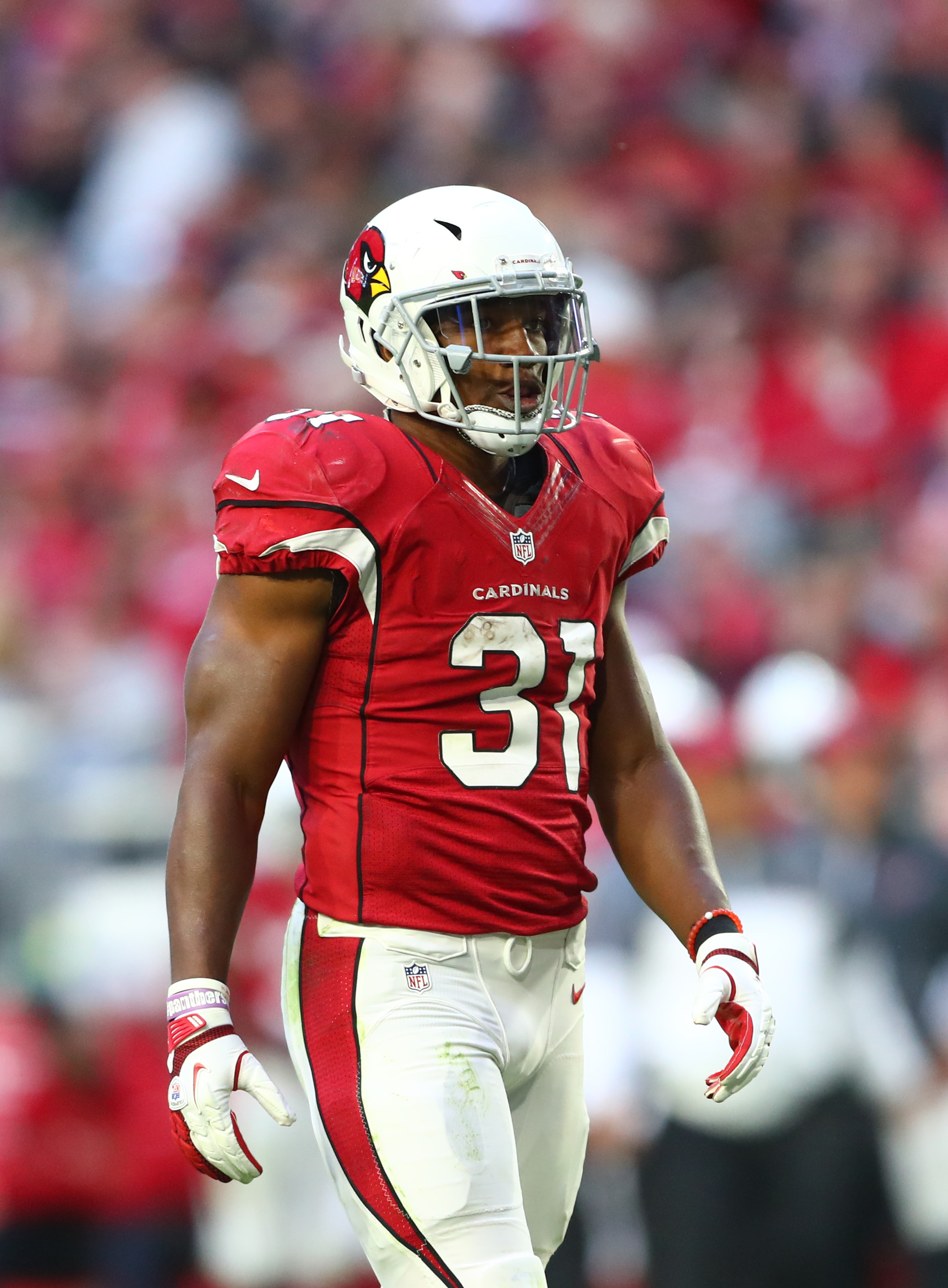 David Johnson, Arizona Cardinals: Unlike Le’Veon Bell and the Steelers, this process features no immediate deadline. But Johnson’s contract expires after this season, with no fifth-year option available to the franchise. Johnson and the Cards are engaging in extension discussions, and Steve Keim said this week — as his All-Pro back skipped minicamp — the team looks forward to signing Johnson long-term.
This has not proven to be an acrimonious situation, but Johnson is on a slightly different timetable than Bell. Despite being a fourth-year player compared to Pittsburgh’s All-Pro entering his sixth season, Johnson is a few months older than Bell and will turn 27 in December. However, it may be in his best interests to wait and see what happens with Bell by the July 16 franchise tag extension deadline.
Julio Jones, Atlanta Falcons: The NFL’s seen its wide receiver salary landscape shift since Jones signed his extension in August 2015. That contract made Jones the NFL’s highest-paid wideout, but seven receivers have since surpassed him. This includes Sammy Watkins and slot target Jarvis Landry, who respectively signed 2018 deals for $16MM and $15.1MM annually. Atlanta’s top weapon wants a revised contract and skipped OTAs and minicamp, and the Falcons are discussing such an amendment.
Jones has three seasons and minimal guarantees remaining on his deal, which averages $14.25MM per year. The team’s response a Jones camp proposal did not meet with the group’s approval, but the sides continue to negotiate. The 29-year-old pass-catcher said recently he has no intentions of forcing his way out of Atlanta.
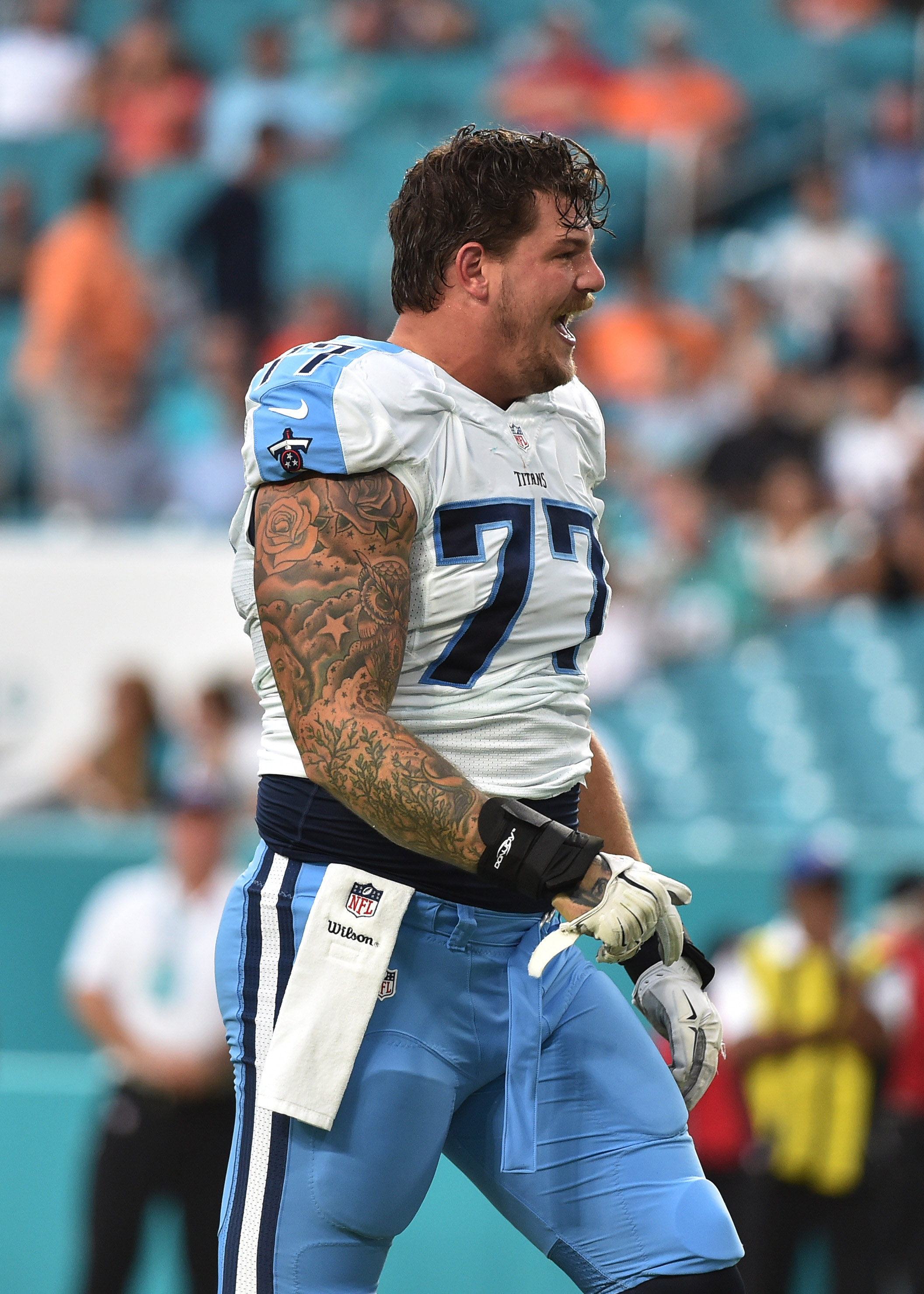 Taylor Lewan, Tennessee Titans: The left tackle is part of the 2014 first-round contingent entering fifth-year option seasons, and he joined some of the group’s higher-profile players in skipping mandatory June workouts. Jon Robinson said upon being informed of Lewan’s impending minicamp absence that the parties are participating in ongoing re-up dialogue, but as recently as late May, no reports indicated this was the case.
A two-time Pro Bowler, Lewan is entering his age-27 season and is now shooting for Nate Solder‘s $15.5MM-AAV standard. That’s $2MM-plus more than any other left tackle makes, and the Giants authorized that contract amid free agency circumstances. This will complicate matters for Lewan and other extension-seeking tackles. Lewan’s option season is set to be worth $9.341MM.
Khalil Mack, Oakland Raiders: After not joining Donald in a 2017 holdout, despite being in essentially the same situation, Mack is doing so this year. He has not reported to the Raiders this offseason. The 2016 defensive player of the year saw 2014 draftee teammates Derek Carr and Gabe Jackson sign lucrative extensions, only to see the Raiders put his on hold — mirroring other teams’ processes with ’14 first-rounders — because of the franchise-friendly fifth-year option. Reggie McKenzie‘s maintained the franchise intends to extend Mack in 2018 and said other players’ situations aren’t factoring into these discussions. Though, it’d be hard to believe Donald’s process isn’t impacting Mack’s at all.
The Raiders and Mack weren’t close on terms in April, but both Carr and Jackson signed their extensions in June of last year, perhaps pointing to a near-future resolution. Unlike the Rams, however, the Raiders have a top-tier quarterback salary on their books. That could cause issues elsewhere on the roster. Although, the cap’s perpetual rise negates some of those potential problems.
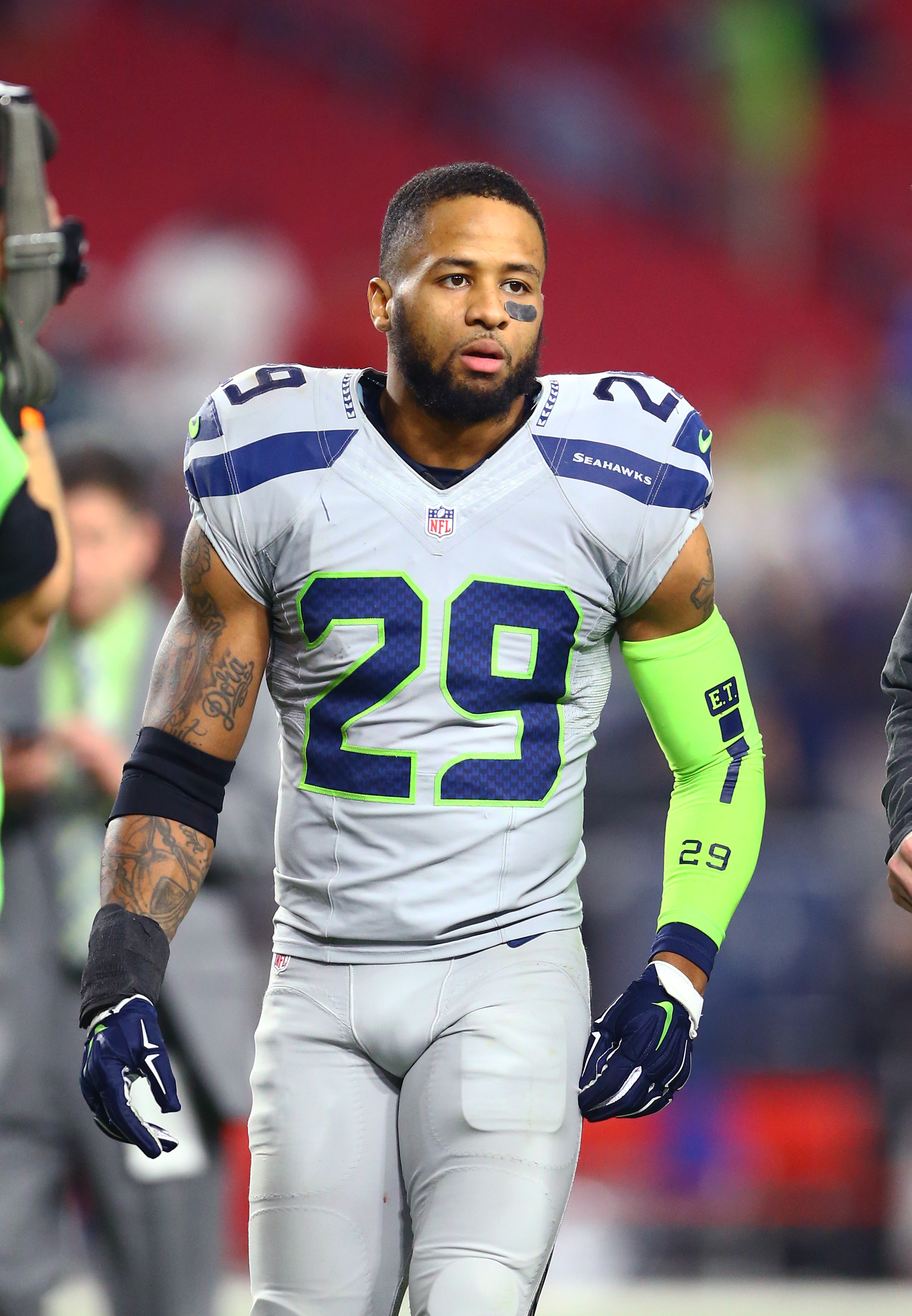 Earl Thomas, Seattle Seahawks: Perhaps the most interesting of these situations, the Seahawks have dangled Thomas in trades but expect him to report for training camp. Like Jones, Thomas saw several at his position usurp him in the salary hierarchy since signing an extension. Thomas signed a $10MM-AAV contract to make him the highest-paid safety in 2014. Again in a contract year, he’s threatened a holdout for months and is following through. The Cowboys and Seahawks discussed a draft-weekend deal for the three-time All-Pro. While Dallas balked about sending a second-round pick for the 29-year-old defender, the teams may well revisit these talks.
Either way, Thomas is going to want Eric Berry money ($13MM AAV) on his third contract. With Richard Sherman in San Francisco and Kam Chancellor‘s career in doubt, Thomas is the last remaining member of the Legion of Boom. It’s just uncertain if he’ll finish out his second contract in Seattle or be shipped elsewhere and end that dominant era.
88% Of NFL Draft Picks Have Signed Their Rookie Contracts
The overwhelming majority of this year’s draft picks have signed their rookie deals, as shown in PFR’s tracker. Of this year’s 256 selections, 226 have inked their first NFL deal. As of Wednesday afternoon, that leaves 30 players – less than 12% of this year’s class – unsigned. Here’s the complete breakdown, round by round:
First Round (17)
- Browns, 1-1: Baker Mayfield, QB (Oklahoma)
- Giants, 1-2: Saquon Barkley, RB (Penn State)
- Jets, 1-3: Sam Darnold, QB (USC)
- Browns, 1-4: Denzel Ward, CB (Ohio State)
- Broncos, 1-5: Bradley Chubb, DE (North Carolina State)
- Bills, 1-7: Josh Allen, QB (Wyoming)
- Bears, 1-8: Roquan Smith, LB (Georgia)
- 49ers, 1-9: Mike McGlinchey, T (Notre Dame)
- Titans, 1-22: Rashaan Evans, LB (Alabama)
- Patriots, 1-23: Isaiah Wynn, T (Georgia)
- Panthers, 1-24: D.J. Moore, WR (Maryland)
- Ravens, 1-25: Hayden Hurst, TE (South Carolina)
- Falcons, 1-26: Calvin Ridley, WR (Alabama)
- Steelers, 1-28: Terrell Edmunds, S (Virginia Tech)
- Jaguars, 1-29: Taven Bryan, DT (Florida)
- Vikings, 1-30: Mike Hughes, CB (UCF)
- Patriots, 1-31: Sony Michel, RB (Georgia)
Second Round (5)
- Colts, 2-36: Darius Leonard, LB (South Carolina State)
- Colts, 2-37: Braden Smith, G (Auburn)
- Buccaneers, 2-38: Ronald Jones, RB (USC)
- Dolphins, 2-42: Mike Gesicki, TE (Penn State)
- 49ers, 2-44: Dante Pettis, WR (Washington)
Third Round (8)
- Giants, 3-69: B.J. Hill, DT (North Carolina State)
- Broncos, 3-71: Royce Freeman, RB (Oregon)
- Redskins, 3-74: Geron Christian, OL (Louisville)
- Chiefs, 3-75: Derrick Nnadi, DT (Florida State)
- Bengals, 3-77: Sam Hubbard, DE (Ohio State)
- Bengals, 3-78: Malik Jefferson, LB (Texas)
- Seahawks, 3-79: Rasheem Green, DE (USC)
- Raiders, 3-87: Arden Key, DE (LSU)
Fourth Round (0)
Fifth Round (1)
- Giants, 5-139: RJ McIntosh, DT (Miami)
Sixth Round (0)
Seventh Round (0)
The Rams signed their entire rookie class late last week, putting a serious dent in the unsigned total since our last check. Still, the first round (17) and third round (8) lead the way in rookie stragglers. That’s to be expected, as first round picks have the leverage needed to negotiate a better position on certain issues such as offset language. Third round negotiations also tend to drag since there is wiggle room when it comes to base salaries.