
Extension Candidate: Falcons LB Deion Jones
With so much attention being paid to a potential extension for Falcons receiver Julio Jones, it’s easy to forget about the Falcons’ other player by the same surname who is pushing for a new deal. Linebacker Deion Jones has been discussing an extension as he enters his walk year, but we haven’t heard much news regarding his situation in recent weeks. 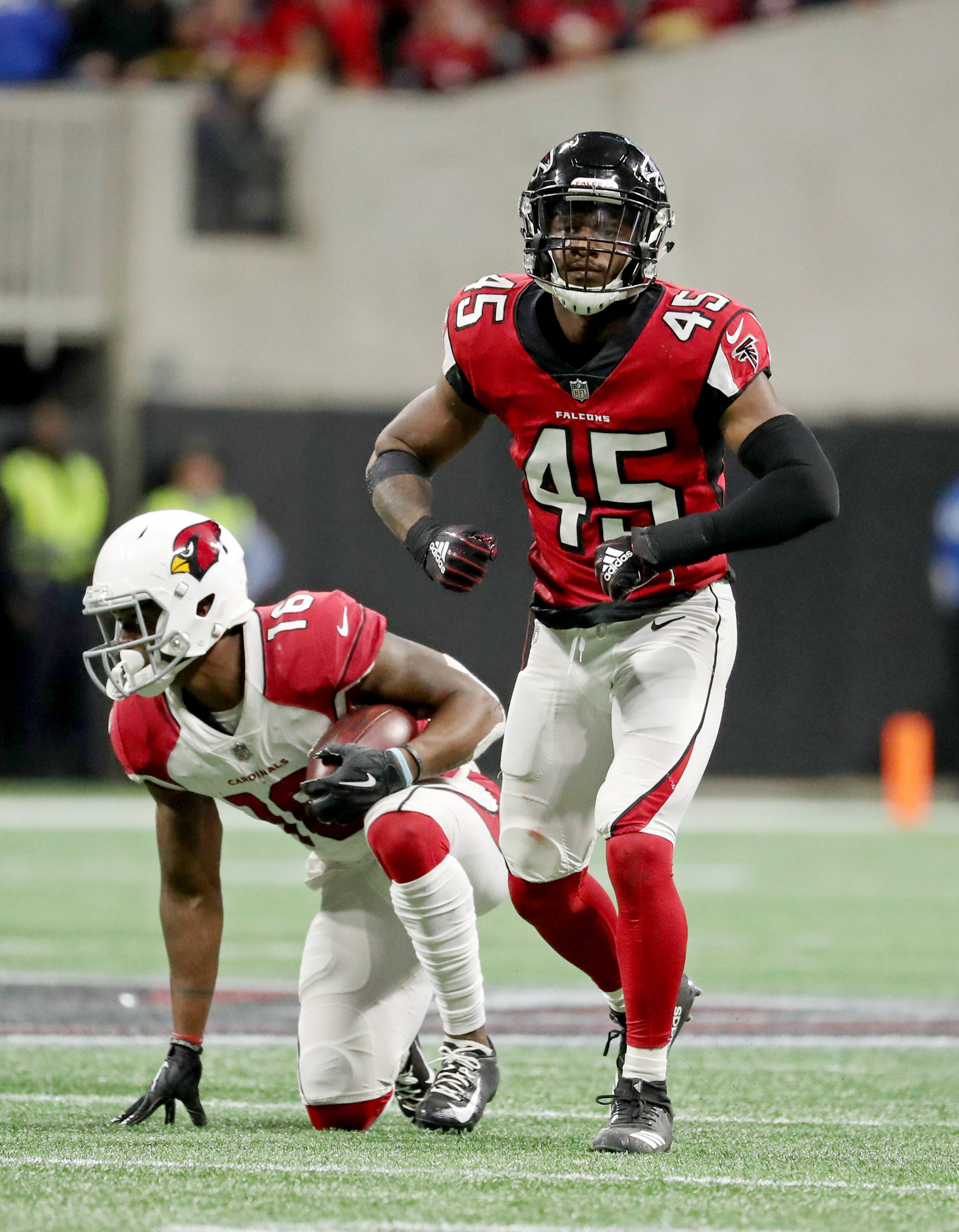
As a former second-round pick, Jones is slated to earn less than $1.1MM in 2019, with no club option for a fifth season. In theory, the lack of an option is a good thing for players like Jones who have outperformed their draft slot, but the Falcons still have leverage thanks to his laughably low salary for the coming year. Jones isn’t necessarily the priority either – the Falcons are likely putting a greater focus on Grady Jarrett‘s contract and the aforementioned contract of J. Jones.
Jones, who won’t celebrate his 25th birthday until November, has proven to have a nose for the ball. In three seasons, he has eight interceptions to his credit, including three pick-six plays for touchdowns. He was also a tackling machine in his first two seasons, though a broken foot suffered in Week 1 of the 2018 season kept him to a total of six games last year.
The injury undoubtedly hurt his negotiating position, though a broken foot is not as devastating as a ligament tear to the knee. Jones still has serious potential at the linebacker position with plenty of room to grow before entering his prime years.
The Falcons would obviously love to keep Jones in the fold for years to come, but the skyrocketing rate for inside linebackers may prove to be a barrier. In March, C.J. Mosley passed Luke Kuechly on a rocket ship with a five-year, $85MM deal that includes $43MM fully guaranteed. Granted, this was a free agent deal, and Mosley is more accomplished than Jones, but Jones’ camp undoubtedly has those specs in mind. Meanwhile, Seahawks star Bobby Wagner is also in the hunt for a new deal, and the market could balloon even further if he puts pen to paper before Jones.
Ultimately, we expect the Falcons to get something done with their young linebacker, but he might have to wait until the other stars are addressed.
This Date In Transactions History: Giants Extend Victor Cruz
On this date in 2013, Victor Cruz likely performed one of the most enthusiastic salsa dances of his career. Heading into a contract year worth $2.879MM, the Giants receiver inked a five-year extension worth up to $43MM. 
It was a substantial payout for Cruz, but one that reflected his value to the club as well as the league’s increased appreciation of the slot receiver position. Lining up mostly on the inside, Cruz broke out in 2011 with 82 catches, 1,536 yards, and nine touchdowns. His 2012 encore wasn’t quite as efficient (he posted an 86/1092/10 stat line), but he was still recognized as a vital part of the Giants’ passing attack and earned his first career Pro Bowl nod.
Not wanting to risk losing Cruz to free agency after his one-year restricted free agent tender – particularly after watching him carve up the 49ers in the NFC Championship Game – the Giants moved to lock down Cruz for the long term. Cruz could have gambled by staying on track for free agency after the 2013 season, but the added security of the deal, including nearly $16MM in guarantees, provided him with financial security.
In hindsight, it was the smart play for the former undrafted free agent. Initially slowed by a heel bruise, came two yards shy of the 1,000-yard mark in 2013, despite missing two games. Unfortunately, in 2014, the course of his career changed dramatically. A torn patellar tendon ended his campaign after just six games and a calf injury in the following season put him under the knife before he could take the field.
By the time Cruz returned to action in 2016, the Giants’ offense was fully focused on Odell Beckham Jr., who routinely toasted opposing defensive backs and gobbled up targets, catches, yards, and touchdowns. At this point, Cruz’s trademark speed was no longer there, and neither was his former Rabbi, Tom Coughlin. Cruz took a pay cut to stay in the fold, but registered just 39 catches for 586 yards. The two sides were expected to hammer out a similar arrangement for his 2017 season, but they released him instead.
Cruz moved on to the Bears, but a knee injury in the final preseason game torpedoed his comeback attempt. Later, he tried to lobby the Giants to sign him via the local press, but his request went unanswered. Finally, in August of 2018, Cruz announced his retirement and entry into the world of broadcasting with ESPN.
Although Cruz’s time on top was brief, he left the game with a tremendous highlight reel, multiple productive seasons, a Super Bowl ring, and an iconic touchdown celebration that will forever be remembered by Giants fans.
Revisiting The 2018 Free Agent WR Class
The 2018 free agent class of wide receivers reshaped the market in a number of ways and set the table for lucrative extensions for players like Odell Beckham, Brandin Cooks, and Stefon Diggs. But even allowing for the premium that teams often have to pay in the first wave of free agency, the size of the contracts that the 2018 FA wideouts landed raised a lot of eyebrows throughout the league. As we look ahead to Year 2 of some of those contracts, let’s examine the early returns.
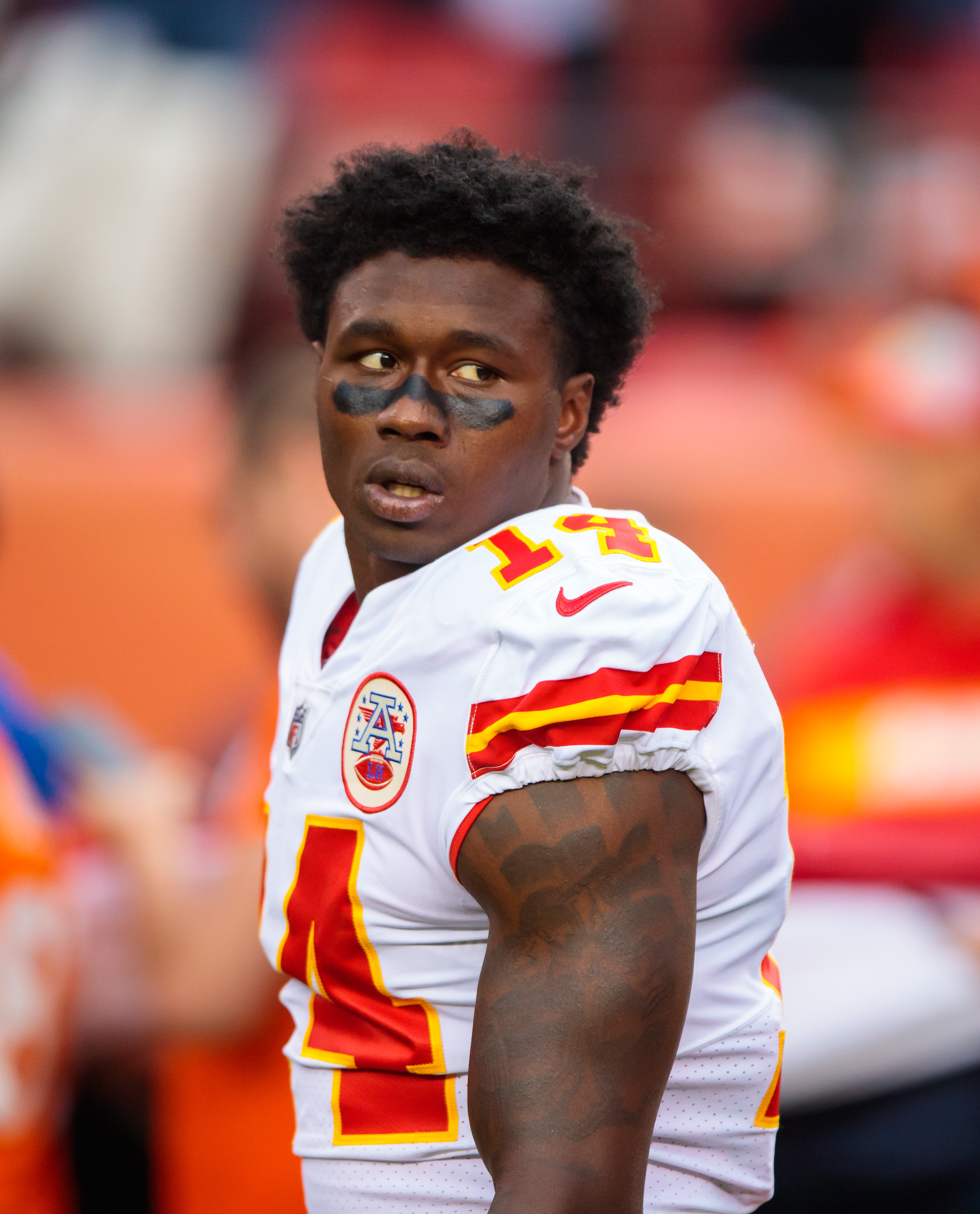
Sammy Watkins‘ three-year, $48MM deal with the Chiefs topped the class in terms of total value, average annual value, and guaranteed money at signing ($30MM). And while his talent certainly merited that type of payday, his injury history was a concern, as he had missed 10 games over the prior three seasons. He ended up missing six games during his first year in Kansas City due to a foot injury, though he did manage to suit up for both of the club’s postseason contests. His raw numbers obviously don’t look too impressive as a result of the missed time, but he did rank fifth among all qualified wideouts in Football Outsiders’ DVOA metric, meaning he was very valuable on a per-play basis. He also tallied 10 catches for 176 yards during the Chiefs’ two playoff games, and while injury problems may always plague him, he continues to be a factor whenever he’s on the field. KC is likely not regretting Watkins’ deal at this point.
The Bears doubled up at wide receiver by signing Allen Robinson and Taylor Gabriel last March, which allowed them to part ways with Cameron Meredith. Chicago brought in Robinson on a three-year, $42MM pact, even though he suffered a torn ACL in Week 1 of the 2017 season and had only posted one elite season in his career (which came back in 2015). And after his first year with the Bears, Robinson is still looking for his second 1,000-yard campaign.
There is some reason to hope that he can get there, especially with a fully-healthy offseason and a year of building chemistry with quarterback Mitchell Trubisky under his belt. A-Rob played in just 13 regular season games last season but was targeted 94 times, and he was brilliant in the Bears’ lone playoff game, posting 10 catches for 143 yards and a score. Football Outsiders’ metrics didn’t love him, but Pro Football Focus assigned him an above-average grade that made him the 28th-best WR in the league. He may not have quite lived up to expectations, but there is still time for him to get there.
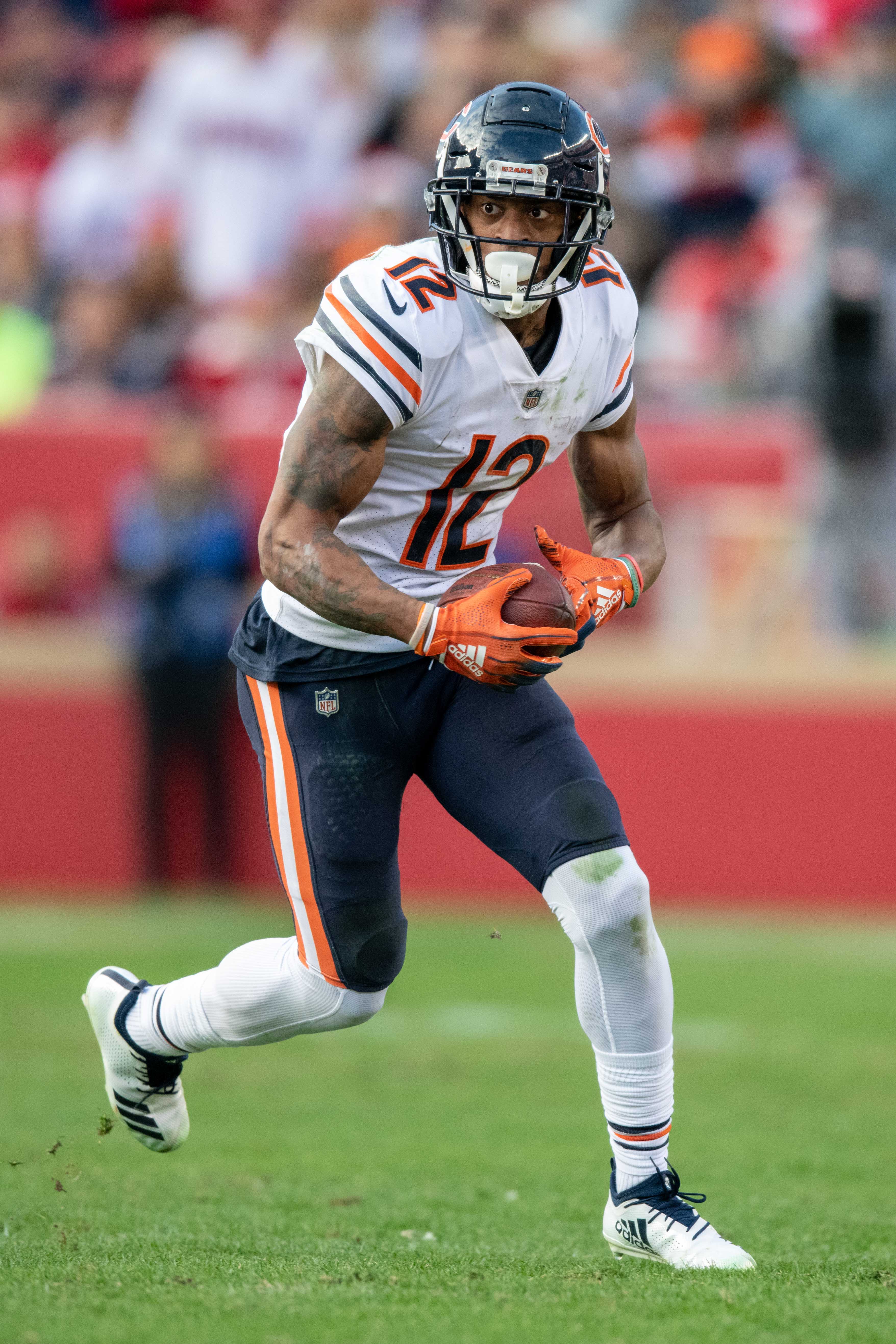
Chicago signed Gabriel to a four-year, $26MM deal in the hopes that he could become a big-play threat for Trubisky. But while Gabriel played in all 16 games for the club and saw 93 targets, he managed a fairly modest 10.3 yards-per-reception and two touchdowns. Advanced metrics weren’t overly fond of his work either, and he will be hoping for a bounce-back year in 2019.
It’s still too early to evaluate some of the other significant contracts given to 2018 wide receivers, because the signees saw their seasons derailed by injury. Marqise Lee, who re-upped with the Jaguars on a four-year, $34MM deal, missed the entire 2018 season due to a preseason knee injury, and he is not expected to be back until the end of this year’s training camp. The Dolphins were thinking highly of their three-year, $24MM accord with Albert Wilson, who was performing well for Miami until he landed on IR in October with a serious hip injury. He is expected to be ready for the start of the 2019 regular season, but he may not see the field until then.
Likewise, Paul Richardson showed flashes in the first year of the five-year, $40MM contract he signed with the Redskins last March, but he landed on IR in November with a shoulder injury.
But at least the aforementioned players are still on their respective teams. Michael Crabtree signed a three-year, $21MM deal with the Ravens after being cut by the Raiders, but he disappeared from Baltimore’s offense when Lamar Jackson became the starter, and Baltimore sent him packing in February (as of this writing, there has been no reported interest in his services). And Donte Moncrief signed a one-year contract for a surprising $9.6MM with the Jaguars, but his mostly disappointing performance in Jacksonville had him searching for a new team this offseason. He ultimately caught on with the Steelers.
All in all, then, the 2018 class of free agent wideouts was a mixed bag. None of the contracts those players signed look like a home run at this point, and while that could change in 2019, those who were surprised by the amount of money thrown at WRs last March were right to be a little skeptical.
POLL: Will The Bills Reach .500 In 2019?
The Bills are going to be an interesting team in 2019. They’ve got a lot of young talent, but how the team does will almost entirely come down to the development of Josh Allen. Allen showed a lot of flashes as a rookie, but he also struggled with his accuracy and decision-making.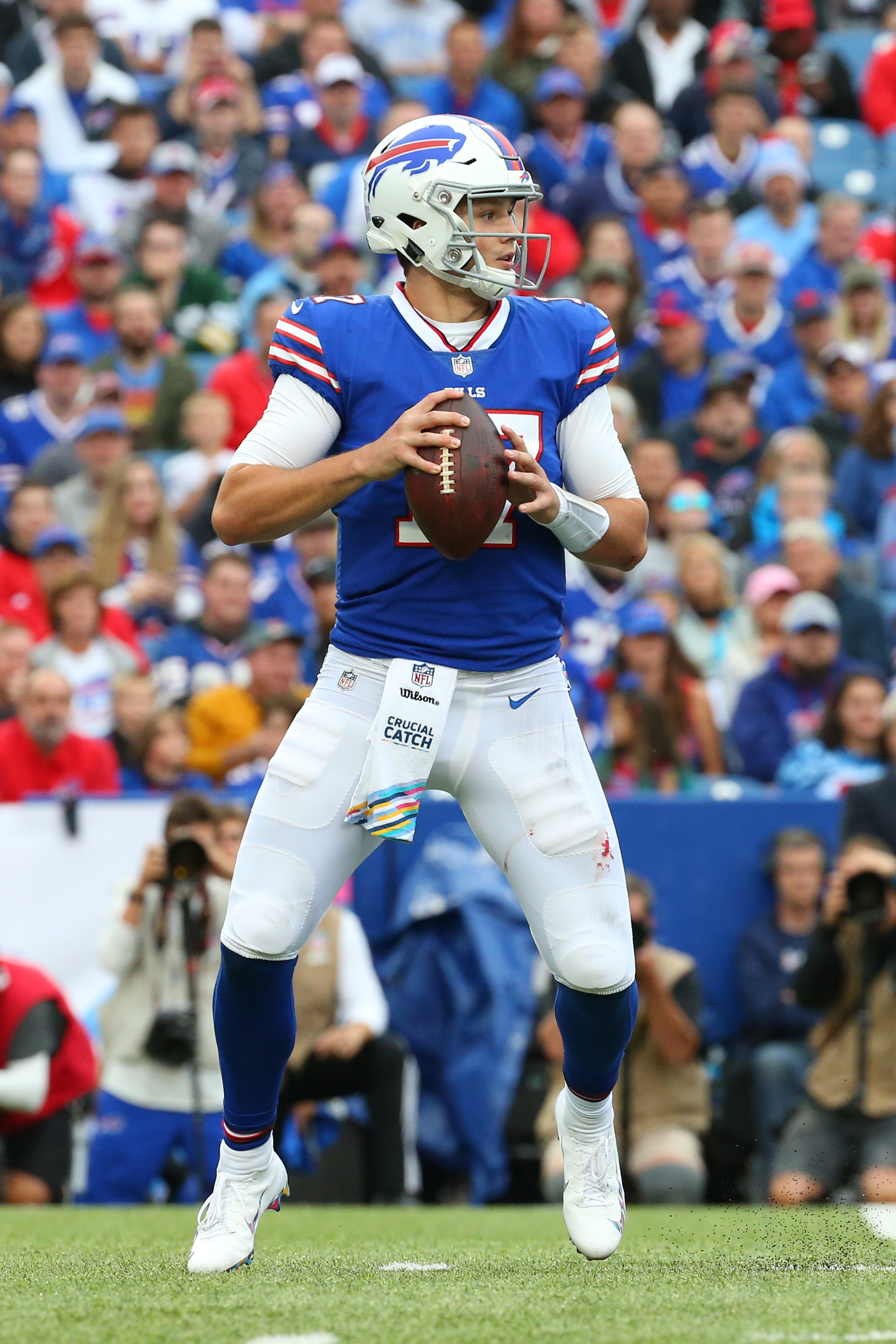
To be fair, Allen was playing behind a ragtag offensive line and with one of the worst receiving corps in the league. Buffalo made upgrading both areas a priority this offseason, and they made some big moves. They completely overhauled their group of pass-catchers, signing Cole Beasley and John Brown in free agency. They also signed center Mitch Morse to become the new anchor of their offensive line, and highly-regarded tackle Ty Nsekhe who had spent the previous few years in a reserve role with Washington.
To help replace the retiring Kyle Williams, they drafted defensive tackle Ed Oliver out of Houston ninth overall. The defense is stacked, and they were one of the best units in the league last year. The Bills finished 6-10 last season, which was good for third place in the division.
The Dolphins are widely expected to take a big step back, which means it’ll either be the Bills or Jets behind the Patriots in the AFC East pecking order next season. Buffalo made the playoffs in 2017 with a 9-7 record, and that seems to be a reasonable goal. Head coach Sean McDermott has been widely praised for the culture he’s instilled during his couple of years with the Bills, but everything will ultimately fall on Allen’s shoulders.
So, what do you think? Will Allen take the next step with an improved group of weapons and offensive line, or will he be unable to put it all together? Will the Jets and Sam Darnold pass them in the AFC East, or will the Bills separate themselves?
Cast your vote below (link for app users) and back up your choice in the comments section:
Will The Bills Win Eight Or More Games In 2019?
-
Yes 55% (669)
-
No 45% (546)
Total votes: 1,215
This Date In Transactions History: Jimmy Clausen Signs With Bears
When Jimmy Clausen‘s tenure with the Panthers ended in 2014, it was uncertain if the quarterback would have a chance to continue his NFL career. However, on June 6th, 2014, the former Notre Dame standout inked a prove-it deal with the Bears, and Clausen ended up parlaying that gig into an additional NFL contract.
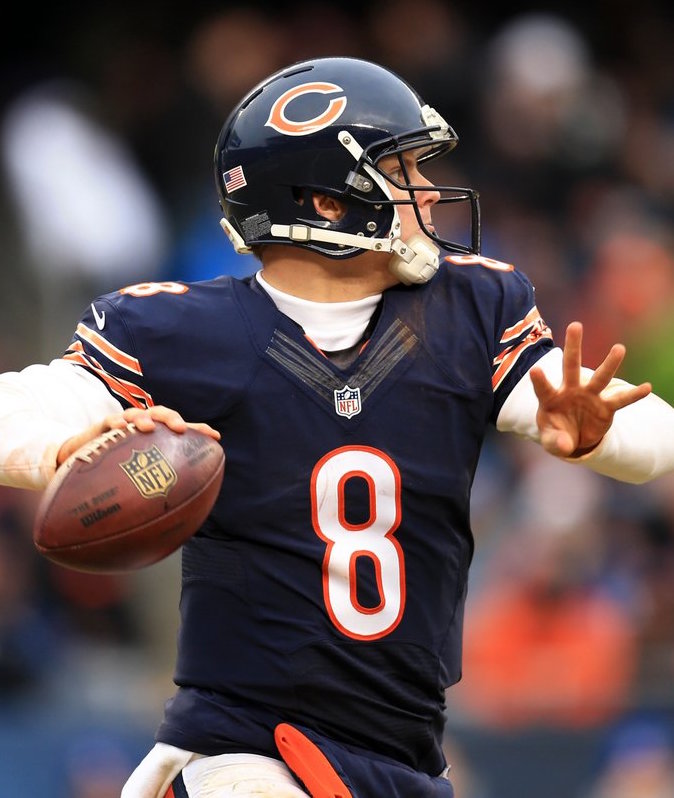 Back in 2010, there was hope within the Panthers organization that their second-round rookie quarterback would eventually unseat Matt Moore and lead the organization back to the playoffs. Fortunately, part of that ended up happening; unfortunately, the results were less-than-stellar. The quarterback started 10 games as rookie, but he only managed to complete 52.5-percent of his passes for 1,558 yards, three touchdowns, nine interceptions, and a whopping nine fumbles.
The Panthers’ 2010 season was filled with plenty of turmoil, including an incident where veteran wideout Steve Smith was caught screaming at the rookie quarterback. The team ended up finishing the season was a 2-14 record, and the organization used their subsequent first-overall pick on quarterback Cam Newton. As a result, Clausen was relegated to a backup role, and he continued to slide down the depth chart following the Panthers’ signing of Derek Anderson.
Clausen didn’t see the field during the 2011 or 2012 campaign, and he was waived by the Panthers following the 2013 season (he eventually landed on Carolina’s injured reserve). That effectively ended the quarterback’s stint with the Panthers, and it appeared that his NFL future was on life support.
However, on this day five years ago, Clausen was given another chance. Thanks in part to his previous relationship with Bears head coach Marc Trestman, Clausen earned a contract from Chicago. The quarterback was set to compete with Jordan Palmer and David Fales for the backup spot behind Jay Cutler, with Clausen eventually winning the competition. He ended up getting one start during the 2014 season, as he completed 23 of his 39 pass attempts for 181 yards, two touchdowns, and one interception in a loss to the Lions.
The Bears were apparently happy with Clausen’s performance as a backup, and they re-signed him for the 2015 season. However, with Chicago struggling, the organization decided to give Fales a longer look, so the organization waived the journeyman. However, Clausen ended up getting claimed by the Ravens, where he got a pair of starts during the stretch run of the season. Clausen ultimately finished the 2015 season having completed 57.6-percent of his passes for 739 yards, two touchdowns, and four interceptions.
Following that two-year run as a solid backup quarterback, Clausen’s career ended unceremoniously. However, if it wasn’t for the transaction five years ago today, there’s a good chance that the quarterback’s career would have ended even earlier.
POLL: Will The Redskins Reach .500 In 2019?
The Redskins are heading into a pivotal season. Everything we’ve heard this offseason has indicated that Jay Gruden will be coaching for his job, so there will be a lot of pressure for the team to win in 2019. Washington quietly started the year 6-2 last year and appeared destined for the playoffs, but Alex Smith‘s devastating injury derailed their season and they went just 1-7 the rest of the way.
The team hit the reset button under center, and will be one of only a couple of teams with an open quarterback competition in camp. They traded for Case Keenum, and drafted Dwayne Haskins in the first round. The team has insisted they’ll be patient with Haskins, but with Gruden being on the hot seat he won’t be able to wait too long if Keenum falters. Last we heard, Redskins owner Dan Snyder was planning on being involved in the decision on who to start, which will surely rankle the fanbase.
The team’s defense took major strides last year, and they have the chance to be even better in 2019. They signed safety Landon Collins to a big contract in free agency, which is a big upgrade to the secondary. They’ll also have running back Derrius Guice back, who missed his entire rookie season with an ACL tear.
You’ll also need to monitor the situation with left tackle Trent Williams, who has been staying away from the team. If Williams forces his way out which seems possible, it’d be a huge blow to their offensive line. Washington has had terrible injury luck the past couple of years, and they’ve already had major health issues yet again this season. Back in May, projected starting linebacker Reuben Foster tore his ACL, and he’ll miss the entire year.
Even with the way things have gone, there are reasons to be optimistic due to the presence of Haskins and young stud defensive linemen like Jonathan Allen and Daron Payne. Receiver Paul Richardson should also provide a boost, as his first season with the team last year was also ruined by injury.
So, what do you think? Will the Redskins have better luck in 2019, or will things go off the rails yet again?
Cast your vote below (link for app users) and back up your choice in the comments section:
Will The Redskins Win Eight Or More Games In 2019?
-
No 66% (622)
-
Yes 34% (320)
Total votes: 942
NFL Extension Candidates Series
Here at PFR, we’ve been previewing some of the league’s top candidates for big money contract extensions. Here’s the full rundown of our Extension Candidates entries, with plenty more to come throughout the summer: 
- Tyler Boyd, WR (Bengals) – link
- Tom Brady, QB (Patriots) – link
- Jadeveon Clowney, LB (Texans) – link
- Amari Cooper, WR (Cowboys) – link
- Julio Jones, WR (Falcons) – link
- Austin Hooper, TE (Falcons) – link
- Melvin Gordon, RB (Chargers) – link
- A.J. Green, WR (Bengals) – link
- Marcus Peters, CB (Rams) – link
- Michael Thomas, WR (Saints) – link
- Bobby Wagner, LB (Seahawks) – link
PFR Glossary: NFI List
The NFL’s “physically unable to perform” (PUP list) allows teams to park seriously injured players for a minimum of six regular season games without taking up a spot on the roster. Meanwhile, a similar designation exists for players who are unable to practice as a result of conditions unrelated to the team’s official football activities.
We’re talking about the NFL’s Non-Football Injury list, more commonly known as the NFI list. The name indicates that the designation is only for injuries that occur off of the gridiron (snowboarding accidents, banana peel slips, etc.), but it also covers injuries that are sustained while partaking in football activities outside of the auspices of the shield. For example, a player who suffered an injury during college football activities could be placed on the NFI list.
There are two types of NFI designations: the Active/NFI designation leaves the door open to returning to practice once the player is medically cleared. Meanwhile, the Reserve/NFI designation is for players who will not return to the active roster during the regular season. With the “Active” tag, players count against the roster max, whether it’s the 90-man or 53-man version. With the “Reserve” tag, they do not.
So, what’s the real difference between NFI and PUP? The biggest distinction is that teams can withhold part of the player’s salary while on NFI. This isn’t frequently done, but it’s an option for teams who feel that a player’s personal irresponsibility caused their condition.
Extension Candidate: Texans OLB Jadeveon Clowney
Jadeveon Clowney is no stranger to PFR’s Extension Candidates series. Last year, Clowney seemed poised for the big bucks, but the Texans elected to have him play out the 2018 on his $12.3MM fifth-year option. This year, they employed the $15.967MM franchise tag to cuff him, but Clowney has yet to sign his tender. 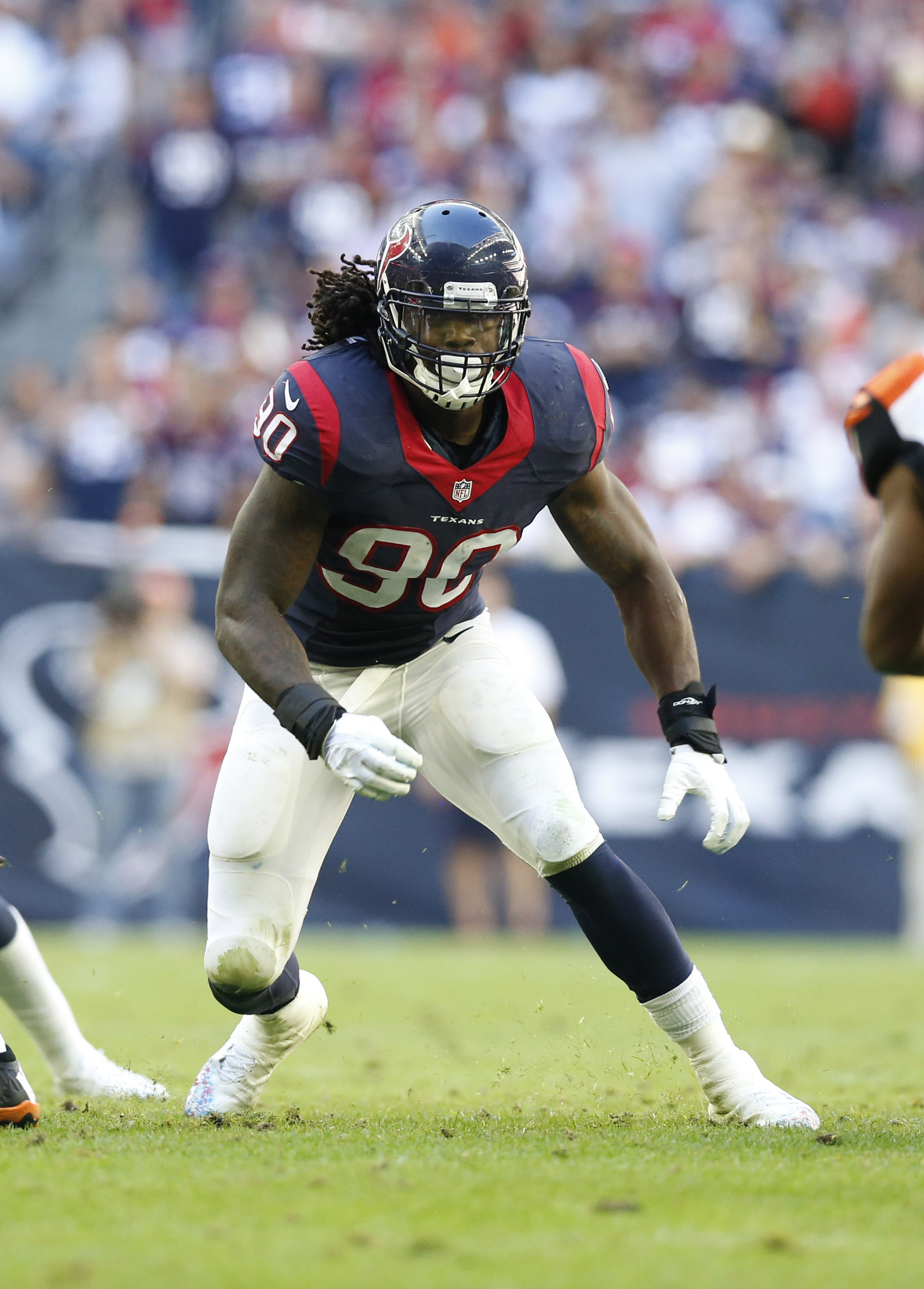
The two sides have until July 15 to work out a long-term deal. If Clowney is not signed to an extension by that date, Clowney will be on course for free agency after the season. While he has been kept in limbo and away from free agency riches, he is not completely without options. Last year, Le’Veon Bell elected to stay at home rather than signing his one-year tender with the Steelers and signed with the Jets as an unrestricted free agent in March.
Clowney’s situation is complicated by a number of factors. Unhappy with the club’s lack of action, he abstained from the team’s mandatory minicamp. And, unless he signs his tender or gets the extension he wants, it’s unlikely that he’ll be involved in the team’s full training camp. Meanwhile, the Texans are without a GM following their surprising dismissal of Brian Gaine and failure to land Patriots exec Nick Caserio.
Will the Texans’ front office revamp breath new life into the longstanding standoff between the club and one of its top defenders? So far, that doesn’t appear to be the case – we’ve yet to hear any recent developments on a deal and the team, presumably, is still wary of a long-term commitment that would make him one of the NFL’s highest-paid edge rushers.
Depending on who you ask, the Texans may have shown a willingness to trade Clowney earlier this offseason. At this point, the Texans may have to commit, or get off the pot. Or, in other words, their only options may be to fork over a massive contract to the former No. 1 overall pick or trade him to a team that will.
Release Candidates: Seahawks QBs Geno Smith, Paxton Lynch
The Seahawks’ quarterback room has some serious name value. Behind starter Russell Wilson, the club is currently rostering both Geno Smith and Paxton Lynch. 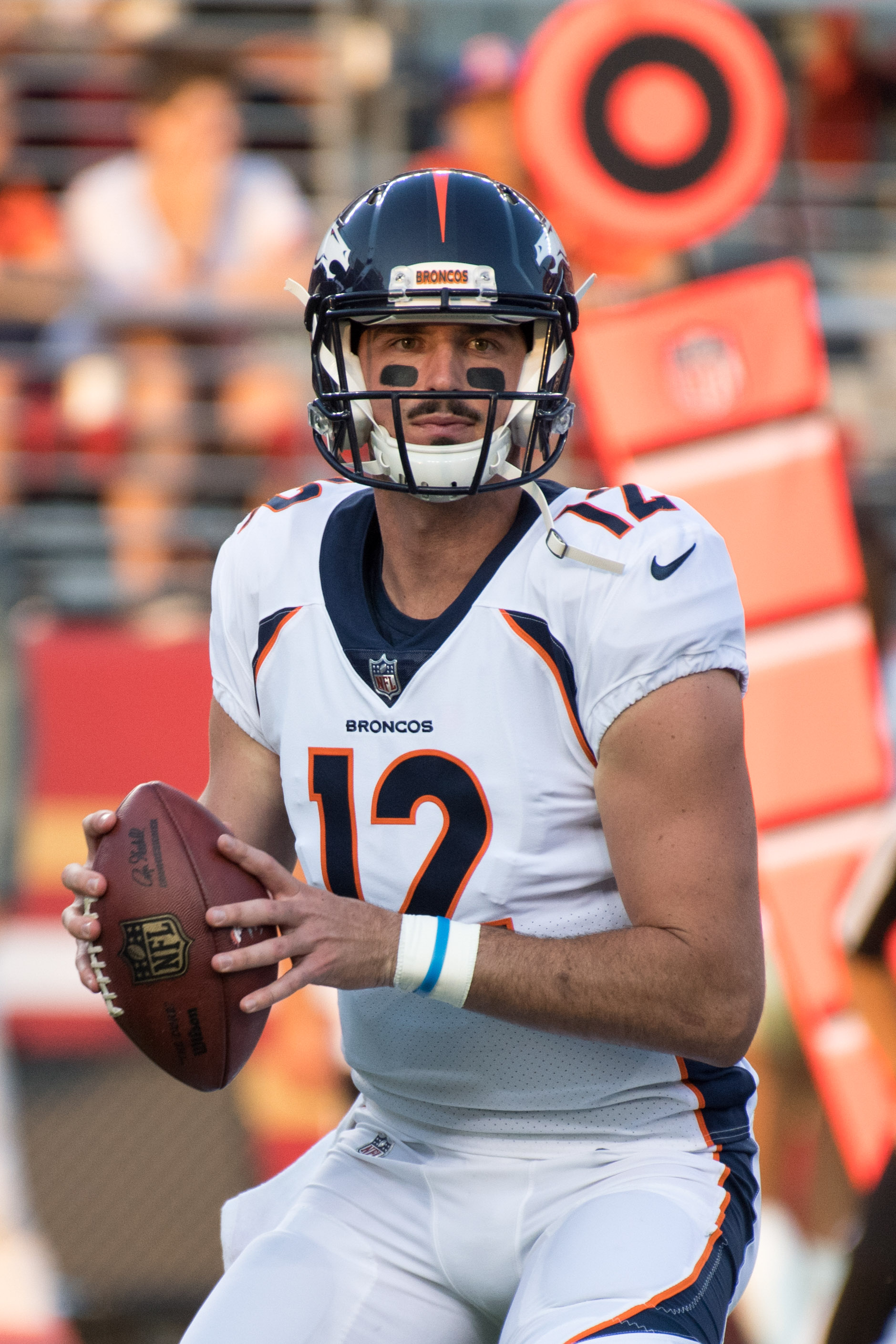
The odds of both players making the final cut is slim. Historically, the Seahawks have carried only two quarterbacks on the 53-man roster and both players have their warts.
Smith, a former second-round pick of the Jets, has yet to do much at the pro level. Once positioned as the Jets’ starting quarterback, his last attempt at NFL relevance was stopped by the fist of a teammate and a subsequently broken jaw. Lynch, a former first-round pick of the Broncos, lost the starting QB competition twice to former seventh-round pick Trevor Siemian.
To date, Lynch has four career starts on his resume with a 61.7% completion rate, 792 passing yards yards, four touchdowns, and four interceptions. Smith – who has 40 career appearances with 31 starts – hasn’t fared much better in a larger sample. He’s completed 57.7% of his throws with just 29 touchdowns against 36 picks.
One of these QBs will probably be out of Seattle by the time September rolls around, and there’s a chance that both will be gone. Last year, the Seahawks traded for Brett Hundley in the preseason and installed him as Wilson’s backup, so the Seahawks’ next No. 2 QB could be with another team as of this writing.
If things don’t work out for Lynch or Smith, they’ll have options. Despite their missteps, they’re both on the right side of 30 and may still hold appeal for evaluators who considered drafting them just a few years ago. And, if an NFL opportunity doesn’t present itself, both players may find a home in the upstart XFL.
“We’re watching the backup quarterback camp battles. One of these guys is going to get cut,” XFL commissioner Oliver Luck said of the Smith/Lynch situation. “There’s a bunch of those going on. We might not get all of those guys, the quote-unquote loser of those, but a Geno or Paxton is not going to end up on a practice squad. There are a bunch of 3-4-5-year guys that are in that boat. They’ve been on rosters, practice squad, been yo-yo’d two years. They need to play, and that’s my argument to them, that it’s very doable here.”
Both players have just $25K guaranteed on their one-year deals, so the Seahawks wouldn’t lose much by releasing either player.