
Packers Sign QB Alex McGough
8:25pm: The Packers have officially signed the quarterback, according to Wilson (on Twitter).
12:30pm: Initially a 2018 Seahawks draftee, Alex McGough was unable to see any game action during his first NFL go-round. But after a successful run in the USFL, he will have another chance.
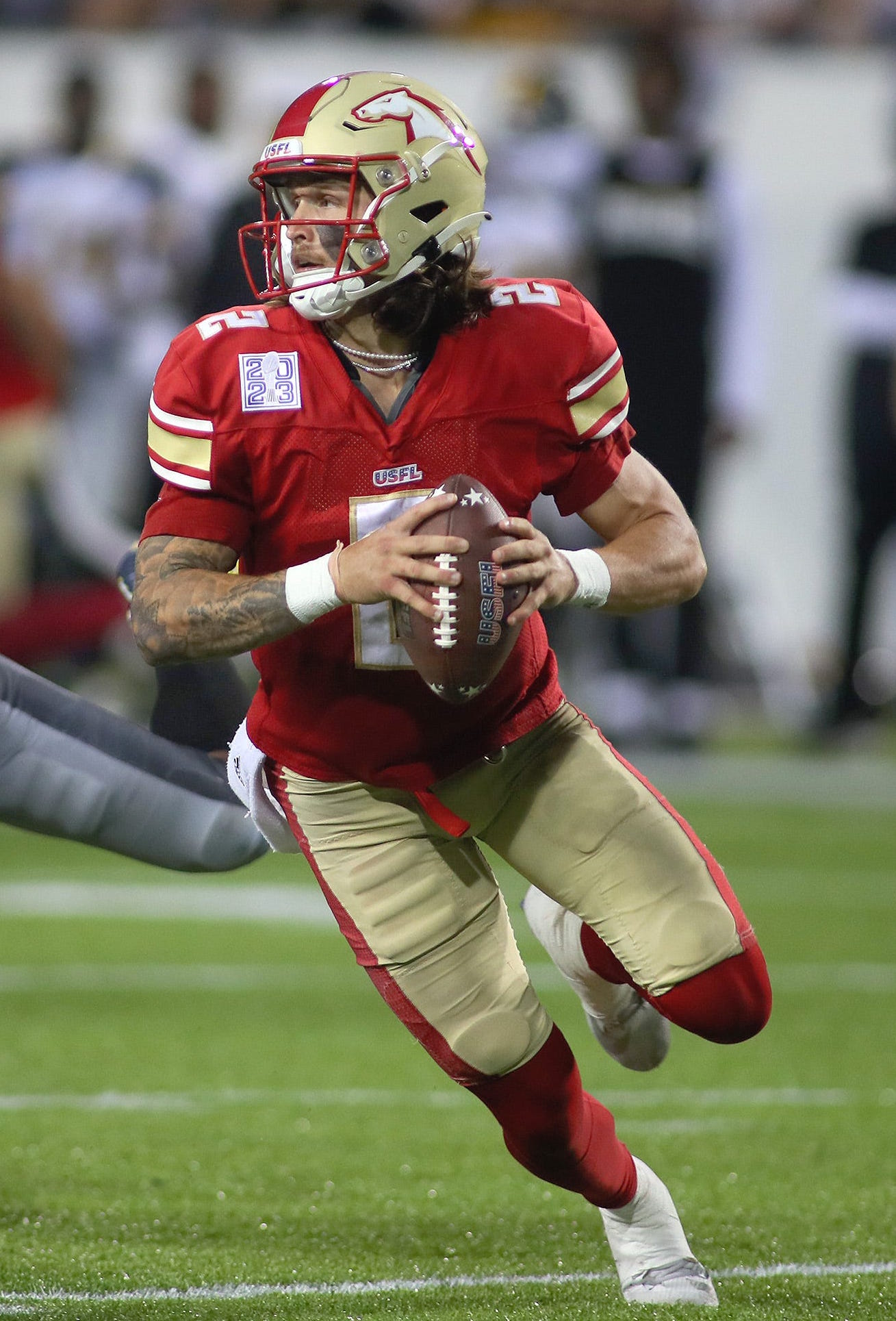 McGough worked out for the Packers on Tuesday, and Aaron Wilson of KPRC2 notes the NFC North team intends to add him to its 90-man roster (Twitter links). The 6-foot-3 quarterback had drawn interest from a number of teams, but the Packers will give him another NFL opportunity.
Spending two seasons in the rebooted USFL, McGough used Year 2 to assemble a decent launching pad back to the NFL. The Florida International product earned USFL MVP honors and led the Birmingham Stallions to the league championship. McGough finished the season with 20 touchdown passes and five interceptions to go with 2,105 passing yards and a 67.4% completion rate. Displaying some versatility, McGough added 403 rushing yards and five TDs.
McGough, 27, spent time with the Seahawks, Jaguars and Texans from 2018-21, enjoying multiple stints with Seattle. None of these opportunities led to game action, though the veteran arm has joined a Packers team that lost considerable experience at quarterback.
Following their Aaron Rodgers trade, the Packers did not add a veteran backup. Fifth-round rookie Sean Clifford (Penn State) resides as the top name on the Pack’s depth chart behind Jordan Love. Danny Etling, a UDFA who joined McGough in entering the NFL in 2018, is the third QB on Green Bay’s roster.
Latest On Bills’ DeAndre Hopkins Pursuit
After discussing trade terms with the Cardinals, the Bills were initially one of the frontrunners to land DeAndre Hopkins as a free agent. GM Brandon Beane spoke with the veteran wide receiver, but for the most part, Buffalo stayed out of these summer sweepstakes.
Hopkins opted for a two-year, $26MM Titans deal that can max out at $32MM. By all accounts, the Bills were not planning to go near the base price here. The Patriots and Chiefs also stood down, though it sounds like both these teams were bigger players for the 11th-year veteran than the Bills ended up being.
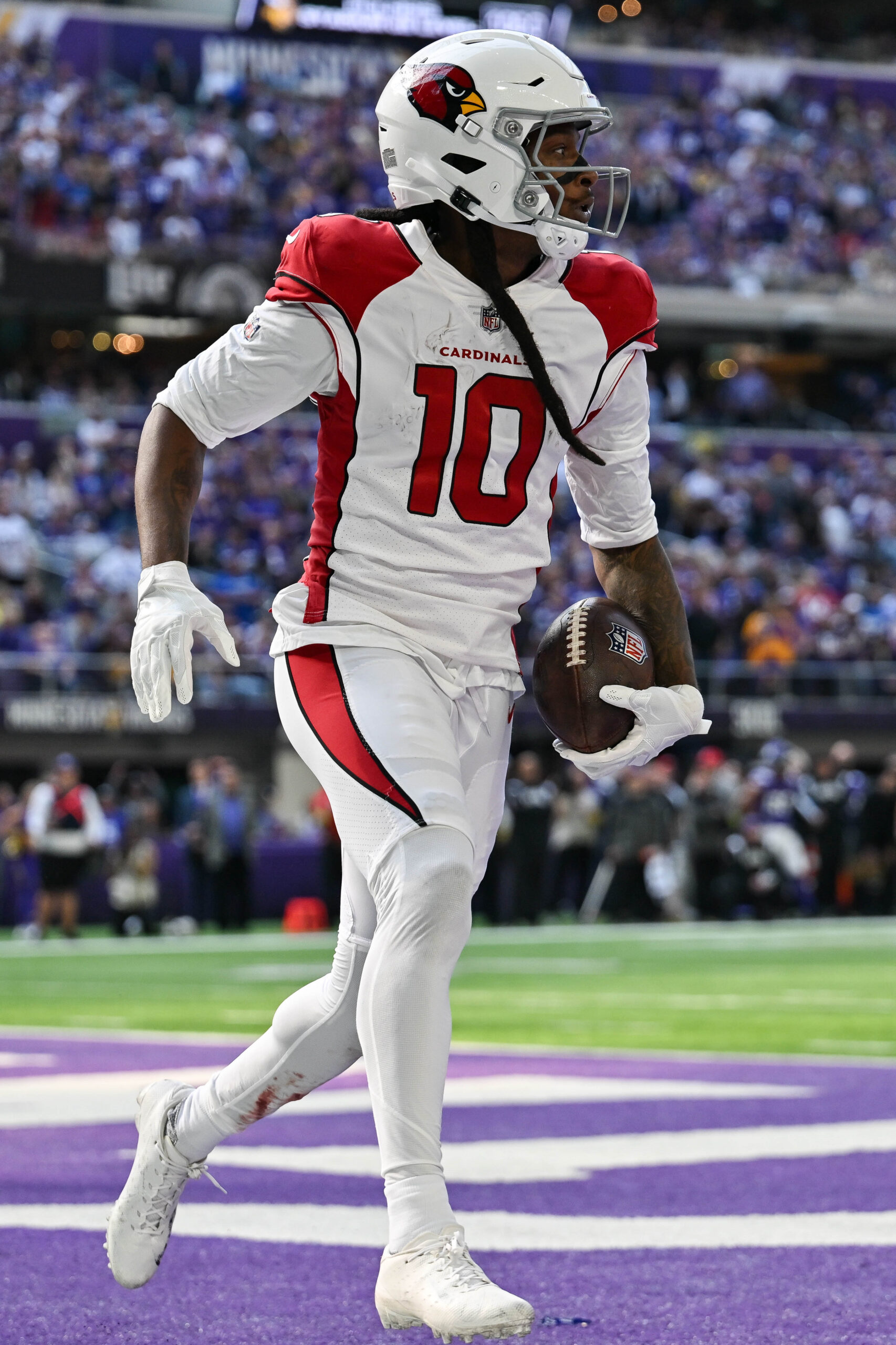 The Bills surfaced early as Hopkins suitors and joined the Chiefs as being the only known teams to discuss a swap with the Cardinals. The Ravens’ Odell Beckham Jr. contract squashed the talks between the Cards and the AFC powers, and Hopkins — after hoping teams would drive up the market — looks to have gotten his wish. That said, we have not learned the guarantees yet.
The makeup of Buffalo’s pass-catching corps may also have contributed to the team staying away here. Hopkins averaged 10 targets per game in 2020 and 10.7 per contest last season, and Albert Breer of SI.com notes the high-profile free agent being a volume-type receiver is believed to have impacted the Bills, who have one of the best — in Stefon Diggs — atop their receiving hierarchy. The Bills using a first-round pick on Utah tight end Dalton Kincaid, whom Breer adds is expected to play the slot role the team was likely targeting Hopkins to man, also may have affected its desire to add Hopkins.
Joining the Chiefs near the bottom of the NFL in cap space for several weeks, the Bills also were believed to have a firm price point. They also have seen Diggs generate early drama, being sent home from the team’s first minicamp day. While Sean McDermott and Josh Allen have submitted strong “Nothing to see here; please disperse” routines regarding Diggs, the star wideout has yet to discuss his issues with the team publicly. Adding Hopkins to this equation would have introduced another complication, though it would have probably upgraded the defending AFC East champions’ arsenal. Bills brass also had good conversations with Hopkins, per Breer, but Gabe Davis remains in place as the team’s No. 2 wide receiver.
Other teams in this mix did feel Hopkins would have taken less money from the Chiefs or another high-level contender had the money not moved to OBJ-level territory, Breer adds. With the the receiver-needy Titans ponying up, Hopkins will be back in the AFC South and in a No. 1-type role again.
NFC South Notes: Falcons, Saints, Shenault
A 16-game starter as a rookie in 2021, Jalen Mayfield missed all of last season due to injury. The Falcons designated the former third-round pick for return but let his practice period expire without an activation. Prior to the injury, Mayfield lost a competition for the team’s left guard gig last summer. They have since moved in another direction at guard, both sliding ex-center starter Matt Hennessy to that post and drafting Syracuse’s Matthew Bergeron in Round 2. As a result, Mayfield spent this offseason primarily at tackle, D. Orlando Ledbetter of the Atlanta Journal-Constitution notes.
Mayfield started 15 of the 18 games he played at Michigan at right tackle. He struggled at guard as a rookie; Pro Football Focus rated him as one of the NFL’s worst O-linemen that year. Guard does not appear to be in Mayfield’s past, however, with Arthur Smith suggesting a swing backup role is likely. The Falcons re-signed right tackle Kaleb McGary this offseason and look to have a fairly set O-line, with Chris Lindstrom, longtime left tackle Jake Matthews and center Drew Dalman rounding out the unit.
Here is the latest from the NFC South:
- Calais Campbell is expected to play a true edge role in Atlanta, to the point Ledbetter slots the 300-pound defender as an outside linebacker in the Falcons’ defense. It should not be expected Campbell will spend much time in a standup position outside, but it is interesting the career-long D-lineman is even mentioned as a candidate to do so. Campbell is aiming to play around 60% of the Falcons’ defensive snaps, per Ledbetter. That would be in line with the veteran’s Ravens role; he respectively logged 64% and 62% snap rates over the past two seasons. Campbell, who signed a one-year deal worth $7MM, will turn 37 in September.
- On the topic of positional adjustments, the Panthers are giving Jordan Thomas a shot as an edge rusher. Formerly a sixth-round Texans pick in 2018, Thomas was a tight end during his previous NFL run. He caught 20 passes as a Houston rookie. Thomas, however, saw some time as an edge rusher in the XFL, and Joe Person of The Athletic notes he will attempt to make the Panthers’ 53-man roster as an outside linebacker (subscription required). This is a somewhat unusual transition, as Thomas still primarily played tight end in the XFL. He caught three TD passes this season.
- Through two seasons, the Saints have not seen much from first-round pick Payton Turner. The 2021 draftee should not be considered a lock to make New Orleans’ 53-man roster, Nick Underhill of NewOrleans.football writes. While Turner will be expected to make the team, due to his draft status and contract, the defensive end has three sacks in two seasons and was a healthy scratch at points last year. The Saints used a second-round pick on a D-end (Isaiah Foskey) and re-signed Tanoh Kpassagnon, but the team also let Marcus Davenport leave in free agency. The Saints would eat $3.2MM in dead money by waiving Turner; the Houston alum showing belated development would obviously be the best-case scenario for the team.
- New Orleans also did not re-sign Jarvis Landry this offseason, leaving some competition for the receiver spots alongside Chris Olave and Michael Thomas. James Washington is not a lock to make the Saints’ roster, but Underhill adds the ex-Steelers second-rounder impressed during the offseason program and will be in the mix to snag one of the backup jobs. The Saints signed Washington to a league-minimum deal with nothing guaranteed.
- The Panthers are still determining the best way to deploy Laviska Shenault, but Person notes a bigger run-game role will likely be in the cards. A fourth-year wide receiver, Shenault totaled nine carries last season. One of them went for a 41-yard touchdown. The former second-round pick worked in a hybrid capacity at points in Jacksonville as well and has logged 38 career carries.
Giants Place LB Jarrad Davis On IR
The knee surgery Jarrad Davis underwent will prevent him from playing for the Giants this season. The team placed the veteran linebacker on IR on Tuesday, Field Yates of ESPN.com tweets.
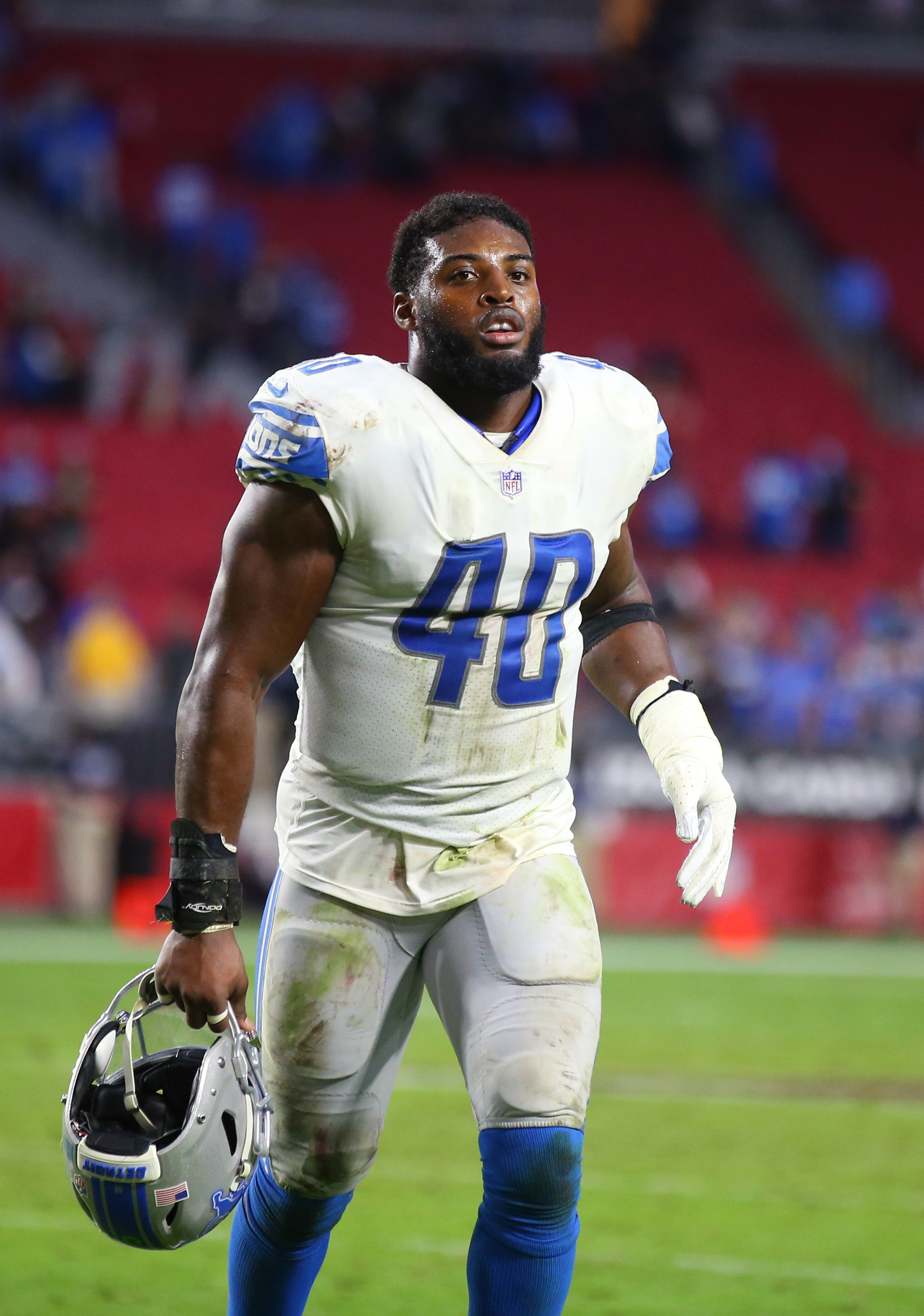 Davis missed minicamp due to an unspecified knee injury and underwent surgery to repair the problem. Players have been able to return from IR for over a decade now, but they must be carried over to the 53-man roster in order to do so. Davis landing on IR more than a month before rosters are set removes him from that equation.
An injury settlement that removes Davis from the Giants’ IR list would be the only way the former first-round pick can play in 2023. He would do so for another team in this scenario. Of course, it is not known if Davis will be healthy enough to play this year. It does not look like he will be, with ESPN’s Adam Schefter noting the injury Davis sustained at OTAs is season-ending (Twitter link). Davis re-signed with the team on a one-year deal worth $1.18MM. None of the money is guaranteed.
The Giants signed Davis off the Lions’ practice squad in December, and the Florida alum started both Big Blue’s playoff games at inside linebacker. Although New York added Bobby Okereke on a $10MM-per-year deal, Davis was the favorite to start alongside him. The team will need to look in another direction. It already started doing so recently, working out Joe Giles-Harris and Kyahva Tezino.
Davis did not work out with the Lions, being benched late in his initial stint with the team. But the former No. 21 overall pick has made 51 career starts. His absence will leave an experience void on the Giants’ defensive second level. For the time being, second-year ILBs Darrian Beavers and Micah McFadden will vie for the job alongside Okereke. Beavers, a sixth-round pick, missed all of his rookie year with an ACL tear. Chosen in Round 5 last year, McFadden started seven games as a rookie.
Lions Sign Round 2 S Brian Branch, Wrap Draft Class Contracts
The Lions are the latest team to finalize their draft class agreements, signing second-round pick Brian Branch to his four-year rookie deal. This agreement also should help other teams in finalizing second-rounders’ deals.
A defensive back out of Alabama, Branch went to the Lions at No. 45 overall. Entering Tuesday, no one chosen between Nos. 40 and 49 had signed their respective rookie contracts. The Lions striking a deal with a player in the middle of that glut should break some of the ice regarding guaranteed money.
[RELATED: Lions Ink First-Round RB Jahmyr Gibbs]
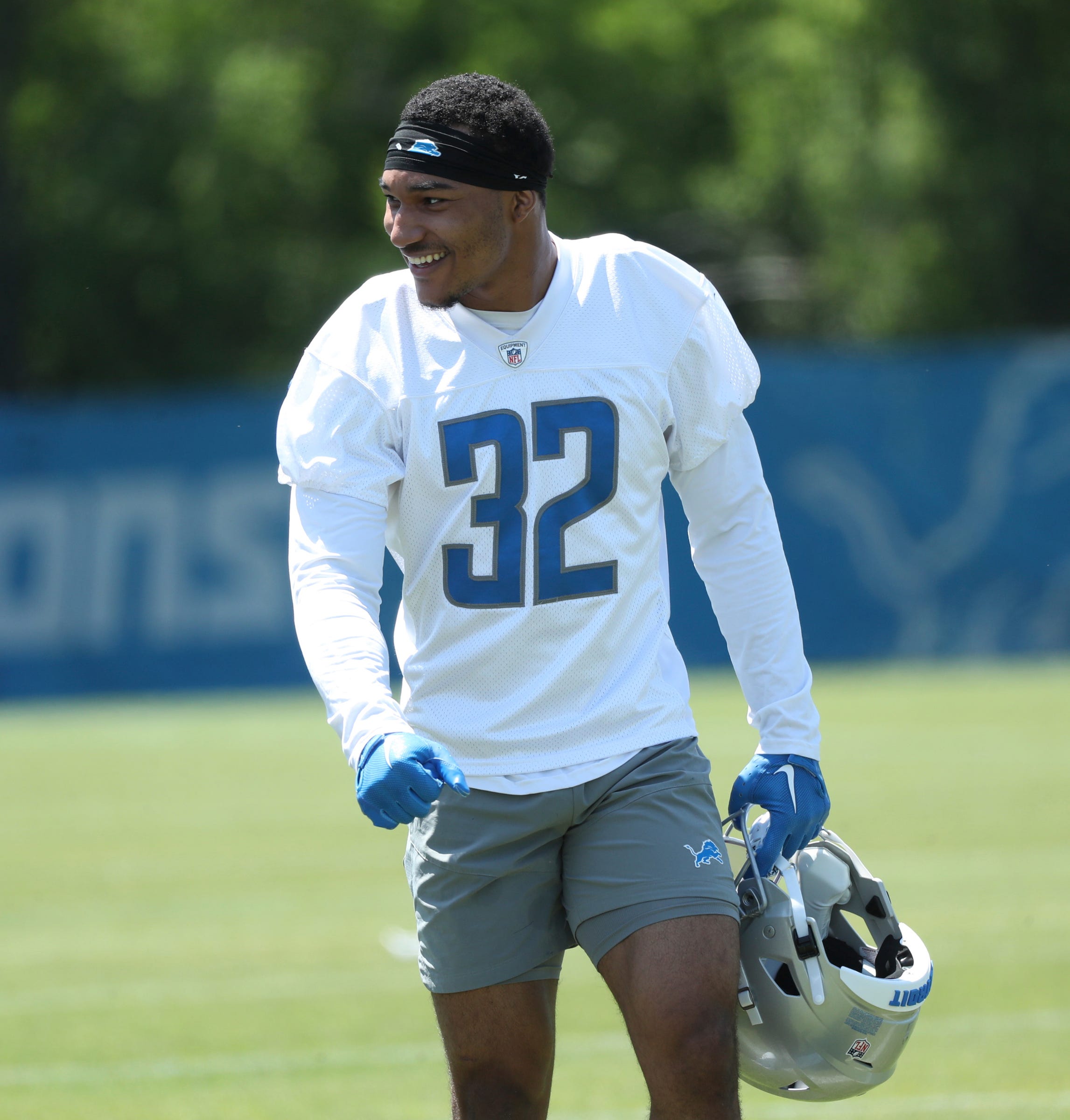 Carolina gave No. 39 overall pick Jonathan Mingo three years fully guaranteed with a partial Year 4 guarantee. That has held up the players chosen immediately after Mingo. It will be interesting to see the terms Branch agreed to, seeing as second-rounders continue to make strides on the guarantee front — so much so this year’s top second-round picks (Joey Porter Jr., Will Levis) are undoubtedly angling for fully guaranteed rookie contracts.
Branch saw extensive time at safety and in the slot for the Crimson Tide; he joins a team that has committed significant resources to improving its secondary. The Lions have added corners Cameron Sutton and Emmanuel Moseley along with safeties Branch and C.J. Gardner-Johnson. The latter two are each experienced in the slot, and Gardner-Johnson — a former New Orleans disciple of current Detroit DC Aaron Glenn — is expected to see more time inside compared to his Philadelphia role at safety. That could impact Branch’s rookie-year contributions, but CJGJ is signed to a one-year deal.
Branch will be under contract through 2026. The SEC standout was on the radar to be a first-round pick, reaching that level after being the only Division I-FBS player to total at least 90 tackles, 14 TFLs and two interceptions in 2022. ESPN’s Scouts Inc. ranked Branch as this year’s 30th-best prospect. He figures to be a key factor for the Lions in the long term, but with Kerby Joseph and Tracy Walker in place at safety, it is uncertain what the versatile DB’s role will be in 2023.
Here is the Lions’ 2023 draft class:
Round 1, No. 12 (from Browns through Texans and Cardinals): Jahmyr Gibbs, RB (Alabama) (signed)
Round 1, No. 18: Jack Campbell, LB (Iowa) (signed)
Round 2, No. 34 (from Cardinals): Sam LaPorta, TE (Iowa) (signed)
Round 2, No. 45 (from Packers): Brian Branch, DB (Alabama) (signed)
Round 3, No. 68 (from Broncos): Hendon Hooker, QB (Tennessee) (signed)
Round 3, No. 96 (from Cardinals): Brodric Martin, DT (Western Kentucky) (signed)
Round 5, No. 152: Colby Sorsdal, OT (William & Mary) (signed)
Round 7, No. 219 (from Texans through Vikings and Eagles): Antoine Green, WR (North Carolina) (signed)
Cowboys Eyeing CeeDee Lamb, Trevon Diggs, Terence Steele Extensions In 2023
The Cowboys’ top extension candidates have come up on multiple occasions this year. While the team has options with each beyond this year, the goal looks to be new deals before heading into the 2024 offseason.
CeeDee Lamb, Trevon Diggs and Terence Steele remain on Dallas’ extension radar, and ESPN.com’s Todd Archer notes the team will look to use training camp to hammer out deals with each. Lamb’s contract runs through 2024, via the recently exercised fifth-year option, while Diggs is entering the final year of his rookie contract. Steele is tied to a second-round RFA tender.
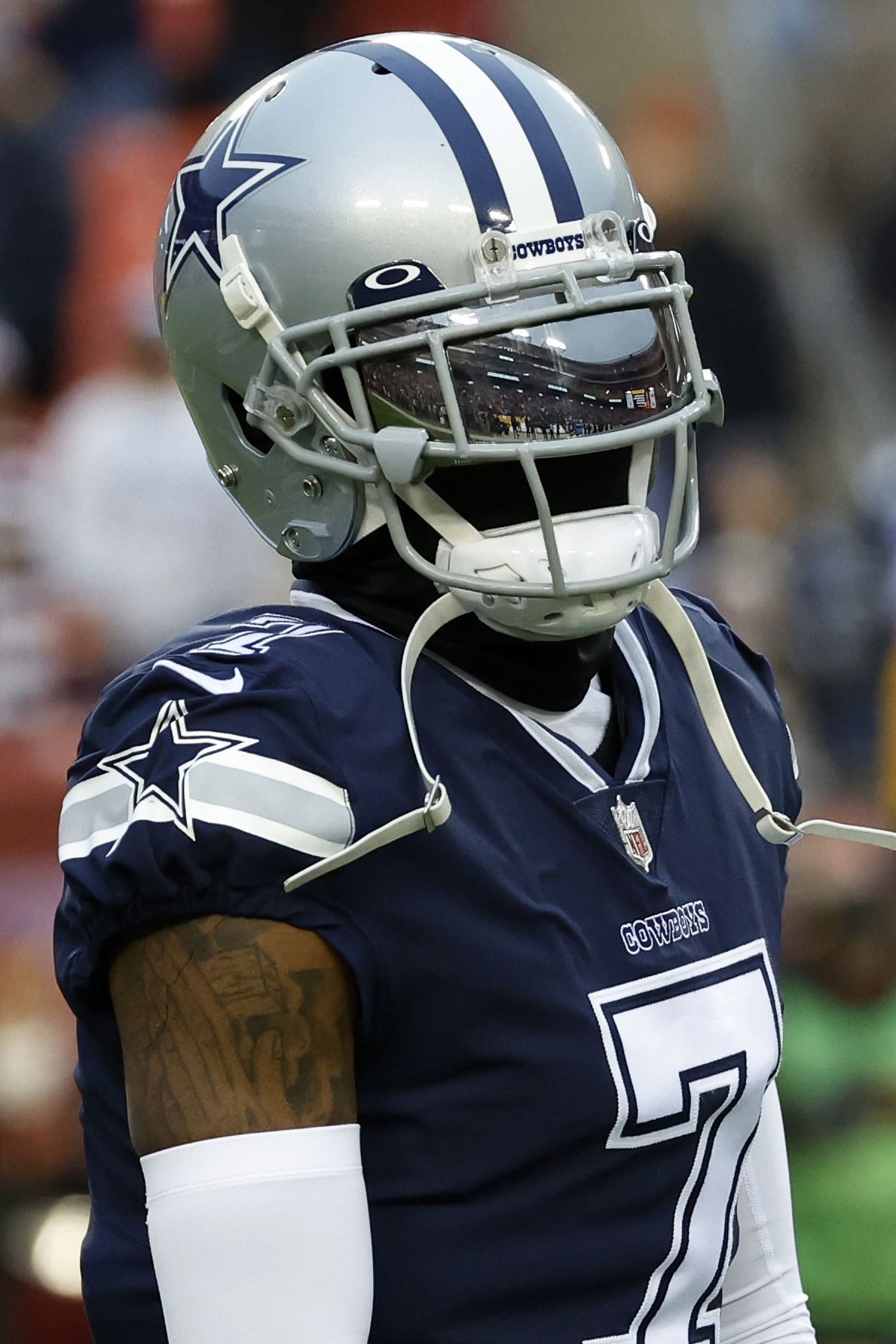 This will not be an easy mission. Diggs’ reputation as a boom-or-bust gambler in coverage notwithstanding, the former second-round pick has a first-team All-Pro nod on his resume — for an 11-interception season — and does not have an extensive injury history. Diggs has missed one game over the past two years. Going into his age-25 season, Diggs will certainly want his second contract to land in the top cornerback tax bracket.
With three corners earning at least $20MM per year and five attached to contracts worth at least $19MM on average, the Cowboys have a high bar to clear. Dallas passed on going into the $16MM-AAV range for Byron Jones three years ago, drafting Diggs shortly after letting its previous top corner walk (for a record-setting Dolphins deal) in free agency. If Diggs is unsigned going into the ’24 offseason, he will likely be positioned as the Cowboys’ top franchise tag candidate.
The Cowboys have a history of extending core performers despite two years remaining on their rookie deals. They did this with Tyron Smith in 2014, with Travis Frederick in 2016 and Ezekiel Elliott in 2019. That said, no team — in the fifth-year option era, that is — has extended a wide receiver with two years left on his rookie contract. Justin Jefferson is also a candidate to become the first wideout since the 2011 CBA to be extended with two years remaining on his rookie deal, though the Vikings are not certain to proceed down this path. That could force Jefferson to contemplate a hold-in effort, and Lamb might be fine waiting until Jefferson raises the booming receiver market further before committing to a second contract. Cowboys executive VP Stephen Jones mentioned players’ willingness to wait earlier this offseason.
Lamb, 24, may not be a threat to eclipse Tyreek Hill‘s $30MM-per-year pact now, but if Jefferson raises the positional ceiling and the top Cowboys wideout builds on his 1,359-yard season, the price in 2024 stands to come in higher than it likely does now. Ely Allen assessed Lamb’s extension value last month. The Cowboys cut bait on Amari Cooper‘s five-year, $100MM extension after two seasons; as the salary cap keeps rising, Lamb’s value will be much higher.
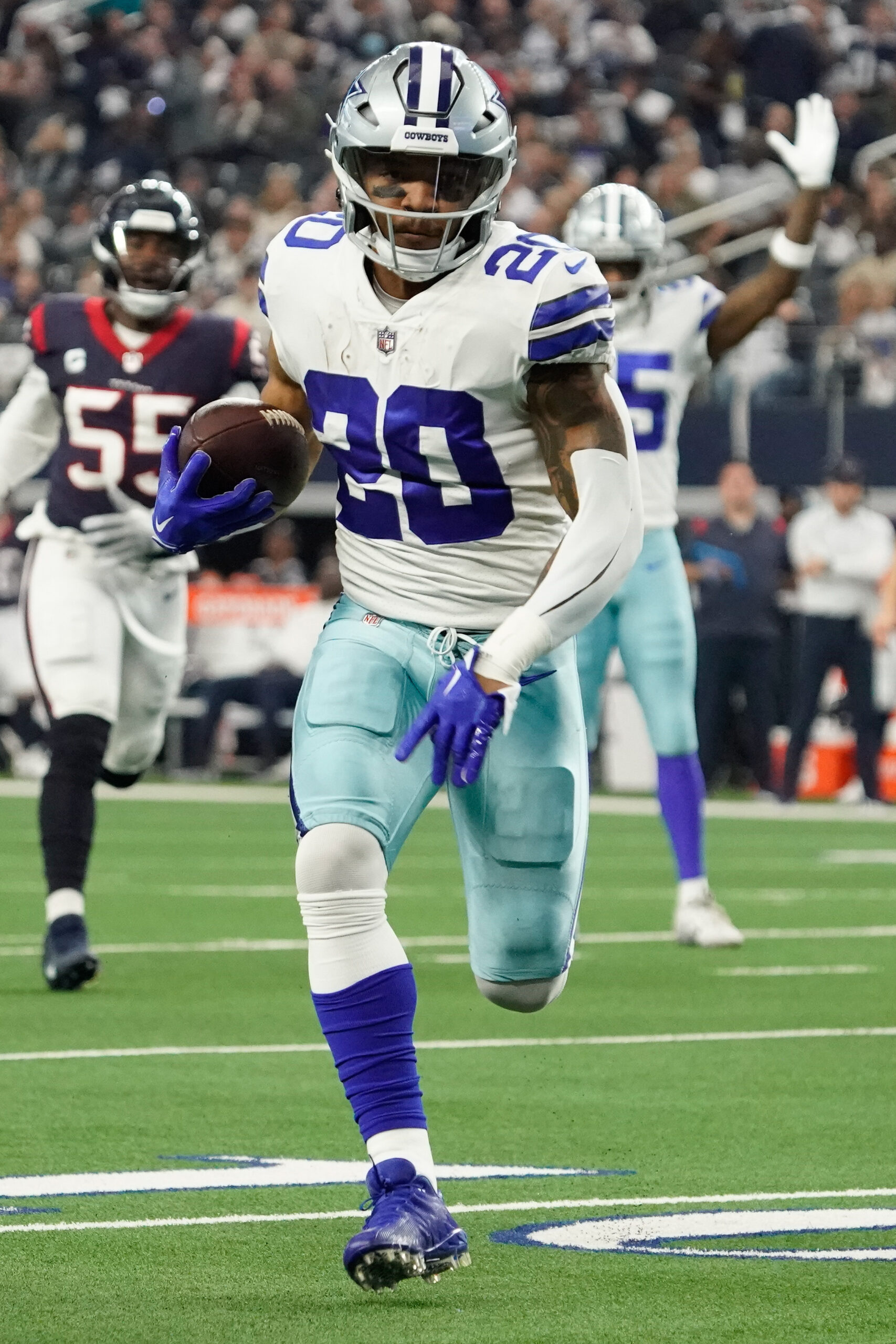 Steele is still rehabbing the ACL tear that ended his season early, and his being an extension candidate would point to the Cowboys planning an O-line configuration that keeps him as the starting right tackle. Jerry Jones mentioned the prospect of Steele being a swingman behind Tyron Smith and Tyler Smith, but the notion of the younger Smith sliding to left guard — which he did late in the season — and having the All-Decade blocker back at left tackle (and Steele at right tackle) has also surfaced. How the Cowboys proceed would have a big impact on Steele’s value.
A former UDFA, Steele, 26, can certainly enhance his market by putting together a strong contract year post-injury. Nine years after signing what has become the NFL’s longest-running active contract, Tyron Smith is due for free agency in 2024 as well. Steele’s status would seemingly factor into the Hall of Fame candidate’s Dallas future. Center Tyler Biadasz also could land on the Cowboys’ extension radar, Archer adds, though the fourth-year blocker is likely behind the above-referenced players in the queue.
The Cowboys’ ability to extend Diggs and Steele this year could affect Tony Pollard‘s future with the team. The Cowboys not entering into serious negotiations with the Pro Bowl back led to him joining Saquon Barkley and Josh Jacobs in being tied to the $10.1MM franchise tag this season. Because of this, Archer adds it is “highly likely” this season will be it for Pollard in Dallas. The Cowboys can tag Pollard again in 2024 — at 120% of his current tag number — but higher-end tag options could be in place by then.
That raises the stakes for prospective Diggs negotiations this summer, though the increasingly grim running back market may also allow the Cowboys to re-sign Pollard if no extension is reached before the 2024 legal tampering period.
Offseason In Review: Jacksonville Jaguars
For the second time in franchise history, the Jaguars overcame a 2-6 start to make the playoffs. The last time the team did so (1996), a run of playoff appearances followed. This Jaguars nucleus has similar ingredients in place compared to the Mark Brunell-fronted teams of the late ’90s. At the center is Trevor Lawrence, the former No. 1 overall pick who shook off a rough rookie season to emerge as a factor in the QB-rich AFC. The Jags’ 27-point playoff rally past the Chargers and competitive effort against the eventual champion Chiefs would seemingly depict a clear team on the rise.
The organization proceeded accordingly this offseason, not doing much to tamper with the roster it assembled during the 2022 free agency period. The Jags enter the season as favorites in what appears to be the AFC’s weakest division. How much more of a level jump can the 2023 edition make?
Extensions and restructures:
- Reached three-year, $41.25MM agreement with TE Evan Engram ($24MM guaranteed)
- Extended DL DaVon Hamilton on a three-year, $34.5MM deal ($20MM guaranteed)
- Agreed to three-year, $30MM extension with DL Roy Robertson-Harris ($14.4MM guaranteed)
- Restructured WR Zay Jones, LB Foyesade Oluokun, G Brandon Scherff‘s contracts to create $36MM-plus in cap space
- Converted $7.38MM of DT Folorunso Fatukasi‘s base salary into signing bonus, creating $5.9MM in cap space
- Reworked S Rayshawn Jenkins‘ contract, creating $5MM-plus in cap space
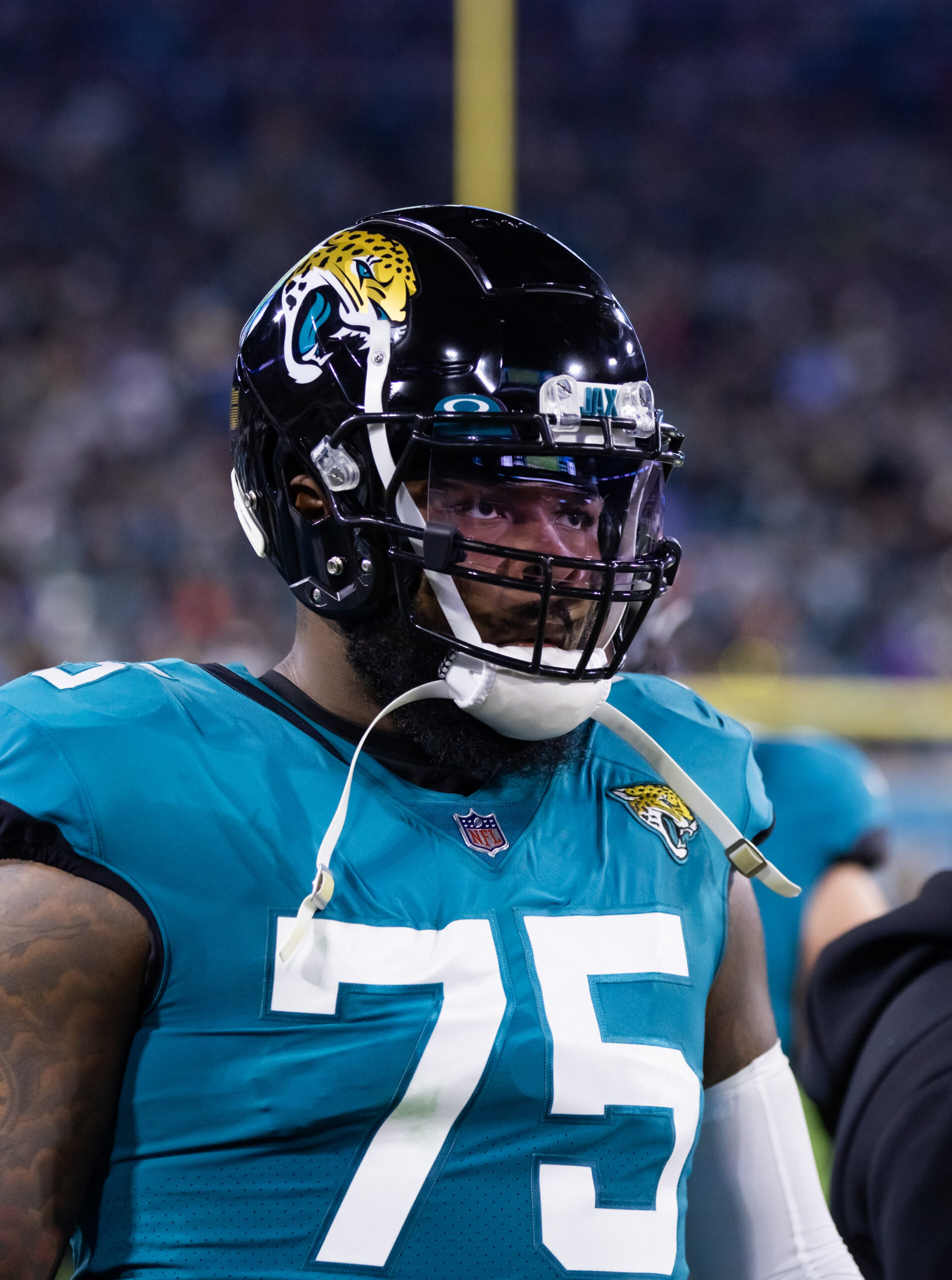
The Jaguars look to have made several strong investments in 2022. While the rest of the A- and B-listers from that pricey lot received multiyear deals, Engram needed to prove his value after an inconsistent Giants run. The former first-round pick did that, establishing a new Jaguars single-season best for tight end receiving yardage (766) last season. Although the Jaguars also had right tackle Jawaan Taylor looming as a free agent, they slapped a less expensive franchise tag ($11.35MM) on Engram. After both sides expressed interest in a long-term partnership, an agreement emerged barely 24 hours before this year’s deadline for tagged players to sign extensions.
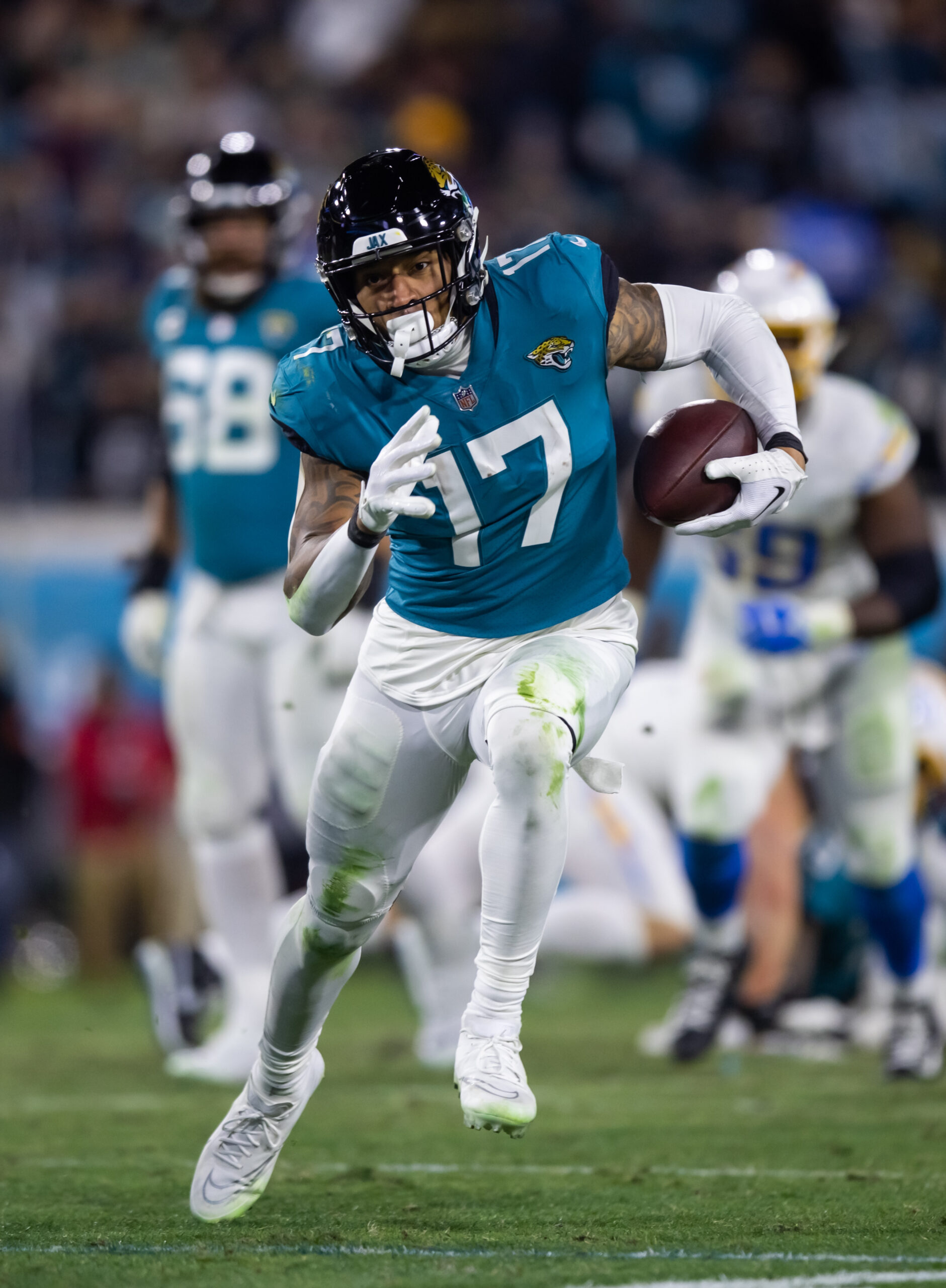 As the tight end position remains undervalued relative to its best players’ contributions, Engram and contract-year Vikings tight end T.J. Hockenson represented this year’s needle-movers on the financial front. But Engram is both going into his age-29 season and has not been a reliable pass catcher from a year-to-year perspective. As such, he and the Jags reached common ground short of the $17MM-per-year positional ceiling Darren Waller established in September 2022. At $13.75MM per year, Engram is now the NFL’s sixth-highest-paid tight end.
It is a bit surprising Engram could not clear the $14MM-AAV barrier, seeing as the salary cap is back on its steady rise after a 2021 reduction. Both Mark Andrews and Dallas Goedert signed $14MM-per-year deals in 2021, and Engram’s 2022 season featured better production than either of Waller’s past two slates. The Ole Miss alum became one of Lawrence’s go-to targets, adding 12 catches for 124 yards and a touchdown during Jacksonville’s two playoff games. In terms of guarantees, Engram did slightly better. The $24MM, which covers this year’s franchise tag and the tag amount had Engram been cuffed in 2024 as well, checks in fifth at the position.
While Travis Etienne is tied to a rookie contract, Lawrence’s top four pass catchers are all either tied to veteran deals or a fifth-year option (Calvin Ridley). Lawrence’s eventual extension will likely be a record-setting accord, but the Jaguars can backload that deal to make the cap numbers to best line up with those of Engram and Christian Kirk. Zay Jones‘ $8MM-per-year pact runs through 2024, while Ridley should be an extension candidate, provided he bounces back from 1 1/2-season absence.
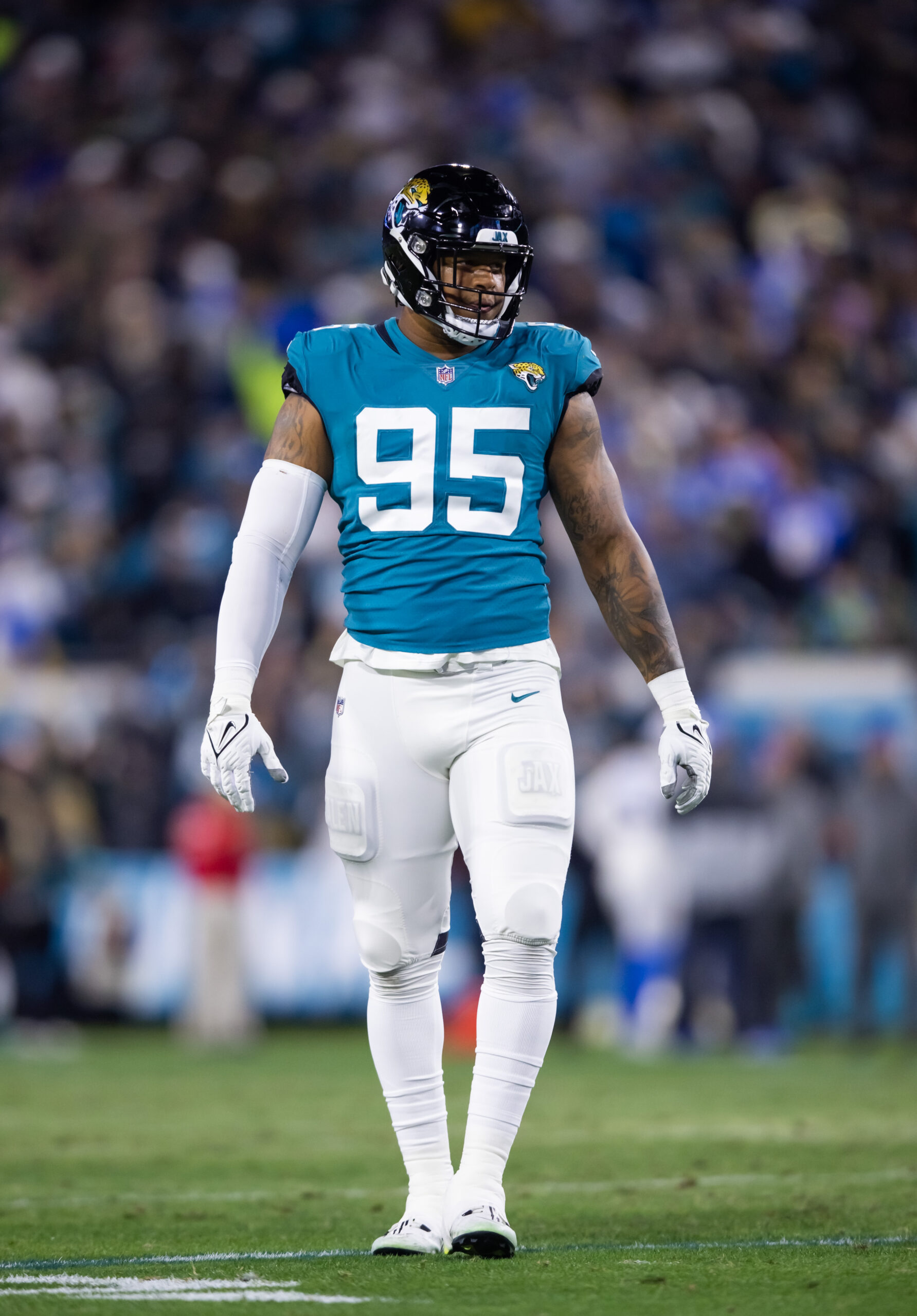 Engram could not become a reliable difference-maker in New York, but he did surpass 700 receiving yards as a rookie (2017) and earn a Pro Bowl bid during a 2020 season in which alternates were not part of the equation (due to the game not actually being played). In his three other Giants years, the 6-foot-3 target underwhelmed. This included a 408-yard 2021 showing, but the Giants were not exactly giving their pass catchers much of an opportunity during this period, which bottomed out following Daniel Jones‘ neck injury in November 2021. Engram showed enough in Jacksonville last season, and a team that has struggled for years to generate notable work from the tight end position rewarded him.
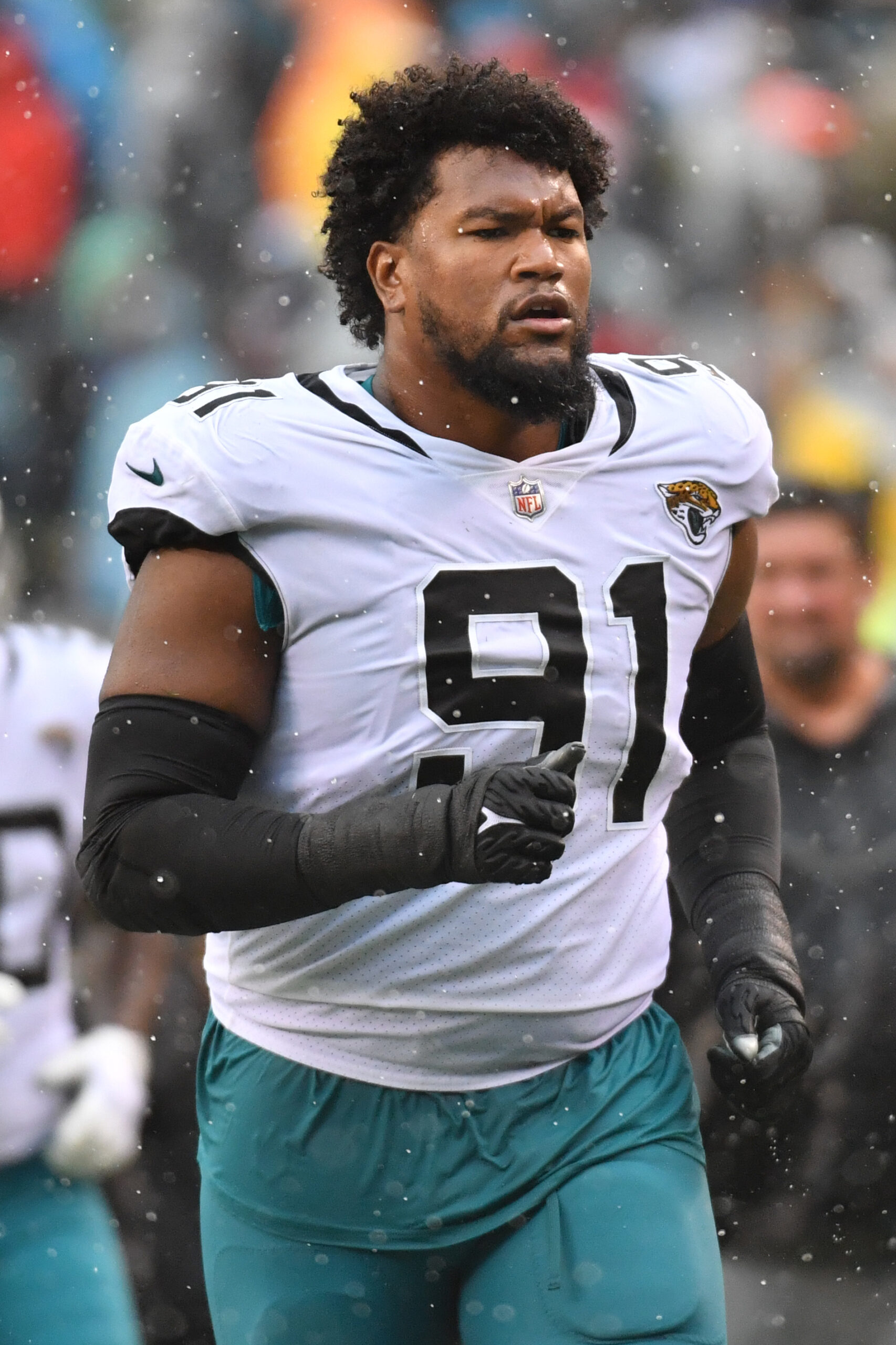
After bouncing back from the Urban Meyer debacle, the Jaguars made a concerted effort to retain talent this offseason. This was particularly a point of emphasis along their defensive front. One year remained on Hamilton’s rookie contract, with Robertson-Harris’ three-year deal also running through 2023. The Jaguars drafted Hamilton in the 2020 third round, when former GM Dave Caldwell was still running the show, and added Robertson-Harris during Meyer’s short span in charge. GM Trent Baalke, however, was with the organization when both arrived. The Baalke-Doug Pederson regime prioritized both as D-line supporting-casters.
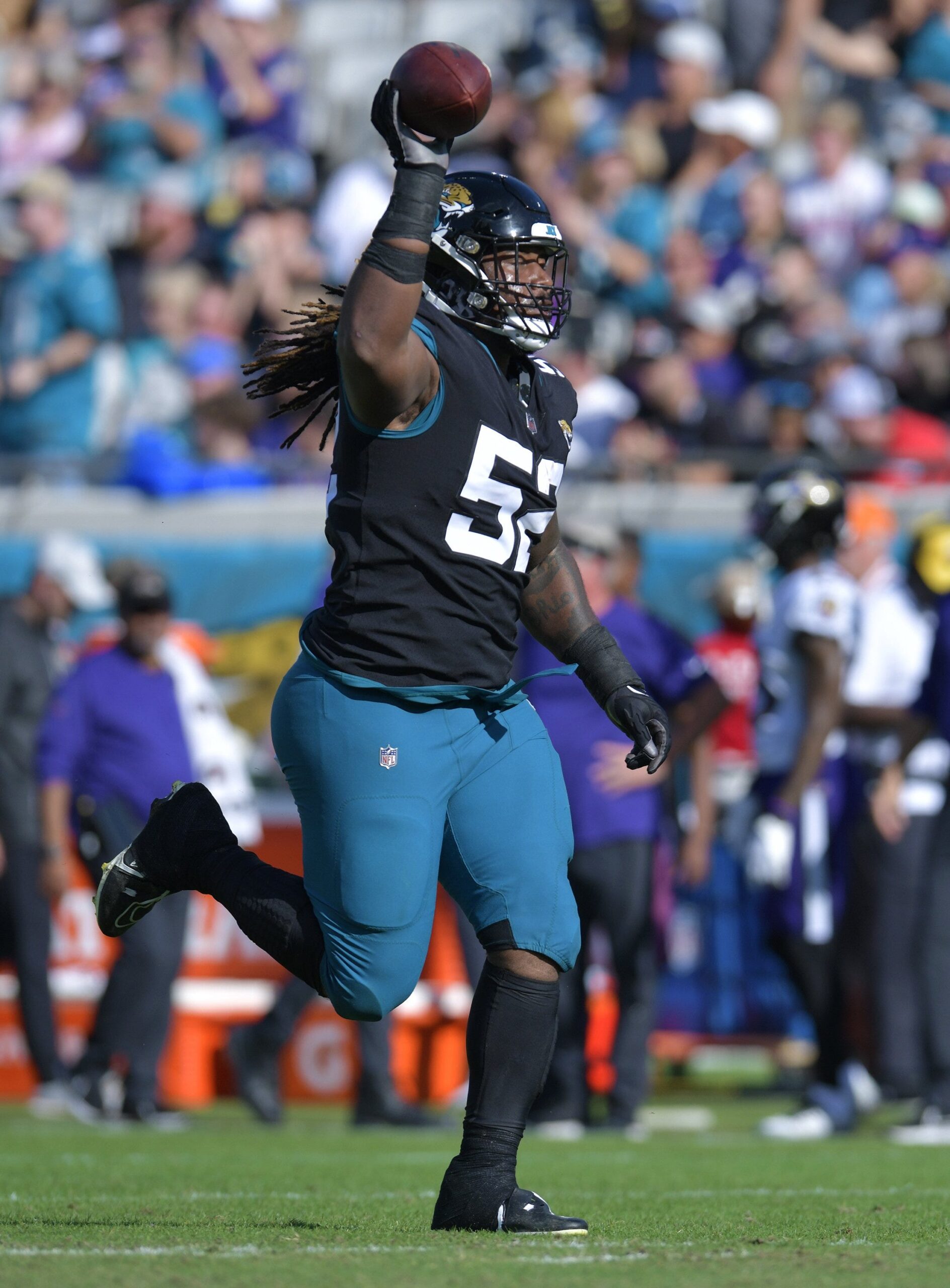 A part-timer on his rookie contract with the Bears, Robertson-Harris has now fetched two three-year deals from the Jags. His $14.4MM guarantee is nearly identical to the one that brought him to Duval County — $14MM — two years ago. Robertson-Harris is primed to continue his run as a starter. The former UDFA has started 30 games with the Jags — nearly triple his Bears first-string work — and is coming off his most productive season. In 2022, Robertson-Harris equaled his 2021 sack total (three) but offered career-best marks in tackles for loss (seven) and QB hits (12). Going into his age-30 season, Robertson-Harris opted to stay in Jacksonville rather than aim for a bigger deal in free agency next March.
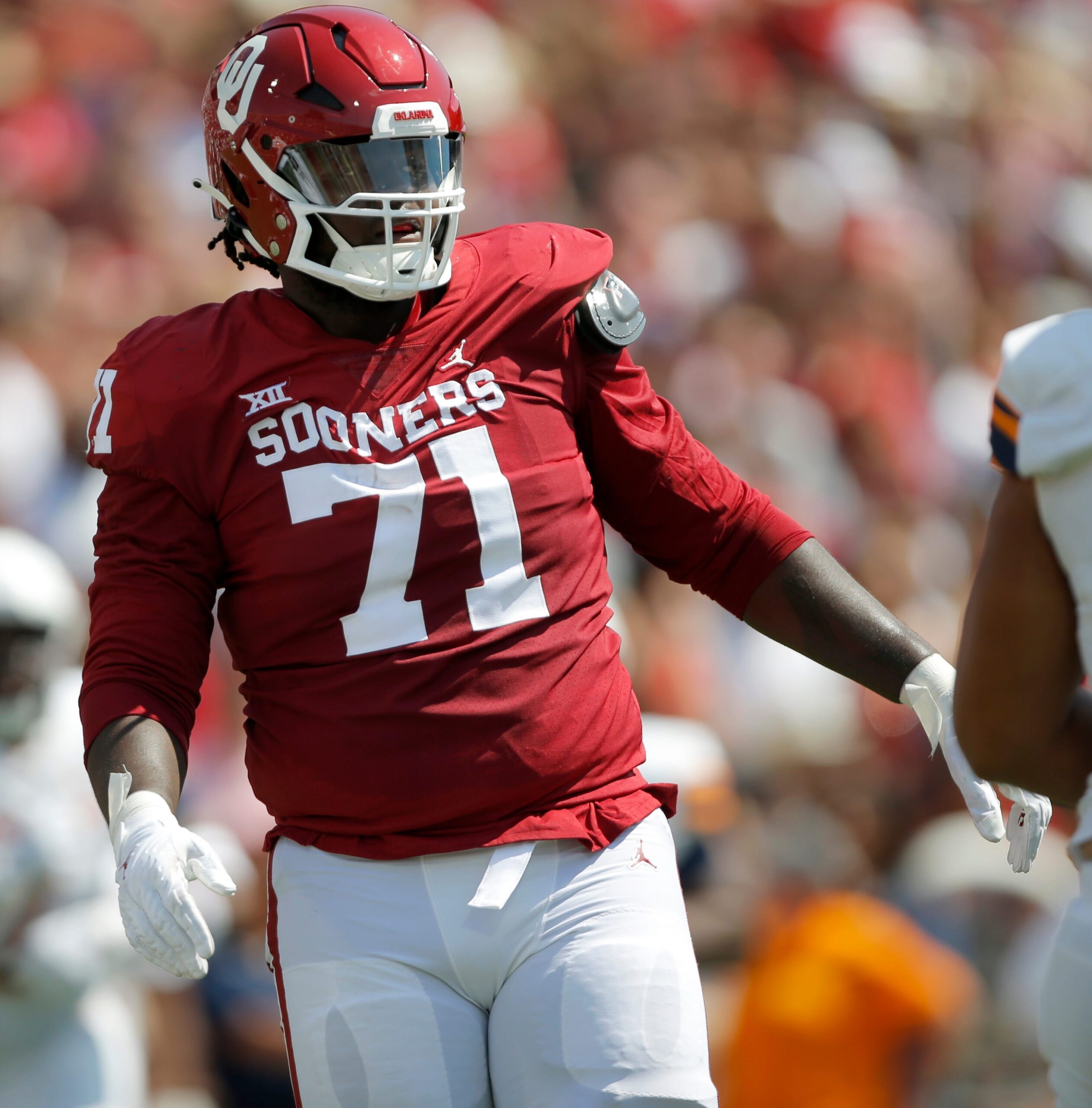
Hamilton, 26, emerged as a full-time starter last year. Pro Football Focus rated the Ohio State alum as a top-30 interior D-lineman in 2022, giving the Jags an ascending player alongside veterans Fatukasi and Robertson-Harris up front. Playing a career-high 610 defensive snaps last season, Hamilton has helped the Jags compensate for missing on 2018 first-rounder Taven Bryan. Hamilton also looks to be an under-the-radar draft win for the Jags, who reached their franchise nadir in the first two years of this decade.
With Hamilton also bypassing a chance at a free agency payday in 2024, the team has an interesting trio complementing its pair of ex-top-10 draftees on the edge.
Free agency additions:
- Brandon McManus, K: One year, $2MM ($1.25MM guaranteed)
- D’Ernest Johnson, RB: One year, $1.23MM ($250K guaranteed)
- Josh Wells, T: One year, $1.32MM ($150K guaranteed)
- Chandler Brewer, OL: One year, $1.11MM ($150K guaranteed)
Last year, the Jags signed Kirk, Scherff, Oluokun, Engram, Fatukasi, Jones and Darious Williams; five of those contracts were worth at least eight figures per year. Baalke said this would be a quieter free agency, and the third-year Jags GM did not deviate from that plan. Johnson, Brewer and Wells profile as backups, while McManus’ latest contract is worth far less than his most recent Broncos agreement.
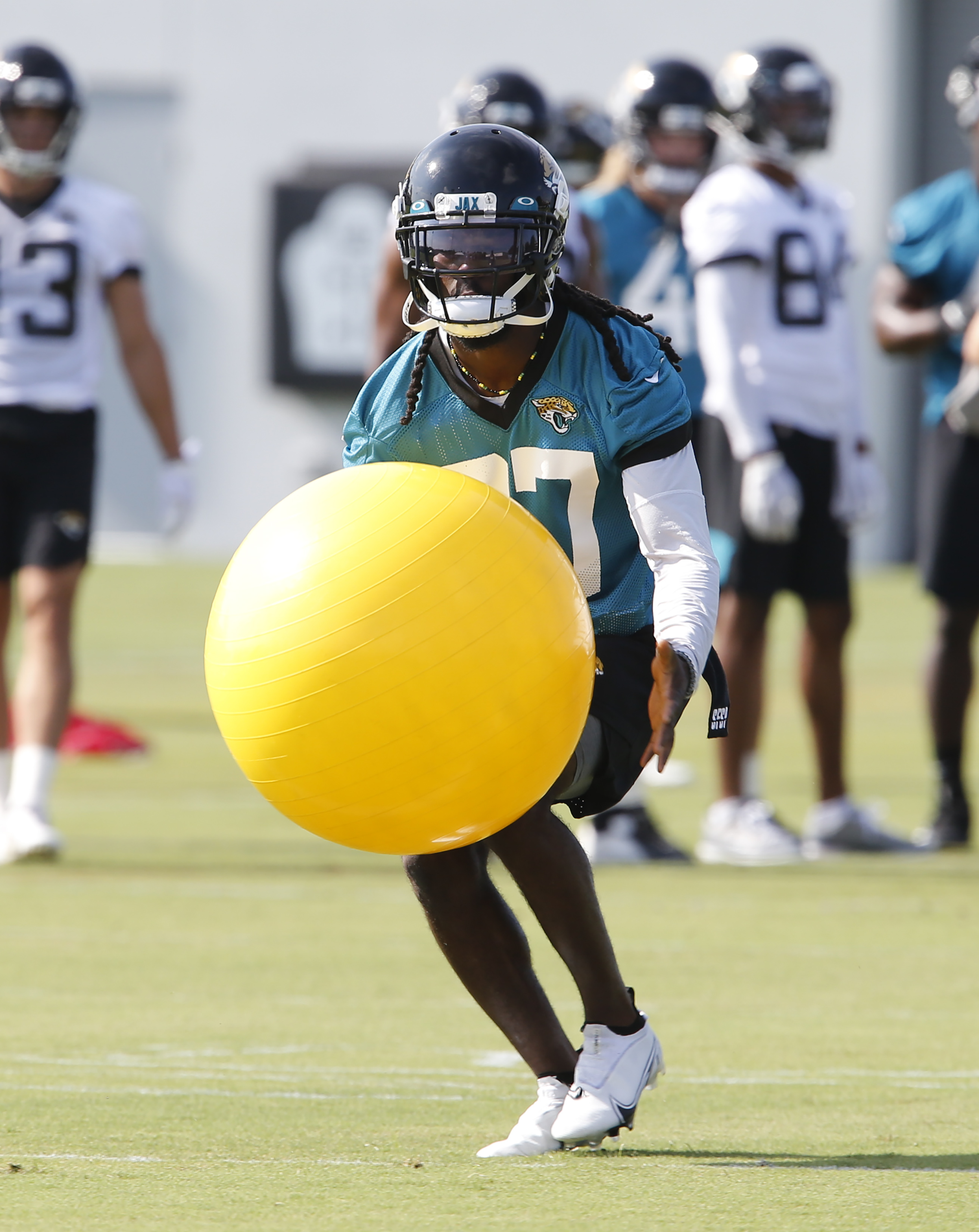
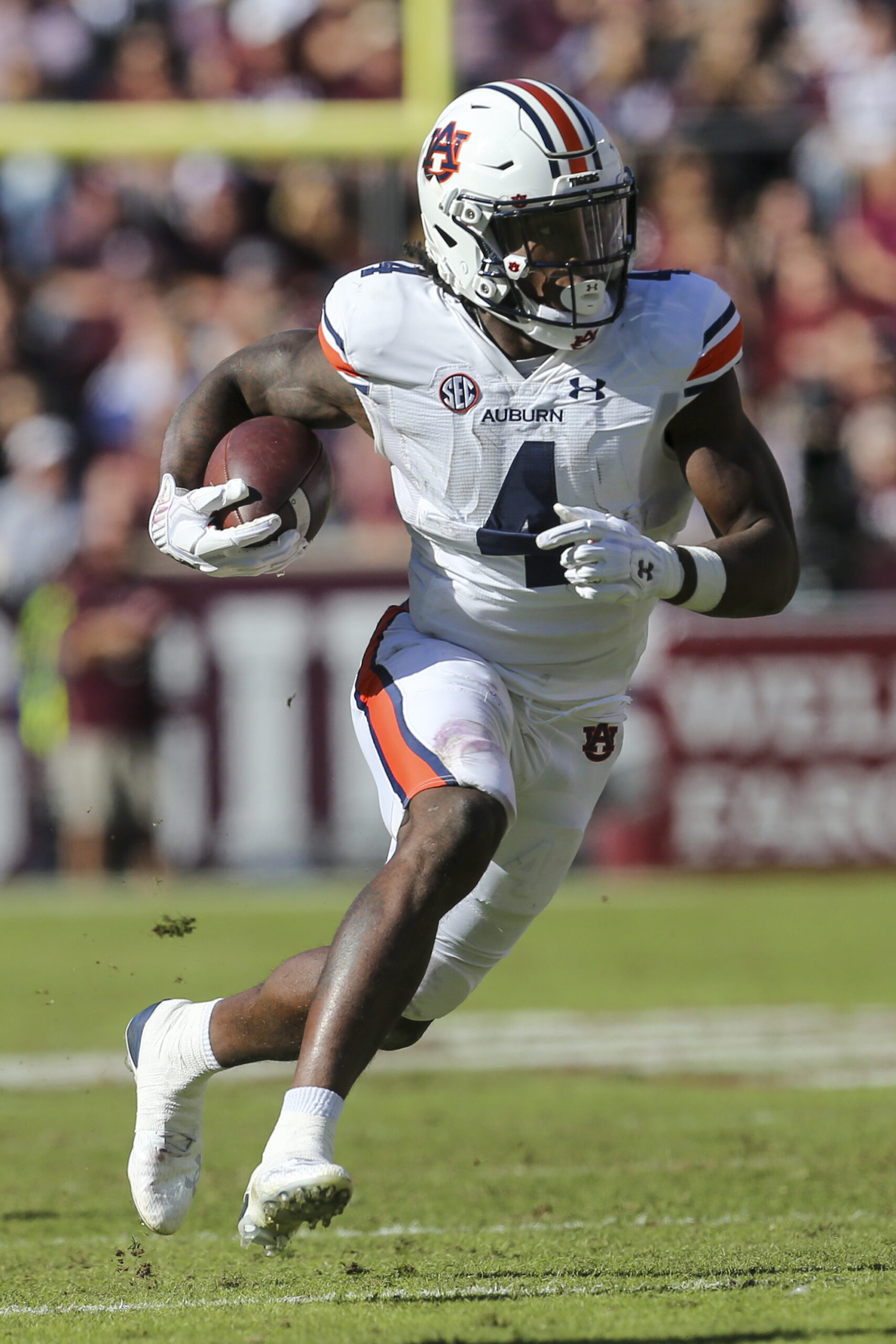
 Working behind Nick Chubb and Kareem Hunt in Cleveland, Johnson did rise to the Browns’ RB2 when one of the stalwarts was hurt. This led to the former Alliance of American Football performer rushing for 534 yards in 2021. In Johnson’s three games as the Browns’ primary running back that year, he gained 146, 99 and 123 rushing yards. The South Florida alum is already 27, but he only has 141 career carries. The Jags, who are planning to reduce Etienne’s workload by a touch, figure to give their RB2 a change-of-pace workload to spell their clear-cut starter. Third-rounder Tank Bigsby will likely push Johnson for the backup role, but the free agency addition also has steady special teams experience to bring value as a third-string option.
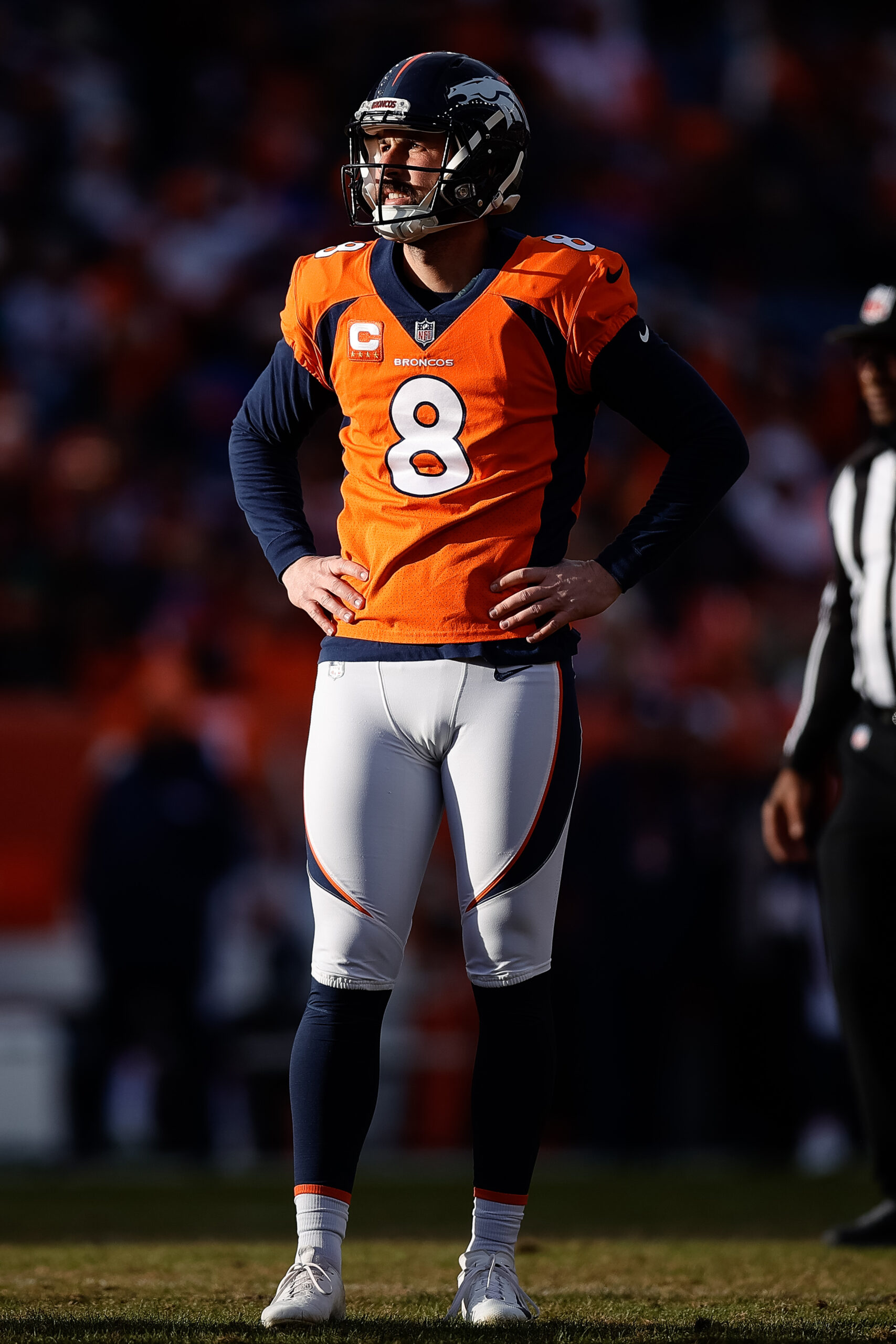
McManus, 31, spent the past nine seasons as the Broncos’ kicker. Last year, which began eventfully via the Nathaniel Hackett-ordered 64-yard game-winning try in Week 1, was not the veteran’s best work. McManus made just 77.8% of his field goal tries — his worst accuracy rate since 2017 — but did connect on 8 of the 12 50-plus-yard tries he attempted after that bizarre Week 1 scene in Seattle.
The Broncos used the McManus post-June 1 cut money to add Frank Clark. As Sean Payton‘s team zeroed in on the veteran edge rusher, McManus contacted the Jaguars about a gig. The push worked, and the Jags will aim for kicker stability after years adrift at the position. Eight kickers had seen time in Jacksonville from 2020-22, with last year’s option — Riley Patterson — after training camp had concluded.
Re-signings:
- Andrew Wingard, S: Three years, $9.6MM ($4.1MM guaranteed)
- Tre Herndon, CB: One year, $2.58MM ($2.58MM guaranteed)
- C.J. Beathard, QB: Two years, $4.5MM ($2MM guaranteed)
- Adam Gotsis, DL: Two years, $2.88MM ($1.25MM guaranteed)
- JaMycal Hasty, RB: One year, $1.45MM ($300K guaranteed)
- Tevaughn Campbell, CB: One year, $1.23MM ($100K guaranteed)
Bigger money went to players on the Jags’ extension radar, but the team also retained multiple regulars on defense. Wingard made 24 starts over his rookie contract, including 15 during the dismal 2021 season. Last year, he settled in as a third safety behind starters Rayshawn Jenkins and Andre Cisco. PFF has viewed Wingard’s work well, ranking him as a top-35 safety during his 2021 starter year and slotting him in the top 10 — albeit on just 223 defensive snaps — last year. Wingard’s ability around the line of scrimmage and work on special teams has allowed him to become a UDFA success story out of Wyoming, and the Jags’ retention mission included a pay bump from rookie-deal money for the 26-year-old defender.
Lions Sign RB Jahmyr Gibbs To Rookie Deal
Although Monday afternoon’s news paints an ugly picture of the present running back position, two teams used top-12 picks on backs in April. The second of those, Jahmyr Gibbs, is now signed.
Shortly after Saquon Barkley, Josh Jacobs and Tony Pollard did not come to terms on extensions, tying them to franchise tag salaries this year, the Lions announced they signed Gibbs to his four-year rookie contract. Gibbs does not have to worry about future negotiations at this point, even as his position’s value plunged off another cliff this offseason. The rookie Lions back is signed through 2026, with a fifth-year option that could push the deal through 2027. His contract is fully guaranteed.
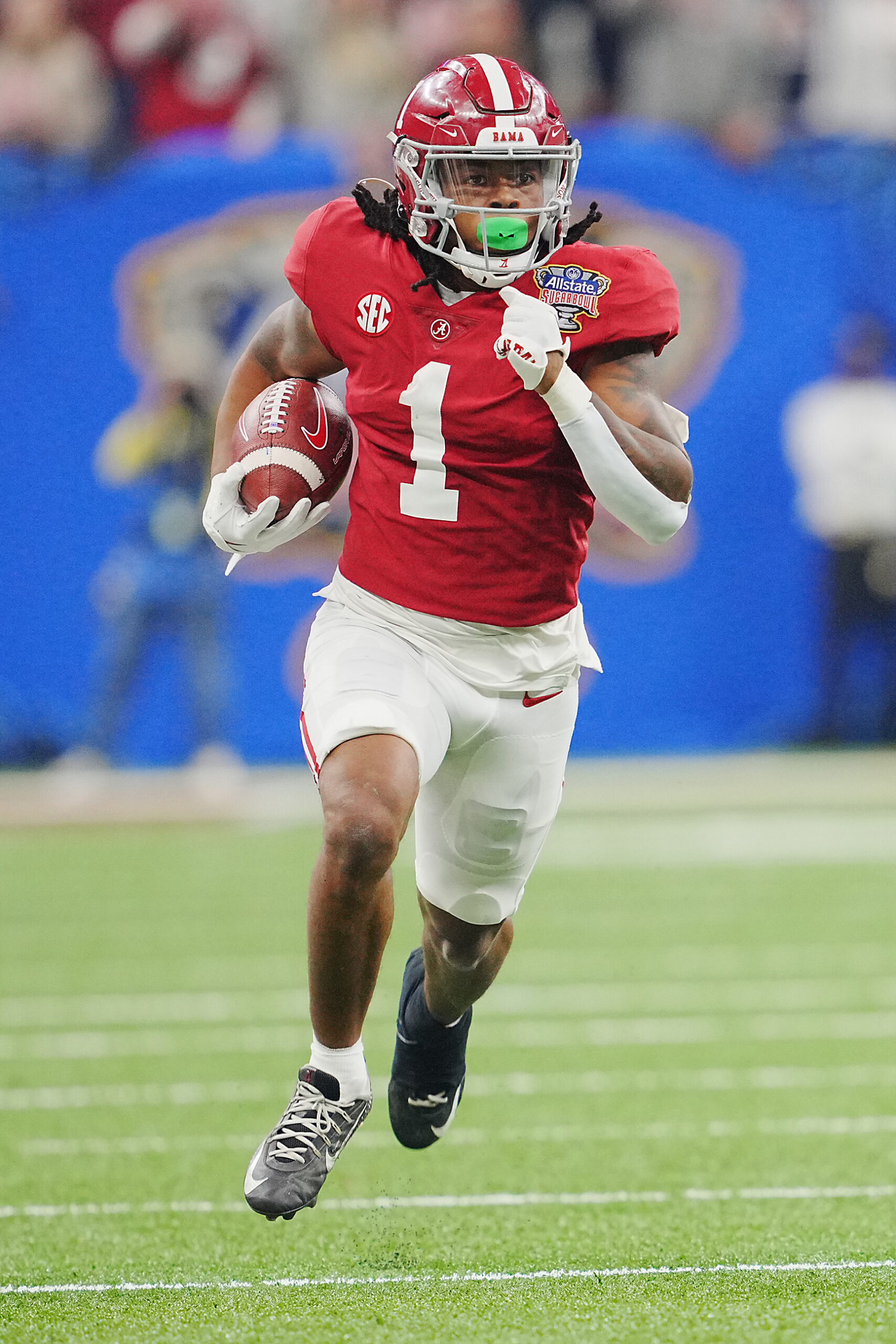 The Lions view Gibbs as a weapon capable of making impactful contributions as a runner and receiver. The Alabama product combined for 904 receiving yards from 2021-22, with this skill rocketing him up the draft board. While it seemed Bijan Robinson would be drafted well before any other back, late buzz during the pre-draft cycle pointed to Gibbs joining the Texas phenom in the first round. Not only did Gibbs do so, he heard his name called 12th overall in Kansas City.
Position-based criticism came the Lions’ way for how they proceeded in Round 1, which ended with Detroit selecting Gibbs and off-ball linebacker Jack Campbell. GM Brad Holmes remarked he probably could have nabbed the Iowa linebacker later had he traded down, but the Lions were prepared to grab Gibbs earlier than they did. The Lions were close to selecting Gibbs sixth overall — over Robinson — before the Cardinals offered them a trade to move back to No. 12.
Two days after drafting Gibbs, the Lions traded their dual-threat incumbent — 2020 second-rounder D’Andre Swift — to the Eagles. That deal included a seventh-round pick swap and a 2025 fourth-rounder coming Detroit’s way. Swift was a Bob Quinn-era investment; this offseason brought two notable Holmes pickups at the position. In addition to the Lions taking Gibbs at 12, they gave ex-Bears starter David Montgomery a three-year, $18MM deal ($8.75MM guaranteed).
After this Gibbs agreement, the Lions have just one unsigned draftee — second-rounder Brian Branch. Chosen 45th overall, Branch is part of a glut of unsigned Round 2 picks. Guaranteed money stands as the main issue keeping a batch of second-rounders unsigned.
Saquon Barkley, Josh Jacobs, Tony Pollard Fail To Reach Extension Agreements
As the running back market resides as a shell of its form of even a few months ago, the franchise tag deadline has come and gone without any of the three tagged backs reaching extension agreements.
After multiple reports suggested Tony Pollard was not close on a deal with the Cowboys, the Giants and Raiders will not come to terms with Saquon Barkley or Josh Jacobs on respective extensions, NFL.com’s Ian Rapoport, Tom Pelissero and Mike Garafolo report (Twitter links). All three backs will be tied to the $10.1MM franchise tag.
[RELATED: Franchise Tag Recipients Since 2013]
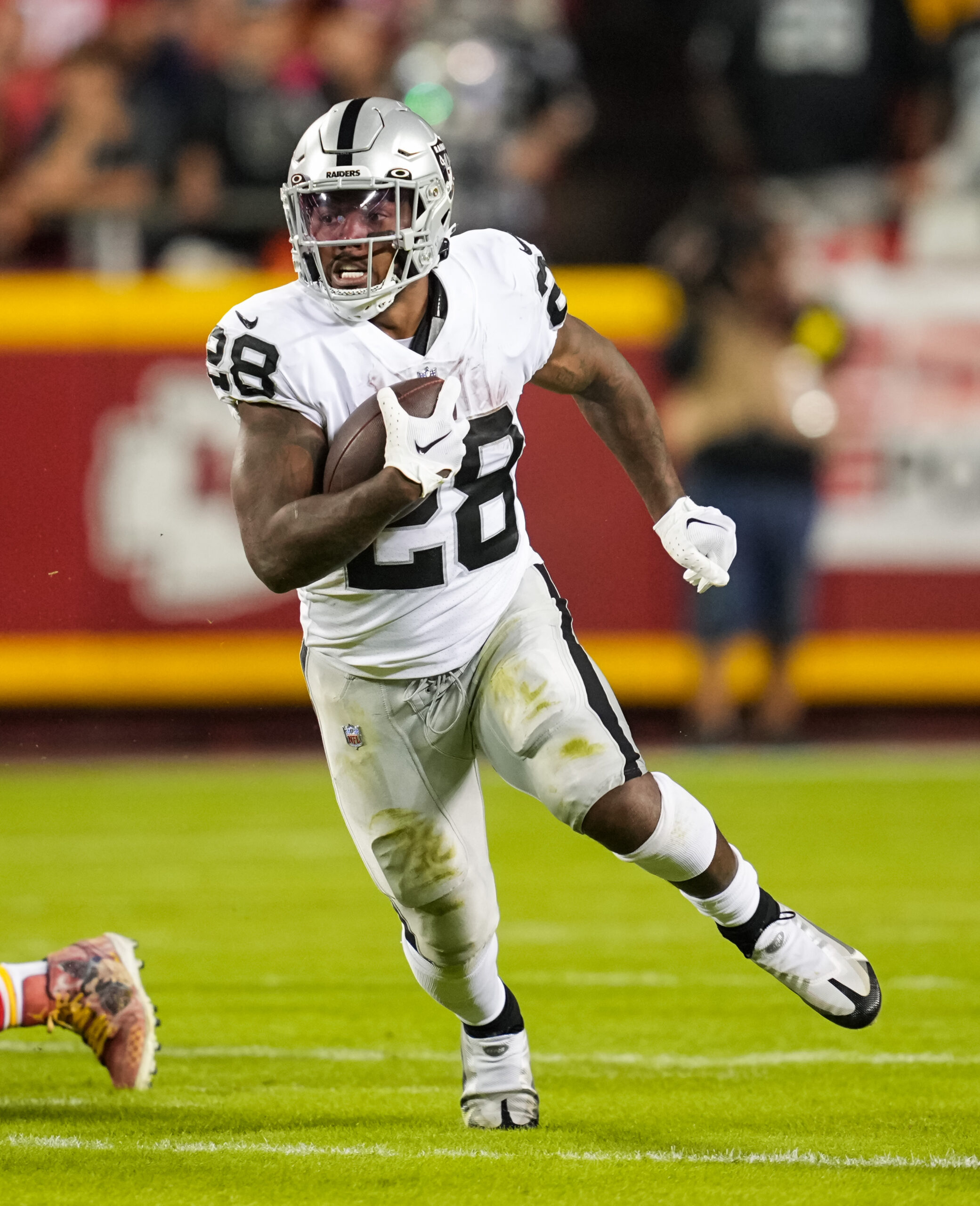 The Giants and Barkley looked to be the closest on terms, and the sides had engaged in extension talks since last November. But guaranteed money loomed as a sticking point for the Giants, who will not be seeing their tagged back for a while. As should be expected, Barkley will not report to training camp on time, Adam Schefter of ESPN.com tweets. Likewise, The Athletic’s Vic Tafur notes Jacobs will not be rejoining the Raiders for a while (Twitter link). All extension talks between the backs and their respective teams must be tabled to 2024.
Both Barkley and Jacobs have been connected to potentially skipping regular-season time; Pollard signing his franchise tender in late March will not allow him to miss training camp work without fines coming his way. Barkley and Jacobs have not signed their tenders and cannot be fined for missing camp workouts. While Pollard will be expected to report to the Cowboys on time, it will almost definitely be a while before Barkley and Jacobs — both of whom having voiced frustration during this process — show up.
Considering the damage done to the RB market this offseason, it is unsurprising the tag deadline played out this way. Jacobs and the Raiders were never believed to be close on terms, while the Cowboys and Pollard may not have engaged in substantive talks.
The 2023 backfield market crash involved four of the eight-figure-per-year players at the position either being released (Ezekiel Elliott, Dalvin Cook) or forced into pay cuts (Aaron Jones, Joe Mixon). It would be easier at this point to mention the top-market backs whose contracts were not reduced or shed. For what it’s worth, Christian McCaffrey, Alvin Kamara, Derrick Henry and Nick Chubb did not see any pay reductions this year. Austin Ekeler, however, requested a trade and was given permission to seek a relocation; the Chargers back — he of 38 touchdowns over the past two seasons — did not generate much interest. The Cowboys, Giants and Raiders kept their backs off the market; no back who did hit free agency signed a deal averaging even $6.5MM per year.
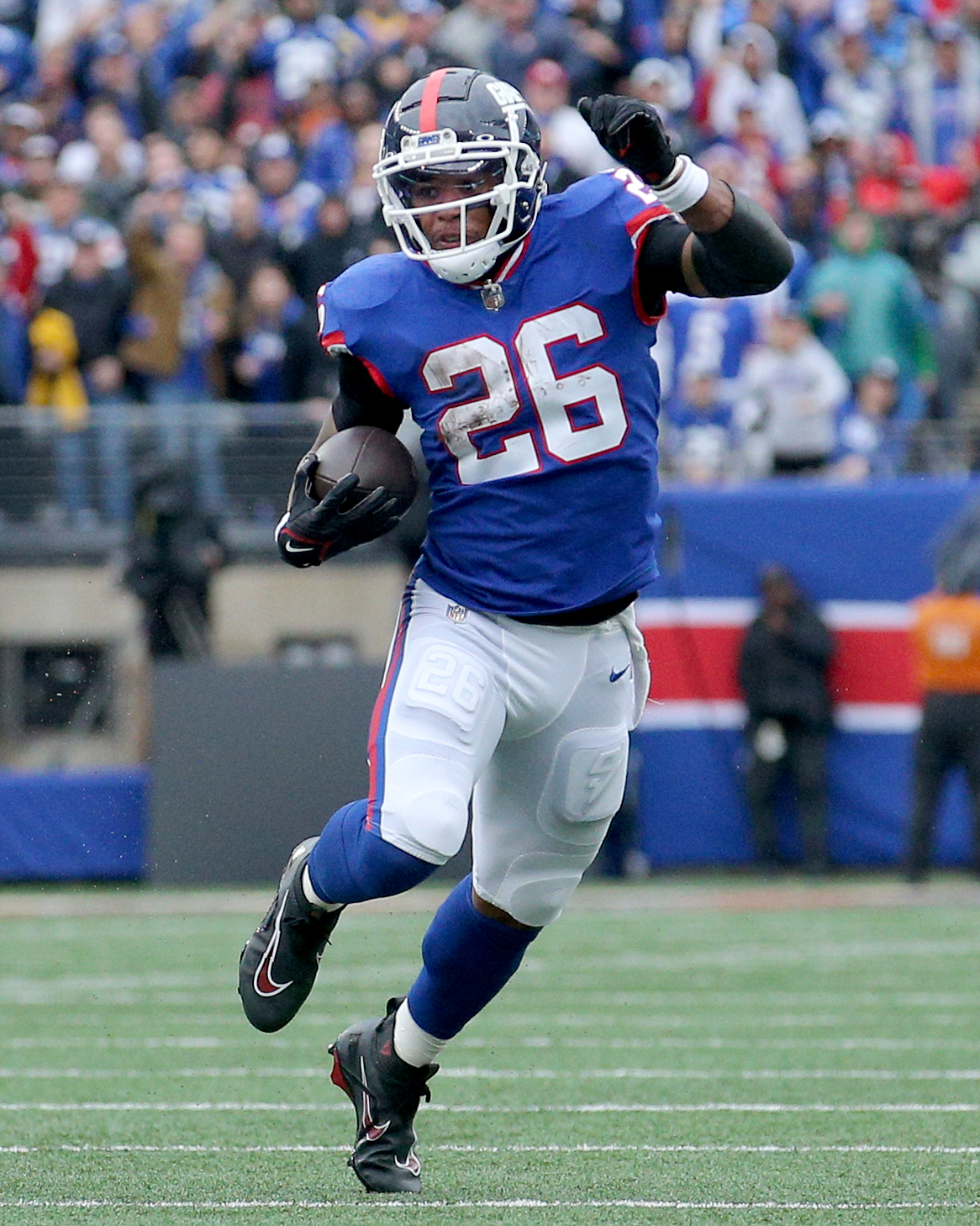 The Giants and Barkley attempted to come to terms today, with ESPN’s Dianna Russini noting negotiations ran up until the deadline (Twitter link). No deal commenced. After the Giants were believed to have climbed a bit on guarantees, their final offer was also lower on average annual value. New York had previously offered Barkley a deal averaging in the $13MM-per-year neighborhood — a proposal the team made during the parties’ winter negotiations — and included around $19MM in guarantees. The team came up on guarantees earlier today, with that number rising toward $22MM. None of it ended up mattering, as Fox Sports’ Ralph Vacchiano adds neither side moved “nearly enough” to finalize an extension (Twitter link).
No terms are known in the Jacobs talks, which provided a fairly clear indication a deal was not especially close. Like the Giants, the Raiders appeared fine carrying their starting running back’s $10.1MM tag number on their cap sheet. Of course, it will be worth wondering when both players show up.
Jacobs has earned barely $11MM — via his rookie contract — during his career, while Barkley has pocketed almost $40MM. The Giants back would be in a better position to exercise the Le’Veon Bell nuclear option — skipping games in protest of the tag. Barkley listed the Bell boycott as a potential option, but that also likely was a leverage ploy. It would be interesting to see if Barkley would be willing to use his money earned to punish the Giants here, but that has never loomed as a realistic scenario. Barkley and Jacobs will cost themselves $560K for each game missed. To be fair, Bell still found a willing buyer — the Jets, who gave him a four-year, $52.5MM deal — in free agency after sitting out a season for preservation purposes. It would not seem such a suitor would exist, given the present state of the position, if Barkley or Jacobs took this route.
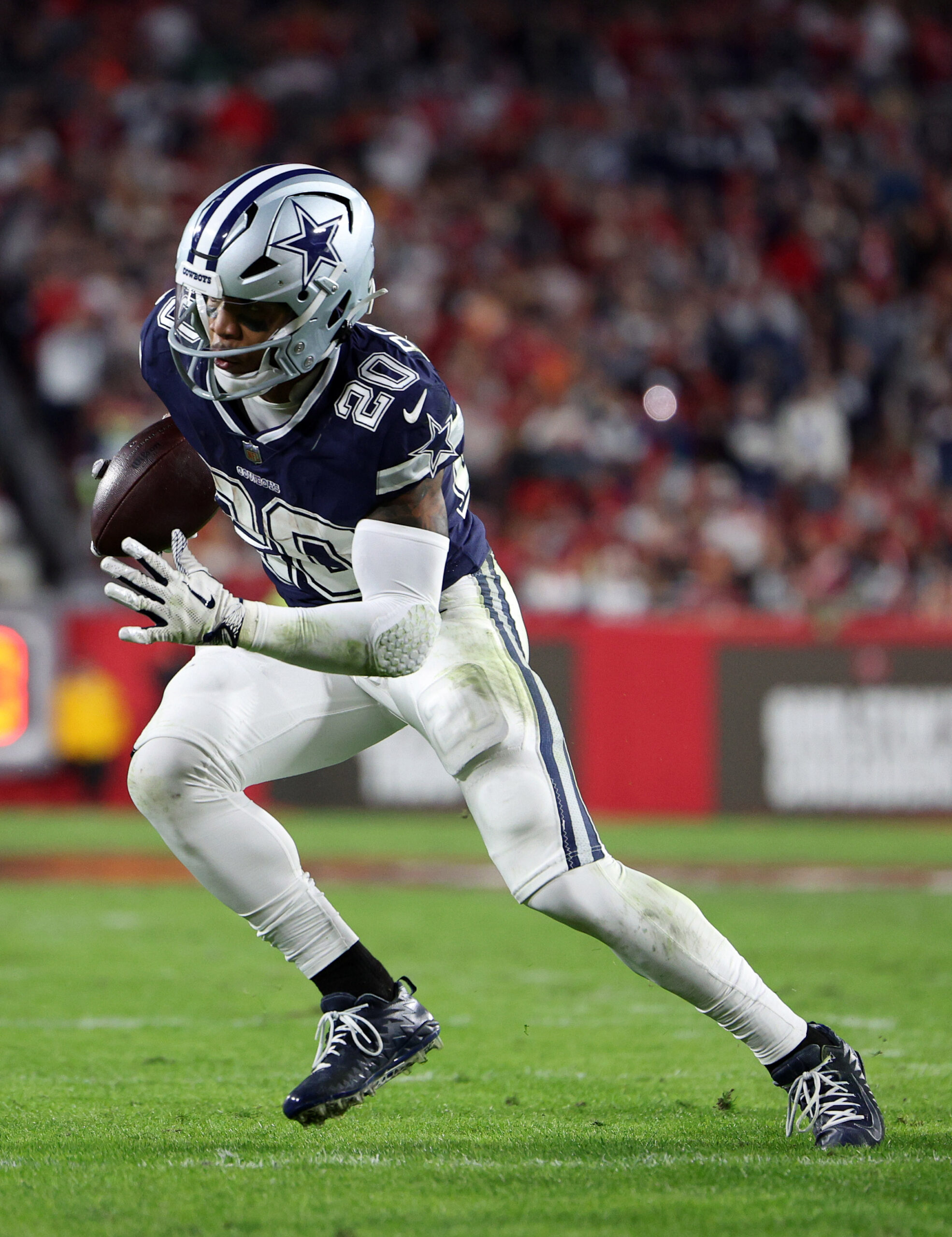 The last eight-figure-AAV running back contract to be authorized came in July 2021 — the Browns’ three-year, $36.6MM Chubb extension. While Chubb, Jones, Henry, Cook and, to an extent, Kamara and McCaffrey have played well on their big-ticket extensions — McCaffrey doing so after being traded to the 49ers — teams are shifting in the other direction at this position. Barkley and Colts extension candidate Jonathan Taylor sent out ominous tweets regarding their position’s state Monday afternoon. Taylor’s rookie deal expires after this season. Seeing as the running back tag has gone down from the time Bell was twice tagged — for $12.12MM (2017) and $14.54MM (2018) — a Taylor tag certainly will be a logical next step for the Colts.
As for Pollard, ESPN.com’s Todd Archer indicates the Cowboys did submit a proposal to their tagged back. But it does not sound like the sides went too deep on contract talks (Twitter link). Pollard has been fine playing on the tag, per the Fort Worth Star-Telegram’s Clarence Hill (on Twitter). Unlike Barkley and Jacobs, however, Pollard may not be a strong candidate to be retagged in 2024. Trevon Diggs is also set to play on an expiring contract this year.
No Substantive Talks Occurring Between Cowboys, Tony Pollard?
With the Jaguars extending Evan Engram on Sunday, this year’s franchise tag period is now down to the three running backs. Of those three situations, Tony Pollard‘s Cowboys negotiations have generated the fewest headlines. There might be a good reason for that.
Pollard remains expected to play this season on the $10.1MM tag. He and the Cowboys have until 3pm CT to hammer out an agreement, but the team may not have been all that serious about an extension at this time. Talks between Pollard and the Cowboys are not believed to have been substantive this offseason, NFL.com’s Jane Slater tweets.
Whereas Saquon Barkley and Josh Jacobs have been starters throughout their respective careers, Pollard has operated as a high-end change-of-pace option in Dallas. The dual-threat back did earn his first Pro Bowl nod last season, but Ezekiel Elliott still hovered as the team’s starter. Both players scored 12 touchdowns, though Pollard has been the Cowboys’ more explosive back for some time. Still, Elliott is in play to return on a lower-cost deal. The Cowboys also may want to see how Pollard responds to a heavier workload before making a multiyear commitment.
The team has not been shy about leaving franchise tag numbers on its payroll past the mid-July deadline. DeMarcus Lawrence played on the tag in 2018, with Dak Prescott following suit in 2020. Dalton Schultz played on the tag last year, while defensive end Anthony Spencer played two seasons on the tag (2012 and 2013) before re-signing with the team the following year. With the running back tag checking in as this year’s second-lowest number — above just the kicker/punter figure — Pollard playing at $10.1MM will not be as damaging as Prescott’s tag number staying on the Cowboys’ cap sheet three years ago.
The Cowboys waded into the deep waters of the RB market in 2019, extending Elliott despite two years of team control left. Elliott’s six-year, $90MM extension did not work out for the Cowboys, who saw their bellcow back decline while attached to the league’s second-most lucrative running back deal. This opened the door for Pollard, a fourth-round find. Pollard has logged just 510 carries since the Cowboys drafted him out of Memphis; Elliott had totaled 868 in just three seasons. Of the three franchise-tagged backs this year, Pollard’s workload points to him remaining in his prime the longest.
Pollard signed his franchise tender in late March; this money represents a nice payday for a player who has spent much of his career as a backup. The 26-year-old back, however, is missing out on a key offseason to cash in. Running back value has endured several hits this offseason, and Pollard could certainly have scored more than $10.1MM guaranteed were he permitted to hit the open market in March. The fifth-year back is also rehabbing a broken leg and high ankle sprain suffered in the Cowboys’ divisional-round loss.
This sets up a critical season for the Day 3 success story. The Cowboys took care of Lawrence and Prescott in the years after their seasons on the tag. With running back careers shorter compared to standouts at other positions, a season on the tag stands to affect Pollard’s earning potential more than it did Lawrence or Prescott’s. But teams have had the option of keeping their top free agent off the market via the tag since 1993. Pollard will not be the first player to see his earning power affected by it.