
‘Significant’ Value Gap Between Raiders, Josh Jacobs
The second-most publicized of the negotiations between running backs and the teams who franchise-tagged them, the Josh Jacobs-Raiders talks do trail the Giants and Saquon Barkley for volume. But more is emerging in these Las Vegas-based discussions.
Although this is likely to come down to the wire, the Las Vegas Review-Journal’s Vincent Bonsignore notes a significant gap is believed to exist between Jacobs and the Raiders. The sides have not broken off talks, but less than three days remain until the deadline for tagged players to be extended. If the Raiders and Jacobs cannot agree on terms by 3pm CT Monday, he will be tied to the $10.1MM tag number this season.
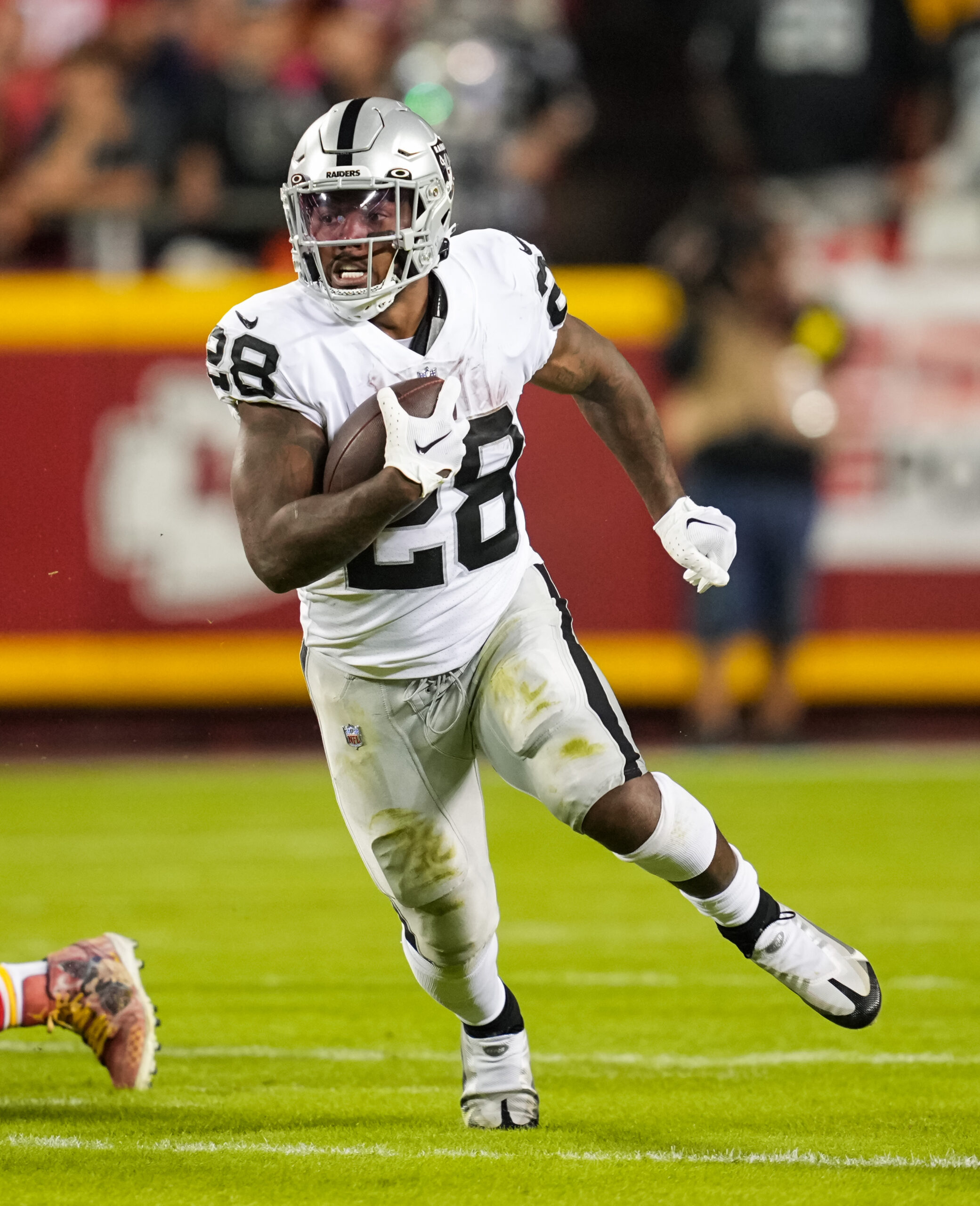 If Jacobs does not sign by Monday, he is almost certain to miss training camp. Jacobs’ camp has relayed this, Paloma Villicana of FOX 5 News in Las Vegas tweets, with Bonsignore and Yahoo.com’s Charles Robinson confirming the fifth-year running back is prepared to skip camp if he remains on the tag after Monday’s deadline. With teams unable to fine players who have not signed their franchise tenders, Jacobs is not subject to the five-figure-per-day fines mandatory for contracted players who miss camp days. Jacobs, Barkley and Jaguars tight end Evan Engram have not signed their tenders; Tony Pollard signed his Cowboys tag in March.
A guarantee gap — one that may not be especially wide — stands between the Giants and Barkley coming to terms, but more hurdles may be present on Jacobs’ path to an extension. Authorizing a big-ticket running back contract is incongruent with the way Josh McDaniels and GM Dave Ziegler are planning to build the Raiders’ roster, Robinson adds. This is in step with The Patriot Way, which has seldom rewarded backs.
New England did extend trade acquisition Corey Dillon in 2005, but running back value began to shift in the years following that agreement. The Patriots later passed on re-ups for Laurence Maroney, BenJarvus Green-Ellis, Stevan Ridley or Damien Harris. LeGarrette Blount‘s second Pats deal did not eclipse $2MM per year. After extending Dion Lewis on a low-level accord, the Patriots let the Titans pay him in 2018. Seeing as McDaniels and Ziegler are the latest ex-Patriot bastions given the keys to a franchise, how the Pats proceeded is relevant regarding the Raiders-Jacobs talks.
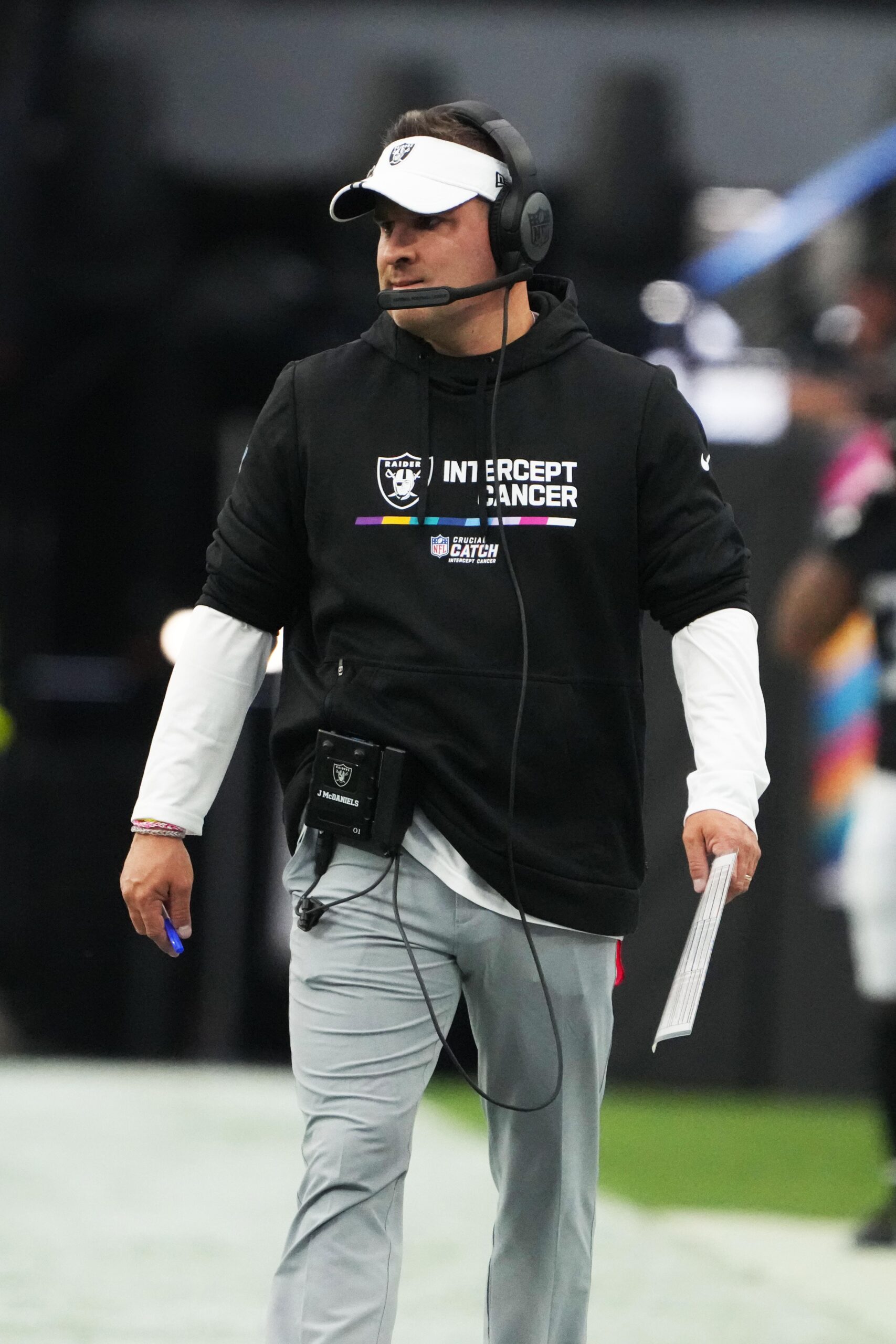 The Raiders traded away their top-market tight end contract, growing concerned about Darren Waller‘s injuries and shipping him to the Giants, but still have three eight-figure-per-year wide receiver deals on the books. The team added ex-McDaniels Patriots charge Jakobi Meyers on a three-year, $33MM accord ($16MM guaranteed) to go with Davante Adams‘ $28MM-per-year pact and Hunter Renfrow‘s two-year, $32MM extension. Rumblings about Renfrow going into his last year with the Raiders have surfaced, but the veteran slot receiver remains tied to an upper-middle-class receiver contract.
The team is carrying Jacobs’ $10.1MM franchise tag number along with these wideout contracts, and while that cap hit would drop with an extension, it does not seem like too much urgency exists on the Raiders’ part. Unlike Barkley’s negotiations, no terms have come out to indicate where the Raiders are with Jacobs. The reigning rushing champion, however, has not sounded particularly pleased with how the talks have unfolded.
A Jacobs trade should not be considered out of the question, Bonsignore adds, but the bleak Austin Ekeler and Dalvin Cook markets make such a move an unlikely scenario. And tag-and-trade scenarios after the July deadline lead to rental agreements, since Jacobs would be unable to sign a long-term deal with anyone until 2024. McDaniels also may face some pressure in Year 2, considering his 6-11 debut. Jacobs staying healthy — after logging a league-high 393 touches — will be key for the second-year Las Vegas HC. But the team does not appear ready to pay up to keep Jacobs around past 2023. The former first-rounder staying in Vegas beyond this season may be contingent on him making a major compromise.
Barkley has collected nearly $40MM during his five-year career; Jacobs has accumulated just more than $11MM in four seasons. Neither player is a realistic candidate to follow in Le’Veon Bell‘s 2018 footsteps, and Jacobs — despite a rumor that suggested Week 1 is up in the air if no deal is reached by Monday — should be considered less likely than Barkley to pass on game checks. But if no deal happens over the next 70 hours, the Raiders should not expect to see their starting running back for a while.
2023 NFL Dead Money, By Team
Accounting for players who appear on teams’ cap sheets but not on their rosters, dead money is a factor for all 32 teams. This year, dead money comprises more than 20% of five teams’ payrolls. Two teams who followed through (successfully) with all-in missions in recent years — the Buccaneers and Rams — each have more than 30% of their payrolls devoted to dead-cap hits.
Going into training camp, here is how dead money factors into each team’s cap sheet:
- Tampa Bay Buccaneers: $75.32MM
- Los Angeles Rams: $74.23MM
- Green Bay Packers: $57.14MM
- Philadelphia Eagles: $54.73MM
- Carolina Panthers: $51.54MM
- Arizona Cardinals: $36.96MM
- Tennessee Titans: $36.56MM
- Minnesota Vikings: $35.54MM
- Houston Texans: $31.72MM
- Las Vegas Raiders: $29.95MM
- Indianapolis Colts: $24.89MM
- New Orleans Saints: $24.58MM
- Chicago Bears: $23.52MM
- Washington Commanders: $23.01MM
- New York Giants: $22.74MM
- New England Patriots: $21.82MM
- Atlanta Falcons: $18.78MM
- Detroit Lions: $18.69MM
- Seattle Seahawks: $17.91MM
- San Francisco 49ers: $17.16MM
- Cleveland Browns: $16MM
- Dallas Cowboys: $14.64MM
- Pittsburgh Steelers: $13.26MM
- Baltimore Ravens: $10.78MM
- Denver Broncos: $9.72MM
- Miami Dolphins: $8.43MM
- New York Jets: $7.95MM
- Kansas City Chiefs: $7.65MM
- Buffalo Bills: $5.23MM
- Jacksonville Jaguars: $4.7MM
- Los Angeles Chargers: $2.19MM
- Cincinnati Bengals: $593K
 No team broke the Falcons’ record for dead money devoted to a single player. The Falcons’ Matt Ryan trade left them with $40.52MM last year. But the Bucs and Rams incurred some dead money collectively this offseason.
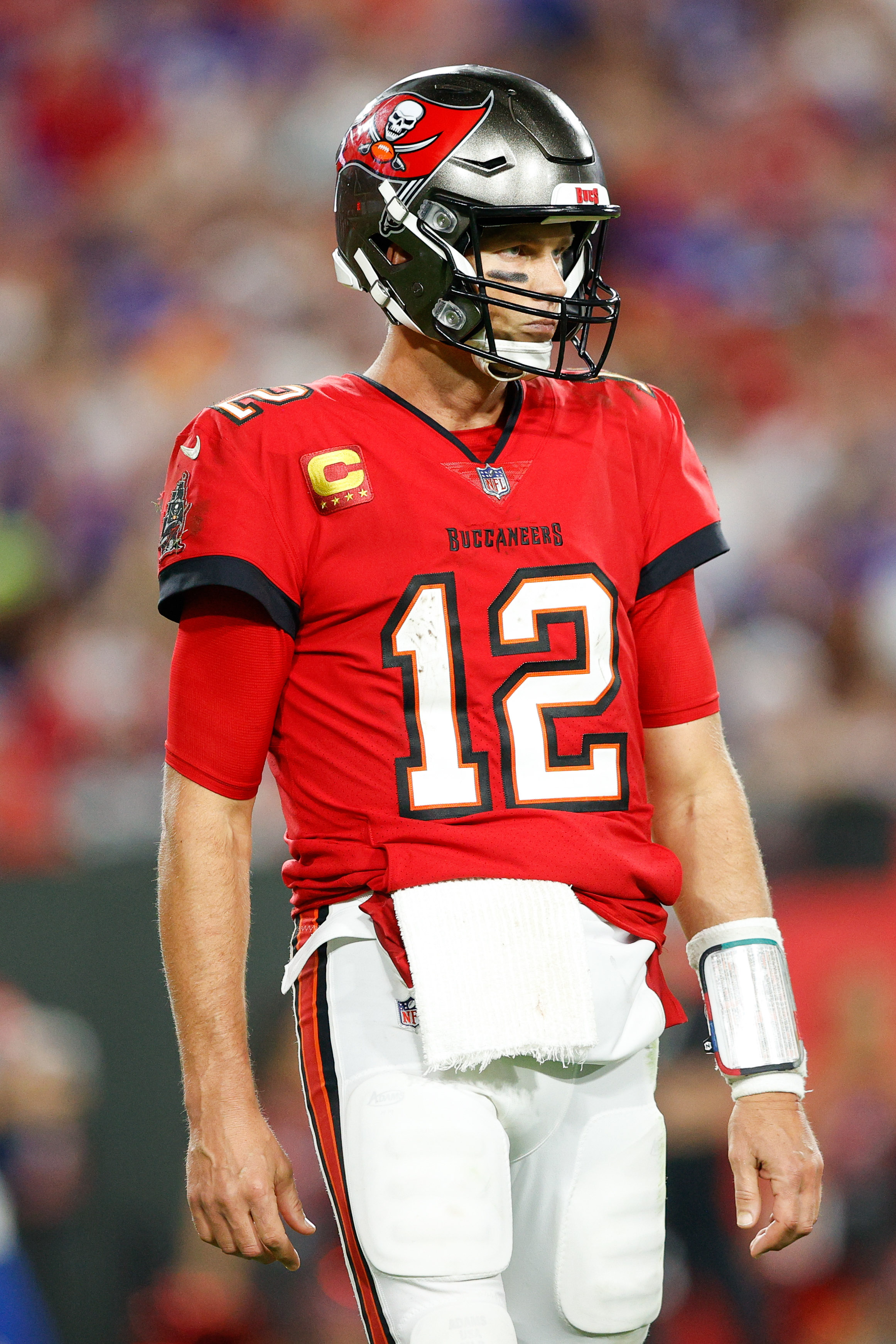
Tom Brady‘s Tampa Bay exit created much of the Bucs’ issue here. Brady not signing another Bucs deal, instead retiring for a second time, accelerated $35.1MM in dead money onto the Bucs’ 2023 cap sheet. The team had used void years increasingly during Brady’s tenure, and his second restructure created the $35.1MM figure. The Bucs will swallow the post-Brady pill this year, with no dead money related to that contract on their books in 2024.
Three ex-Rams combine to take up $55MM of their dead-money haul. The Rams traded Allen Robinson to the Steelers earlier this year, but that three-year, $46.5MM deal Los Angeles authorized in 2022 will result in Robinson’s former team carrying a $21.5MM dead-money hit in 2023. The Rams are eating $19.6MM of Jalen Ramsey‘s contract, and bailing on Leonard Floyd‘s four-year, $64MM extension after two seasons moved $19MM in dead money to L.A.’s 2023 payroll. The Rams did not use the post-June 1 designation to release Floyd, keeping the dead money on that deal tied to 2023 only.
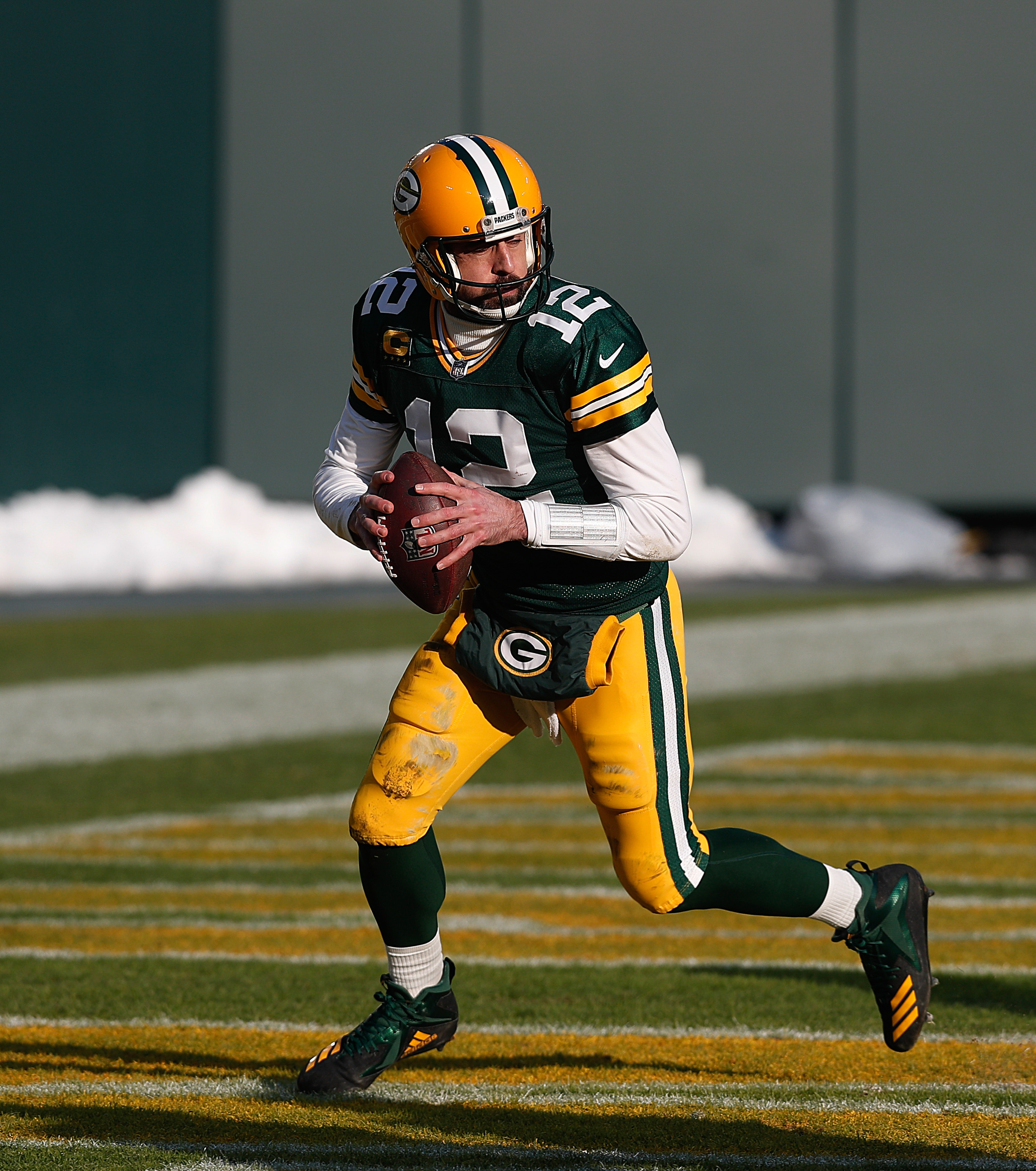 The Packers did come close to breaking the Falcons’ record for dead money on a single contract. Green Bay following through on the Aaron Rodgers trade left $40.31MM in dead money on this year’s Packers cap. Because the Packers traded Rodgers before June 1, that hit will be entirely absorbed this year. It also took a Rodgers restructure on his way out to move the cap damage down to $40MM. The Panthers trading Christian McCaffrey after June 1 last year left the second chunk of dead money ($18.35MM) to be carried on this year’s cap. It also cost Carolina $14.63MM in dead cap to trade D.J. Moore to the Bears.
The Bears used both their post-June 1 cut designations last year (Tarik Cohen, Danny Trevathan) and also have a $13.23MM Robert Quinn cap hold. The Cardinals had already used their two allotted post-June 1 cut designations this offseason. As result, DeAndre Hopkins is on Arizona’s books at $21.1MM this year. Because they cut the All-Pro wide receiver before June 1, the Cards will be free of Hopkins obligations after this year.
While the Raiders built in the escape hatch in Derek Carr‘s 2022 extension, keeping the dead money on their nine-year QB’s contract low, Cory Littleton — a 2022 post-June 1 cut — still counts nearly $10MM on their cap sheet. Fellow 2022 post-June 1 release Julio Jones still counts more than $8MM on the Titans’ payroll. The Cowboys went to the post-June 1 well with Ezekiel Elliott this year, but their 2022 designation (La’el Collins) leads the way with $8.2MM on this year’s Dallas payroll.
Rams Sign Third-Rounders Kobie Turner, Byron Young To Wrap Draft Class Deals
Rookies comprise an eye-opening percentage of the Rams’ 90-man roster; the Rams drafted 14 players and signed 26 UDFAs. While many rookies will be cut as the team moves down to 53 before the season, the 2023 class will have a significant say in this retooling effort. Defensive lineman Kobie Turner and outside linebacker Byron Young will be two of the top first-year presences on the Rams.
The team reached agreements with both defenders Friday, Field Yates of ESPN.com tweets. The Rams selected Young at No. 77 and Turner at 89. Both players will be expected to play regular roles for a younger Los Angeles defense this season. These agreements conclude a lengthy rookie signing process for the Rams, who formed their largest draft class since 1992, when the draft was a 12-round event.
 [RELATED: Assessing Rams’ 2023 Offseason]
Both of Aaron Donald‘s top two defensive line sidekicks — A’Shawn Robinson and Greg Gaines — left in free agency, with Robinson signing with the Giants and the Buccaneers adding Gaines. The team did not use free agency to bolster this position, instead drafting Turner in Round 3 and making Desjuan Johnson this year’s Mr. Irrelevant. The team also claimed Larrell Murchison off waivers from the Titans. But Turner has an opportunity to carve out a key role alongside one of the best players in NFL history as a rookie.
The Rams chose Turner after moving down 16 spots in Round 3, giving the Giants No. 73 overall — thus allowing Big Blue to select wide receiver Jalin Hyatt — in exchange for in exchange for 89 and 128. (Los Angeles chose quarterback Stetson Bennett at 128.) Turner, 24, transferred to Wake Forest from Richmond in 2022. While suiting up for the smaller school, the interior D-lineman earned first-team All-Colonial Athletic Association acclaim twice. Due to the COVID-19 pandemic, Turner played two seasons in 2021 — in the spring and fall — and both produced first-team all-conference honors. Turner earned CAA Co-Defensive Player of the Year honors during the shortened spring ’21 season.
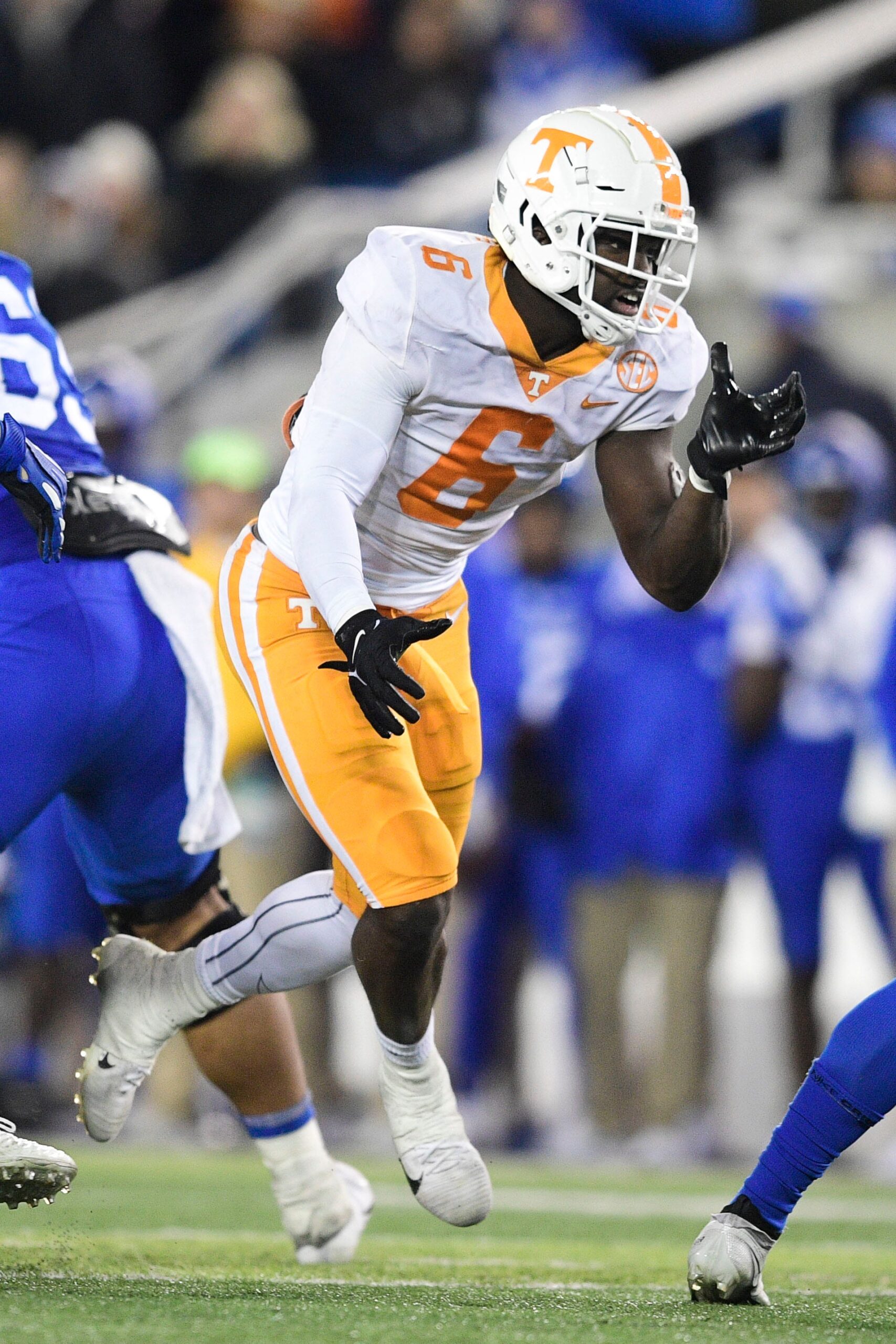
Two Byron Youngs were chosen in Round 3; the Rams’ draftee played at Tennessee. Young tallied 12.5 sacks and 23.5 tackles for loss over his two years with the Volunteers. The JUCO transfer made a big impact in the SEC, earning first-team all-conference recognition for his 2022 work. While ESPN’s Scouts Inc. was less bullish on Turner (168th), the scouting service slotted Young as this year’s 76th-best prospect. (The Raiders chose the other Byron Young, an Alabama D-lineman, 70th overall.)
The Rams have lost Von Miller and Leonard Floyd in consecutive offseasons. While they tried to re-sign Miller, Floyd became a cap casualty. Similar to how they proceeded at other defensive positions that lost talent, the Rams did not operate aggressively in free agency to fill their OLB posts. As such, Young, 25, looms as a potential starter.
Here is the Rams’ mammoth 2023 draft class:
- Round 2, No. 36: Steve Avila, G (TCU) (signed)
- Round 3, No. 77 (from Dolphins through Patriots): Byron Young, OLB (Tennessee) (signed)
- Round 3, No. 89 (from Giants): Kobie Turner, DT (Wake Forest) (signed)
- Round 4, No. 128 (from Rams): Stetson Bennett, QB (Georgia) (signed)
- Round 5, No. 161 (from Cowboys through Texans): Nick Hampton, LB (Appalachian State) (signed)
- Round 5, No. 174 (from Raiders through Texans): Warren McClendon, OT (Georgia) (signed)
- Round 5, No. 175 (from Buccaneers): Davis Allen, TE (Clemson) (signed)
- Round 5, No. 177: Puka Nacua, WR (BYU) (signed)
- Round 6, No. 182: Tre’Vius Hodges-Tomlinson, CB (TCU) (signed)
- Round 6, No. 189 (from Titans): Ochaun Mathis, OLB (Nebraska) (signed)
- Round 6, No. 215 (from Commanders through Bills): Zach Evans, RB (Ole Miss) (signed)
- Round 7, No. 223: Ethan Evans, P (Wingate) (signed)
- Round 7, No. 234 (from Steelers): Jason Taylor II, S (Oklahoma State) (signed)
- Round 7, No. 259 (from Texans): Desjuan Johnson, DL (Toledo) (signed)
This Date In Transactions History: Broncos Extend LT Ryan Clady
Mid-July annually features extension talks ramping up, particularly for a small group of players. With the deadline for franchise-tagged players to sign extensions looming July 15 in most years (or around that date if July 15 falls on a weekend, as it does this year), dozens of extensions in the tag era (1993-present) have been completed around this point.
One of them came 10 years ago today. On July 14, 2013, the Broncos and cornerstone left tackle Ryan Clady agreed to terms on a five-year deal worth $52.5MM. The Broncos had tagged Clady earlier that year, keeping Peyton Manning‘s blindside protector off the market for $9.83MM. Illustrating where the salary cap has taken tag values, it would have cost a team $18.24MM to tag an offensive lineman this year.
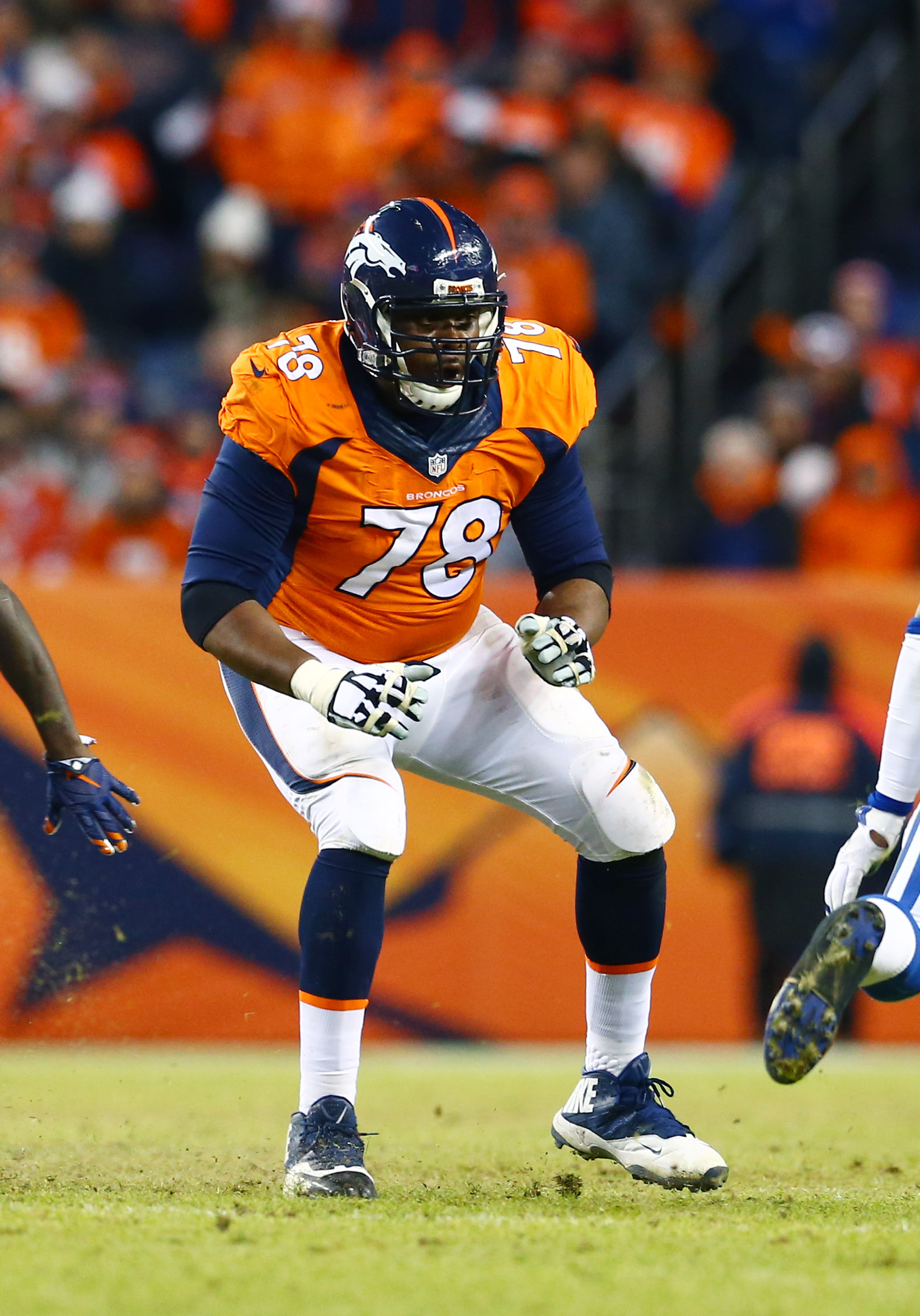 Clady’s peak reached as high as just about any offensive lineman in Broncos history. Only he and stalwart center Tom Nalen earned two first-team All-Pro nods as Broncos. Denver used its 2008 first-round pick on Clady, who excelled at Boise State, and immediately plugged him in as Jay Cutler‘s blindside protector. (Clady earned second-team All-Pro honors as a rookie and finished third in that year’s Offensive Rookie of the Year voting.)
The franchise abruptly changed course at quarterback upon hiring Josh McDaniels as head coach a year later, leading to the team trading Cutler to the Bears. But Clady earned first-team All-Pro acclaim for his work as Kyle Orton‘s left tackle. Clady suffered a patellar tendon tear suffered while playing basketball during the 2010 offseason, moving him off the Pro Bowl level in 2010, but he rebounded to help the Broncos make a surprise playoff run after changing their offense to suit Tim Tebow‘s skillset the following year.
After returning to the Pro Bowl level in 2011, Clady notched his second All-Pro honor during Manning’s first season in Colorado. With Manning signed to a five-year, $96MM deal, the Broncos made sure to keep his top O-lineman off the market via the tag. Negotiations ramped up just before the tag deadline, and the sides reached an agreement on a deal that made Clady the third-highest-paid tackle — behind Jason Peters and Joe Thomas — at the time.
Denver’s deal came with $33MM guaranteed, and two more All-Pro selections would have bumped the value to $57.5MM. While the contract gave the talented blocker security, injuries soon caught up with Clady. After Clady suffered a shoulder malady late in the 2012 season, he sustained a season-ending Lisfranc injury in Week 2 of the 2013 season. Although Clady came back in 2014 and collected his fourth Pro Bowl honor, he suffered an ACL tear in May 2015. Clady collected a Super Bowl ring as a member of that Broncos team, but he did not play a down that season.
The Broncos, who had plugged in Chris Clark as their LT replacement during their Super Bowl XLVIII-qualifying season, primarily used Ryan Harris as their left tackle during their Super Bowl-winning year two seasons later. The team traded Clady to the Jets in April 2016. After Clady — the Jets’ D’Brickashaw Ferguson successor — wound up on IR in November 2016, he opted to retire during the 2017 offseason. The Broncos used Russell Okung as a one-year stopgap in 2016 before drafting Garett Bolles in the 2017 first round. Bolles is currently tied to a four-year, $68MM extension.
Offseason In Review: Houston Texans
The Texans’ rebuild continues, and it now involves a third head coach in three years. Following in the footsteps of the 1970s and 2010s 49ers in seeing back-to-back one-and-done coaching tenures transpire, the Texans have been the league’s most anonymous on-field operation during the 2020s. GM Nick Caserio generated scrutiny as the losses piled up, but he convinced one of this year’s hottest head coaching candidates to sign up.
DeMeco Ryans is now in charge of this lengthy ascent attempt. The Texans turned to their former linebacker — who presumably will receive more than the one season David Culley and Lovie Smith did in the HC chair — and this offseason at least brought some big swings from an organization that kept the car in neutral in 2021 and ’22. The C.J. Stroud–Will Anderson Jr. pairing will go a long way toward determining if Caserio’s rebuild will work.
Trades:
- Dealt WR Brandin Cooks to Cowboys for 2023 fifth-round pick, 2024 sixth-rounder
- Sent Buccaneers 2023 No. 179 overall pick for G Shaq Mason, No. 230
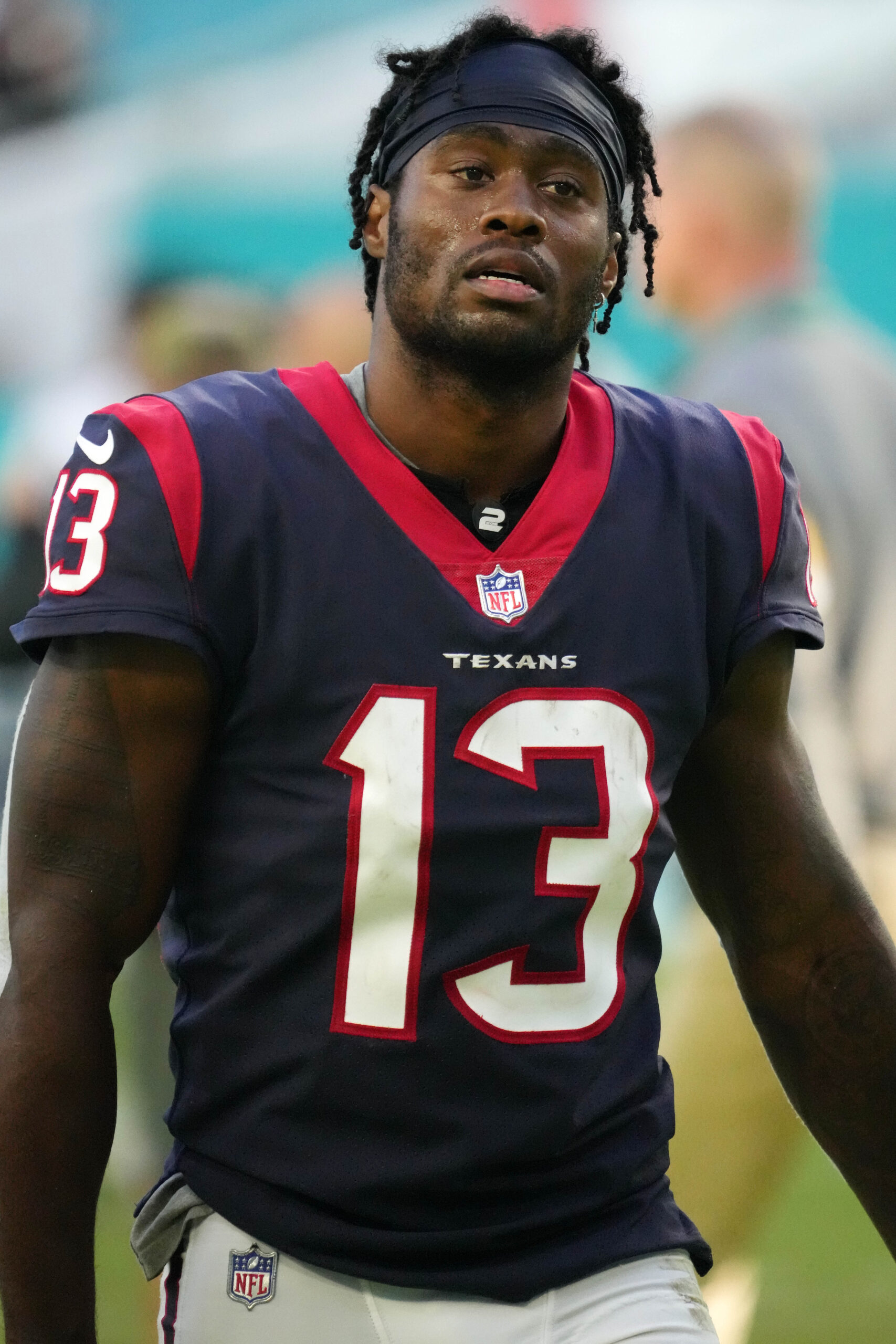 Even though Cooks’ production fell off in 2022, the NFL’s active trade kingpin had long been destined to get off the Texans’ long rebuild runway. It did look strange to see Cooks sign a two-year, $39.5MM Texans extension in April and then want out by midseason. Cooks’ NBA-esque about-face did not result in a midseason trade. Instead, the veteran deep threat languished on a 3-13-1 Houston team, finishing the season with a career-low 699 receiving yards.
Cooks effectively boycotted the Texans’ first post-trade deadline game but returned to action soon after. Interest came from nearly a fourth of the league, and the Texans listened to offers before the 2022 trading cessation. The team is believed to have sought a second-round pick, which was an unrealistic ask for a ninth-year player with an $18MM guarantee for 2023.
The actual trade price came in far below the 2017, ’18 and ’20 Cooks deals (which collectively involved two first-rounders and a second). After the Cowboys renegotiated Cooks’ deal, the former Saints, Rams and Patriots pass catcher is now part of an exclusive NFL club, being traded four times. Two of Cooks’ six 1,000-yard seasons — for four different clubs — came in Houston, which looks to be without an upper-echelon receiver after this deal.
Extensions and restructures:
- Gave LT Laremy Tunsil three-year extension worth $75MM ($50MM guaranteed)
- Rewarded G Shaq Mason with three-year, $36MM extension ($22MM guaranteed)
- Handed DT Maliek Collins two-year, $23MM extension ($18.5MM guaranteed)
- Reached pay-cut agreement with S Eric Murray, whose salary drops to $2.5MM
Seemingly incongruent with the Texans’ timeline, Tunsil’s presence has offered high-end left tackle play and affected his position’s market. Few would label Tunsil (zero first- or second-team All-Pro nods) as the game’s best tackle, but he has managed his career well. This offseason marked the second time the Texans have made Tunsil the NFL’s highest-paid offensive lineman. The three-time Pro Bowler played a full season for the first time in his career last year, and while a Texans team that has shown no interest in contending (since at least 2020, that is) carrying a high-priced tackle has been a bit strange, checking off this key box has not been a problem thanks to a Bill O’Brien trade.
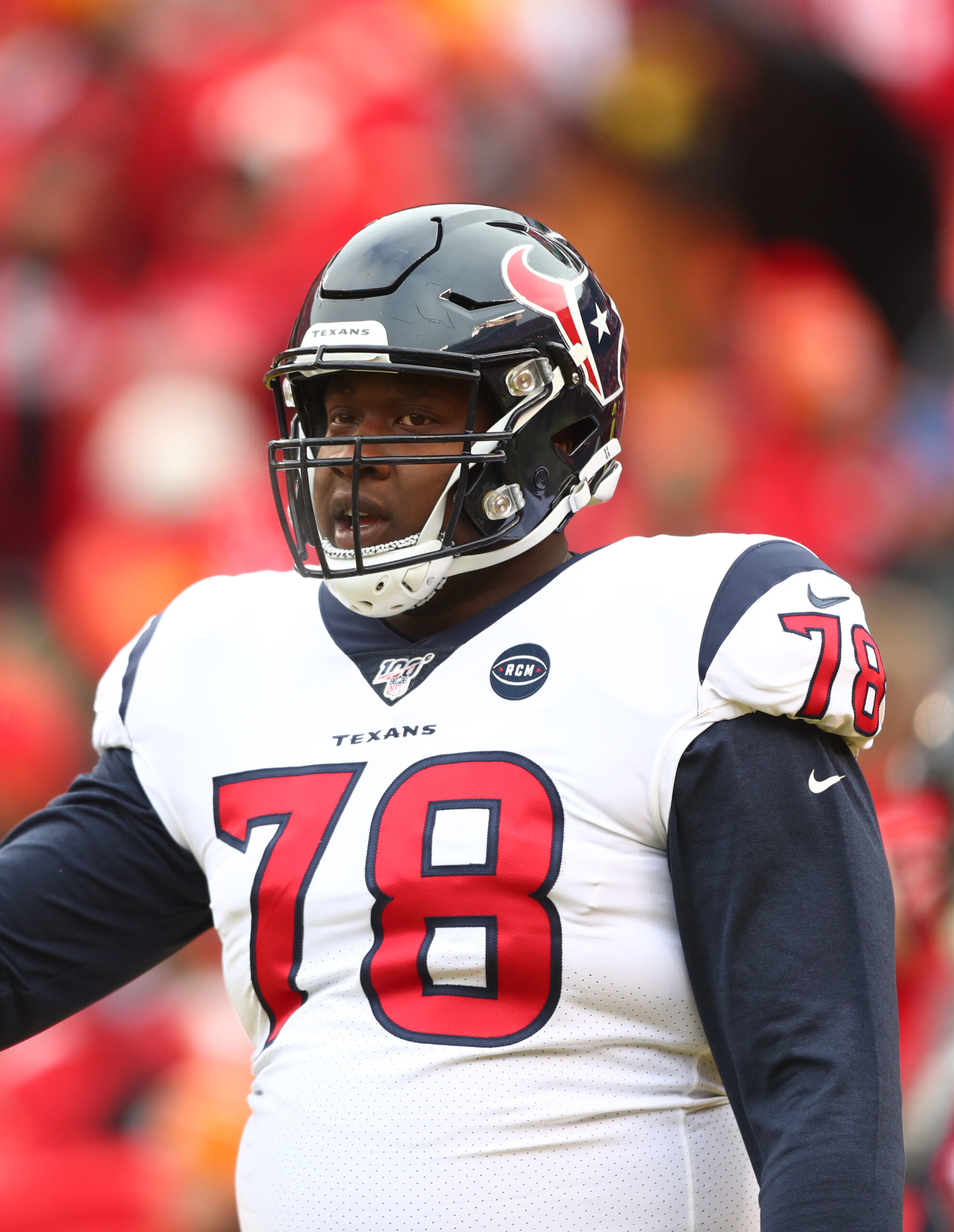 Months after trading two first-rounders and change to the Dolphins for Tunsil, O’Brien — during a short but eventful run wearing both HC and GM hats — signed off on a three-year, $66MM extension. That made Tunsil by far the NFL’s highest-paid O-lineman. Three years after Tunsil became the NFL’s first $20MM-per-year O-lineman, he is the only $25MM-AAV blocker.
The short-term contracts Tunsil has preferred have proven tremendously beneficial, as they have given him leverage of two contract years coming in his 20s. Tunsil also did not make any real guarantee concessions despite the medium-term deal; his $50MM guarantee figure trails only Ronnie Stanley‘s among tackles. After two seasons without a franchise quarterback to protect, Tunsil will be assigned to Stroud’s blind side. This extension also dropped Tunsil’s 2023 cap hit from $35MM to $26.6MM. Pro Football Focus has graded Tunsil as a top-30 tackle in each of his three non-injury-marred Texans seasons, with last year bringing a career-high placement (11th).
The Texans did authorize a $39MM-per-year Deshaun Watson extension in 2020, but beyond that and the disastrous Brock Osweiler deal they paid the Browns to take on, the franchise has kept QB costs low over the past 10 years. Building around Stroud’s will give the organization flexibility. With no big-ticket wideout, tight end or running back deal on the payroll, Caserio has invested up front. Mason is now signed through 2026 at $12MM per, and right tackle Tytus Howard — who may or may not be on the team’s extension radar — holds the team’s second-largest cap number ($13.98MM).
 Mason, 29, joins Tunsil in signing a third contract. The Patriots gave the steady guard a five-year, $45MM deal in 2018, when Caserio remained Bill Belichick‘s right-hand man. Houston’s payroll now includes two eight-figure-AAV O-line deals. This brings a change from recent years, when the Texans opted to add bottom-tier or low-middle-class contracts around Tunsil’s.
In Mason, the Texans have one of the league’s most consistent players. PFF graded the former fourth-round find as a top-10 guard for six straight years (2016-21). After a Bucs one-off, which did feature 17 starts and a top-30 PFF grade, how long will Mason’s prime extend into his Texans years? He will be a key part of the team’s Stroud-years plan.
Caserio has inked numerous veterans to two-year deals during his time as Houston GM. Collins has now signed two of those. The former Cowboys draftee has signed a Texans contract in each of the past three years, coming over in 2021 (one year, $5MM), re-signing in 2022 (two years, $17MM) and now inking a player-friendly extension. Collins, 28, will shift back to a 4-3 scheme under Ryans, after playing two years in Smith’s system. Collins, who was a 4-3 D-tackle in Dallas and Las Vegas, totaled 18 tackles for loss over the past two seasons, representing one of the few Texans bright spots during this bleak period.
Free agency additions:
- Robert Woods, WR: Two years, $14MM ($10MM guaranteed)
- Jimmie Ward, S: Two years, $13MM ($8.5MM guaranteed)
- Sheldon Rankins, DT: One year, $9.75MM ($8.5MM guaranteed)
- Dalton Schultz, TE: One year, $9MM ($6MM guaranteed)
- Andrew Beck, FB/TE: Two years, $6.25MM ($4MM guaranteed)
- Case Keenum, QB: Two years, $6.25MM ($4MM guaranteed)
- Shaquill Griffin, CB: One year, $3.5MM ($3MM guaranteed)
- Hassan Ridgeway, DL: One year, $3.25MM ($3MM guaranteed)
- Devin Singletary, RB: One year, $2.75MM ($2.5MM guaranteed)
- Noah Brown, WR: One year, $2.6MM ($2.25MM guaranteed)
- Chase Winovich, DE: One year, $2MM ($1.75MM guaranteed)
- Jacob Martin, DE: One year, $2.5MM ($1MM guaranteed)
- Cory Littleton, ILB: One year, $2.4MM ($600K guaranteed)
- Denzel Perryman, ILB: One year, $2.6MM ($500K guaranteed)
- Steven Sims, WR: One year, $1.5MM ($500K guaranteed)
- Mike Boone, RB: Two years, $3.1MM ($300K guaranteed)
- Michael Deiter, OL: One year, $1.23MM ($125K guaranteed)
Caserio’s preferred genre of veteran contract appeared often on the transaction wire this year. Middling talent floods this section, though the team did cut down on its volume of two-year deals compared to 2022. Still, the Texans added a host of veteran role players, stocking Ryans’ defense with potential starters alongside cornerstones Anderson and Derek Stingley and giving new OC Bobby Slowik some skill-position talent.
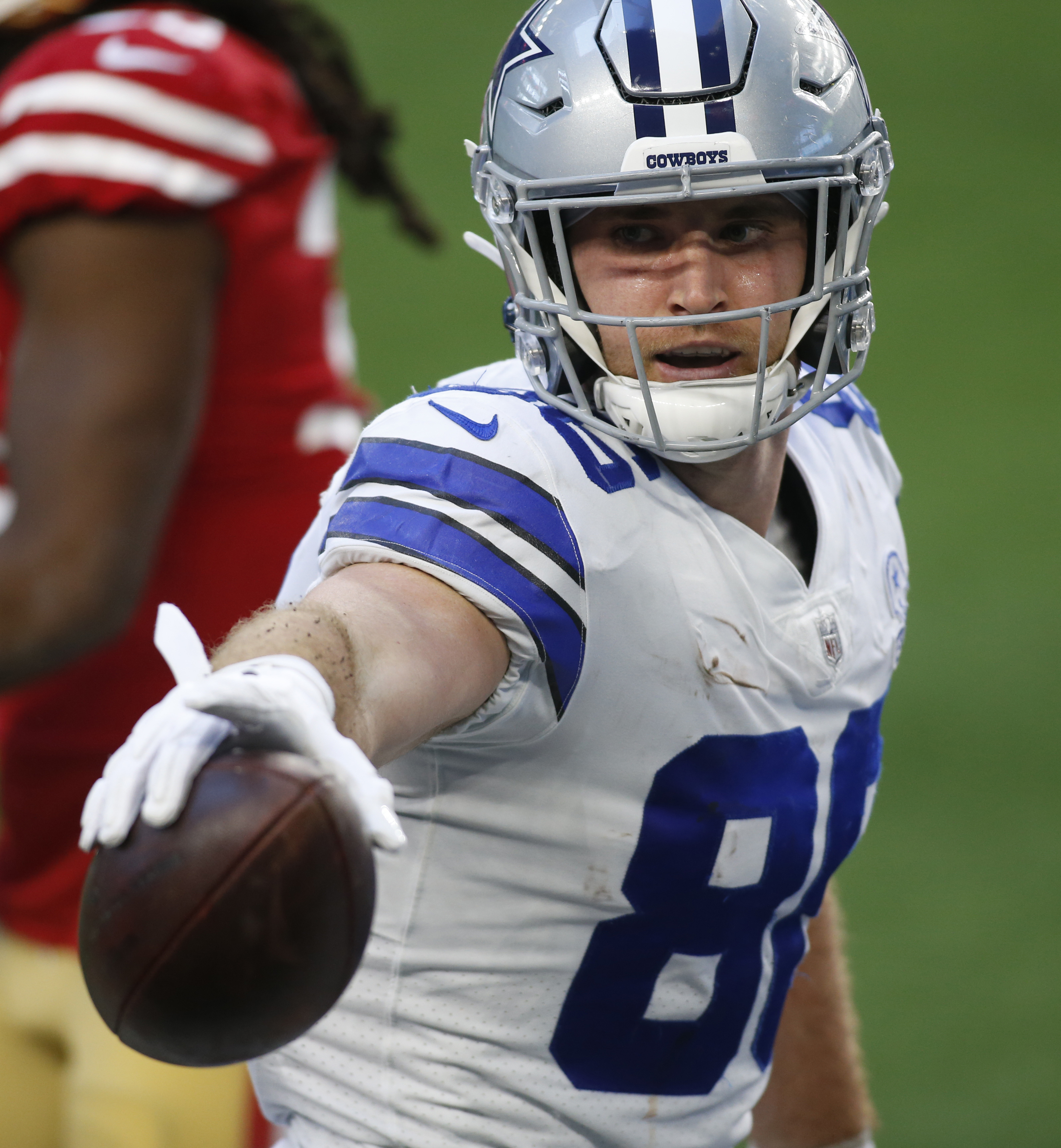 This contract is not what Schultz envisioned during his year on the franchise tag. The Cowboys are believed to have made their former tight end starter a long-term offer, but the preference for a shorter-term agreement — not a Cowboys specialty — helped lead to Schultz playing on the tag. After missing early-season time due to injury, Schultz still resided as one of Dak Prescott‘s top targets. But his overall and per-game yardage totals were down compared to 2021.
Schultz, 27, will join fellow 2022 tight end tag recipient Mike Gesicki in attempting to boost his value on a one-year deal. The Texans have struggled for nearly a decade to find a reliable pass-catching tight end. No Texan tight end has surpassed 600 receiving yards in a season since Owen Daniels in 2012. Schultz has done that in two of the past three seasons and should be a go-to player on a team likely to be without a No. 1-caliber wide receiver.
Was Woods’ down 2022 a sign of a decline, or was the 527-yard year due to a woeful Titans pass offense and being a year out from an ACL tear? The Texans paid a fairly surprising amount — adding the Titans cap casualty before the market opened — to find out. Woods, 31, did play in all 17 Titans games last season, and he resided as a consistent player (three 900-yard seasons) in Sean McVay‘s attack. With Cooks gone, Houston needs a reliable veteran to foster Stroud’s development. With Nico Collins the team’s top returning receiver, Woods looks to be that player.
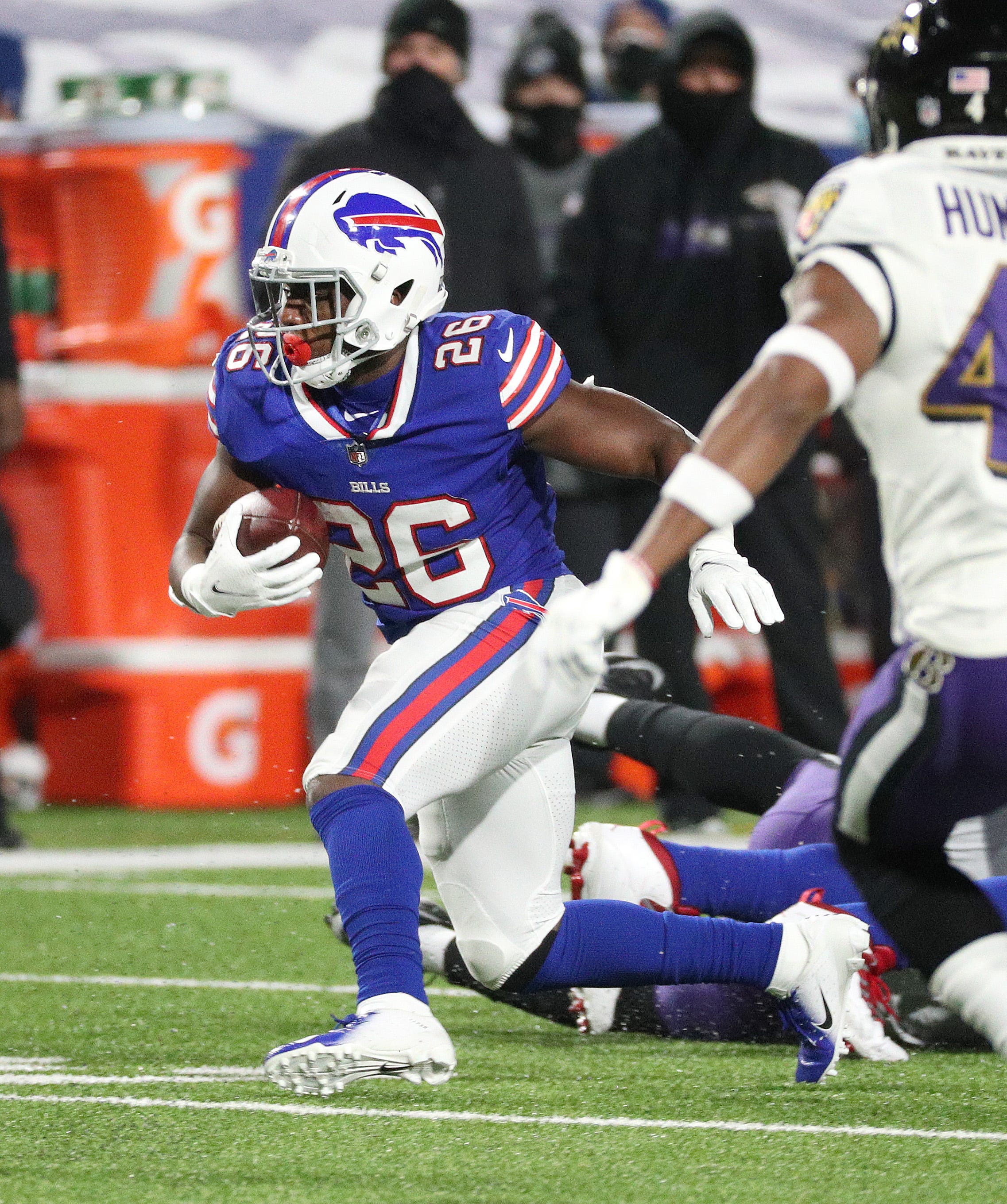 As the contracts for Mark Ingram, Rex Burkhead, Phillip Lindsay and Royce Freeman showed, Caserio has not shied away from veteran backs during his tenure. Singletary will be tasked with supplementing Dameon Pierce this season. The former Florida Atlantic star worked as the most prominent Bills back during Josh Allen‘s career, eclipsing 150 carries in each of his four Buffalo seasons and surpassing 750 rushing yards in three of his four rookie-contract years. The Texans did not possess much behind Pierce last season. Singletary, 25, has not offered much in the passing game, but he is a proven ball-carrier who should have some use as a 1-B option.
Undoubtedly placing a premium on Ward’s leadership and system intel, Ryans had spoken to the nine-year 49ers safety about following him to his next destination before last season ended. Ward, 32 next week, toggled between safety and cornerback during his San Francisco stay. The former first-rounder expressed disappointment in being moved back to the nickel role last season, but while Ryans was leading the 49ers’ defense at that point, the Texans are planning to move Ward back to the safety spot at which he is more comfortable. Ward has battled injuries throughout his career but has made 79 starts. He profiles as a mentor to emerging safety Jalen Pitre.
The Texans also beefed up their defense using one-year contracts, most notably the Rankins agreement. The Jets pushed to keep the former first-round pick, with it turning into a free agency battle between the 49ers’ past two DCs. Rankins’ fit in Robert Saleh‘s Jets defense certainly points to a useful cog for Ryans. The inside pass rusher has not replicated his eight-sack 2018, but at worst, the 29-year-old defender can assist as a rotational option. Ridgeway, 28, has been a 4-3 D-tackle for most of his career, including a 2022 stopover in San Francisco.
Saquon Barkley Seeking More Than $22MM Guaranteed?
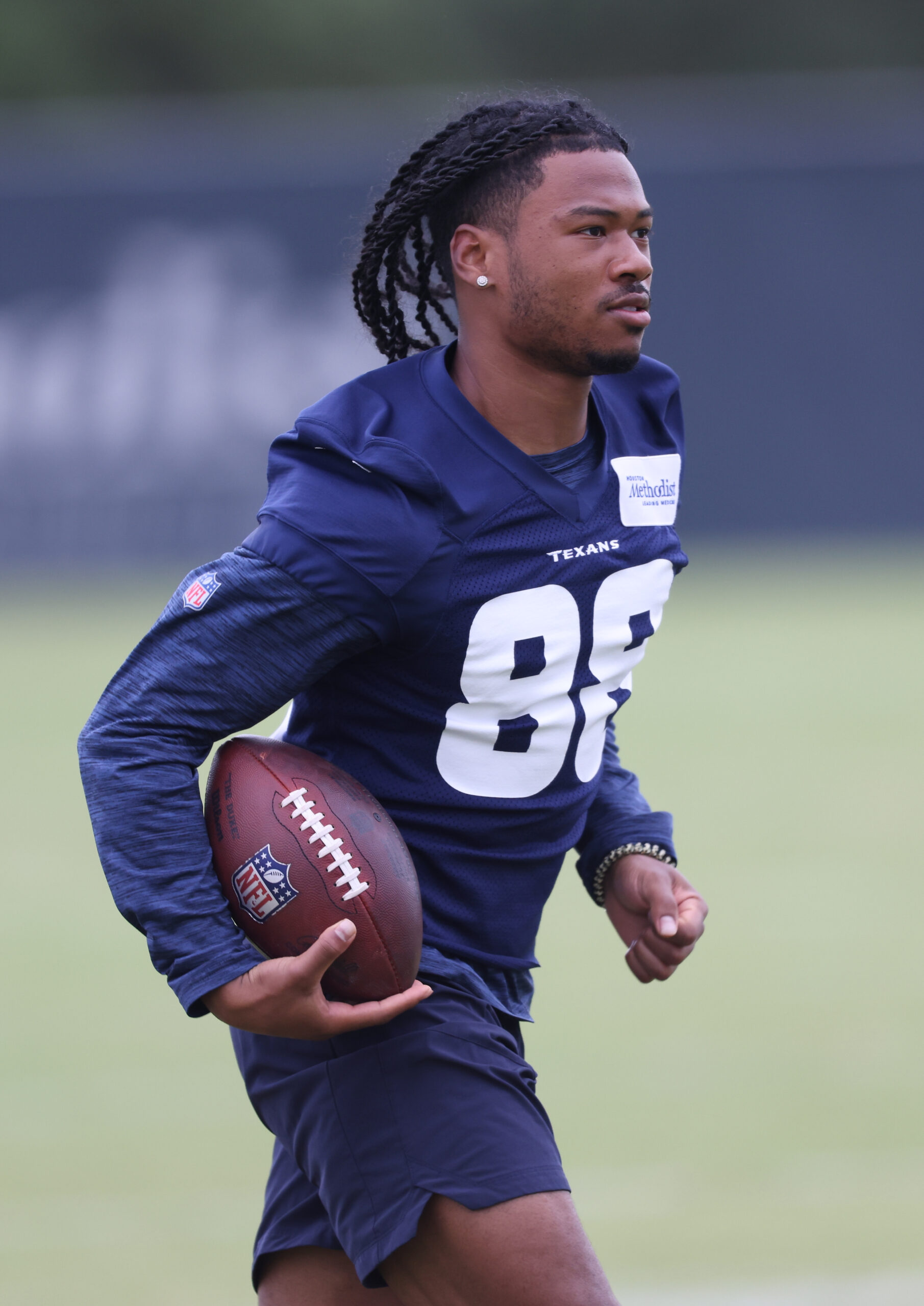
Unsurprisingly, guaranteed money has been perhaps the central issue in the Giants’ long-running negotiations with Saquon Barkley. Some numbers have come out regarding the guarantee proposal Thursday.
The Giants are believed to have offered Barkley $19.5MM guaranteed, while the New York Post’s Paul Schwartz indicates the current average annual salary term sits at around $13MM. That number hovers near where the Giants were before withdrawing their offer upon franchise-tagging Barkley in March. Big Blue’s winter proposal was believed to include $26MM over the first two years, but it is clear not all of it was guaranteed. The sides have until 3pm Monday to strike a deal. No extension agreement by then would mean Barkley is tied to the $10.1MM RB tag figure this season.
[RELATED: Barkley To Consider Skipping Week 1 If No Deal Reached]
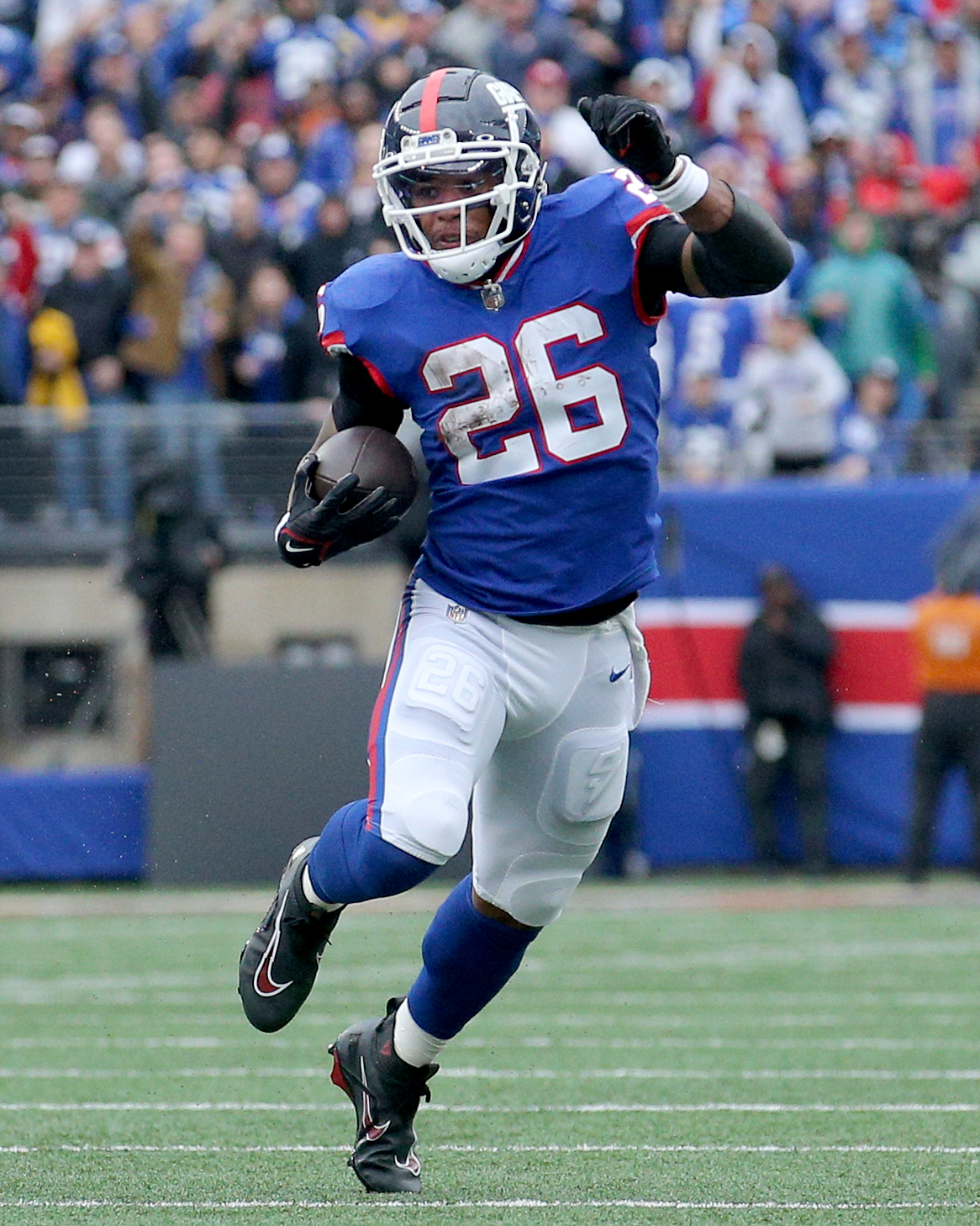 It has long seemed the Barkley guarantee floor is $22.2MM, the cost of two franchise tags, but that number might not be enough to cross the finish line here. Barkley’s guarantee aim likely comes in a bit higher than the two-tag number, Fox Sports’ Ralph Vacchiano tweets. It should not be too surprising the two-time Pro Bowl running back would want more money locked in, seeing as the top two RB guarantees — for Derrick Henry and Christian McCaffrey — came on deals signed in 2020.
A bit of a difference exists between total guarantees and fully guaranteed money. In terms of guarantees that cover skill and injury, two backs — McCaffrey and Alvin Kamara — signed for more than $34MM apiece. Two other veterans — Henry and Nick Chubb — secured $20MM-plus guaranteed in total.
In terms of fully guaranteed cash, the only veteran deals north of $18MM went to McCaffrey ($30.1MM) and Henry ($25.5MM). Those agreements were finalized in April and July of 2020, respectively. Seeing as the salary cap has jumped by $26MM since then (and is expected to make another big leap in 2024), Barkley seeking that kind of security is not exactly out of step, though Schwartz adds a guarantee in the $22-23MM range will likely move Barkley to sign (video link).
The guarantee component is also interesting because Barkley has already played out a contract that contained more fully guaranteed dough than McCaffrey’s deal. Being drafted at No. 2 overall, Barkley enjoyed the luxury of his entire rookie contract (four years, $31.2MM) being guaranteed. With the Giants currently at $19.5MM on the guarantee front, it does not seem like Barkley will move the number past his rookie pact. But it is notable the sides have already ventured into that territory due to rookie slot money.
Barkley’s injury past has undoubtedly influenced the team’s guarantee figure. In addition to the ACL tear the New Jersey native suffered in September 2020, he sustained a high ankle sprain in 2019 and dealt with more ankle trouble in 2021. But the 26-year-old back rebounded with a healthy 2021 season, suiting up for 18 of the Giants’ 19 games (Brian Daboll rested him in Week 18). Barkley showed enough for the team — which discussed him in trades barely a year ago — to bring out its franchise tag. But time is running out for the sides to make a deal.
The Giants have been here before and come out with a resolution. No deal between the Giants and Daniel Jones was considered imminent two days before the March deadline for teams to tag players. Jones’ AAV ask was at $47MM at one point during the talks; the Giants hammered out a four-year, $160MM contract minutes before the March 7 deadline, allowing them to keep their quarterback off the market and tag their running back. The stakes are higher for Barkley, whose career will almost definitely not last as long as Jones’. This window represents an important opportunity for the sixth-year back to tack on another nice contract before his prime ends.
Considering the string of blows the running back position has absorbed this offseason, the Barkley-Giants talks — as well as the less publicized discussions between the Raiders and Josh Jacobs and Cowboys and Tony Pollard — double as critical for the market as a whole. As the Jones negotiations showed, however, a lot can happen in the final days before a deadline.
Latest On Peter Skoronski, Titans’ O-Line
Entering Week 1, the Titans will have four new offensive line starters. The team’s plan was only to make three changes up front, but Nicholas Petit-Frere‘s six-game gambling suspension will force a temporary change at right tackle.
Andre Dillard is expected to start at left tackle, seeing as the ex-Eagles first-round pick signed a three-year, $29MM deal. Tennessee will also return 17-game guard starter Aaron Brewer, but the fourth-year blocker — who received a second-round RFA tender — confirmed earlier this offseason the team is planning to slide him to center. This will leave three spots open, with two likely starters’ positions to be determined.
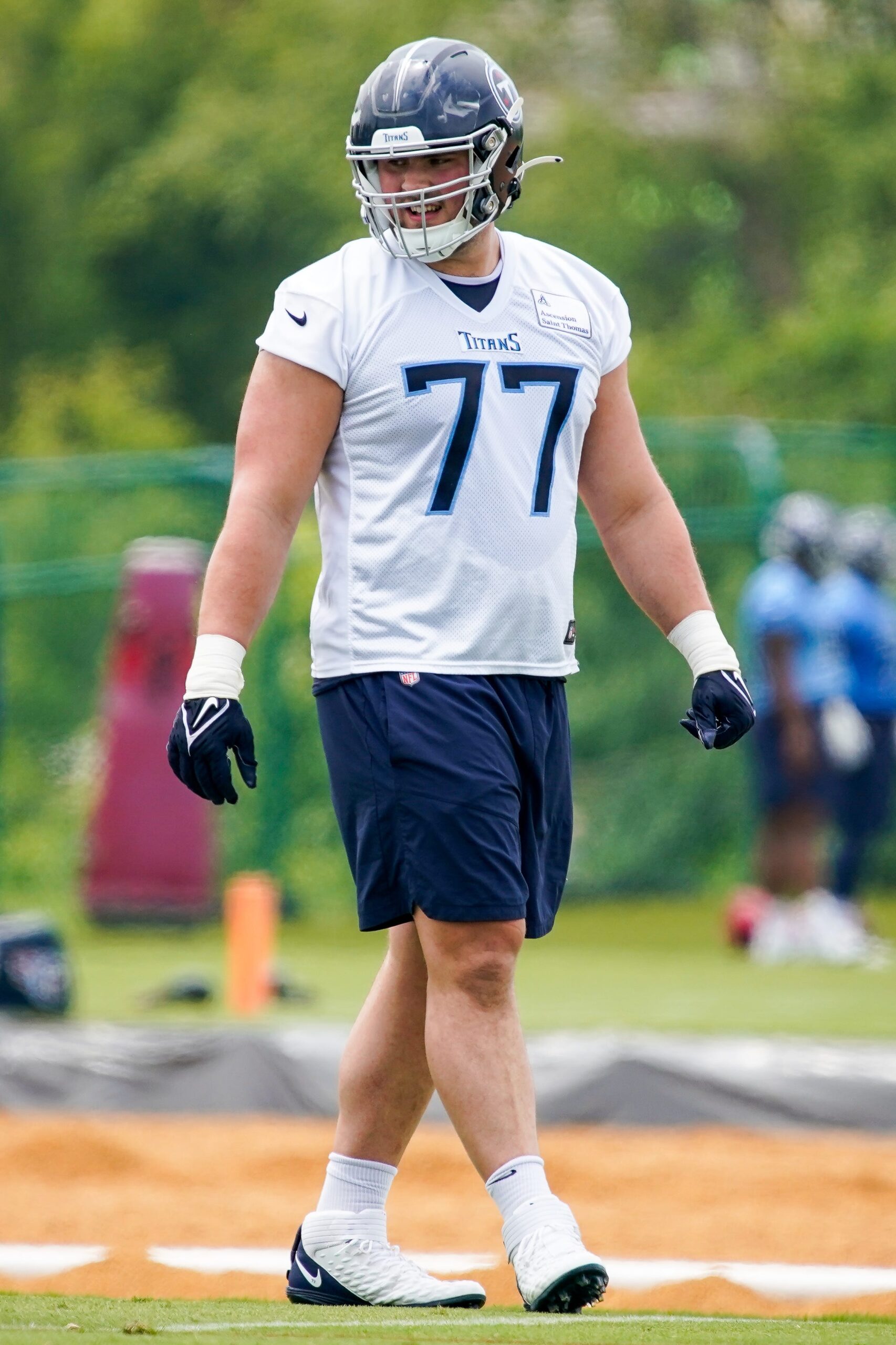 UFA addition Daniel Brunskill has experience at both guard and tackle, and TennesseeTitans.com’s Jim Wyatt notes the ex-49er starter/swingman will be an option to start the season at right tackle. First-round pick Peter Skoronski also fits this profile, though he has less experience at guard. But the acclaimed Northwestern tackle is also in the mix to fill in for Petit-Frere to start the season.
The plan for Skoronski appeared to be a shift to guard. The No. 11 overall pick spent most of his offseason working at guard, per Wyatt, though the Titans have also gave him tackle reps during their offseason program. A number of NFL evaluators viewed Skoronski as a clear-cut guard candidate, but the former Big Ten blocker did not play guard in college.
It would be an interesting assignment for Skoronski to start the season at right tackle before kicking inside. Tennessee might aim to simplify the top prospect’s rookie-year workload by stationing him at guard only during training camp, but for now, an O-line configuration with Dillard and Skoronski as the bookends remains in play. Regardless of where Skoronski lines up, the team expects him to start immediately.
Jamarco Jones, sixth-round pick Jaelyn Duncan and 2022 UDFA Andrew Rupcich as other options to fill in for the suspended Petit-Frere, per Wyatt. A former Seahawk, Jones has made seven NFL starts over his three-year career. He spent time at tackle in Seattle but did not play last season. After Jones lost the Titans’ left guard competition to Brewer, he spent most of last season on IR. Duncan spent most of his time in College Park at the Terrapins’ left tackle, while Rupcich would be a long shot here, as he joined Jones in not seeing any game action last season.
Tennessee has struggled to fill its right tackle post over the past few seasons. After not picking up Jack Conklin‘s fifth-year option and then letting him walk in 2020, the team has used three different primary starters there over the past three years. Isaiah Wilson became one of this era’s biggest draft busts, playing all of four career snaps, while 2021 second-round pick Dillon Radunz was unable to win the job during the 2021 or ’22 offseasons. (Dennis Kelly and David Quessenberry, respectively, were the Titans’ right tackle starters in 2020 and ’21.) Radunz, who has also spent time at guard with the Titans, would have seemingly been an option to step in for Petit-Frere. But the North Dakota State alum is still rehabbing the ACL tear he suffered in December. Radunz did not participate in the team’s offseason workouts, Wyatt adds.
The Titans released cornerstones Taylor Lewan and Ben Jones this offseason, doing so a year after cutting Rodger Saffold. Tennessee let four-year guard starter Nate Davis walk in free agency in March. Skoronski will be the linchpin of GM Ran Carthon‘s overhaul effort, though the team will not have a chance to see the unit at full strength until Petit-Frere’s October return.
Darren Waller Injuries Led Raiders To Pursue Trade; Team Tried To Re-Sign Foster Moreau
As the Raiders attempted to regroup after their 2019 Antonio Brown trade netted them zero game appearances from the mercurial talent, a Darren Waller flier paid considerable dividends. Waller anchored multiple Raiders passing attacks, leading to two contract extensions.
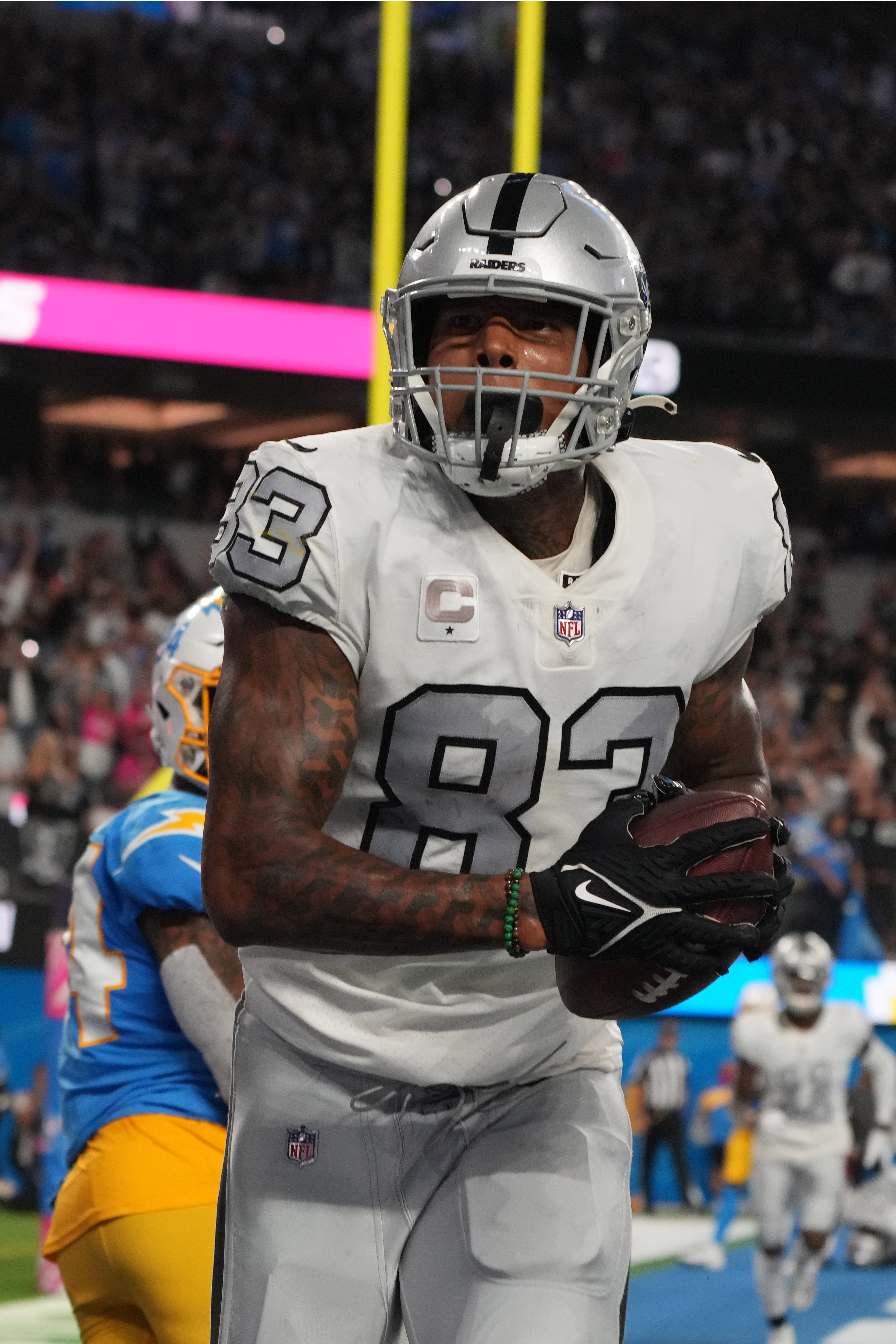 The second of those came just before last season, when Waller hired Drew Rosenhaus to hammer out a three-year, $51MM deal that was finalized just before Week 1. However, Waller ended up missing more time due to injury last season. As the 2023 league year began, the Raiders traded Waller to the Giants for a third-round compensatory pick — the same choice the Chiefs sent over for Kadarius Toney last year.
It is not especially common to see teams bail on players months after authorizing extensions, and while rumors about off-field issues cropped up, Adam Caplan of ProFootballNetwork.com notes the Raiders are believed to have grown concerned about Waller’s mounting injury trouble. Some Raiders staffers viewed the injury trouble as a big enough issue to explore the trade, per Caplan. Trade talks with the Packers even occurred before last year’s deadline.
Waller, 30, has missed 14 games over the past two seasons. Last year, hamstring trouble led to eight absences. Waller missed three games before being placed on IR, ensuring he would be sidelined for at least four more. The nagging issue ended up taking two months of game action off Waller’s schedule, and his extended absence led to some in-house frustration. While the veteran tight end returned in mid-December and played the final four Raiders games, the team still decided to accept the Giants’ offer and move on after four-plus years.
The Raiders initially signed Waller off the Ravens’ practice squad late during the 2018 season. In 2019, the converted wide receiver who nearly saw substance-abuse issues lead him out of the NFL posted a 1,145-yard receiving season. A year later, Waller accumulated 1,196 yards and eight touchdowns. In 2021, however, ankle trouble affected Waller during training camp and then recurred in-season. An IT band injury sustained during the Raiders’ Thanksgiving win over the Cowboys later cost Waller four games.
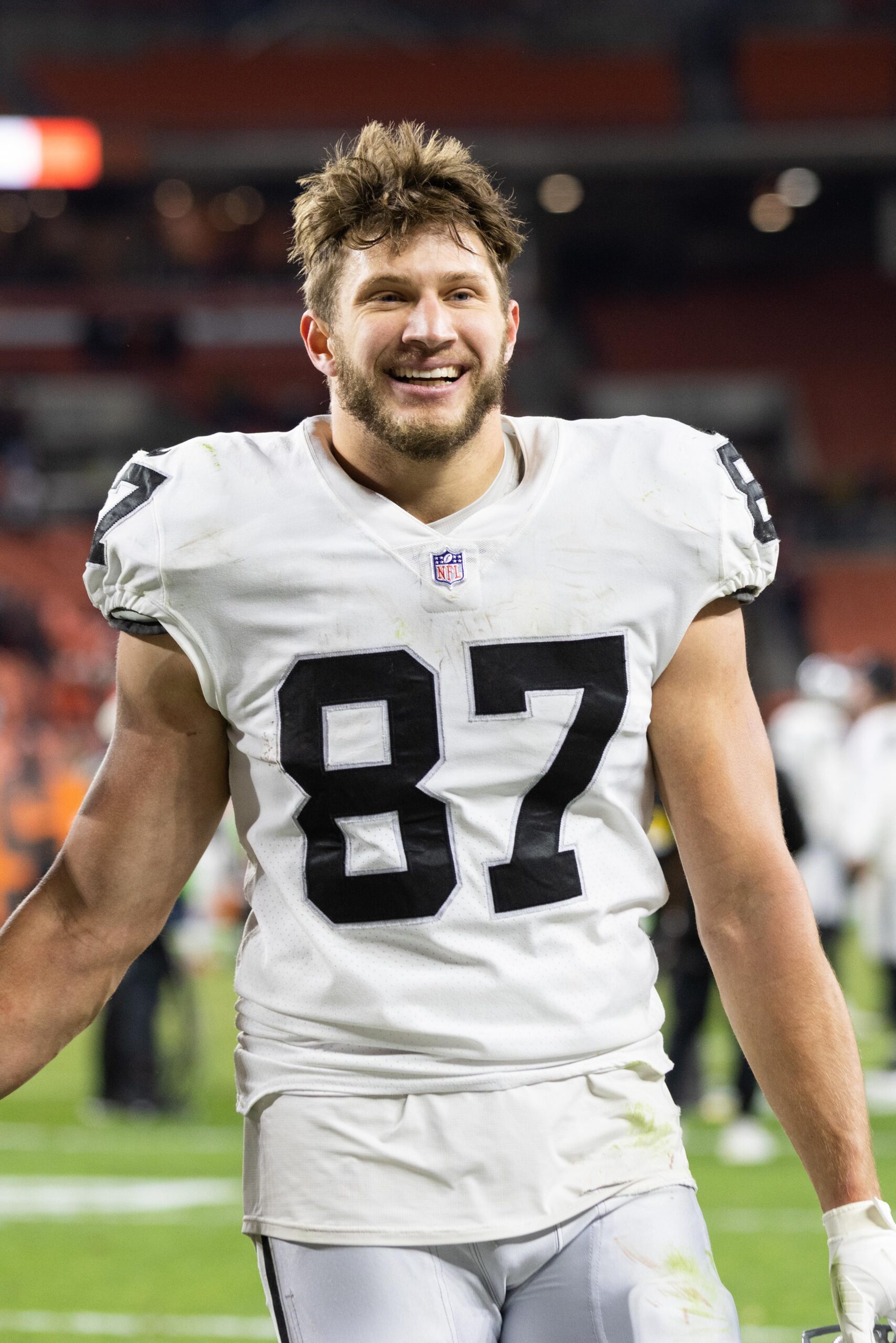 Lacking the receiving talent the Raiders currently possess, the Giants will count on Waller shaking off his injury problems. Waller’s contract, which the Giants restructured soon after acquiring him, runs through 2025. Although the restructure makes a future cut slightly more expensive, the Giants can move on from Waller and take only a $2.5MM dead-money hit by designating him as a post-June 1 cut in 2024. While the team did trade a third-round pick for the accomplished pass catcher — one of just eight tight ends to ever record two 1,100-yard receiving seasons — the Giants can move on rather cheaply despite Waller securing a position-leading AAV from the Raiders last September.
Waller’s injuries led to increased Foster Moreau time. The former fourth-round pick was not a notable part of the Raiders’ passing attack in 2019 or 2020, but as Waller became increasingly unavailable, the team needed its backup more. Moreau combined for 63 receptions, 793 yards and five touchdown receptions over the past two years. The Raiders attempted to re-sign Moreau, Caplan adds, but ended up going with a combination of UFA addition Austin Hooper and second-round pick Michael Mayer.
Moreau also saw a cancer diagnosis hijack his free agency. The Bengals hosted the fifth-year player on a visit, but a subsequent Saints meeting led to a Hodgkin’s lymphoma diagnosis. But Moreau is now in remission and signed to a three-year, $12.23MM Saints contract. As the Raiders turn the page at tight end and quarterback, the LSU alum and New Orleans native will play for his hometown team and keeping working with Derek Carr.
Latest On Giants, Saquon Barkley
JULY 13: An interesting twist to the Barkley negotiations has emerged. Ed Berry of CAA, who has long been involved in marketing for Barkley, is now involved in contract talks. Florio reports that Berry was added to the franchise-tagged star’s camp last month to provide an extra voice in negotiations. As a result, Barkley is now represented by both CAA and Roc Nation (in the form of Kim Miale) as talks are nearing the deadline-imposed finish line.
Meanwhile, Ryan Dunleavy of the New York Post reports that the Giants’ best offer to date included $19.5MM in guaranteed money (Twitter link). Consecutive franchise tags would equate to $22.2M in guaranteed money, so it comes as little surprise that Barkley would turn down such a proposal.
JULY 12: In one of the more eventful stretches for a team and the franchise tag in recent NFL history, the Giants have until 3pm CT Monday to extend Saquon Barkley. As the deadline nears, this situation reminds of their point-of-no-return situation with Barkley and Daniel Jones in March.
Prior to that point, the Giants had made a second offer to Barkley — a deal worth more than $13MM per year. The five-year veteran declined the proposal, with Mike Florio of Pro Football Talk noting the talented running back sought a contract in the $16MM-per-year neighborhood. That would have matched Christian McCaffrey‘s position-record average, which has stood as the top running back contract since April 2020.
[RELATED: Jones’ Asking Price Reached $47MM Per Year]
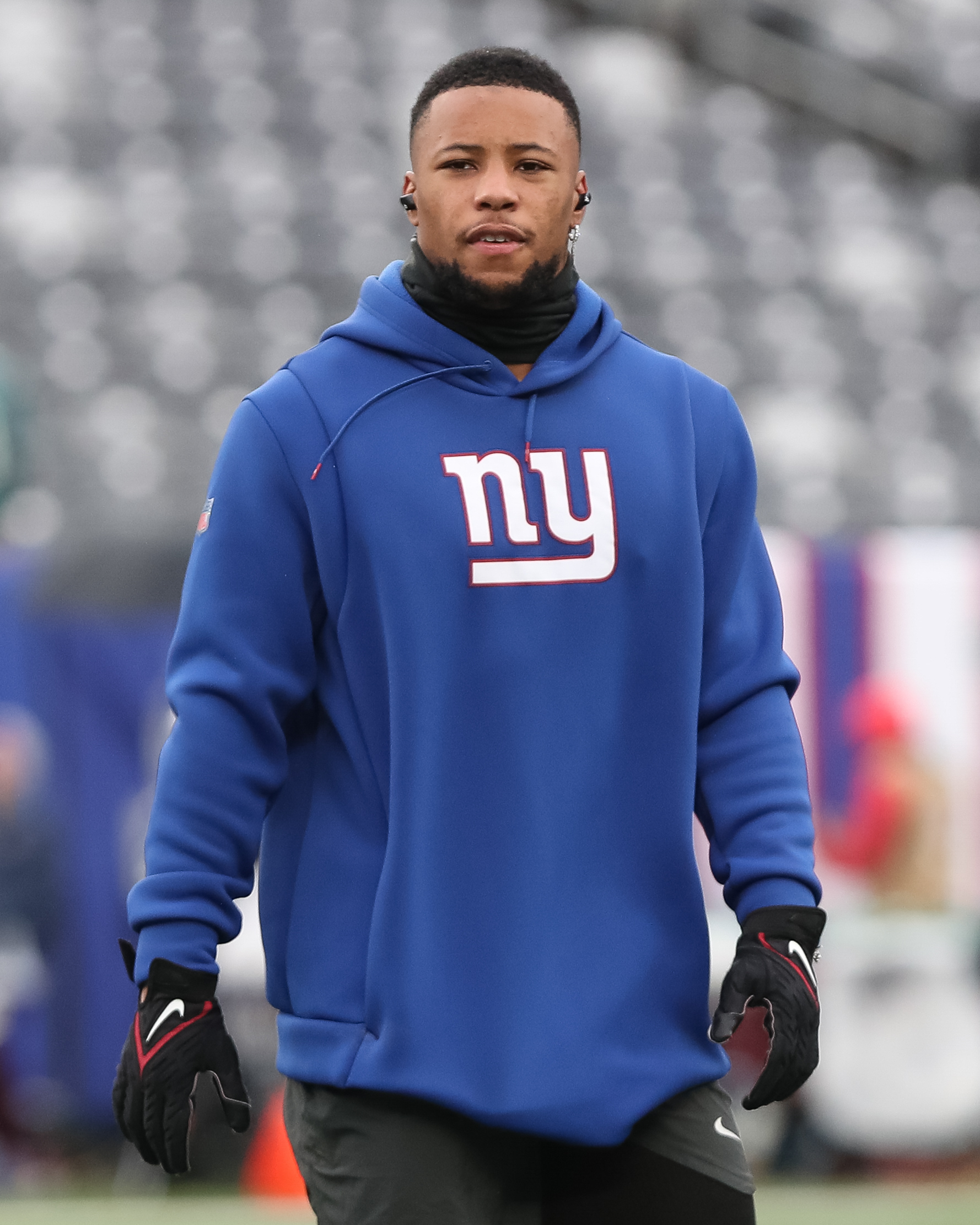 The Giants informed Barkley that a declined offer would mean the proposal would be pulled if the team tagged him. The subsequent Jones agreement — a four-year, $160MM accord reached minutes before the March deadline for teams to apply franchise tags — led to the Giants following through with that plan/threat, tagging Barkley and withdrawing their best offer. While the parties have continued off-and-on negotiations during the spring and summer, they are believed to be at an impasse.
Earlier this offseason, a report suggested Barkley was pushing for a top-market contract. Barkley, however, said following the Giants’ divisional-round loss to the Eagles he was not looking to reset the market. Pushback has since come out regarding Wednesday afternoon’s report.
The Giants’ offer is believed to have included $26MM in the first two years, per Florio. Only two veteran backs (McCaffrey and Derrick Henry) are tied to guarantees north of $20MM. It does not seem like all $26MM in Barkley’s offer was locked in, with insufficient guarantees being an issue for the running back’s camp. Indeed, the New York Post’s Ryan Dunleavy notes the offer did not include $26MM guaranteed. Barkley also disputes this report (Twitter links). A $16MM-AAV ask never seemed realistic to the standout back, Jordan Raanan adds (on Twitter).
Even if Barkley is angling for McCaffrey-level money, a case exists for it. However, that case was stronger before the carnage at the running back position this offseason. On one hand, the salary cap has climbed since McCaffrey’s four-year, $64MM Panthers extension; the cap stood at $198.2MM at that point. Despite the COVID-19 pandemic reducing the salary ceiling in 2021, it has rebounded to $224.8MM this year. OverTheCap lists $256MM as the projected 2024 ceiling. The cap spiking by $32MM between 2023 and ’24 will lead to position-record deals; will a team be willing to authorize one at running back?
Since Barkley was first connected to $16MM-AAV territory, two of the top four RB contracts (for Ezekiel Elliott and Dalvin Cook) have been shed. The Packers and Aaron Jones agreed to a pay cut that provided more 2023 guarantees; the Bengals have been connected to asking Joe Mixon to accept a trim. No free agent back signed for more than $6.35MM per year, and Austin Ekeler‘s trade request — which came about because he is tied to a Chargers-friendly extension ($6.13MM per annum) — did not spark much interest. During a mostly uninterrupted period of the league devaluing running backs, 2023 has brought a widespread bloodbath.
Then again, free agency was not a true representation of the RB market, since the three tagged backs — Barkley, Josh Jacobs and Tony Pollard — were not available. Barkley, 26, also means more to the Giants than most backs do to their respective teams, seeing as Big Blue recently extended a middling quarterback and has question marks at wide receiver and tight end. It will be interesting to see what other terms are thrown around before Monday’s deadline. Given the frequency of Barkley-related updates this offseason, it seems likely we will find out the particulars.
Kyler Murray Addresses 2022 Struggles, Cardinals’ Jonathan Gannon Hire
Kyler Murray‘s 2022 hovered at the center of the Cardinals’ decision to reboot their operation this offseason. The team’s 4-13 record led to the franchise moving on from GM Steve Keim and HC Kliff Kingsbury, the decision-makers that chose Murray first overall in 2019. As the Monti Ossenfort–Jonathan Gannon regime takes over, Murray is rehabbing an ACL tear.
The two-time Pro Bowl quarterback is expected to miss regular-season time, though it is unknown how much of the year he will miss. This comes after a December injury, but Murray’s 2022 was not going well leading up to that abrupt conclusion. The contract request and controversial homework clause (which the team awkwardly removed soon after its inclusion) in the $230.5MM deal preceded an inconsistent season, one that also involved friction between Murray and Kingsbury.
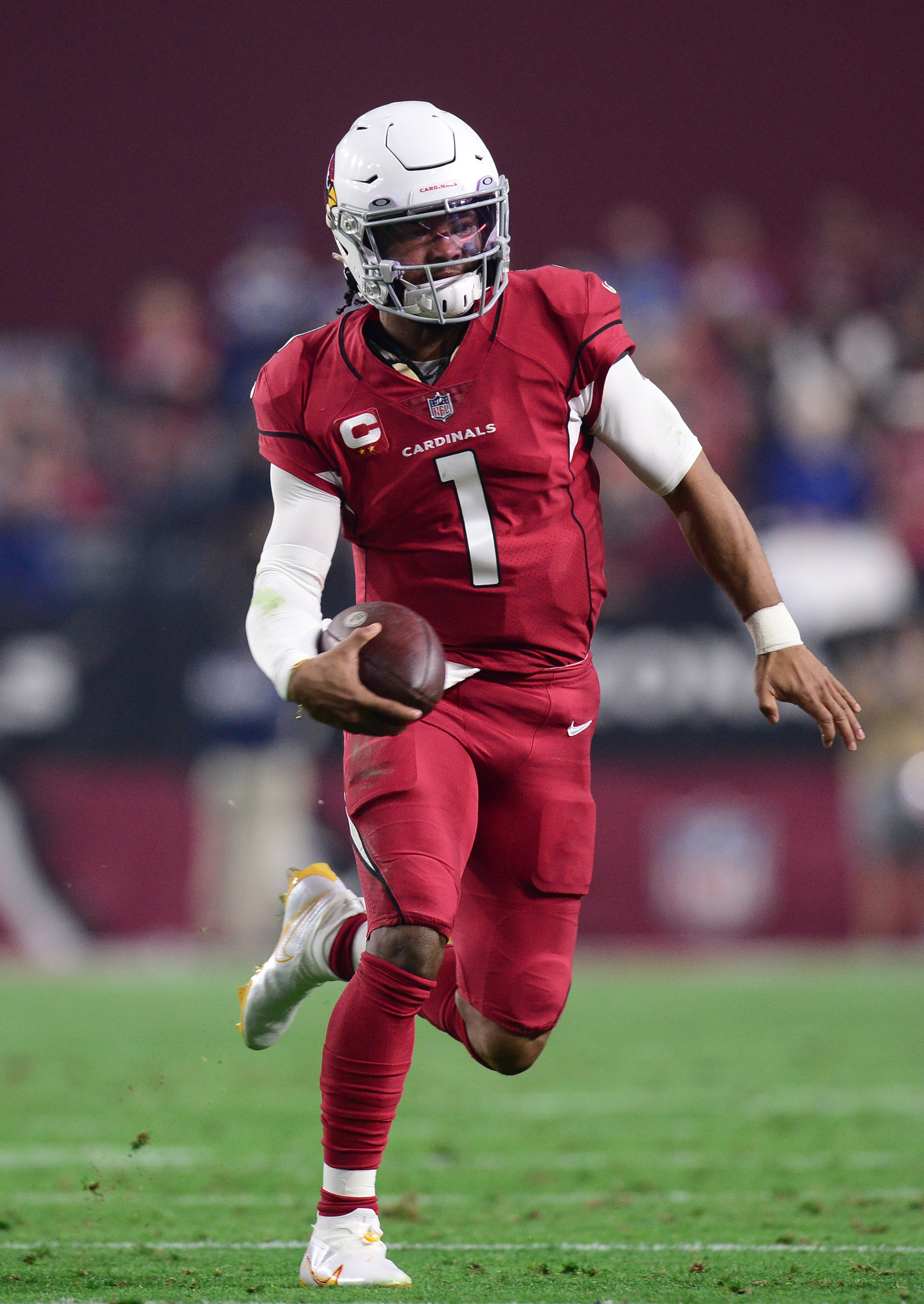 “To hit a wall Year 4, especially after going through the whole contract thing, the energy, the aura, the vibes going into the season were all negative,” Murray said during the Cardinals’ Flight Plan series (via AZCardinals.com’s Darren Urban). “Having to deal with all that stuff and trying to focus on football, and then I got Covid in camp, I hurt my wrist in camp so I missed a lot of reps, and having to play catch-up in the season, starting with the Chiefs, it was kind of a compilation of [expletive]-up things going on.
“… The whole [last] year was [expletive]. It happened for a reason. The things we were doing weren’t sustainable for success. It was necessary and in turn good will come out of what happened.”
Murray, who received $103.3MM fully guaranteed upon signing his extension last July, averaged a career-low 6.1 yards per attempt, threw just 14 touchdown passes and ranked 19th in QBR. The former Heisman winner has endured criticism for his lack of leadership and commitment, with the film-study clause bringing the latter issue to the forefront. He has also struggled with nagging injuries, missing three games in 2021 and two in 2022 prior to the knee malady.
Kingsbury and Murray were seen arguing during a Cards Thursday-night win over the Saints in October, and the relationship did not exactly improve from there. Kingsbury is now back at USC coaching under Lincoln Riley, who coached Murray at Oklahoma. After two seasons as the Eagles’ DC, Gannon is in place to lead a rebuild effort. Michael Bidwill gave Murray input as to who the Cardinals would hire as their next HC.
“They are really investing in the organization and the team. You run through a wall for that type of guy. That’s the energy he brings,” Murray said of Gannon. “… I think winning cures all, and it’s been tough to do that with some of the circumstances we’ve had to deal with. But I think we are headed in the right direction.”
Murray, who will turn 26 next month, is a near-lock to begin training camp on the active/PUP list, Urban adds. No firm timetable has emerged, though the fifth-year passer is believed to have suffered a clean tear. Still, it would not surprise to see the Cards proceed with caution, seeing as they are unlikely to field a contending team this season. Colt McCoy looms as the team’s most likely Week 1 starter, and it will be interesting to see if the team places Murray on its reserve/PUP list — a designation that would shelve the QB for at least four games — to start the season.