
Largest 2022 Cap Hits: Defense
After looking at this year’s top salary cap numbers on the offensive side of the ball, here is a rundown of the players counting the most toward their teams’ payrolls in 2022.
As could be expected, the salary figures here start below the quarterbacks. A few pass rushers, however, are tied to notable cap hits. Those numbers that check in within the top 20 leaguewide regardless of position. With the exception of true nose tackles and pure slot cornerbacks, every defensive position is represented here.
Here are the top cap figures on the defensive side for the ’22 season:
- T.J. Watt, OLB (Steelers): $31.12MM
- Chris Jones, DT (Chiefs): $29.42MM
- Joey Bosa, OLB (Chargers): $28.25MM
- Leonard Williams, DL (Giants): $27.3MM
- Aaron Donald, DT (Rams): $27MM
- Jalen Ramsey, CB (Rams): $23.2MM
- Deion Jones, LB (Falcons): $20.1MM
- Bud Dupree, OLB (Titans): $19.2MM
- Justin Simmons, S (Broncos): $18.85MM
- Javon Hargrave, DT (Eagles): $17.8MM
- C.J. Mosley, LB (Jets): $17.5MM
- Cameron Heyward, DL (Steelers): $17.42MM
- Robert Quinn, DE (Bears): $17.14MM
- Matt Judon, OLB (Patriots): $16.5MM
- DeForest Buckner, DT (Colts): $16MM
- Shaquill Griffin, CB (Jaguars): $16.44MM
- Tre’Davious White, CB (Bills): $16.4MM
- J.J. Watt, DL (Cardinals): $15.9MM
- Marcus Peters, CB (Ravens): $15.5MM
- Carl Lawson, DE (Jets): $15.33MM
- Eddie Jackson, S (Bears): $15.1MM
- Lavonte David, LB (Buccaneers): $14.79MM
- Budda Baker, S (Cardinals): $14.78MM
- Romeo Okwara, DE (Lions): $14.5MM
- Trey Hendrickson, DE (Bengals): $14.49MM
- Illustrating how much the cap has climbed over the past several seasons, T.J. Watt is tied to a number nearly twice that of J.J. Watt, who has been tied to $16.7MM-per-year (a defender-record number in 2014) and $14MM-AAV deals as a pro. Trailing his older brother in Defensive Player of the Year honors, T.J. is signed to an edge defender-record $28MM-per-year accord.
- Jones’ four-year Chiefs deal vaults from an $8.5MM cap number in 2021 to the league’s second-highest defensive figure this year. The standout defensive tackle’s cap hit accompanies Patrick Mahomes‘ $35.79MM number, which is well north of his 2021 figure, on Kansas City’s new-look payroll.
- After two franchise tags, Williams scored a monster extension in 2021. The well-paid Giants D-lineman’s cap number this year is way up from his 2021 number ($9.4MM).
- The Rams redid Donald’s contract last month, adding no new years to the through-2024 pact. The all-world defender’s cap hit actually decreases in 2023, dropping to $26MM
- It is not certain Deion Jones will be back with the Falcons, who have jettisoned other Super Bowl LI cornerstones from the roster since the current regime took over in 2021. But they would save just $1MM were they to release the seventh-year linebacker.
- To date, this represents the high-water mark for Mosley cap hits on his Jets deal, which at the time (2019) began a sea change for off-ball linebacker contracts. Mosley’s cap hit, on a pact that runs through 2024 because of the linebacker opting out of the 2020 season, increased by $10MM from 2021-22.
- Hargrave is one of five Eagles pass rushers signed to veteran contracts. The ex-Steeler’s 2021 deal accompanies Brandon Graham, Josh Sweat, Haason Reddick, and Fletcher Cox‘s new agreement on Philadelphia’s defensive front. As cap hits do not reflect average salaries, Hargrave is the only member of this quartet tied to an eight-figure cap number in 2022.
- Quinn has also been connected to a departure, with the 31-year-old pass rusher skipping minicamp after it became known he would like to be traded away from the rebuilding team. His cap hit tops the Bears’ payroll. The Bears would save $12.9MM by trading Quinn, should another team sign up for taking on his full 2022 base salary.
Free Agent Stock Watch: WR Will Fuller
Will Fuller has had an up-and-down NFL career to date, and it may now stand at something of a crossroads. He currently finds himself among an interesting crop of free agent receivers seeking new deals well after teams have done the bulk of their roster retooling. 
After two straight hugely productive seasons to finish his college career at Notre Dame, in which he totalled over 2,300 yards and 29 touchdowns, Fuller was one of the top receiver prospects in the 2016 draft class. He was the second wideout to hear his name called, going 21st overall to the Texans. That set him up in a favorable situation to begin his pro career.
Landing in Houston allowed Fuller to serve as an effective compliment to DeAndre Hopkins, given his vertical speed and field-stretching ability. He was an integral part of the team’s passing offense during his rookie season, as he saw a career-high 92 targets. Unfortunately, that year was also the one in which he saw the most time on the field, appearing in 14 contests.
Injuries have been a constant in the 28-year-old’s NFL tenure, unlike those final two years in college which made him so highly regarded. During his five seasons in Houston, he missed 27 total games, mostly due to injury. Part of that total also came from a six-game PED suspension, which was handed down late in the 2020 season. Despite the missed time, Fuller still put up career-best totals that year in receptions (53), yards (879) and touchdowns (eight).
That made him one of the top available free agents last offseason, as he hit the open market for the first time in his career. He signed with the Dolphins, a team which also added Jaylen Waddle in the draft as part of their WR overhaul. The deal carried a value of over $10MM, but was only one year in length and included incentives, as the team clearly had concerns about his availability.
Those proved to be well-founded; after missing the first week of the season due to the suspension, Fuller was also absent for Week 2 as a result of a non-injury-related matter. In October, he then suffered a broken finger, adding further to the list of ailments which have proved increasingly cumbersome to his career. The injury wasn’t expected to end his season, but it ultimately did limit him to just two games played. After recording four scoreless receptions, it comes as little surprise that Fuller is still a free agent this late into free agency.
As shown by his 16.6 yards per catch average in 2020, though, he has the ability to make a significant impact as a complimentary receiver when healthy. That qualifies him as one of the best remaining wideouts on the market, as the likes of Julio Jones and Odell Beckham Jr. have significant injury concerns of their own. A number of teams looking for veteran pass-catchers could stand to add him.
One such team is the Ravens, who were recently named as a logical destination for Fuller. The team traded away Marquise Brown during the draft, so they could use him as a replacement for Brown’s speed. Baltimore currently ranks second-last in the league in cap space, however, so any deal would need to be a short-term, low-cost one like that given to Sammy Watkins last year.
Other potential landing spots include the Colts (who have yet to re-sign T.Y. Hilton, or a similar compliment to Michael Pittman Jr.) and Packers (who considered trading for Fuller in 2020 and lost their top two WRs this offseason). Wherever he signs, Fuller could prove to be an effective addition given the right team fit and a bit of injury-related luck.
PFR Originals: 6/27/22 – 7/4/22
In case you missed it, here is a look back at our recent originals:
- PFR’s Offseason in Review series for 2022 kicked off with two entries, beginning with the Broncos and Giants.
- I took a look at a Denver offseason headlined by the Russell Wilson trade but one that also included a transaction stretch involving few front-seven additions, the hiring of Nathaniel Hackett as head coach and the franchise being sold.
- The Giants made more power-structure changes, adding a new GM-HC duo, but Big Blue becoming one of just 20 teams in the 56-year common draft era to make two top-10 picks headlined their offseason.
- With the summer representing an annual window for teams to decide on players’ long-term statuses, our extension candidate series produced five more entries.
- One of a handful of receiver standouts from the 2019 draft eyeing big-ticket re-ups, Marquise Brown now has a team that did not draft him handling his potential extension. Rory Parks took a look at the Cardinals wideout’s extension outlook.
- The Bills have already paid linebacker Matt Milano and took care of 2018 first-rounder Josh Allen. Ben Levine examined the extension candidacy for Buffalo’s other 2018 first-rounder, Pro Bowl linebacker Tremaine Edmunds.
- Jeffery Simmons did not participate fully in the Titans‘ minicamp, inviting questions ahead of Tennessee’s training camp. Ely Allen delved into the blossoming defensive lineman’s case to be a long-term Titans front-seven bastion.
- After the Packers separated their edge-rushing Smiths, making Za’Darius a cap casualty, Rashan Gary has a chance to become a potential cornerstone Green Bay defender. Adam La Rose looked into the former first-rounder’s value.
- The Chiefs have not poured much money into their cornerback positions in recent years, but after letting Charvarius Ward walk, the team may have an opening for a midlevel extension in this position group. Ely addressed Rashad Fenton‘s case for a long-term Missouri future.
- The Packers made some additions at receiver this offseason, but after the exits of Davante Adams and Marquez Valdes-Scantling, Green Bay’s wideout depth chart differs considerably from the other NFC contenders. Examining the Packers’ post-Adams outlook, I went into the team’s unique setup and augmentation options at this marquee position.
- The departures of Sean Payton and Mike Zimmer removed two of the NFL’s longest-tenured head coaches from the 2022 equation. The updated list features 10 new HCs and nearly half the league employing coaches hired over the past two offseasons.
- Kevin Colbert‘s retirement also removed a longtime general manager from the 2022 contingent. Here is how the league’s GM collection looks entering the ’22 campaign.
- Various changes to quarterbacks’ contracts — via trades, extensions or fifth-year option bumps — adjusted the NFL’s 2022 earnings hierarchy. Ryan Tannehill and Patrick Mahomes surged to the top of the list, though several non-QBs’ contracts appear among the top of the largest 2022 cap figures.
- Jimmy Garoppolo has been on the trade block for five months. In PFR’s latest poll, I analyzed the early-July landscape for the 49ers quarterback, whose 2022 endgame features a number of options.
- A neck injury has put Chris Carson‘s career in jeopardy, a development similar to those of Cliff Avril and Kam Chancellor. While the veteran Seahawks running back is not planning to retire, Ely offered a look into Carson’s future in Seattle.
- Sheldon Richardson has bounced around the league, and although he has been a starter throughout his career, the defensive lineman has not enjoyed a long-tenured run with any team but the Jets. In our latest This Date In Transactions History entry, Ben went into an offseason event seven years ago that affected his time in New York.
Poll: How Will 49ers’ Jimmy Garoppolo Saga Conclude?
Since the Rams held off the No. 6-seeded 49ers to advance to Super Bowl LVI, the NFC’s second-place finisher has not made a secret of its plans with its four-plus-year starting quarterback. Kyle Shanahan and John Lynch have said a Jimmy Garoppolo trade will be the likely conclusion for this relationship.
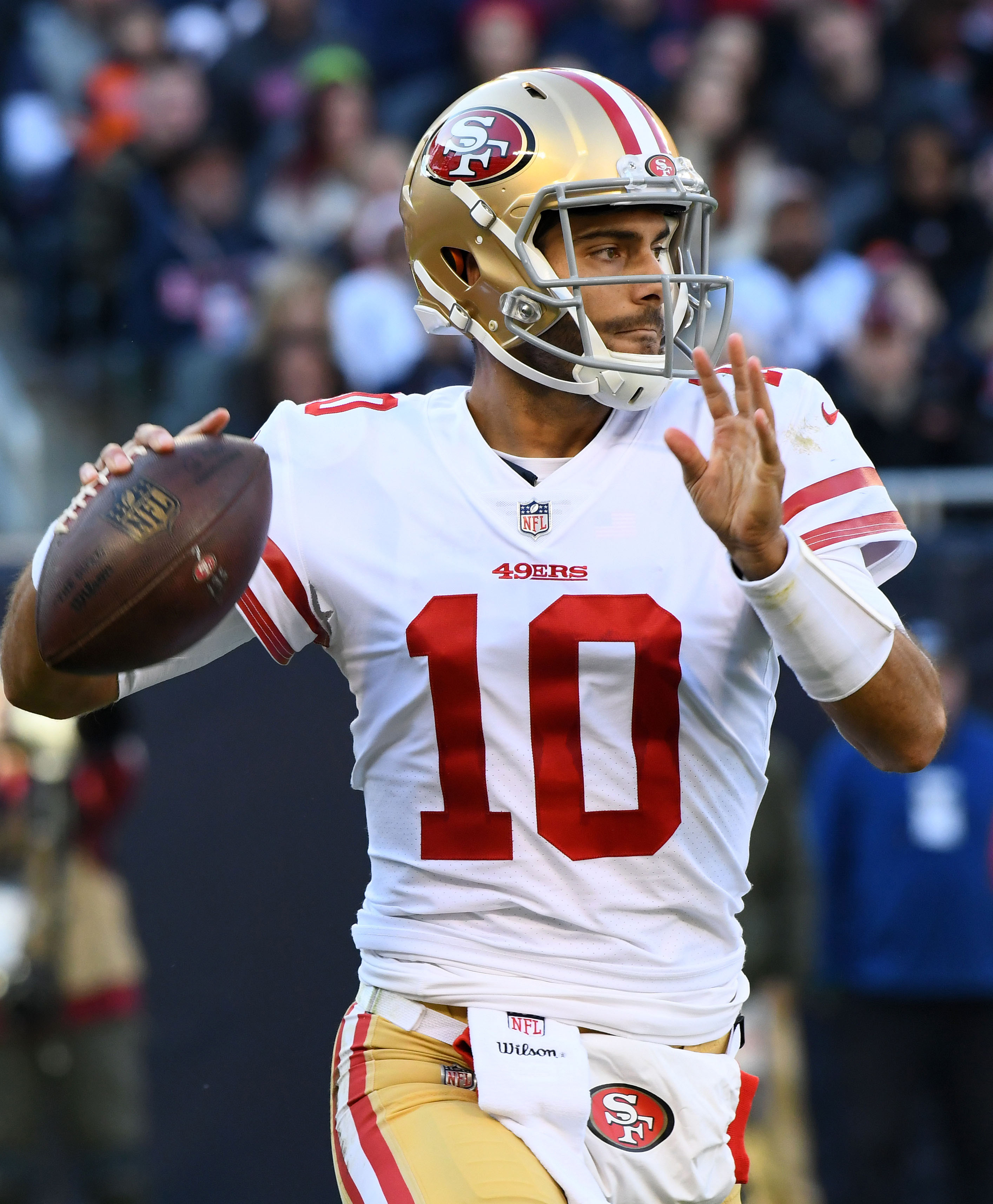 Now that we are in July, when Garoppolo is expected to be cleared to throw again following his right shoulder surgery in March, more news surrounding this trade saga figures to emerge. Because Garoppolo’s procedure changed his trade market, Baker Mayfield rumors have been far more commonplace than rumblings of a Garoppolo deal. But the 49ers are planning to make an aggressive push here, to the point the team will let the 30-year-old passer discuss his through-2022 contract with other teams ahead of a trade.
The Panthers and Seahawks loom as the most obvious landing spots for the Super Bowl LIV starter, but clear barriers exist blocking those avenues. Although Carolina has been discussing Mayfield with Cleveland for months, the team not believed to be interested in trading for Garoppolo.
The $24.2MM salary has long been a non-starter for the Panthers, who have some degree of doubt about Garoppolo’s injuries and are carrying a fully guaranteed $18.9MM Sam Darnold salary. Garoppolo missed most of 2018 with an ACL tear, was sidelined for much of 2020 with ankle trouble, and battled calf, thumb and shoulder maladies last season. In his lone 49ers season without a notable injury (2019), Garoppolo finished 12th in QBR. The shoulder ailment hijacked a trade market the 49ers hoped would yield a Day 2 pick to one in which NFL insiders expect San Francisco to eventually cut bait rather than risk Garoppolo’s salary becoming guaranteed come Week 1.
Although precedent exists for intra-division QB trades, with the 2010 Donovan McNabb Philadelphia-to-Washington swap being a fairly recent example, it is difficult to envision the 49ers dealing Garoppolo to the Seahawks. Considering Seattle’s issue with Mayfield’s $18.9MM salary, it is also hard to imagine the team signing off on acquiring Garoppolo without a considerable contract adjustment. Still, Garoppolo making it to free agency — especially in a reality in which the Browns and Panthers agree on a Mayfield deal — opens the door to the longtime NFC West arm moving to Seattle. The Drew Lock–Geno Smith battle will continue into training camp, but the Seahawks going with either is a significant risk for a team that enjoyed tremendous QB security for a decade.
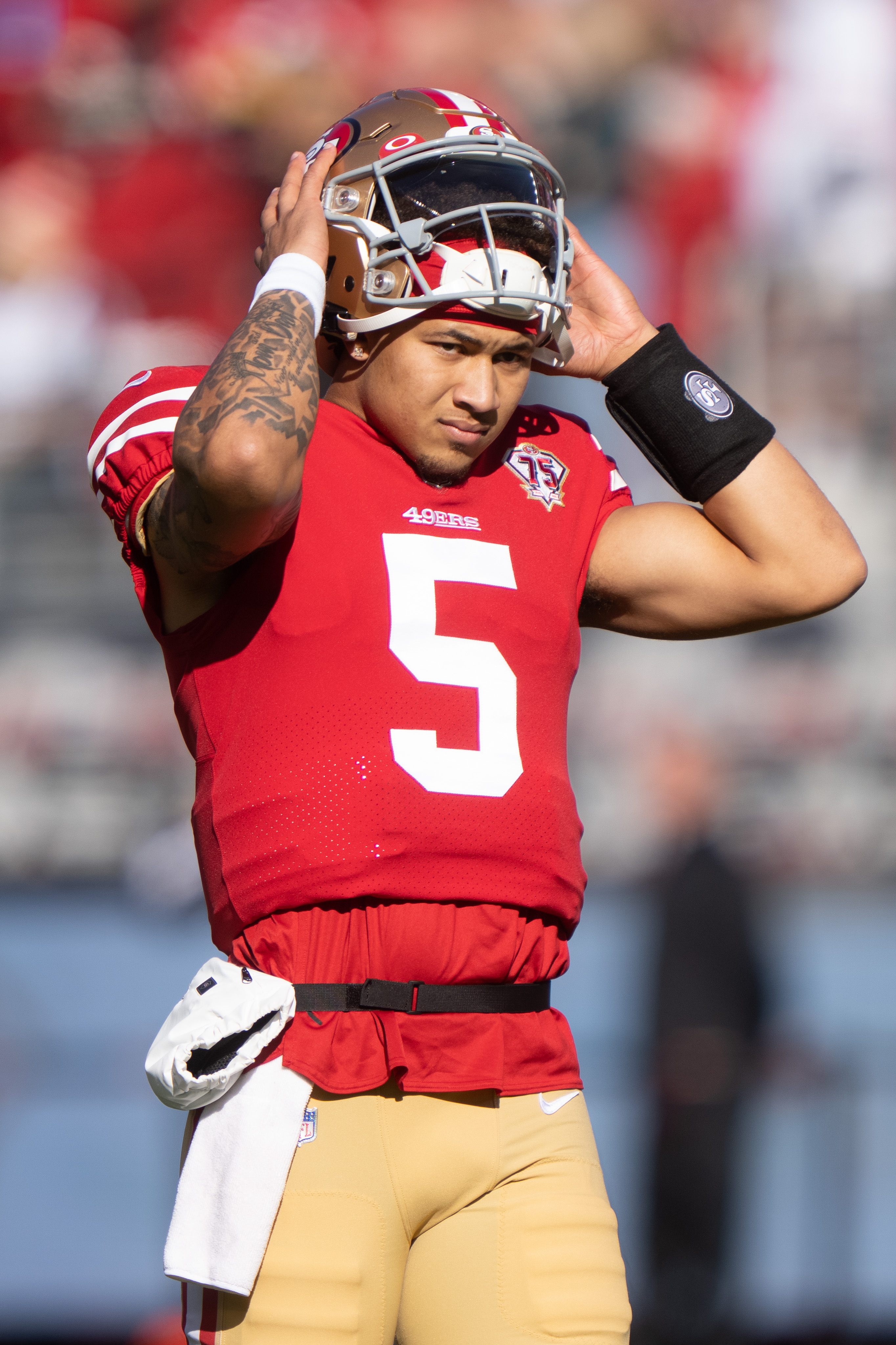 Other teams could lurk. The Browns are about to learn Deshaun Watson‘s punishment. If disciplinary officer Sue Robinson hands the embattled passer a lengthy suspension, or the NFL powers through with its desire for a full-season ban on appeal, would Cleveland make a play for Garoppolo? The Browns could adjust Garoppolo’s salary, dangling the carrot of the ninth-year veteran boosting his 2023 free agency prospects by playing behind a strong offensive line with a top-tier backfield. Considering where the Browns-Mayfield relationship stands, a move to acquire another veteran — in the event a Watson suspension long enough shakes the team’s faith in Jacoby Brissett — makes sense.
The Texans have also been connected to Garoppolo, whose Patriots tenure overlapped with Nick Caserio‘s. The second-year Houston GM has not been shy about acquiring middling veterans on short-term deals. But a Garoppolo arrival would affect Davis Mills‘ development. The 49ers waiting for a potential training camp injury changing Garoppolo’s market — similar to Sam Bradford‘s in 2016 — should be on the table as well.
While Shanahan and Lynch view a trade as the goal, both said keeping the passer is in play. Jed York also cited, in a historically extreme example, the 49ers’ former Joe Montana–Steve Young partnership — which ran from 1987-92, just before the salary cap era — as evidence Garoppolo and Trey Lance can play together for a second season.
The 49ers could certainly benefit from Garoppolo sticking around to push Lance. San Francisco stands to be an NFC contender, and Lance injects uncertainty into its signal-caller situation. But the team is eyeing a Deebo Samuel extension and sits 30th in cap space ($4.9MM). Lance struggling in camp and in the preseason could force the 49ers to keep Garoppolo and table extensions for Samuel and Nick Bosa — the latter of which the team appears willing to push to 2023 — but the team is currently preparing to move forward with the 2021 top-three pick.
What will be the Garoppolo 2022 endgame? Vote in PFR’s latest poll and weigh in with your thoughts on this situation in the comments section.
How will the 49ers' Jimmy Garoppolo saga conclude?
-
Traded to Browns 26% (457)
-
Stays with 49ers as starter 18% (317)
-
Stays with 49ers as backup 17% (303)
-
Signs with Seahawks 14% (249)
-
Signs with Panthers 11% (196)
-
Signs with Texans 8% (133)
-
Lands with another team (specify in comments) 5% (88)
Total votes: 1,743
Largest 2022 Cap Hits: Offense
After the COVID-19 pandemic led to the second reduction in NFL salary cap history last year, the 2022 cap made a record jump. This year’s salary ceiling ($208.2MM) checks in $25.7MM north of the 2021 figure.
While quarterbacks’ salaries will continue to lead the way, a handful of blockers and skill-position players carry sizable cap numbers for 2022. A few of the quarterbacks that lead the way this year may not be tied to those numbers once the regular season begins. The 49ers, Browns and Ravens have made efforts to alter these figures via trades or extensions.
Here are the top 2022 salary cap hits on the offensive side of the ball:
- Ryan Tannehill, QB (Titans): $38.6MM
- Patrick Mahomes, QB (Chiefs): $35.79MM
- Kirk Cousins, QB (Vikings): $31.42MM
- Jared Goff, QB (Lions): $31.15MM
- Aaron Rodgers, QB (Packers): $28.53MM
- Carson Wentz, QB (Commanders): $28.29MM
- Jimmy Garoppolo, QB (49ers): $26.95MM
- Russell Wilson, QB (Broncos): $24MM
- Lamar Jackson, QB (Ravens): $23.02MM
- Kenny Golladay, WR (Giants): $21.2MM
- Garett Bolles, T (Broncos): $21MM
- Dak Prescott, QB (Cowboys): $19.73MM
- Derek Carr, QB (Raiders): $19.38MM
- D.J. Humphries, T (Cardinals): $19.33MM
- Keenan Allen, WR (Chargers): $19.2MM
- Taylor Decker, T (Lions): $18.9MM
- Sam Darnold, QB (Panthers): 18.89MM
- Baker Mayfield, QB (Browns): $18.89MM
- Matt Ryan, QB (Colts): $18.7MM
- Ronnie Stanley, T (Ravens): $18.55MM
- Donovan Smith, T (Buccaneers): $18.4MM
- Ezekiel Elliott, RB (Cowboys): $18.22MM
- DeAndre Hopkins, WR (Cardinals): $17.95MM
- Cooper Kupp, WR (Rams): $17.8MM
- Laremy Tunsil, T (Texans): $17.71MM
- The Chiefs’ cap sheet looks a bit different this year, with Tyreek Hill and Tyrann Mathieu off the roster. But Mahomes’ cap number rockets from $7.4MM in 2021 to the league’s second-largest figure in 2022. This marks the first time Mahomes’ 10-year contract is set to count more than $10MM toward Kansas City’s cap, with the AFC West champs not yet restructuring the deal this year.
- Tied to a few lucrative extensions since relocating to Minnesota, Cousins’ third Vikings deal dropped his cap number from $45MM. The fifth-year Vikings QB’s cap number is set to climb past $36MM in 2023.
- Prior to negotiating his landmark extension in March, Rodgers was set to count more than $46MM on the Packers’ payroll.
- The 49ers are aiming to move Garoppolo’s nonguaranteed money off their payroll. That figure becomes guaranteed in Week 1, providing a key date for the franchise. San Francisco is prepared to let Garoppolo negotiate contract adjustments with other teams to facilitate a trade.
- Wilson counts $26MM on the Seahawks’ 2022 payroll, due to the dead money the NFC West franchise incurred by trading its 10-year starter in March.
- Jackson, Darnold and Mayfield are attached to fifth-year option salaries. Jackson’s is higher due to the former MVP having made two Pro Bowls compared to his 2018 first-round peers’ zero. The 2020 CBA separated fifth-year option values by playing time and accomplishments. The Browns and Panthers have engaged in off-and-on negotiations on divvying up Mayfield’s salary for months, while a Jackson extension remains on the radar.
- Golladay’s cap number jumped from $4.47MM last year to the highest non-quarterback figure among offensive players. The Giants wideout’s four-year deal calls for $21MM-plus cap hits from 2023-24.
- Prior to being traded to the Colts, who adjusted their new starter’s contract, Ryan was set to carry an NFL-record $48MM cap hit this year. The Falcons are carrying a league-record $40.5MM dead-money charge after dealing their 14-year starter.
- The Texans restructured Tunsil’s deal in March, dropping his 2022 cap hit from $26.6MM to its present figure. Because of the adjustment, Tunsil’s 2023 cap number resides at $35.2MM
Contract information courtesy of Over The Cap
Extension Candidate: Rashad Fenton
The Chiefs made some outside moves to address their secondary this offseason, but they may not want to overlook the players they have in the building. An underrated move the Chiefs should be looking at this summer is an early extension of cornerback Rashad Fenton. 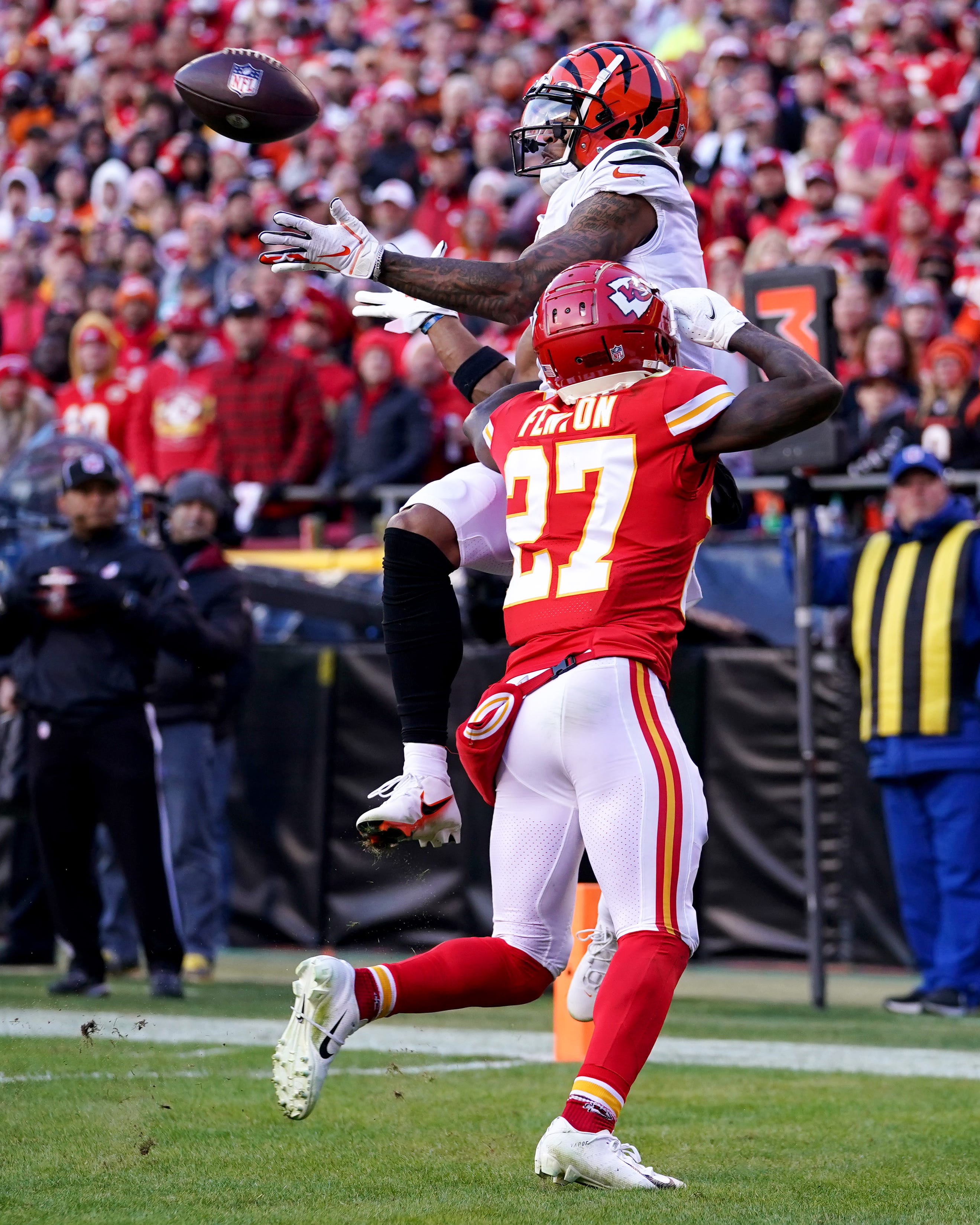
Kansas City was forced to make some moves after losing cornerbacks Mike Hughes and Charvarius Ward in free agency. The Chiefs used three of their draft picks this year on cornerbacks, including a first-round pick on the University of Washington’s Trent McDuffie, and even traded away a 2023 seventh-round pick for former-Texans cornerback Lonnie Johnson Jr. McDuffie is slotted to start opposite third-year cornerback L’Jarius Sneed, who started all 15 games he appeared in last season. Fenton is likely the third cornerback on the depth chart with DeAndre Baker, who was drafted 171 picks before Fenton in the 2019 NFL Draft, slotting in at fourth.
Even though Fenton isn’t expected to start on a weekly basis for Kansas City next season, there is a good amount of evidence to suggest that extending him before his contract year would be extremely beneficial for the Chiefs. Not only has Fenton shouldered more and more responsibility with playing time over each of his three seasons, earning more starts and defensive snaps each year, but he’s also moved around the field over the years.
As a rookie, Fenton played mostly in the slot, earning one pick and four passes defensed, as well as a forced fumble and a quarterback hit. In his second season, Fenton split his time between the slot and the outside while making three starts. He totaled one interception, seven passes defensed, and added a tackle for loss, as well. Last season, he played 80% of his snaps on the outside during his eight starts, according to Pro Football Focus, leading to seven more passes defensed, one forced fumble, and a career-high 49 total tackles.
Not only has he displayed the ability to handle the increased responsibility of playing time, but his movement around the secondary provides an extremely valuable versatility, showing he can play in any cornerback role that he’s asked to play in. Another factor that could benefit Kansas City is Fenton’s draft position in the sixth round. According to a data study done by Zach Drapkin at Pro Football Focus (subscription required), late-round draft picks are historically underpaid on their second contracts. Not that the Chiefs would intentionally short their players, but utilizing precedent could help the Chiefs extend Fenton at a bargain-price.
When trying to gauge the range of what an extension might look like for Fenton, there are a few examples that we can look at. Eagles cornerback Avonte Maddox has been an intermittent starter in Philadelphia over the years in the slot and recently signed a three-year, $22.5MM contract with an average annual value (AAV) of $7.5MM. Patriots nickel cornerback Jonathan Jones signed a three-year, $21MM contract in 2019. Neither Maddox nor Jones were drafted highly with Maddox being a fourth-round pick and Jones signing with New England as an undrafted free agent, initially.
Another fourth-round pick that recently signed a new extension was Bills cornerback Taron Johnson, who signed a three-year, $24MM deal last October. I like this comparison because, like Fenton, Johnson’s role on the field increased incrementally each year until last year he served as a full-time starter. It wouldn’t be the Chiefs’ ideal scenario, but, if McDuffie isn’t quite ready to start Week 1 for whatever reason, I believe they’d be fully confident in trotting Fenton out there to start opposite Sneed.
Essentially, most of the deals on these later-round draft picks are for three years and they’ve risen over the last few years from an AAV of $7MM to $8MM per year. Based on the constant inflation of NFL salaries and depending on how much loyalty the Chiefs want to show Fenton, I would predict that an extension for Fenton might have an AAV of anywhere from $8MM-$9MM. A three-year, $26MM contract would be a more-than-generous offer that would still land Kansas City an affordable, dependable, and versatile young cornerback. With Sneed and McDuffie on rookie deals, this would extend the time frame of having the three young cornerbacks on relatively affordable contracts at least through the 2023 season.
Release Candidate: Seahawks RB Chris Carson
About a month ago, Seahawks head coach Pete Carroll seemed ready to envision a future for Seattle’s running backs room that didn’t include Chris Carson, hinting that the 27-year-old’s career in the NFL could be coming to an end following a neck injury that sidelined him for the majority of the 2021 NFL season. Days later, Carson made it clear that he had no intentions of hanging up his cleats. 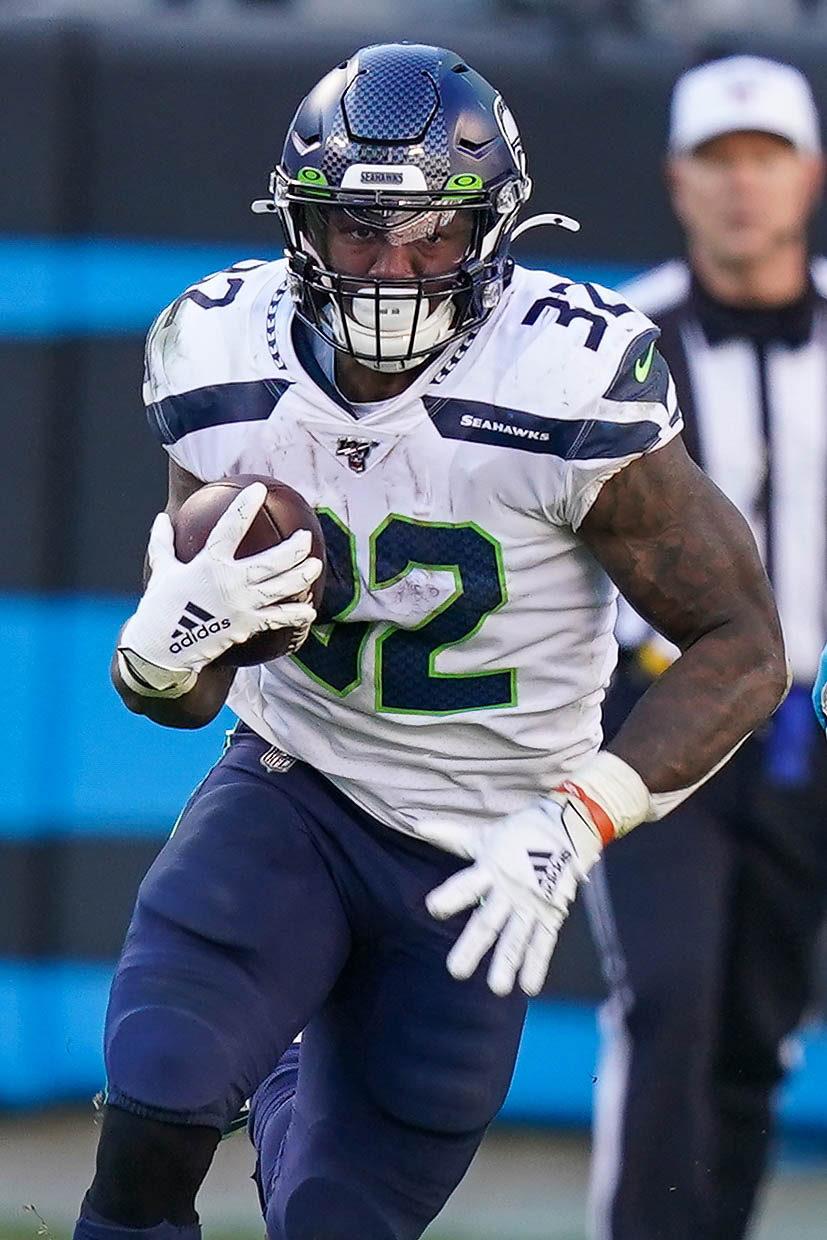
“Oh, we still going right now,” Carson said, via Heavy.com’s Jonathan Adams. “I see myself playing until I feel like stopping. My mindset is never to give up, so I’m staying positive like I said, and [will] continue to fight and get back onto the field.”
After a broken ankle kept Carson from being a full-time starter in his rookie season, Carson bounced back, leading the team in rushing yards for the next three years. His consistency, paired with the injury history of backup running back Rashaad Penny, landed Carson a two-year deal to stay in Seattle during last year’s offseason. Four weeks into the season, though, Carson suffered a neck injury that would require surgery, prematurely ending his season and leading to the comments mentioned above from Carroll and Carson.
While there doesn’t seem to be any bad blood between the two parties, the moves Seattle has made recently make it seem as if Carroll has no intention of handing the ball off to Carson ever again. The most recent move was spending a second-round pick on Michigan State running back Kenneth Walker III. Walker was a bell-cow back for the Spartans last year carrying the ball 263 times for 1,636 yards and 18 rushing touchdowns. The next closest running back on the team had 70 rushing attempts for 278 yards. Walker’s ability to carry an offense is extremely attractive to a team that wants to thrive on the ground but hasn’t had the health to do so.
The former first-round pick, Penny, ended last season on fire rushing for 632 yards and six touchdowns over four of the last five games of the season. While Penny has certainly had his own issues staying healthy, he was drafted with the intention that he could eventually be the team’s franchise running back. If Penny starts next season anywhere near how he ended 2021, a recovering Carson is going to have a tough time seeing the field.
Behind Penny and Walker, the Seahawks also roster two former Miami Hurricanes in Travis Homer and DeeJay Dallas. While neither has added much value to the running game over the past few years, both hold tremendous value on special teams that seems to solidify their roster status year in and year out. Other running backs on the roster are Darwin Thompson and Josh Johnson, who will likely end up on the practice squad or may be camp cuts.
With Penny, Walker, Homer, and Dallas all in line to make the 53-man roster, it starts to become difficult to justify a fifth roster spot for a running back who would only split carries with Penny and Walker. Combining that roster logjam with Carroll’s sentiments about Carson’s career potentially being over, it makes sense to start looking into the idea of offloading Carson’s contract.
The team could work with Carson to look for an ideal trade destination in an effort to return some value from the departure. If not, though, the Seahawks still would stand to benefit in cap savings. Cutting Carson would only leave Seattle with $1MM in dead cap while creating $4.6MM in cap space. Carson’s career may not be over, but there’s a real possibility that his time in Seattle may soon come to an end.
Extension Candidate: Marquise Brown
The Cardinals are interested in an extension for draft-day trade acquisition Marquise “Hollywood” Brown, and while Brown himself is presumably willing to talk contract, it is unclear where negotiations stand at this point, or if they have even commenced. Brown is scheduled to earn a $2.1MM salary in 2022 (the final year of his rookie deal), and a fully-guaranteed $13.4MM in 2023 under the fifth-year option of the rookie contract.
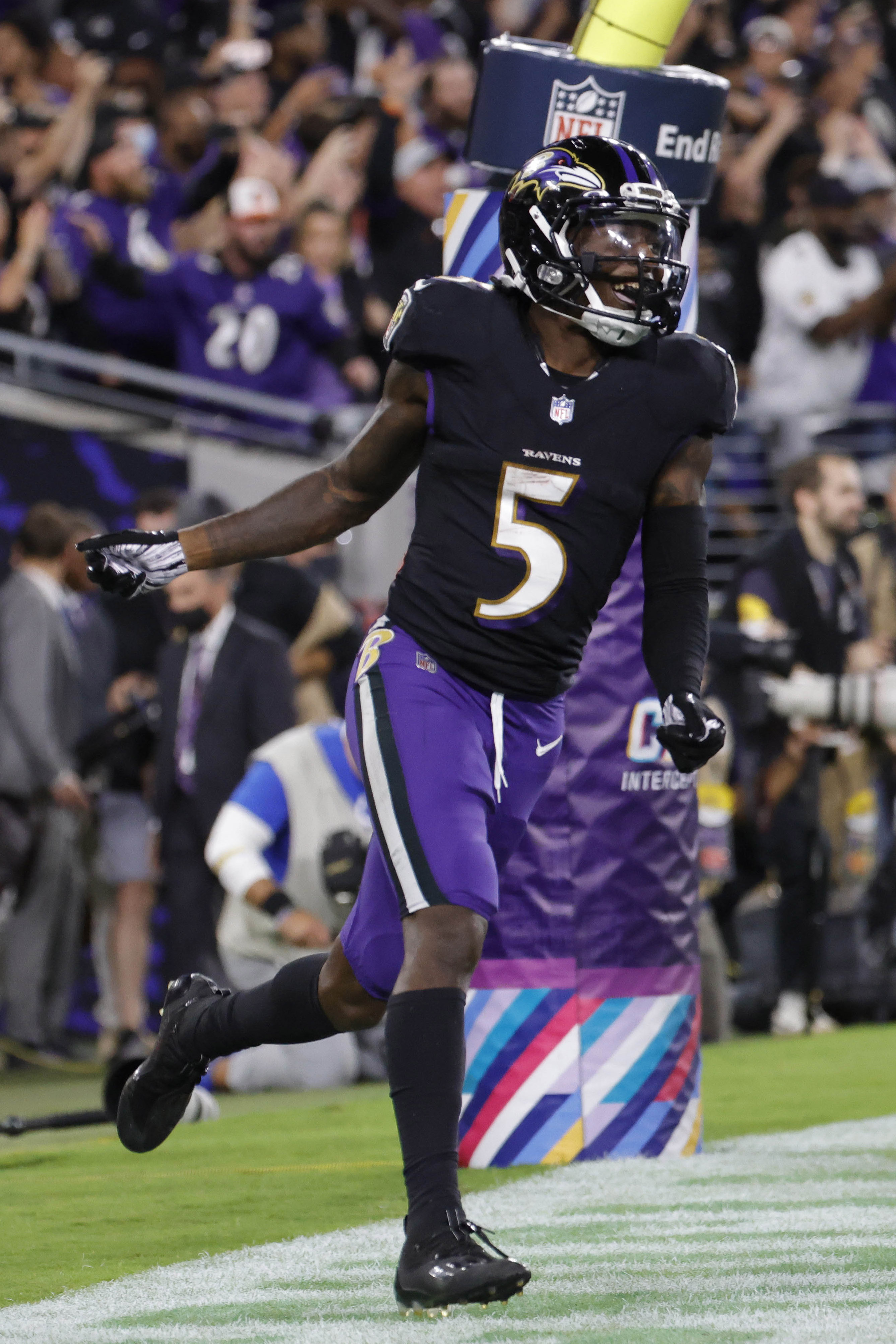
The 2019 draft class of wide receivers, which includes the likes of Deebo Samuel, A.J. Brown, D.K. Metcalf, Diontae Johnson, and Terry McLaurin, has been a key source of material at PFR in recent months, as those players became extension-eligible for the first time this offseason and either have contributed, or soon will contribute, to the booming receiver market. A.J. Brown landed a $25MM/year contract from the Eagles upon being traded to Philadelphia from the Titans, and McLaurin just agreed to a $23.3MM/year deal with the Commanders. As Joel Corry of CBS Sports recently tweeted, four wide receivers enjoyed $20MM+ AAVs when the offseason began, and there are now 12 receivers who are sitting at or above that threshold (despite the release of Julio Jones). Samuel and Metcalf seem poised to join the club at some point in the near future.
Marquise Brown, the No. 25 overall pick of the Ravens in the 2019 draft, has not yet produced at the same level as his above-mentioned contemporaries, but that can be at least partially explained by the fact that his three years in Baltimore were spent in a run-centric offense focused upon the dual-threat capabilities of quarterback Lamar Jackson. The passing scheme of offensive coordinator Greg Roman — who has served as OC since Brown’s rookie year — has been heavily criticized for being too simplistic and predictable, and Brown’s trade request was largely a function of that system.
“It was just … my happiness,” Brown said when asked about his desire for a trade. “I talked to Lamar about it after my second year. And then after my third year, leading up to the end of the season, you know, [Jackson] wasn’t playing. I let him know again, like, ‘Yeah, bro, I can’t do it.’
“You know, it’s not really on Lamar, like I love Lamar. It was just, you know, it’s just the system just wasn’t for me personally. You know, I love all my teammates. I love the guys. It was just something I had to think about for myself.”
Brown’s diminutive stature (5-9, 170) will likely prevent him from ever becoming a true “alpha” receiver, but he possesses elite speed and is a solid enough route runner. In head coach Kliff Kingsbury‘s offense, he will have a chance to shine, although it will be interesting to see if the absence of DeAndre Hopkins for the first six games of the 2022 season will allow him to earn a larger target share and thrive, or if it will make his life more difficult since opposing defenses will not have to key in on Hopkins.
At present, Spotrac estimates Brown’s market value to be a little over $17MM per season, suggesting that he could reasonably expect a four-year, ~$68MM deal if he were a free agent right now. Again, there is no way of knowing what Brown’s camp is targeting at this point, though it could be that the Oklahoma product is content to prove that he is worthy of a larger contract by living up to his potential in Kingsbury’s aerial attack.
Brown managed to crack the 1,000-yard mark for the first time in 2021, though it required 146 targets to get there, and his 11.1 yards-per-reception rate — which was the lowest mark of his career — belies his abilities as a deep threat. It stands to reason that the Cardinals, who gave up the No. 23 overall pick of this year’s draft to acquire Brown and the No. 100 overall pick, would want to extend Hollywood before he can truly break out, but Brown himself might hold off unless Arizona is willing to bet on his upside by making him yet another $20MM man.
This Date In Transactions History: Jets DL Sheldon Richardson Suspended Four Games
Sheldon Richardson had a tumultuous 2015 offseason, and his issues (and, potentially, the beginning of the end of his Jets tenure) started on this date seven years ago. On July 2, 2015, the Jets defensive lineman was slapped with a four-game suspension for violating the NFL’s substance abuse policy.
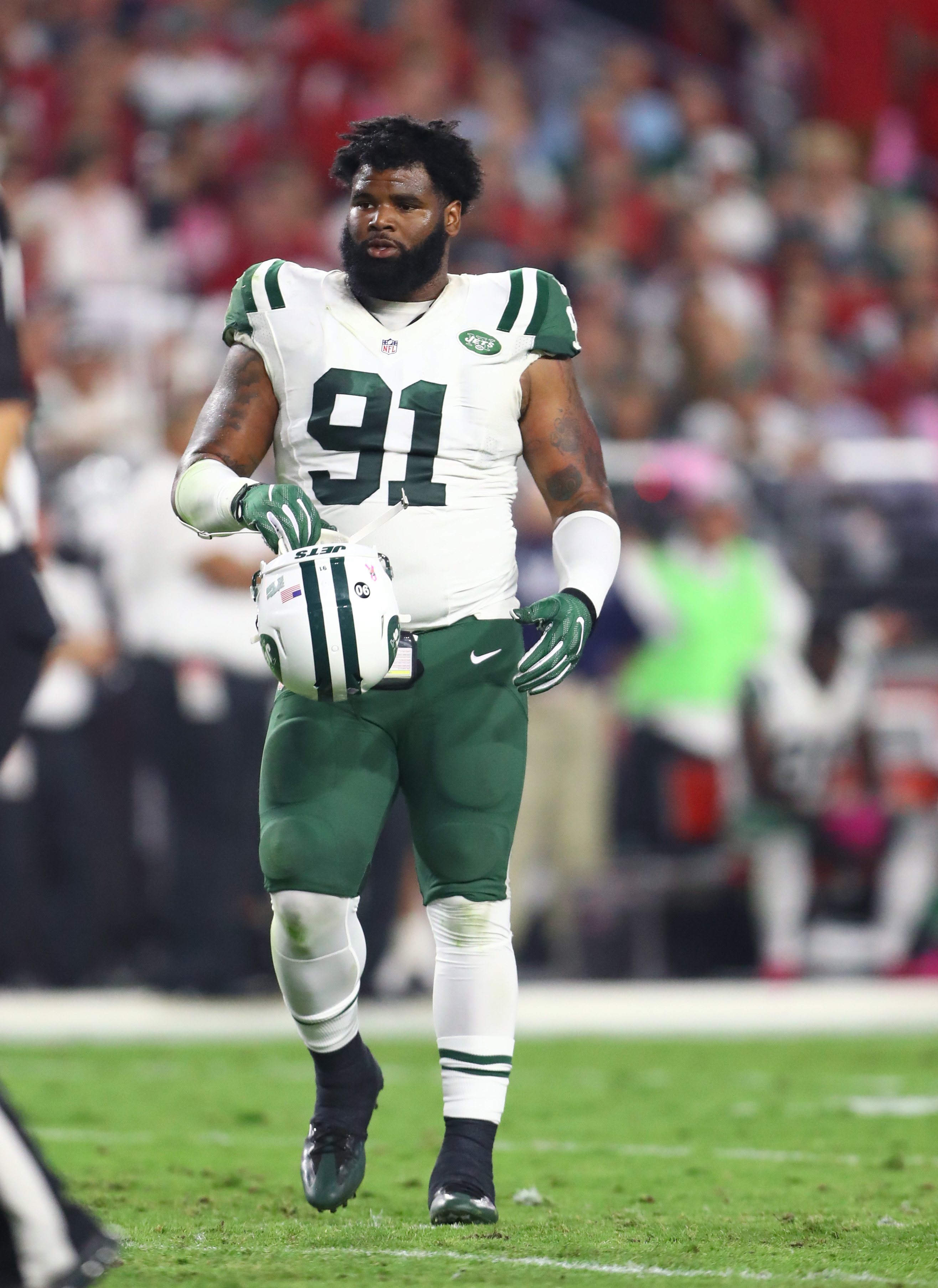 Richardson was a first-round pick by the Jets in 2013. After winning Defensive Rookie of the Year during the 2013 campaign, Richardson followed that up with a Pro Bowl season in 2014. That year, Richardson collected 67 tackles and eight sacks in 16 starts. Things were looking good for the younger pass rusher, but then trouble hit.
During the 2015 offseason, Richardson was hit with a four-game ban for a substance abuse violation. We later learned that the player was suspended for marijuana use. Nowadays, players only face a fine for marijuana use, a rule that was negotiated in 2020 as part of the CBA. In 2015, there were several stages to the league’s policy for marijuana use before a four-game suspension could be handed down. In other words, this wasn’t Richardson’s first positive test, and after several warnings, the NFL finally decided to slap the player’s wrist with a suspension.
Only two weeks later, Richardson was arrested in Missouri and charged with resisting arrest and traffic violations. According to reports, the player was street racing at speeds that exceeded 140 miles per hour, and he later tried to evade police who were trying to pull him over. When the car was finally pulled over, it smelled of marijuana, and officers later found a loaded handgun under the driver’s seat. The car was also occupied by two other men and a 12-year-old child. While Richardson avoided drug, gun, or child endangerment charges, he was later found guilty of reckless driving and resisting arrest.
Following his suspension, Richardson was productive in his 11 games in 2015, finishing with 35 tackles and five sacks. He was hit with a one-game ban in 2016 for his previous arrest, and while he still managed to play a significant role, his pass-rushing ability seemed to decline.
Thanks in part to his off-the-field issues, his declining production, and his hefty $8MM fully guaranteed salary for 2017 (via the Jets picking up his fifth-year option), Richardson found himself on the trade block following the 2016 season. The player refused to take a pay cut with any new squad, limiting the Jets’ trade opportunities. Eventually, the organization found a taker in the Seahawks, who gave up a future second-round pick and Jermaine Kearse.
Richardson got into 15 games during the 2017 season, but the Seahawks decided to move on after he finished with only 44 tackles and one sack. He had a bounce-back season in Minnesota in 2018, finishing with 4.5 sacks. That performance earned him a three-year contract from the Browns, and following 32 games and 7.5 sacks between two seasons, the veteran was cut. He rejoined the Vikings last offseason, and he finished the season with 39 tackles and 2.5 sacks in 17 games (seven starts).
With the Jets having used the 13th-overall pick on Richardson, they didn’t get the best return on investment during his four years with the team. Fortunately for the organization, they somewhat managed to save face with the assets they received from Seattle. The Jets got two solid seasons out of Kearse (including a career year in 2017), and the second-round pick was ultimately used in the trade with the Colts for the third-overall pick, a selection that ultimately turned into QB Sam Darnold.
Richardson’s declining production and hefty salary certainly played major roles in the Jets looking to eventually move on. However, the off-the-field issues undeniably played a role, and those issues seemingly started to become public knowledge on this date in 2015.
Will Packers Add Veteran Wide Receiver?
The NFC’s contender tier, as could be expected, is flush with marquee wide receivers. The Rams gave Cooper Kupp a near-top-market extension last month, while Mike Evans leads Tampa Bay’s deep crop. Deebo Samuel trade noise has quieted, with the Eagles and Cardinals trading first-round picks to acquire 2019 draftees A.J. Brown and Marquise Brown, respectively. The Cowboys traded Amari Cooper but still roster ascending talent CeeDee Lamb.
Justin Jefferson, Michael Thomas and the recently extended Terry McLaurin also reside in the conference. These staffing efforts differ strikingly from the team that has held the past two NFC No. 1 seeds. The Packers ended (for 2022, at least) the drama surrounding Aaron Rodgers‘ status by extending their latest all-time great quarterback, but his top two wideouts — the tagged-and-traded Davante Adams and free agency departure Marquez Valdes-Scantling — are now in the AFC West. The Packers were prepared to pay Adams more than the Raiders, and they made a push to re-sign Valdes-Scantling. The fallout moved the team to an unusual place.
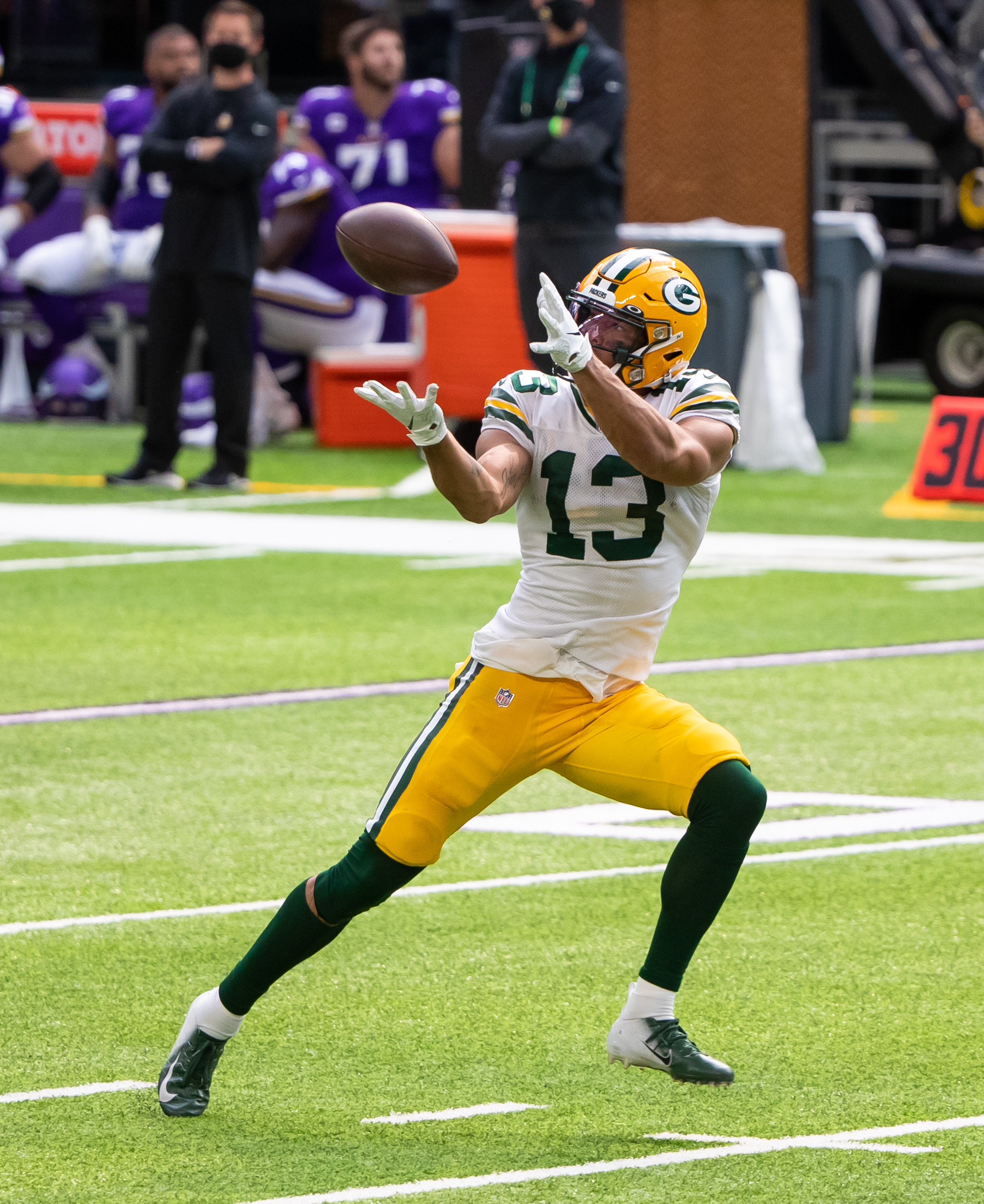 The Packers have rumored as interested in a late-offseason addition at the position, and The Athletic’s Matt Schneidman notes a free agent should not be considered out of the question here. The NFC North kingpins have made efforts to staff their receiver spot; those moves just have not matched some of the many impact transactions other teams have made during a historically action-packed offseason for the wideout position. A mix of unproven players and complementary-type veterans comprise Green Bay’s receiving corps, laying the groundwork for an interesting experiment or for another piece to be added.
Green Bay signed Sammy Watkins in mid-April, inking the former top-five pick to a one-year deal worth $1.85MM. Watkins, 29, continues to see his salaries decrease as his production and availability wane, though he did produce under then-OC Matt LaFleur with the Rams in 2017. Watkins joins Randall Cobb, 31, as experienced players in Green Bay’s pass-catching group. Allen Lazard could be the player who benefits most from the Adams and Valdes-Scantling exits. The Packers kept the former UDFA via a second-round restricted free agent tender ($3.99MM), which he signed just before the mid-June deadline. Cobb, a 2021 trade acquisition whose Texans-constructed/Packers-adjusted contract runs through 2022, is attached to a $4.14MM cap number.
With rookie-contract cogs Amari Rodgers (2021 third-rounder), Christian Watson (Round 2, 2022) and Romeo Doubs (Round 4, 2022), the Packers are not spending much on the receiver position. Rodgers did not carve out a role as a rookie, and Watson coming from a Division I-FCS program figures to produce a learning curve early. The modern Packers certainly have a history of success with second-round wideouts — from Greg Jennings to Jordy Nelson to Cobb to Adams — and they traded up 19 spots for the North Dakota State prospect. But expecting immediate starter-level production may be a asking a lot. Nelson, Cobb and Adams did not exceed 500 yards as rookies.
Given their commitments to Aaron Rodgers, David Bakhtiari and Aaron Jones on offense and a defense full of first-round picks and newly extended vets (Jaire Alexander, De’Vondre Campbell and Rasul Douglas), sacrifices elsewhere are certainly necessary. But the team’s refusal to use first-round picks at receiver perplexes to some degree, with this year’s two-defender first round pushing that trend to a new level. The Lazard-Cobb-Watkins-Watson-Rodgers-Doubs sextet is a lock to be on the roster, Schneidman adds, noting that a seventh player — be it a special-teamer like Juwann Winfree or Malik Taylor, or a free agent — could round out the group.
This contingent lags behind the deep group Aaron Rodgers worked with to start his QB1 run in the late 2000s and early 2010s, and it obviously lacks an Adams-type presence. Will the two-time reigning MVP be able to coax sufficient production from this mixed bag of auxiliary vets and second- or third-day draftees? Or are the Packers taking too big a risk in what could be one of Rodgers’ final prime years? The team passing on Jarvis Landry suggests confidence the former viewpoint.
As should be expected entering July, the notable free agent options carry age- or health-related red flags. (Antonio Brown carries those and others.) T.Y. Hilton brings both, while Emmanuel Sanders — though still productive, as evidenced by his 626-yard Bills showing — would be the league’s oldest receiver in 2022. The nomadic WR2 turned 35 in March. Will Fuller has been connected to the Packers in the past, and the ex-Texans deep threat is just 28. But he played three games last season. Cole Beasley produced in the slot past 30 in Buffalo, but Green Bay has inside players in Cobb and Amari Rodgers who have been in LaFleur’s system for over a year now.
Julio Jones, 33 will be enshrined in Canton at some point, and the prospect of Rodgers targeting the All-Decade wideout intrigues more than Jones playing in a run-first Titans offense. But Jones’ hamstring trouble can be classified as chronic at this point. The ex-Falcon dynamo has not been connected to any team since being a Tennessee cap casualty.
Odell Beckham Jr. might make the most sense, if the goal here is to bring in a prime talent that can change the equation during the season’s second half. But the Packers may need to act early, even before it is known if their holdover group can be a Super Bowl-level nucleus. Beckham is not expected to be ready until around November, and although he has suffered two ACL tears in a 15-month span, the former superstar showed with the Rams high-end play remains in his skillset. The Packers pursued OBJ last year, and while the Rams have consistently indicated they want him back (and generally do what it takes to acquire splashy vets), an obvious case exists Green Bay needs the 29-year-old standout more.
Trade candidates figure to emerge (the Giants already have some), but for the time being, the Packers are about to attempt a fascinating roster-construction effort — one that surpasses the post-Tyreek Hill Chiefs for uncertainty — as they transition from their Adams-centered arsenals.