
Bears, Bills Finalizing D.J. Moore Trade
D.J. Moore‘s Bears future has been in question, and he will indeed be on the move soon. The veteran wideout will be dealt to the Bills once the new league year begins, as first reported by ESPN’s Adam Schefter.
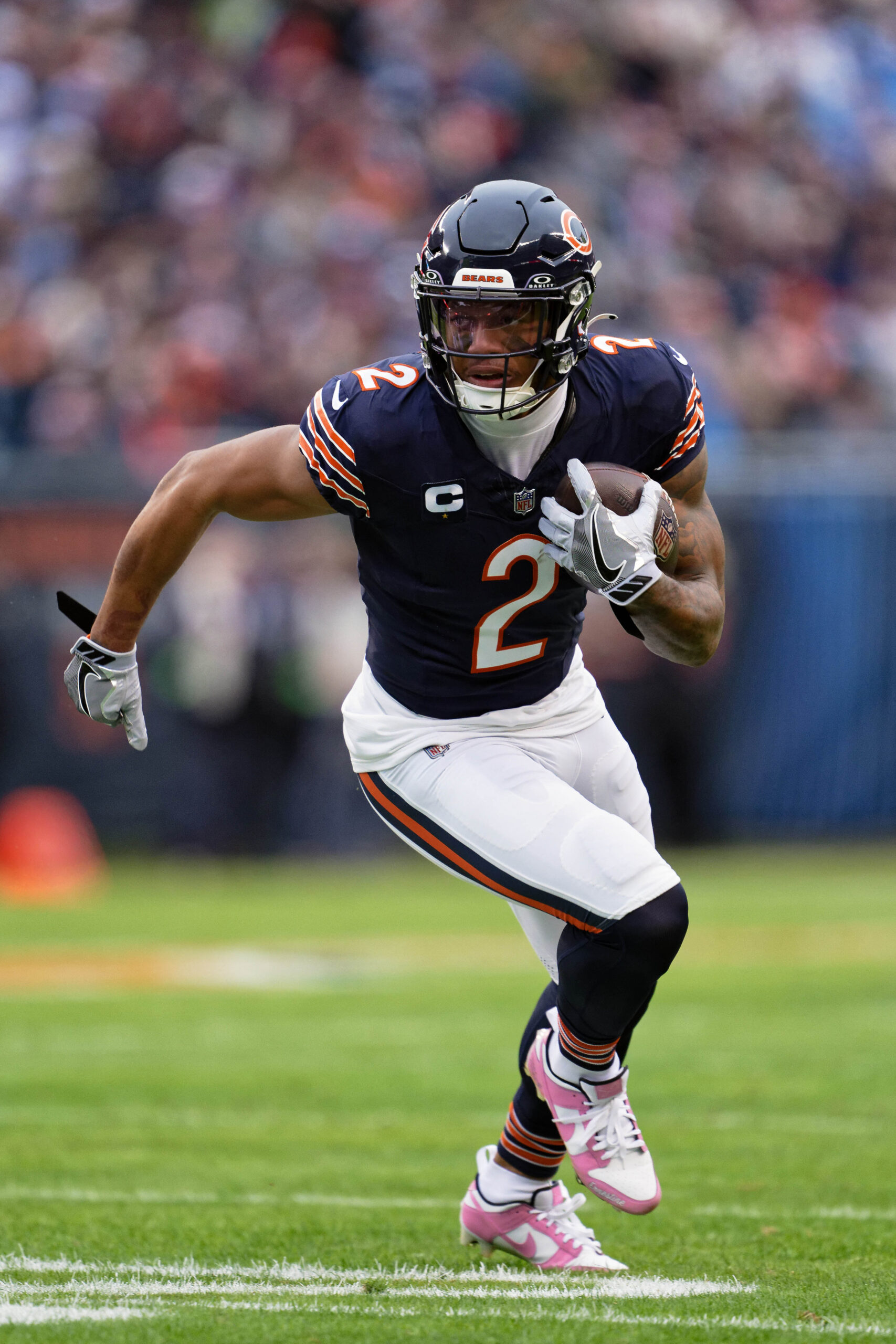 Chicago will receive a 2026 second-round pick (No. 60 overall) in the deal while sending a 2026 fifth-rounder back to Buffalo, per NFL Network’s Tom Pelissero. The Bears will also see $16.5MM in cap savings, according to Jason Fitzgerald of OverTheCap, though that will not kick in until the trade is processed at the start of the new league year. As a result, they will need to make other moves to become cap-compliant by next Wednesday.
The Bills will take on the remainder of Moore’s contract, which runs through 2029. He is owed $24.5MM in each year with the same cap number. His 2026 salary is already guaranteed, and $15.5MM of his 2027 salary guarantees on March 13.
Buffalo is also guaranteeing $15.5MM of Moore’s 2028 salary as part of the trade, per Schefter. It is unclear if they are expanding the 2027 guarantees to cover the entire year’s salary. Moore, notably, has negotiated fully guaranteed compensation for each of his first nine seasons in the NFL and could very well get to 11 as a result of this deal.
Along with the second-rounder they moved to acquire him, that is a hefty commitment for a player who just posted career-low receiving numbers in the NFL’s 10th-ranked passing offense. His 1.44 yards per route run in 2024 and 1.24 YPRR in 2025 are the lowest figures of his career, per Pro Football Focus, (subscription required). However, that can be partially attributed to a crowded Bears offense that featured a strong running game and young pass-catchers Rome Odunze, Colston Loveland, and Luther Burden.
Still, Buffalo had a clear desire to upgrade their receiving corps. They checked in on A.J. Brown and Alec Pierce, per Sports Illustrated’s Albert Breer, but ultimately opted to reunite Moore with head coach Joe Brady. The two last worked together in Carolina in 2020 and 2021, during which time Moore put up 2,350 yards and eight touchdowns on 159 receptions.
Perhaps Brady can get him back to that production or better in a receiver room with less competition – Khalil Shakir was the only Bills wideout to top 40 receptions or 500 receiving yards last year. But given the financial and draft compensation, it is hard to like this trade for the Bills. Moore is about to turn 29 after two years of decline and the team is essentially tied to him through his age-31 season after adding guarantees to his deal.
Bears’ D.J. Moore, Gervon Dexter Drawing Trade Interest
A number of potential trades could be worked out shortly in the Bears’ case. Linebacker Tremaine Edmunds has been given permission to seek a change of scenery, while backup quarterback Tyson Bagent has been the subject of attention from suitors.
Other Chicago players could soon find themselves on the move as well. NFL insider Jordan Schultz reports that wideout D.J. Moore as well as defensive tackle Gervon Dexter have mentioned during trade calls. Moore in particular is seen as being “available for the right price,” per Schultz.
Over the course of his three years in Chicago, Moore has remained a full-time starter. However, 2025 saw a notable drop-off in his production (682 yards) and usage (85 targets) compared to previous years. The former Panther still managed six touchdowns and was on the field for 85% of the team’s offensive snaps, showcasing his value in the event he is retained. As general manager Ryan Poles recently noted, though, the door is open to a trade.
“We want him here,” Poles said of Moore when speaking at the NFL Combine (via ESPN’s Courtney Cronin). “We thinking highly of him… But this is the time now where we have to look at all the scenarios that will allow us to put the best team out there… He’s a guy we want here but we have to look at all the scenarios.”
One of those scenarios is a trade which would yield $16.5MM in cap savings (and generate a dead money charge of $12MM). As things stand, Moore is due to carry a cap hit of $28.5MM in 2026 absent a restructure or extension aimed at lowering that figure. On March 15, $15.5MM of the former first-rounder’s base salary for next season will become guaranteed. Clarity on this front will no doubt emerge before that date.
Dexter was a member of the Bears’ 2023 draft class, meaning he is now eligible for an extension. The Florida product was a rotational presence during his rookie season, but since then he has served as a full-time starter. Dexter has totaled 11 sacks over the past two years, and at the age of 24 he will be expected to remain productive for the foreseeable future. That will help his bargaining power on the extension front, but it will also make him an attractive trade target.
Dexter has one year remaining on his rookie pact. The benefits of a trade in his case would be negligible compared to a swap involving Edmunds or Moore, though. The chance of Chicago moving on from at least one veteran contract will be something to watch for as the new league year approaches.
Bears LB Tremaine Edmunds, TE Cole Kmet Could Be Cap Casualties
The Bears have quietly become a very expensive football team. At the moment, the team is projected to be above the 2026 salary cap by $5.3MM, per OverTheCap, with 13 players currently scheduled for a cap hit over $10MM.
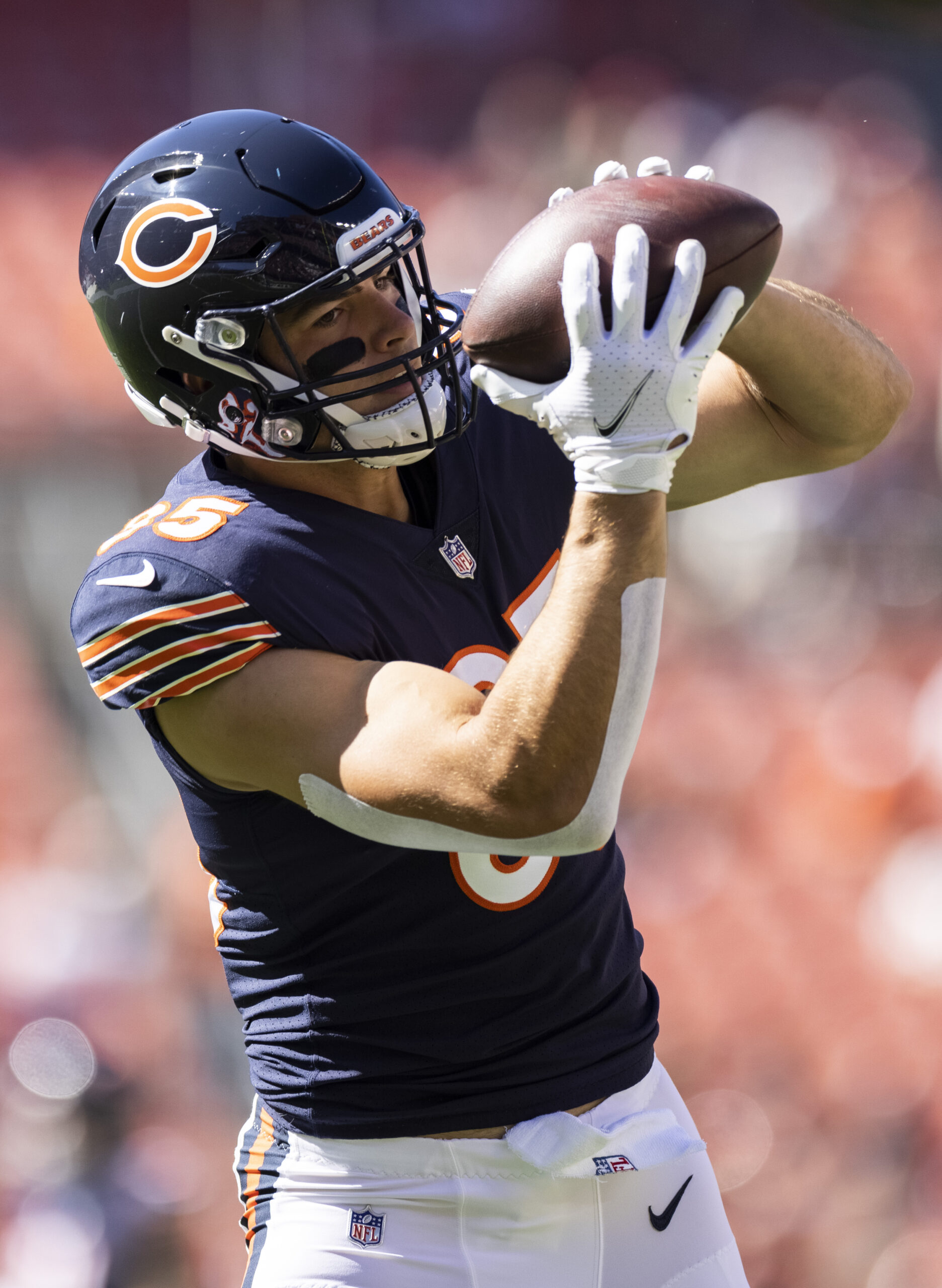 Chicago can become cap-compliant with a few simple restructures. But a team that was two wins away from the Super Bowl in 2025 will be looking to add to their roster to gear up for another playoff run. That could lead them to consider releasing a few veterans with high cap numbers.
Linebacker Tremaine Edmunds and tight end Cole Kmet are the Bears’ top potential cap casualties, per ESPN’s Courtney Cronin. Edmunds is scheduled for a $17.4MM cap hit in 2026, while Kmet will account for $10.8MM. Those are hefty figures for players at non-premium positions, and the team may already have cheaper, younger replacements for both players on the roster. Neither has guaranteed money remaining on their contract.
Edmunds is the likelier release candidate, according to the Chicago Tribune’s Brad Biggs. Edmunds, 27, is entering the final year of the four-year deal that brought him to Chicago during free agency in 2023. He and T.J. Edwards, the Bears’ other starting inside linebacker, missed a combined 11 games last season, during which time D’Marco Jackson and Nephi Sewell emerged as solid contributors at the position.
Edwards still has guaranteed money on his deal, but the team could save $15MM against the cap by cutting Edmunds. Jackson and Sewell would then be positioned for a training camp battle for the right to start next to Edwards in the middle of the defense.
Kmet, 26, saw a decreased role in 2025 after the arrival of rookie tight end Colston Loveland, and his production dropped accordingly. But Kmet had already taken a step back in 2024, and Loveland looks ready to step into a leading role role in 2026. The Bears still use plenty of two tight end sets and do not have a clear TE2 on the roster, making him a less likely cap casualty candidate, per Cronin. Such a move would create $8.4MM in cap space.
An even less likely move for the Bears would be trading D.J. Moore, though it is not completely out of the question, according to Cronin. He is due $24.25MM in each of the next four years, per OverTheCap, though only this year’s compensation is guaranteed. Other teams may value multiple years of contract control of a proven star wideout who has yet to cross 30 years of age. With no guaranteed money left after 2026, an acquiring team could also move on without issue during any of the next three offseasons if Moore is no longer worth his salary.
Chicago has Rome Odunze and Luther Burden as the long-term core of their receiver room, so they might be willing to move on from Moore for the right draft compensation. The added resources in terms of cap room and draft picks would help them fill his snaps while saving money for upgrades at other positions.
Largest 2025 Cap Hits: Offense
Last offseason brought about a record-breaking jump in the salary cap. This year, the ceiling rose to $279.2MM, another notable spike. The market at a number of positions will benefit from the ongoing surge in spending power available to teams, with quarterbacks obviously the largest standout in that respect.
In 2024, a pair of signal-callers surpassed the $50MM mark in terms of cap charges for the season. That will not be the case this time around, but to little surprise quarterbacks once again lead the way in terms of representing the largest share of many teams’ financial commitments for 2025. Positions such as receiver and offensive tackle have also generally not reached the same peak in terms of cap commitments as last year.
Leading up to training camp, are the NFL’s top 25 cap charges for offensive players:
- Dak Prescott, QB (Cowboys): $50.52MM
- Matthew Stafford, QB (Rams): $47.47MM
- Joe Burrow, QB (Bengals): $46MM
- Lamar Jackson, QB (Ravens): $43.5MM
- Kyler Murray, QB (Cardinals): $43.33MM
- Kirk Cousins, QB (Falcons): $40MM
- Geno Smith, QB (Raiders): $40MM
- Tua Tagovailoa, QB (Dolphins): $39.18MM
- Justin Herbert, QB (Chargers): $37.35MM
- Josh Allen, QB (Bills): $36.34MM
- Deshaun Watson, QB (Browns): $35.97MM
- Jared Goff, QB (Lions): $32.6MM
- Taylor Moton, RT (Panthers): $31.35MM
- Jordan Love, QB (Packers): $29.69MM
- Patrick Mahomes, QB (Chiefs): $28.06MM
- Calvin Ridley, WR (Titans): $28MM
- Tyreek Hill, WR (Dolphins): $27.7MM
- Jawaan Taylor, RT (Chiefs): $27.39MM
- Baker Mayfield, QB (Buccaneers): $26.48MM
- Terry McLaurin, WR (Commanders): $25.5MM
- Mike Evans, WR (Buccaneers): $25.36MM
- D.J. Moore, WR (Bears): $24.9MM
- Tee Higgins, WR (Bengals): $24.06MM
- Ja’Marr Chase, WR (Bengals): $23.57MM
- Trey Smith, RG (Chiefs): $23.4MM
Prescott’s last-minute 2024 Cowboys extension made him the first player in NFL history to carry an AAV of $60MM. That pact will have lasting impacts well beyond the coming campaign, as the team looks to also fit in the big-ticket extension CeeDee Lamb inked last summer and the one Micah Parsons is in position to sign at some point before Week 1. 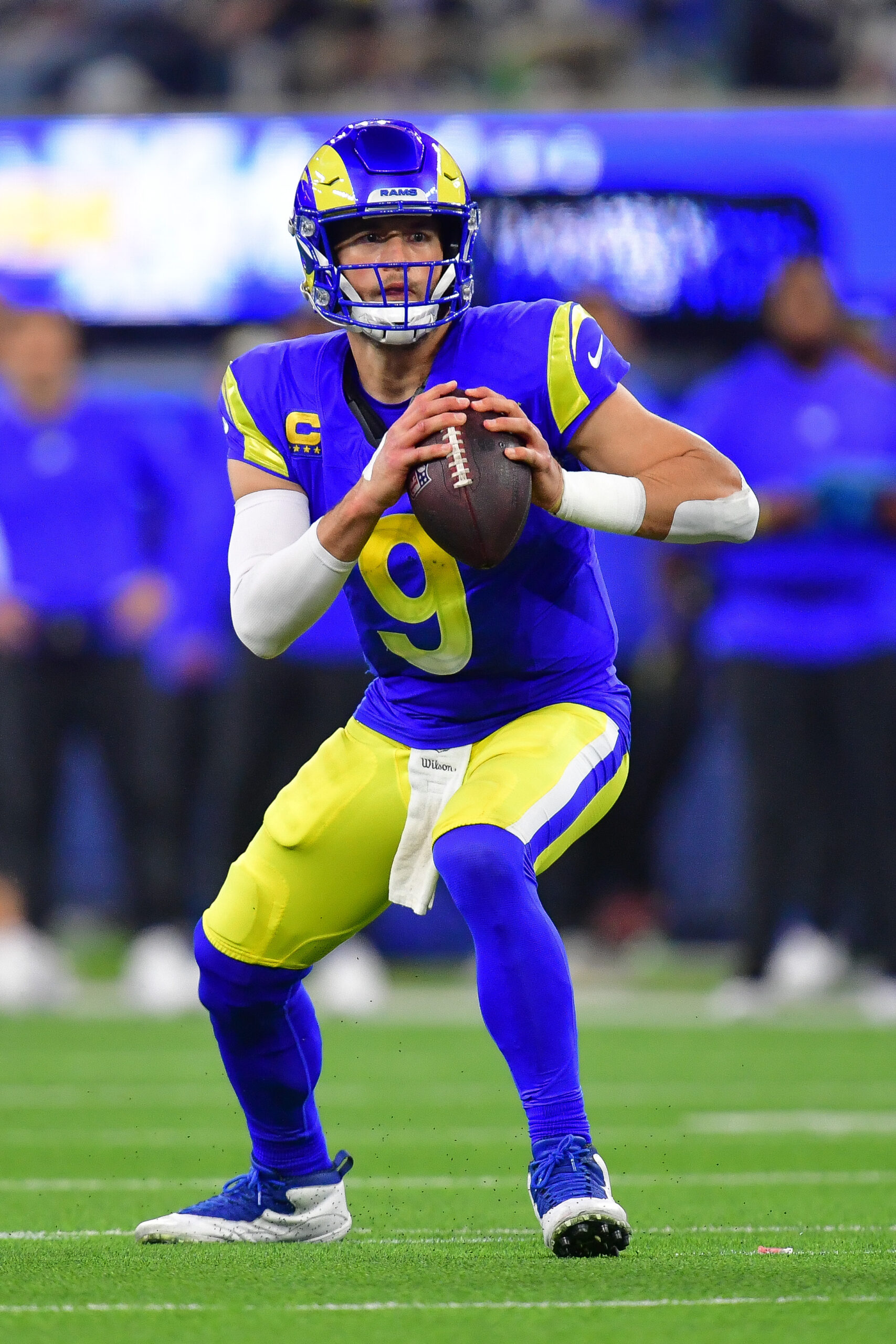
Once again, Stafford and the Rams entered the spring with plenty of uncertainty. Retirement was a consideration quickly done away with in the case of the 37-year-old, but it remained to be seen if he would remain in Los Angeles. Trade offers came in from numerous suitors, and the chance existed for Stafford to land a more lucrative deal elsewhere. In the end, though, team and player reached agreement on another reworked pact. Stafford is now in line to receive $84MM over the next two years, including guaranteed money in 2026. A bit of continuity will thus be in place under center for the Rams.
2020 draft classmates Burrow, Tagovailoa and Herbert are understandable top-10 players on this list given their respective deals. All three are on the books for years to come as they look to unseat the Chiefs atop the AFC. Burrow spoke about restructuring his pact to create the cap space necessary for the Bengals to retain or extend each of their key in-house players this offseason. That has yet to take place, and it will be interesting to see if a reworking is explored while talks on the Trey Hendrickson front continue.
The Ravens have worked out a few extensions on offense already (Derrick Henry, Rashod Bateman) but Jackson looms as a candidate for a new deal. Three years remain on his pact, but starting in 2026 his cap charge is scheduled so spike well past its current figure. The two-time MVP has discussed a new arrangement this offseason, and a bump in guarantees and overall compensation similar to what the Bills did with Allen would come as no surprise.
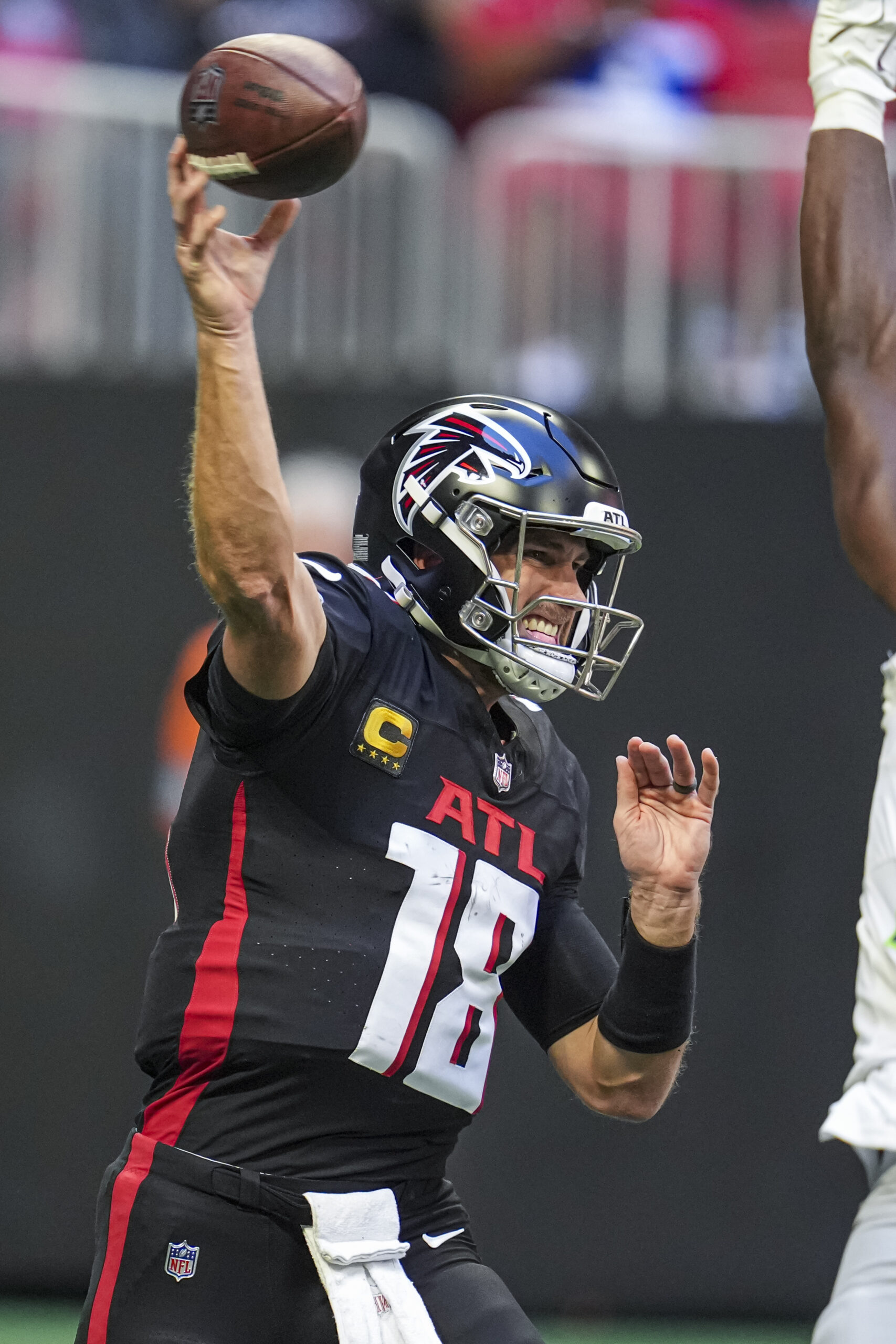 Cousins’ figure stands out, of course, given the fact he is slated to operate as Atlanta’s backup this season. With no release coming and no trade imminent, the four-time Pro Bowler is set to stay in place behind Michael Penix Jr. Cousins has made progress in his rehab from shoulder and ankle injuries suffered prior to his benching midway through his debut Atlanta season. With $10MM already guaranteed for next year, it will be interesting to see if a trade market develops in the coming months in his case.
With the exception of Watson – whose second Achilles tear is set to sideline him for most or all of the coming campaign – the remaining quarterbacks on the list are positioned to serve as starters for their respective teams. Only Geno Smith will be suiting up for a new organization after he was traded from the Seahawks to the Raiders. That swap was followed up by a two-year, $75MM extension and allowed him to reunite with head coach Pete Carroll. A short-term upgrade under center will be key as Vegas looks to find stability on the sidelines and in the front office.
Moton’s cap figure was a talking point earlier this offseason, but the Panthers are content to avoid a fourth restructure in his case. The pending free agent hopes to finish his career in Carolina, but an extension would have helped ensure that while lowering his immediate cap charge. In the absence of such an agreement, it will be interesting to see if Moton, 30, can deliver another strong showing in 2025.
Ridley is perhaps a surprising figure to lead the way in terms of cap charges at the receiver spot. He will operate as a key member of the Titans’ offense, a unit whose success will of course depend in large part on the play of rookie Cam Ward. Ridley has two more years left on his deal beyond 2025, but with limited guarantees owed over that span his Tennessee future could be greatly impacted by who this season plays out. 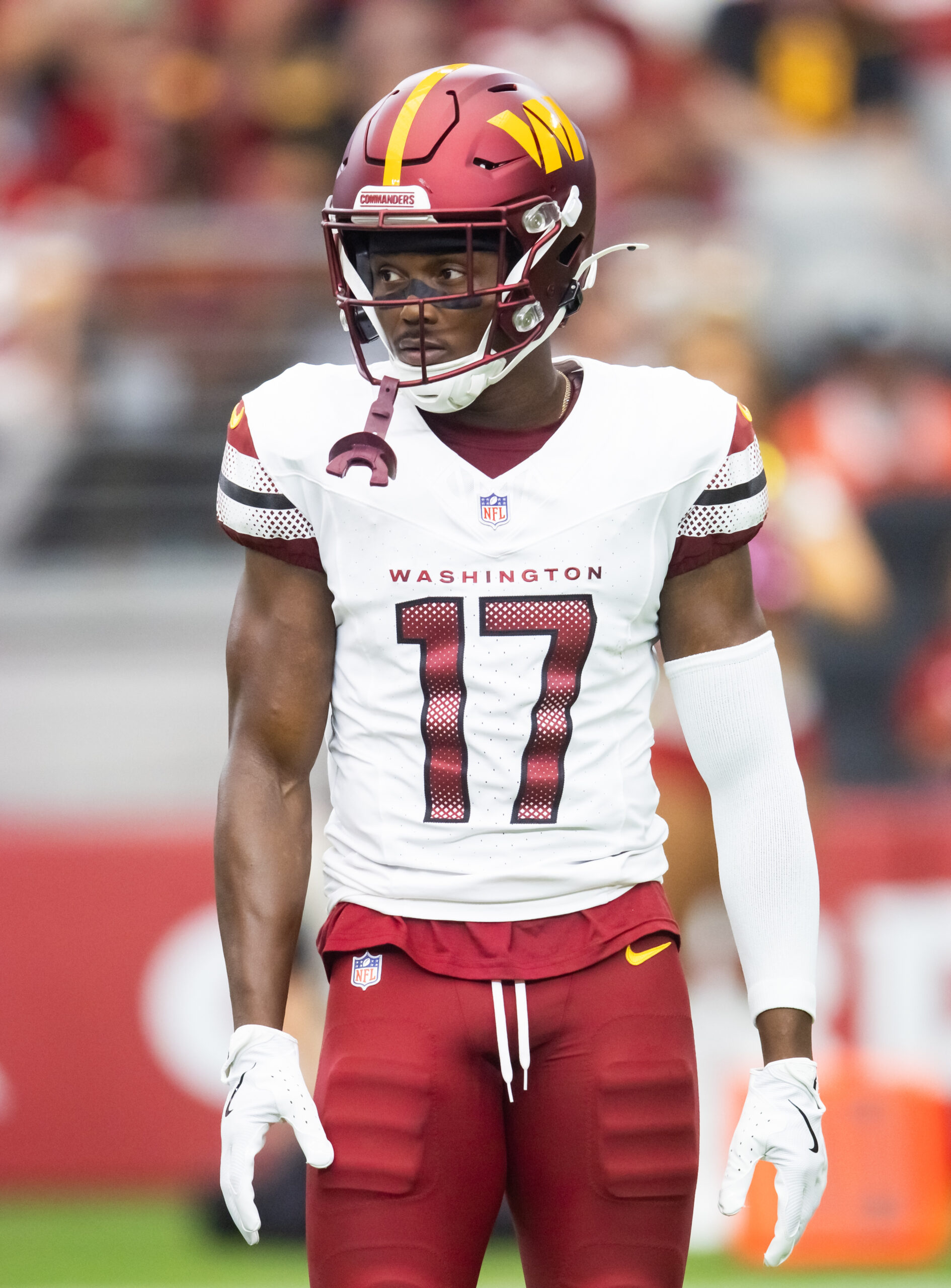
The likes of Hill, Evans and Moore are not currently the subject of speculation regarding their future. McLaurin, however, was absent from much of the Commanders’ spring practices with little progress being made at the negotiating table. Plenty of work is still required at this point to avoid a potential free agent departure next spring. Coming off a career-high in touchdowns while thriving alongside Jayden Daniels, the two-time Pro Bowler is in line for a raise which will likely lower his cap hit this season.
Chase and Higgins inked their deals simultaneously, putting an end to questions regarding where the latter in particular would play on his second contract. Those two, together with Burrow, will serve as foundational players for years to come in Cincinnati. It will be interesting to see how long Chase (with an AAV of $40.25MM) remains the league’s top earner in that respect for non-quarterbacks.
Kansas City’s offensive line faces questions entering the season. Despite his big-ticket contract, Taylor is not a lock to remain a starter at this point. With no guaranteed left on the final year of his deal (2026), a parting of ways could be in store next spring if a backup gig ensues. Trey Smith, meanwhile, remains attached to the franchise tag although an extension is among the team’s remaining offseason priorities.
D.J. Moore, Keenan Allen Address Shane Waldron’s Bears Dismissal
Matt Eberflus has now fired two offensive coordinators this year. The OC he canned in January (Luke Getsy) is already out as the Raiders’ play-caller, a move that came shortly before the Bears booted Shane Waldron.
 It seems doubtful Eberflus would be allowed to hire a third OC, as the third-year HC’s job is almost definitely on the line. It may come down to interim play-caller Thomas Brown‘s performance, with a Caleb Williams second-half resurgence perhaps the only lifeline Eberflus has left. The Bears have not seen Williams progress since showing flashes earlier this season, and the No. 1 overall pick has not clicked with the team’s two veteran wide receiver starters.
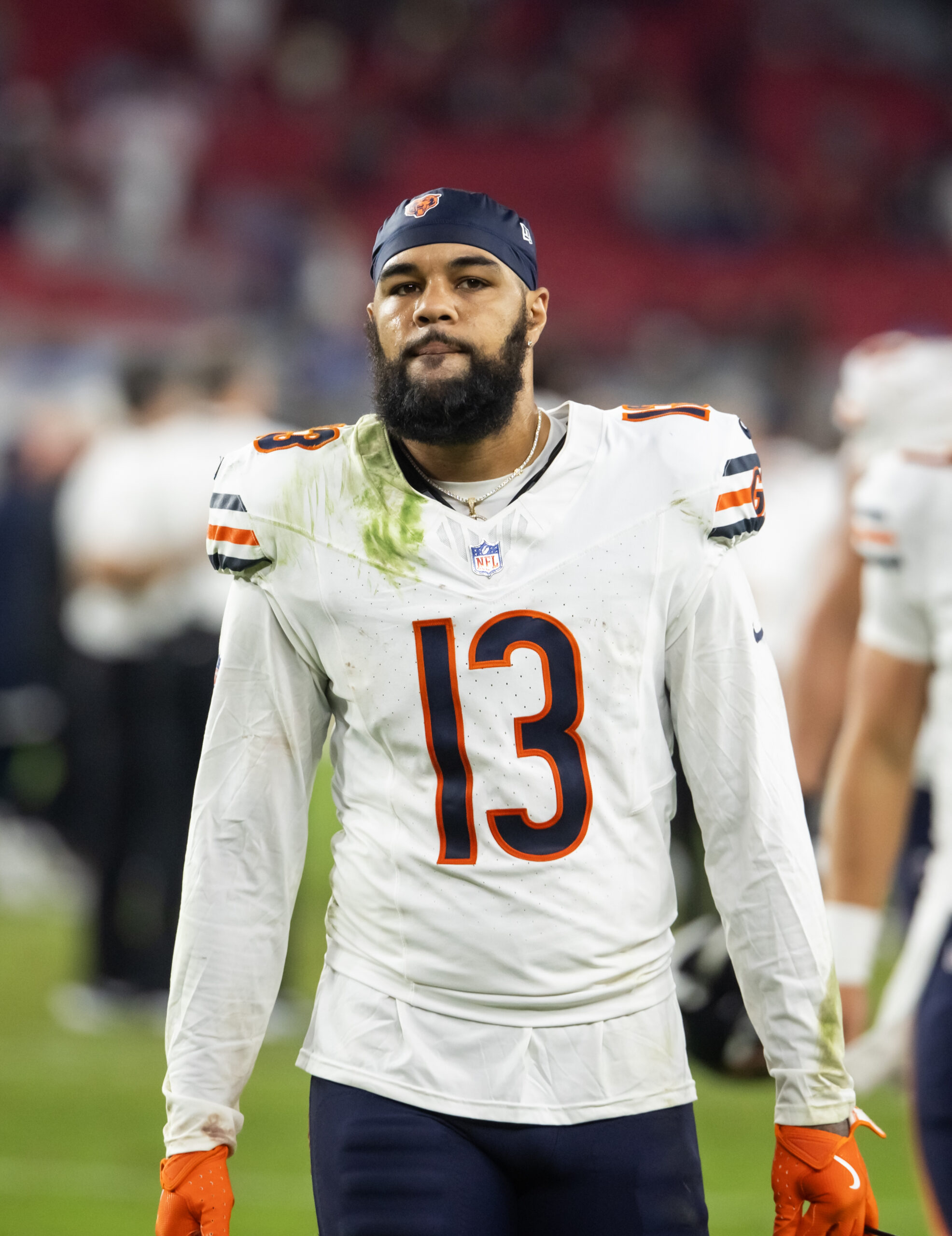
D.J. Moore and Keenan Allen have combined for 10 1,000-yard seasons in their careers; neither player is at 400 after nine games this year. Moore leads the Bears with 398 receiving yards, dropping from 80.2 per game with Getsy and Justin Fields at the controls to 44.2 in the Waldron-Williams setup. Allen, who averaged a career-best 95.6 yards per game in his final Chargers season, is at just 34.4 through seven Bears contests. The older of the two accomplished Chicago vets deemed Waldron “too nice” to succeed this season.
“Too nice of a guy,” Allen said (via ESPN.com’s Kalyn Kahler) of Waldron. “OTAs, camp, we fell into a trap of letting things go and not holding people accountable, and that’s a slippery slope. Just professionalism and doing things the right way from the beginning.”
Allen and Moore have both worked with several OCs during their careers, respectively thriving in most of those systems. The Panthers trotted out a different primary QB1 in each of Moore’s five seasons with the team; he still posted three 1,100-yard seasons with Carolina. Allen enjoyed much better quarterback play, through Philip Rivers and Justin Herbert. Williams sits 29th in QBR, and Allen — who could certainly have used his Bears stay as a potential springboard to a viable Hall of Fame case — has seen his production nosedive.
Moore confirmed players shared frustrations about the offense but covered his bases by indicating he did not want to see Waldron fired. Though, the second-year Bears wideout publicly addressed some of the issues during Waldron’s brief stay.
“When we wanted a call, it was like a drive too late,” Moore said, via WGN Radio’s Kevin Wells. “Or when we wanted to make adjustments and we waited ’til halftime to make it. And then we don’t get the same look.”
Waldron, 45, received immediate interest once the Seahawks let Pete Carroll‘s contracted assistants search for other jobs this offseason; these comments will certainly factor into Waldron’s 2025 job search. Waldron interviewed with the Patriots and Saints before signing on with the Bears. The Bears’ wide-ranging interview process included coaches who became coordinators elsewhere. Liam Coen (Buccaneers), Kliff Kingsbury (Commanders), Klint Kubiak (Saints), Zac Robinson (Falcons), Greg Roman (Chargers) met about the job. The Chargers blocked Kellen Moore from a meeting about the job; Moore ended up as the Eagles’ OC once the Bolts eventually let him out of his contract.
Kingsbury held intel on Williams, being USC’s QBs coach last season, but SI.com’s Albert Breer indicates that interview felt more like Bears brass gathering information on their next quarterback than interviewing Kingsbury for the gig. The Raiders offered Kingsbury their OC job, but it went to Getsy after the former Cardinals HC backed out due to the AFC West team not guaranteeing a third-year salary. The Commanders quickly swooped in.
Waldron, however, was hired January 22 — before any of the above-referenced 2024 OCs landed jobs. Chicago striking first with Waldron and then firing him nine games in obviously presents a bad look for Eberflus, who evaded a firing last year but dismissed Getsy and a few offensive staffers in preparation for Williams’ arrival. Counting Brown, the Bears have employed seven OCs since 2015. It looks more likely than not the Bears, who do not fire HCs in-season, will be conducting a head coaching search come January.
Contract Details: Moore, McPherson, Froholdt
Here are some details on recent contracts from across the league:
- D.J. Moore, WR (Bears): Four years, $110MM. Per OvertheCap.com, Moore’s deal includes $43.65MM guaranteed at signing, consisting partially of a $20MM signing bonus. The signing bonus will be spread out over the next five years. After getting paid $3MM in 2024, Moore will receive base salaries after that of $20.65MM in 2025 and $23.49MM in the remaining four years. Also, after this season, Moore will not have a cap hit lower than $24.5MM. From 2026 to through 2029, Moore will earn per game active roster bonuses of $45K for a potential season total of $765K.
- Evan McPherson, K (Bengals): Three years, $14MM. After some initial numbers were reported when McPherson’s extension was announced, Aaron Wilson of KPRC 2 provided a few more details on his three-year deal. the initial report listed the potential max payout to be $16.5MM, but Wilson notes that number to be $17.56MM. He received a $5MM option after the signing bonus and will see another $2.5MM option bonus in the future. His base salaries for the next for seasons will be $1.06MM, $2.4MM, $2.8MM, and $3.5MM. According to Kelsey Conway of the Cincinnati Enquirer, McPherson claimed that he preferred the shorter three-year deal because it would give him another opportunity for a third contract while he’s still relatively young.
- Hjalte Froholdt, C (Cardinals): Two years, $12MM. Of the $8MM in guarantees that were initially reported, $7.25MM of that is fully guaranteed, per Howard Balzer of CardsWire. The remaining $750K is guaranteed for injury as part of Froholdt’s 2025 base salary and will become fully-guaranteed if he is still on the roster by the fifth day of the 2025 league year. Wilson lets us know that $4MM of those guarantees comes in the form of a signing bonus and that the deal has a potential maximum value of $14.75MM.
Bears Sign WR D.J. Moore To Extension
D.J. Moore is sticking with the Bears long-term. The wideout has agreed to a four-year, $110MM extension with the organization, reports ESPN’s Adam Schefter. The deal includes $82.6MM in guaranteed money.
Moore still has two years remaining on the extension he inked with the Panthers back in 2022, although his guaranteed money was about to dry up. Moore’s extension locks in a lot more guaranteed cash, and it also keeps the veteran tied to Chicago through the 2029 campaign.
Moore’s first season with the Bears couldn’t have gone much better. After the wide receiver was dealt from Carolina in the trade involving the top-overall pick, the three-time 1,000-yard receiver put together the most productive season of his career. Despite inconsistent play from Justin Fields (plus four starts of Tyson Bagent), Moore finished the year with career-highs in receptions (96), receiving yards (1,364), and total touchdowns (nine).
With top-overall pick Caleb Williams now under center, the Bears will continue to lean on Moore. Of course, that didn’t stop the organization from adding more talent around their franchise quarterback, with the team bringing in both Keenan Allen and ninth-overall pick Rome Odunze this offseason. Still, Moore is entrenched as the WR1, and Patrick Finley of the Chicago Sun-Times passes along that the organization was making sure Moore was satisfied with his contract even before they added Allen’s significant cap hit. ESPN’s Courtney Cronin adds that the front office wasn’t “necessarily going to go in order of who’s up next for contract,” and they decided to push Moore ahead of other extension-eligible players.
The Bears also managed to avoid the $30MM average annual value mark that was exceeded by the likes of Justin Jefferson, A.J. Brown, and Amon-Ra St. Brown this offseason. Moore’s $27.5MM AAV will only come in seventh at his position, although that chunk of guaranteed cash will only trail Jefferson and Brown. Moore himself noted that he was not overly interested in putting himself near the top of the heap in terms of AAV but was (wisely) more interested in guaranteed money.
“You’ve got to follow it,” Moore said of the dizzying heights the WR market has reached with respect to annual averages (via Michael David Smith of Pro Football Talk). “They’ve all been breaking new heights, going to 35 (million per year), but I wasn’t really in that mindset to go to the top-top. I was just like, What’s a good number? Let’s go from there.”
“Security,” Moore added. “The guaranteed money was awesome. That was the main part I loved out of the whole thing.”
Despite Moore’s focus on the guaranteed cash, his deal does represent the richest contract in franchise history in terms of AAV, as Schefter notes. Montez Sweat and his $24.5MM previously held that honor. Moore was unable to crack Khalil Mack‘s $90MM in guaranteed money, although that was part of a six-year extension.
With Moore’s contract now added to the market, the likes of CeeDee Lamb and Brandon Aiyuk will only have more examples to cite in their pursuit of new contracts.
Extension Candidate: D.J. Moore
D.J. Moore was a key part of the package the Panthers sent the Bears to acquire the No. 1 pick in 2023. He is attached to a contract which came before the position’s market surged, though, which could put him in line to command a raise in the relatively near future.
Moore, 27, topped 1,100 yards three times during his five-year tenure in Carolina. The Panthers were not looking to move on from him shortly after he inked his current contract, but the fact he was no longer on his rookie deal factored into the Bears’ insistence he was part of the blockbuster swap. Arriving in Chicago as the team’s No. 1 wideout, Moore enjoyed a career year last season.
The former first-rounder set a new personal best in catches (96), yards (1,364) and touchdowns (eight) in 2023 despite the Bears’ QB situation being less than ideal. That has been the case for much of Moore’s career, although Caleb Williams could change that. This year’s top pick enters the league with major expectations, but the presence of a well-regarded skill group may limit what he needs to do as a rookie for the Bears to be successful.
Chicago traded for Keenan Allen before following up the Williams pick with the selection of Rome Odunze. The former has one year on his current deal while the latter will be cost-controlled through at least 2027. Moore, meanwhile, has two years remaining on his $61.88MM extension. While there is no need for urgency this summer, Kevin Fishbain of The Athletic notes the Maryland product is a strong candidate for an extension based on his play along with his high standing in the organization (subscription required).
Moore is due just over $16MM in 2024 and ’25, but only $1.11MM of his base salaries in that span are guaranteed. In terms of annual average value, he now sits 17th in the league with respect to receiver compensation (a ranking which will drop further once the likes of CeeDee Lamb, Ja’Marr Chase and Brandon Aiyuk sign their own second contracts). A deal keeping him place through the remainder of his prime and tying him to Chicago while Williams is on his rookie pact would be sensible for team and player based on Moore’s first year in the Windy City.
On the other hand, the presence of Allen (who is interested in a market-level Bears deal) and Odunze could lessen Moore’s role on offense. General manager Ryan Poles may prefer to wait out the 2024 season and see how the team’s new offensive playmakers fit before committing to a Moore deal. In the event that were to take place, though, another productive year could up his asking price in the wake of continued increases in the receiver market.
Two agents Fishbain spoke with (but who do not represent Moore) used Calvin Ridley‘s Titans deal (four years, $92MM) as a comparable deal. Moore – who is two years younger and has a nearly identical yards per game average for his career – could certainly command a raise if a short-term deal were to be worked out by tacking on a few years to the remainder of his current pact. The agents suggested a two-year, $60MM top-up could be an appropriate figure in this case.
With considerable cap space now and in the near future, the Bears can certainly afford a big-ticket Moore investment. It will be interesting to see if Poles and the Bears pursue an agreement over the course of the summer or take a more patient approach with him.
Largest 2023 Cap Hits: Offense
The NFL’s salary cap once again ballooned by more than $10MM, rising from its $208.2MM perch to $224.8MM. Factoring in the pandemic-induced 2021 regression, the NFL’s salary risen has climbed by more than $42MM since 2021.
This has allowed teams more opportunities for roster additions and opened the door for more lucrative player deals — at most positions, at least. However, it does not look like this season will include a $40MM player cap number. The Browns avoided a record-shattering Deshaun Watson $54.9MM hit by restructuring the quarterback’s fully guaranteed contract, calling for monster figures from 2024-26.
Here are the largest cap hits for teams on the offensive side going into training camp:
- Patrick Mahomes, QB (Chiefs): $39.69MM
- Ryan Tannehill, QB (Titans): $36.6MM
- Jared Goff, QB (Lions): $30.98MM
- Jake Matthews, T (Falcons): $28.36MM
- Trent Williams, T (49ers): $27.18MM
- Dak Prescott, QB (Cowboys): $26.83MM
- Laremy Tunsil, T (Texans): $26.61MM
- Jimmy Garoppolo, QB (49ers): $23.8MM
- Amari Cooper, WR (Browns): $23.78MM
- Mike Evans, WR (Buccaneers): $23.69MM
- Ronnie Stanley, T (Ravens): $23.67MM
- Joe Thuney, G (Chiefs): $22.12MM
- Russell Wilson, QB (Broncos): $22MM
- Lamar Jackson, QB (Ravens): $22MM
- Daniel Jones, QB (Giants): $21.75MM
- David Bakhtiari, T (Packers): $21.29MM
- Kirk Cousins, QB (Vikings): $20.25MM
- D.J. Moore, WR (Bears): $20.17MM
- Matthew Stafford, QB (Rams): $20MM
- Brian O’Neill, T (Vikings): $19.66MM
- Taylor Decker, T (Lions): $19.35MM
- Deshaun Watson, QB (Browns): $19.1MM
- Braden Smith, T (Colts): $19MM
- Josh Allen, QB (Bills): $18.64MM
- Courtland Sutton, WR (Broncos): $18.27MM
As should be expected, quarterbacks dominate this list. Mahomes’ number checks in here despite the Chiefs restructuring his 10-year, $450MM contract in March; the two-time MVP’s cap hit would have set an NFL record had Kansas City not reduced it. The Chiefs did not restructure Mahomes’ deal last year, but if they do not address it — perhaps via a complex reworking — before next season, Mahomes’ $46.93MM number would break an NFL record.
 The Titans have not touched Tannehill’s contract this offseason, one that included some trade rumors months ago. This is the final year of Tannehill’s Tennessee extension. Mahomes and Tannehill sat atop this ranking in 2022.
Cousins is also heading into a contract year, after the Vikings opted for a restructure and not an extension this offseason. Cousins does not expect to discuss another Minnesota deal until 2024, when he is due for free agency. Two relatively low cap numbers have started Wilson’s $49MM-per-year extension. The Denver QB’s cap number rises to $35.4MM in 2024 and reaches historic heights ($55.4MM) by ’25. The subject of a Goff extension has come up, and it would bring down the Lions passer’s figure. But Goff remains tied to his Rams-constructed $33.5MM-per-year deal through 2024.
Jackson and Jones’ numbers will rise in the near future, with the latter’s contract calling for a quick spike in 2024. Next year, the Giants QB’s cap hit will be $45MM. Watson’s 2024 hit, as of now, would top that. The Browns signal-caller is on the team’s ’24 payroll at $63.98MM. Long-term consequences aside, the Browns can be expected to once again go to the restructure well with Watson’s outlier contract.
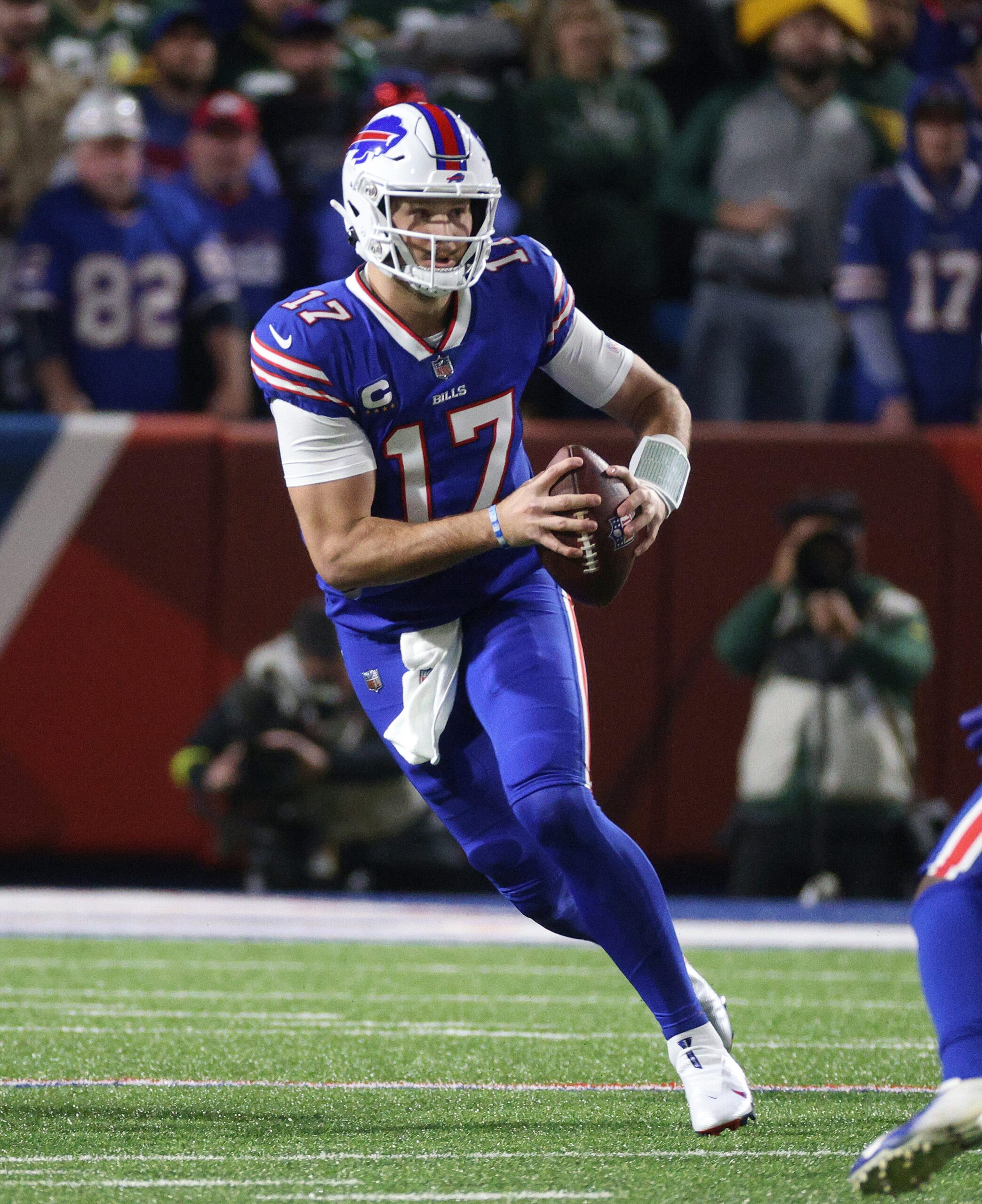
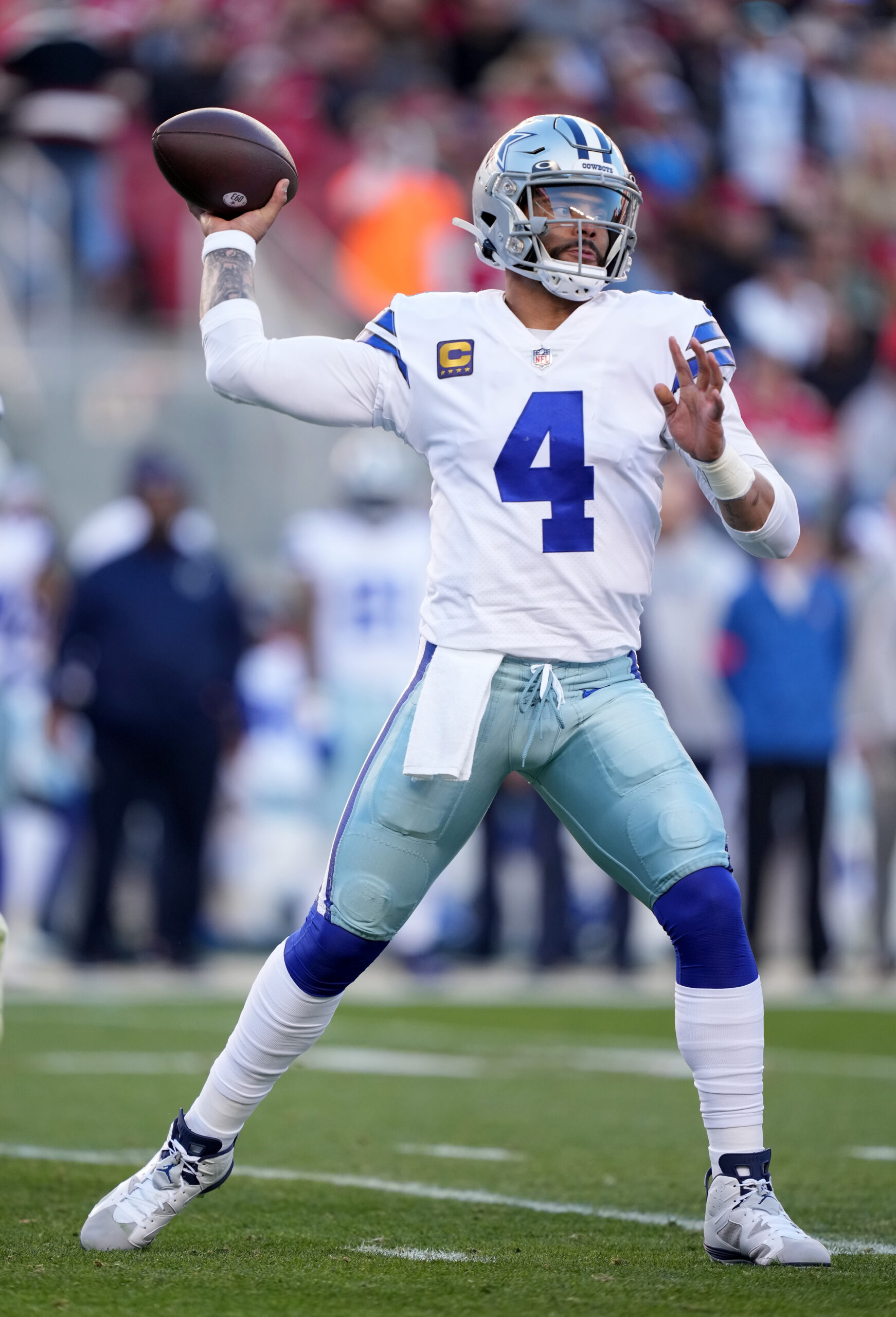 The Raiders did not backload Garoppolo’s three-year contract; it only climbs to $24.25MM on Las Vegas’ 2024 cap sheet. The Bills did backload Allen’s pact. Its team-friendly years are done after 2023; the six-year accord spikes to $47.1MM on Buffalo’s cap next year. The Cowboys have gone to the restructure well with Prescott. Like Watson, the Cowboys quarterback is tied to a seemingly untenable 2024 cap number. The March restructure resulted in Prescott’s 2024 number rising to $59.46MM. Two seasons remain on that $40MM-AAV extension.
Another notable cap hold that should be mentioned is Tom Brady‘s. When the Buccaneers did not sign the again-retired QB to another contract before the 2023 league year, his $35.1MM dead-money figure went onto Tampa Bay’s 2023 cap sheet. The Bucs will absorb that entire amount this year. Brady’s 2022 restructure, after retirement No. 1, led to the $35.1MM figure forming.
Were it not for another O-line-record extension, the Tunsil number would have come in at $35MM this year. Matthews signed an extension last year. Moore would have come in higher on this list were he still on the Panthers, who took on $14.6MM in dead money to move their top wideout for the No. 1 overall pick. Sutton came up regularly in trade rumors, with the Broncos wanting a second-round pick for the sixth-year veteran. The former second-rounder’s high base salary ($14MM) hinders his trade value.
D.J. Moore’s Contract Factored Into Bears’ Trade Effort
While the Panthers stood down regarding a D.J. Moore trade after firing Matt Rhule last October, they ended up unloading their top wide receiver to secure what turned out to be Bryce Young draft real estate. Moore will move to a Bears franchise that has not had much luck forging long-term partnerships with impact wide receivers.
Moore came up during the Bears and Panthers’ trade talks when other suitors drove up the bidding during the early-March sweepstakes for the No. 1 overall pick. The Texans initially were part of these proceedings, with the Bears plotting a move down from No. 1 to No. 2 to No. 9. After Houston withdrew, Chicago dealt directly with Carolina. Bears GM Ryan Poles also inquired about defensive linemen Brian Burns and Derrick Brown, but both being on rookie contracts impeded either being included in the trade.
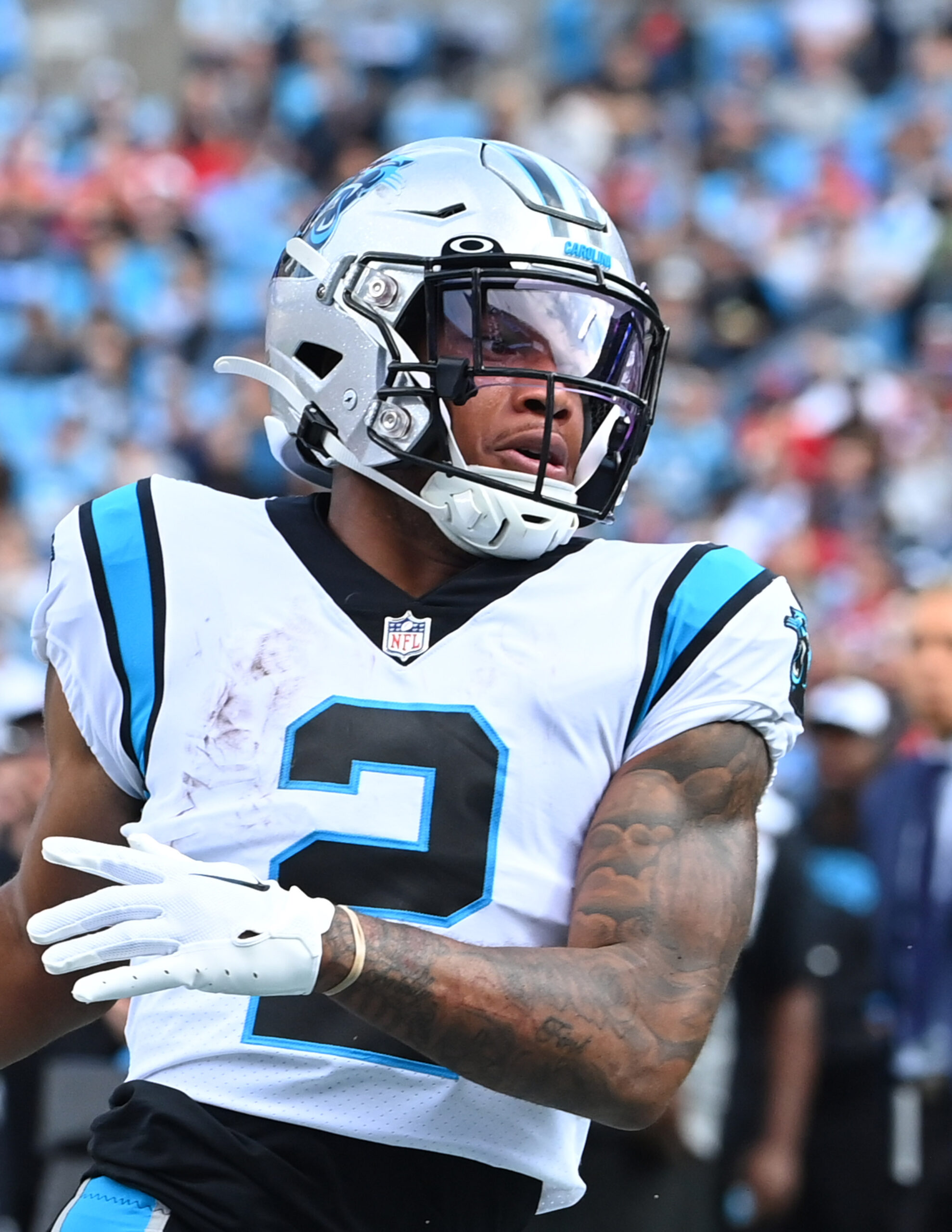 “In the very beginning I was laughed at because I had [one of] three guys that I wanted in the trade,” Poles said, via The Athletic’s Jim Trotter (subscription required). “I did know and felt like there was more of an opportunity to get D.J. because he had a bigger contract and there would be a bigger benefit in cap space to kick back to Carolina. But it was not easy because they absolutely loved that kid. It was painful to pull him out of their arms. I really think it would have been even harder if he had been on a rookie contract.”
Carolina extended Moore in nearly a year before trading him, agreeing to terms on a three-year deal worth $61.9MM. That pact came just before the avalanche of receiver extensions drove up the market. Moore, Mike Williams and Chris Godwin settled onto the same tier, hours before Davante Adams‘ Raiders extension ($28MM per year) and days before Tyreek Hill‘s $30MM-AAV extension came to pass. The 2019 receiver class soon upped the cost for up-and-coming star pass catchers as well.
The Bears will benefit from the Panthers’ timing with Moore. They now have him tied to the 10th-most lucrative receiver deal, with the likes of A.J. Brown, Terry McLaurin, Deebo Samuel and D.K. Metcalf passing him later during the 2022 offseason. Chicago does not have another big-ticket skill-position deal on its books, with Darnell Mooney, Chase Claypool and Cole Kmet attached to rookie contracts. Justin Fields‘ rookie pact runs through 2024 but can be pushed to 2025 via the fifth-year option. The team let David Montgomery walk — for a three-year, $18MM Lions deal — and landed a replacement (D’Onta Foreman) for just $2MM.
The Bears might still be in the market for defensive end help, having finished last in sacks in 2022 and addressing their D-tackle spots early in the draft. But Burns remains on track to sign a Panthers extension. Brown became extension-eligible in January, but the Panthers picked up his fifth-year option earlier this month.
Moore, 26, posted 1,100-plus-yard years from 2019-21, doing so despite a shuffling Panthers QB situation. The Bears have experienced fairly good fortune with veteran acquisitions at receiver over the past several years. Brandon Marshall still holds the team’s single-season receiving yardage record; Allen Robinson produced two 1,100-plus-yard seasons. Neither lasted more than four years for the Bears, who did not get much from Robinson’s fourth slate (a 410-yard showing on the franchise tag).
Moore’s Chicago fit will be a work in progress, but he should have a chance to land another extension in the not-too-distant future, a contract that could keep him in Illinois for the long haul.