
Tee Higgins Not Planning To Discuss Bengals Extension In-Season
Receiver-needy teams will be monitoring the Bengals, who have Tee Higgins and Tyler Boyd playing on expiring contracts. But this situation will be on hold for a while, as the Bengals will almost definitely not be viewed as a deadline seller.
The Bengals and Higgins could not reach an agreement on an extension before the season, with Joe Burrow and Logan Wilson being the team’s extension recipients this summer. As a result, Higgins is set to play out his contract. No in-season extension talks are coming between the Bengals and their No. 2 wideout, The Athletic’s Paul Dehner Jr. and Dianna Russini report (subscription required).
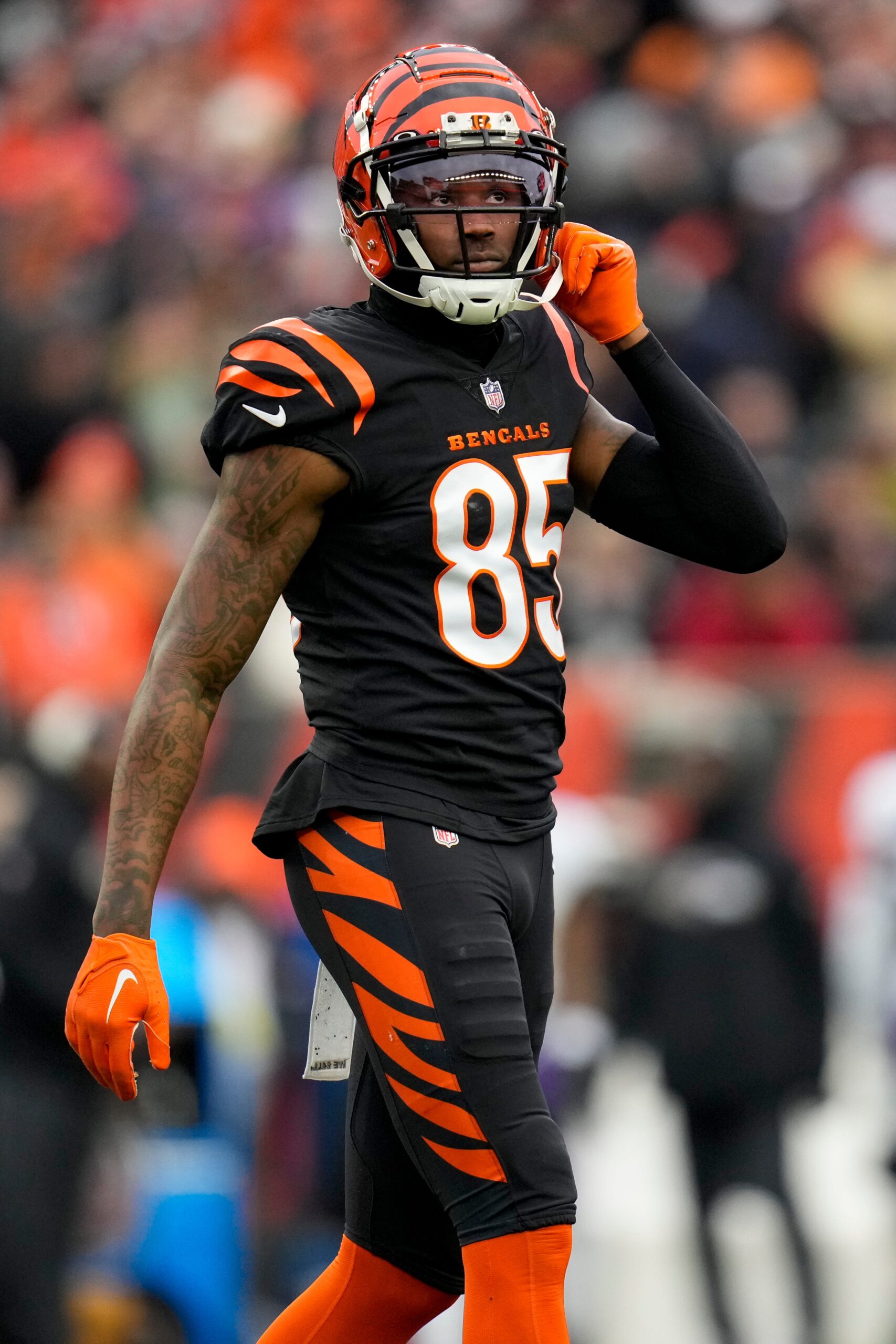 Higgins looks to have made this call, with Dehner and Russini adding the Bengals made him an offer sources deemed low leading up to the season opener. The former second-round pick is now on track to become a free agent in 2024. That is, if Cincinnati does not apply the franchise tag by the March 5 deadline.
Burrow’s cap numbers on his landmark $275MM extension are out. The Bengals did, in fact, go to the void-years well to spread out Burrow’s cap hits. The void numbers run through 2032, though the real contract expires after the 2029 season. That could prove pertinent for Higgins’ Cincinnati future. Burrow’s 2024 cap number checks in at $29.7MM. With Ja’Marr Chase still tied to a rookie contract, the Bengals could probably find a way to cuff Higgins with a tag. Cincy is projected to carry more than $74MM in cap space in 2024. Although we are several months away from free agency, that number sits seventh in the NFL.
Chase’s price tag may not come into focus until the Vikings hammer out a Justin Jefferson extension. That is now expected to commence in 2024, continuing a decade-long trend of teams passing on Year 4 extensions for first-round wide receivers. No team has extended a first-round wideout with two seasons of rookie-deal control remaining in the fifth-year option era (2014-present). History certainly points to the Bengals keeping Chase on his rookie deal until 2025, when he will head into his fifth-year option season. While a long-term Chase-Higgins partnership may be unrealistic, retaining Higgins in 2024 — while Chase is tied to a $9.8MM salary — via the tag is an option the Bengals will surely consider.
A Higgins tag-and-trade transaction could also be an option for the Bengals, who will likely let Boyd walk next year. But VP of player personnel Duke Tobin shooting down Higgins trade rumors at this year’s Combine may still lend to the notion of the Bengals keeping him as long as they can.
The Buccaneers managed to roster both their top wideouts — Mike Evans, Chris Godwin — on upper-crust extensions while employing Tom Brady last season. They kept Godwin on a tag in 2021 and tagged him again in 2022, reaching an extension with their WR2 that year. But Brady’s Bucs contract did not exactly compare to the deal Burrow just signed. Chase will also be expected to sign a second contract north of $30MM per year.
Set to play out a five-year, $82.5MM deal, Evans is on track to hit free agency in 2024. If the Bengals do not tag Higgins, Evans would stand to be bumped down a slot in wideout-seeking teams’ priority queues next year. After this year’s free agency receiver pool featured the likes of Allen Lazard, Jakobi Meyers and JuJu Smith-Schuster as its headliners, next year’s could produce fireworks. But the Bengals having the tag option with Higgins threatens to prevent that scenario from forming.
Minor NFL Transactions: 9/12/23
Today’s minor moves:
Atlanta Falcons
- Signed to active roster: DL Joe Gaziano
Cincinnati Bengals
- Waived from IR: DL Tautala Pesefea Jr.
Cleveland Browns
- Placed on IR: OT Jack Conklin (story)
- Signed to active roster: G Michael Dunn
Houston Texans
- Signed to active roster: P Ty Zentner
- Signed: DL Michael Dogbe
Kansas City Chiefs
- Reinstated from reserve/did not report: DT Chris Jones (story)
Los Angeles Rams
- Signed to active roster: K Brett Maher
Minnesota Vikings
- Signed to active roster: RB Myles Gaskin
New York Jets
- Reinstated from reserve/suspended: CB Brandin Echols (story)
Philadelphia Eagles
- Waived from IR: WR Charleston Rambo
Michael Dogbe has found his next gig after getting waived by the Jaguars during final cuts. The former seventh-round pick spent the first four seasons of his career with the Cardinals, appearing in 40 games. He took on a bigger role over the past two years, compiling 55 tackles in 29 appearances. He joined Jacksonville this offseason before earning his walking papers.
Myles Gaskin is back on an active roster following an unceremonious end to his Miami tenure. The running back had 1,818 yards from scrimmage across the 2020 and 2021 seasons, but he saw a limited role with the Dolphins in 2022. He joined the Vikings practice squad at the end of the preseason and was elevated to the active roster for their season opener.
Latest On Bengals’ Joe Burrow Extension
Things didn’t go according to plan for the Bengals in Week 1, but the team accomplished its most important offseason goal not long before the campaign started by inking Joe Burrow to a record-breaking extension. Further details have emerged regarding the investment made in the team’s franchise quarterback. 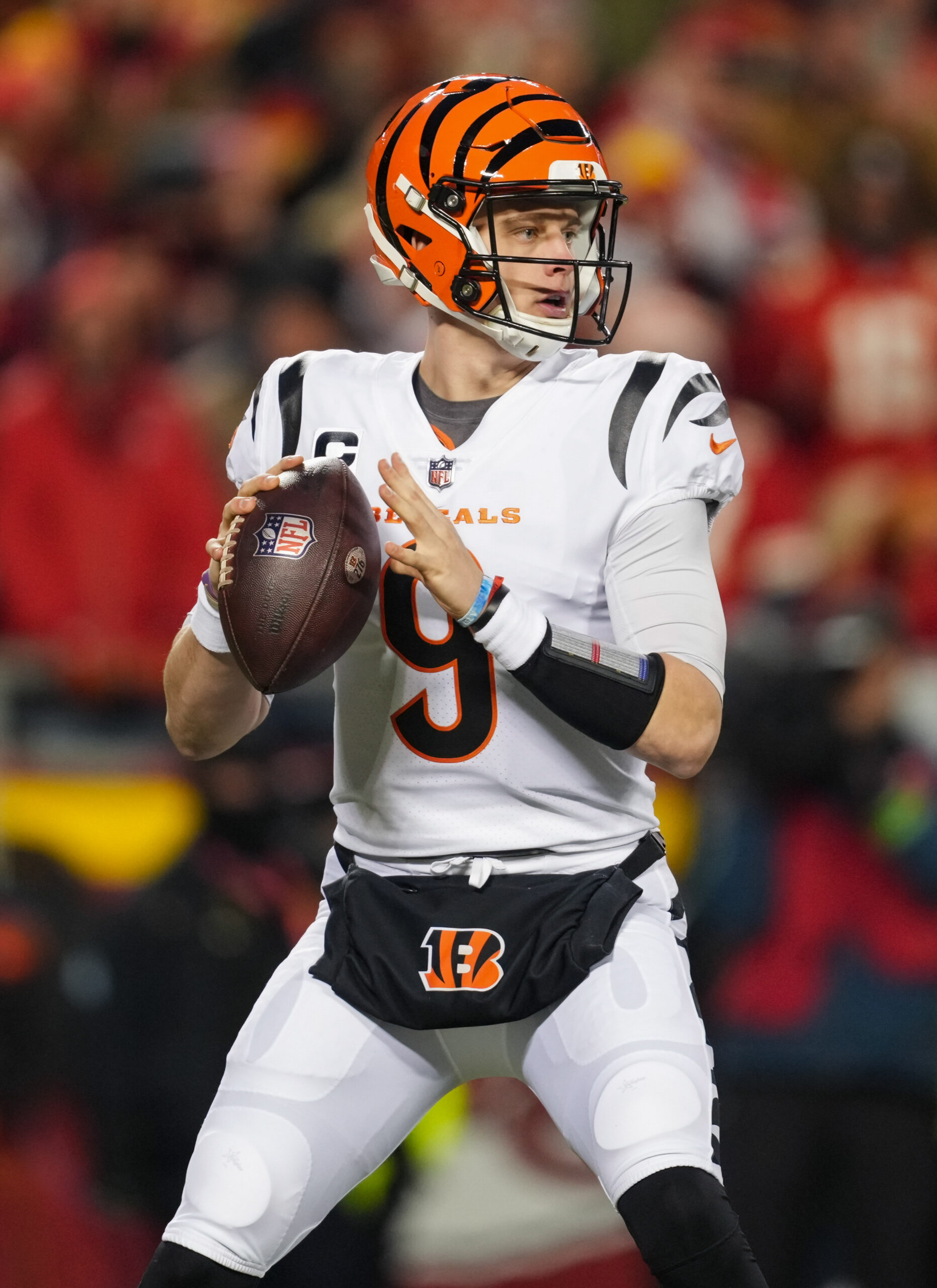
[RELATED: Owners Proposed Player Salary Limit During CBA Talks]
Burrow’s five-year, $275MM extension gives him the title of the NFL’s highest-paid player in terms of annual compensation (one which has changed hands four times in 2023). The pact is notable not only with respect to its $55MM AAV and the $219.01MM in total guarantees, but also the up front commitment made by the Bengals in a move which bucks the organization’s norms regarding major contracts.
Per Mike Florio of Pro Football Talk, Burrow will see roster and training camp bonuses totaling just over $44.5MM in 2023, along with a league minimum base salary. In 2024, he will receive a combined total of $65.7MM between salary and an option bonus; that total sits at $35.25MM for 2025. All of the 26-year-old’s compensation over the next three years is fully guaranteed at signing.
That makes Burrow’s pact a much more lucrative one in terms of early cash flow ($146.5MM across 2023-25) compared to Justin Herbert‘s Chargers extension, as noted by Over the Cap’s Jason Fitzgerald. It also marks a break from tradition in terms of standard practice for the Bengals, who have typically avoided including injury guarantees beyond Year 1 of an extension. Making an exception to that rule was always going to be necessary given the market for QBs on their second contracts, but this structure is certainly noteworthy.
Burrow’s pact – which runs through 2029 – also includes rolling guarantees which cover much of his compensation in 2026 and ’27. Incentives for victories in the AFC title game and Super Bowl are also present through the final five years of the pact, meaning he will be well-positioned for years to come provided he can remain healthy and play at the level he has demonstrated in previous campaigns (which differs greatly from his performance during his first game after signing the mega-pact).
Questions will be raised about how many core contributors the Bengals can retain with Burrow now on the books at a massive raise. Wideout Tee Higgins is among the players who seems destined to at least test the open market before potentially departing in free agency, but the team has cost certainty with its most important player for the foreseeable future.
2023 Offseason In Review Series
Quarterback acquisitions generated top headlines this offseason, while the slew of developments affecting the running back market moved that position’s value to a precarious point. On that note, our latest Offseason In Review series is in the books. Here are the PFR staff’s looks at how teams assembled their 2023 rosters:
AFC East
AFC North
AFC South
AFC West
NFC East
NFC North
NFC South
NFC West
Bengals, QB Joe Burrow Agree To Five-Year Extension
SEPTEMBER 9: The Bengals have made it official, with the organization announcing their extension with Burrow.
“Quarterback is the most critical position in sports, and Joe has embraced his role here with intelligence and determination,” coach Zac Taylor said in a statement. “The team responds to Joe as our quarterback, and we look forward to a bright future with Joe continuing to lead our talented roster. He makes everyone better.”
SEPTEMBER 7: With all eyes on the NFL’s season opener in Kansas City, the Bengals have stolen some attention away from their conference rival. According to ESPN’s Adam Schefter, the Bengals and quarterback Joe Burrow have agreed to a record-breaking extension.
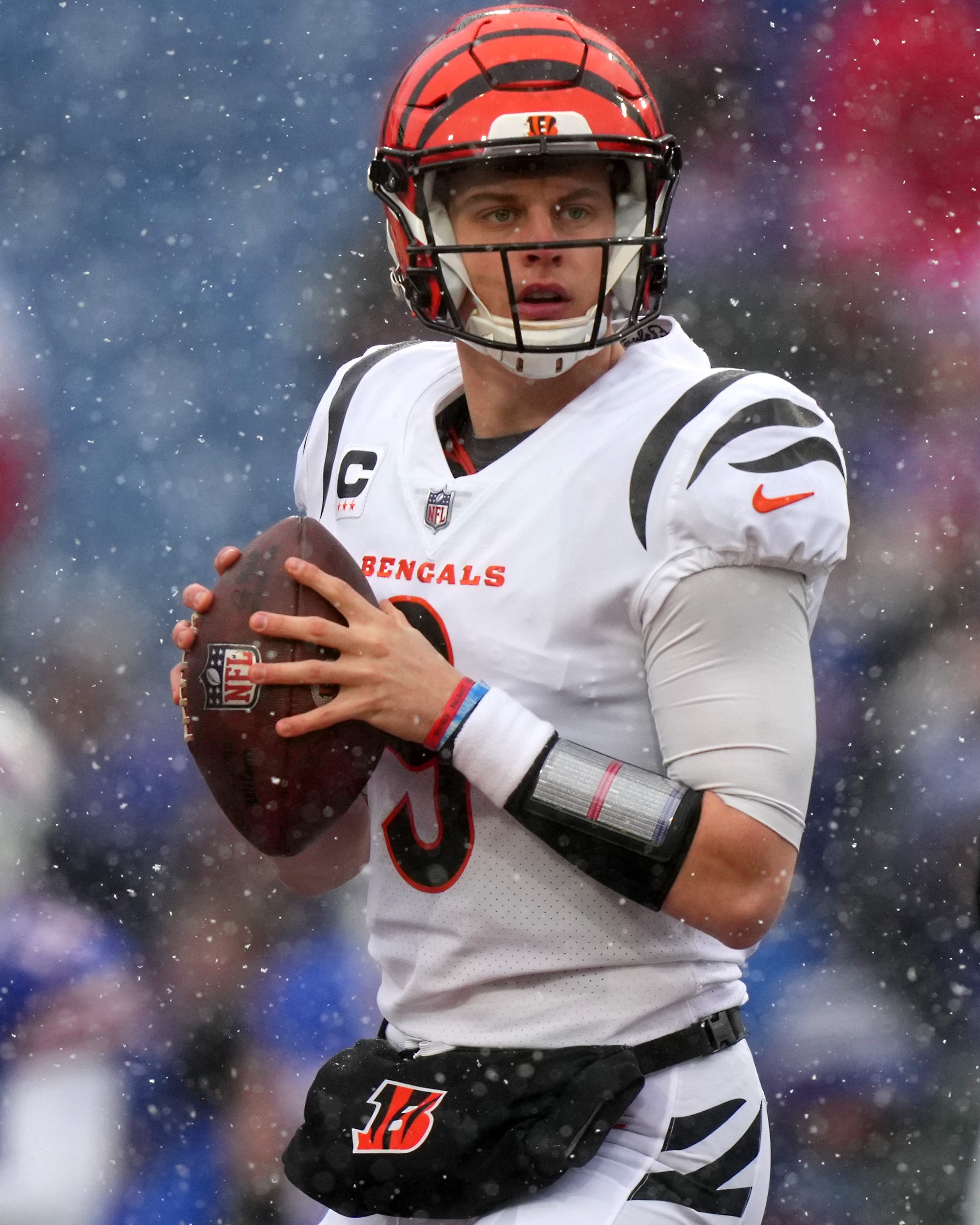 It’s a five-year, $275MM deal for Burrow, including $219.01MM in guaranteed money. The contract makes the QB the highest-paid player in NFL history.
It always seemed inevitable that Burrow would eventually get his megadeal, with offseason reports indicating that the extension would get done before the start of the regular season. Indeed, it sounds like both sides made some recent progress. NFL Network’s Ian Rapoport tweets that the extension was an “open secret” at Bengals practice today, and Rapoport adds that the organization was simply waiting for Burrow’s “final official yes.”
It’s been a pricey offseason for quarterback extensions, and Burrow always seemed like he’d be the final QB to sign. His $275MM contract tops the offseason deals signed by Justin Herbert ($262.5MM), Jalen Hurts ($255MM), and Lamar Jackson ($260MM). Per ESPN’s Field Yates, Burrow now paces the position “in new money average per year” at $55MM, beating Herbert ($52.5MM), Jackson ($52MM), Hurts ($51MM), and Aaron Rodgers ($49MM).
It’s been an impressive five-year run for Burrow. The LSU product won the Heisman Trophy and National Championship before being selected with the first-overall pick in the 2020 draft. He reached the Super Bowl during the 2021 campaign, and the Bengals returned to the AFC Championship Game during the 2022 season. Now, Burrow is the highest-paid player in NFL history, although he’ll surely fall down the list when the next round of extensions pop up next offseason.
Now signed to a lucrative deal, Burrow will look to build off his productive 2021 and 2022 campaigns. Burrow suffered a sprained calf back in August, putting the start of his 2023 season in doubt. However, after returning to practice last week, it sounds like the franchise QB will be good to go for Sunday’s season opener against the Browns.
While the Bengals front office can cross Burrow’s extension off their to-do list, the team has more pricey deals coming up. Tee Higgins is an impending free agent and will be a popular free agent, with the wideout topping 1,000 receiving yards in each of the past two seasons. Ja’Marr Chase is also eligible for an extension next offseason, meaning the Bengals could soon be eyeing pricey cap hits for three of their offensive stars.
Burrow’s record-breaking deal comes a day after Nick Bosa agreed to a contract that made him the highest-paid defensive player in NFL history. As Schefter notes, WME Sports was responsible for negotiating both deals, with the two contracts combining for more than $445MM.
Bengals, Tee Higgins Not Close On Extension
In reaching a record-shattering Joe Burrow extension, the Bengals finally completed their top contractual goal for 2023. They also extended Logan Wilson, reaching team-friendly terms with their top linebacker. Tee Higgins, however, remains unsigned. And the team’s No. 2 wide receiver looks set to enter a contract year.
The Bengals are not close on an extension with Higgins, Kelsey Conway of the Cincinnati Enquirer reports, adding the sides have never gotten especially close on terms. Not much movement has occurred in recent weeks, per ESPN.com’s Ben Baby. Higgins is expected to remain a core piece for the Bengals this season, but his future is uncertain.
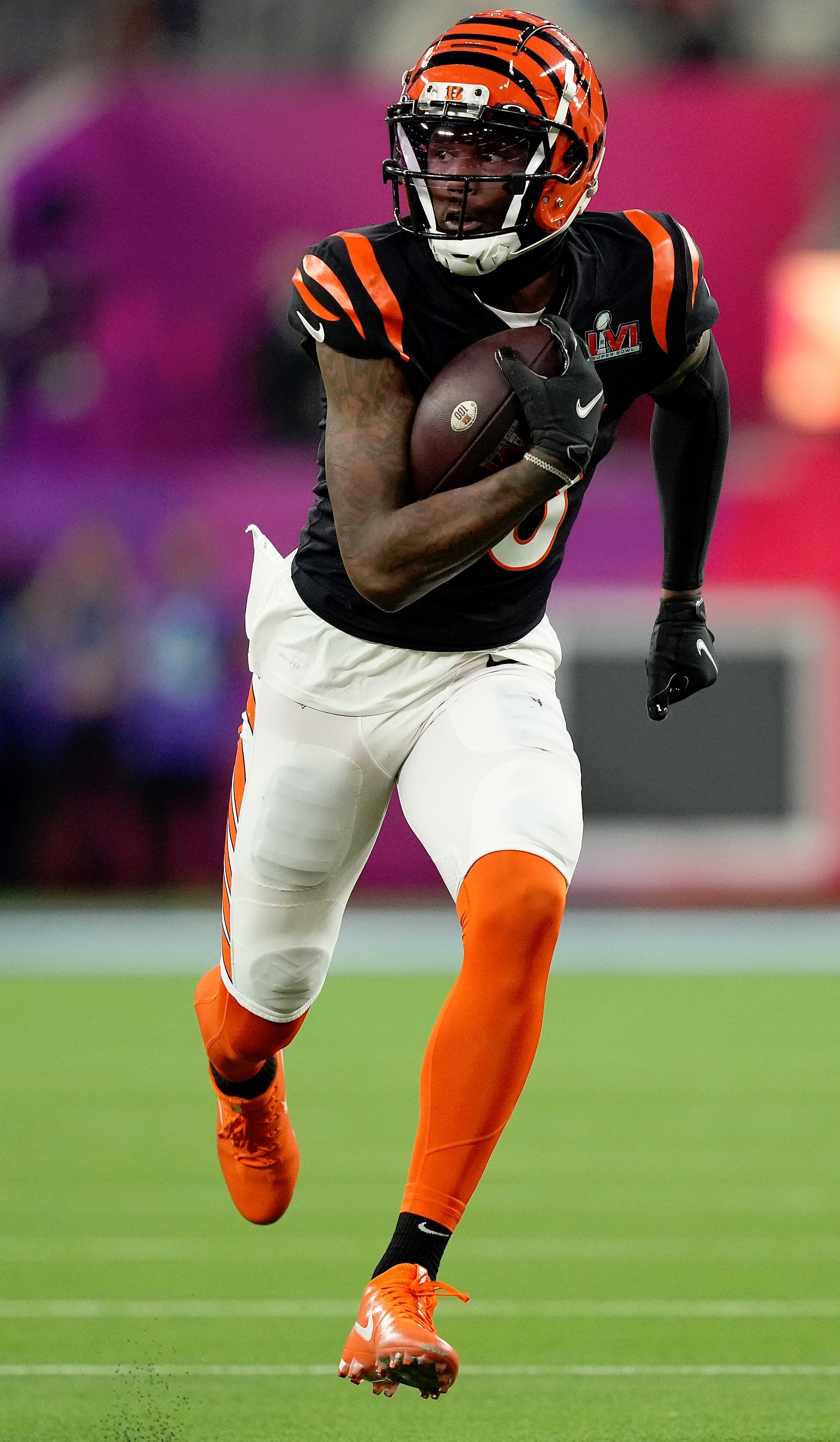 Burrow’s extension — a $55MM-per-year accord that creates distance between himself and the field — will complicate matters for Cincinnati, which used the star QB’s rookie contract to load up their roster. That said, the cap numbers for the quarterback’s landmark re-up are not yet known. It is possible the Bengals could maneuver their way to carving out room for a Higgins franchise tag.
This year’s round of QB re-ups have included lower cap hits in the first two years. Justin Herbert‘s first two years go $8.5MM and $19.3MM, while Lamar Jackson‘s sit at $22.15MM and $32.4MM. Jalen Hurts: $6.2MM, $13.6MM. Though, the Ravens and Eagles used void years for cap purposes from the start. The Bengals operate in a more traditional fashion, which could make them reluctant to include the increasingly popular space-creating mechanism this early in Burrow’s deal. But Burrow’s 2024 cap hit will be pertinent regarding the prospect of a Higgins franchise tag.
A 2024 Higgins tag will run the Bengals more than $20MM, and while Ja’Marr Chase is a clear-cut candidate to become the NFL’s highest-paid receiver in the not-too-distant future, the star wideout can be kept on his rookie deal through 2025 (via the fifth-year option). While the Vikings are working on a deal with Justin Jefferson, no team has signed a first-round wide receiver with two years of control remaining on his rookie contract in the fifth-year option era (2014-present). With Chase attached to a $9.8MM cap hit in 2024, a lower Burrow cap hit opens the door to the Bengals keeping their Chase-Higgins setup going for at least one more year. But that is not a lock, Conway adds, writing a Higgins tag would be unlikely.
That said, Bengals VP of player personnel Duke Tobin emphatically shut down Higgins trade inquiries at the Combine. It would seem the Bengals will have a tough time parting with their ascending WR2 next year, though a tag-and-trade scenario would also be an option. If Higgins reaches free agency, he would become one of the most coveted options available. While we are a ways away from knowing which receivers will hit the market, Higgins and Mike Evans — whom the Bucs are not planning to extend — would mark a considerable improvement from this year’s class. Tyler Boyd, who is almost certain to play out his Bengals deal and hit free agency in 2024, will likely fare decently as a first-time UFA as well.
“I have no clue,” Higgins said (via Baby) about his extension status. “My job is to come in every day and do what I do best — work and catch the ball from No. 9.”
Higgins said he has work to do and looks forward to bolstering his resume, which he added is “not as good as the greats,” via the Cincinnati Enquirer’s Charlie Goldsmith. The former second-round pick sits as one of the NFL’s top No. 2 options, topping 900 receiving yards in each of his three seasons and eclipsing 1,000 in 2021 and ’22.
Joe Burrow To Play In Week 1; Bengals Rule Out DE Joseph Ossai
Joe Burrow has a new contract in hand and the Bengals will not need to wait long to have him in the lineup after working out a record-setting extension. Head coach Zac Taylor confirmed on Friday that Burrow will play in the regular season opener.
That has been the expected decision after Burrow continued making progress from the calf strain he suffered in July. The team gave him a recovery timeline of “several weeks” upon diagnosing the injury, which left open the possibility of missed game action in September. However, the league’s newest top-paid player resumed throwing shortly thereafter and returned to practice last week.
Given those developments, it comes as little surprise that Burrow will be in place on Sunday despite the missed training camp reps. The former No. 1 pick said early this week that he expected to play in Week 1, though he added, via Paul Dehner Jr. of The Athletic, that the injury is one which he will have to manage (subscription required).
Burrow also said he is unsure of how long he will take to return to 100%, but his presence will be welcomed in Week 1 and throughout a season in which the Bengals are expected to be legitimate Super Bowl contenders. Cincinnati lost backup Brandon Allen in the offseason, and questions remain about who will emerge as the team’s new QB2; that competition is now between Jake Browning and recent practice squad addition Will Grier.
The Bengals will not be at full strength when they take the field against the Browns, however. Taylor ruled out edge rusher Joseph Ossai, who has been dealing with an ankle injury. The 2021 third-rounder missed his entire rookie campaign, and he will now begin his third NFL season on the injury list. Ossai missed only one game between the regular and postseason in 2022, though, logging a 32% snap share. A rotational role behind Trey Hendrickson and Sam Hubbard will await him upon return.
NFL Practice Squad Updates: 9/5/23
Today’s practice squad transactions:
Atlanta Falcons
- Signed: S Lukas Denis
- Placed on IR: OT Barry Wesley
Carolina Panthers
- Signed: WR Dezmon Patmon
Cincinnati Bengals
- Signed: TE Zach Gentry, LB Garrett Nelson
- Released: LB Tyler Murray
Las Vegas Raiders
- Signed: WR Keelan Cole Sr.
- Released: WR Antoine Wesley
The Raiders added a veteran wideout to their practice squad in Keelan Cole Sr.. The 30-year-old spent the majority of the 2022 campaign in Las Vegas, hauling in 10 catches for 141 yards and one touchdown. He was productive in 31 games with the Jaguars and Jets between 2020 and 2021, catching 83 passes for 1,091 yards and six touchdowns.
Cole will be taking the spot held by Antoine Wesley, who earned his walking papers today. The former UDFA got into 15 games for the Cardinals in 2021, finishing with 19 catches for 208 yards and three touchdowns.
Will Grier Will Compete For Bengals’ Backup QB Job
The Bengals recently signed quarterback Will Grier to their practice squad, and Jake Browning is the only signal-caller other than Joe Burrow on the 53-man roster. Nonetheless, Grier will have an opportunity to unseat Browning as Burrow’s backup, according to Jay Morrison of Pro Football Network.
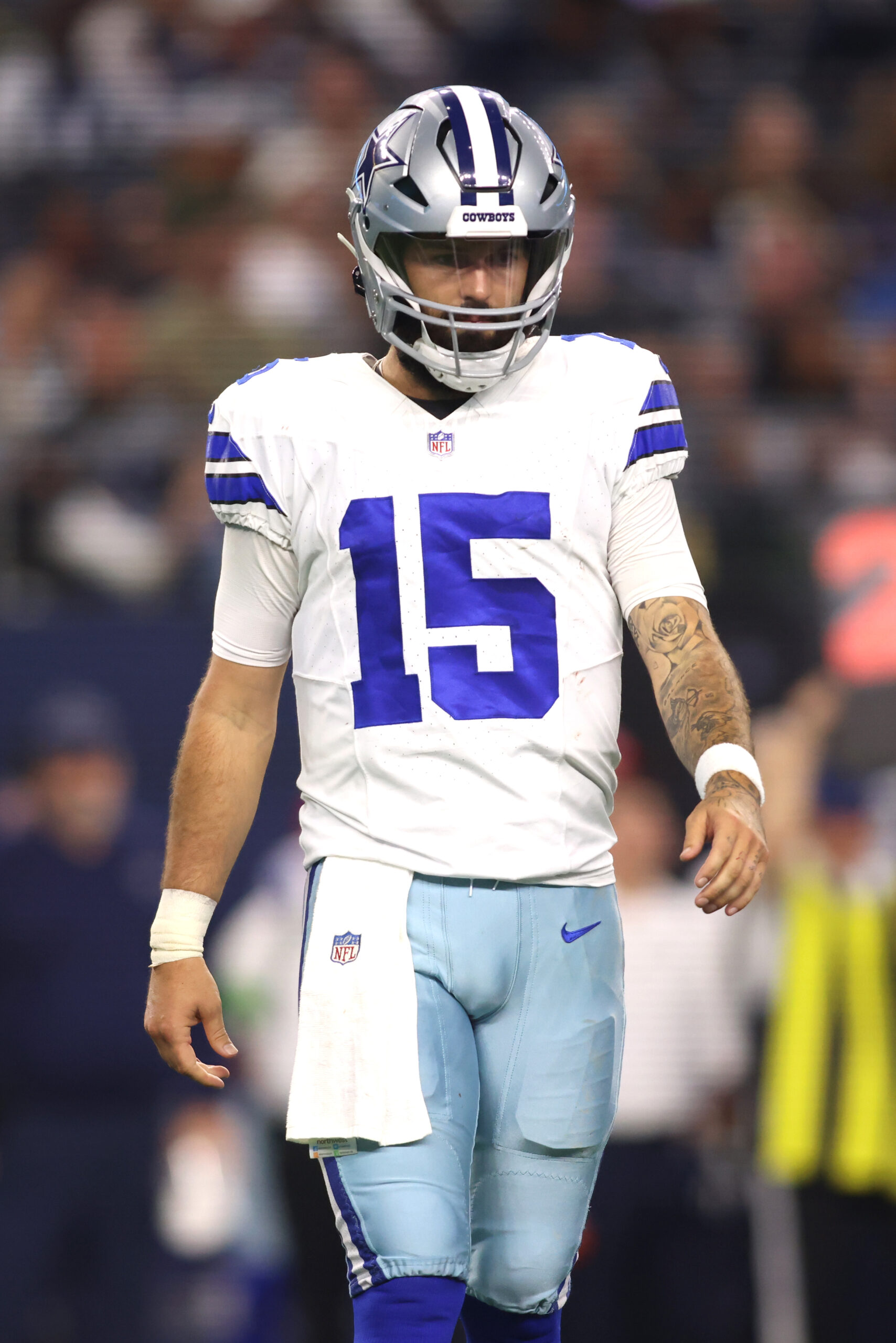
Grier, a third-round pick of the Panthers in 2019, entered training camp as a member of the Cowboys and was vying for a spot on the club’s QB depth chart alongside Dak Prescott and Cooper Rush. But when Dallas swung a trade for Trey Lance mere hours before its preseason finale against the Raiders, it was clear that Grier would soon be cut.
Knowing that he was now auditioning exclusively for other teams, Grier took every snap of that third and final preseason contest. He threw for 305 yards, rushed for 53 yards, and accounted for four total touchdowns (two throwing and two on the ground). Cowboys owner Jerry Jones called it the best preseason performance he had seen since 1999, and it caught the attention of the rest of the league.
As Morrison writes, Grier fielded mutliple phone calls after Dallas officially released him, but Grier ultimately felt Cincinnati represented the best fit.
“A big part for me was being on a good, competitive team, somebody that had talent and was a Super Bowl contender, which clearly this place is,” Grier said. “That was a big part of the decision.”
The fact that Grier has a real chance to become the QB2 doubtlessly influenced his decision to sign with the Bengals as well. Browning, who signed with the Vikings as an undrafted free agent in 2019, has never thrown a regular season pass, and while he has spent the past two years in Cincinnati, much of that time has come on the taxi squad. He did beat out Trevor Siemian for the backup quarterback gig this summer, but he did not necessarily dazzle the coaching staff with his performance, and we heard towards the end of last month that the Bengals could be looking to supplement their QB room.
They did just that with the Grier acquisition. It is true that Grier does not have substantially more regular season experience than Browning; the former West Virginia standout has played in just two regular season games, and they were the final two contests of the 2019 campaign, when a dismal Panthers squad was playing out the string. Grier started and lost both games, completing just 53.8% of his passes while throwing four interceptions and no touchdowns.
Still, the Bengals (among other teams) saw something they liked, and Grier, who believes he is playing the best football of his career, will get his shot to back up one of the league’s best QBs.
DL Notes: Donald, Jones, Young, Cowboys
The Rams moving on from a wave of defensive starters this offseason could soon call Aaron Donald‘s status into question. No notable Donald trade noise has circulated just yet, but with the Rams retooling, those would not surprise. Donald’s landmark extension runs through 2024, but the guarantees on that $31.7MM-per-year deal end this year. Donald’s contract includes a no-trade clause, but it does not look like he will prioritize his hometown Steelers — either via trade or a potential free agency run. While the Pittsburgh alum may not necessarily rule out a stint with his hometown team, NBC Sports’ Peter King notes the all-time great does not have such a move as a priority. The Rams must decide on Donald’s 2024 status by Day 5 of the 2024 league year, when $30MM becomes guaranteed.
Donald, 32, threatened to retire last year but secured a landmark raise. The 10th-year veteran was not closely connected to retirement plans this offseason. Here is the latest from the D-line scene:
- Chase Young is on the verge of returning to full-time duty, after a 2021 ACL tear and patellar tendon rupture sidetracked the former Defensive Rookie of the Year’s career. But the fourth-year Commanders defensive end is recovering from another issue. As a result of a stinger sustained in the first preseason game, The Athletic’s Ben Standig notes Young has not received full clearance to return and is not a lock to be available in Week 1 (subscription required). Young has not practiced fully in more than two weeks; he was expected to meet with a doctor this week. The Commanders declined Young’s fifth-year option in May, putting him in a contract year along with Montez Sweat.
- Chris Jones‘ holdout has extended past the one-month mark, and while fines have piled up, the disgruntled D-tackle has indicated he would be willing to push this hiatus toward the midseason point. Jones reporting only to pick up an accrued season would certainly harm the Chiefs, who have relied on their dominant interior D-lineman for years. On that note, GM Brett Veach said (via Pro Football Talk’s Charean Williams) the sides have increased communication this week. Jones would accumulate nearly $10MM in total fines — from training camp fines and missed game checks — were he to sit out until Week 8. Andy Reid said Friday he has not been given any indication Jones will be back in time for Kansas City’s Thursday-night opener. Jones wants Donald-level money; the Chiefs are looking to pay him closer to the second tier of DT deals that formed this offseason. Quinnen Williams‘ $24MM-AAV deal tops that contingent.
- The Cowboys appear to be planning to work in first-round Mazi Smith slowly. The Michigan product is expected to be a rotational player to begin his career, with The Athletic’s Jon Machota and Saad Yousuf noting Johnathan Hankins and Osa Odighizuwa are likely to be team’s defensive tackle starters in Week 1. Smith, however, will obviously be expected to move into the starting lineup early in his career.
- Joseph Ossai‘s status for the Bengals‘ opener is up in the air due to a high ankle sprain, Kelsey Conway of the Cincinnati Enquirer notes. The third-year defensive end is unlikely to suit up against the Browns, per Conway. While Ossai has shown some promise, injuries have continued to intervene. The 2021 third-round pick missed his entire rookie year and, after playing through a torn labrum late last year, underwent offseason surgery. The Bengals are deeper at D-end now, having drafted Myles Murphy in Round 1 to join Trey Hendrickson and Sam Hubbard.